
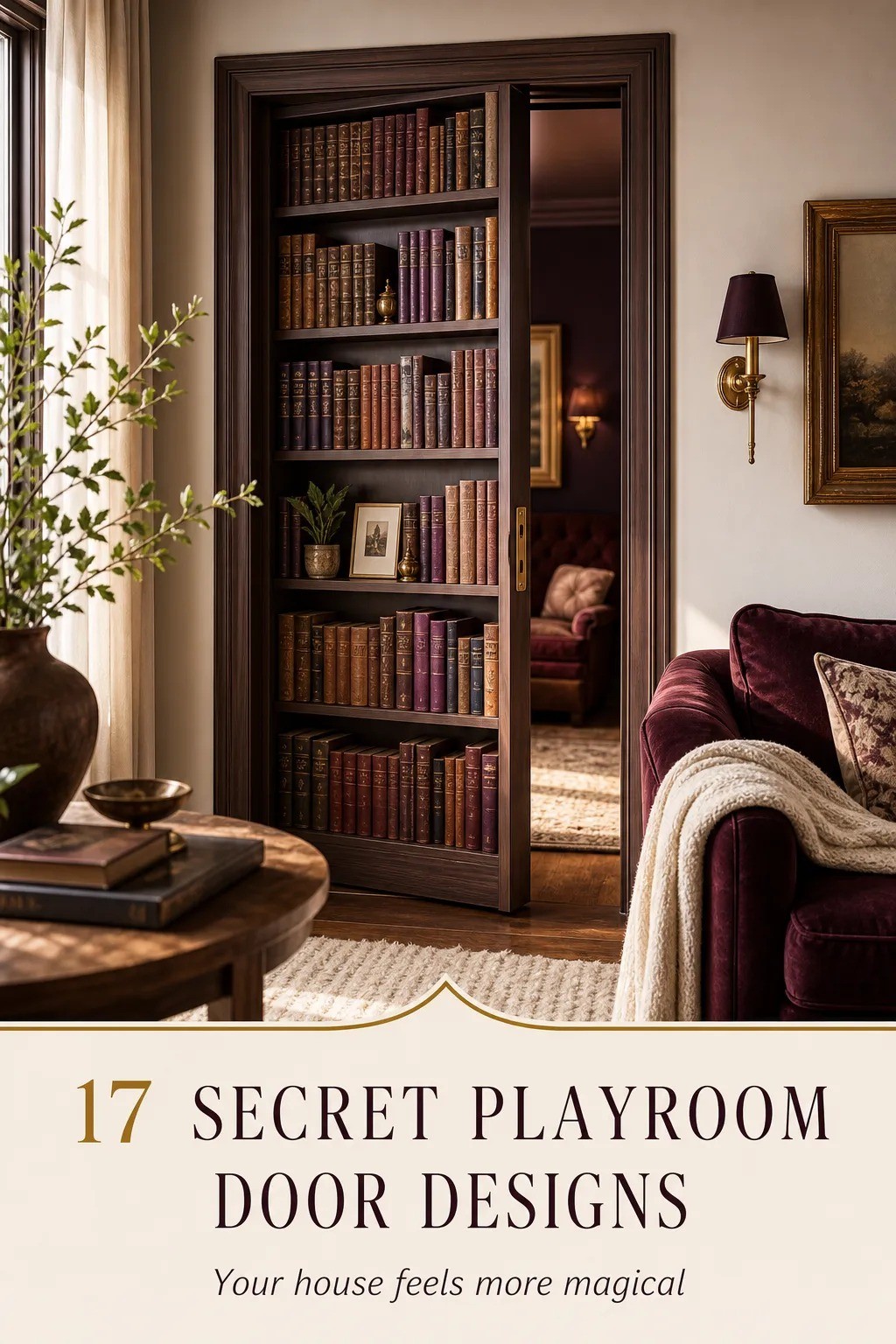
detail Playroom Door Ideas [Bookcase & Hidden Entrances] can feel magical without a full custom build, and the short answer is that trim, paint, shelf rhythm, and lighting matter more than gadgets. I learned that after overworking one wall with novelty hardware and too many colors. It looked busy, not special. When you keep the structure calm and let the details do the talking, you get the storybook effect you wanted in the first place.
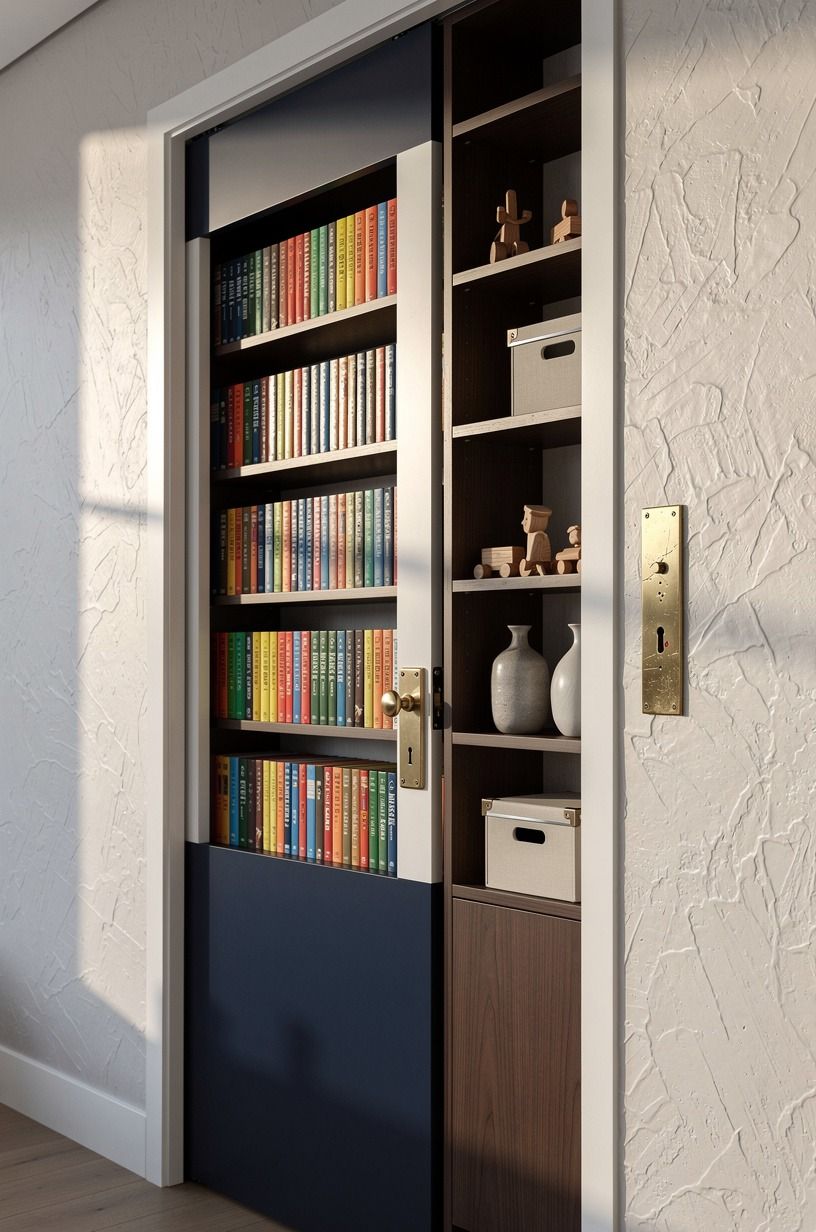
- Disguise the door with floor-to-ceiling book spines
- Frame the opening with chunky library trim
- Paint the bookcase in a storybook blue
- Disguise the door with floor-to-ceiling book spines
- Frame the opening with chunky library trim
- Paint the bookcase in a storybook blue
- Hide the latch behind a wooden book pull
- Wrap the jamb with matching shelf returns
- Add arched casing for a magical entrance
- Real books against decoy panels: keep the moving bay quiet
- Use beadboard backing inside every shelf bay
- Why settle for puck lights when a Rejuvenation Reed picture light does the work?
- Style oversized baskets along the bottom row
- Blend hinges into painted side molding
- Why bother with a one-yard wallpaper reveal inside the passage?
- Carve a moon-shaped peekaboo handle
- Stack rainbow books across the moving door
- Mount shallow ledges for rotating kid art
- Tuck a cushioned reading nook behind it
- Line the passage with playful striped trim
1Disguise the door with floor-to-ceiling book spines
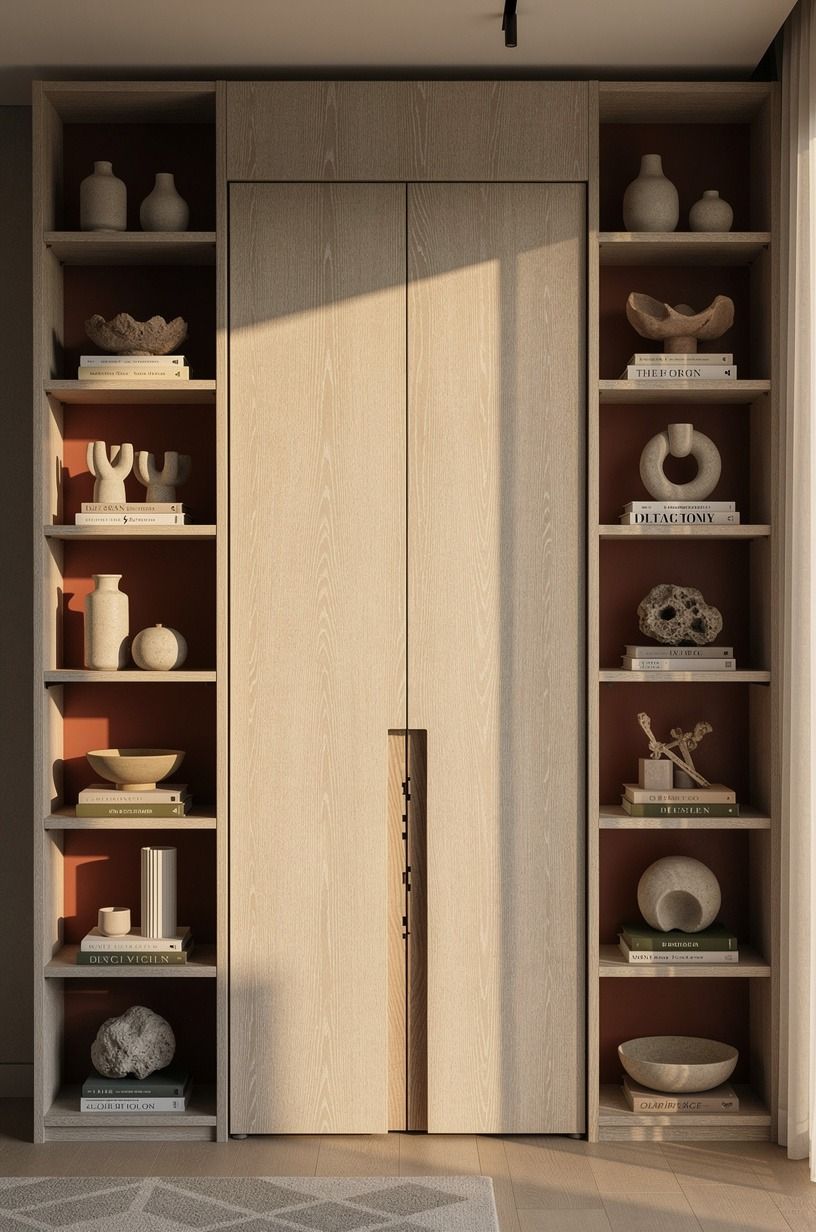
Covering the full height of the moving panel with plain book spines is what makes a playroom detail door read like architecture instead of a toy. You want the eye to see one balanced wall first, not a cut line.
I would build the moving section in 3/4-inch cerused white oak so the shelves have enough depth to hold real books without looking chunky. I call that the Library Wall Rule.
Keep the palette in terracotta, stone, and chalky neutrals so your rows feel settled. A few linen-bound volumes, a couple of terra-cotta bowls, and one low stack turned horizontally.
That’s enough. If you want more wall ideas with the same quiet warmth, I like this take on warm wood hidden-door details.
And please don’t alternate bright novelty covers all over the panel. You need continuity here, or the disguise gives itself away fast!
It’s the part nobody warns you about until the wall is already too busy.
2Frame the opening with chunky library trim
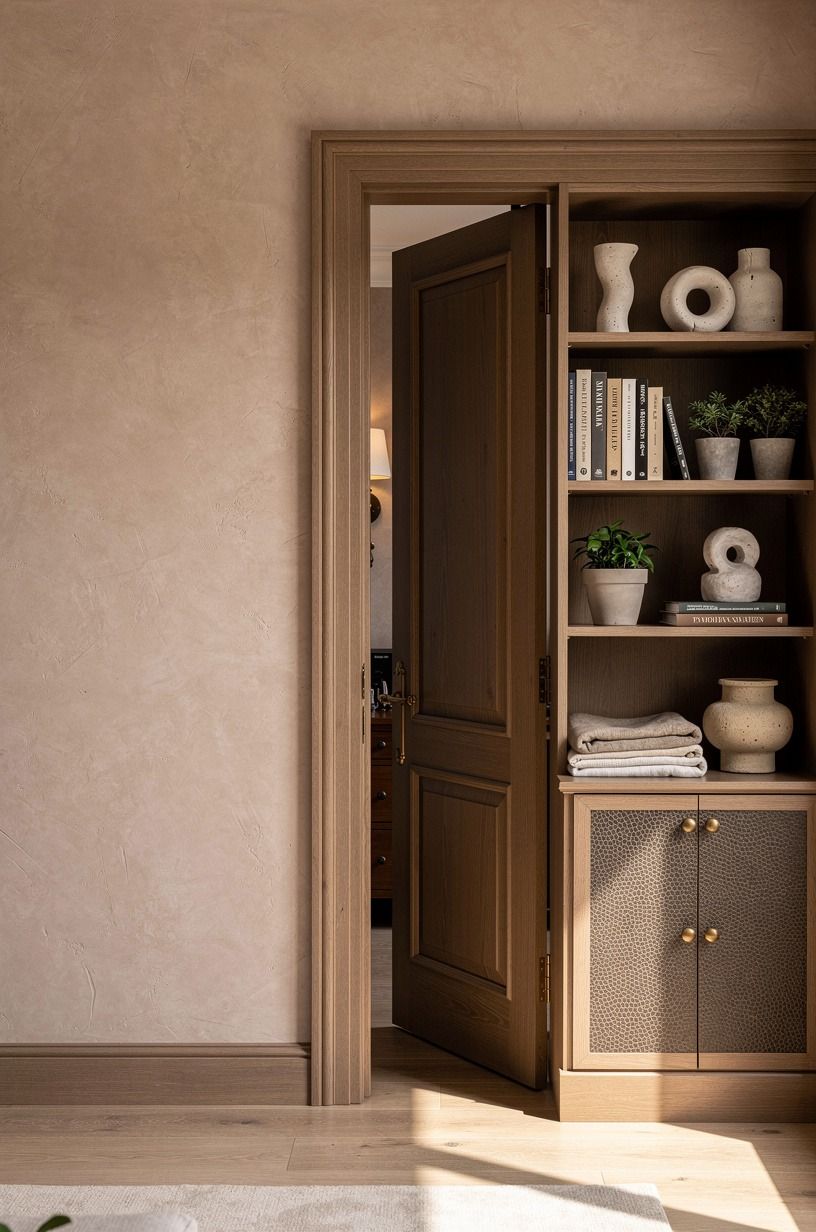
Chunky trim gives the opening weight, which is why a hidden door to playroom wall stops feeling flimsy the second you add it.
3Paint the bookcase in a storybook blue
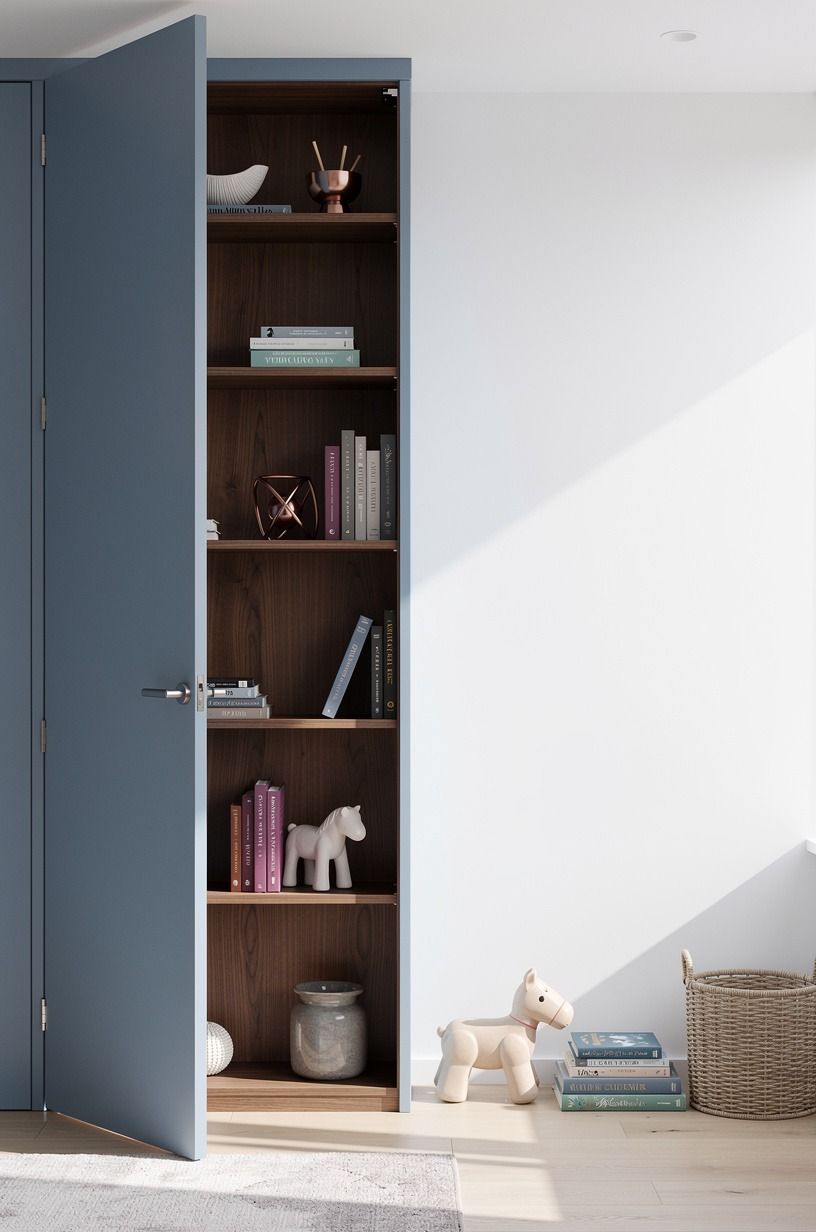
Color can do more than hardware ever will. A bookshelf detail door diy setup looks far more intentional when you paint the entire unit one saturated shade, especially if the opening sits toward one side with breathing room beside it. Sherwin-Williams Open Air SW 6491 is lovely for a lighter version, but for a fuller storybook read I would go deeper and keep the ceiling quieter.
Let the shelves, side panels, and moving face all match. Then bring in pale pottery, a walnut toy chest, and a few cream book jackets so the blue doesn’t go flat.
But don’t stop at paint alone. Add one more repeat of that tone elsewhere in the room, maybe on a rug stripe or a fabric bin, so the built-in feels anchored.
If you like painted concealment ideas, this hidden shelf-door roundup shows why tone-on-tone works so well, and it’s a great companion read if you’re balancing two blue rooms on one floor.
4Hide the latch behind a wooden book pull
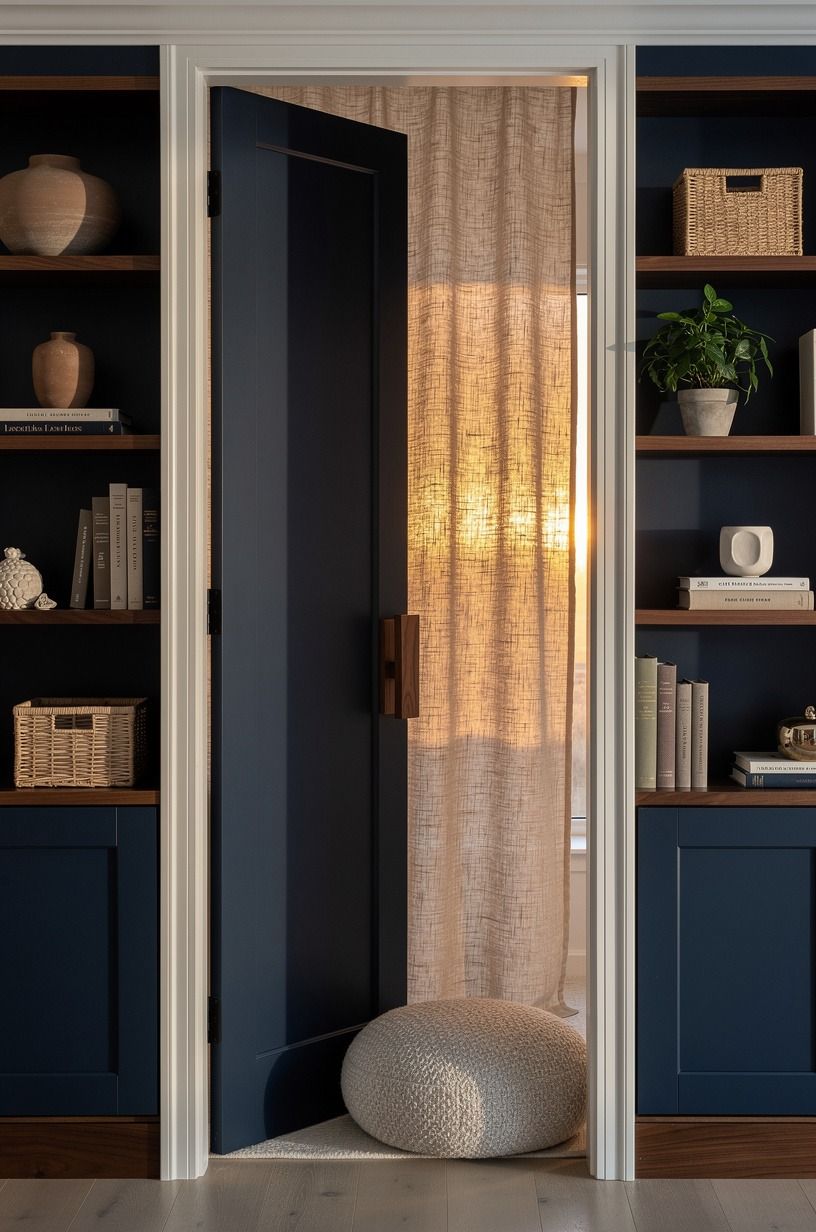
The latch should disappear into something your hand naturally understands.
5Wrap the jamb with matching shelf returns
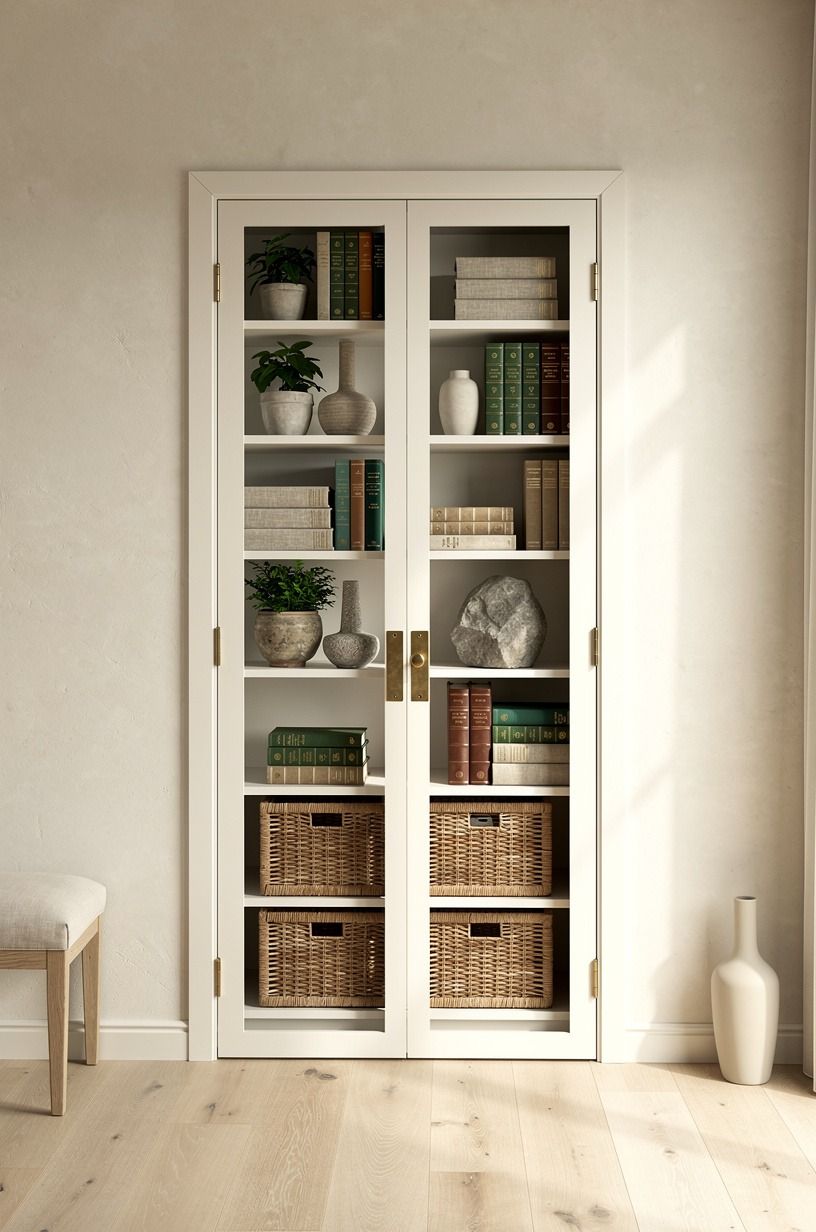
Shelf returns around the jamb are the difference between a door cut into a bookcase and a bookcase that simply happens to open. You want the same thickness, same finish, same shadow lines, and yes, the same shelf depth carrying right into the opening. I would keep that depth around the visual language of a real case piece, not oversized cubbies unless the wall is huge.
But this is where continuity matters more than decoration. Run the trim, finished in satin chrome-plated brass, wrap the inside edge, and let the opening feel swallowed by the millwork.
If you’re working with cream walls, Farrow & Ball Pink Ground No. 202 can be a beautiful barely-there warmth on adjacent plaster, especially with terracotta objects nearby. But skip a stark white jamb unless you want the reveal highlighted on purpose.
You’re trying to calm the cut line, not underline it. The dimensional thinking in this framed doorway collection is what you’re after, even if the style is different.
6Add arched casing for a magical entrance
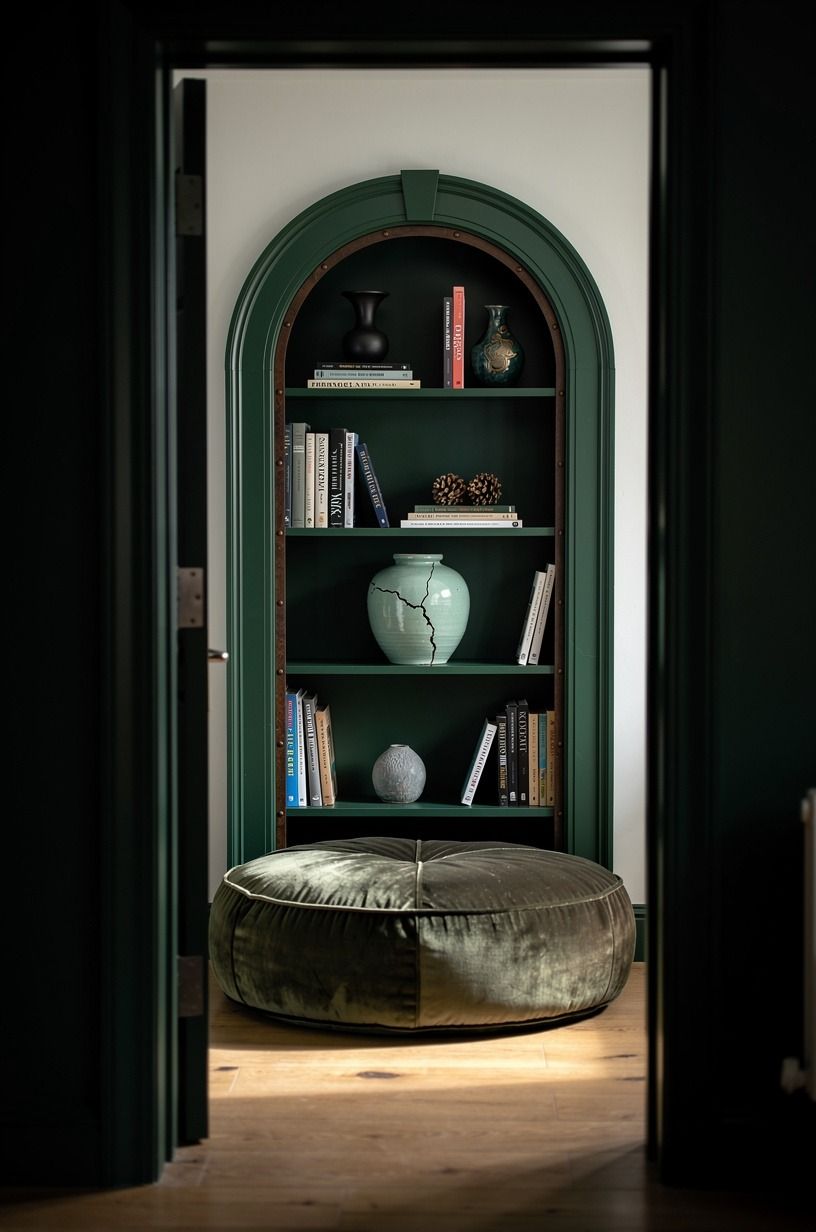
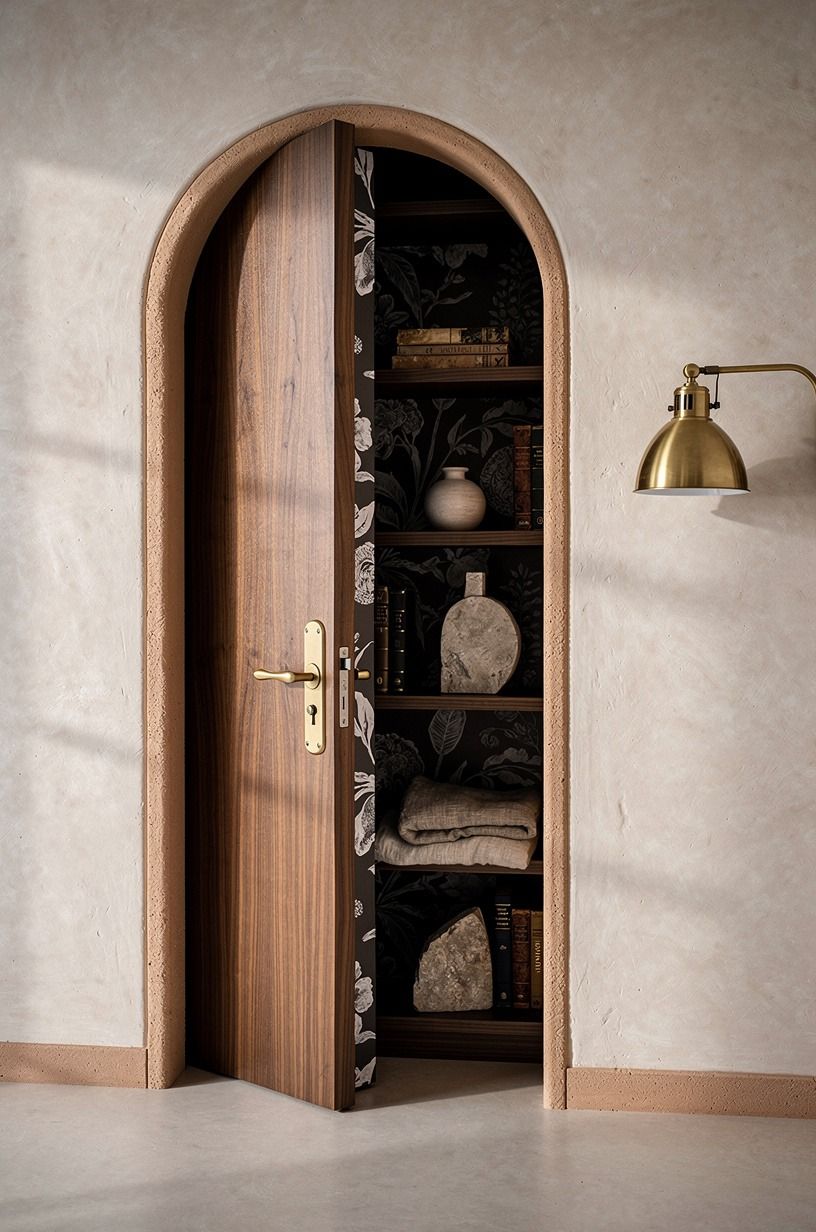
An arch changes the mood immediately. Straight lines say storage.
An arched surround says story. If your hidden bookshelf with detail door opens into a play space, this is one of the few decorative moves I would call worth the effort because kids read it instantly, and adults do too.
Keep the casing substantial enough to feel built in with Rejuvenation Classic architrave, then pair it with forest green shelves, rust accents, and one soft brass sconce nearby. You don’t need a castle theme.
You need one graceful curve. I would rather see aged bronze hardware with this look than shiny brass, because the darker finish keeps the arch grounded.
Need proof that one shape can carry a whole wall? Look at the mood in this hidden room entrance collection.
It’s dramatic, but still livable, and the curve earns its keep.
7Real books against decoy panels: keep the moving bay quiet
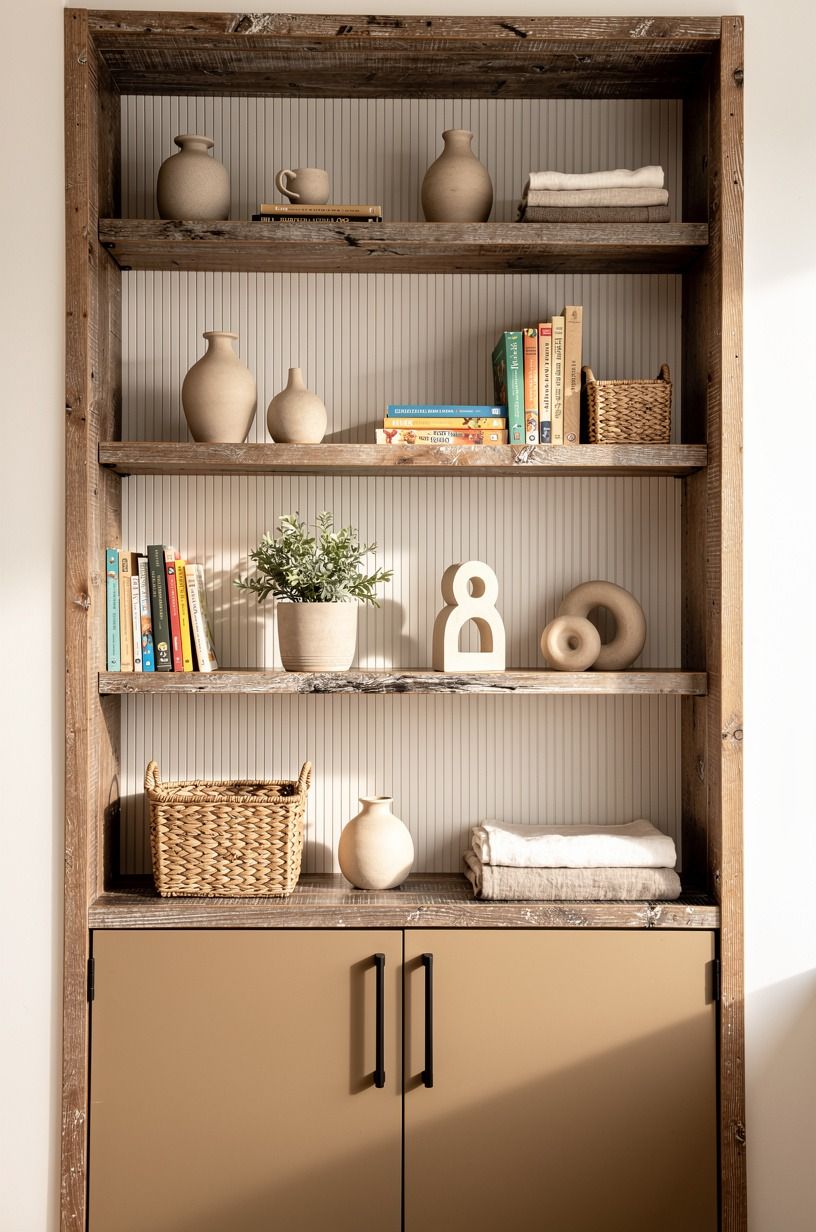
If the moving panel sits inside a larger run of cubbies, the whole wall feels planned from day one. The move is making the door section feel quieter than the rest of the shelves, so your eye doesn’t snap to it.
I’d cluster two or three cubbies on either side with denser styling (a few leaning paperbacks, a framed postcard, one clay vessel) and leave the door cubbies nearly empty by comparison. Real books against decoy panels reads as deliberate.
Real books against bare decoy panels reads as a gap.
The fix is symmetry without mimicry. Match the rhythm of the wall, not the contents.
A Pottery Barn Caldwell cubby depth works perfectly here with Benjamin Moore White Dove OC-17 as the case color if you’re buying new, and the case cost lands around $450 to $900 for the wall run. Cheaper route: two IKEA KALLAX units flanking a custom middle bay, then finished in satin cabinetry paint. Paint everything the same shade so the joinery disappears, and the seam only shows where your hand pulls it.
The layered effect in this wood-hidden-door guide shows the discipline well.
8Use beadboard backing inside every shelf bay
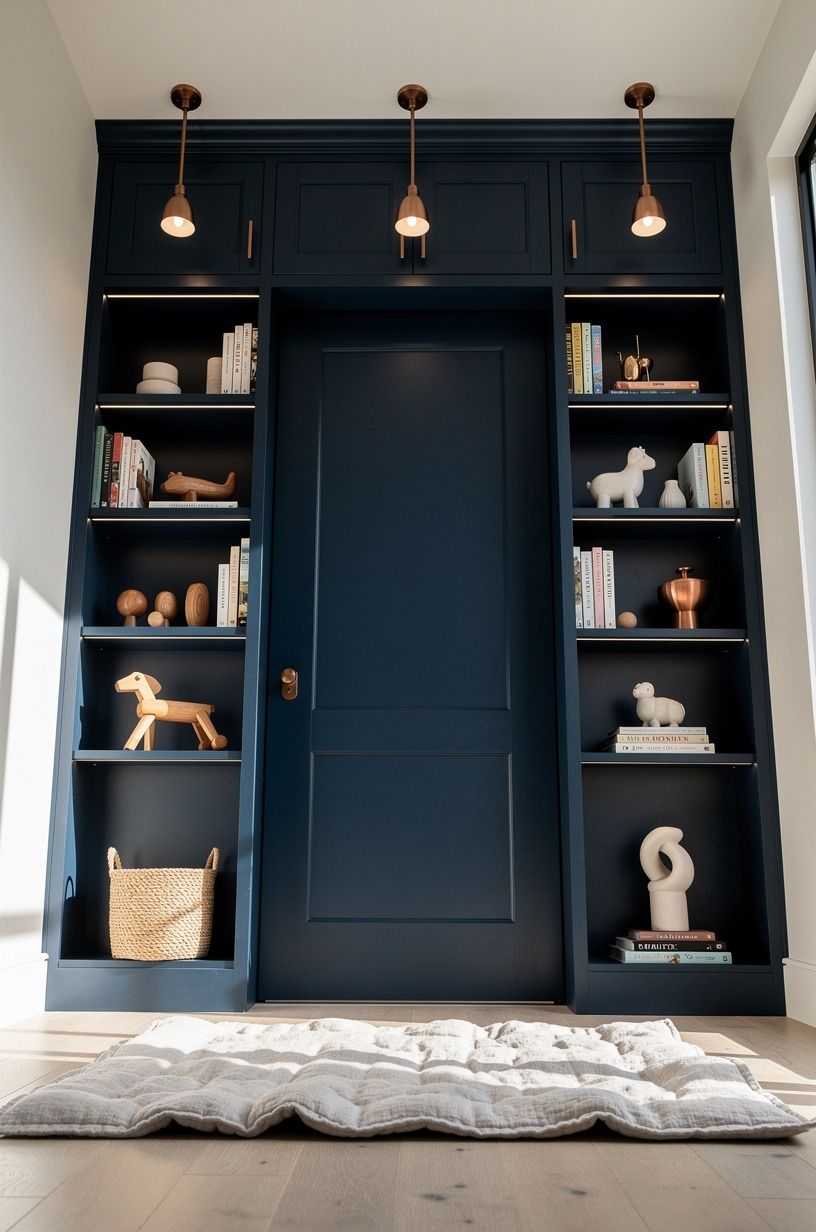
This also helps smaller objects hold their own.
9Why settle for puck lights when a Rejuvenation Reed picture light does the work?
Lighting from above makes a shelf wall feel important, and importance is half the magic. I’d mount a Rejuvenation Reed picture light in antique brass above the bookcase run, sized to the wall width (usually 24 to 36 inches). That single gesture pulls the eye up, kills the flat overhead glare, and tells you the room is considered.
You don’t need six fixtures. One good picture light per wall section is enough.
Run it on a warm 2700K bulb with a dimmer so the room can shift from afternoon play to evening hush. If your built-in sits lower than the standard rail height, lower the mounting bracket to 60 to 66 inches off the floor so the light actually reaches the top shelf.
Hardwire it if you can, plug it in if you must, but don’t skip it. The vertical light in this bathroom hidden-door collection is surprisingly relevant, and the scale cues transfer directly to a playroom wall.
10Style oversized baskets along the bottom row
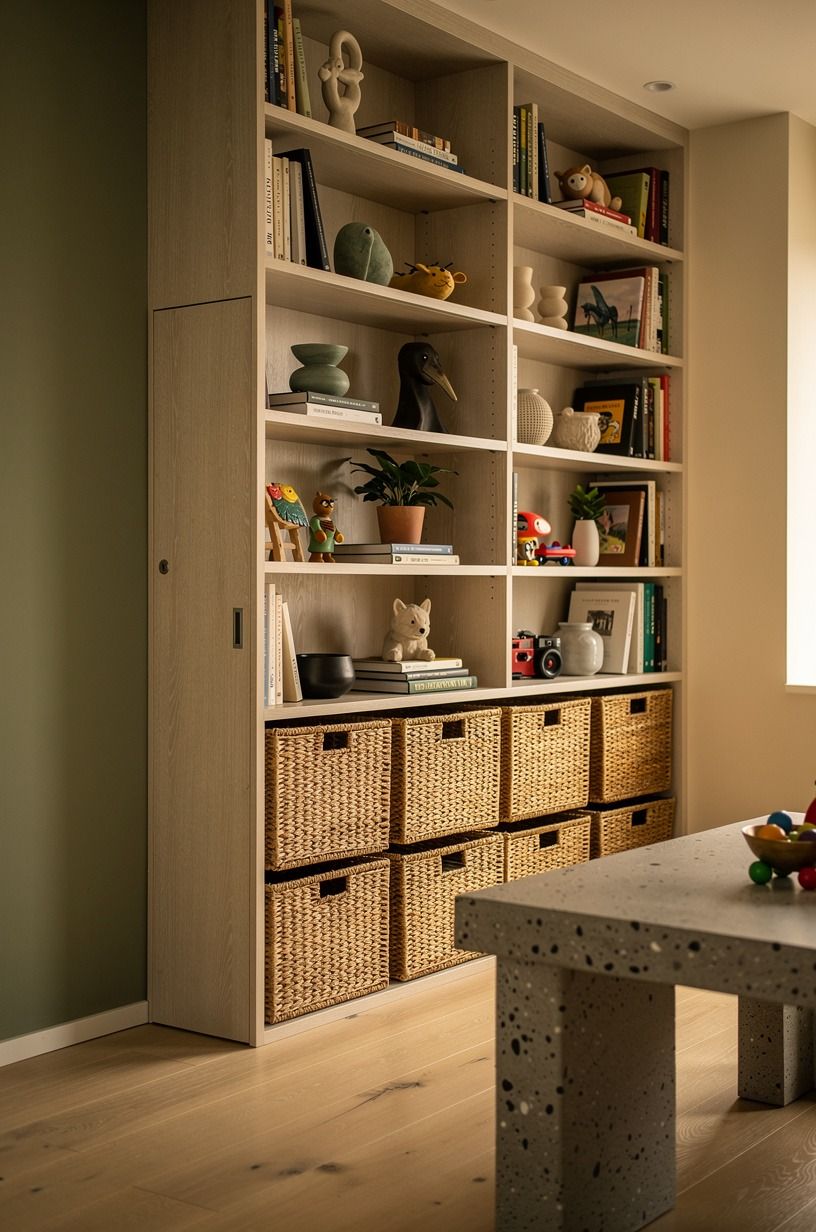
Bottom shelves do a lot of heavy lifting, so let them. Oversized baskets hide the mess, soften the joinery, and keep the lower band of the wall from feeling fussy.
I would use seagrass or braided water hyacinth in a size that feels generous, not cute. Cute is the enemy here.
The basket line should run steady across the bottom row, including the moving panel if the swing clearance allows it. That visual weight is what settles the whole elevation.
One basket for train tracks, one for costumes, one for blocks. Simple.
If you’re deciding how much this kind of room upgrade usually costs, these typical US ranges are the ones I’d plan around:
That table is why I’d spend on millwork or paint first, then let baskets do the storage work for much less. The summed cost math is something I learned the hard way. It’s the part nobody respects until the receipt arrives.
11Blend hinges into painted side molding
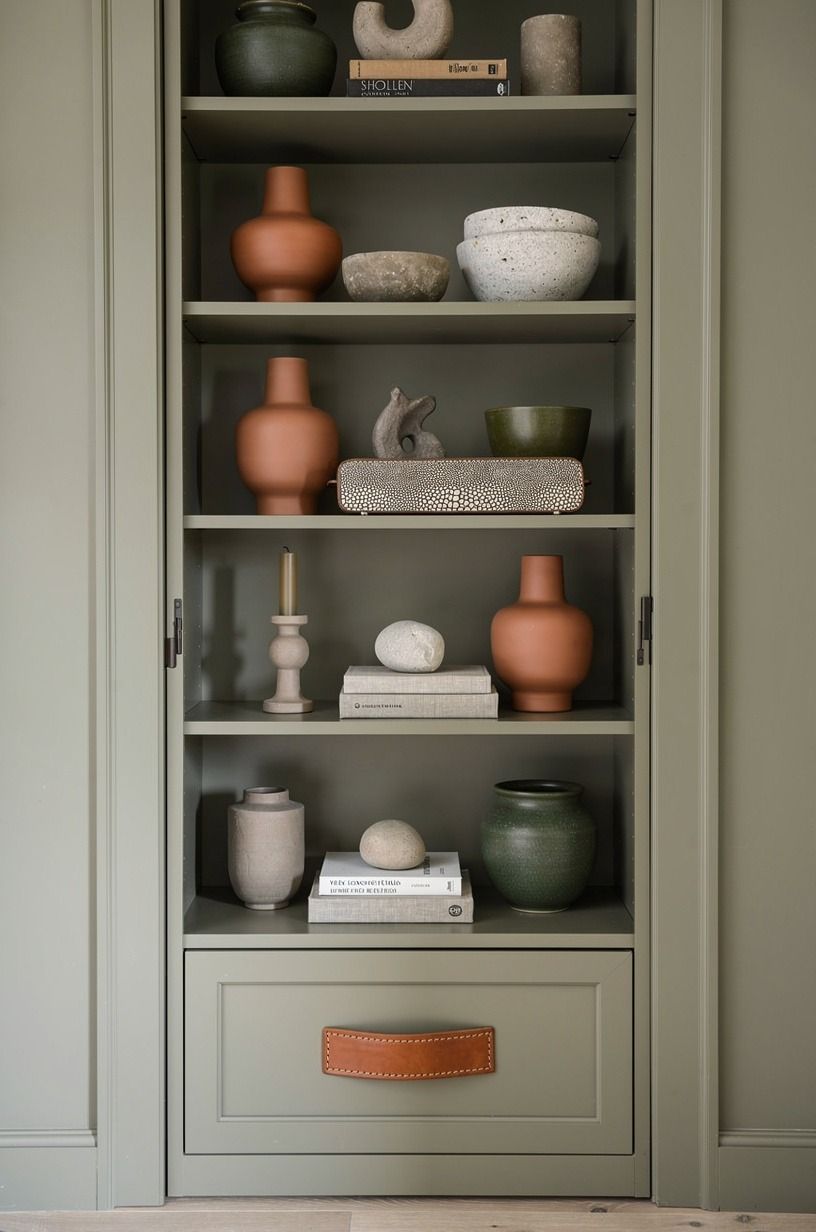
Visible hinges pull you right out of the illusion, so paint and placement matter more than people think. When the side molding and hinge finish match, your eye reads the profile first and the mechanism second. That’s exactly what you want as you step toward the opening.
Use olive, Farrow & Ball Treron No. 292, and stone around the built-in if you want warmth without going sugary. Then tuck the hinge line, hidden with standard-duty concealed euro hinges, where the molding already creates a shadow break.
But don’t reach for shiny exposed hardware because it feels “special.” It doesn’t. It feels announced.
I’d rather hide the engineering and let the trim do the charm. The practical examples in this classic hidden bookshelf entrance guide get that balance right, and they’re a quick read if you’re already mid-project. If you’re hiring a millworker, this is the kind of detail that costs more in regret than in dollars.
12Why bother with a one-yard wallpaper reveal inside the passage?
A tiny wallpaper reveal inside the passage is one of those details that kids remember for years. Most people skip it.
The ones who don’t end up with the room everyone asks about. So: why bother?
Because it’s the one spot where the disguise can finally relax, and that’s where the magic actually lives.
I’d run a Morris & Co. Strawberry Thief repeat at half scale on the inside of the jamb, or a quieter Farrow & Ball Lotus wallpaper BP 2401 if you want it calmer.
One yard is enough. Paste it on grass cloth backing if your passage is humid, regular liner if it isn’t. It’s the surprise, the wink, the part your kid’s friends will remember ten years from now.
If you’re going to bother with the door, bother with the reveal. The thinking lines up with this TV-wall-with-hidden-door piece which treats the wall as storytelling, not storage.
Honestly, that’s the mindshift that pays off here.
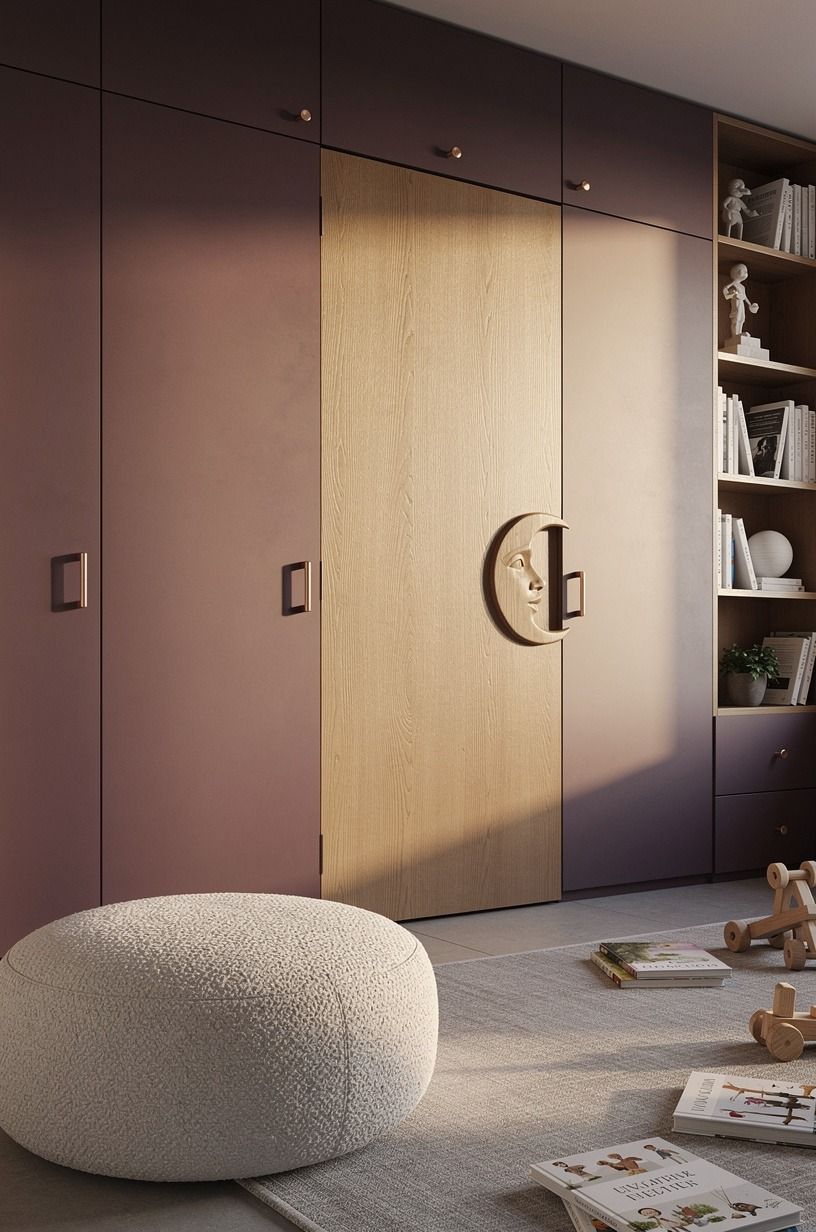
13Carve a moon-shaped peekaboo handle
This is one of the few whimsical touches I love because it serves a real purpose. A moon-shaped cutout gives little hands a clear place to grab, and it makes the panel feel personal without turning the whole wall into a theme set. I would carve it into a solid walnut face or line the edge so it feels finished when you touch it.
And keep the handle off-center on the panel if the rest of the wall is asymmetrical. That tension makes the whole composition feel more editorial. But keep the shape simple.
A moon, a soft oval, maybe a rounded keyhole. No cartoon silhouettes.
If you want the opening to age well, that restraint matters more than people expect. I’ve seen overdesigned handles, including a few ceramic knobs, date a room in one season flat. If you’re weighing this against something more conventional, the classic knob logic in this hidden door paneling roundup is a useful counterweight. You want whimsy without theme-park.
14Stack rainbow books across the moving door
Color-sorted books can work beautifully here if you treat them like one band of color instead of a full toy-store moment. On a navy, white, and walnut wall, a rainbow row across the moving panel brings playfulness without ruining the disguise, especially against a forest green wall. I’d keep the rest of the shelves calmer so your eye has somewhere to rest.
The key is distribution. Repeat each family once or twice across nearby shelves so the door doesn’t read as a separate object.
And use Heritage Gold clothbound jackets with enough saturation to matter. Faded paperbacks won’t do much.
If you like layered book walls that still feel polished, the examples in this bookshelf-door classic are helpful because they show how repetition beats clutter every time. It’s cheerful, but still composed.
It’s also the kind of styling choice you can change by season if you ever want a quieter read.
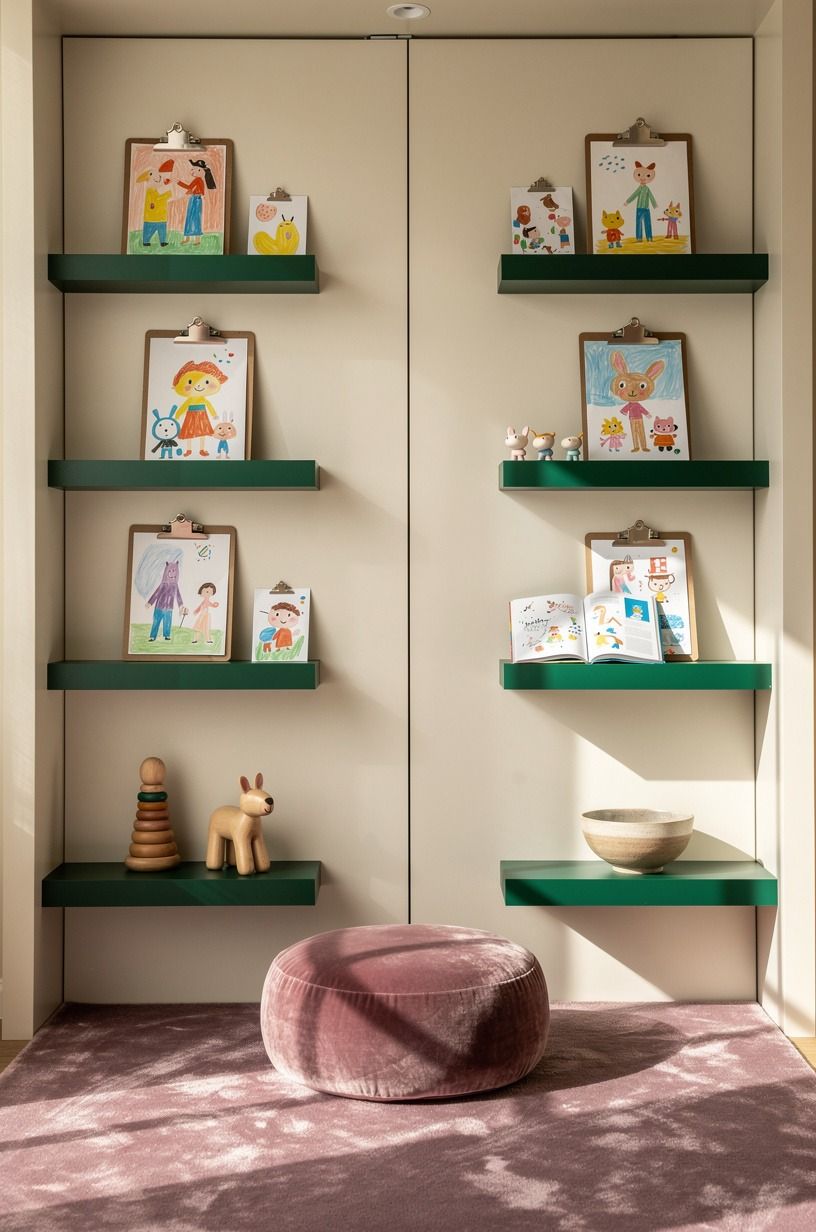
15Mount shallow ledges for rotating kid art
Shallow ledges turn the wall into a living display, and that makes the entrance feel active instead of static. If the opening sits in a broad cream wall, a few slim ledges with rotating drawings can soften all the joinery and make the whole setup feel like part of family life. I like ledges deep enough for paper and thin books, around 3 inches deep, but not so deep they shadow the art.
Use the same finish as the casework so the ledges feel built in. Then clip or lean pieces in matte brass frames rather than taping them directly onto the shelves.
You’ll swap them more often that way, and the wall stays cleaner. A 5×7 ft play rug below helps ground the display and gives the eye a landing spot.
For more warm, paneled concealment ideas, this wood-hidden-door guide is full of the right kind of restraint. And it proves you do not need busy styling to get charm.
That’s the whole philosophy in one sentence. Honestly, it’s the line I wish someone had told me two years ago.
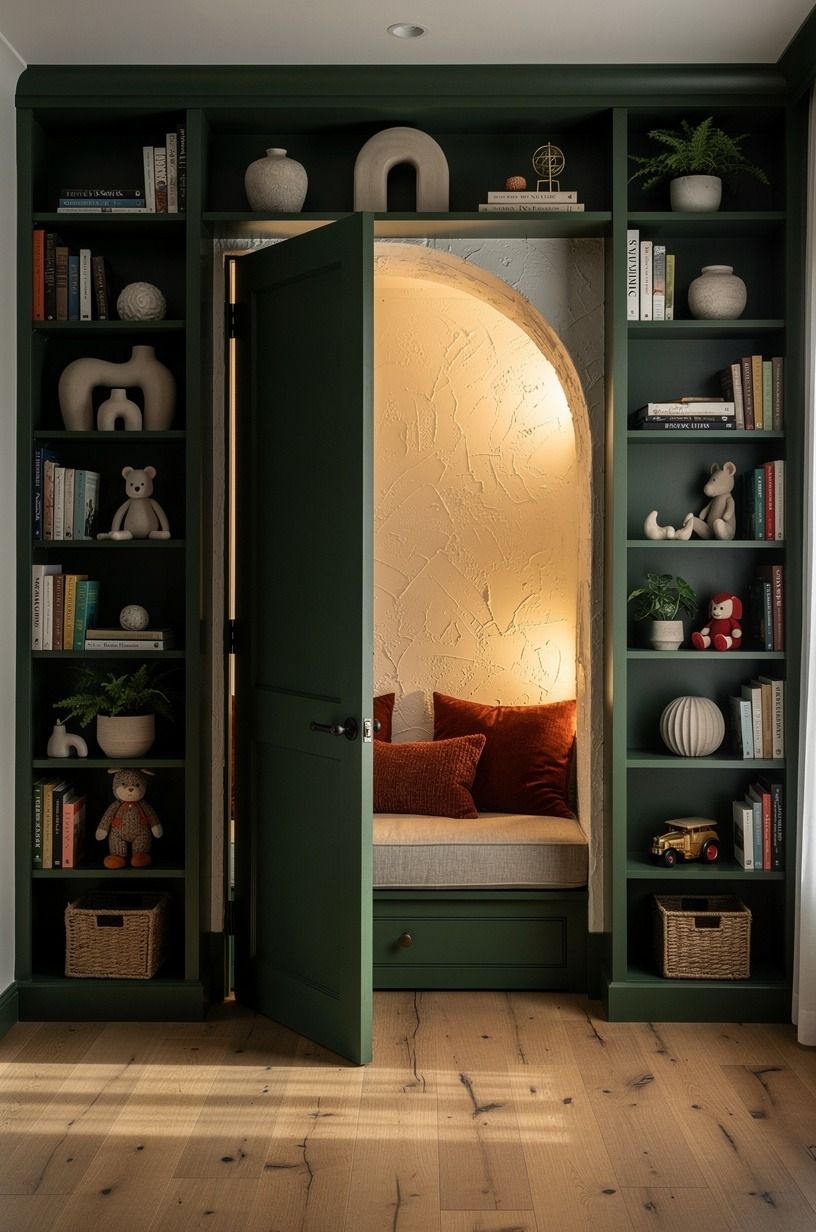
16Tuck a cushioned reading nook behind it
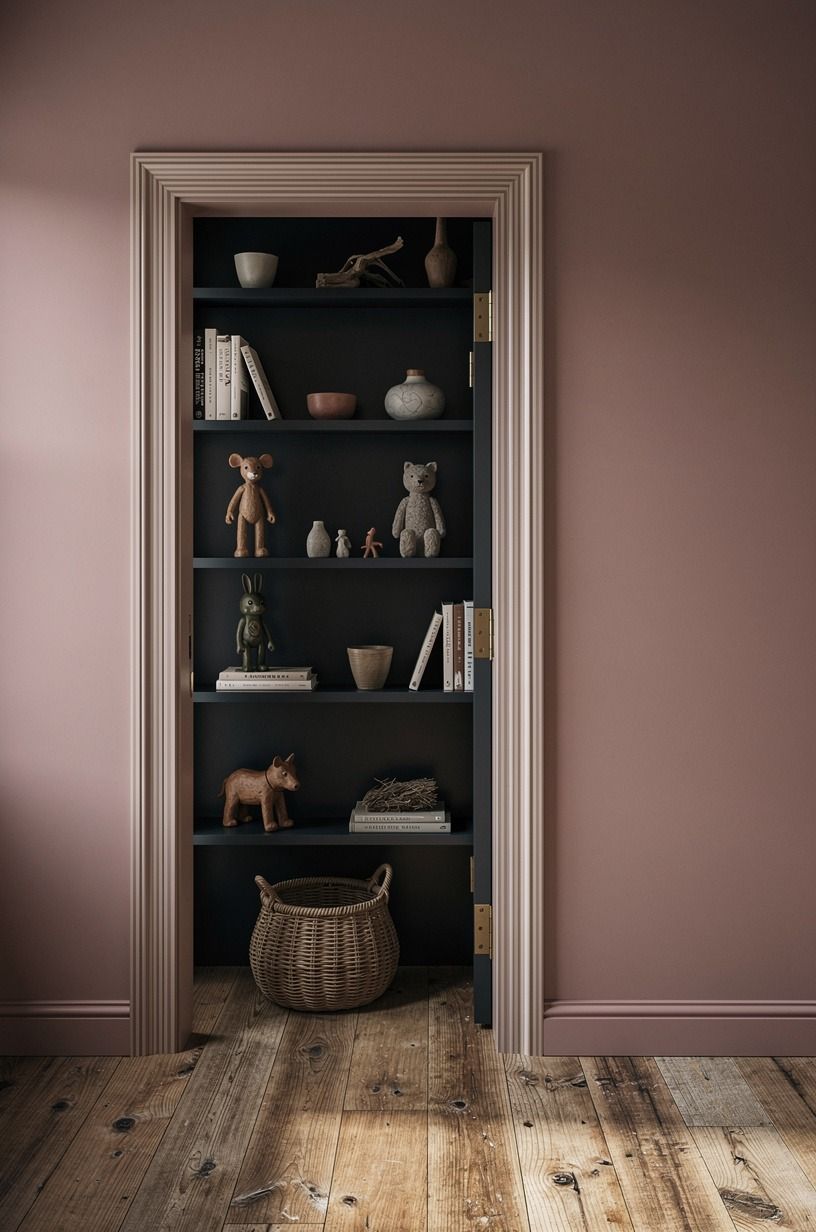
If the door opens into a reading nook, the payoff needs to feel softer than the outer room. That’s what makes the reveal worth it. A bench cushion in Belgian flax linen from RH Teen, a pair of oversized pillows, and one wall sconce can be enough.
You don’t need a huge footprint. Even a niche scaled around a 38×75 in twin mattress or bench cushion can feel generous if the light is warm.
And this is where I would spend on comfort first. Not on more trim. Kids remember where it felt good to disappear with a book.
I’ve learned that a hidden space only lands when the room behind it feels quieter than the room in front. Want a nearby design cousin?
This hidden entrance roundup explains why the reveal matters as much as the disguise. If you’re styling the inside, lean into the cozier sister reads like this cozy reading-nook guide which has good bench-and-pillow ideas you can borrow.
17Line the passage with playful striped trim
Striped trim inside the passage gives you one final surprise without making the outer wall louder. I’d paint 2-inch stripes on a pre-primed MDF jamb Benjamin Moore Decorator’s White OC-149 and Farrow & Ball Stone Blue No. 86, running floor to ceiling so the passage visually feels taller than it is.
The scale matters. Wide stripes feel grown-up and paneled.
Thin stripes feel candy-stripe and childish. You want the former.
Keep the rhythm even, mask the edges clean, and finish the corners with a single clear satin poly so the stripes survive sticky fingers. If your passage is narrow, paint one wall stripes and the other a quiet solid (I love Farrow & Ball Drop Cloth No. 283 for that).
It’s surprising how much warmth a stripe pattern brings to a 4-foot corridor. The restraint-with-personality thinking shows up in this pocket-door refinements piece, too. Both approaches work if you don’t overdo the contrast. That’s the best balance I’ve found, and it’s still what I’d do tomorrow!
Why do some hidden playroom doors feel magical while others feel like a prop?
The ones that work don’t try too hard. That’s the whole thing. I used to think the magic came from the mechanism, the novelty latch, the dramatic reveal, the stuff you notice in the first five seconds.
But the rooms that stick with you usually do something quieter. They make the wall believable first, then they reward you for looking longer.
That’s why good trim beats gimmicky hardware, and why a calm shelf composition beats a busy one every time.
If you’re deciding where your money goes, spend it where your eye lingers. Real shelf depth.
Better paint. A sturdier moving panel. Maybe one dimmable LED. Not twelve little “fun” details that all compete for attention.
The practical numbers are pretty clear on that point. A budget version at $150 to $600 can already look thoughtful if you’re using paint, bins, and styling well. Mid-range, around $1,000 to $3,500, is where storage, lighting, and furniture start working together. And once you cross into full built-ins, you’re paying for structure and finish, not magic.
The magic still comes from restraint.
I’d also think about how the room works on an ordinary Tuesday. Can your child reach the lower shelves? Do the books still look good when they’re half pulled out? Does the passage feel calm when the toys migrate, because they will? (They always do.) Those are the questions that separate a pretty install from a room you’ll still love in a year.
If you’re borrowing ideas, borrow the grown-up discipline underneath them. Use one strong color, one repeated wood tone, one surprise. Then stop. That’s usually the point where the room finally starts to feel convincing.
You’ll know it the first time you walk past! If you’re planning the sequence beyond this room with 1×3-inch pine trim, this step-by-step build guide is the next read, and it pays off before the first stud goes in.
The Questions I Get Asked Most
What is the best Detail Playroom Door Ideas [Bookcase & Hidden Entrances] for a small detail playroom door bookcase?
A full-height book-spine panel is usually the best pick because it hides the opening without eating visual space. I’d pair it with an IKEA BILLY depth check at 11-inch depth or an IKEA KALLAX mock-up first, then keep the lower shelves simple so your room still breathes. If your nook is narrow, you’ll also want to peek at this small-space roundup for layout cues that don’t fight the wall.
Where can I buy Detail Playroom Door Ideas [Bookcase & Hidden Entrances] pieces on a budget?
Start with IKEA, Target, and Wayfair because you can mix storage, bins, and lighting without blowing the budget. Then check Facebook Marketplace for used bookcases.
One older wood case, fresh paint, woven baskets. Better than buying everything new, honestly. If you’d rather build it up than retrofit, the kid-focused styling in this kids’ room piece is full of starter-grade picks.
How much does a Detail Playroom Door Ideas [Bookcase & Hidden Entrances] makeover cost?
A typical makeover lands around $150 to $600 for paint, bins, baskets, and shelf styling, while a more complete setup can run $1,000 to $3,500. The free win is editing what’s already on your shelves.
Less clutter changes the wall fast. For the high-end option, the millwork-heavy thinking in this luxury millwork guide translates well if your door is the first domino.
Can I create a Detail Playroom Door Ideas [Bookcase & Hidden Entrances] on a budget?
Yes, and paint does more work than people expect. Repaint the case, regroup your books by tone, and add two oversized baskets.
Removable wallpaper in the inner reveal helps too at about $35 a roll. Small spend, big payoff!
If you’re stacking multiple doors in the same home, a sliding-door approach might be cheaper and sturdier for the second one.
Is a Detail Playroom Door Ideas [Bookcase & Hidden Entrances] worth it in a small space?
Yes, because small rooms benefit from double-duty walls. You’re getting storage, display, and a tucked-away zone in one footprint.
Keep your passage narrow but your shelves visually steady, and the room feels more thoughtful instead of more crowded. The reading-nook thinking in this cozy reading nook guide pairs beautifully if you’re fitting a kid-sized chair behind the door.
Is Detail Playroom Door Ideas [Bookcase & Hidden Entrances] a good idea for a rental?
Yes, if you keep the changes reversible and treat the wall like furniture, not construction. Use peel-and-stick wallpaper, removable picture lights, and freestanding bookcases clipped together. That gets you most of the look without opening up walls.
If you want to go even lighter at less than $200, the bifold-replacement logic in this closet-door roundup is fully reversible and almost free.
Where I’d Start First
If I had to pick one, I’d start with floor-to-ceiling book spines. They hide the panel without asking the room to perform, and that’s why they age so well.
Pin that idea for later, then sharpen the walnut pull next and see this bookcase-hidden-entrance deep-dive first; it’s the most thorough primer I’ve found and it’s worth an afternoon read. Trust me on this one.