Green can go wrong fast. In a roughly 12-by-14-foot room, one muddy shade on the main wall can make the whole place feel darker by late afternoon.
That’s why I like the 2026 approach so much: green is the lead color, but it’s handled with restraint. When you pair the right green with oak, linen, brass, and a few clean lines, it reads expensive instead of heavy.
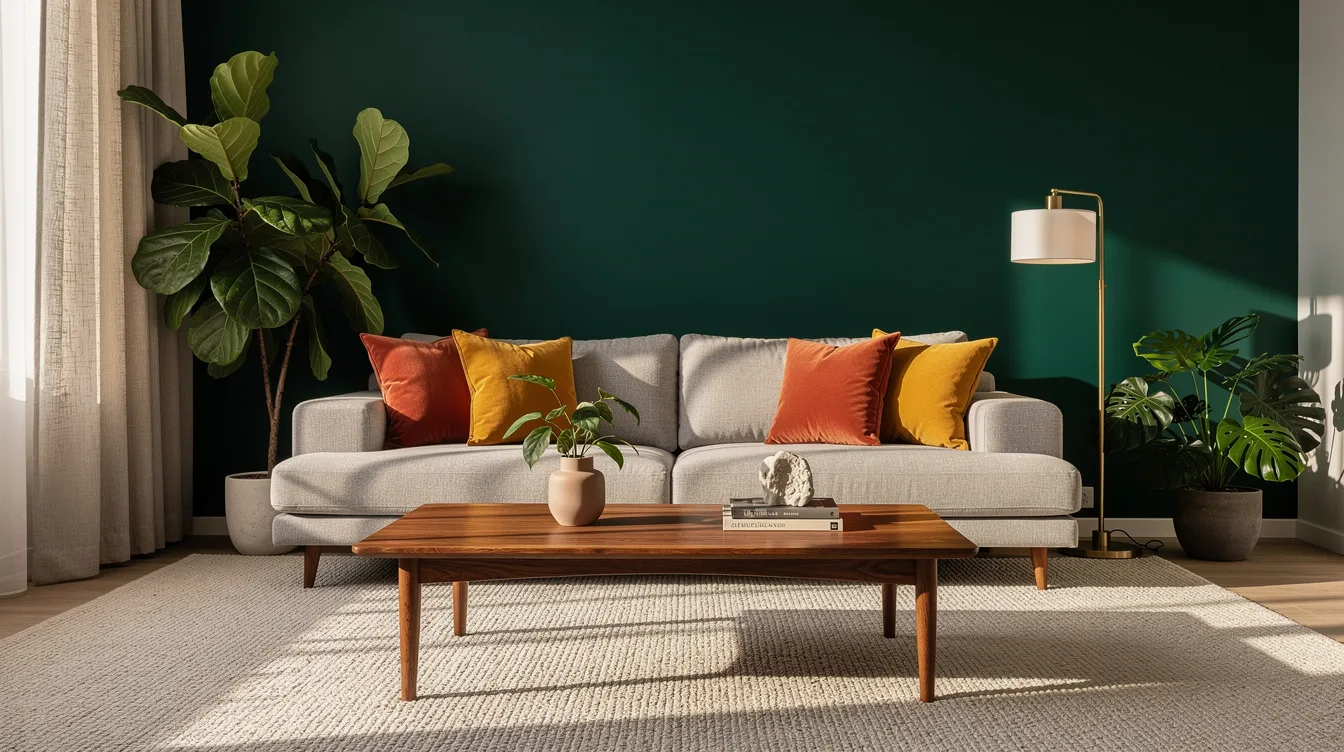
Anchor the Living Room With Emerald
An emerald living room works best when the color has one clear job: hold the seating area together. A single emerald paint wall behind the sofa is usually enough, especially if the rest of the room stays creamy or soft white.
If you want furniture to carry the color instead, a typical green velvet sofa from Wayfair or IKEA often lands around $900 to $1,800. I’d skip tiny green accessories here, they dilute the point and make the room feel undecided.
The chic version needs contrast. A warm wood coffee table, black metal lighting, and one beige rug around 8 by 10 feet keep the room grounded.
Add a little shine, then stop. One brass side table or lamp is enough, because too much metallic trim starts to look like a hotel lobby from a few years ago.
Treat Sage Like a Real Neutral
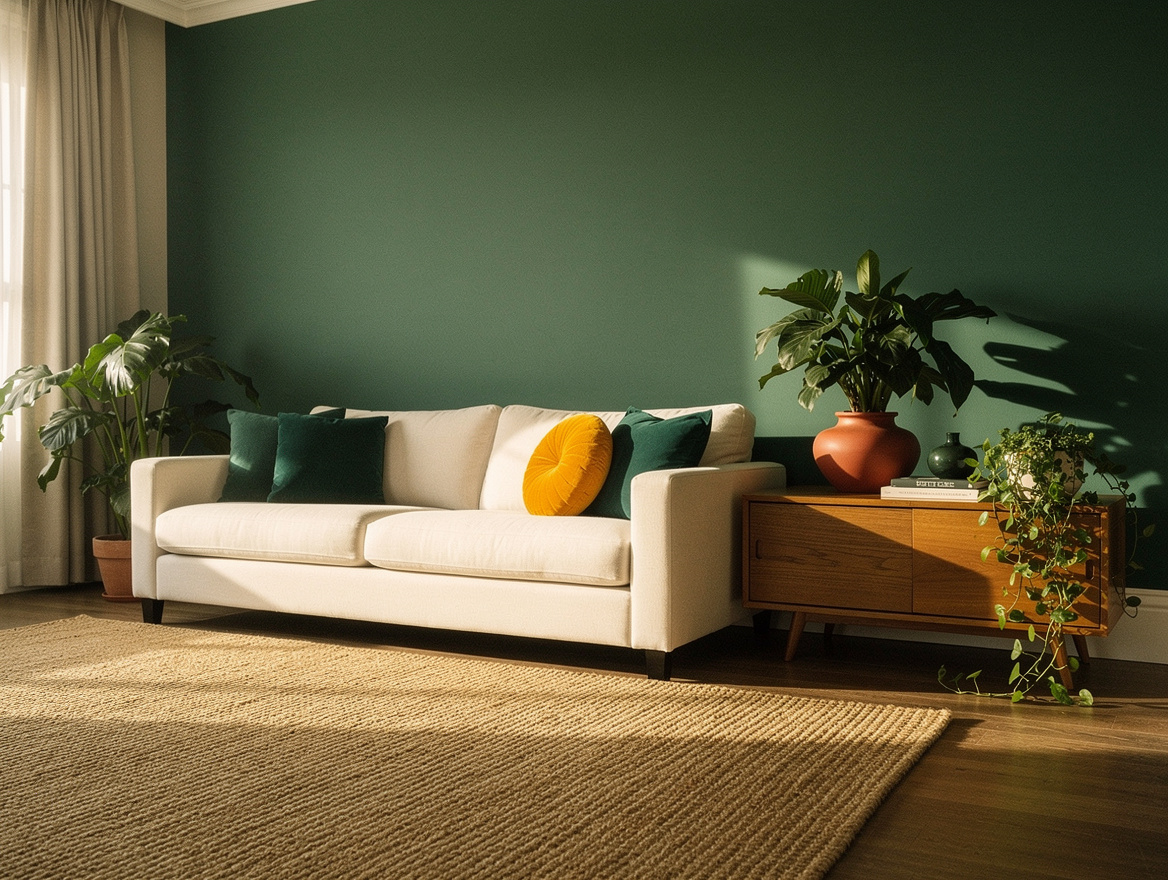
Sage is the easiest green for people who swear they “don’t do color.” On walls or built-ins, sage paint acts almost like a soft gray, but it has more life and far more warmth.
This is where I’d bring in a camel or off-white sofa, then an oak media unit from IKEA or Target. A typical woven rug in this look can run about $250 to $700, and it earns every dollar because it keeps the room from feeling flat.
Sage needs one sharper accent or it can go sleepy. Terracotta pottery, a navy throw, or a blush chair gives the room a pulse without turning it sugary.
I’m firm on trim here: keep the ceiling and trim bright. Crisp white paint around sage always looks cleaner than trying to wash the whole room in one tone.
Wrap the Bedroom in Olive and Linen
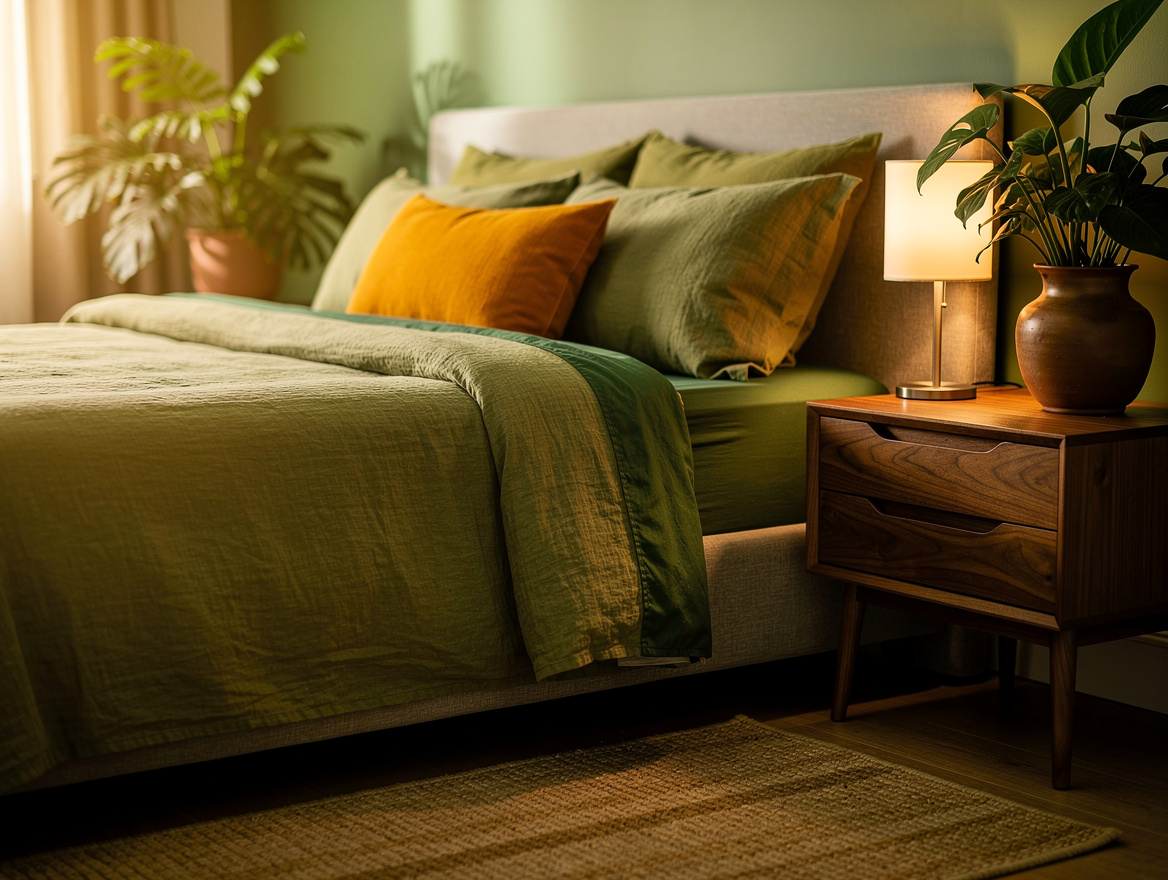
The bedroom is where darker green really proves itself. An olive paneled headboard wall or a moss-painted section behind the bed creates that cocoon effect people keep trying to fake with more pillows.
You do not need green on every wall. One deep backdrop, then lighter surrounding walls, gives the room shape and stops it from feeling like a painted box.
For bedding, I’d go straight to linen sheets in greige, ecru, or warm ivory. A typical pair of green curtains in this category often lands around $90 to $250, and they look best when the fabric has some natural slub instead of a slick finish.
Nightstands in walnut or dark oak matter more than trendy decor here. A soft-glow lamp, one bench, and a textured rug are enough, because bedrooms look richer when they hold back.
Deepen a Dining Room With Moss and Wood
Moss green belongs in a dining room because it flatters wood and makes evening light feel better. On walls, a moss finish has more depth than standard gray, and it hides the visual noise that open shelving can create.
This room should feel substantial. A solid-look dining table from Home Depot or Costco, in walnut or medium oak, gives green the weight it needs.
I like green most here when the texture mix is obvious: wood grain, woven seats, ceramic vases, maybe a matte black pendant. Glossy furniture in a moss room rarely looks chic, it usually looks over-styled.
If you want storage, a painted sideboard is a smart buy. A typical green credenza around 48 to 72 inches wide often costs about $500 to $1,200, and it does more for the room than another piece of wall art.
Wake Up a Small Office With Chartreuse
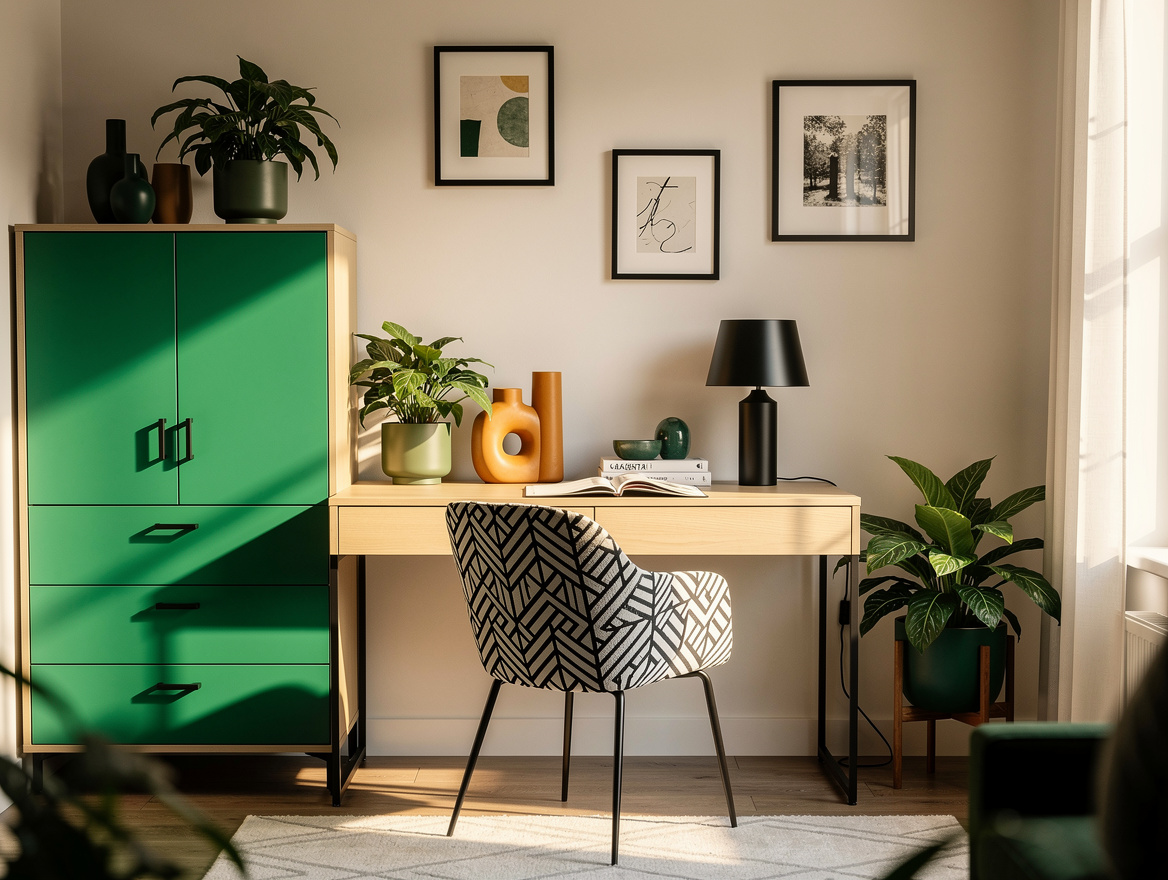
Chartreuse is not a whole-room color for most people, and that’s exactly why it works so well in a home office. A chartreuse cabinet, bookcase back, or niche can wake up a small work zone without exhausting the eye.
I’d keep the main walls neutral and let the bright green hit in one controlled spot. That tension between quiet walls and a sharp accent feels current, especially with pale wood.
This is the room where playful pieces actually help. A compact desk from Target, one graphic chair, and bold art make chartreuse feel intentional instead of random.
Don’t add ten more colors because the green feels “fun.” Two accent tones are plenty, and one of them should usually be black, otherwise the room starts drifting toward kids’ playroom territory.
Finish a Green Room With Brass, Plants, and Restraint
The difference between chic green and messy green is almost always in the finish layer. Real rooms need a few quiet materials around the color, and my favorite trio is brass hardware, warm wood, and natural fiber.
A typical large plant with a planter can cost around $40 to $150 from Lowe’s, Walmart, or Home Depot. One or two large plants do more for a green room than a shelf full of tiny décor fillers.
Texture should carry the final styling. A linen curtain panel, a jute rug, a marble tray, one ceramic lamp.
Then edit hard. If the room already has green walls or a green sofa, it does not also need green candles, green books, green frames, and green throws, because that kind of matching kills the sophistication fast.
Start with the surface that changes the room fastest: a wall, a sofa, or curtains. Pick one green focal point, warm it up with wood, and let the rest of the room breathe.
Mia Carter writes about small-space living and budget home makeovers. She has restyled three rentals and tests most ideas in her own 45 sqm flat.