
Whiskey room ideas work best when you treat the room like a private lounge, not a storage wall for bottles. I learned that after styling one like a mini shop, and it felt cold fast. The fix was not more stuff. It was darker wood, lower light, and seating that made you stay put.
- Build a backlit bottle wall around the bar
- Wrap the room in Farrow & Ball smoky walnut paneling
- Anchor leather club chairs around a tasting table
- Why does brass picture light beat a ceiling fixture here?
- Stack amber coupe glassware on a leather tray
- Tuck a barrel cabinet into the corner
- Paint the ceiling Farrow & Ball tobacco brown
- Frame the doorway with moody library sconces
- Layer a Spanish cedar humidor beside the decanters
- Add a stone fireplace behind the seating
- Vintage mirrors against dark walnut paneling
- Create a hidden tasting nook under stairs
1Build a backlit bottle wall around the bar
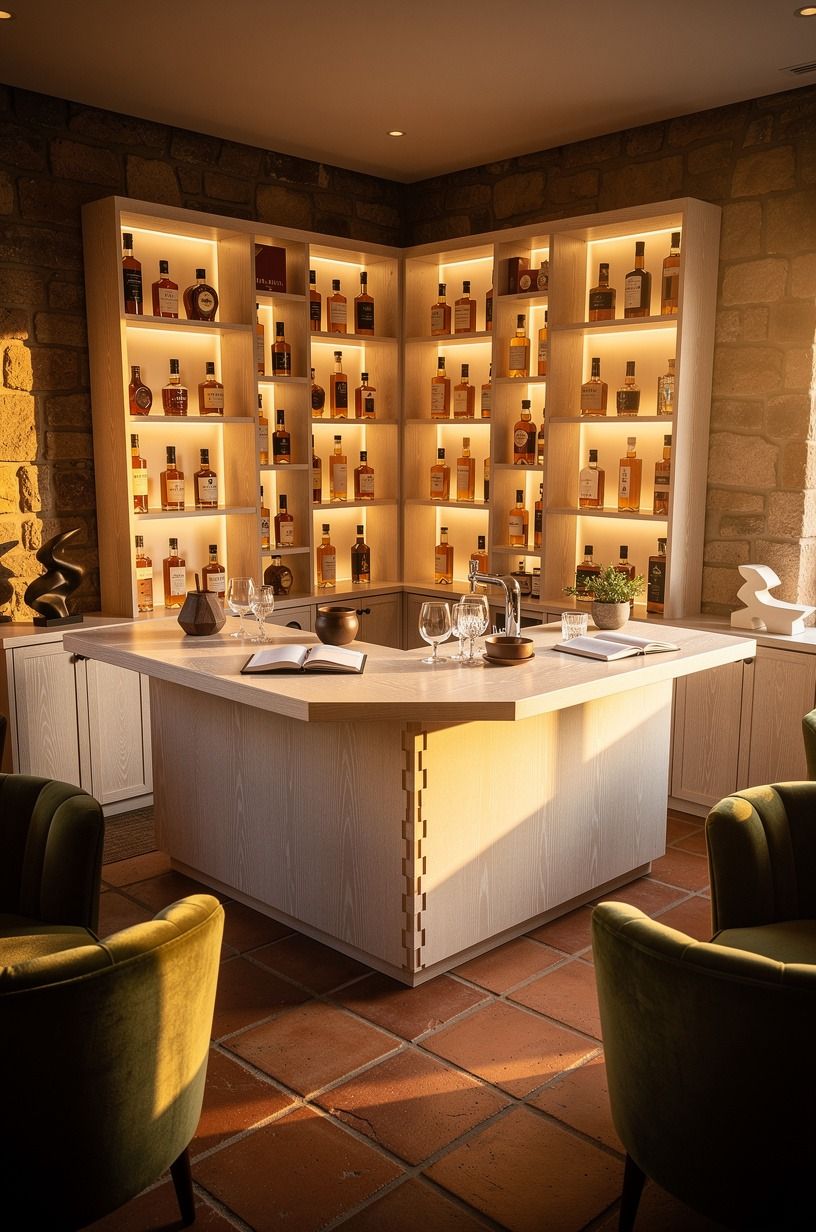
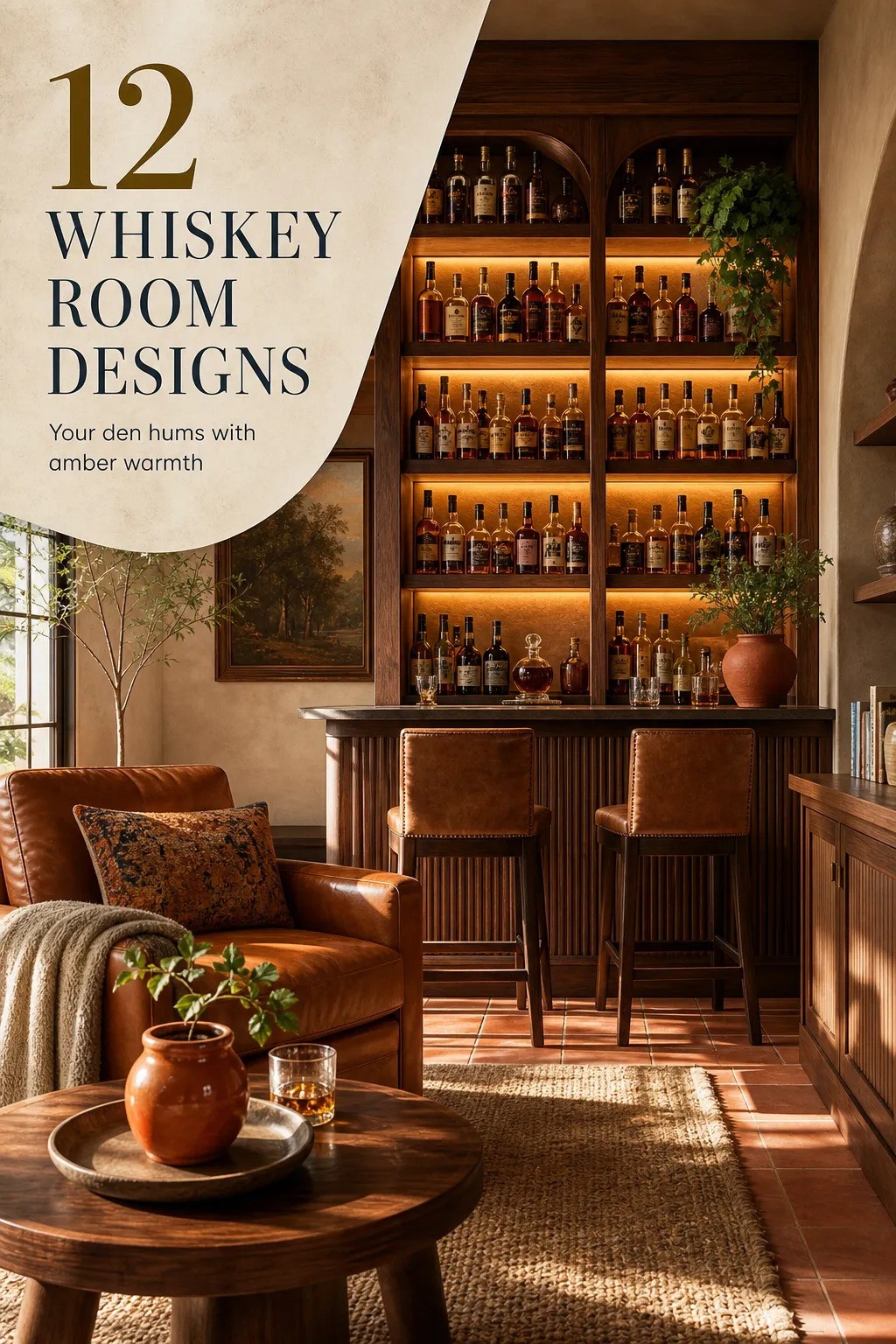
Start with glow, because your whiskey room should read warm before anyone notices the labels. A backlit bottle wall gives you that quiet hotel-bar effect right away, especially if you keep the full bar zone visible instead of crowding it with signs. I like a soft amber wash behind clear ribbed glass so the room feels lit from within, not blasted from overhead.
Keep the shelves wide enough that your bottles can breathe, then repeat the spacing all the way across. If you want the room to feel intentional, line the shelves up with the bar base and let the lighting do the flex.
For a small home whiskey room idea, this matters even more because a single glowing wall can replace extra decor. You can borrow some scale moves from this small-space layout guide.
I’d skip rainbow LEDs here. They read game room, not lounge. A warm strip hidden behind smoked acrylic backing feels richer, and your bottles will look better at night than they do at noon.
If you’re sourcing the shelving, a West Elm Mid-Century Credenza base anchors the wall and a CB2 brass picture light ties the metal story together. That’s the whole point!
For the broader lighting logic that ties the whole room together, this layered lighting piece is worth reading too.
2Wrap the room in Farrow & Ball smoky walnut paneling
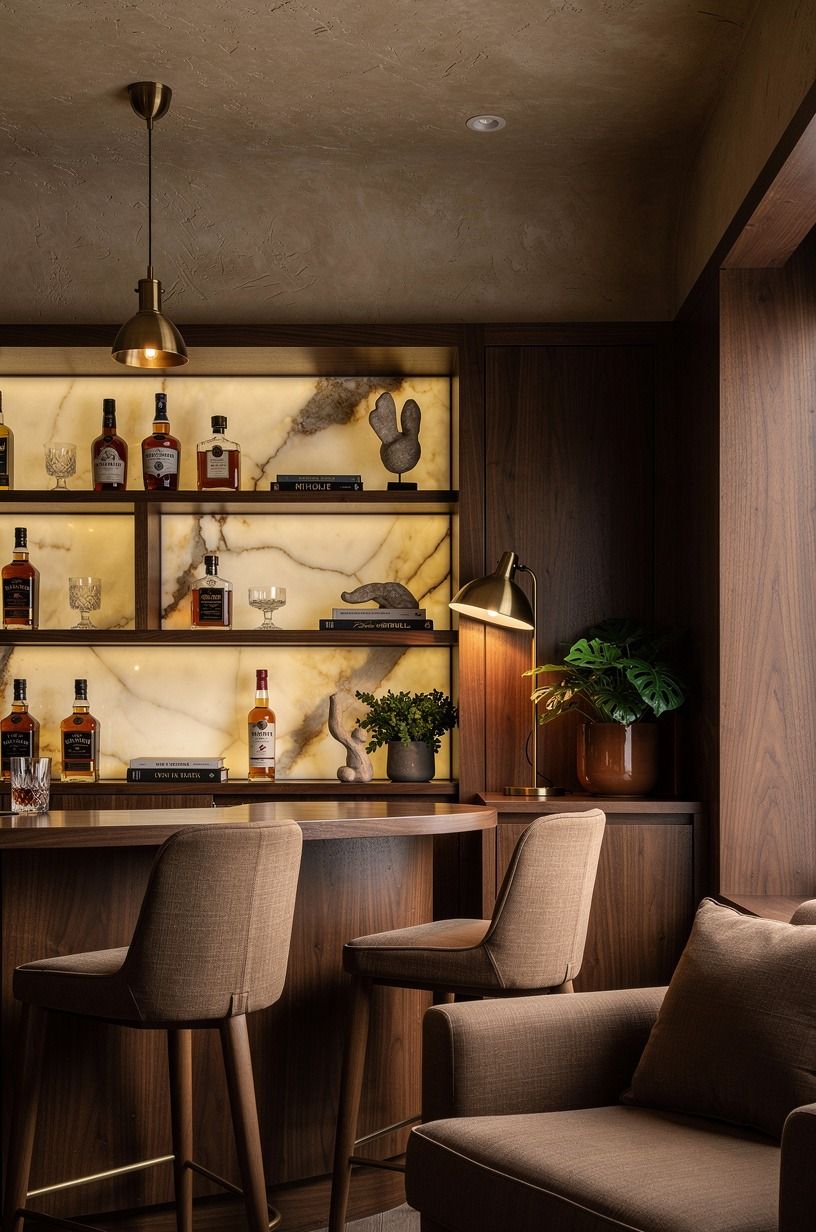
Paneling is what makes a whiskey room aesthetic feel grounded instead of improvised.
3Anchor leather club chairs around a tasting table
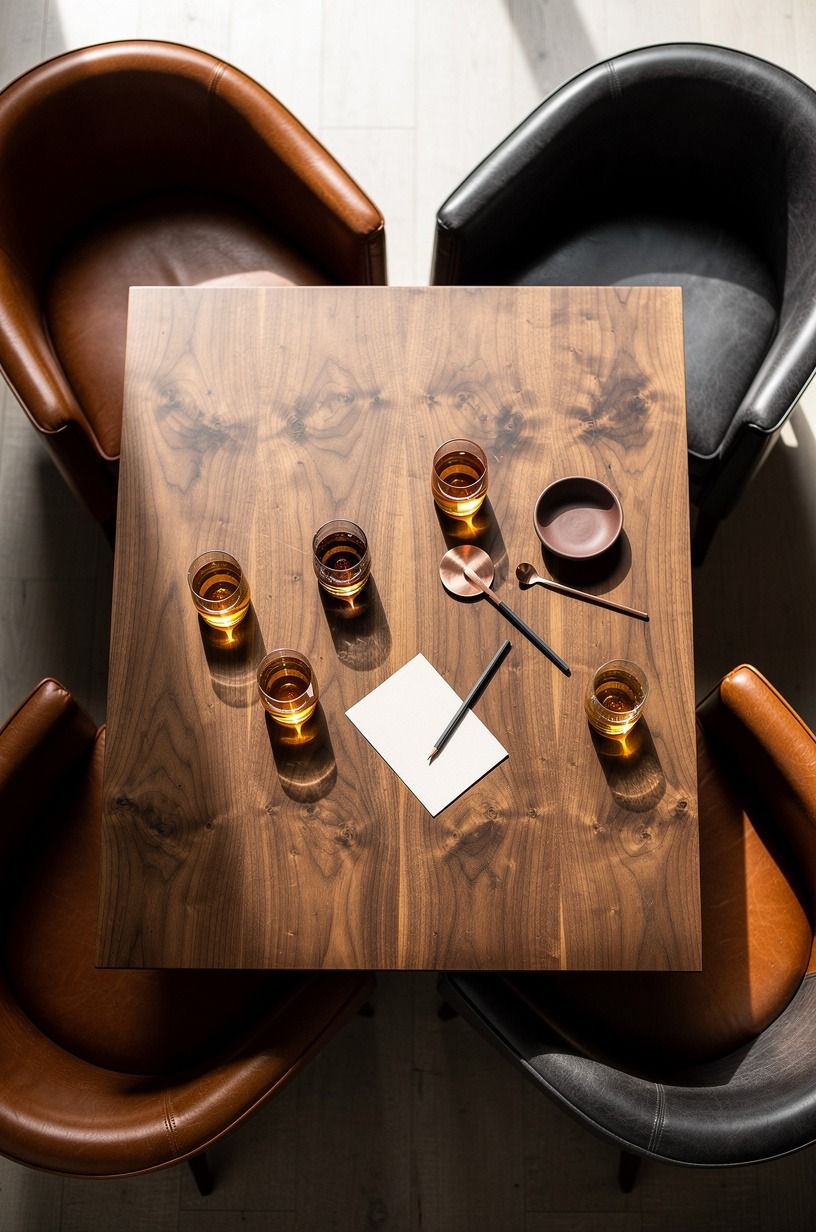
Seating decides whether people perch for ten minutes or stay for two rounds. You want chairs that hold the room down, and a compact tasting table in the middle gives all that weight a reason to gather. For me, Article Sven tobacco leather is the right direction because the shape feels classic without getting stiff.
Don’t push the chairs to the perimeter and leave a lonely table floating in space. Pull them in until the legs overlap the rug, then let the table own the center. That overlap matters.
A rug should be large enough that the furniture touches it, otherwise your home whiskey room ideas start reading like scattered props. This advice lines up with the balance notes in this living room sizing piece.
I also wouldn’t choose dining chairs here, even pretty ones. Club chairs in aniline leather invite a longer sit, and the room needs that slight sink-in feeling if you want sip-and-unwind energy instead of tasting-flight formality. A Pottery Barn Turner leather tufted chair lands in the same family if you want the look without the hunt, and a RH Belgian linen cushion softens the seat for longer pours.
4Why does brass picture light beat a ceiling fixture here?
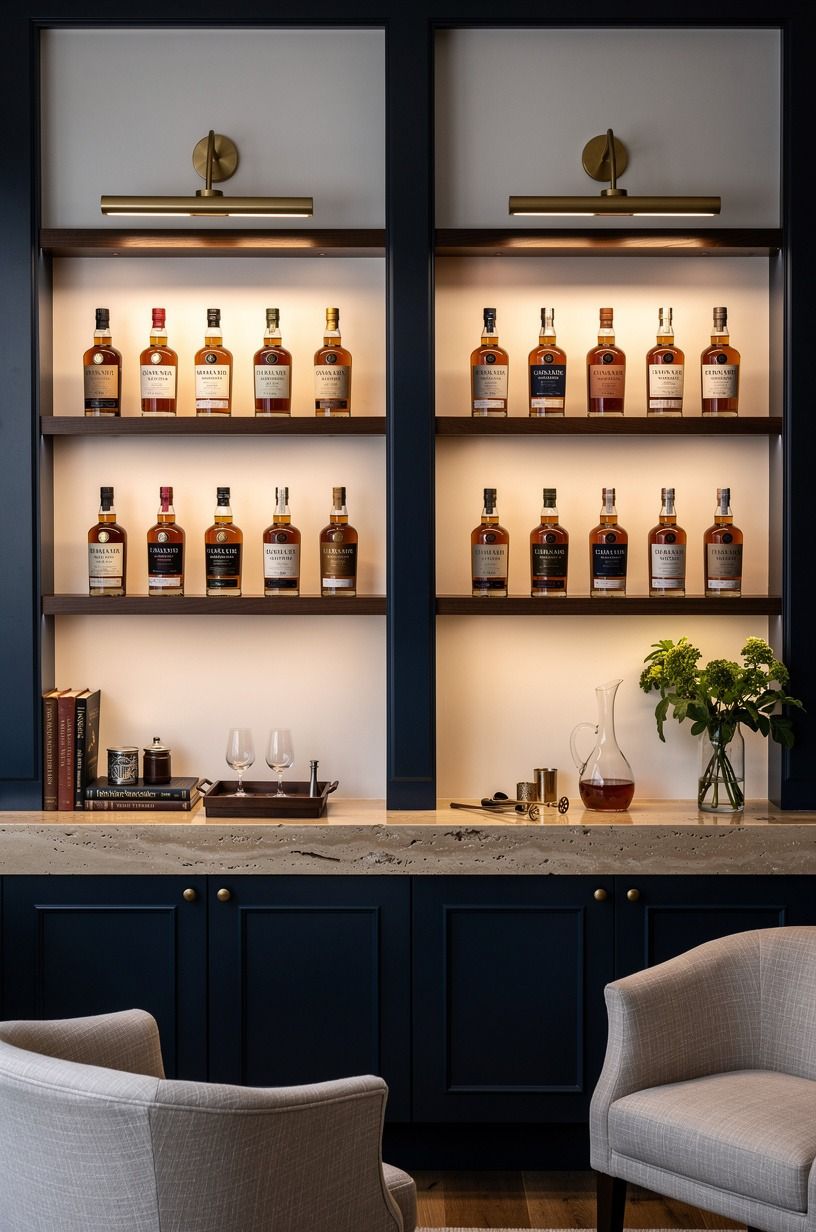
Picture lights give your shelves a gentle top-down glow, which is far kinder to glass and labels than a bright ceiling can ever be. I love unlacquered brass because the finish softens over time and keeps the shelves from looking too new.
A Circa Lighting picture light runs around $180 if you’re buying new, and Rejuvenation stocks the slim line version I usually spec. Hang them with the center of the lit zone around 57 to 60 inches from the floor if you’re highlighting art nearby, then keep the shelf rhythm symmetrical.
A House of Troy slim-line picture light fits most 24 inch shelves without crowding the labels, and the Visual Comfort brand runs the warmer 2700K bulbs I usually spec.
You don’t need a giant fixture when the room already has bottles, wood, and shadow doing the visual work. Need proof that layered light changes everything? Read why light needs places to settle.
But don’t mix polished chrome with these shelves. Brass over dark wood has the right burnished tension. Chrome feels cleaner, yes, though clean is not what a whiskey room is chasing.
5Stack amber coupe glassware on a leather tray
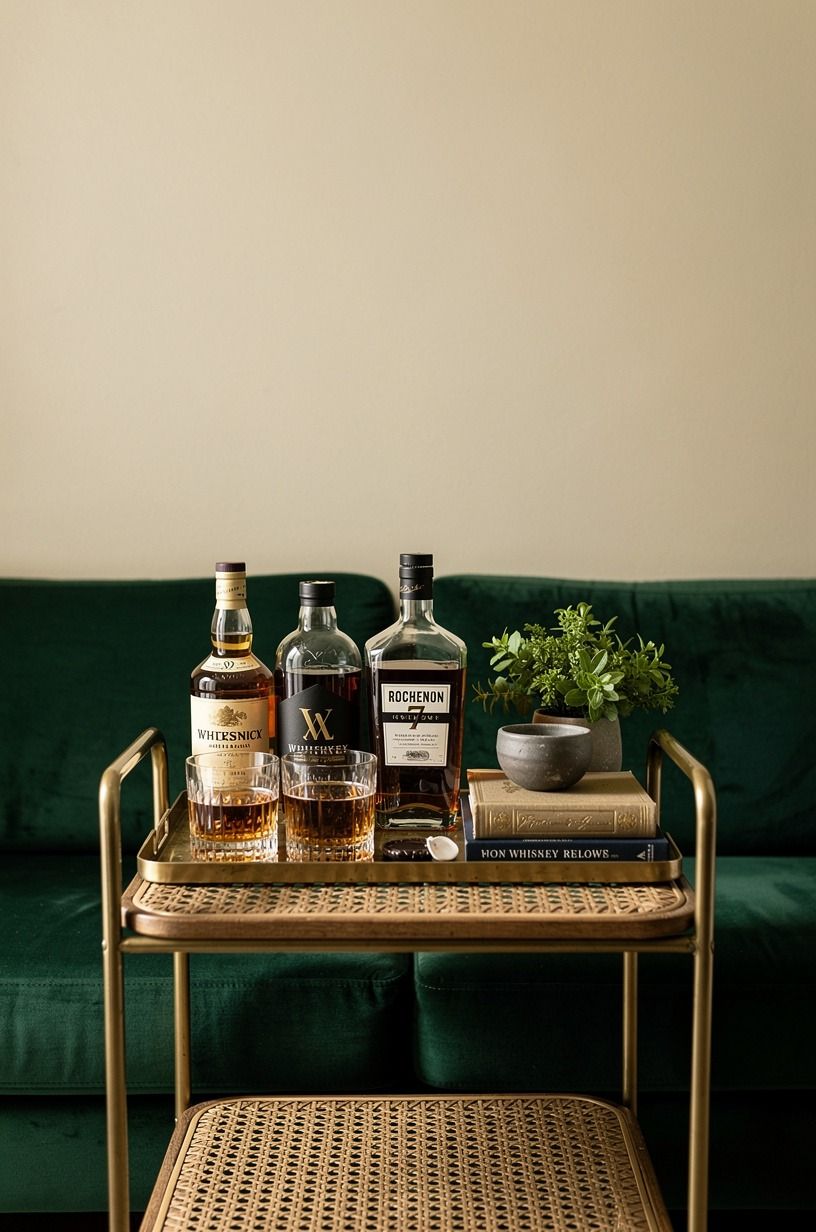
A tray station keeps your bar from turning into bottle clutter.
6Tuck a barrel cabinet into the corner
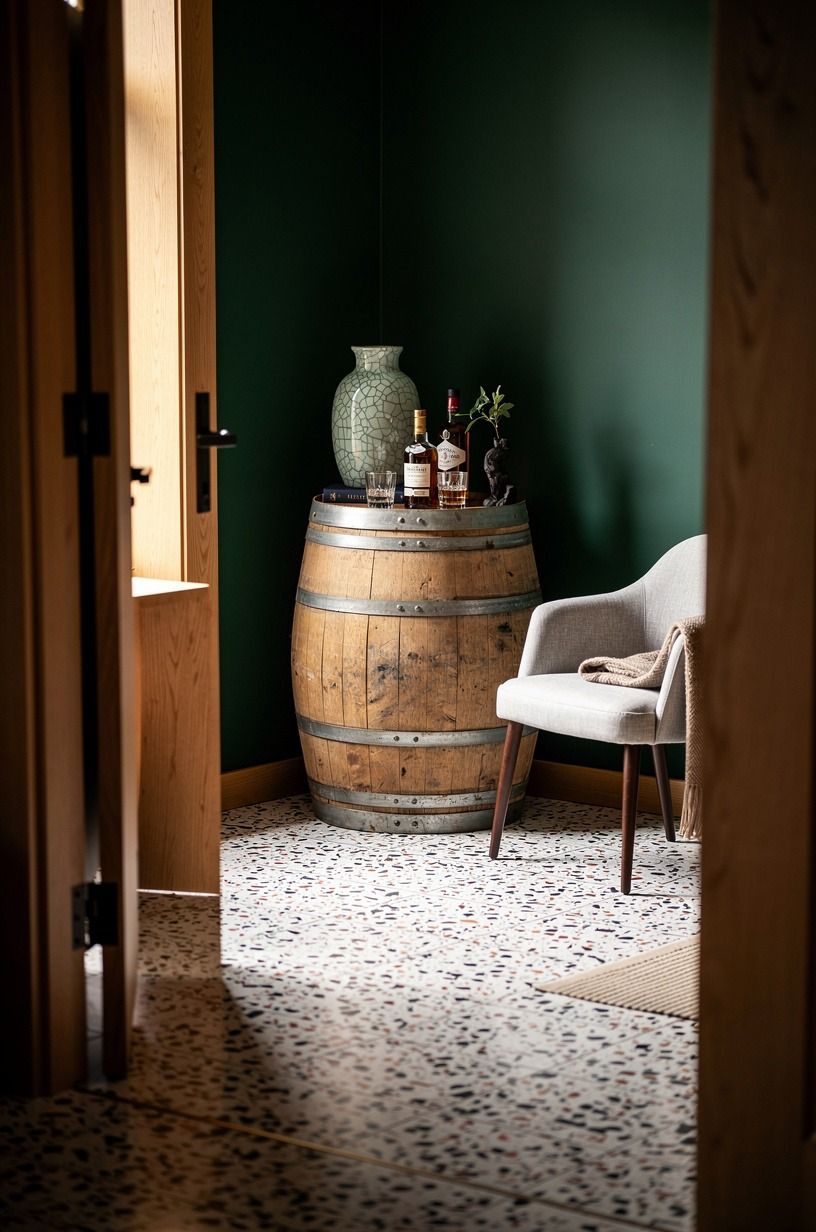
Corners go dead fast in a whiskey room. A barrel cabinet fixes that because it gives the eye a shape change and gives you hidden storage without adding another flat rectangle. If the room is viewed through a doorway, even better, because the rounded silhouette of charred oak staves reads instantly from the hall.
Keep it truly in the corner, not half-pulled out like a side table. The point is to soften the angle of the room and let the cabinet act as a tucked-away surprise.
For a tighter whiskey room, you can use it to stash coasters, extra glasses, and the bottles you don’t want on display. This is the same idea behind making a small room work harder.
I made the mistake once of styling one with too many accessories on top. It killed the form.
One aged brass lamp, one decanter, done. Worth it! The barrel shape is the decoration.
If you’re shopping new, World Market carries convincing half-barrel consoles around $350, and Etsy has handmade charred oak versions if you’d rather support a small shop.
7Paint the ceiling Farrow & Ball tobacco brown
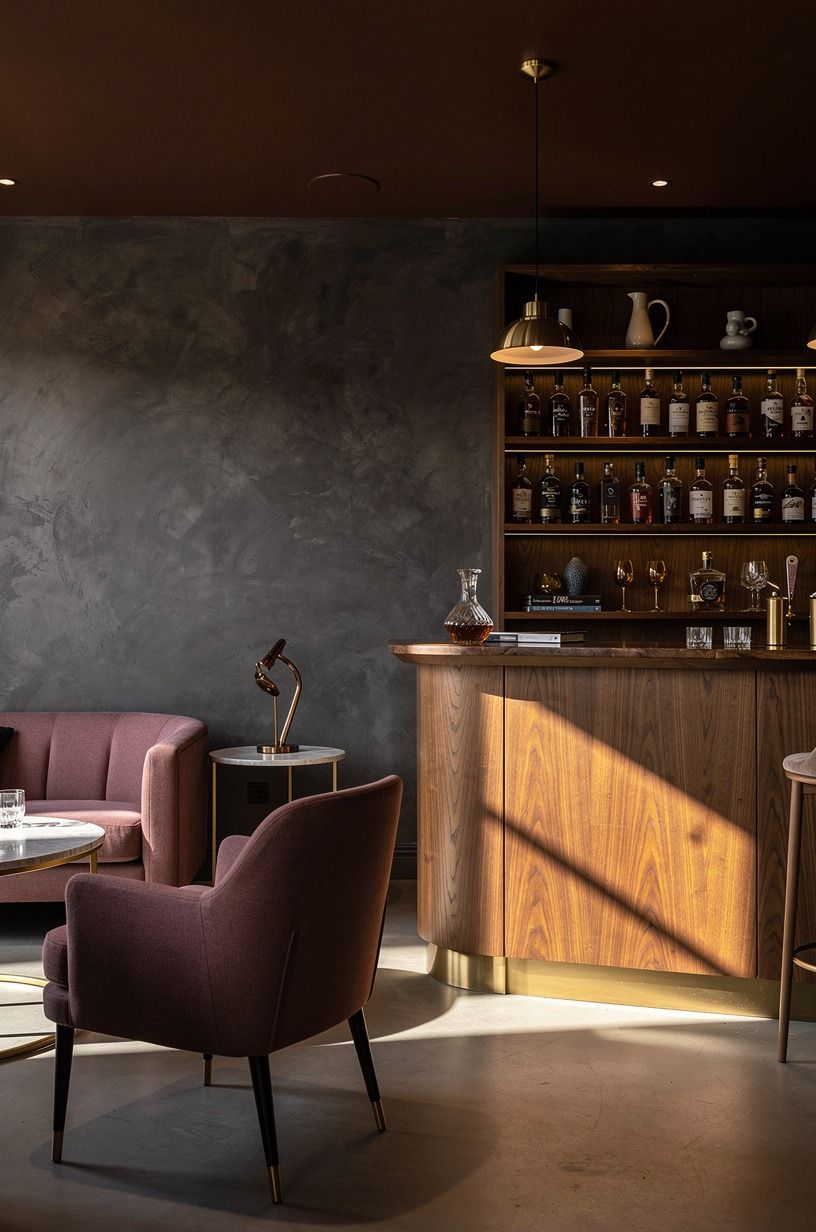
A dark ceiling changes the room faster than most people expect.
8Frame the doorway with moody library sconces
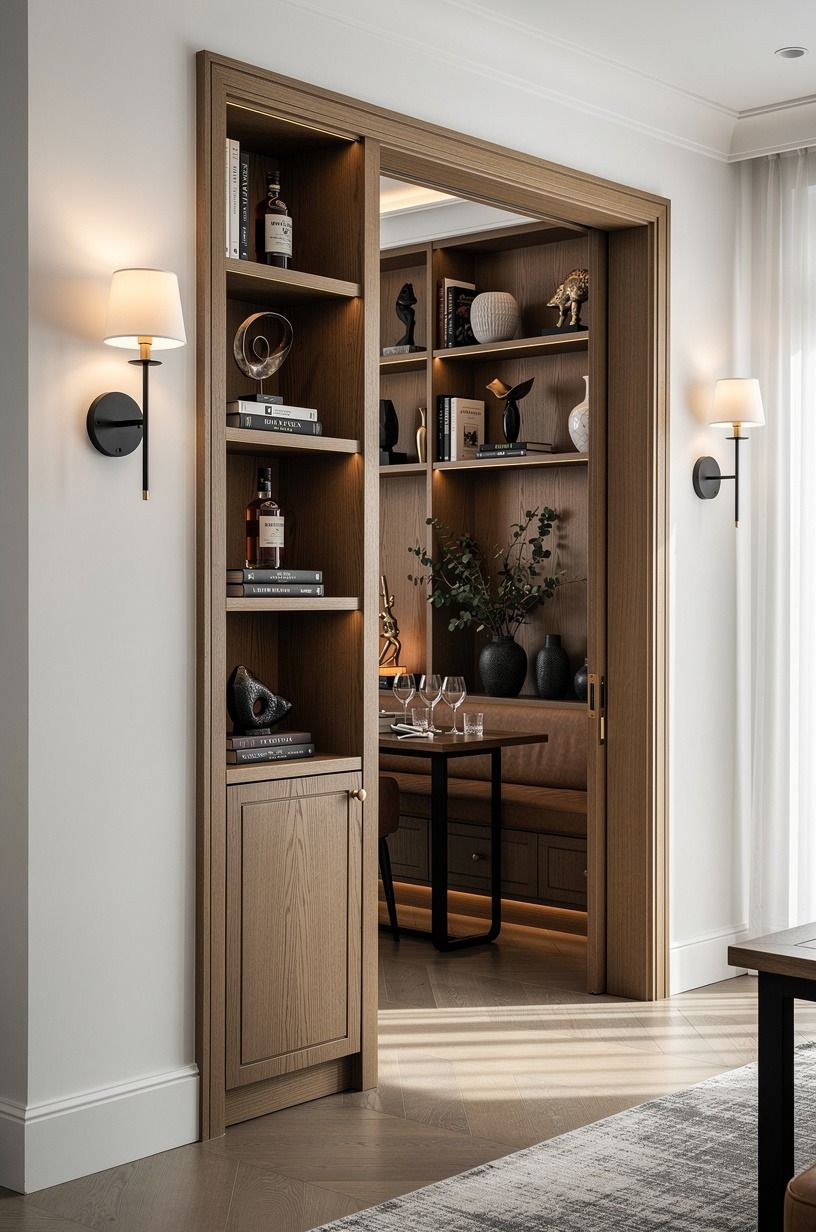
If the doorway is the entry to your whiskey room, treat it like a threshold, not an afterthought. A pair of sconces there tells you the mood starts before the first sip.
I always think of this as the home whiskey room version of a hotel corridor: low, flattering light and a little ceremony. Library sconces do that without trying too hard.
Mount the rod for any drapery 4 to 6 inches above the frame and take it to the floor if you want even more drama. Then place the sconces so they sit just outside the trim, not jammed against it.
That spacing gives the opening a frame and makes the room beyond look deeper. For more of that speakeasy pull, this moody retreat article is worth a look.
Would I use one sconce and call it done? I wouldn’t.
Two aged bronze sconces give your doorway the symmetry that makes the whole room feel planned, not improvised. A Schoolhouse Electric library sconce hits the right note if you’re buying new, and Rejuvenation has the matching aged-bronze backplate for the roomier door frames.
9Layer a Spanish cedar humidor beside the decanters
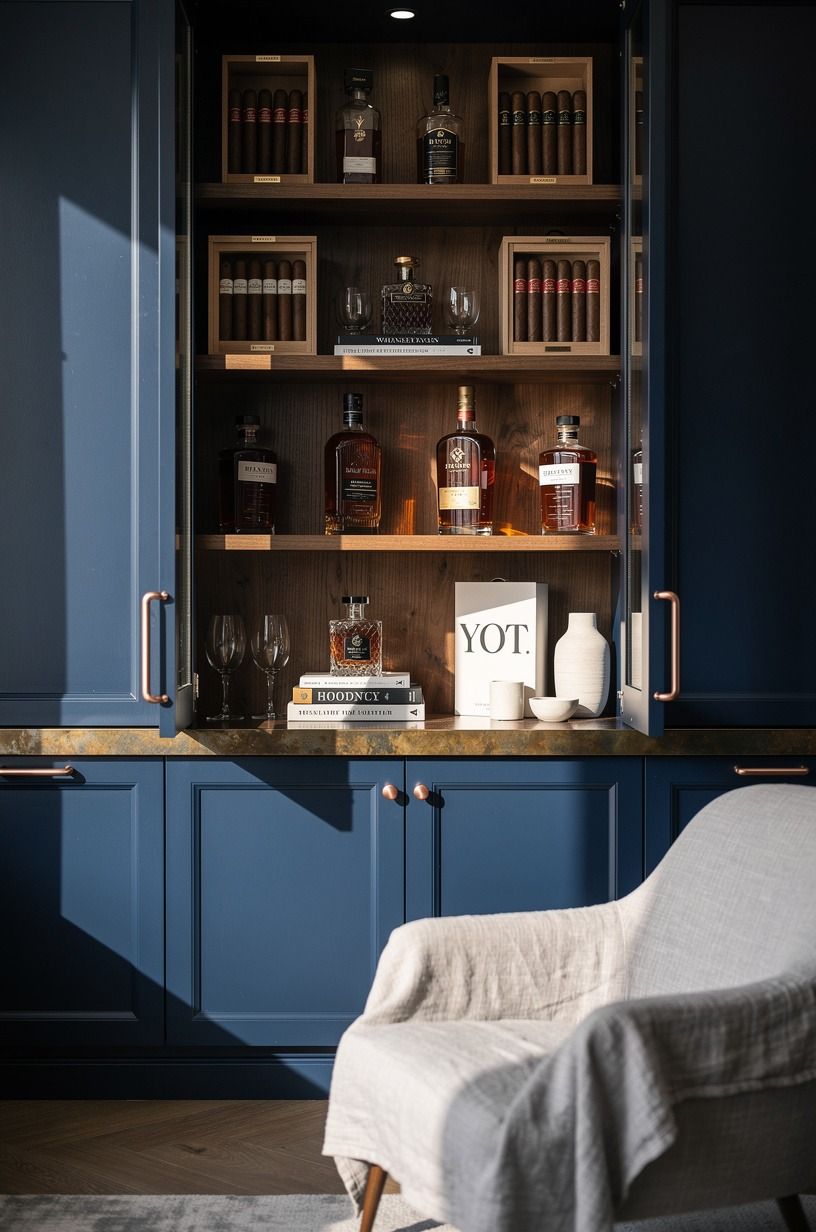
This works because a humidor brings in a boxy, tactile note that balances all the reflective glass nearby. On a low, dramatic angle, the contrast between polished decanters and matte wood is what reads first. That’s why I like Spanish cedar lining beside crystal instead of another mirrored object.
Give the shelf breathing room. One humidor, two decanters, maybe a book stack, and a small dish for matches if the room includes candles. You want the materials to converse, not compete.
If your whiskey room is small, the shelf can be narrow as long as it isn’t crowded, and this tiny-room texture guide explains why fewer surfaces can still feel layered.
I’d pass on novelty cigar signs. A real walnut humidor already says enough, and the shelf will look more grown-up if you let the objects stay quiet. A Davidoff humidor lands around $400 if you want the lineage, while a Boveda humidity pack inside keeps the cedar honest year-round.
10Add a stone fireplace behind the seating
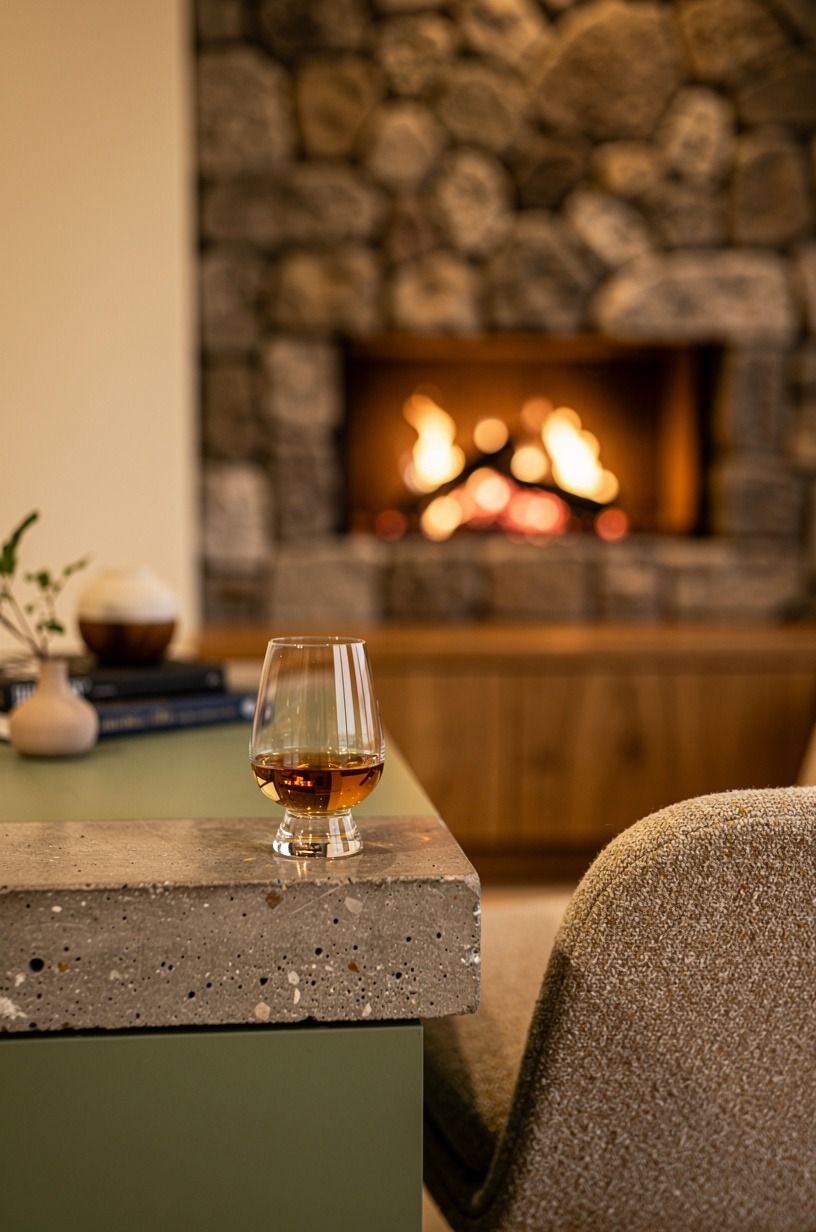
A fireplace behind the seating changes the room from bar corner to full retreat.
11Vintage mirrors against dark walnut paneling
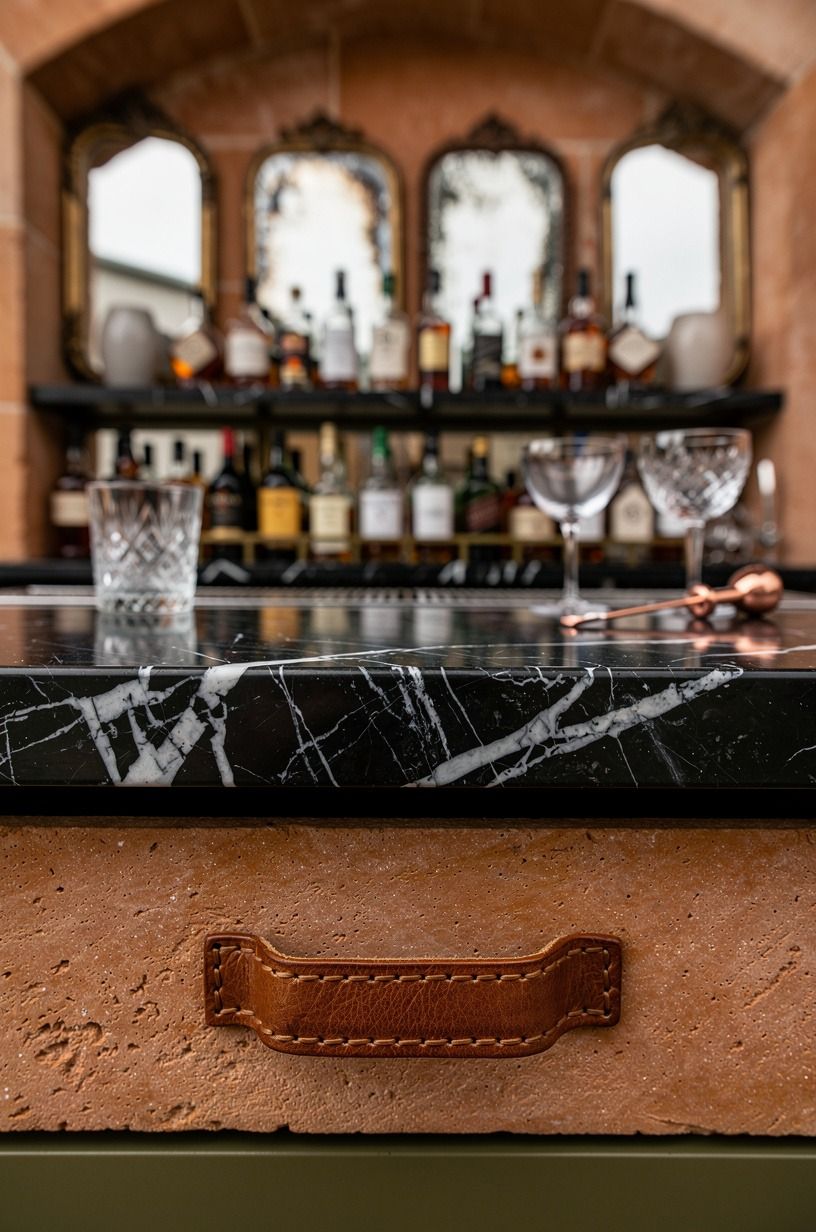
Mirrors behind bottles are less about reflection than depth. They bounce low light, double the glass, and make a compact bar feel like it goes farther back than it does. I prefer old mirror panels with a little foxing because antique mirror glass gives you softness where a plain new mirror would feel sharp.
Keep the mirrors narrow enough that the bottle wall still wins. You’re after shimmer, not a dance studio effect.
Ground-level views across the bar surface make this move look especially rich because you catch reflections from labels, amber pours, and brass in one line. If you need another example of scale over excess, this small-room article makes the same case.
But skip mirrored tiles with heavy bevels. They date a room fast.
A simple field of vintage mirror panels feels moodier and far less busy. Anthropologie carries a foxed panel that nails the look if you don’t want to thrift, and a single Pottery Barn antiqued mirror runs $200 for a 24 by 36 inch panel.
12Create a hidden tasting nook under stairs
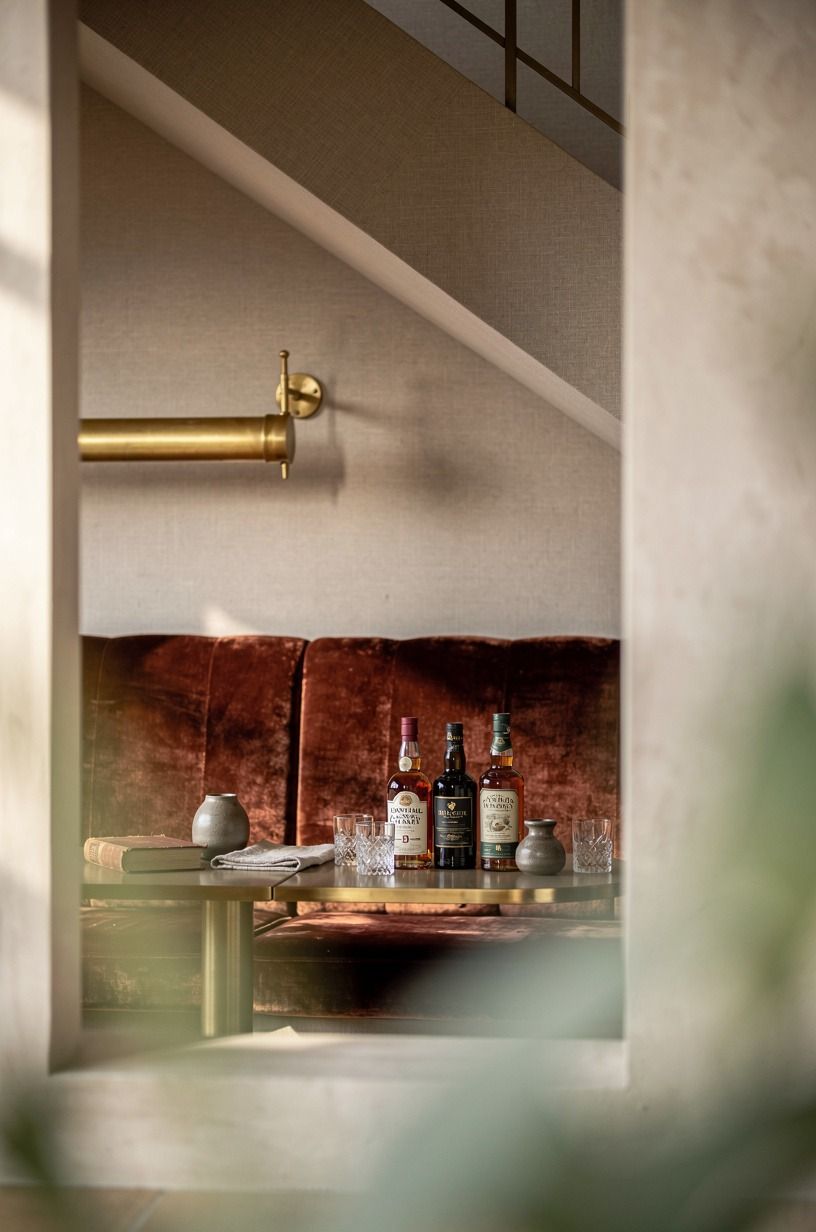
Under-stair space is perfect for a whiskey room because it already feels tucked away. You don’t need a giant footprint when the point is intimacy. Add one chair, a ledge for pouring, and one layer of soft light, and suddenly your dead space becomes the spot everyone wants.
That’s why built-in bench seating or a compact lounge chair works better than trying to force a full bar cart down there. A CB2 Stairway lounge chair fits most under-stair pockets, and an IKEA EKTORP seat cover in a deep mohair velvet slipcovers a tired chair in a single afternoon.
Use the slope, don’t fight it. Lower art can sit with its center closer to 57 inches from the floor line of the nook, and a custom cushion in Belgian flax linen keeps the corner relaxed instead of overly polished. If you’re working with an awkward apartment footprint, this space-planning guide can help you think through what really needs to fit.
I love this move for renters too, because you can create the feeling with paint, lighting, and one tailored seat instead of built millwork. Small space, big payoff.
Every single time! So good.
What does a whiskey room cost? Honest price breakdown
If you’re wondering what a whiskey room costs, the short answer is this: you can get the mood started for $200 to $800, but custom millwork is where the numbers climb. I think people overspend on the bones too early. You usually need the right lighting, one grounded seat, and a darker envelope before you need anything bespoke.
For materials, the numbers are just as telling. A wool rug generally lands around $400 to $1,500, a statement light can run $150 to $800, and full-room paint sits around $200 to $600 if you’re doing the work yourself. That’s why I tell you to build the room in layers.
First the envelope. Then the lighting.
Then the one hero piece. The value is in restraint, not in the receipts.
Where most whiskey rooms fail (and how to skip that)
Here’s my honest take: most whiskey rooms fail because they copy the objects and skip the feeling. People buy decanters, line up bottles, add one masculine chair, and call it done.
Then they wonder why the room feels more like a retail display than a place you’d hide in after dinner. I’ve done that version, and it taught me the same lesson fast.
A whiskey room isn’t about showing people what you own. It’s about controlling what the room does to your body when you walk in.
The best ones slow you down in the first ten seconds. You should feel the light drop.
You should notice one material before you notice five objects. That’s why dark wood matters, why lower lamps matter, and why the seating has to ask for your full weight instead of politely offering a place to perch.
If the room doesn’t make you exhale, it is not finished yet.
I also think people get the hierarchy backward. They start with collectibles when they should start with architecture. A painted ceiling, a better rug, and a pair of chairs that overlap the rug will do more for your whiskey room than another rare bottle ever will.
Same goes for mirrors, trim, and doorway lighting. Those are mood-builders.
Bottles are supporting actors.
And yes, you can do this without a giant basement or a custom bar. Some of the best whiskey room decor I’ve seen lives in a den corner, under a stair, or in a former reading alcove with one Target Threshold lamp and a seriously good chair.
The room doesn’t need to be large. It needs to be edited.
I went back and forth on that for longer than I should have, because more stuff feels productive. It isn’t.
So when you make your decisions, ask one question: would you still want to sit here if every bottle disappeared for a week? If the answer is yes, you’ve built a room.
If the answer is no, you’ve built storage with mood lighting. And those are not the same thing.
The Questions Worth Answering First
What is the best small-room move for a whiskey room?
The best small-space move is a backlit bar wall plus one deep chair. A single focal glow gives your room purpose, and one compact seat like an Article Sven keeps it usable without crowding the floor.
I’d add a narrow shelf, not a second bulky chair. The small-space layout guide helps if your footprint is awkward.
Where can I buy whiskey room pieces on a budget?
Start with IKEA, Target Threshold, and Wayfair, then check Facebook Marketplace for wood cabinets and mirrors. Secondhand wood often looks better than cheap new laminate in a whiskey room. I also search thrift shops for trays, decanters, and low lamps before buying anything boxed.
How much does a whiskey room makeover cost?
A simple makeover usually runs about $200 to $800, while a fuller furniture-and-lighting pass can hit $1,500 to $5,000. Paint does the cheapest heavy lifting. Free moves count too: edit clutter, move seating onto the rug, and swap the brightest bulb first.
For renters, every layer over $500 starts feeling like an investment you might not keep.
Can I build a whiskey room on a budget?
Yes, and you do not need custom work to get the vibe. Low-cost mood comes from darker paint, one warm lamp, and a tray that organizes your pour zone.
Start with paint, thrift a mirror, and restyle what you already own before adding new furniture. This texture-layer guide is a smart place to start.
Is a whiskey room worth it in a small space?
Yes, especially in a small room, because the tight footprint helps the mood land faster. Smaller rooms trap warmth and shadow better when your lighting is layered. Keep the layout simple, let the furniture overlap the rug, and give the bar one clear wall instead of scattering bottles around.
Is a whiskey room a good idea for a rental?
Yes, if you lean on reversible changes. Rental-safe upgrades like plug-in sconces, peel-and-stick paneling, and removable paint-friendly shelves can get you close. I’d also use a freestanding cabinet, floor lamp, and tension-rod drapery before I touched anything permanent.
What makes a whiskey room worth the spend?
If I had to pick one, I’d start with the backlit bottle wall. It changes the room before you buy a second chair, and warm glow covers a lot of ordinary architecture. Pin that idea for later and read this speakeasy retreat guide for the deeper speakeasy playbook.