
You can style a cozy winter living room for warm nights in with fifteen ordered moves, starting with light and ending with layered texture. I’ve learned the room won’t feel warm because you bought more beige. It needs a plan. Start with this warm minimalism living room audit, then let the room tell you what it’s missing.
Before You Start: Measure the Room and Set the Mood
Before you move anything, measure your sofa, rug zone, and the wall where your television or fireplace sits. You’ll want to know whether a sofa depth of 35 to 40 inches leaves enough walking space for your room. I also pause in the doorway because your eye catches awkward gaps better from there than it does while you’re standing inside the room.
Write down what already works. Maybe your cerused white oak floor has a lovely honey tone, or your old chair has a shape worth keeping.
Don’t buy around a problem you haven’t named. If your room feels chilly because the layout blocks the window, more pillows won’t solve it. Start with a clear view of the floor, the light, and your best existing piece.
For a smaller room, study this guide to making a 250 square foot living room hold more winter warmth. You’ll see why a little breathing room can feel more inviting than another object.
- Map the Cozy Winter Living Room Light
- Benjamin Moore or a Softer Winter Wall?
- Anchor the Seating With the Two-Wood Rule
- Float the Coffee Table at the Right Height
- Three Heights, One Room: Build the Light Stack
- Place the Rug Under the Front Legs
- Seating Angle: Who Is the Room Facing?
- Wider Drapes, Softer Edges
- Mix Soft Textures With the Four-Layer Formula
- Frame the Fireplace or Media Wall
- Paint the Trim for a Gentle Contrast
- Build the Budget Around What You Touch
- Hide Winter Clutter With the Right Storage
- Mix Winter Home Decor With Something Personal
- Finish With the Softest Evening Layer
1Map the Cozy Winter Living Room Light
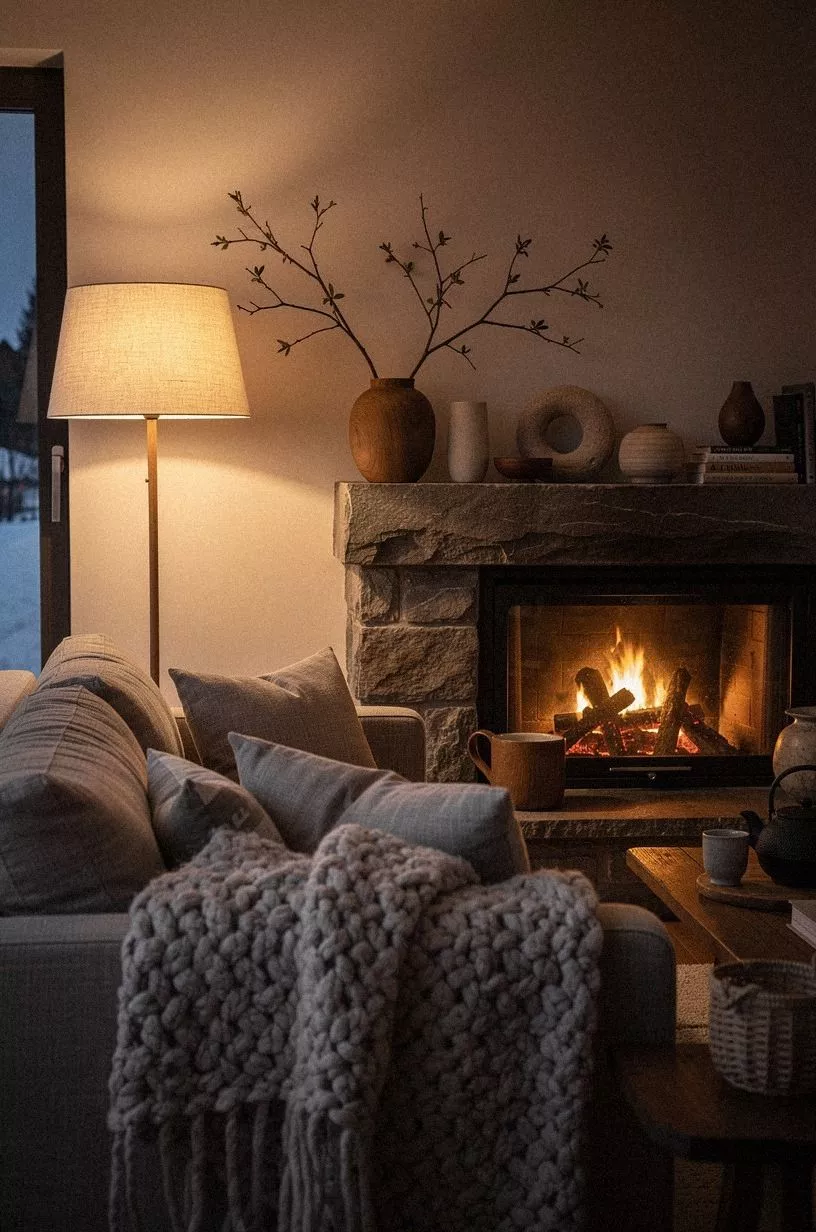
Begin with the light you already have. Turn off the overhead fixture at night and notice where the room goes flat.
Your first goal is to create three pools of light, one near the sofa, one beside the seating area, and one at eye level near a shelf or artwork. I prefer this to a single ceiling fixture because it makes your room feel intimate instead of evenly washed.
Use warm bulbs and place a floor lamp beside the organic bouclé seating, where its glow can touch the rug rather than only the wall. Keep emerald, gold, and cream nearby so the palette feels warm after sunset.
If you’re styling a narrow room, keep one lamp behind the sofa and another near the reading chair. That small overlap keeps your winter living room from developing a dark dead zone.
And yes, one lamp can be enough if you’re working with a tight budget. Pair it with a candle or a small table light you already own.
For more detail, compare your layout with this warm minimalism living room audit. You may find that moving one lamp closer to the organic bouclé seating works better than buying three new fixtures.
A boho living room reference can also help if your space feels too uniform. Borrow the layered lighting idea, not every object in the reference.
2Benjamin Moore or a Softer Winter Wall?
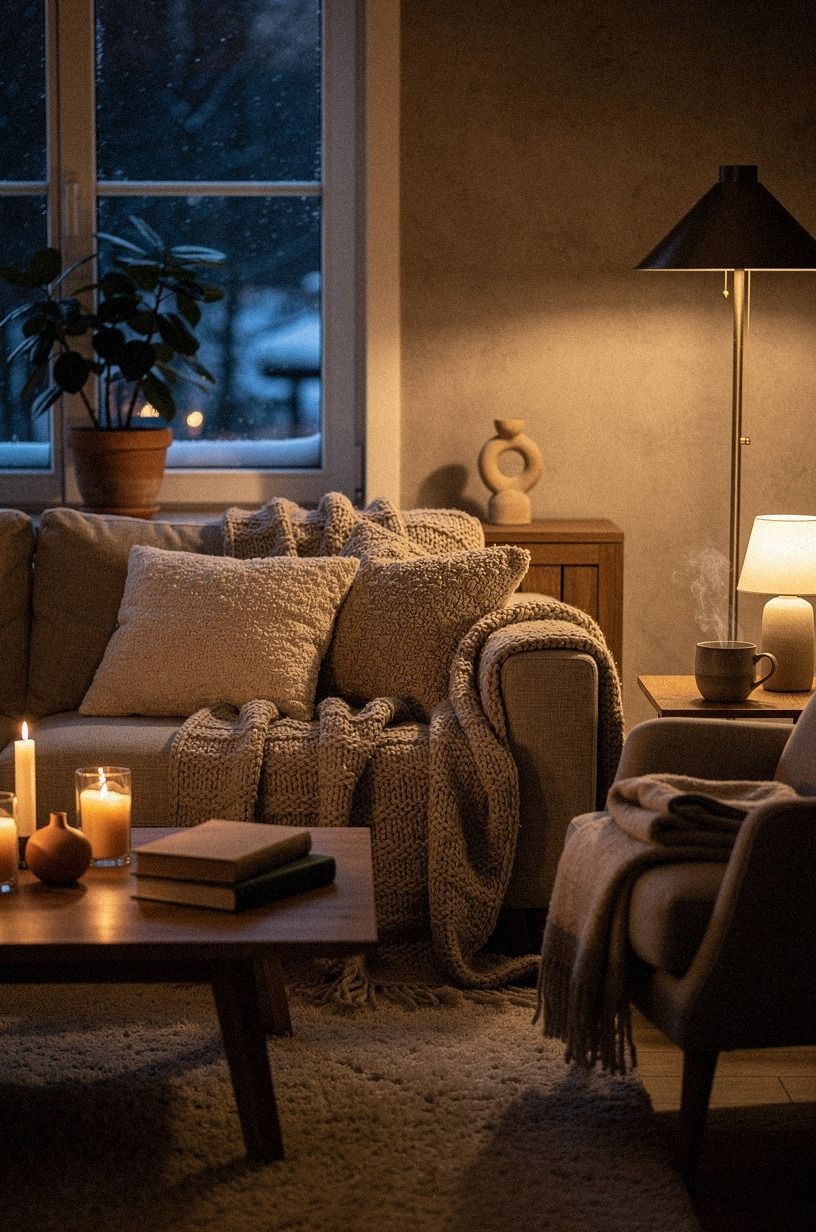
Choose the wall color before you shop for accessories.
3Anchor the Seating With the Two-Wood Rule
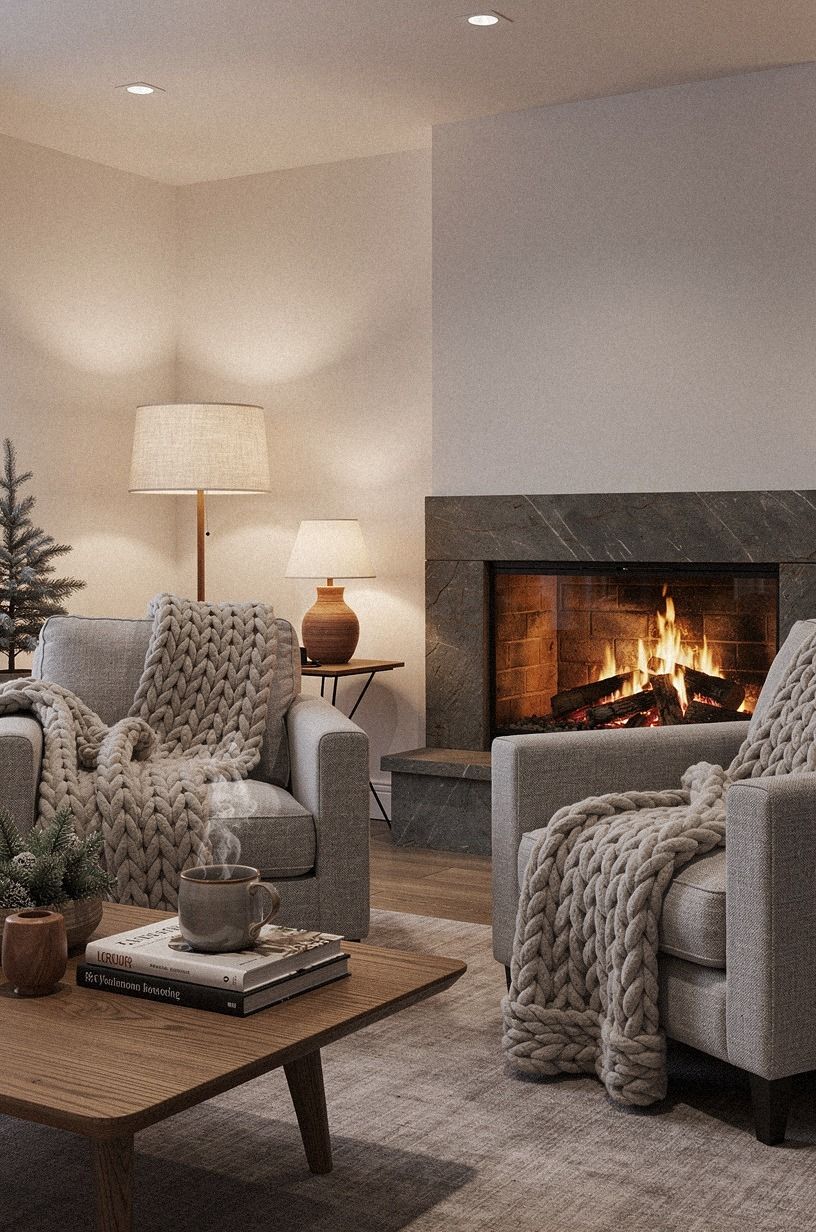
Choose one large seating anchor, then connect it to the room with two wood tones. That’s the Two-Wood Rule: one dominant wood, such as walnut, and one lighter note, such as oak. Your room will feel collected when the tones relate without matching exactly.
I’d avoid four different finishes because they make a small living room look busier than it needs to be.
A deep-pile mohair velvet sofa in dusty rose or charcoal brings a warm, tactile note, but its depth still matters. Leave enough space for your knees and for the coffee table to sit comfortably in front of you.
If your sofa is already neutral, use an aged brass tray or a dusty rose textile rather than replacing the whole piece. The room can feel inviting without becoming a furniture showroom.
But don’t force wood into a room that already has strong flooring and a heavy cabinet. You can use a charcoal basket or a small aged brass frame instead. Your eye needs repetition, not a collection of matching furniture.
This walnut living room wall with three winter textures shows how the rule can stay subtle.
For another restrained approach, compare the room with this warm minimalism audit. It’s a good reminder that one aged brass picture frame can repeat a finish without making the room feel themed.
4Float the Coffee Table at the Right Height
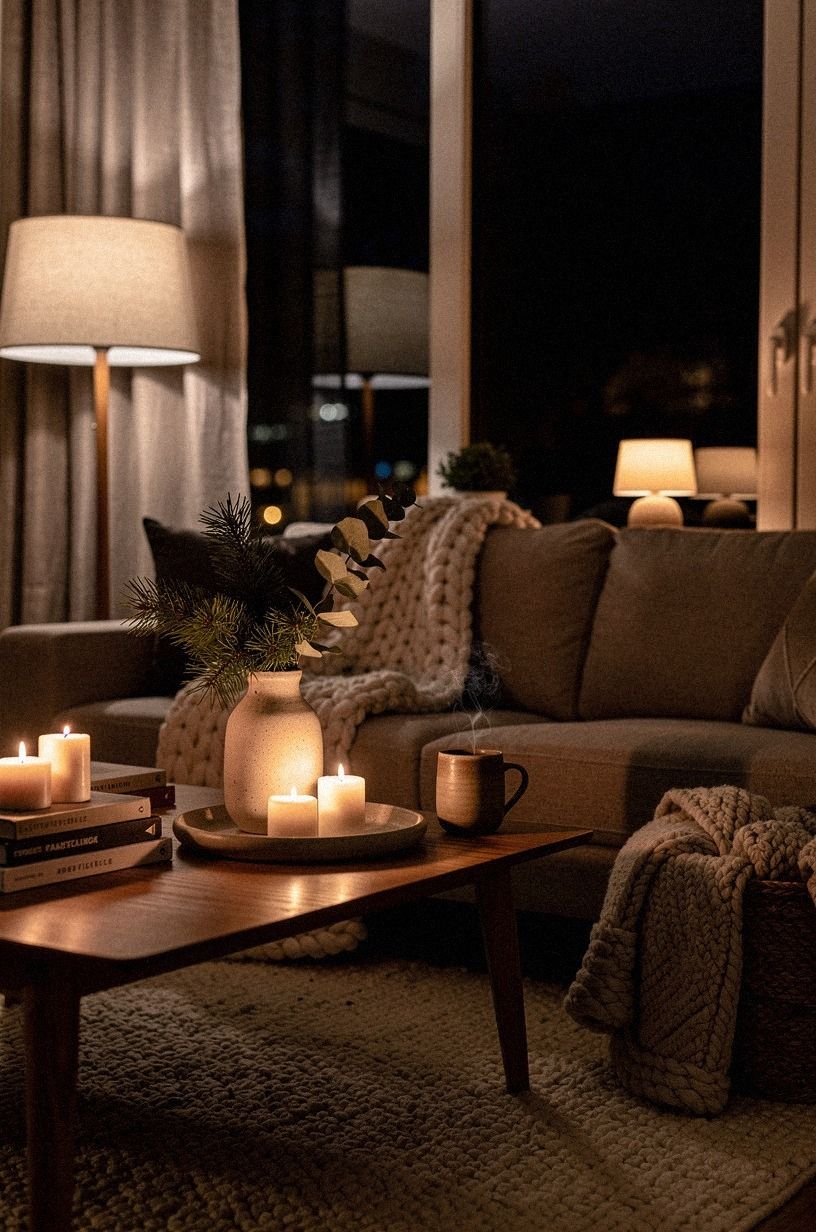
Place your coffee table so it supports conversation without closing the room. A table around 16 to 18 inches tall usually sits comfortably with a standard sofa, and the top should be about two-thirds of the sofa’s length. You’ll want enough room to set down a mug, but not so much that your knees feel trapped.
I like a warm-white coffee table with a hand-applied Venetian plaster finish because it catches lamplight without throwing glare. A round version helps your walking path, while a rectangular version can define a long seating arrangement.
I’d skip glass if you’re trying to make the room feel warmer. It disappears visually, but it also adds a colder reflection at night.
Keep the styling low. A camel-toned bowl, one candle, and a stack of books are plenty for your table.
If you’re worried about clutter, leave one-third of the surface empty. You’ll use that space more than you think, especially when your family brings in tea, cards, or a bowl of popcorn.
If the table still feels too formal, browse these boho living room ideas for permission to mix a camel-toned bowl with a more polished piece.
5Three Heights, One Room: Build the Light Stack
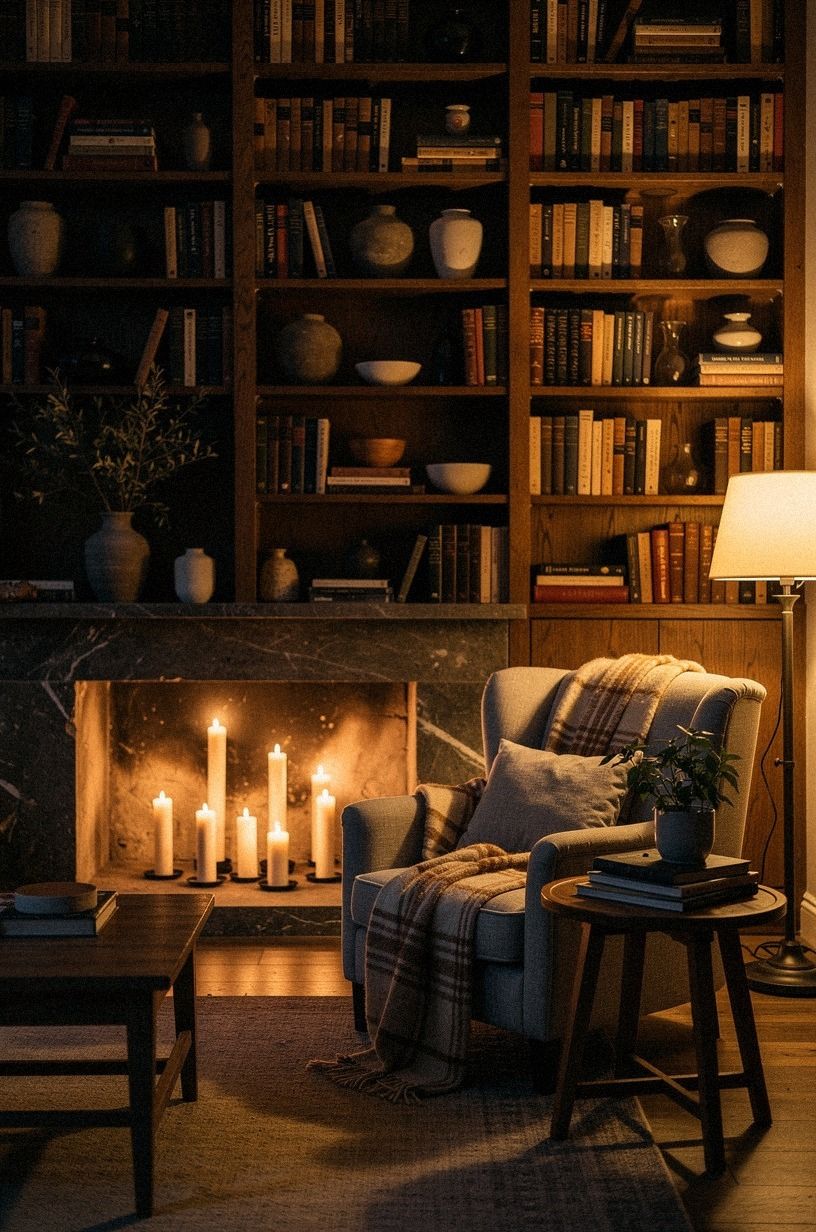
Build your lighting at three heights: floor, table, and wall.
6Place the Rug Under the Front Legs
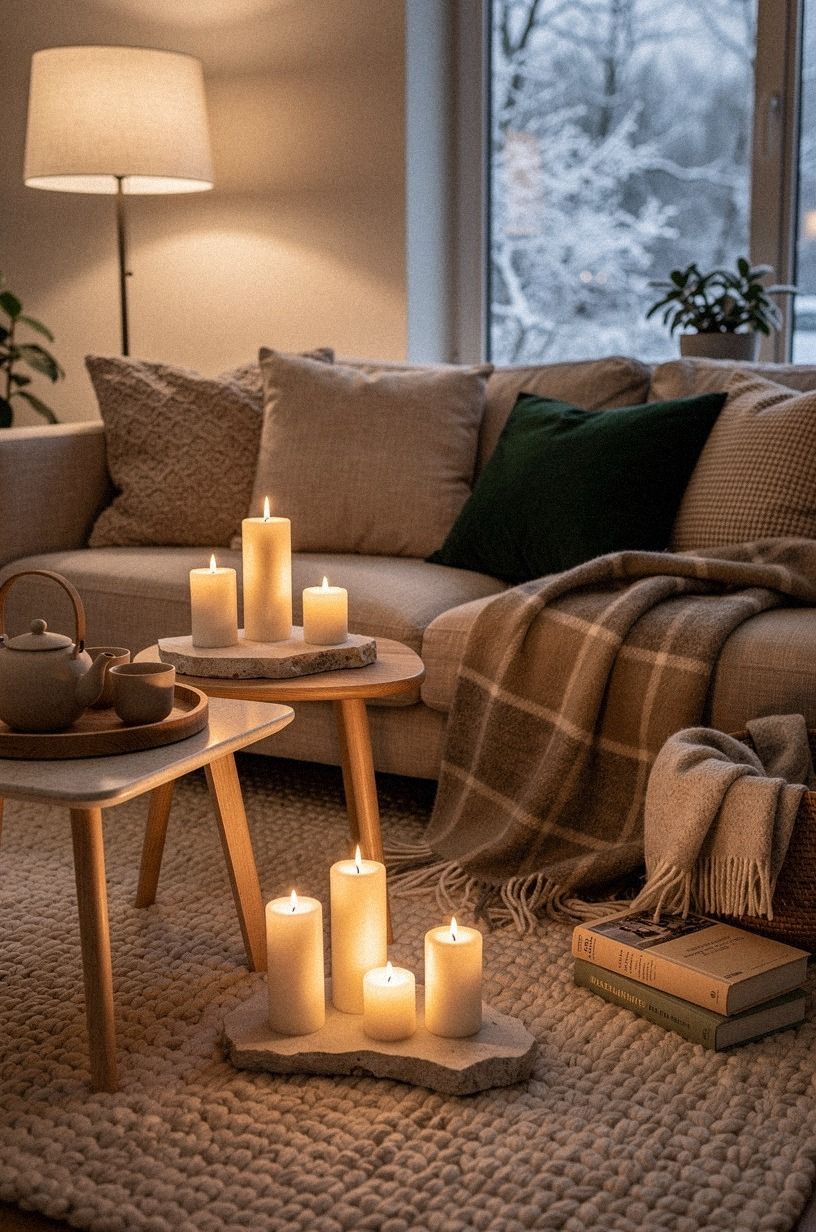
Choose the largest rug your room can handle, then place the front legs of your seating on it. An 8 by 10 rug works for many living rooms, while a 9 by 12 can ground a larger arrangement. You’ll want the rug to connect the sofa, chairs, and table instead of sitting like a small island under the coffee table.
A washed Belgian linen rug in warm cream feels gentle under your feet and brings a soft, natural layer to the room. Add sage green and natural wood nearby for a palette that feels grounded. I’d skip a tiny rug that floats in the center.
It can make your sofa look disconnected, even if every other item is well chosen. Your rug should give the seating group a visual floor.
If your budget is limited, keep the existing rug and layer a smaller sage-green piece near the chair. The effect can feel earthy and collected. Check the door swing before you buy, because a thick rug that catches the door will irritate you every single day.
Small practical details matter more than a dramatic pattern.
A winter living room makeover can help you compare rug scale with furniture scale. The right sage-green runner may solve a cold entry edge without changing the main seating area.

7Seating Angle: Who Is the Room Facing?
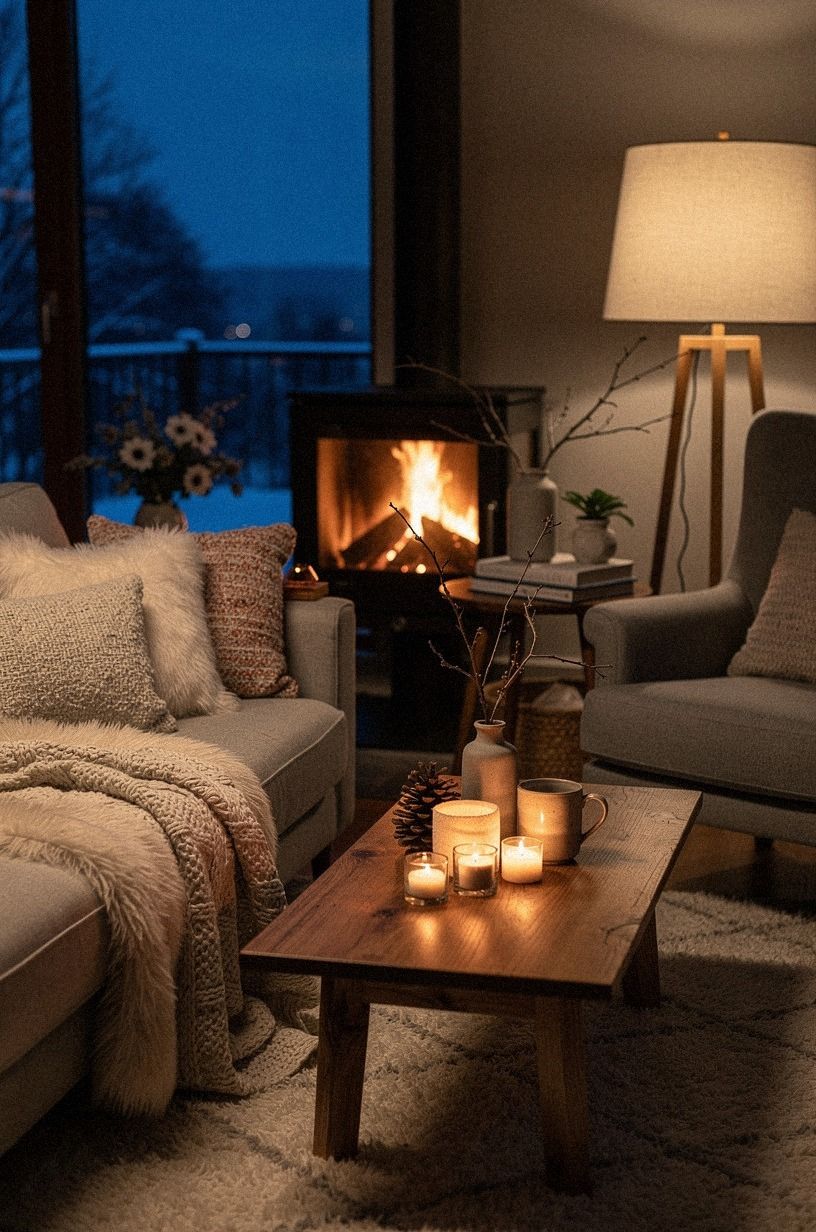
Turn your seating toward the people, not only toward the television. You can keep the television visible while angling one chair or loveseat toward the sofa.
A chair with a cerused white oak frame and terracotta or olive upholstery adds character, but I’d avoid filling every corner with a chair if your room is narrow. One open path can make the whole arrangement feel calmer.
Try sitting in every seat before you commit. Can you see the lamp? Can you reach the table?
Does your shoulder face the person beside you? I’ve rearranged rooms that looked polished from the doorway but felt awkward once someone sat down.
Your body will tell you what the floor plan is hiding.
If the television dominates the wall, keep the styling underneath quiet. A low cerused white oak console, a stone-toned basket, and one framed print can soften the electronics without pretending they aren’t there. You’ll get a more comfortable room when the practical pieces are allowed to look practical.
This walnut living room wall is a helpful example of giving one wall a clear role. A cerused white oak console can do the same work without crowding the seating.
8Wider Drapes, Softer Edges
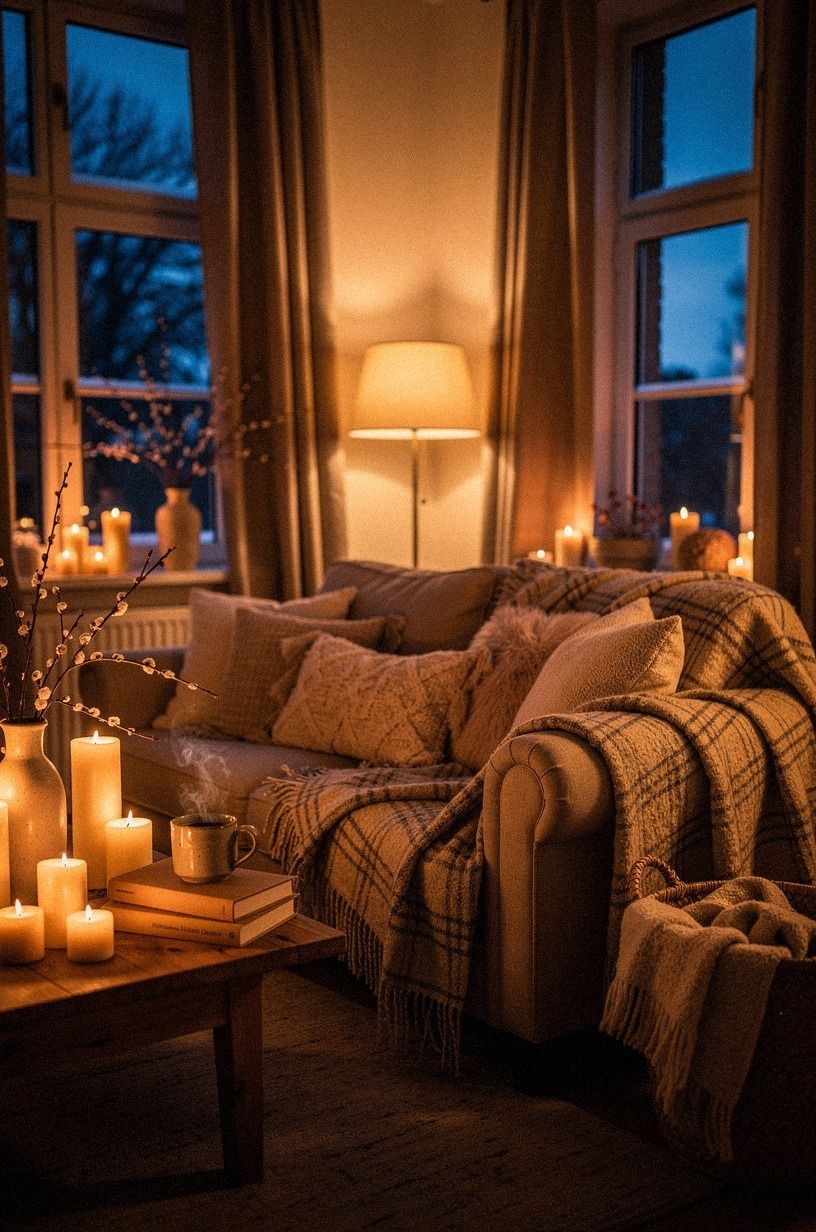
Hang your drapery rod wider than the window frame so the fabric clears the glass when it’s open.
9Mix Soft Textures With the Four-Layer Formula
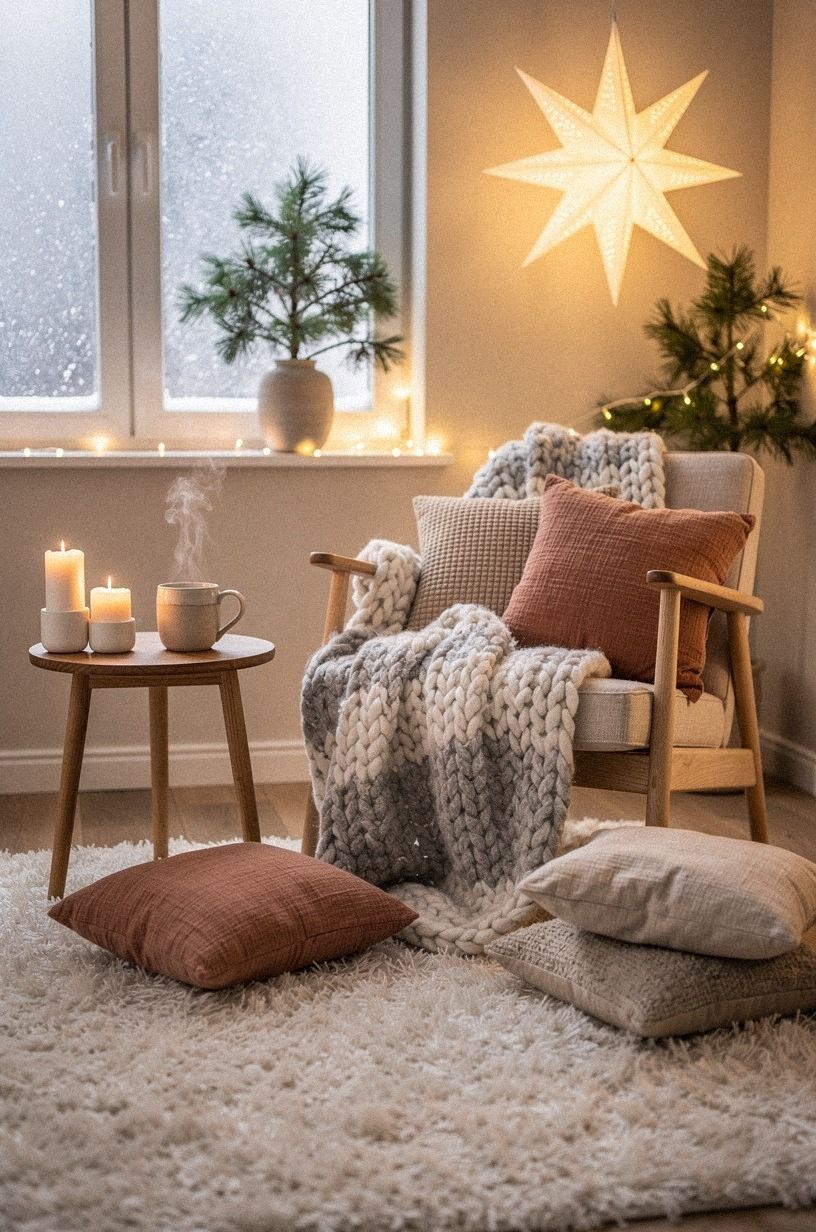
Layer four textures across the room: one nubby, one smooth, one woven, and one plush. A book-matched walnut table can supply the smooth visual layer, while a chunky knit throw adds the nubby note. A woven basket and a grey rug complete the formula without requiring a full furniture change.
I’d avoid buying a matching pillow set. It can make your sofa look packaged, and winter rooms need a little irregularity.
Use plum, grey, and one rose-gold accent instead. If you’re drawn to bright red holiday accents, add one small note rather than repeating it everywhere.
What makes a room feel warm, the color or the texture? Usually, you notice texture first when the light is low. Run your hand over the textile before you buy it.
You’ll know whether the fabric feels inviting or merely looks soft in a reference. This Scandinavian hygge formula is a helpful reference for mixing layers.
A grey throw can bridge a smooth sofa and a rough basket. That one middle texture often matters more than adding another cushion.
10Frame the Fireplace or Media Wall
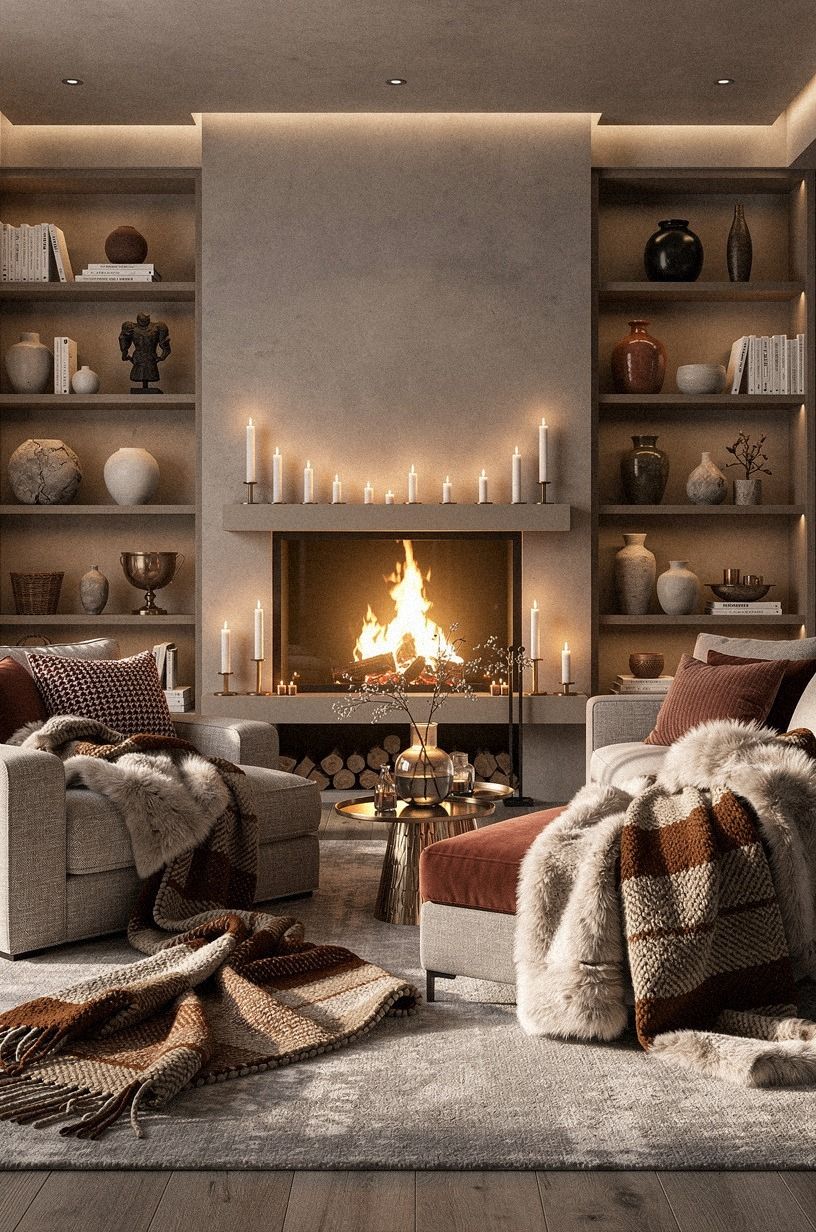
Give your fireplace or media wall one clear visual frame.
11Paint the Trim for a Gentle Contrast
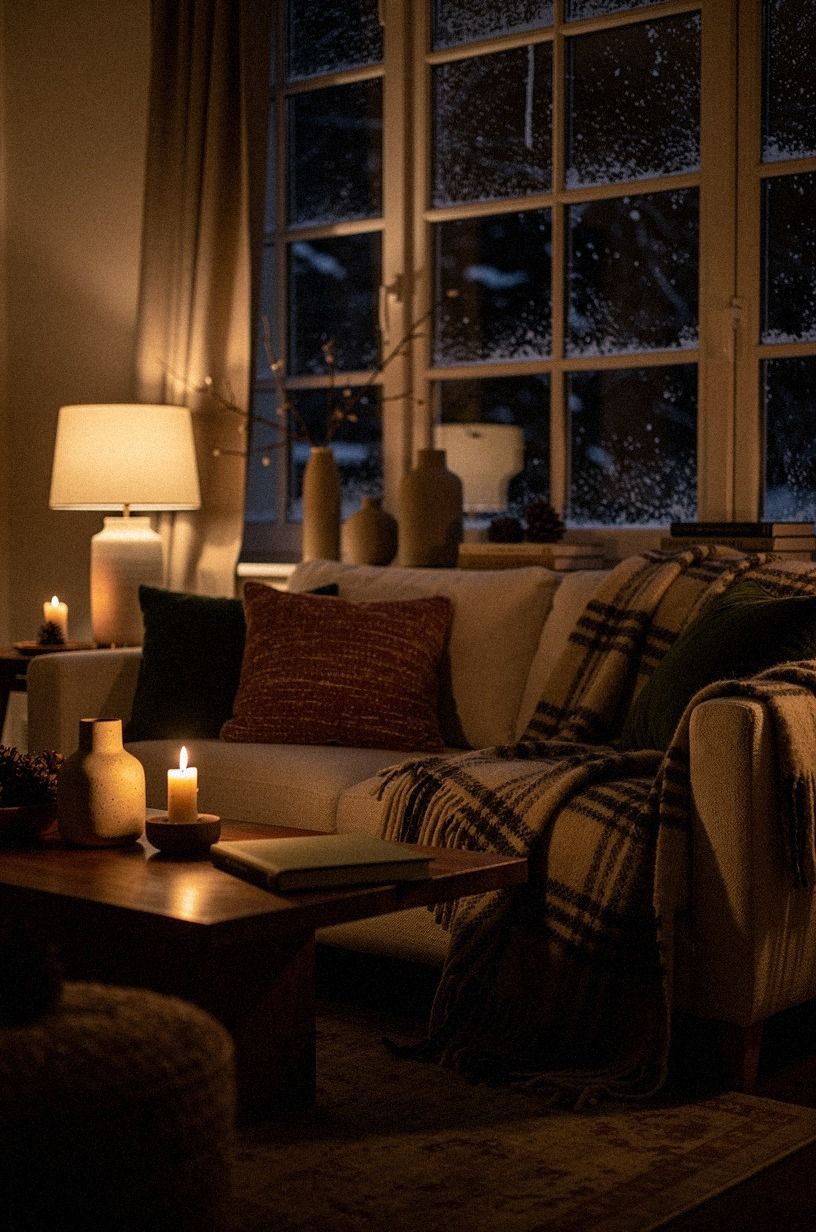
Paint the trim one step deeper or softer than the wall to create gentle contrast. Farrow & Ball Studio Green can bring an emerald note to a warm neutral room, especially on a built-in cabinet or interior door. I’d avoid using three competing accent colors because your winter palette will lose its calm.
You can paint only the baseboards and door frames if a full room feels too ambitious. Your eye will notice the change as you move around the room, and the detail won’t overwhelm the sofa or rug. I once painted a whole wall before testing the trim color, and the contrast was far stronger than I expected.
But remember that paint changes under lamplight. Test your sample beside the cream upholstery, the sofa, and unlacquered brass developing patina.
You’ll see whether the color feels organic at night or turns muddy. That little test can save your Saturday and your patience.
12Build the Budget Around What You Touch
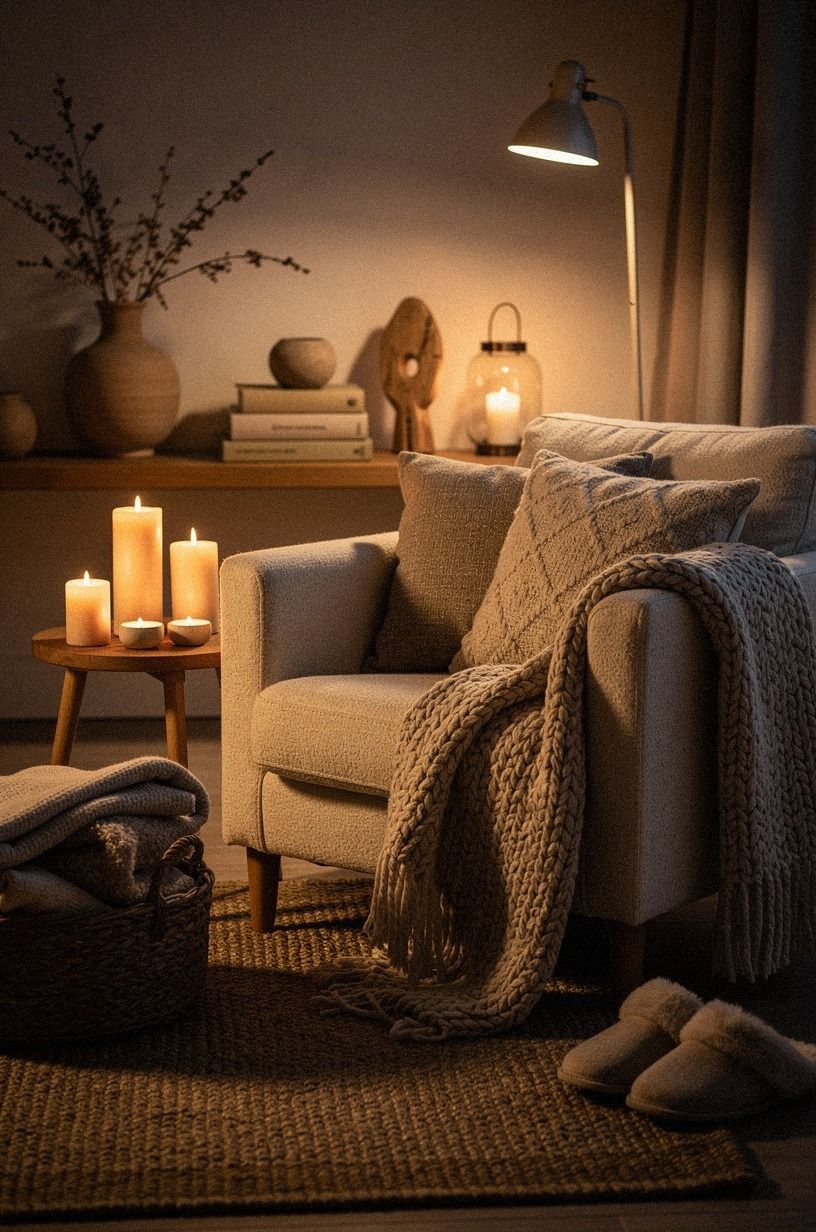
Spend first on the things your body notices: the sofa, rug, and lighting. Your winter living room doesn’t need a high-end makeover to feel warm, but it does need a few materials that feel good under your hand and feet. The table below gives typical US ranges for the full project.
I’d choose the budget tier if your sofa still fits your room and your layout works. Add a rug, curtains, and two lamps before replacing furniture. If you’re starting over, the mid-range tier gives you more room for a quality sofa and layered lighting.
You’ll get more warmth from one good rug than from six small decorative objects.
For another cost-conscious approach, compare this winter oasis living room makeover. It can help you decide which changes deserve your money first. Start with the natural oak side table if you need one useful upgrade.
13Hide Winter Clutter With the Right Storage
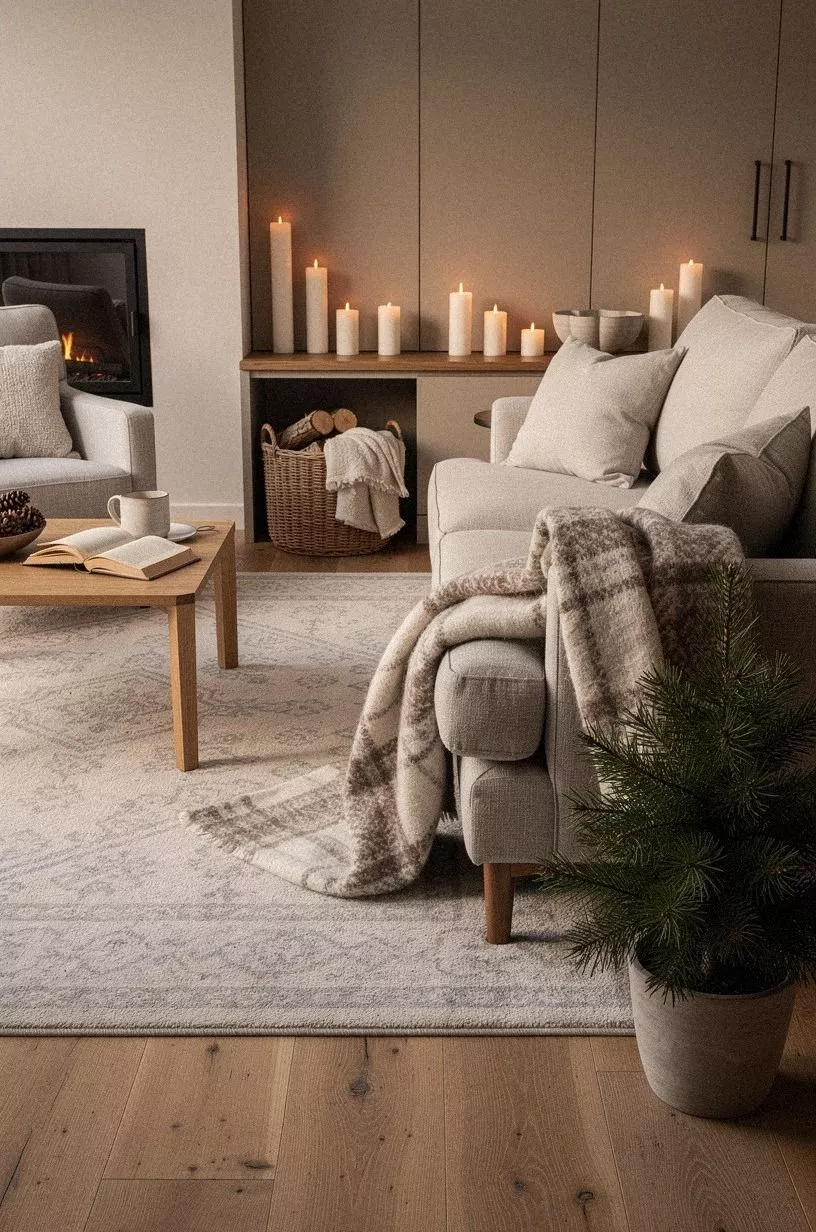
Give every winter item a home before you add decoration.
14Mix Winter Home Decor With Something Personal
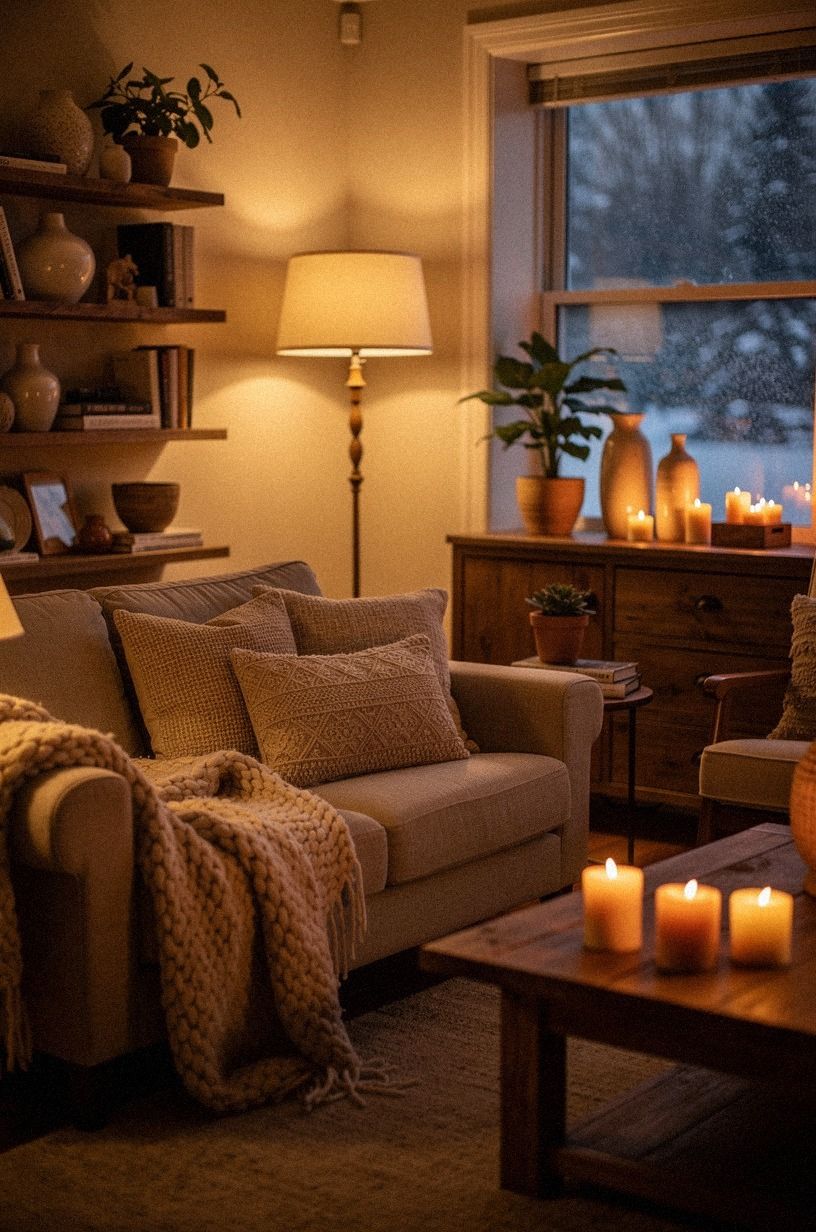
Add one personal object that doesn’t match the room perfectly. Your reclaimed weathered teak tray might sit beside a modern lamp, or a framed drawing might break up a carefully quiet palette. I’d choose a piece with a story over another neutral vase because your room should feel lived-in, not rented for display.
Place personal items where you’ll see them while seated. You’ll enjoy a small painting more at eye level than on a high shelf, and your guests will have something natural to ask about. If you’re styling a rental, use a picture ledge or removable hanging strips so the change stays reversible.
A room can be refined and still have a little mess. Keep the drawing, the reclaimed weathered teak tray, or the imperfect ceramic.
Those details give your winter decor a welcoming edge. This guide to a warm living room with fewer changes is useful if your shelves already feel full.
You can also borrow the relaxed collecting approach from these boho living room ideas without copying the full style. One camel-toned object is enough to make the room feel like yours.
15Finish With the Softest Evening Layer
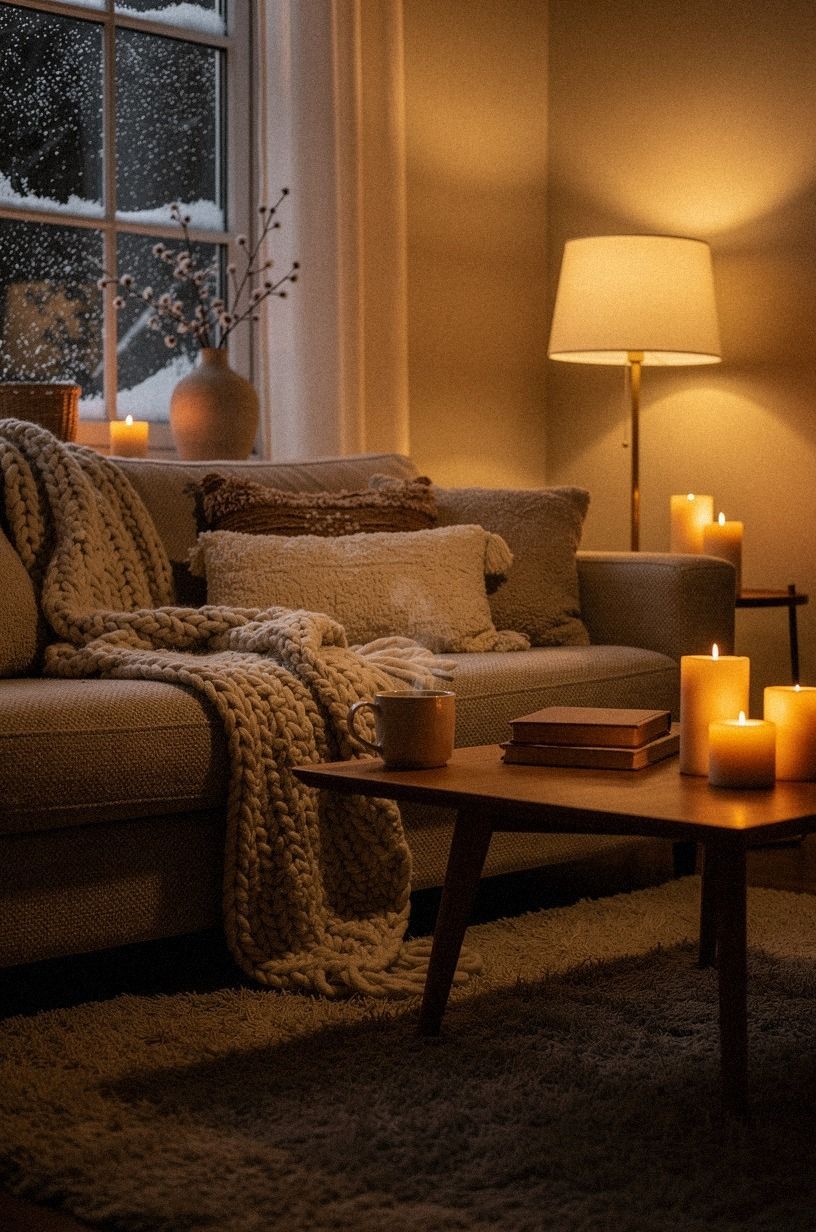
End with the layer you notice after sunset. Fold one throw over the sofa arm, place a small cushion in the reading chair, and keep a basket nearby for extras. A midnight-blue cushion in washed Belgian linen can add depth beside ivory textiles and a copper accent.
I’d skip styling every seat with the same arrangement. Let the sofa feel relaxed, let one chair look ready for reading, and leave the ottoman open for feet. You’ll create a more natural rhythm when each place has a slightly different purpose.
But finish by removing one object. That last edit gives the warm materials room to show themselves.
Turn on the lamps, sit down for ten minutes, and notice what catches your eye. If the room still feels cold, change the light or the rug before buying another accessory.
Those two pieces usually matter most.
An ivory linen throw over one arm is often enough to signal comfort. You don’t need to stage every surface.
Why Warm Rooms Need a Little Imperfection
I used to think a winter living room became inviting after enough layers were added. More pillows, another basket, one more candle.
Then I noticed that the rooms I wanted to stay in weren’t the fullest rooms. They were the ones with a clear seat, a soft pool of light, and a few objects that looked as though someone had reached for them that morning.
That changed how I style. I now choose the practical anchor first, usually the sofa or rug, and let the decorative pieces follow.
A room can be calming without being pale, and it can be bold without being loud. Farrow & Ball Hague Blue may feel dramatic, but it can become gentle when the lamps, rug, and wood around it are warm enough.
I’ve also learned not to chase a single finish. A polished brass lamp beside a rough ceramic bowl gives your eye a small pause.
Smooth leather against a nubby throw feels more welcoming than five soft fabrics competing for attention. Those contrasts are what make a room feel tactile when you walk in.
And I don’t believe every winter room needs a fireplace, a new sofa, or a complete paint job. You can change the direction of the room with one rug, two lamps, and better storage.
If your budget is tight, spend on what your body touches and borrow the rest from what you already own. That approach feels honest, and it leaves room for the room to keep evolving.
A Few Things Worth Answering
What is the best cozy winter living room idea for a small living room?
The best starting point is layered lighting with a properly sized rug. Warm lamp light makes a small room feel inviting without taking floor space, while an 8 by 10 rug can connect your sofa and chair. You’ll get more impact from layout and light than from extra accessories.
Where can I buy cozy winter living room pieces on a budget?
IKEA, Target, and Wayfair are useful places to compare rugs, lamps, and storage. You can also check Facebook Marketplace or a local thrift shop for oak tables and vintage lighting. If you’re patient, your room can gather useful secondhand pieces without looking mismatched.
How much does a cozy winter living room makeover cost?
A typical budget refresh runs from $300 to $1,200, depending on the rug, paint, pillows, throws, and art you choose. Free rearranging comes first, so you can test the layout before spending money. A sofa and layered lighting push the project into the mid-range tier.
Can I create a cozy winter living room on a budget?
Yes, and you can start without buying anything. Rearrange the seating, move lamps closer to the sofa, and gather your existing throws in one basket. Then choose one warm textile or one rug instead of replacing several pieces at once.
Is a cozy winter living room worth it in a small space?
Yes, because a small room needs fewer layers to feel complete. Keep the coffee table around 16 to 18 inches tall, place the front legs of the seating on the rug, and leave one clear walking path. Your space can feel warm without feeling crowded.
Is a cozy winter living room a good idea for a rental?
Yes. Use tension rods, removable hooks, peel-and-stick wallpaper, and freestanding lamps instead of permanent changes. Portable texture does most of the work, so you can bring in linen curtains, a wool rug, and baskets without altering the walls or wiring.
Where I’d Start First
If I had to pick one step, I’d start with the layered lighting. A room can’t feel warm when every corner is lit like an office, and better bulbs won’t fix one lonely ceiling fixture.
Move your lamps tonight, sit down, and let the shadows stay. Pin this plan for your next winter reset.