
Hidden sliding door ideas save real floor space when the track disappears and the finish reads like part of the room. I learned that after hanging one barn door too proudly and turning a calm living room into a hardware demo. The door was not the problem (my trim was). The way I framed it was. Here are the moves I would copy if you want the opening to work hard without shouting for attention.
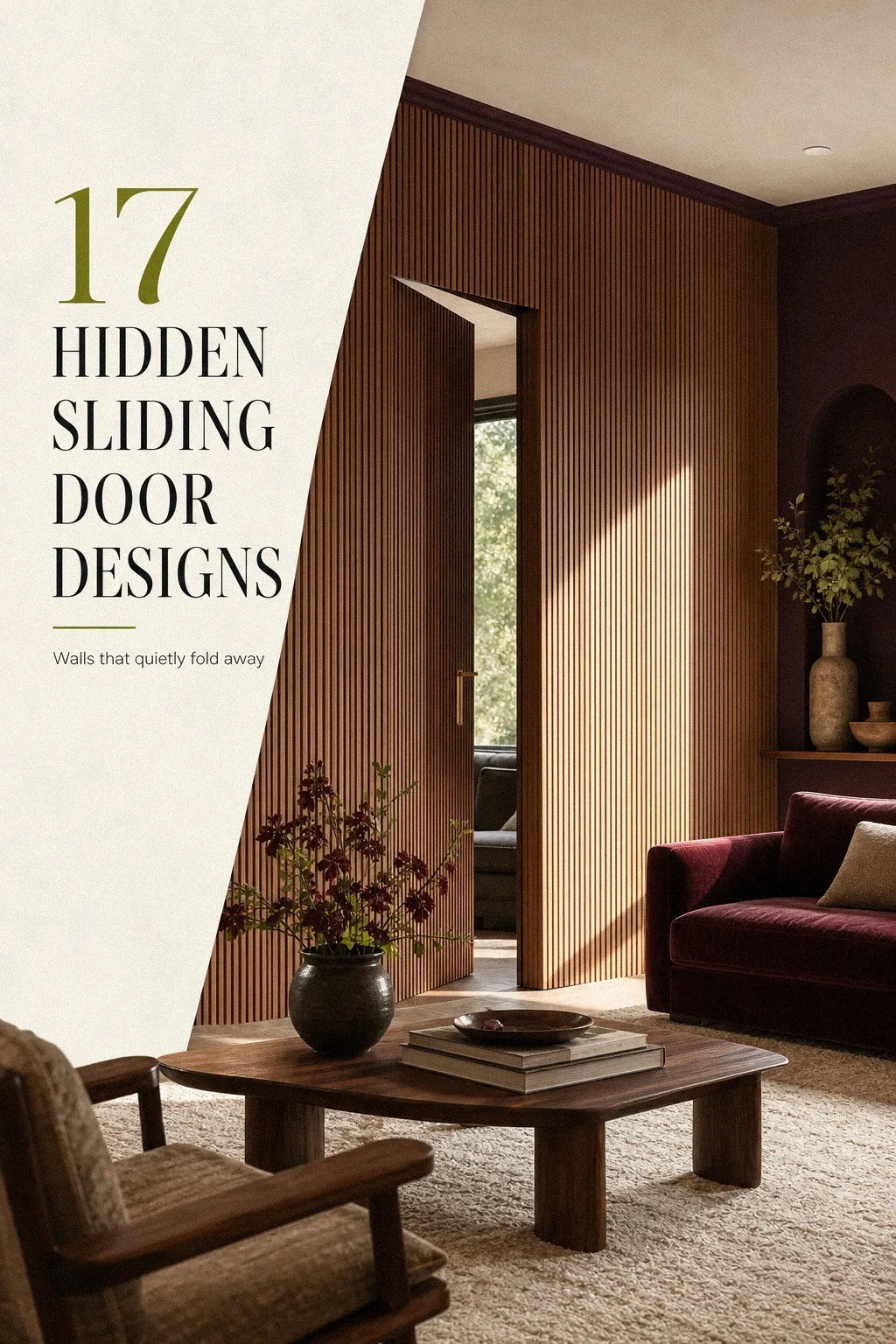
- Track the door behind wall-to-wall slatted oak
- Why tuck the pocket slider into fireplace millwork?
- Camouflage the panel with oversized grid molding
- Hang a rolling library door behind built-ins
- Could a mirrored slab beside the mantel feel subtle?
- Wrap the track inside a picture ledge for a layered look
- Conceal heavy hardware with a ceiling valance in Farrow & Ball Drop Cloth
- Panel the door like a media wall so it disappears into the rest
- Track the door behind wall-to-wall slatted oak
- Why tuck the pocket slider into fireplace millwork?
- Camouflage the panel with oversized grid molding
- Hang a rolling library door behind built-ins
- Could a mirrored slab beside the mantel feel subtle?
- Wrap the track inside a picture ledge for a layered look
- Conceal heavy hardware with a ceiling valance in Farrow & Ball Drop Cloth
- Panel the door like a media wall so it disappears into the rest
- Slide oversized Benjamin Moore toned art panels across a hidden opening
- Blend the track into black steel shelving
- Hide the pull inside an aged brass picture light for a touch of sparkle
- Why grasscloth hides a slider better than paint does
- Frame the opening with Belgian flax linen drapes rather than a wood header
- Build a faux bookcase instead of a real barn door
- Run fluted cladding across the entire wall for one continuous surface
- Match the reveal with continuous baseboards so the seam disappears
- Tuck the slider behind a floating console for true negative space
1Track the door behind wall-to-wall slatted oak
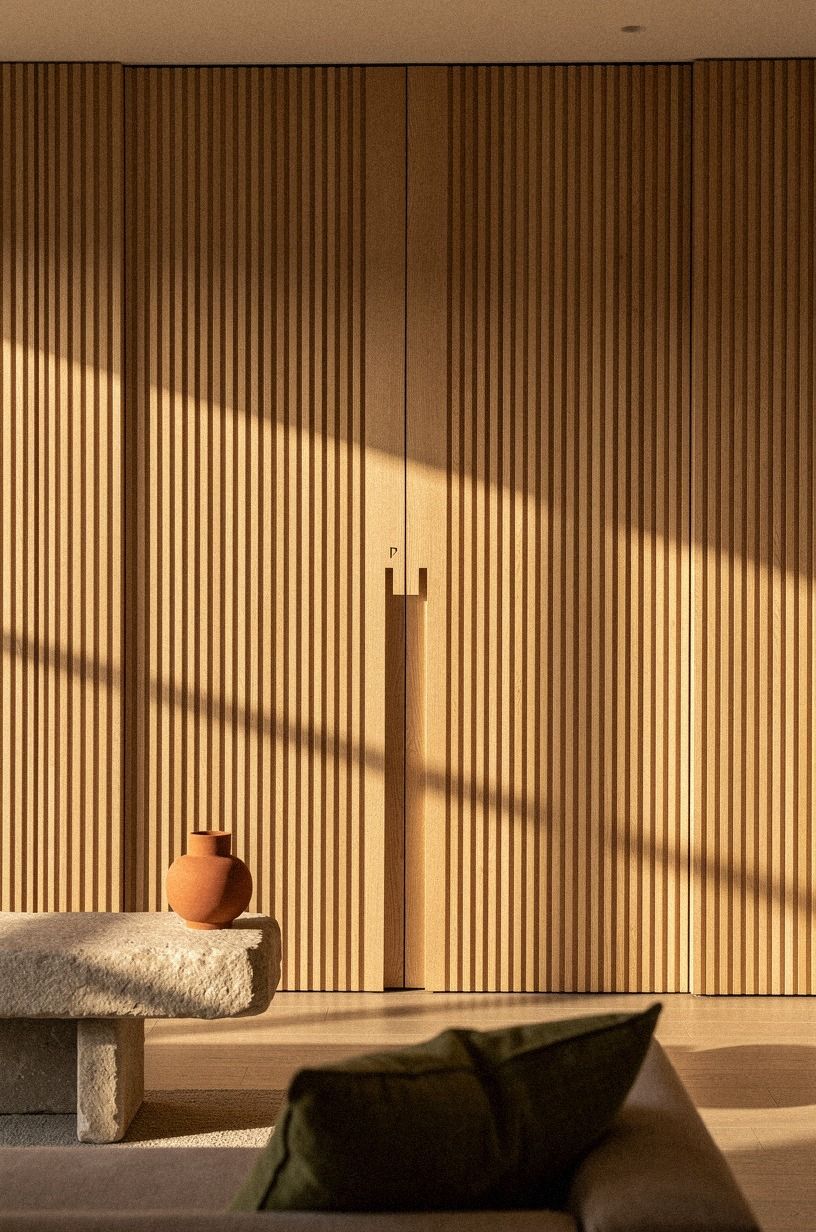
Start with the whole wall, not the door. If you run cerused white oak slats from end to end, the slider stops reading like an add-on and starts feeling like millwork you planned from day one.
You want the seam visible only when you’re close, because distance is what makes this idea feel intentional. It’s a quiet, confident, polished move!
Keep the slats narrow and consistent, usually around 1 to 1 1/2 inches, and hold the reveal between boards tight so your eye reads rhythm before it reads access. I would use 3/4-inch solid white oak here, not flimsy veneer, because the wall needs enough depth to cast a soft shadow line. If you’re mixing this with other concealed entries, my favorite reference is the mirror-door reveal walkthrough because the same all-over cladding logic carries across.
And don’t stop the cladding at the opening. Carry it past the sofa wall, let it wrap the full frame, and keep the stain a touch chalky instead of orange. In a room with an Article Sven profile nearby, that pale oak keeps the wall warm without fighting leather or boucle.
You will feel the difference right away, I promise. It reads polished without trying too hard.
2Why tuck the pocket slider into fireplace millwork?
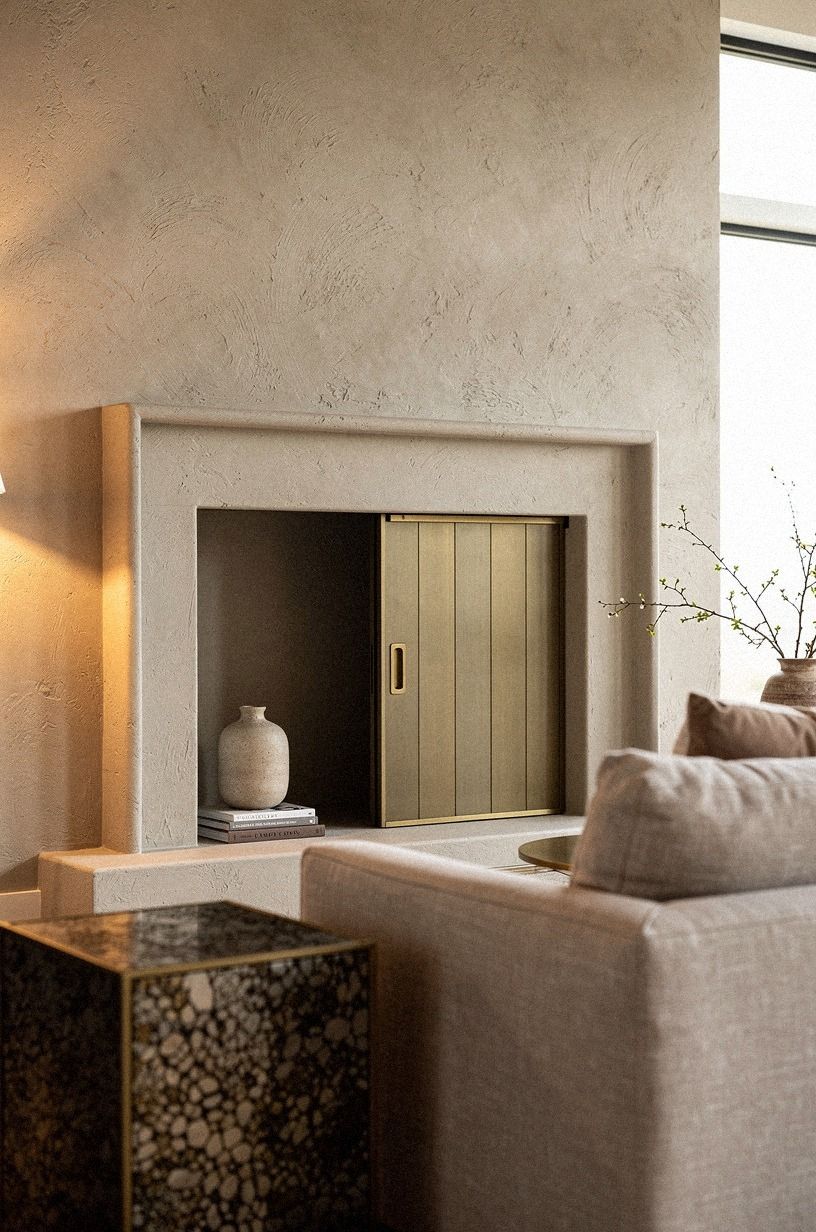
Build the hidden room sliding door into the fireplace zone and the room suddenly makes sense. A fireplace wall already carries visual weight, so the concealed panel can borrow that structure and feel grounded instead of random. I like this when the surround is Benjamin Moore White Dove OC-17 and the slider picks up the same creamy finish, because the result feels serene and quietly luxurious.
3Camouflage the panel with oversized grid molding
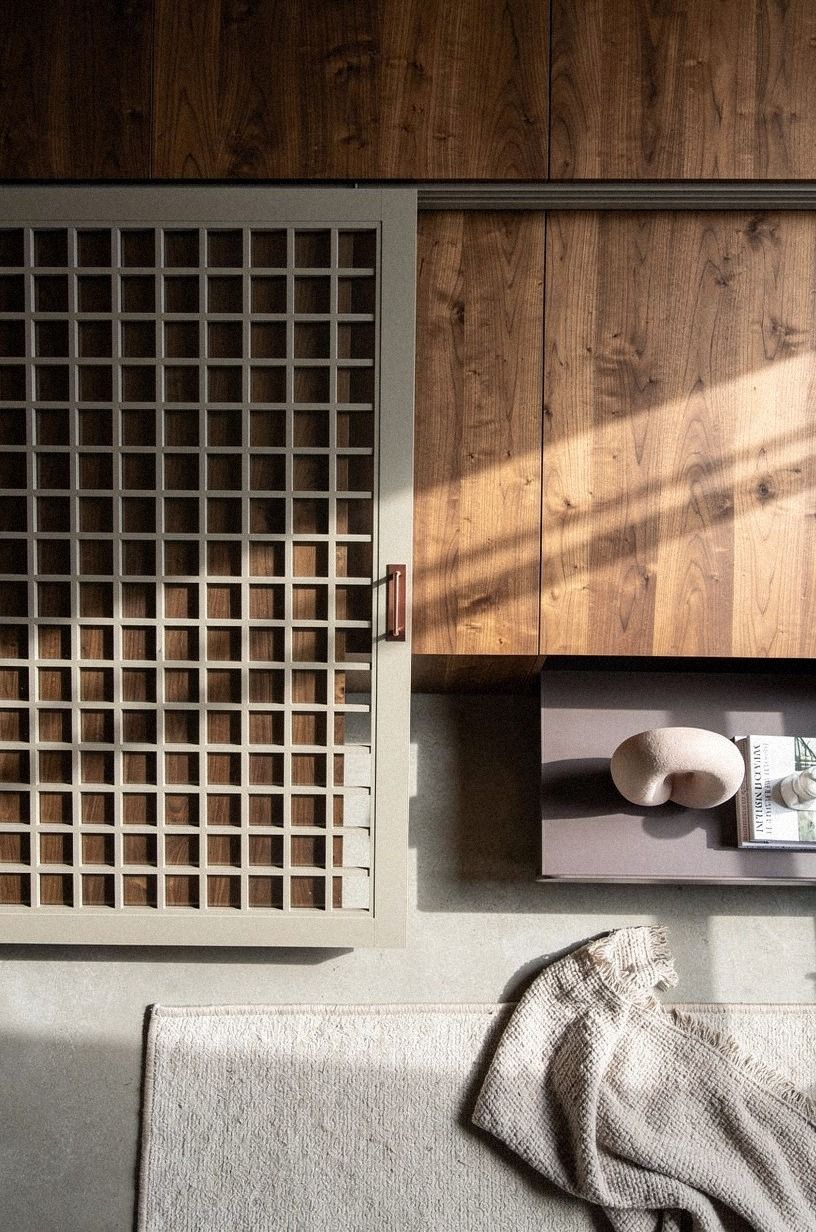
Go bigger with the molding than your cautious side wants. Oversized grids hide a sliding panel best because the rectangles give your eye too many lines to track, which means the seam melts into the pattern instead of announcing itself. In a living room seen from above, that geometry reads crisp, not fussy.
I like a square-heavy layout painted in Farrow & Ball Hague Blue No.30 or a warm off-white if the room already has color elsewhere. The panel should line up with the surrounding rails exactly, even at the baseboard, and the stiles need enough width to hold the proportion. For more disguised-wall examples, the in-wall hidden bar ideas approach trim-as-pattern the same way, and it’s a smart second reference.
Would I do thin picture-frame molding here? I would not. Thin trim makes the seam easier to spot and can feel builder-grade fast.
A bolder grid, a matte finish, and one low CB2 Primitivo style seat nearby give the wall confidence instead of apology. You’re looking at it for years, so make it brave. I like a single chunky mushroom bronze knob on the fixed side to echo the panel weight.
4Hang a rolling library door behind built-ins
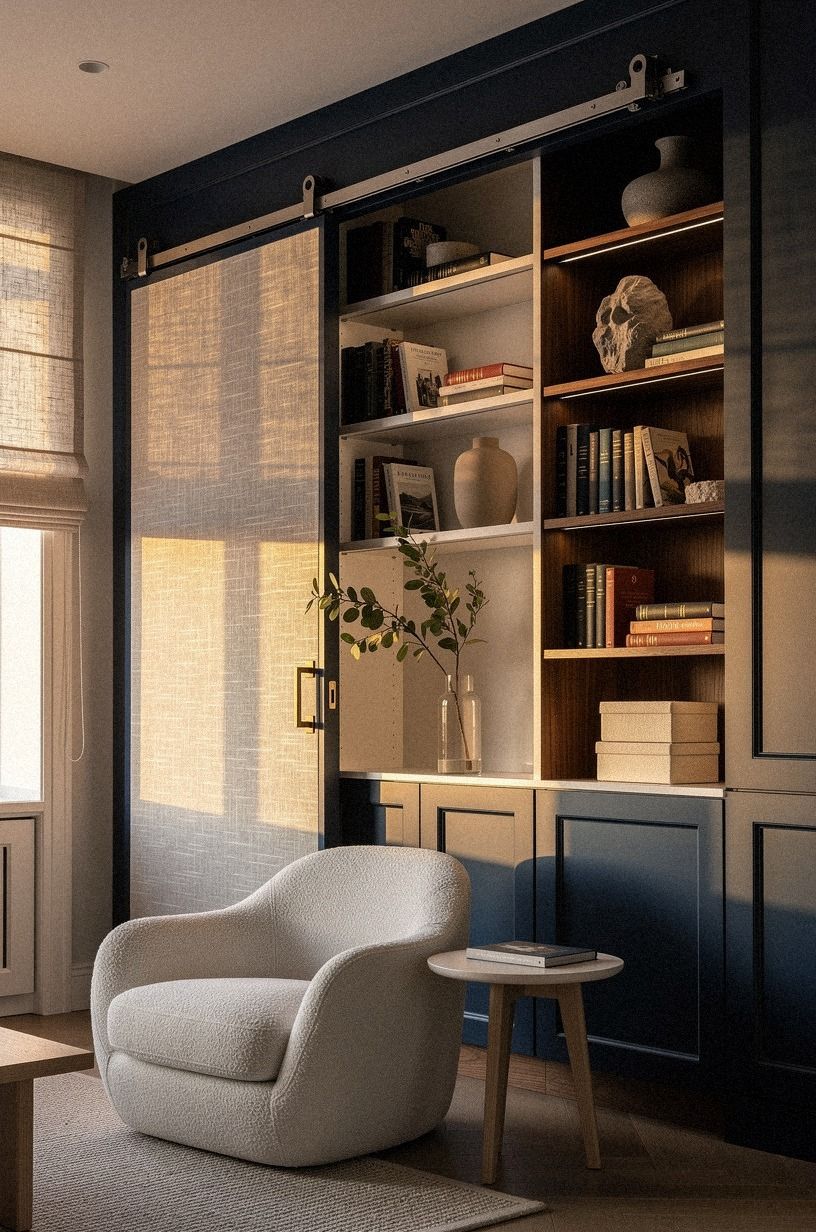
Let the shelves be the star and the heavy duty sliding door the muscle behind them. When a rolling library panel glides over built-ins, you get storage, concealment, and that old-house intelligence people always notice even if they can’t name it. This one earns compliments for weeks.
The rail matters more than the shelves themselves, honestly. Use blackened steel that sits proud enough to look intentional, then repeat that black in a reading lamp or fireplace screen so the hardware feels anchored. I love this next to IKEA KALLAX birch-effect boxes hacked into lower closed storage because the inexpensive pieces disappear once the custom upper section takes over.
If you’re collecting more concealed openings, the mirror-door reveal walkthrough shows how hardware choices carry across the home. For the proportions to keep, the in-wall hidden bar casing math walks through the same trim ratios and is a clean reference.
And make the books imperfect. A few stacks. Some horizontal piles.
One brass object. If you style it too evenly, the moving panel starts reading like a showroom sample.
You want life on the shelves so the door feels used, not staged. Real life, real mess, real charm.
A single belgian linen drape nearby softens the whole composition.
5Could a mirrored slab beside the mantel feel subtle?
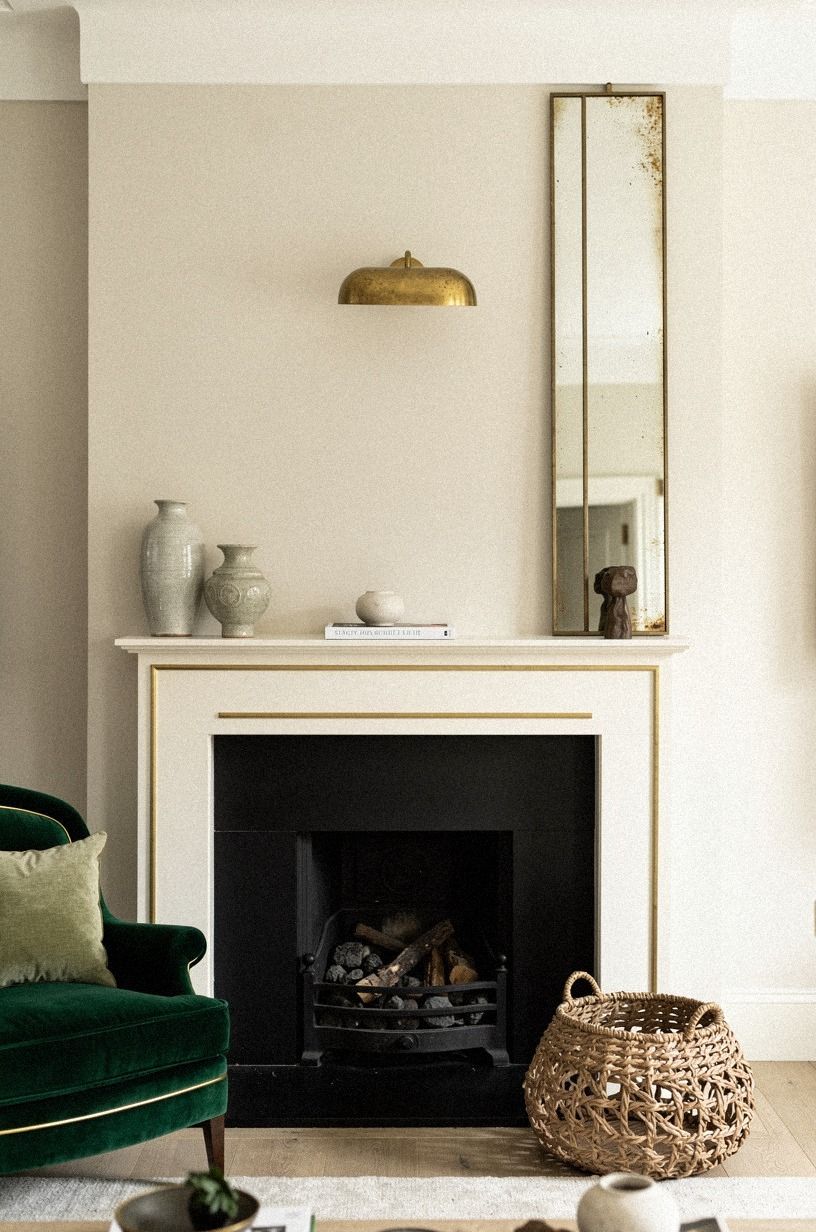
A mirrored slab works best when the room is already calm. The reflection buys you borrowed light, soft depth, and a slightly glamorous mood without adding another piece of furniture. I would keep the frame slim in aged brass or paint it out completely so the effect stays airy instead of flashy.
6Wrap the track inside a picture ledge for a layered look
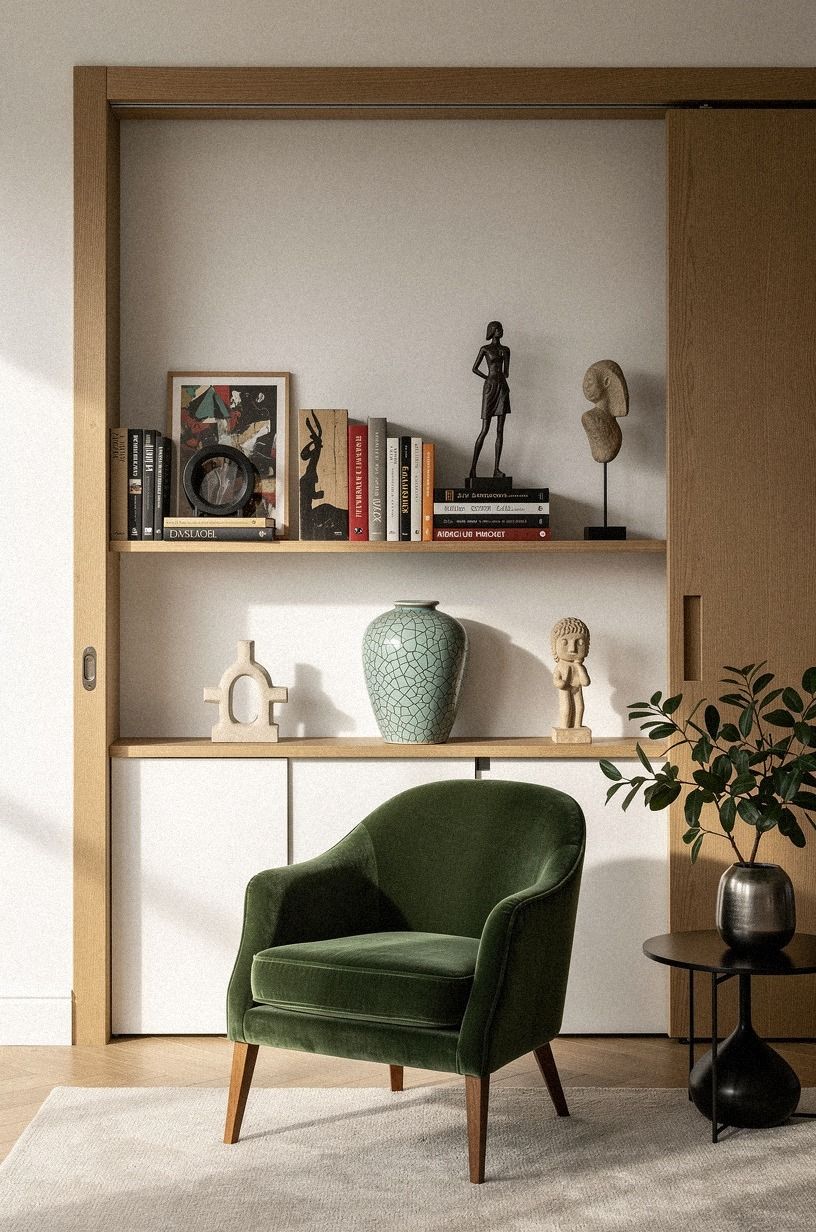
This is one of my favorite ideas for sliding doors because the solution looks decorative even before you explain it. A picture ledge hides the track, gives you a reason for the projection, and makes the wall feel layered instead of mechanical.
The best part is that you can swap the art whenever the room needs a reset. It’s useful and relaxed.
Keep the ledge slim, about 3 to 4 inches deep, so it doesn’t crowd the walkway, and paint it the same tone as the wall. On a soft neutral background, Sherwin-Williams Evergreen Fog SW 9130 works beautifully with charcoal frames and sandy upholstery. For more disguised-wall inspiration, the drapery-as-architecture approach shows how shallow architectural layers do a lot of heavy lifting in a room.
I would skip tiny art here. One medium canvas, one leaning photo, maybe a low aged bronze picture frame, and done.
If you pack the ledge with six little things, you turn a neat concealment move into dusting duty, and you deserve better than that. A single crisp linen mat and a slim walnut frame carries the whole move.
7Conceal heavy hardware with a ceiling valance in Farrow & Ball Drop Cloth
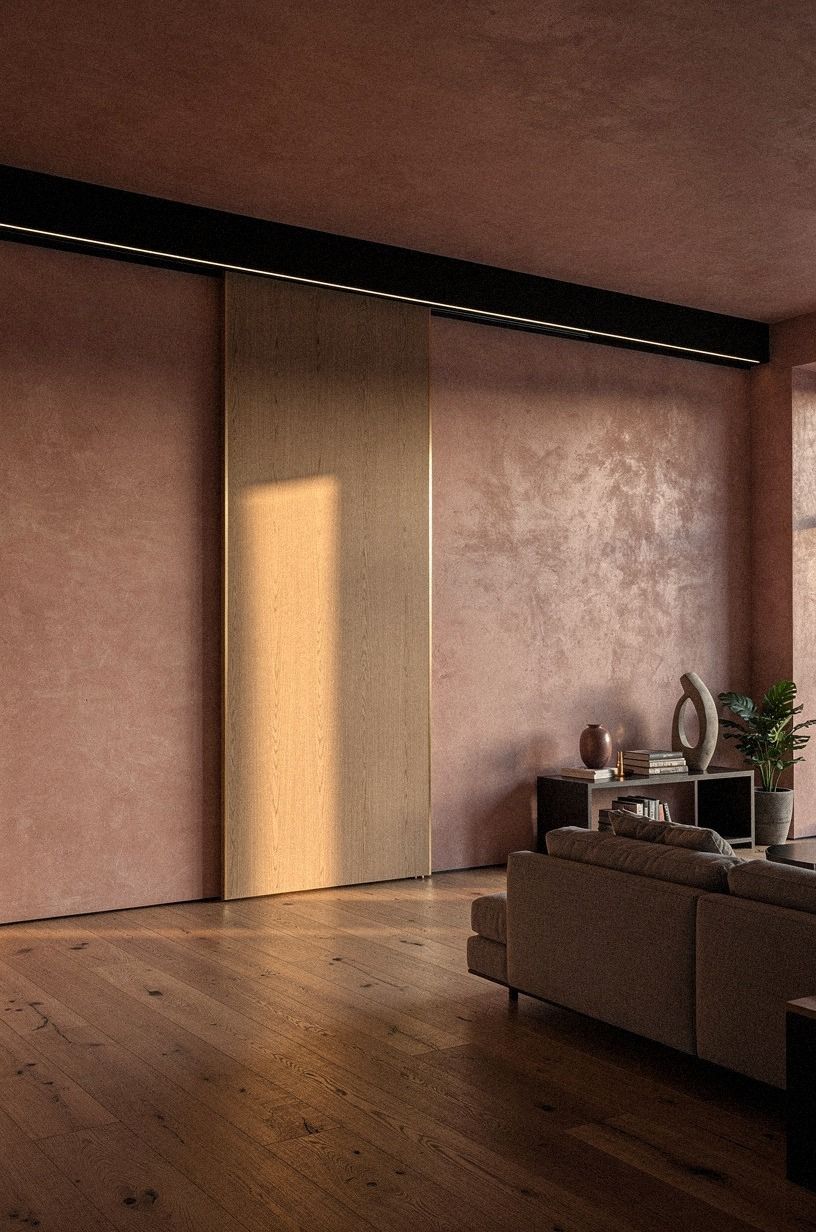
When the track has to be substantial, hide it up high and make the ceiling line do the camouflage for you. A slim valance running corner to corner turns visible hardware into architecture, which is exactly what you want in a long living room where every line gets noticed.
Pick a finish that doesn’t yell for attention (think Benjamin Moore Chantilly lace OC-6 if you go white, or Farrow & Ball Drop Cloth if you want a quieter linen read). The whole effect feels tailored.
This move also lets you think about the room as a whole, because the hidden sliding door ideas that age best are the ones tied to a larger renovation budget. If you’re weighing a custom ceiling build against a simpler build-out, the Speakeasy home bar design walks through the same ceiling-as-architecture logic in tighter rooms, and the Speakeasy lighting ideas layer the ambient glow you want a valance to disappear into. Here’s the quick reality check I use before recommending anything custom:
If your project already includes a dropped beam, built-ins, or a fresh fireplace wall, the valance is easy to justify. If not, I would keep it crisp in paint-grade MDF and echo the horizontal line in a low console or mantel shelf. For a real project budget, the mirror-door reveal guide breaks down where the money actually goes and where it doesn’t.
8Panel the door like a media wall so it disappears into the rest
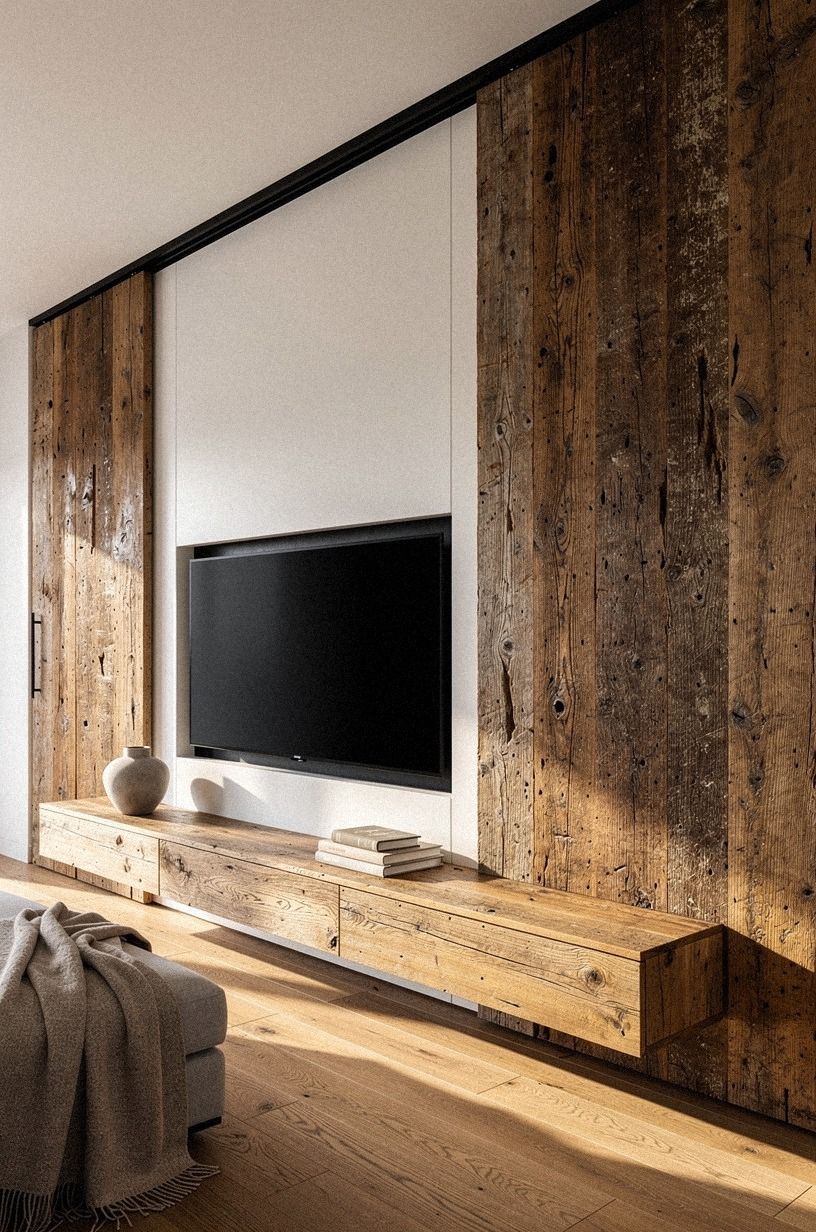
Treat the slider as part of the entertainment wall and it stops feeling like a separate object. Asymmetric paneling, a low console, and one plain dark inset give you enough variation to disguise the seam without making the wall too busy for movie night.
You want quiet drama here, not visual noise. It should feel moody and collected.
The proportions matter. Keep your console low, around 16 to 18 inches tall, and if a television is involved, place seating at roughly 1.5 to 2.5 times the screen diagonal so the wall still works as a living room first.
I would pair smoked oak veneer panels with a matte charcoal insert and a slim West Elm media cabinet underneath. For more ways to hide a screen inside a wall, the in-wall hidden bar ideas translate the same asymmetry-as-camouflage logic beautifully.
Add a slim Belgian linen drape to one side and the whole composition settles.
But don’t center every panel. One off-center break makes the door easier to disguise because symmetry can spotlight the moving piece.
It’s subtle, yet your eye catches it. You want the room to read first, the door to read second.
9Slide oversized Benjamin Moore toned art panels across a hidden opening
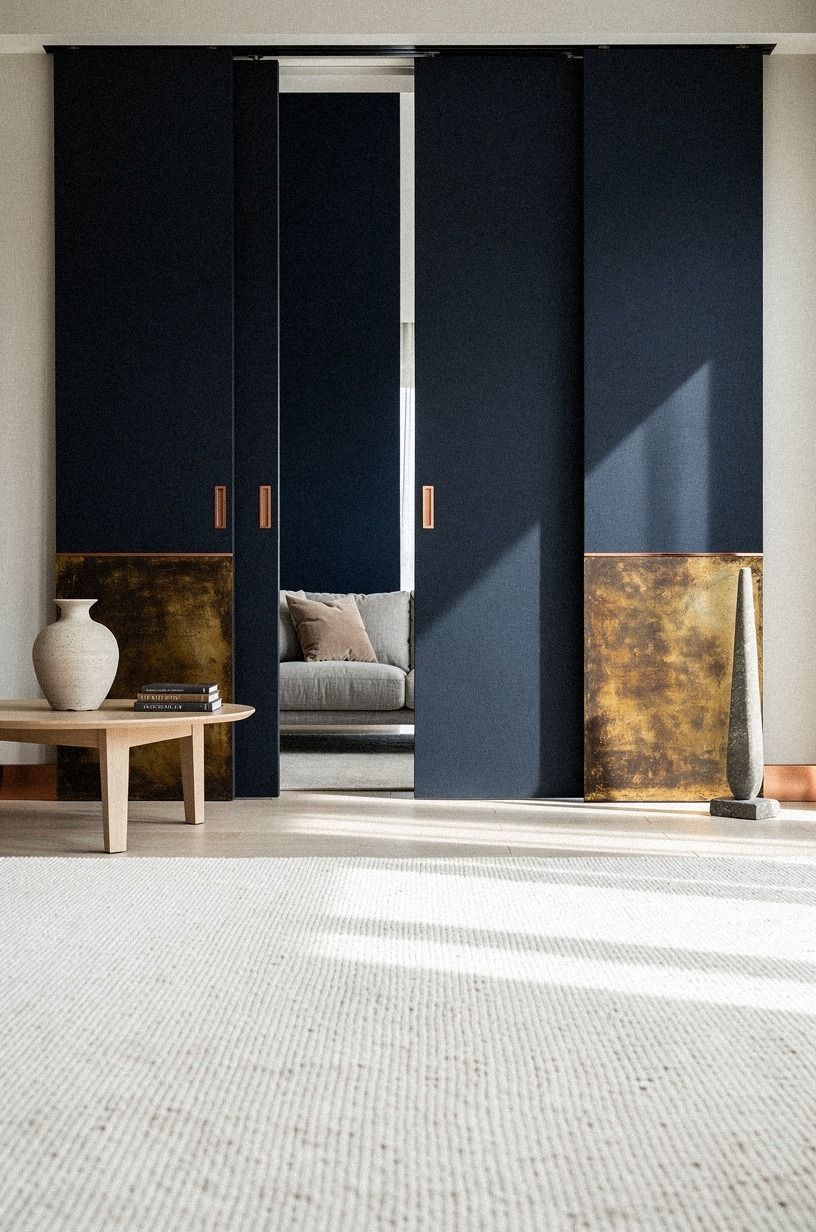
If the wall is formal and symmetrical, art panels can do the hiding for you. Large painted canvases give the eye one bold focal point, which means the seam drops into the background and the opening feels composed rather than sneaky. I like washed, earthy color fields here so the wall stays refined.
10Blend the track into black steel shelving
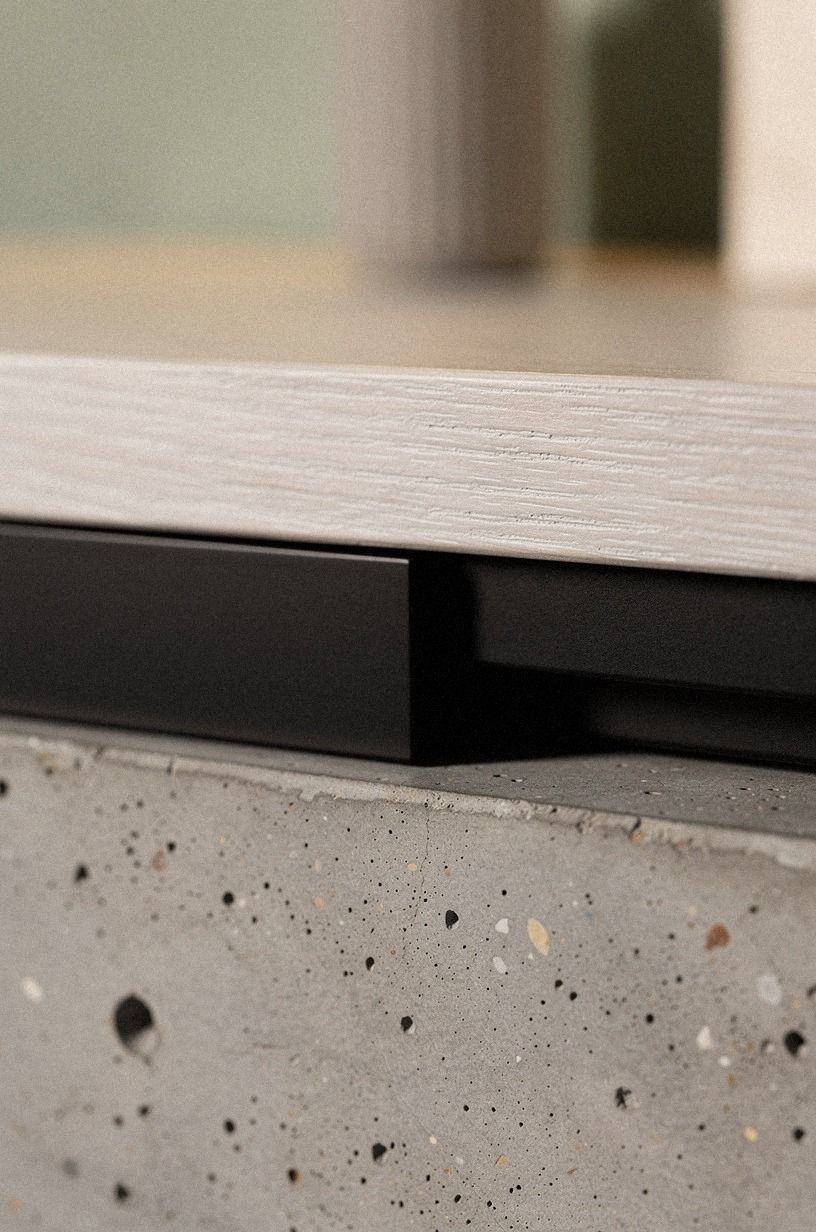
This is the detail lover’s version, and it works because the track becomes part of the shelving channel instead of a separate line. When black steel meets cerused oak cleanly, you get contrast with purpose. That’s rare.
The mix feels architectural.
The joinery has to be crisp, especially if you are close enough to see it from a reading chair. Use black powder-coated steel with a narrow profile, then soften the industrial edge with cerused white oak and one wall in Sherwin-Williams Evergreen Fog SW 9130. If you like the mix of storage and concealment, the mirror-door reveal walkthrough shows how the same structural language carries into rooms where the door has to actually disappear.
I would never pair this with shiny chrome hardware. Chrome turns the detail cold fast, and cold is the opposite of what makes a concealed opening feel worth the trouble. A dry black finish, warm books, and a single ceramic bowl will take you much further.
11Hide the pull inside an aged brass picture light for a touch of sparkle
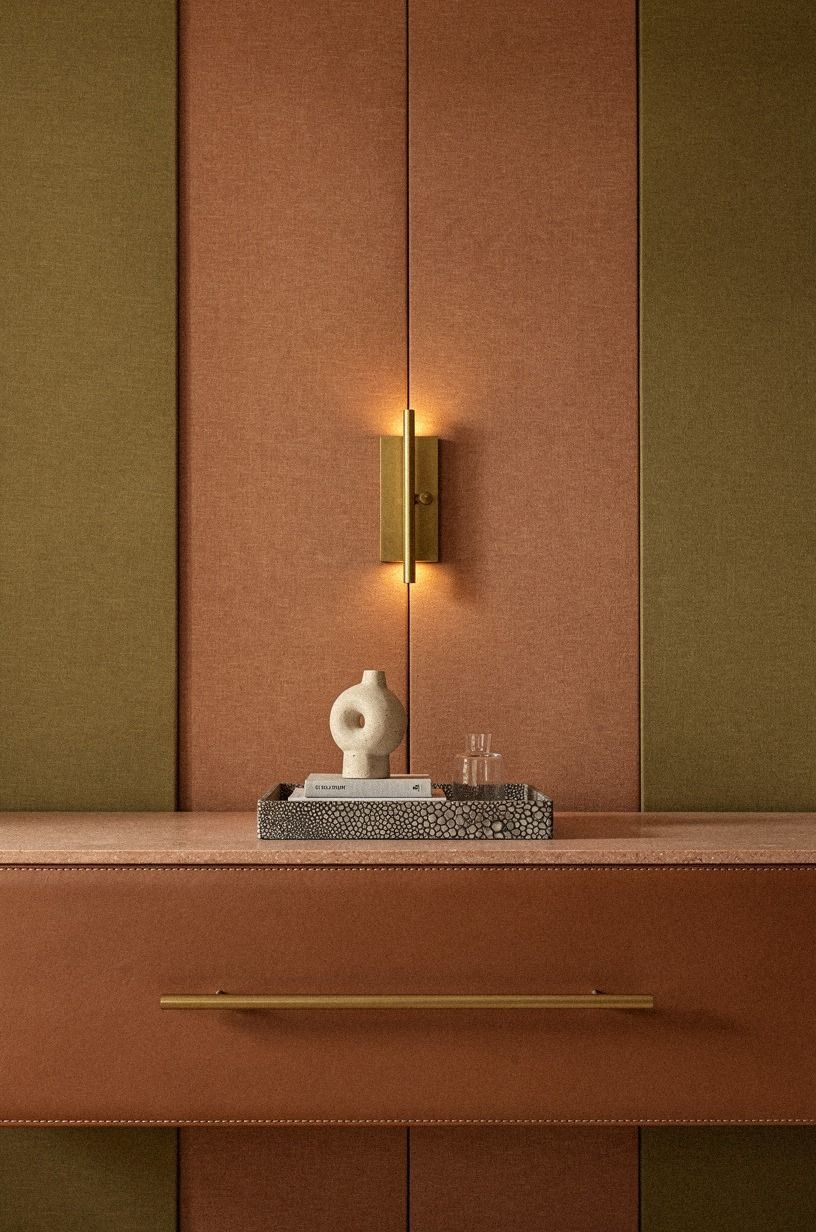
The smartest pulls don’t look like pulls at all. When the handhold hides inside a picture light, the sparkle feels decorative first and functional second, which is exactly the order you want. Choose a compact unlacquered brass fixture with a soft wash and the whole moment turns warm and jewel-like.
12Why grasscloth hides a slider better than paint does
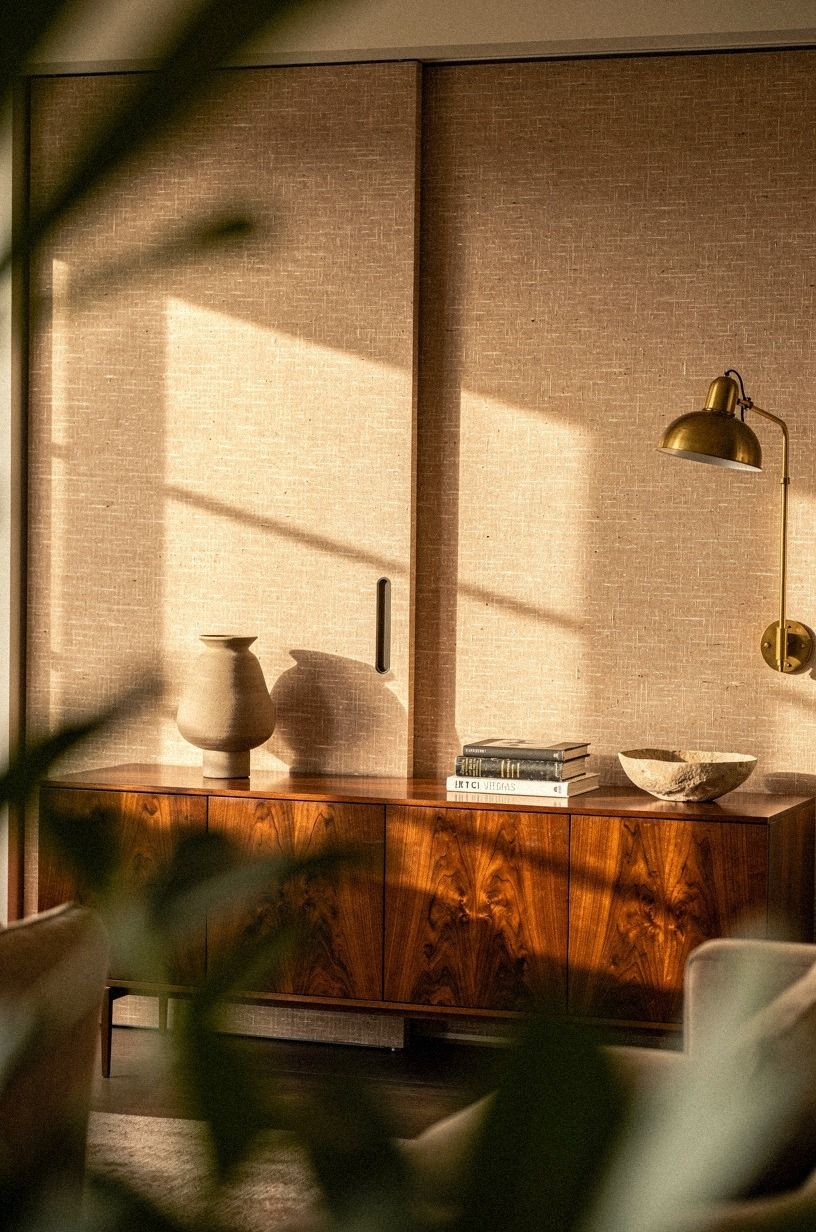
Grasscloth is forgiving in the best way. The texture breaks up the flatness of a panel, makes the seam less obvious, and brings just enough irregularity that a hidden slider can fade into the wall even when you know where it is. In a room with clay linen and aged wood, it feels warm and quietly rich.
Choose a warm, low-contrast weave rather than a stripe that highlights every alignment issue. I like natural grasscloth against aged oak and clay-toned upholstery, especially when leafy plants soften the edges of the view.
If you want to compare pattern and texture choices, the speakeasy curtain and drapery ideas show how layered surfaces do similar work with fabric. Add a slim unlacquered brass picture light and the seam disappears under the warm glow.
And here is the mistake people make: they stop the wallpaper at the moving panel. Don’t.
Run it across the fixed wall too, keep the base clean, and let the room read as one envelope. That is when the idea stops trying so hard.
13Frame the opening with Belgian flax linen drapes rather than a wood header
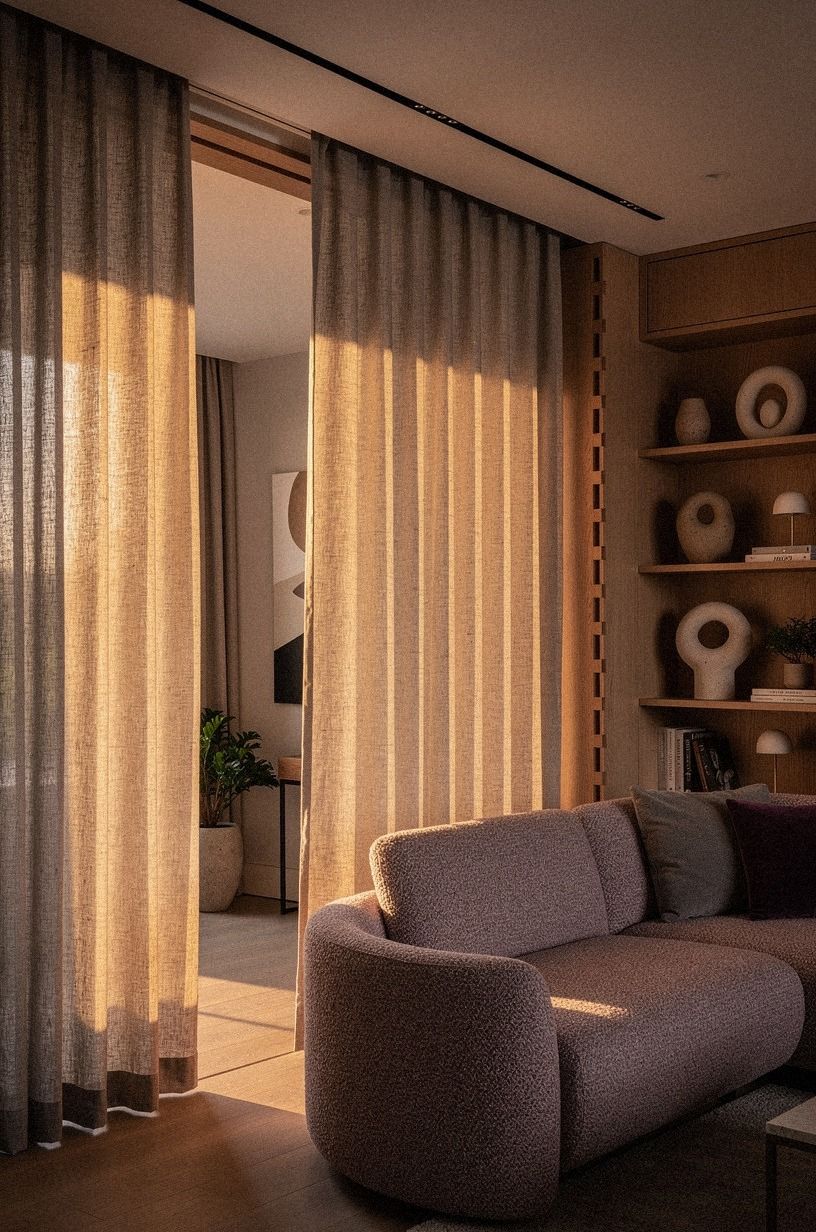
Sometimes the best ideas for sliding doors aren’t about hiding the panel at all. They’re about softening the moment when it opens.
Floor-length drapes give the opening depth, absorb sound, and keep the hardware from feeling hard against the rest of a living room built for lounging. The effect is soft and easy on the eyes.
You need real length here, not curtains hovering half an inch above the floor. Let Belgian flax linen just kiss the rug, and if your seating layout is tight, make sure the front legs still land on an 8×10 wool rug or a 9×12 wool rug so the doorway doesn’t visually cut the room in half.
For a wall-to-wall feel, the curtain-and-drapery velvet drama roundup uses the same drapery-as-architecture principle with even more heft. If you want a moodier reference, the drapery backdrop from this speakeasy living room shows how linen can carry a whole room quietly.
I would choose drapes over a visible wood header in a softer room every single time. Why? Because movement matters.
Linen shifts, filters light, and makes the entrance feel gracious even when the wall behind it is doing practical work.
14Build a faux bookcase instead of a real barn door
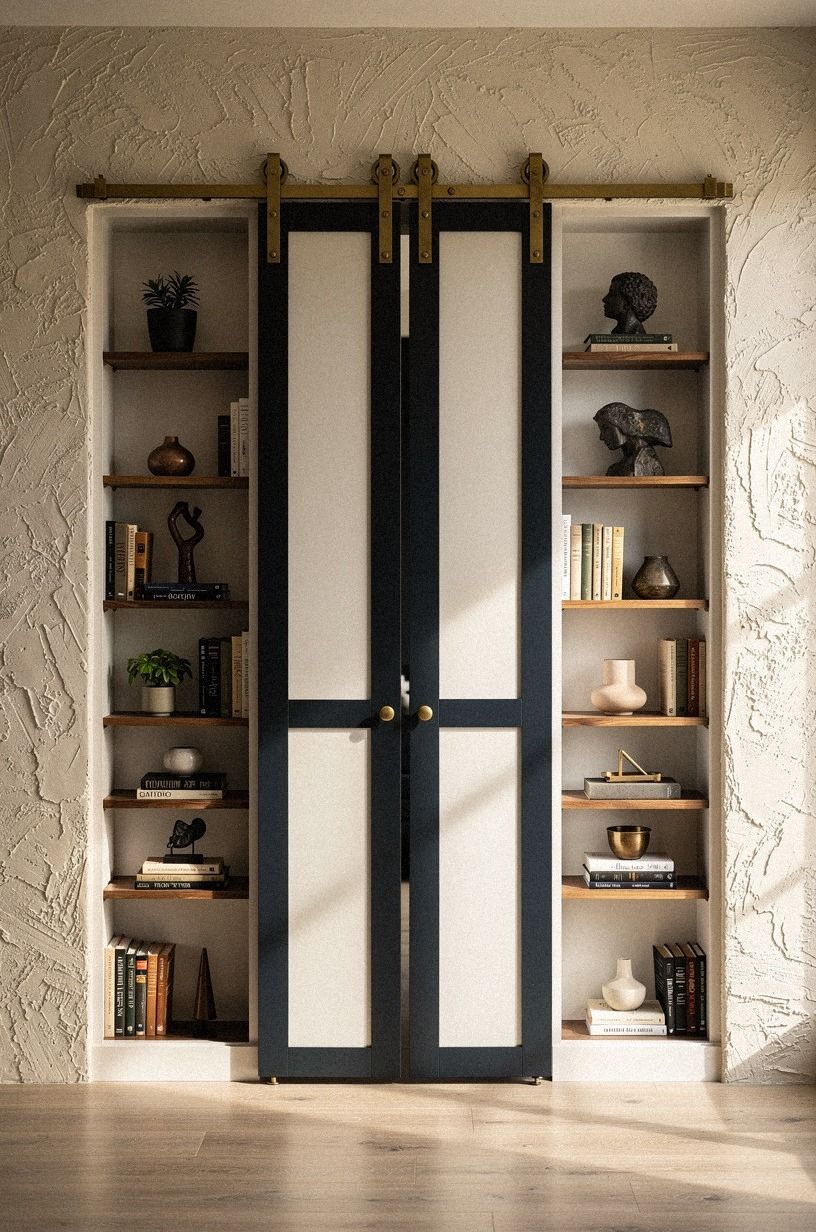
This is the one case where visible hardware can still feel refined, but only if the shelf face is convincing. A faux bookcase adds instant personality, practical storage, and that slightly mysterious feeling people love in older homes. I would load it with matte books, one vintage brass box, and a few heavy baskets so it feels storied and believable.
15Run fluted cladding across the entire wall for one continuous surface
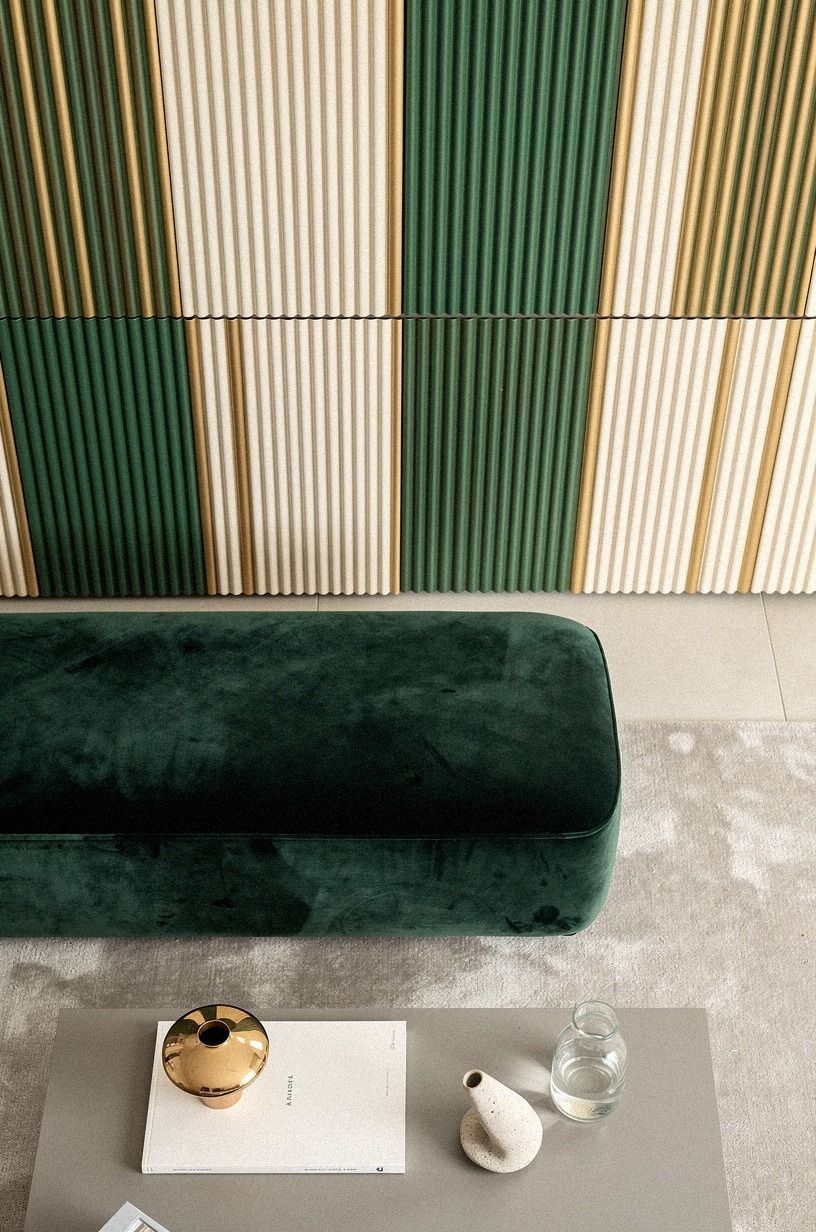
Fluted cladding is the smoother cousin of slatted oak, and it’s brilliant when you want a quieter read. Because the grooves are continuous and fine, the panel line can disappear almost completely until the light shifts.
Overhead, the wall looks like one long wrapped surface. It feels graceful and serene.
I would use painted fluted MDF in a muted green or mushroom tone if the budget is tighter, and white oak fluting if the room already has custom millwork elsewhere. A small reveal is fine.
A dramatic one is not. For more all-wall concealment references, the speakeasy home bar design shows how repeated vertical surface can hide function beautifully, and the logic carries.
Add a slim unlacquered brass strip along the base for warmth.
And keep the adjacent furniture leggy. A floating chair, a narrow table, an airy lamp. If you push bulky case goods against a fluted wall, you lose the very shadow play you paid for.
16Match the reveal with continuous baseboards so the seam disappears
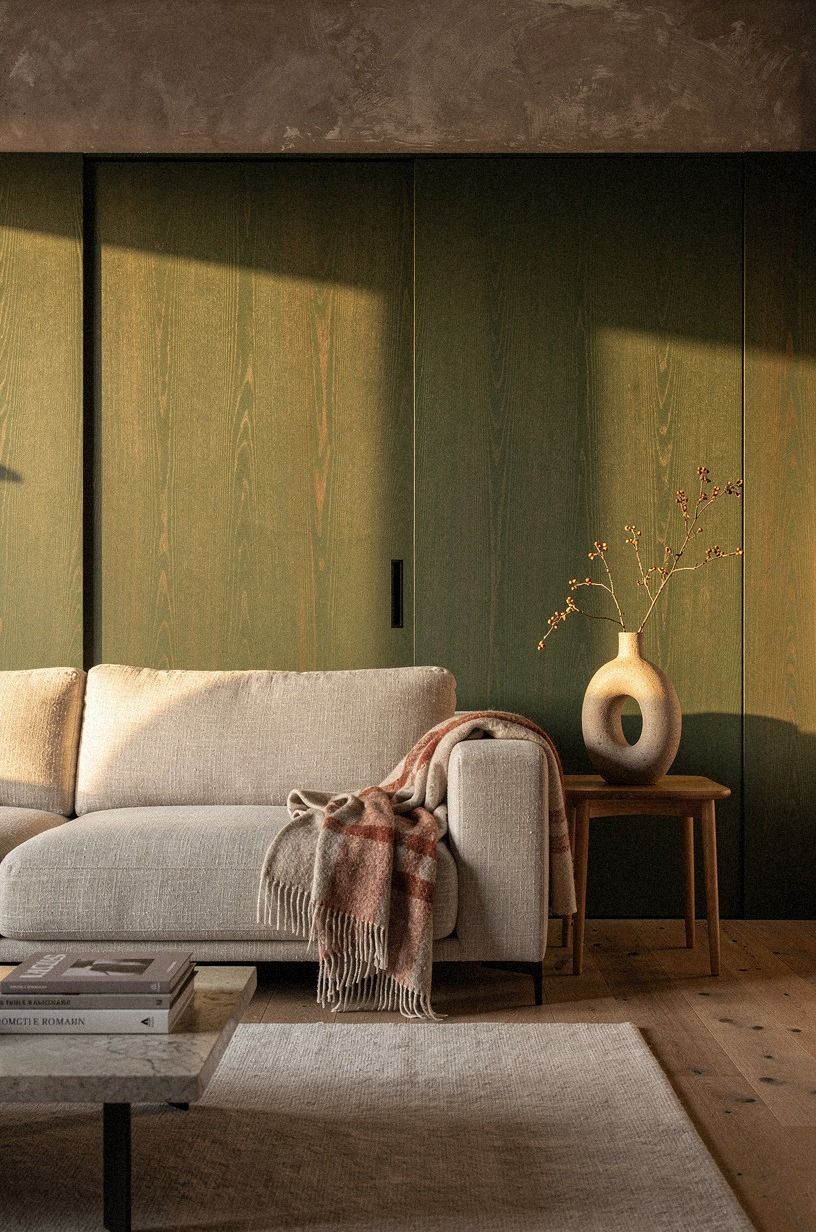
The baseboard is where many hidden sliding door ideas either win or get exposed. When the profile runs straight through, the seam stops interrupting the room and starts behaving like part of the architecture. It is a tiny move, but the payoff feels neat and satisfying.
17Tuck the slider behind a floating console for true negative space
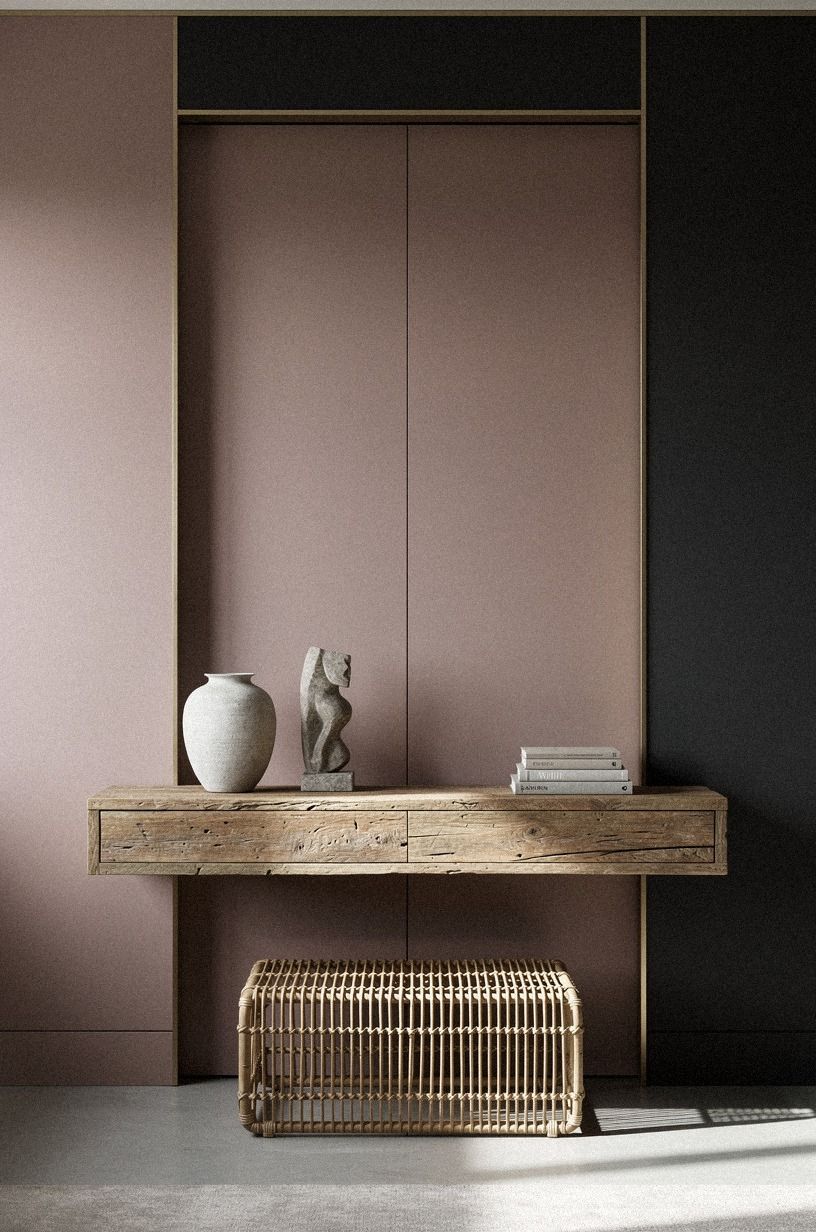
A floating console gives the wall negative space, and that negative space is what makes the concealed panel believable. Because the furniture doesn’t sit heavy on the floor, your eye reads air, line, and proportion before it reads doorway. In a dusty rose or warm neutral room, that’s a very airy effect.
Keep the console shallower than you think, usually 12 to 16 inches deep, and let it float below the hand zone so the panel can still move comfortably behind it. If the sofa opposite is 35 to 40 inches deep, the slimmer cabinet keeps circulation easy. A white oak floating console with one aged brass lamp works especially well here, and the luxury speakeasy decor ideas are a good reminder that suspended storage makes small rooms feel quicker on their feet.
A single bouclé cushion on the bench nearby softens the whole composition.
But keep the styling sparse. One bowl.
One lamp. One book stack. The part that worked in every project I’ve seen was restraint, because once the console starts looking busy, the hidden sliding door ideas stop looking seamless.
Less things, more calm. Real magic!
What changed the way hidden sliders feel now
What changed isn’t just taste. It’s tolerance. A few years ago people were happy if a sliding door saved floor space, full stop.
Now you want it to save space and protect the mood of the room, and I think that’s a smarter standard because living rooms have to do more than one job. They hold television nights, work calls, guests, storage, sometimes even a tucked bar or play zone. When an opening shouts, the whole room feels a little less settled.
When it whispers, you get usefulness without sacrificing calm. That’s the difference between a clever solution and a graceful one.
I have also noticed that the doors people love most are not the most complicated ones. They are the ones that commit to one architectural language and keep repeating it.
If the room is all pale oak, then go all pale oak. If it is grasscloth and brass, stay in that lane.
I made the mistake years ago of trying to split the difference with a black iron track on a soft traditional wall, and the result was not edgy. It was confused.
Since then, I’ve gotten much stricter about cohesion, especially in smaller spaces where one wrong finish can eat the whole room. A disciplined palette feels calmer and more convincing every time.
Money matters too, but maybe not where you think. I would put budget into the surface that people read first, then cheat a little on what they read second.
A convincing wall skin, a better paint color like Benjamin Moore Pale Oak OC-20, a real white oak touch point, those things punch above their price. Meanwhile, expensive hardware will not rescue a bad composition.
Nobody tells you that because hardware photos are glamorous on their own. In a real room, though, the win comes from proportion, repetition, and one nice material (an unlacquered brass knob, a single Belgian linen panel) you can feel from three feet away.
And that is why I would rather see you do a simpler hidden slider well than chase a dramatic setup with five finishes fighting each other. Want the room to feel intentional?
Pick the wall story first, then let the door disappear inside it. The reveal should be the surprise, not the design language.
Clean beats complicated. Calm wins.
A Few Things Worth Answering
What is the best hidden sliding door setup for a small living room?
A slatted wall or a floating-console setup is usually the best place to start because both keep the footprint light. The biggest benefit is visual quiet. For a tighter room, pair the door with an IKEA KALLAX birch-effect storage piece or a slim oak console so you get function without crowding the wall. If you’re planning the room around it, the Speakeasy lounge ideas show how small rooms can carry one architectural move without feeling busy.
Where can I buy hidden sliding door pieces on a budget?
Start with IKEA, Target Threshold, and Wayfair for consoles, drapery, and basic panel-ready storage. The money saver is mixing retail pieces with one custom-looking surface. Facebook Marketplace is great for solid wood bookcases you can repaint, and a local millworker can often add the track later.
How much does a hidden sliding door makeover cost?
Most living room updates like this land somewhere between about $300 and $8,000 depending on whether you’re styling, re-paneling, or adding millwork. The cheapest wins are paint, wallpaper, and drapery. The expensive jump usually comes when you add a pocket frame, custom shelving, or fireplace carpentry.
Can I create a hidden sliding door look on a budget?
Yes, and you don’t need a full renovation to get close. The smart path is changing the wall skin first. Paint the whole wall one tone, add a picture ledge or curtains, and use a shallower console so the opening reads cleaner even before you touch the hardware.
Is a hidden sliding door worth it in a small space?
Yes, especially when a swing door would steal seating or walkway space. The real value is reclaimed layout freedom. You can keep the rug properly sized, hold the coffee table at a comfortable 16 to 18 inches tall, and avoid that awkward clearance zone a hinged door always demands.
Is a hidden sliding door a good idea for a rental?
Yes, if you stick to removable layers and don’t cut into the wall. The rental-friendly move is camouflage, not construction. Think peel-and-stick grasscloth, tension-rod linen drapes, and a floating-look console that only needs standard anchors you can patch later.
Where I’d Start First
If I had to pick one, I’d start with wall-to-wall slatted oak. You can’t fake conviction with a timid panel, and a full wrapped wall makes the opening disappear before anyone studies the hardware. Pin that direction for later and let the wall do the hiding.