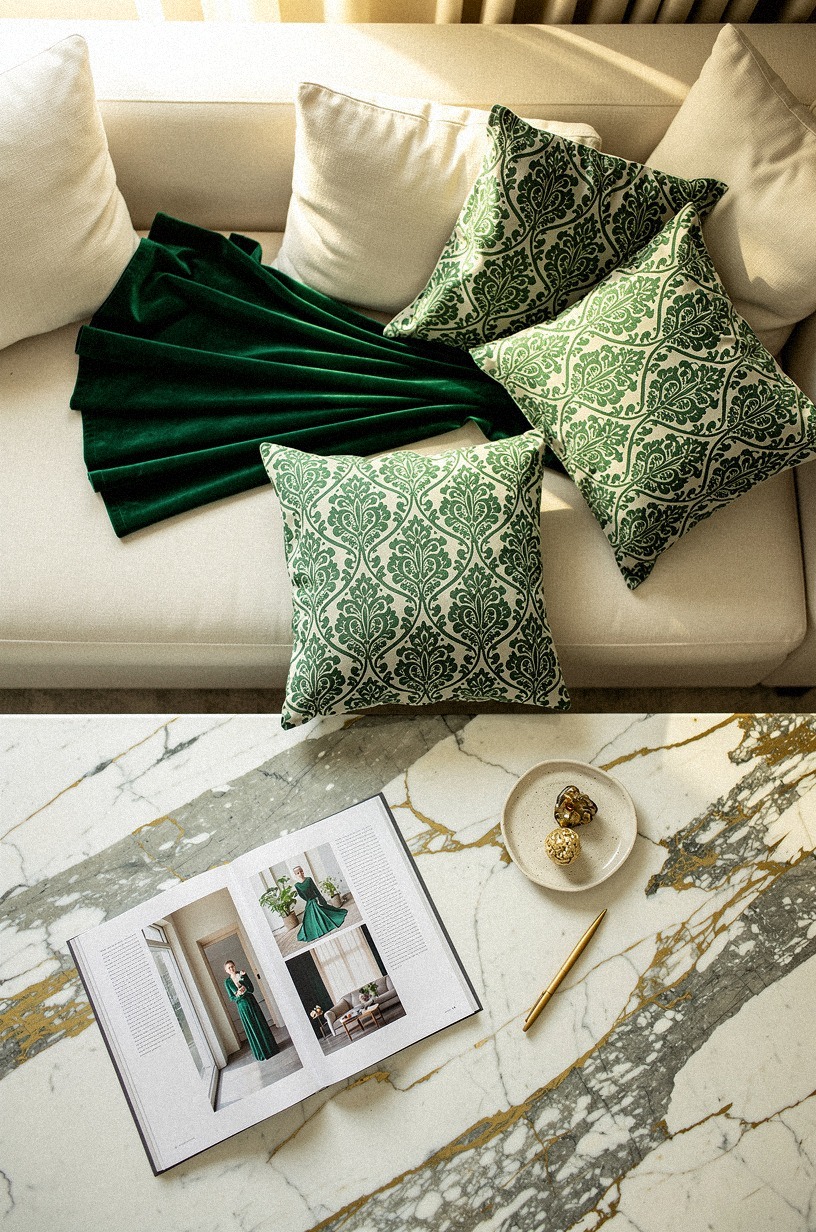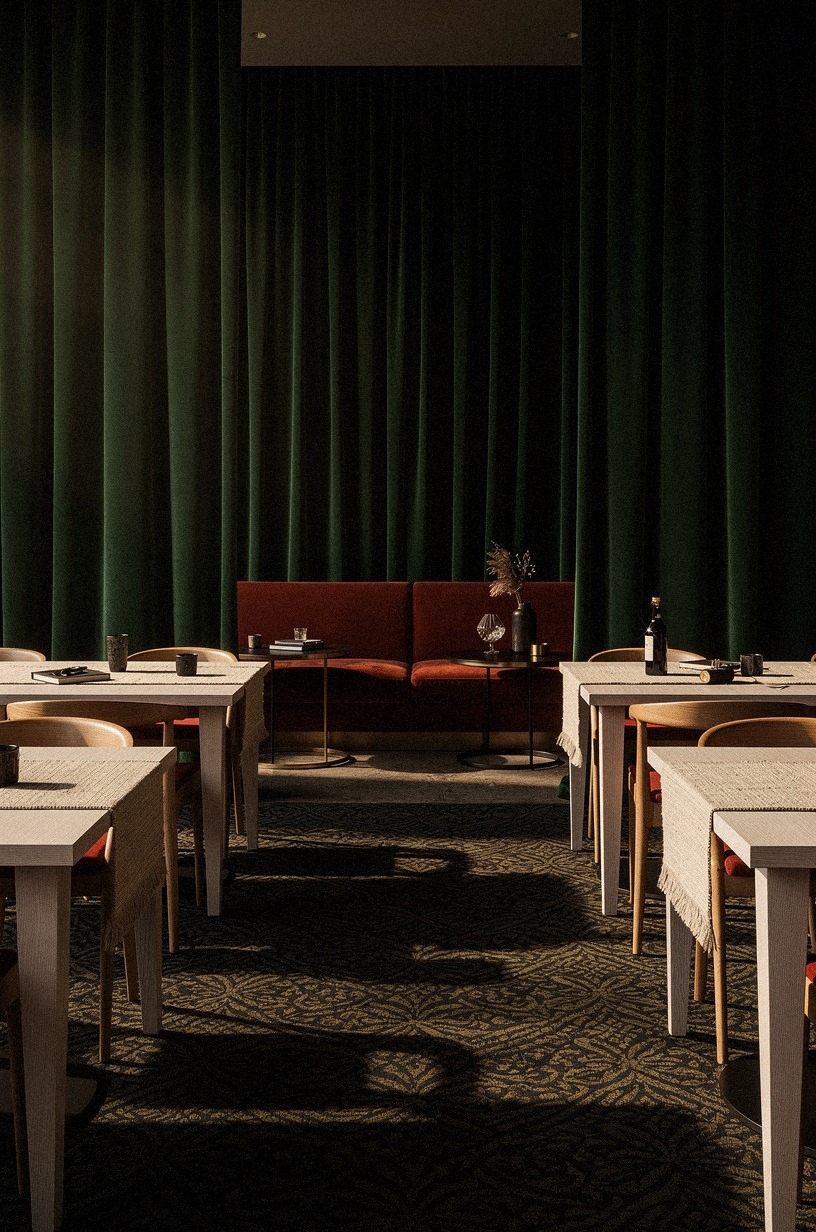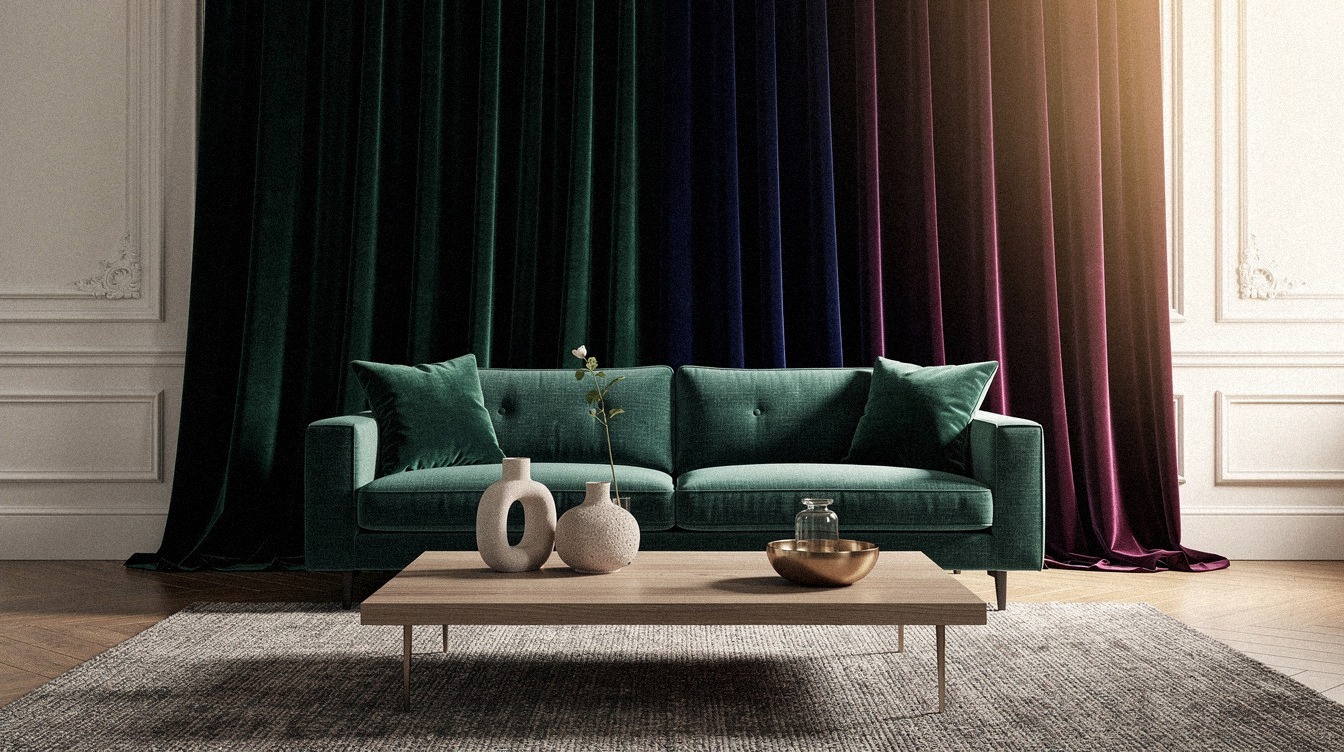
Speakeasy curtain & drapery ideas for velvet drama work because fabric changes light, sound, and mood faster than a furniture swap does. I learned that after buying the wrong sofa first. The room still felt flat. Once I hung heavier 18 oz cotton velvet drapery, everything clicked.
- Anchor the seating zone with pooled velvet behind the sofa
- Why should tall windows go oxblood before they go pale?
- Layer Belgian flax sheers under plum velvet, the old bar move
- Mount unlacquered brass rods higher than feels necessary
- Swag tassel tiebacks, but only if you commit
- Zone a corner cocktail nook with forest green velvet panels
- Wrap bay windows in one continuous pleated run
- Hang Sherwin-Williams friendly portieres between open rooms
- Anchor the seating zone with pooled velvet behind the sofa
- Why should tall windows go oxblood before they go pale?
- Layer Belgian flax sheers under plum velvet, the old bar move
- Mount unlacquered brass rods higher than feels necessary
- Swag tassel tiebacks, but only if you commit
- Zone a corner cocktail nook with forest green velvet panels
- Wrap bay windows in one continuous pleated run
- Hang Sherwin-Williams friendly portieres between open rooms
- Black velvet: trim it with antique fringe, or kill the wall
- Pair sage damask drapes with smoked mirror accents
- Lower the curtain line with cafe panels below stained glass
- Is a ceiling canopy over seating worth the bold move?
- Slide plum velvet panels across open shelving
- Toughen Belgian flax drapes with bullion tiebacks
- Repeat the velvet on Article sofa pillows
- Pool patterned jacquard across dark oak floors
1Anchor the seating zone with pooled velvet behind the sofa
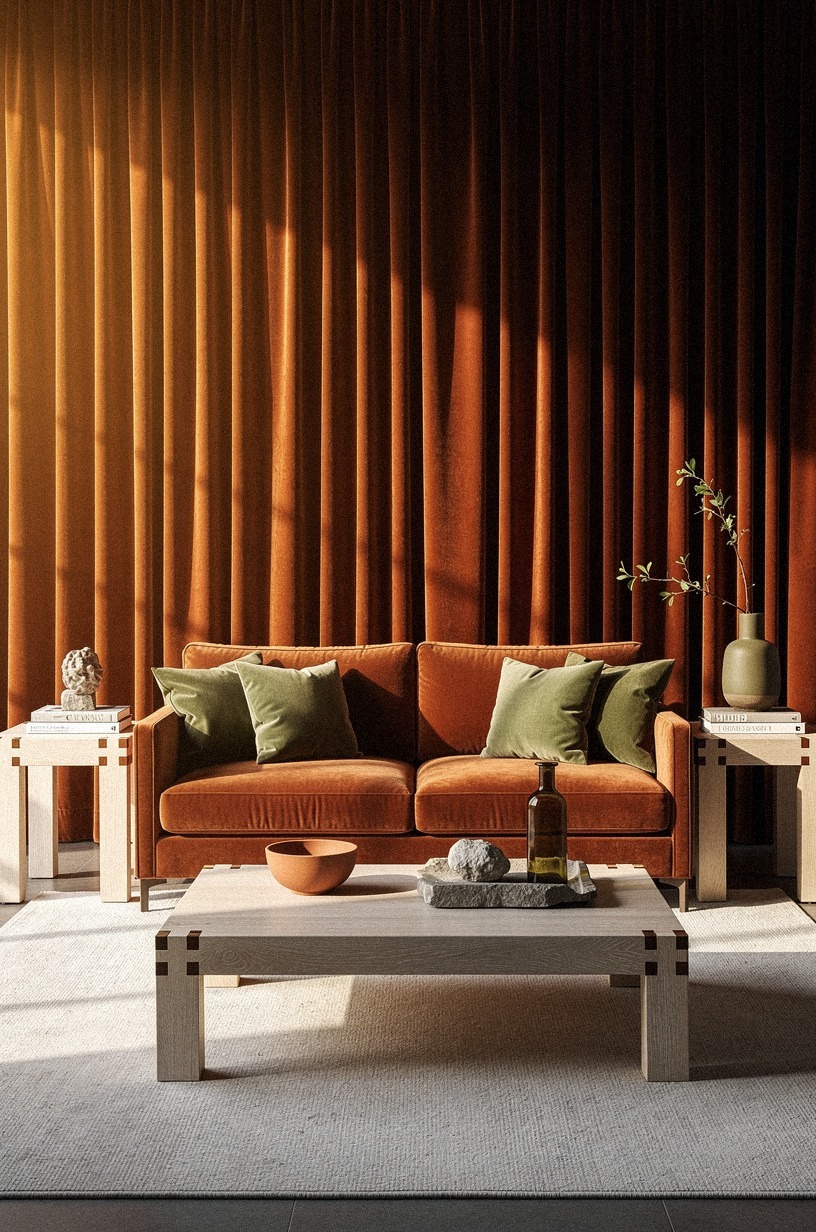
Start behind the sofa if you want the fastest shift toward velvet speakeasy decor. When pooled panels hit the floor by 2 to 3 inches, your seating zone looks anchored instead of parked against a wall. I like this move most when your sofa sits 8 to 12 inches off the drapery line, because you still get the softness without crushing the folds.
Use 18 oz cotton velvet in terracotta or olive when the room already has stone tones and a cerused oak table. That weight holds a deep fold, and the extra fabric makes the panel feel intentional rather than skimpy. Your coffee table should still land in the 16 to 18 in range, with about two thirds of the sofa length, so the room doesn’t get heavy at floor level.
The part that worked in my own living room was symmetry. Two cerused oak lamps.
Two side tables. Forest green velvet centered behind the sofa. If you need more ideas for what sits in front of that drapery wall, this guide to speakeasy seating with velvet, leather, and brass helps you keep the balance.
2Why should tall windows go oxblood before they go pale?
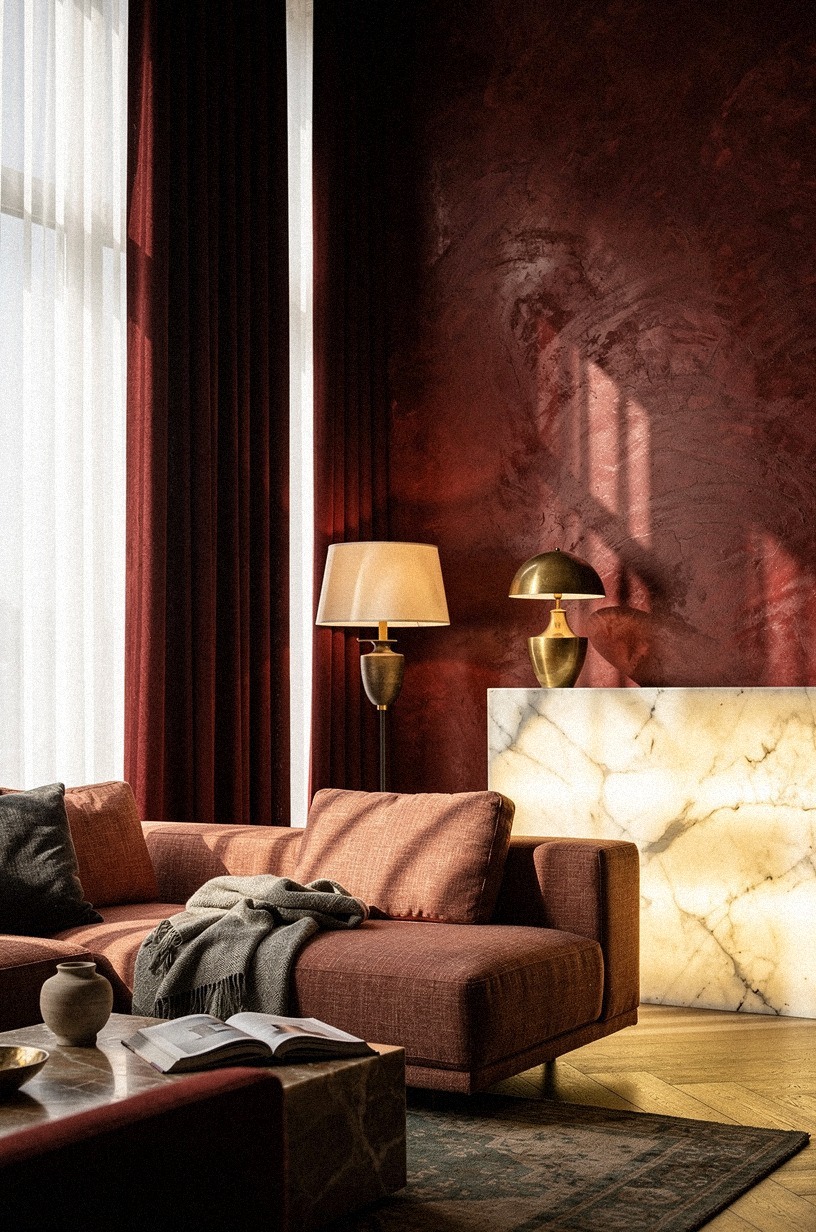
Go darker than you think on tall windows. Oxblood reads rich, not gloomy, once daylight hits it, and it gives your living room the private-lounge feeling that luxury bar interior inspiration always chases. If your walls are pale, this is where you can let the oxblood curtain do the talking.
A pair of oxblood velvet panels against clay linen upholstery and aged brass lamps looks even better when you keep the rod return close to the wall, so the fabric feels architectural. I wouldn’t pair this with a cool gray sofa. Warm leather, camel, rust, or a soft neutral like Benjamin Moore Revere Pewter HC-172 nearby will make the red feel grown up.
And if your room still feels too polite, bring in one backlit stone or onyx accent and let the curtains carry the mood. You can see the same dark, wrapped feeling in these dark moody speakeasy decor ideas, especially if you’re trying to make tall windows feel expensive without touching the trim.
3Layer Belgian flax sheers under plum velvet, the old bar move
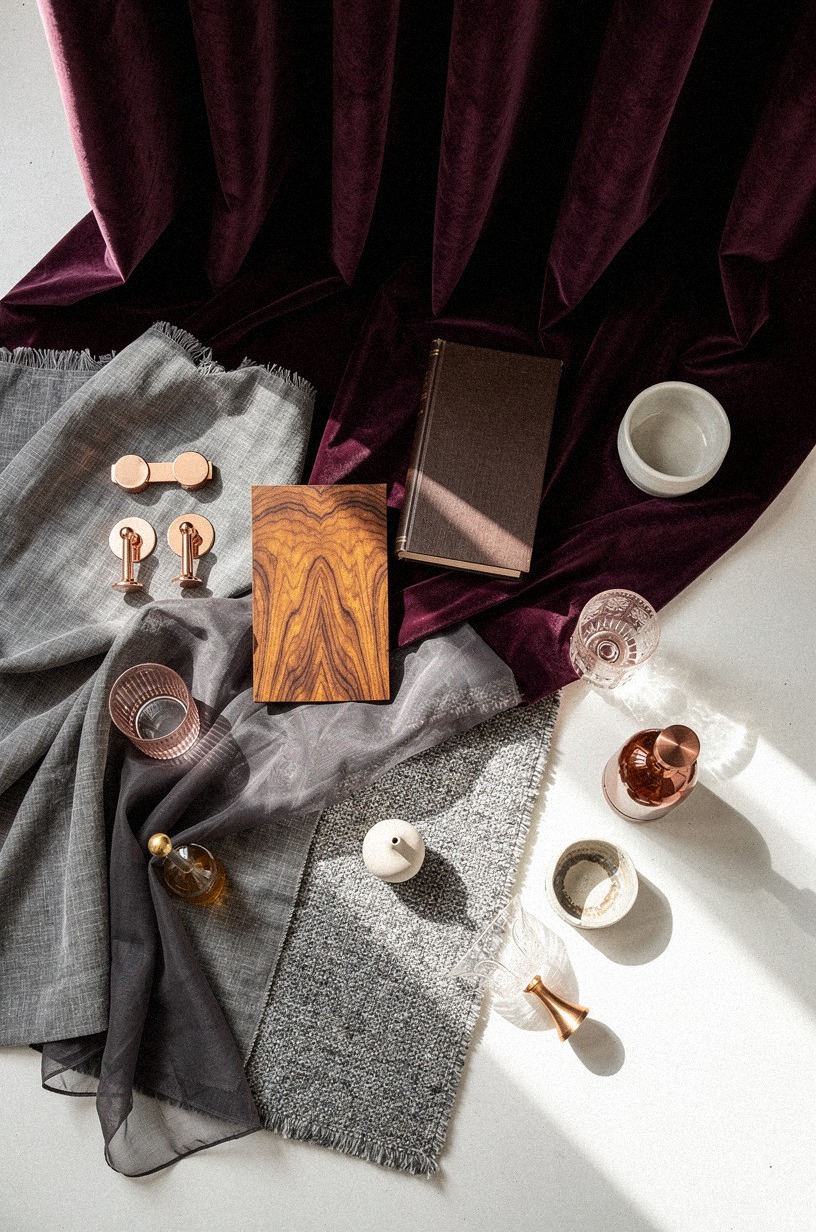
Layering is what makes drapery feel collected instead of store-bought. A smoke sheer under plum velvet filters daylight first, then lets the outer panel do the drama after sunset. You get softness at noon and shadow by night, which is the whole point in speakeasy vibe decor.
Choose Belgian flax linen sheers in a gray-taupe cast rather than bright white, because white can look sharp next to plum. I made this mistake once, and the room lost every bit of its hush. Rose gold or aged brass rings help too, especially when your other textiles lean gray and your Calacatta Gold marble has book-matched movement.
But don’t double up every layer in the room. One window wall is enough, and the rest can stay simpler so your eye has somewhere to rest. If you like a fabric-heavy room that still feels tactile, this velvet sensory layering piece is worth reading next.
4Mount unlacquered brass rods higher than feels necessary
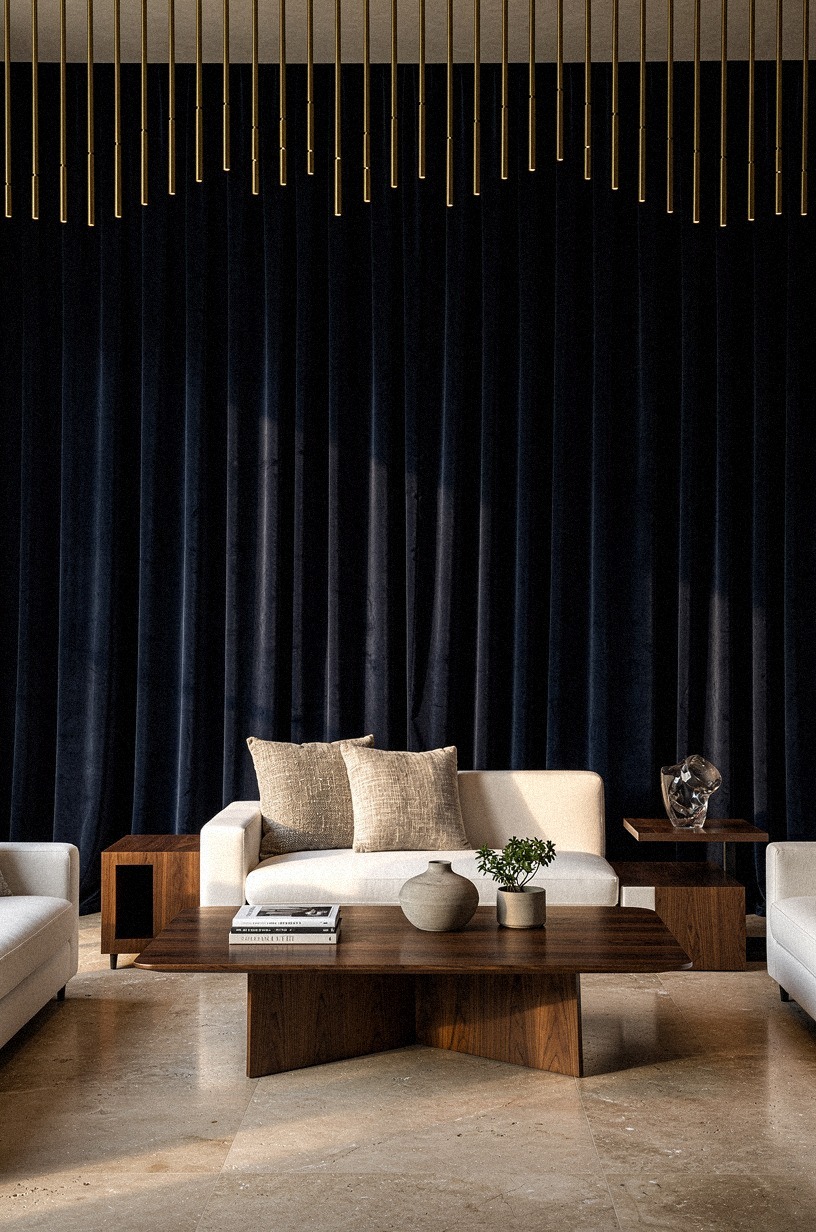
Hang the rod high. Higher than you think.
Mounting unlacquered brass close to the ceiling line pulls the whole room upward, which matters even more when you want a navy drape to feel hotel-like instead of heavy. In a living room with white seating and walnut accents, that extra height is what makes the drama look clean.
Use unlacquered brass hardware and leave 6 to 10 inches past the window width on each side, so the stack-back doesn’t eat your daylight. If your sofa is 35 to 40 inches deep, tall drapery keeps the wall from feeling squat beside it. Farrow & Ball Hague Blue No. 30 on nearby millwork can deepen the navy without pushing the room into black.
I also think this is where people underspend in the wrong place. Cheap rods bow, the rings scrape, and suddenly the whole hardware setup looks fake. For more old-world contrast, pair the height with the layered metals in these vintage speakeasy decor ideas.
5Swag tassel tiebacks, but only if you commit
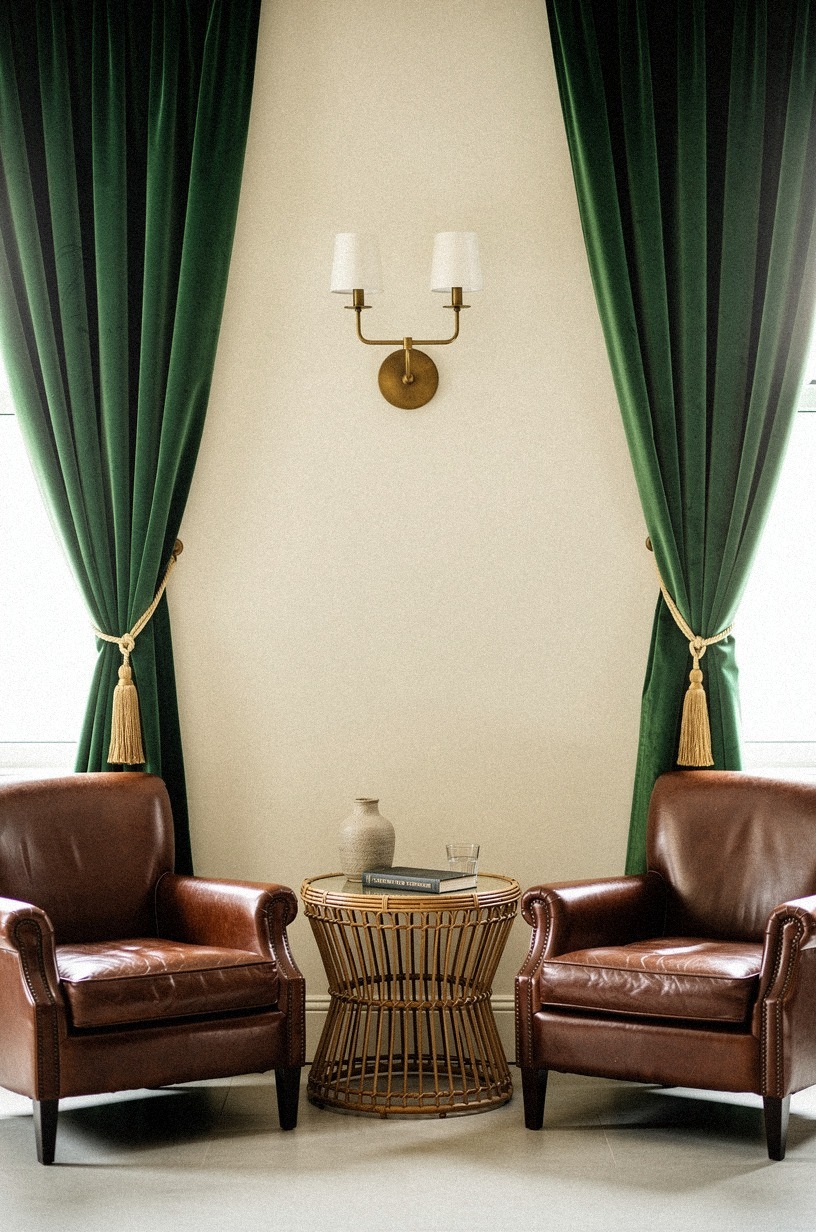
This one only works if you commit. A limp tieback is sad.
A proper swag with gold bullion cord and a little drop beside a cognac leather chair feels like a scene. If you have an accent chair tucked near the window, this is how you give that corner some ceremony without adding another table.
Pull emerald velvet curtains back just enough to reveal the cream wall and let the folds stack thickly near the floor. I prefer this next to a cognac leather chair or an Article Sven tan leather frame, because the worn surface keeps the tassel detail from feeling stagey.
Your unlacquered brass floor lamp should land behind the chair, not beside the tieback, so the cord stays visible. The theatrical bit is exactly why it works!
If your room already has leather and brass but still feels flat, this velvet and sparkle ratio guide helps you keep the shine controlled.
6Zone a corner cocktail nook with forest green velvet panels
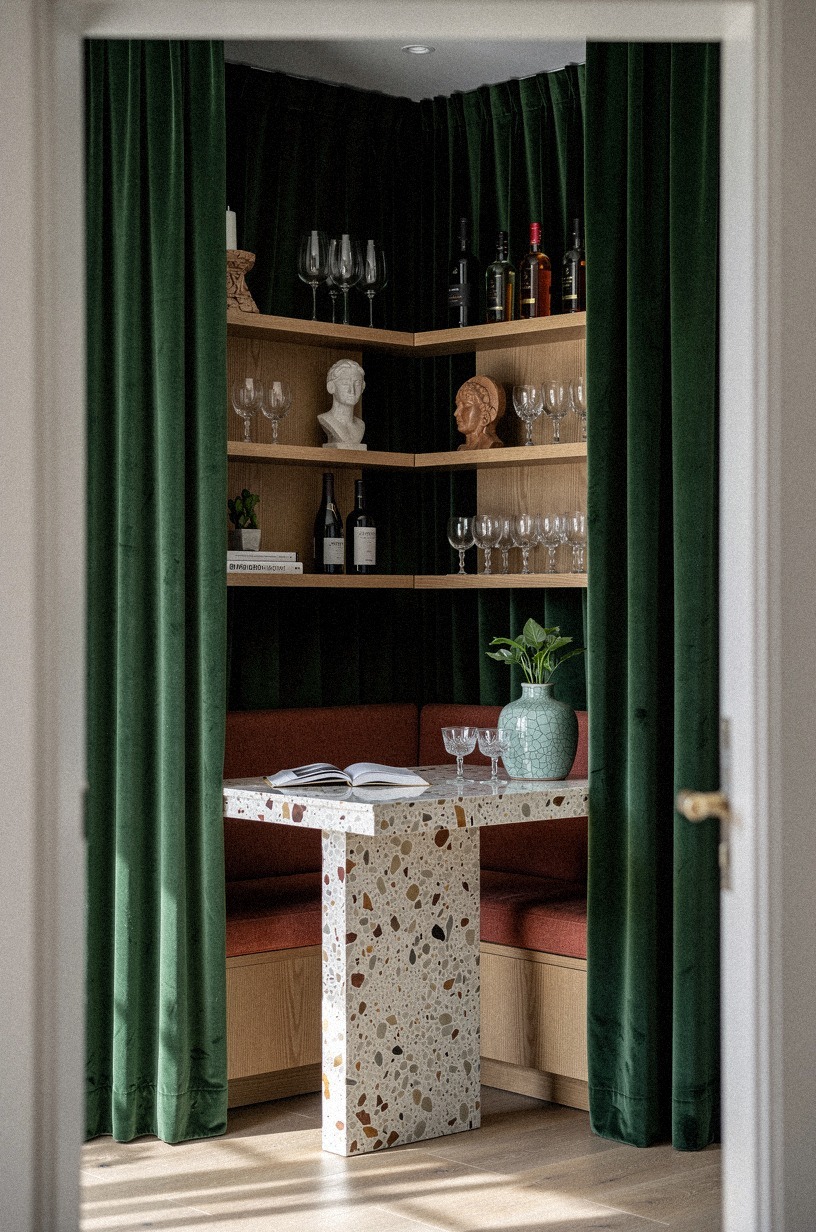
A corner cocktail nook doesn’t need renovation to feel built in. Forest green velvet panels can define the zone, hide visual clutter, and turn one underused corner into the place people drift toward at night. If you’re renting, that’s a huge win because the fabric does the zoning for you.
Let forest green velvet frame rust upholstery, natural oak shelving, and a terrazzo ledge, then keep your shelf depth modest so the curtain still swings cleanly. I like a 3/4-inch solid white oak shelf here, especially above an IKEA KALLAX birch-effect base, because the mix feels real rather than precious.
A small bar tray, two coupes, one brass lamp. Enough, and that’s the whole point!
If you’re wondering what a broader room refresh usually costs, use these typical U.S. ranges before you buy a thing (typical spend benchmarks below):
That table is why I like curtains so much for this look. They give you mood without forcing you into the mid or high tier right away. If you want another small-space move that hides a destination inside the room, these vintage speakeasy decor ideas use the same idea of reveal and restraint.
7Wrap bay windows in one continuous pleated run
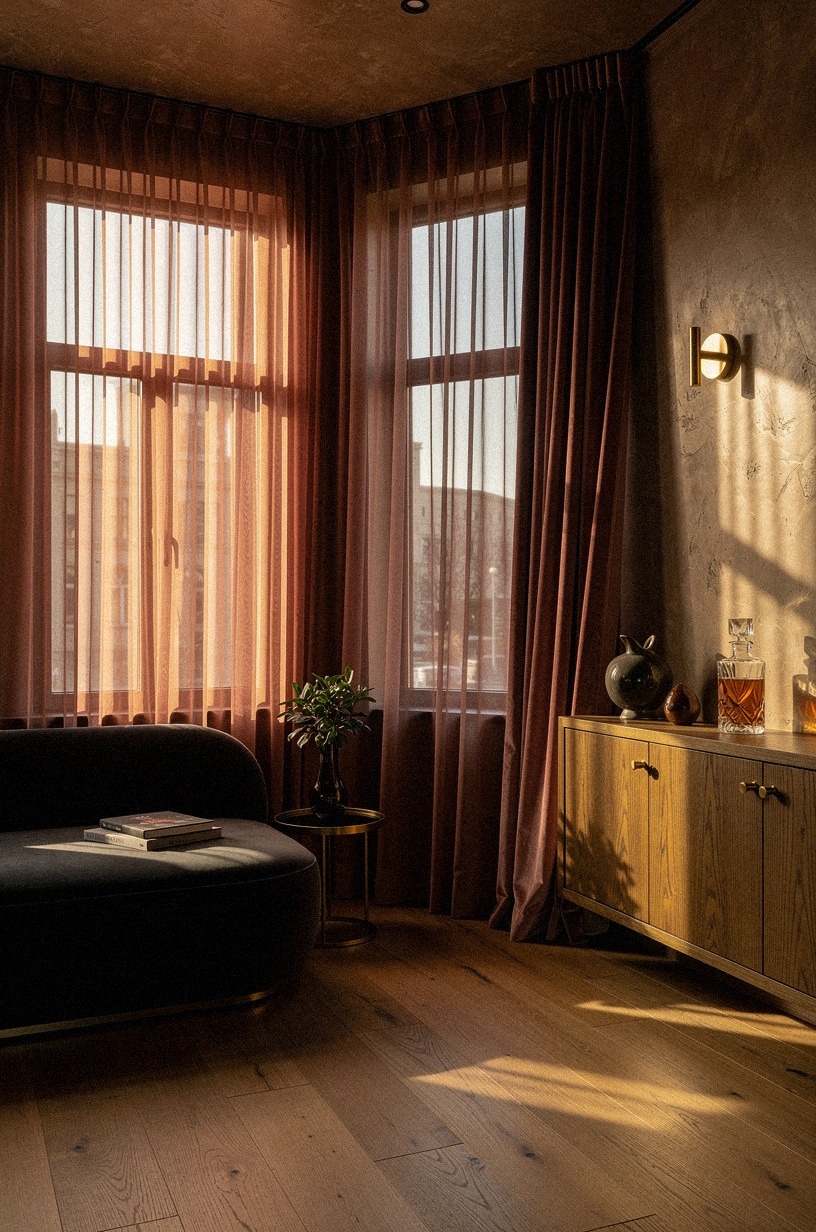
Bay windows can feel exposed fast, especially when the room is dark and the glass is bright. Pleated drapery softens that hard geometry. It also keeps the bay from reading like a separate lounge zone, which matters when you want the living room to feel like one enveloping space instead of a main area plus an awkward bump-out.
Use dusty rose velvet with a tailored pleat and let the folds sweep around the curve in one continuous run. I wouldn’t break the bay into three mismatched panels.
One line looks richer, especially with charcoal seating, brass accents, and hand-applied Venetian plaster nearby. A 9×12 rug with the front legs of the seating on it will help that curved wall still feel connected to the main room.
But keep the extras calm. If the drapery is already doing the romance, your tables and lamps can stay more restrained. For balancing a dramatic window with the rest of the room, I like the restraint in these dark moody speakeasy decor ideas.
8Hang Sherwin-Williams friendly portieres between open rooms
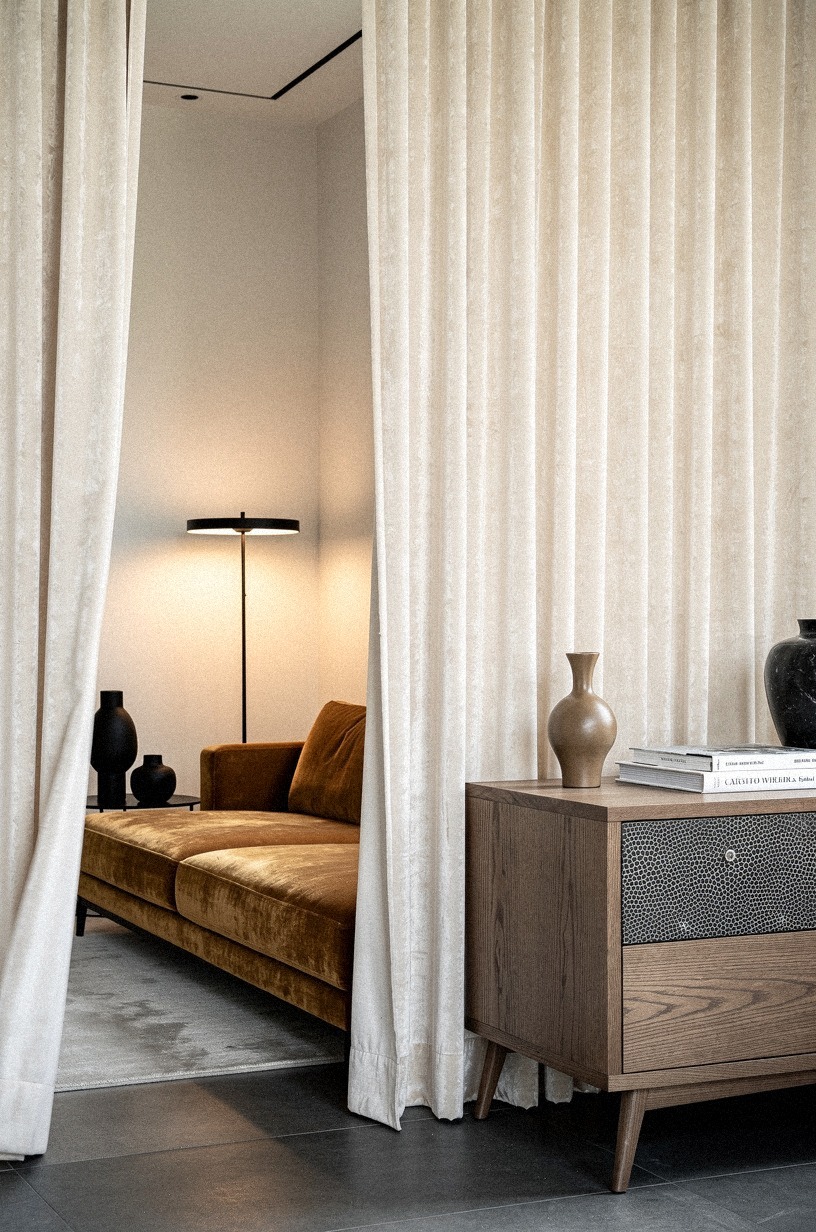
Why leave every opening exposed? Portiere curtains are one of the easiest ways to give an open layout some hush without building a drywall wall. They work especially well when you want one room to feel social and the next one to feel quieter, even if the footprint is small.
Hang warm white velvet between rooms and let it frame a camel leather sofa, black accents, and wire-brushed oak surfaces beyond. I like this better than a screen because you can pull it open when you need light, then close it halfway for a softer threshold. Sherwin-Williams Evergreen Fog SW 9130 on a nearby console or trim looks great with that creamy fabric.
My rule here is simple: keep the opening tall and the curtain full. Skimpy portieres look apologetic.
Full ones feel old-money. If you need more ideas for what should live on the other side of that threshold,
9Black velvet: trim it with antique fringe, or kill the wall
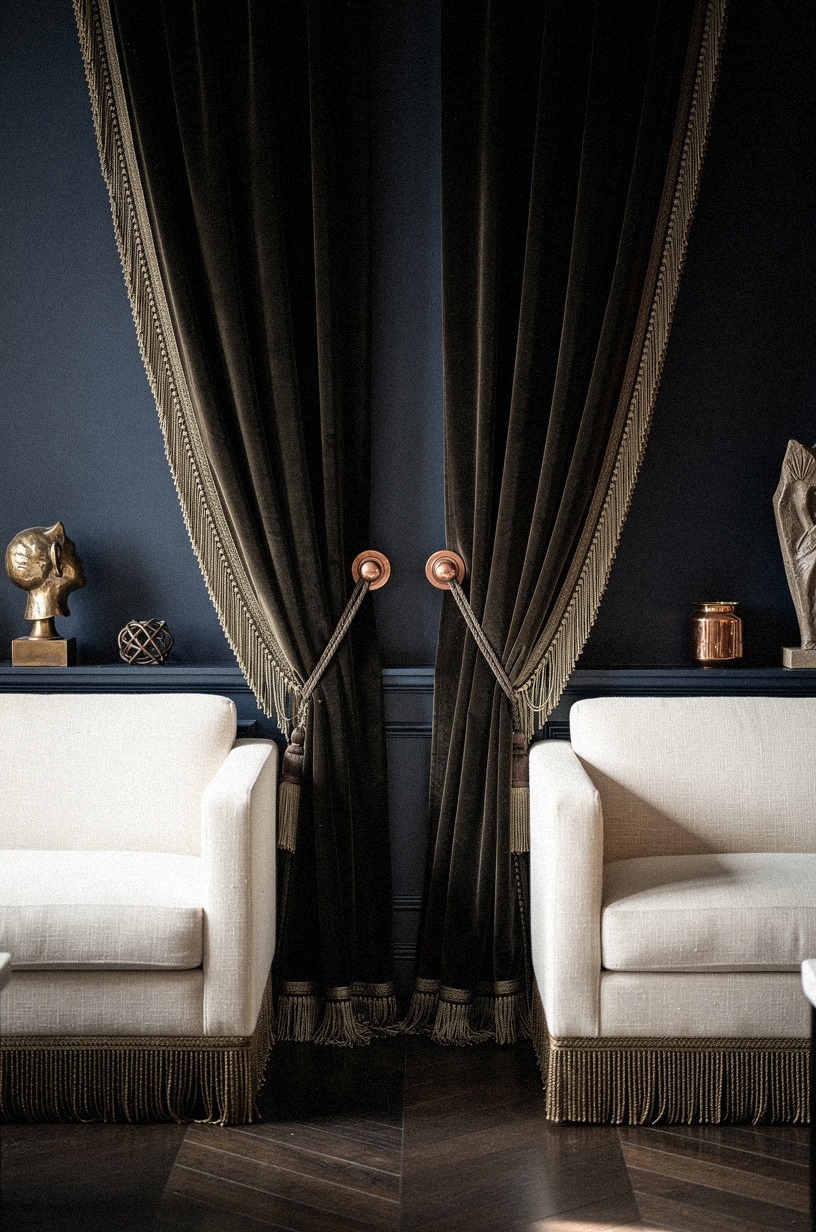
Black velvet can die on the wall if it isn’t broken up with texture. Antique fringe fixes that. The trim catches a little light at the hem, which keeps the pooled panel visible against midnight blue walls and makes the whole room feel less flat from sofa height.
Choose black velvet with antique fringe beside ivory bouclé upholstery and honed copper accents, then keep the rest of the palette quiet. I love this near washed Belgian linen and older wood because you get softness, polish, and age at the same time. A CB2 Primitivo bouclé chair would work better here than a shiny club chair, which would push the room too far into costume.
And don’t trim every panel in the room. One focal wall is enough.
The little flicker at the edge should feel discovered, not announced. If you’re building a darker envelope overall, these vintage speakeasy ideas show how much texture you need before a moody room feels finished.
10Pair sage damask drapes with smoked mirror accents
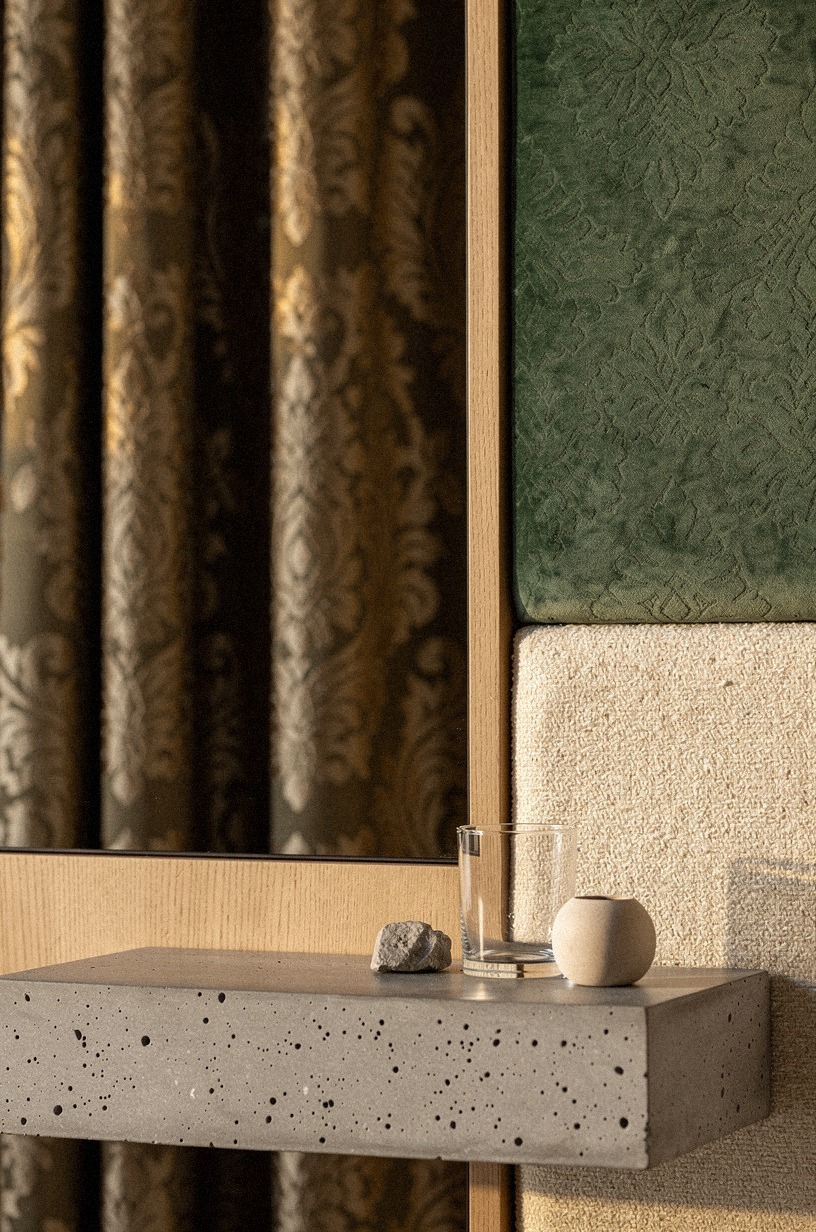
Pattern belongs in a speakeasy room, but it has to stay controlled. Damask next to a smoked mirror gives you pattern plus blur, which is a smart combination when you want detail that doesn’t shout across the room. The mirror reflects light back softly, and the fabric keeps it from turning cold.
Look for sage damask velvet beside warm cream bouclé and natural oak trim, then repeat the pattern nowhere else. I think one patterned drape is almost always enough. A little poured-concrete cocktail table underneath keeps the setup from getting too sugary, and the sage tone sits beautifully near Benjamin Moore Revere Pewter HC-172 if your walls need a gentle backdrop.
But watch the scale. Tiny damask can read dusty, while oversized pattern feels fresh. If you want more ways to mix softness with reflection, this velvet and sparkle piece gets the balance right.
11Lower the curtain line with cafe panels below stained glass
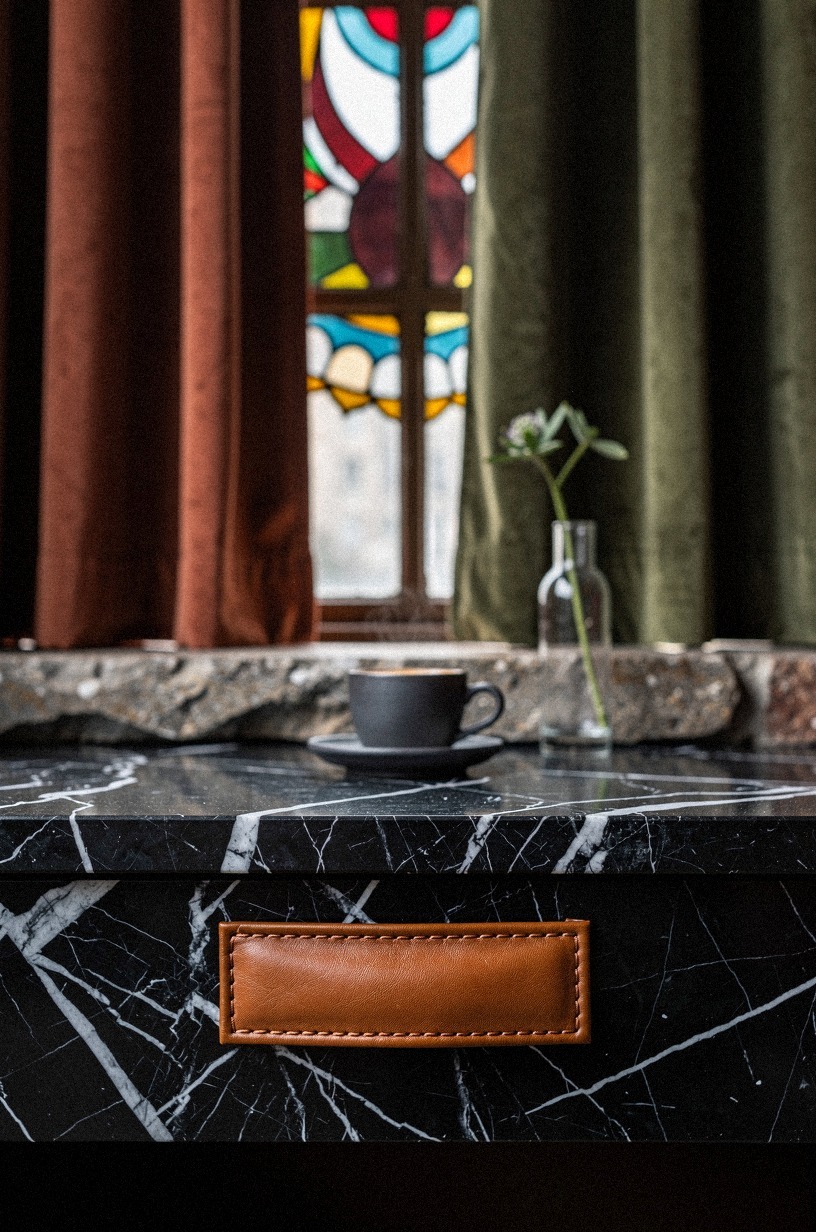
Low windows are where people either give up or overcompensate. Cafe curtains are the smarter move. They protect the lower half of the view, keep the stone sill visible, and let stained glass or colored transoms stay in the spotlight where they belong.
Use terracotta and olive linen below the glass, not a heavy blackout panel, so the light still filters through. Against a stone sill, Nero Marquina black marble with white veining, and warm brass nearby, that half-height treatment feels tailored. You can do this on a tension rod if you’re in a rental, and that’s one reason I’d choose it over custom drapery for a tricky window.
I also like cafe curtains when a room already has enough drama elsewhere. Not every window needs floor-length fabric. Sometimes the smaller answer is the right one.
For another layered-light approach, your velvet throw making the room feel warmer shows how a little softness changes the whole mood.
12Is a ceiling canopy over seating worth the bold move?
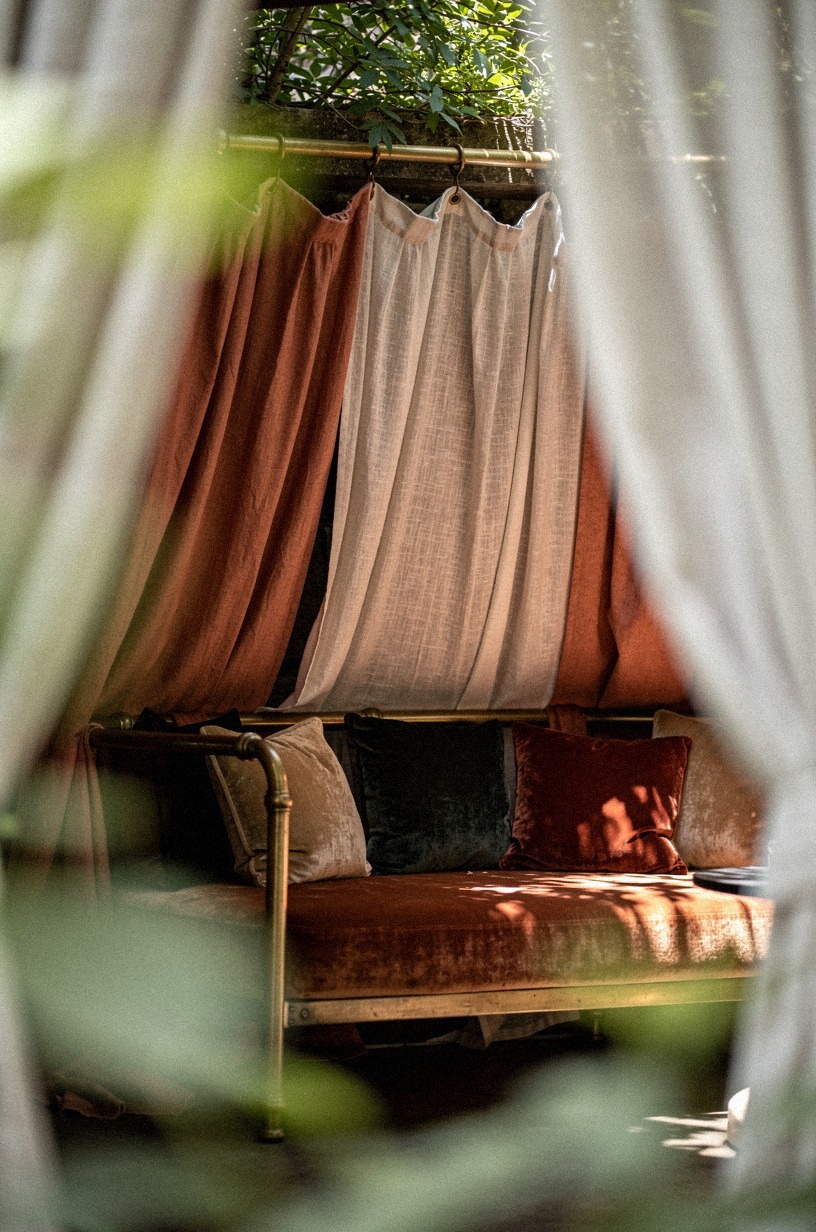
This is the boldest move in the bunch, and it only pays off if you want intimacy more than visual minimalism.
13Slide plum velvet panels across open shelving
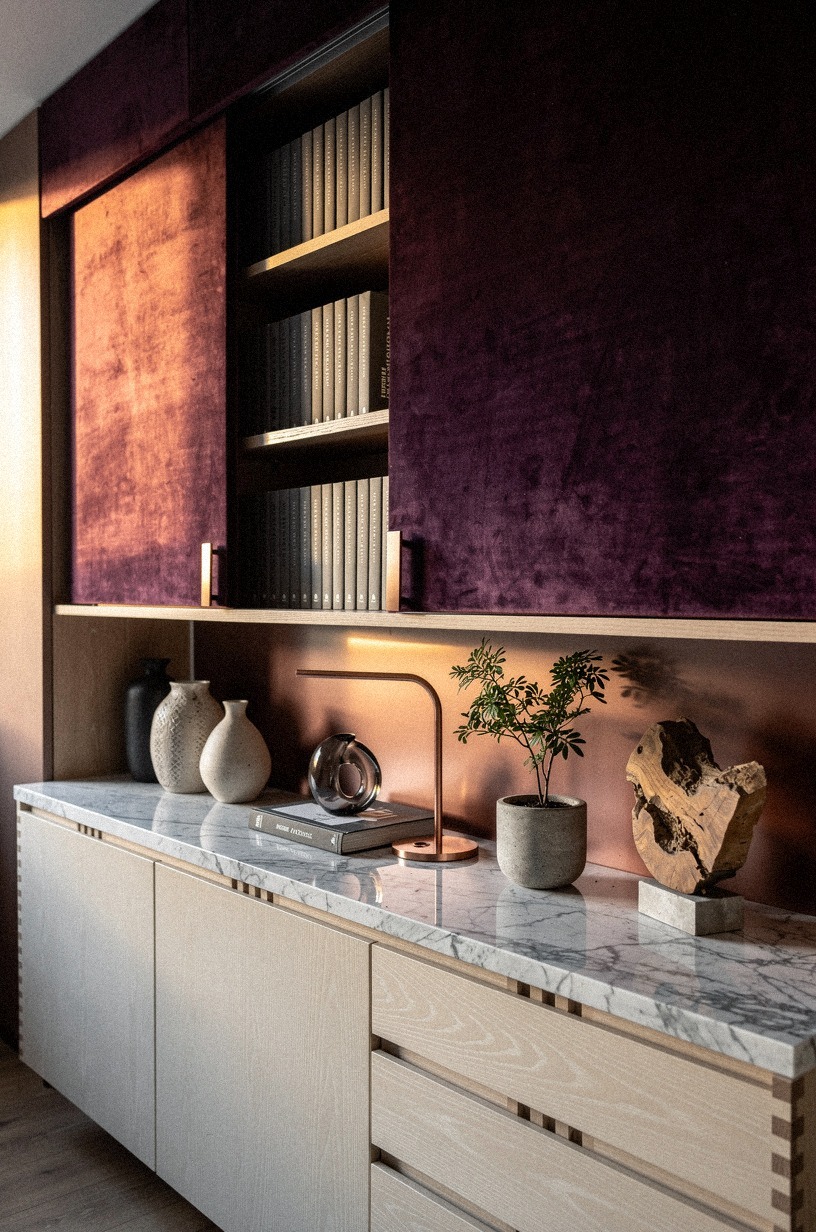
Open shelving isn’t always your friend. If your books, speakers, and cords are ruining the mood, plum velvet panels can hide the mess and keep the room soft at the same time. That’s especially useful in a living room where storage has to work hard but you still want a luxury bar interior inspiration kind of finish.
Slide plum velvet panels across the shelves so a peek of gray books and rose gold accents shows only when you want it to. I like this move best with Carrara marble nearby because the gray veining echoes the books and stops the plum from feeling random. A Target Threshold cabinet under the shelves helps the lower half stay quiet when the curtain is open.
This is one of those fixes that looks far more custom than it is. You can track panels on the ceiling, the shelf face, or a shallow wood frame. If your room needs more hidden-function ideas, these dark moody speakeasy decor ideas carry the same conceal-and-reveal energy.
14Toughen Belgian flax drapes with bullion tiebacks
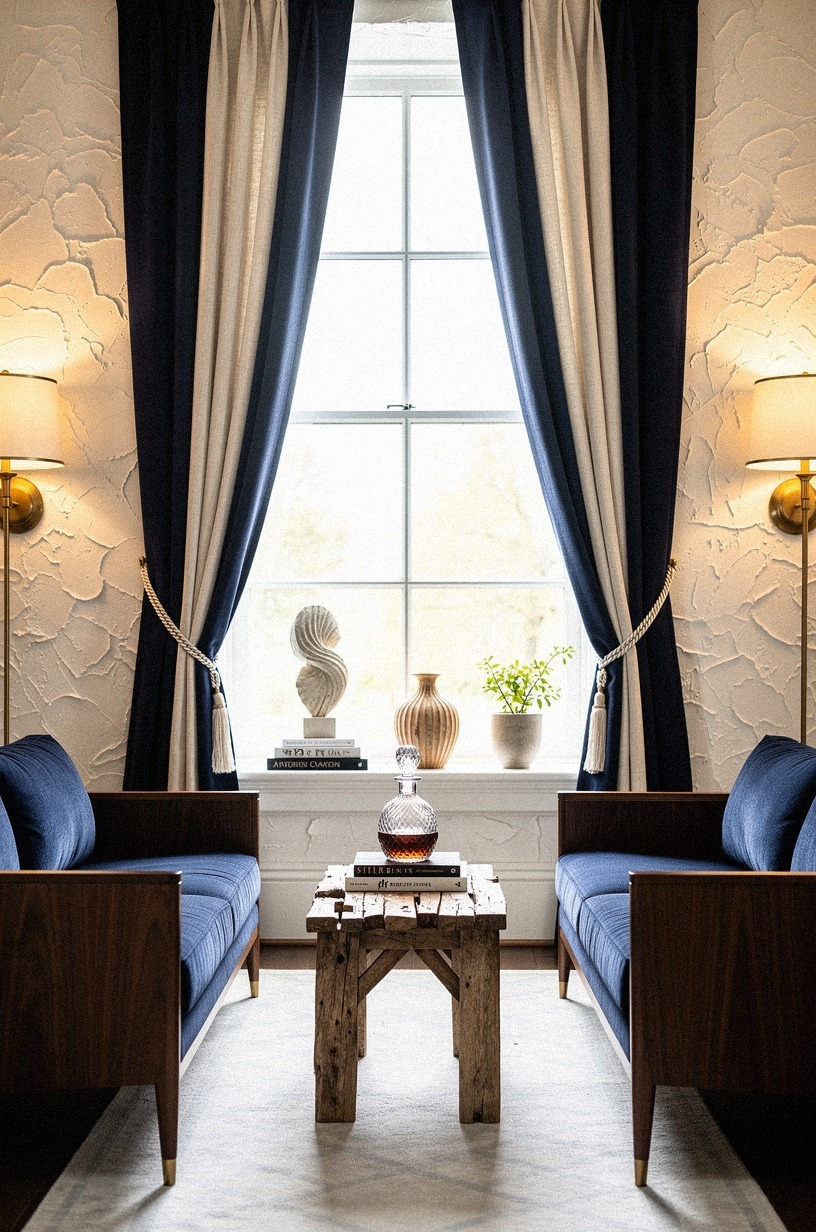
Linen alone can feel a little earnest in a speakeasy room. Bullion tiebacks toughen it up. The texture shift matters, especially when the room already has navy, walnut, and plaster doing a lot of quiet work in the background.
Try Belgian flax linen drapes with bullion cords in antique gold, then let the tie sit slightly below chair-rail height so the fold opens wide. This looks excellent beside walnut furniture, a weathered teak stool, and hand-troweled plaster because every surface has age in it. I’d skip glossy gold here.
A softened finish is the better call.
But don’t overdress the rest of the window once the tieback is in place. No extra valance.
No fussy trim. Let the one ceremonial detail carry the message.
For more pairings that mix leather, wood, and metal well,