
Vintage speakeasy decor ideas for old-world charm can start around $300 if you spend on paint, light, and texture before you chase custom millwork. I learned that the expensive-looking rooms weren’t the ones with the loudest bar setup. They were the ones that hid the practical stuff, let amber light do the flirting, and made you lean in. That’s the mood here.
Honest take, before we start
Speakeasy rooms aren’t really about Prohibition or hidden doors. They’re about control. The room tells your eyes what to notice first, and what to ignore.
Most living rooms do the opposite: they show you everything at once, and the result feels thin. The fix is older than Pinterest, and it costs less than the sofa you’re eyeing.
Light before fabric. Texture before furniture.
Paint before brass. Keep that sequence in your back pocket as you read, and you’ll know which move to spend on first.
- Hide the bar cart behind paneled doors
- Backlight the bottle wall like a small pharmacy
- Anchor the room with a tufted leather sofa
- Frame the fireplace with brass picture lights
- Cluster smoked mirrors over the mantel
- Dress windows in velvet café curtains
- Build a corner bourbon tasting nook
- Layer Persian rugs under club chairs
- Mount sconces beside moody oil portraits
- Style a tray with cut crystal decanters
- Paint the ceiling in lacquered espresso
- Tuck a gramophone beside the reading chair
- Wrap bookcases in dark walnut trim
1Hide the bar cart behind paneled doors
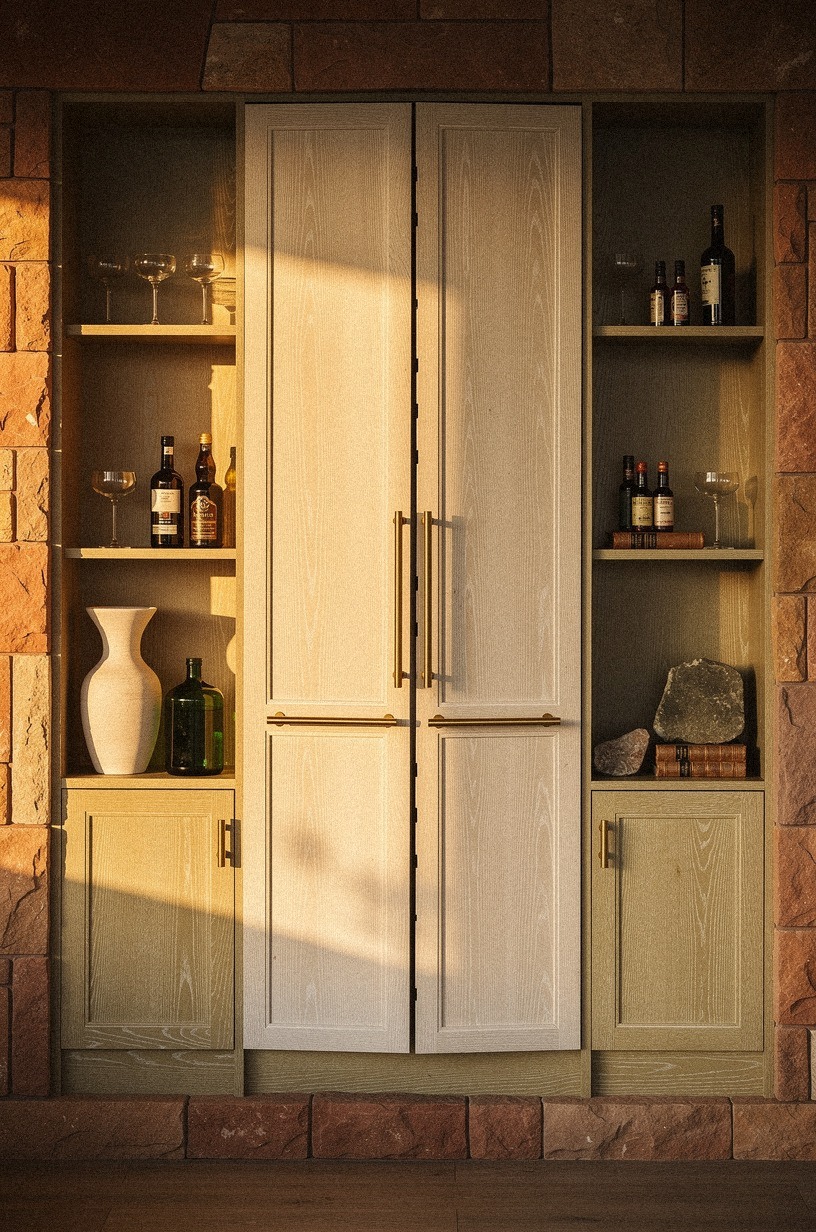
A visible bar cart can go college-apartment fast, so I’d hide yours behind cerused white oak doors and make the reveal feel intentional. You get the vintage bar aesthetic without leaving every bottle and shaker exposed. If you’re working with a plain living room wall, use two tall panels, open shelves in the center, and coupe glasses lined up like they’re waiting for 8 p.m.
The image to keep in your head is symmetrical: paneled doors closed on both sides, a quiet bar in the middle, bitters tucked beside the glassware. I’d skip mirrored doors here.
They try too hard, and they bounce clutter back at you. A 3/4-inch oak panel, a walnut knob, and one warm shelf light will read richer than a full wall of shine.
The moody, closed-in version in these vintage dark accent walls works with the same hidden-bar logic. For a heavier take, this piece on dark speakeasy room ideas goes even moodier.
2Backlight the bottle wall like a small pharmacy
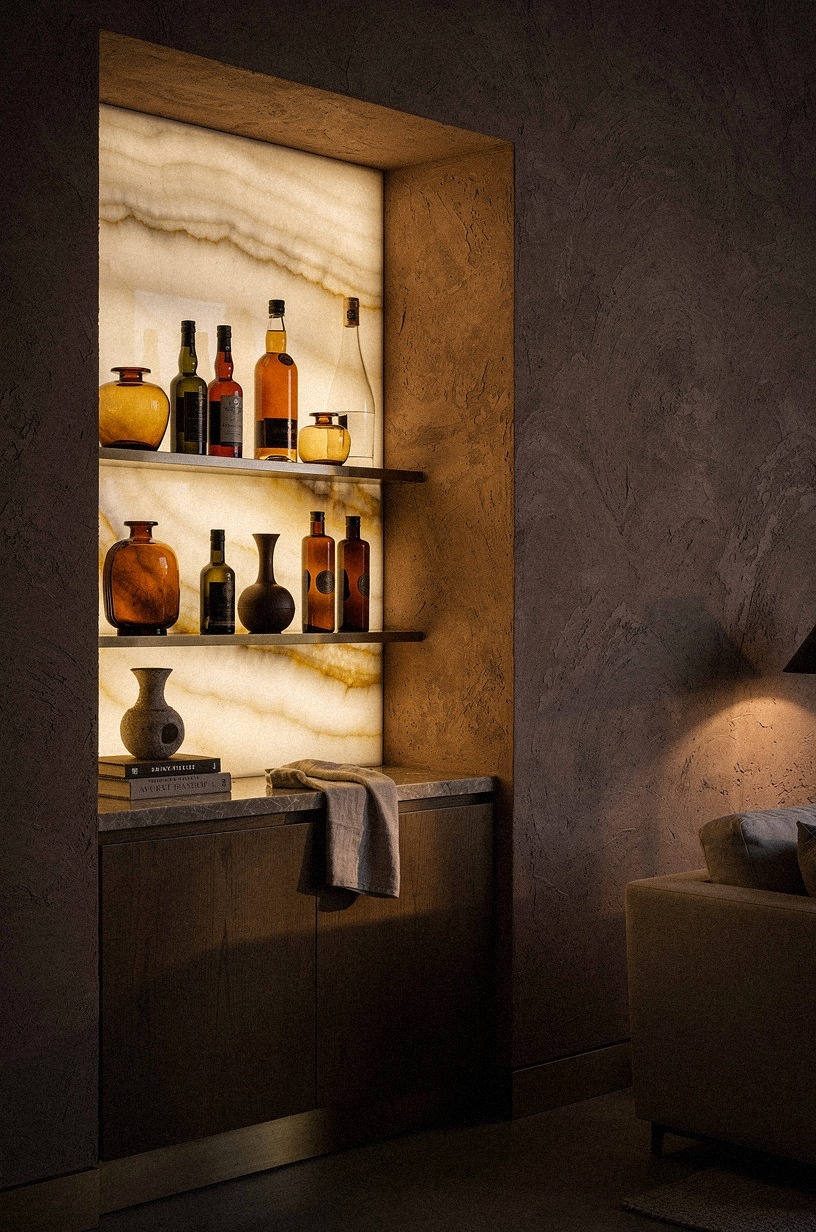
Backlighting is where a speakeasy room starts whispering. Don’t go neon; the charm of a bar glow is that the bottles look half-discovered, not stage-lit.
Use 3/4-inch translucent onyx or back-painted glass behind the shelf, then run a single strip of 2400K amber LED along the rear edge. The cooler 2700K bulbs you use in the rest of the room will read pale and modern next to this; warmer is the whole point.
Spacing is the part people overthink. Leave about 3 inches of glass around each bottle and let the wall breathe. If you can see every label, the light is too even.
You want the Cutty Sark glowing and the cheap vodka next to it sitting in shadow. Real talk: a backlit bar is the one move in this whole list that changes the room at night even when nobody’s home.
Pair it with aged brass shelf brackets from House of Antique Hardware (about $14 a pair) and you’re done.
3Anchor the room with a tufted leather sofa
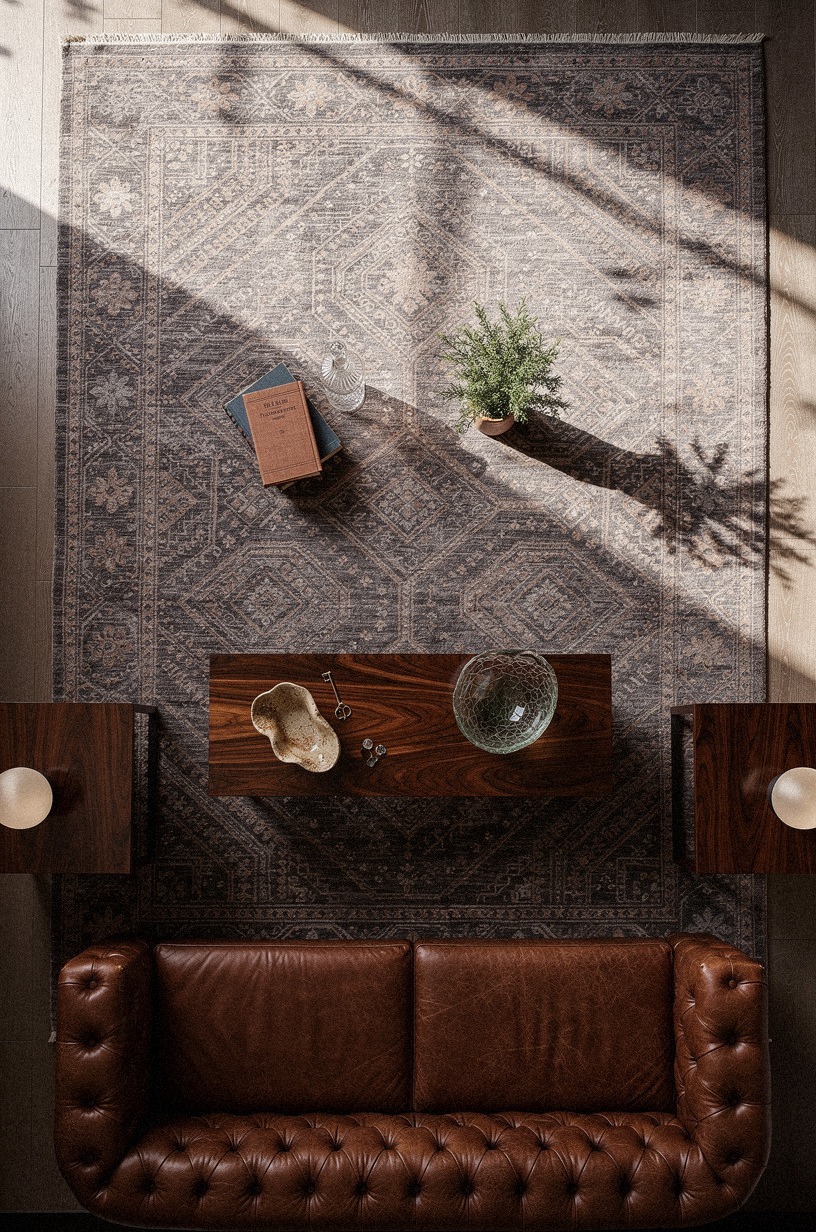
The sofa is the gravity. For speakeasy room ideas vintage enough to feel grounded, start with a tufted leather sofa pushed slightly off center, then build the rest of the seating around it.
A Chesterfield shape works because the back is low, the arms have weight, and the tufting gives you that club-room rhythm from above. The shape has survived a hundred years of taste changes for a reason.
It just works.
Sofa depth matters more than people admit. The comfortable range is usually 35 to 40 inches, and if your room is tight, that extra 5 inches can steal the walking path.
I’d choose an Article Sven tan leather sofa over a shiny black one because tan leather catches lamp light and ages better. Black leather can go nightclub if the room isn’t already layered.
Pair it with book stacks, a 16 to 18 inch coffee table, and a rug large enough for the front legs to land. For more old-world adjacent styling, these vintage dressing rooms have that same furniture-as-architecture feeling.
The Sven runs about $2,400 and shows up in about eight weeks, so plan ahead if you’re ordering for a project.
4Frame the fireplace with brass picture lights
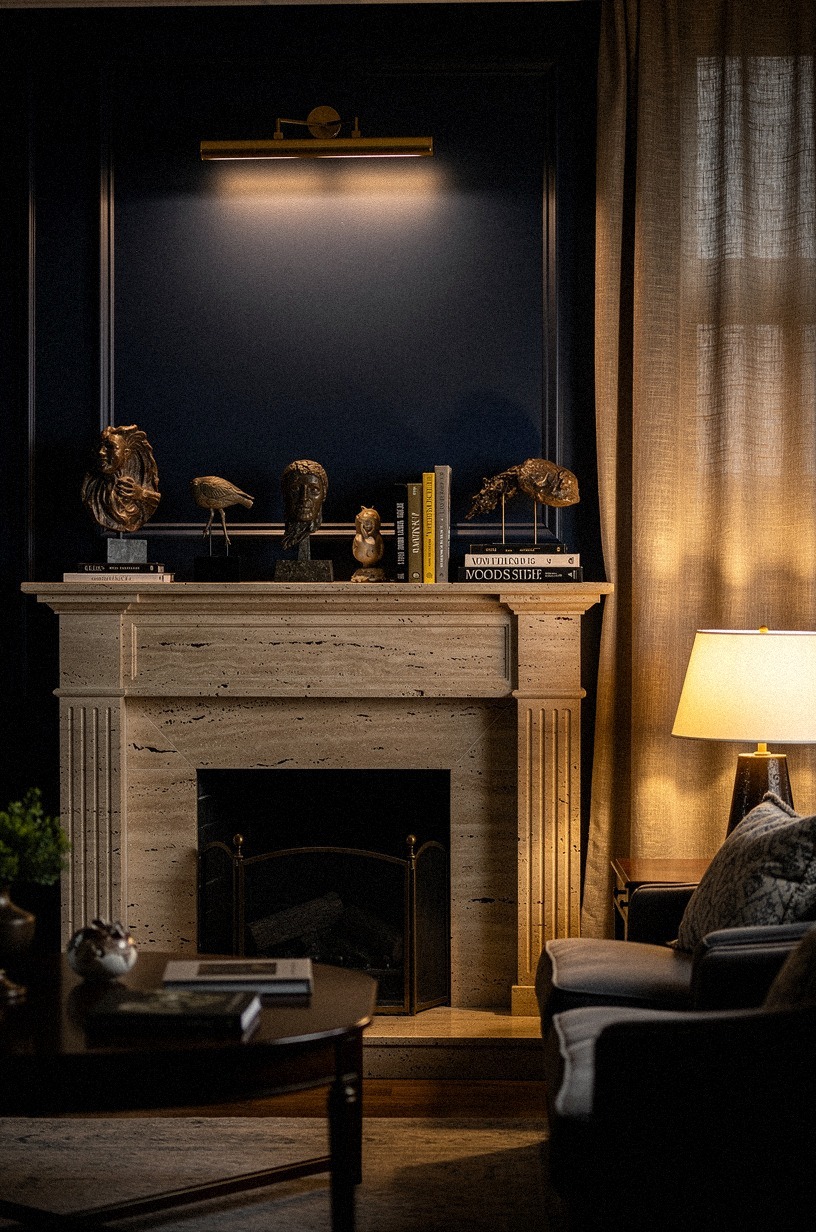
Picture lights make a fireplace feel collected instead of decorated, and the difference is mostly about scale. Pick House of Antique Hardware 8-inch brass picture lights (around $95 each) and mount them about 6 inches above the frame’s top edge.
Too high and you light the ceiling; too low and you flatten the art. The pool of warm light across the painting is what makes the whole mantel wall feel curated rather than staged.
I’d choose 3000K warm-white bulbs in the picture lights and let the rest of the room sit a touch cooler. That tiny temperature gap is the trick most people miss: it draws the eye to the art without making the wall feel lit by a dentist.
If you can, run them on a separate dimmer from the main room lights so the fireplace wall can become the only thing glowing at night. The moodier mantel setups in this dark speakeasy room ideas roundup show the same idea at full volume.
Worth it, full stop.
5Cluster smoked mirrors over the mantel
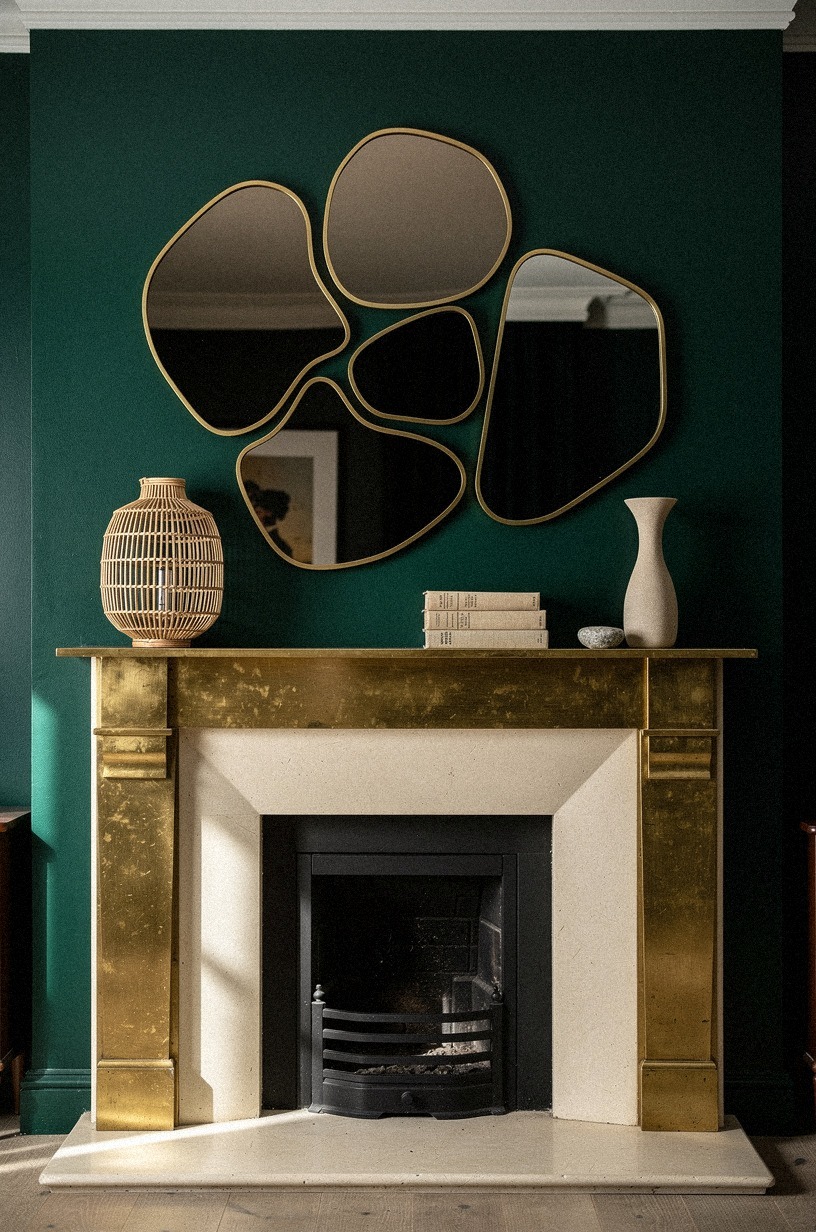
A cluster of smoked antiqued mirrors gives you reflection without the vanity-shop sparkle. The best arrangement is small, calm, and frontal, especially over a fireplace wall in emerald, gold, and cream.
You want different shapes, but not different personalities. One oval, one narrow rectangle, one arched piece, done.
I made the mistake of using too many mirrors once, and the wall started looking like a flea-market booth. Three to five pieces is enough.
Keep the lowest mirror about 6 to 8 inches above the mantel so it feels connected to the fireplace, not floating away from it. For scale, a 22 to 30 inch wide piece usually lands about 5 inches above a standard 60-inch mantel.
The aged, slightly cloudy glass in these vintage vanity corners shows the exact effect you’re after. The whole wall should read as one composition, not as a collection of frames.
6Dress windows in velvet café curtains
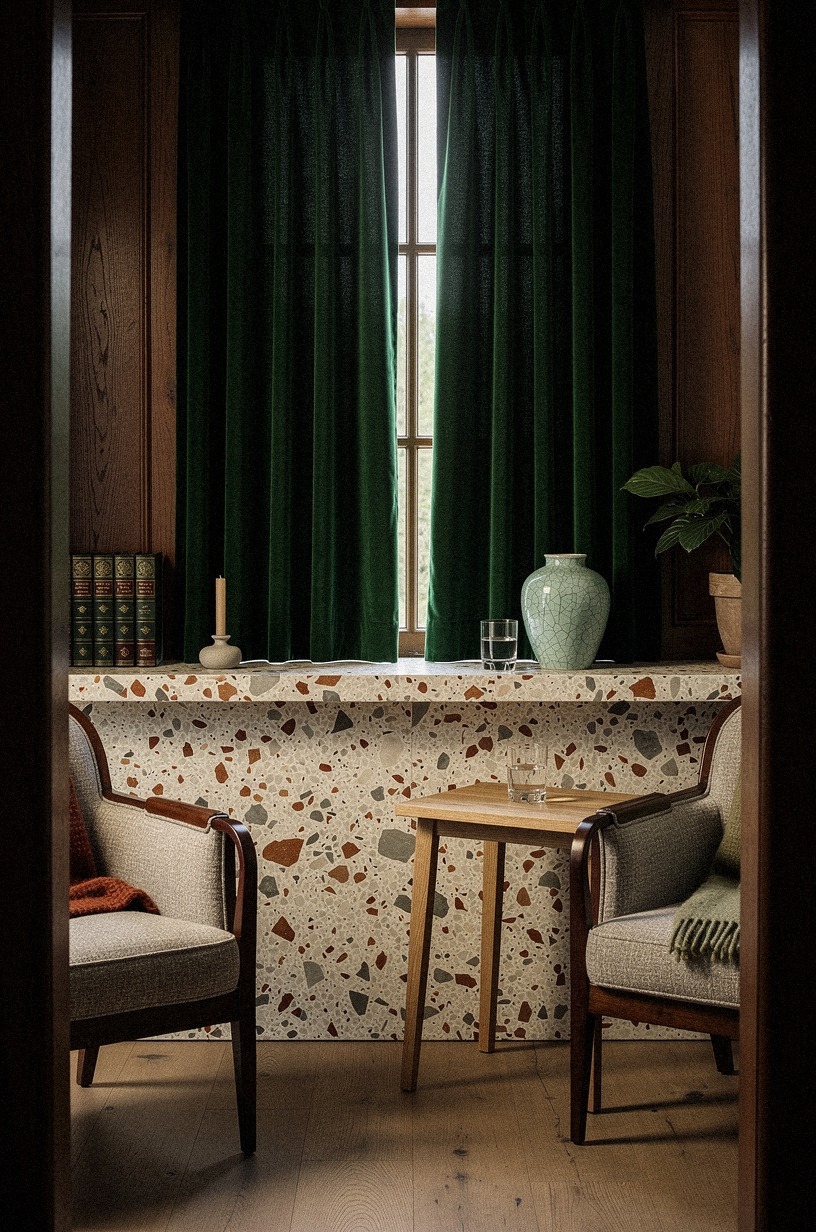
Velvet café curtains are a little dramatic, which is the point. Use forest green cotton velvet on the lower half of the window and leave the top open so the room doesn’t turn into a cave.
In the photo direction, you’re seeing them through a layered doorway, with rust and natural oak nearby, and that view matters. The curtain isn’t just privacy.
It’s the frame.
A tension rod works if you rent, but choose aged brass or dark bronze rather than bright silver. I’d skip full-height velvet drapes in a small room unless the ceiling is tall. They can swallow the walls.
Café height gives you the 20s vintage aesthetic without blocking all daylight, and it lets the oversized trim stay visible. IKEA HILLEBORG curtains in dark green run about $30 a pair and read as velvet at a distance.
For a heavier pool of color, the rich textiles in these vintage boho living room ideas layer velvet the way you’d want here. Rust pillow.
Oak sill. Low green velvet.
That’s enough.
7Build a corner bourbon tasting nook
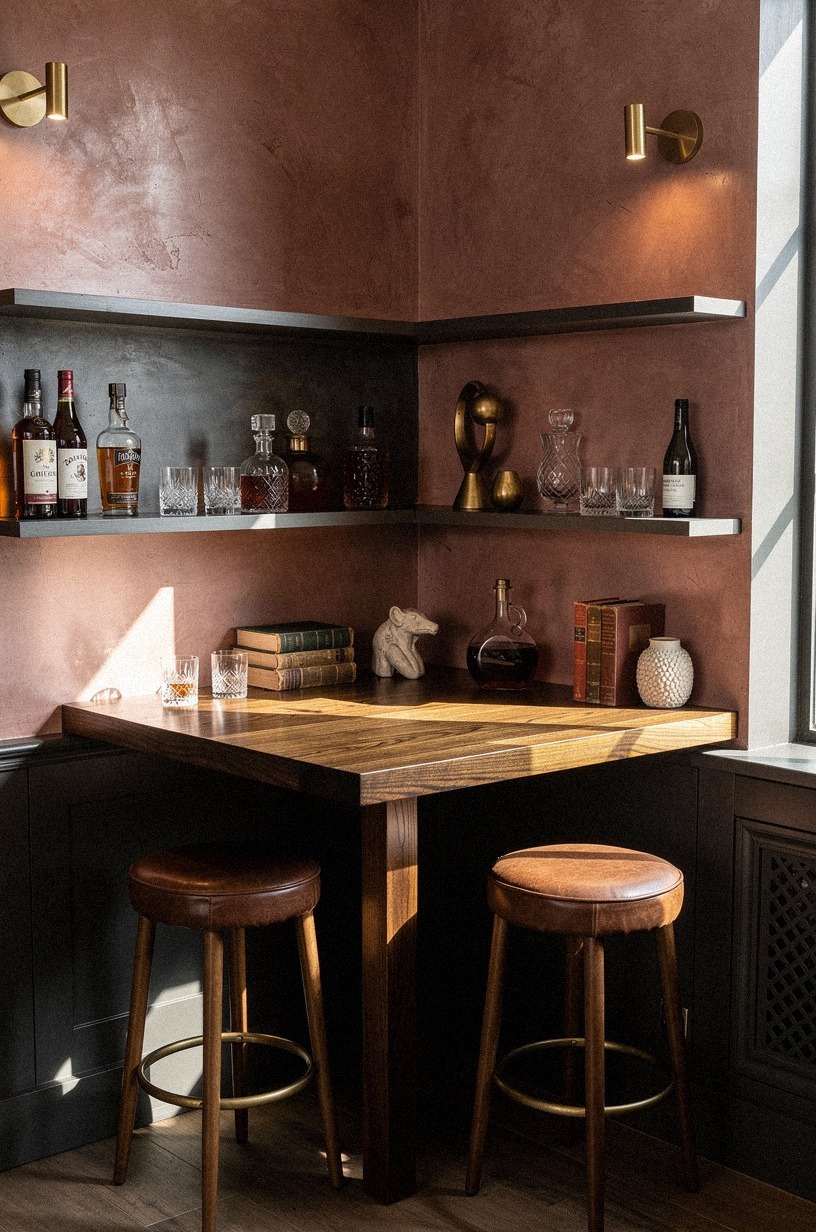
A tasting nook should feel slightly off duty, not like you installed a commercial bar. Pick an empty corner, set a 30-inch round walnut table against the wall, and pull up two camel leather counter stools so the conversation turns inward.
Anchor it with one piece of low art and a small library lamp with a 10-inch parchment shade. The corner should look like a habit, not a project.
I’d budget about $600 to $900 for the whole vignette if you thrift the table. Article Svelti stools run about $260 each, a schoolhouse brass wall sconce from Schoolhouse Electric is around $130, and a thrifted tray plus three glasses carries the rest.
Keep the lighting at 2400K and resist the urge to add a mirror. The corner earns its mystery by being a little private.
The larger speakeasy rooms in this dark moody speakeasy decor ideas roundup show the same logic at a bigger scale. Honest take: this is the move I underuse in my own place, and I always regret it.
8Layer Persian rugs under club chairs
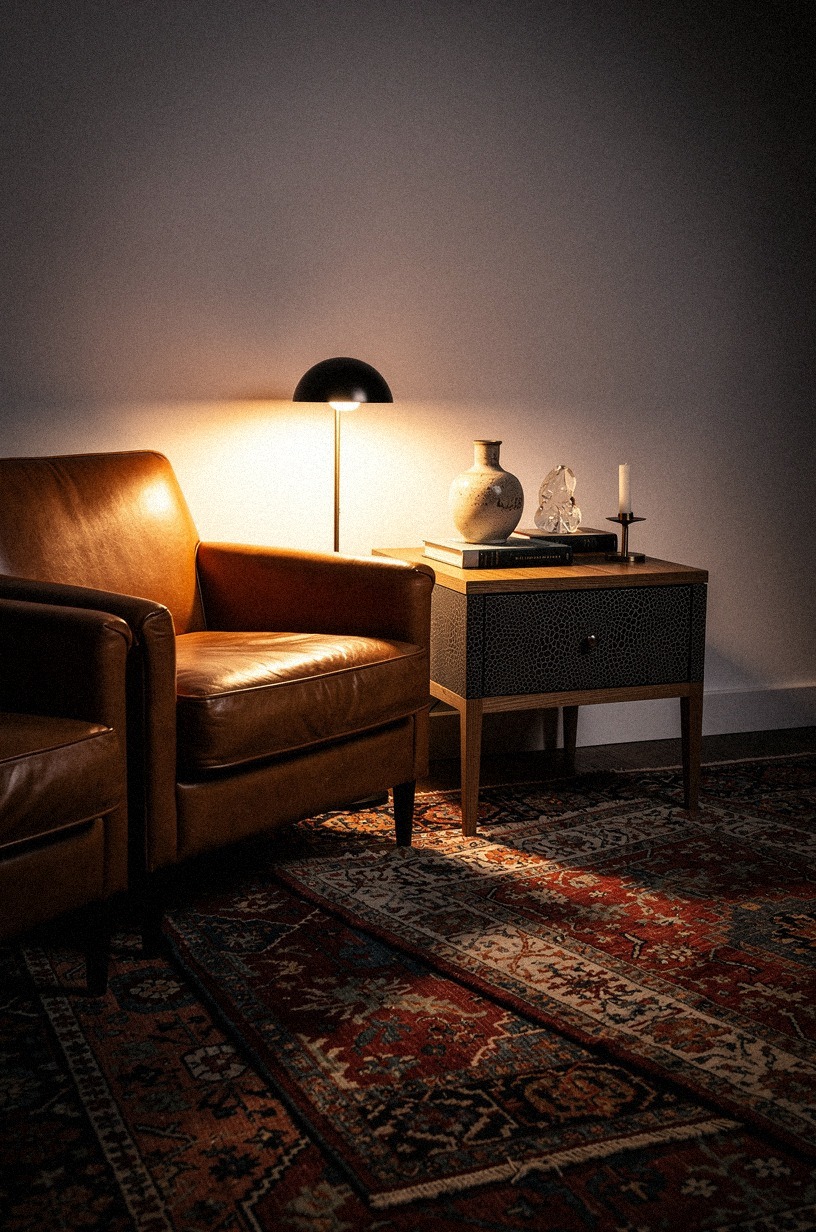
Layering rugs is the fastest way to make a room feel like it has history. Start with a flat jute or wool base rug, then angle a worn Persian-style rug under the club chairs so the seating zone feels found, not matched. You want camel leather chairs, overlapping edges, and at least the front legs sitting on the top rug.
A 5×7 top rug on an 8×10 base is the proportion that actually reads as layered, not crowded.
For scale, an 8×10 works in many living rooms, but a 9×12 is usually better if the sofa, chairs, and coffee table all need to connect. The coffee table should be about two-thirds the sofa length, and that proportion keeps the whole setup from looking like furniture marooned on fabric. The moody, layered rooms in this dark moody speakeasy decor ideas piece are a good gut check.
Too many tiny rugs look nervous. One generous base and one patterned layer feels confident.
I’d skip machine-made “Persian-look” rugs under $200. They read flat.
A real Loloi Layla or a vintage piece from eBay is worth saving for.
9Mount sconces beside moody oil portraits
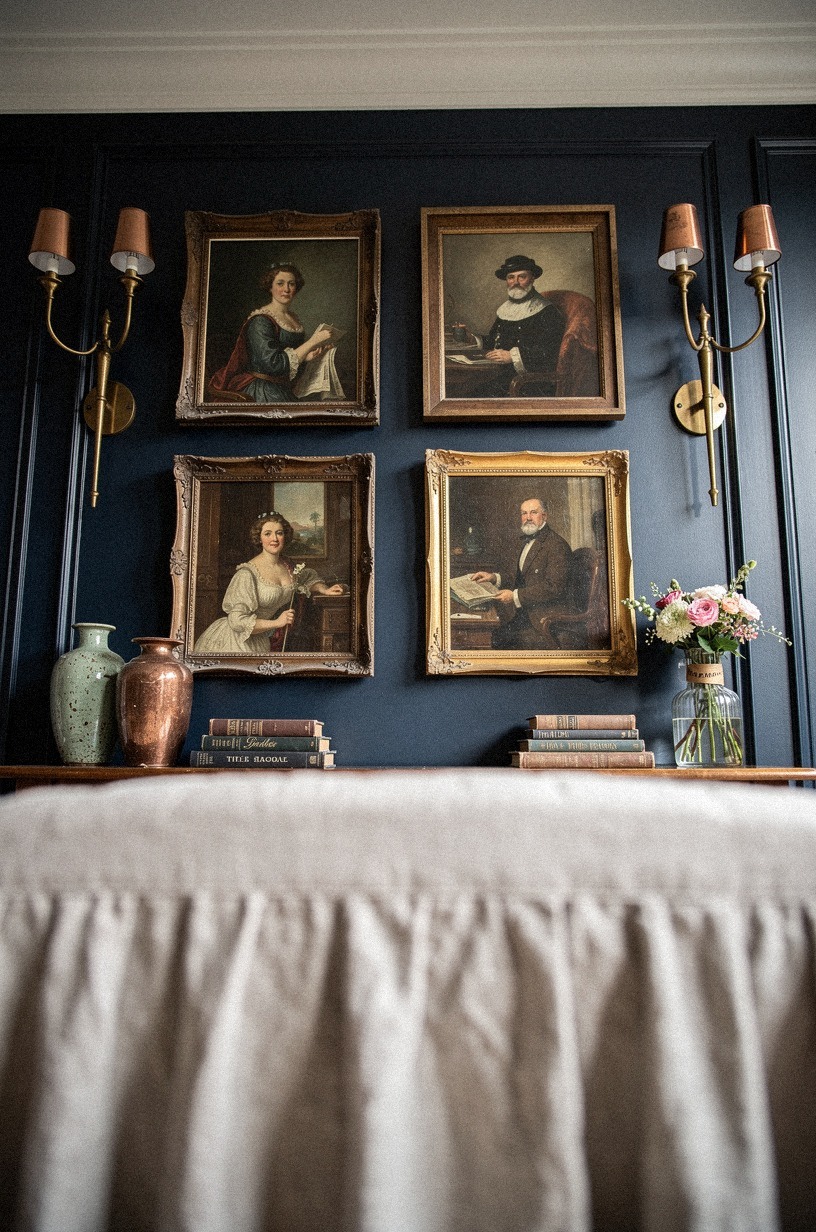
Sconces beside portraits are old bar decor at its best because they make the wall feel watched over. Use aged bronze wall sconces beside moody oil portraits, hang them low enough to glow across the face, and keep the wall color deep.
Midnight blue works, especially if you’re nervous about black. The bronze warm tones balance the cool wall, and the light pool across the portrait gives the whole wall a museum feeling.
Would I use battery sconces? Yes, if the shade is good and the light is warm.
I wouldn’t use fake candle bulbs with a plastic flame tip. They read theme restaurant, and you deserve better.
For paint, Sherwin-Williams Evergreen Fog SW 9130 is softer and more livable, while Hague Blue goes moodier fast. If your portraits are thrifted, keep frames in the same metal family.
Mixed gold, silver, and black can work, but it takes a steadier hand than people think. The darker styling in this dark speakeasy room ideas roundup is the gold standard for this wall.
10Style a tray with cut crystal decanters
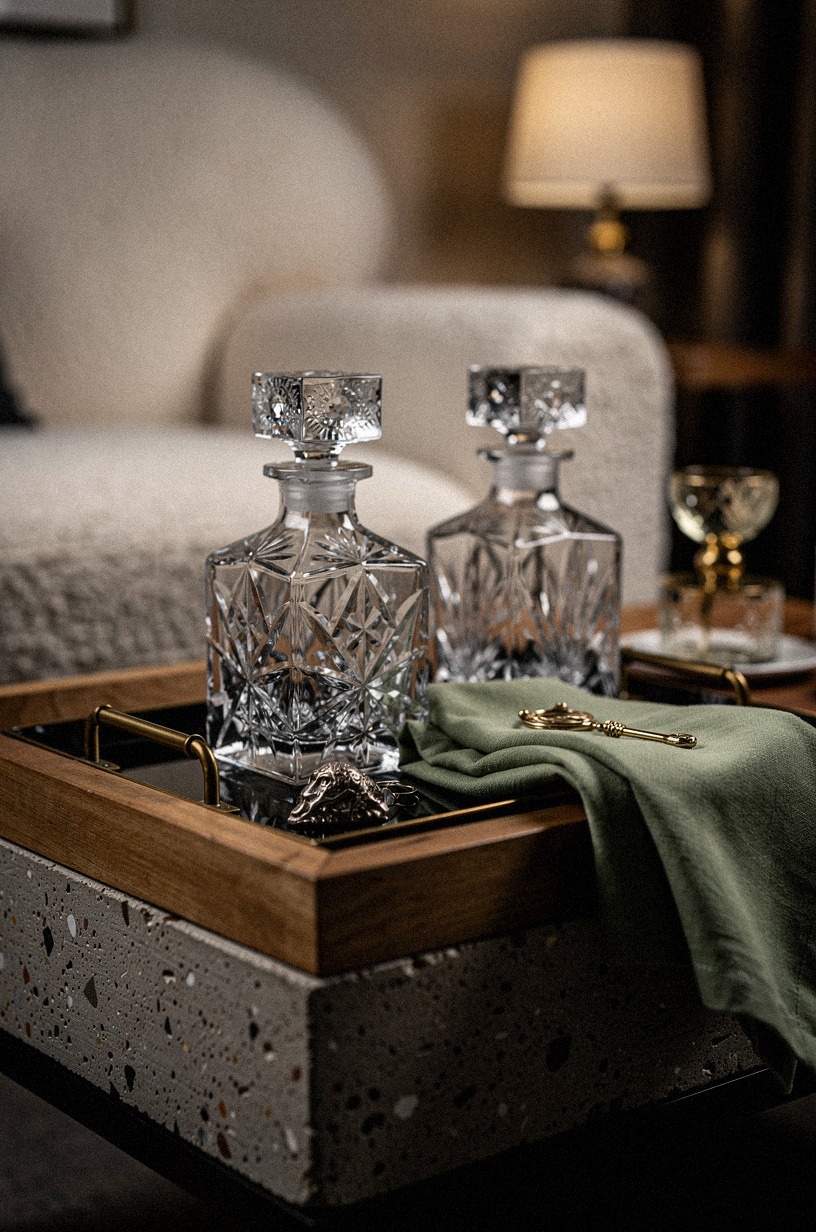
A styled tray is the difference between a room that serves drinks and a room that serves guests. Pick a 12-inch oval walnut or pewter tray, line the bottom with a sage linen napkin, and arrange three cut crystal decanters at staggered heights.
The tallest in the back, the shortest in front. Add two lowball glasses turned slightly, a small silver jigger, and a single dried orange slice on the rim of one glass.
Done. Not a piece more.
The crystal is the only thing that has to be real. Cut glass throws the kind of prismatic flecks that acrylic just can’t fake under lamp light, and a single warm bulb across the tray is the moment your room starts to look like a magazine spread. Real talk: skip the coaster stack and the bottle pour; restraint is what makes the tray read as styled, not staged.
The intimate styling in this dark moody living room ideas roundup is the gold standard for this kind of detail. Worth it, full stop!
11Paint the ceiling in lacquered espresso
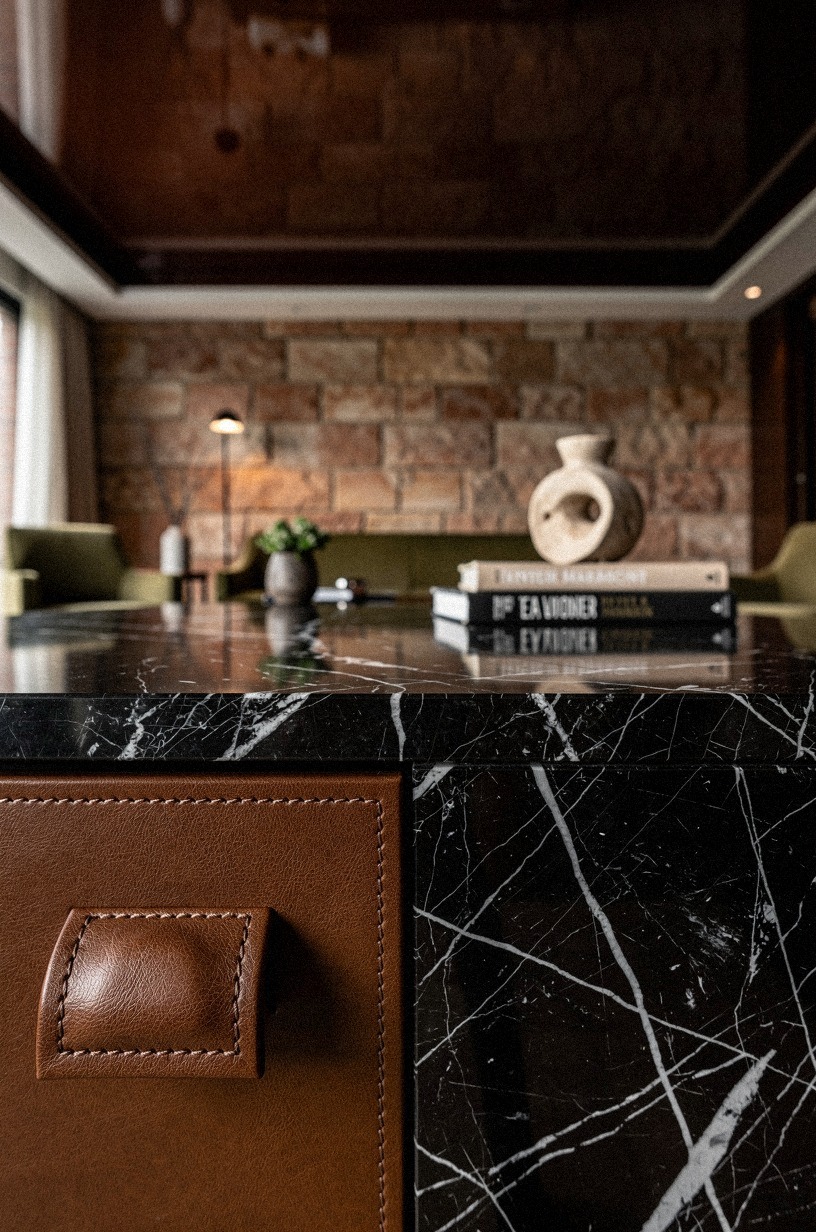
A lacquered espresso ceiling is a commitment, and that’s why it works. Paint the ceiling a glossy dark brown, then let it reflect lamp light over a Nero Marquina marble coffee table with white veins.
The room suddenly feels lower, warmer, and more private. Not smaller.
More private. There’s a real difference, and it’s the difference between a speakeasy and a basement rec room.
But don’t do this with a cold white wall. The contrast will look accidental. Benjamin Moore Revere Pewter HC-172 on the walls gives you a softer bridge, while espresso overhead brings the speakeasy mood. I’d test a 2×2 foot sample first because gloss doubles every mistake in the plaster.
If your ceiling is rough, use satin instead. You’ll still get depth, and you won’t spend the next year staring at every ripple.
The high-gloss, moody look in this dark moody living room ideas roundup is the reference. For the rest of the room’s furniture, the heavier millwork in this vintage dressing rooms piece pairs with espresso overhead.
Real talk: a glossy espresso ceiling isn’t for the impatient. Plan two coats, a full dry day, and accept that you’ll see every brush mark the first time.
12Tuck a gramophone beside the reading chair
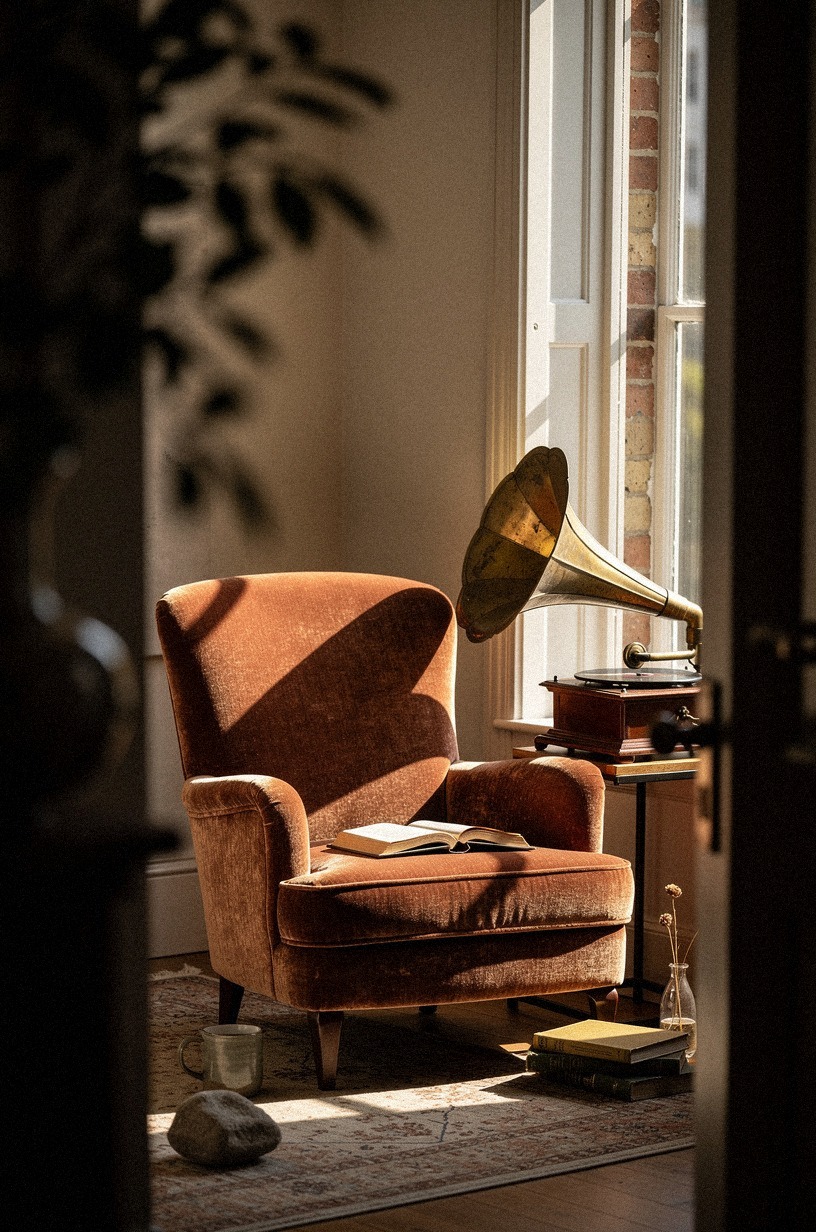
A gramophone can go costume if you put it in the center of the room. Tuck a brass horn gramophone beside the reading chair instead, half-seen through leaves or a doorway, and it feels like part of a private habit.
That’s the sweet spot. Your room gets story without shouting.
The eye registers it, the brain files it, and you never have to explain it.
The reading chair needs texture around it: a deep-pile rug, a walnut side table, and a shaded lamp with amber light. I’d avoid a brand-new replica that looks too clean. A thrifted one with scratches has more authority. If you can’t find a gramophone, a small stack of records and a dark wood speaker can carry the same idea.
The rule is simple: the corner should look like someone left for one minute, not like a prop stylist just finished. The vintage corner styling in this vintage boho living room ideas roundup is the same energy.
For a full-room take, this dark moody speakeasy decor ideas roundup is the reference. Annoying how often the cleanest-looking piece is the wrong one! Trust me on this one.
13Wrap bookcases in dark walnut trim
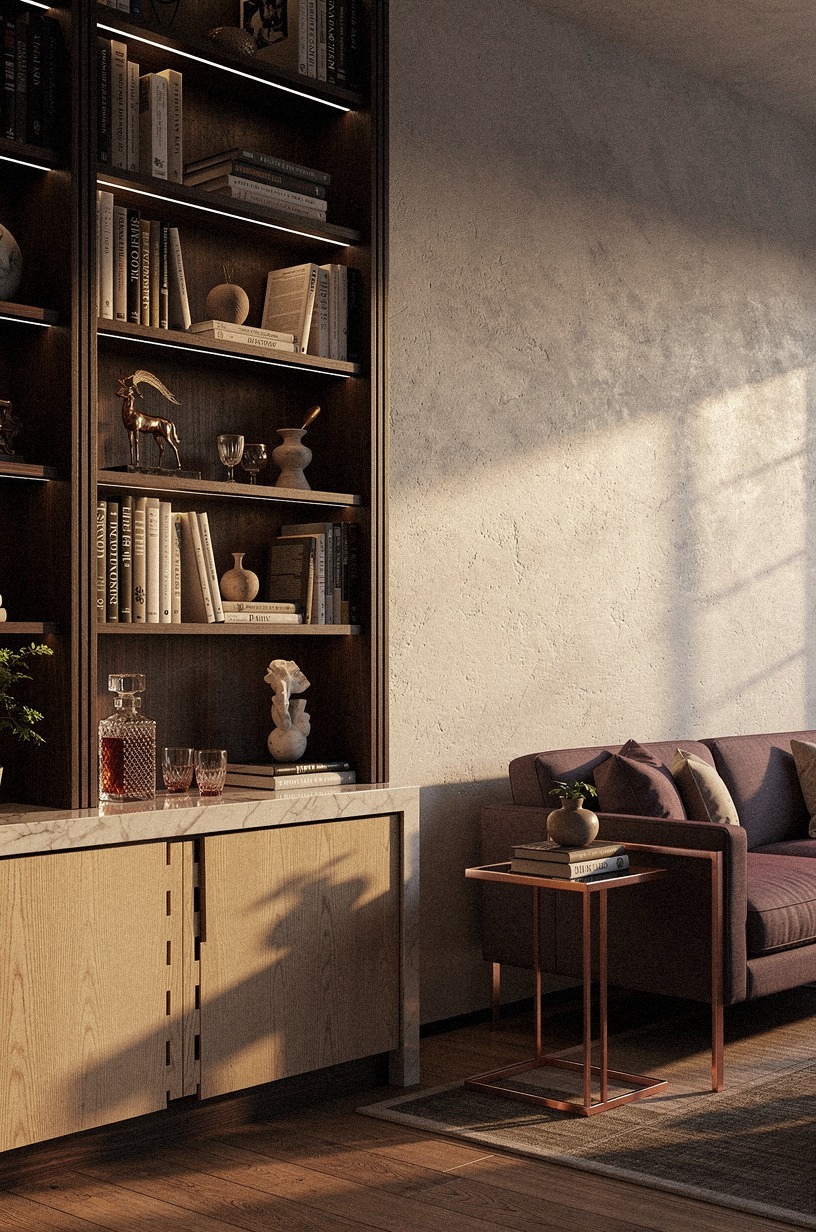
Dark walnut trim around bookcases is the millwork move that makes everything else look more expensive. You don’t need full built-ins either.
Wrap the front edges of basic shelves with dark walnut trim, paint the backs deep blue or green, and style the shelves asymmetrically so the wall has rhythm. The 1×3 trim adds about $40 in materials per bookcase and reads as built-in from across the room.
An IKEA BILLY can work if you add trim, a toe kick, and real brass knobs on the lower doors. I’d skip open shelves from floor to ceiling unless you own enough good books to fill them.
Empty shelves make a room feel staged in the worst way. Mix book stacks, one portrait, amber glass, and negative space. For a slightly more relaxed take, the styling in this vintage boho living room ideas roundup runs the same playbook.
For a kitchen version of old-world detail, this piece on old-world kitchen details makes the same case: trim beats clutter every time. Total cost for a wrapped BILLY runs about $120 in trim, paint, and brass, and a Saturday with a miter saw.
Why Speakeasy Rooms Get the Light Right and We Don’t
What a real speakeasy room does, that most living rooms don’t, is hide the work. The light looks like it’s just there, the bar looks like it grew that way, and the velvet looks like it has always been on the window. None of it is accidental.
Every one of those choices was made to control what the eye lands on first, and what it slides past without noticing. That’s the whole craft.
You aren’t recreating a decade; you’re recreating a level of attention.
The other thing the room does is commit. One color, one metal family, one light temperature. Most of us try to do it all and end up with a room that feels like a Pinterest board rather than a place.
Pick a lane. Farrow & Ball Hague Blue No.30 is a lane.
Aged bronze is a lane. 2400K amber is a lane. Stay there long enough that the room starts feeling inevitable, and the speakeasy mood takes care of itself.
The opposite of speakeasy isn’t modern; it’s a room that’s afraid to commit. We have all lived in that room.
The honesty part: this style rewards patience, not budget. You can spend forty thousand dollars on a custom bar and still miss the mood if the ceiling is white and the bulbs are cool.
You can also spend eight hundred dollars on paint, one piece of thrift art, and a couple of warm lamps, and the room will feel like it has always been there. The order matters more than the dollar amount.
Light first, texture second, millwork last. Hold the line on that, and the rest is just editing.
Here’s the part people get backward. They buy the leather sofa first, then realize the white ceiling, cool bulbs, and bare windows are fighting it.
I’ve done a version of that mistake. The sofa was fine, but the room still felt thin because the surfaces around it had no depth.
Once the walls went deeper and the lamps got warmer, the same furniture looked twice as good. Annoying, but useful!
Use the cost ranges as a sanity check, not a shopping order.
The Questions Worth Answering First
What is the best vintage speakeasy decor idea for a small living room? Honestly, the backlit bottle wall. It earns its drama in the dark hours, when a small room is most likely to be a problem.
Start with amber lighting and one tufted or leather seat. An Article Sven chair or an IKEA KALLAX with walnut trim can work if you keep the layout tight and let your rug connect the pieces.
Don’t try to fit a full bar in a 10×10 room. The smaller the space, the fewer objects, the bigger the impact.
Where can I buy vintage speakeasy decor pieces on a budget? Facebook Marketplace, thrift stores, and a slow walk through local antique malls will outperform any retailer, every time. Look for brass lamps, smoked mirrors, oil portraits, velvet curtains, and walnut tables before you buy anything new.
Half my living room came from a church estate sale for $180, and the brass lamp in the corner is the one guests always ask about. The decor is only “expensive” if you buy everything retail.
How much does a vintage speakeasy decor makeover cost? A small refresh lands around $300 to $1,200 if you focus on paint, art, pillows, and lighting. Bigger changes with a sofa, wool rug, and layered lights run $2,500 to $8,000.
The free move that most people skip: edit clutter first. Removing five things from your living room is a $0 renovation that changes the room more than the new rug will.
Real talk: the edit is the design.
Can I create a vintage speakeasy look on a budget? Yes, and you should start cheap on purpose. Warm bulbs.
A thrifted oil portrait. Café curtains on a tension rod.
A tray with decanters you already own. You don’t need custom shelves before your room has mood.
The whole point of the speakeasy look is that it grew over time. It shouldn’t look like a delivery truck dropped it off.
What colors make a speakeasy room feel current in 2026? Deep blue, espresso, rust, cream, and muted green feel strongest now. Sherwin-Williams Evergreen Fog SW 9130 is the safer green, while Farrow & Ball Hague Blue No.30 is moodier.
Use one dark anchor, not five competing statements. The newest version of the speakeasy look is warmer and less black-and-brass than the 2010 version.
Trust the rust; it’s everywhere right now for a reason.
Is vintage speakeasy decor a good idea for a rental? Yes. Use removable wallpaper, plug-in sconces, tension-rod café curtains, and furniture that brings the wood tone with you. I’d avoid permanent bar plumbing and focus on portable glow, layered rugs, and framed art.
Real talk: you can do 80% of this look without putting a single hole in the wall. The backlit bar is the one move I’d skip in a rental, since it wants a hardwire; everything else moves with you.
Where I’d Start First
If I had to pick one, I’d start with the backlit bottle wall. It changes cheap bottles, old glass, and a plain wall in one move, and it carries the room at night when most living rooms go flat.
Pin the glow for later and let the rest of the room catch up. Everything else on this list gets easier once the light is doing the work.