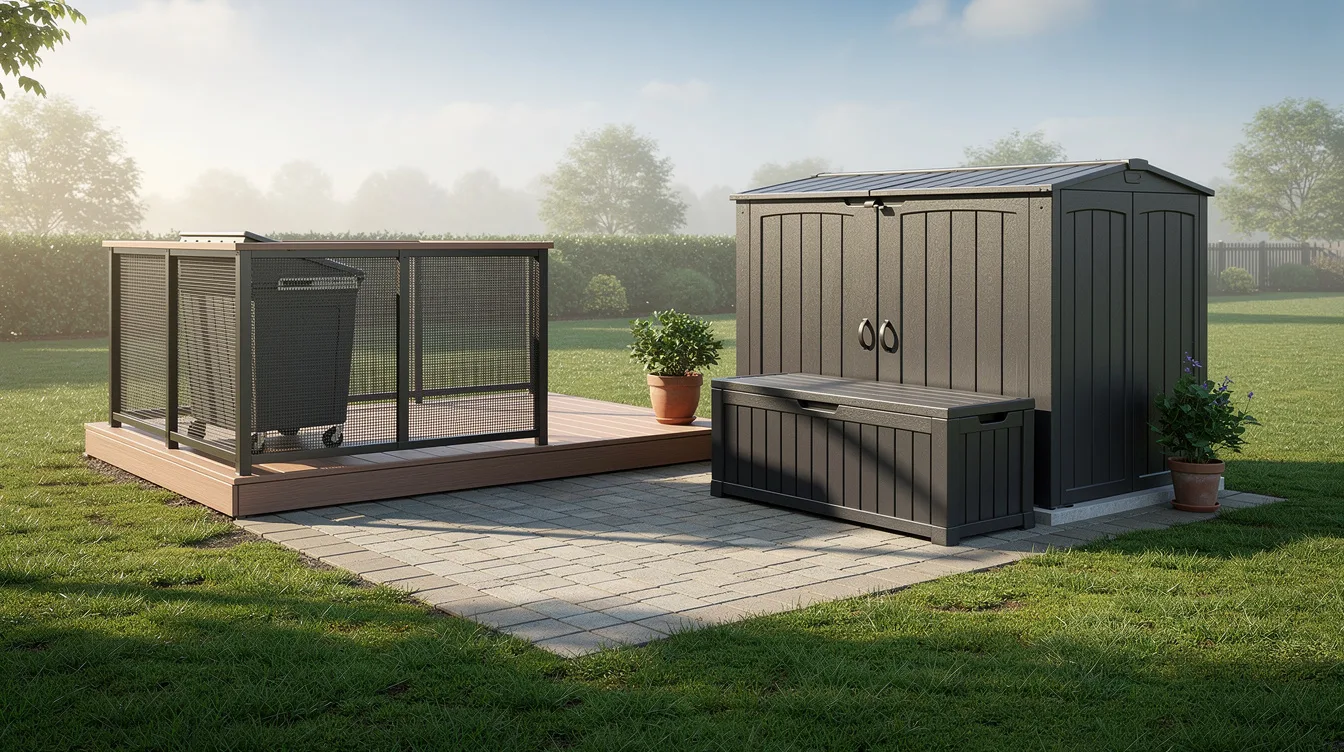
The fastest way to make a tidy backyard look messy is a bent lid, a bright blue bin, and a hose lying across the patio like nobody owns it.
I see this most in yards where the storage was bought one emergency at a time: one box for cushions, one crate for toys, one rusty rack for tools.
Designers are blunt about it. Backyard storage looks cheap when the materials, colors, and layout fight the house.
Replace Flimsy Plastic With Materials That Hold Their Shape
Thin bargain boxes fade, bow, and stop closing cleanly after one hot season. I’d rather see one sturdy resin deck box than four warped bins stacked beside the fence.
At Home Depot or Lowe’s, a typical 50 to 80 gallon outdoor storage box runs about $80 to $180, depending on the lid strength and finish. That price range is usually worth it because the lid still sits flat when guests are looking at it from the kitchen window.
For tools and heavier gear, powder-coated steel or sealed wood reads more intentional than shiny plastic drawers. Powder-coated steel works best near a garage wall or covered side yard, where it can look crisp instead of industrial.
Match the Storage Color to the House or Fence
Random colors create the cheap look faster than clutter itself. A green crate, gray shed, black trash can, and tan cushion box all in one sightline make the yard feel patched together.
Pick one quiet color family and repeat it. Charcoal gray works with many modern fences, while warm brown or taupe fits brick, cedar, and beige siding better.
Target and Walmart both carry small outdoor boxes under $100, but I’d skip the bright versions unless the yard already has strong color. Storage should recede, especially when it sits near the patio table.
Size the Shed Before It Starts Overflowing
An undersized shed never looks tidy because the overflow becomes part of the display. Once bags, helmets, and folded chairs land on top, the whole corner feels like a holding area.
A typical 6 by 8 foot resin shed at Home Depot or Lowe’s often falls around $700 to $1,400, while larger models can climb quickly. For mixed gear, that footprint is more realistic than a mini shed pretending to hold cushions, tools, toys, and seasonal decor.
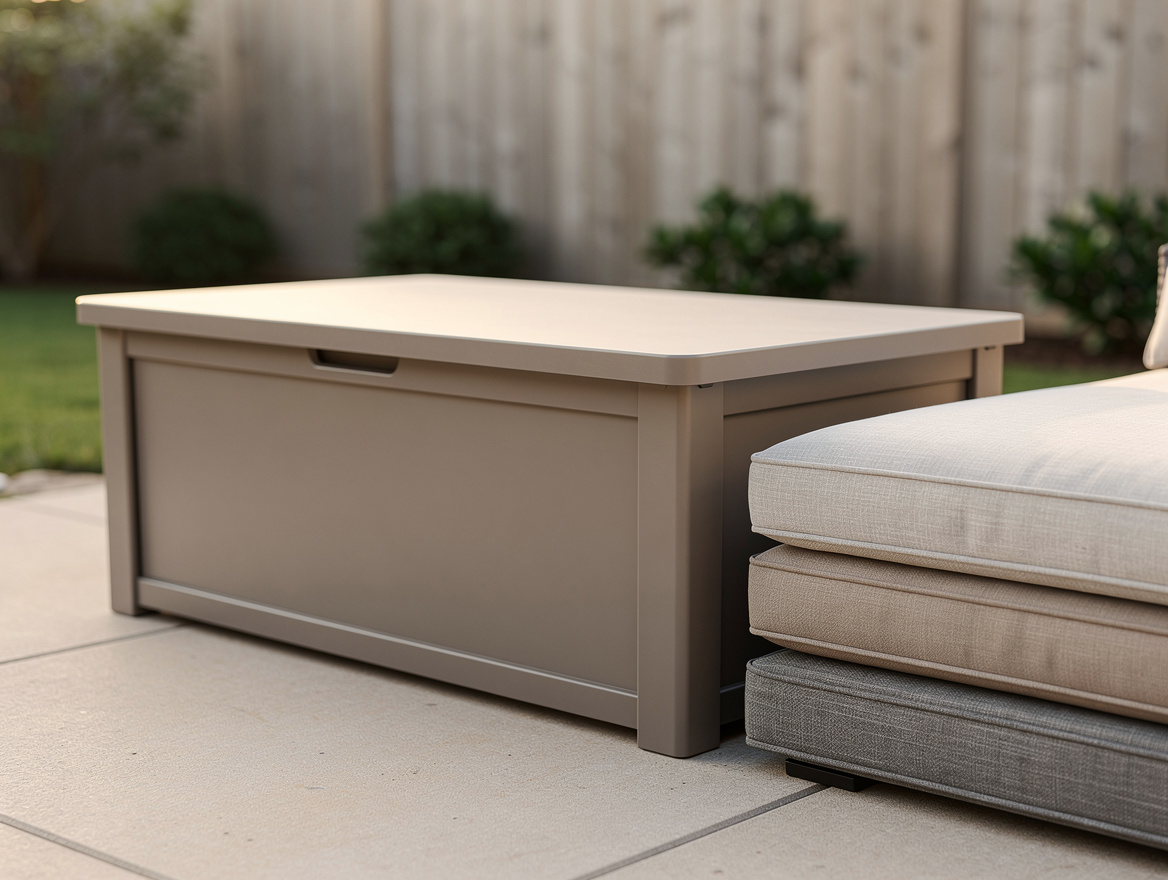
If you only need cushion storage, a horizontal cabinet or deck box is cleaner than a full shed. Weather-resistant resin is my pick for this job because it gives you volume without demanding paint or yearly touch-ups.
Create Zones So Every Box Has a Job
Scattered storage makes even good pieces look accidental. Designers usually group outdoor gear by task: tools near the gate, cushions near seating, kids’ items near the play area, trash away from the main view.
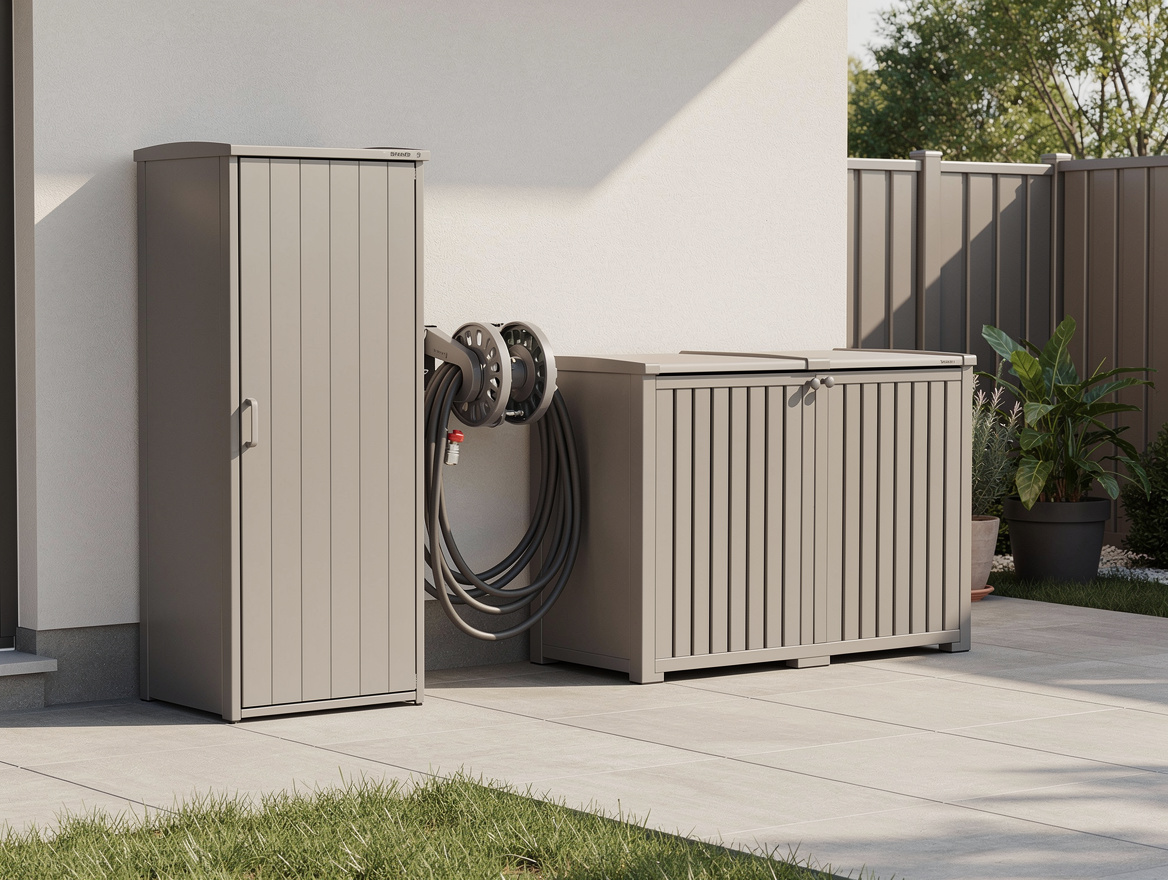
A simple setup can be one vertical outdoor cabinet for tools, one deck box for cushions, and one screened bin area near the side path. That is less exciting than buying another cute container, but it fixes the visual problem.
IKEA and Amazon both sell wall rails, hooks, and utility shelves that help inside a shed, usually starting under $40 for basic pieces. The outside stays quiet because the busy work moves behind a door.
Hide Trash, Hoses, and Awkward Gear First
Trash cans, hoses, ladders, and pool tools are the items that cheapen a yard fastest. They have useful shapes, not good-looking shapes.
A matching bin screen from Wayfair, Lowe’s, or Amazon typically starts around $120 and can go far higher for wood or metal. Choose sealed wood if your fence is wood, and choose dark resin or metal if your trim is black or charcoal.
For hoses, I like a lidded hose pot or a wall-mounted reel more than a loose coil on the ground. One neat circle of hardware beats a pile of green hose every time.
Keep Shed Fronts and Storage Tops Clear
A storage piece can be high quality and still look cheap if the top becomes a shelf. Bags of soil, extra pots, loose sports balls, and folded tarps tell everyone the system is already failing.
Keep visible faces plain: one handle, one clean door, maybe a small label inside. Matte black hardware can sharpen a basic shed, but too many exterior hooks turn the front into a tool display.
Use clear bins only inside the shed or cabinet, never as the main outdoor look. Costco and Walmart storage totes are practical, but they belong behind doors if you care about the view from the patio.
Fix the Ground and Edges Around the Storage
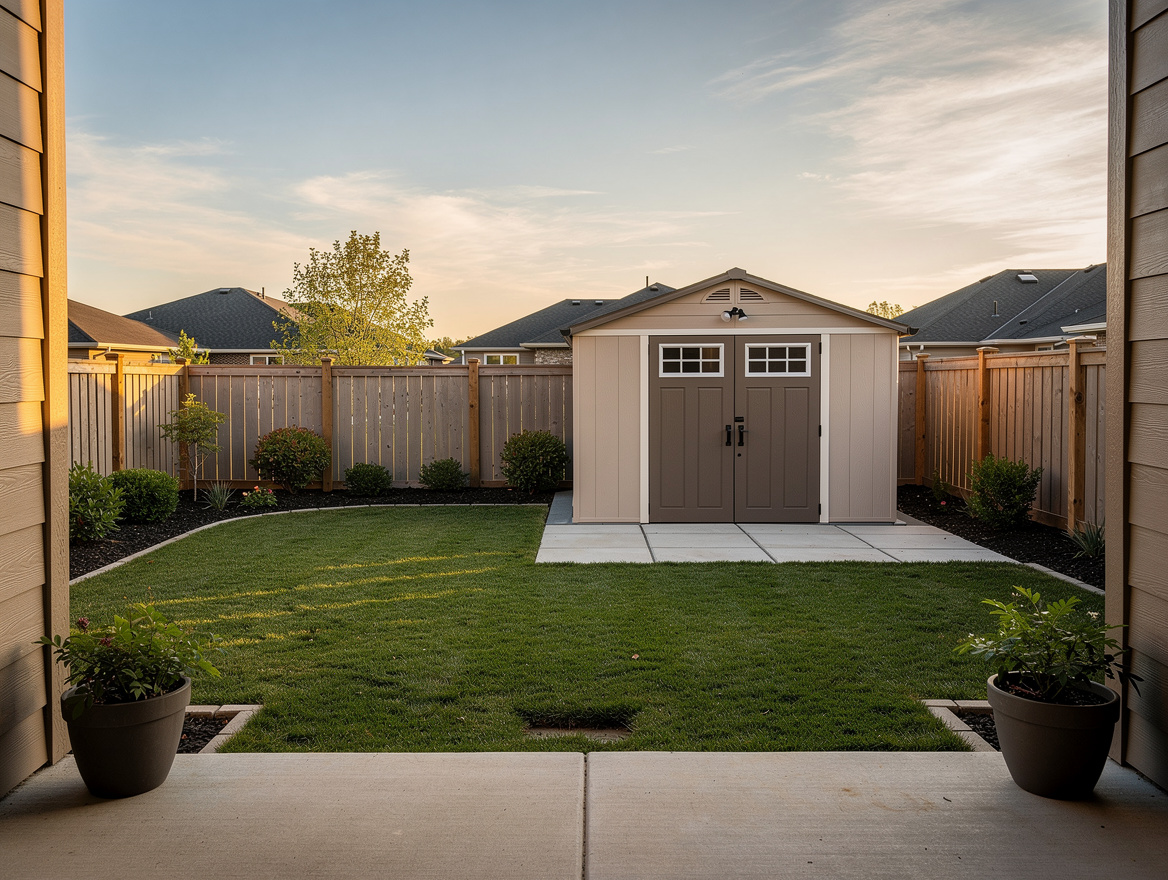
Even a solid shed looks cheap when it sits on crooked pavers or sinking mulch. The base is part of the design, not an afterthought.
Concrete pavers from Ace Hardware, Lowe’s, or Home Depot are often a low-cost fix, with many basic 12 by 12 inch pavers priced around a few dollars each. A level pad of concrete pavers makes the shed doors swing better and makes the whole setup look deliberate.
Add a narrow gravel strip or simple edging if mud splashes the front after rain. I’m strict about this because sagging doors, dirty thresholds, and weeds at the base can make an expensive unit look neglected.
Start with the ugliest sightline from inside the house, then buy one storage piece that matches that view instead of adding another random bin.
The goal is simple: fewer materials, calmer colors, closed tops, and enough room that nothing has to live outside the system.
Mia Carter writes about small-space living and budget home makeovers. She has restyled three rentals and tests most ideas in her own 45 sqm flat.