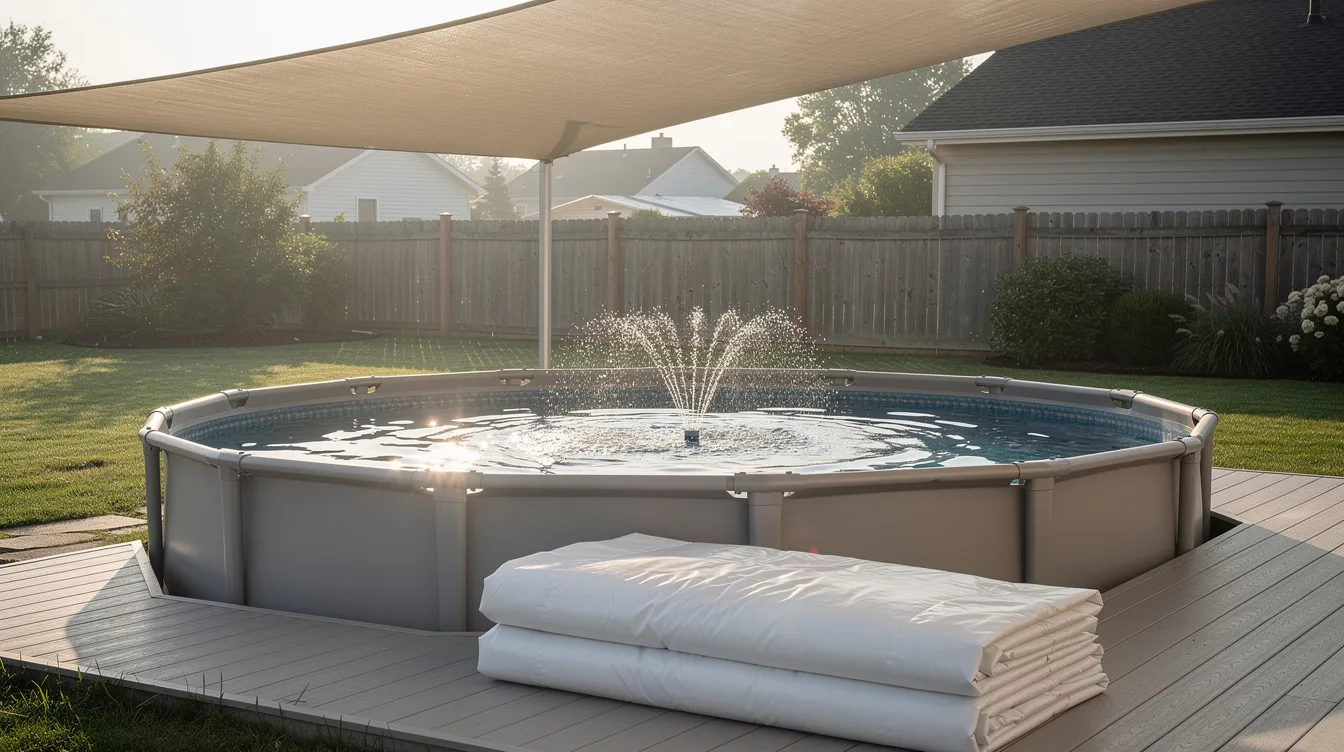
By late afternoon, my above-ground pool can feel better for tea than swimming. The water at the top turns almost slippery-warm, the vinyl liner holds the sun, and a quick dip stops feeling refreshing.
The fix usually is not one expensive machine. It is a mix of shade, nighttime evaporation, smarter pump timing, and, if the heat drags on for days, real cooling hardware.
Block the midday sun before the water heats up
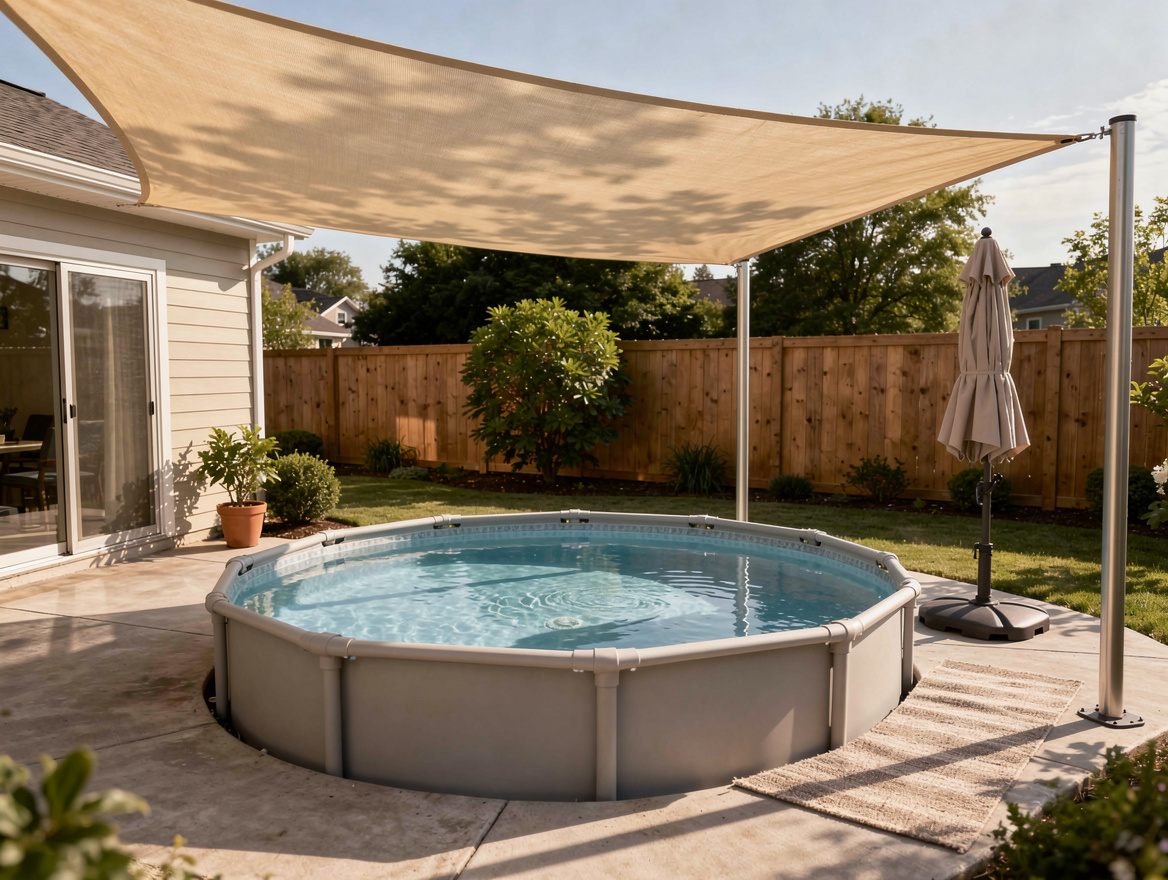
The fastest way to slow heat gain is to cover part of the water with HDPE shade cloth or a sail. For most above-ground pools, blocking roughly 30% to 50% of direct afternoon sun makes a noticeable difference, especially on pools with little wind.
I would start with a 10 x 13 foot or 13 x 13 foot shade sail from Home Depot, Amazon, or Wayfair. Typical prices run about $45 to $140, and that is money better spent than another floating toy when the water is already creeping past 86 degrees.
A big offset umbrella from Target or Costco also works if you need flexibility. It will not cool the pool by itself, but it does cut the brutal late-day spike that makes above-ground water feel flat and heavy.
Use a fountain or aerator after sunset
Evaporation is the cheap cooling move that actually earns its keep. A clip-on pool fountain or threaded aerator sprays return water into the air so it sheds heat before dropping back into the pool.
On small to mid-size pools, usually 10 to 24 feet across, generic fountain attachments sold on Amazon or Walmart typically cost about $25 to $60. If the night air is meaningfully cooler than the day, a typical overnight drop of 2 to 5 degrees Fahrenheit is realistic.
I like this option because it is simple and honest. It will not rescue 90-degree water during a brutal multi-day heat dome, but it often keeps a pool from tipping into bathwater territory in the first place.
Run the pump at night, not through the worst heat
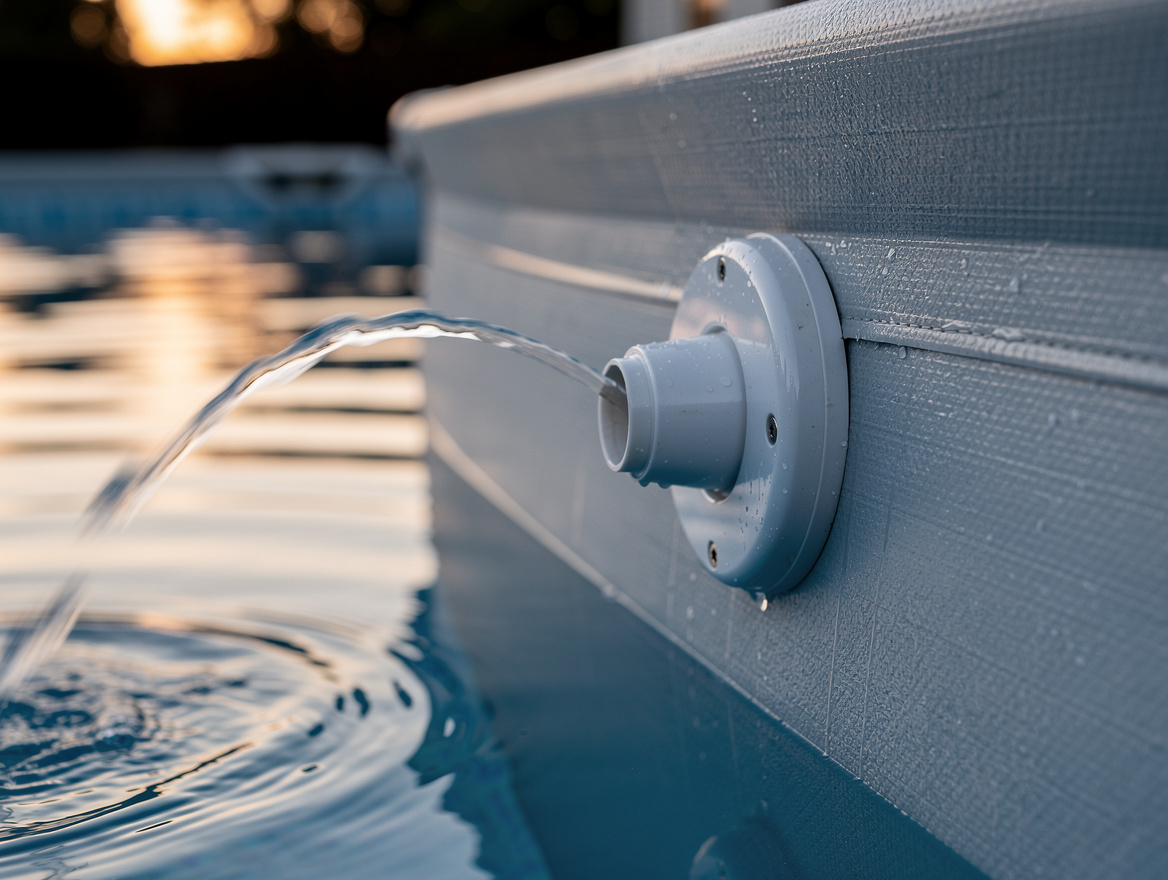
If you circulate water all afternoon, you are basically helping warm water keep moving. I would shift most of the runtime to overnight hours, something like 10 p.m. To 8 a.m., when the pump can support evaporation instead of fighting it.
This works best with a fountain, an aerator, or even a return pointed slightly upward for more surface disturbance. It is a practical move for owners using standard cartridge or sand systems from Lowe’s, Walmart, or Amazon, and it may also shave a little off your power cost if your utility has lower night rates.
My opinion is blunt here: daytime circulation alone is overrated in extreme heat. Night circulation does more for comfort when your goal is cooler water, not just cleaner water.
Swap in cooler water when a heatwave is peaking
Partial water replacement is the least glamorous fix, but it works fast. Draining about 5% to 20% and refilling in the early morning or late evening can knock the edge off a pool that has been baking for days.
A basic garden hose spray nozzle from Ace Hardware or Home Depot, usually around $10 to $25, helps because the refill water gets a little extra aeration before it lands. For a round 15-foot pool, even a modest refill can feel more effective than people expect.
I would save this move for heatwave peaks or before a weekend when you know the pool will get heavy use. It costs water, so it is not my first choice, but it is absolutely more than a placebo.
Choose a light cover and stop cooking the liner
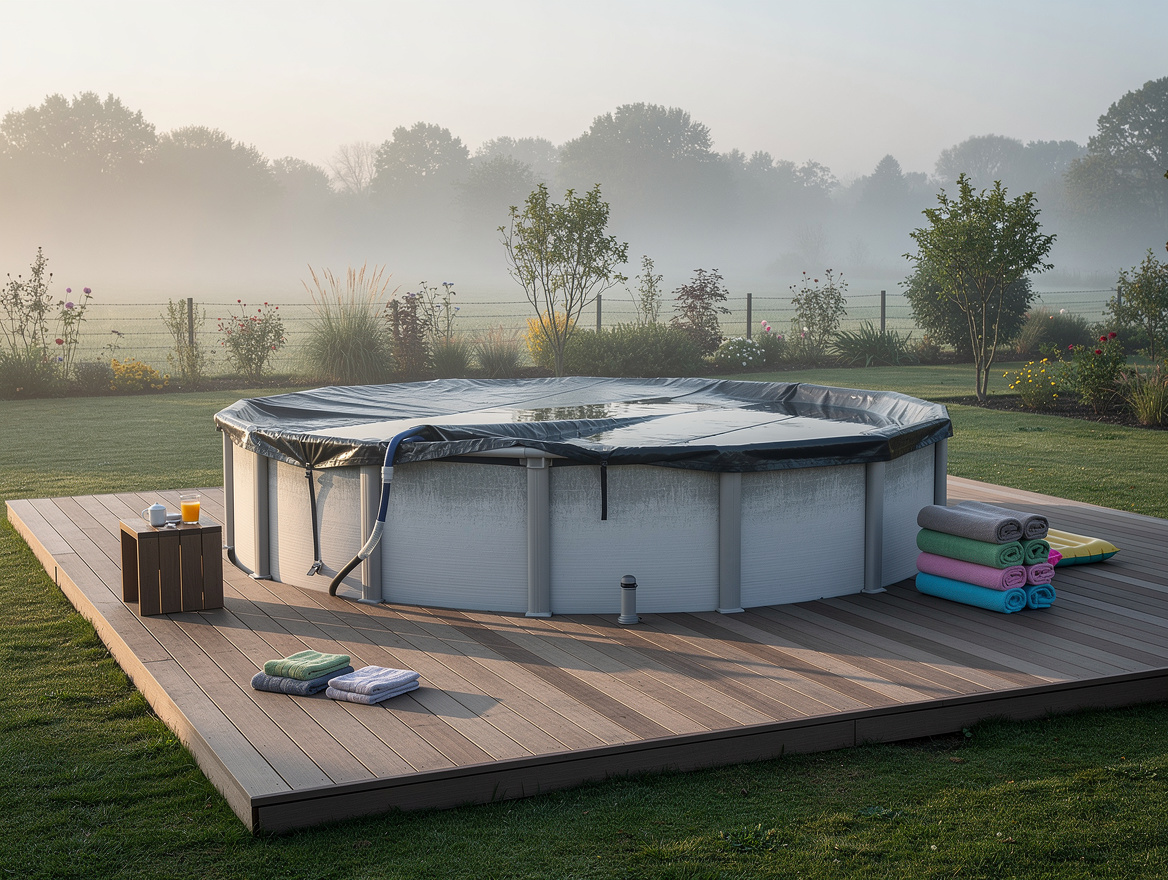
Dark covers and dark liners pull in heat all day, then hold it. A white reflective cover or light gray cover from Amazon, Wayfair, or Lowe’s is a smarter pick when your problem is overheating rather than keeping water warm.
Typical prices land around $45 to $160 depending on whether your pool is about 12 to 18 feet round or a medium rectangular frame pool. The cover also reduces chlorine loss and slows evaporation during the day, which matters when you are trying to keep the water balanced without turning it into soup.
If you are buying a new pool, I would avoid very dark interior vinyl. A light blue liner or gray interior simply makes more sense in a hot backyard, and that is one of those boring decisions that pays off every day in July and August.
Install a chiller or reversible heat pump for real cooling
When the heat sits over your yard for a week, passive fixes hit a limit. That is when a dedicated pool chiller or a reversible heat pump with cooling mode starts to make sense, especially for pools in the roughly 4,000 to 7,000 gallon range.
At Wayfair, Amazon, and sometimes Home Depot, small above-ground compatible cooling equipment typically starts around $900 and can climb past $2,000 before installation parts. That is a serious spend, but it is the only option here that can keep working through back-to-back extreme heat days instead of just slowing the damage.
I would only go this route if your pool gets used constantly, your nights stay warm, or your yard has almost no natural shade. For everyone else, it is usually smarter to build a layered system first: sail, fountain, night schedule, then decide whether mechanical cooling is still worth it.
Start with the cheapest stack that actually changes the water, a shade sail, a fountain, and overnight pump hours. If your pool still sits too warm after that, then spend bigger on cooling equipment instead of guessing with gadgets.
Mia Carter writes about small-space living and budget home makeovers. She has restyled three rentals and tests most ideas in her own 45 sqm flat.