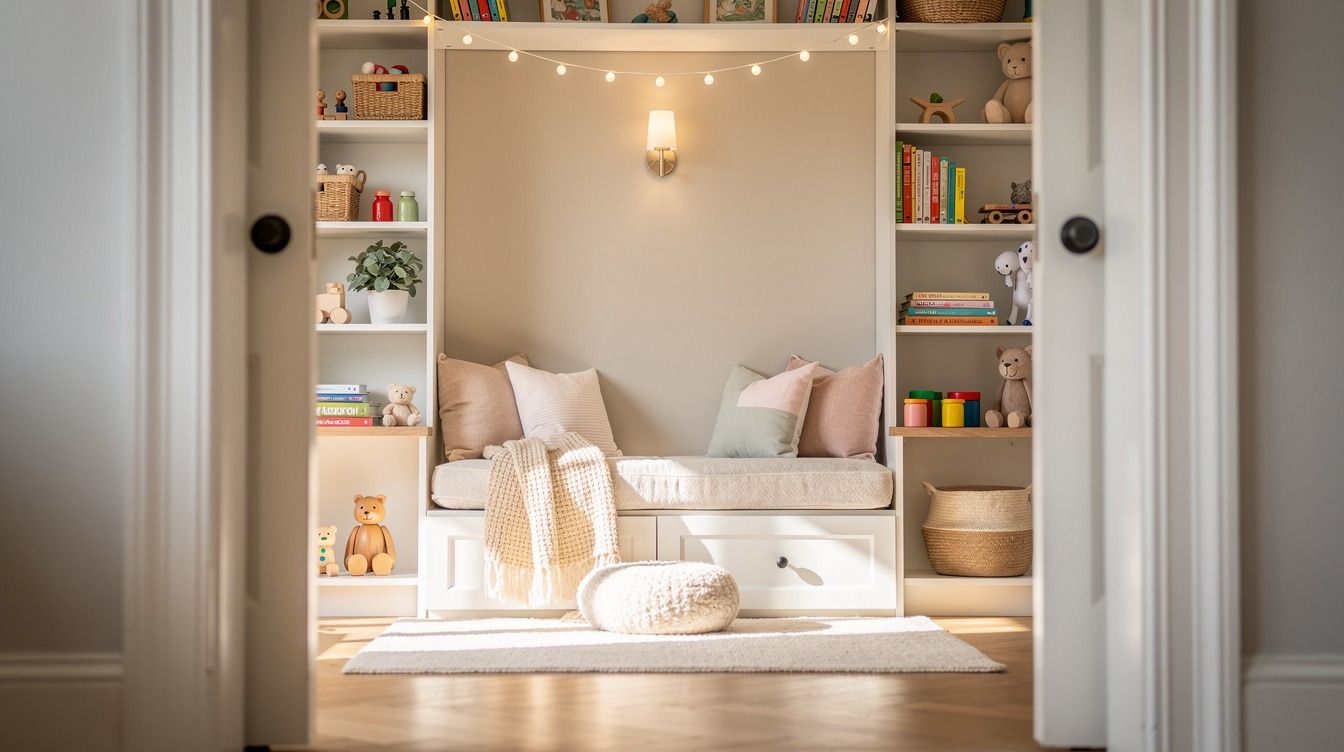
Turn a closet into a detail playroom by treating it like a tiny room, not overflow storage. I once filled one with plastic bins and called it “organized,” which fooled nobody. Clear the floor, soften the light, and give your child one place that feels entirely theirs.
- Clear the floor before you decorate the closet turned into playroom
- Paint the back wall like a tiny stage
- Build the Low-Shelf Rule for a detail room closet
- Hang a curtain that changes the feeling instantly
- Use the Two-Light Rule instead of one harsh fixture
- Float a reading ledge at child height
- Make the ceiling part of the playroom
- Create a tiny art station with a fold-down surface
- Layer a rug over practical flooring
- Frame the doorway with a bold color edge
- Try the Basket Rotation Method for toy storage
- Add a mirror for dress-up without adding bulk
- Build a pretend shop from one narrow wall
- Use vertical space for costumes, not clutter
- Add a door sign with a real point of view
- Choose soft seating over miniature furniture
- Let removable wallpaper do the dramatic work
- Give the room one grown-up material
- Plan the small-space magic budget before you buy
1Clear the floor before you decorate the closet turned into playroom
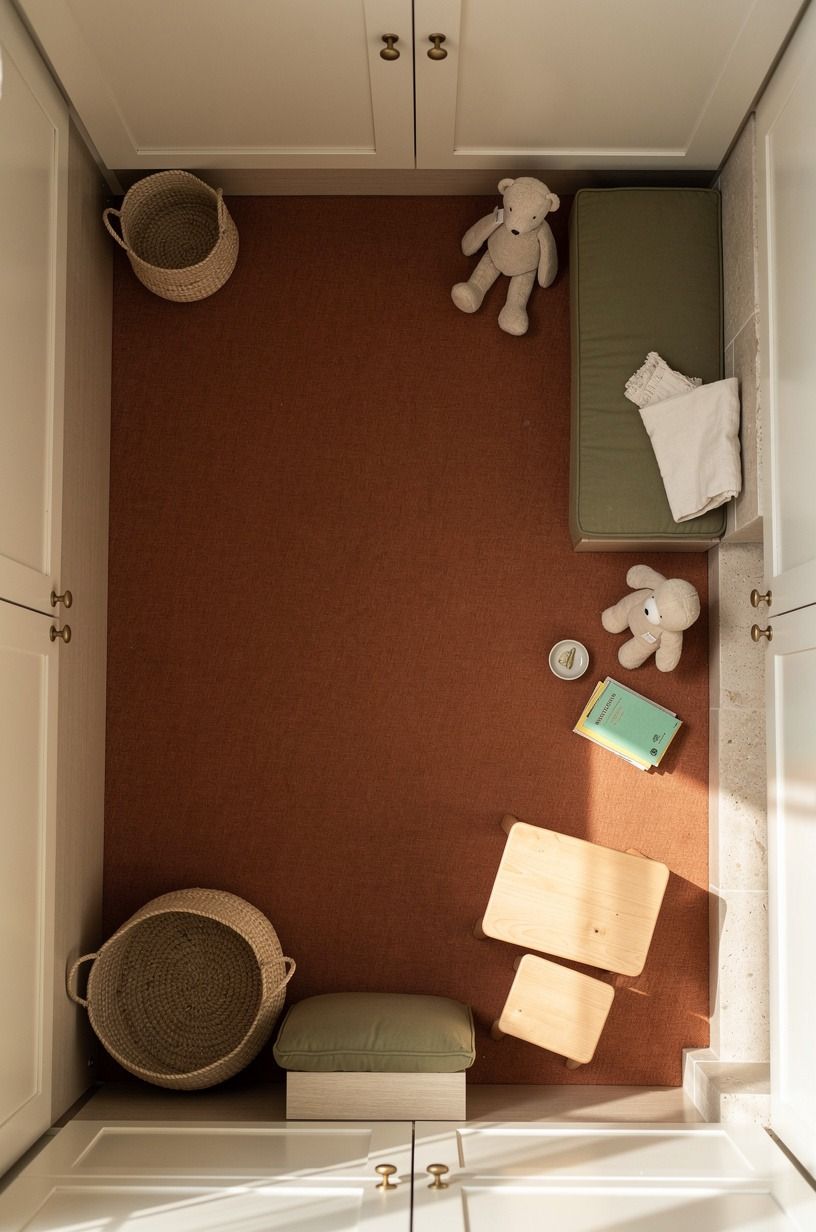
Start by removing everything below knee height so your child can crawl, sit, and sprawl without knocking over a storage tower. A comfortable play nook can work in 4×4 feet, though 6×8 feet gives you room for a reading corner and a small table.
Keep only what earns its place. IKEA TROFAST bins on one wall, a washable rug underfoot, and nothing sharp at face level. You’ll get more use from empty floor than from one more shelf.
But don’t leave it bare. A terracotta floor cushion with unlacquered brass details makes the little footprint feel intentional and soft.
2Paint the back wall like a tiny stage
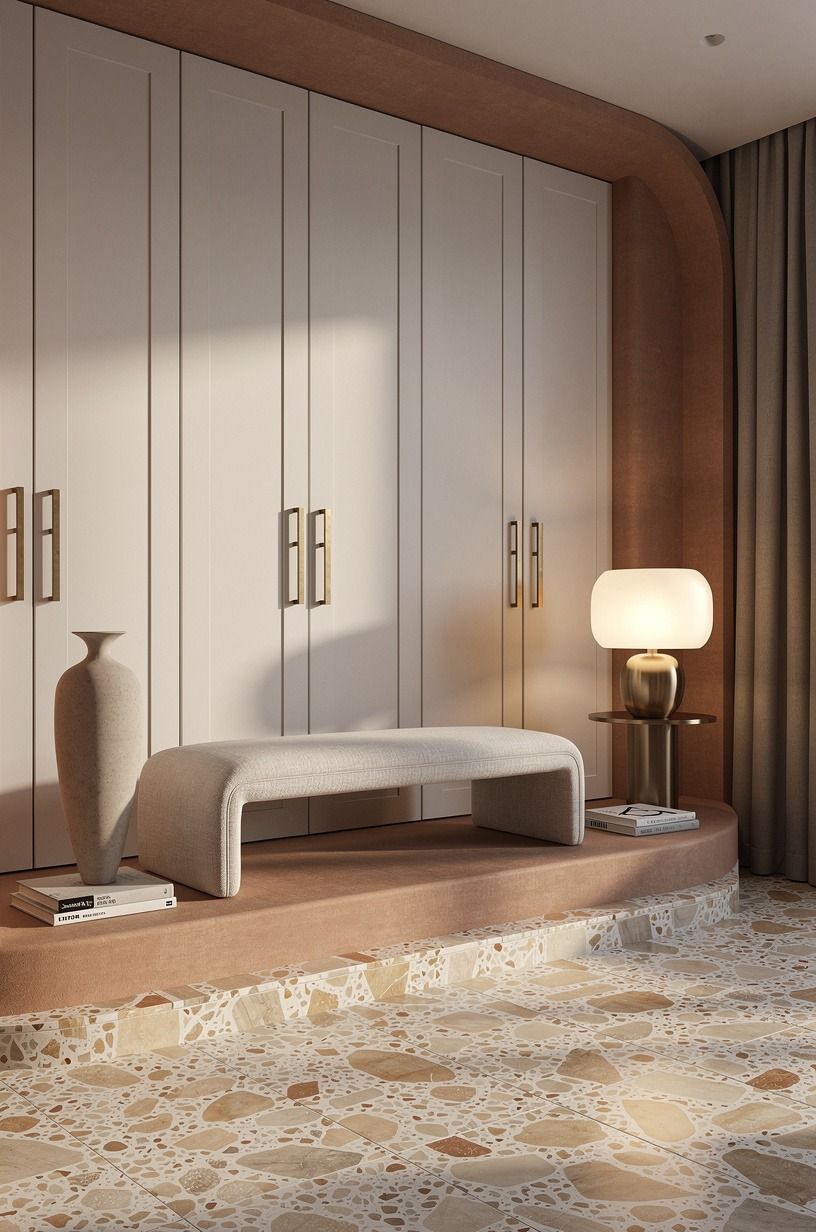
Give your closet to playhouse one strong backdrop, because tiny rooms need a visual boundary more than they need lots of decor. Benjamin Moore Pale Oak OC-20 is my pick for a calm, warm look that won’t turn gray the minute daylight fades.
Paint the back wall only if you’re nervous about commitment. Your eye still reads a room, while the side walls stay bright.
For a bolder little hideout, Farrow & Ball All White No. 2005 loses to Pale Oak every time. All White is crisp, sure, but it can feel clinical beside toy colors. A clay-toned wall beside a terrazzo surface brings in warmth without making the nook busy.
3Build the Low-Shelf Rule for a detail room closet
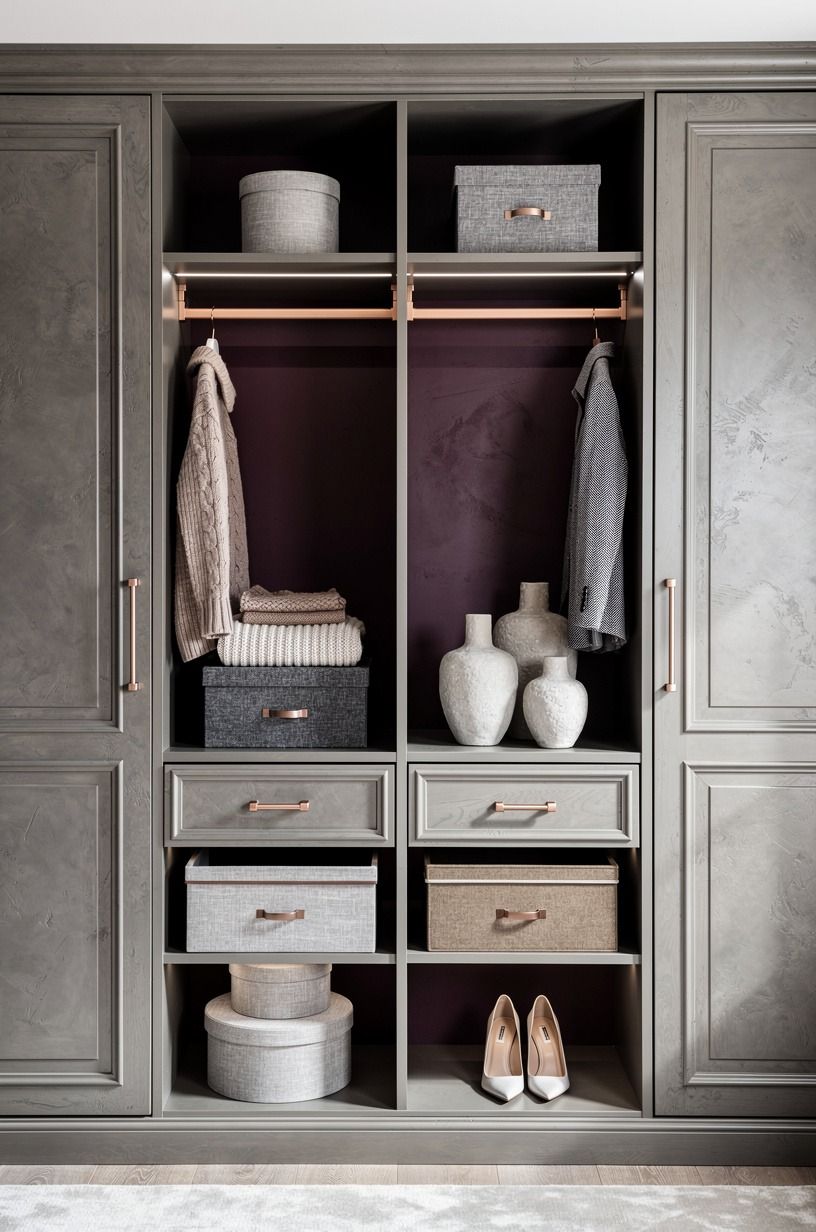
Install one 14-inch-deep shelf low enough that your child can reach books, puzzles, and a basket without asking you for help. A plum-and-gray palette with a small rose-gold detail keeps the shelf feeling considered, while Venetian plaster gives the wall a little softness.
4Hang a curtain that changes the feeling instantly
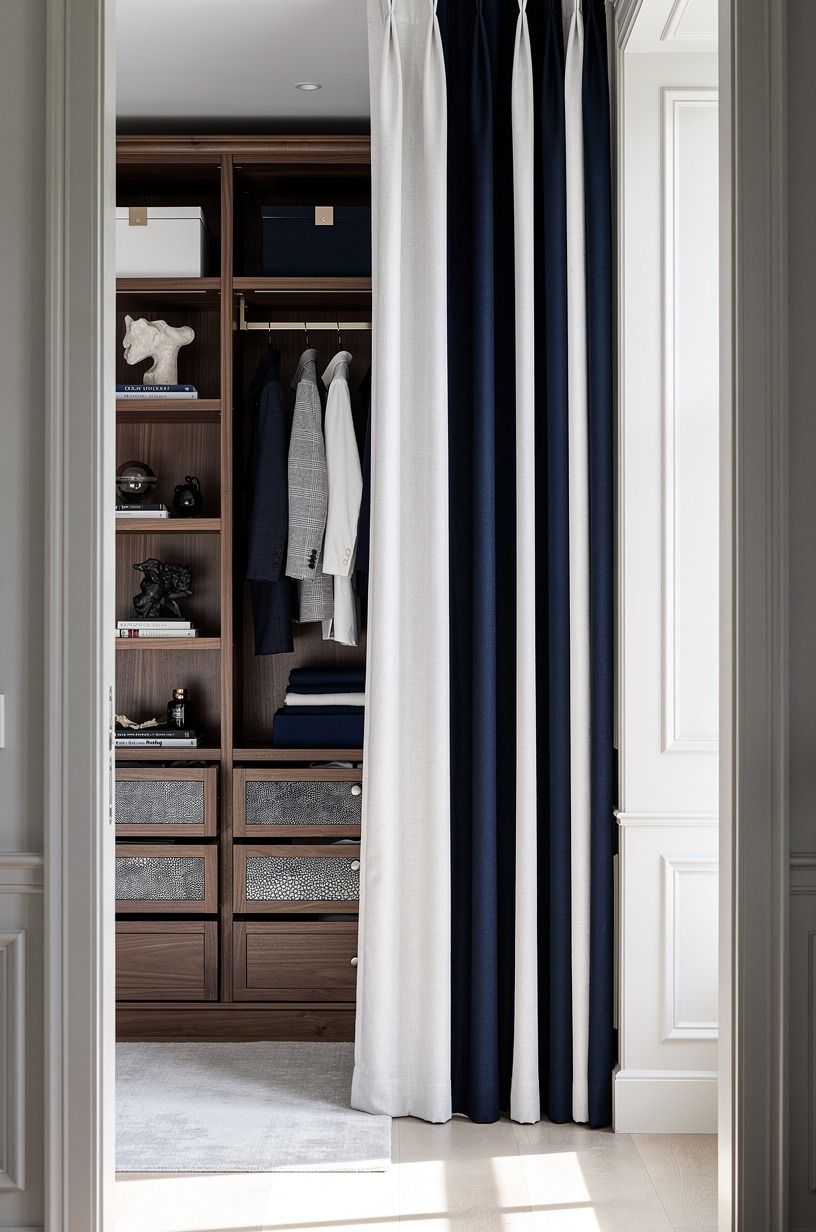
A tension rod and washed cotton canvas curtain can make the closet feel separate from the rest of your home without changing the door at all. Choose a fabric with some weight, not a flimsy sheer that twists around tiny hands.
Try a navy-and-white stripe, a muted floral, or plain oatmeal beside walnut tones. Your child gets the drama of opening a little entrance, and you get an easy way to hide the mess when company arrives.
And yes, the curtain matters more than matching baskets. It’s the first thing they’ll touch.
5Use the Two-Light Rule instead of one harsh fixture
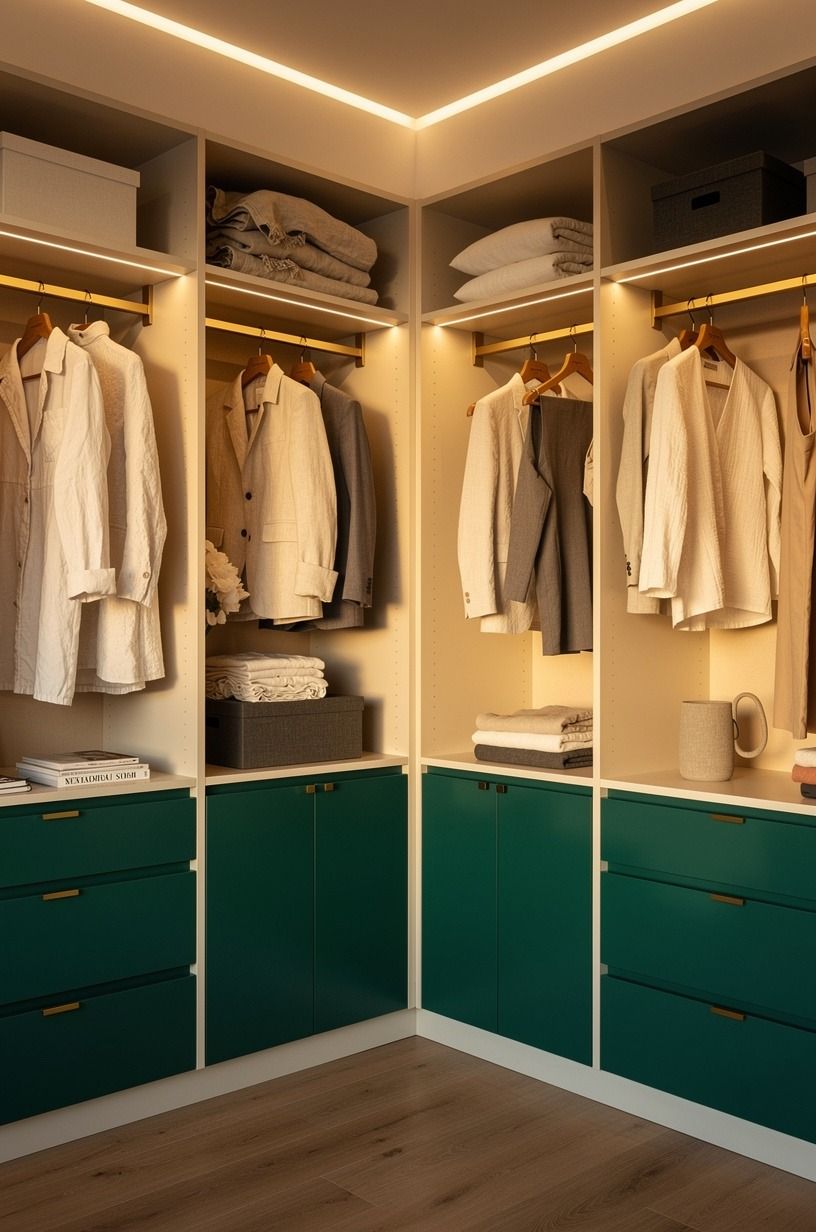
The Two-Light Rule means one overhead glow plus one low, gentle source near the floor. An emerald, gold, and cream scheme feels especially calm with washed Belgian linen nearby.
6Float a reading ledge at child height
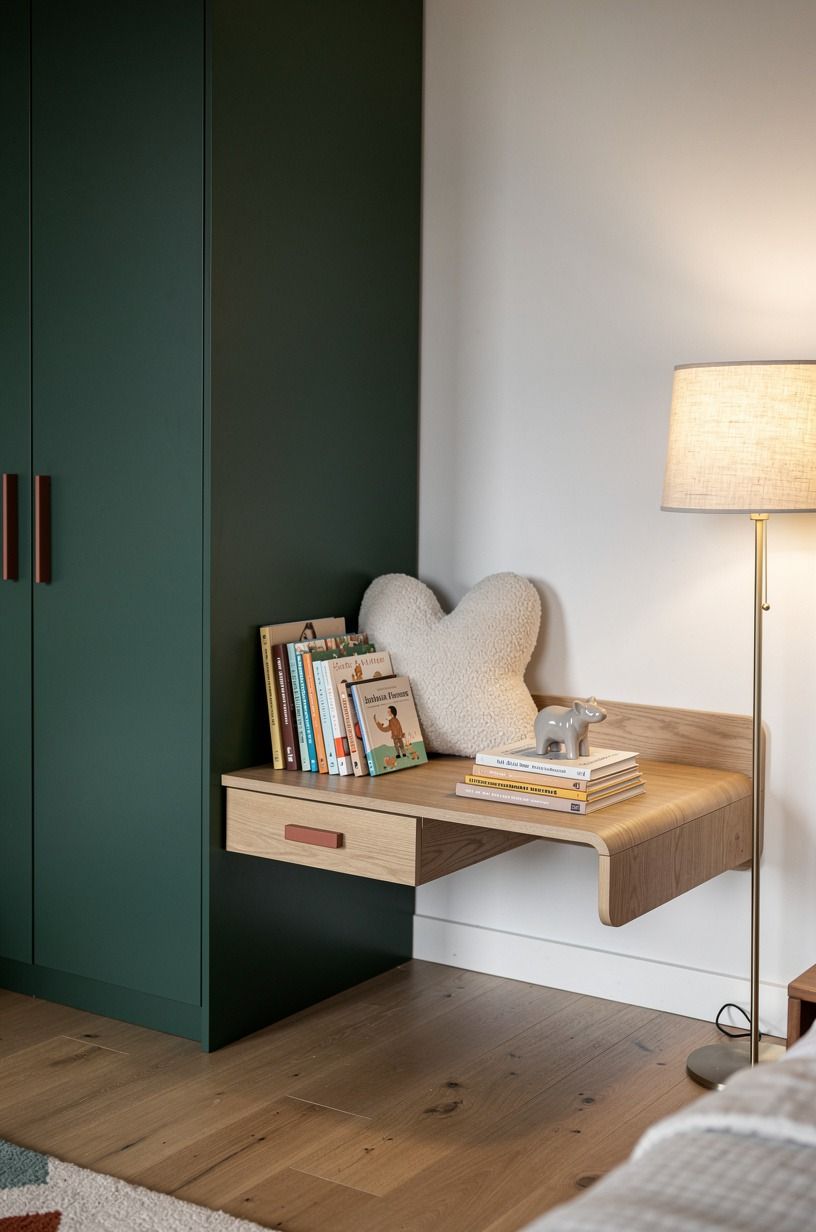
A narrow natural-oak picture ledge lets you rotate books face-out, which is far more inviting than lining up spines in a dark corner. Mount it low enough for little hands, then leave some blank wall around it.
Three books. One small framed drawing. A soft bouclé animal.
If you’re already carving out overlooked square footage, these under stairs playroom ideas have the same useful lesson: the smallest spaces work best with a clear job.
7Make the ceiling part of the playroom
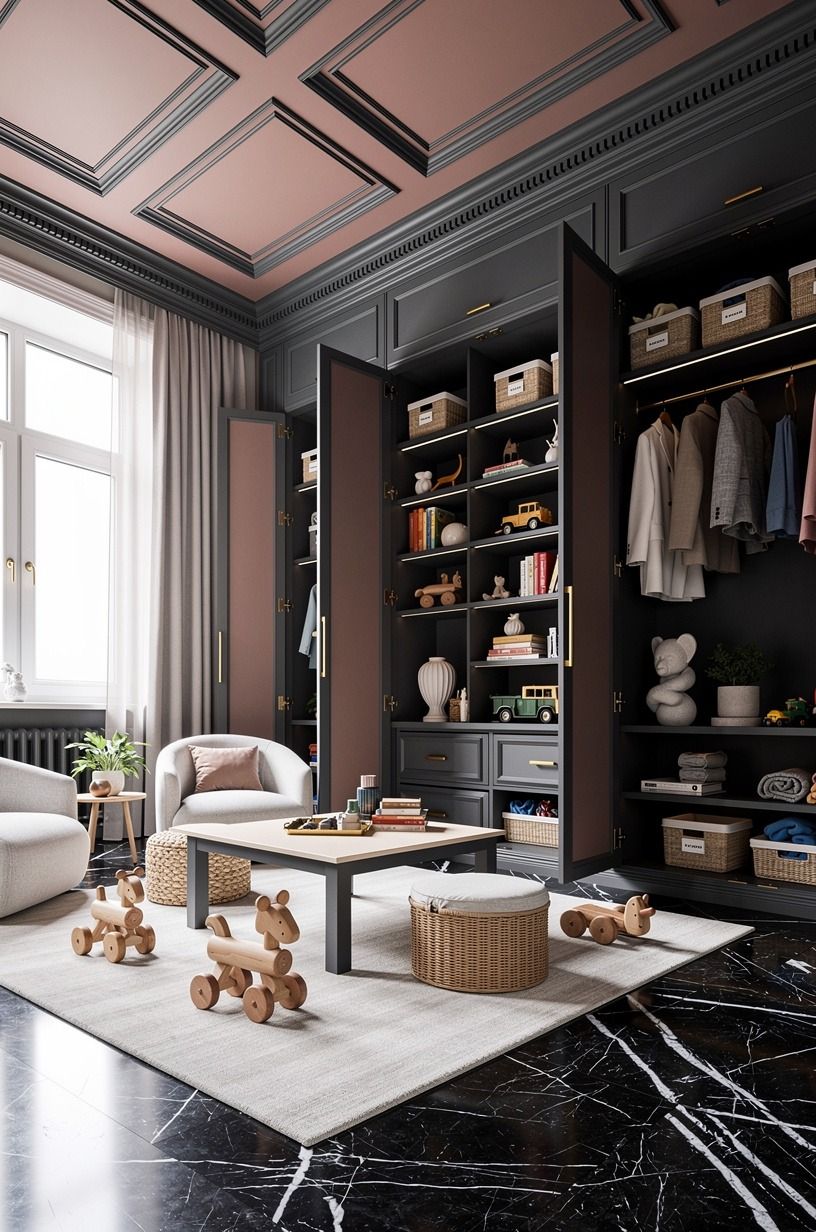
Look up. A closet ceiling is usually ignored, which is exactly why it can carry the whimsy without cluttering the floor. Stick-on stars, a paper lantern pendant, or a fabric canopy can make your child pause at the doorway.
I’d avoid a heavy mobile here. It looks charming in photos, but it steals precious headroom and becomes a dust collector fast.
A few matte paper shapes work better against dusty rose, charcoal, and brass, especially with a small touch of Nero Marquina marble. Quiet magic, not a carnival.
8Create a tiny art station with a fold-down surface
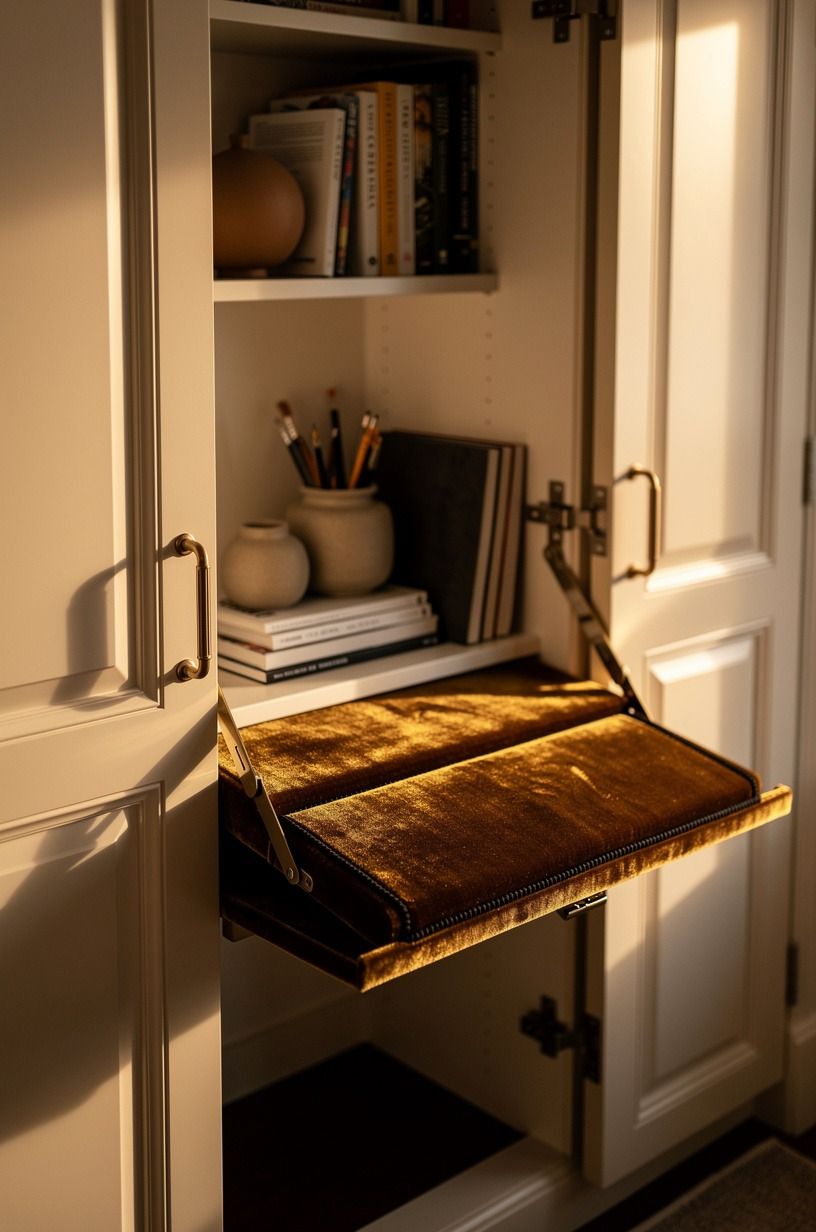
A fold-down birch plywood desk gives you a drawing zone without sacrificing the whole floor. Keep it shallow, then add a cork strip for finished pictures and one cup for crayons.
Your child can draw, close it, and move on. You won’t have a permanent craft table jutting into the bedroom.
Use rounded edges. Always.
A compact corner turns wild when someone is pretending to be a tiger. Warm white, camel, and black accents pair beautifully with a deep-pile mohair-velvet cushion.
9Layer a rug over practical flooring
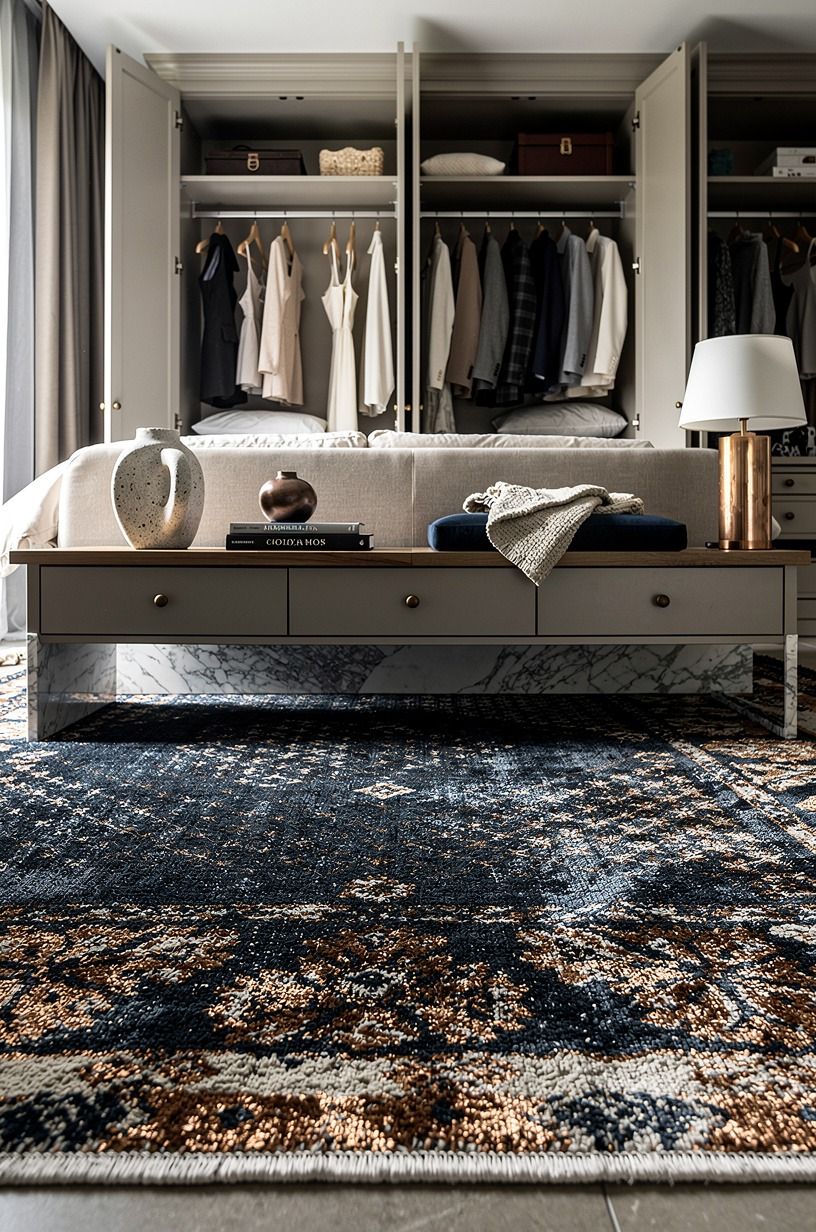
Put a low-pile rug in midnight blue, copper, and ivory over the existing floor, even if the closet already has carpet. The extra texture helps the area read as a destination instead of a cleared-out storage bay.
Choose something washable and forgiving. Cream shag is the losing option here because paint, crackers, and one mysterious purple smear will find it by Tuesday.
A rug with a small pattern hides life. That’s not cynical, it’s parenting. If you add a hard surface nearby, Carrara marble with subtle gray veining feels calmer than a stark white finish.
10Frame the doorway with a bold color edge
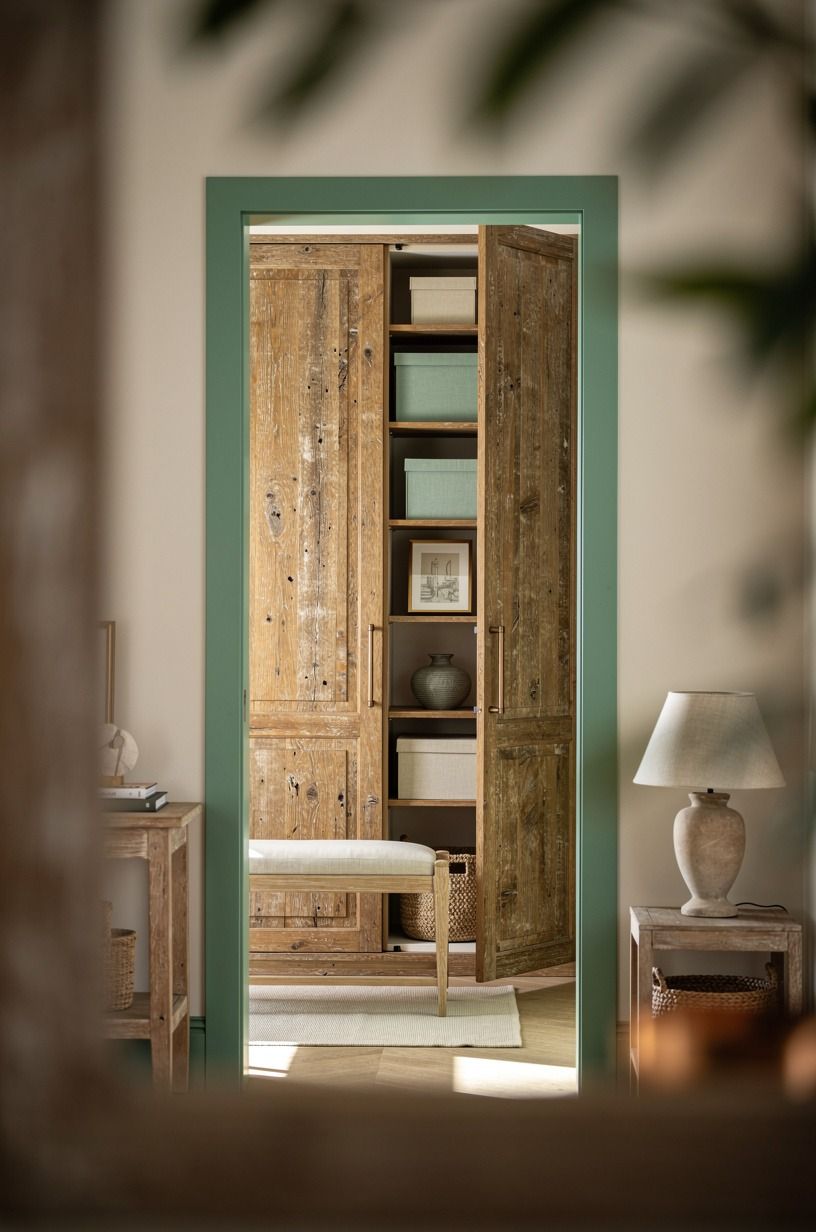
Paint the inside trim in Sherwin-Williams Alabaster SW 7008 or add removable trim decals around the opening. That slim border tells your child where the play zone begins before they’ve even stepped inside.
You don’t need to paint every surface. In fact, I’d skip the full-color box if your closet has no window, because dark corners swallow toys whole.
A sage-green edge, warm cream walls, and reclaimed weathered teak give the threshold a bright, welcoming feel. And it feels special without asking for much.
11Try the Basket Rotation Method for toy storage
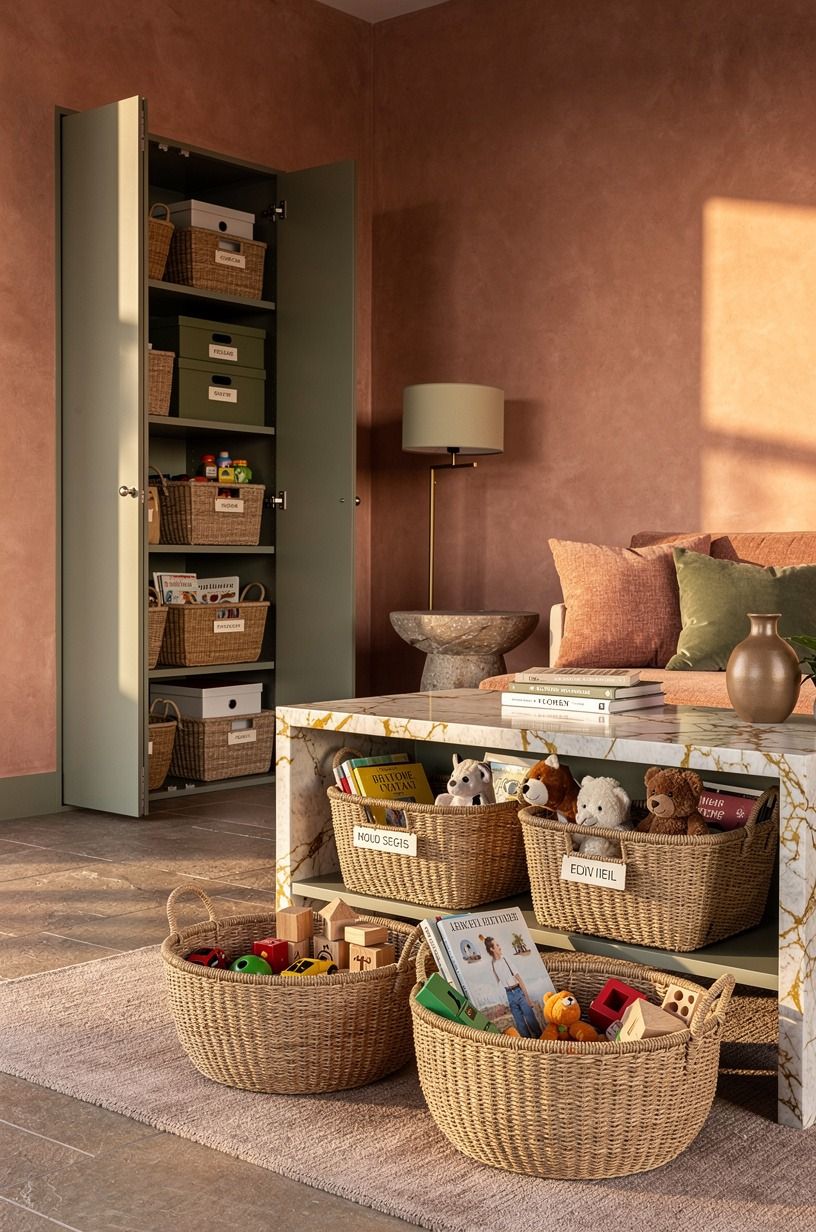
The Basket Rotation Method keeps only a few toy categories in sight and hides the rest elsewhere. Terracotta, stone, and olive baskets look grounded against a small Calacatta marble shelf with gold veining.
12Add a mirror for dress-up without adding bulk
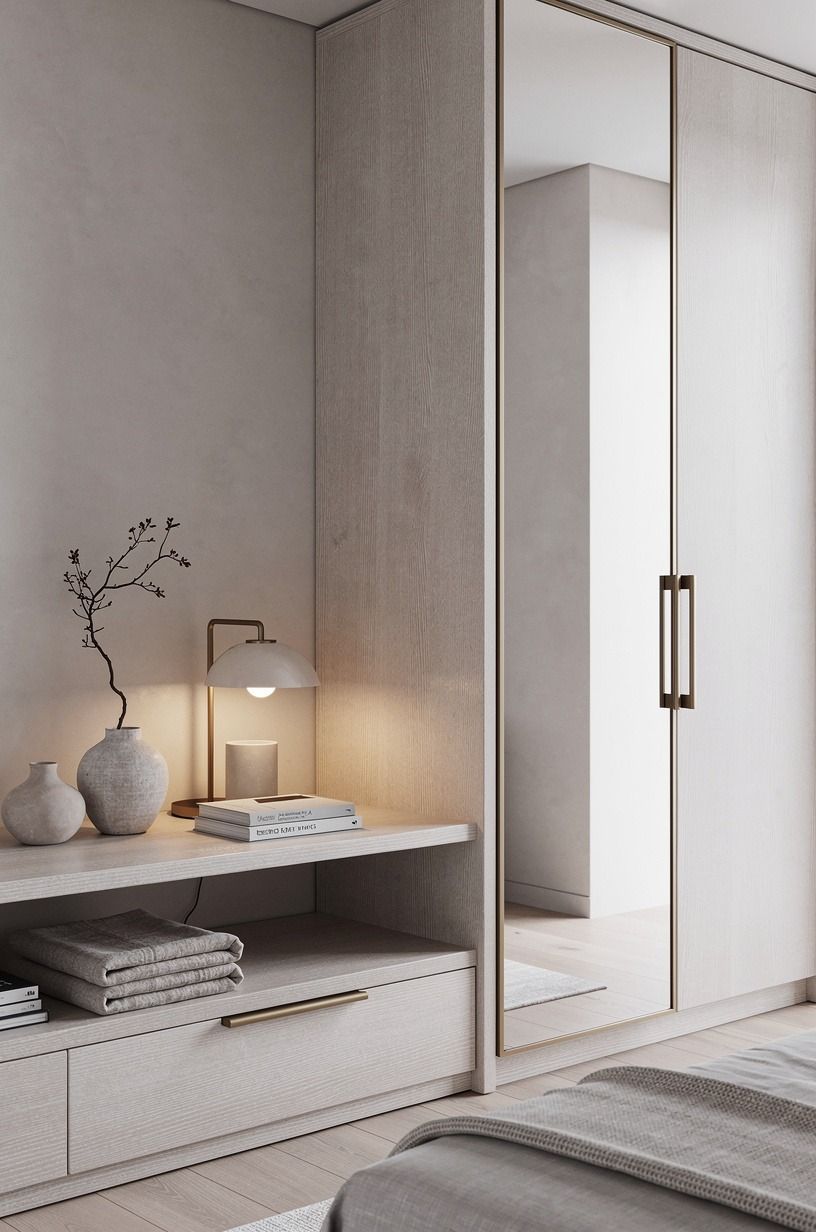
Mount a shatter-resistant acrylic full-length mirror low on the wall for costumes, dance breaks, and the serious business of admiring a paper crown. It bounces light around too, which helps a narrow closet feel less boxed in.
A framed glass mirror is not worth the risk. It’s prettier, but this is a playroom, not a hotel lobby.
Give your child a hook for capes beside it. A clay, linen, and aged-brass palette with cerused white oak makes that little ritual feel considered.
13Build a pretend shop from one narrow wall
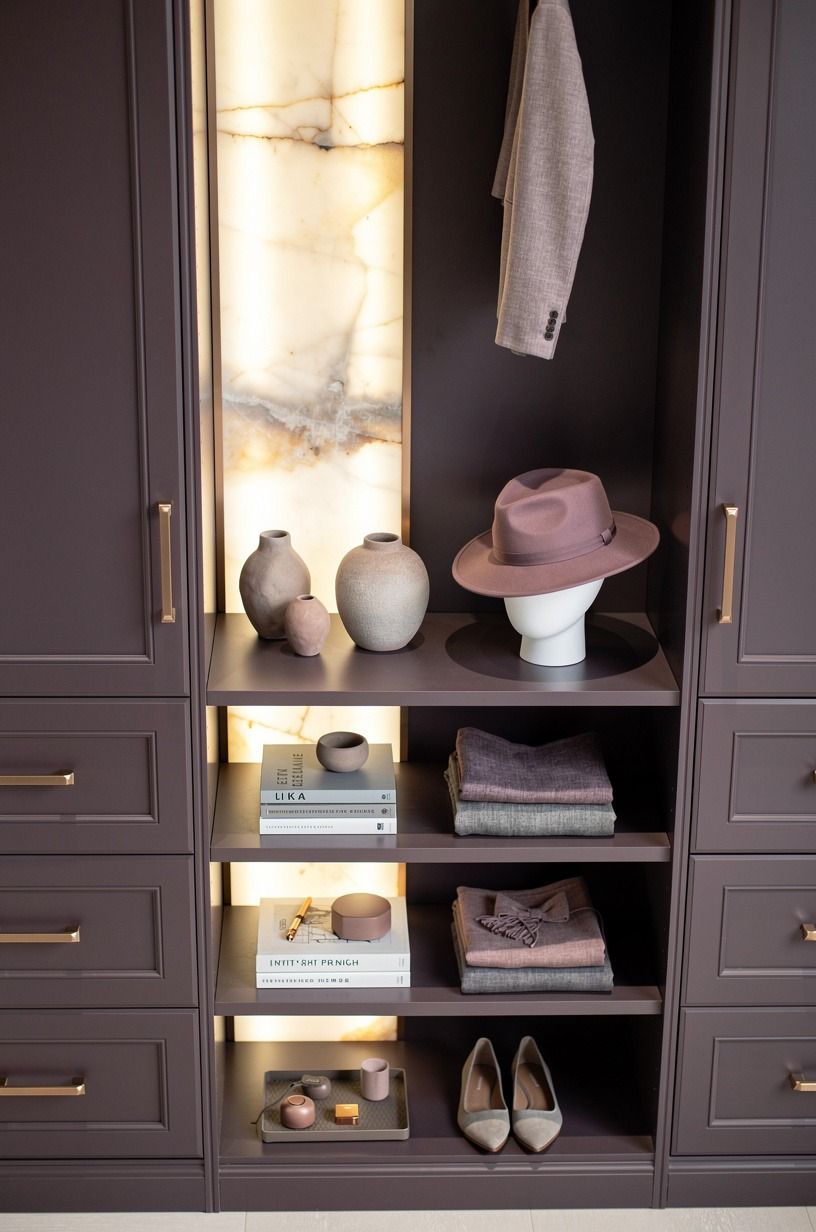
Use a IKEA KALLAX birch-effect unit on its side as a pretend counter, book display, or grocery stand. Plum, gray, and rose-gold details look lovely against a small panel of backlit translucent onyx.
14Use vertical space for costumes, not clutter
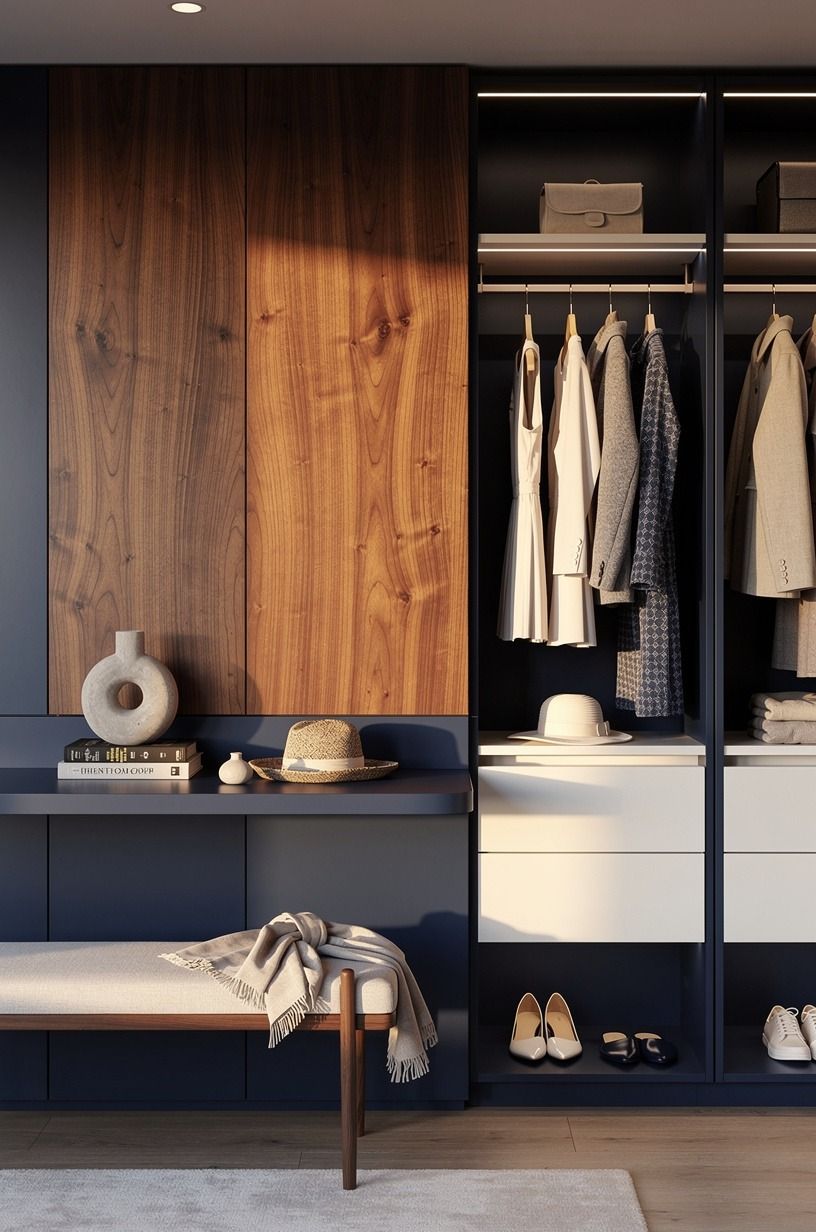
Hang costumes from low hooks or a short walnut rail rather than stuffing them in a bin. The colors become part of the room, and your child can choose without emptying every drawer.
Place hooks well below adult height, then keep only five or six outfits out. Too many costumes make the wall look like a clearance rack.
But one velvet cape, a basket of hats, and a little mirror? That’s an enchanting corner.
15Add a door sign with a real point of view
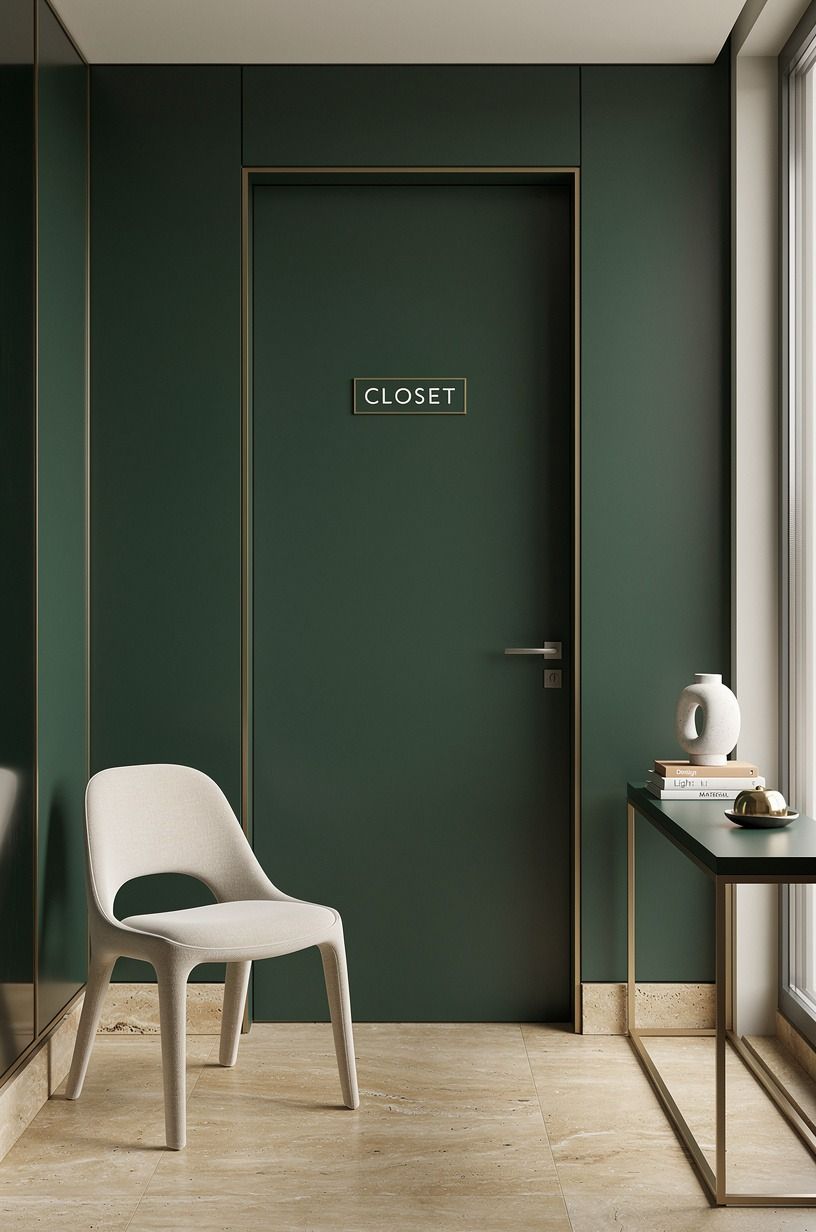
Make a simple sign that names the room according to your child’s current obsession. Emerald, gold, and cream pair especially well with a little warm travertine detail.
16Choose soft seating over miniature furniture
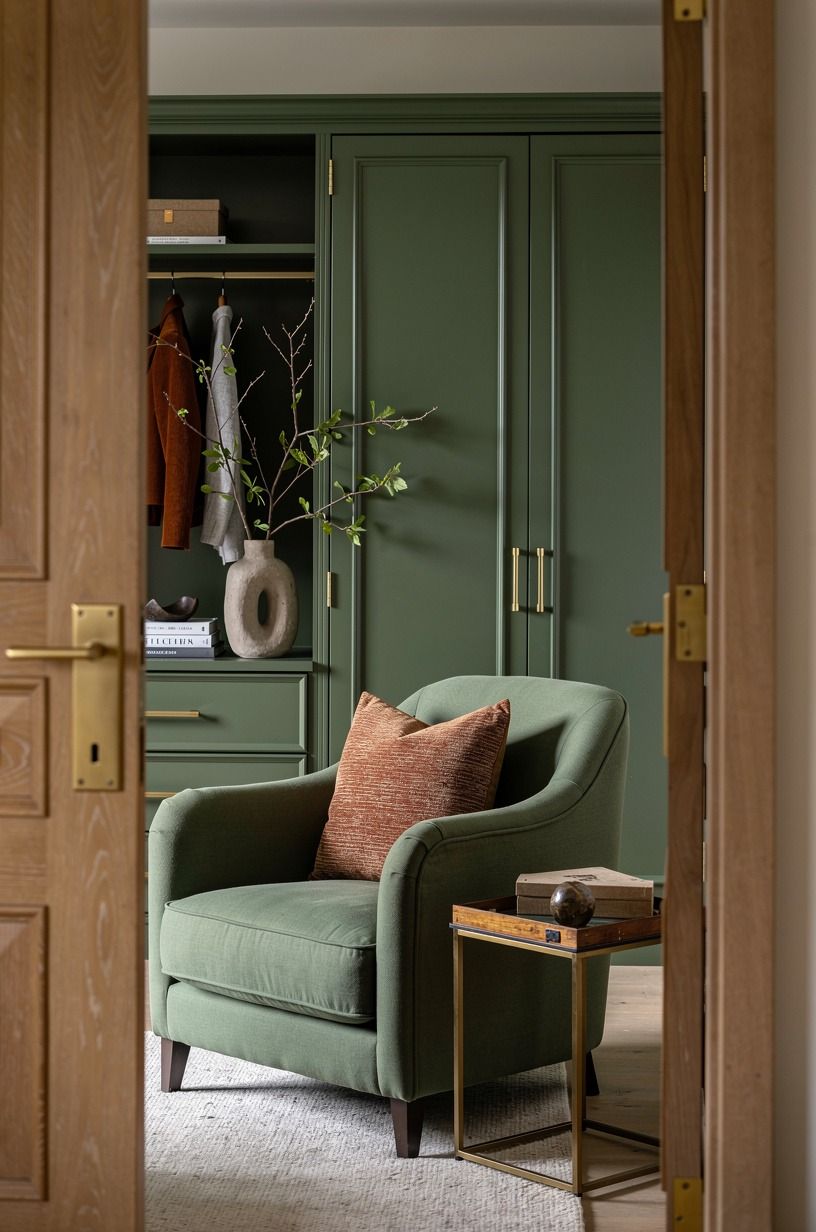
A Nugget-style foam cushion or two oversized floor pillows will serve you longer than a tiny chair-and-table set. Children sit sideways, upside down, and in piles, so rigid furniture often wastes space.
Place one cushion against the back wall and one near the entrance. Your child can build a fort, read, or invite a friend in.
If the room is under stairs or beside an awkward hall, these under stairs detail room ideas show how a soft seat can solve the whole layout. Forest green, rust, natural oak, and unlacquered brass make the nook feel warm without turning it precious.
17Let removable wallpaper do the dramatic work
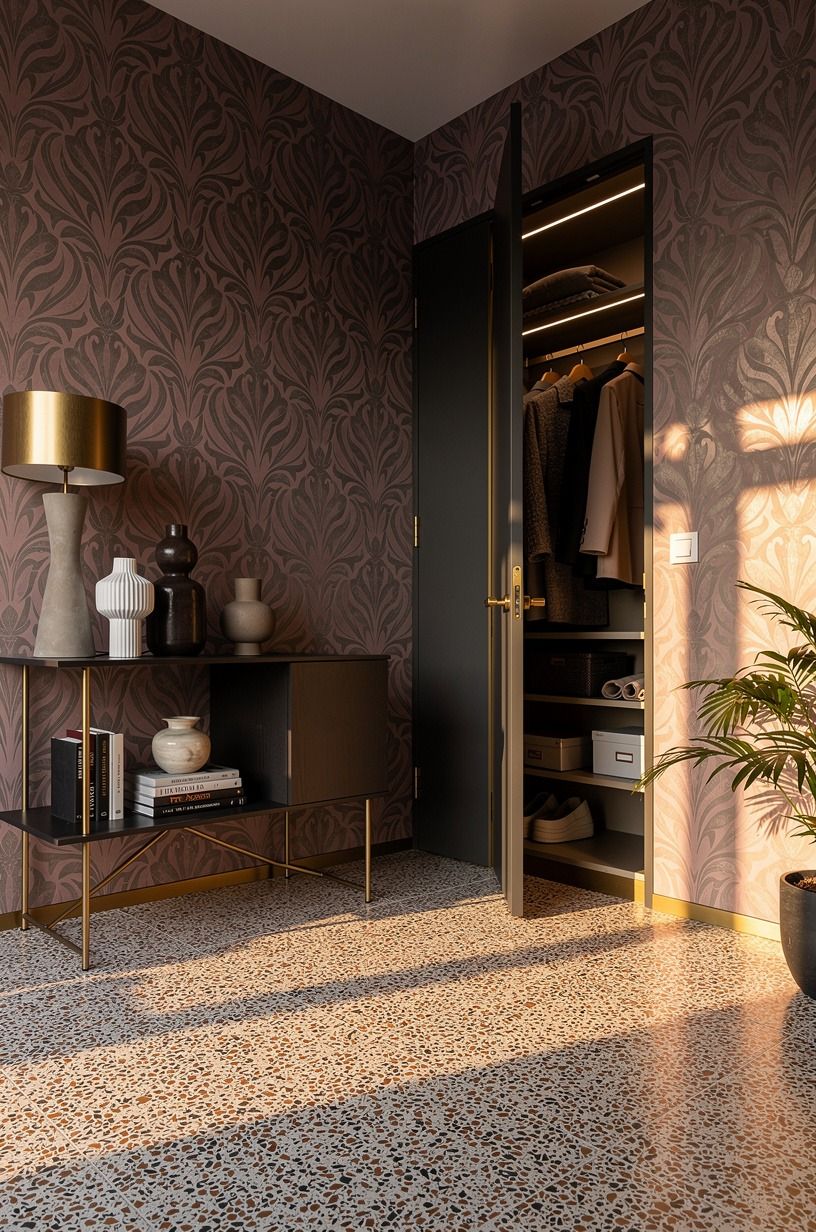
Apply a peel-and-stick Rifle Paper Co. floral wallpaper to the back wall if you want a more dramatic finish without a permanent commitment. It’s especially good for rentals because you can change the mood later.
Measure twice and start in the center. Crooked first panels are annoying in any room, but in a closet you’ll notice them every single time.
A small repeat feels refined. Dusty rose, charcoal, and brass work beautifully beside oversized-chip terrazzo. Giant murals can make your child feel like they’re sitting inside wrapping paper.
18Give the room one grown-up material
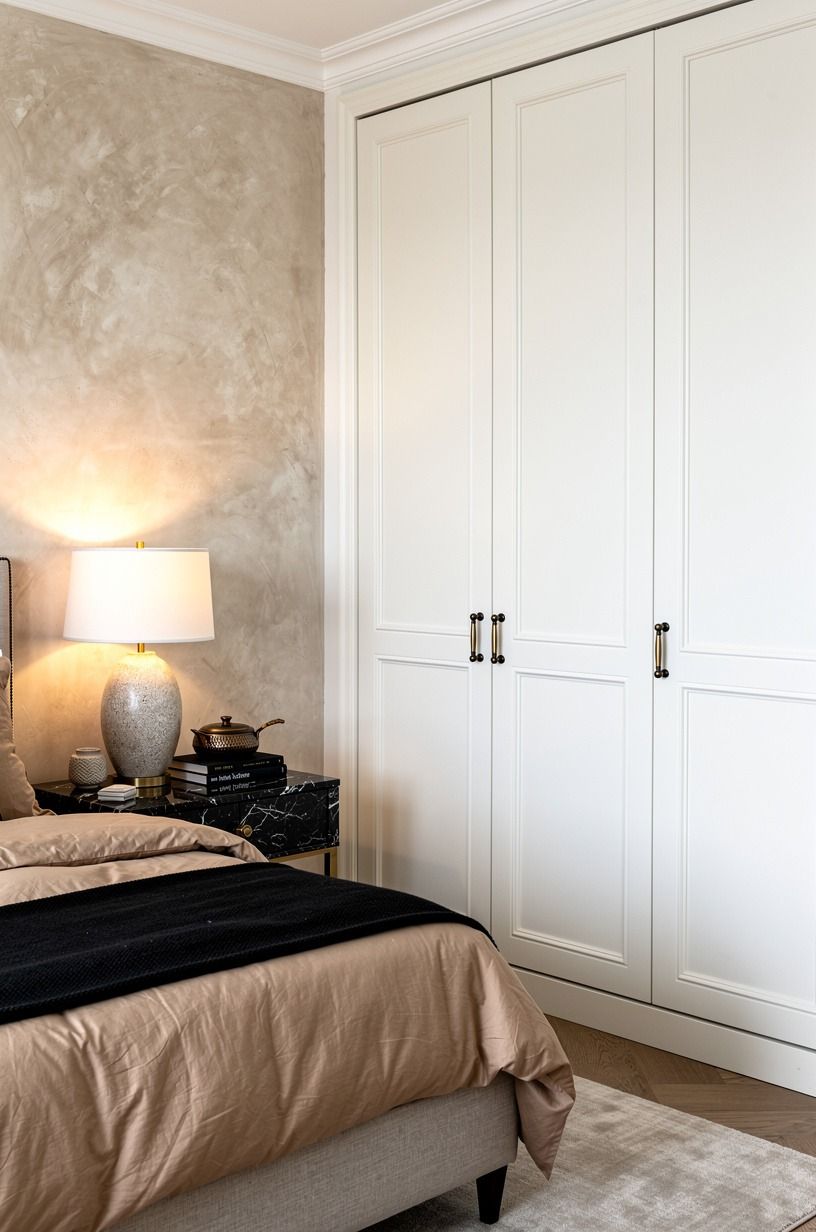
Add one material that doesn’t look like it came from the toy aisle: hand-applied Venetian plaster, a small wool pillow, a wood ledge, or aged brass hardware.
19Plan the small-space magic budget before you buy
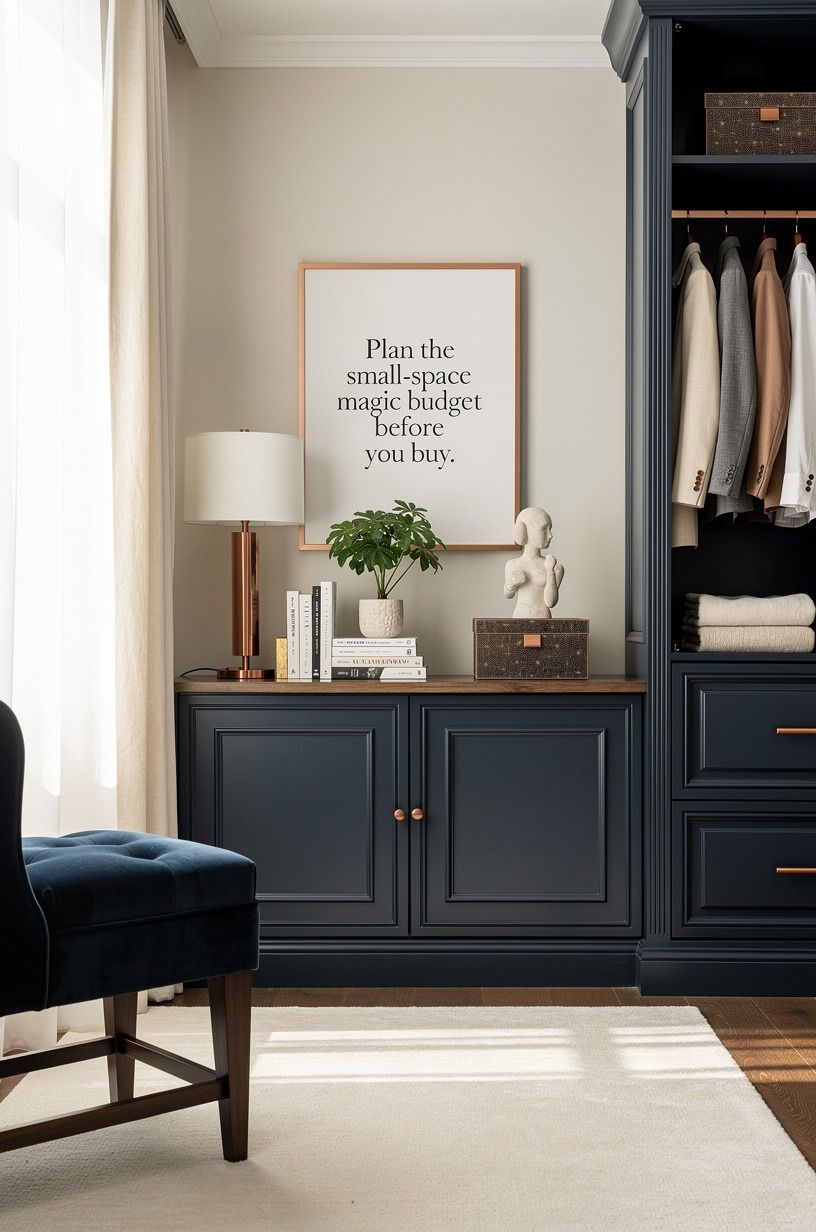
A closet playroom can be modest or fully built-in, and you should decide which one you’re making before you start ordering bins. Rods and lighting are a budget project; custom drawers are a different category entirely.
For most families, I’d stop at the budget tier. You can make a warm, calming nook for $150-$800, while a custom system can swallow money that your child would rather see spent on books, art supplies, and weekends out.
A 24-inch-wide center island only makes sense in a large walk-in. In a standard closet, open floor wins. Midnight blue, copper, ivory, and a little shagreen make even the practical choices feel finished.
Why I Think Small Playrooms Work Better Than Big Ones
I used to believe children needed a huge, elaborate room to play well. More zones, more furniture, more stuff. Then I watched what happened when my own living room became the dumping ground for toys: everything was available, nothing held attention, and cleanup turned into a daily argument.
A closet changes the equation because it gives play a boundary. You walk in, the light changes, the rug is under your knees, and the outside world drops away for a minute.
That feeling matters. Kids don’t need a magazine-ready playroom; they need a place where they can start something without being interrupted by the rest of the house.
The best version isn’t packed. It has a few materials with texture, a small amount of choice, and enough room to make a mess that stays contained.
I’ve gone back and forth on whether a closet needs a door, too. Sometimes a curtain is better because you can hear what’s happening, and your child still gets that little moment of arrival.
There’s an honest economy here as well. You can spend $2,000-$6,000 on modular drawers, but your child may care more about a flashlight, a pillow, and a basket of costumes.
The expensive version can be lovely. It just isn’t automatically more fun.
And when the playroom changes next year, as it will, you haven’t built your whole house around a phase. You’ve made a small, welcoming place that can become a reading nook, an art cave, or a quiet homework corner later. That flexibility is the part I’d pay for.
The Questions Worth Answering First
What is the best Turn a Closet Into a Detail Playroom for a small closet?
The best setup is a low IKEA TROFAST system with a washable floor cushion and one book ledge. You’ll get easy cleanup and open floor space without crowding the doorway. Skip tall furniture; your child needs room to move.
Where can I buy Turn a Closet Into a Detail Playroom pieces on a budget?
Start with IKEA, Target Pillowfort, and Wayfair for bins, lights, and rugs. You’ll find useful basics without a huge bill. Facebook Marketplace and thrift stores are great for wood shelves, stools, and baskets that can take a coat of paint.
How much does a Turn a Closet Into a Detail Playroom makeover cost?
A basic closet playroom costs about $150-$800, depending on lighting, storage, and whether you paint. You can keep the lowest-cost version by reusing pillows, books, and baskets you already own. Clear floor space is free!
Can I create a Turn a Closet Into a Detail Playroom on a budget?
Yes, and you can begin with what’s already in your house. Your best free moves are clearing the floor, rotating toys, and using a blanket as a curtain. Add one light and one rug later if you want more comfort.
Is a Turn a Closet Into a Detail Playroom worth it in a small space?
Yes, it’s worth it because a closet contains toy mess while giving your child a defined place to settle. The small footprint helps focus. Keep the middle open, then store everything against the walls for easier play.
Is Turn a Closet Into a Detail Playroom a good idea for a rental?
Yes, renters can make one with peel-and-stick wallpaper, tension rods, and removable hooks. You’ll get personality without permanent damage. For another no-construction small-space idea, see this closet hideout guide.
Where I’d Start First
If I had to pick one, I’d start with the floor cushion. You can’t ask a child to linger on hard carpet beside storage bins. Pin the floor-cushion idea for later and browse these small-space room ideas when you need the next corner.