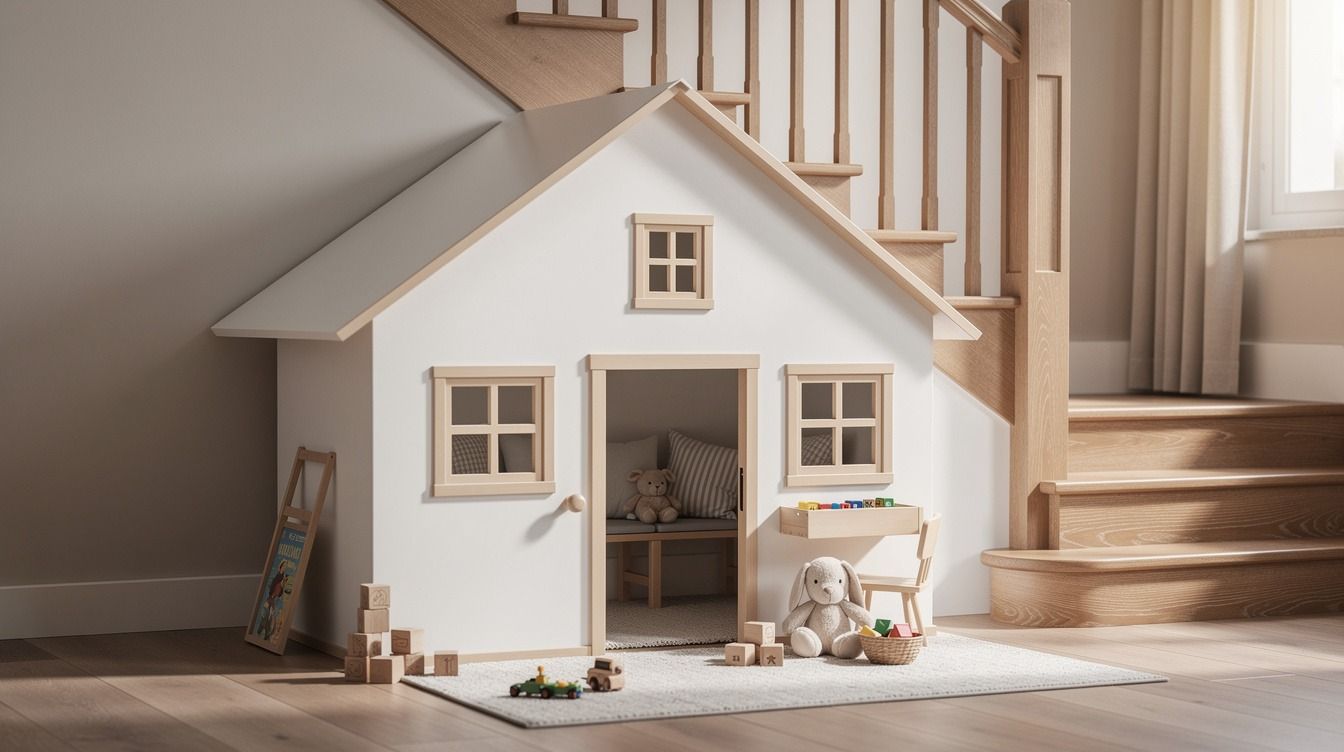
Under stairs playroom ideas work best when you treat that awkward triangle like a real room, not a leftover gap, and a typical refresh can land anywhere from $150-$600 on the budget end. I learned that the hard way after shoving random bins under a staircase and calling it done. It looked busy, your eye had nowhere to rest, and the kids still dragged every toy into the hallway. The fix wasn’t more stuff. It was giving the space a job.
- Build a tiny playhouse facade under the stairs
- Paint the back wall with chalkboard green
- Tuck floor cushions into the lowest corner
- Add arched trim around the doorway
- Run picture ledges for front-facing books
- Install a mini peg rail for costumes
- Layer washable rugs across the play zone
- Hang cafe curtains for a tucked-away nook
- Build a tiny playhouse facade under the stairs
- Paint the back wall with chalkboard green
- Tuck floor cushions into the lowest corner
- Add arched trim around the doorway
- Run picture ledges for front-facing books
- Install a mini peg rail for costumes
- Layer washable rugs across the play zone
- Hang cafe curtains for a tucked-away nook
- Mount cloud shelves above toy bins
- Frame a pretend shop window inside
- Wire soft sconces along the stair slope
- What does rolling storage under the bench actually buy you?
1Build a tiny playhouse facade under the stairs
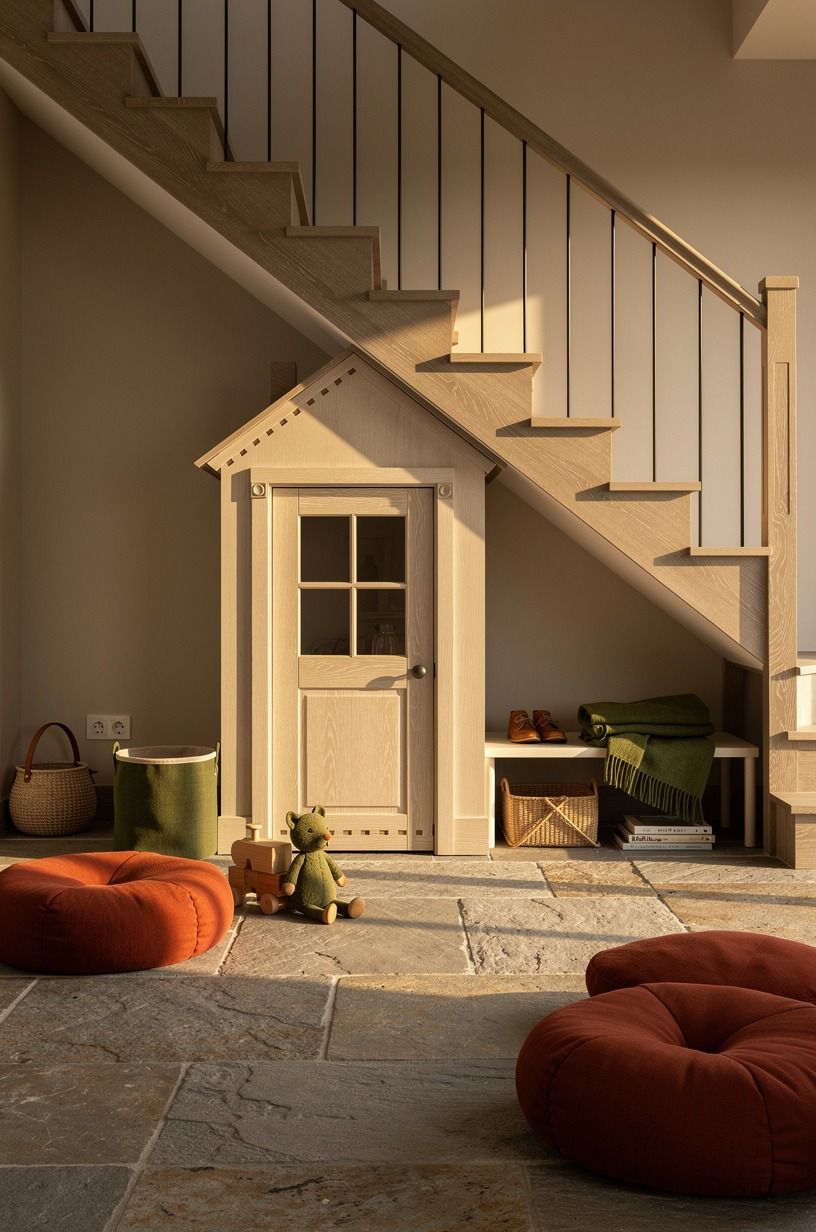
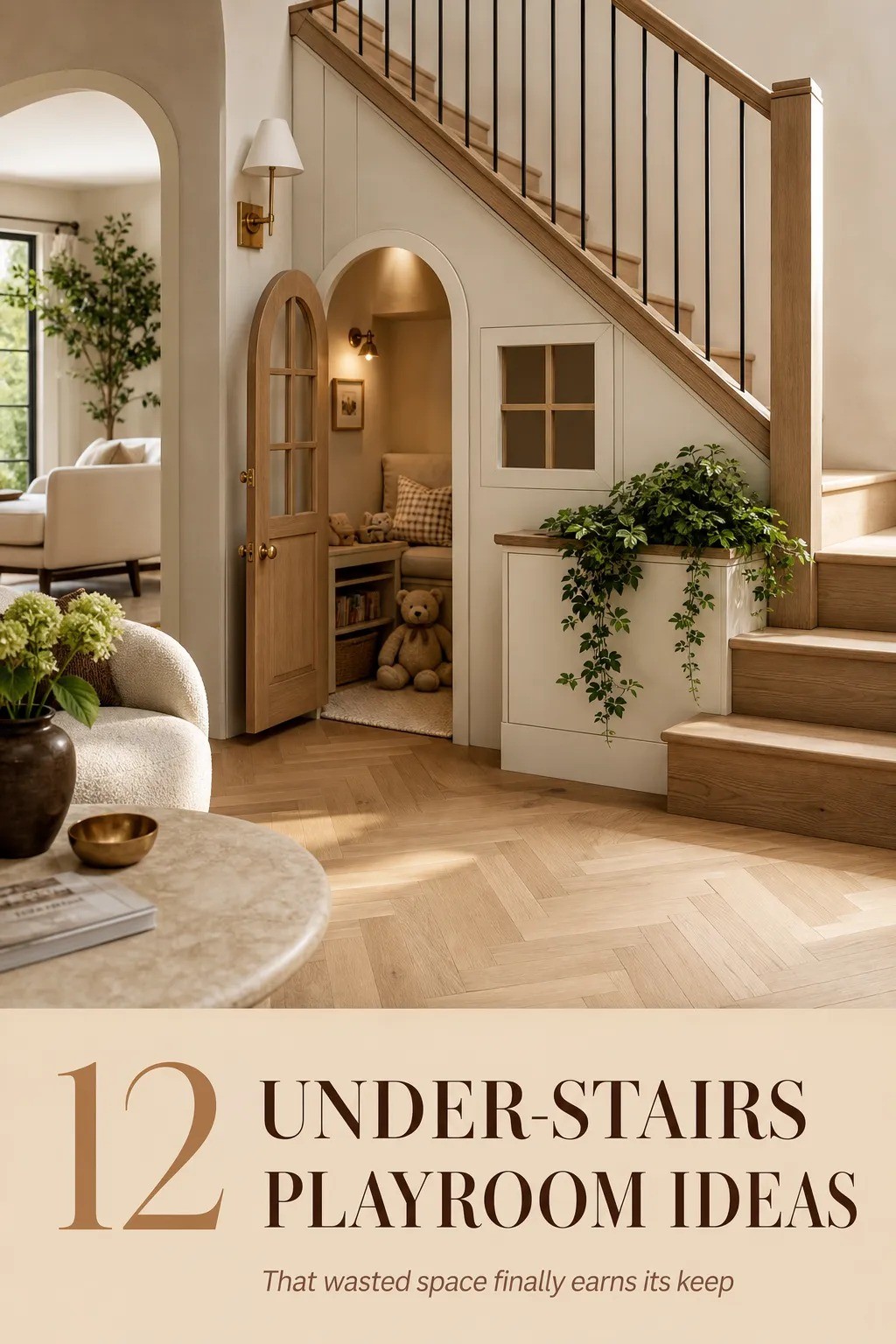
Start with the shell, because your under stairs playroom ideas won’t feel magical if the opening still reads like exposed storage. A kid-scale facade gives your eye a clear boundary, and it makes the whole nook feel intentional before you add one toy. I would use cerused white oak for the trim if you can, because that pale grain keeps the diagonal stair line soft, airy, and inviting instead of heavy.
You do not need a huge footprint. You need a centered little doorway, balanced window cutouts, and enough symmetry that the sloped ceiling feels planned.
A shallow ledge, a tiny threshold, and a roofline detail painted in Benjamin Moore Wickham Gray HC-171 will do more than extra decor ever could. If you’re already obsessed with hidden corners, the mood is similar to this hidden door under the stairs idea, just brighter and more child-friendly.
And here’s the part that worked for me: once you give the nook a facade, your kids understand it as a place to play, not a place to dump. That’s a big difference!
I would skip fussy gingerbread trim, though. It gets visually loud fast, and the sweet spot is simple millwork with one warm paint color and one wood tone.
The whole facade should feel calming and serene, like the architecture itself is hugging the corner.
Typical cost by tier (US averages):
2Paint the back wall with chalkboard green
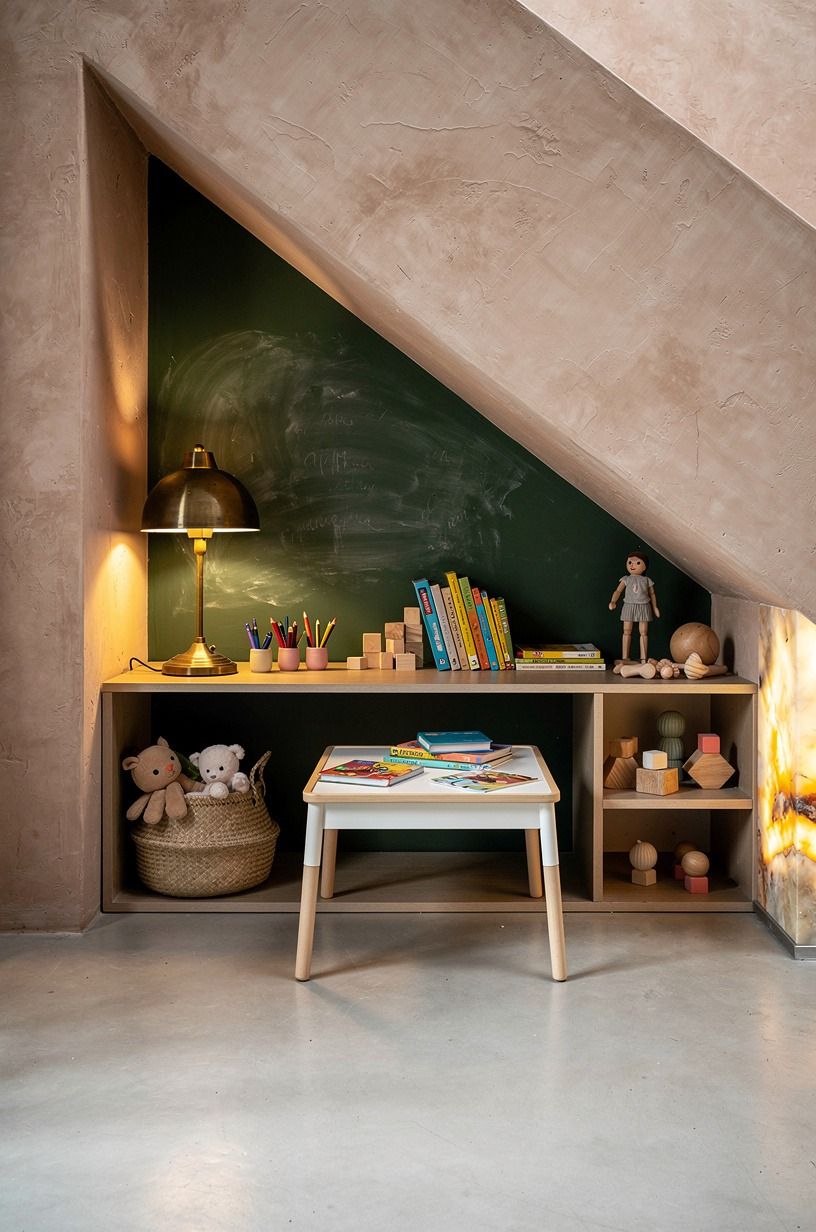
Paint can do the heavy lifting in a play nook under stairs, especially when the back wall is the one plane your child sees straight on. A chalkboard-style green creates depth, hides scuffs, and gives crayons and paper a real destination. You do not need a novelty mural if the wall itself already feels active.
I would go darker than people expect, but not black. Sherwin-Williams Open Air SW 6491 is lovely elsewhere, yet here I would rather anchor the nook with a chalky green that makes pale shelves and books pop.
A low table, open cubbies, and a basket of crayons look sharper against that moody base. If you want another small-space idea where color turns an awkward zone into the point of the room, this music room corner guide gets the same principle right.
But do not paint every surface green. Keep the ceiling and trim warm cream so your child doesn’t feel boxed in.
I made that mistake once with a fully saturated reading nook, and by day three it felt more cave than playroom. One strong wall is enough.
3Tuck floor cushions into the lowest corner
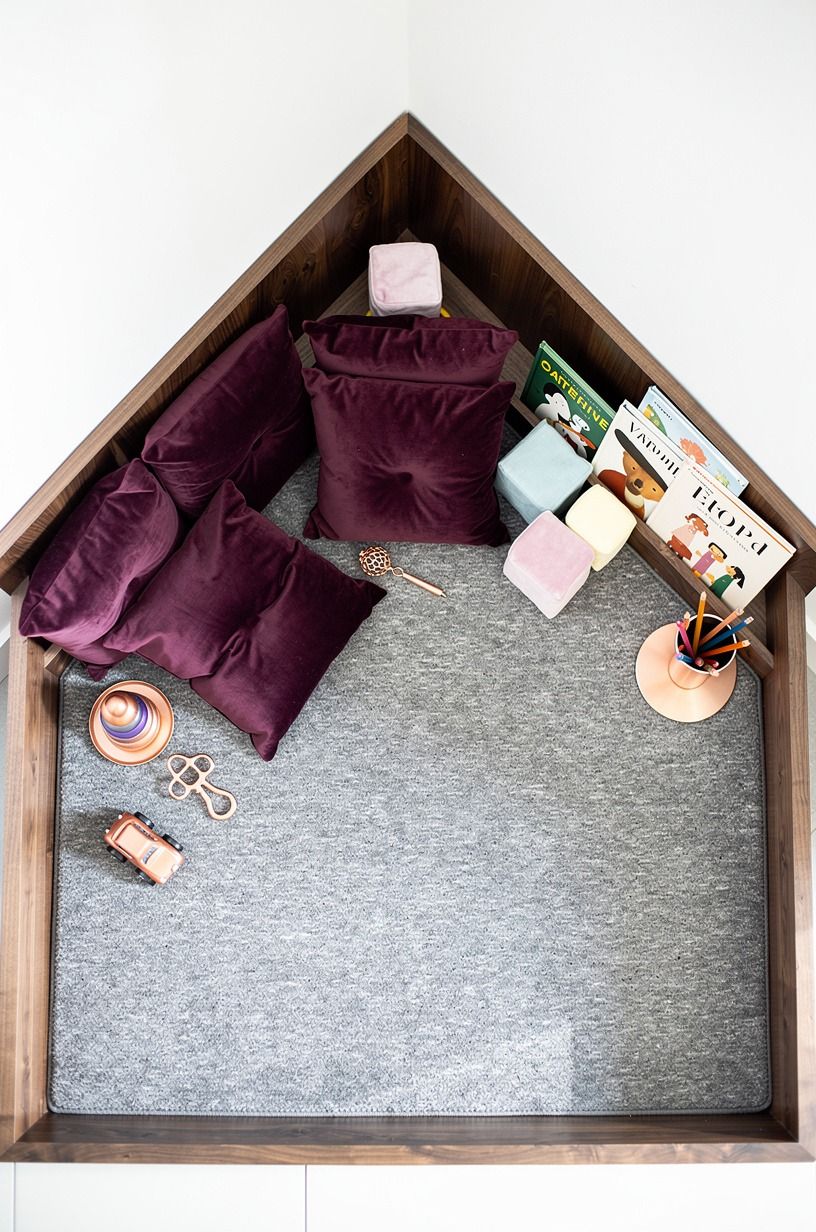
The lowest point under the stairs is usually the hardest spot to furnish, so stop fighting it and make it soft.
4Add arched trim around the doorway
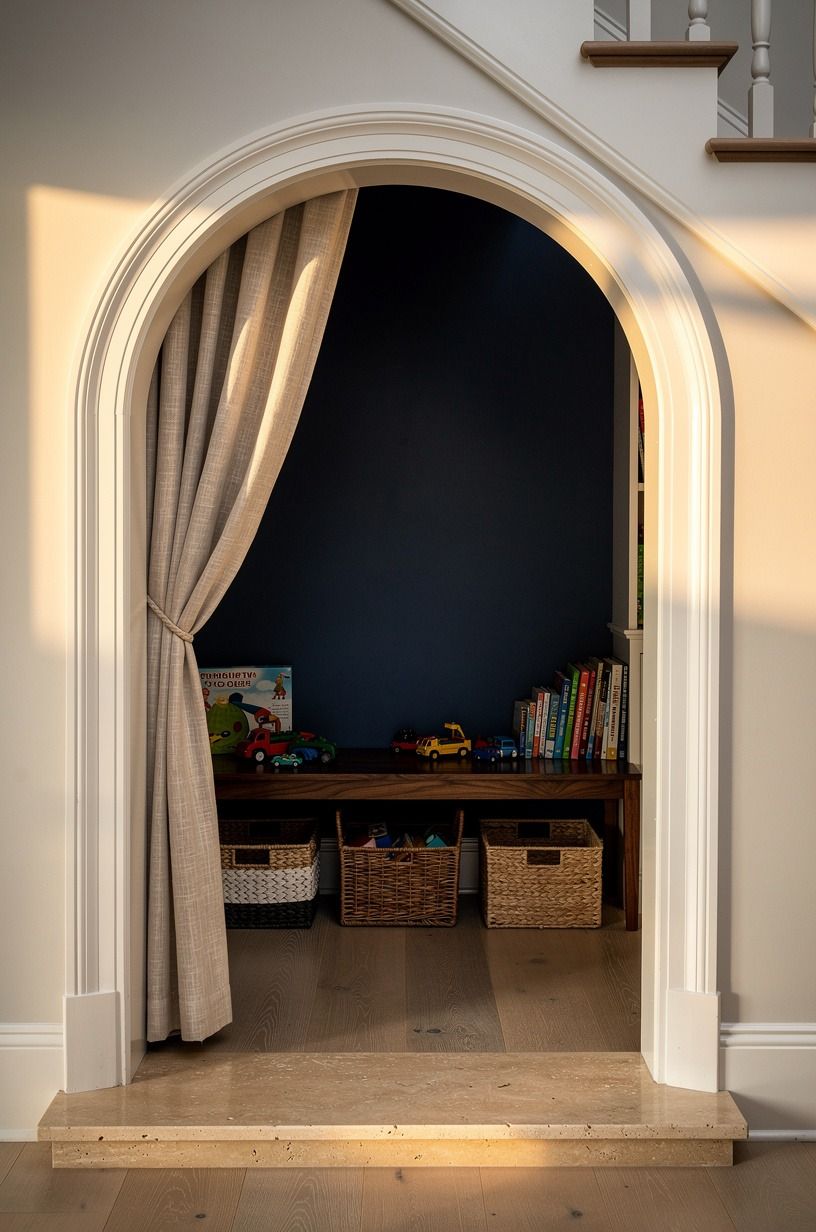
An arch is the fastest way to make a basic opening feel considered, and it’s especially good in under stairs kids nook layouts because it softens all those hard diagonals. Straight lines already dominate the staircase. Your doorway doesn’t need to repeat them.
You can fake the look with MDF and careful paint, so this isn’t only for custom millwork budgets. I would wrap the opening in warm cream trim and keep the inside wall a touch deeper, maybe Farrow & Ball Pink Ground No.202 if the room needs softness without going sugary. The contrast between the arch and the angled stair run is what gives the nook its magazine feel.
And I would keep the curve generous, not pinched. A too-tight arch reads themed, and themed is usually where these spaces go wrong. If you like hidden-room energy but still want something playful, this second hidden-door under-stairs layout shows how framing can make a small opening feel special without overbuilding it.
5Run picture ledges for front-facing books
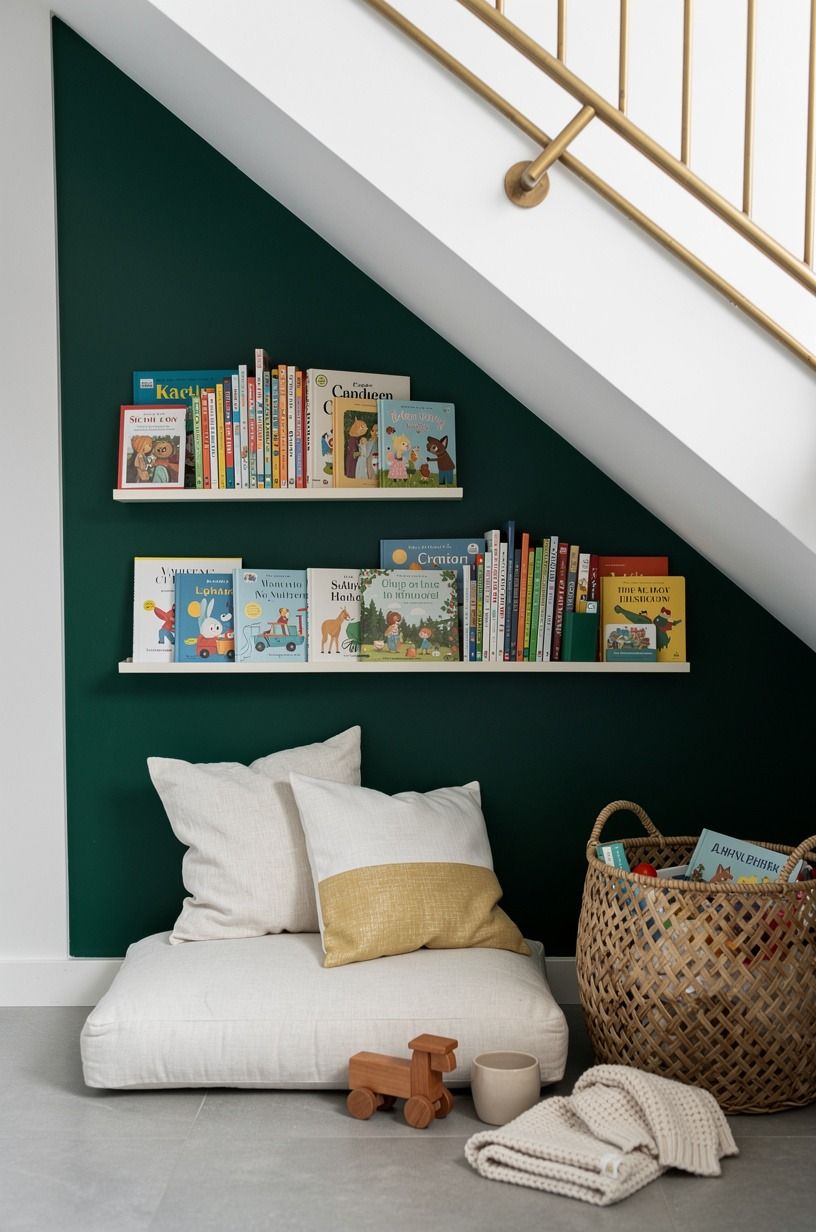
Books should face out in a play house under stairs setup, not disappear spine-first like office storage.
6Install a mini peg rail for costumes
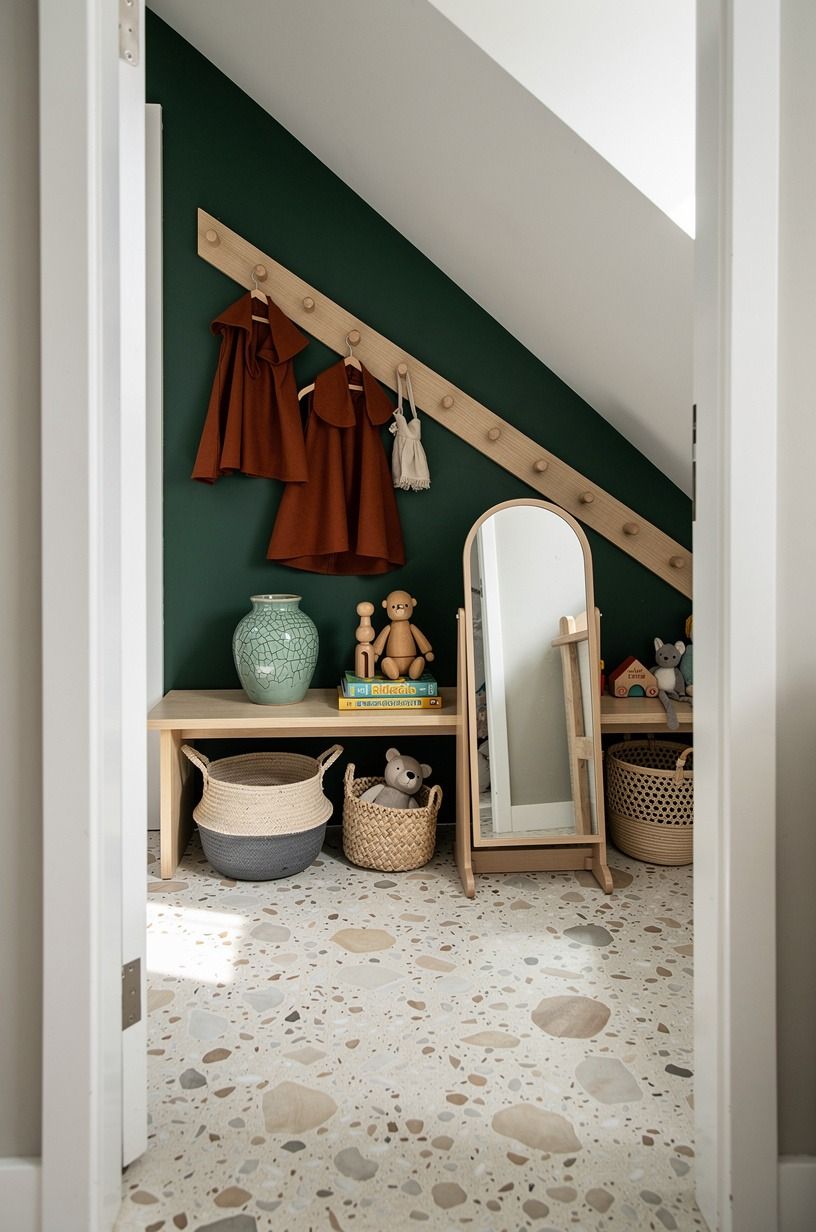
A peg rail is smarter than a closet rod under a stair slope because you can actually reach it, your kids can use it, and the wall becomes part of the play. Costumes shouldn’t live in a bin if you want them worn. They need to be visible, a little theatrical, and easy to grab in two seconds.
I love a rail in sage-painted wood with five or six pegs, mounted low enough that a preschooler doesn’t need help. Capes, a tiny straw hat, one dress-up bag, maybe a canvas tote for masks.
That’s enough. The Costume Grab-and-Go Rule is simple: if the outfit takes more than one motion to pull out, your child won’t bother.
And if you’re mixing play with smart hidden storage, this IKEA slider box idea is worth stealing for nearby cabinets.
But do not line the whole wall with hooks. Too many pegs become visual clutter, and clutter is what makes a small nook feel stressful instead of fun. One edited rail, one basket below, done.
7Layer washable rugs across the play zone
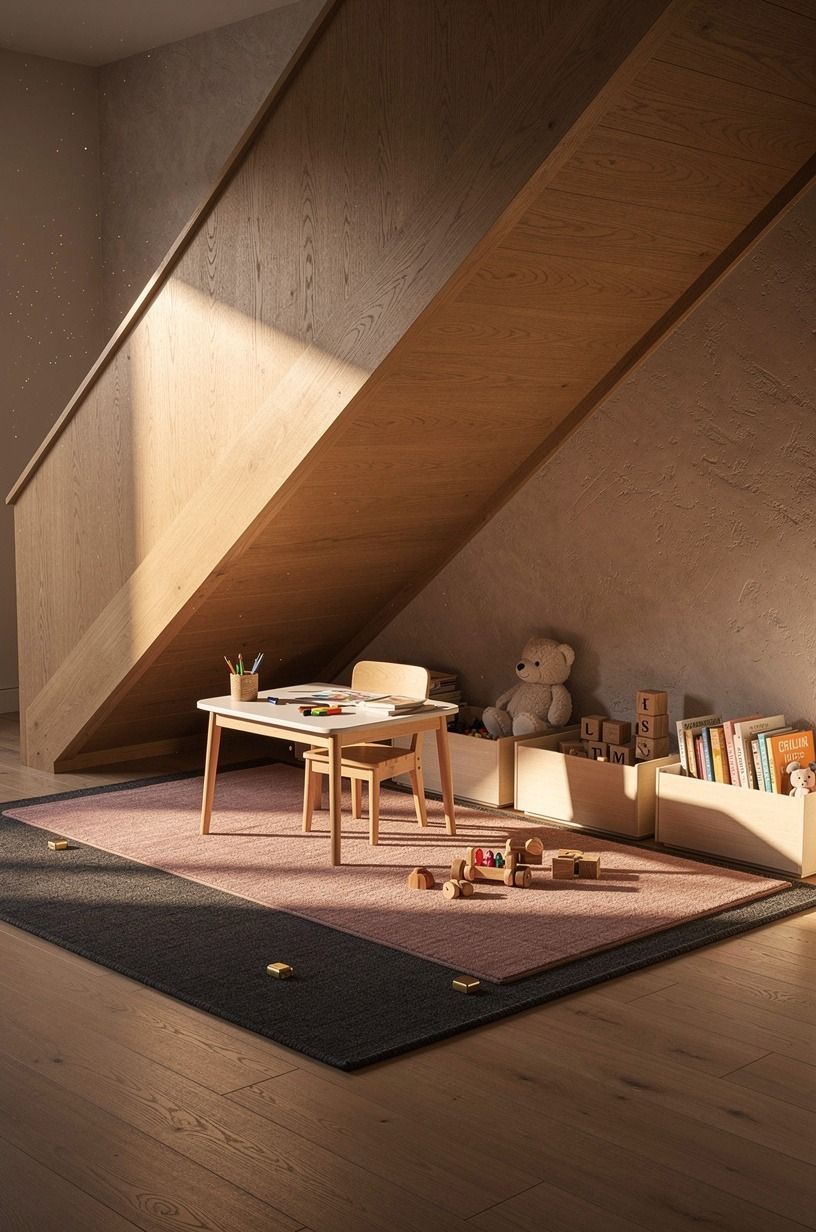
If the floor under your stairs feels choppy, cold, or louder than the rest of the room, rugs fix it faster than furniture will.
8Hang cafe curtains for a tucked-away nook
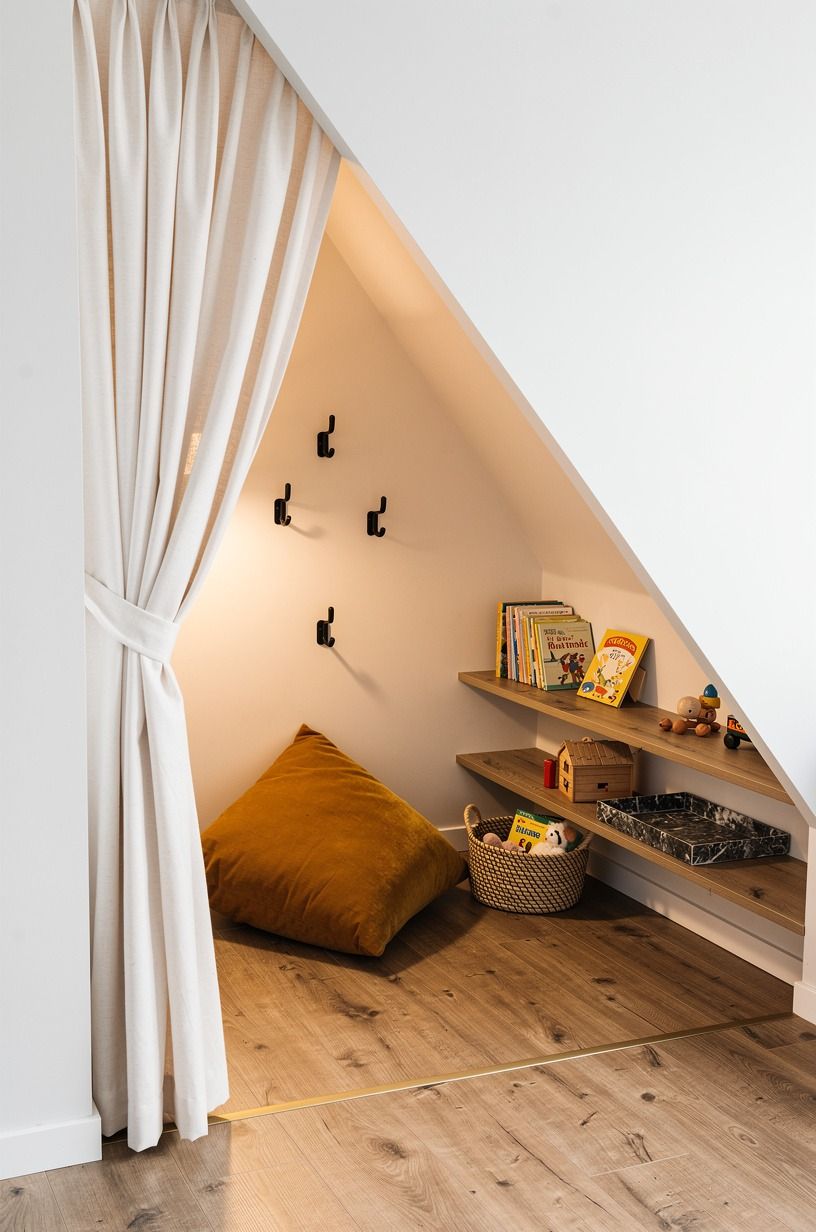
Cafe curtains make an under stairs kids nook feel private without closing it off, and that’s why they work better than a solid door in most family homes. You still get sight lines.
Your child still gets the thrill of a hideaway. Everybody wins.
Use a tension rod if you’re renting, or a slim brass rod if this is a longer-term setup. I would choose warm white linen blend panels that part in the middle, then let them skim just above the floor cushions so the opening stays light.
Camel cushions behind the fabric look richer than primary colors, and the whole thing feels calmer, gentler, and softer the second you step back. If you like rooms that feel tucked away on purpose, this hidden-door corner story is a good reminder that mystery works when the materials stay simple.
And please do not use blackout drapes here unless the nook doubles as nap space. Heavy panels can swallow a tiny opening. What you want is softness, not theater.
9Mount cloud shelves above toy bins
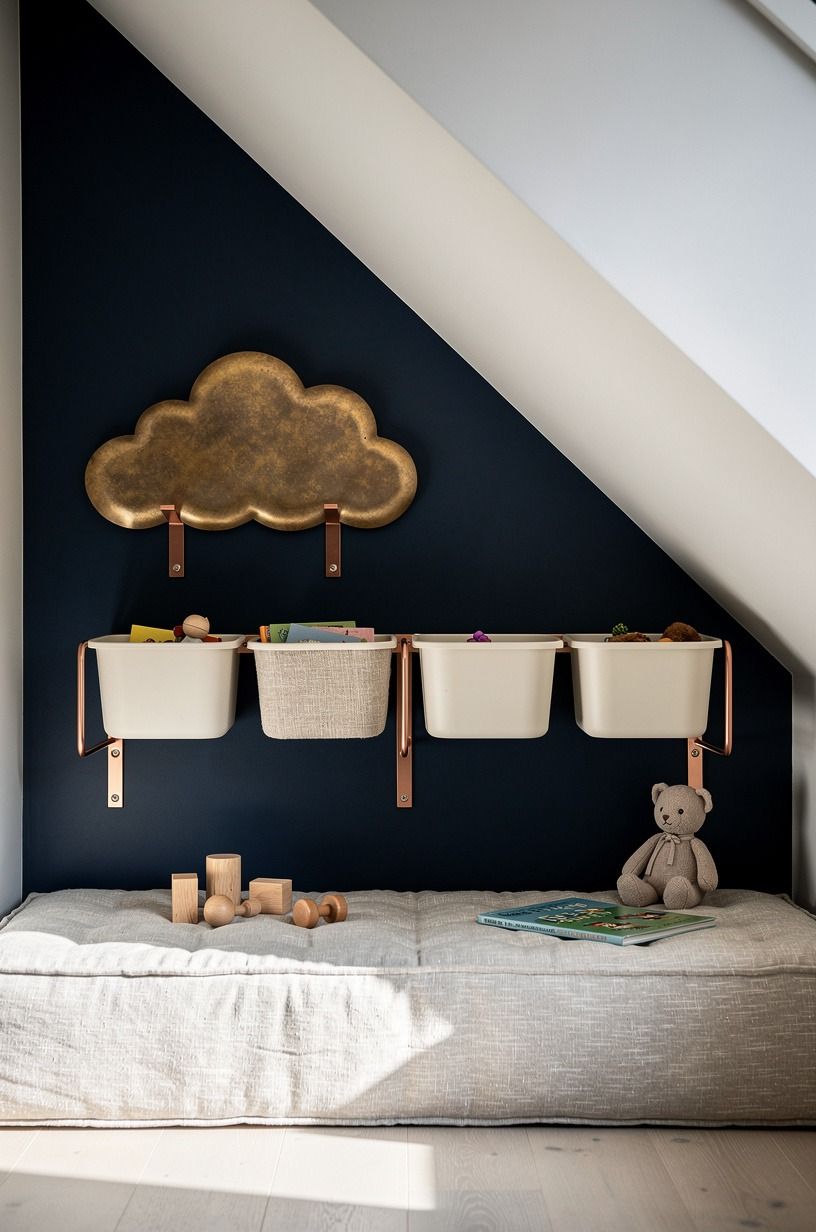
Wall storage should lift the eye, not weigh the nook down, so floating cloud shelves above bins are a smart move. They keep the floor clear, they echo a kid-friendly shape, and they make the vertical slice under the stair slope feel more playful than boxy. In a compact under stairs playroom turn, that lightness matters.
The Cloud-over-Bins Rule is one I come back to a lot: closed storage below, charm above. Put the hard-working toy bins on the floor.
Put the softer decorative objects up high. I would use white or pale wood cloud shelves over IKEA TROFAST bins, then keep the accessories edited to three or four pieces.
A pull toy, a small framed animal print, one wooden stacker.
But keep the lowest shelf high enough that the bins can slide freely and your child won’t bump their head leaning in. And if you’re trying to make several awkward areas of the house work harder, this music room storage corner shows the same open-above, practical-below balance.
10Frame a pretend shop window inside
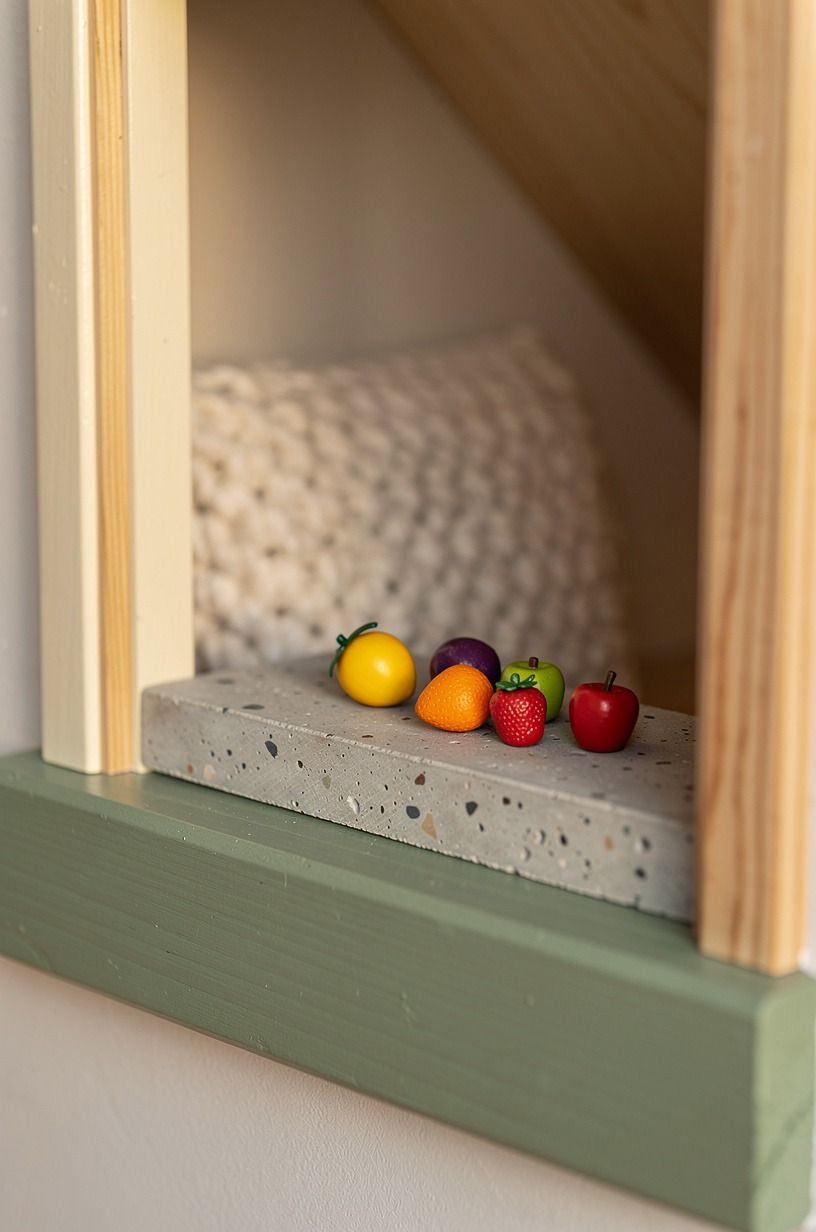
Instead of filling the whole nook with toys, give it a role.
11Wire soft sconces along the stair slope
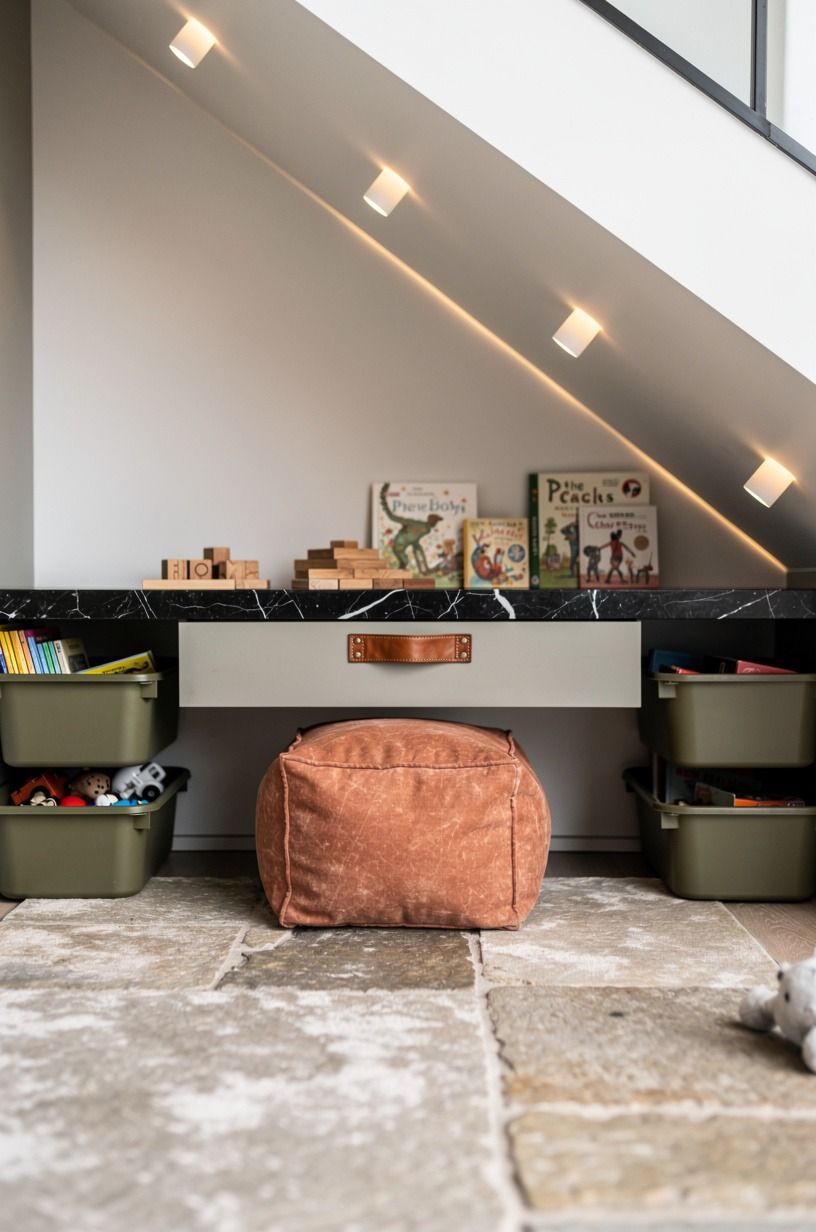
Lighting changes everything in a play nook under stairs because the ceiling line is already dramatic. If you ignore that slope, the space can feel dim and accidental. If you light it intentionally, the angle becomes the feature.
I like a pair of petite sconces mounted along the stair line with warm bulbs, nothing icy, and shades in aged brass or soft terracotta metal. This is the Three-Height Light Stack in action: low table lamp glow if you have room, mid-level wall light, and ambient room light outside the nook.
That mix keeps shadows from pooling in the back corner, and it makes books, bins, and wall color read correctly at night. The whole lighting plan should feel soft, romantic, and welcoming, the kind of glow your kid notices without naming it.
But do not buy oversized fixtures. Tiny nooks need tight proportions, and a giant sconce will boss the whole scene around. If you want another example of light doing more than furniture, the layering in this cabana-style small corner gets that evening warmth exactly right.
12What does rolling storage under the bench actually buy you?
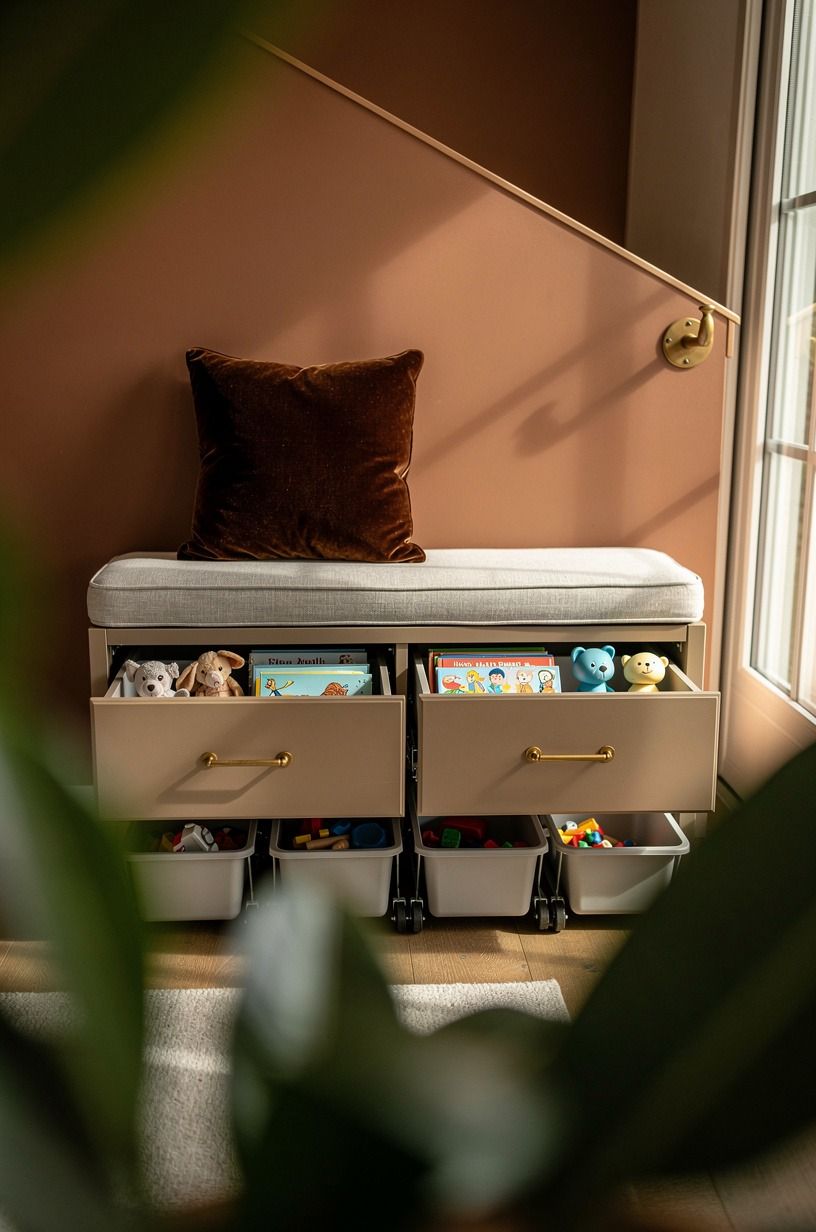
Bench seating is great under stairs, but only if the space under it earns its keep. Rolling bins are the answer because they disappear when parked and come out fast when your child wants blocks, paper, or train tracks. You do not have to choose between pretty and practical here.
I would build or buy a simple bench with enough clearance for low pull-out bins, then keep the front line clean so the nook still reads as furniture. A painted bench in Benjamin Moore Wickham Gray HC-171 with natural wood wheels looks grounded without going heavy.
If you want exact-category storage, label the sides you see only when the bin is pulled out, not the front. That’s how you keep the bench from feeling like classroom furniture.
And this is where I would spend money before splurging on decor. Hidden storage is what keeps the playroom usable after week one. For more ideas on making dead inches work harder, this IKEA pull-out storage fix is genuinely useful.
What Makes an Under-Stairs Playroom Feel Good Instead of Gimmicky
I’ve seen a lot of small kid spaces go wrong because adults treat them like mini movie sets. They add the cute door, the tiny table, the whimsical wallpaper, and then they wonder why the nook still doesn’t get used.
The problem usually isn’t style. It’s that the room doesn’t respect how kids actually move. If your child has to crouch awkwardly, pull out a jammed bin, or hunt for the one thing they want, the magic wears off fast.
What works is simpler and a little less precious. One clear identity for the nook. One strong backdrop color. One truly soft zone where bodies can sprawl.
One layer of reachable storage. One playful gesture that gives the space a story.
That’s enough. You do not need to fill every inch just because the footprint is small. In fact, I would argue the opposite: the best under-stairs playrooms feel edited, because the diagonal architecture is already doing half the visual work for you.
I also think parents underestimate how much material choice affects mood. Cerused white oak feels lighter than dark-stained wood in a tight wedge.
Warm white linen blend curtains soften the opening more than a painted door ever will. A washable rug in terracotta or dusty plum hides real life better than flat cream, and real life is the whole point.
Kids aren’t showroom clients. They’re dragging crayons, socks, doll shoes, snack crumbs, and half-finished stories into that nook with them.
The goal is for the room to feel elegant and serene even when it isn’t tidy, and a few warm, earthy materials are the shortcut to that.
And honestly, this is where I would save money on novelty and spend it on function. Better bins.
Better wall paint. Better lighting.
Better floor softness. The pretend bakery window is adorable, sure, but if the rug slides and the books fall and the costumes get buried, the adorable part won’t matter for long.
You can feel when a nook has been designed by someone who values the photo more than the child. I wouldn’t do that in my own house, and I do not think you should either.
The goal isn’t to make the space look expensive. It’s to make your child want to disappear into it for forty-five minutes while you drink coffee that’s still hot. That’s the real luxury.
The Questions Worth Answering First
What is the best Under-Stairs Playroom Ideas [Turn Dead Space Into Magic] for a small under stairs playroom turn?
The best one is usually floor cushions plus front-facing books because it gives you comfort and independence without crowding the footprint. I would pair a soft cushion nest with IKEA MOSSLANDA ledges so your child can reach books, settle in, and use the nook without constant help. If you want another small hidden corner to study, this under-stairs door idea is useful too.
Where can I buy Under-Stairs Playroom Ideas [Turn Dead Space Into Magic] pieces on a budget?
Start with IKEA, Target, and Wayfair for the basics, then check Facebook Marketplace for wood stools, kid chairs, and baskets. You do not need matching sets. A tension rod, washable rug, peg rail, and secondhand bins often get you most of the way there for less.
For another cheap-space example, this cabana corner roundup keeps the spending grounded.
How much does a Under-Stairs Playroom Ideas [Turn Dead Space Into Magic] makeover cost?
A small makeover usually lands around $150 to $600 if you’re painting, adding bins, and buying a rug or curtains. Mid-range versions can hit $1,000 to $3,500 once you add built storage or better lighting.
The free win is editing what you already own before you buy more. For storage-first planning, this IKEA pull-out guide helps.
Can I create a Under-Stairs Playroom Ideas [Turn Dead Space Into Magic] on a budget?
Yes, and you probably should because layout beats spending in a nook this small. Paint one wall. Reuse baskets you own.
Add floor cushions instead of furniture. A tension rod with cafe curtains and a few front-facing books can change the whole feel without a big checkout total.
It works fast!
Is a Under-Stairs Playroom Ideas [Turn Dead Space Into Magic] worth it in a small space?
Yes, it’s worth it because small spaces get better faster when every inch has a job. The key is keeping the center floor open, storage low, and decor edited.
A tiny footprint can feel more magical than a full playroom if your child can use every part of it. This music-room layout story proves how much purpose matters.
Is Under-Stairs Playroom Ideas [Turn Dead Space Into Magic] a good idea for a rental?
Yes, if you use low-commitment layers. Think removable hooks, a tension rod, freestanding bins, peel-and-stick accents, and ledges you can patch later. I would avoid built-ins and go heavier on rugs, curtains, and moveable storage so your setup can leave with you.
This second under-stairs door example is another smart low-footprint reference.
Where I would Start First
If I had to pick one, I’d start with the floor cushions in the lowest corner. Hard angles stop feeling awkward the second you make them soft, and that shift changes how your child uses the whole nook.
Pin that idea for later and save this storage follow-up. It pays off!