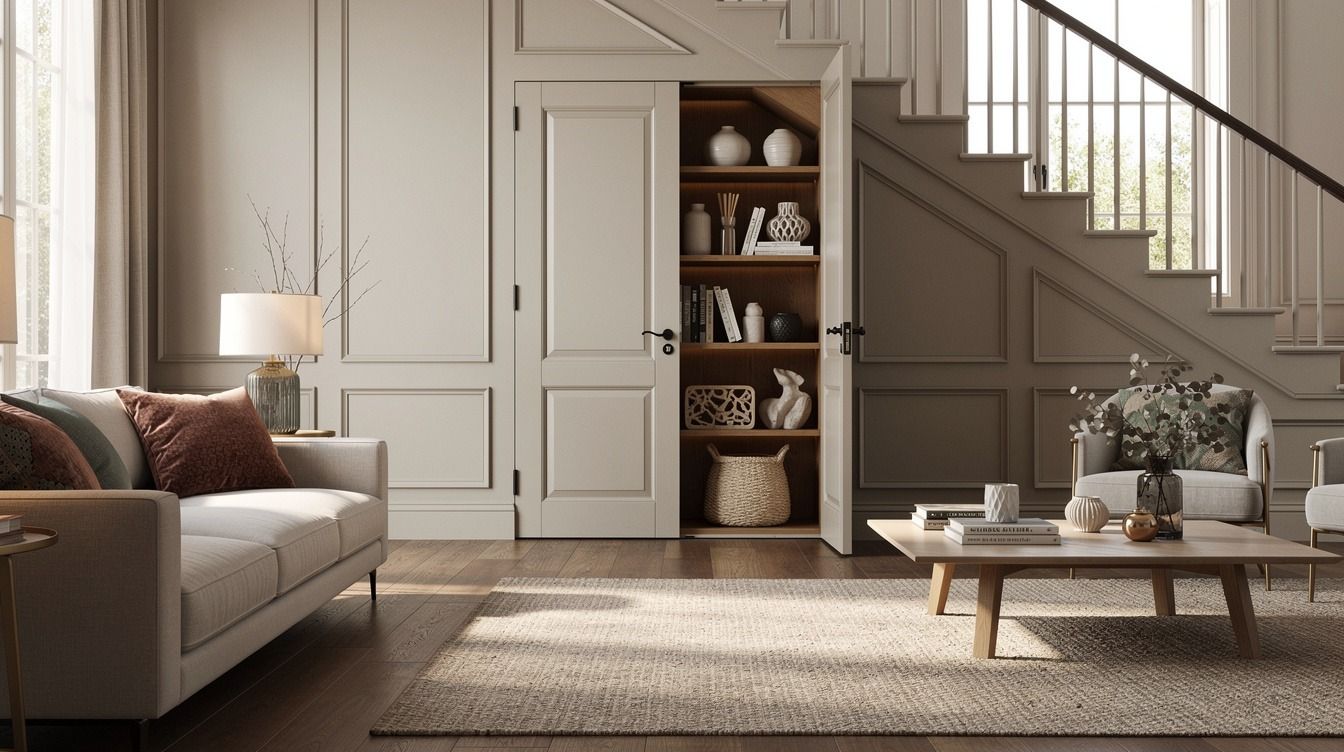
Easy hidden door under the stairs ideas work best when the door stops shouting for attention and starts behaving like part of your living room. I learned that after overthinking one awkward stair wall and making the seam more obvious with a fancy black handle. Turns out, the smartest version is usually quieter. If you want dead space to earn its keep, these are the moves I’d copy first.
- Disguise stair storage with shaker wall paneling
- Wrap the hidden door in picture-frame molding
- Blend a bookcase door into the stair wall
- Should you paint the door the trim color first?
- Add push-latch cabinets beneath the staircase
- Could a mirrored panel fix a dark stair wall?
- Continue wallpaper across the hidden stair door
- Frame the opening with built-in display shelves
- Will reeded wood survive daily family life?
- Panel the stair triangle with vertical slats
- Turn the door seam into shadow molding
- Style the reveal with a tiny bar nook
1Disguise stair storage with shaker wall paneling
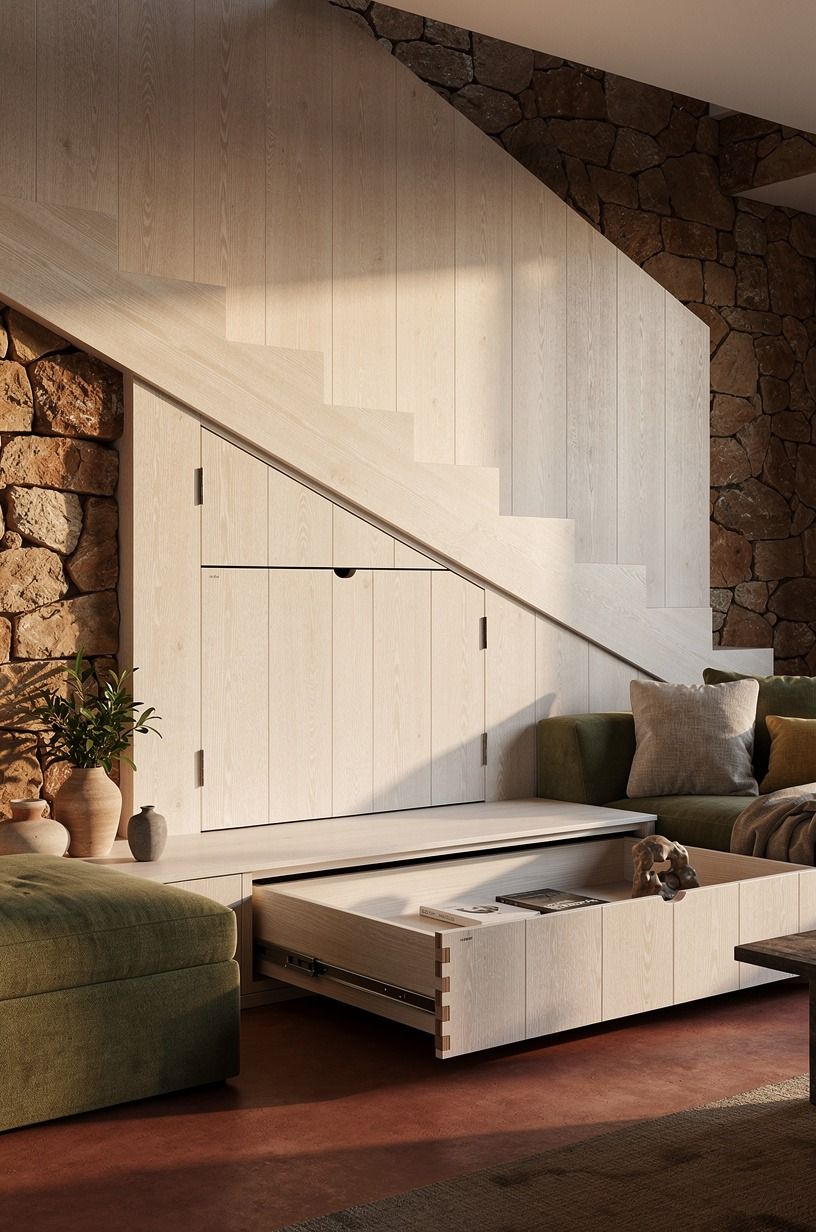
Start with the panel grid, not the door. If you map the full under-stair wall in cerused white oak proportions first, your eye reads the whole surface as architecture instead of a hidden storage door. That’s why this look works so well in a soft terracotta, stone, and olive living room: you get rhythm, warmth, and a seam that doesn’t announce itself every time you walk by.
I’d keep the rails slim and the center panel slightly taller than you’d expect so the stair angle feels intentional, not squeezed. You can pull the same calm effect into a more layered room if you study how hidden sliding door ideas for seamless space saving style handle alignment.
One panel profile. One paint or stain decision.
One latch. That’s enough.
And don’t add a visible knob unless you have to. A push latch keeps the under-stair triangle clean, and your living room furniture gets to stay the star.
If your palette leans earthy, Sherwin-Williams Evergreen Fog SW 9130 on nearby built-ins plays beautifully with white oak and terracotta plaster. Worth it!
2Wrap the hidden door in picture-frame molding
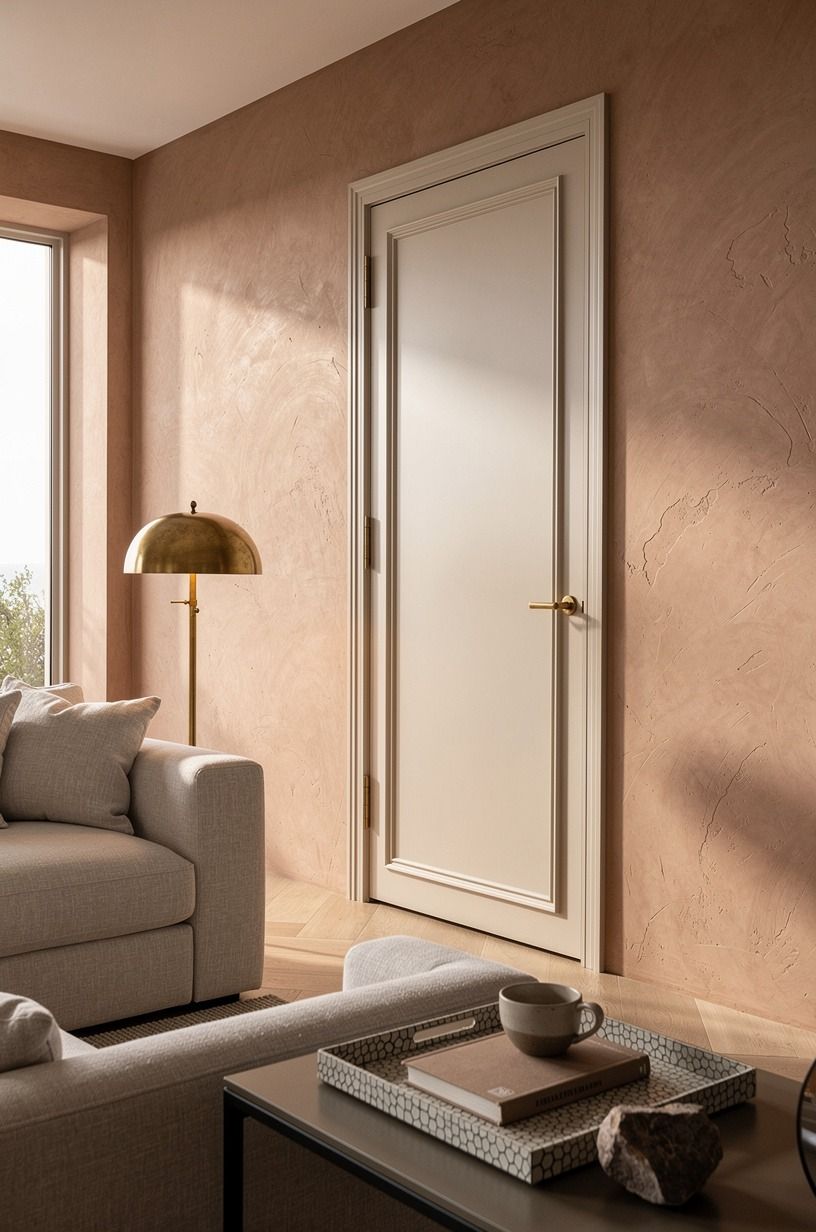
Frame the disguise instead of trying to erase it completely. Picture-frame molding gives you a reason for the off-center panel, which matters when the hidden doorway sits beneath a long stair run with generous negative space on one side.
Your eye loves a border. Give it one, and the door stops feeling like a mistake the builder forgot to solve.
I like this best when the molding profile is crisp but not fussy, something close to what you’d see around a traditional Benjamin Moore Revere Pewter HC-172 living room with walnut accents. If you’re unsure how ornate to go, study the restraint in tv wall with hidden door ideas conceal a whole room. The trim tells the story, not the hardware.
But here’s the part people skip: keep the reveal gaps even all the way around. If one side drifts, the room looks custom in the wrong way. A narrow shadow line, a matte finish, and a handle you can’t see from the sofa.
That’s the win. Restraint reads more elegant than a fussy profile, every time.
3Blend a bookcase door into the stair wall
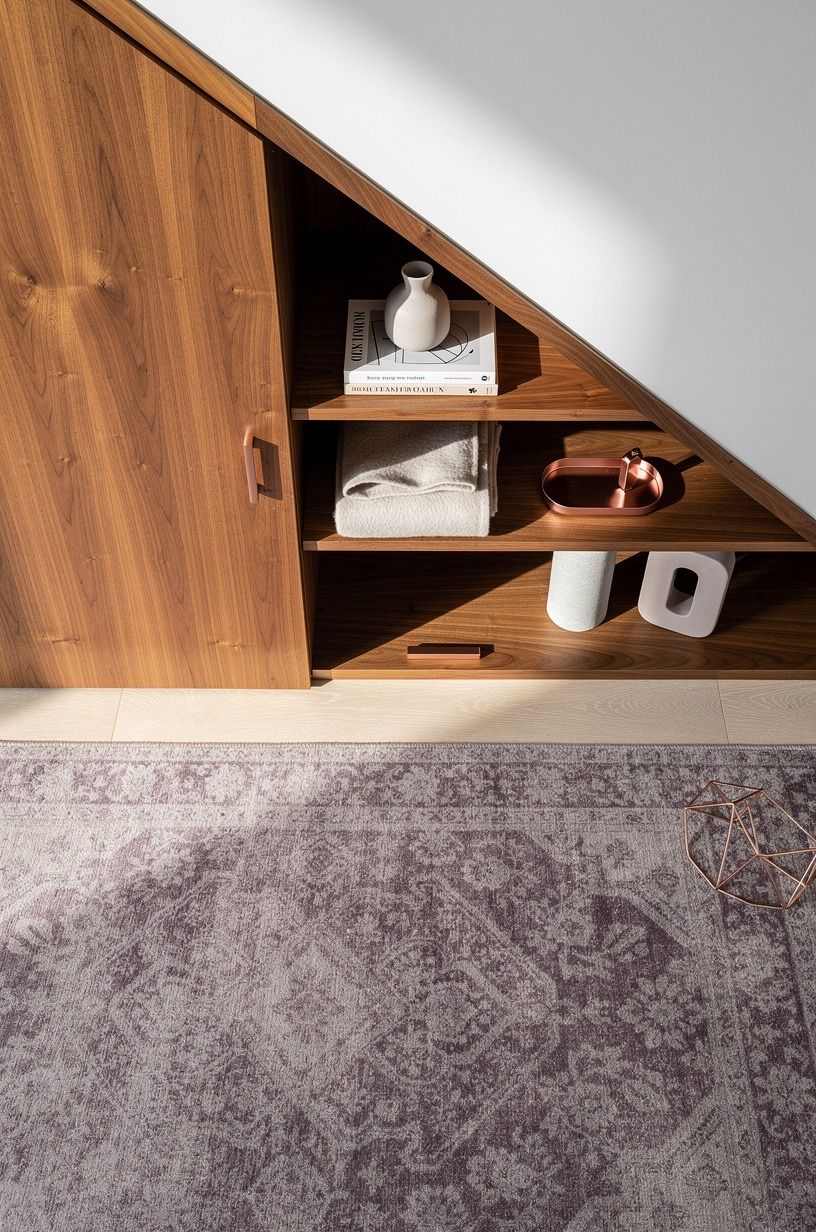
Build the shelves for the room first, then let one bay open. That’s how a hidden bookcase door feels believable under the stairs instead of theatrical. In a living room with book-matched walnut veneer shelves, the grain does half the work for you because the eye follows the wood pattern before it notices the hinge line.
You don’t need deep shelves here, either. A 10 to 12 inch depth is enough for books, small art, and storage boxes, and it won’t crowd a small seating area.
I made the mistake once of going too chunky under a stair triangle, and the whole zone started to feel heavier than the sofa. If you like the idea of concealed storage that still feels tailored, hidden basement door ideas disguise the stairs shows the same logic in a more architectural way.
Style lightly. A stack of paperbacks. One aged bronze picture light.
A small bowl in honed stone. That’s plenty. If every shelf is packed, your hidden door becomes a moving headache, and you’ll stop using it.
Breathing room is the whole point. Worth keeping the styling edited.
4Should you paint the door the trim color first?
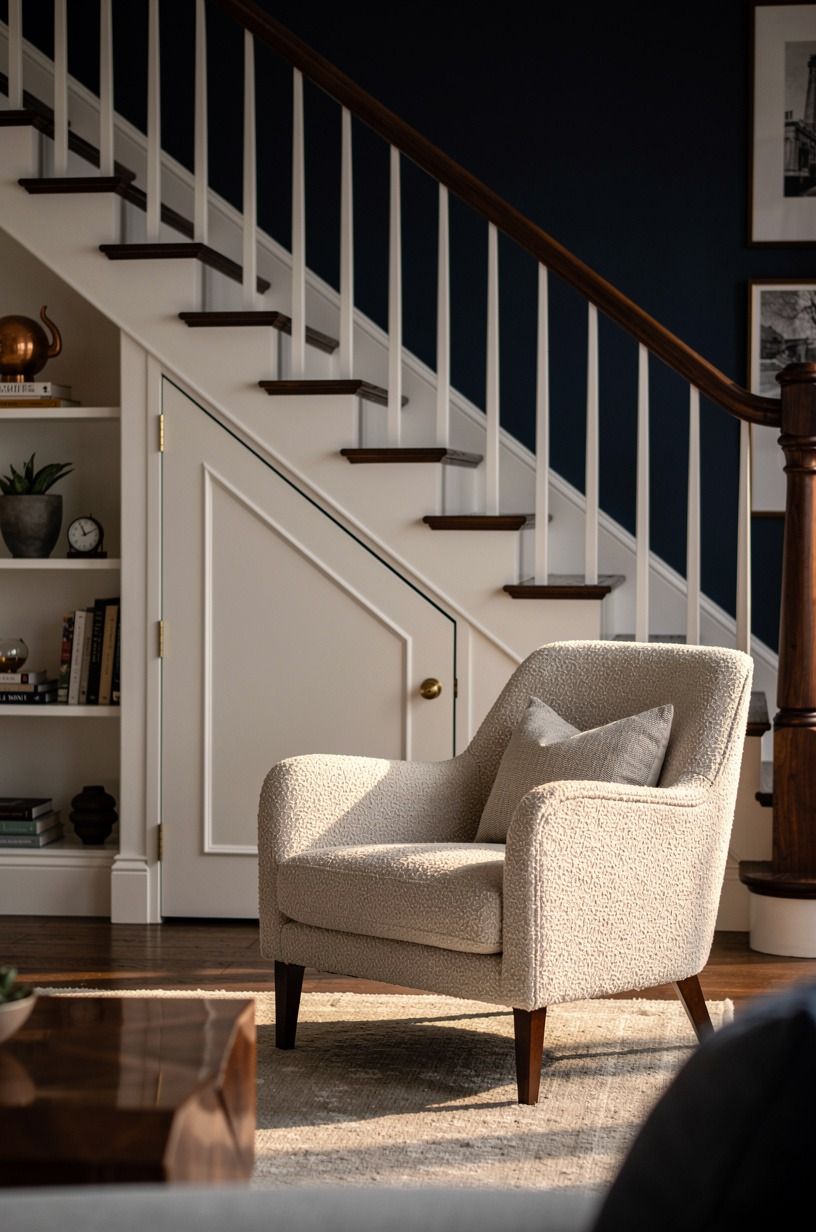
Paint is the cheapest fix here, and it’s often the cleanest.
5Add push-latch cabinets beneath the staircase
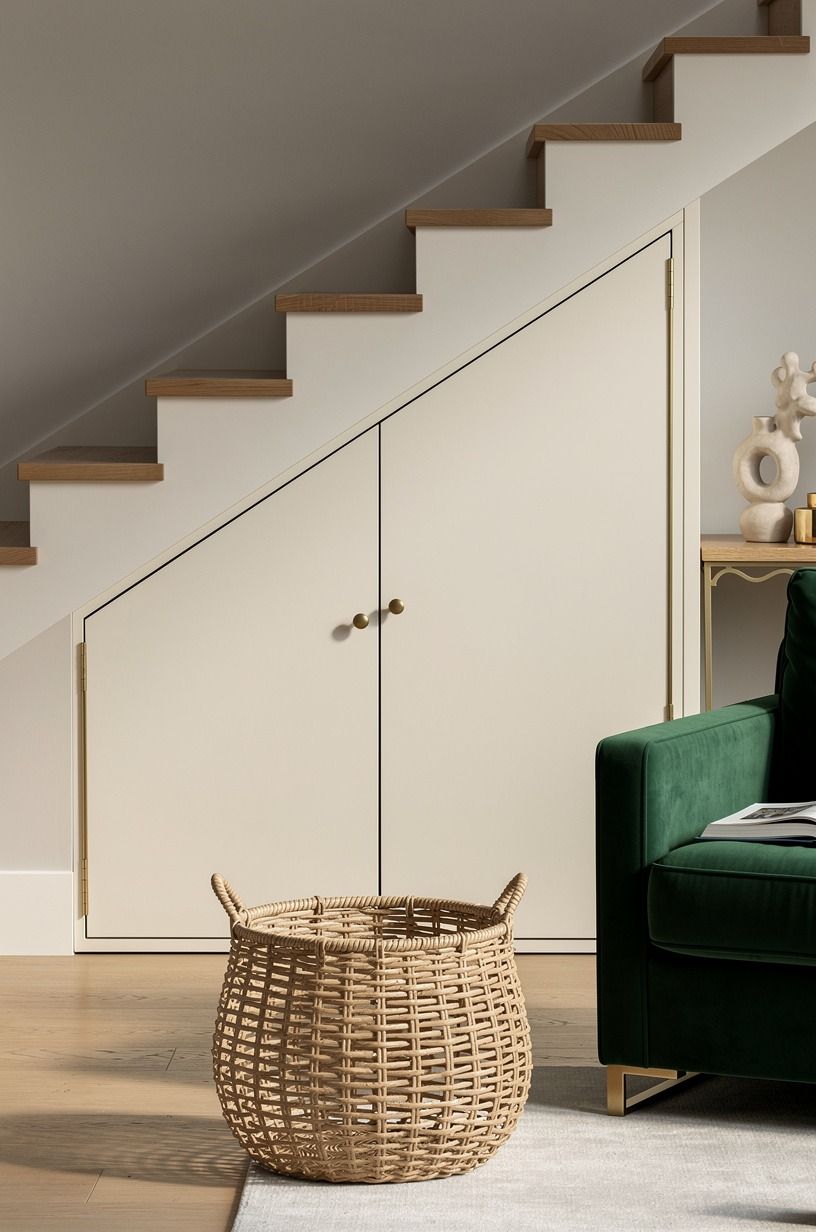
Skip one big door if your storage needs are messy. Smaller push-latch cabinets often work better beneath a long stair run because you can divide the dead space by use, and the fronts stay neat in an airy living room. Cream cabinet faces against emerald upholstery and pale oak floors look soft and inviting, but the real win is practical: you don’t have to swing one giant panel every time you need batteries or board games.
I’d lay out one cabinet for throws, one for kid clutter, and one for the ugly stuff you never want in open view. The same idea shows up in 5 cozy cabana corner ideas that turned my dead space into a boutique hotel nook for under 100, where dead space starts working only once each zone has a job. Push latches matter here because visible pulls can break the illusion fast.
But don’t make every face identical if the stair slope gets tight. A slightly narrower end cabinet often looks more intentional than forcing equal widths where they don’t belong.
And yes, you’ll thank yourself later when the clutter has somewhere to go! Worth the splurge on soft-close hardware, by the way.
6Could a mirrored panel fix a dark stair wall?
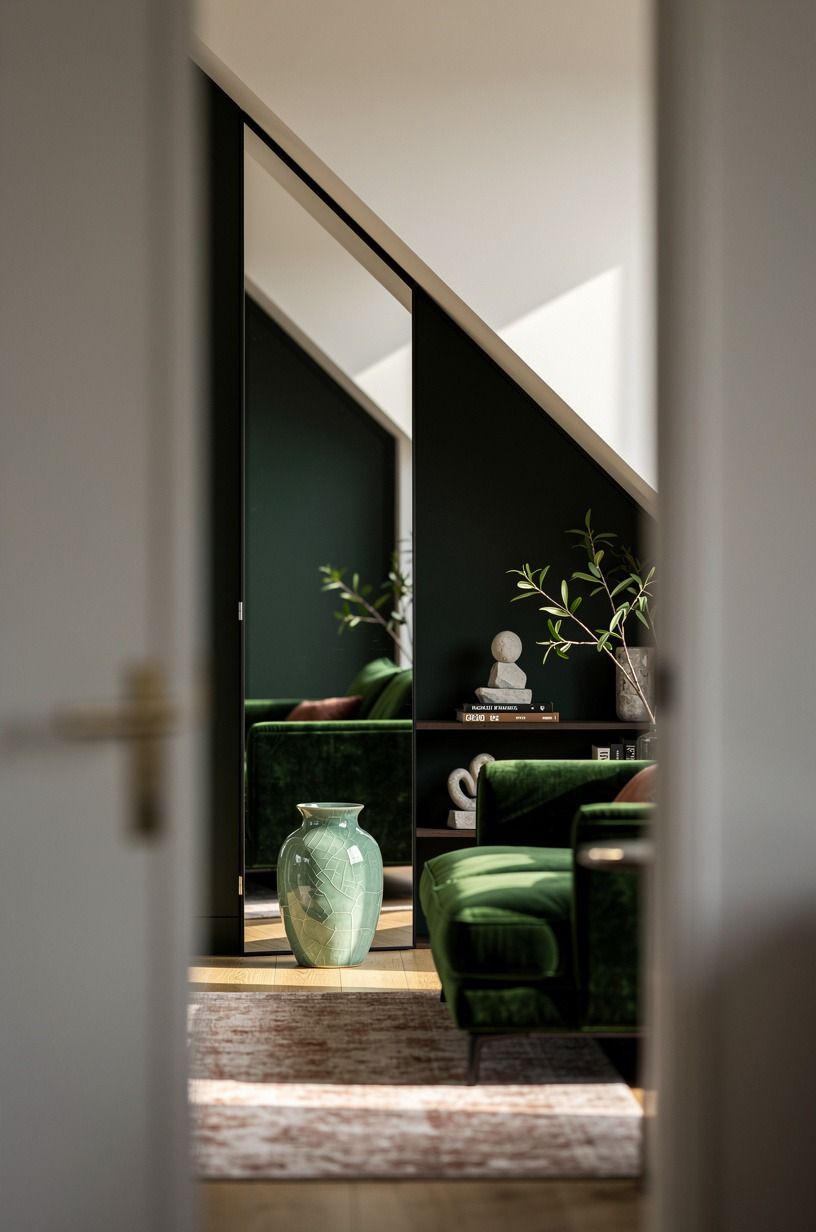
Use reflection when the room is short on depth.
7Continue wallpaper across the hidden stair door
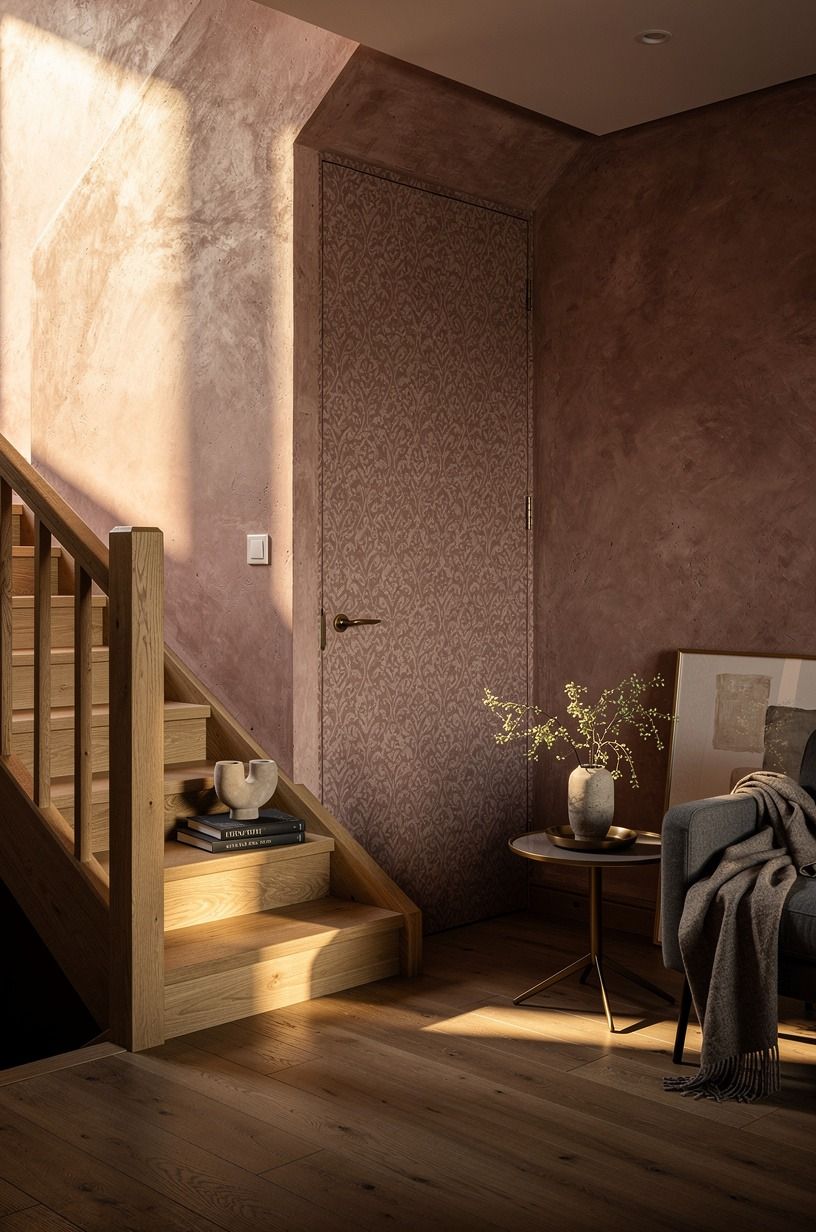
Run the wallpaper straight over the hidden door and let the pattern carry the disguise. This works best when the staircase stays visible and the panel sits a little off-center, because a repeated print distracts from the seam better than a solid color does. You want the wall to read as one field, not one door plus some leftover wall.
I like a print with motion here, something botanical or a small geometric that isn’t too contrasty. Too bold, and the seam turns into a puzzle people try to solve.
A soft olive pattern paired with Farrow & Ball Hague Blue No.30 on the nearby millwork gives you depth without making the under-stair angle feel busy. For another lesson in using surface treatment as camouflage, hidden door ideas for the living room is worth a look.
And line up the motif before you glue anything down. I rushed peel-and-stick once, and the half-drop mismatch was all I could see from the sofa.
Not subtle. Not charming.
Just annoying. Pattern matching is the detail that makes or breaks the whole move. Take the extra hour.
8Frame the opening with built-in display shelves
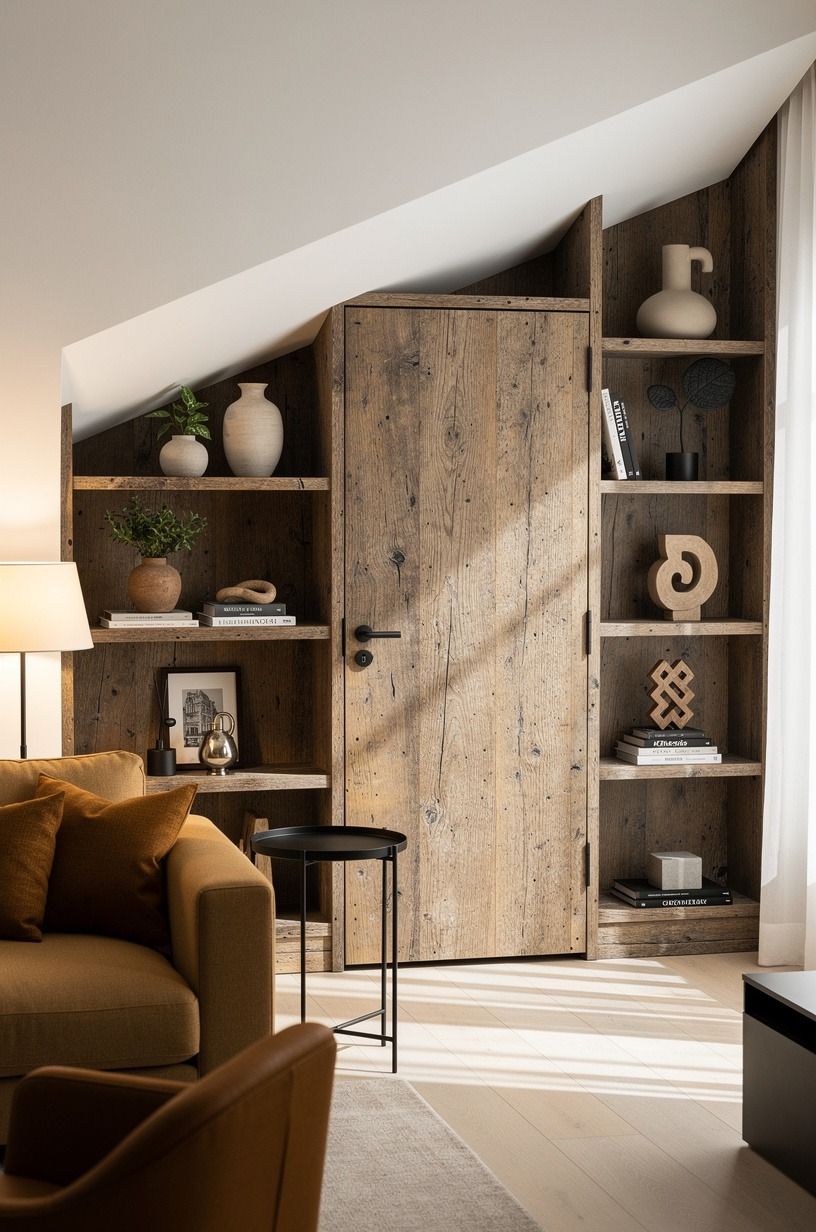
Build around the door, not across it. When reclaimed weathered teak display shelves frame the opening at one side of the living room, the hidden panel feels like part of a built-in composition instead of a weird leftover triangle. That matters if you want the under-stair zone to feel valuable, not merely clever.
Use the shelves to set scale. Taller objects at the outside edge.
Lower objects near the opening. A basket on the bottom.
Two or three books turned face-out. If you’re balancing a sofa nearby, remember the basics that keep a living room from feeling off: sofa depth often lands around 35 to 40 inches, and your coffee table usually wants to be 16 to 18 inches tall and about two thirds the sofa length.
The hidden door works better when the whole room feels resolved. TV wall with hidden door ideas that conceal a whole room uses that same built-in logic, minus the heavy millwork.
But don’t over-style every shelf. One CB2 Primitivo bouclé stool nearby, one ceramic lamp, one framed sketch.
The door should feel usable. If you need to move fifteen objects just to open it, you built yourself a problem.
9Will reeded wood survive daily family life?
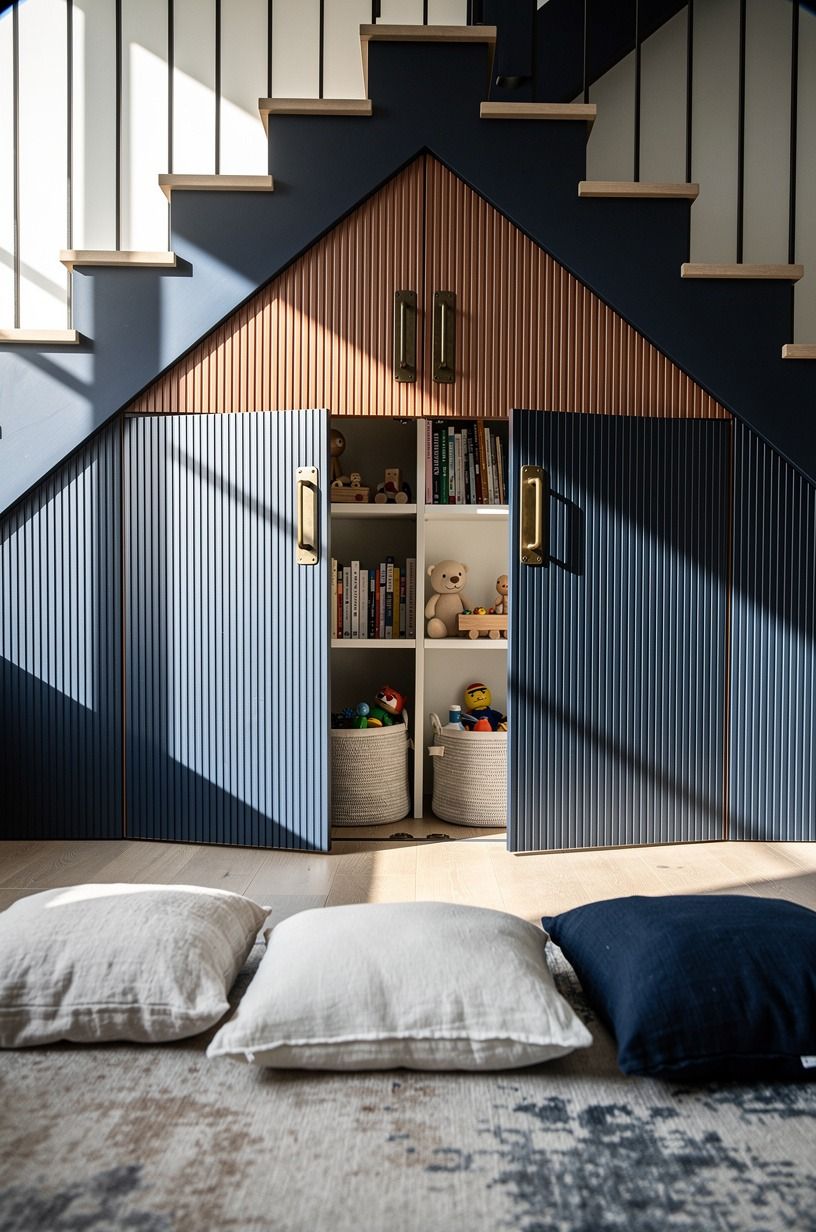
Go tactile when you need the storage to survive real life.
10Panel the stair triangle with vertical slats
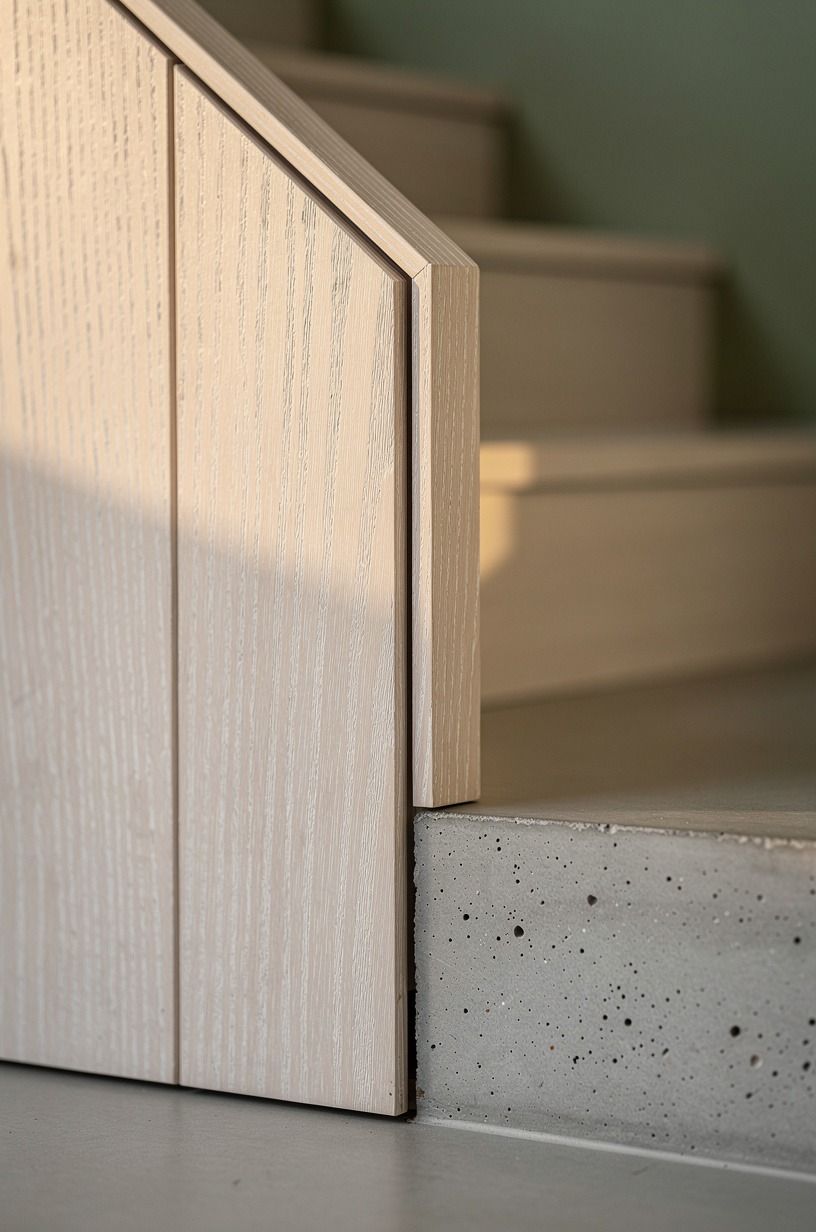
Let the grain become the disguise. Vertical cerused white oak slats pull the eye upward, which helps a hidden storage door disappear inside the stair triangle instead of reading as one flat panel cut into another. In a room with warm plaster walls and soft upholstery, those slim slats add texture without asking for attention.
This is one place where precision matters more than material cost. If the spacing wanders even a little, the seam starts glowing.
I’d rather use a simpler oak veneer with perfect alignment than an expensive hardwood installation with sloppy gaps. For a related look at turning seams into design, hidden basement door ideas disguise the stairs proves that repetition can be more powerful than ornament.
And keep the slat depth modest. Too proud of the surface, and you’ll catch sleeves, dust, and side light in all the wrong ways. Tight, calm, architectural. That’s the vibe.
11Turn the door seam into shadow molding
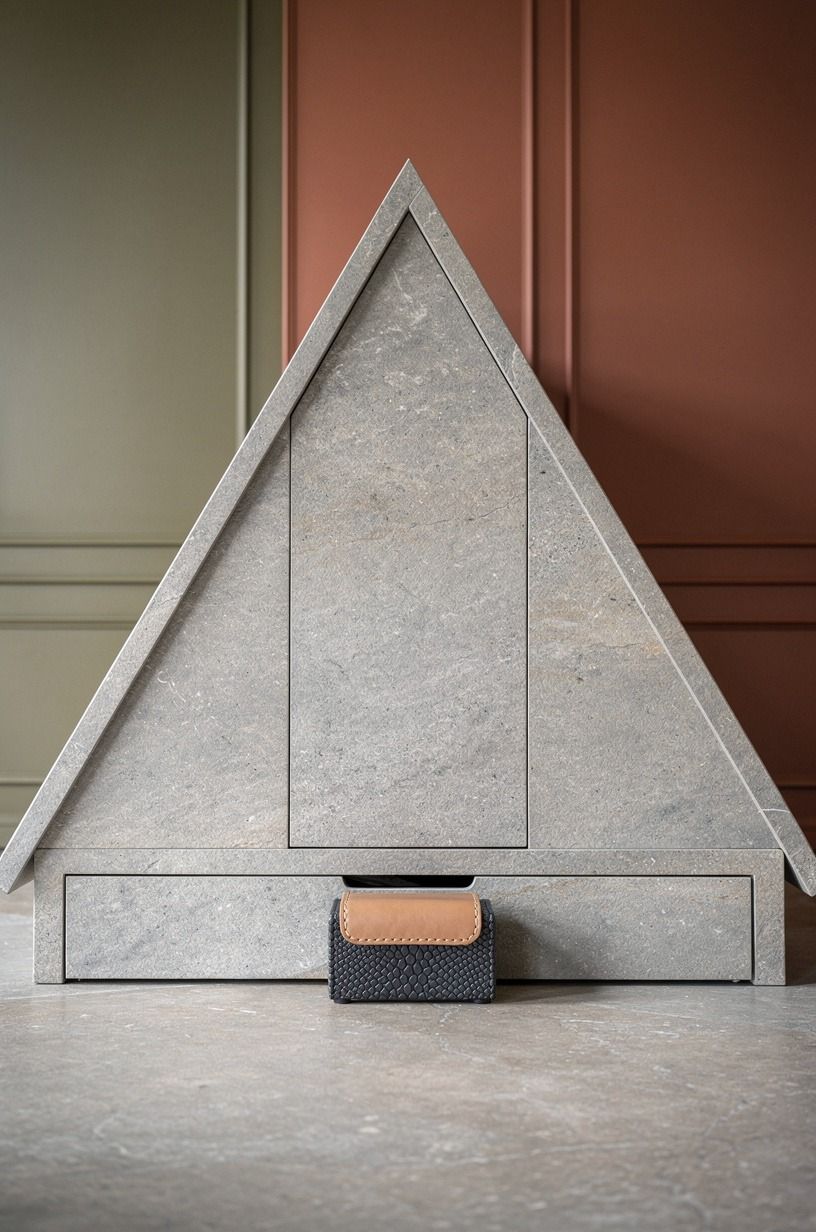
Don’t fight the seam. Give it a job.
Shadow molding lets the reveal line read like deliberate trim, especially in a stone-toned living room where terracotta and olive already create soft contrast. Instead of pretending the under-stair hidden door has no edge, you make that edge part of the architecture.
I love this in old-house style spaces that need a little discipline. A narrow recessed molding detail around the panel can look richer than a chunky applied frame, and it doesn’t interrupt the visual weight of the stair triangle.
If you respond to subtle concealment more than obvious paneling, hidden cabinet storage door ideas makes the same point on a larger wall plane. Sometimes the smartest move is the one nobody notices, and that timeless restraint is what makes the wall feel elegant for years instead of a year.
But here’s the catch: your painter has to respect the line. Too much caulk and the whole idea dies.
A crisp reveal, a matte finish, and light that skims across the wall. Done.
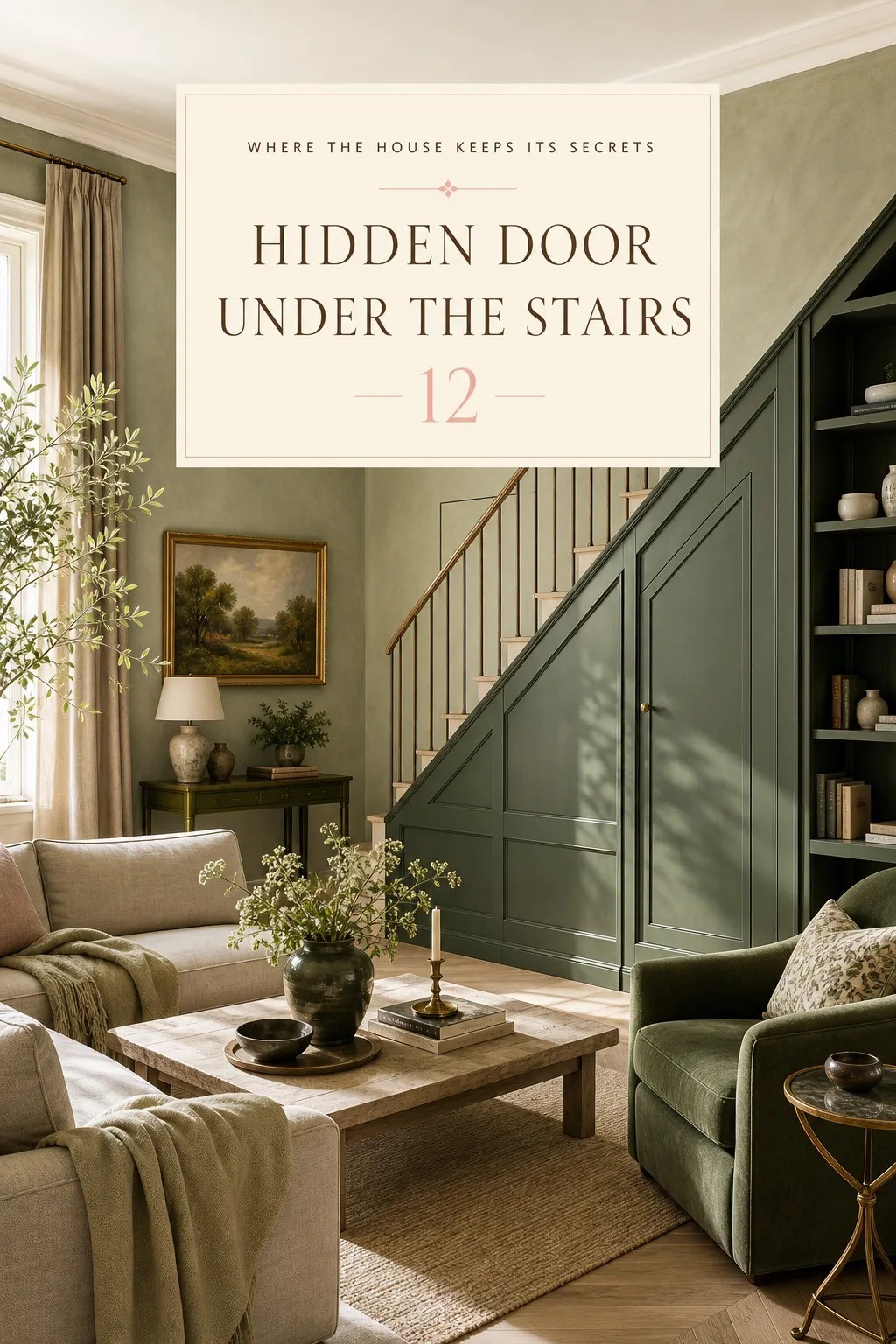
12Style the reveal with a tiny bar nook
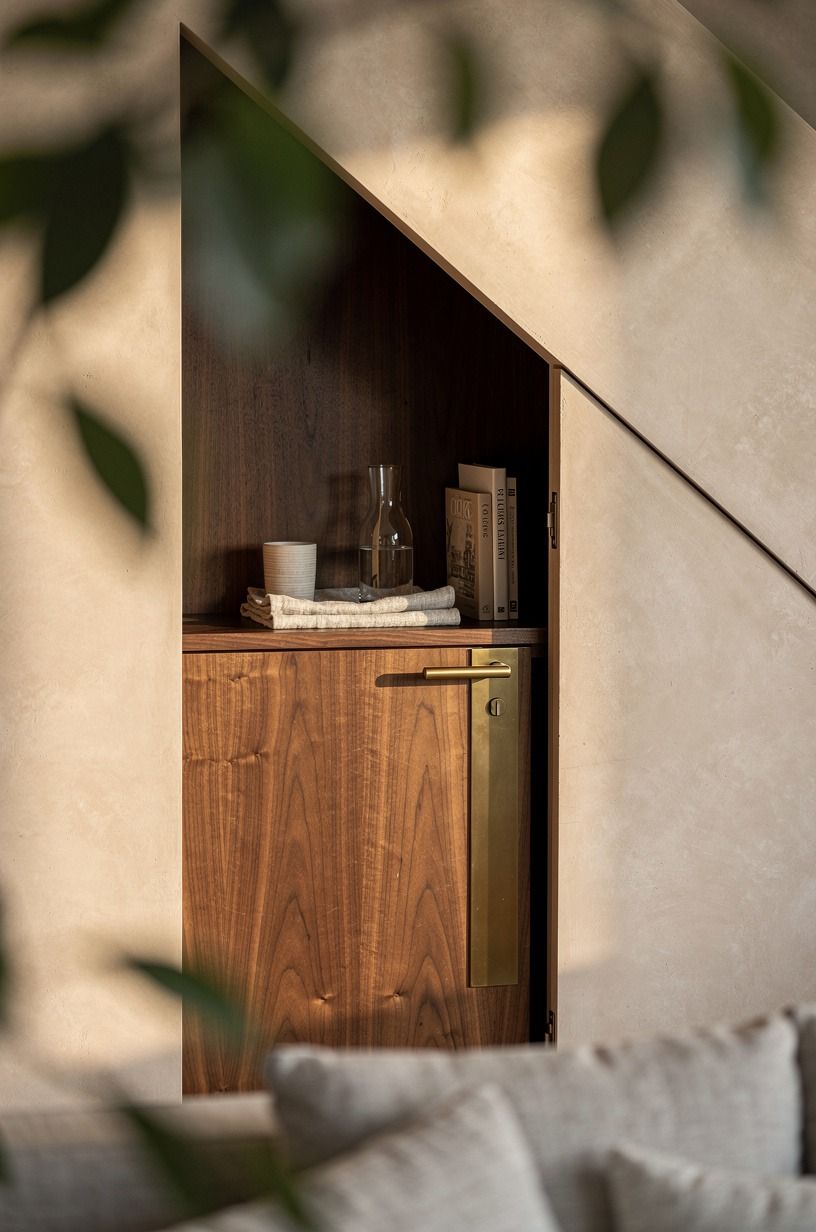
Open the hidden door and give the space a payoff. A tiny bar nook under the stairs feels special because the disguise sets up the reveal, then the interior hits you with walnut, a compact counter, and one aged brass sconce. It’s a small-space move that feels generous if you keep the inside edited.
I’d copy boutique-hotel logic here. One walnut shelf.
Two good glasses. A tray in honed stone.
Maybe a small lamp if you have power inside (that warm glow matters more than people think). If you want more layout ideas for the inside of the nook, TV wall with hidden door ideas that conceal a whole room is a smart sister read for concealment details. And if you’re torn between bar storage and a full hideaway, hidden basement door ideas disguise the stairs 2 gives you another way to think about the reveal.
I wouldn’t cram bottles all the way to the top shelf. Negative space is what makes a tiny nook feel expensive. Leave breathing room, let the brass arm cast a warm pool of light, and the whole under-stair corner starts pulling more weight than square footage suggests.
So good!
The Quiet Seam Rule for Under-Stair Doors
If you want this project to feel expensive without spending like crazy, limit the visible palette around the door to two major finishes plus one accent. That’s it.
White oak and plaster, then aged brass. White trim and walnut, then olive linen.
Once you pile on a fourth competing finish, the hidden part stops being hidden because your eye starts checking every transition.
Here are the living-room budget ranges worth keeping in mind before you start buying random pieces that don’t solve the seam:
A hidden under-stair door doesn’t need the high tier to look thoughtful. Most of the time, you need the budget tier plus restraint.
Paint, one latch system, and materials that already belong in your living room. That’s the part that worked for me.
Why The Quiet-Seam Rule Beats a Fancy Door
Here’s my honest take: most under-stair hidden doors fail because people chase the reveal and ignore the room. I get the temptation.
A mirrored panel, dramatic hardware, maybe a bold paint moment. But if the surrounding living room isn’t settled first, the door becomes the loudest thing in the shot, and loud is usually the opposite of elegant.
What I’d do instead is build from the room inward. Start with the furniture scale. A sofa that’s 35 to 40 inches deep gives you enough comfort without bullying the circulation path near the stairs.
Then anchor the seating with an 8×10 or 9×12 rug so the front legs sit on it and the under-stair wall feels connected to the rest of the room. Only after that would I decide whether the hidden door wants paneling, trim color, or wallpaper. Nobody tells you this, but a hidden door isn’t really a door problem.
It’s a proportion problem.
I learned that after trying to fix one awkward stair triangle with details alone. I changed the latch.
I changed the molding. I even swapped the sconce.
Nothing helped because the sofa was too deep for the room and the coffee table sat too high, around 19 inches, so everything near the stair felt cramped and bossy. Once I corrected the layout and brought the table back toward the 16 to 18 inch range, the door suddenly stopped looking strange.
Same wall. Same seam.
Completely different read.
And that’s why I’d skip flashy hardware almost every time. You don’t need a hidden doorway to prove it’s hidden. You need it to feel inevitable, like it belonged there before you moved in.
The timeless version of this idea isn’t ornate. It’s controlled. Fewer finishes. Better alignment.
One smart reveal, then quiet confidence. That’s what holds up after the first week, and it’s what keeps the living room feeling warm in fall instead of gimmicky by winter.
A Few Things Worth Answering
What is the best Hidden Door Under the Stairs [Unlock Dead Space] for a small living room?
The best option for a small living room is usually a trim-matched or mirrored door because both keep the wall visually light. More visual space is the payoff.
I’d pick mirrored if your room is dim, and painted trim color if your room already has enough light but needs calm. Hidden sliding door ideas for seamless space saving style shows that same low-bulk logic in another format.
Where can I buy Hidden Door Under the Stairs [Unlock Dead Space] pieces on a budget?
Start with IKEA, Target, and Wayfair for push latches, slim shelving, baskets, and simple sconces. Lower styling cost is the main benefit. Facebook Marketplace is great for wood bookcases you can rework, and thrift shops are still good for trays, glassware, and small lamps.
How much does a Hidden Door Under the Stairs [Unlock Dead Space] makeover cost?
For a living-room level refresh, the typical budget tier runs about $300-$1,200. Paint does a lot of the heavy lifting at the low end. Mid-range layered furniture and lighting usually lands around $2,500-$8,000, while custom millwork pushes you into the high tier fast.
Can I create a Hidden Door Under the Stairs [Unlock Dead Space] on a budget?
Yes, and you really can keep it modest if you focus on disguise first. Cheap upgrades can still look tailored. Paint the panel the trim color, add a push latch, and restyle the area with baskets or a lamp you already own before you buy custom anything.
Is a Hidden Door Under the Stairs [Unlock Dead Space] worth it in a small space?
Yes, especially in a small space, because the dead zone under the stair is already paid for. Better function without adding bulk is why it’s worth it. Keep the door flush, avoid deep pulls, and make sure nearby seating still clears the opening comfortably.
Is Hidden Door Under the Stairs [Unlock Dead Space] a good idea for a rental?
Yes, if you keep the changes reversible. Rental-friendly camouflage can be as simple as peel-and-stick wallpaper, removable mirror film, or freestanding shelving near the stair wall. I’d avoid cutting new trim, and I’d use damage-light hardware only if your lease clearly allows it.
Where I’d Start First
If I had to pick one, I’d start with painting the under-stair door the trim color. You can’t hide a seam with gadgets if the wall already feels chopped up. Pin that move for later and then read hidden sliding door ideas for seamless space saving style.
One Saturday, one can of paint, and the whole stair triangle starts behaving.