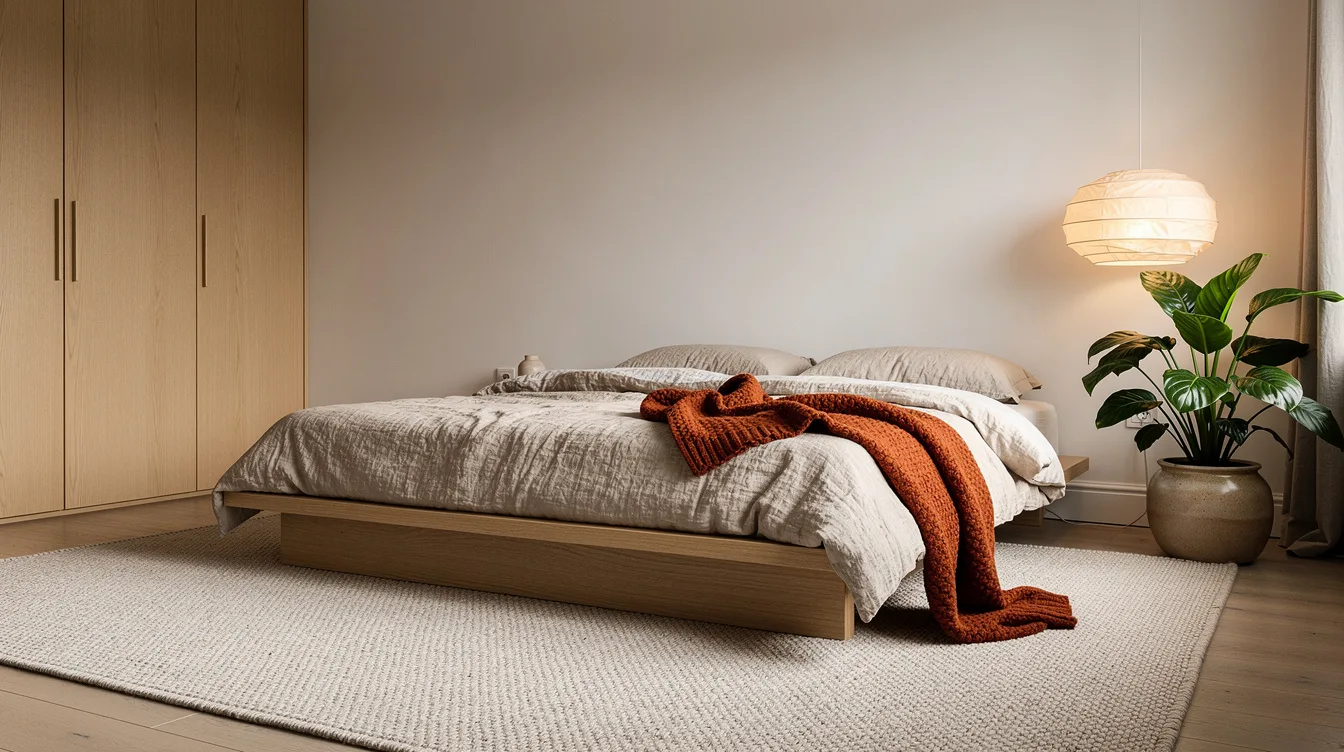
I learned this style the hard way after trying to force calm into a bedroom that still felt visually noisy at the end of every day. Once I started treating my roughly 12-by-14-foot room like a space that needed breathing room, not more decor, the whole thing clicked.
What actually worked was simpler than the mood boards: a low bed, warm neutrals, hidden storage, and a few natural textures that felt good in real life. I didn’t need a total reset, but I did need to stop letting every surface ask for attention.
Lower the bed and open up the floor
The first change was the one I resisted most: I swapped my taller frame for a low-profile bed, and the room instantly felt quieter. A platform that sits around 9 to 12 inches high, with the mattress landing about 18 to 20 inches off the floor, gives Japandi its grounded look without feeling like you’re sleeping on a mat.
I kept the frame simple in a light oak veneer bed style, the kind you can usually find at IKEA for about $130 to $400 depending on size. I’m convinced this matters more than a fancy headboard, because visual height is what makes a small bedroom feel busy.
I also protected the walking space around it. In a typical bedroom, leaving about 24 to 30 inches on each open side makes the whole layout breathe, and Japandi falls apart fast when furniture is squeezed wall to wall.
Cut the palette down to warm neutrals
I stopped trying to make the room interesting with color, and that was the fix. Japandi works best when the palette stays close to warm beige, off-white, greige, soft clay, or muted sage, with black used in tiny doses only.
My bedding started looking better the minute I replaced bright whites with washed linen in oatmeal and sand. I’ve found solid basics at Target and Wayfair for around $40 to $120 per set, and honestly, the slightly imperfect texture looks better than crisp hotel-style sheets here.
Paint matters too, but restraint matters more. One calm wall color and repeated neutrals across the rug, curtains, and bedding will do more than five trendy accent shades ever will.
Build storage that disappears into the wall
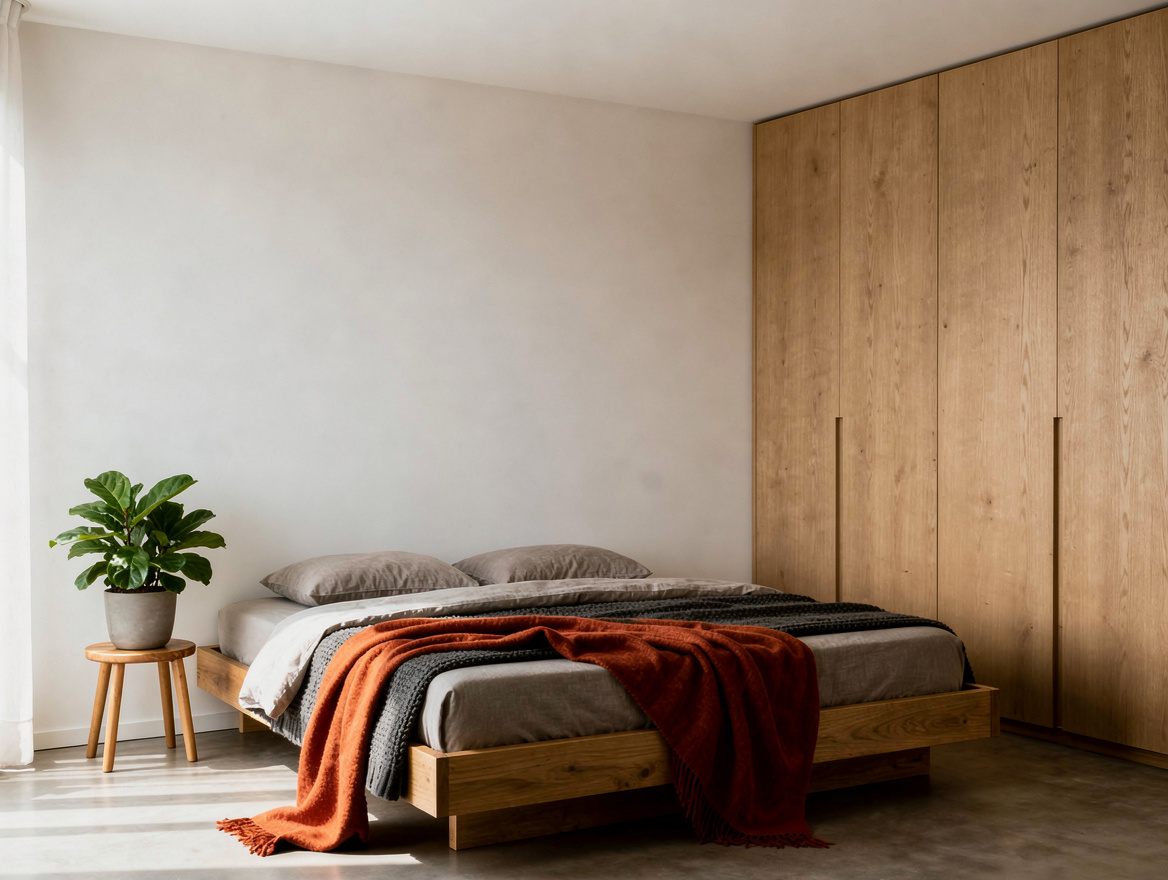
The biggest reason bedrooms never feel calm is visible storage. I leaned into a IKEA PAX-style wardrobe run because floor-to-ceiling storage clears the room faster than any decorative basket phase.
For a practical setup, a wardrobe wall around 59 to 79 inches wide, 24 inches deep, and roughly 93 inches high is a strong baseline, and it usually lands around $600 to $1,200 depending on the fittings. That sounds like a lot until you compare it with the cost of living with a dresser, a clothing rack, and piles on a chair.
Inside, I used a few wood storage boxes and fabric bins instead of over-complicating the system. Pieces from Amazon or IKEA around $5 to $25 each are enough, and I think too many organizers create just another layer of clutter.
Anchor the room with one generous rug
I used to buy rugs that were too small because they felt cheaper, and that was a mistake every single time. A Japandi bedroom needs a rug large enough to extend beyond the bed, usually about a 6-by-9 under a queen or an 8-by-10 under a king, so your first step in the morning lands on something soft.
A flat-weave or low-pile wool rug in a light neutral works far better than anything shaggy or high contrast. I like what Wayfair, Costco, and Target usually offer in the roughly $100 to $350 range, because the best option here is the one that disappears a little.
The rug should support the bed, not perform for attention. If the pattern is the first thing you notice when you walk in, it’s probably too loud for this style.
Layer soft light instead of relying on one fixture
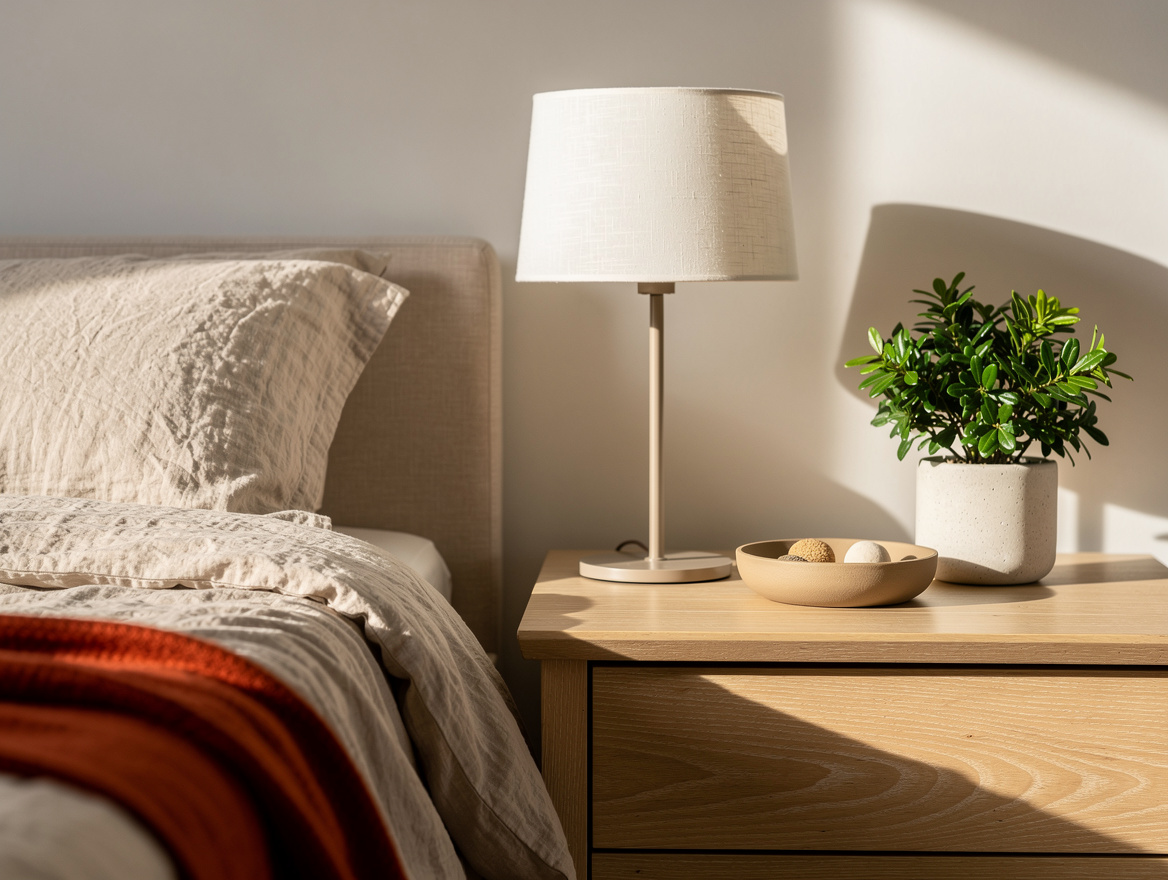
Japandi bedrooms look expensive when the lighting stays low, diffused, and a little understated. I traded my harsh overhead bulb for a pair of bedside lamps with linen shades and added one paper lantern shape for ambient light, and the room immediately softened at night.
This is one place where I wouldn’t go overly sculptural. Simple lamps from IKEA, Amazon, or Target usually run about $40 to $200 each, and plain forms in paper, linen, ceramic, or matte metal fit the mood better than trendy statement lighting.
I also switched every bulb to a warm temperature. Cool white light kills the whole effect, even if the furniture is right.
Keep the furniture quiet, then add one sculptural piece
I gave myself a strict rule: most of the furniture had to stay plain. Two simple wood nightstands, one low bed, one clean wardrobe, and then just one expressive object, like a paper floor lamp, a carved stool, or a textured wall hanging, to stop the room from feeling flat.
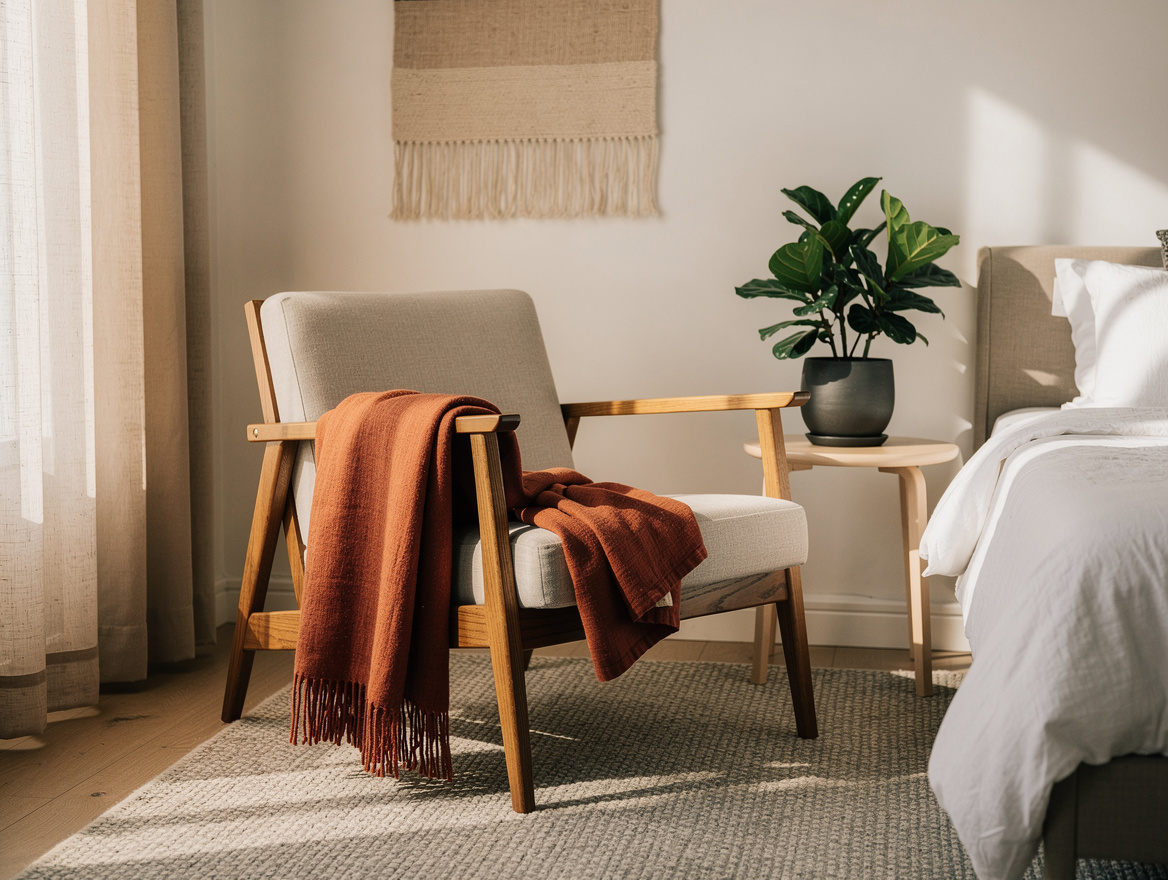
For a reading corner, I kept the footprint modest, about 32 inches by 32 inches with extra legroom in front, and looked for a wood-framed accent chair with a light fabric seat. Options at Wayfair, Target, or Amazon often sit around $150 to $400, and I strongly prefer a shape with visible wood over a bulky upholstered club chair.
This is where a lot of people over-decorate. One sculptural piece in cane, ash, linen, or ceramic has more impact than six small accessories scattered across every surface.
Edit every surface until the room feels a little empty
The finishing move was subtraction. On my nightstand, I kept a small ceramic lamp, one book, and a dish, and that was enough to make the room feel intentional instead of staged.
I skipped crowded gallery walls and used a single oversized textile or paper-based piece behind the bed. A framed neutral print from Target or Amazon for about $30 to $90 can work, but I think softer materials like woven panels or fabric art look more convincing in a Japandi room.
There’s also a budget reality here that I appreciated. A full bedroom reset with a bed, mattress, rug, wardrobe, lighting, and a chair can total around $2,000 to $4,000 through mainstream retailers, which is exactly why editing matters more than buying every last “Japandi” object you see.
Start with the bed height and the storage wall, because those two moves do the heavy lifting. Once the floor looks open and the clutter has somewhere to go, the bedding, rug, and lighting choices get much easier.
Mia Carter writes about small-space living and budget home makeovers. She has restyled three rentals and tests most ideas in her own 45 sqm flat.