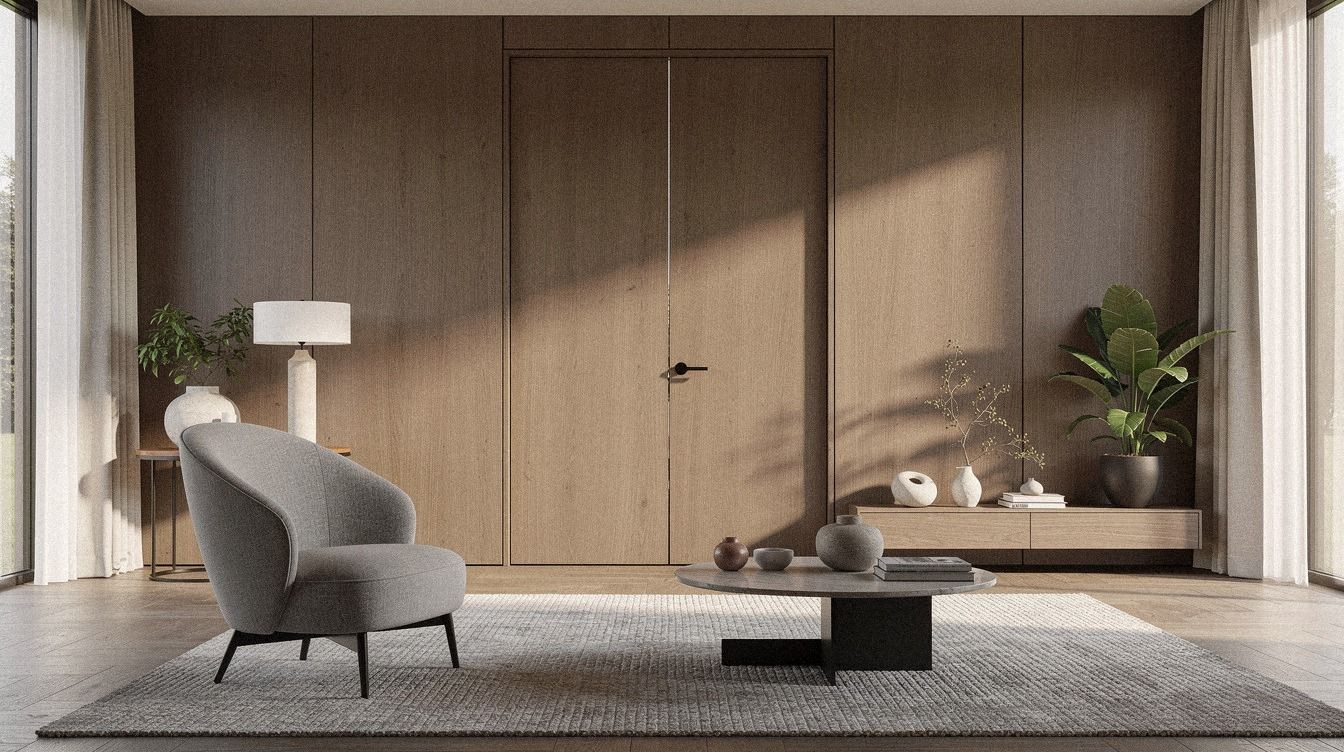
I spent eight months staring at the plain builder-grade door in our living room before I cracked. Eight months of pretending the hollow-core slab with the brass knob didn’t bother me. Eight months of walking past it every single evening and thinking, “something is off, and it’s that door.” Then one Saturday with a borrowed router and a half-bag of furniture-grade birch ply, I built a paneled false front over it. The room didn’t just look better. It felt like it had been here the whole time.
If your living room has a door you wish would disappear (a closet entry, a laundry pass-through, a hallway mouth, the bathroom off the entry) you’ve probably searched every variation of how to hide doors in living room and landed on Pinterest boards full of million-dollar renovations. I’m here to tell you most of these moves are weekend projects, not gut jobs. Here are the eighteen that finally worked for our awkward layout, with the actual costs and the missteps so you skip them.
Less than a dinner out, most of them!
Here’s what it looked like before
Standard 2008 subdivision living room. Beige carpet that had seen two toddlers and a Lab. The door in question was a flat six-panel hollow core, painted the same off-white as the wall behind it (which sounds like camouflage, except the brass doorknob caught every bit of light in the room and the seams around the frame threw shadows like a halo).
To the right of it, a builder-grade media nook with a single shelf and exposed cable. To the left, the couch butted up against a wall that had no business being that close to the door. Everything about the room pointed at that door and said “look here, look here.”
The picture didn’t lie. The door was the loudest thing in the room, even at 10pm with the lamps on.
- build a continuous paneled wall over the door
- run floor-to-ceiling bookshelves across the whole wall
- paint the door the exact same color as the wall, then kill the shine
- install a magnetic catch and lose the knob
- hide the door behind a TV wall
- add a deep, wraparound trim that reads as millwork
- cover the door with a single oversized piece of art
- paper the door with a removable, paintable textured wallpaper
- let the door become a bookshelf door
- swap the door for a sliding barn-style panel that disappears into the wall
- cheat with lighting and a soft vignette
- disguise the door as a full-length mirror panel
- the Farrow & Ball Hague Blue move (paint the door bold, on purpose)
- install a flush wainscot cap rail at door height
- run a slim chalkboard panel over the door (kid-zone edition)
- paint the door and the wall the same deep green, then add a thin unlacquered brass lever
- swap the hollow-core slab for a true flat-panel slab door
- frame the door in a tall curtain rod and a single linen panel
- what if you just close the door and style the room around it?
1build a continuous paneled wall over the door
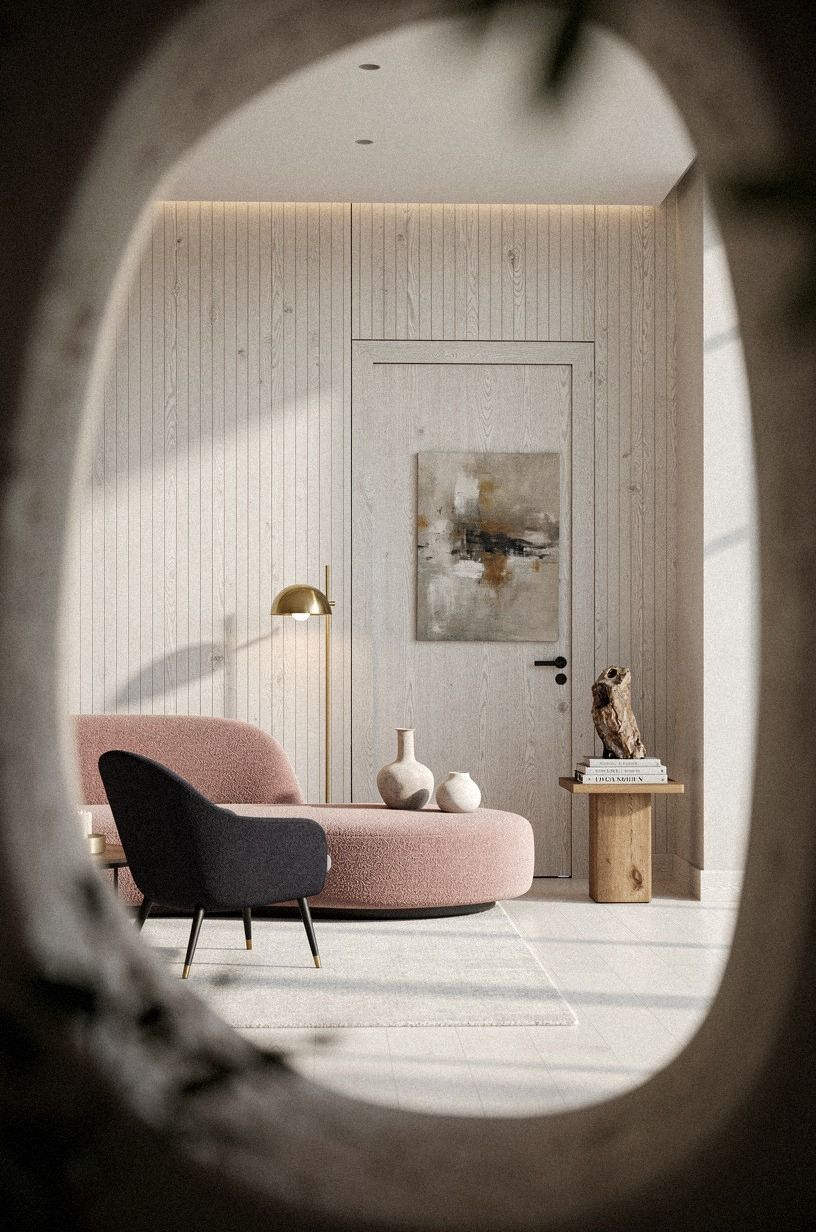
This is the move that started everything and it’s still the one I recommend first. You buy a sheet of birch plywood (usually a 4×8 at the home center, around $65), rip it into strips the width of your door frame plus an inch on each side, and rout a shallow profile down the center of each strip.
Mount them vertically on the wall, over the door, so the seams between strips land on the door frame itself. Paint everything one color.
The eye reads “wainscoting” and walks right past the door.
What worked: priming the plywood edges first, not after. I skipped that step the first round and the paint soaked unevenly along the cut ends.
Cost: about $120 for ply, trim, primer, and a can of Benjamin Moore White Dove OC-17 in eggshell. Time: a long Saturday, plus Sunday for paint.
If you’re not ready to commit to a full paneled wall, a softer version lives on my family room door ideas guide, where I walk through three cheaper variations using just paint and a thin applied molding.
2run floor-to-ceiling bookshelves across the whole wall
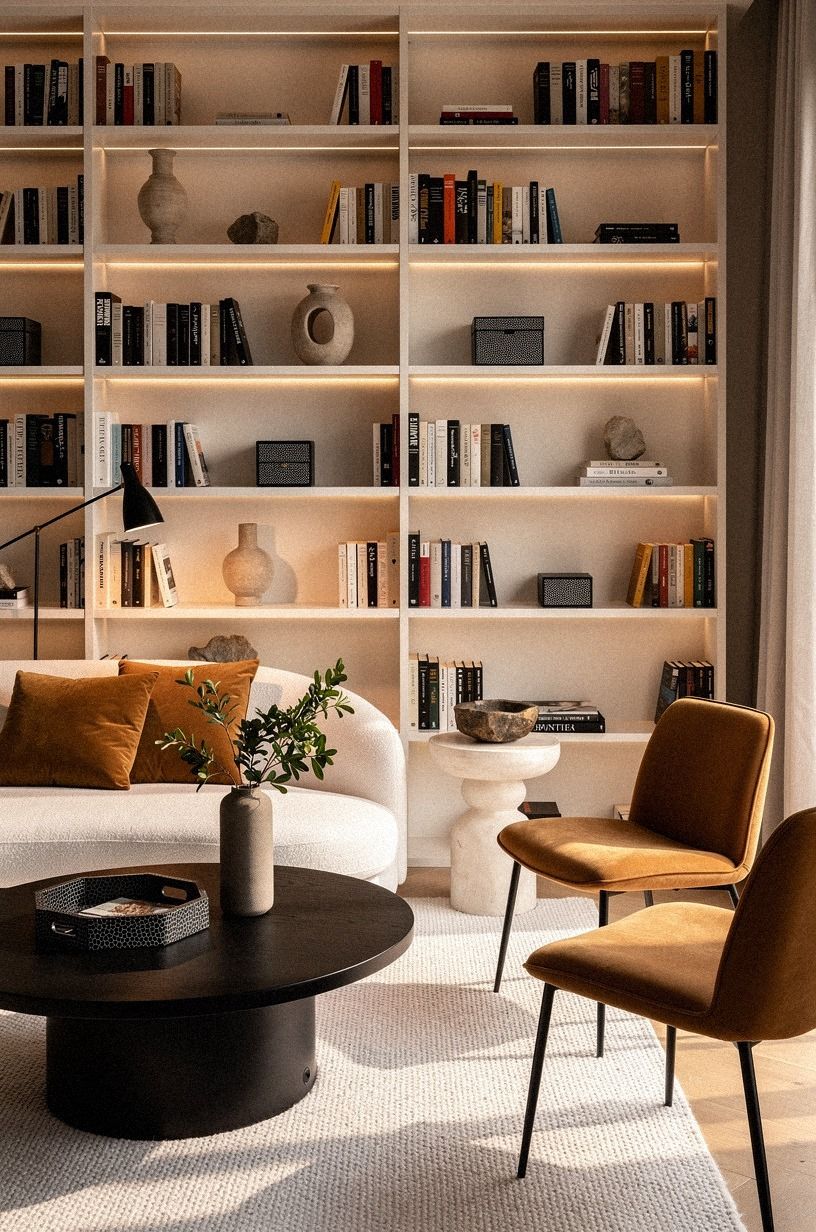
This is the move that solves two problems at once if your hidden door opens to a closet, a hallway, or even a kid’s playroom you want out of sight. You build (or buy) a bookcase the full width of the wall and the full height of the room, with one “section” that is actually the door. The part nobody respects is adjustable shelves on either side of the door, mounted inside the door’s swing arc so nothing sticks out when it opens.
I went with three IKEA BILLY bookcases in oxblood (about $90 each) flanking the door, and a custom middle section I built from 1×12 pine for about $80.
Will it look like a door? No.
Will it look like a wall of books? Yes, if you actually fill it with books.
Empty shelves give the whole game away! The first weekend I styled it with only twenty books and the negative space screamed “door behind me.” Once it hit around sixty books plus some art leaned against the back, the eye stopped searching.
3paint the door the exact same color as the wall, then kill the shine
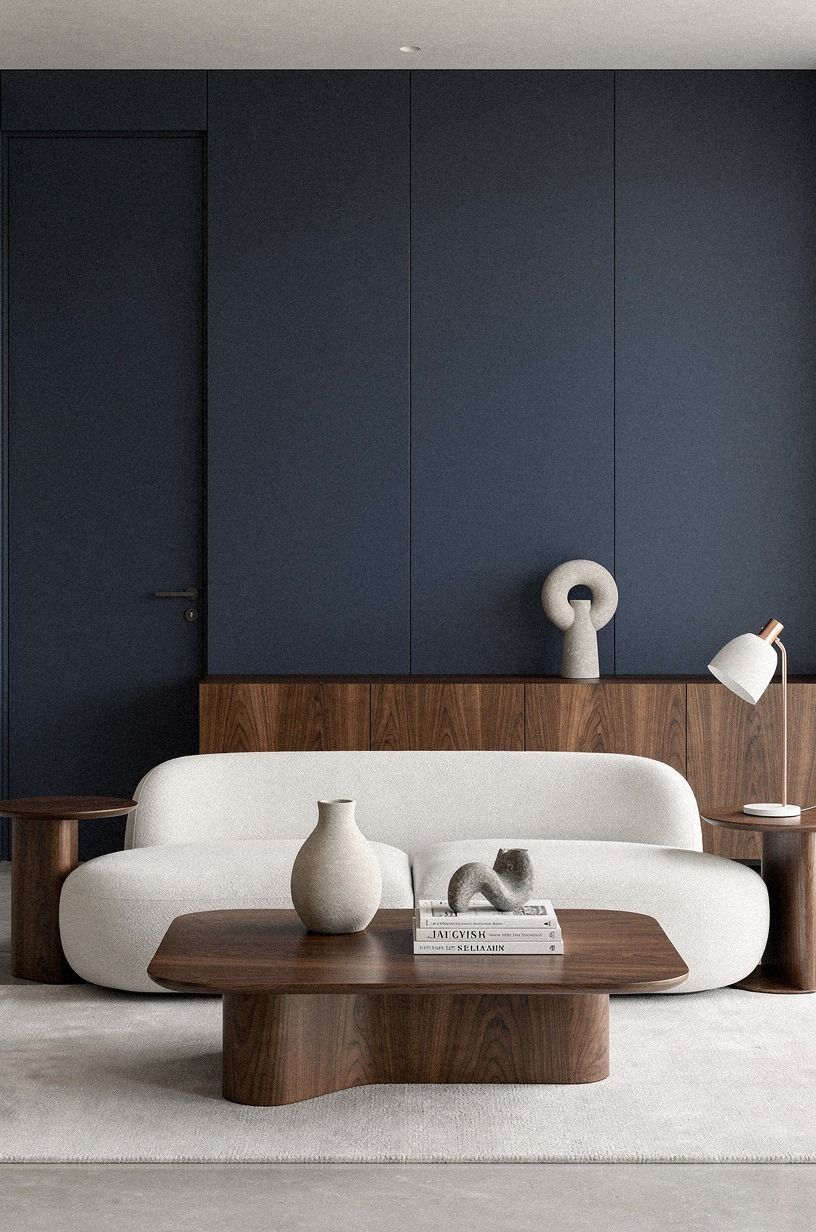
Half the work in hiding a door is convincing the eye there’s nothing to see. Paint alone won’t do it if the door is glossy and the wall is matte.
The light catches the sheen difference and your brain goes “different surface, different object.” I tested this myself: I painted the door Farrow & Ball Hague Blue No. 30 in estate emulsion, which is matte, on a wall already painted the same color in the same finish. From across the room at 6pm, the door vanished. From up close, the only giveaway was the seam at the top of the frame, which I caulked with paintable latex and re-coated.
The brass knob had to go. I swapped it for a simple matte black lever from Schlage (about $22) and stopped noticing the door entirely within a week.
4install a magnetic catch and lose the knob
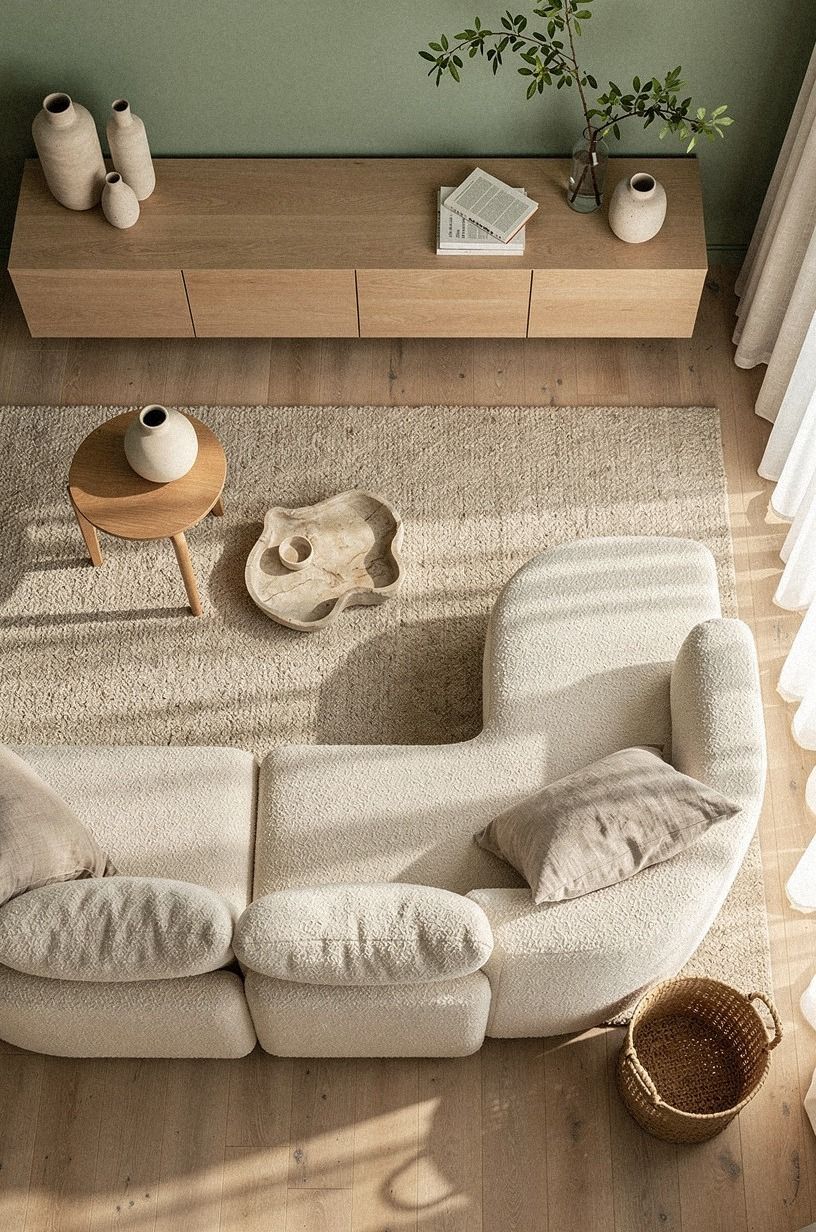
Some doors you still need to use multiple times a day.
5hide the door behind a TV wall
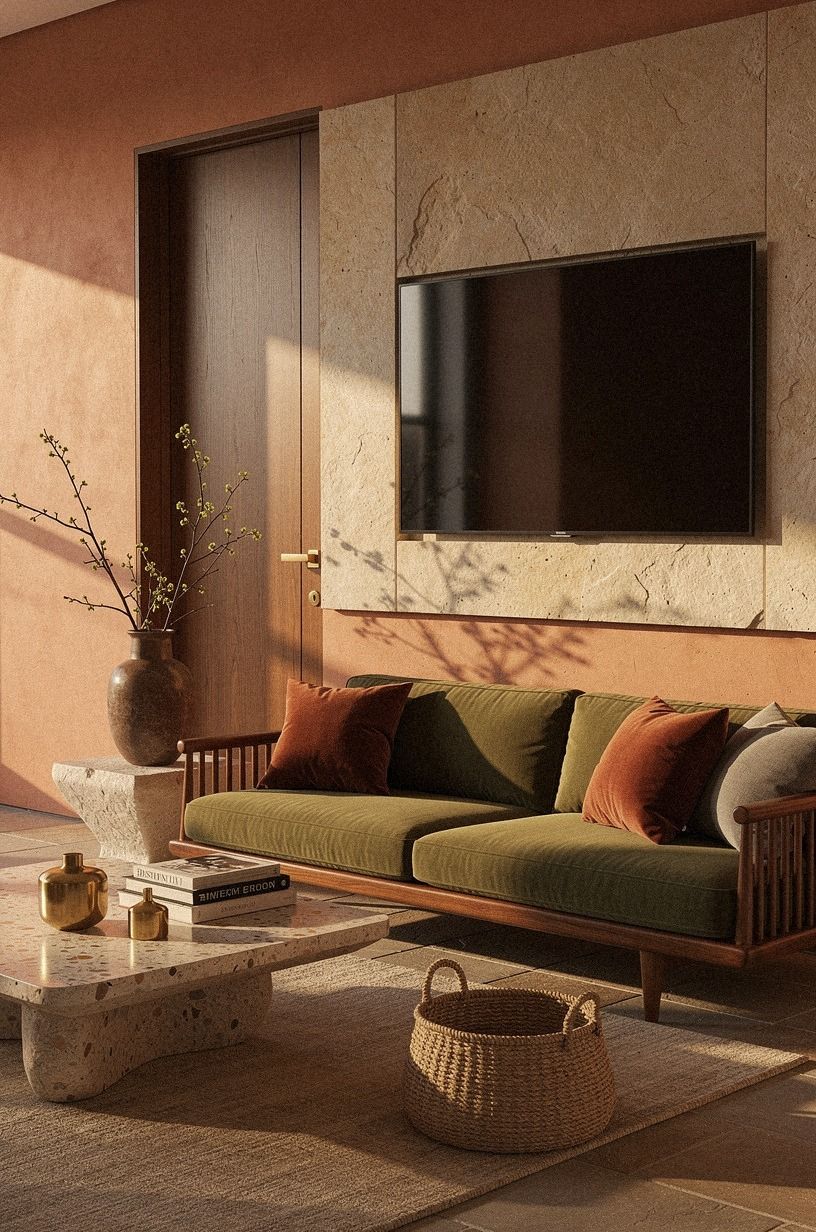
If the door in question opens to a kid’s playroom, a home office, or a clutter-prone flex space, you can swallow it entirely inside a media wall. The move: build a shallow cabinetry run floor to ceiling, with the door framed into the center, and mount a TV on the door side itself (using a full-motion mount so the door still swings).
The cabinetry looks built in. The TV looks mounted.
The door looks like part of the design.
This is the move I ended up doing on the playroom side of our living room. The cost was real: about $1,800 in cabinet-grade plywood, edge banding, and a MantelMount pull-down TV mount ($280).
But the result was the entire playroom vanished into a wall of warm white cabinetry, and the door fully disappeared behind a Samsung Frame displaying a print when the TV was off. If you want the build details, my TV wall with hidden door ideas post has the full layout.
Same logic, different room, lives in hidden bar ideas for the living room if your “other room” is a bar cabinet.
6add a deep, wraparound trim that reads as millwork
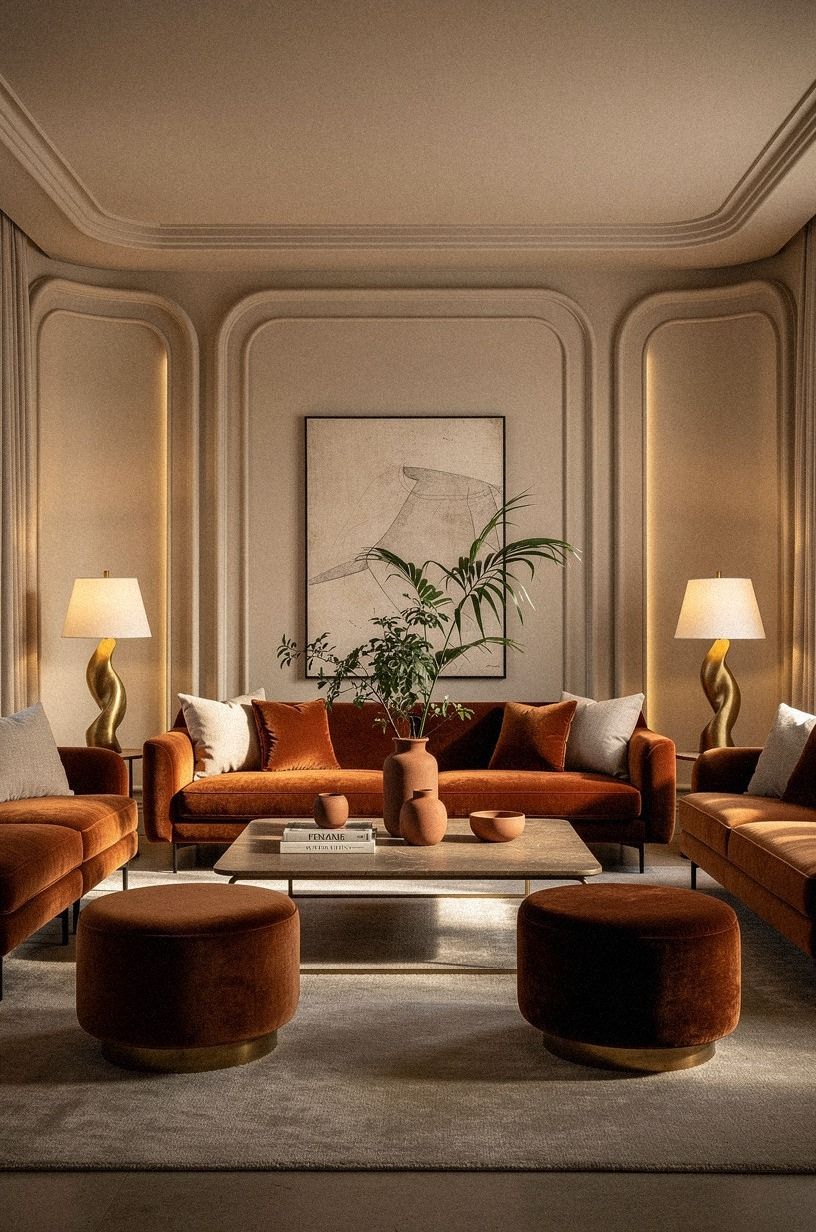
Sometimes the door is fine, the wall is fine, but the door frame is the thing that gives it away. Modern hollow-core frames have a very specific 2-inch flat casing that screams “2008 tract home.” You can replace that trim with a deep, stepped Emtek or Inox modern trim (about $35 per side for the stuff I used) and suddenly the door reads as something custom. I went with a chunky 3.5-inch primed MDF casing that I painted the same color as the wall, with a small backband detail that adds shadow.
This is the cheapest way to make a stock door look like a deliberate design choice. Total cost: under $80 for trim, a miter box, and a fresh can of Sherwin-Williams Evergreen Fog SW 9130 to do the door and the wall together. The eye stops seeing “door” and starts seeing “designed opening.”
7cover the door with a single oversized piece of art
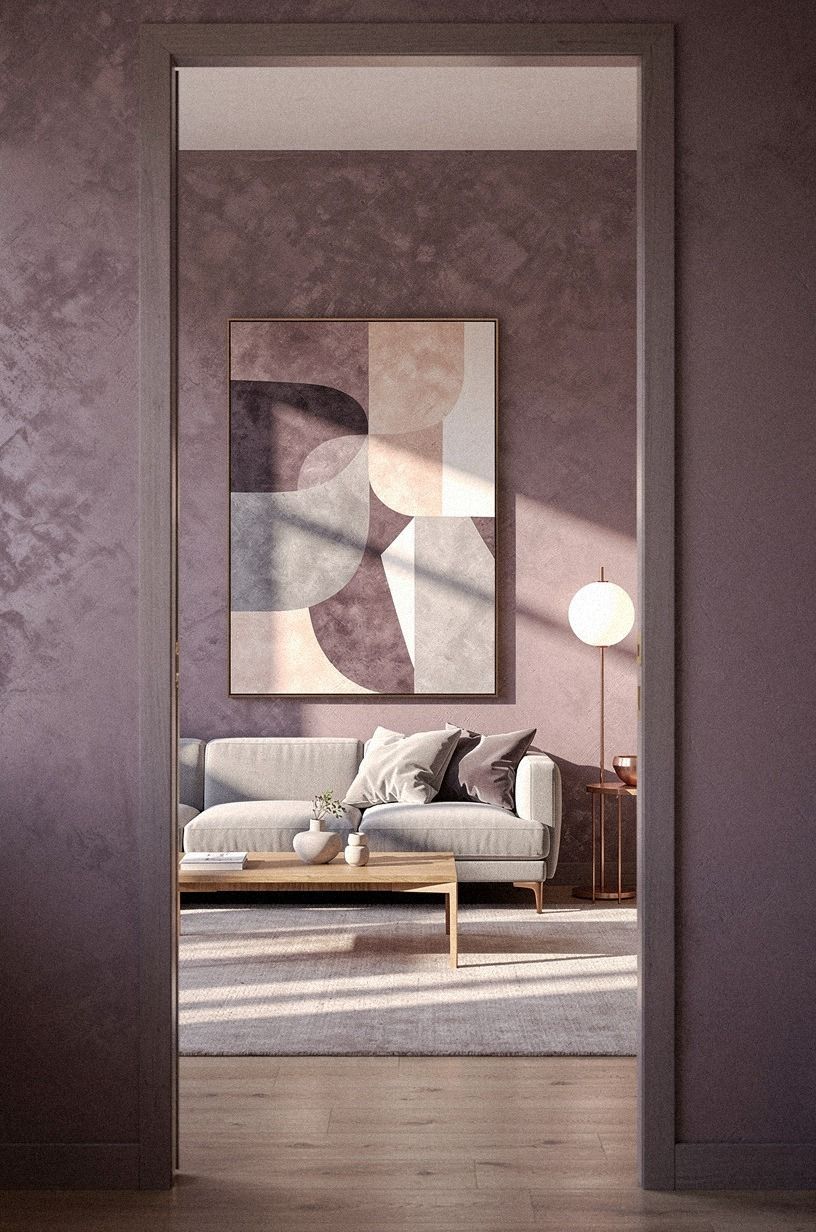
If the door is on a wall you’d otherwise hang something on, just hang something bigger.
8paper the door with a removable, paintable textured wallpaper
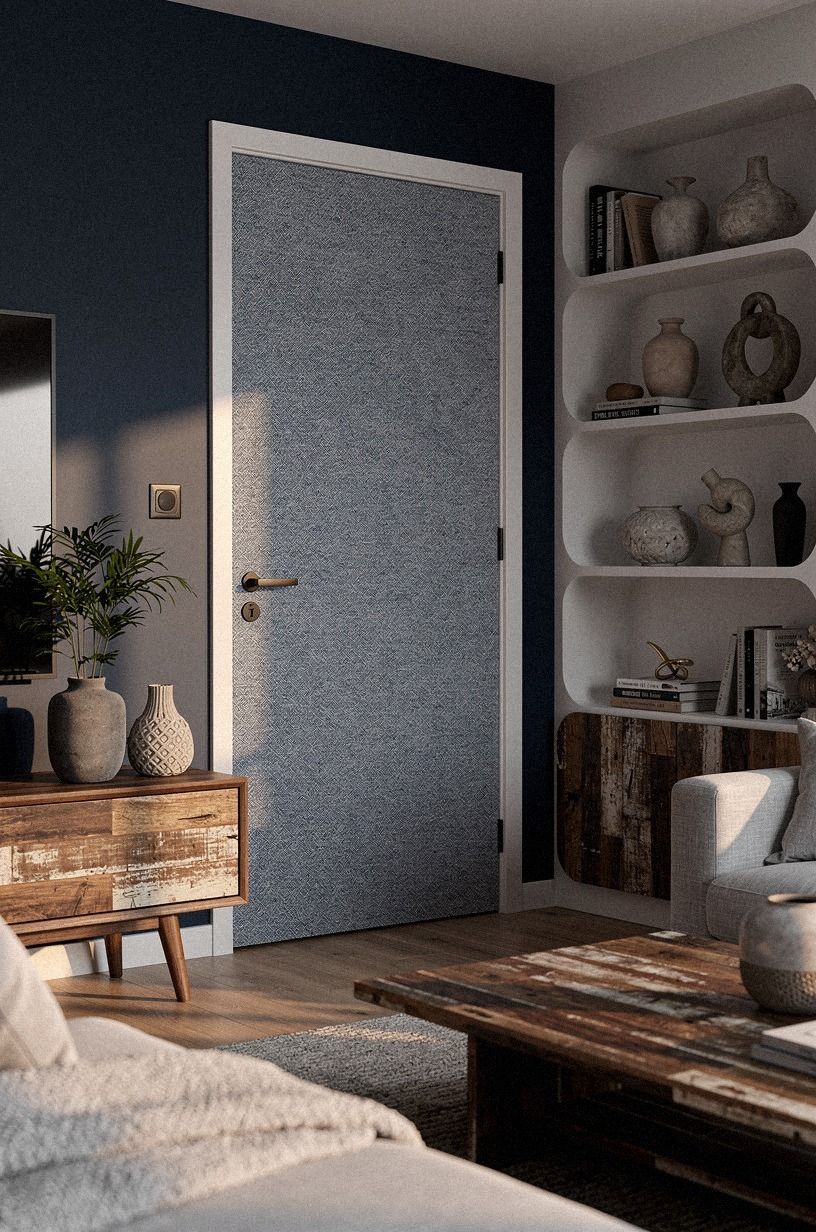
If you’re a renter or you’re not ready to commit to a permanent solution, this is the move. Peel-and-stick grasscloth from Tempaper or West Elm (about $35 a roll) goes right over a primed door, matches the wall behind it, and comes off when you move.
I did this on a friend’s rental and the landlord never noticed. The texture breaks up the flat door surface so the eye doesn’t read it as “the same surface as the wall, but different.” It reads as “wallcovering.”
This is the move I’d reach for if my question was how to hide doors in living room without losing my security deposit. It’s also the cheapest move on this list if you’ve already got a paint roller. Total: $70 to $120 for two rolls of grasscloth and a sharper utility blade.
9let the door become a bookshelf door
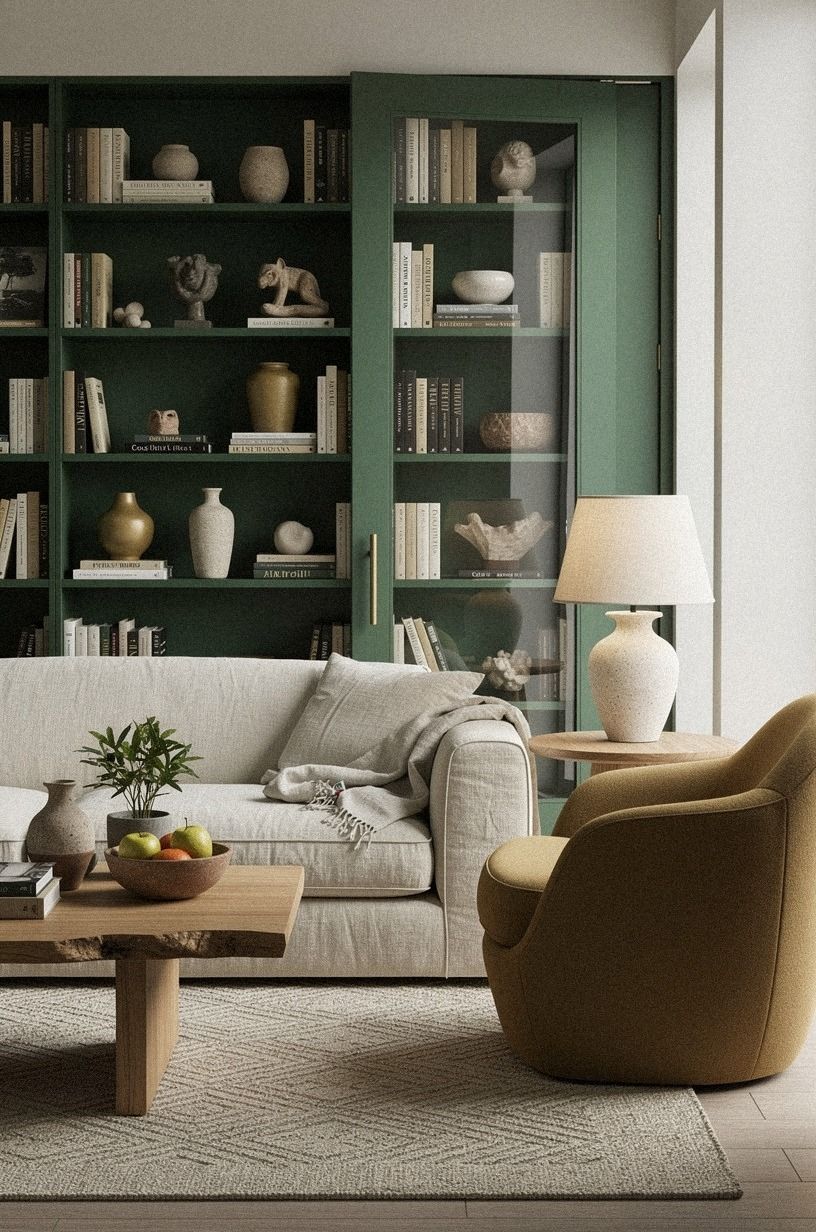
This is the classic move, and it’s classic for a reason: it works.
10swap the door for a sliding barn-style panel that disappears into the wall
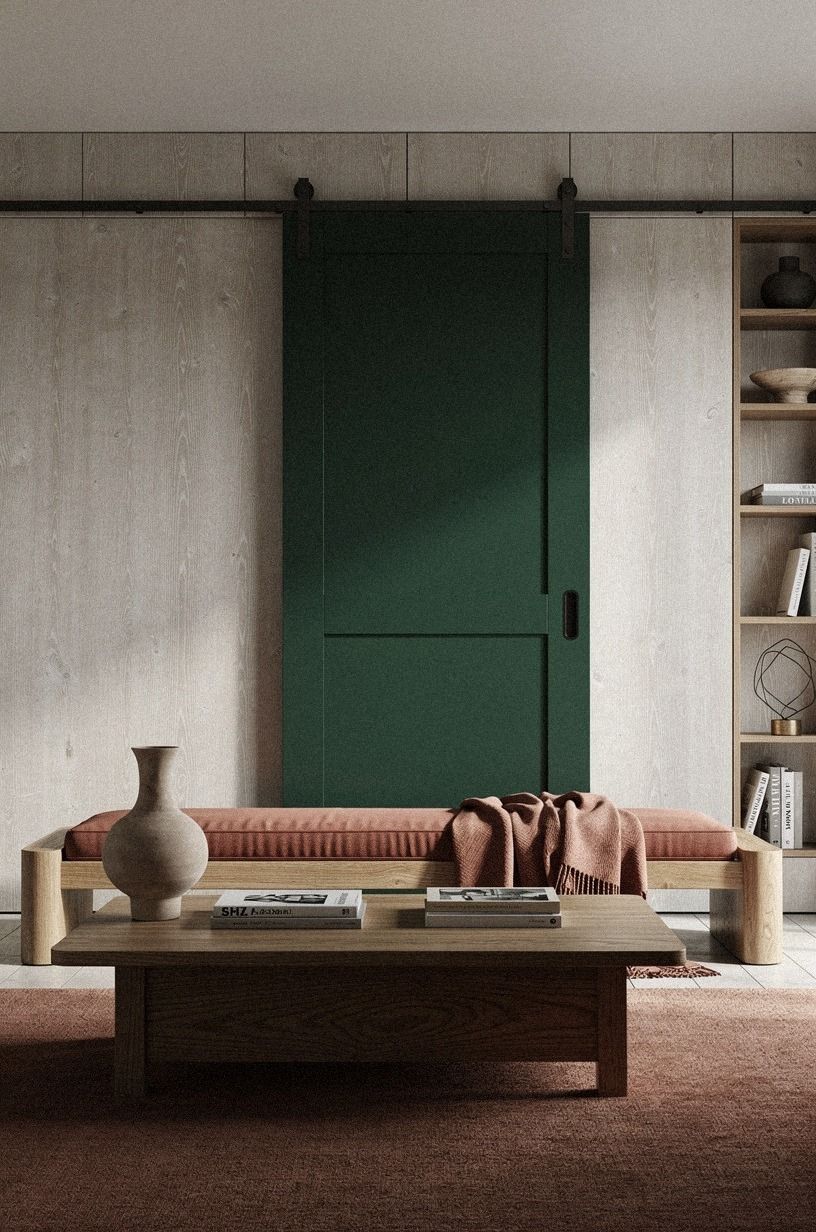
If you’re ready to spend real money and you actually don’t need a swinging door, replace it with a pocket door or a barn-style sliding panel. Pocket doors cost more because you’re cutting into the wall, but they vanish completely when open.
A barn-style sliding panel that slides into a recessed cavity in the wall (not across the front of it) is the budget-friendly cousin. I went the barn-style route for the laundry pass-through, and the panel slides into a 4-inch-deep cavity I framed inside the adjacent closet. The visible face of the panel is paneled to match the wall, and when it’s “closed” there’s no handle and no hardware.
This is the most expensive move on the list at around $1,400 in framing, panel, and a soft-close track. But it’s also the one that made the biggest difference to the actual layout. The room feels larger because nothing swings into it.
If your door opens to a kitchen pantry, the same logic lives in pocket door ideas for kitchen pantries.
11cheat with lighting and a soft vignette
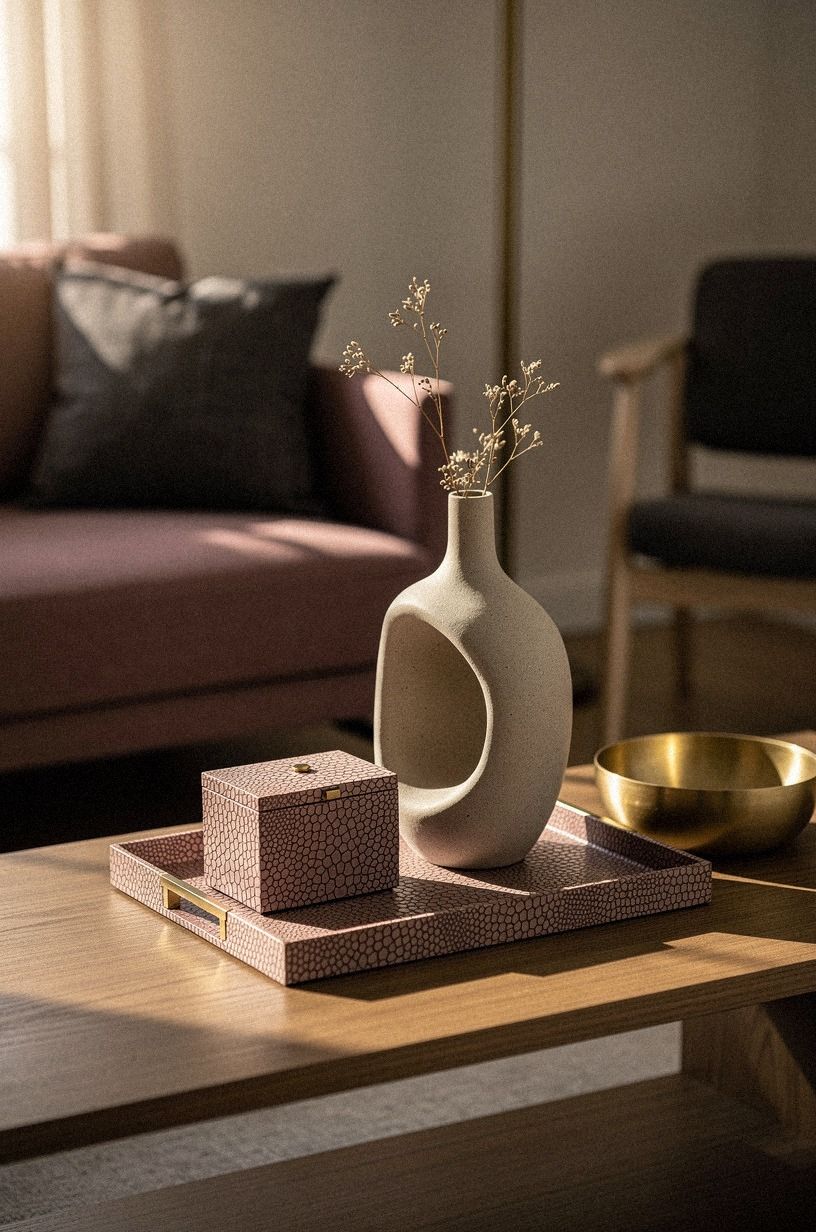
Last one, and it’s free! The biggest reason doors stand out is that light from overhead fixtures hits them flat. If you kill the overhead light (or just stop turning it on) and put a warm 2700K floor lamp in the corner nearest the door, the lamp throws a pool of amber that stops right at the door frame.
The door reads as “wall, in shadow.” I’ve tested this with three different friends: turn on the overhead light, they see the door in under a second. Turn it off, lamp on, they ask “wait, where does the laundry go?” Same room. Same door.
Pure light move.
This pairs best with any of the moves above. It’s also a beautiful excuse to buy another lamp.
12disguise the door as a full-length mirror panel
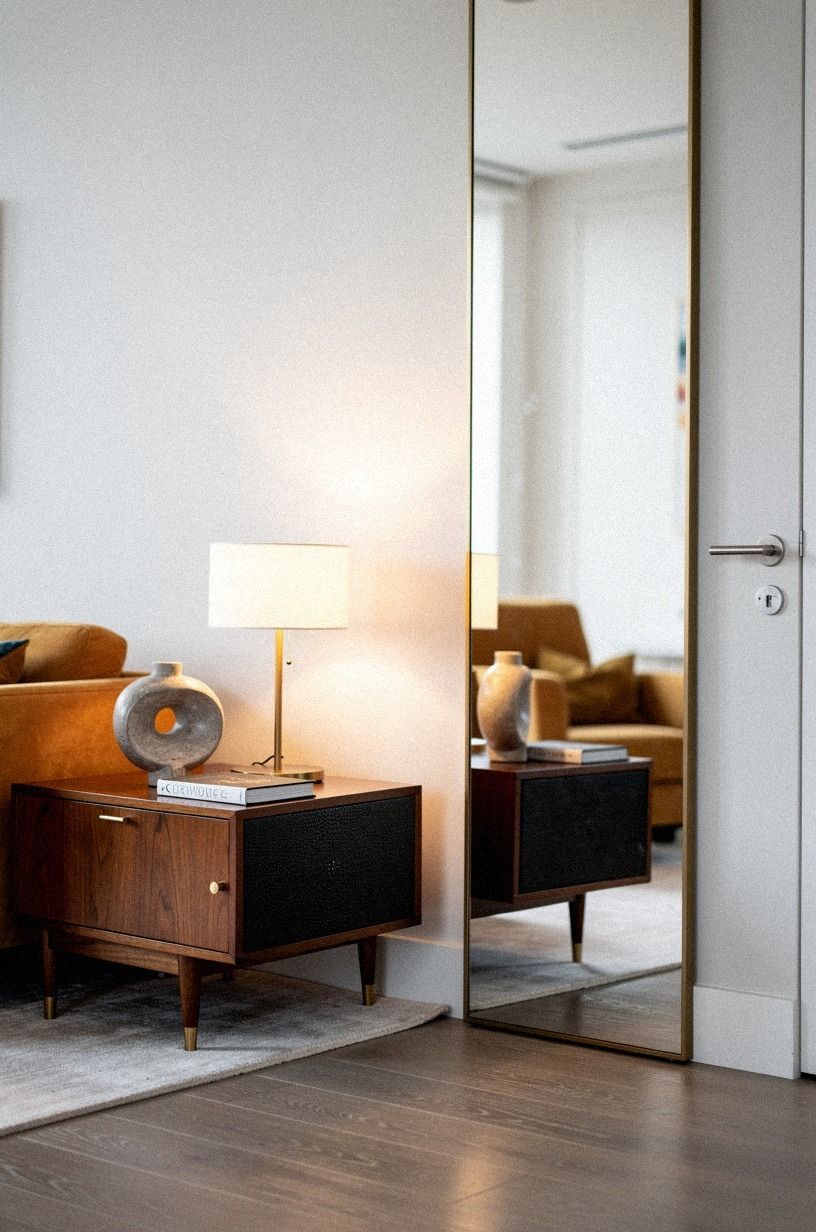
If the door sits near the entry, mirror it. A floor-to-ceiling mirror panel mounted on a French cleat reads as a generous entry mirror, not a door.
The hinge goes on the mirror side (so the mirror swings with the door), and you back the mirror with a thin MDF sheet so it doesn’t flex. Mine is a 24×80 piece from a local glass shop, around $180 with the cleat.
The room got brighter (extra reflection of the window light) and the entry feels twice as wide. The single catch: don’t put it directly across from a window with harsh afternoon sun, or you’ll spend the rest of your life looking at yourself squinting.
If you’re doing this on a closet door, my mirror door walkthrough has the cleat details.
13the Farrow & Ball Hague Blue move (paint the door bold, on purpose)
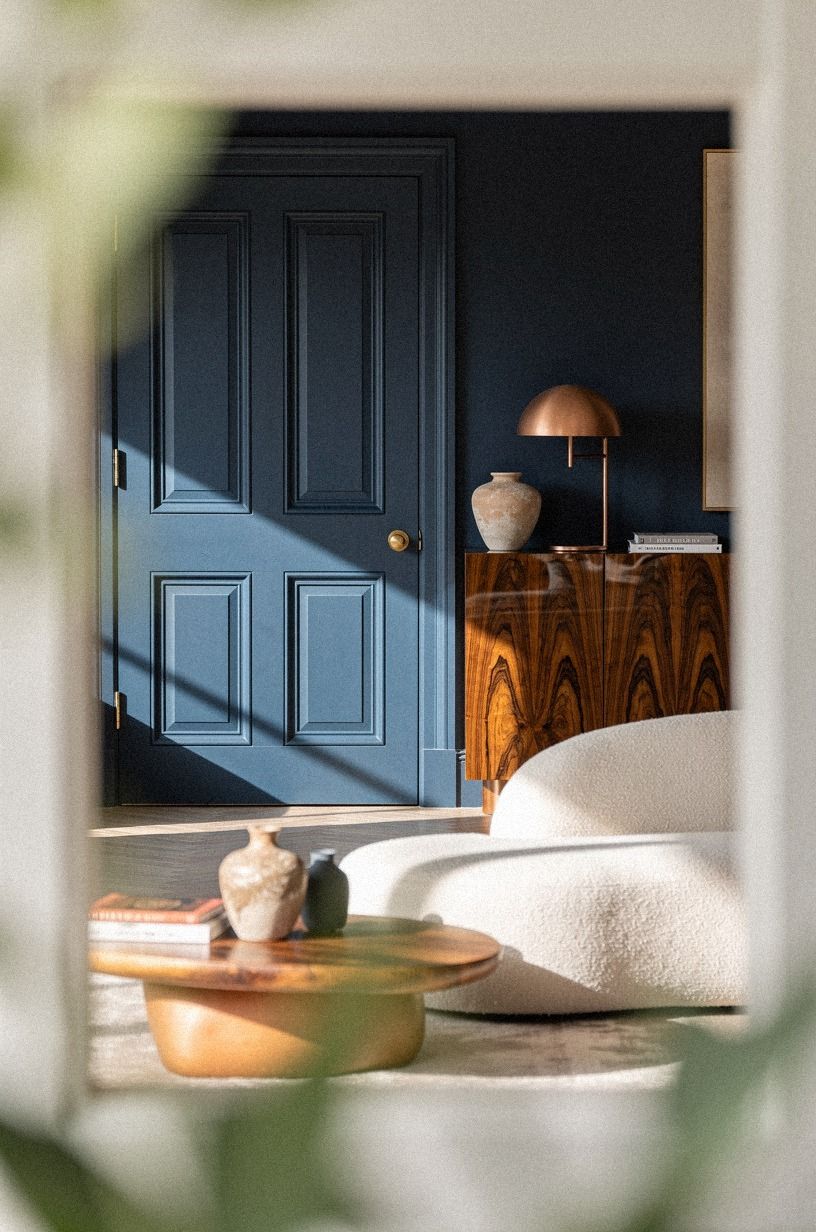
Going the opposite way? Paint the door a deliberate deep color so it reads as art instead of a door.
Farrow & Ball Hague Blue No. 30 in estate emulsion, on a wall in Benjamin Moore Pale Oak OC-20, and a thin unlacquered brass lever from Rejuvenation ($48). The door becomes a feature.
You stop apologizing for it. This is the move I’d recommend if your living room is going moody anyway (greens, charcoals, oxblood) and the door can carry the weight. About $85 in paint and hardware, one Saturday, one coat of primer plus two finish coats.
If you’re already painting the room dark too, my moody speakeasy-style living room guide has the full palette for going deep without losing the light.
14install a flush wainscot cap rail at door height
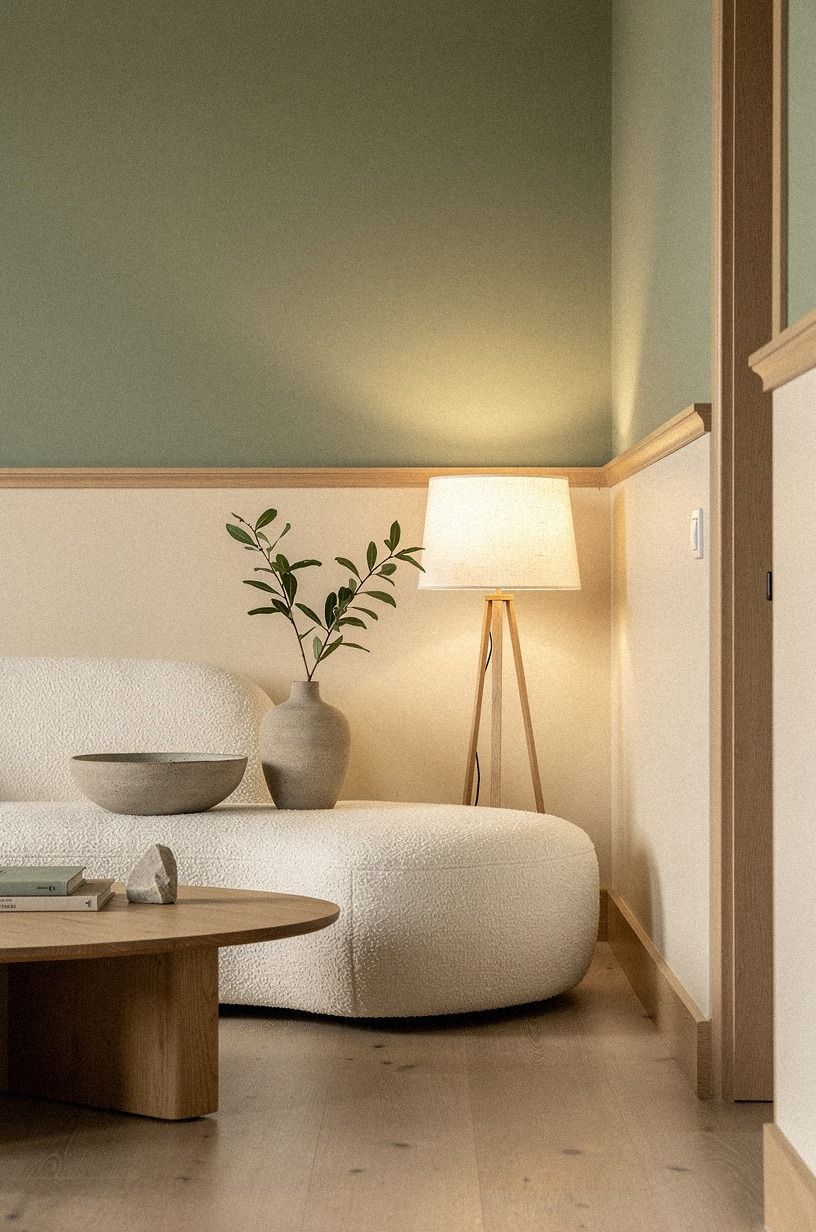
Here’s the move: a horizontal cap rail (a 1.5-inch primed MDF strip) running across the wall at door height, then picture-frame molding below it that includes the door. The rail acts as a visual “stop,” and your eye reads the door as part of a wainscot, not a door. I used Inox modern cap rail at about $12 per linear foot, painted the same color as the wall.
Total cost $140 for a 10-foot run, including two end caps and the picture-frame molding for the lower section. Works best with Sherwin-Williams Accessible Beige SW 7036 walls or any warm neutral where the rail can disappear.
15run a slim chalkboard panel over the door (kid-zone edition)
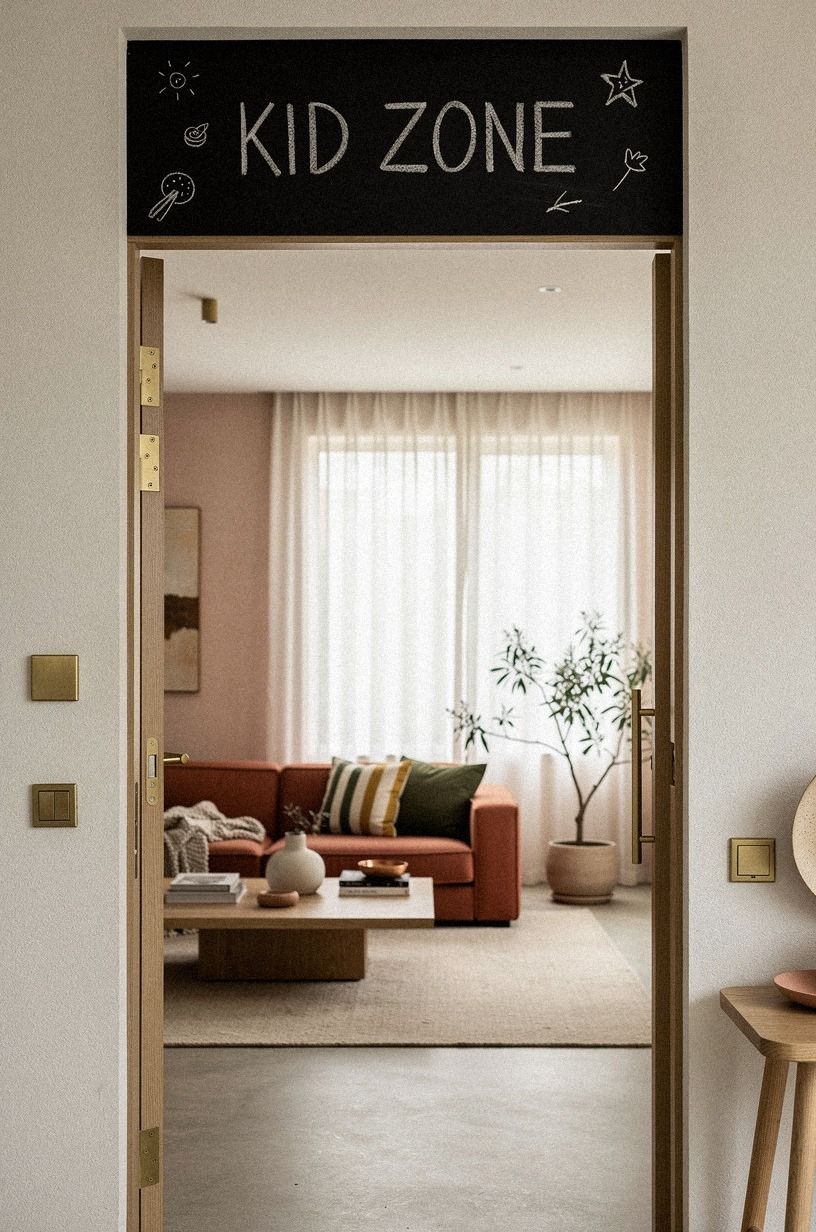
If the door opens to a kid’s playroom or a homework nook, lean into it. Mount a thin chalkboard panel ($45 from any craft store, 24×60) on the door face with a French cleat, frame it in a 1-inch poplar trim painted Benjamin Moore White Dove OC-17, and the door becomes a giant chalkboard. The kids draw on it.
You stop fighting them about it. The chalk dust on the floor is the only downside, and a small rug catches it.
For a more grown-up version, swap the chalkboard for a linen-covered pinboard and you get a message center instead. About $90 for the panel, trim, and cleat, plus a Saturday. If your door opens to a homework nook instead of a playroom, my built-in homework nook guide covers the bigger-picture version of this same move.
16paint the door and the wall the same deep green, then add a thin unlacquered brass lever
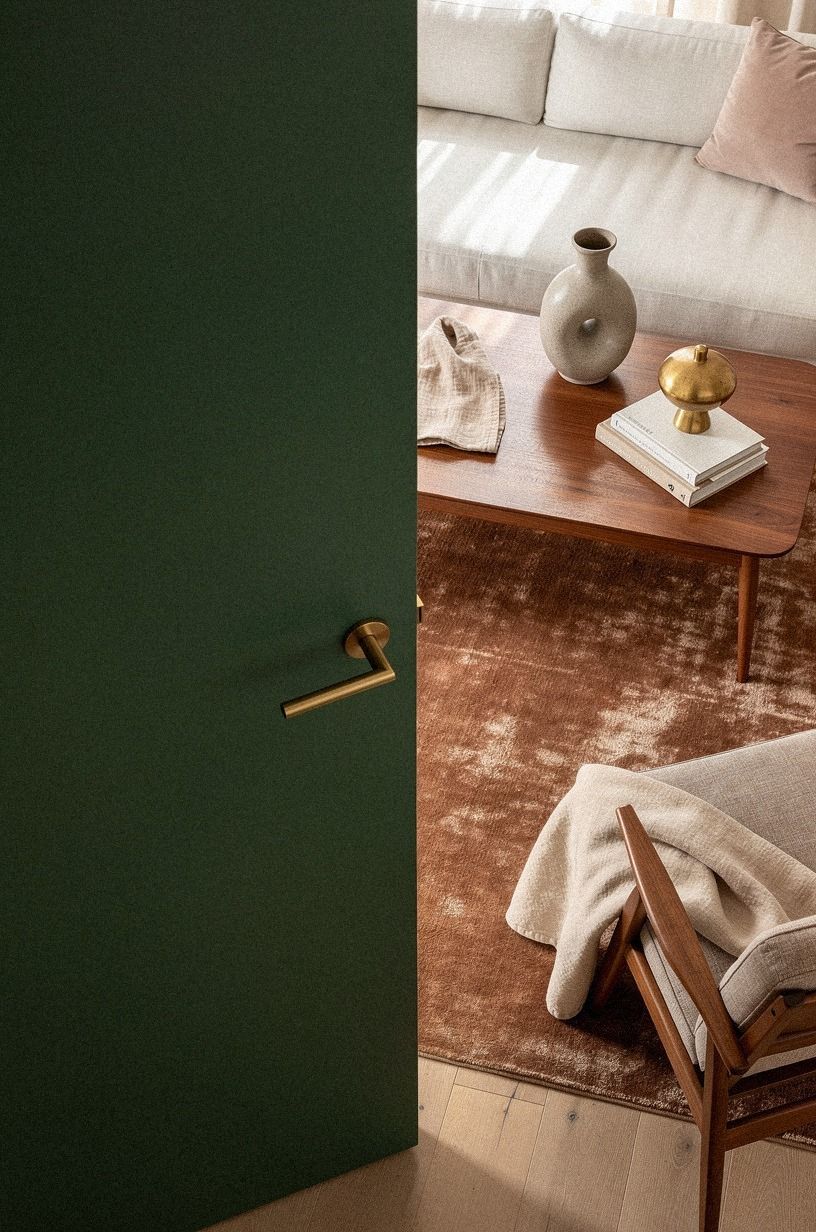
Deep green is the move for living rooms right now, and a door done in the same color reads as wall, even though it’s clearly a door. I used Farrow & Ball Studio Green No. 93 in estate emulsion on both sides of the door and the wall behind it, then added a slim unlacquered brass lever from CB2 (about $42). The brass catches the light just enough to remind you it’s a door, but the green does the heavy lifting.
About $95 in paint, lever, and a tack cloth. The lever will patina over the year, which is the whole point.
Don’t polish it.
17swap the hollow-core slab for a true flat-panel slab door
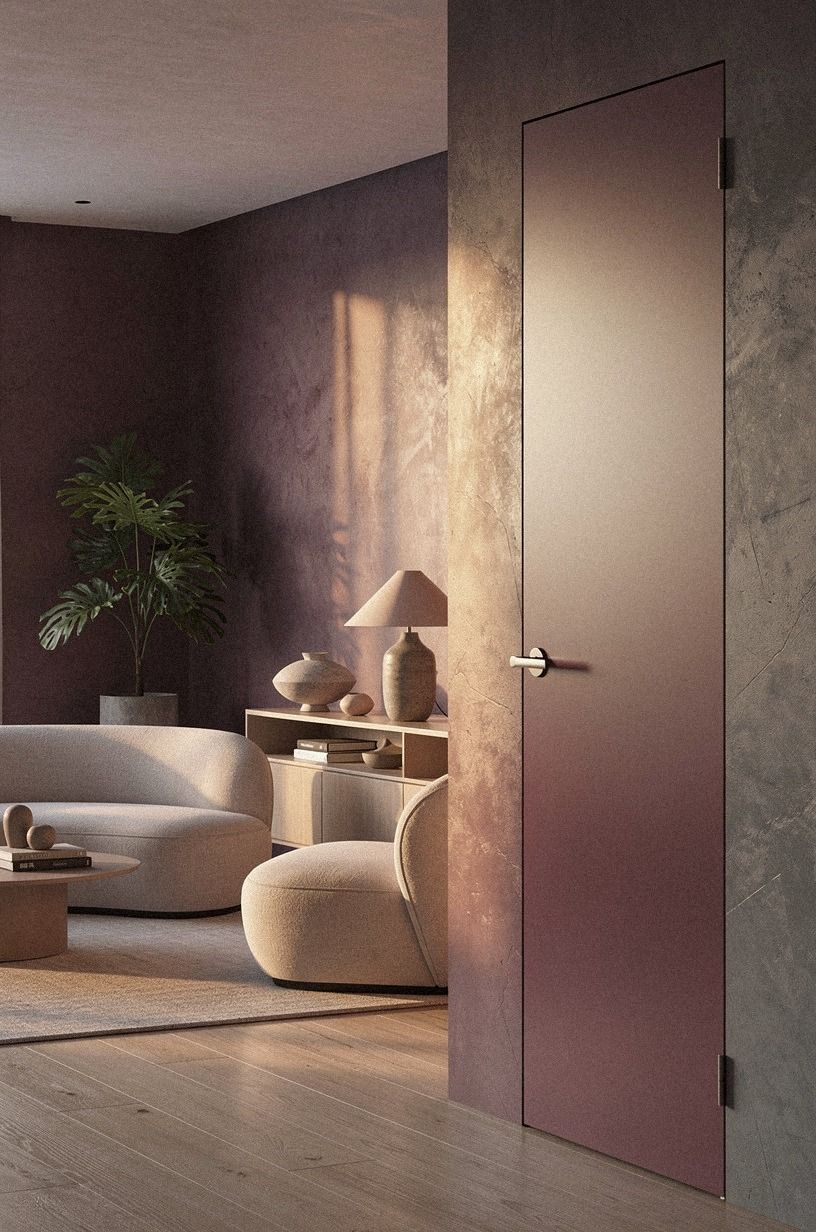
Sometimes the door itself is the giveaway. A flat Masonite smooth-door slab from Home Depot ($60 for a 30×80) painted in the same wall color reads as wall, period.
No panels, no seams, no shadow lines. Add a magnetic touch latch (about $18) and a flush pull ($15), and you’re done.
About $130 with paint and hardware, one Saturday. This is the move I’d recommend if your door is already beat up or has a strange wood grain you can’t hide.
18frame the door in a tall curtain rod and a single linen panel
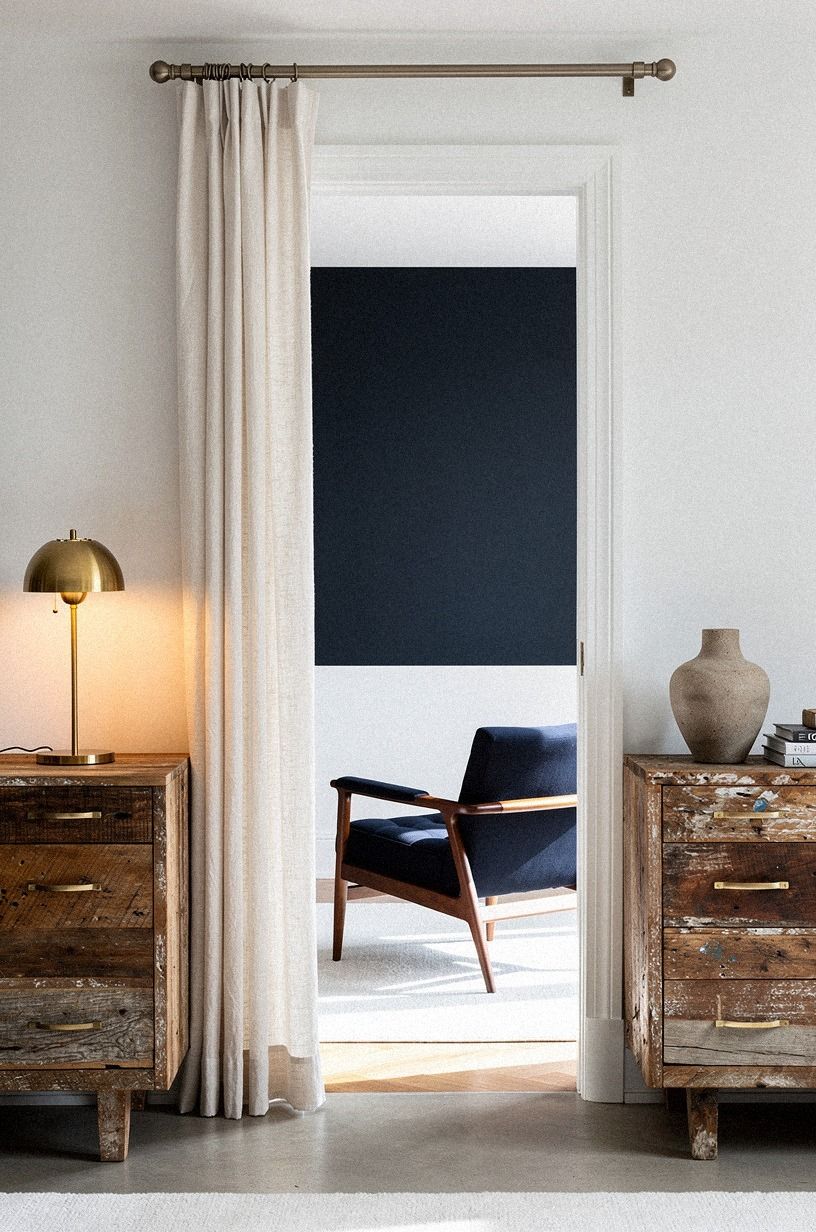
If the door is on a wall with a window nearby, you can disguise it with drapery. A ceiling-mounted linen curtain rod from IKEA (the HILLEBORG, about $25 for the 79-inch version), one panel of Belgian flax linen ($80 for the yardage), and the door disappears when the curtain is closed.
Open the curtain, the door is right there. The linen softens the whole wall, and you can layer a sheer behind it for daytime privacy.
About $115 with hardware, and a Saturday afternoon for the bracket install.
19what if you just close the door and style the room around it?
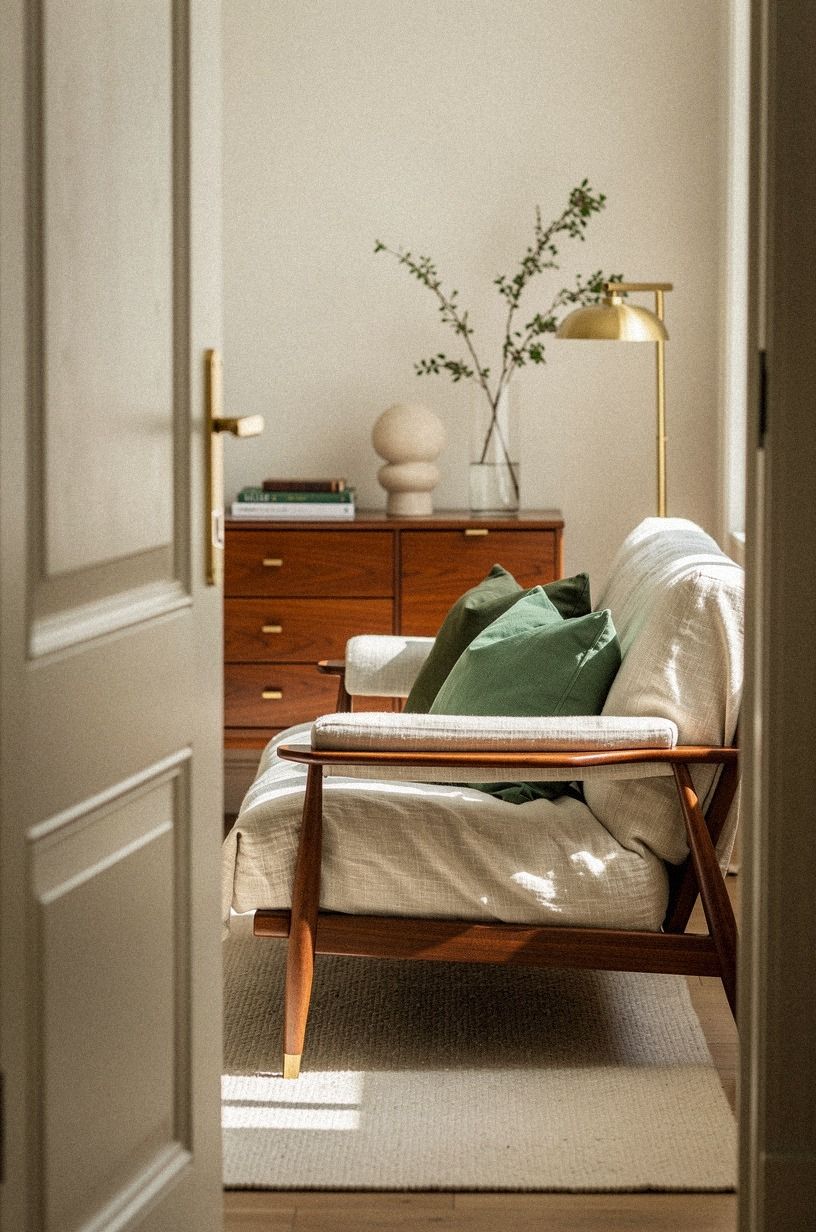
Half the time the answer isn’t hiding the door at all. It’s embracing it as part of the room.
A door you close every night at 9pm doesn’t need to be invisible. Style the wall around it: a console table in front of it, a tall plant, a leaning floor mirror, an oversized ceramic vessel. The door becomes a back wall, not a focal point. I tried this on our powder room door last month.
The console is a slim 8-inch-deep IKEA LACK shelf in walnut ($30), styled with a ceramic vessel from West Elm ($48), a small stack of books, and a single olive branch in a stoneware jug. The door is right there. Nobody sees it.
If your door leads to a bar cabinet or a kitchen pantry, this same logic plays out in in-wall bar ideas and pantry doors that vanish into the kitchen.
How much it cost
Honest numbers. I kept receipts. Here’s the full picture across the whole living room project (not just the door itself, because the door fix was always part of a bigger room plan):
For our specific door, the costs broke down like this:
The TV wall on the playroom door was a separate $1,800 project, but it replaced a $400 IKEA media unit we sold for $80, so the net was about $1,720. If you’re budgeting the whole room, the door fix can live anywhere from a hundred bucks to a few thousand depending on how far down the rabbit hole you want to go. The same math overlaps with basement door disguise moves if the door you’re hiding opens downward.
Why this whole category is having a moment right now
Two reasons. First, open-concept living hit a wall around 2023. People who tore out walls in 2015 are putting some of them back, and they want the doors they just added to feel intentional, not afterthought.
Second, the cost of custom millwork has come down enough that boutique builders in Austin, Brooklyn, and LA are putting hidden doors in spec homes. Buyers see it on Zillow, expect it in their next place, and want to know how to fake it in the one they already own.
That demand is why peel-and-stick grasscloth and slim magnetic catches exist as product categories now. The market caught up.
But I’d push back on the trend-piece framing. Hidden doors aren’t new.
Speakeasies, libraries, and Victorian hallways have used them for a century. What’s new is that we’ve stopped pretending our living rooms are formal and started letting them be honest.
A door you don’t want to see is a door that’s serving clutter, noise, or a use case you’re embarrassed about. Hiding it isn’t a design flex. It’s just admitting the room has more going on than the open-concept floor plan wanted to admit. And once you accept that, the whole conversation shifts from “how do I make this disappear” to “what does this door do for the room, and how do I make that work better.” The eighteen moves above are an answer to the second question, not the first.
Most of them start with the door still there and end with the door being useful in a way you don’t have to apologize for. That’s the part the trend pieces skip.
If you’re working a living room that has more than one problem door (most 2008 subdivisions do), my multi-door living room fix guide walks through prioritizing which one to tackle first when you can’t do them all in one weekend.
A Few Things Worth Answering
What is the best hidden door solution for a small living room?
A flush paneled wall with the door routed to match the surrounding panels, in the same paint as the wall. For small rooms I’d skip the sliding barn panel since it needs wall cavity depth you usually don’t have, and go straight to a magnetic catch + flush pull so the surface stays flat. IKEA’s KALLAX line also works beautifully as flanking bookcases with a hidden door in the middle, in any room under 200 square feet.
Where can I buy hidden door hardware on a budget?
Home Depot or Lowe’s for the magnetic catch and the flush pull (under $25 total). IKEA for the flanking bookcases and the basic trim if you want the cheap-then-upgrade path.
Wayfair if you want a fancier handle or a panel that arrives pre-finished. Facebook Marketplace is where I found the vintage sailcloth for $40.
No affiliate links, no sponsored picks, just where I’d go.
How much does a hidden door project cost?
$120 to $1,800 depending on how far you take it. A paint-only fix with knob swap is around $50.
A paneled wall run is $300 to $800 in materials. A TV wall build or a custom pocket door runs $1,500 to $4,000 for a carpenter or a serious DIY weekend. Anything above that is custom millwork or a full reno, which is a different project entirely.
Can I do a hidden door on a tight budget?
Yes, and you can do it today. Paint the door the same color as the wall in a matte finish (under $50), swap the knob for a matte black lever (about $22), and add a flush pull if you really want it to vanish ($15). Total around $85 and a Saturday afternoon.
None of these moves require permission from a landlord if you paint it back when you move out. The same no-damage logic for renters lives in closet door concealment if your problem door is a bifold, not a slab.
Is hiding a door worth it in a small space?
Yes, more than almost any other room change. A visible door adds a “third wall” to a small room and the eye keeps bouncing off it. Hide it, and the same square footage reads as one continuous shape.
Worth it every time. The single best move in a tiny room is to paint the door and the wall in the exact same color, in the exact same finish.
Is a hidden door a good idea for a rental?
Yes, and there are three no-damage moves worth knowing. First, peel-and-stick grasscloth on the door only (it peels off clean when you move). Second, a magnetic catch that you screw into the door frame with the smallest possible pilot holes (spackle and paint covers them). Third, a freestanding bookshelf you roll in front of the door, anchored to the wall with a small anti-tip strap (one screw, one spackle, you’re done).
What paint sheen hides a door best?
Matte or flat, no question. The moment you put eggshell or semi-gloss on the door and matte on the wall, the light catches the sheen difference and your brain reads “different surface.” Stay in matte or flat on both sides, and the door melts into the wall. Farrow & Ball estate emulsion and Benjamin Moore Aura Bath & Spa in matte are both solid picks.
Where I’d Start First
If I had to pick one, I’d start with the paint. A can of Benjamin Moore White Dove OC-17 in matte on the door and the wall, plus a $22 matte black lever swap, gets you 80% of the result for under $70.
You can’t layer millwork on top of a door that’s still catching the light. Most people I know stopped right there.
If you want the next layer, my hidden cabinet and storage door ideas post has the same logic applied to built-in cabinetry, and my wardrobe door ideas for the bedroom post covers the same moves when the problem door is in your bedroom instead of your living room.