
Hidden bar ideas for the living room work best when they disappear first and charm you second. I learned that after styling one like a tiny hotel lounge and realizing it pulled focus from the whole room. A concealed bar shouldn’t announce itself. It should wait until you open the door and think, oh, that’s good!
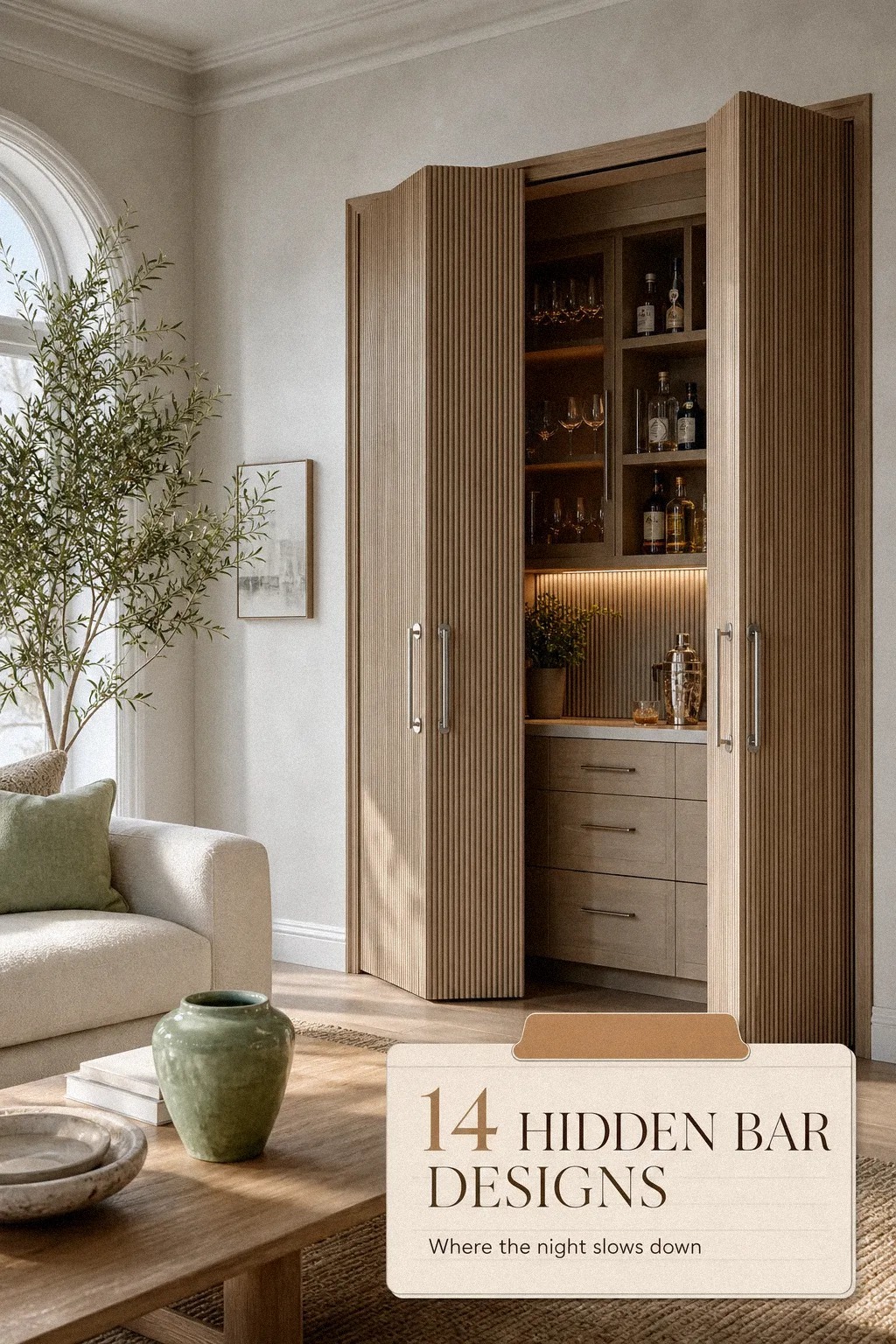
- ✓ Conceal a bar behind fluted living room doors (The Two-Reveal Rule)
- ✓ Convert a corner bookcase into bottle storage
- ✓ Mount framed art over a drop-down shelf
If you’re planning one now, the smartest path is to treat it like living-room storage with a little ceremony built in. That’s why these 14 ideas stay believable in real homes, not just pretty photos.
- Conceal a bar behind fluted living room doors (The Two-Reveal Rule)
- Convert a corner bookcase into bottle storage
- Mount framed art over a drop-down shelf
- Style a faux cabinet beside the sofa
- Slide ribbed glass panels across the bar
- Tuck a tray bar inside the media wall (The Pull-Out Host Move)
- Disguise bottles behind cane console doors
- Build a corner niche with brass rails?
- Paint the hidden interior in glossy plum
- Install pocket doors around a dry bar
- Camouflage stemware inside matching wall moulding
- Hide a mini fridge under closed shelving (Instead of Letting It Shout)
- Backlight the reveal with warm LED strips (The Three-Height Light Stack)
- Stage closed doors with lamps and books
1Conceal a bar behind fluted living room doors (The Two-Reveal Rule)
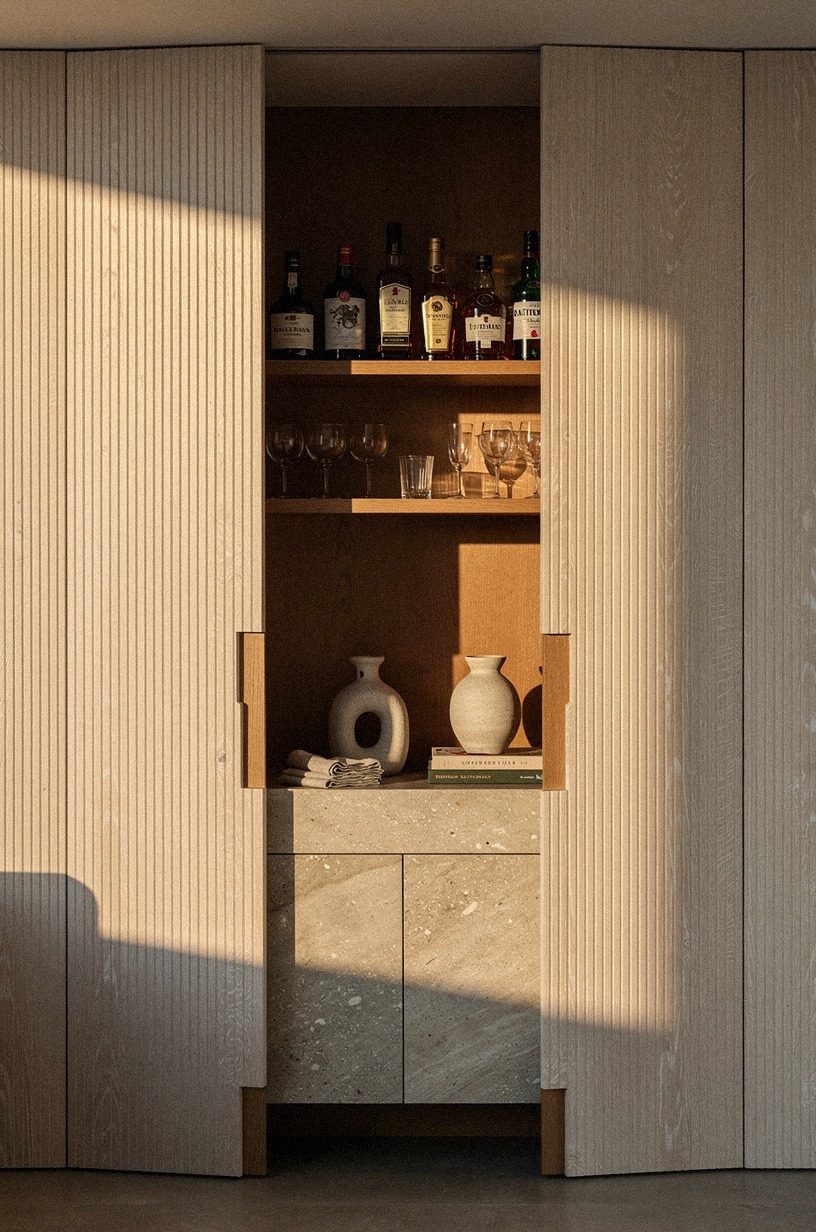
Start with doors that feel architectural, not novelty. Cerused white oak with narrow fluting gives you that soft shadow line the photo is showing, so when the doors sit mostly closed the wall still feels finished. I like opening them just enough to show bottles and stemware, because the tease is better than the full reveal.
If you’re placing this hidden bar in living room millwork, keep the opening centered and let the bottles sit a little deeper than the front stile. You want your eye to catch glass, not clutter. And if your sofa is already pushing 35 to 40 inches deep, a shallow bar keeps the walkway from turning into a blocked hallway.
That same spacing logic matters in this living room layout lesson about oversized seating.
I’d skip bright chrome hardware here. Aged brass reads warmer against pale oak, and it won’t fight the amber tone in whiskey bottles once you crack the doors open at night.
Typical cost by tier (US averages):
2Convert a corner bookcase into bottle storage
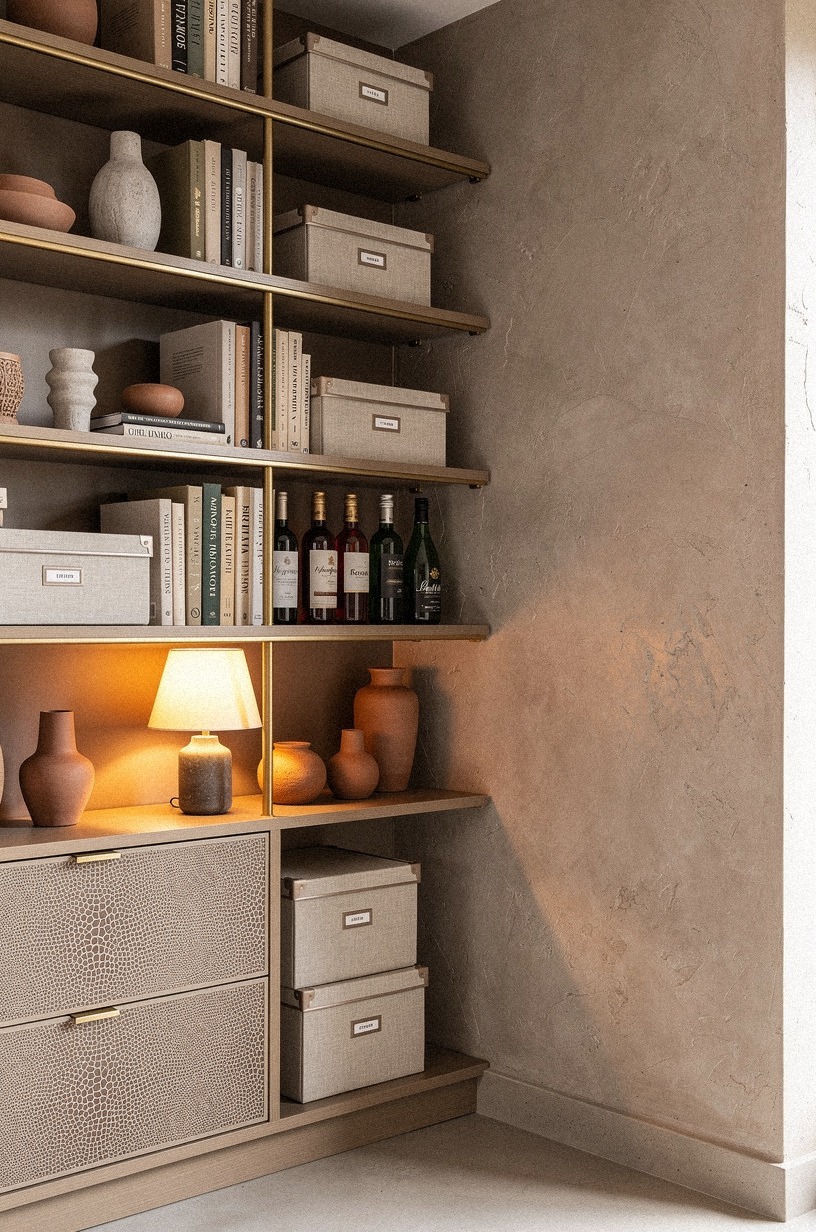
Corners are usually where good intentions go to die, so use that awkward angle for something useful.
3Mount framed art over a drop-down shelf
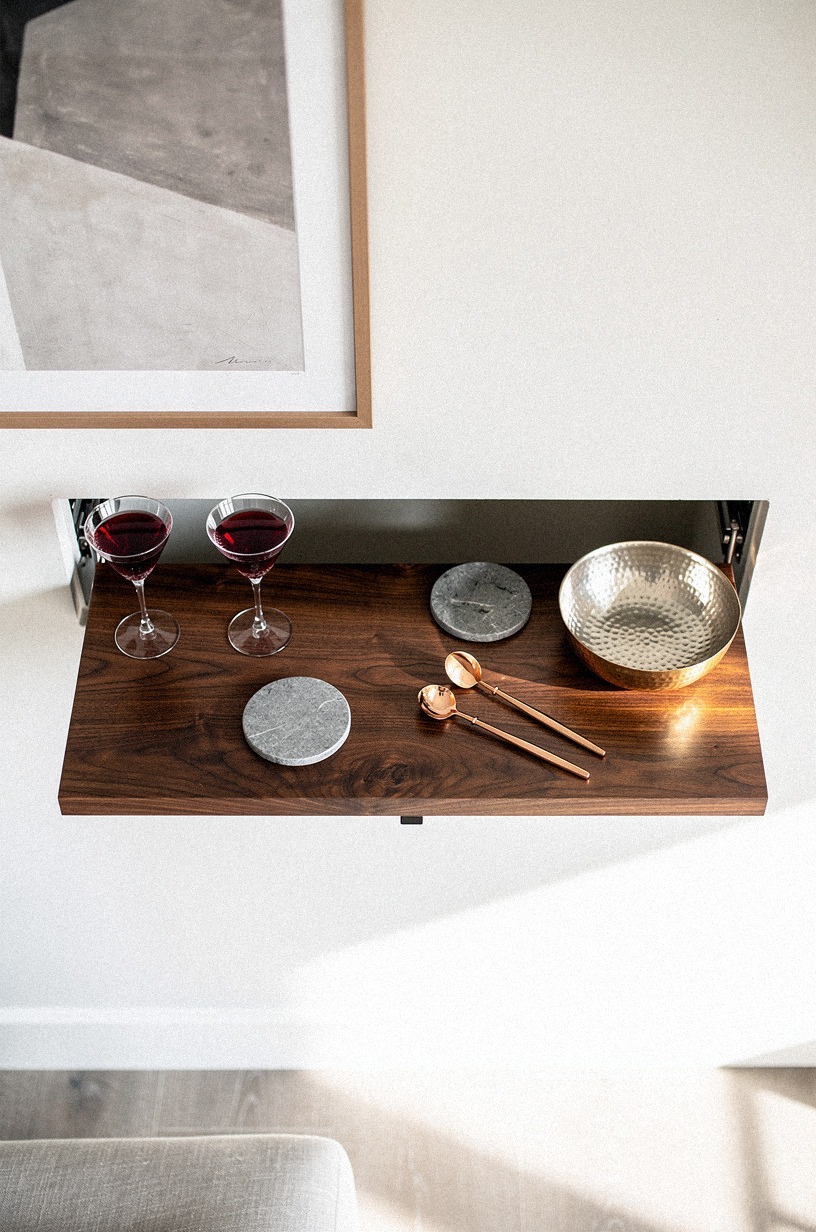
This one works because the art earns its square footage twice. A framed piece over a book-matched walnut panel keeps the wall collected when the shelf is up, and then the lowered ledge becomes a serving surface when you need it. It feels a little clever, yes, but not showy.
If you’re trying hidden bar cabinet living room solutions in a narrow zone, the drop-down shelf keeps depth under control. Your coffee table still wants to sit about 16 to 18 inches tall and around two thirds of the sofa length, so a bulky cabinet can quickly make the room feel overfurnished. A slim fold-down panel doesn’t.
I’d rather see one strong artwork here than a gallery cluster. Plum linen matting or a dark wood frame ties back to glassware beautifully, and the whole moment feels richer if your wall color is already leaning warm, like the blush direction in this paint story on fixing a plain living room.
4Style a faux cabinet beside the sofa
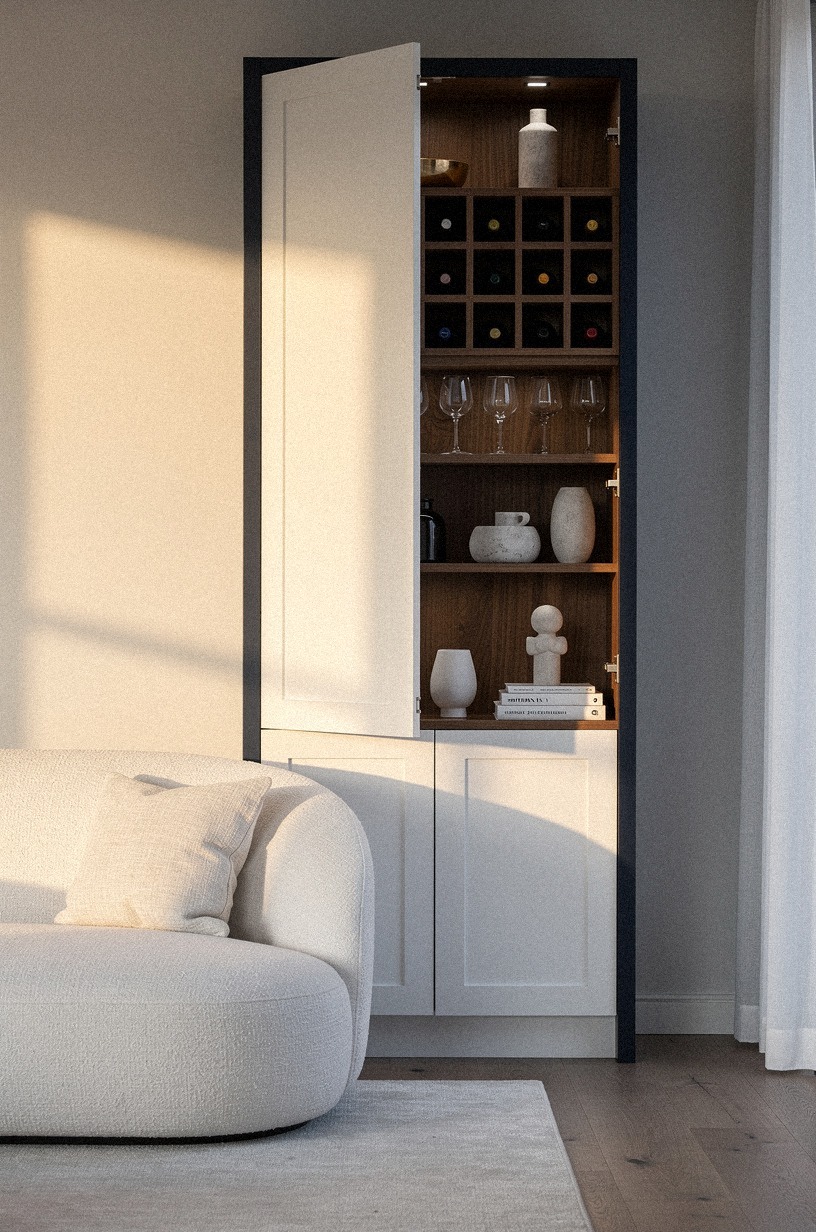
A faux cabinet works when it behaves like a normal sideboard all day. West Elm Anton solid wood proportions, or anything close, look believable beside a sofa because the height feels familiar and the cracked doors don’t read theatrical. You want a guest to assume it holds board games.
Put this beside seating only if you still have enough breathing room to move a tray through without twisting sideways. If your rug is an 8×10 or 9×12, front legs of the seating should still sit on it cleanly, with the cabinet floating just off the edge. But keep the door swing modest or you’ll hate opening it in real life.
Inside, line the back with a darker tone than the exterior. Farrow & Ball Hague Blue No.30 is especially good if your sofa fabric is creamy or taupe, and it plays well with the lived-in warmth you see in this article about smaller living rooms holding warmth better.
5Slide ribbed glass panels across the bar
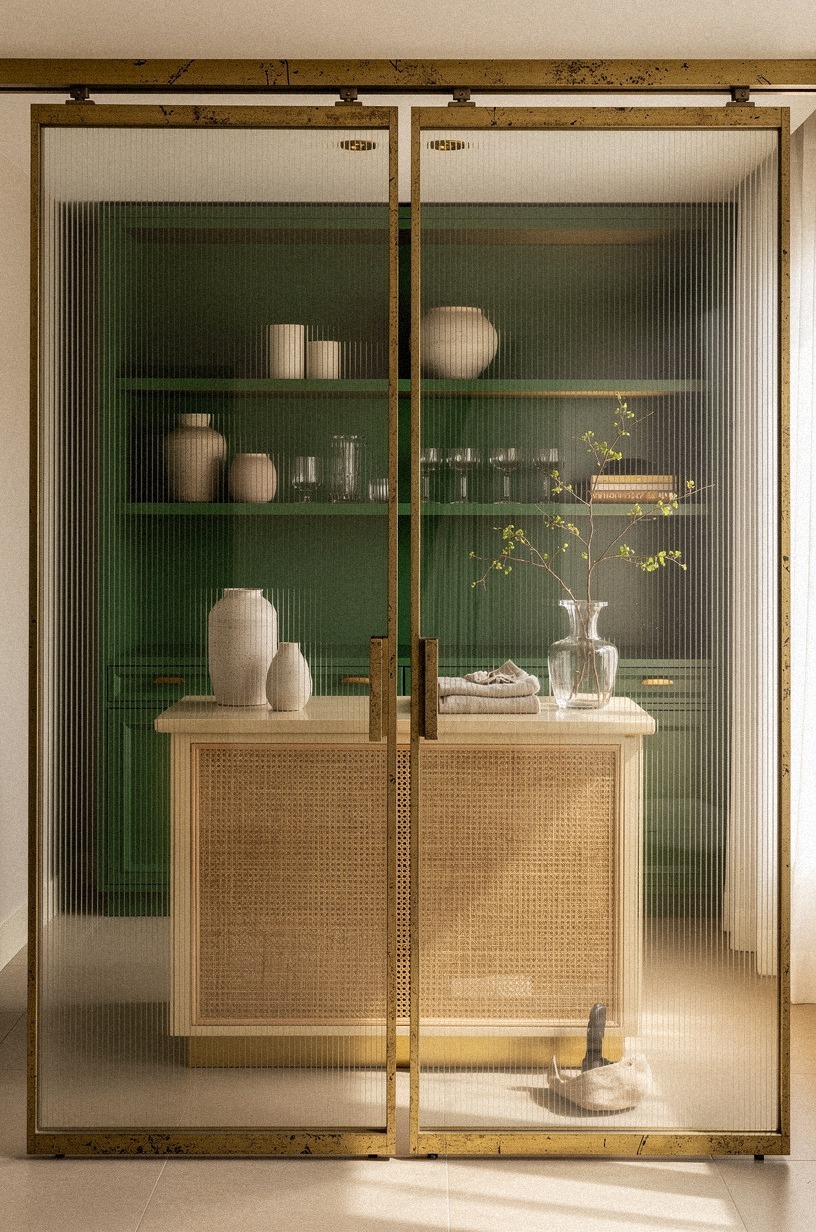
Ribbed glass is for people who want secrecy without a hard stop. The texture blurs labels and shakers, yet you still get that soft gleam coming through, which is why this hidden bar in living room setup feels expensive.
You don’t see the mess. You see mood.
If your palette already has emerald, cream, and gold, lean into that and let the glass do the softening. I’d keep the cabinet lines strict and square so the ribbing doesn’t start feeling fussy. And honestly, this is one case where too much open shelving makes the whole thing less grown-up.
Use warm bulbs only, then repeat one diffused surface elsewhere, maybe a lamp with ribbed glass or a reeded vase, so the bar doesn’t look like a random special effect. That layered-light thinking is exactly what makes a fireplace wall hold people longer, and it works here too.
6Tuck a tray bar inside the media wall (The Pull-Out Host Move)
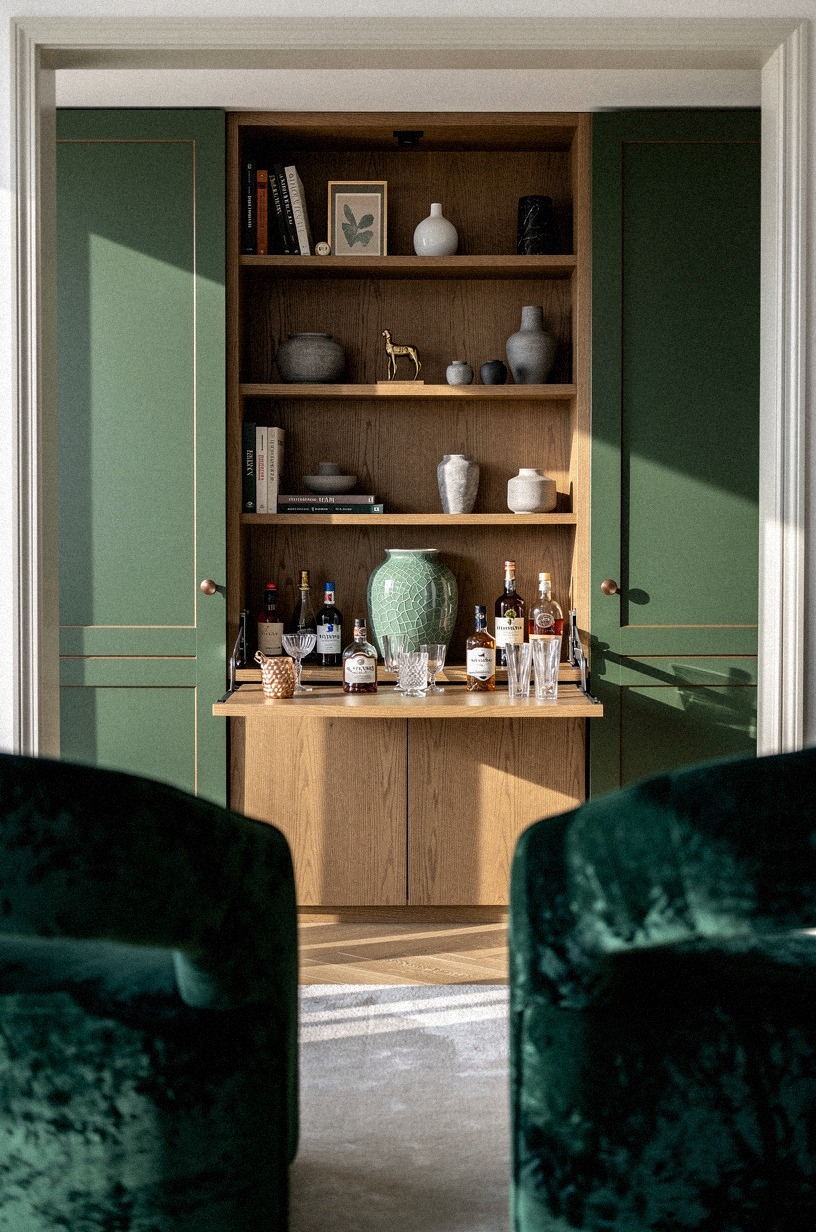
A media wall already asks for hidden storage, so sneaking a tray bar into it feels natural.
7Disguise bottles behind cane console doors
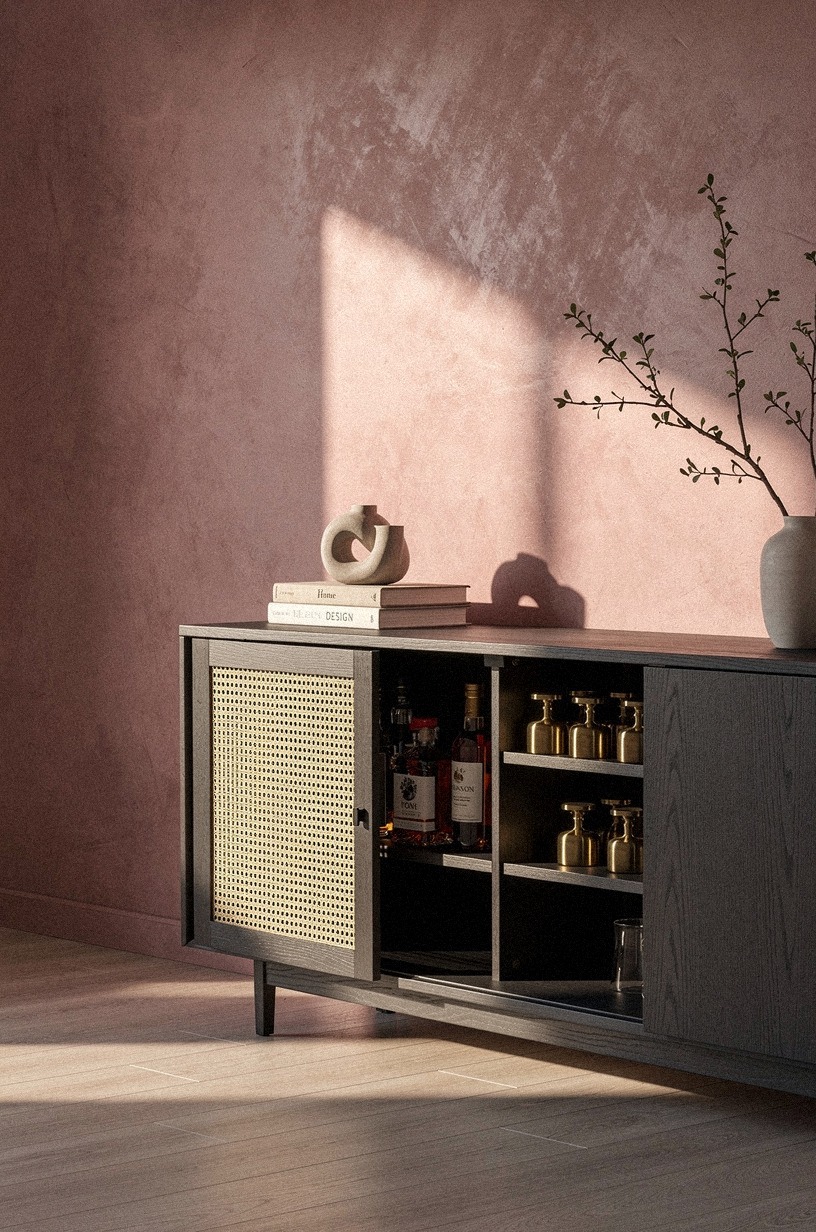
Cane doors are perfect when you want the bar to breathe a little. A charcoal-painted console against a dusty rose Venetian plaster wall gives you that soft contrast the image is selling, and the cane keeps the front from feeling heavy. You still get texture with the doors shut.
I wouldn’t overfill this one. Two bottle heights, a stack of napkins, maybe one ice bucket, and you’re done. Because the weave already has visual movement, clutter shows up faster behind cane than behind solid wood.
But if your room leans plain, that woven face can be the exact nudge it needs.
Pair it with warm metal, not black pulls. Unlacquered brass looks better as it dulls down, and that slight patina helps the cabinet feel like it belonged there before the bottles did. For more on that soft-warm direction, I like this piece on why a room can feel cold when it’s too open.
8Build a corner niche with brass rails?
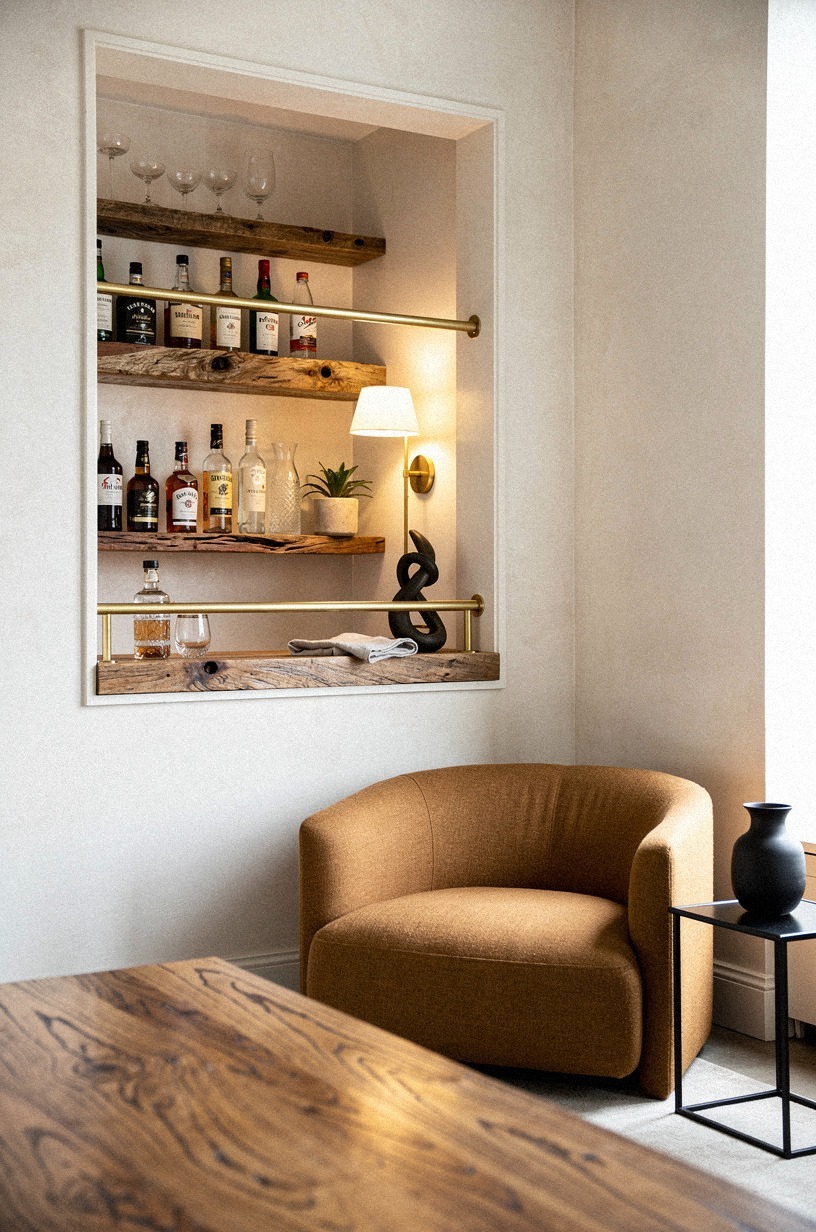
Yes, if your corner is deep enough to read as an alcove instead of a mistake. A reclaimed white oak shelf stack with slim brass rails gives bottles just enough structure, and the warm white niche in the photo proves you don’t need a dark moody insert every single time. Why should hidden bars always whisper in navy?
The key is keeping the niche visually tied to nearby seating. Camel upholstery, one black accent, and a rail that catches lamp light will do more for cohesion than a pile of decorative objects ever will.
I also think corners deserve fewer tiny accessories than people give them. Small things scatter the eye.
If you’re renting, fake this with a freestanding bookcase tucked into the corner and a pressure-fit rail kit inside. IKEA BILLY oak effect can get you surprisingly close, especially if you style the outside with the same grounded warmth you see in this article on terrace textures out-warming a living room.
9Paint the hidden interior in glossy plum
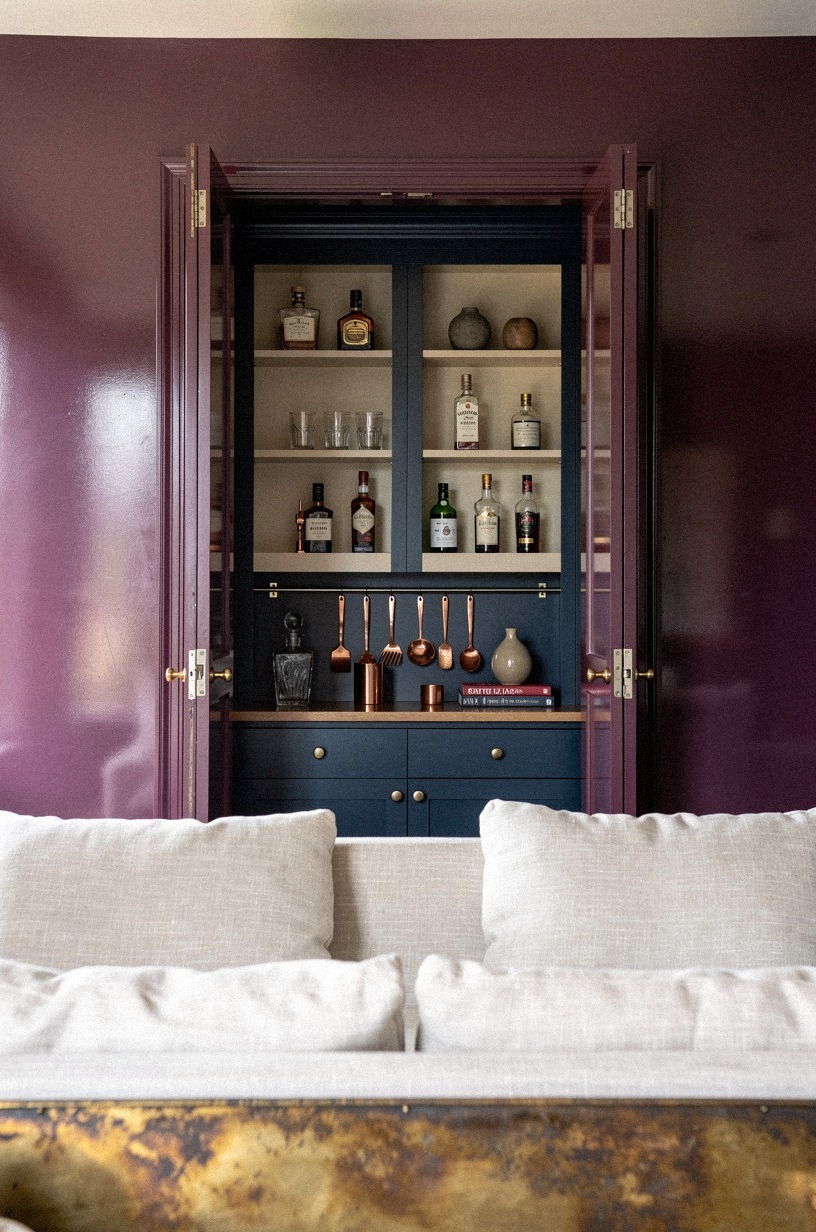
Glossy plum is bold, but behind closed doors it behaves.
10Install pocket doors around a dry bar
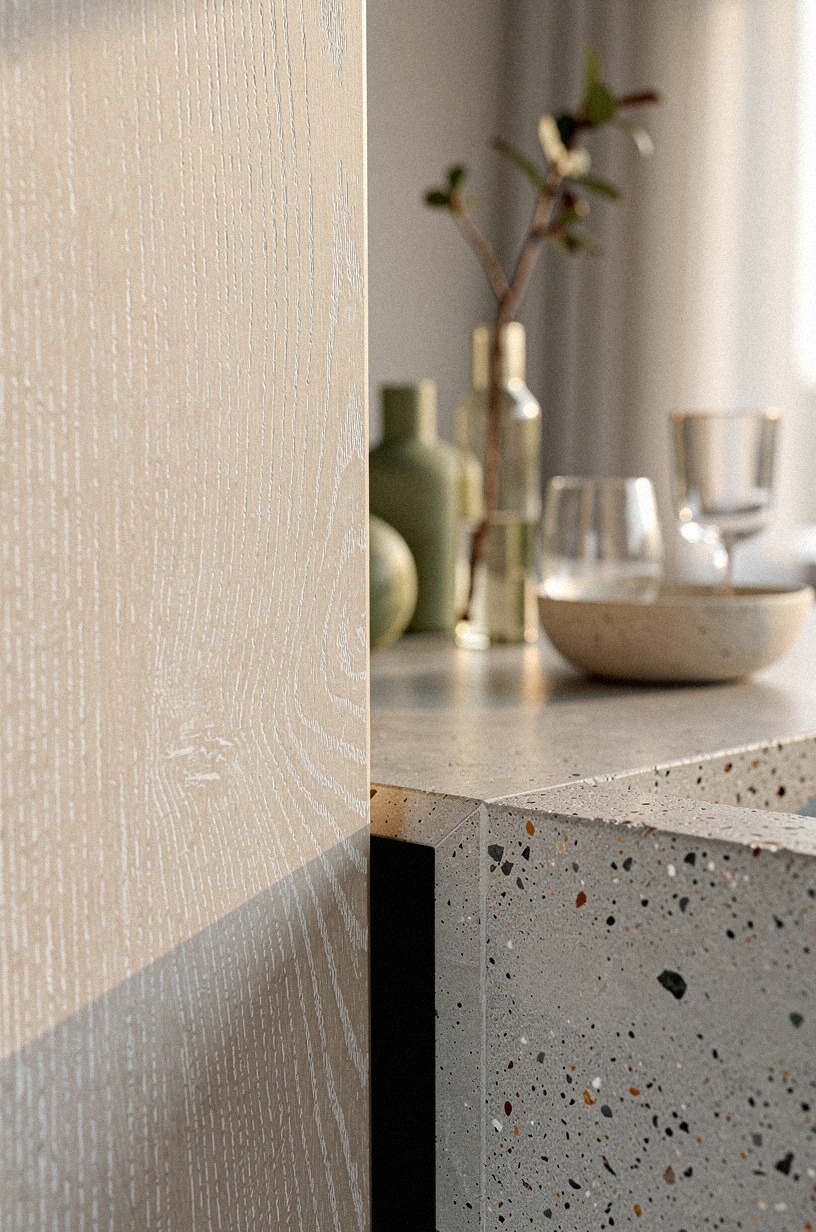
Pocket doors are the grown-up answer if swing clearance is driving you nuts. A poured concrete countertop with a clean oak pocket detail feels tailored because nothing interrupts the line when the doors disappear.
You slide, pour, slide back. Done.
This is especially smart if the bar sits near a traffic lane or media wall, where regular doors would clip a chair or block the sightline. I learned this after fighting a hinged cabinet in a narrow room for a year, and I wouldn’t go back. The hidden bar in living room idea is only good if it stays easy at 9 p.m. too.
Keep the hardware nearly invisible and spend your money on the glide quality instead. Cerused white oak deserves smooth movement, not a sticky track that makes every reveal feel like a chore. For spacing discipline, I still reference this piece on oversized sofas blocking flow.
11Camouflage stemware inside matching wall moulding
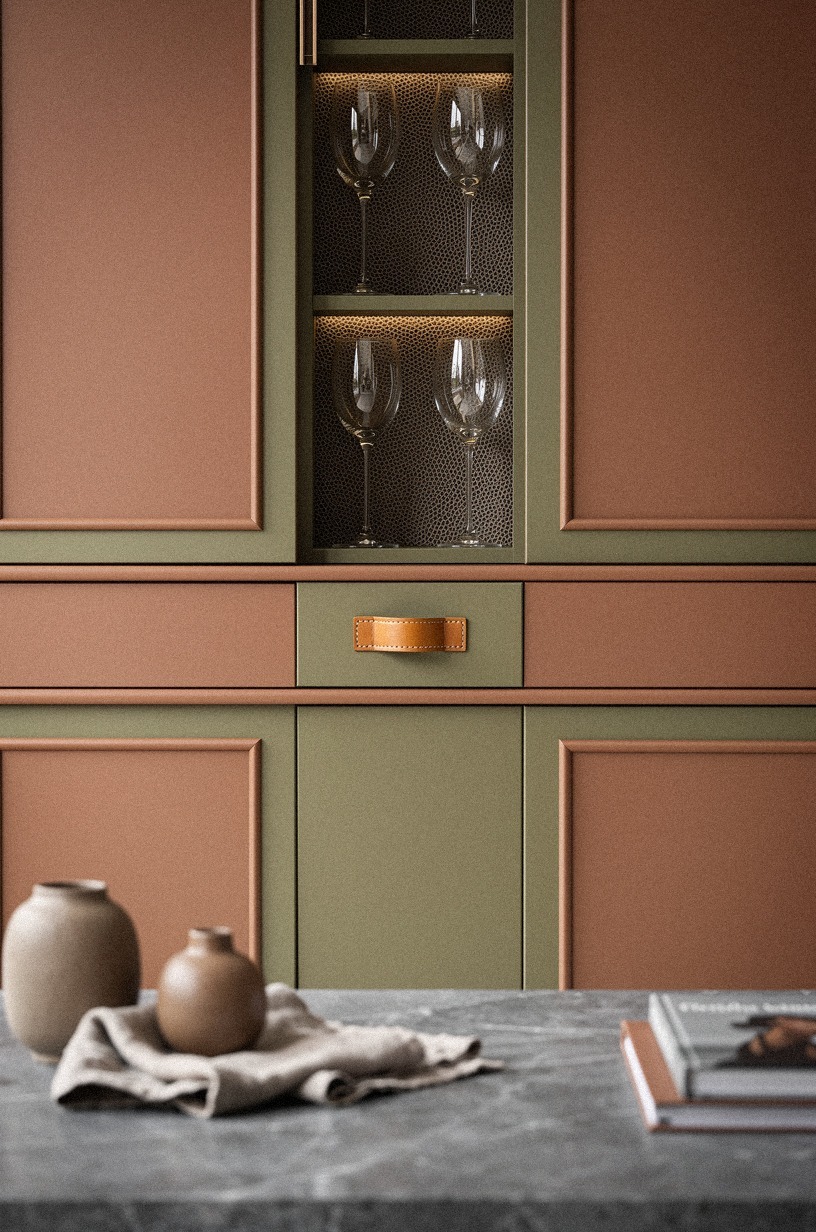
This is the sneakiest move in the bunch, and that’s why I love it.
12Hide a mini fridge under closed shelving (Instead of Letting It Shout)
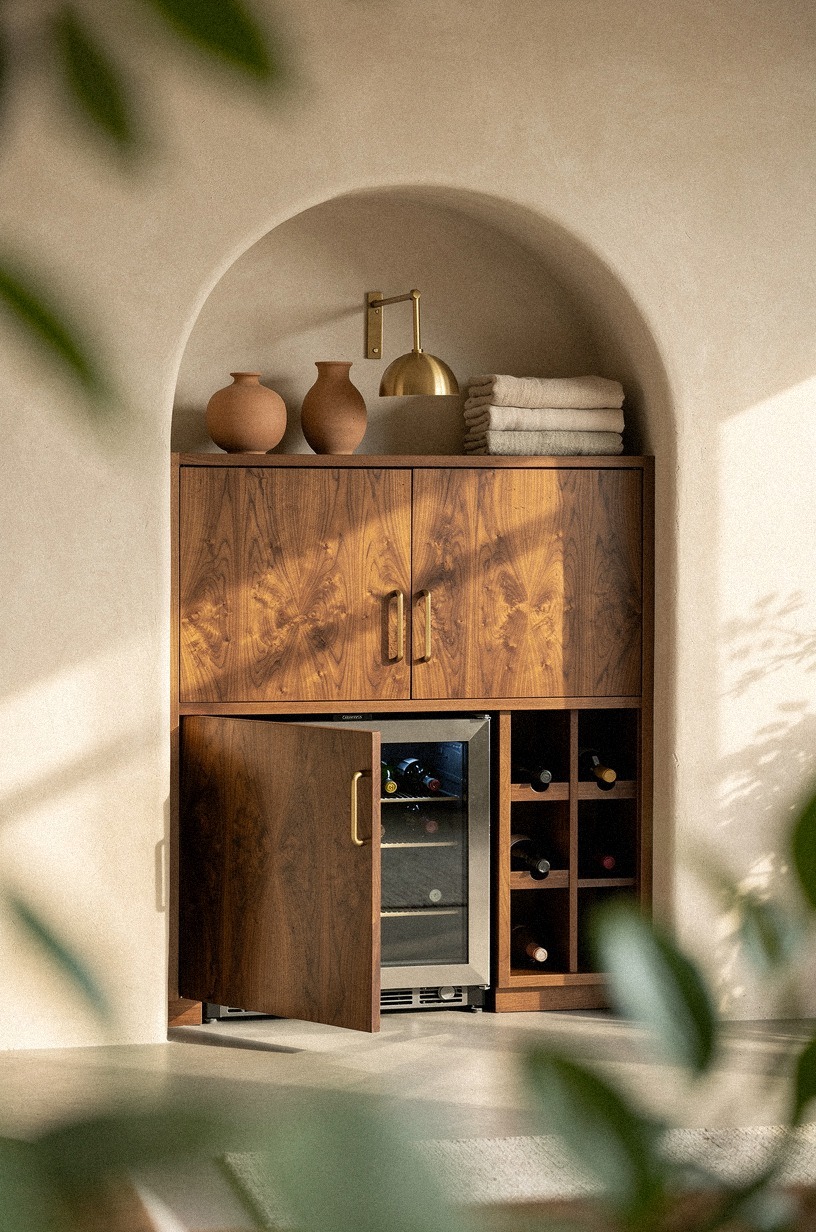
A mini fridge is useful, but it can wreck the room if you let it sit out like office equipment. Tuck it under shelving behind book-matched walnut doors and suddenly the practical part disappears into the architecture.
That’s the whole point. You get cold drinks without the dorm-room signal.
Ventilation still matters, so leave the manufacturer’s required clearance and don’t pack the shelf cavity like a suitcase. If leafy foreground and plaster openings are already part of your room, this setup will feel extra natural because the closed storage reads earthy, not technical.
But skip glossy white doors. They’ll tell on you.
This is also where size discipline pays off. A compact fridge paired with clay ceramics and linen bins looks intentional, and the room stays warmer in mood, especially if you borrow texture ideas from this living room warmth piece on velvet and soft surfaces.
13Backlight the reveal with warm LED strips (The Three-Height Light Stack)
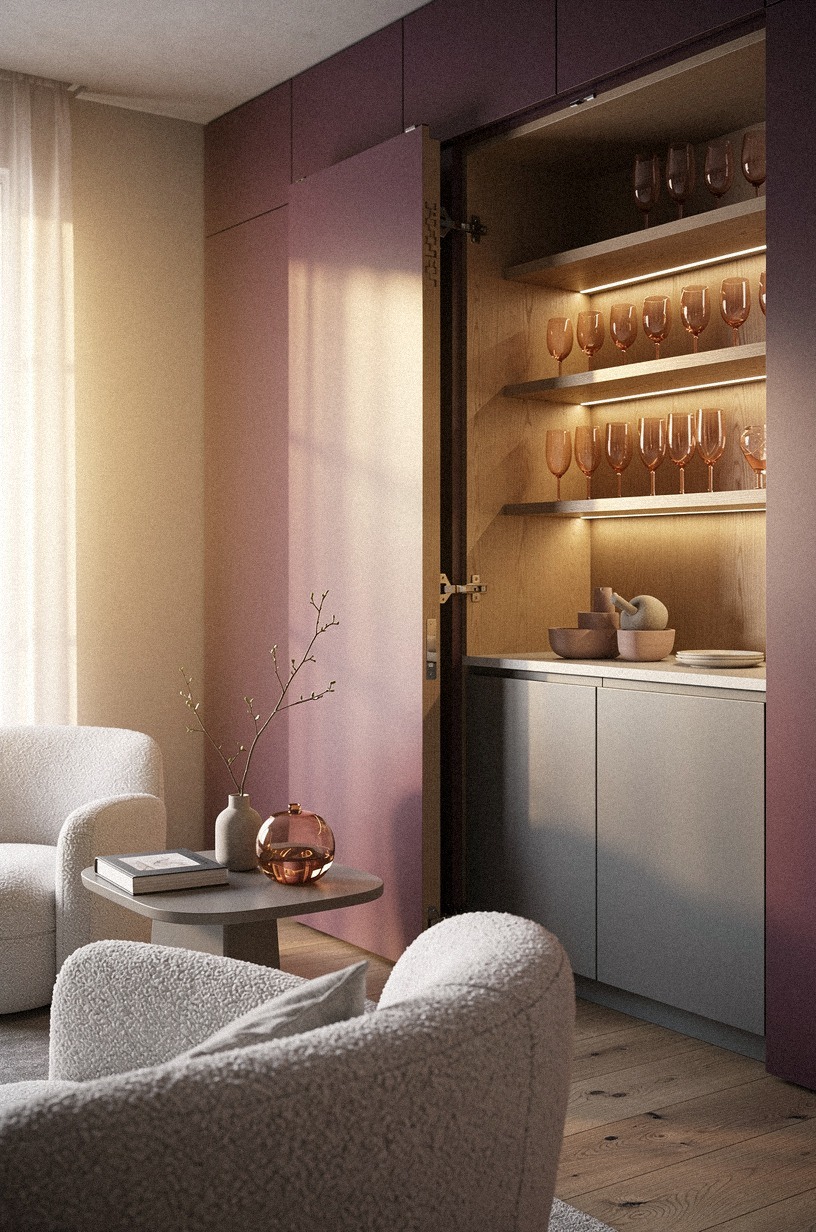
Warm backlighting is what makes a hidden bar feel like a destination instead of a cupboard. Rose gold glassware catches that low amber light in a way overhead fixtures never can, and the plum-and-gray built-in in the photo proves how much depth one tucked strip can add. This is the moment people remember.
Keep the LEDs warm, dimmable, and hidden behind the front rail so you see glow rather than source. Then stack your room lighting at three heights: bar, lamp, and eye-level sconce or picture light. And yes, you’ll notice the room settle down the second the overhead goes off!
I wouldn’t use cool white here under any circumstance. Warm LED tape next to gray cabinetry makes the finish look expensive, while cool light makes everything look a little cafeteria. For more on why side lighting changes the whole room, this fireplace linger-time article gets the mood shift exactly right.
14Stage closed doors with lamps and books
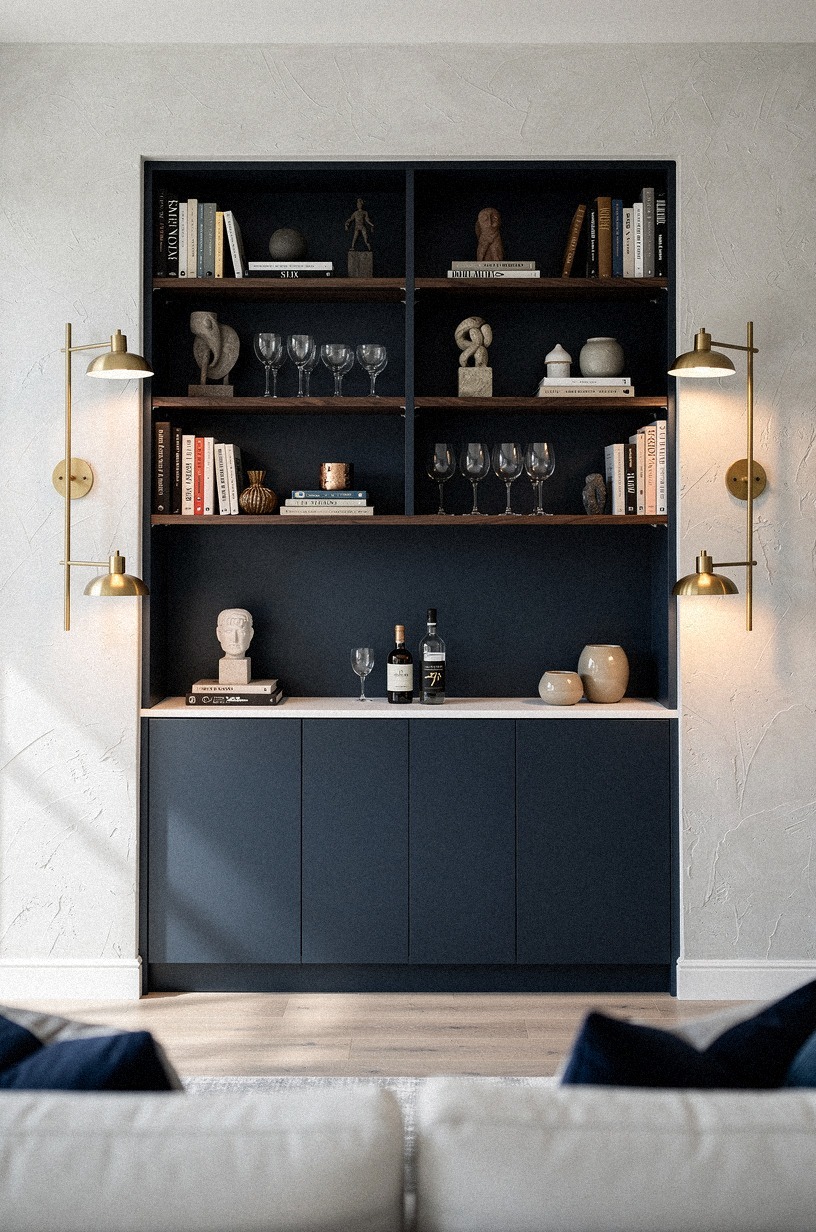
The closed look matters just as much as the reveal, maybe more. A wall of doors styled with navy lacquer tones, a lamp, and a few books feels settled even before anyone opens a panel. That’s why this bars in living room idea lasts longer than trendier showpiece carts.
Think in layers, not decoration. One lamp for glow.
A horizontal book stack. A bowl or box with enough weight to hold the center. If your closed doors already look complete, you’ll use the bar more because opening it feels like uncovering a treat instead of exposing storage.
But don’t style every inch. Negative space is what keeps the look believable. One of the easiest ways to get that right is to study how a smaller living room can feel warmer with less visual sprawl and borrow the restraint.
Why hidden bars are suddenly everywhere in living rooms
I don’t think this trend is really about drinking at home. It’s about wanting our living rooms to work harder without looking busier. We ask one room to host movie night, hold the TV, hide chargers, soften the acoustics, and still feel adult when friends come over.
A visible bar cart can do the job, sure, but it often adds one more shiny object to a room that’s already asking for calm.
What changed in 2026 is the styling language around storage. People still want warmth, but they don’t want every function fully exposed.
That’s why fluted oak, cane, ribbed glass, moulding, and book-matched walnut keep showing up. They let you hide utility inside something tactile.
And honestly, that shift makes sense. The best living rooms don’t flex every feature at once.
They reveal the good parts slowly.
The Questions I Get Asked Most
What is the best Hidden Bar Ideas for the Living Room [Hide It in Plain Sight] for a small living room?
A corner bookcase or a faux cabinet beside the sofa is usually the best pick. They use dead space well and keep the room looking calm. I like a shallow IKEA BILLY oak effect base or a slim cabinet, especially if you already fixed your layout using this sofa-size guide.
Where can I buy Hidden Bar Ideas for the Living Room [Hide It in Plain Sight] pieces on a budget?
Start with IKEA, Target Threshold, and Wayfair for cabinets, bins, rails, and lighting. Facebook Marketplace is still the best wild card for wood sideboards.
Look for: oak bookcases, ribbed-glass fronts, brass pulls, linen boxes. Skip anything too glossy if you want the hidden look.
How much does a Hidden Bar Ideas for the Living Room [Hide It in Plain Sight] makeover cost?
Most living room hidden bar makeovers land around $100 to $300 for styling upgrades and simple storage swaps, then climb fast with millwork. Paint and hardware stretch the budget furthest. Free wins: editing shelves, regrouping books, moving lamps, reusing trays you already own.
Can I create a Hidden Bar Ideas for the Living Room [Hide It in Plain Sight] on a budget?
Yes, and you really don’t need custom cabinetry first. Budget versions can still look polished if you use one secondhand cabinet, one warm lamp, and one lining color inside the doors. Cheap wins: peel-and-stick lighting, thrifted coupes, leftover paint, basket storage, Marketplace pulls.
Is a Hidden Bar Ideas for the Living Room [Hide It in Plain Sight] worth it in a small space?
Yes, especially in a smaller room. The hidden format keeps visual noise down, which makes the room feel better, not busier. Tuck the bar outside your main path, keep the cabinet shallow, and let your rug and seating plan lead the layout instead of the bottles.
Is Hidden Bar Ideas for the Living Room [Hide It in Plain Sight] a good idea for a rental?
Yes, if you choose low-commitment moves. Renters can fake the built-in look with a bookcase, removable puck lights, tension-fit rails, and peel-and-stick color inside the cabinet back. For warmth without renovation, this terracotta living room piece is a good companion read.
What I Learned After Hiding a Bar More Than Once
The first hidden bar I tried looked good for exactly one day. After that, it just looked needy. I had leaned too hard into the bar part and not hard enough into the living room part, so every bottle, shaker, and coupe was asking for attention all at once.
It photographed well. It lived badly. That’s the difference nobody warns you about when these ideas start circulating online.
What works, at least in my experience, is deciding what your room is trying to protect. Calm?
Warmth? A cleaner TV wall? Easier hosting? Once you know that, the style choice gets simpler.
Fluted oak is good when the room needs softness. Ribbed glass is good when you want glow without a hard visual stop.
Cane works when the space feels too solid and needs breath. Pocket doors win when the room is tight and every swing matters. I went back and forth on that last one because hinged doors are charming, but charm fades fast when a cabinet blocks your knee every evening.
I also think people overspend on the wrong thing here. Spend on movement, finish, and light. Save on accessories. A sticky track will make a beautiful cabinet feel cheap.
Bad lighting will flatten the best paint color you picked. But affordable coupes or a secondhand tray?
Totally fine. Your guests won’t remember whether the glass cost twelve dollars or sixty. They’ll remember that the reveal felt warm, easy, and a little bit private.
And that’s really the hidden bar lesson. You’re not building a tiny set piece. You’re editing the room so hospitality is present even when nothing is open.
When the doors are closed, the living room should still feel complete. When the doors open, it should feel like the room just told a better story.
That’s when you’ve nailed it!
Where I’d Start First
If I had to pick one, I’d start with fluted doors. They hide the mess, soften the wall, and make the reveal feel intentional before you buy a single fancy bottle. Pin that look for later and let the rest of the room stay calm.