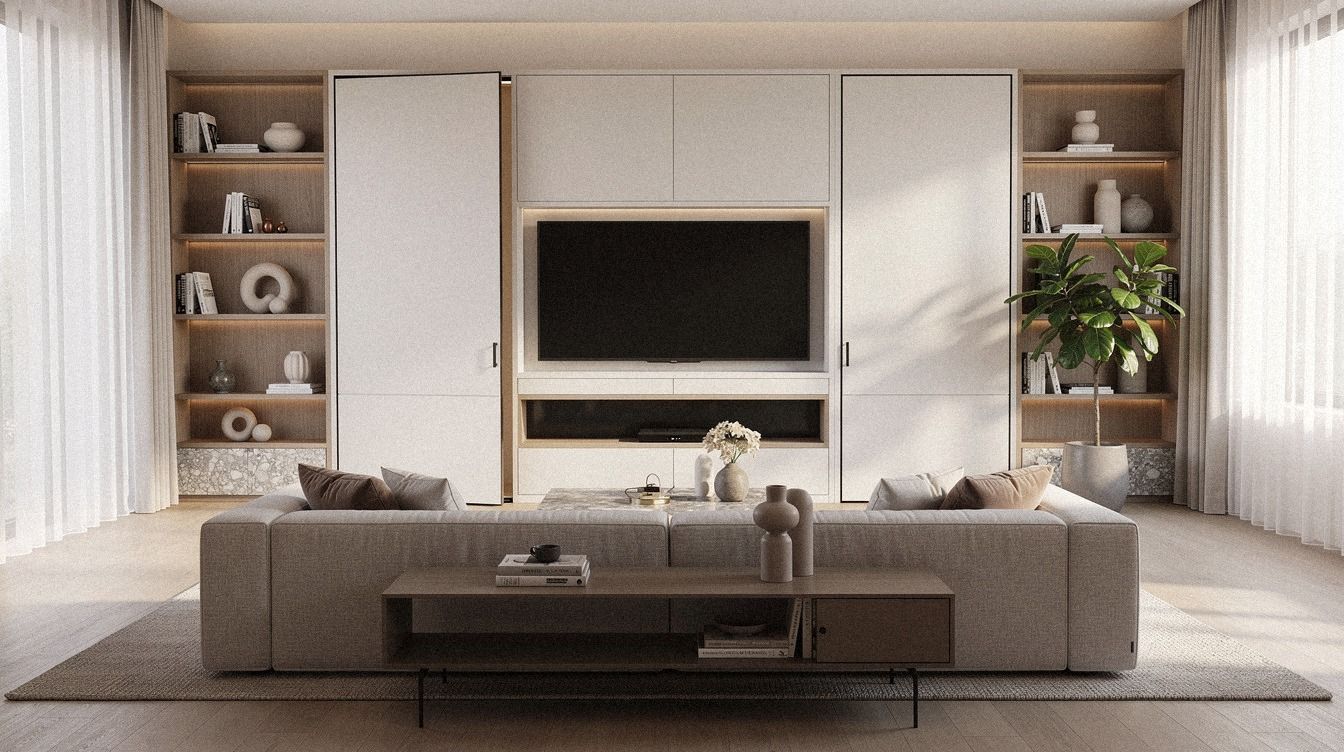
Hidden pocket door ideas to make a doorway disappear work best when the wall wins. I learned that the hard way after treating one like a normal slab and outlining it with contrast trim, shiny hardware, and way too much visual fuss. It looked expensive, but it did not disappear. Once you start thinking like a millworker instead of a door shopper, the whole opening gets quieter. That shift is what this list is really about: not buying a clever door, but borrowing moves from cabinetry, plaster, and drapery so the wall takes the room back.
- Pocket the TV wall behind flush panels
- Paint the sliding slab into limewash walls
- Wrap the opening with walnut picture molding
- Hide the track inside a coffered header
- Mirror the pocket door beside the mantel
- Continue grasscloth across the recessed panel
- Frame the reveal with built-in bookcases
- Match fluted cladding across the doorway
- Add a brass pull inside the shadow gap
- Run wainscoting over the pocket seam
- Tuck the door behind drapery returns
- Why does a flush panel beat a routed one?
- Hide the threshold inside the floor pattern
- Carry the paint sheen across the slab
- What makes grasscloth beat vinyl here?
- Tuck the track inside a wall pocket, not the ceiling
- Borrow cabinetry language instead of door language
- Use lighting to bury the seam
- Why paint the trim to match the wall instead of contrast?
- Start with the wall, not the door
- Can renters make a doorway disappear without touching the wall?
1Pocket the TV wall behind flush panels
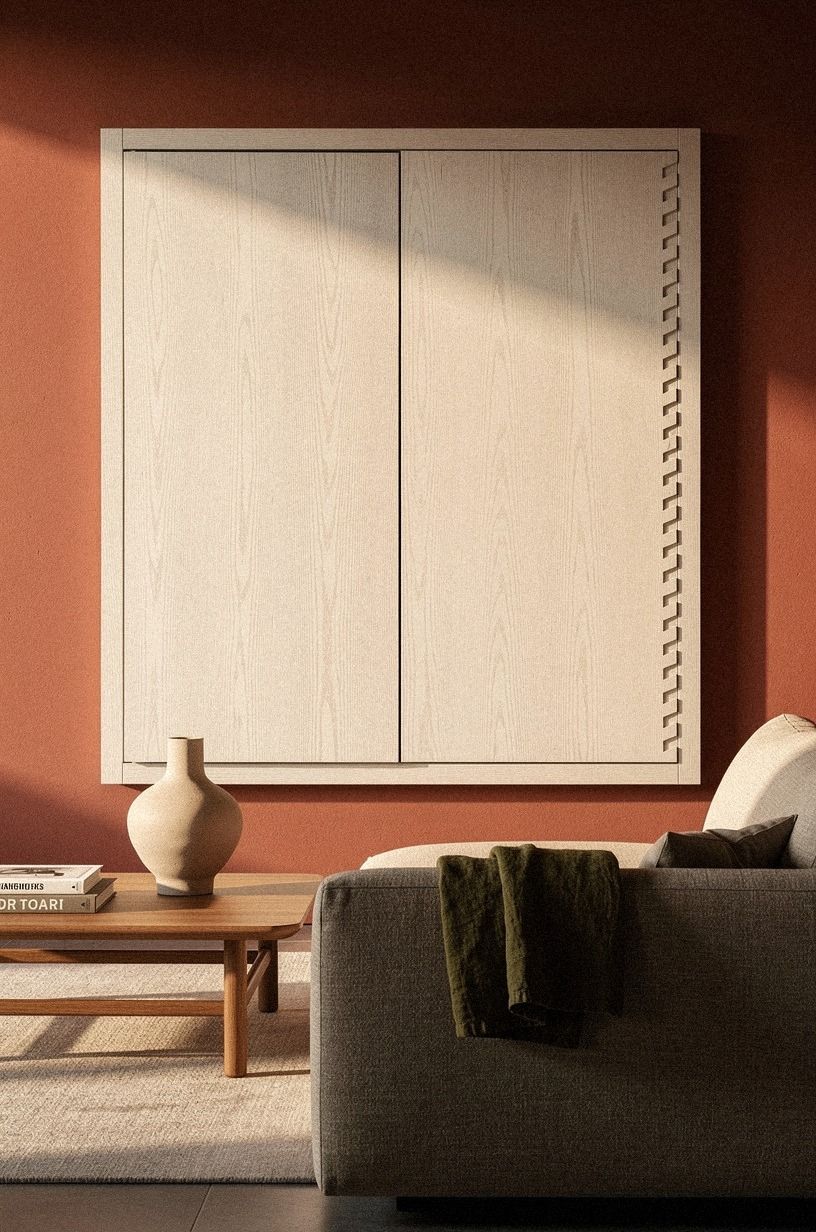
Start with the biggest visual bully in the room: the television. If your media wall already asks for attention, a visible pocket door next to it will only make the whole composition busier.
I would rather let cerused white oak do the heavy lifting, using flush panels that read like part of the millwork so your eye tracks the grain, not the seam. On a large TV wall, keep viewing distance around 1.5 to 2.5 times the screen diagonal, then size the panel rhythm around that rectangle instead of fighting it.
You want the reveals tight, the stiles consistent, and the panel widths repeated across the entire wall so the hidden opening doesn’t look like an afterthought. A Samsung Frame can sit comfortably in that layout if the surrounding bays stay calm and flat.
I made the mistake once of centering the TV but changing panel widths near the door. Bad move. The moment the spacing shifts, you see the pocket.
Keep the wall broad, quiet, and slightly architectural, and the door vanishes while the room still feels warm.
If you’re mapping out the bigger media wall, our living room layout guide covers how sightlines and TV placement change the whole composition.
2Paint the sliding slab into limewash walls
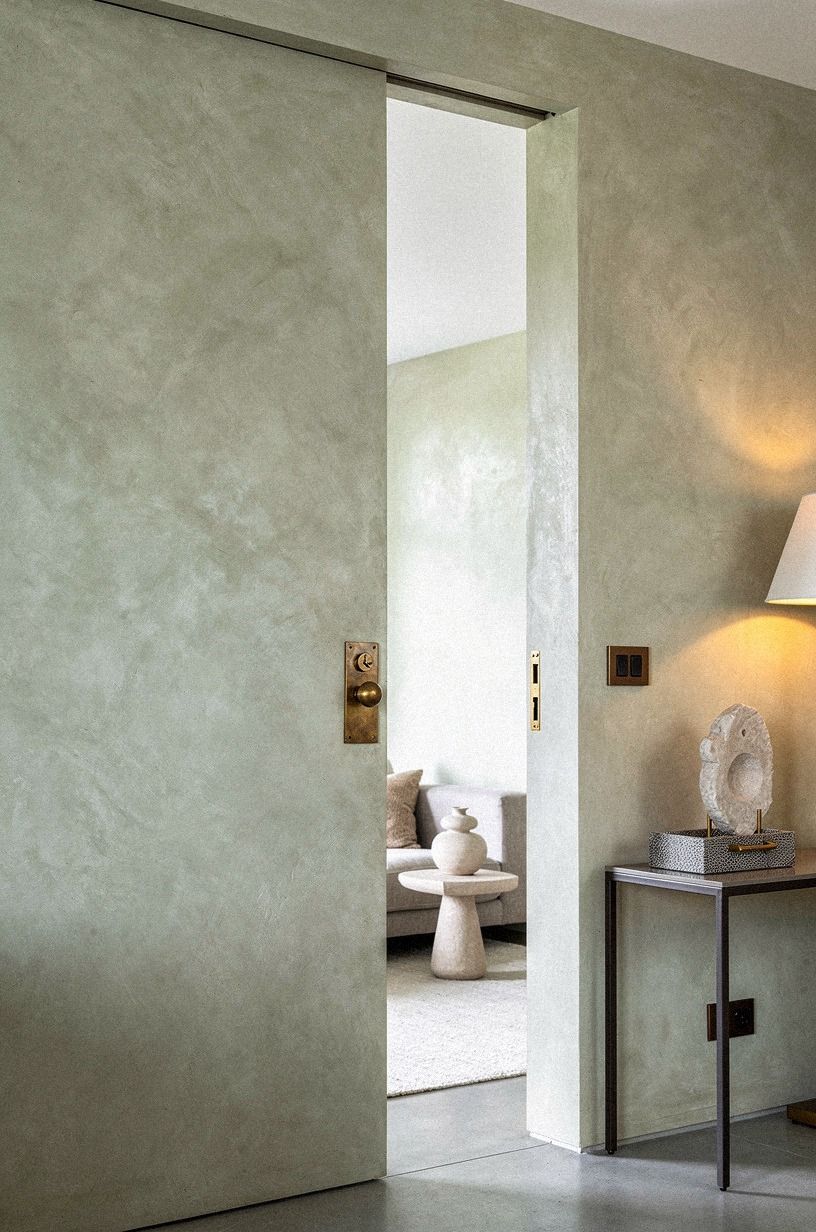
If the wall finish has movement, the door can borrow that softness. A pocket slab painted into a clay-toned limewash wall does not disappear because the slab is blank.
It disappears because the texture distracts your eye from the join. I would use Portola Paints Roman Clay for that hazy, chalked look, then keep the slab color nearly identical so the handle side does not jump out when you step into the room.
But do not stop at color match alone. The photo logic here is all about a hand-finished wall that feels breathable, almost linen-like, with the slab receding into it.
A low sofa in Belgian flax linen adjacent millwork and a pair of quiet lamps help the wall feel intentional instead of patched. If you’re working with a smaller living room, this move gives you softness without adding furniture depth, and you will still keep the opening functional. It’s subtle, but that’s the whole point!
If limewash is your lane, the limewash wall guide shows how the same move plays across fireplace walls and entryways.
3Wrap the opening with walnut picture molding
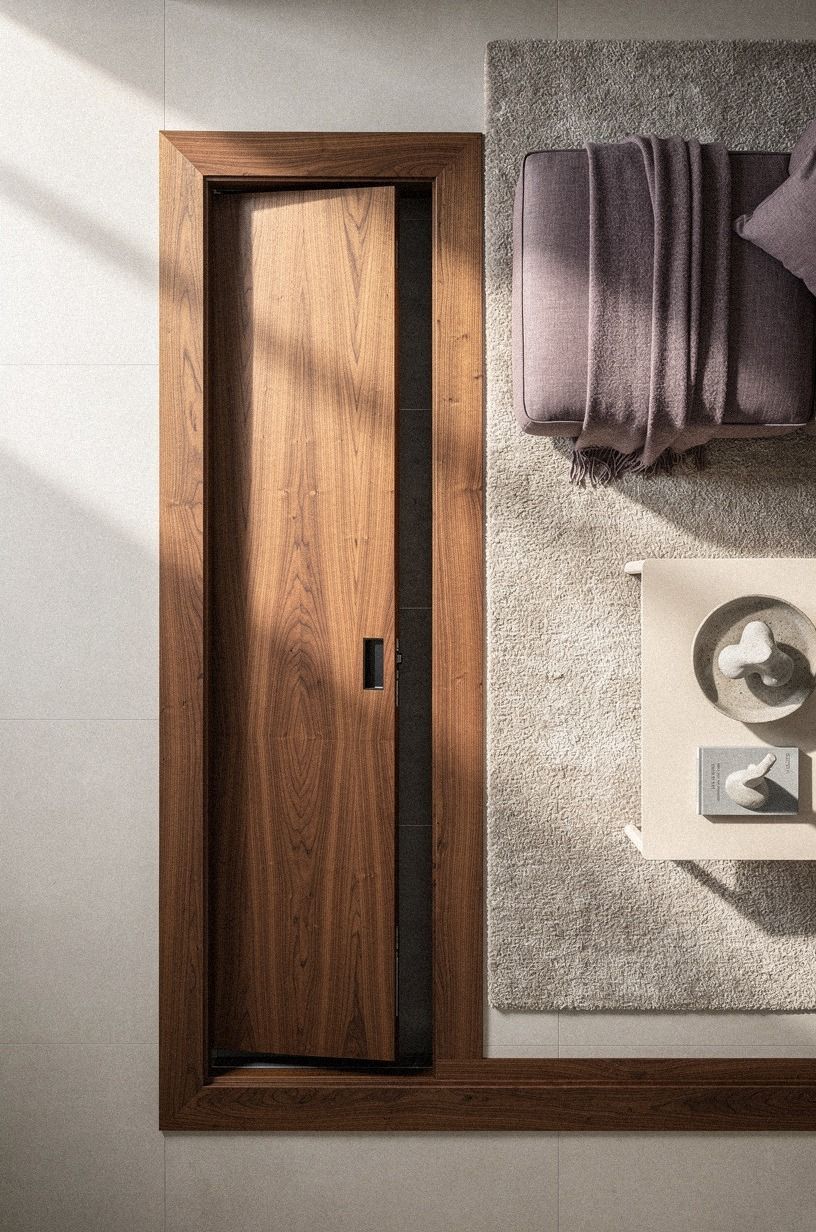
Now go the opposite direction and let precision do the hiding.
4Hide the track inside a coffered header
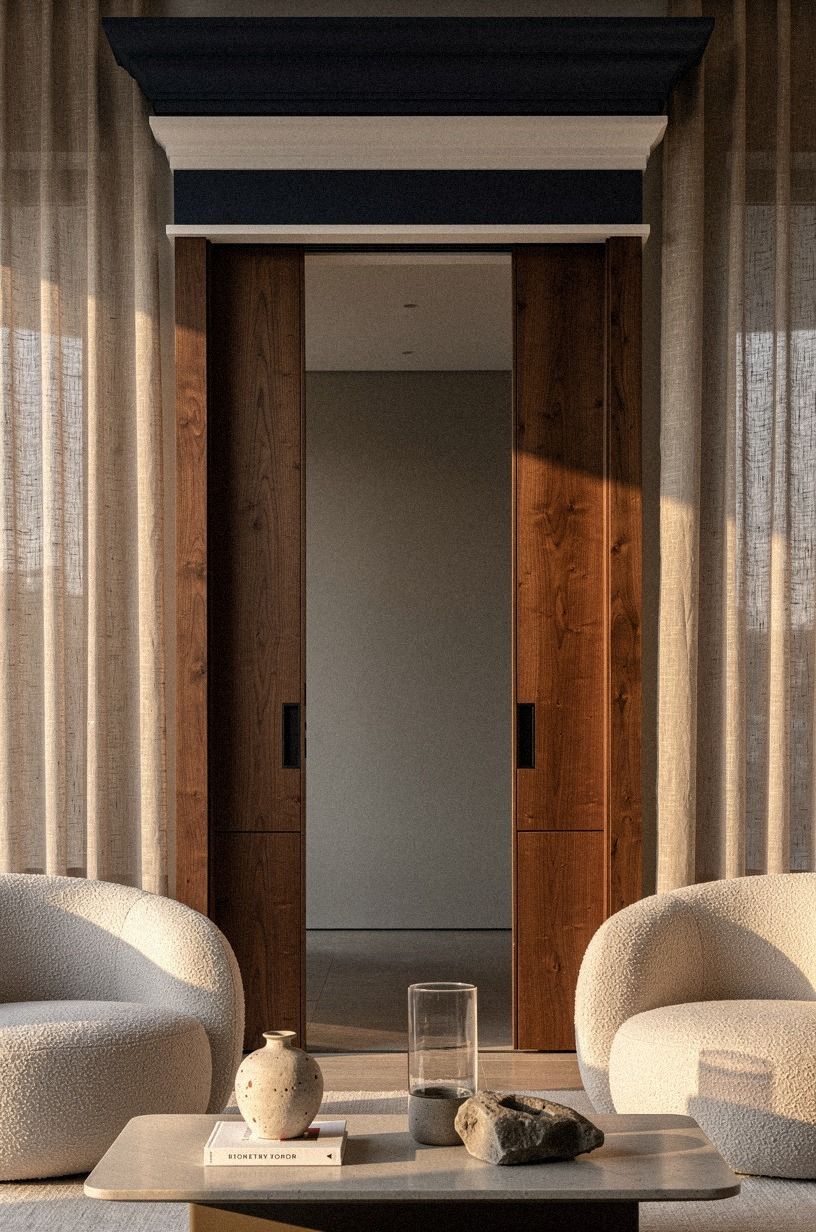
Tracks are not ugly because they are metal. They are ugly because they interrupt the story at the ceiling line.
If you build the top of the opening into a coffered header, the mechanism can disappear inside something that already has depth and shadow. I would rather see a navy lacquered beam with white inset coffers than a pretty wall ruined by exposed hardware.
Who wants a beautiful pocket door if the track still shouts from above?
This is where proportion matters more than ornament. Keep the header aligned with nearby millwork, and let the beam depth feel believable for the room instead of oversized for drama. A wall painted Farrow & Ball Hague Blue No.30 with walnut millwork underneath gives you that tailored contrast without turning the ceiling into a theme.
And if your living room has a standard 8-foot ceiling, don’t overbuild it. A clean recessed track tucked into a modest header looks richer than a chunky box that tries too hard.
If coffered ceilings are already on your radar, our coffered ceiling ideas round-up shows the proportions that hold up in a 9 to 10 foot room.
5Mirror the pocket door beside the mantel
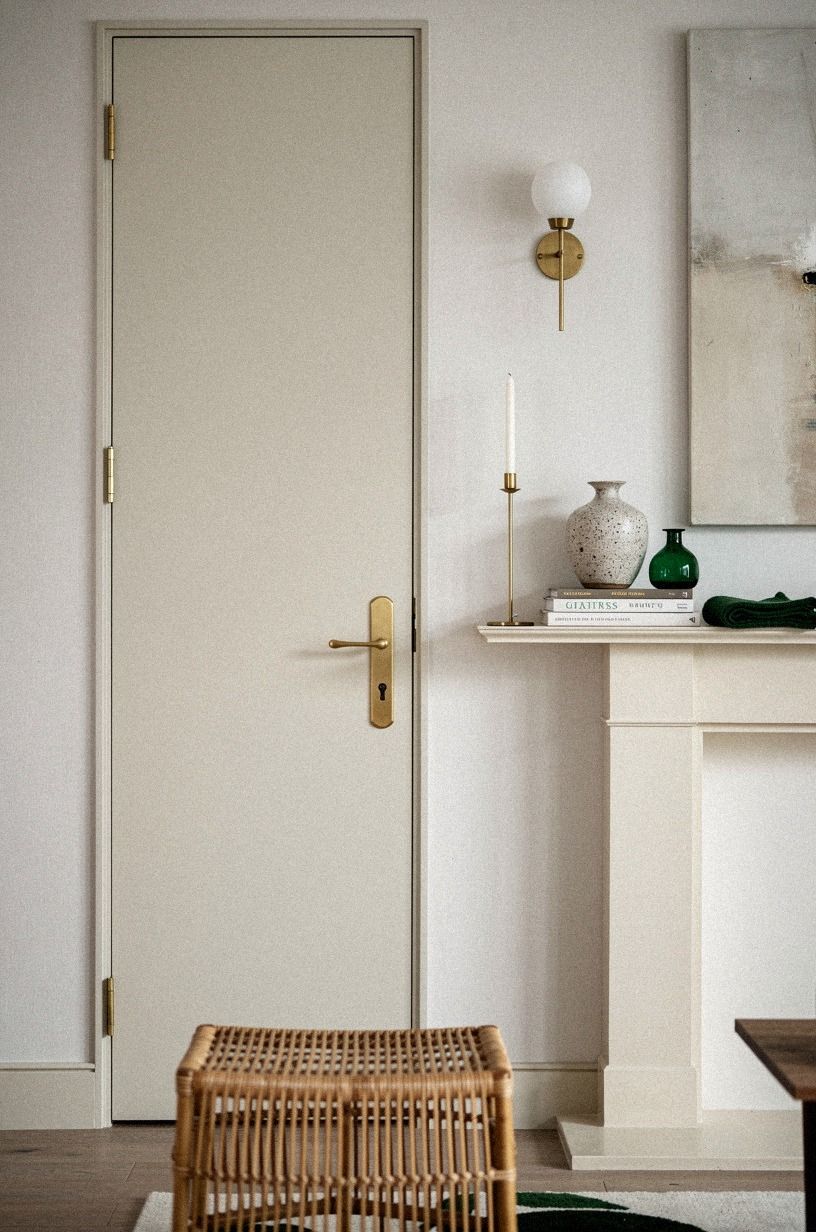
A mirror-panel pocket door works because mirrors already behave like architecture in a living room.
6Continue grasscloth across the recessed panel
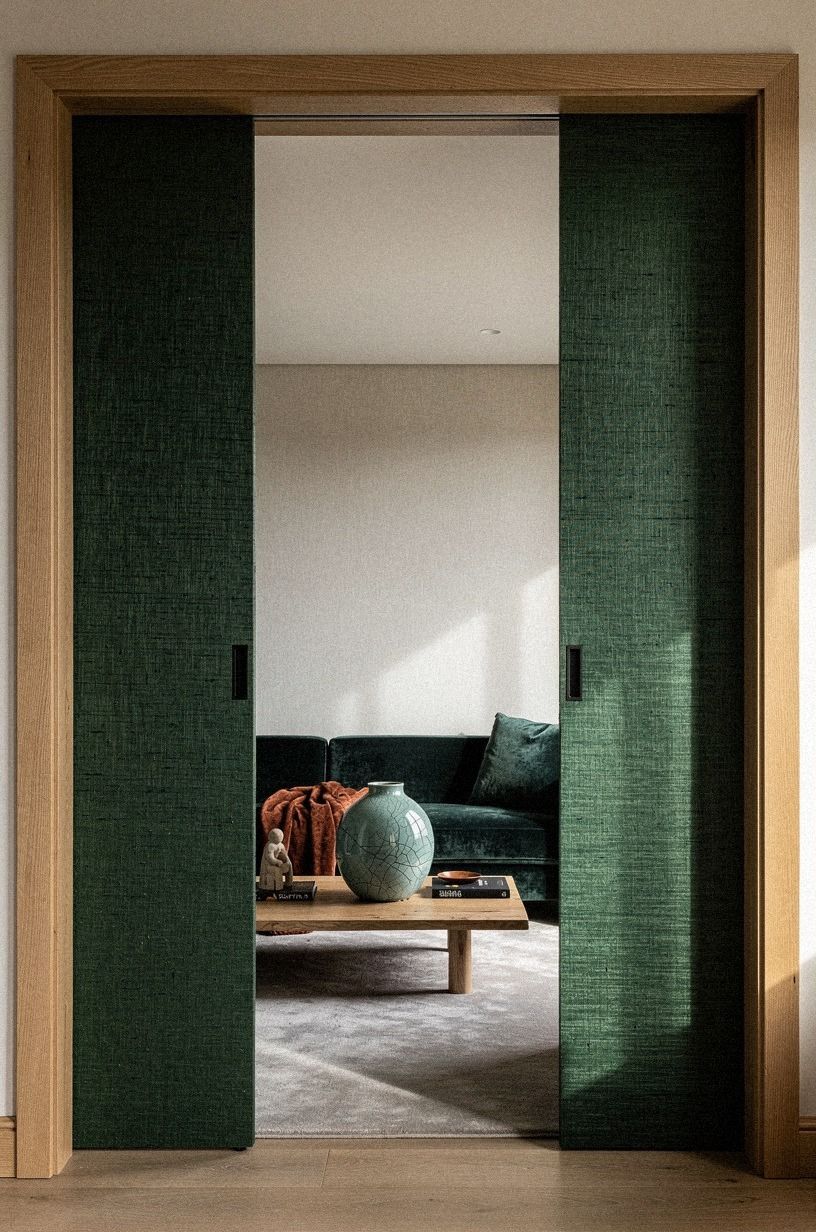
Texture can erase a seam faster than paint can. When you continue grasscloth right over a recessed pocket panel, the eye reads one wrapped surface instead of a separate object.
In a forest green living room, that means the door becomes part of the wall’s mood, especially when the weave catches light a little differently across the day. I would use Phillip Jeffries grasscloth if the budget allows, because the color depth tends to look richer from multiple angles.
But this is one of those ideas that only works if the installer respects the pattern. Match the horizontal lines, keep the edge clean, and let the casing disappear so the wall feels uninterrupted. A sofa with a 35 to 40 inch depth in Belgian flax linen keeps the room grounded without crowding the opening.
I once saw a version where the panel sat proud by a quarter inch, and that tiny misalignment ruined the illusion. Get the plane right, and the door turns into atmosphere.
Really. The seam is still there, your eye just stops caring.
Grasscloth loves company, the grasscloth wallpaper guide pairs it with trim, drapery, and art lighting in a way that keeps the wall calm.
7Frame the reveal with built-in bookcases
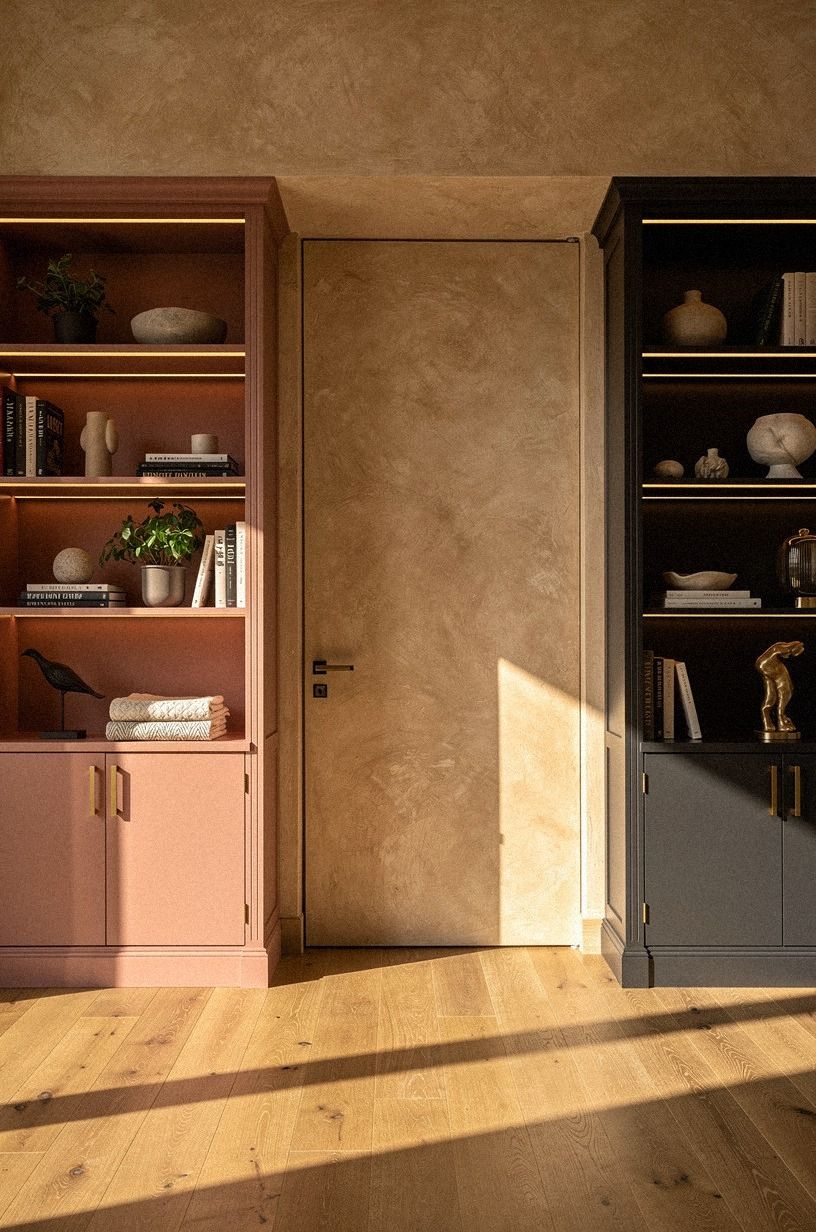
Built-ins are the friendliest way to hide a doorway because they give the wall a job. If the opening lives between dusty rose shelves and a window seat, nobody reads it as circulation first.
They read it as composition. I’d frame the reveal with MDF shaker built-ins painted to match the wall, then use a deeper seat cushion and a few stacked books so the whole zone feels inhabited instead of staged.
This is also where you can make a small room feel custom on a sane budget. IKEA BILLY units trimmed out with face frames can fake millwork surprisingly well, and the pocket opening disappears once the vertical shelf rhythm takes over.
And don’t overfill every shelf. Leave some breathing room, keep a wool rug in an 8×10 or 9×12 size under the front legs of the seating, and let the doorway sit quietly in the middle. If you’re after warmth, not clutter, this one lands every time!
8Match fluted cladding across the doorway
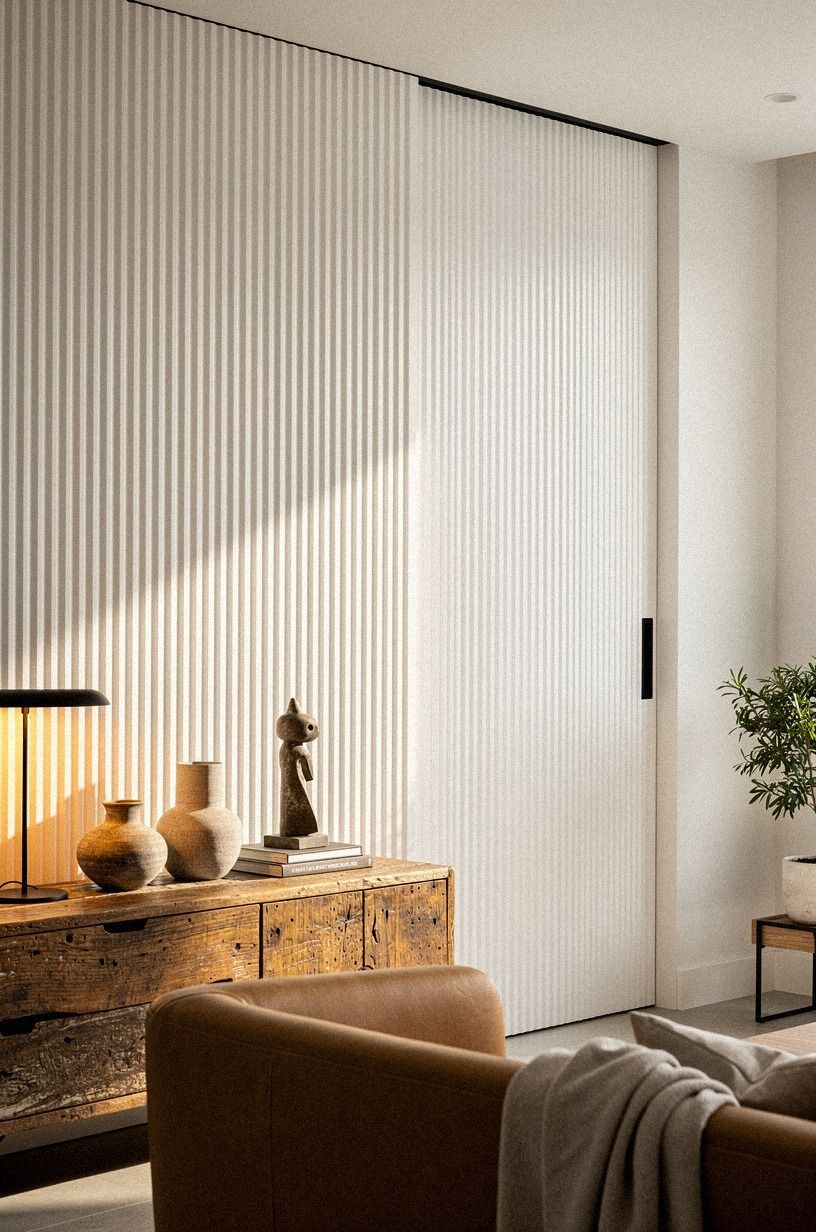
Fluting gives you a pattern strong enough to hide a join and soft enough to stay elegant.
9Add a brass pull inside the shadow gap
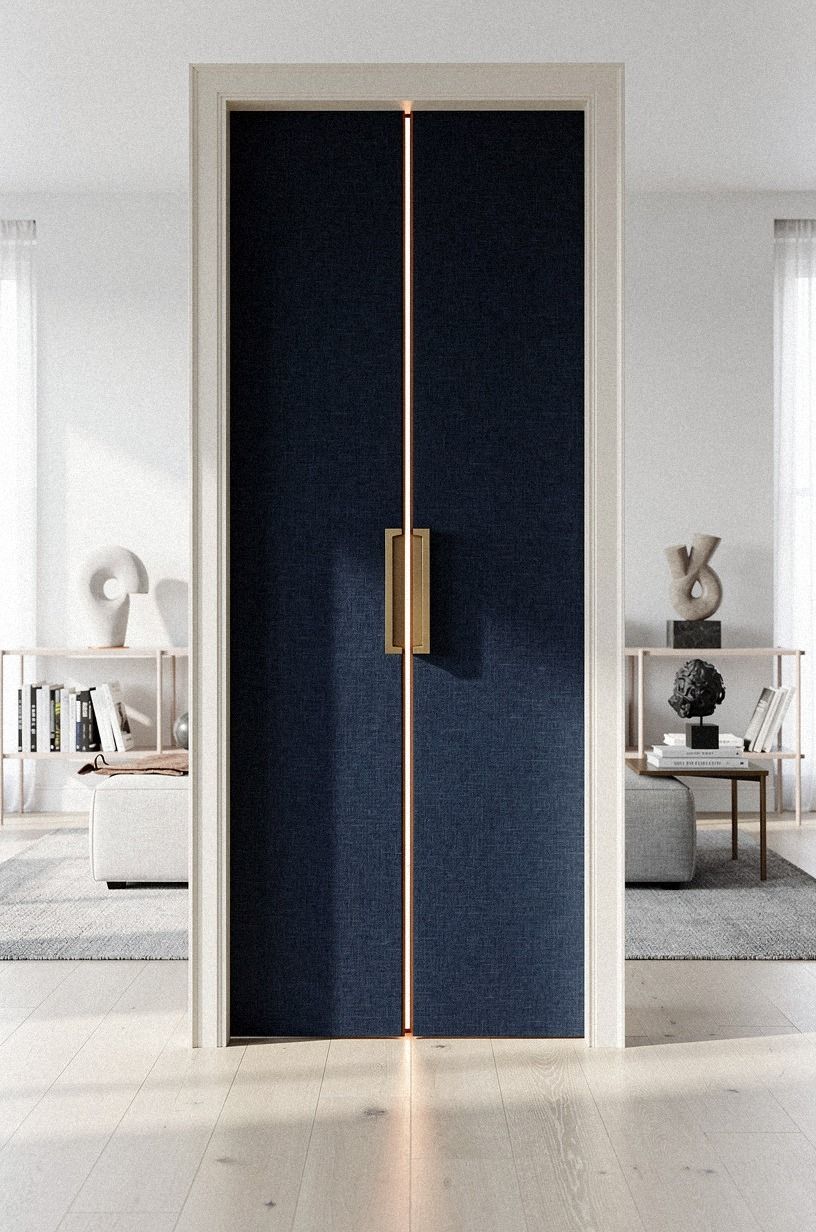
Hardware doesn’t have to be absent to be discreet. It just has to live where the eye already expects depth.
A recessed pull tucked inside a shadow gap lets the panel stay clean from the front while still feeling satisfying in use. I would go for unlacquered brass here, because the soft patina reads intentional against a midnight blue panel and won’t flash at you from across the room.
This is the kind of detail you feel more than notice. At floor level, symmetry does the selling: even panel margins, a crisp baseboard line, and just enough darkness around the reveal to make the grip usable. And yes, placement matters.
Keep the pull where your hand naturally finds it rather than centering it decoratively. I prefer this to a visible round knob every time, because a knob turns the whole exercise into a normal door, and that’s exactly what you’re trying to avoid. Tiny move, huge payoff!
10Run wainscoting over the pocket seam
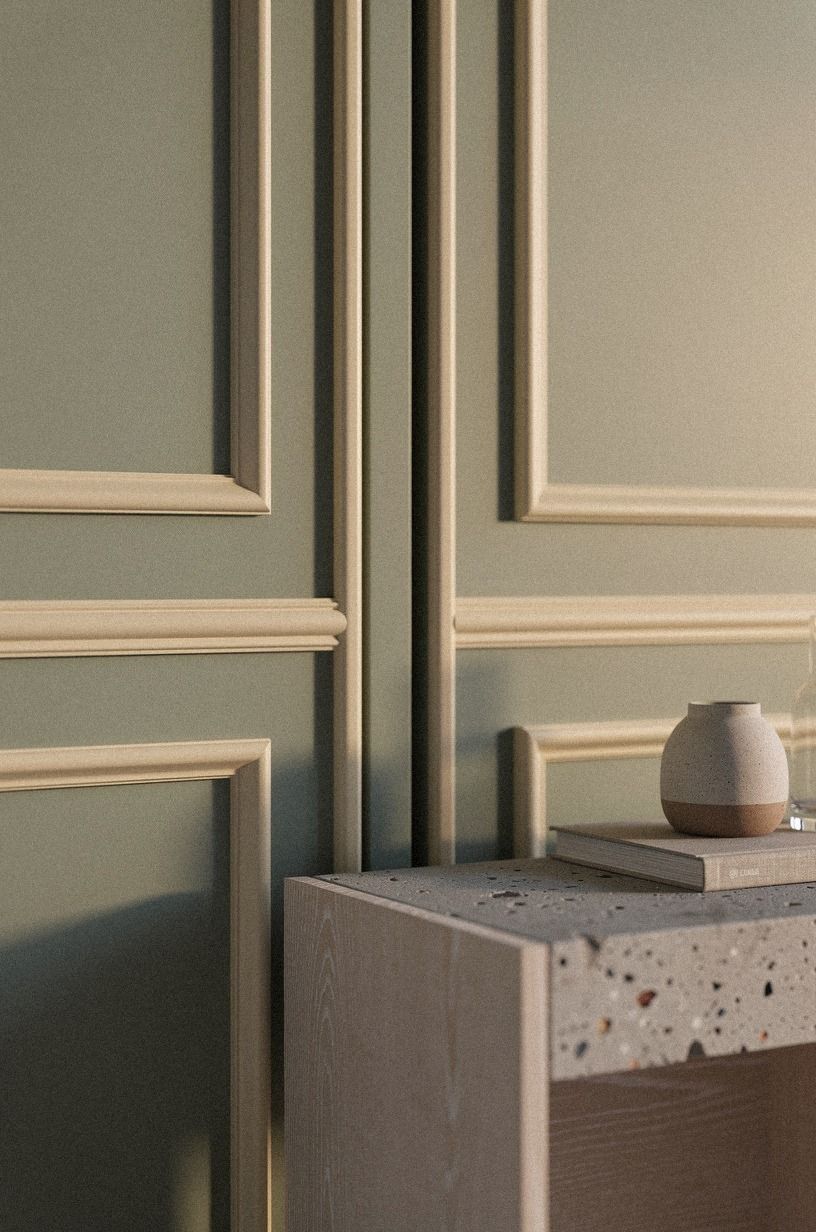
Wainscoting is one of the easiest ways to hide a moving joint because the eye already expects rails, stiles, and breaks.
11Tuck the door behind drapery returns
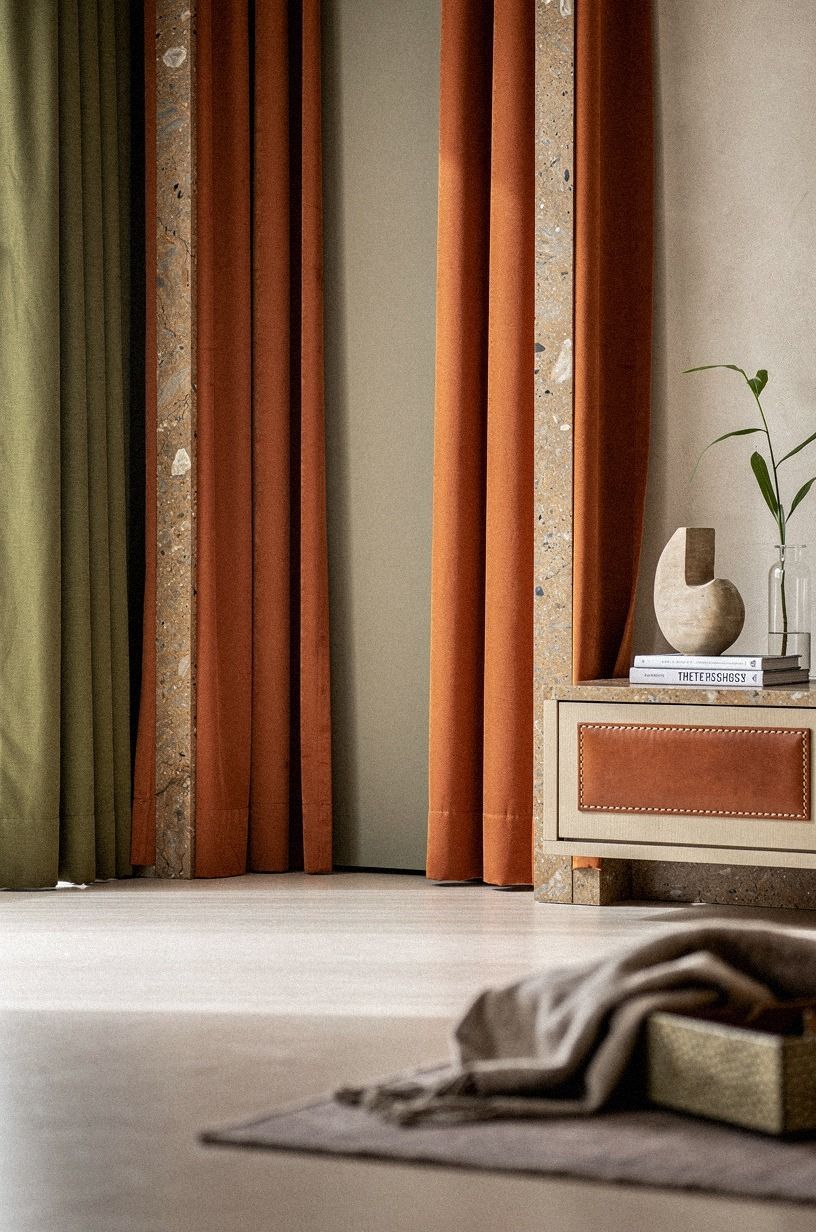
If you need the softest possible disguise, hide the opening behind drapery returns that project just enough to blur the edge. This works especially well when the room already has a warm, layered envelope: terracotta tones, stone accents, linen folds, and light that skims across the fabric. I would use Belgian linen drapes with generous return depth so the curtain line feels architectural instead of skimpy.
You don’t need theatrical swags or heavy tassels. You need width, a return that wraps toward the wall, and hardware that disappears.
A pair of drapes typically runs about $120 to $400, so this can be one of the cheaper visual fixes in the room compared with true millwork. And if the opening sits near a fireplace or reading corner, the added softness helps the whole room feel warmer.
I love this one for renters in spirit, even if the best version still belongs to owners.
Drapery returns are the underrated half of any window or doorway story, our drapery hardware guide shows the rod and return depths that hold a clean line. The wider the return, the calmer the doorway reads from across the room.
12Why does a flush panel beat a routed one?
Because the eye stops at the first break in plane. A routed panel telegraphs “door” through the change in shadow, even before the panel moves. A flush panel keeps the wall reading as one plane, which is exactly the move you want.
I learned this the slow way, by routing a beautiful shaker door into a media wall and then watching every guest’s eye snap to the panel rhythm the second they walked in. Flat panels cost you nothing extra at the cabinet shop and they earn you back the wall. If you’ve got a router bit at all, leave it in the drawer for this one.
13Hide the threshold inside the floor pattern
The threshold is the tell. Even with a perfect wall above, a clean metal or wood break at the floor ruins the illusion. If your floor has any pattern at all, run the pattern across the door and the seam vanishes.
Herringbone white oak with the boards continuing across the reveal is the gold version. Tile works too, lay the pattern tight and let the grout lines carry through.
If you’re on slab, a low-profile saddle in the same species as the surrounding floor beats a contrasting strip every time. Tiny detail, huge payoff.
Floors carry more of the visual weight than people think, the hardwood floor pattern guide shows layouts that hold up in tight living rooms.
14Carry the paint sheen across the slab
Gloss changes are louder than color changes. If the wall is matte and the slab is eggshell, the door announces itself the second a window lights it up. Match the sheen, then match the color, in that order.
I’d use a flat matte like Benjamin Moore Aura Bath & Spa in matte on both surfaces, then seal with a clear dead-flat topcoat in high-touch zones so the slab stays clean. The sheen match alone buys you another layer of camouflage the color never could. And if you’re using a limewash or plaster, seal both sides with the same matte wax so the wall and slab age in unison.
15What makes grasscloth beat vinyl here?
Vinyl seaming tells on itself the moment it meets trim. Grasscloth has natural variation in every panel, so a 1/16 inch shift at the door looks like craft, not error.
A high-quality Phillip Jeffries roll at $80 to $140 per yard still beats the labor cost of trying to make vinyl look hand-finished. And grasscloth ages the way a living room should, picking up light differently from morning to night. Skip the paper-backed versions, they bubble the second humidity shifts in summer.
16Tuck the track inside a wall pocket, not the ceiling
Most pocket doors hide the track in the header.
17Borrow cabinetry language instead of door language
A pocket door that looks like a piece of cabinetry disappears faster than one that looks like a door. Subtle face frames, a tight reveal, and a flat slab read as millwork to the brain, not as a passage.
I’d spec the door with cabinet-grade maple at 3/4 inch, sand to 220, and prime twice before the color coat. That density kills the hollow slap sound too.
Add a continuous toe detail at the floor and you’ve got a door that thinks it’s a built-in. Your guests will use the wrong handle for weeks and that’s the win.
A Blum soft-close hinge on the pull side lets the slab close itself into the pocket without a slam, which matters when the door lives behind a sofa. Quiet doors feel more built-in than any finish detail on the slab.
18Use lighting to bury the seam
A wall washer or a low picture light can hide a pocket door seam better than any finish. The discipline is grazing light across the surface so the door edge sits in a soft shadow.
A 3000K recessed LED strip set 6 inches off the wall and aimed across the panel will graze just enough to soften the reveal. Keep the source hidden in a cove or behind a floating shelf so you don’t see the fixture, only the effect.
Done well, you can hide a perfectly ordinary door behind good lighting. Cheap fix, real result.
Lighting carries more of the work than most people think, the warm lighting guide shows the bulb temps and placements that flatter a millwork wall.
19Why paint the trim to match the wall instead of contrast?
Contrast trim frames the door as a door. Same-color trim erases the outline and lets the wall win.
Run the casing in the same sheen and the same hue as the wall, then shadow-gap the edges instead of mitering returns. A 1/8 inch shadow gap reads as architectural, while a mitered return reads as decorative trim.
Farrow & Ball Estate Eggshell in a tone-on-tone application is a favorite here because the eggshell catches just enough light to keep the gap readable. Same move works on baseboards too, by the way.
20Start with the wall, not the door
The biggest mistake I see is choosing the door first.
21Can renters make a doorway disappear without touching the wall?
Yes, but only with layers. No-damage disguises work because they borrow furniture, fabric, and lighting to distract the eye from the opening, not because they hide the door itself.
Tall IKEA Kallax units flanking the opening, a floor-to-ceiling curtain on a tension rod, and a floor lamp aimed across the wall will soften almost any opening without a single screw. Add a tall mirror on the opposite wall and the room feels twice the size, the doorway becomes one of three visual events instead of the only one. Rental-friendly, almost free, surprisingly convincing.
Renter-safe tricks travel across rooms, the renter-friendly living room ideas round-up keeps the same no-damage tone.
Why this works better now than it did a few years ago
The reason hidden pocket doors feel so much better in 2026 isn’t that doors changed. It’s that rooms changed.
We don’t treat living rooms like showrooms anymore, and we don’t want every functional element announced with contrast trim, exposed hardware, and a look-at-me focal point. I used to think a disappearing doorway had to be clever.
Now I think it has to be calm. That’s a better standard, because calm ages well.
What I’ve learned is that the best hidden door isn’t the one that fools your guests for three seconds. It’s the one that lets the room keep its mood all day.
If the wall is wrapped in Farrow & Ball Hague Blue No.30, the opening should protect that depth, not slice through it. If the room already has a sofa, rug, and lamps you love, the door should support them, not compete.
That’s why I keep coming back to flush paneling, wrapped finishes, and repeated lines. Repetition makes people relax.
Budget matters too, and this is where people often get turned around. They assume the hidden opening itself has to consume the whole renovation budget, when it’s usually smarter to place it inside a room plan you already understand. I’d spend more on the move that preserves the wall language and less on decorative fuss.
Custom millwork is worth it when the rest of the room is strong. Fancy hardware isn’t. Never has been.
Here are the broad living room budget tiers I keep in mind when someone wants the door to disappear as part of a fuller room refresh rather than a one-off fix:
That table is useful because it puts the hidden door in context. A door disappears best when the room around it is resolved.
Soft lighting. Correct rug scale.
A coffee table around 16 to 18 inches high and about two-thirds the sofa length. Little decisions, yes.
But together they stop the opening from feeling like a gimmick and make it feel built in from the start.
If you’re staging the bigger living room plan, the living room refresh guide walks through the order of operations so the door hides inside a room you already love.
The Questions I Get Asked Most
What is the best hidden pocket door idea for a small living room?
Built-ins framing the opening, because storage plus disguise gives you two wins in one footprint. I also like fluted cladding when the room is narrow.
Think slim profile. Low visual noise.
An IKEA BILLY tip can get you surprisingly close. You’ll feel the room open up fast.
Where can I buy hidden pocket door hardware on a budget?
Start with Johnson Hardware for track kits, then IKEA and Amazon Basics for the soft-close add-ons. For the slab itself, a local cabinet shop will beat a big-box pre-hung door every time on price and on weight.
Facebook Marketplace helps too. Old mirror panels. Solid wood trim offcuts.
One good secondhand find can save you a lot.
How much does a hidden pocket door makeover cost?
For the styling side, expect about $300 to $1,200 if you’re mainly using paint, textiles, and a few decor moves around the opening. Mid-room upgrades can hit $2,500 to $8,000 fast. A full millwork pocket door install runs $1,500 to $4,500 depending on the wall framing and the slab.
Free helps still count. Repainting.
Reworking shelves. Moving what you own.
Can I create a hidden pocket door look on a budget?
Yes, and paint plus alignment does most of the work. Match the door to the wall.
Simplify the trim. Add fuller drapery returns or a better furniture layout. You don’t need a custom shop to make the opening feel quieter.
You need discipline.
Is a hidden pocket door worth it in a small space?
Yes, it’s worth it because swing clearance disappears, and that’s a real layout upgrade in a tight living room. Small spaces benefit most from clean wall lines. Keep the furniture scaled.
Let the front legs sit on the rug. Give the opening room to breathe.
Is a hidden pocket door a good idea for a rental?
Sometimes, yes, if you’re borrowing the look through no-damage layers rather than rebuilding the wall. Try removable drapery, peel-and-stick panel rhythm, or a mirror leaned near the opening to soften it visually. Renters can fake the calm even without true pocket hardware.
What paint sheen works best on a hidden pocket door?
A dead flat matte on both surfaces, so the sheen matches the wall. Anything with a sheen bump on the slab will catch light and announce the door. I’d seal with a clear matte topcoat on the high-touch zones so the slab stays clean without flashing.
Where I’d Start First
If I had to pick one, I’d start with the wall, not the door. You can’t layer camouflage on top of a confused wall, every move you make will fight what’s already there.
Get the wall language right first: paint, texture, trim, lighting. Then the door choice becomes obvious, and the room feels finished instead of fussy.
Pin the wall-first sequence and revisit before you spec the slab.