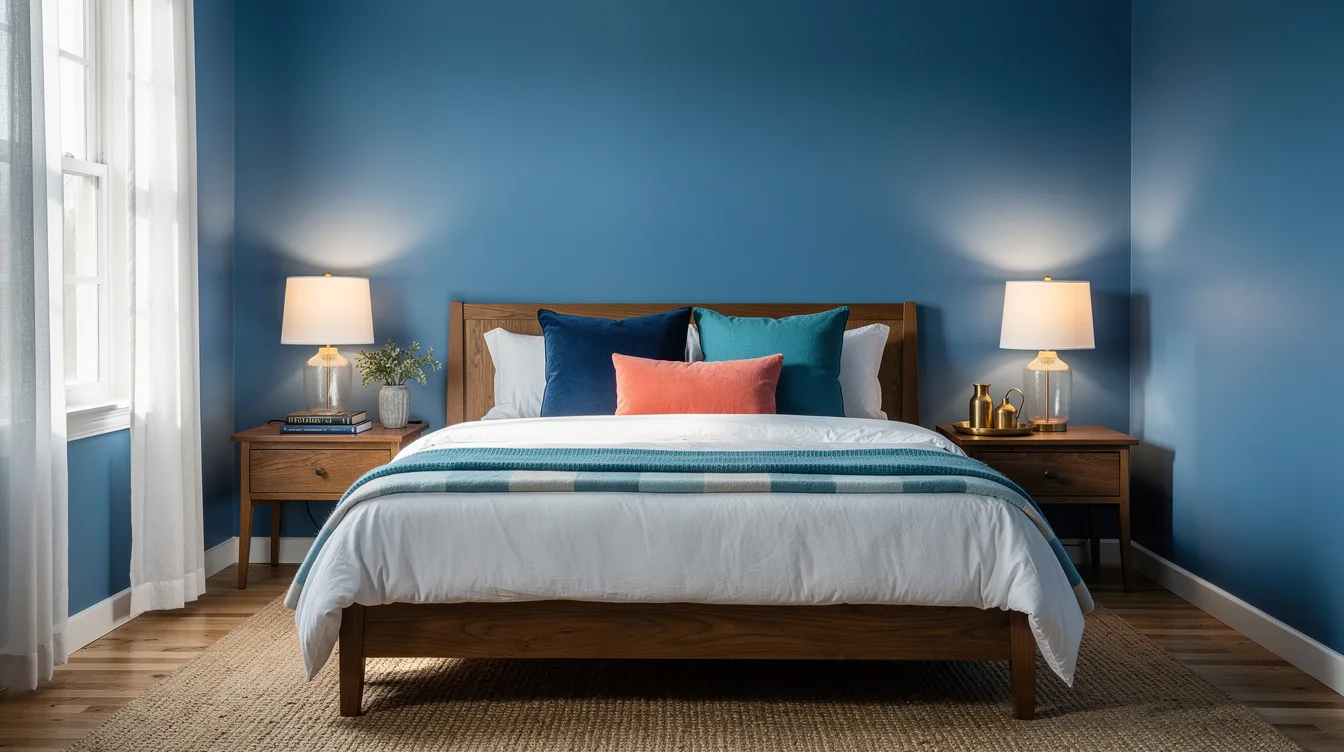
I used to think any blue bedroom would feel restful, then I watched a roughly 12-by-14-foot room turn cold the second the paint got too icy and the lighting stayed harsh. The version that actually feels peaceful is simpler: a soft or mid-tone blue, warm wood, fewer shapes, and light you can control at night.
That balance matters more than trend-chasing, especially if you’re working with a typical budget of about $1,500 to $4,500 for the main pieces. Blue is soothing, but only when the room stops fighting it.
Start With a Softer Blue, Not a Sharp One
For inner peace, I would skip a bright, high-energy blue every time and go with a powdery or mid-tone version from Home Depot or Lowe’s. A typical gallon of interior paint runs about $35 to $70, and a small bedroom usually needs around two gallons for two coats if the walls are already in decent shape.
The best look is muted, not sugary. In a room of about 120 to 150 square feet, a softened blue reads quieter through the day and doesn’t turn gray and flat the second the sun drops.
Ground the Room With Warm Wood
Blue needs something warm under it, or the room starts to feel emotionally distant. A low wood bed frame from IKEA or Wayfair is the cleanest fix, and a queen-size frame typically lands around $250 to $800 depending on veneer versus solid wood.
I like simple oak-look or walnut-look finishes with straight lines. They calm the room down faster than tufting, glossy lacquer, or anything trying too hard to look expensive.
Keep the Bed Low and the Shapes Simple
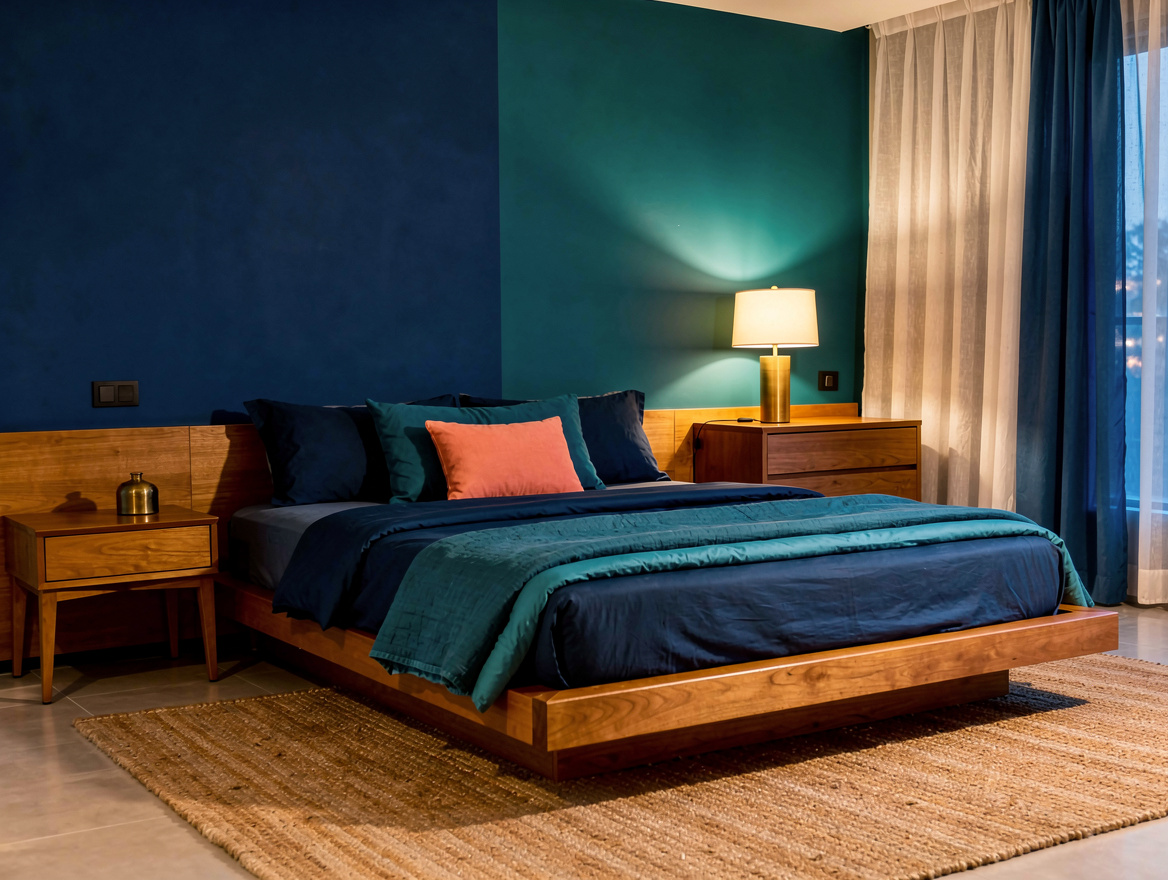
A low-profile bed works especially well in smaller bedrooms because it lets the blue wall color breathe. The IKEA MALM line is popular for a reason, often priced around the low-to-mid $300s for a queen frame, and it keeps the visual weight under control.
This is one place where restraint really pays off. A plain headboard, a medium-firm mattress, and two clean nightstands create more peace than a giant upholstered bed that eats half the room.
Layer White and Pale Blue Bedding
The easiest way to make blue feel restful is to soften it with light bedding instead of matching everything to the walls. A washed cotton or linen-blend set from Target, Amazon, or Walmart typically costs about $50 to $180, and that range already gives you plenty of good options.
White sheets. A pale blue duvet. One textured throw.
That’s enough. I would not pile on five decorative pillows because nothing says stressed room like bedding you have to negotiate with every night.
Add a Natural Rug to Take the Chill Out
Blue bedrooms almost always need one earthy layer at floor level, especially if the flooring is dark laminate or cool-toned vinyl. A IKEA LOHALS jute rug or a wool-look option from Wayfair usually runs about $80 to $300, with 5-by-7 or 6-by-9 sizes covering the most common layouts.
Jute, wool, or a flatwoven natural blend works better than a shiny synthetic plush rug here. The point is warmth and texture, not fake luxury.
Use Warm Light at Three Levels
Lighting decides whether a blue bedroom feels serene or slightly clinical. I would aim for one overhead light, two bedside lamps, and warm bulbs around 2700K, using dimmable options from Target, Amazon, or Home Depot for a total of roughly $90 to $250.
This is the setup that changes the room most at night. Blue walls under cool white bulbs look unforgiving, while warm layered light makes the whole space feel quieter within minutes.
Control Visual Noise With Closed Storage
Nothing ruins a peaceful blue bedroom faster than seeing every charger, laundry pile, and random receipt from bed. A simple dresser or wardrobe with solid fronts from IKEA or Costco can cost about $200 to $1,000, and it does more for calm than another decorative accent ever will.
I feel strongly about this one because clutter changes the mood before color gets a chance to help. If you want inner peace, give the room fewer decisions to show you.
Begin with the wall color and lighting, then bring in warm wood and simpler bedding. Once those four moves are right, even an average bedroom starts feeling slower, softer, and much easier to sleep in.
Mia Carter writes about small-space living and budget home makeovers. She has restyled three rentals and tests most ideas in her own 45 sqm flat.