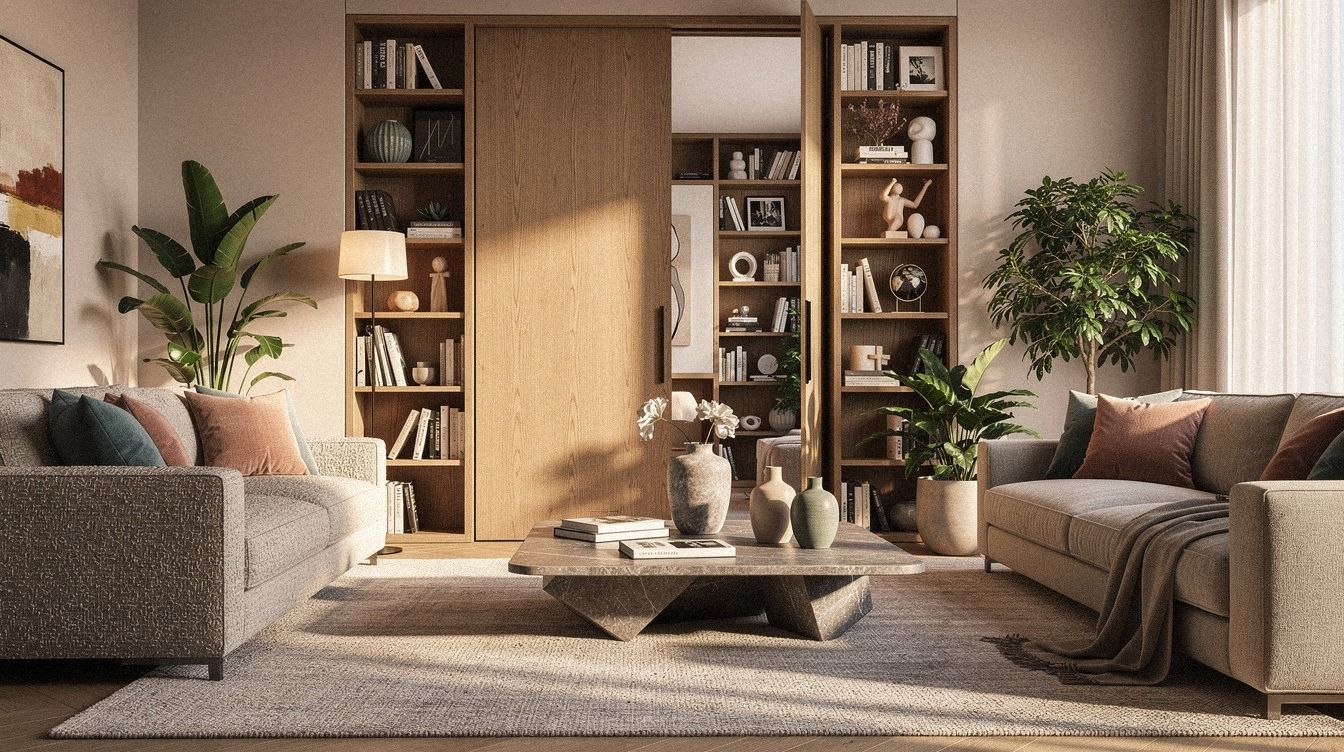
Hidden door ideas work best when you treat them like millwork, not a stunt. I learned that after helping a friend hide a family-room door that kept slicing her bookcase wall in half. Once we matched the oak, the paint, and the hardware logic, guests walked right past it. That’s the goal, and it’s worth every minute of planning.
- Start with a full-height bookcase door
- Anchor the passage beside the fireplace wall
- Layer picture molding across the door seam
- Hang oversized art on a pivot panel
- Build shelves around a touch-latch entrance
- Paint the hidden slab like surrounding paneling
- Frame the reveal with slim brass sconces
- Wrap the doorway in textured grasscloth
- Conceal hinges inside fluted wood cladding
- Add a library ladder across the opening
- Blend the door into moody wainscoting
- Mount a mirror panel near the mantel
- Style books to break up the seam
- Install push hardware behind a decorative knob
- Tuck the entrance behind velvet drapery
- Run crown molding over the hidden gap
- Light the threshold with recessed ceiling spots
- Repeat sofa-wall millwork across the doorway
- Finish with a cozy lounge beyond
1Start with a full-height bookcase door
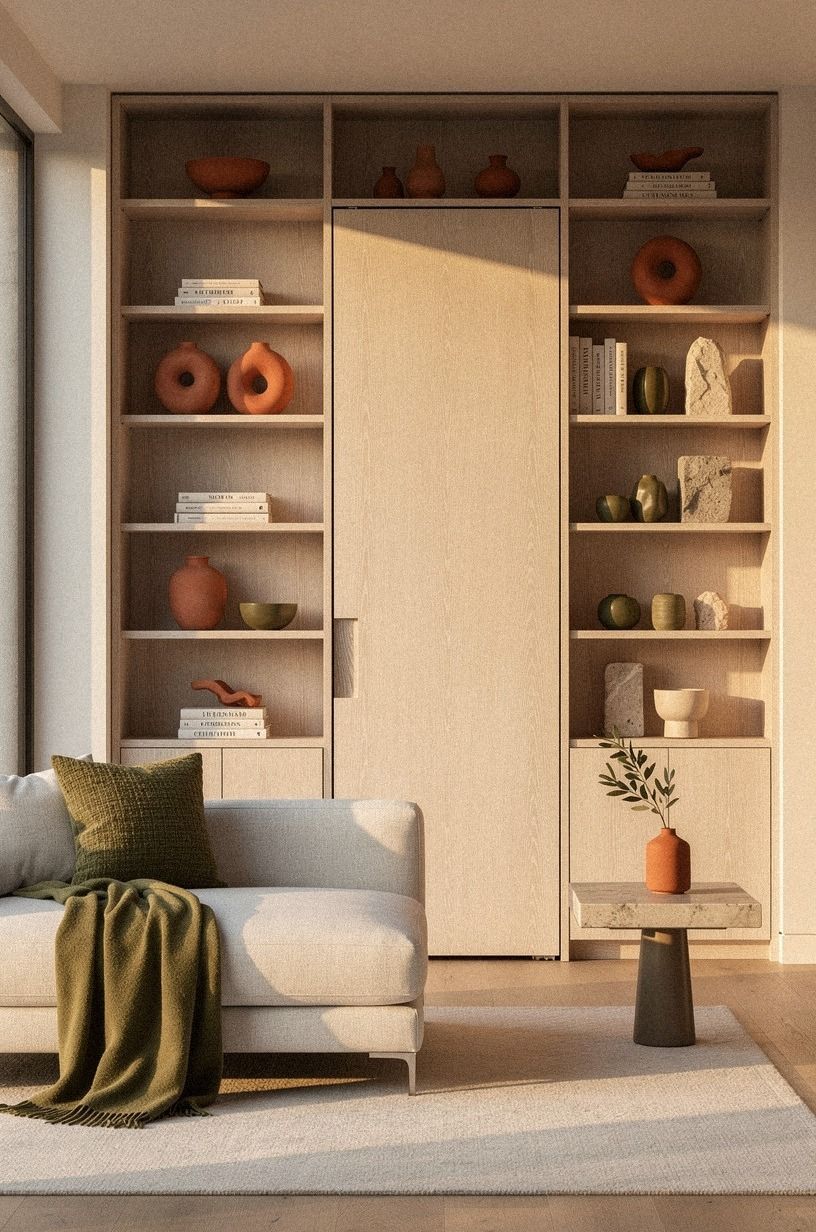
A full-height bookcase door is the move I’d start with if you want cool hidden door ideas that still feel grounded in a real living room. You get storage, weight, and a reason for the wall to exist.
When you center it and let the shelves run right into the jamb, your eye reads one continuous plane instead of a swinging slab. That’s why the pivot seam disappears faster in cerused white oak than in painted MDF, and why the value of this build sits in the casework, not the latch.
You don’t need a fussy layout. You need rhythm.
Keep the lower shelves a little heavier with books and boxes, then let the upper shelves breathe so your seam isn’t outlined by clutter. If you’re planning your first concealed entry, the proportions in this bookcase-door reveal guide are a smart reference, even if you simplify the styling.
The trick is to make the unit feel like a built-in, not a piece of furniture that wandered into the wall.
And don’t skip the joinery detail. Exposed dovetails, 3/4-inch solid white oak shelving, and a bookcase that runs nearly to the ceiling make the unit feel permanent. A thin flat-pack look gives the whole game away.
I made that mistake once, and the door looked like a prop by sundown. If you’re planning the room around it, our mirror-door guide walks through the same budget-versus-built-in trade-off.
2Anchor the passage beside the fireplace wall
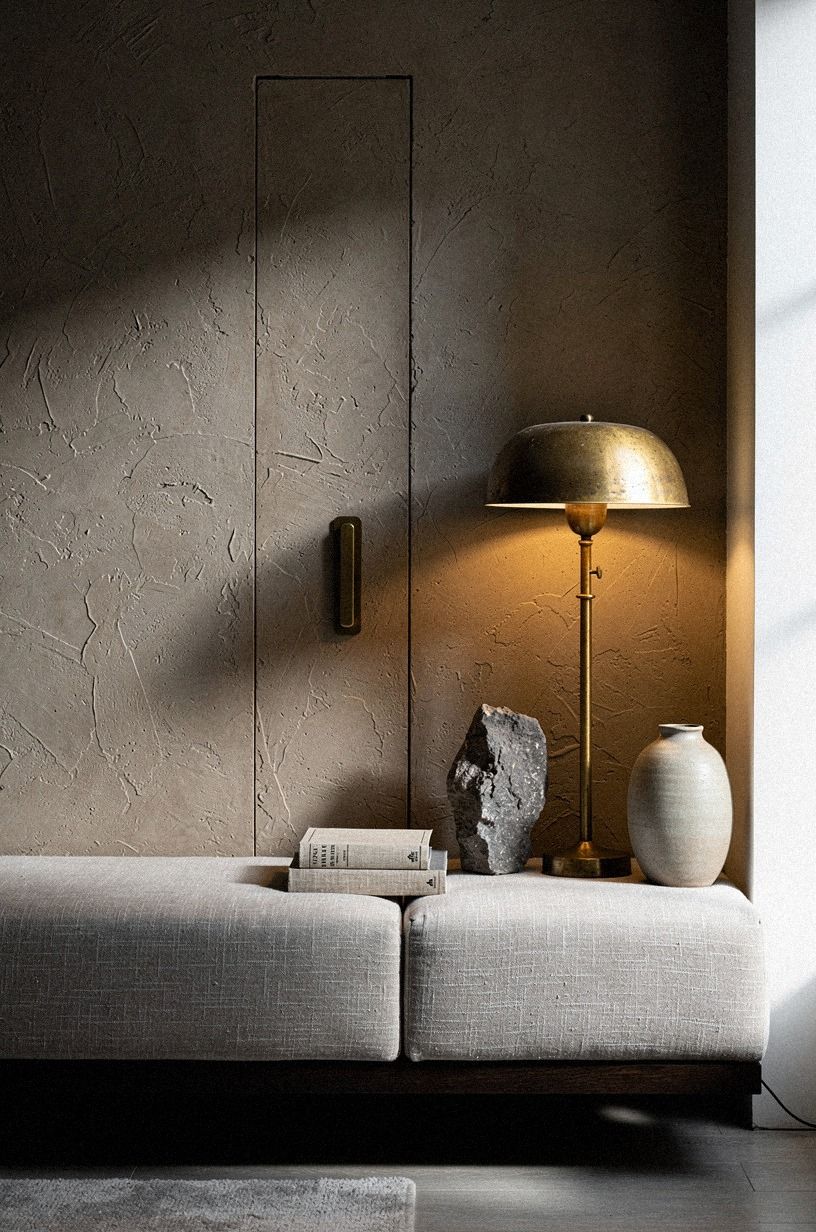
If your living room already has a fireplace wall, use that architecture.
3Layer picture molding across the door seam
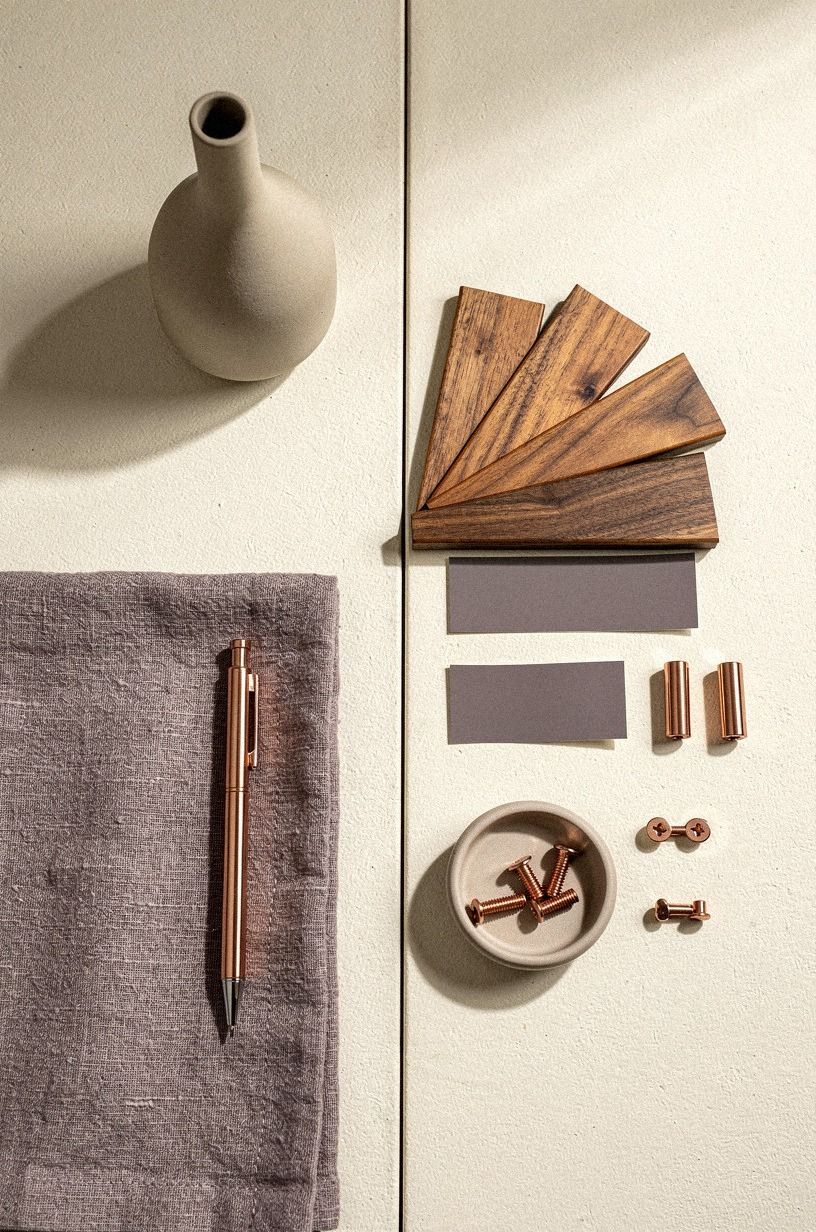
Picture molding is one of the most reliable hidden door ideas for home because it gives you a pattern that can cross the seam on purpose. Once you lay out the boxes so they stay symmetrical on both sides, the seam turns into just another shadow line. That’s especially convincing when your trim pieces are cut from book-matched walnut and the grain keeps moving across the joint.
Start on paper before you ever cut stock. You want the stiles to land so the pivot edge falls inside a molding field, not right beside one.
A plum grey wall with a rosewood-toned trim sample board is forgiving because the value shifts are soft, but bright white molding over a dark gap will make you crazy. The trim itself is a tiny line item, but the value compounds because the eye accepts the geometry before it ever inspects the hardware.
I also wouldn’t overwork the profile. Thin, classic molding with a crisp return hides more than chunky colonial trim.
Why? Because the eye sees the geometry first, not the hardware line behind it.
Small move. Big payoff.
If you want to push the idea further, the seating ideas in our speakeasy roundup use the same trim-as-camouflage principle in moodier rooms.
4Hang oversized art on a pivot panel
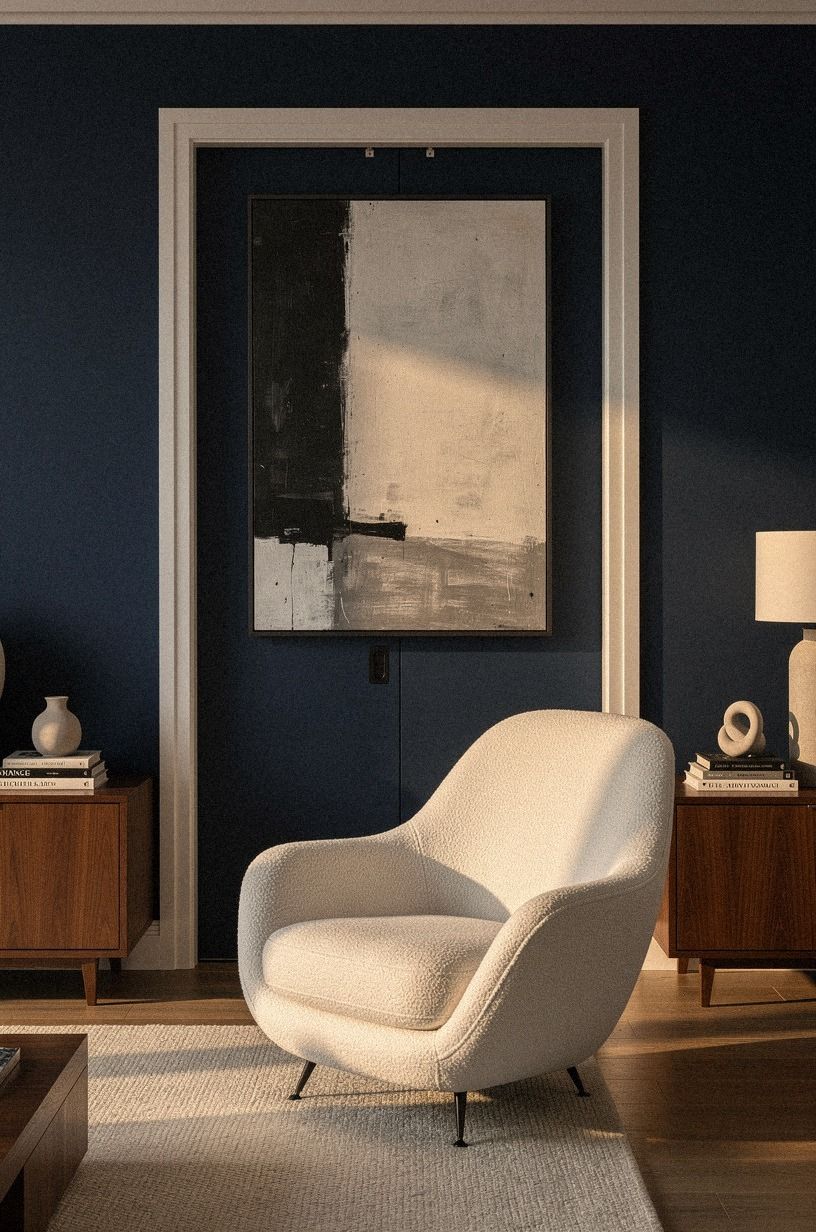
Oversized art buys you misdirection. When the framed piece is scaled wide enough to command the wall, guests clock the composition first and the pivot second.
That’s why hidden door ideas modern enough for navy walls often lean on one strong canvas instead of a gallery wall. One piece.
One decision. So much better.
You want the frame weight to feel intentional with the rest of the room. A slim walnut frame works with white trim, a low organic bouclé chair, and deep blue paint like Farrow & Ball Hague Blue No. 30.
If the panel is too light, it floats. If it’s too ornate, everyone reaches for it because it looks suspicious.
The right frame is worth it because it’s the one element your guests actually look at.
Mount the art slightly higher than your instinct says, then test the swing. Your hand needs clearance at the bottom corner, and your hinge side can’t clip the baseboard. I like this move even more when you’re borrowing the visual drama of a mirror-door reveal but want a softer, less reflective finish.
If the room leans dark, our moody speakeasy decor roundup shows how art-heavy walls earn their drama without shouting.
5Build shelves around a touch-latch entrance
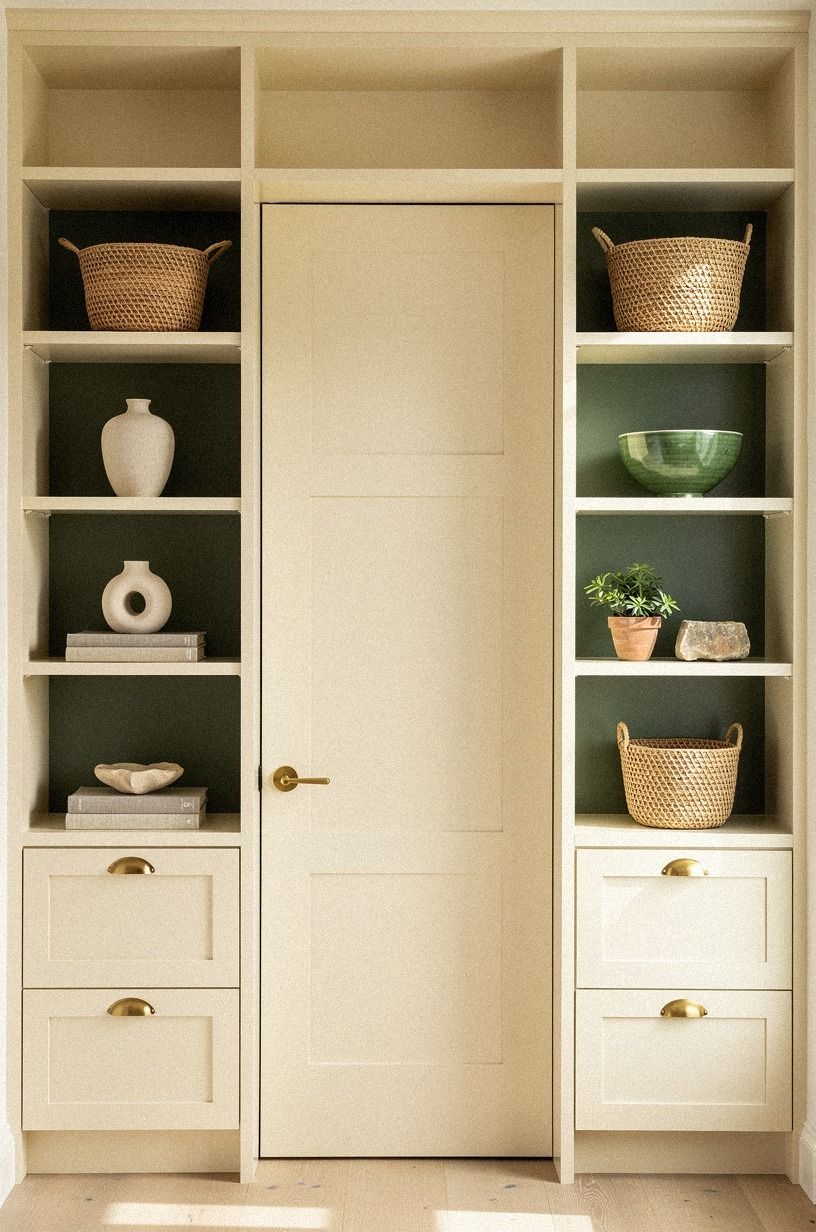
Built-ins make a touch-latch entrance feel earned. If your wall already wants storage, turning that storage into a calm cream composition is one of the easiest hidden doorways to live with every day.
The latch matters, sure, but the bigger win is visual continuity. A slab tucked inside warm white built-ins vanishes because the eye is busy reading cubbies, books, and negative space.
Here’s the thing: proportion matters more than ornament. Make the shelf bays narrow enough that the door bay doesn’t read oversized, and keep your hardware story consistent.
If one side has unlacquered brass pulls developing soft patina, the fixed shelves on the other side need that same brass language even if the door itself stays pull-free. The brass is a small line item, but the value is in the consistency, not the metal.
This is also where your budget gets real, so keep it honest:
If you’re tempted to fake millwork with one skinny case and call it done, don’t. The door will read like filler.
Give it surrounding shelves, a proper plinth in stained oak, and room for a few dark green objects. That’s when the wall settles.
For the room-by-room budgeting logic, our speakeasy home bar design piece walks through similar value-versus-cost trade-offs that translate to a hidden door.
6Paint the hidden slab like surrounding paneling
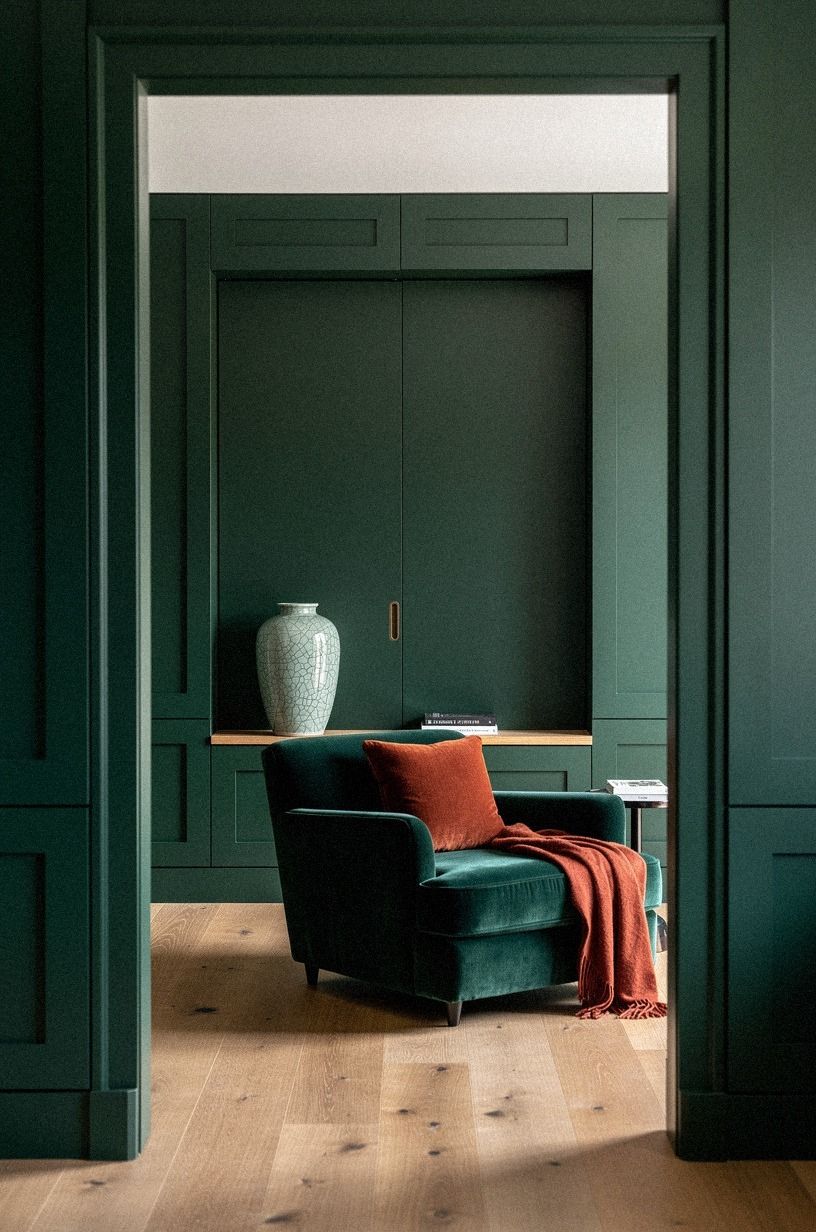
Paint is cheap compared with rebuilding trim, and it fixes more than people think.
7Frame the reveal with slim brass sconces
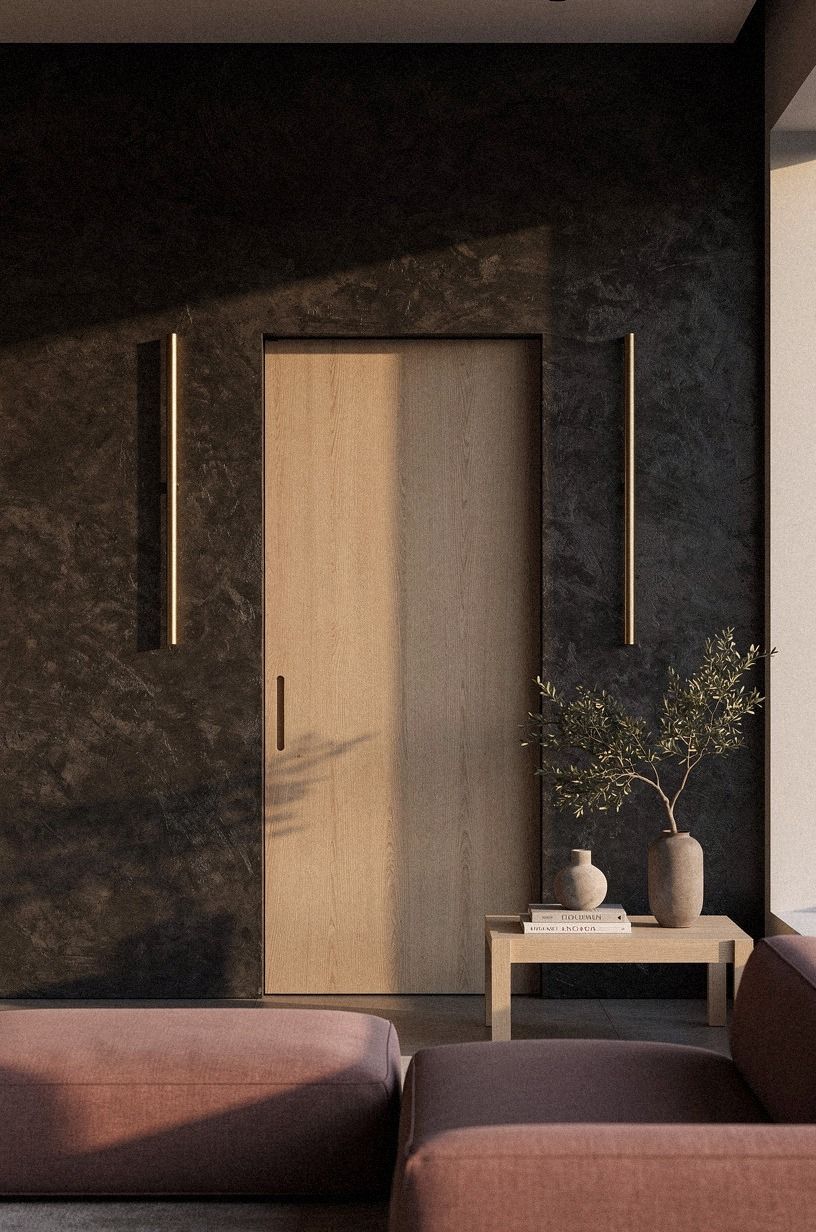
A pair of slim sconces can hide a reveal by turning the whole stretch of wall into a composition instead of a puzzle. You want guests looking at the warm brass glow and the dusty rose seating below it, not tracing joinery lines.
When the lights are symmetrical and the spacing is calm, the wall feels resolved. That’s the whole Two-Sconce Distraction Rule I keep coming back to.
Use a narrow aged-brass sconce with a long backplate so the vertical line helps blur the edge of the opening. Against charcoal Venetian plaster, that little ribbon of metal feels deliberate, especially if the seam falls inside the same visual rhythm as the plaster movement.
If you love moody rooms, you can steal a little atmosphere from this hidden bar behind a mirror door setup and keep the palette restrained. The brass itself is a small investment, but the value compounds across the whole wall.
But I’d avoid oversized lantern sconces here. They’re charming on a porch.
Indoors, beside a concealed door, they’re just too bossy. Your reveal should feel whispered, not announced.
If you want the glow to feel more like candlelight, our brass-and-candle mantel ideas show how to layer warmth without crowding the wall.
8Wrap the doorway in textured grasscloth
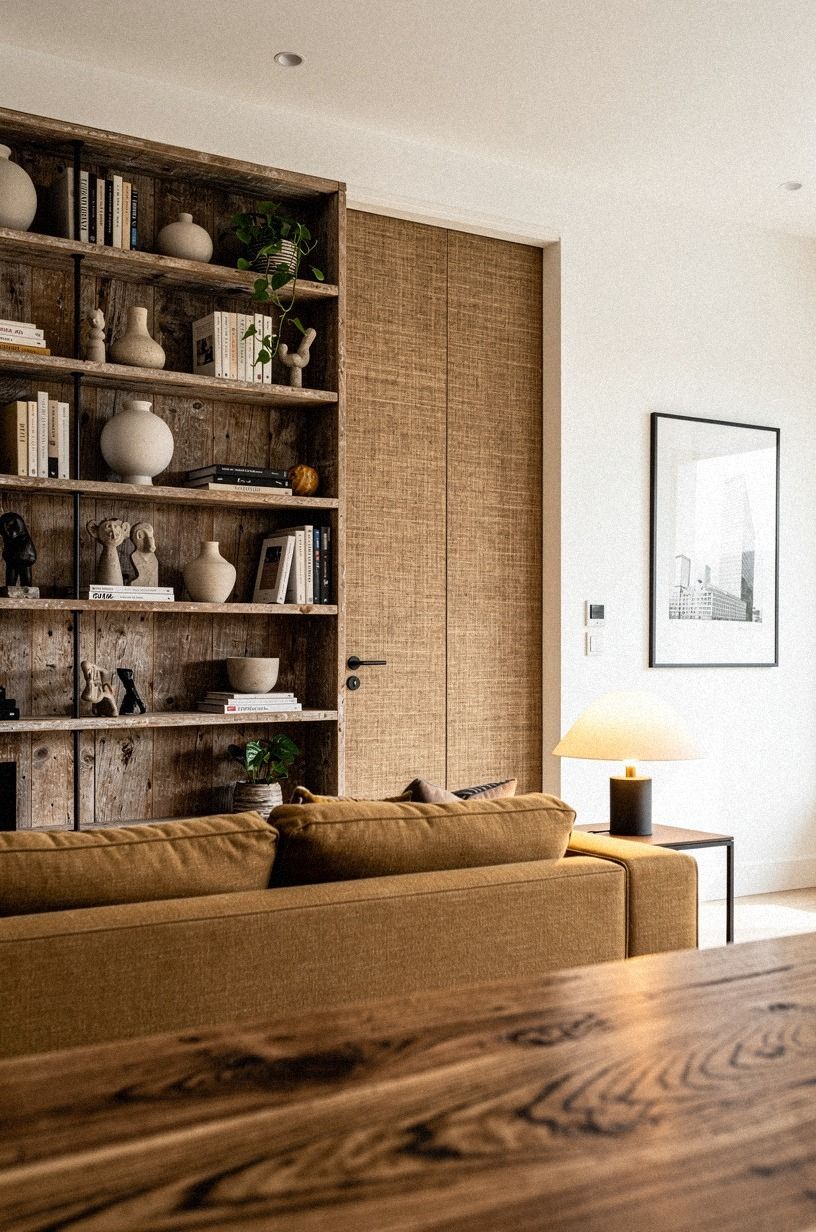
Grasscloth is forgiving in the best way. The tiny color shifts, the woven irregularity, and the soft vertical movement keep your eye from locking onto a seam. If your room already has reclaimed teak shelving, a camel sofa, and matte black accents, wrapping the door in textured grasscloth makes the opening read like part of the wall finish, not a separate object.
You do need to plan the seams. Start in the least visible corner and work toward the door so your most important match lands where people stand back, not where they inspect. I also like a warmer white wall around it, something in the Benjamin Moore Revere Pewter HC-172 family, because it keeps the whole wall grounded instead of icy.
Grasscloth is worth it for the texture alone, even on a tighter budget.
And yes, renters ask about this all the time. A removable woven-look wallcovering can get you part of the way there, especially if you pair it with one of these broader mirror-door ideas.
Just don’t mix three competing textures on the same wall. One weave is enough.
If you want to push the woven-look further, our speakeasy curtain and drapery roundup borrows the same trick with heavier textiles on doors and windows.
9Conceal hinges inside fluted wood cladding
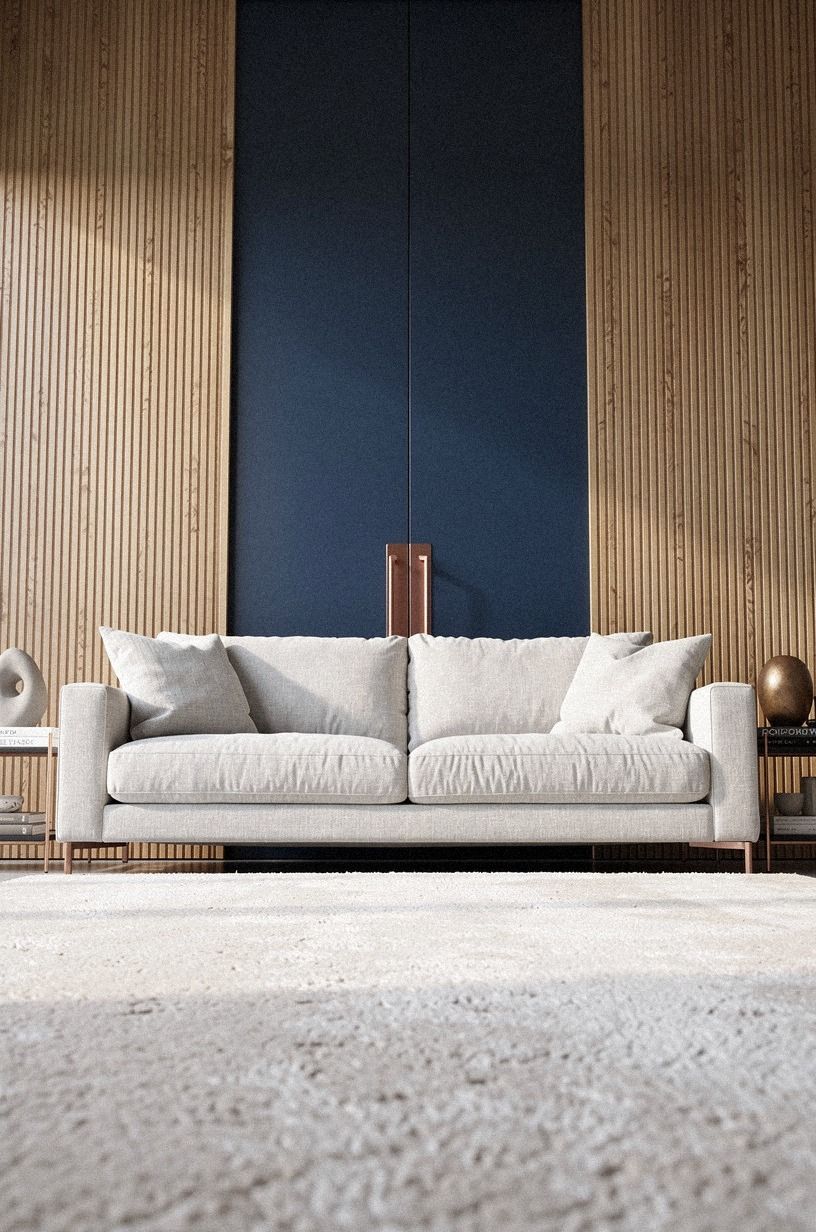
Fluting gives you shadows that do useful work. When the grooves are tight and the hinge side is tucked into that rhythm, your eye reads repeated lines instead of a mechanical opening.
That’s why fluted cladding is one of the strongest hidden door ideas modern rooms can borrow from boutique hotel bars. Midnight blue paint, copper accents, ivory wool rug, washed black oak. Done right, it feels expensive without shouting.
Done wrong, it feels like a paneled basement.
I like 3/4-inch fluted oak with a softer edge profile so the grooves don’t chip and brighten over time. Your hinge cavity needs to be planned before the panels go up, and your spacing has to stay consistent across fixed and moving sections.
If you let one flute die awkwardly at the edge, people won’t know why the wall feels off, but they’ll feel it. Every single time!
But keep the floor view in mind too. From low across the room, the base shadow tells on you faster than the vertical seam does.
A cleaner recessed plinth beats a proud baseboard here. The fluted oak is the higher-value line item, but the plinth does the quiet work that holds the illusion together.
If you’re leaning into the moodier side of this look, our green speakeasy decor roundup walks through how fluted walls meet botanical styling without going twee.
10Add a library ladder across the opening
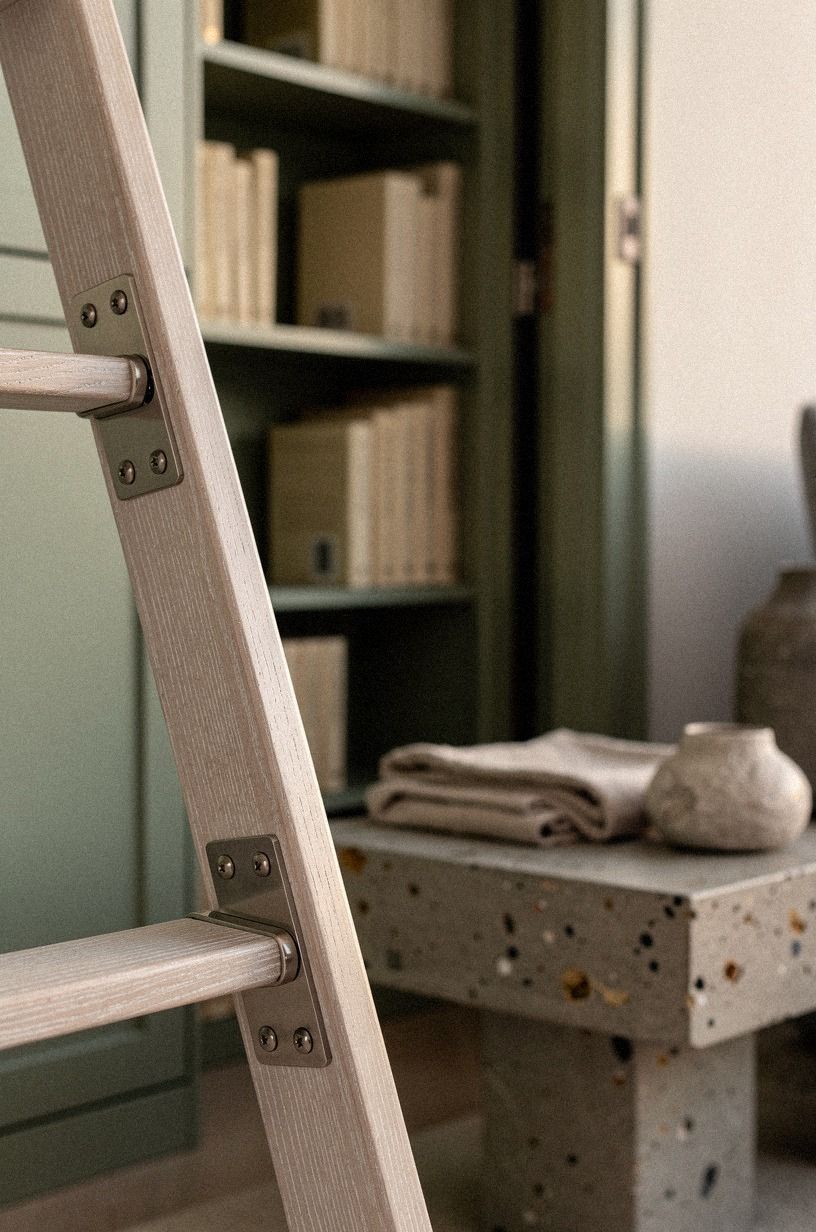
A ladder rail is useful camouflage because it creates a horizontal line that people accept without question.
11Blend the door into moody wainscoting
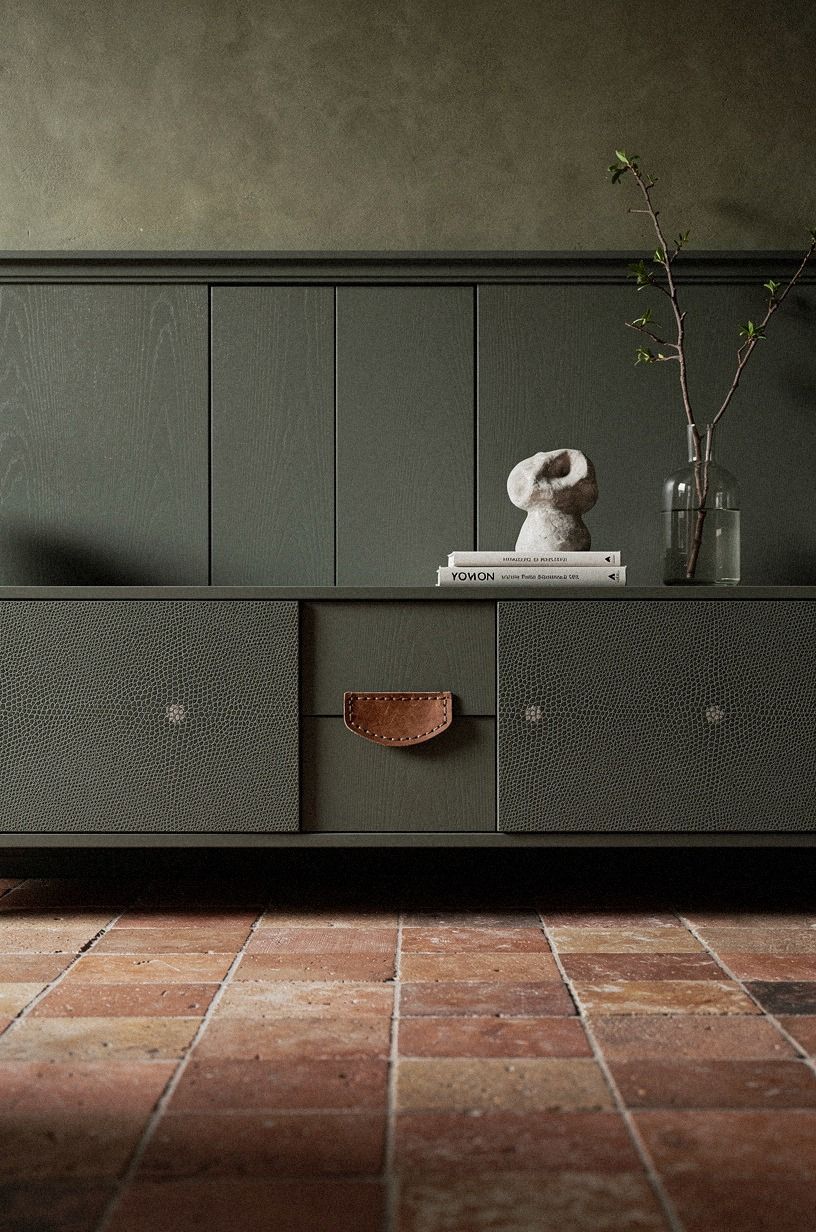
Wainscoting works because it brings the seam down where shadow already lives. In a room with terracotta stone underfoot, olive surfaces, and a low shagreen table, a concealed door inside moody wainscoting feels believable in a way a plain slab never will. The lower wall already expects joints and panel breaks, so you’re giving the eye a familiar story.
Keep the top rail continuous. That’s the part too many people interrupt, and it ruins the illusion fast.
If you’re painting the whole field a deep green or a soft blue-black, the panel spacing has to stay mathematically boring. Boring is your friend here.
A consistent rail is worth it because the eye reads it as trim, not as a fix!
And don’t make every panel on the door mirror the fixed wall one-for-one if the width gets awkward. I’d rather cheat the side returns than end up with a narrow little panel that screams custom patch job.
If your room leans loungey, ideas from this mirror-door roundup can help you push the mood without losing restraint. If you want to pair the wainscoting with warm metal moments, our brass accents roundup is worth a scroll before you finalize the palette.
12Mount a mirror panel near the mantel
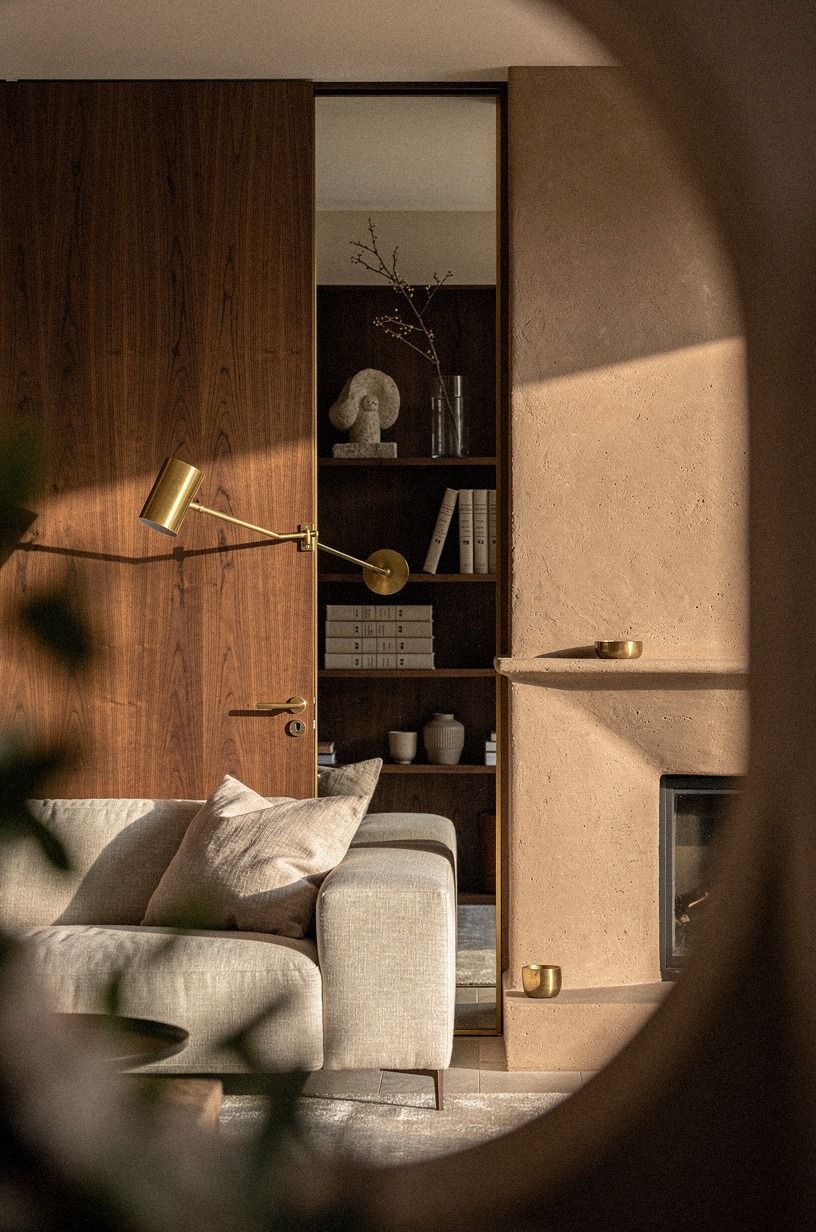
A mirror panel near the mantel is useful because it can justify both scale and placement. A reflective surface beside a clay surround and a linen sofa looks like styling, not concealment, especially once you repeat aged brass details and let some foreground foliage soften the edges. If you want hidden door ideas that feel a little dressier, this is one of the few that earns the drama.
Keep the frame profile thin. A big beveled thing reads too eager. I prefer a simpler brushed brass edge or a walnut frame that echoes a nearby table, then I let the glass do the rest.
The reflected room should look calm, not busy, so edit what the mirror sees before you commit. A quiet, intentional reflection is worth more than an ornate one every time.
You can go deeper on the mechanics in this mirror-door article, but my opinion is simple: skip cheap glass. Warped reflections make people stare, and staring is the last thing you want from your guests. If your mantel area already leans moody, our speakeasy lighting ideas show how a single warm source turns a mirrored wall into a feature instead of a giveaway.
13Style books to break up the seam
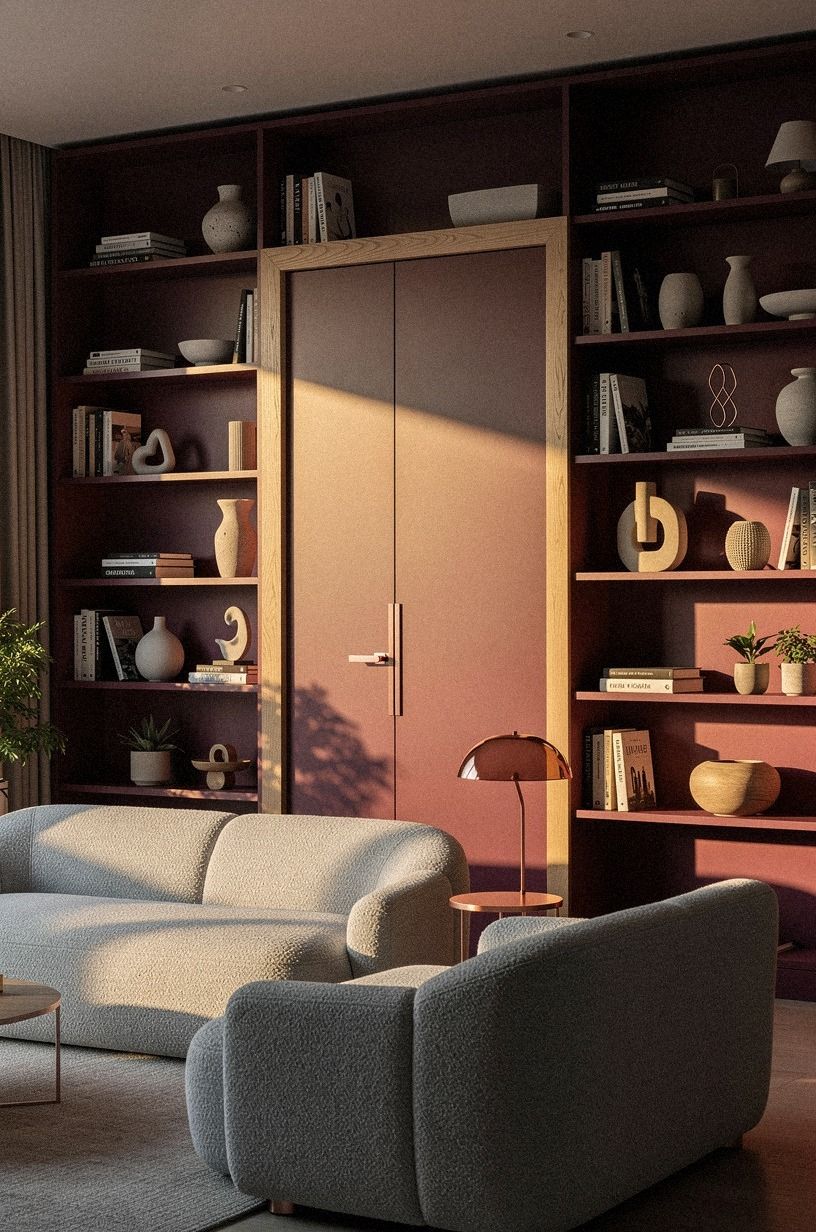
Books are your soft camouflage. When the seam falls inside a shelf run, stacked and staggered spines interrupt the line so your eye reads texture first.
On plum shelves with grey upholstery and a rose-gold lamp nearby, styled books keep the door from becoming a hard rectangle. That’s the practical side of the Broken Spine Rule I use on almost every bookcase concealment.
You don’t need rainbow shelves. You need a little disorder with intention.
Mix upright books, a horizontal stack, and one gap where the seam passes, then let a heavier object like a stone box or small framed sketch pull attention away from the vertical edge. If the room already has organic bouclé seating, keep the book colors warm and dusty instead of bright primary blocks. The styled edit is worth it because it makes the wall feel lived-in, not staged.
But don’t wedge the shelves so full that you have to unload them every time the door opens. You want disguise, not punishment.
A lighter edit with room to breathe looks richer anyway, and it works beautifully with this mirror-bar reveal. If you want to push the wallpaper-and-books combo further, our speakeasy wall art roundup borrows the same break-up-the-line logic on larger walls.
14Install push hardware behind a decorative knob
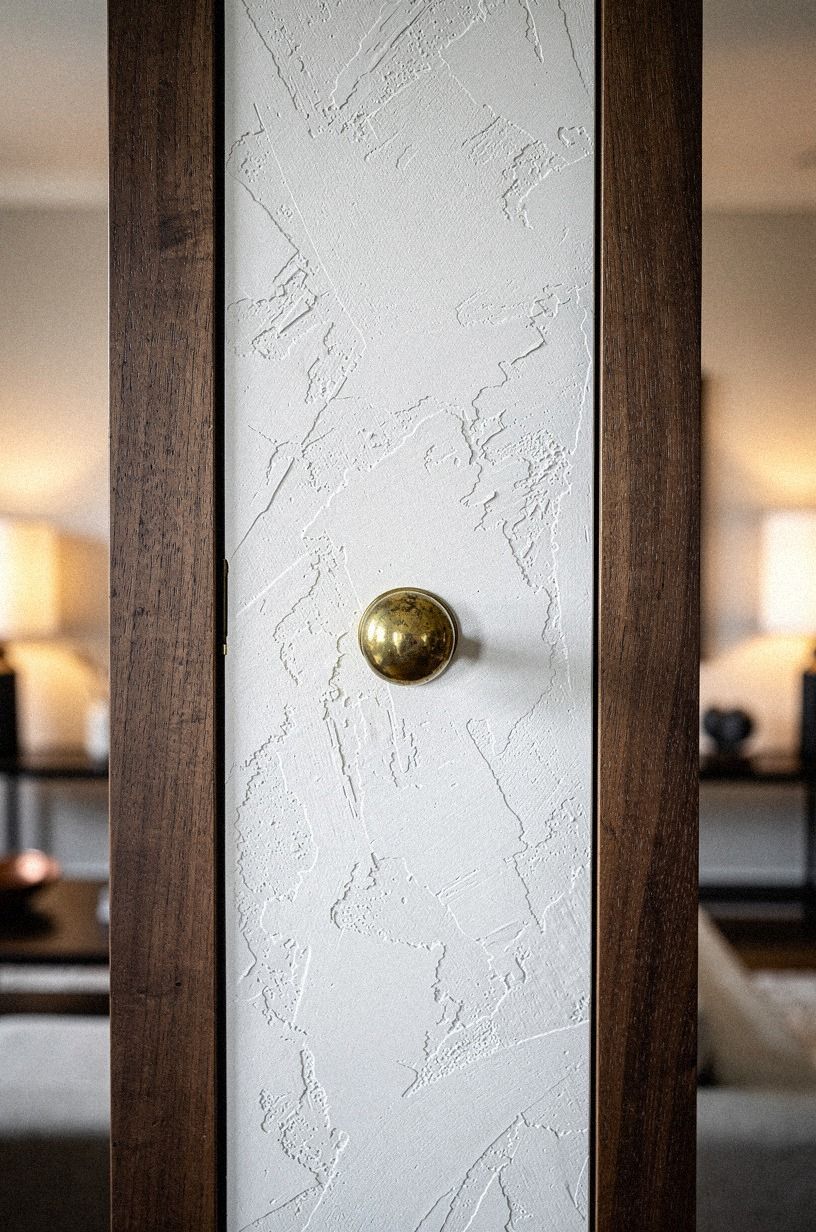
This is one of those details that feels tiny until you live with it. A decorative knob can suggest operation while the real work happens through hidden push hardware, and that contradiction helps the door stay unnoticed.
In a navy and white room with walnut trim, an unlacquered brass knob developing patina looks completely normal, which is exactly why it works. The hardware is a small line item, but the value compounds every time guests lean against the wall without suspecting anything.
You still need a push-latch with a confident release. Flimsy hardware makes people jab at the wall twice, and two attempts are one too many.
I like the fake knob to sit where your hand expects it, even if it doesn’t turn, because your guests will accept the story on first glance and move on. A confident latch is worth it because it removes the awkward “wait, was that a door?” hesitation.
And test the pressure with groceries in your hand. Really.
If you can’t open the panel with one hip or one knuckle, the setup is too precious. Hidden door ideas modern enough for a clean living room still have to behave like normal life.
If your entryway leans toward a cleaner aesthetic, our small speakeasy room guide covers how to balance hidden hardware with restrained styling.
15Tuck the entrance behind velvet drapery
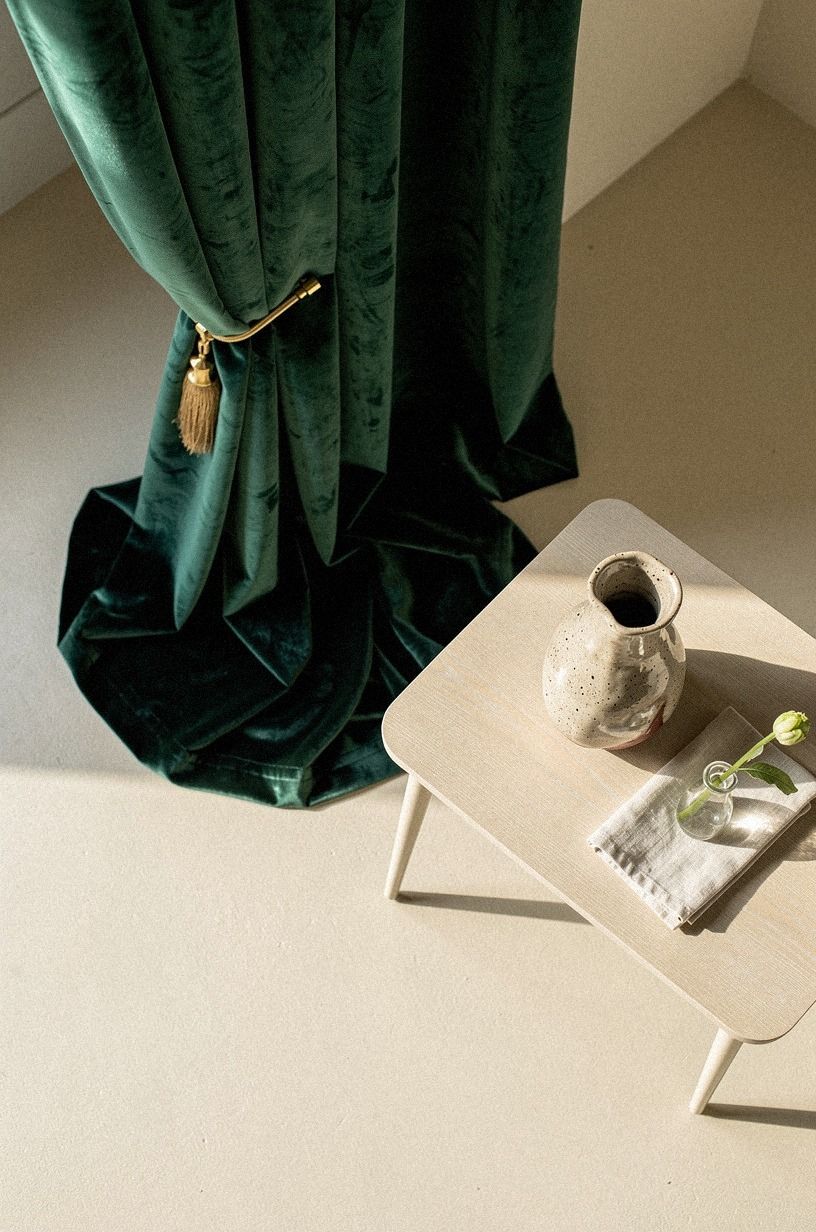
Velvet drapery is old-school in the best sense. If the opening lives near a corner or a slightly awkward return, a curtain can soften it faster than carpentry can. Emerald mohair pooling on cream flooring with a gold tieback already has enough visual richness to carry the wall, so the concealed entry behind it feels natural.
I love this move when you want hidden doorways that read warm instead of gadgety.
Use real fullness. Skinny panels won’t do it.
You want the drape to hold folds even when it’s open, and a heavier fabric like 18 oz mohair velvet gives you that body. Mount the rod high, let the hem just kiss the floor, and keep the stack-back deep enough that the fabric clears the swing.
The fabric is the higher-cost line item here, but it’s worth every dollar if you want the room to feel rich!
If you’re pulling inspiration from loungey rooms, the atmosphere in this hidden speakeasy door piece shows why textiles work so well. But I’d never use shiny poly velvet here. It flashes in bad ways and cheapens the whole wall.
For a deeper dive on how heavy drapery plays with mood lighting, our speakeasy curtain and drapery roundup is worth the read.
16Run crown molding over the hidden gap
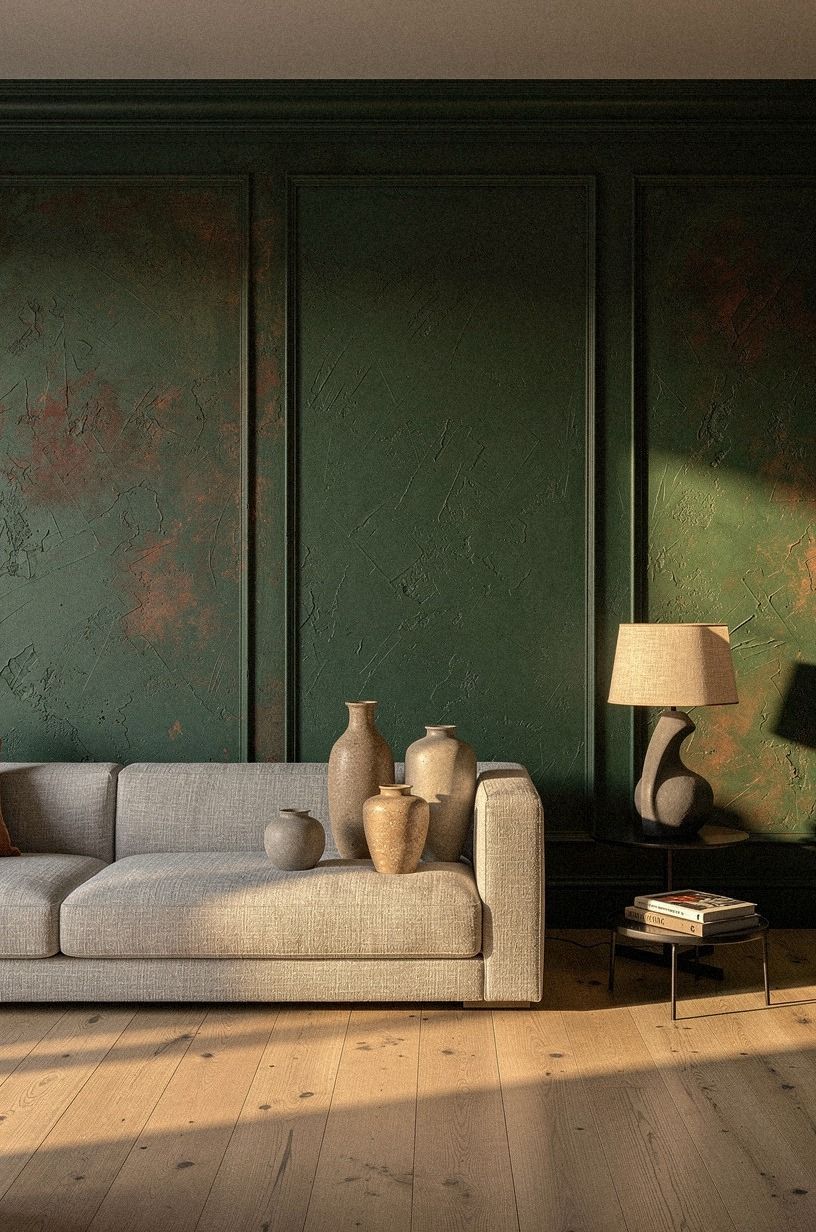
Crown molding does quiet architectural work. When it runs clean across the doorway gap, your eye assumes the wall is fixed because continuous trim signals permanence.
In a forest green room with rust accents and a natural oak floor, that uninterrupted line overhead keeps the hidden slab from feeling like a separate event. It’s one of the smartest cool hidden door ideas if your room already has traditional bones.
Your miters need to be dead calm, not dramatic. A slightly eased profile paints better and throws a softer shadow than a fussy, deeply cut crown.
I also like to keep the door head aligned with the rest of the room’s trim hierarchy so the panel doesn’t suddenly ask for attention above eye level. A continuous crown is worth it because it lets the room breathe around the seam instead of pointing at it.
But here’s the trap: people obsess over the top gap and ignore the side reveal. The side reveal is what guests see first while walking in.
Fix that relationship, then let the crown finish the lie. If you’re weighing whether to spring for a custom profile, our art-deco speakeasy decor guide walks through how ornamental crown meets geometric millwork without going theatrical.
17Light the threshold with recessed ceiling spots
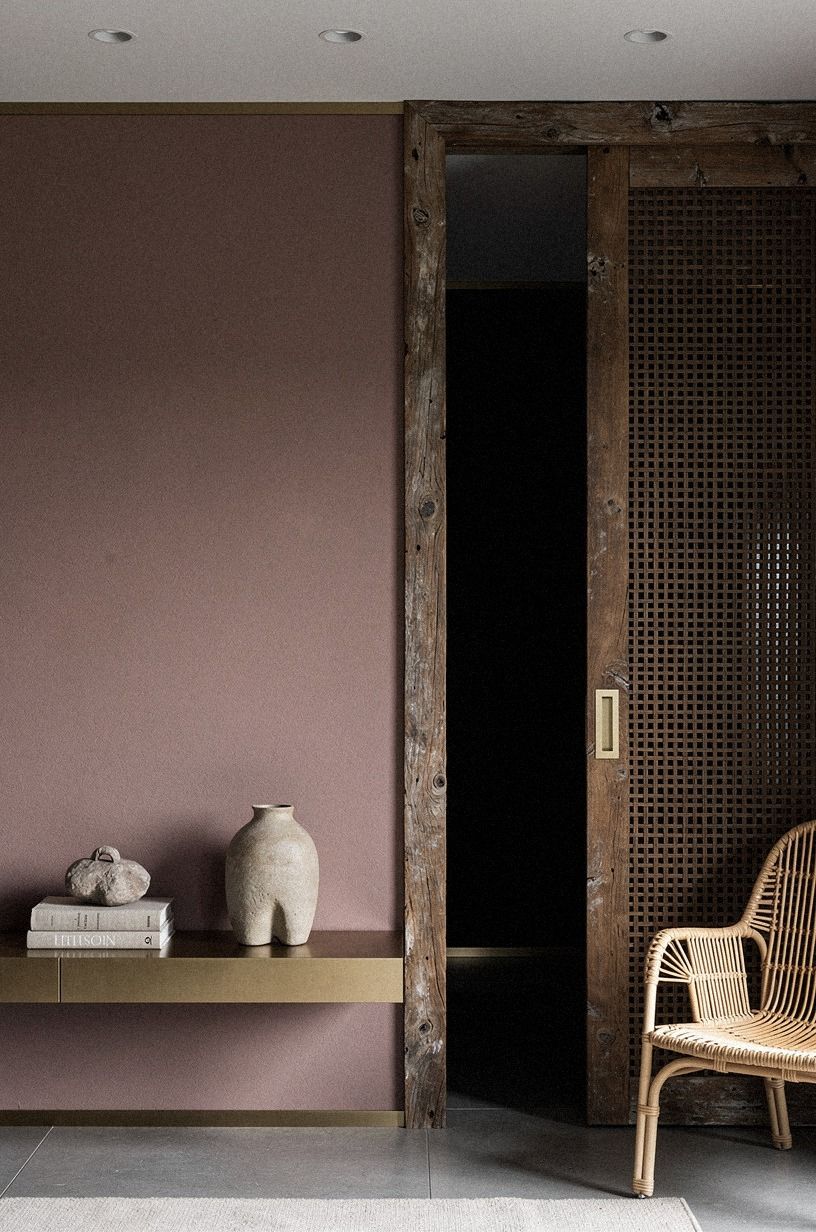
Light tells on a wall, but it can also save one. If you place recessed spots so they wash the threshold gently instead of blasting it head-on, the seam melts into the rest of the plaster movement and millwork shadow.
In a dusty rose and charcoal room with brass details, subtle ceiling spots make the whole opening feel considered. Not flashy.
Better. Worth every wire run!
Use warm lamps and space them with restraint. I don’t want a landing strip effect over a concealed doorway.
I want a soft pool that catches the wall texture, the reclaimed wood on the shelves, and maybe the edge of a chair, then stops before it turns the seam into a contour map. If you’re already balancing a hearth wall, this fireplace-focused layout story can help you keep the light pattern believable.
Would I use directional spots everywhere? No.
Too many aiming heads make the ceiling look busy. One gentle threshold wash and one broader ambient source usually beat a full grid.
The fixture cost is modest, and most of the value sits in the placement, which is worth slowing down for. For a deeper read on layered warm light, our speakeasy lighting roundup borrows the same restraint principle.
18Repeat sofa-wall millwork across the doorway
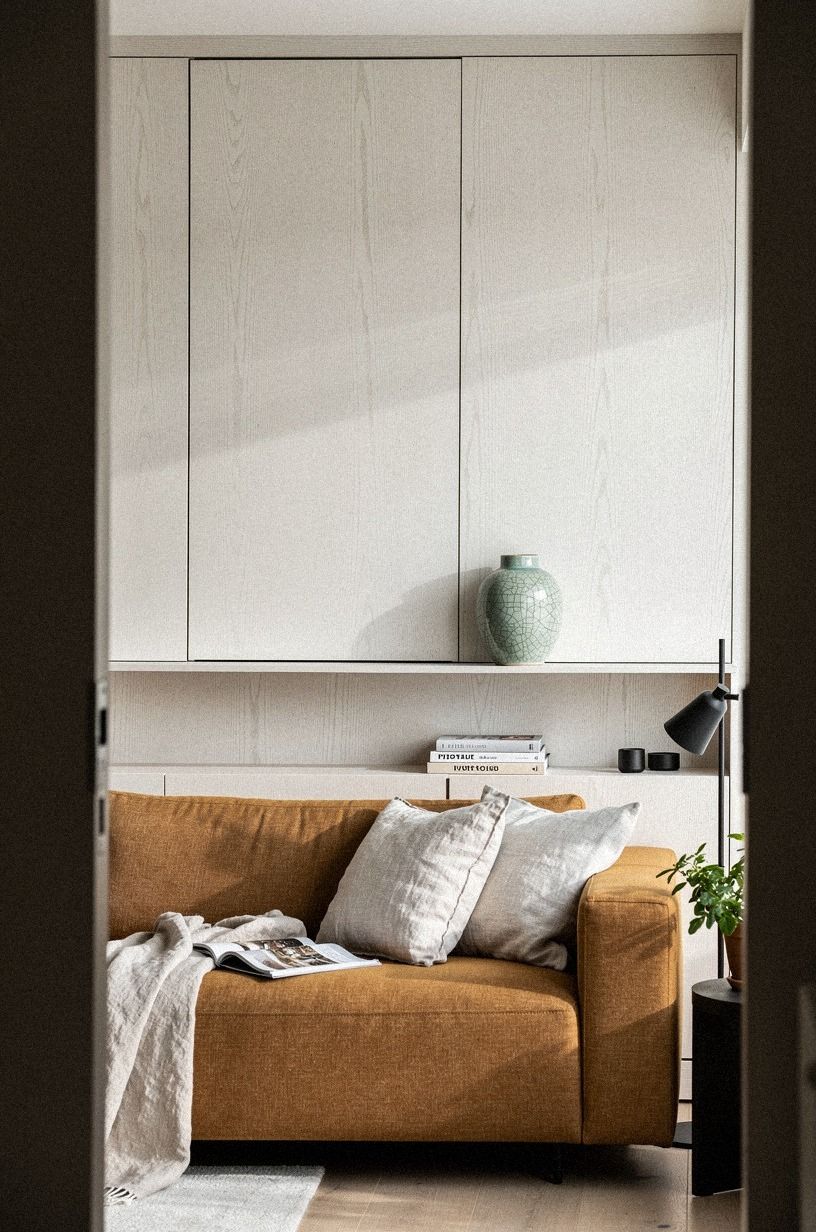
The wall behind a sofa is prime territory for concealment because furniture already breaks the read.
19Finish with a cozy lounge beyond
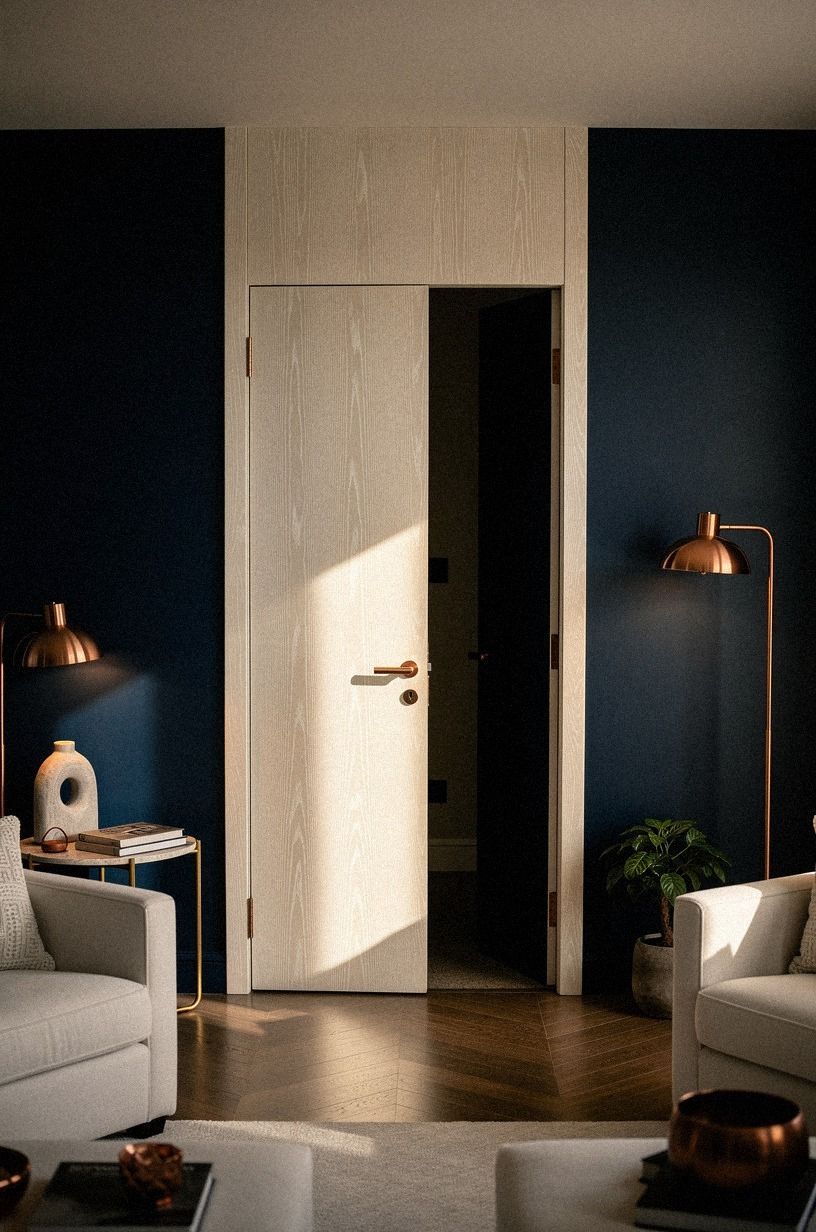
The room beyond the hidden door matters more than the door itself. If the reveal opens into a little lounge with midnight blue walls, copper accents, and another hit of cerused white oak, the opening feels like a reward instead of a gimmick.
You want guests to feel the shift in mood the second the panel swings. That’s the payoff, and it’s worth investing a real budget in the second room, not just the wall.
Keep the beyond-space simple and warm. One reading chair, one low lamp, maybe a drink table.
If you cram it with storage, the reveal loses romance fast. I like a softer, lower light level in the second room so the doorway feels like it leads somewhere slightly quieter, almost like the house is exhaling.
The lounge furniture is the higher-cost decision, and it’s worth it because it’s the first thing your guests touch once they cross the threshold.
And give yourself one repeated material from the main room so the transition feels intentional. Copper there. Oak here.
Linen both places. When the palette echoes, the concealed door stops feeling like a novelty and starts feeling like architecture. If you want to design the lounge as a true hideaway, our turn-a-closet speakeasy guide walks through how a tiny room can feel like a private retreat with the right millwork and lighting.
What makes a hidden door feel believable instead of gimmicky?
I’ve seen gorgeous hidden doors fail because the owner spent all the money on the moving part and none of the thought on the wall around it. That’s backward.
The door isn’t the star. The wall is.
Once I started treating concealed entries like millwork problems instead of magic-act problems, the rooms got better and the doors disappeared faster.
The first lesson is that repetition beats novelty. If your living room already has paneled geometry, keep going with it. If it already has shelving, deepen the shelving story.
If it already has a fireplace wall with a strong center, let the passage hide at the edge of that gravity instead of fighting for equal attention. You can feel the difference when a concealed door belongs.
It lowers your pulse. It doesn’t ask to be admired every five seconds.
The second lesson is cost discipline. People assume the hidden mechanism is where the value lives, but I don’t think that’s true in most living rooms.
The real value is in the surrounding materials, the believable paint sheen, the right wood species, and the restraint to stop adding flourishes once the room is doing its job. I’ve gone back and forth on this, but I’d take good trim over flashy hardware every time.
Hardware is invisible when the design works. A modest mechanism in a beautifully trimmed wall is worth two or three times the cost of the same mechanism dropped into a flat-painted drywall opening.
That’s the math most people get wrong.
And then there’s the emotional piece. Why do some hidden doors feel silly while others feel quietly luxurious? Because the best ones hold a little tension.
They keep one thing back. A lounge beyond, a reading nook, a bar, a small office. Not because your house needs a party line, but because layered homes feel alive. You notice them in stages.
That’s what guests remember later, not the latch brand. And the cost of that emotional payoff? Mostly restraint, which is free.
If you’re deciding where to start, ask yourself one blunt question: what does this wall already want to be? A bookcase wall, a paneled wall, a draped wall, a fireplace wall, a mirror wall.
Start there. Hidden doors go wrong when people force a personality onto a wall that already had one.
Listen first, then build.
The Questions I Get Asked Most
What is the best hidden door idea for a small living room?
A full-height bookcase door is usually the strongest pick because it gives you storage plus concealment in one footprint. Think slimmer shelves, edited styling, and a case line that feels built-in. An IKEA BILLY wall can help you test proportions before you commit to custom joinery, and the cost stays under $1,000 even with a quality latch.
Where can I buy hidden door pieces on a budget?
Start with IKEA, Target Threshold, and Wayfair for shelves, sconces, and drapery hardware. Then watch Facebook Marketplace for solid wood cases or mirrors you can reframe.
The deal is usually in the shell, not the latch. A used bookcase with better bones beats a cheap new one, and the value compounds when you refinish it yourself.
How much does a hidden door living room makeover cost?
A light cosmetic version can land around $300 to $1,200, especially if you keep your sofa and focus on paint, shelves, and art. A fuller millwork approach climbs fast once you add built-ins, lighting, or a new rug.
Free move? Re-style what you own before buying anything; the cost discipline is worth more than the new piece.
Can I create a hidden door look on a budget?
Yes, and the cheapest wins are often the smartest. Use paint-matched paneling, edited books, and fuller drapery first. Add one warmer light source.
Borrow a mirror you already own. Those three moves can change the wall before you touch custom carpentry, and the total cost lands under $200 if you already own the basics.
Worth every dollar.
Is a hidden door worth it in a small space?
Yes, especially when the door does double duty as storage, millwork, or art. Small rooms benefit from fewer visual interruptions, so concealment can make the layout feel calmer. Keep furniture scaled right, with the front legs on an 8×10 rug if you need the seating zone to feel settled.
The cost is modest and the value is in how much bigger the room feels.
Is a hidden door a good idea for a rental?
Yes, if you keep it removable. Try tension-mounted drapery, peel-and-stick molding, and a freestanding bookcase that visually masks the opening without altering the frame.
I wouldn’t fight the lease for a pivot door. A reversible disguise still gives you the mood, and the cost stays under $300 for a complete transformation.
Where I’d Start First
If I had to pick one, I’d start with the full-height bookcase door. It solves storage and concealment at the same time, and that’s why it looks convincing. Pin that idea for later and build the wall before you obsess over the latch.