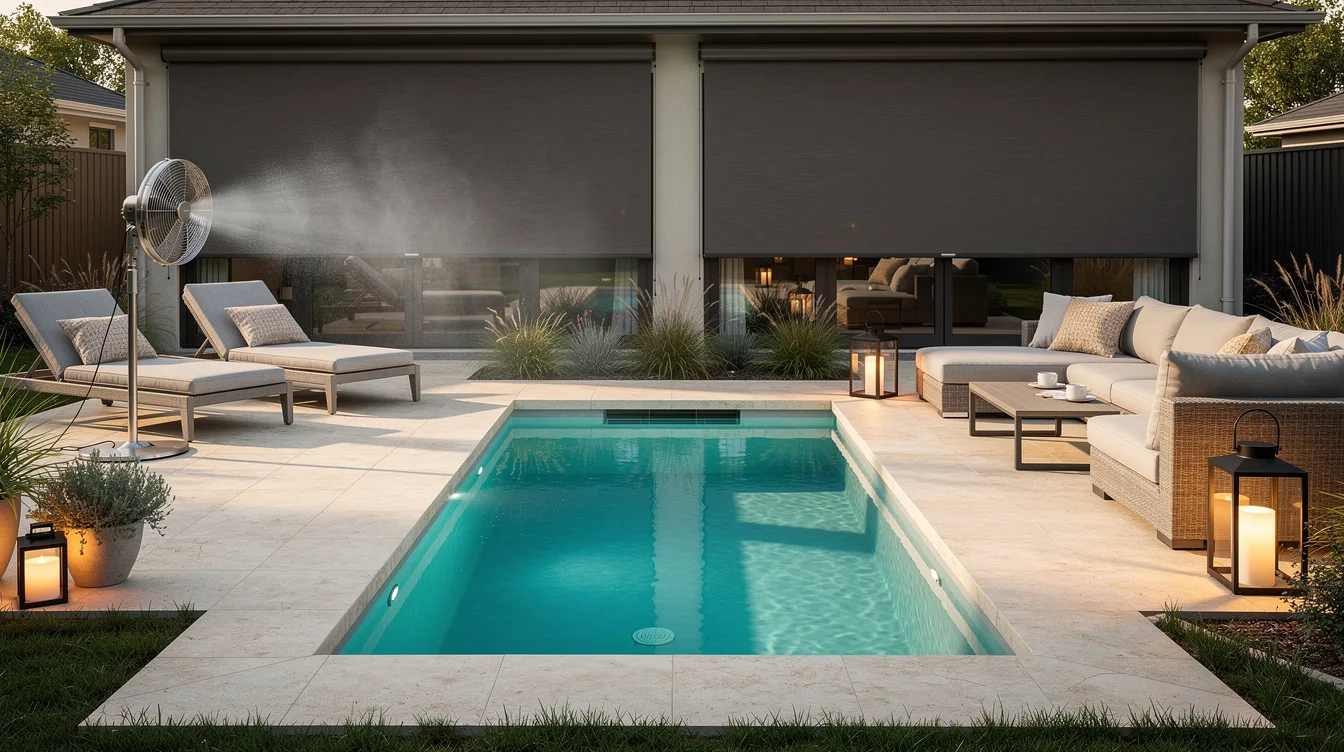
By 3 p.m., my patio cushions usually feel warm enough to toast a sandwich, and the back door starts swinging nonstop because everyone wants back inside. That’s the exact moment a backyard stops feeling relaxing and starts feeling like extra work.
The setups that actually hold up in a heat wave all do the same thing: they stack shade, moving air, and cold water. Once I started thinking in layers instead of single purchases, the whole space made more sense.
Block harsh sun with exterior shades
A patio never feels high-end when the sun is blasting straight through the opening, so I’d start with solar outdoor shades before anything decorative. Typical 3 percent open fabric blocks about 97 percent of UV, and that one upgrade changes the temperature and the glare fast.
For 2026, a custom exterior drop shade typically lands around 200 dollars per panel, with common widths from 6 to 12 feet and drops around 8 to 10 feet. I’d buy through Amazon or Home Depot, and I’d cover each bay fully instead of trying to make one undersized shade do the job.
Solar-powered options are worth it because you skip visible wiring, and they keep the setup cleaner. A cabana look falls apart when cords, adapters, and plastic clips are the first thing you notice.
Park a misting fan where people actually sit
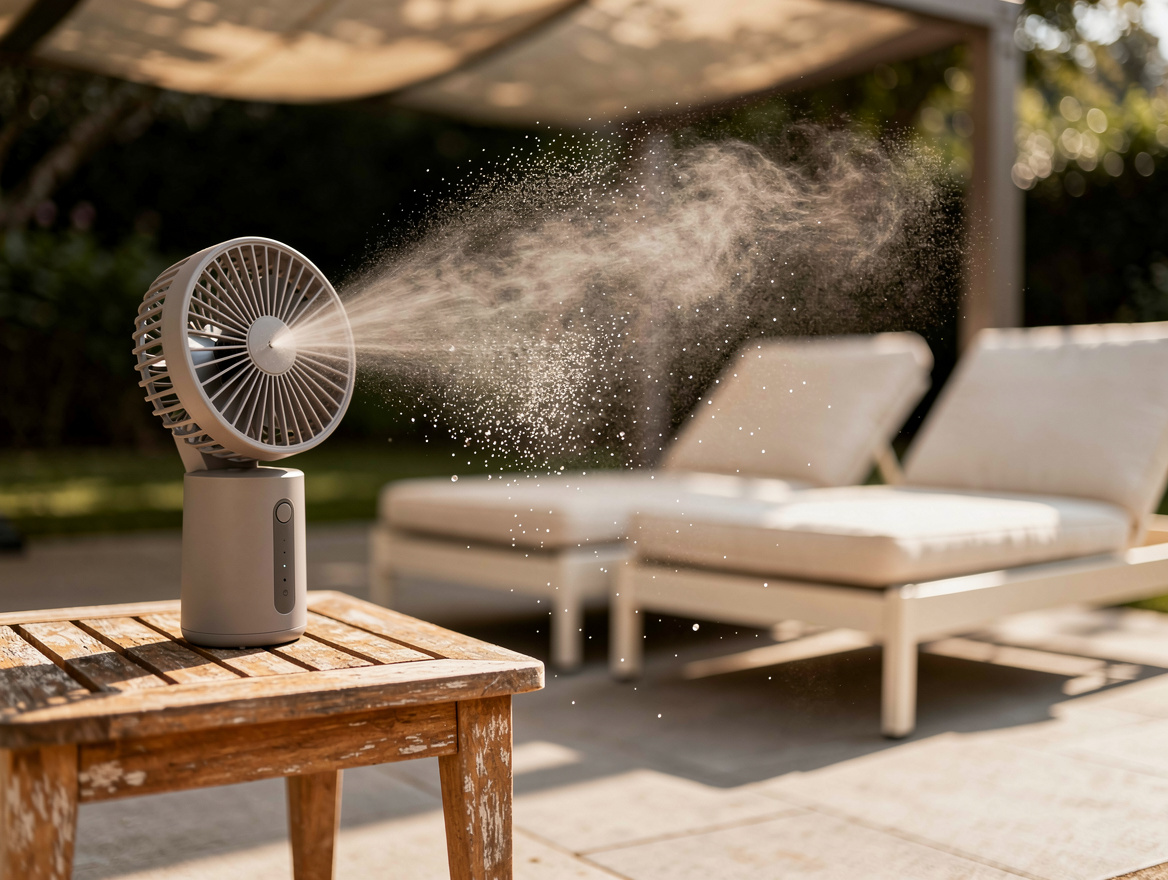
The most convincing hotel-pool move is a battery misting fan aimed at loungers, not a fan stuck in the corner doing nothing. The good ones use a removable water tank, no hose, and can push a misted breeze up to about 70 feet.
A typical 2026 price is around 180 dollars, and the fan head usually measures about 16 to 18 inches wide with a footprint close to 20 by 20 inches. You’ll find this category on Amazon, and it’s one of the few heat-wave buys that feels useful the same day it arrives.
Run the mist only when people are outside because the tank usually needs a refill every two to three hours on continuous use. I like that limitation, honestly, because it keeps the setup intentional instead of wasteful.
Install a ceiling fan over the dining zone
If you have a covered porch or pergola, add a damp-rated ceiling fan over the table before you buy another lantern or throw pillow. Air movement above a dining zone matters more than almost any styling detail when it’s still 88 degrees after sunset.
A smart 52-inch model typically costs about 450 dollars in 2026, and it should sit roughly 8 to 9 feet above the deck. I’d shop Lowe’s or Home Depot for this one because returns and replacement parts are easier when you’re dealing with installation.
Just keep the fan under a roofed area because exposed rain is a different category entirely. This is a practical purchase, not a flashy one, but it’s the piece that keeps dinner outside from turning into a sweaty mistake.
Trade the full pool fantasy for a plunge pool
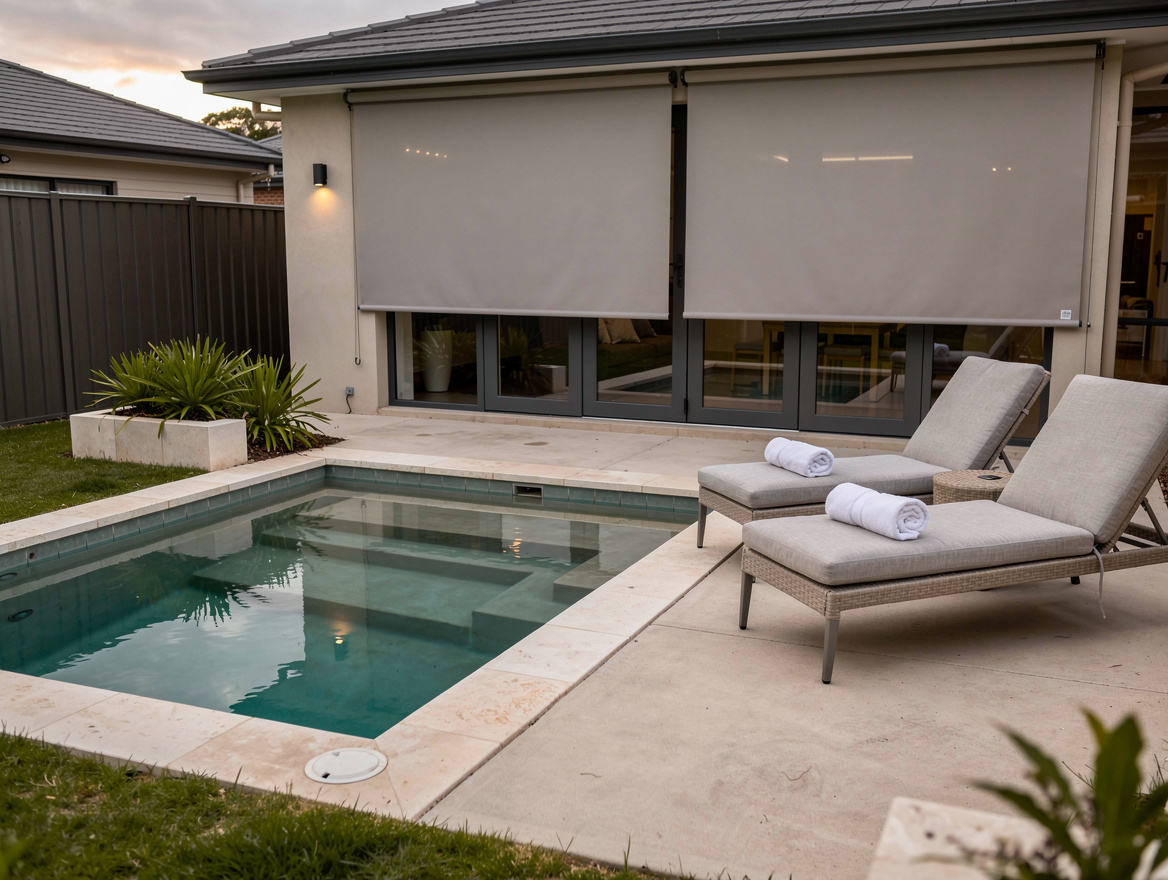
A compact plunge pool makes more sense than a full pool in a lot of backyards, especially during a heat wave when you mainly want to cool off, sit, and stay put. That’s why so many resort-style yards now lean on a smaller water feature with better decking and seating around it.
A small urban plunge is typically about 8 to 11.5 feet long, 6.5 to 8 feet wide, and 4 to 4.5 feet deep. You should also allow about 3 feet of circulation space around it, otherwise the whole layout feels cramped the minute two loungers show up.
Installed costs vary hard by market, but entry-level prefabricated shells with basic filtration usually run about 10,000 to 20,000 dollars. A custom concrete version with stone coping, integrated steps, or a spillover spa usually starts above 30,000 dollars, and that jump is real.
I’m firmly in favor of light-toned concrete or stone around the water because darker decks store too much heat. A backyard can look sleek and still feel miserable under bare feet, which is not luxury to me.
Style a stock tank soak like a boutique retreat
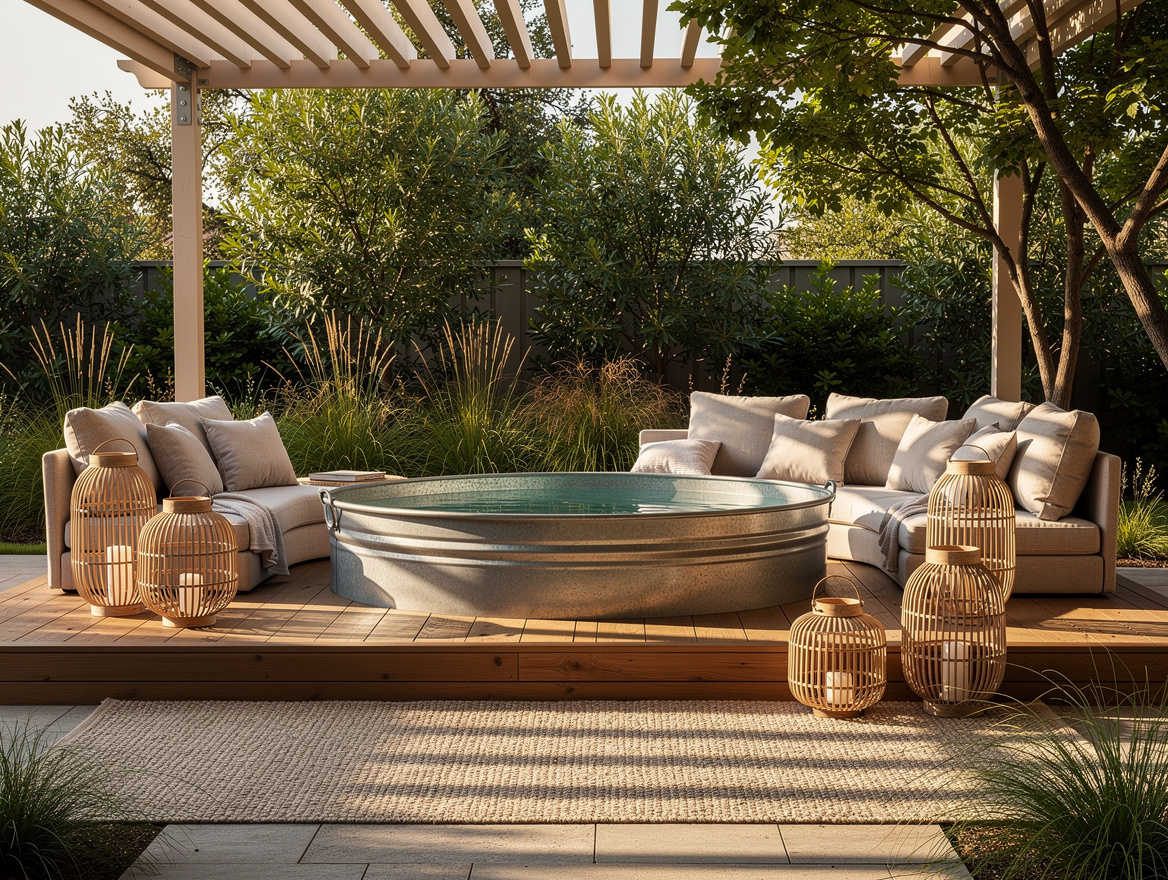
If a plunge pool budget is out of reach, a galvanized stock tank pool can still deliver that cold-water reset. The trick is keeping the palette tight and treating it like a design choice, not a temporary workaround.
A common size is about 8 feet in diameter and 24 to 28 inches deep, with the tank itself typically costing 400 to 800 dollars. Add a basic pump and filter kit for another 200 to 400 dollars, and source the setup through Tractor Supply via Amazon alternatives or a local farm retailer, then finish the surrounding pieces at Target or Walmart.
I’d wrap it with a simple 10 by 13 foot timber platform if you have the room, then add two loungers, one side table, and crisp towels. Too many accessories make this look homemade fast, while restraint gives it that small boutique-hotel mood.
Finish with resort seating and low-glare lighting
Once the cooling pieces are in place, the backyard still needs a place to land visually, and that means outdoor loungers with enough width to actually nap on. I’d rather buy two good chaises than six random seats that never get used.
Typical chaise sizes run around 76 to 80 inches long and 24 to 30 inches wide, and weather-resistant frames in aluminum, resin wicker, or acacia often start around 150 to 300 dollars each at Wayfair, Target, or Costco. Add cushions in sand, white, or faded olive, because pale colors read cooler even before the fan kicks on.
Lighting should stay warm and low, not bright enough to feel like a parking lot. A pair of IKEA lanterns, a few rechargeable table lamps from Amazon, and one soft string light line are usually enough.
This is also where texture matters: a cotton towel stack, a teak tray, one outdoor rug with a flat weave. Small touches work better than clutter because the whole point is to make staying home feel easy.
Start with shade first, then add airflow, then decide how much water feature your budget can really carry. If you nail those three layers in that order, the backyard will feel cooler before you spend a dollar on styling.
Mia Carter writes about small-space living and budget home makeovers. She has restyled three rentals and tests most ideas in her own 45 sqm flat.