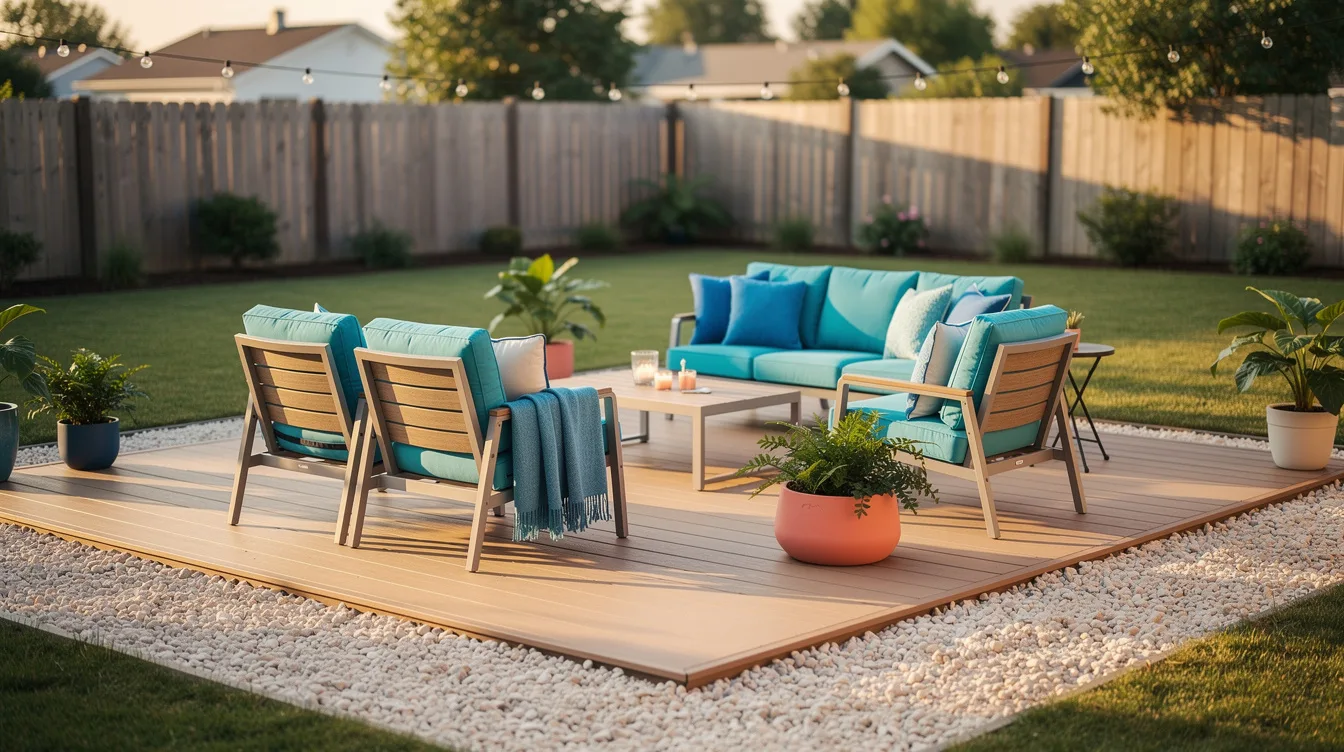
The part that bothered me most was the seating area right next to the hose reel. The water was bright, the chairs were faded, and the whole backyard felt like three different ideas pushed together.
Before a first summer gathering, I would not rip everything out. I would build one tight lagoon-blue zone that looks intentional from the grill, the table, and the back door.
Lock In a Tight Lagoon Palette
Start with one clear water tone, one sandy neutral, and one warm accent. Lagoon blue should sit between teal and deep cerulean, then warm beige or light gray keeps it from turning into a beach bar theme.
I would add coral once, not everywhere. A couple of Target outdoor pillows in coral or terracotta do more than six random blue patterns ever will.
For navy, use it low and sparingly, like a side table or planter. That darker note gives the palette some weight, and I think it looks sharper than black in summer light.
Refresh Only the Zone Guests Actually See
If your backyard is small, treat just 10 to 15 square meters, roughly 110 to 160 square feet, as the main scene. A composite deck patch under seating or around water usually gives the biggest visual return for the money.
A typical installed cost for mid-range composite decking lands around $8 to $13 per square foot. If that feels high, I would save it for the main rectangle near the chairs and let the rest of the yard stay plain.
Large outdoor porcelain pavers usually run about $6 to $10 per square foot installed, while decorative gravel with edging is often around $3 to $5. A pale gravel strip can fake a shoreline better than a second expensive surface.
Fake the Lagoon With Water, Even on a Modest Budget
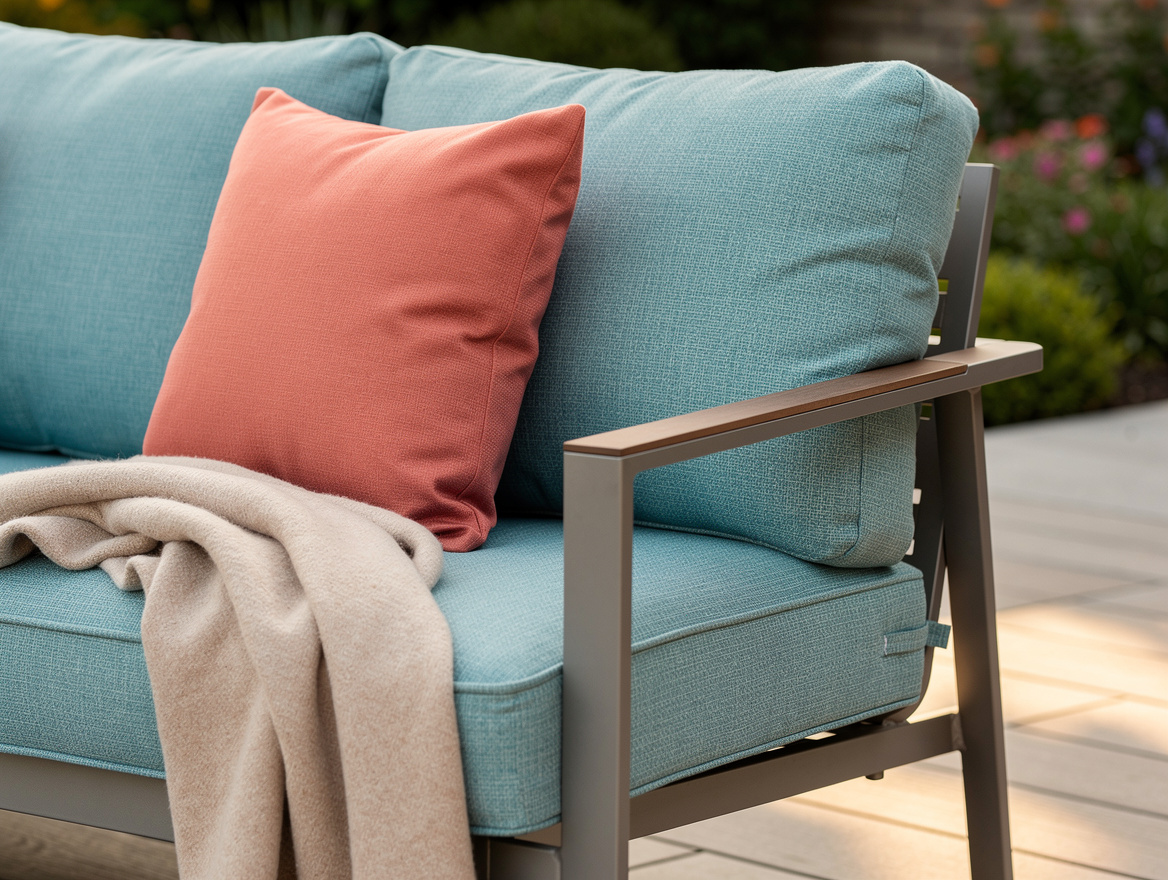
You do not need a full in-ground pool to sell this look. A round above-ground pool around 13 to 16 feet wide already feels social, and typical kit pricing is roughly $1,000 to $2,200 through places like Walmart or Amazon.
If you want something more compact, a plunge pool around 8 by 8 feet can still feel immersive, especially if the edge is clean and the water tone leans blue-green. I would not go smaller than that if guests are meant to gather around it comfortably.
No pool at all is still workable. Use a lagoon-blue stock tank, fountain, or painted water wall from Home Depot, then build a 3-foot-deep gravel and deck band beside it so the area reads like a mini shoreline.
Anchor Seating With Warm Gray Frames
The furniture should calm the palette, not compete with it. Powder-coated aluminum in warm gray or off-white looks lighter and cleaner than black when you put it against blue textiles and pale decking.
A typical mid-range outdoor lounge set, sofa, two chairs, and a table, often runs about $600 to $1,200 at Wayfair, Costco, or IKEA. I like IKEA for this kind of reset because the silhouettes are simple and the color does not have to fight fussy frames.
Plan on a beach deck area about 10 by 10 feet at minimum if you want two loungers and a low table to fit without everyone shuffling sideways. That footprint matters more than buying an oversized sectional.
Layer Textiles Harder Than You Think
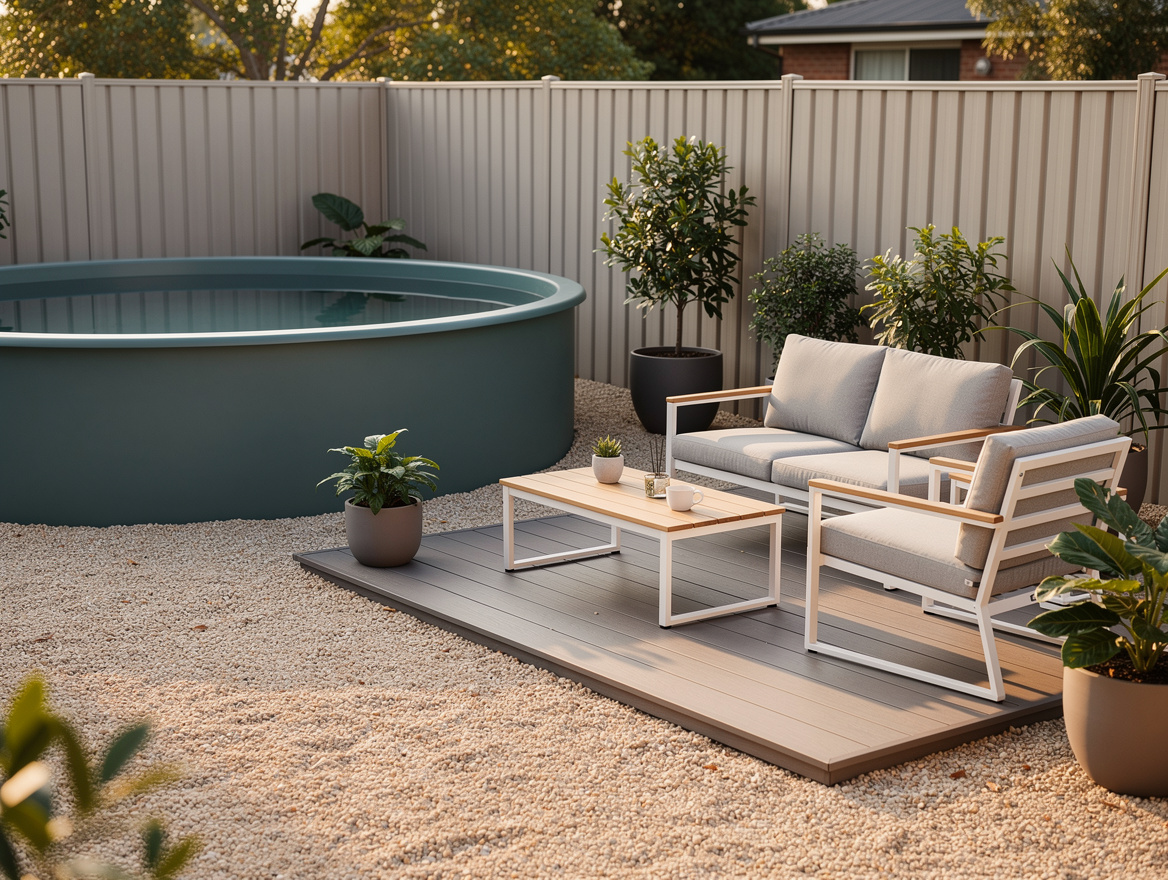
This is where the whole blue lagoon idea starts to feel finished. Outdoor cushions usually run about $15 to $40 each, and two or three outdoor pillows in lagoon blue plus one coral accent are often enough.
Look at Lowe’s, Target, and Amazon for solution-dyed acrylic or olefin fabrics, because they hold color better in direct sun than cheap cotton blends. I would rather buy fewer pillows in durable fabric than a basket full of bargain covers that bleach out by late summer.
Add one throw in sandy beige, then stop. Too many textiles outdoors start to look damp and needy, and that is the fastest way to kill the crisp lagoon mood.
Use Soft Lighting to Pull the Color Together
Blue can turn cold after sunset if the lighting is harsh. Warm white string lights, a couple of lanterns, and one low table lamp keep the water tone rich instead of flat.
A small backyard usually needs only two lighting layers. I would hang one line from the house to a fence, then place two lanterns from Ace Hardware or Home Depot near the seating edge so the gravel, deck, and cushions stay visible.
Skip bright daylight bulbs. Soft light is what makes sand neutrals, navy details, and coral accents blend into one scene instead of reading like separate purchases.
Finish With One Coral Hit and Real Plants
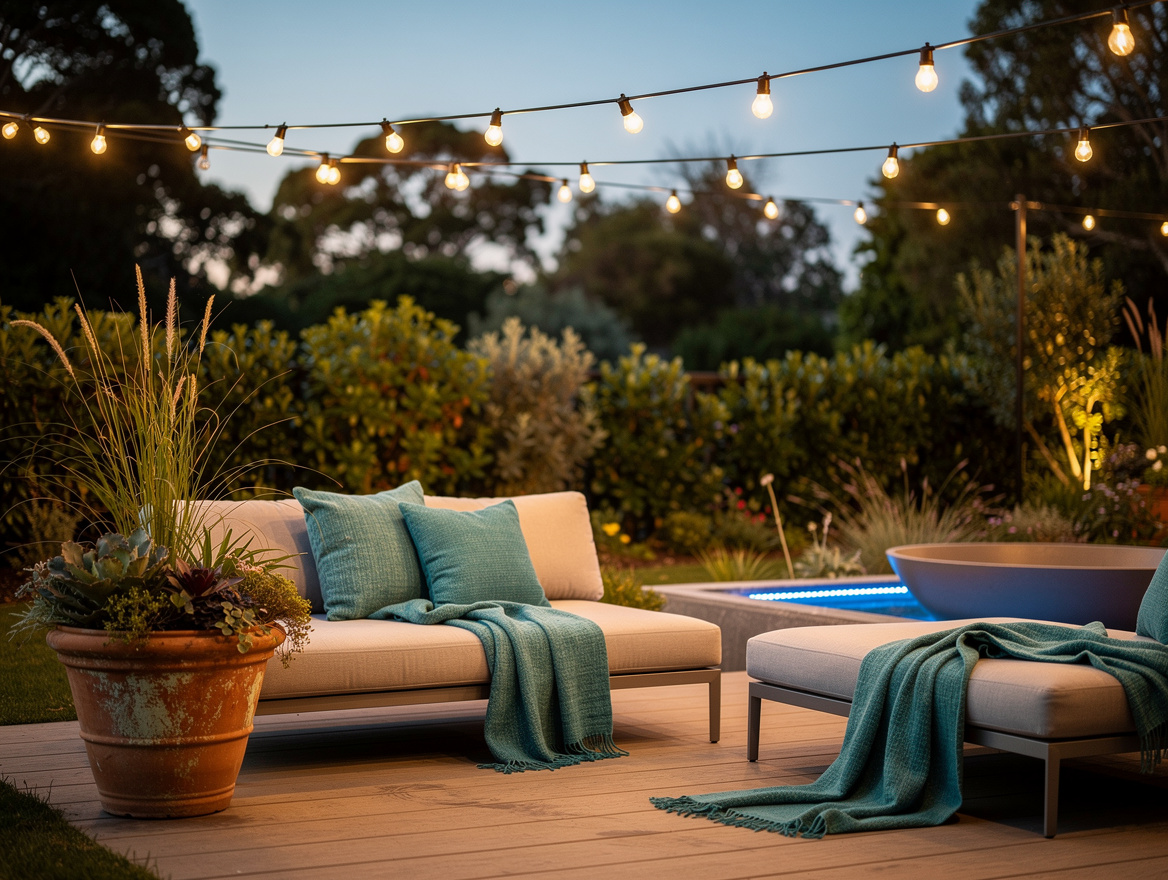
The last move is small but important: give the eye one warm stop. A terracotta planter or coral side table beside the loungers keeps all that blue from feeling too polished and chilly.
Use leafy green plants with broad shapes, not ten tiny pots scattered everywhere. Big containers from Walmart or Costco in sandy beige or terracotta look stronger, and I think one oversized planter always beats a line of little mismatched ones.
If the budget is tight, this is the order I would follow: textiles first, lighting second, one surface fix third. That sequence usually gives the clearest before-guests payoff for the least money.
Begin with the 10-by-10-foot seating zone and choose the textiles before anything else. Once the blues, sand tones, and one coral accent are right, the rest of the backyard gets easier to edit.
Mia Carter writes about small-space living and budget home makeovers. She has restyled three rentals and tests most ideas in her own 45 sqm flat.