
Hidden bookcase door ideas work best when the wall reads as built-in millwork first and a passage second. I learned that the hard way in my own living room, after trying to make the entrance feel clever instead of quiet. Once I treated it like joinery, paint, lighting, and furniture placement, the room changed fast. And yes, you can get that tucked-away, moody, intimate library feeling without turning your whole house into a movie set. It’s calmer and more elegant than you’d expect from something this quietly dramatic.
Here’s what it looked like before: The Flat-Wall Problem
Before I touched the wall, the living room had that familiar almost-finished look. The sofa was fine, the rug was fine, the shelving was fine, and together they still felt like nothing. One plain wall beside the sofa kept reading as empty drywall, not architecture, so your eye stopped there instead of moving around the room.
I had a decent Article Sven profile, a rug in the right 8×10 size, and enough books to fake personality, but the wall still felt blunt.
What bothered me most was that the room had no tension. No reason for you to lean in.
No little pause that makes a built-in look custom. I kept pinning bookshelf entrance inspiration and hidden room layouts that work, and the pattern was obvious once I saw it: the good ones never announced themselves.
They just made the wall feel deeper, older, and more intentional.
- Start with the bookcase wall beside the sofa
- Choose a flush pivot bookcase for the entrance
- Run built-in shelves across the hidden doorway
- Match the shelf depth to surrounding alcoves
- Hide the seam behind staggered book stacks
- Add lower cabinets beneath the secret shelves
- Paint the bookcase in the trim color
- Use brass gallery rails on moving shelves
- Place a reading chair near the reveal
- Tuck the latch behind a sculptural bookend
- Frame the door with matching crown molding
- Carry baseboards across the swinging bookcase
- Install picture lights above the hidden shelves
- Style objects heavier near the hinge side
- Line the reveal with dark wood paneling
- Add a narrow rug toward the detail room
- Finish the passage with warm library sconces
1Start with the bookcase wall beside the sofa
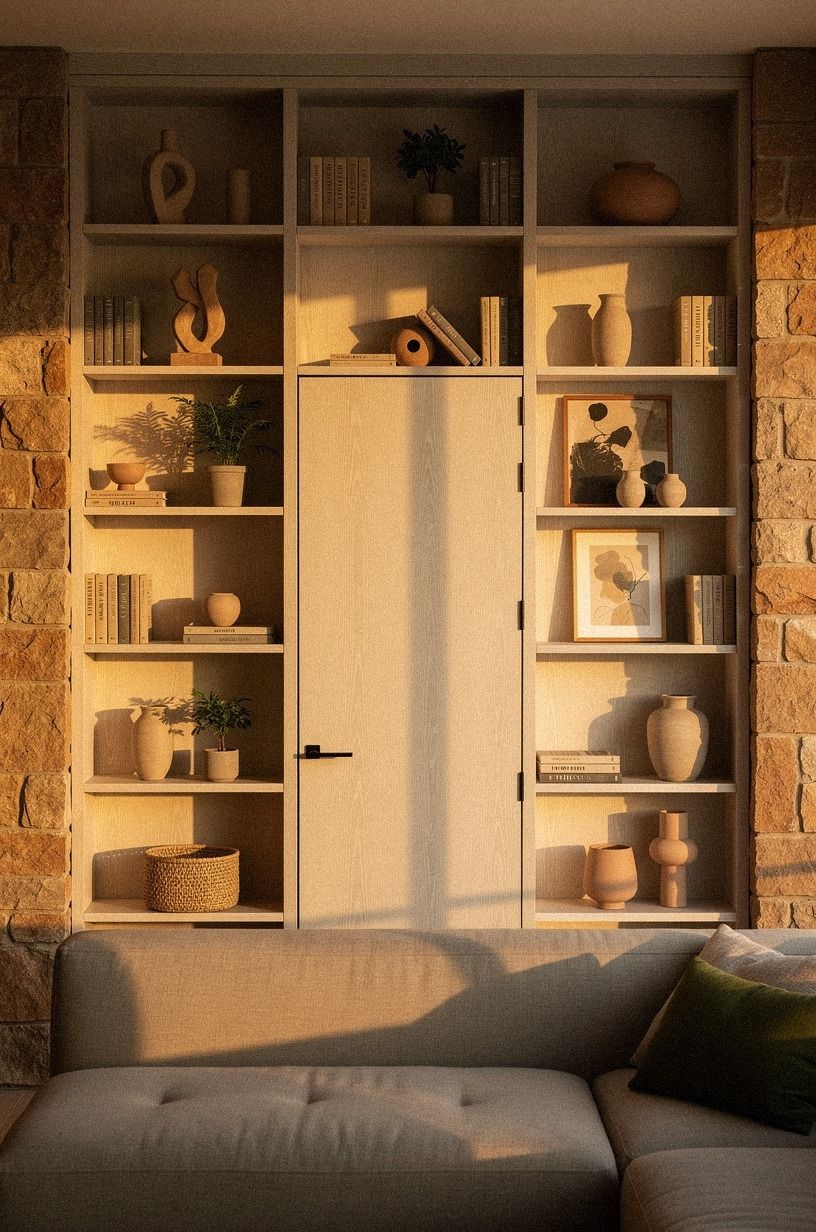
Start with the wall your sofa already points at, not the random corner you think you can spare. That was the first real shift for me.
When the hidden entrance sat beside the seating zone, it felt like part of the room’s architecture instead of a detached novelty. You want the whole built-in wall to read in one glance, especially if your sofa is 35 to 40 inches deep and already anchors the room.
I liked the diagonal view best because you could see the full composition and judge whether the door disappeared.
I centered the bookcase run inside the living room millwork and let the sofa stay the quiet supporting piece. If you’re working from a classic hidden bookshelf setup, this placement keeps your eye moving from upholstery to shelves to opening without a visual crash.
But don’t crowd the wall with a second bulky chair right away. You need air around the entrance or the whole thing starts feeling staged.
2Choose a flush pivot bookcase for the entrance
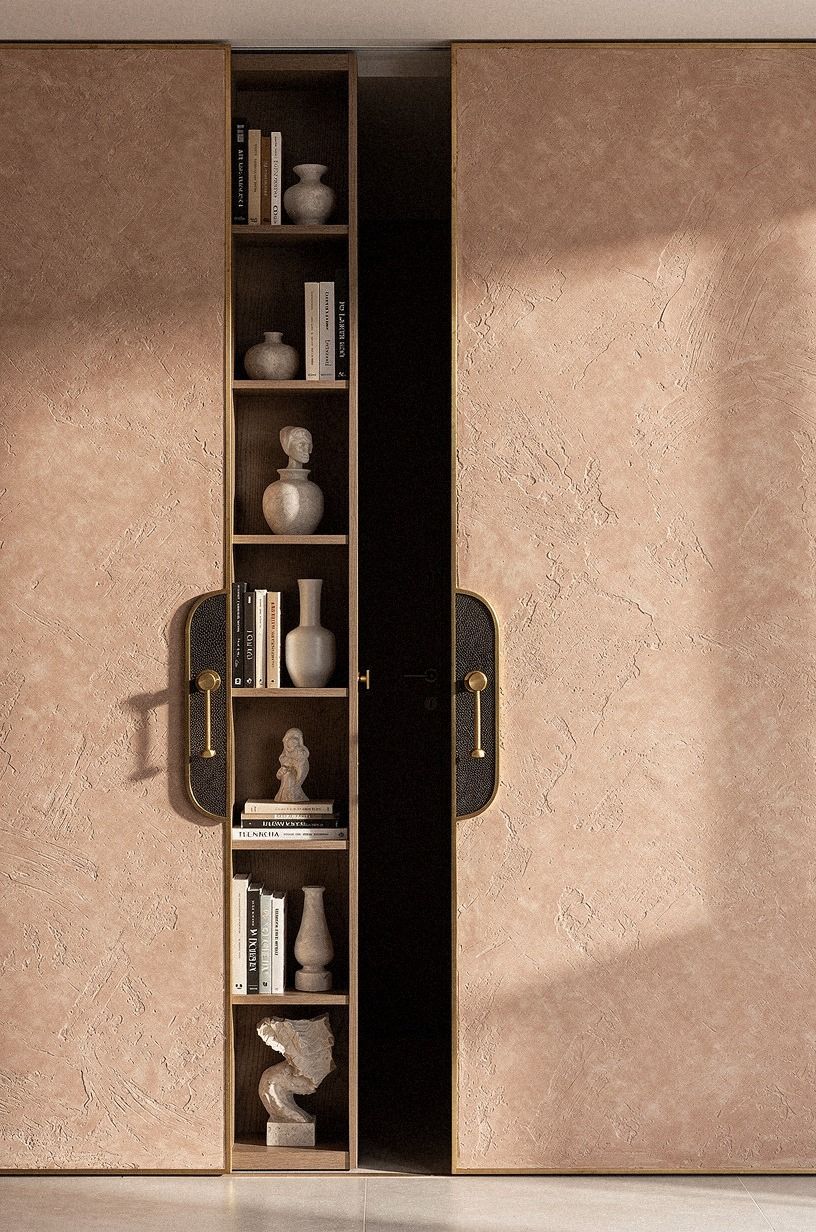
Choose a flush pivot bookcase if you want the entrance to feel architectural the second you walk toward it. A pivot door sits recessed inside the wall thickness, so the book’s edge lines up flush with the shelf face on both sides, and your eye reads one continuous wall. That single detail is what separates a cozy library entrance from a flimsy prop doorway in a themed basement.
I’ve toured old houses where this exact pivot setup is still working after eighty years, and the doors still close softly because nothing rubs. If you’re tight on swing clearance, a pivot stays usable in narrow hallways where a regular door would need 30 inches of arc.
Most modern fabricators price a floor-to-ceiling pivot panel around $1,800 to $3,500 before paint and trim, and you can save by reusing your existing shelf standards on the face. The hidden cost nobody flags is the hinge mortise in the floor, which a carpenter usually charges an extra $300 to $600 to clean up. Pair it with a soft-close mechanism and the feel goes from clunky to considered in about ten minutes of adjustment.
3Run built-in shelves across the hidden doorway
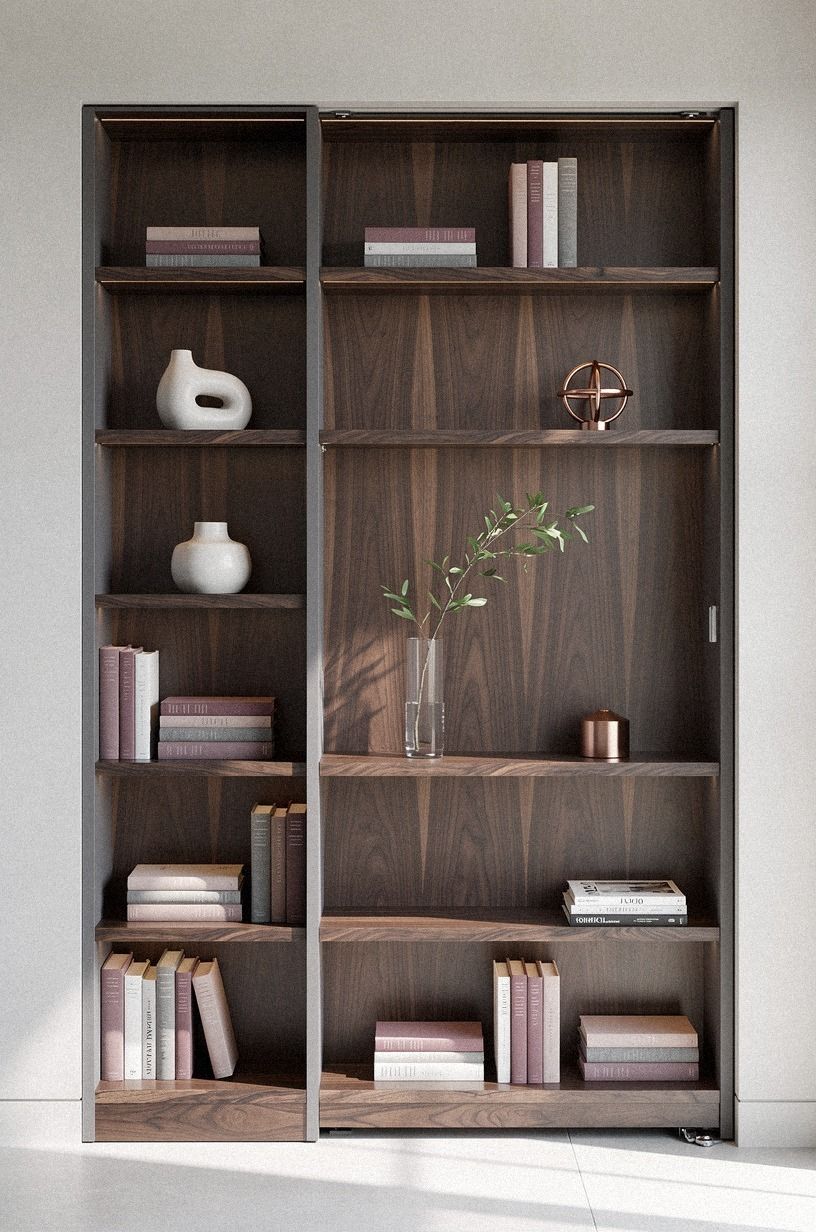
Run the shelves right across the moving panel so the whole wall reads as one built-in run. This is where most book shelf doors hidden setups lose me.
People stop the shelf rhythm at the doorway, then wonder why the disguise fails. If your shelves continue at the same spacing, same thickness, and same warm white oak tone, your eye stops measuring the opening and starts reading one full library wall instead.
I pulled a few layout notes from this classic bookcase-door rundown when I was planning the run.
I used the same shelf spacing on both the fixed alcoves and the door panel, then left breathing room elsewhere in the living room so the wall could do the talking. The continuous run also made it easier to tie into a hidden bar behind a bookcase if you ever want the next room to feel more layered. And honestly, once you commit to continuity, styling gets easier.
You aren’t decorating a door anymore. You’re styling a wall.
4Match the shelf depth to surrounding alcoves
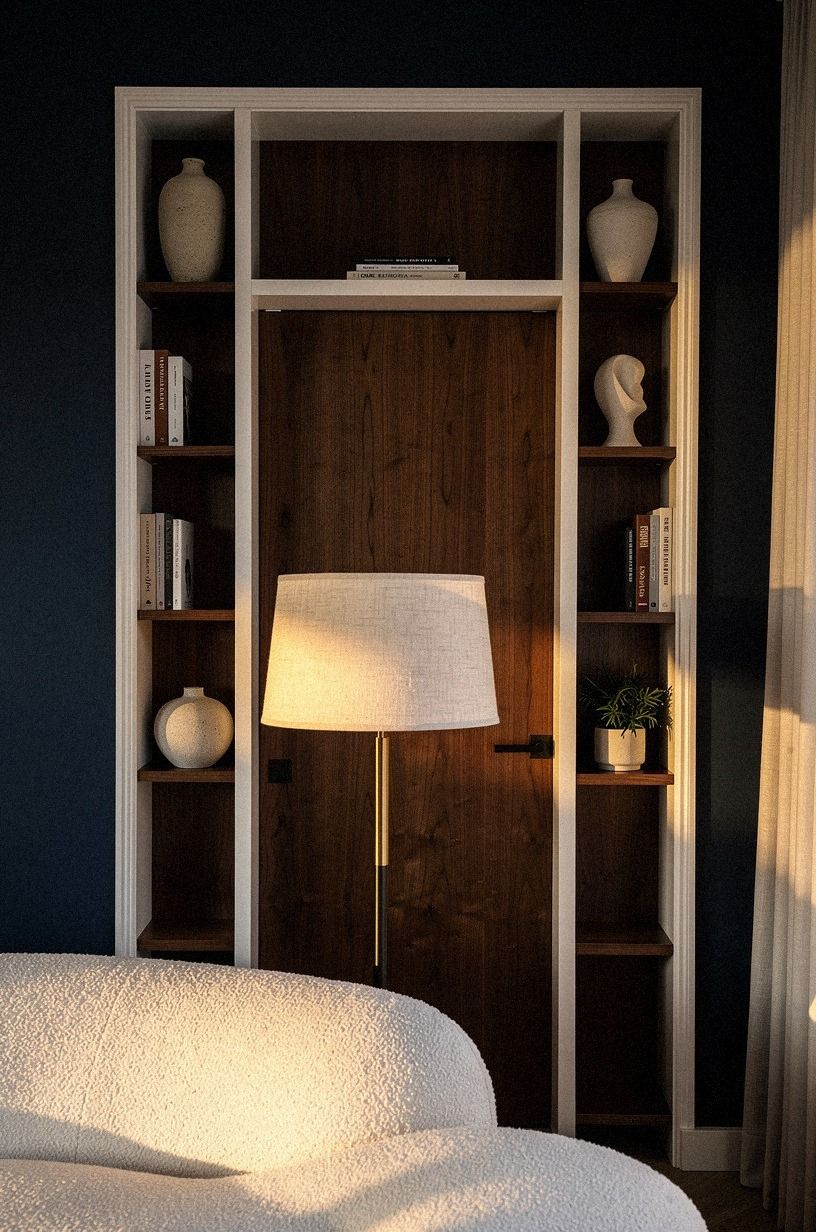
Match the shelf depth exactly to the alcoves around it or the illusion falls apart.
5Hide the seam behind staggered book stacks
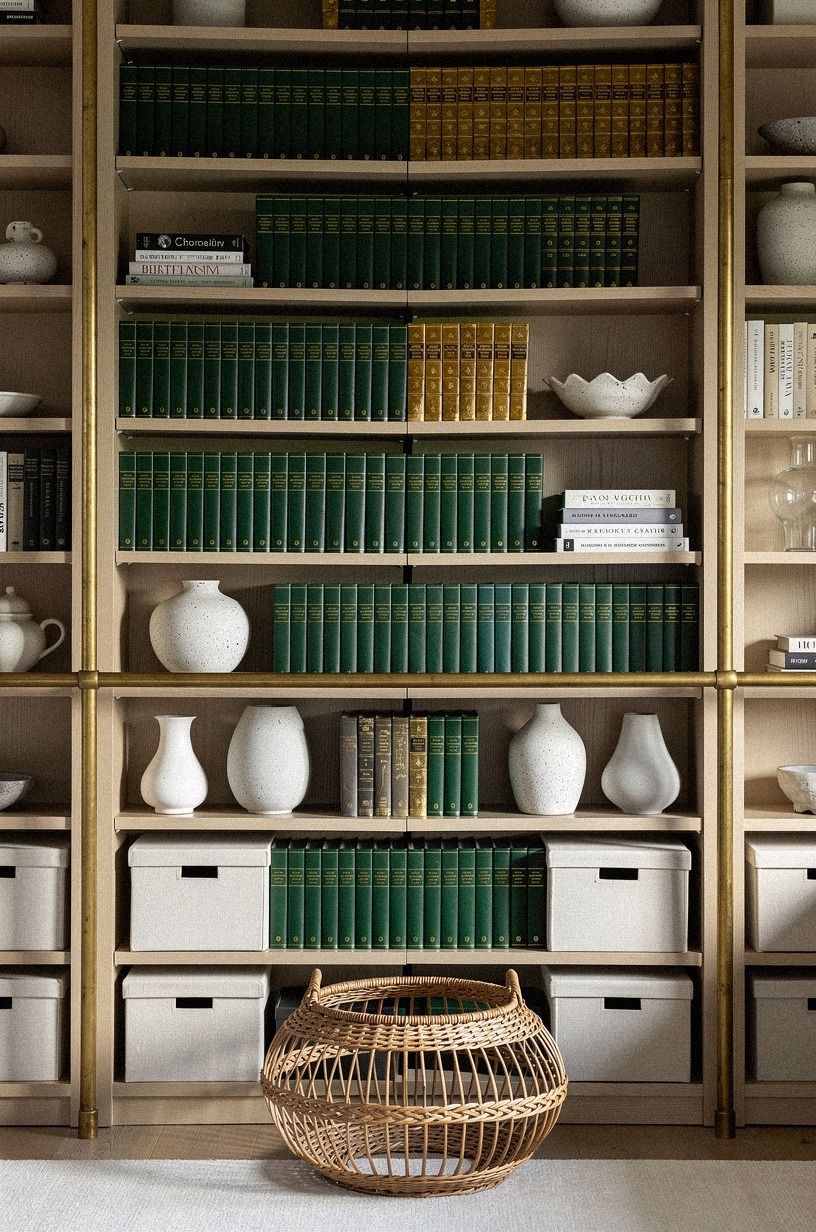
Hide the seam with staggered book stacks, not a big decorative object that screams cover-up. Pull a row of solid-color cloth-bound books on either side of the joint, then stagger the heights so the line breaks across four or five spines instead of one tall block.
I leaned on warm cream, moss, rust, and ink-blue covers because they disappear into a styled shelf rather than advertise themselves. A neat trick: angle two books slightly inward, like they’re leaning in conversation, and your eye slides past the seam without filing it as a seam.
Skip a single oversized vase or sculpture right at the joint. That’s the move that announces “something’s here” loudest, and you’ll feel it every time you walk past.
Books feel lived-with, sculptures feel staged. If your shelves run 10 to 12 inches deep, leave at least an inch of air on either side of the joint so the books don’t visibly touch the seam when you open the door.
6Add lower cabinets beneath the secret shelves
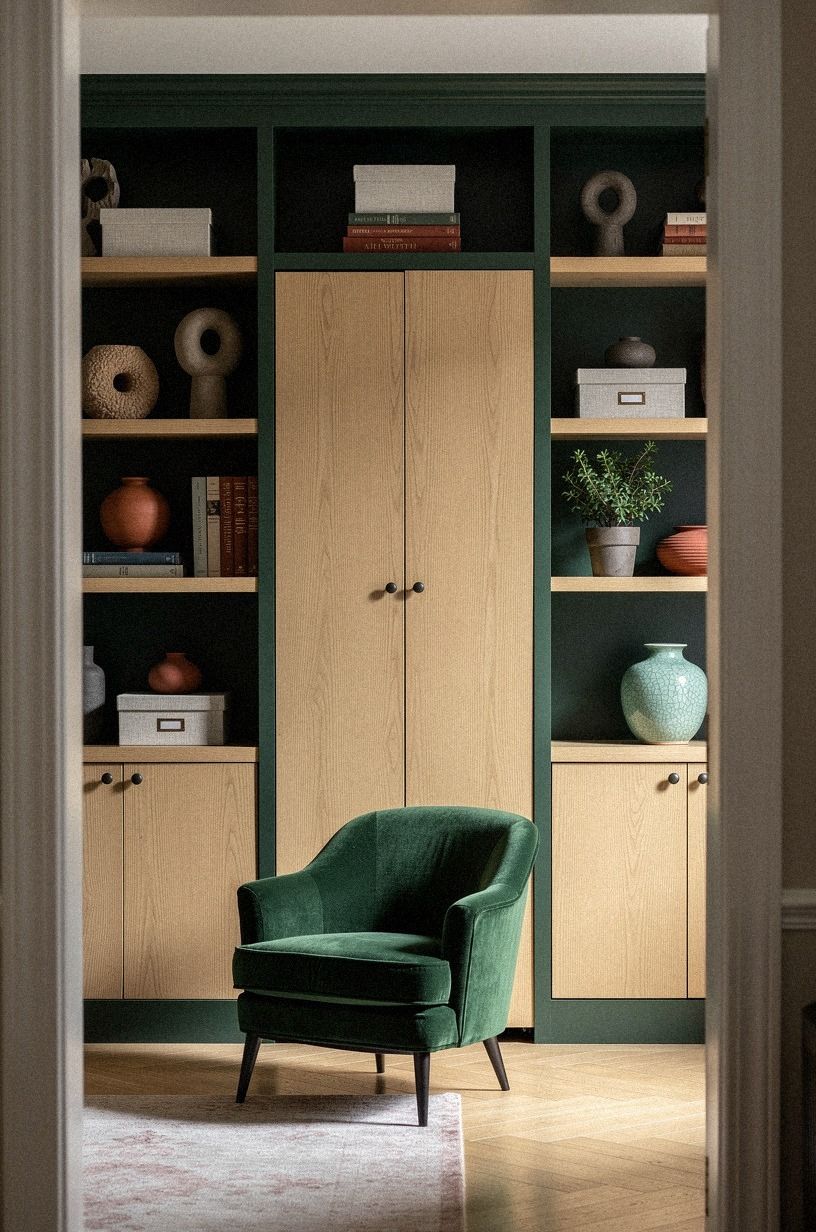
Add lower cabinets beneath the swinging section if you want the whole wall to feel heavier and more permanent. Open shelving alone can look nice, sure, but it rarely feels built in enough at floor level.
The lower cabinets gave my living room wall a base, which helped the door disappear and gave me somewhere to hide the boring stuff you never want out. Games.
Cables. The extra throw covers.
Real life.
But I kept the cabinet fronts flat and carried the same forest green paint through the base so the whole composition stayed calm when viewed through the doorway. It also meant the bookcase door didn’t feel top-heavy once it swung open.
For a similar layered feeling, I kept looking at under-stairs hidden bar ideas because they solve storage and drama at the same time. You will thank yourself for closed storage later!
7Paint the bookcase in the trim color
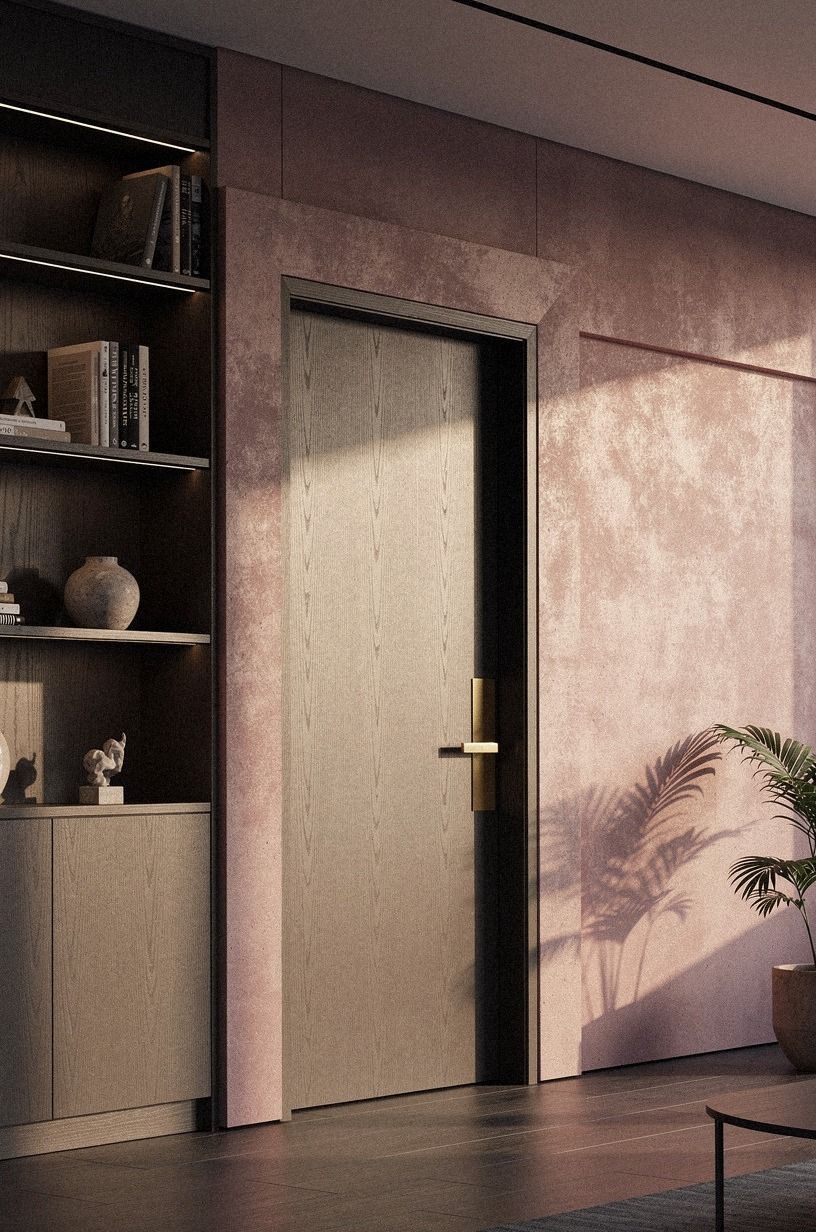
Paint the whole bookcase in your trim color, not a feature color, if your goal is concealment.
8Use brass gallery rails on moving shelves
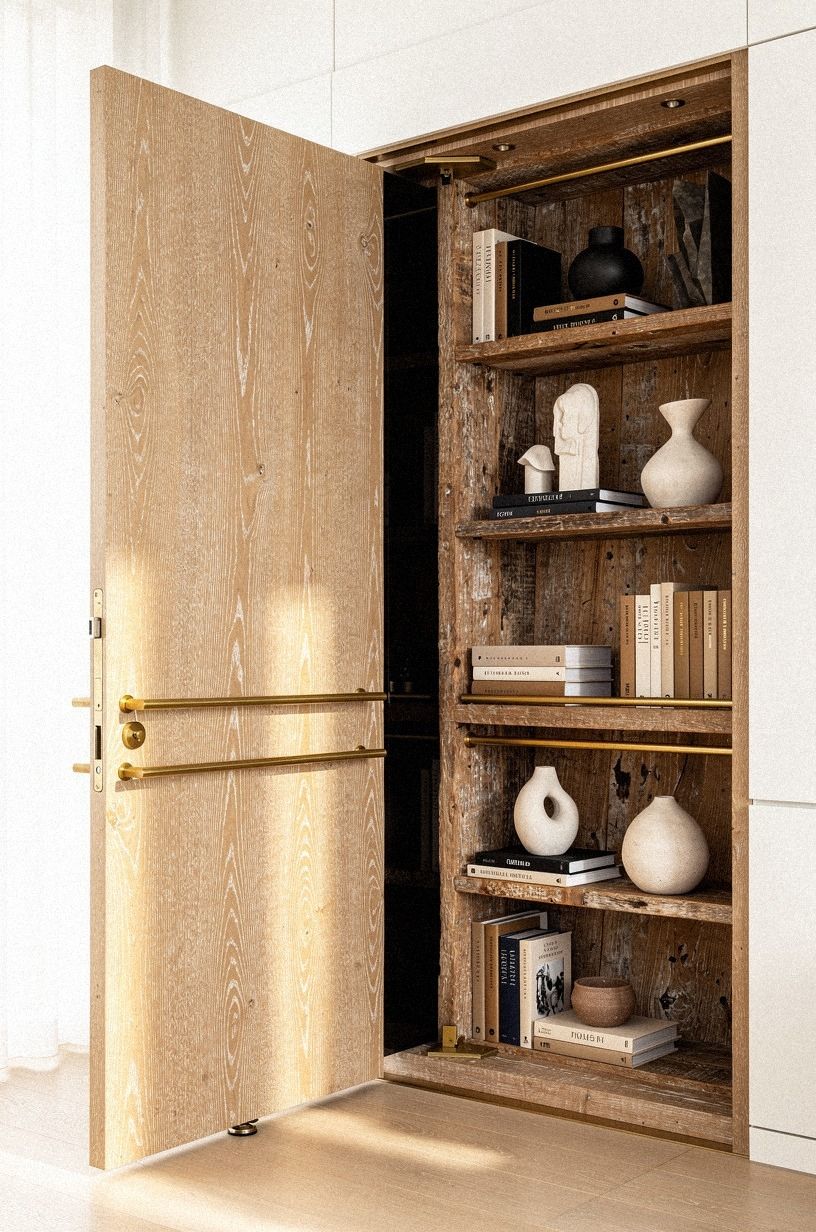
Use brass gallery rails only on the moving shelves if you want a classic library note without loading the whole wall with metal. I love the warmth of rail detail against warm white shelving and camel upholstery, but too much brass starts reading themed.
A slim rail on the door shelves felt smarter. It gave the panel a collected look and helped keep a few objects in place once the door moved, which is not glamorous but very useful.
I used a soft unlacquered brass finish so the metal would dull a little instead of staying bright forever. That mattered next to linen, walnut, and old book spines.
If your style leans more lounge than library, this hidden speakeasy entrance article shows how warm metal can keep a concealed doorway from feeling cold. But don’t put rails on every shelf.
One restrained move is enough.

9Place a reading chair near the reveal
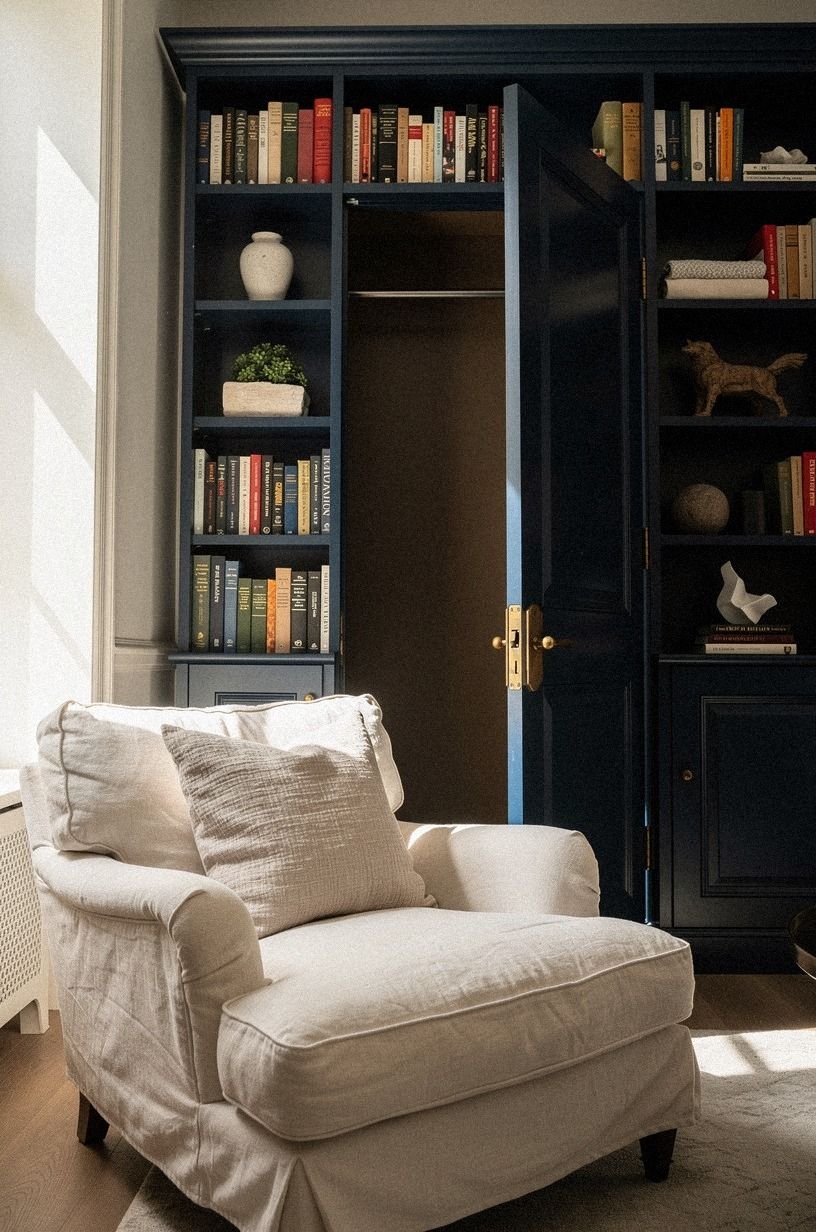
Place a reading chair near the reveal so the entrance feels lived with, not merely installed.
10Tuck the latch behind a sculptural bookend
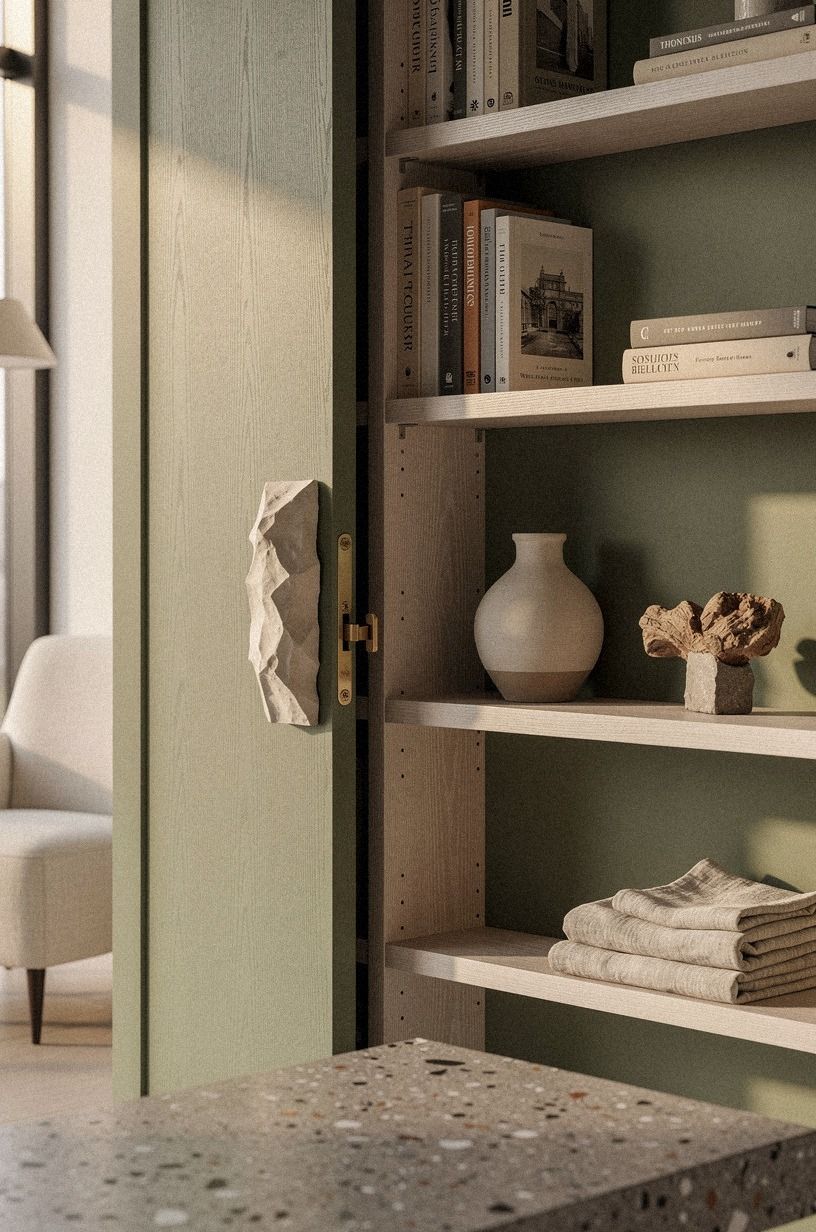
Tuck the latch behind a sculptural bookend instead of using obvious hardware. A small hand-carved stone bookend or a chunk of hammered bronze does the job while the latch stays invisible until you reach for it.
I’ve tested both magnetic catches and finger pulls, and a magnetic recessed latch is the quieter choice for most rooms because there’s nothing visible to push or twist. Pair it with a soft felt bumper so the door doesn’t thud when it closes against the frame.
If you’re renting or want a removable approach, run the latch off a small push-to-open mechanism hidden inside the shelf face. It costs about $40 in parts and turns the door into a gentle-touch reveal that feels considered every single time.
11Frame the door with matching crown molding
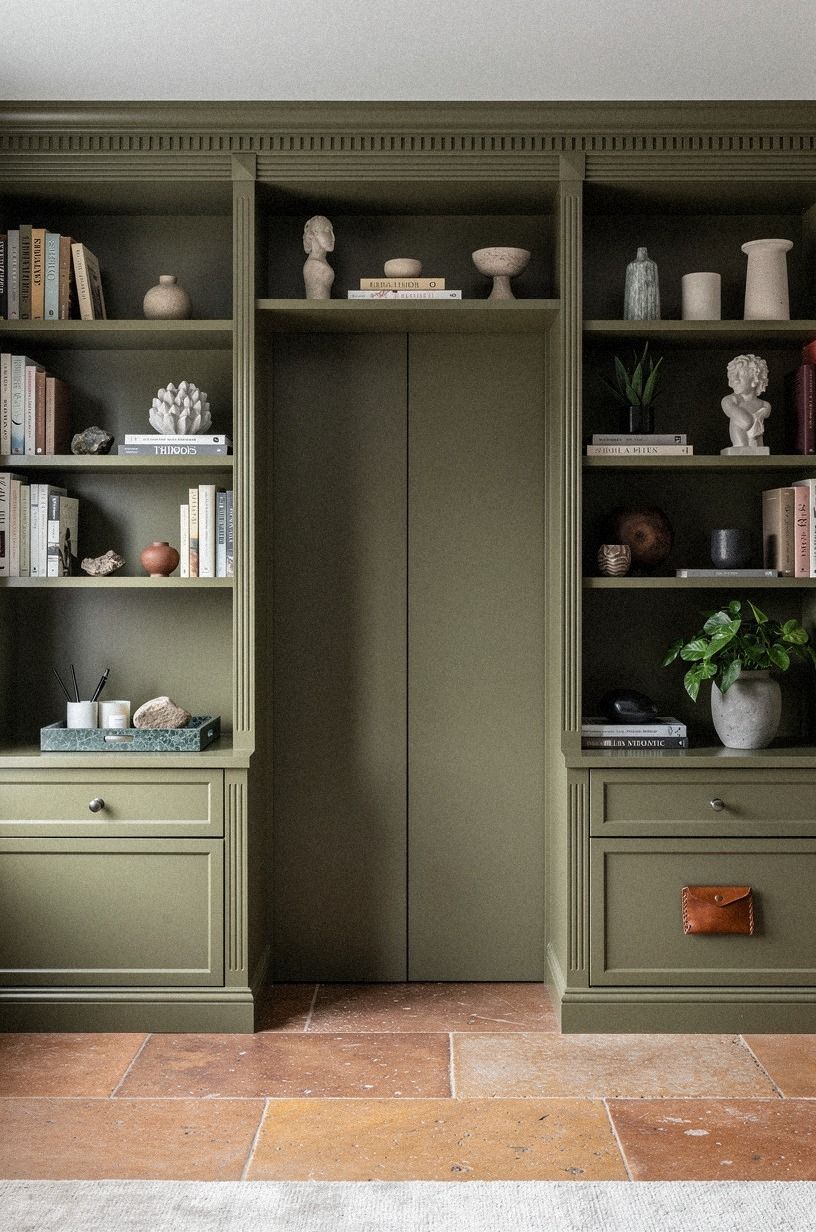
Frame the whole opening with crown molding that matches the rest of the room, even if the crown itself doesn’t sit on the moving panel. This is where the wall starts feeling inherited instead of installed.
In my terracotta, stone, and olive version, the crown tied the detail door area back to the room perimeter, which made the doorway feel old-school in the best way. You want continuity overhead as much as you want it across the shelves.
Sherwin-Williams Evergreen Fog (SW 9130) on nearby millwork made the crown feel softer than bright white, especially in afternoon light.
I kept the profile simple and let the surrounding trim do the heavy lifting. If you love old-house hidden entrance ideas, don’t forget the upper line of the room.
But don’t switch crown profiles at the door zone. Your eye catches that mismatch instantly.
12Carry baseboards across the swinging bookcase
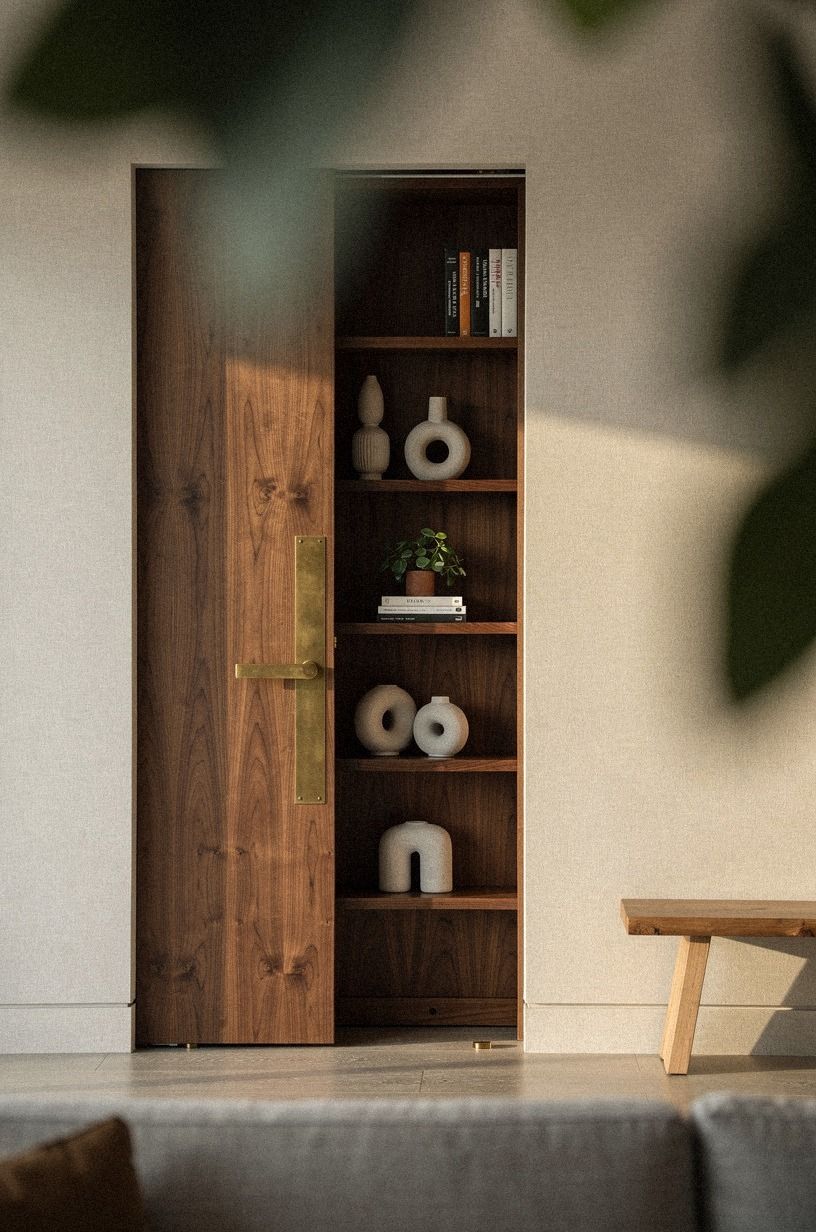
Carry the baseboard cleanly across the bottom edge of the moving panel so the wall reads as one continuous elevation. This sounds fussy.
It is fussy. And it’s worth it.
Without the baseboard line, the lower edge of the bookcase door looked abrupt in every test photo I took, especially when I viewed it through plants or from the next room. Once the stock oak baseboard crossed the panel, the door finally stopped looking like furniture on hinges. I matched the base profile to the rest of the living room and kept the floor reveal tight so the panel could still move.
If you’re using leafy plants to soften the wall, this detail matters even more because all that organic shape makes straight architectural mistakes stand out. I used this related hidden-room guide as a gut check for continuity.
But don’t oversize the base just for drama. It will throw off the whole lower proportion.
13Install picture lights above the hidden shelves
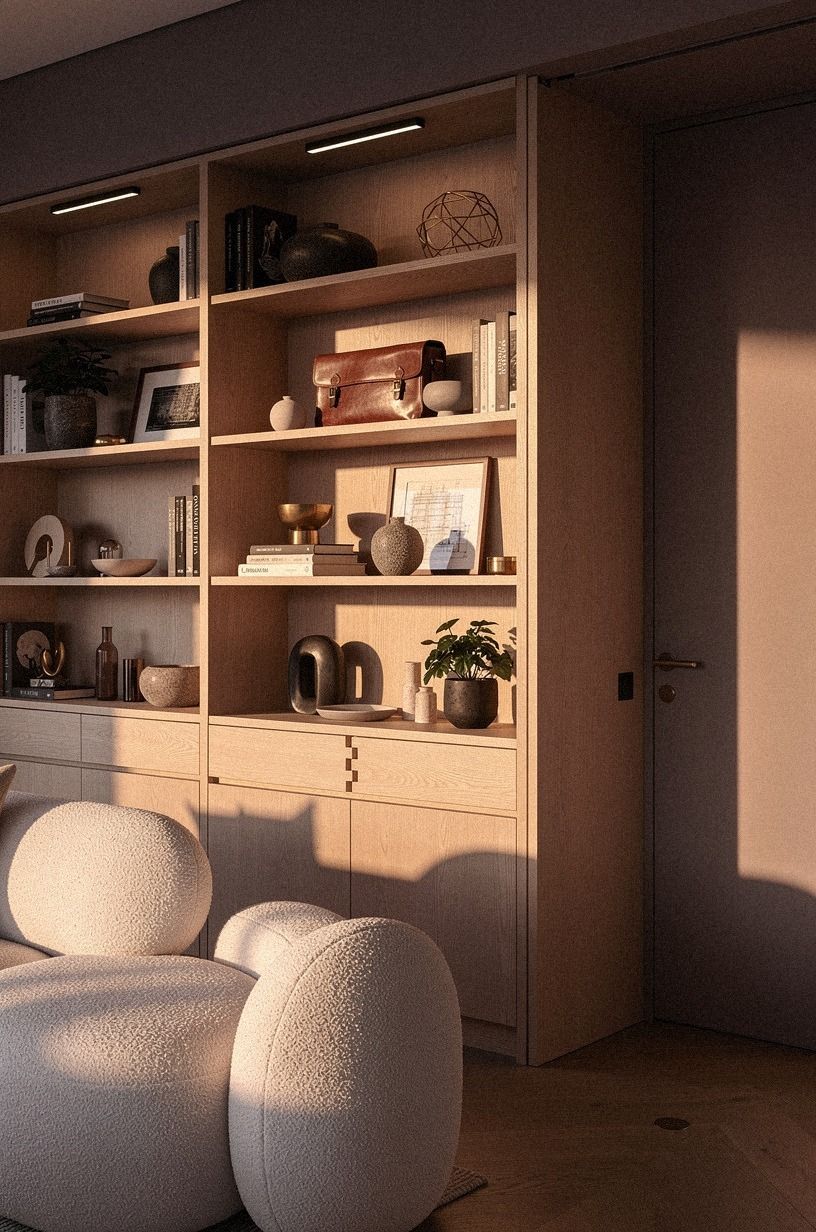
Install picture lights above the shelves if you want the wall to glow at night instead of flatten out. Daytime concealment matters, but evening mood is where this kind of makeover earns its keep. My living room looked fine at 2 p.m. and forgettable after dinner until I added small picture lights.
Suddenly the plum-gray wall, the books, and the trim had depth. The entrance felt less like a joke and more like a room someone had cared about for years.
And I placed the lights to wash the upper shelves, not spotlight the seam. That’s the whole move. Keep the beam broad and warm.
If you’re already layering lounge lighting, the hidden speakeasy doorway piece is useful for tone, even if your room is more classic than moody. But avoid bright white bulbs.
The second the light turns sharp, the wall starts looking like a display instead of a home!
14Style objects heavier near the hinge side
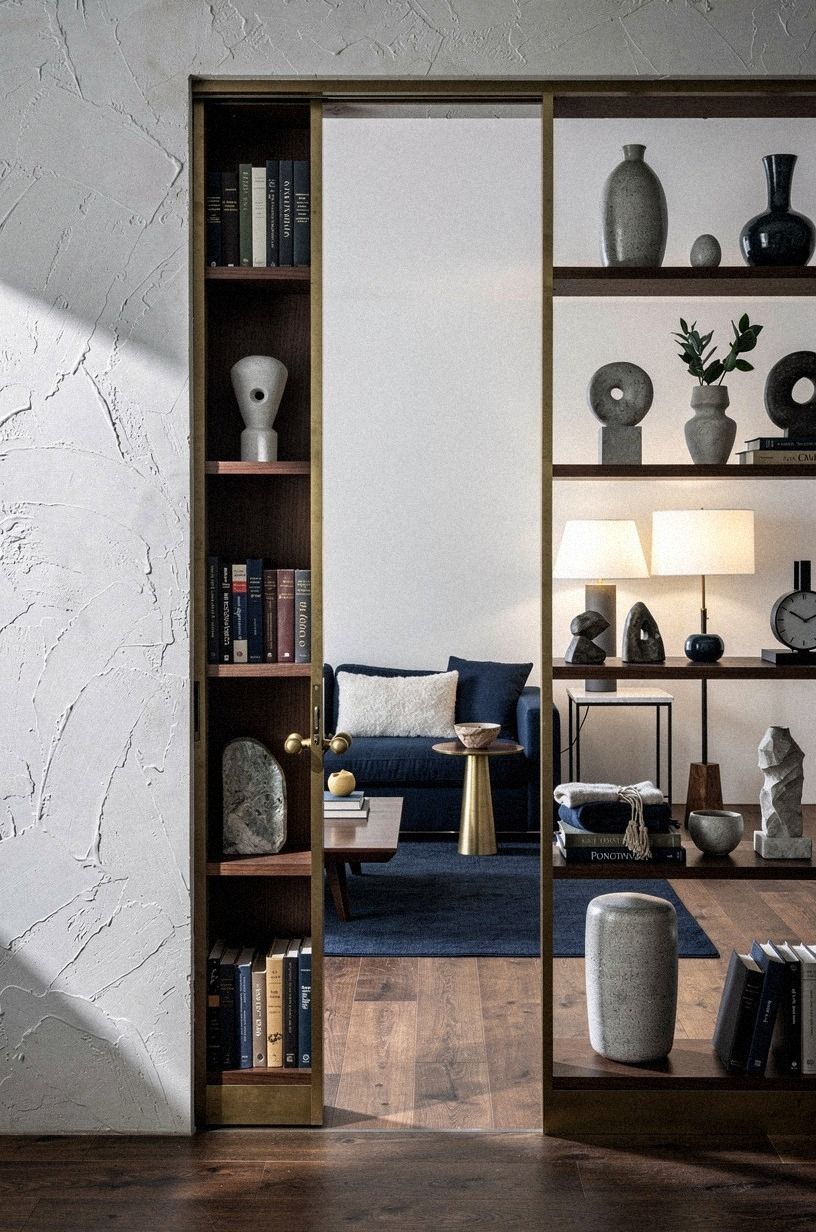
Style the heavier visual weight near the hinge side so the moving panel feels balanced when you look straight at it. Cluster stacked ceramics, a tall oil-rubbed bronze vase, or a small stack of oversized art books on the hinge-side shelves, and leave the latch side airy with one tall object plus breathing room.
The composition reads intentional instead of lopsided, and the door moves more smoothly because your eye doesn’t feel like something’s pulling one way. I’ve tried balanced styling on three different pivot setups now, and the room always feels calmer after this one shift.
Skip heavy objects on the latch side. They make the wall feel like it’s leaning, and you’ll catch that lean every time you walk through. A merino wool throw draped over a basket on that side does the visual weight job without the heaviness.
15Line the reveal with dark wood paneling
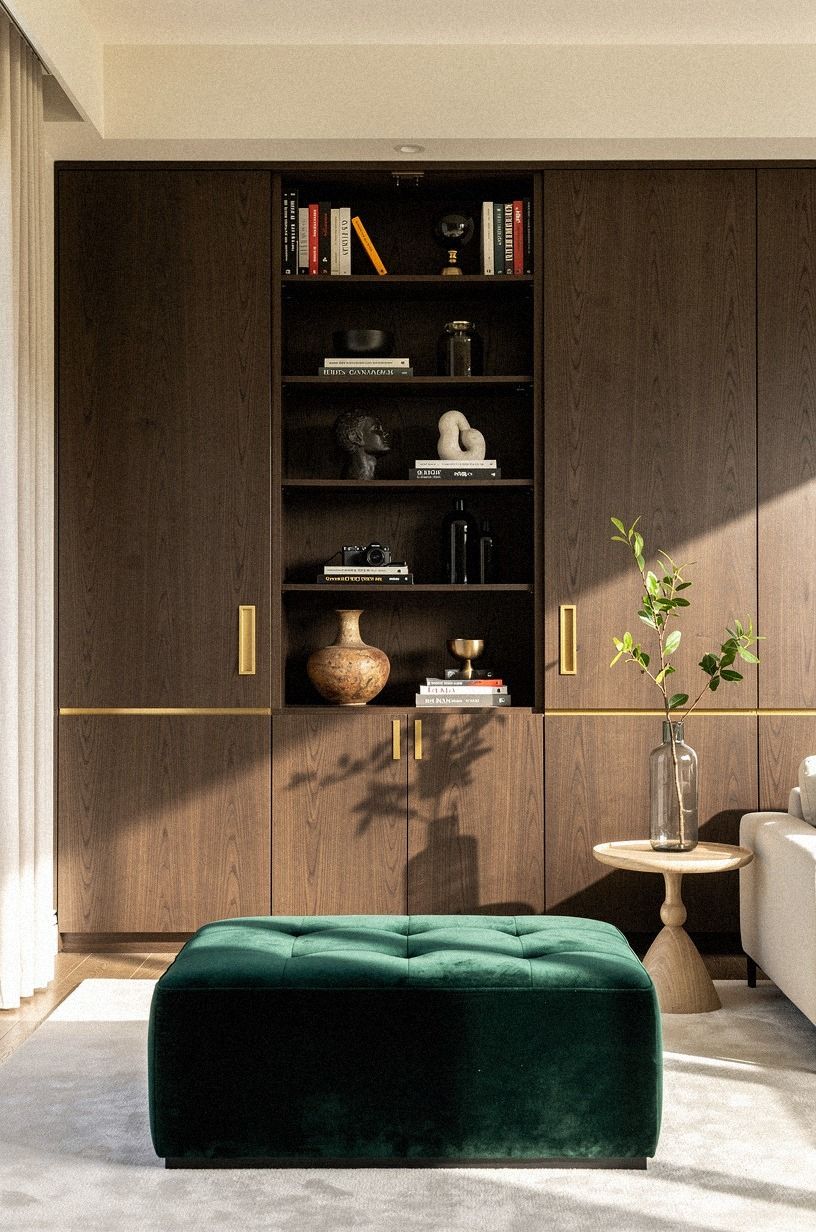
Line the inside reveal with dark wood paneling if you want the opening itself to feel rich the moment the door swings back.
16Add a narrow rug toward the detail room
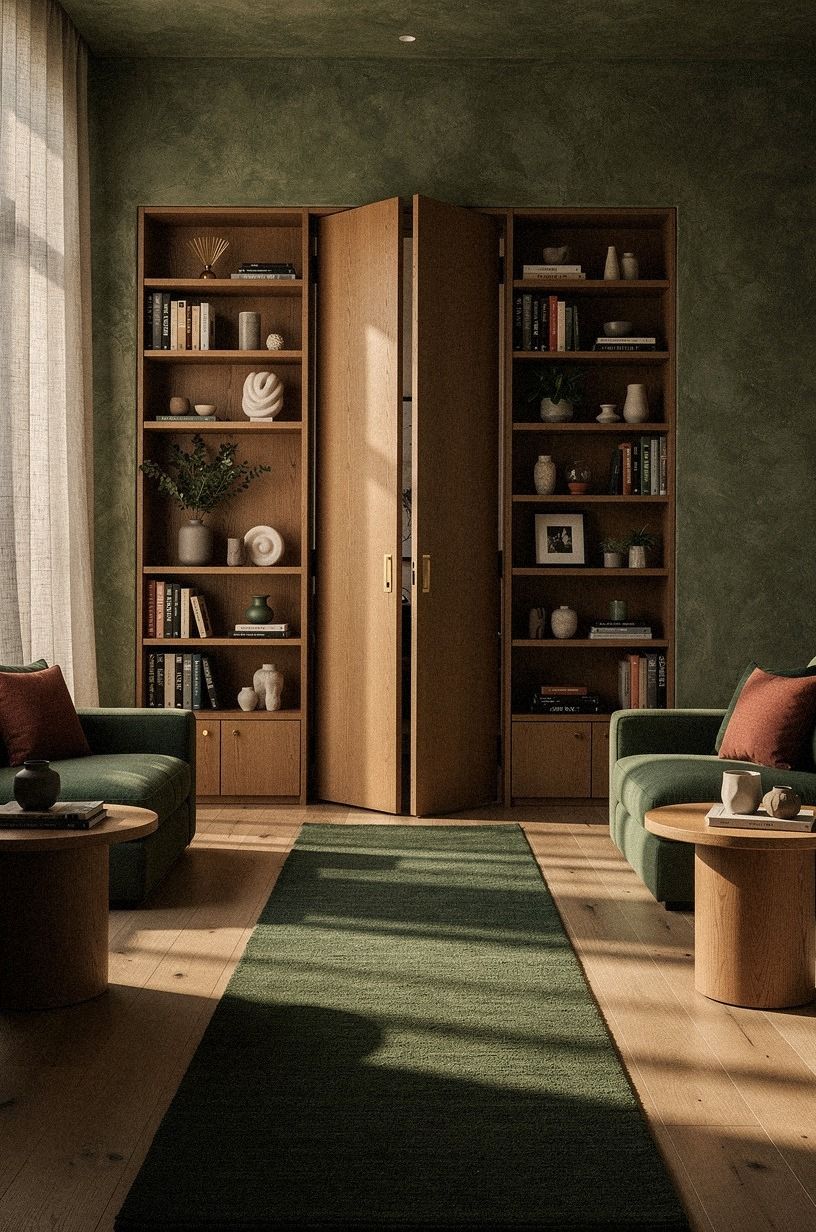
Add a narrow rug leading toward the next room so the path feels intentional, not accidental. I resisted this at first because I thought it would point too directly at the opening.
It did the opposite. A slim flat-weave wool runner made the transition feel natural, especially once the bookcase door was open and you could see a little strip of the route beyond.
In a forest green room with warmer red notes, that grounded textile line felt exactly right.
Keep the runner narrow enough that the bookcase swing still works and let the main seating rug stay the bigger anchor. For most living rooms, that means your front legs remain on an 8×10 or 9×12 area rug while the runner acts as a side note, not the headline.
I used this hidden-room entry guide when I was testing path width. But don’t run a plush pile here.
A flatter weave behaves better.
17Finish the passage with warm library sconces
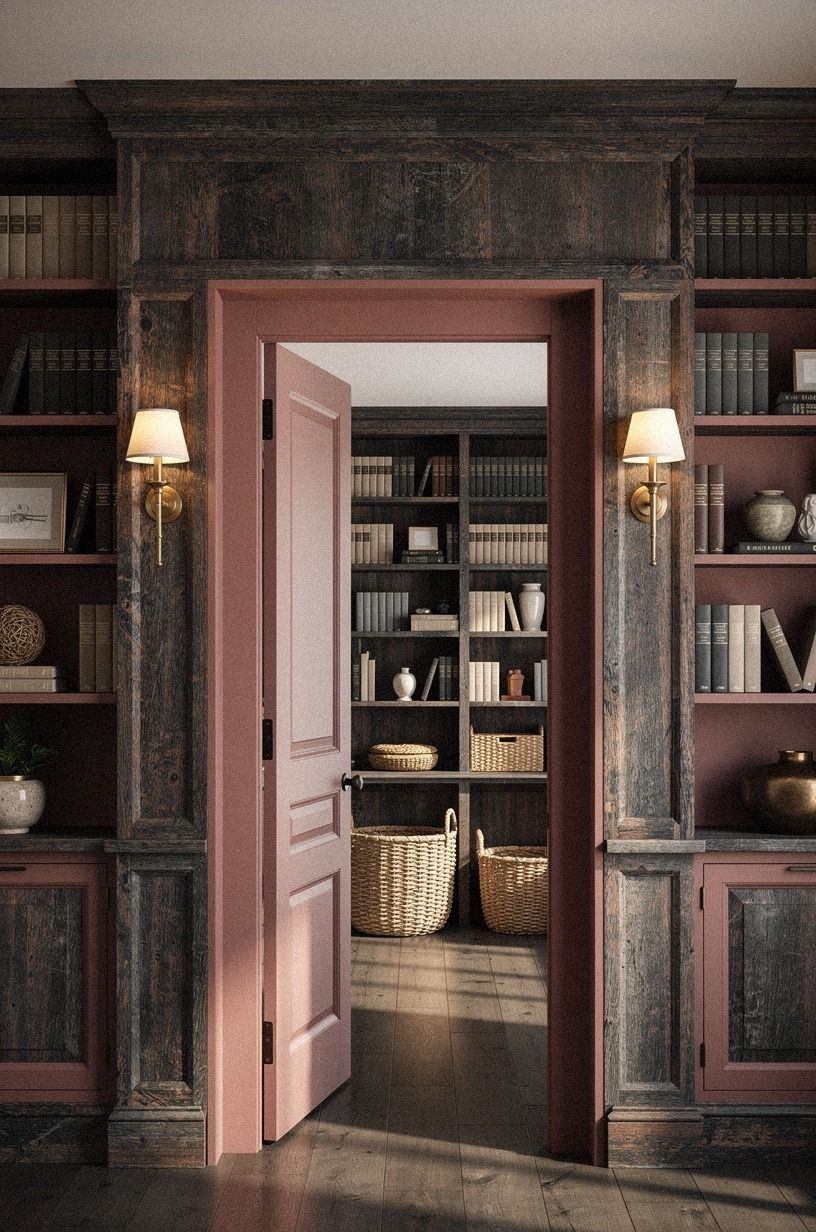
Finish the passage beyond the bookcase with warm library sconces so the reveal feels rewarding when it opens.
What does the door-and-shelves combo actually cost?
I stayed in the budget-to-mid lane because I was upgrading the wall, not commissioning a museum install. If you’re working with existing shelving, paint, and styling, you can stay surprisingly disciplined.
If you’re adding custom millwork, pivot hardware, and new lighting, you move up fast. The useful part is knowing which tier you’re in before you start shopping.
For context, these are the living-room numbers I kept in mind while planning the wall around the entrance:
What helped me most was spending on the architectural read and saving on everything decorative. Paint matters.
Shelf depth matters. Lighting matters. But a rare antique object on every shelf does not.
The quiet, earthy, sophisticated tone comes from proportion, not from shopping. If your TV sits nearby, keep it about 1.5 to 2.5 times the screen diagonal from the seating and let the bookcase wall carry the mood instead of adding more stuff.
That balance is what gives the room its timeless, gentle, refined energy.
Why The Library-Blend Rule matters more than the novelty
I think this is the mistake almost everyone makes with hidden doors. We get excited about the reveal, then we design for the reveal, and the room starts performing instead of living.
I did it too. I kept asking how to make the entrance look more mysterious when the better question was how to make the whole wall look older, calmer, and more believable.
Once I switched that question, every good decision got easier.
The paint became quieter. The shelf styling got looser. I stopped hunting for quirky hardware and started caring about trim lines, shelf depth, hinge balance, and warm light.
That’s not as flashy on a mood board, but it’s what gives you the old-house energy people are chasing when they pin these rooms in the first place. You don’t want a punch line.
You want a wall that makes someone pause for a second, then smile when they notice what it does.
I also learned that you can’t decorate your way out of a proportion problem. I tried.
More books. Better objects.
A prettier chair. None of it fixed a shelf run that didn’t align or a door face that projected too far. And once I fixed those bones, I needed less decor, not more. That part surprised me.
The room felt richer when I removed two accessories and softened the lighting than when I kept piling things on. Cozy isn’t something you stack onto a wall, it’s a serene, harmonious feeling you uncover by removing what’s in the way.
So if you’re trying to decide where to put your energy, put it into concealment through sameness. Same paint.
Same baseboard logic. Same crown profile. Same shelf depth.
Then let one or two warmer notes carry the romance: unlacquered brass rails, linen shades, dark wood inside the passage, a lamp that pools light on the rug. That’s the part that worked. The hidden door should be the twist, not the whole personality of your living room.
What People Always Want to Know
What is the best Hidden Bookcase Door Ideas [The Classic Detail Entrance] for a small living room?
A flush bookcase wall beside the sofa is the best starting point for a small living room because it keeps the footprint calm. The big benefit is visual order. A slim IKEA KALLAX holds the same proportion rule without hogging floor space, and one lighter reading chair reads as invitation rather than clutter.
– Slim IKEA KALLAX scale for tighter walls – One reading chair, not two – 8×10 rug with the front legs on it
Where can I buy Hidden Bookcase Door Ideas [The Classic Detail Entrance] pieces on a budget?
Start with IKEA, Target Threshold, and Wayfair for the basics, then check Facebook Marketplace for older bookcases you can rework. The savings add up fastest on shelves, lighting, and styling objects. You can also borrow layout notes from this budget speakeasy bar build which uses the same concealment-by-sameness principle.
– Flat-pack shelving – Linen-look shades – Secondhand brass or stone bookends
How much does a Hidden Bookcase Door Ideas [The Classic Detail Entrance] makeover cost?
A typical makeover can land anywhere from about $300 to $8,000 depending on whether you’re painting and styling or adding custom millwork. The good news is the architectural look starts early. Most of the mood comes from paint match, shelf spacing, and one warm light source, all of which fit a tight budget.
– Budget band: paint, rug, objects – Mid band: sofa, lighting, built-ins – Free move: restyling what you own
Can I create a Hidden Bookcase Door Ideas [The Classic Detail Entrance] on a budget?
Yes, and you don’t need custom work to get the mood right. Your cheapest wins are paint match, book styling, and warmer light. A gallon of trim-color paint and a couple of warm bulbs do more than a stack of decorative objects.
– Trim-color paint – Staggered book stacks – Battery picture lights
Is a Hidden Bookcase Door Ideas [The Classic Detail Entrance] worth it in a small space?
Yes, a small room can make the effect stronger because the wall reads in one glance. The payoff is depth without adding floor-hogging furniture. A flush built-in replaces three decorative pieces that were never earning their keep.
– Built-ins beside the sofa – Narrow runner toward the opening – Lighter chair near the reveal
Is Hidden Bookcase Door Ideas [The Classic Detail Entrance] a good idea for a rental?
Yes, if you keep the approach reversible and focus on the look more than the hardware. You can borrow the atmosphere even without a full hidden door. Think tall shelves styled with books, a curtain for the passage, and warm light instead of structural changes.
– Peel-and-stick trim effect – Removable picture lights – Bookcase plus curtain concealment
The One I’d Do Tonight
If I had to pick one, I’d start with the trim-color paint. When the wall reads as one surface, your eye stops checking the seam and starts believing the room. Pin that move for later, then decide whether the latch and lighting even need more help.