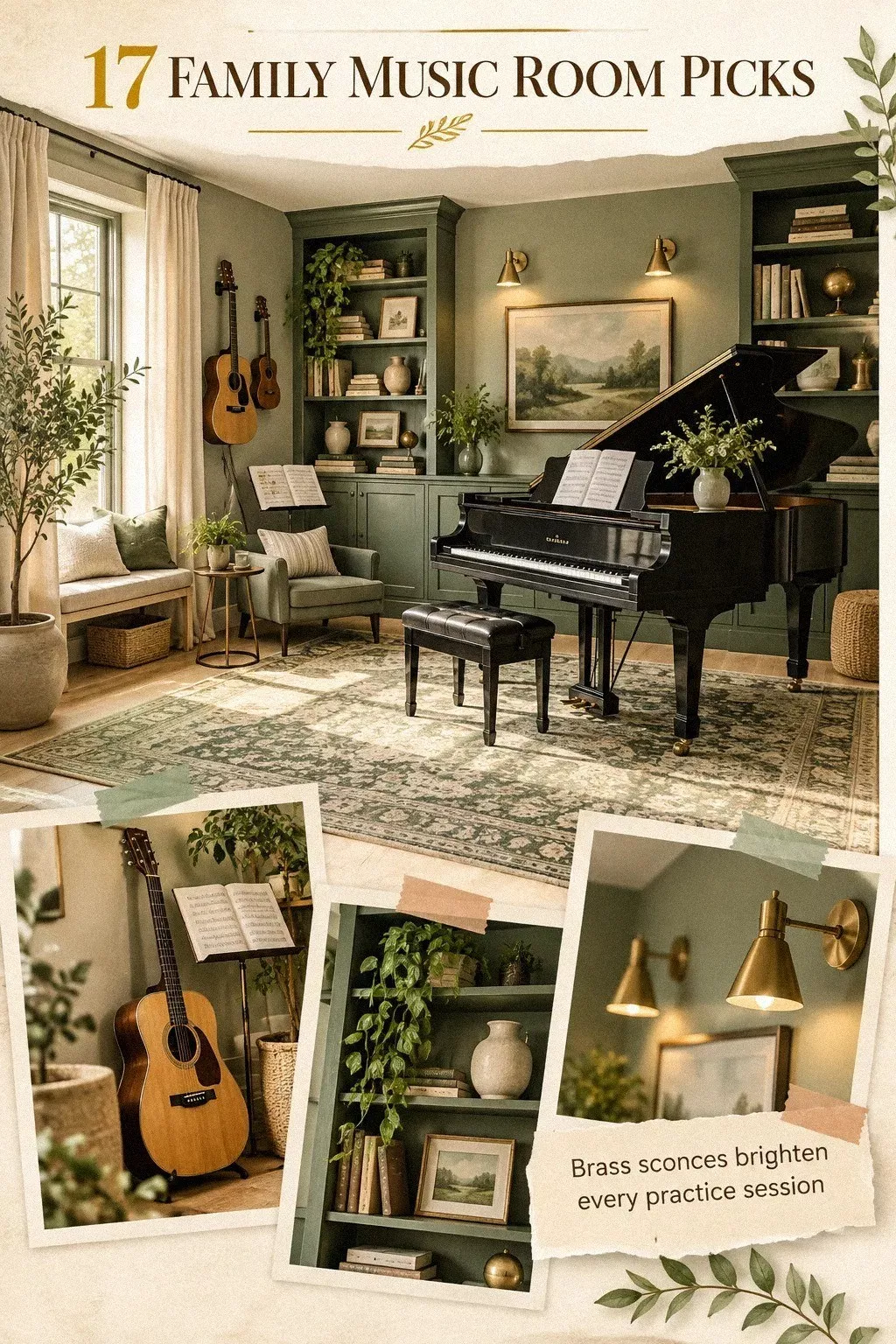
Family music room ideas the whole house will use can start with $200 to $800, depending on whether you’re refreshing paint, textiles, art, and organization or buying furniture too. I once made the mistake of treating instruments like clutter. That didn’t work. Your room needs comfort, storage, and a little visual drama. Then everyone plays!
- Anchor the music room in home with one generous rug
- Layer the Three-Source Light Stack
- Float a compact instrument collection
- The Two-Wood Rule for Warmer Rooms
- Swap bulky cases for visible storage
- Paint one listening wall in Farrow & Ball Pigeon
- Frame instruments with the Gallery Rail Effect
- Can Instruments and Decor Share a Room?
- Turn a corner into the Three-Height Listening Nook
- Hang curtains high for a softer acoustic edge
- Two Comfortable Chairs Versus One Formal Sofa
- Hide the Tech behind a Quiet Media Wall
- Mix Acoustic Panels with Decorative Texture
- Set Up a Small-Space Practice Station
- Contrast Warm Woods Over Glossy White
- Mark the Instrument Collection with Family Art
- Create a Soft Landing Beside the Piano
1Anchor the music room in home with one generous rug
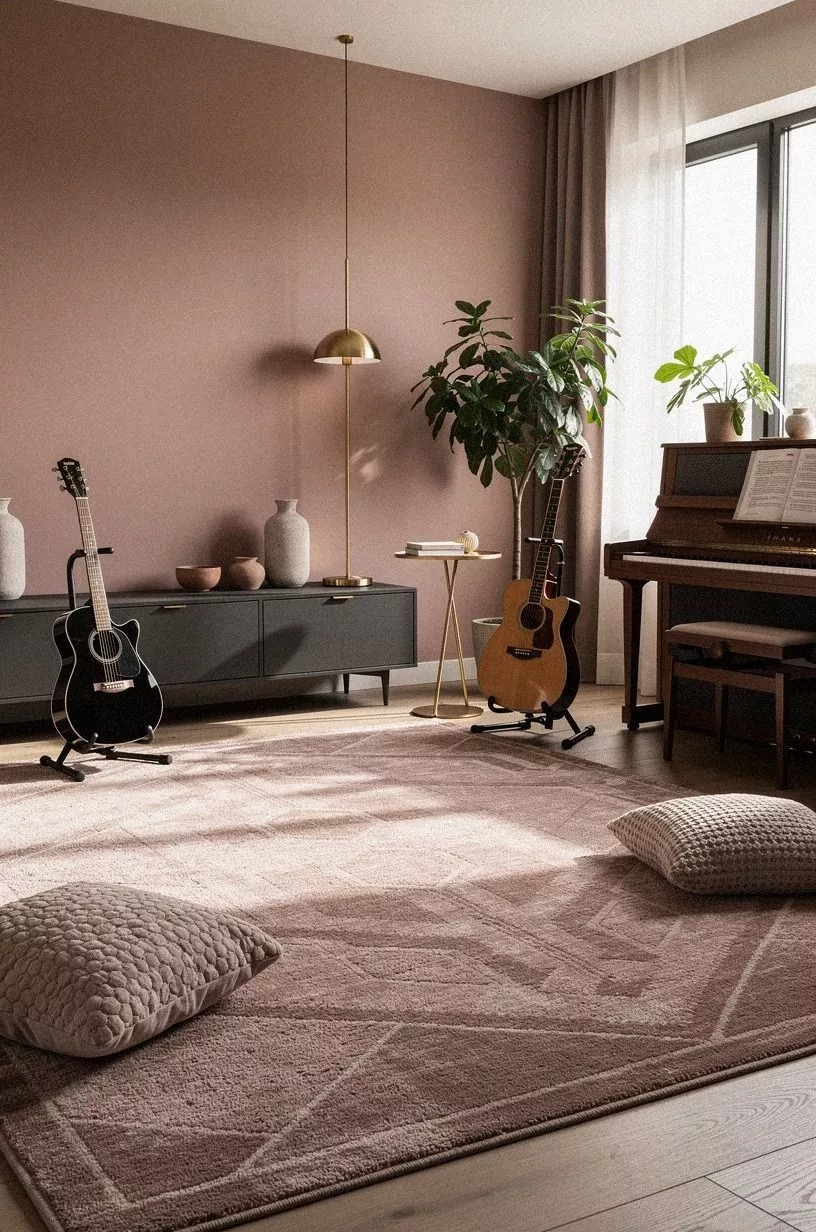
A rug gives your music room a soft landing for bare feet, instrument cases, and long practice sessions. Choose a generous wool rug large enough that the front legs of your seating overlap it. I’d skip a tiny center rug because it makes every chair feel stranded, and you’ll hear the room sound sharper without enough textile underfoot.
A dusty-rose wool rug with charcoal detailing can handle family traffic without looking precious. Pair it with a West Elm Anton chair or a secondhand charcoal lounger, then add a small brass tray or shagreen accent so the room feels inviting rather than staged.
If you’re working with a small footprint, study this guide to small music room ideas with big sound before shopping. Your ears and your ankles will thank you.
Measure the usable floor first. A rug that stops several inches before every chair often makes the arrangement feel accidental, while one that extends beneath the main seating creates a confident, finished foundation. That small decision can deliver better value than buying another decorative object.
I’d also choose a rug with enough pattern to disguise crumbs and pencil shavings. Your family will feel more relaxed around a forgiving, tactile surface.
2Layer the Three-Source Light Stack
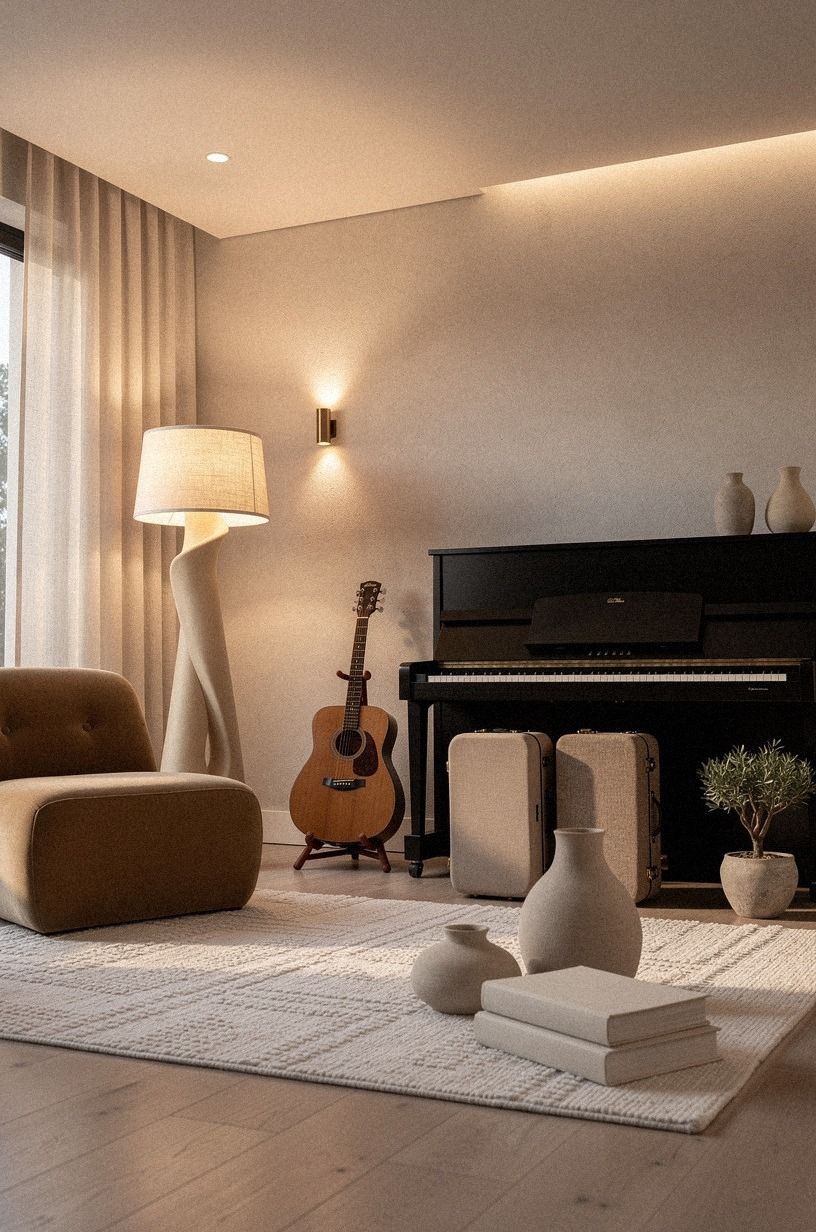
Your family music room needs three light sources: overhead, task, and ambient.
3Float a compact instrument collection
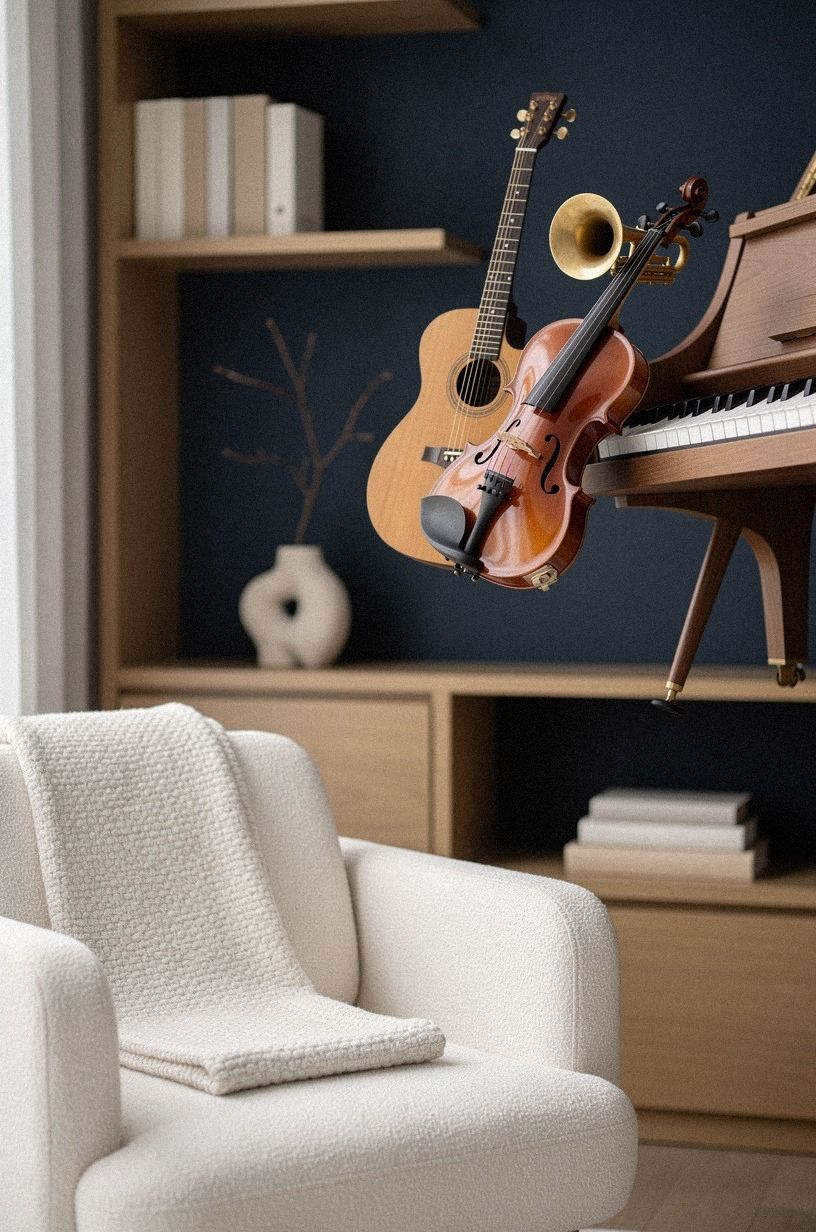
A compact instrument collection looks intentional when you give every piece breathing room. Hang guitars, ukuleles, or small string instruments on a single wall instead of scattering them across the room. Your eye gets one bold display, and you won’t trip over cases every time you cross to the piano.
Use copper instrument hooks on a painted rail, keeping enough space between each instrument for safe removal. I like a vertical arrangement more than a rigid grid because it feels organic and works around doors. A midnight-blue wall gives the instruments a rich background, while an ivory organic bouclé cushion and a framed concert poster keep the wall from feeling too polished.
You don’t need a large collection for this to work. Three instruments can look like a point of view. Keep the most-used one at a comfortable height so your family doesn’t need a ladder or a complicated setup before playing.
I’d leave a little empty wall around the collection. That calm negative space makes the instruments feel valuable, while a crowded display can look restless. If your room is narrow, the same principle from small music room ideas with big sound can help you protect the walkway.
4The Two-Wood Rule for Warmer Rooms
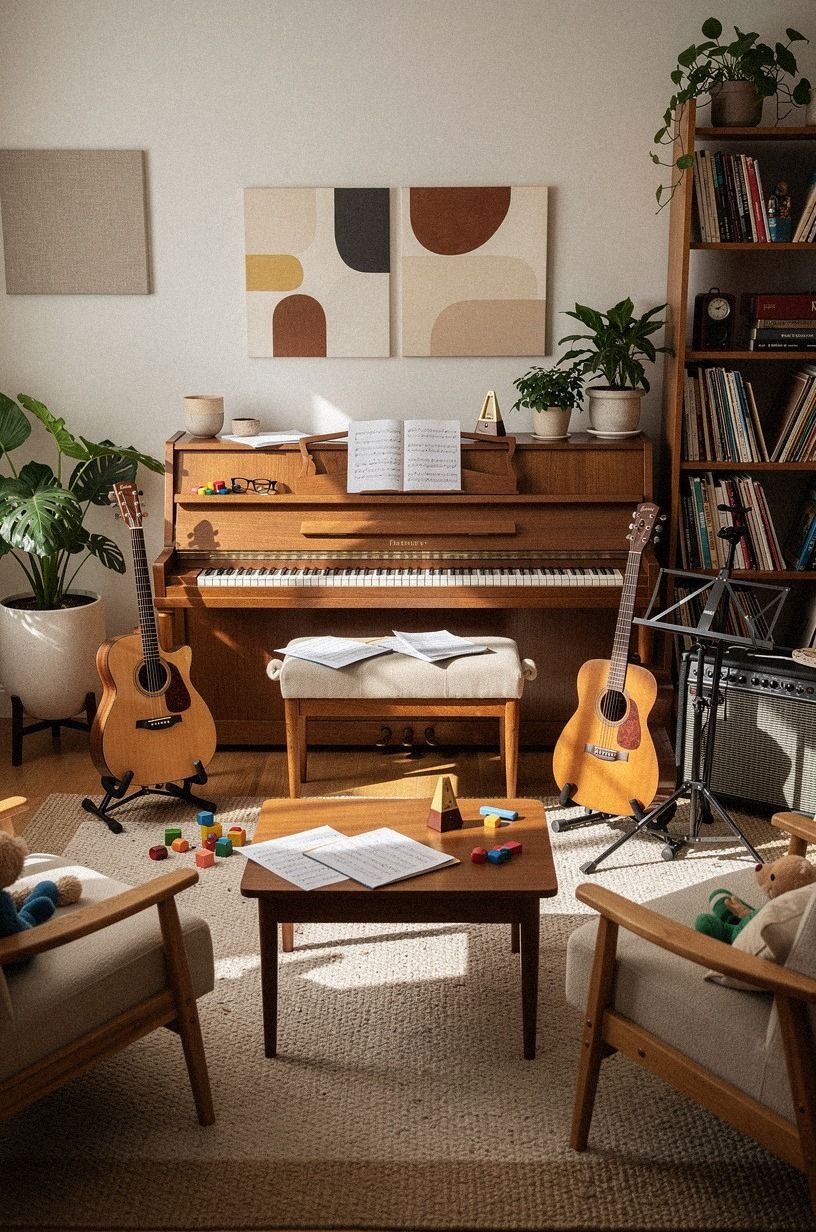
The Two-Wood Rule keeps a music room from becoming a furniture showroom.
5Swap bulky cases for visible storage
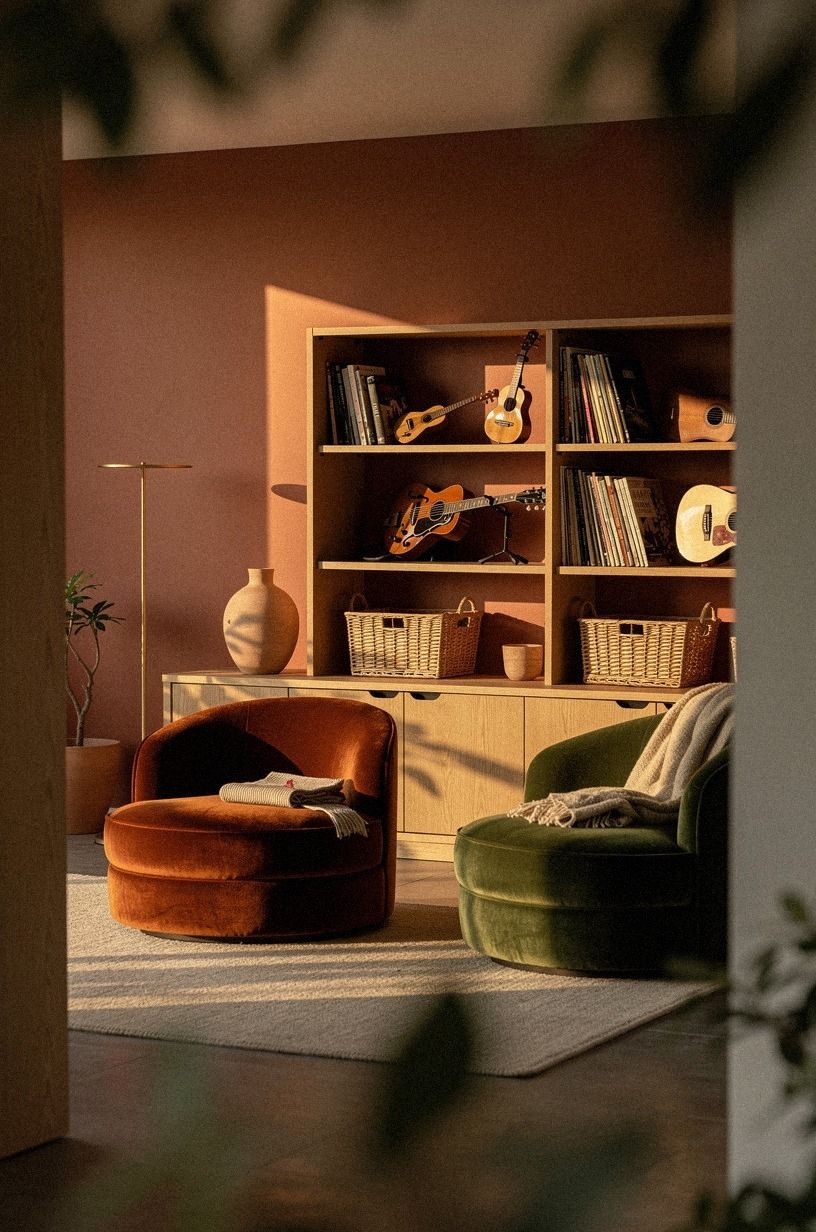
Instrument cases need a home, or your music room will slowly become a pile of black rectangles. Use a low cabinet, open cubbies, and one tall section for awkward shapes. Your storage should make playing easier, not turn every rehearsal into a packing exercise.
A stone-toned cabinet can hold pedals, tuners, and sheet music while hiding the visual mess. IKEA KALLAX shelving works when you add terracotta-colored inserts, olive fabric bins, and leave one or two cubes open for display.
A small deep-pile mohair velvet seat or cushion can soften the arrangement. I’d skip deep drawers because you’ll forget what’s inside them.
Measure every case before buying furniture. This is the same practical lesson behind using peel and stick in 12-foot hallway strips: define the zone, check the dimensions, and then choose the solution. You’ll save money and avoid a frustrating return.
Keep one basket near the entrance for cables, picks, and loose accessories. When your child can put everything away in under a minute, the room stays usable after the exciting practice session fades.
I’d also label shelves with words your family actually uses. “Strings,” “headphones,” and “music books” are more helpful than a beautiful but vague organizing system.
6Paint one listening wall in Farrow & Ball Pigeon
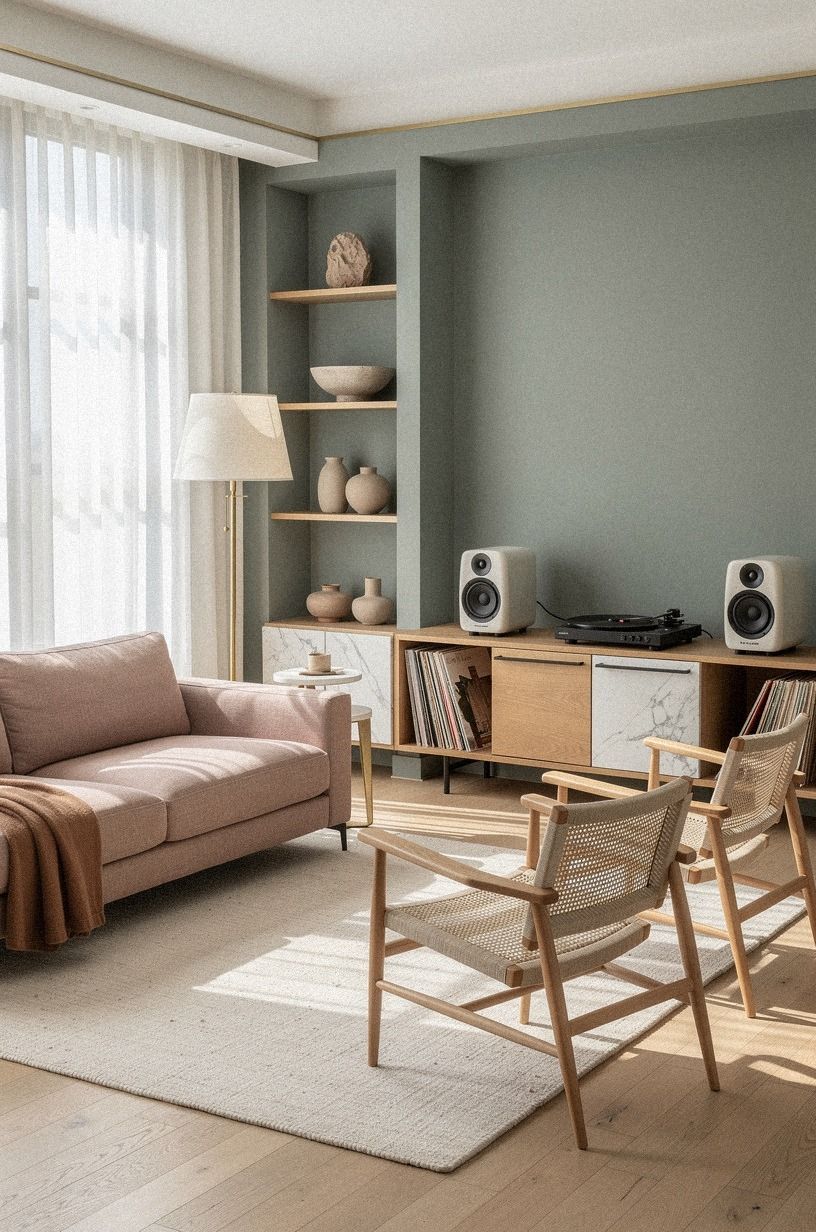
A listening wall gives your music room a visual anchor without darkening every surface. For the warmer scheme shown here, use a clay-toned matte mineral paint with linen textiles and aged-brass details. Your other walls can stay lighter, especially if the room has limited daylight.
Paint the wall behind the piano, record player, or main seating group, then let the instruments become the decoration. I’d choose clay over a dramatic navy in a small room because navy can swallow the corners by late afternoon. Use Carrara marble with subtle gray veining for a small ledge or side surface, and hang art with its center about 57 to 60 inches from the floor.
If Pigeon doesn’t suit your light, test a sample beside the largest instrument. You’ll see quickly whether the color feels gentle, moody, or unexpectedly cold. Paint is one of the most affordable ways to change the room’s emotional temperature, so it’s often worth doing before a major furniture purchase.
For another compact layout idea, revisit small music room ideas with big sound and notice how a single deep color can create focus without making every wall dramatic.
7Frame instruments with the Gallery Rail Effect
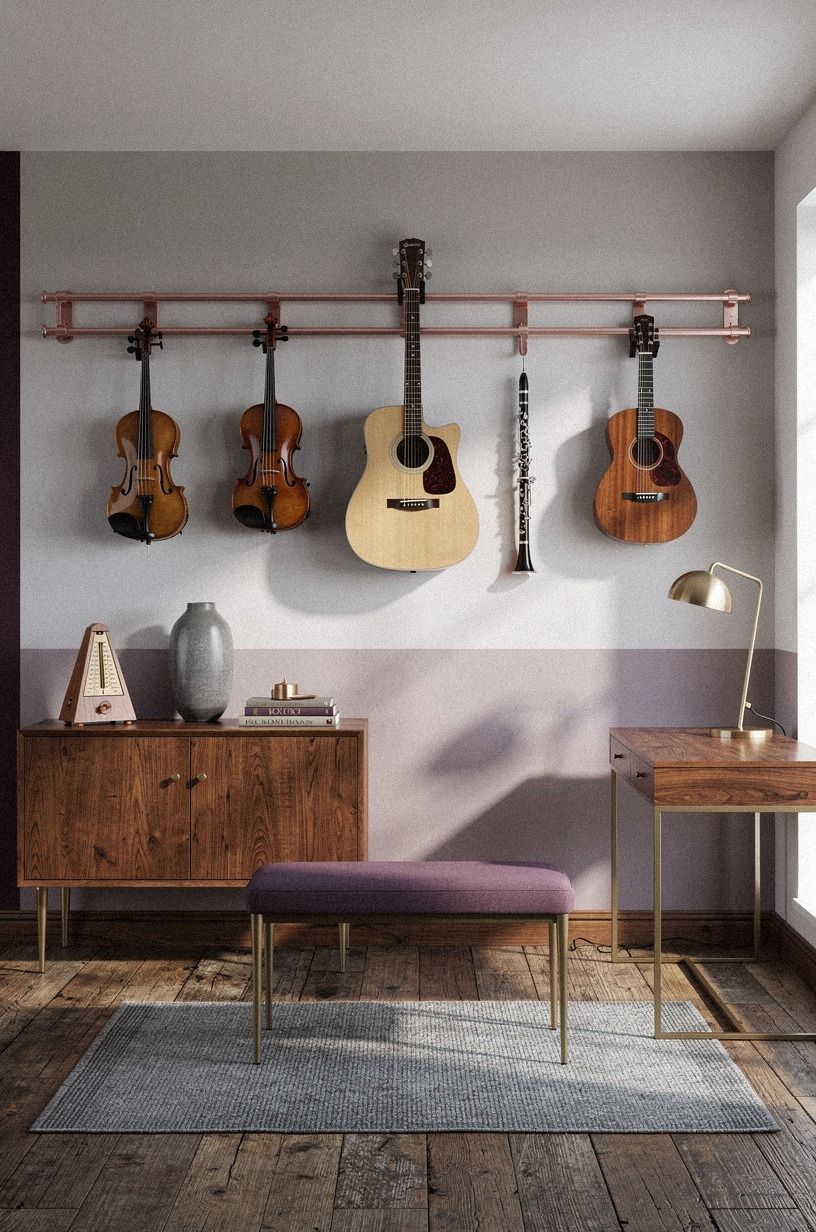
The Gallery Rail Effect makes practical music objects feel collected. Instead of covering the wall with random frames, install one rail and lean sheet music, small paintings, and family photographs along it. Your display can change when the children learn a new song, which keeps the room alive.
A rose-gold picture rail looks crisp above a piano, while reclaimed weathered teak frames keep the arrangement warm. Add plum or gray paper details if you want the display to feel layered. Leave room for the instrument itself, because it’s already a large sculptural object.
I’d avoid putting fragile glass directly above a drum kit or keyboard.
Your family photographs don’t need to be formal portraits. A crooked rehearsal snapshot can bring more warmth than another generic print. If you already have art in storage, this idea can create dramatic value with almost no new spending.
I’d keep the rail slightly irregular rather than perfectly symmetrical. That relaxed, collected quality makes the music room feel lived-in. You can borrow the same layered display idea from these decoration ideas for every room without copying their color scheme.
8Can Instruments and Decor Share a Room?
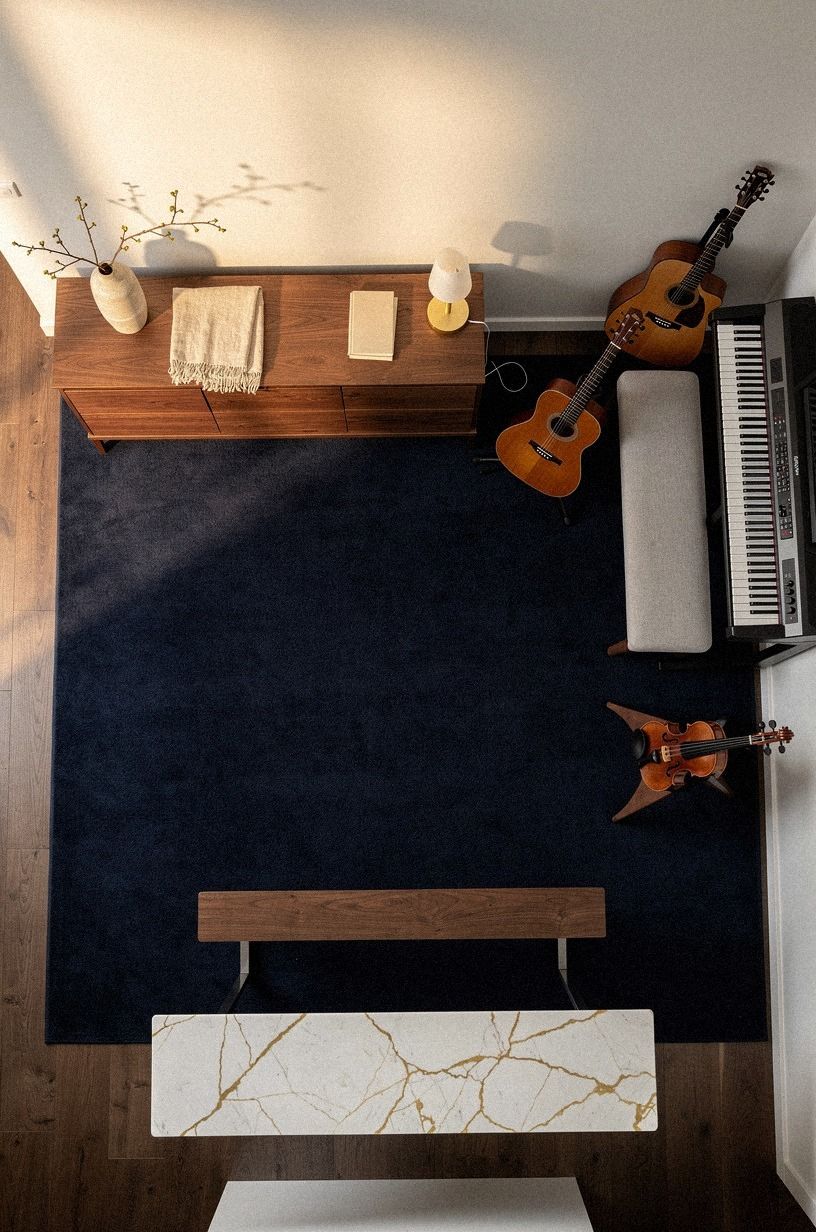
A family music room with instruments and decor needs surfaces that survive touch, dust, and the occasional dropped pick.
9Turn a corner into the Three-Height Listening Nook
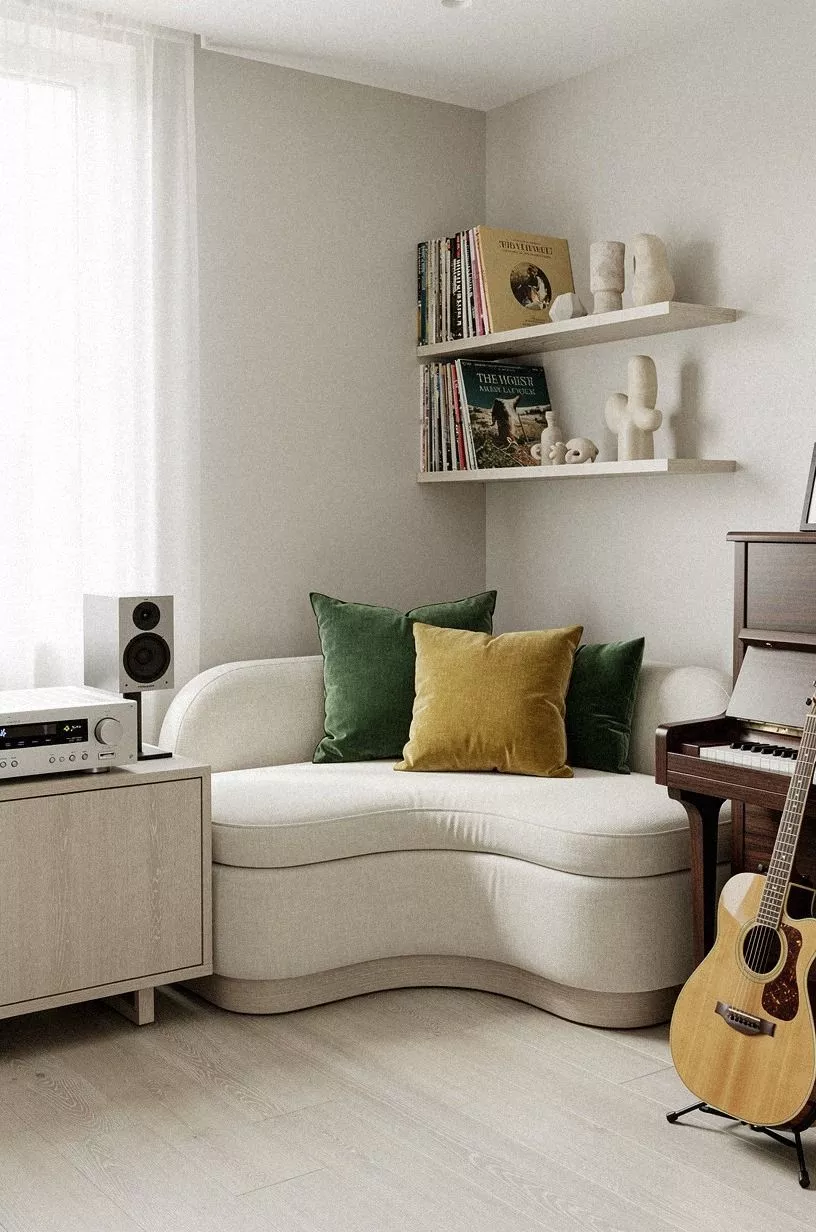
The Three-Height Listening Nook uses a low seat, a medium table, and one taller light or plant. This small arrangement gives your music room a sense of depth without filling every inch. You’ll create a spot for listening, reading, and waiting through practice.
Use a cream upholstered ottoman, a cerused white-oak side table, and one emerald cushion or plant. Your child can sit on the ottoman while someone else plays, and the table can hold water or a metronome. I’d avoid a deep lounge chair if the corner is narrow because it steals circulation.
A soft cream throw, a record sleeve, and one brushed-gold lamp are enough. More would make the nook feel decorated instead of used. If you’re uncertain about scale, tape the furniture footprints on the floor for a day before spending money.
You can also use this corner as a quiet landing zone for younger children. A low seat feels approachable, and the room becomes more welcoming when everyone has somewhere to settle.
10Hang curtains high for a softer acoustic edge
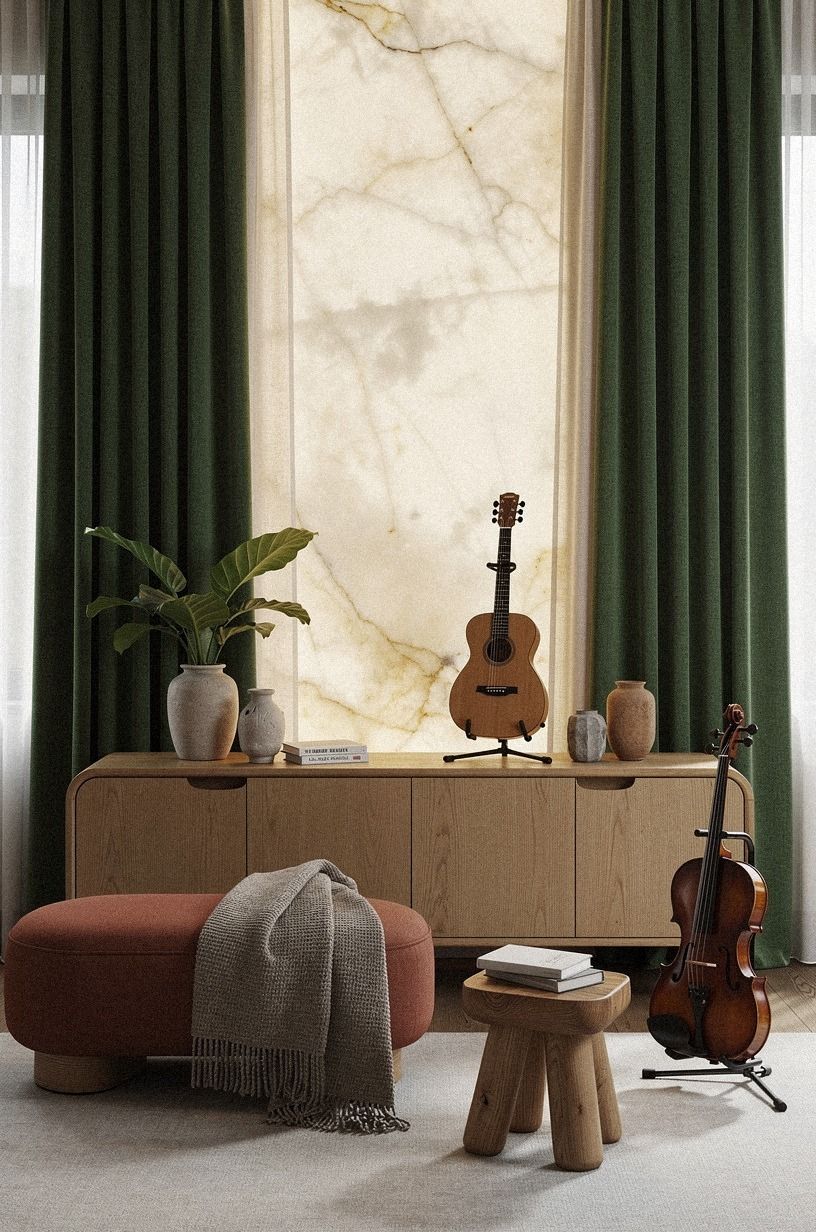
Curtains help a music room feel intimate while reducing the hard echo that comes from windows and bare floors. Hang the rod 4 to 6 inches above the window frame and let the panels reach the floor. Your room will look taller, and the fabric will soften afternoon glare on instruments.
Choose forest-green or rust linen drapes on a natural-oak rod, then repeat one of those colors in a cushion or artwork. A backlit translucent onyx sconce can add a soft glow nearby. I’d avoid heavy blackout panels unless the room doubles as a media space because they can make a small room feel closed.
Your best result comes from full-width panels with a little pooling at the floor. If you’re styling other rooms too, these sweet 16 decoration ideas for every room can help you repeat colors without copying the same look.
Curtains also give you a flexible acoustic layer. You can close them during a loud rehearsal and open them when you want more daylight. That adaptable detail is useful in a room that serves several ages and routines.
11Two Comfortable Chairs Versus One Formal Sofa
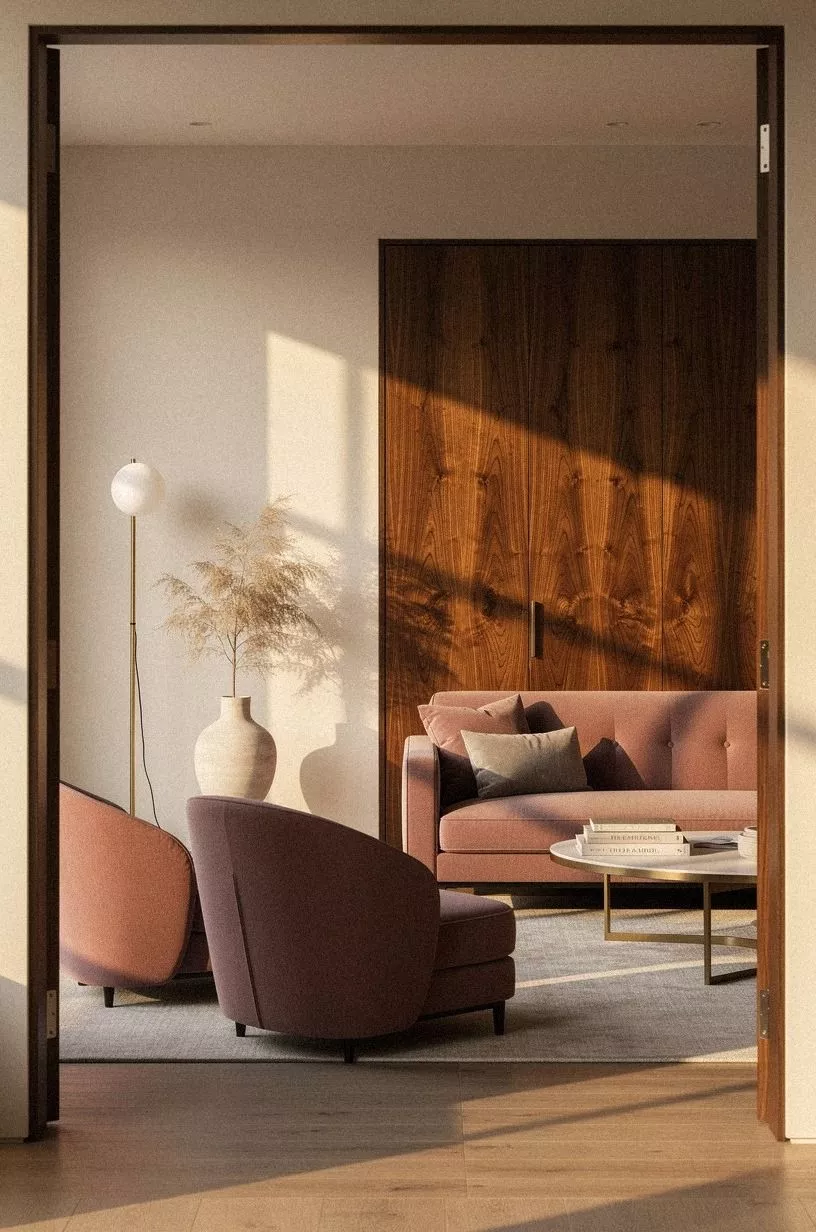
Two comfortable chairs can work better than one large sofa when your family music room needs clear sightlines.
12Hide the Tech behind a Quiet Media Wall
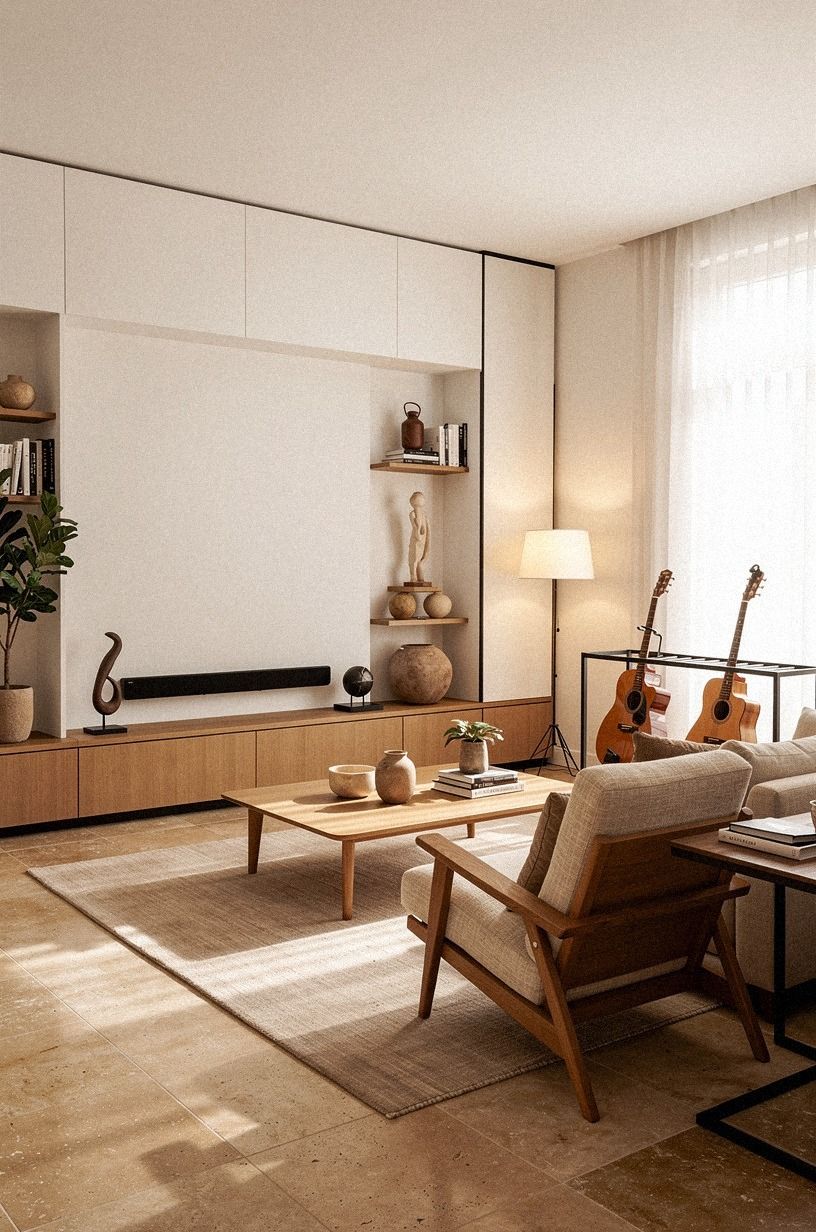
Music rooms often collect speakers, chargers, records, and screens. Hide the visual noise behind a low media cabinet or a built-in shelf, keeping the instruments visible and the technology secondary. Your room should encourage playing, not scrolling.
A warm travertine media console can hold a receiver and vinyl, with black hardware and camel-colored storage boxes keeping the palette calm. If your family room connects to another space, consider the ideas in this guide to a TV wall with a hidden door. I’d keep the television lower or off to one side because a central screen changes the room’s gravity.
Use one charging station rather than several loose cables. Label the power strip and leave a little clearance behind the cabinet. These tiny decisions reduce visual stress, and you’ll notice the difference the first evening nobody argues about what to watch.
I’d use a black felt cable tray and one closed box for remotes. Your room will feel calmer when the useful technology is easy to reach but not visually dominant.
13Mix Acoustic Panels with Decorative Texture
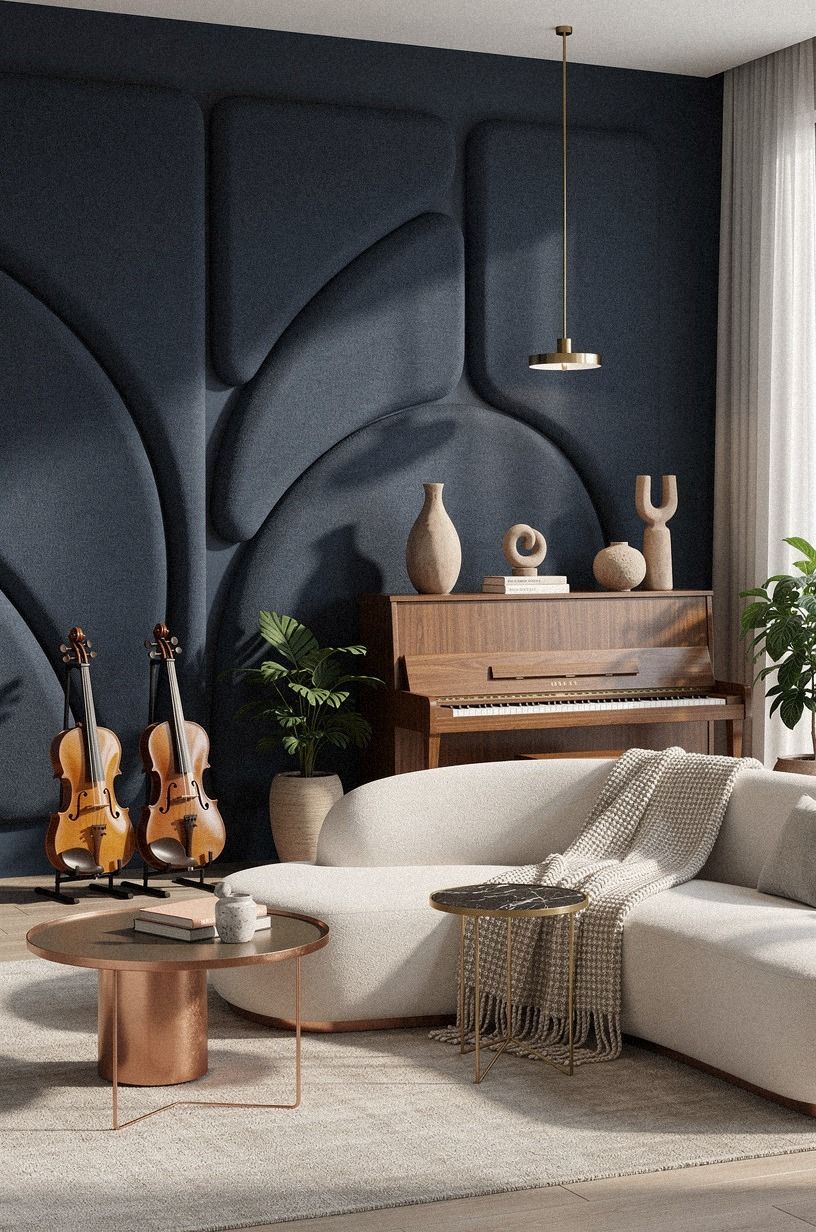
Acoustic panels don’t have to look like commercial studio foam.
14Set Up a Small-Space Practice Station
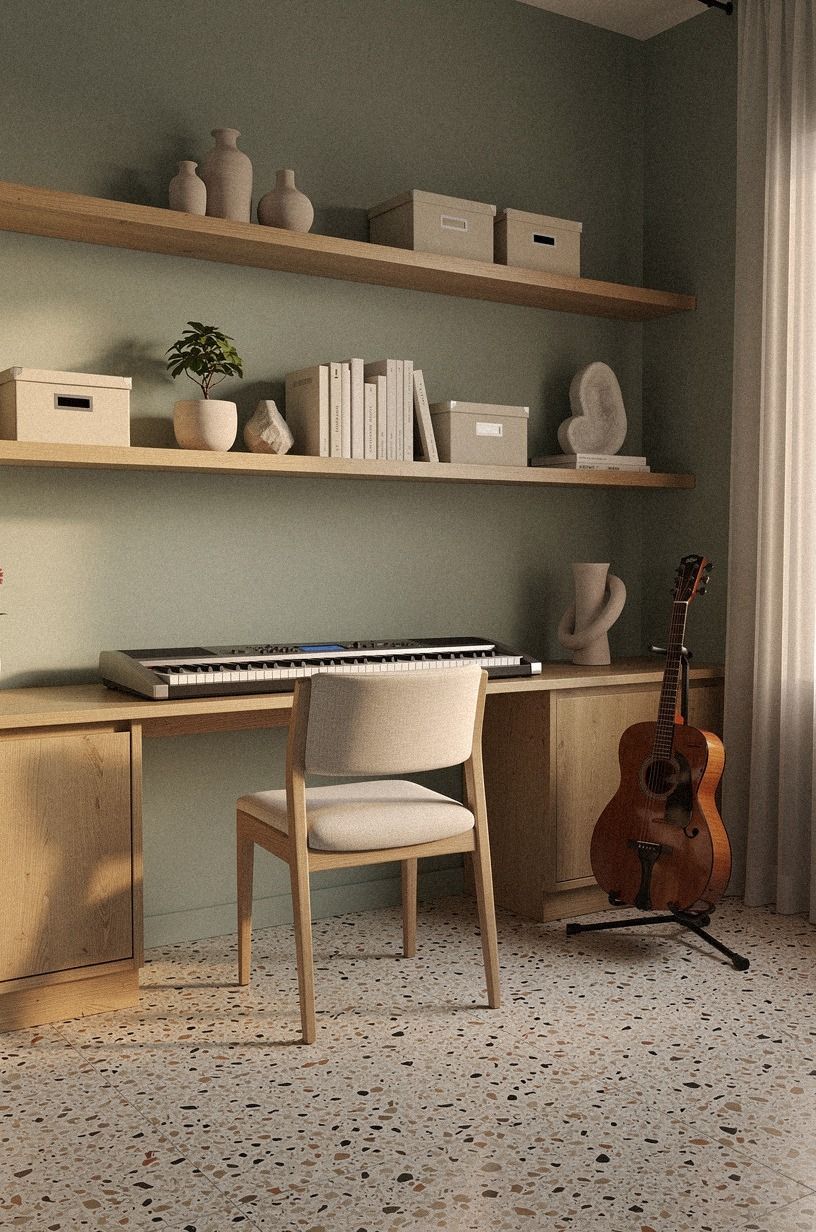
A practice station gives every player a place to begin without rearranging the room. Use one narrow shelf for music, one stool, and a wall-mounted instrument holder. You’re saving floor space while making the next five minutes easier to start.
A folding natural-wood music stand can disappear beside a cabinet, and a cream stool can serve as extra seating after practice. Keep pencils, tuners, and headphones in a sage-green utility bin, with an oversized-chip terrazzo tray for the small items your child reaches for most.
I’d skip a desk unless you truly need one because desks invite unrelated clutter. Your small music room can feel airy when the furniture has one clear job. If the station is close to the instrument, the design earns its keep every single day.
A narrow shelf can also hold a metronome, lesson notebook, and water bottle. That makes the space feel ready without turning it into a classroom. You’re buying convenience, and convenience has real value when motivation is fragile.
15Contrast Warm Woods Over Glossy White
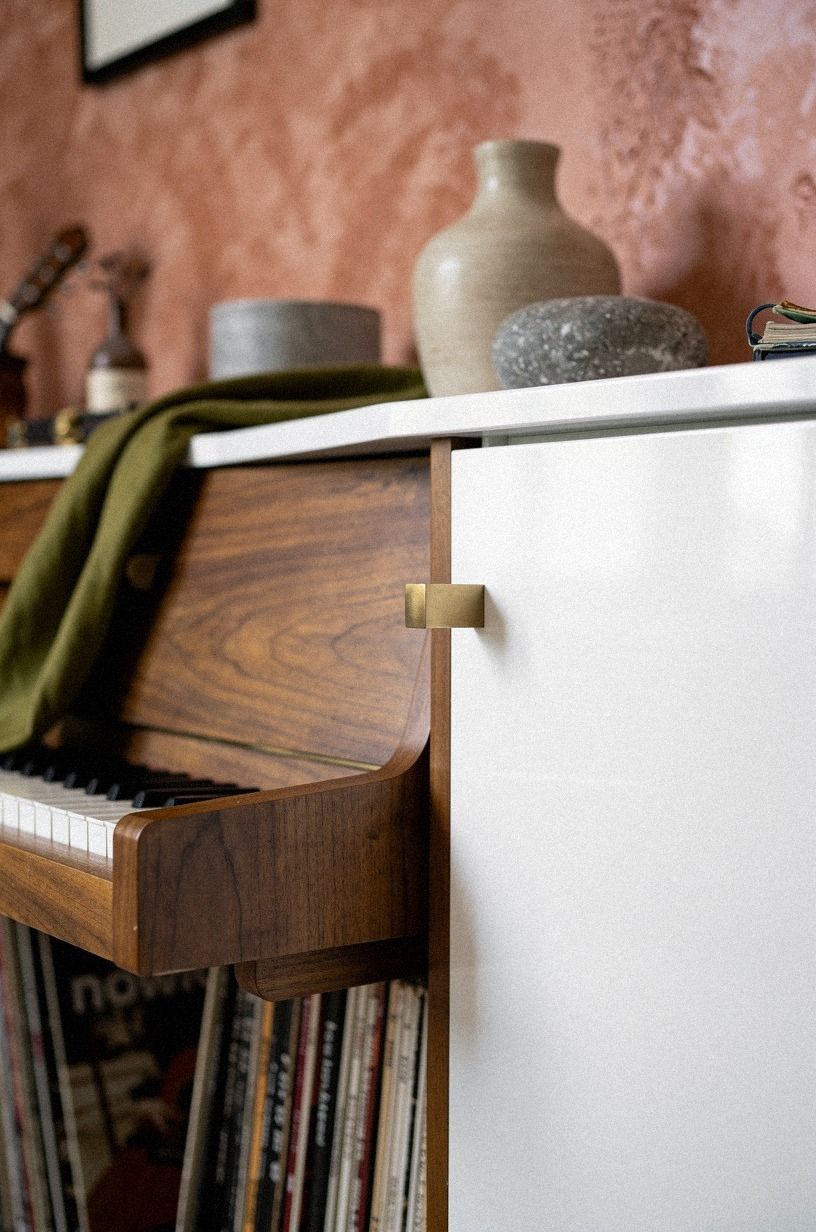
Warm woods over glossy white create a more welcoming music room, especially when instruments already bring shine and detail. Keep the contrast, but bring in a terracotta Venetian-plaster wall, stone-toned storage, and olive accents rather than letting glossy white dominate. Your space will feel refined without becoming cold.
A terracotta-toned wall is another option if a stark neutral feels too clinical. Pair it with a stone console or small natural-wood table, then add olive hardware or textiles. I’d avoid glossy white cabinets beside brass instruments because every fingerprint and reflection competes with the music.
Your room doesn’t need to be dark to feel intimate. Warm plaster, one darker wood, and soft lamps can do the work. This forgiving palette is also useful when you add secondhand furniture later, which makes it a sensible budget choice.
If you’re carrying the palette into adjoining spaces, these decoration ideas for every room can help you repeat a lively accent without making each room match.
16Mark the Instrument Collection with Family Art
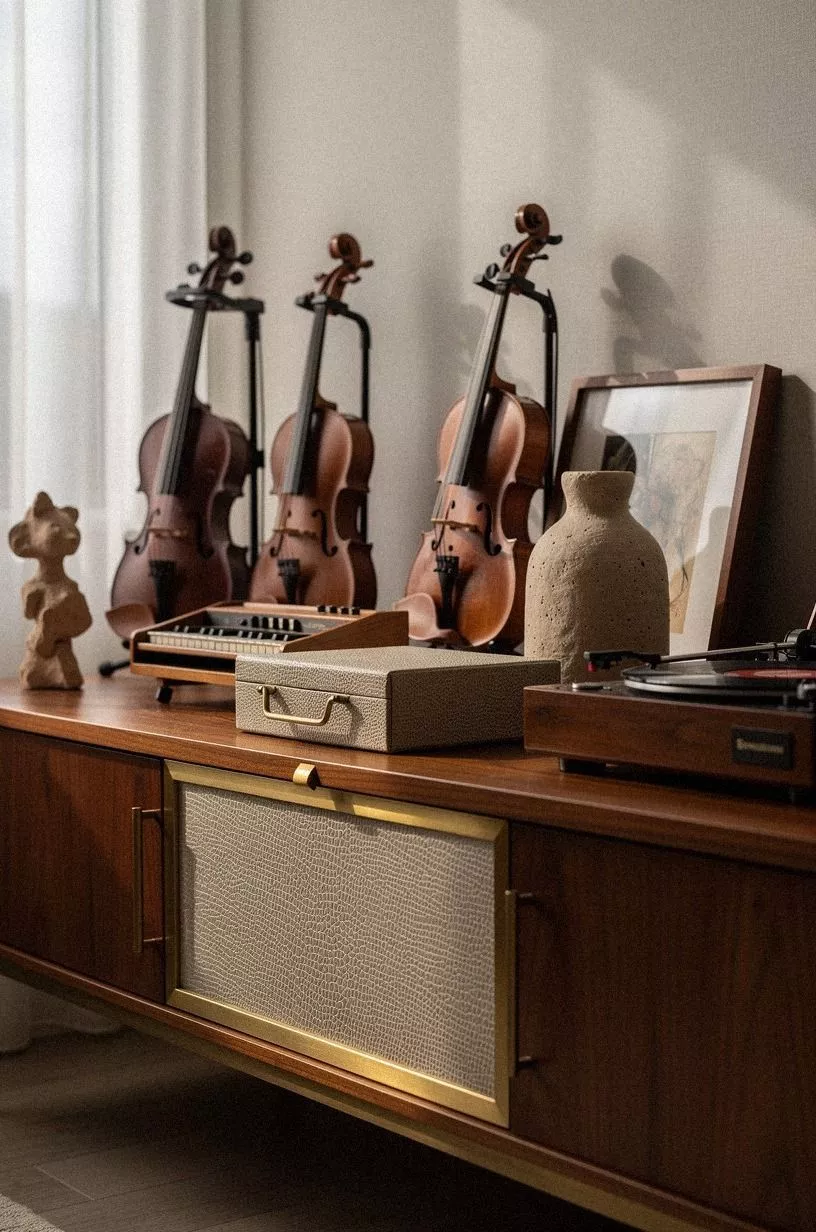
Family art makes the room belong to everyone, not only the person who plays the loudest instrument. Frame children’s drawings, concert tickets, and handwritten lyrics, then place them near the instruments they connect to. You’ll create a record of use rather than a showroom wall.
Use clay-colored mounts, linen backing, and simple aged-brass frames for sturdier pieces. A small shagreen accent can add texture without competing with the artwork.
Keep the display at eye level for the people who use the room, not only adults. I’d avoid arranging everything by color because a little mismatch feels more honest.
Your room can hold a messy first recital photo beside a polished print. That contrast is charming, and it tells visitors that the music is still happening. If you need more display inspiration, revisit these decoration ideas for every room and borrow the idea of repeating one lively color through several objects.
I’d use archival mounting tape and removable hooks whenever possible. That keeps your family collection flexible as children grow and their taste changes.
17Create a Soft Landing Beside the Piano
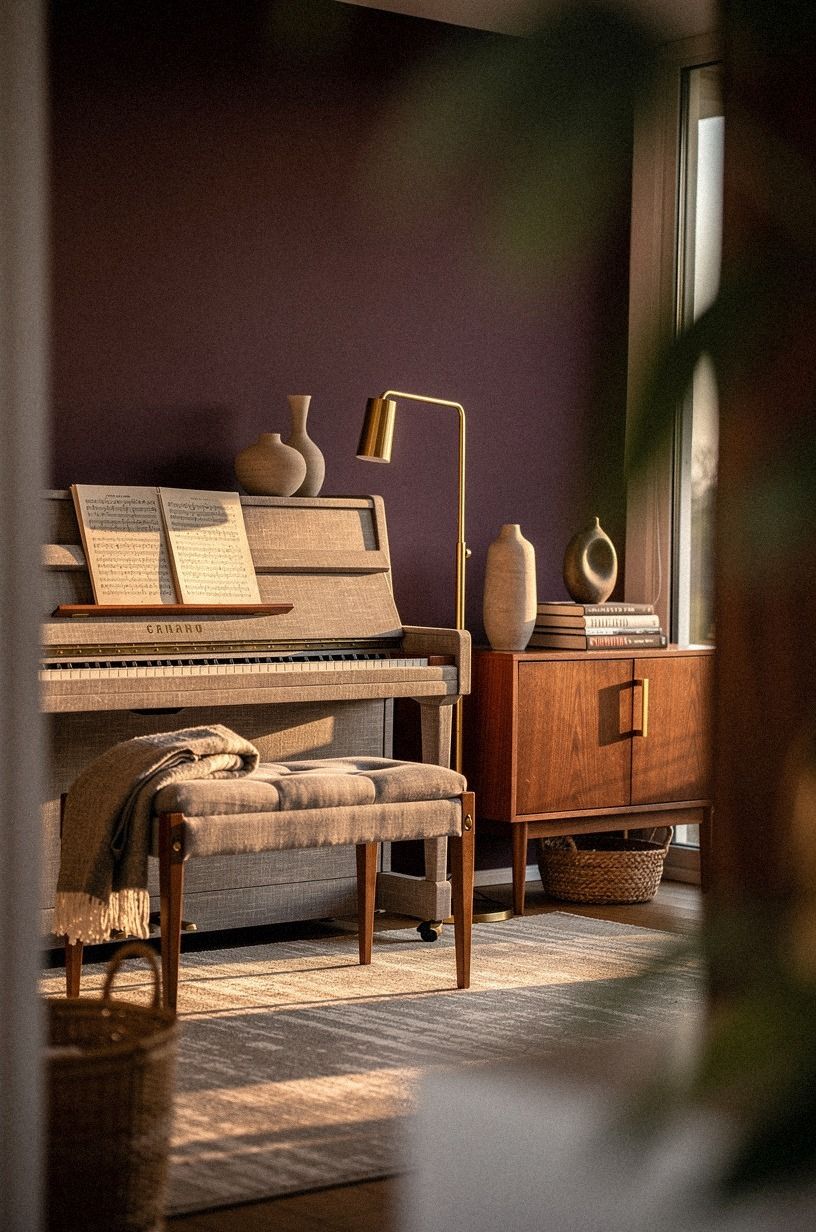
The space beside a piano often becomes dead floor, but it can become the room’s best resting zone.
What This Room Should Feel Like in Real Life
I’ve learned that a family music room fails when it’s designed for photographs instead of ordinary Tuesday evenings. The room has to tolerate a half-open case, a glass of water, and someone practicing the same eight bars for twenty minutes.
If every object feels precious, nobody relaxes. If nothing has a home, the room loses its purpose.
My strongest preference is a room with one clear anchor, usually a piano, a record console, or a large instrument wall. Everything else should support that point.
I’d rather see a slightly worn leather chair and a crooked family photograph than five matching accessories that never get touched. The room should have a pulse.
That matters more than a flawless palette.
I also think the best family music rooms use restraint with color. Choose one painted backdrop, one wood family, and one metal finish. Farrow & Ball Pigeon No.25 can carry blue-gray depth, while Benjamin Moore White Dove OC-17 can keep the trim bright.
You don’t need four accent colors to make the room interesting. Texture does more work than another shade.
My own mistake was buying storage before measuring the instrument cases. The cabinet looked lovely, but the cello bag couldn’t fit inside, so it lived beside the door for months.
Measure first. Then decide what deserves to be visible and what deserves a closed door.
That small bit of planning saves you from designing around clutter later.
Finally, make the room easy to enter. Keep a stool available, leave a clear path, and place the most-used instrument where your family can reach it.
A room that asks for ten minutes of setup won’t get used for ten minutes of music. The best design choice is the one that lowers the distance between wanting to play and sitting down.
You can also repeat the room’s most successful details elsewhere in the house. A warm wood, a linen shade, or one relaxed chair may be enough to connect the spaces. These decoration ideas for every room are useful when you want continuity without turning the entire house into one theme.
The Questions Worth Answering First
What is the best family music room setup for a small family room?
The best setup uses one wall-mounted instrument display, a compact chair, and low storage. IKEA KALLAX shelving works well for sheet music and bins, while an Article chair adds comfort without taking over. Your room will feel more open when the center stays clear and the furniture sits around the edges.
Where can I buy family music room pieces on a budget?
IKEA, Wayfair, and Target are useful starting points for shelves, lamps, rugs, and seating. You can also find solid wood benches and older music cabinets through Facebook Marketplace or a local thrift shop.
Don’t overlook what you own, since repainting one cabinet can save you hundreds. That’s often the best value in the room.
How much does a family music room makeover cost?
A simple makeover can cost about $100 to $300 when you keep the piano, use existing seating, and focus on paint, lamps, and storage. The typical US ranges below show how the budget changes as furniture and millwork enter the plan.
If you’re deciding whether a larger investment is worth it, start with the feature your family uses most. A better chair or storage cabinet usually delivers more daily value than decorative upgrades nobody touches.
Can I create a family music room on a budget?
Yes, and you can start with three low-cost changes: move instruments onto one wall, rearrange furniture around a clear walkway, and use baskets for cables and music books. A leftover paint color, secondhand frame, and existing lamp can make the room feel warm before you buy anything.
You can also borrow color ideas from small music room ideas with big sound and adapt them to what you already own. Begin with circulation, because a clear path often changes the room more dramatically than a new accessory.
Is a family music room worth it in a small space?
Yes, because a small room can make playing feel more connected and less formal. Use a wall-mounted instrument holder, a narrow cabinet, and one chair instead of a full seating group. Your best layout will keep the center open and place the most-used instrument within easy reach.
The cost can stay modest if you prioritize comfort and access. In my experience, the room is worth it when it removes friction from playing. If everyone can sit down quickly, the space earns its place in your home.
Is a family music room a good idea for a rental?
Yes. Use removable picture hooks, a tension rod for linen curtains, and peel-and-stick panels only where they can be removed cleanly. A freestanding cane cabinet can replace built-ins, while a portable rug defines the zone.
For more ideas about hiding technology without permanent construction, look at this guide to a TV wall with a hidden door. You’ll get the feeling of a dedicated room without permanent construction. Start small, test the arrangement, and keep every change reversible.
Where I’d Start First
If I had to pick one, I’d start with the instrument wall. It gets the cases off the floor, gives your room a focal point, and makes playing feel ready instead of postponed.
Pin that layout for later and pair it with one comfortable chair, because the room needs listeners as much as players. You can start there!