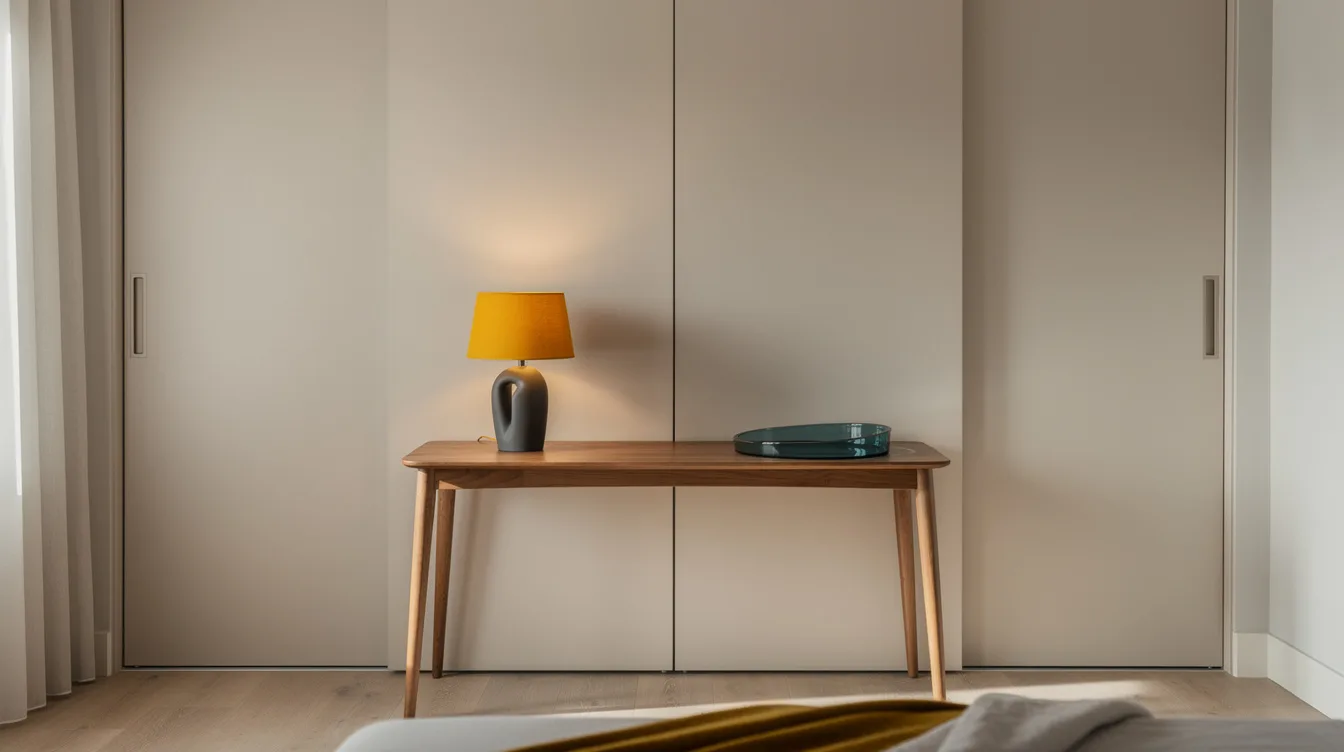
The landing outside a bedroom often becomes the home’s unofficial lost-and-found. A console about 14 inches deep can hide keys, chargers, and mail without turning the passage into another dresser zone.
The best choices combine concealed storage with a footprint that respects the walkway. Prices in this category range from roughly $160 to $200 for a sliding-door option, while a three-drawer mango-wood model reaches about $450.
Measure the Passage Before Ordering
A bedroom-adjacent landing needs breathing room, especially when the path is only a few feet wide. Start with a console around 14 to 16 inches deep, then mark that footprint on the floor with painter’s tape for a full day.
The Target Threshold Adelpha Console is roughly 39.37 inches wide, 13.78 inches deep, and 31.5 inches high, with a typical sale price around $160 and regular pricing near $200. That compact shape is a better fit for a narrow hall than a deep dresser.
Measure door swings, baseboards, outlets, and the space needed to carry laundry or luggage past the table. A console that blocks movement has failed before storage even enters the picture.
Choose Doors for Pocket-Sized Clutter
Open shelves invite the exact mess a bedroom landing collects: loose chargers, sunglasses, receipts, and spare keys. Choose concealed storage when the goal is a calmer sightline from the bedroom.
The Adelpha’s two enclosed sections are useful for small daily items, and its sliding doors avoid the swing of a hinged front in a tight passage. The enclosed section is only about 5.9 inches high, so it suits flat accessories rather than tall bottles or folded clothing.
Use one compartment for wallet, glasses, keys, and a watch. Give the other to cables and spare chargers, with a shallow tray inside each area so small objects stay easy to retrieve.
Assign Drawers by Daily Routine
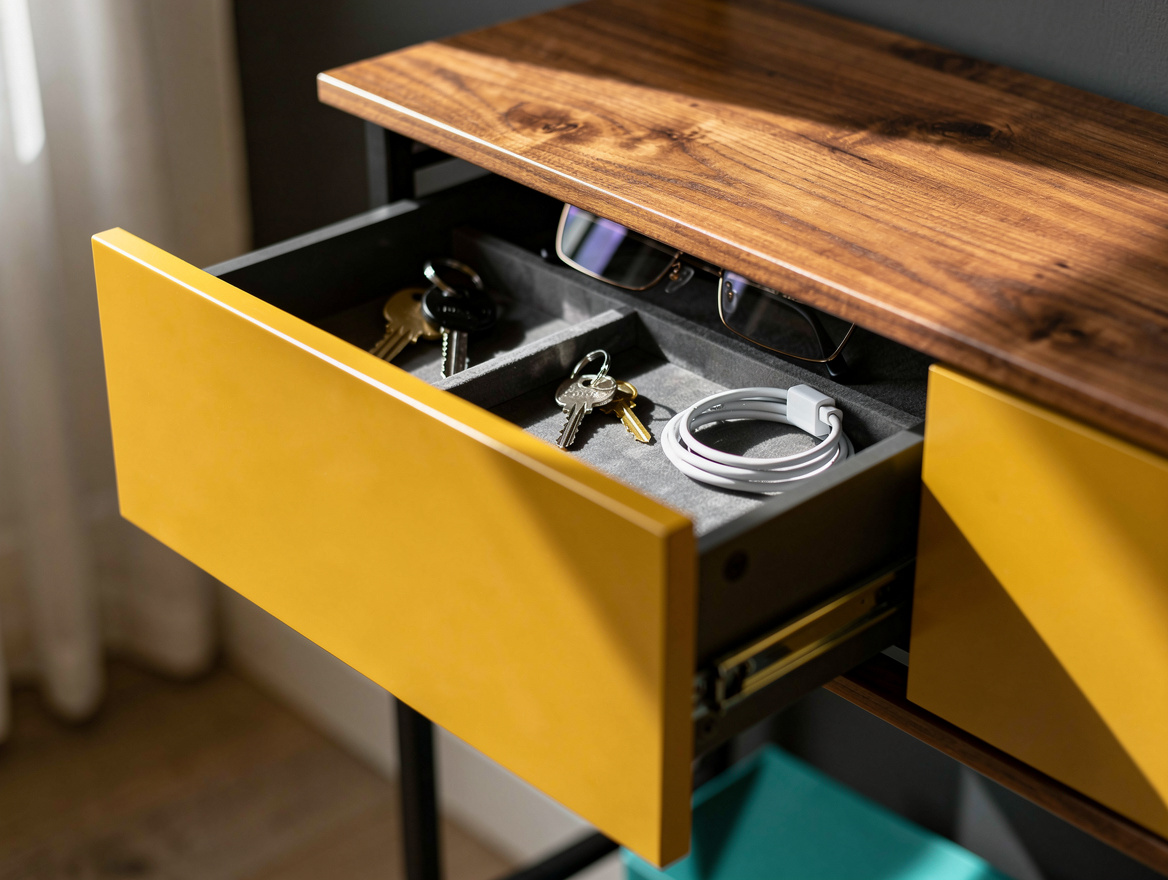
Drawers work best when each one has a job that matches the way you leave and return home. The roughly $300 Target Threshold Turned Wood Console offers two drawers within a footprint of about 47.5 inches wide by 15.75 inches deep.
Place daily carry items in the top drawer, charging accessories in the second, and move paperwork elsewhere. The wood tabletop adds warmth, but the lower shelf remains visible, so it cannot carry the same clutter-control job.
A wood and MDF-composite frame gives this option a furniture-like presence without the depth of a standard dresser. I would choose it when the landing needs more usable drawer space and the wall can handle a wider piece.
Contain the Lower Shelf
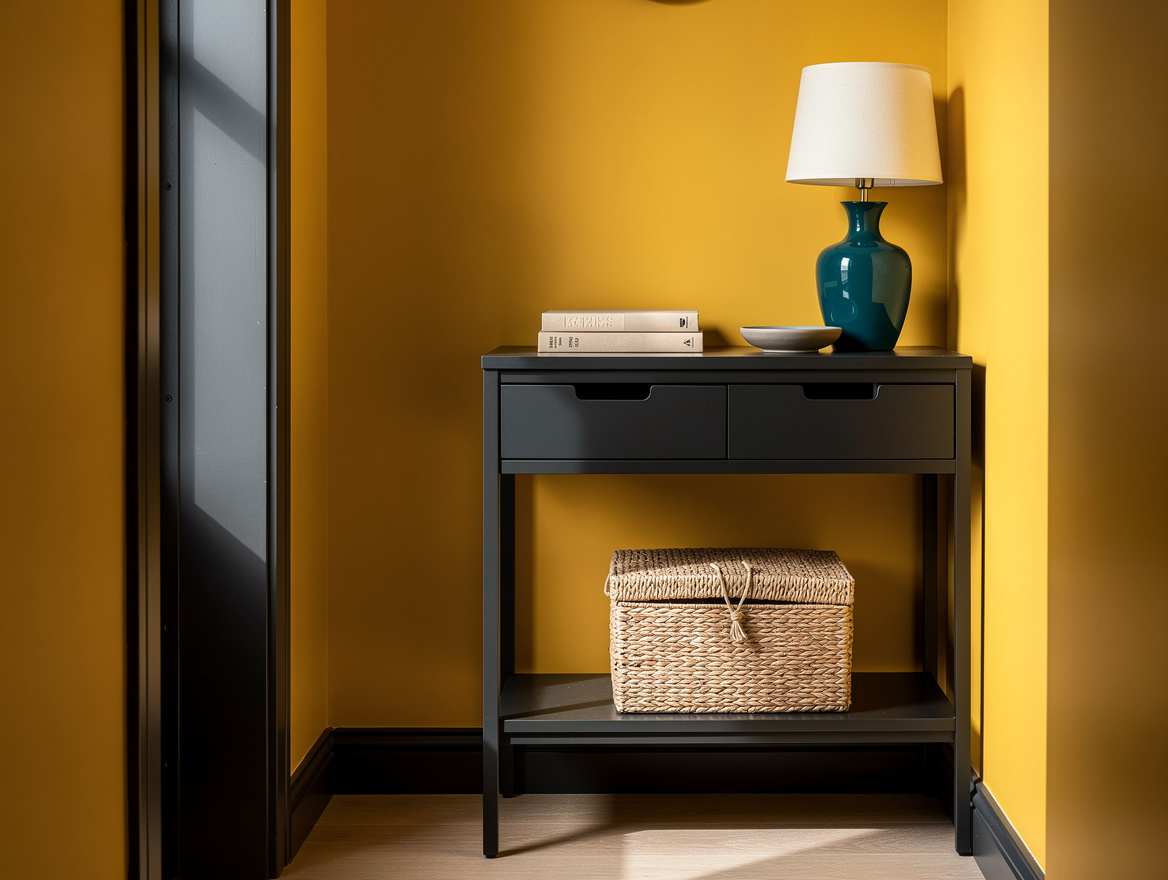
An open lower shelf should hold a deliberate container, not a growing pile of bags and clothing. A pair of lidded baskets can absorb overflow while keeping the floor line visually quiet.
The researched three-drawer mango-wood console costs roughly $450 and measures about 46 inches wide, 14 inches deep, and 32 inches high. Its three drawers can separate daily carry items, charging pieces, and paperwork without asking the shelf to do everything.
Measure the actual opening before ordering baskets because the outside dimensions do not confirm the shelf clearance. Choose containers with lids, and leave some empty capacity so the system still works on a rushed morning.
Limit the Surface Drop Zone
The top of a console should catch arrivals briefly, then send them behind a door or into a drawer. Keep one landing tray near the side you naturally use, rather than spreading small objects across the entire surface.
A rubberwood frame with an ash-veneer top gives the compact Adelpha a warm finish, but the surface still needs a firm boundary. A small tray for keys and glasses is enough; adding several decorative bowls creates more places for clutter to collect.
Leave room for one lamp or one framed picture, not a full display. The strongest bedroom landing feels useful first, with decoration occupying the remaining space.
Keep the Console Visually Light
Storage furniture can make a short landing feel crowded when every level is filled. Let the wall above it remain partly open, and use the console’s height to support the room rather than compete with the bedroom door.
The mango-wood finish on the roughly $450 three-drawer model brings visible grain and weight, while its approximately 14-inch depth keeps the footprint restrained. It is the right direction when you want a more substantial furniture look without buying a sideboard.
For a lighter budget, the about $160 to $200 sliding-door Target option keeps the profile smaller and the storage enclosed. Pick the finish and width that make the landing feel intentional, then stop adding pieces once the path stays clear.
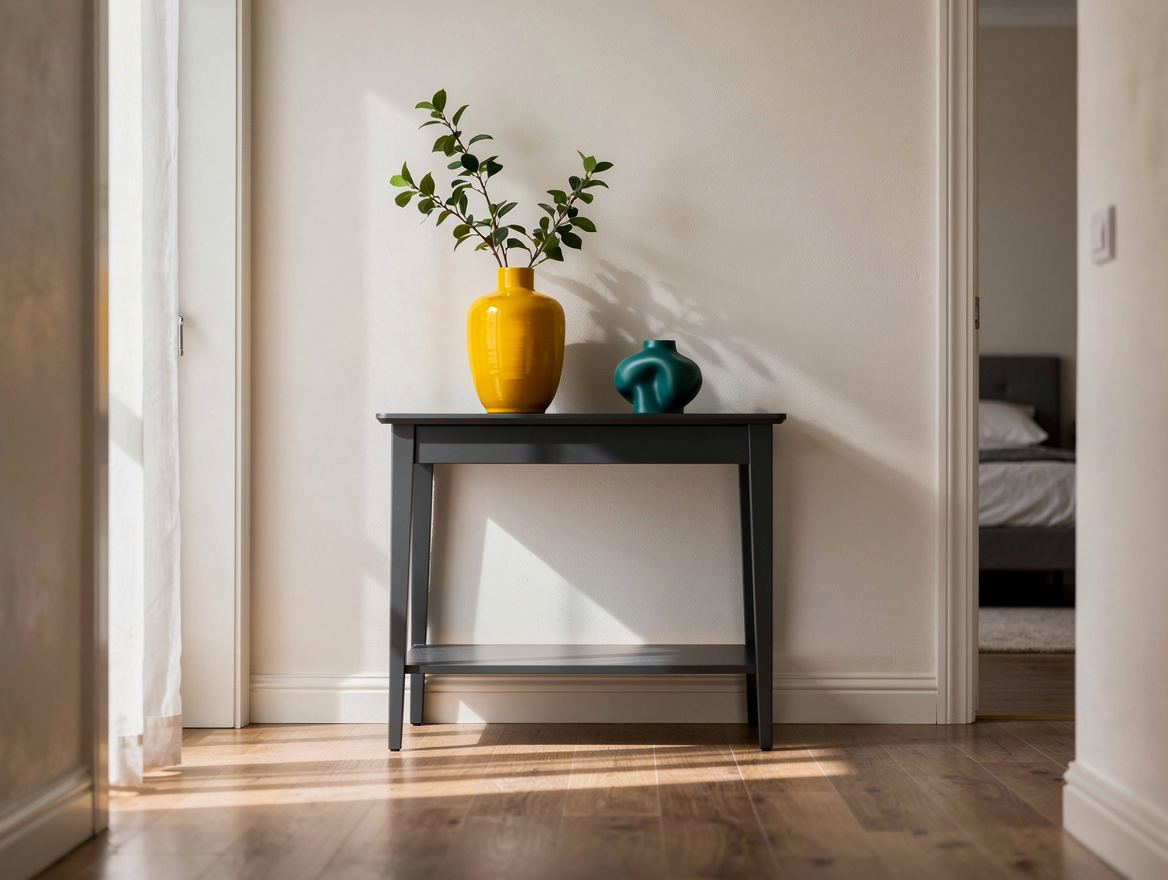
Begin by taping out a 14-to-16-inch-deep footprint, then choose the storage type that matches your real clutter. If the daily mess is pocket-sized, sliding doors are enough; if it includes paperwork and charging gear, drawers deserve the wall space.
Mia Carter writes about small-space living and budget home makeovers. She has restyled three rentals and tests most ideas in her own 45 sqm flat.