
I started with a dresser that looked tidy until I noticed the open shelf below it, where a black basket and loose cords broke up the whole bedroom.
A dresser scarf can solve that problem, but only when the fabric actually drops in front of the clutter; a typical narrow runner mainly decorates the top.
My most useful starting point was a 16 × 36-inch scarf, followed by a test of the fabric’s opacity, length, and access.
Measure the Drop, Not Just the Top
My dresser looked orderly from standing height, but the open shelf below still showed a dark basket and loose chargers, so I measured the hidden area before choosing a cloth.
For a small catch-all box, a 16 × 36-inch scarf gives enough surface coverage to drape over the box while leaving room to lift the fabric for access.
A broad open unit needs a different calculation: a 48-inch-wide, 18-inch-deep unit with a 24-inch front drop calls for a cloth about 48 × 42 inches, plus hem or attachment allowance.
Choose Opacity Before Decoration
Current 2026 US listings put basic runners at about $5 to $10, decorative options around $15 to $25, and specialty pieces near $40, before shipping and taxes.
A polyester lace-trimmed runner listed around $9.29 can work over a small box, but I would check the main panel for transparency because decorative trim does nothing to hide dark objects.
An embroidered linen-blend runner listed around $15.19 offers more length, while a cotton 14 × 72-inch runner listed around $16 makes a tidy surface layer, though neither should be assumed opaque without checking the fabric.
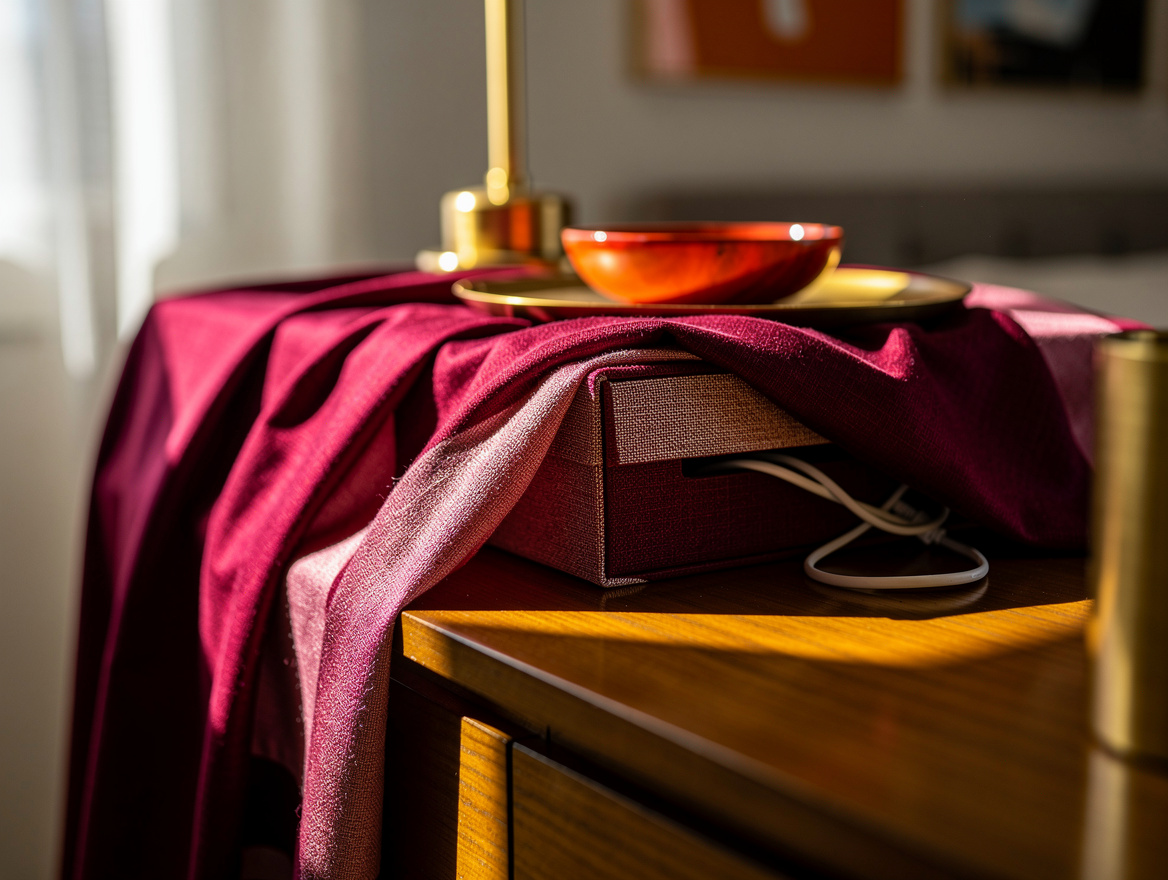
Cover a Low Box Without Losing Access
I place an opaque polyester cloth over a shallow box near the back of the dresser, keeping the front edge loose enough to lift with one hand.
This setup hides loose cables, hair accessories, and spare toiletries while keeping the box available for daily use, which is far more practical than sealing clutter behind a heavy arrangement.
For visible items that need to stay out, I group them on a wood tray over the runner and move overflow into the covered box, making the surface look intentional without pretending the tray hides anything.
Let the Fabric Fall Across an Open Shelf
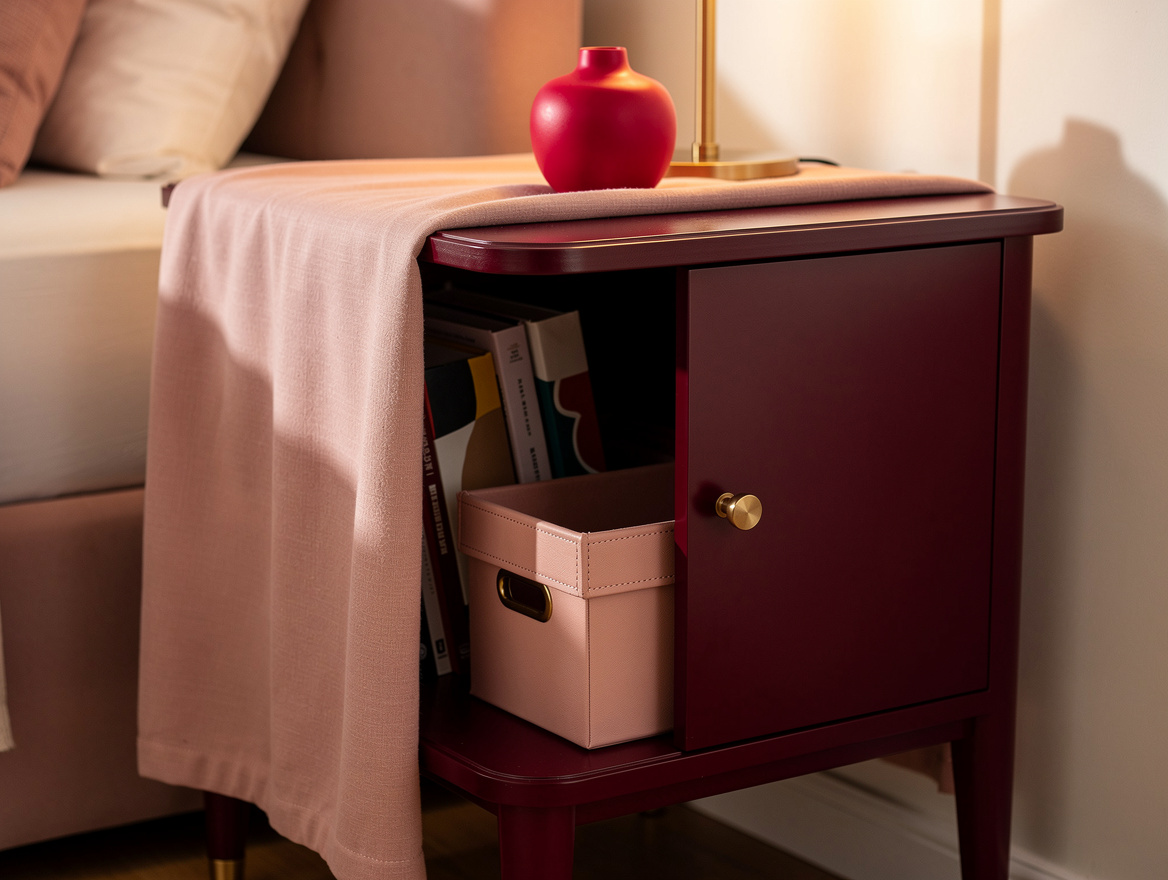
On a bedside table with a 16-inch-deep top, I align a 16 × 36-inch runner at the rear edge so roughly 20 inches can fall toward the front.
That extra length can cover a narrow shelf holding books or a small storage bin, but the cloth needs enough weight to hang straight instead of bunching at the opening.
I prefer an embroidered linen-blend runner here when its backing is sufficiently dense, since an attractive pattern cannot compensate for a fabric that reveals every object underneath.
Use Length to Soften Side Storage
A 72-inch runner centered across a 48-inch-wide surface leaves about 12 inches dropping at each end, making a long cotton runner useful for disguising low boxes beside a dresser.
The side drops conceal the upper portions of the storage and soften the outline, but they do not cover the entire front, so I keep the most distracting items below the fabric line.
I would use this layout for stacked storage boxes or a narrow unit, not for an open shelf packed with bright containers that remain visible through the uncovered center.
Secure a Skirt Over a Broad Unit
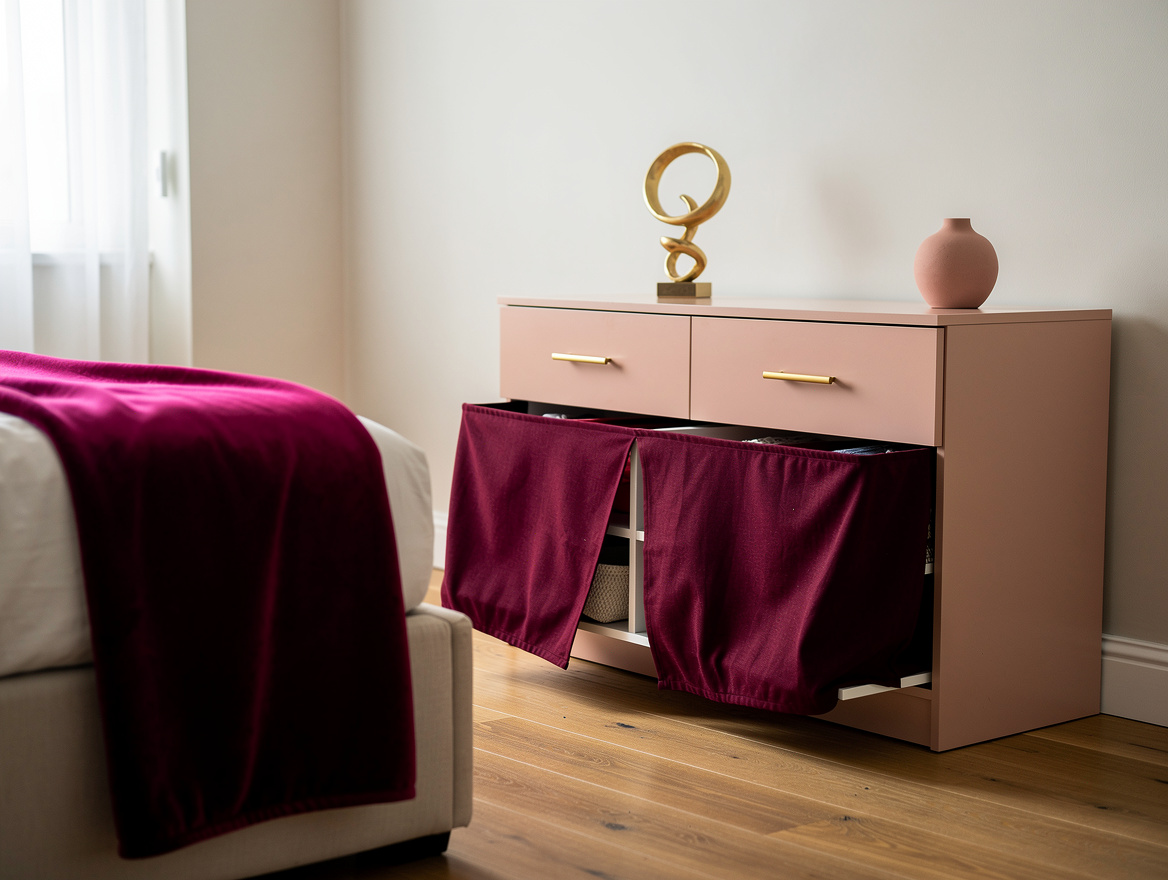
For a 48-inch-wide open-front unit, I would cut or buy a rectangular cotton cloth about 48 × 42 inches when the unit is 18 inches deep and the desired front drop is 24 inches.
The top edge should be secured to the unit rather than held down by decor, while the lower section stays removable for access and cleaning.
A standard 14- to 16-inch runner is simply too narrow for this job, so spending more on a larger cloth makes sense when the goal is to hide most of the storage front.
Measure the cluttered opening first, then buy for the needed drop rather than the prettiest surface pattern. That one decision keeps a low-cost runner from becoming another visible layer of bedroom mess.
Mia Carter writes about small-space living and budget home makeovers. She has restyled three rentals and tests most ideas in her own 45 sqm flat.