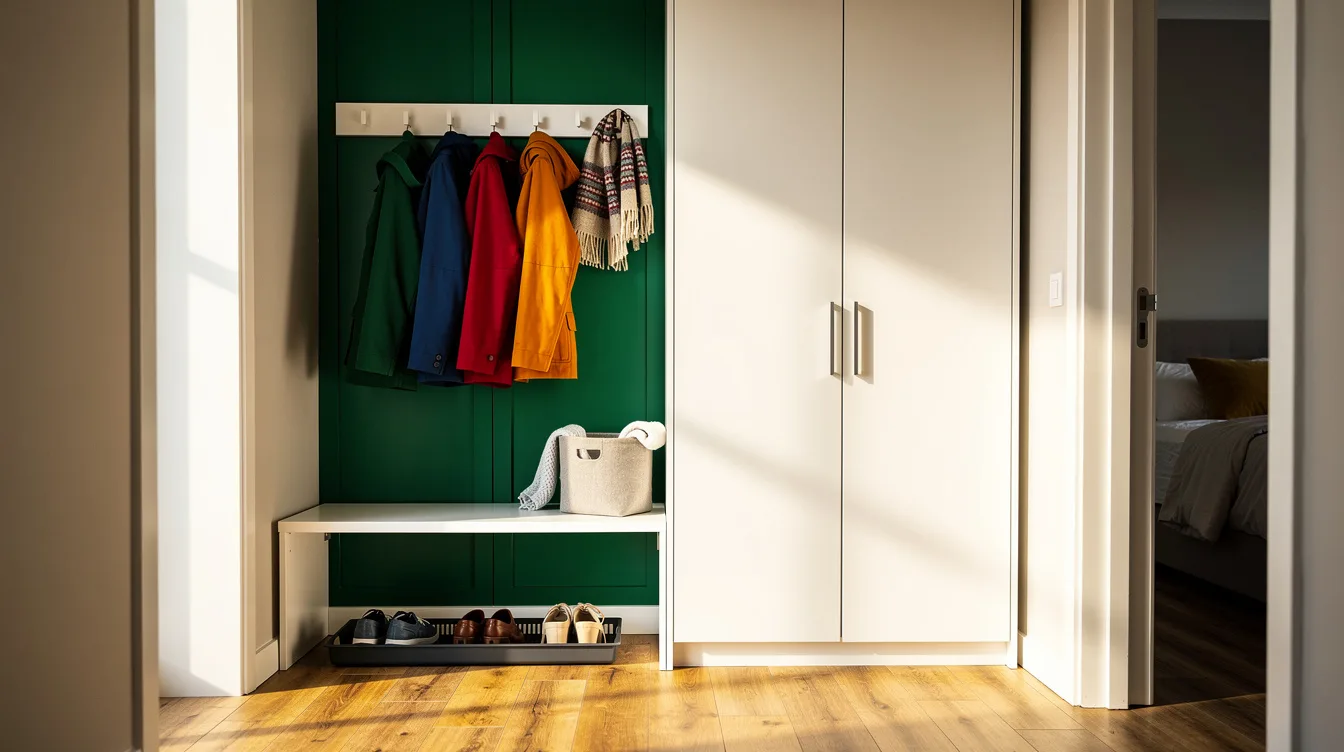
A bedroom-adjacent mudroom has a narrow job: catch the jacket, shoes, and bag that come through the door without making the bedroom feel like a hallway. A 60 × 42 × 181 cm wardrobe can handle that role, but only when the storage leaves room for damp clothing to breathe.
The smartest layouts use one shallow closed cabinet, one open drying spot, and a removable shoe tray. The goal is everyday control, not a full wall of deep bedroom cabinetry.
Protect the Bedroom With Shallow Storage
Start with depth, because a bedroom-adjacent mudroom should préservé the walking path. IKEA SMÅSTAD/PLATSA uses a listed 42 cm depth, which keeps outerwear close without creating a bulky cabinet wall.
The checked configuration measures 60 × 42 × 181 cm and uses fiberboard, particleboard, recycled honeycomb-paper filling, acrylic-painted doors, and powder-coated steel rails.
It was listed at €160 in the supplied comparison, with two rails, one shelf, soft-closing hinges, doors, and adjustable feet. That is a sensible starting point for daily jackets, provided the wall can accept the required fixings.
Give Damp Jackets Their Own Landing Zone
Wet outerwear needs air before it goes behind a closed door. Leave a small open section beside the wardrobe for the jacket that just came in from rain, then move it inside once the fabric is dry.
A removable rubber shoe tray from Home Depot keeps grit and moisture contained near the entry point. Choose a tray that can come outside for rinsing, because a fixed platform turns into a neglected dirt shelf.
Allow roughly 40 to 60 cm for hooks and shoes beside the cabinet. That creates an overall wall run of about 100 to 120 cm, enough for a useful landing zone without stealing the bedroom doorway.
Measure the Longest Coat Before Adding Rails
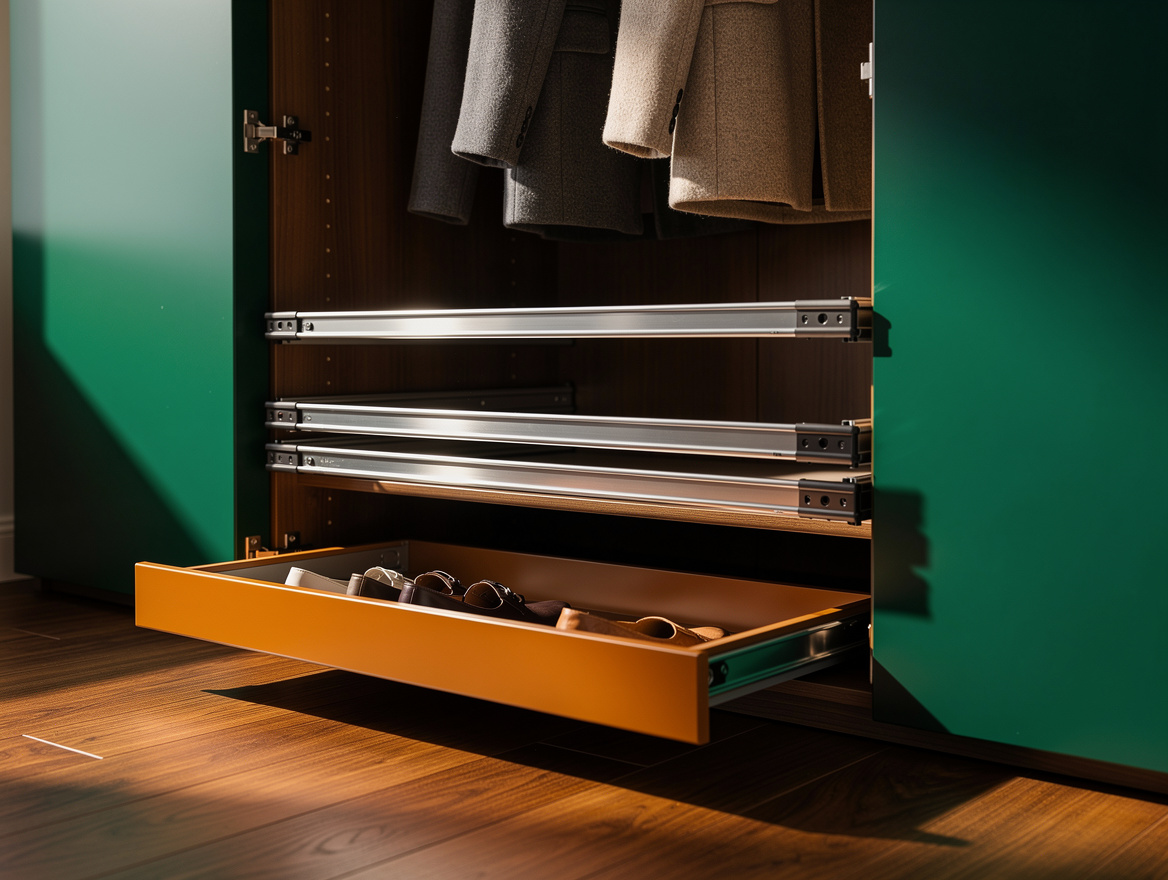
Adult-size clothing can fit in the IKEA cabinet, but the supplied two-level hanging arrangement deserves a careful check. A full-length wool coat may need the lower rail removed or repositioned, especially when the wardrobe also holds bags and scarves.
Measure your longest garment from shoulder to hem, then compare that height with the clear interior space. This small step prevents the familiar mistake of buying a shallow wardrobe that works for shirts but folds every winter coat at the bottom.
A simple wooden hanger system can keep the interior calmer than mixed plastic hangers. I would reserve the cabinet for current outerwear and send rarely used pieces back to the main bedroom closet.
Use Narrow Steel Only Where Width Is Tight
A very narrow wall may favor a locker over a broad wardrobe. A slim powder-coated steel locker can save wall width, although its typical projection is deeper than a 42 cm cabinet and may feel intrusive beside a bedroom door.
Look for about 35 cm of width when the recess is tight, and expect roughly 46 cm of projection from comparable narrow formats. That trade-off works best when the door swing and walking clearance are generous.
Use one section for current jackets and one shelf for a bag or folded scarf. I would keep muddy shoes outside the locker in a washable tray, since damp footwear and enclosed metal storage make an unpleasant pairing.
Keep the Furniture Quiet at Bedtime
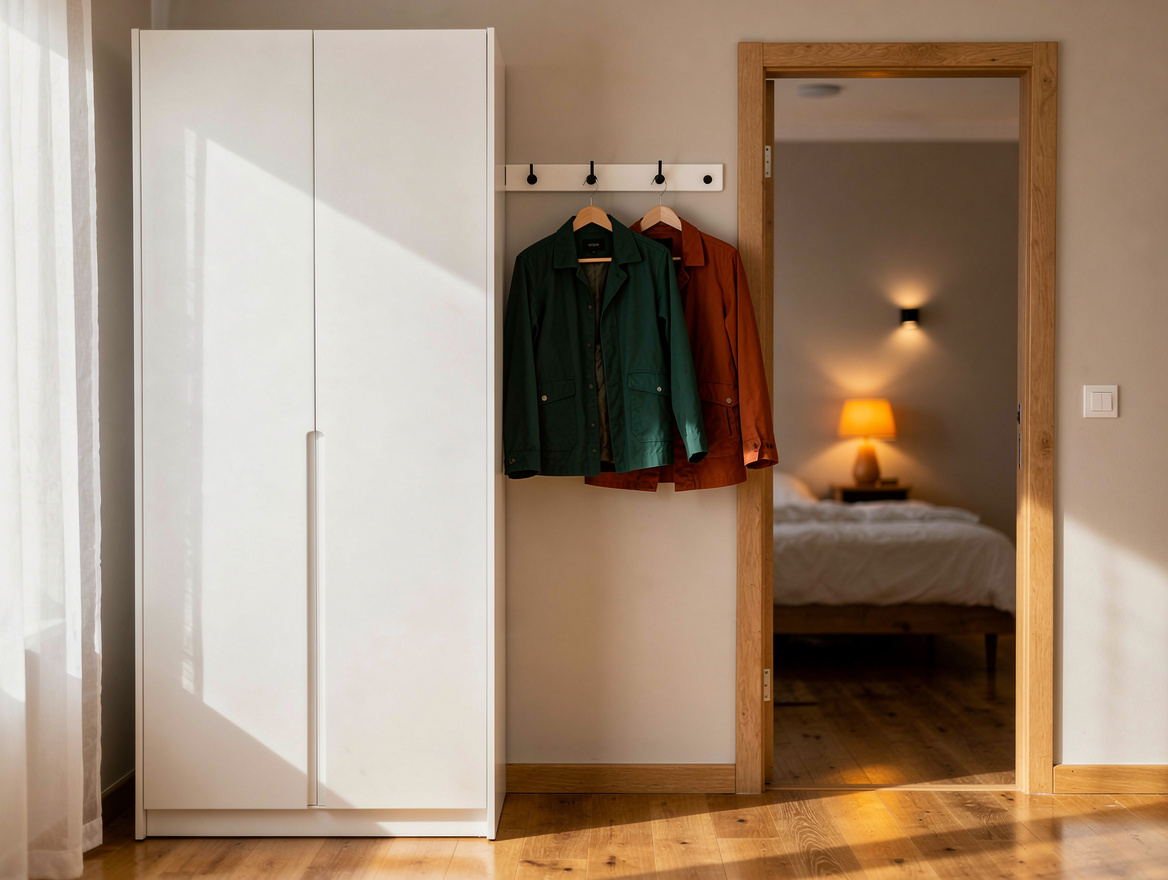
Noise matters more beside a sleeping room than it does in a main hall. Soft-closing hinges make the IKEA doors a better fit for households where someone leaves early or returns late.
Skip a deep dresser or a cabinet with loose hardware. The slimmer wardrobe should hold the clothing, while two sturdy hooks handle the jacket that needs to air out for an hour.
A small canvas basket from Target can collect gloves and hats without adding another hard surface that bangs against the wall. Keep it low enough for easy access and far enough from the bedroom door to préservé the passage.
Finish the Wall With Practical Contrast
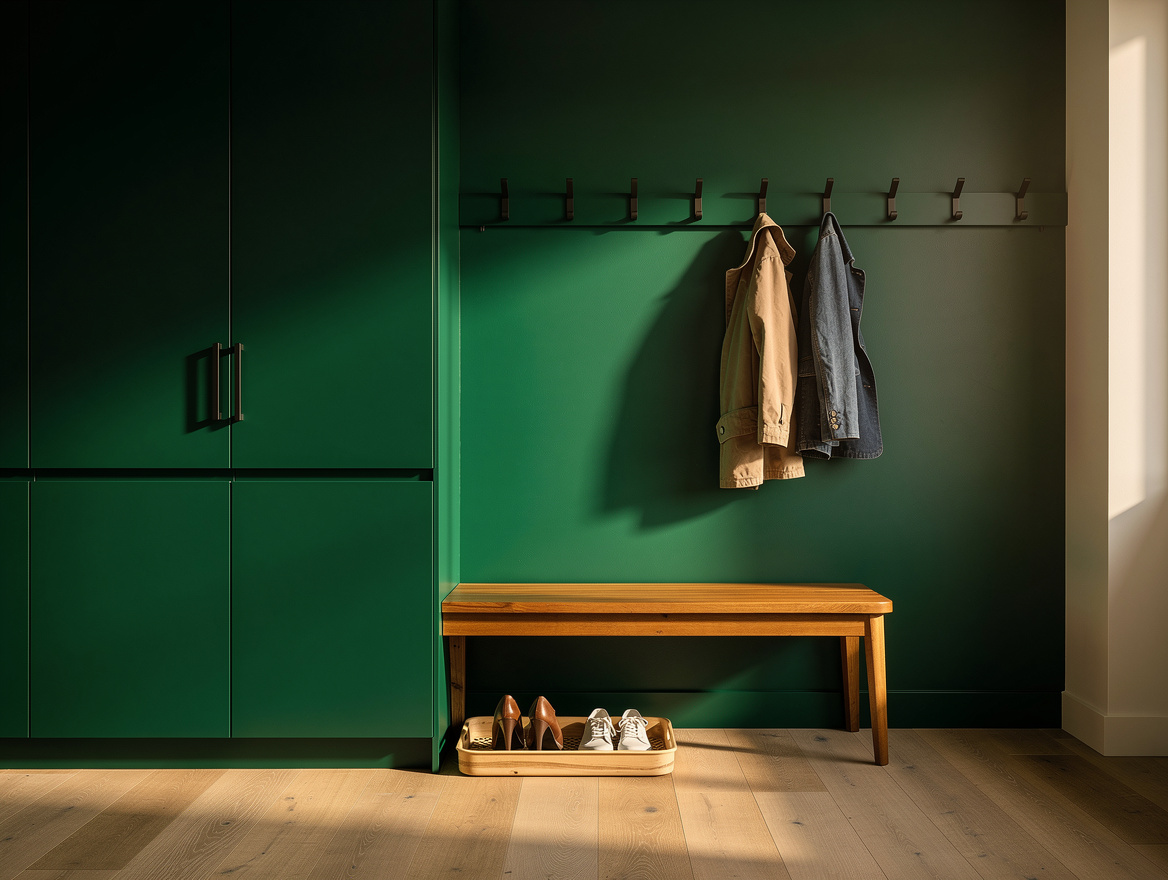
The storage will look lighter when the surrounding wall has a clear, calm finish. Matte white paint works with pale doors, while a muted green or warm gray can make the wardrobe feel intentional rather than temporary.
Add one metal hook rail above the open zone, but resist filling every inch. A bedroom-adjacent mudroom needs visual quiet, and a short row of useful hooks looks more considered than a crowded field of bags.
Anchor the cabinet to the wall, especially on uneven floors or near a busy doorway. A neat installation matters more here than extra shelving, because leaning storage turns a narrow passage into a daily obstacle.
Begin by taping a 60 × 42 cm footprint on the floor and marking the longest coat against the wall. If the path still feels open, add the wardrobe first, then build the hooks and shoe tray around that measured boundary.
Mia Carter writes about small-space living and budget home makeovers. She has restyled three rentals and tests most ideas in her own 45 sqm flat.