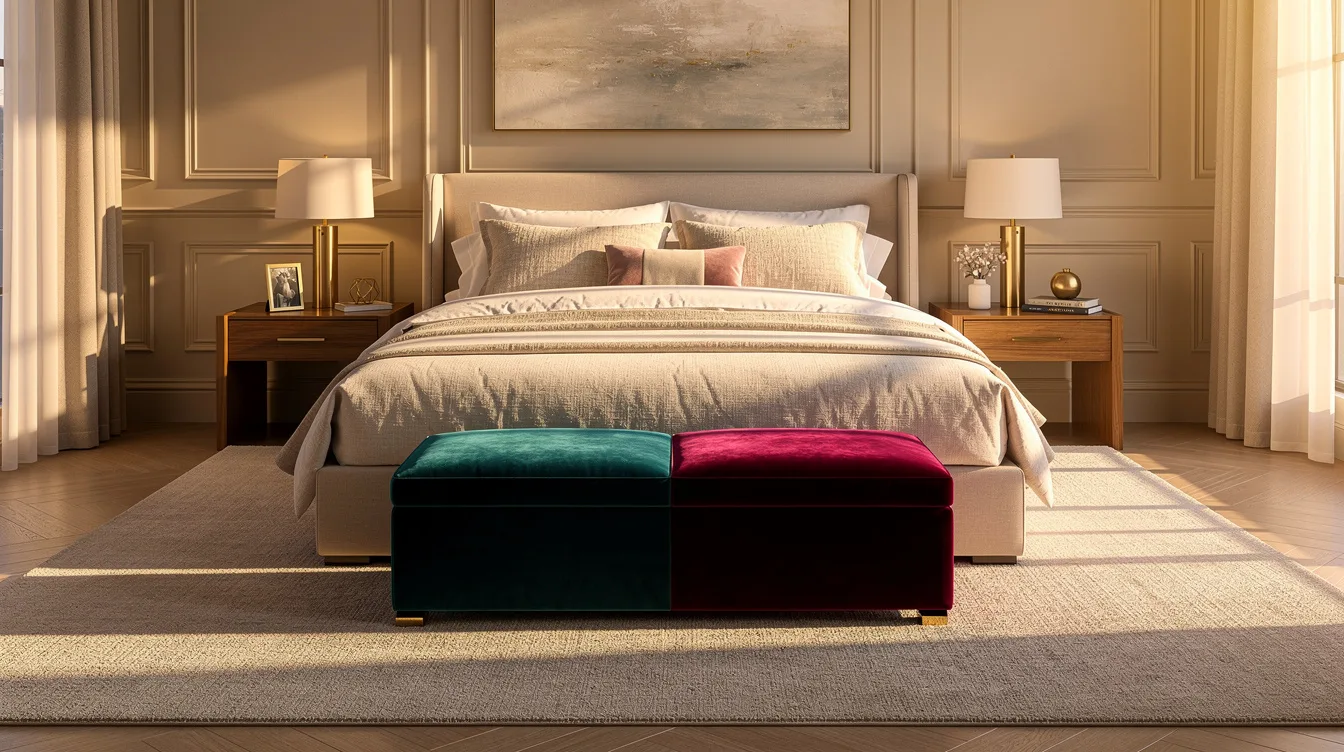
Luxury bedrooms rarely feel expansive because they contain more furniture. The floor reads as one calm plane, often because a typical 8-by-10-foot rug reaches well beyond the sides of a queen bed and carries the eye past the frame.
A small mat under the lower third of the bed breaks that plane and makes a large room feel temporary. Start with a low-pile wool rug that extends about 18 to 24 inches past the mattress sides and continues beyond the foot.
Extend the Rug Beyond the Bed Frame
The luxury effect starts at the rug edge. Let it reach around 18 to 24 inches beyond each side of the bed and continue past the foot, creating one generous visual field instead of a small island beneath the mattress.
A Wayfair rug pad keeps that field flat and quiet underfoot. Choose felt for softness on hard flooring, or felt-and-rubber when the rug needs firmer grip.
Match the Rug to the Mattress Width
A queen bed typically works best with an about 8-by-10-foot rug, especially in a room with enough clearance around the nightstands. That proportion lets the rug frame the bed without crowding the walls.
An IKEA flatweave rug can work when you need a thinner profile beneath a door swing or low dresser. Keep the rug wide enough to extend past the mattress, because a narrow strip makes the entire arrangement look undersized.
Give King Beds a Full-Size Anchor
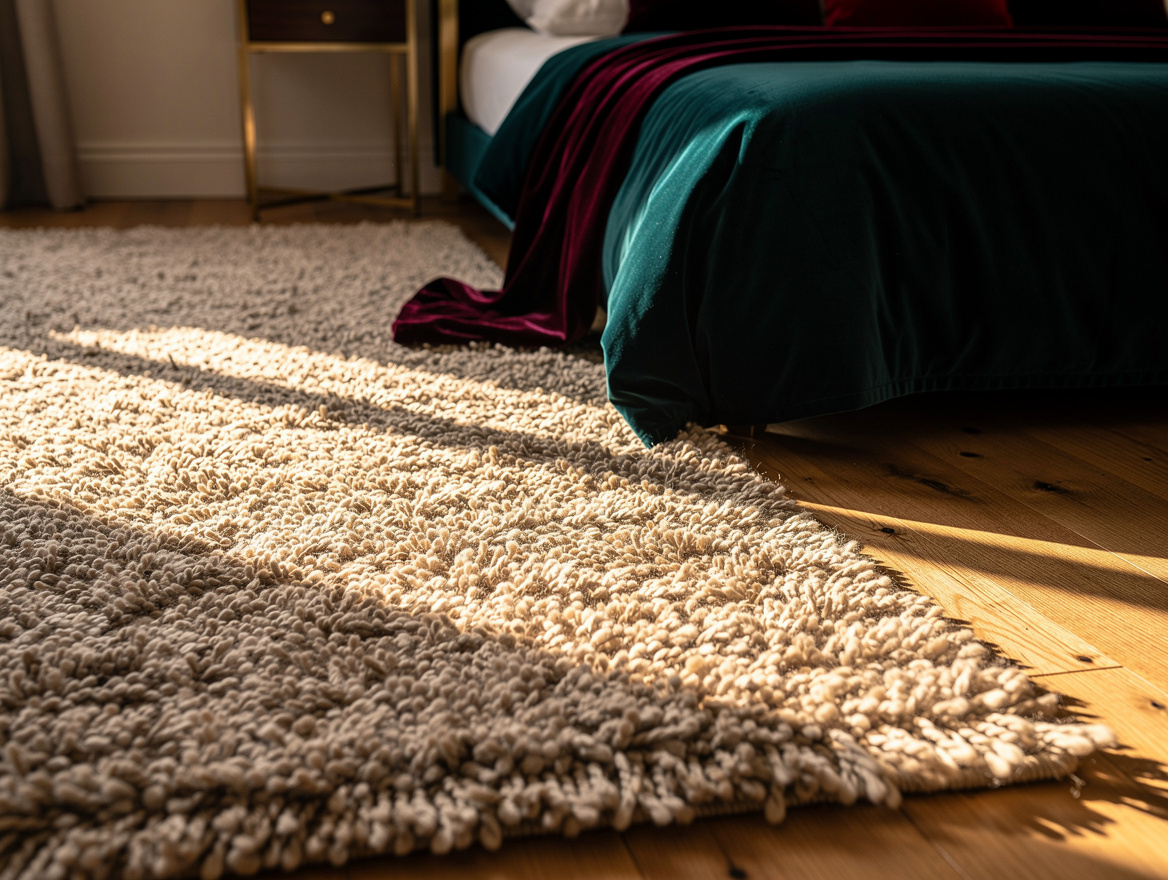
A king bed usually needs a typical 9-by-12-foot rug to look properly grounded. The extra width matters because the mattress and frame already occupy so much of the room, and a smaller rug disappears at the edges.
Choose a larger wool design from Walmart when the room can handle it, then align its long sides with the bed. That clear geometry makes the suite feel orderly and expansive.
Keep Nightstands on a Stable Surface
Place the front portion of the nightstand legs on the rug whenever the layout allows. This creates a deliberate landing zone for the bed and keeps the nightstands from looking visually detached.
Use Home Depot felt pads under furniture feet if the rug has a noticeable pile. The small adjustment prevents wobbling and protects the floor, while the bed arrangement still feels substantial and settled.
Layer Texture Without Shrinking the Room
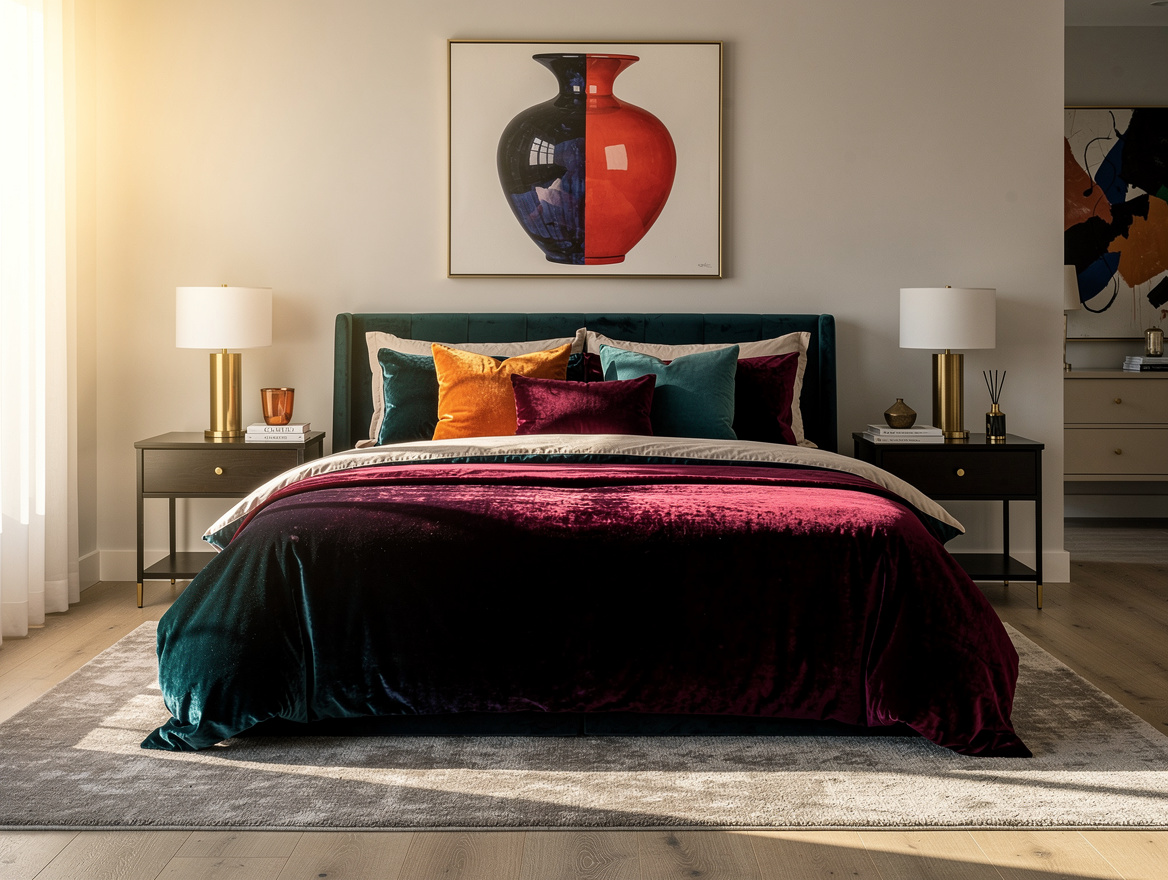
A jute rug can add useful texture beneath a large bedroom rug, but keep the base subtle and low contrast. Strong pattern changes create extra boundaries on the floor, which works against the open feeling you want.
Add a Target cotton runner beside a vanity or bench only after the main rug is placed. A side layer should support the room’s circulation, never compete with the anchor beneath the bed.
Center the Rug on the Room’s Sightline
Stand in the doorway and adjust the rug border until it lines up with the room’s strongest architectural axis. A few inches of visual imbalance can make an expensive bedroom feel accidentally arranged.
A neutral Costco wool rug is especially forgiving because its texture carries the eye without demanding a hard pattern match. Center the rug on the bed and the entry view first, then let the remaining furniture follow that decision.
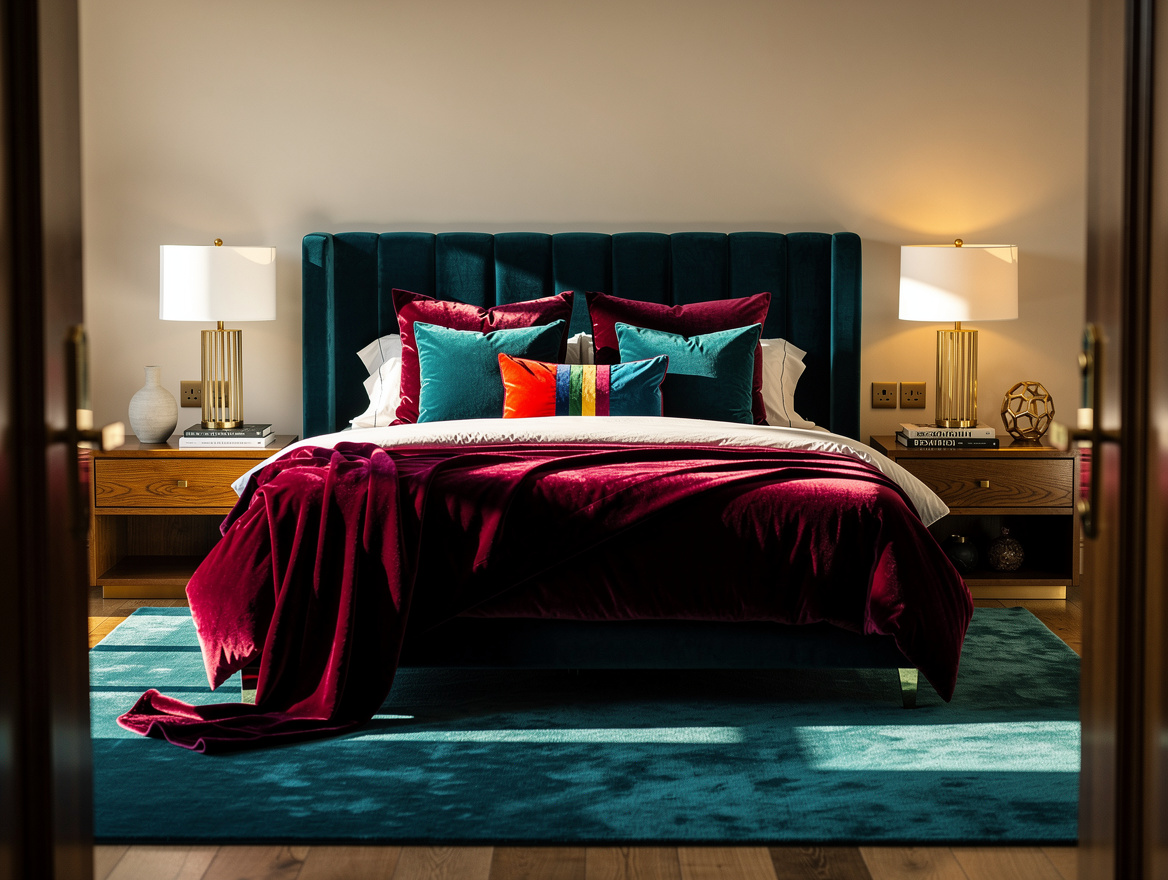
Measure the mattress first, mark the rug’s intended footprint with painter’s tape, and judge the layout from the doorway. Once the bedroom floor reads as one wide shape, the rest of the suite needs far less furniture to feel finished.
Mia Carter writes about small-space living and budget home makeovers. She has restyled three rentals and tests most ideas in her own 45 sqm flat.