
Small music room ideas work best when you give every instrument a job, a wall, and a little breathing room. I once tried to squeeze a keyboard, two guitars, and a desk into one corner. It looked like a storage unit. The fix wasn’t more furniture. It was fewer, smarter pieces.
- Float the Practice Zone Away From the Wall
- Build the Three-Source Light Stack
- Hang Instruments Like Working Art
- Paint a Quiet Corner in Farrow & Ball Pigeon
- Use the Two-Wood Rule for Warmth
- Put the Rug Under the Listening Chair
- Can a Tiny Room Handle a Real Listening Chair?
- Frame the Window With Floor-Length Linen
- Make Cable Storage Part of the Decor
- Choose Benjamin Moore White Dove for the Bright Walls
- Stack Records at Eye Level Instead of Hiding Them
- Try the One-Soft-Wall Acoustic Layer
- Skip the Giant Speaker Cabinet
- Add a Rolling Cart for the Moving Parts
- Create a Songwriting Shelf Above the Desk
- Use the Door Back for Hidden Gear
- Could a Moody Accent Wall Make It Feel Smaller?
- Let One Personal Object Break the Rules
1Float the Practice Zone Away From the Wall
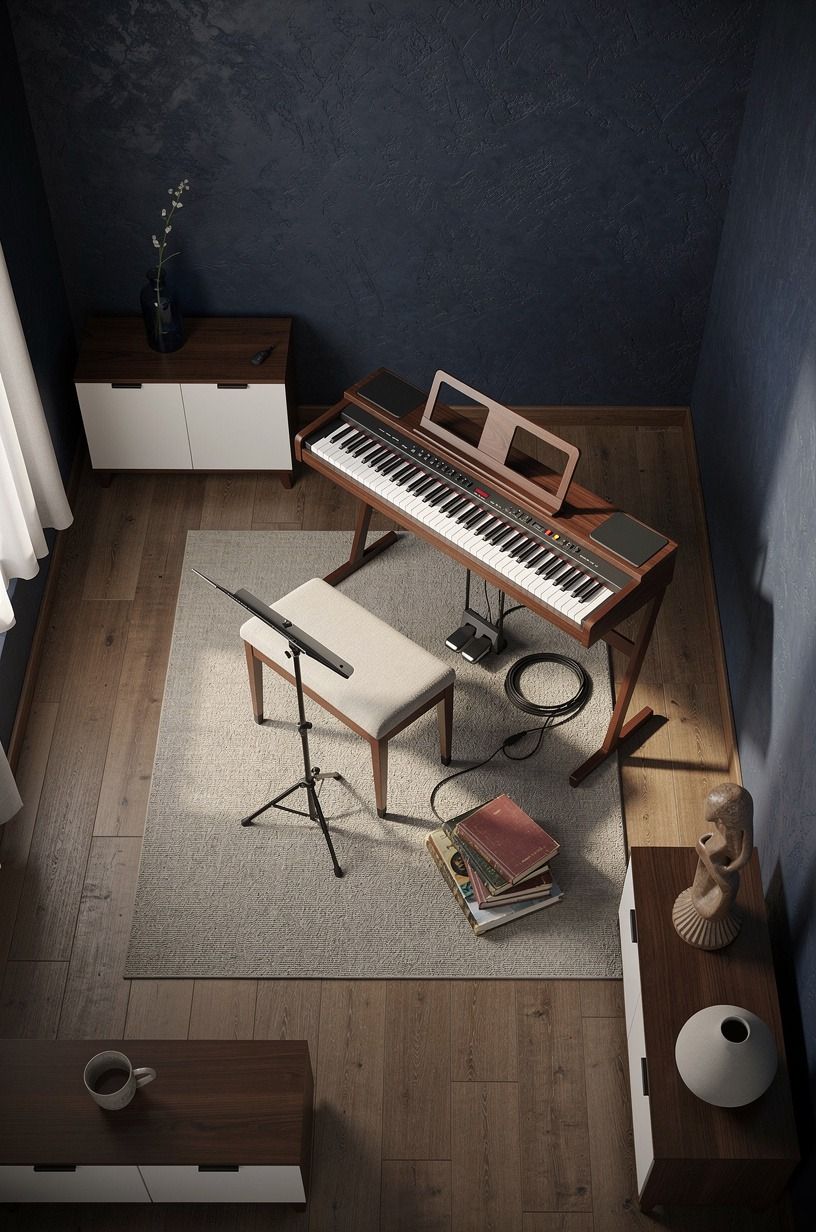
Pull your keyboard or slim desk 6 to 10 inches off the wall if your room allows it. You’ll get a more intentional small home music studio, and your cables won’t become a dusty knot behind the furniture.
Choose a walnut top beside hand-applied Venetian plaster rather than a deep black laminate desk. I’d skip the giant gaming desk here because its visual bulk eats the room before you’ve played a note.
A narrow bench. One IKEA KALLAX birch-effect unit.
A lamp with a warm pool of light. That’s enough.
2Build the Three-Source Light Stack
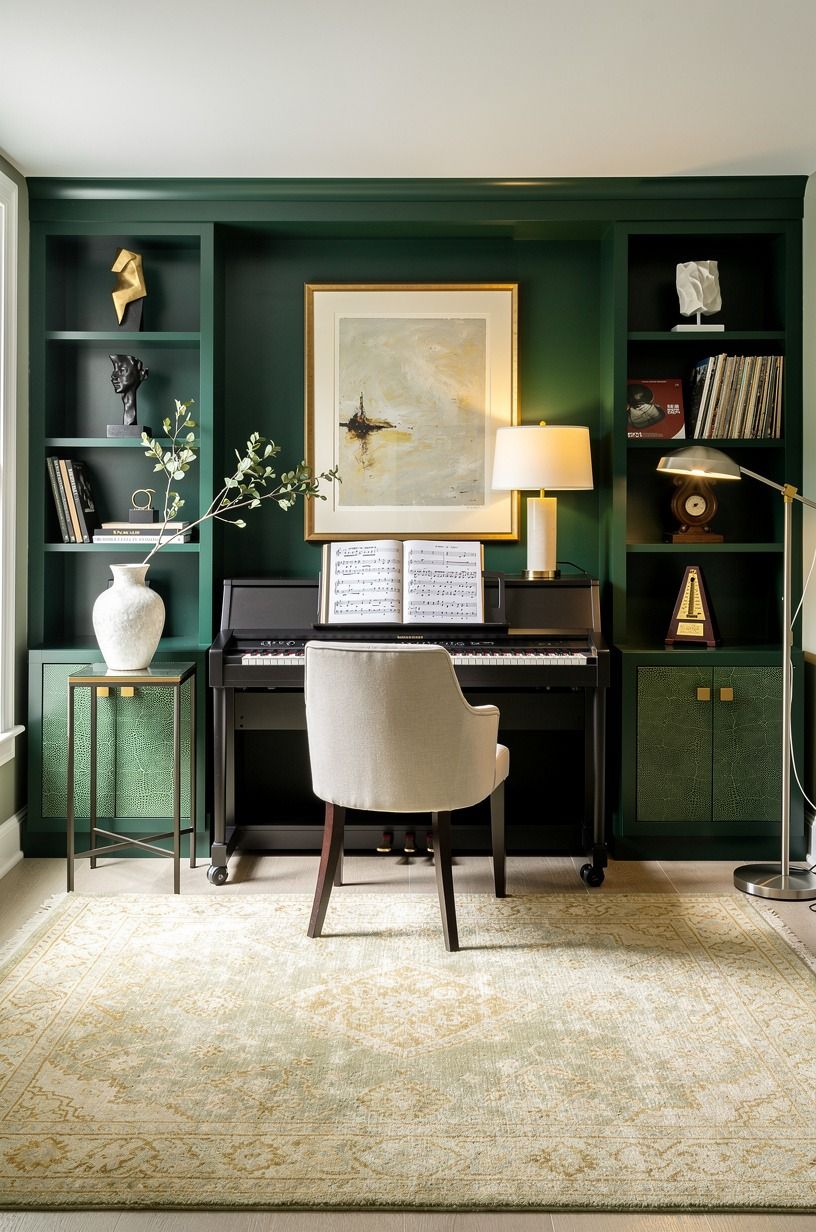
Your music room in house needs three light sources: overhead, task, and ambient. One ceiling fixture alone makes late-night practice feel oddly clinical, and you don’t want that.
Put a small gold picture light above framed records, then add a shaded floor lamp near your chair. A dimmable bulb is the better call than cool white LEDs, which make wood instruments look flat.
I learned this after recording vocals under one harsh fixture. Nobody looked relaxed. Not even me!
3Hang Instruments Like Working Art
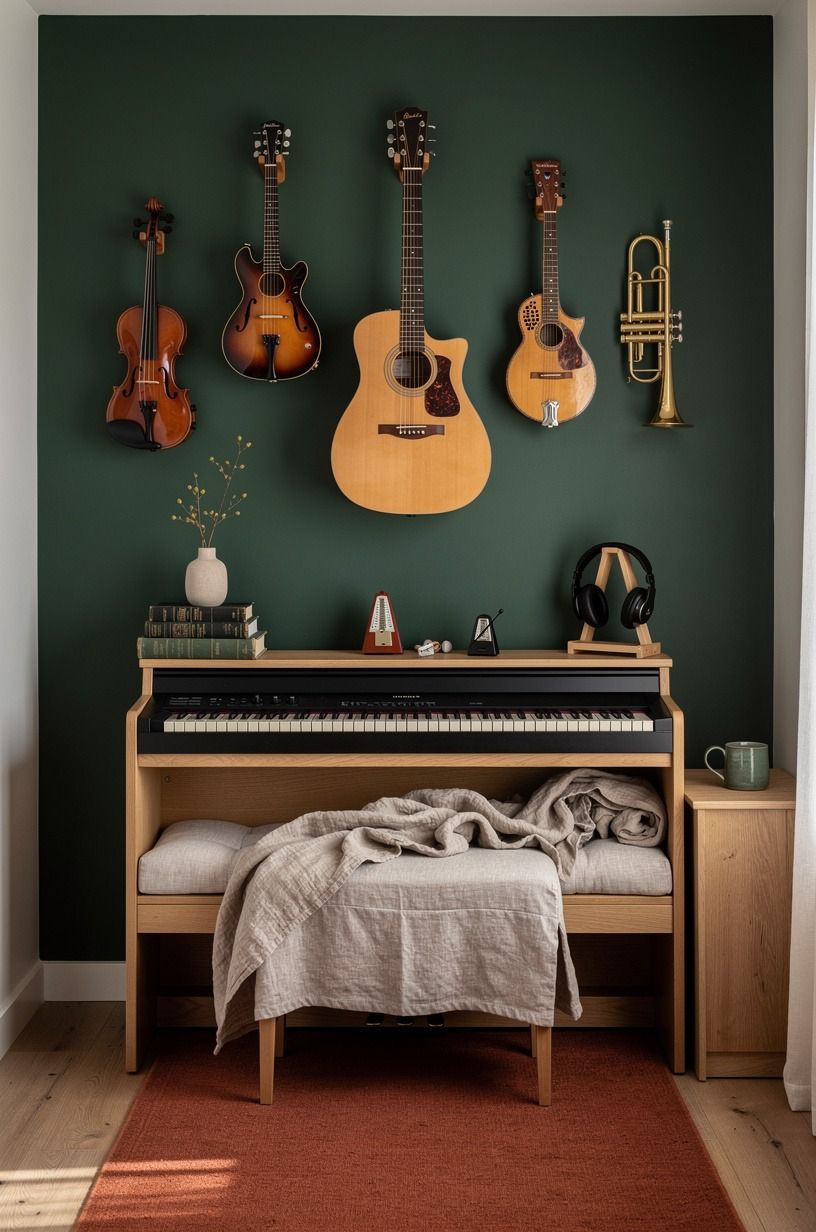
Wall-mounted guitars earn their keep twice. They stay within reach, and they give your small music studio room a strong vertical line without needing another cabinet.
Use padded natural oak guitar wall hangers on studs, not adhesive hooks. You’ll protect the headstock and avoid the depressing thud of a guitar hitting the floor at 1 a.m.
Keep art centered about 57 to 60 in from the floor, then let the instruments sit nearby rather than in a rigid row. These broader music room ideas help when your wall needs more than one focal point.
4Paint a Quiet Corner in Farrow & Ball Pigeon
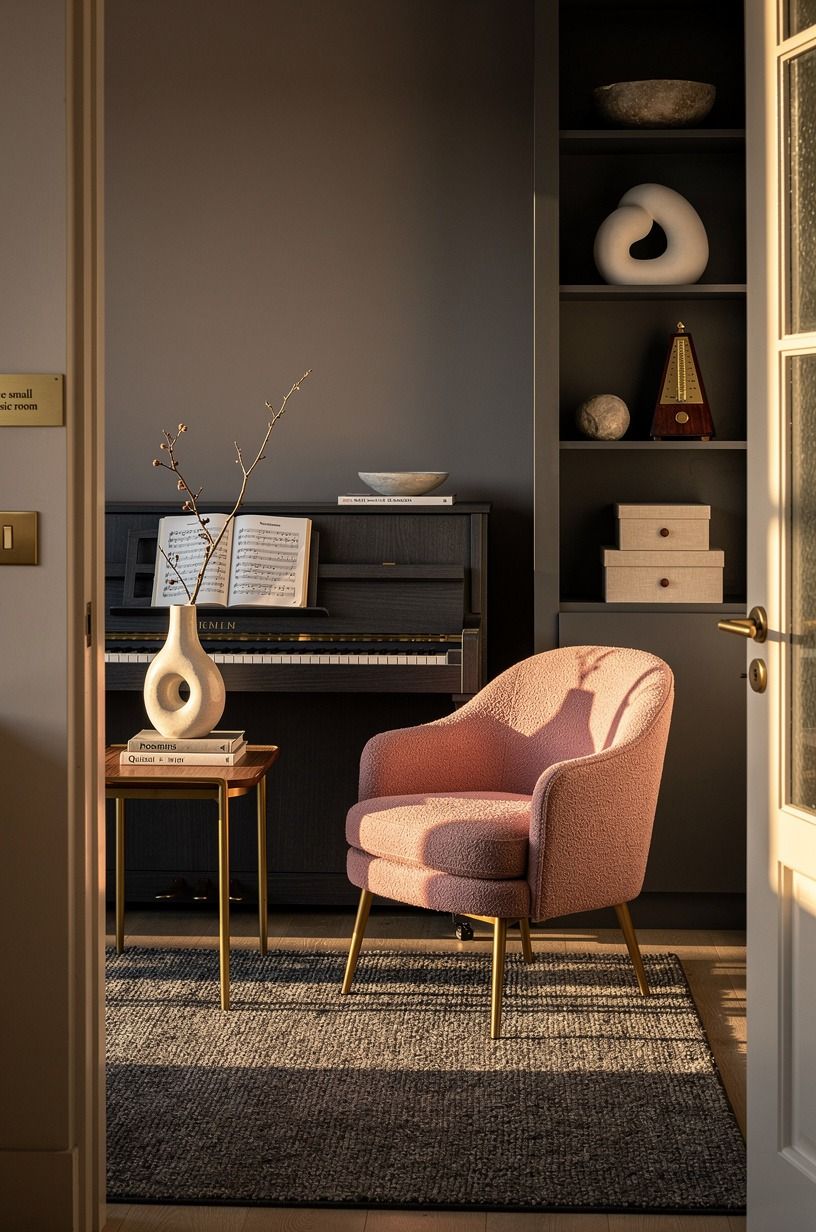
A defined paint zone makes a tiny room feel planned, not chopped up. A dusty rose wall with charcoal and brass nearby can calm visual noise without swallowing a narrow room.
Paint only the instrument wall if you’re nervous. Your pale side walls will keep the room bright, while the colored wall gives your gear a place to land.
I’d choose a softened rose over a trendy charcoal here. Charcoal can turn every black cable into a disappearing act.
5Use the Two-Wood Rule for Warmth
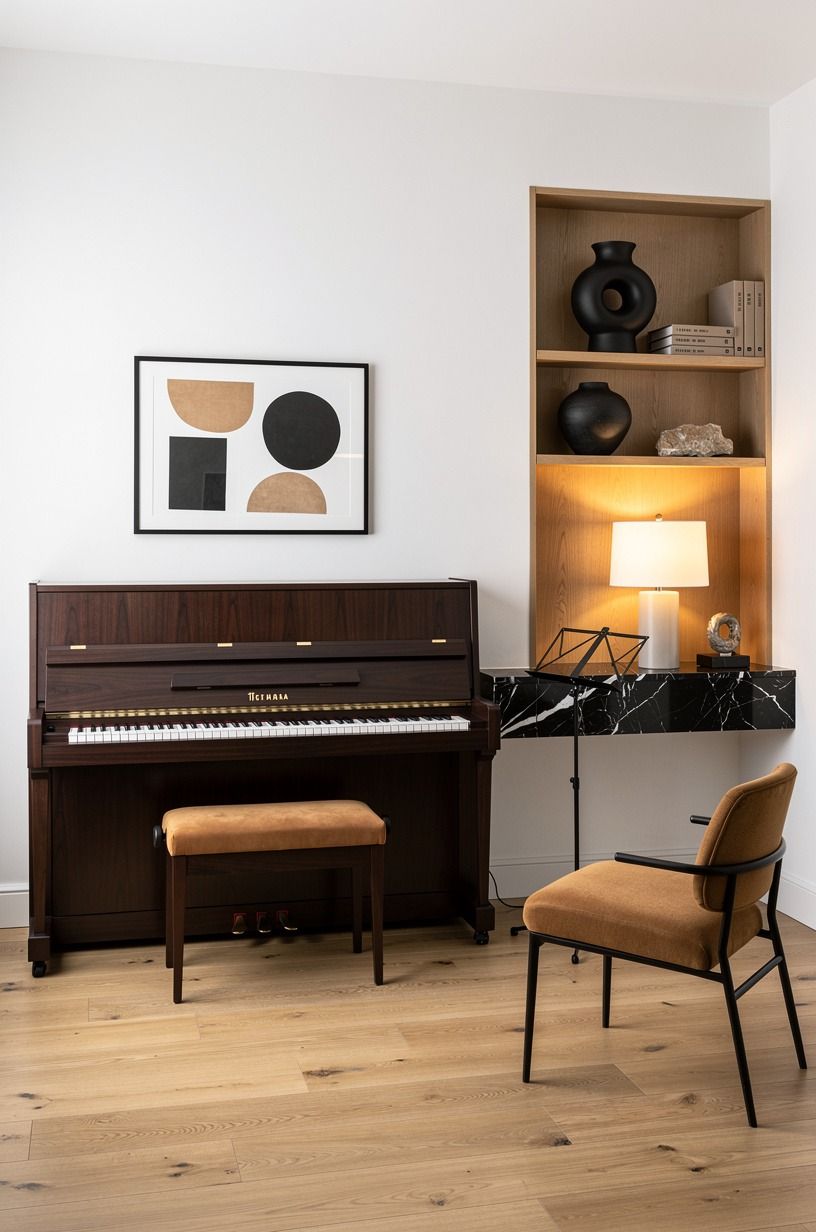
Pick two wood tones, then stop. A warm white shelf with a darker wood guitar is plenty; a third orange-toned finish usually makes the room feel accidental.
You can repeat one wood in a stool, frame, or record crate. Your eye likes the echo, even if you can’t explain why.
But don’t buy matching sets. A room with matching everything feels like a showroom, and music shouldn’t feel that polite.
6Put the Rug Under the Listening Chair
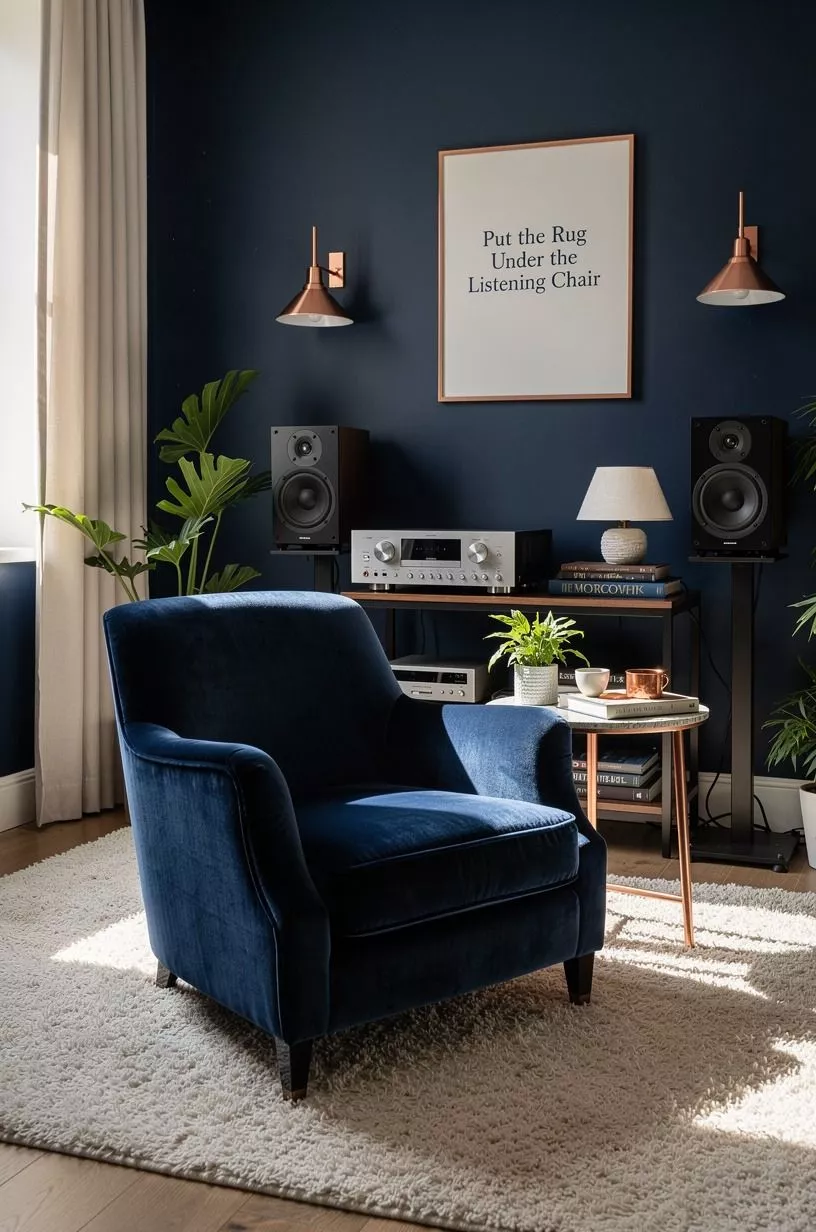
A rug won’t soundproof your room, but it does soften the hard, clicky feeling of a small space. Make it large enough that your chair and at least the front legs of nearby furniture overlap it.
A deep-pile mohair velvet rug is my preference for a listening nook. It makes midnight blue, copper, and ivory feel warmer without inviting a cluttered pile of accessories.
For a more intimate listening nook, borrow the compact-layout thinking in this small living room guide. Your chair needs a landing zone, not a postage stamp.
7Can a Tiny Room Handle a Real Listening Chair?
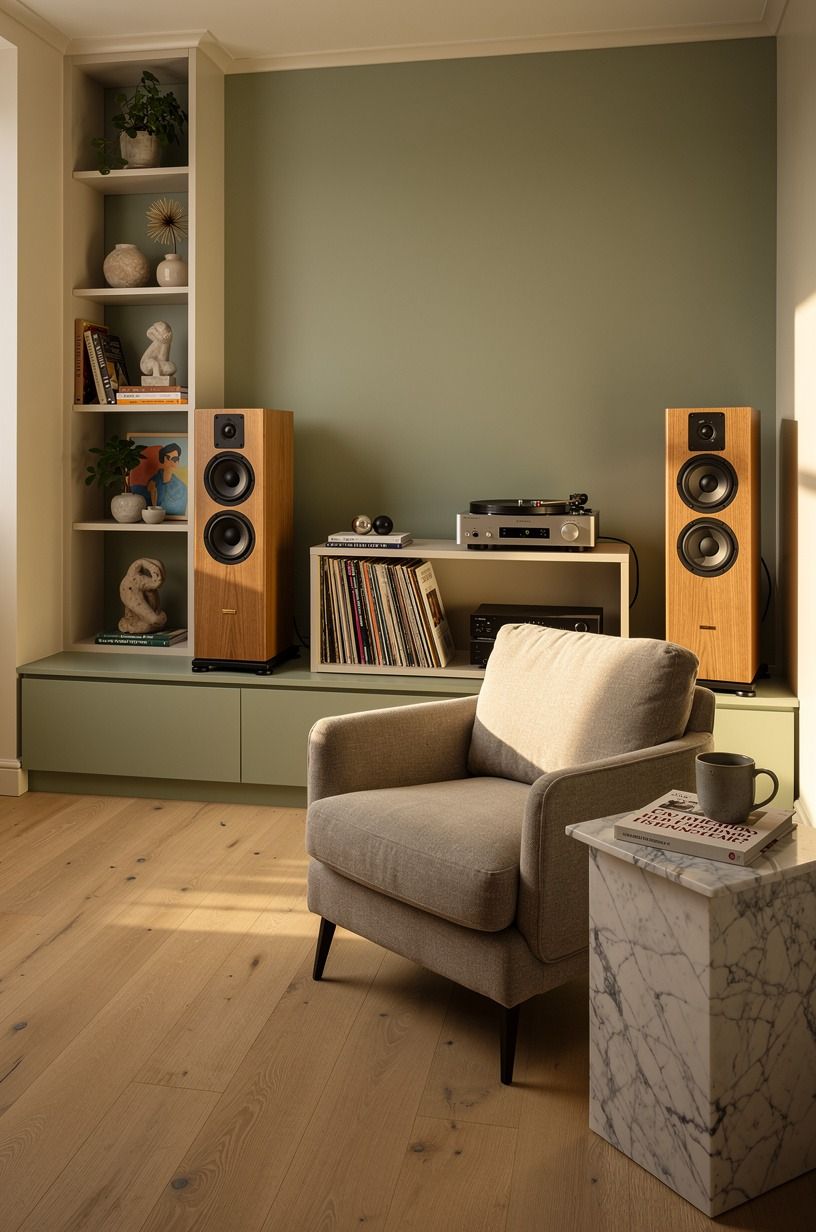
Yes, if you choose one chair that earns its footprint. A low-profile chair beside a slim Carrara marble table gives you a real place to listen back, write, or wait for a friend to finish a verse.
Keep a slim side table beside it, not a coffee table in front. You’ll preserve the walking path and still have somewhere for tea, headphones, and a notebook.
I’ve tried folding chairs. They’re fine for company, but they don’t invite you to stay.
8Frame the Window With Floor-Length Linen
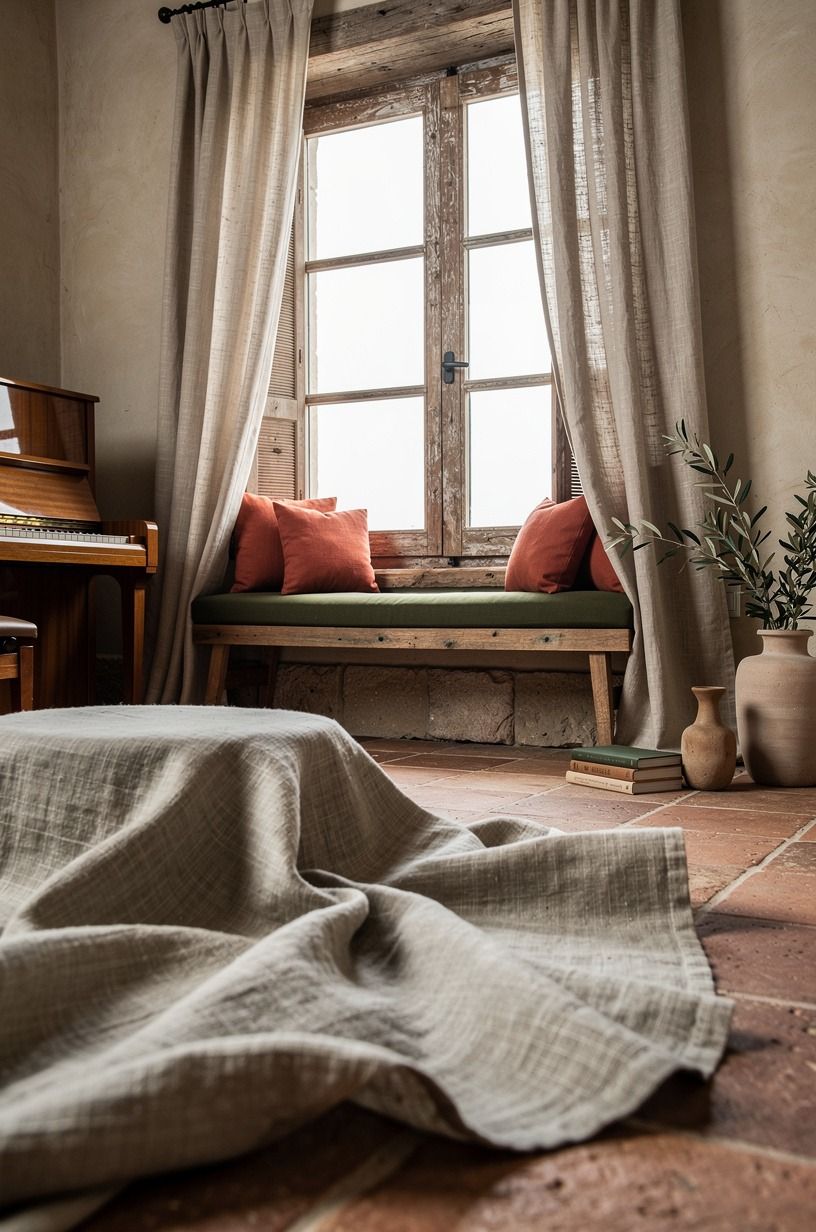
Hang your curtain rod 4 to 6 in above the frame and take the panels all the way to the floor. That small move gives your cosy music studio a taller, softer silhouette.
Choose linen curtains in terracotta, stone, or olive beside reclaimed weathered teak. They filter glare off screens and create a gentle backdrop for a keyboard without looking like a rehearsal bunker.
Skip short curtains. They cut the wall in half, and your room is already working hard to feel bigger.
9Make Cable Storage Part of the Decor
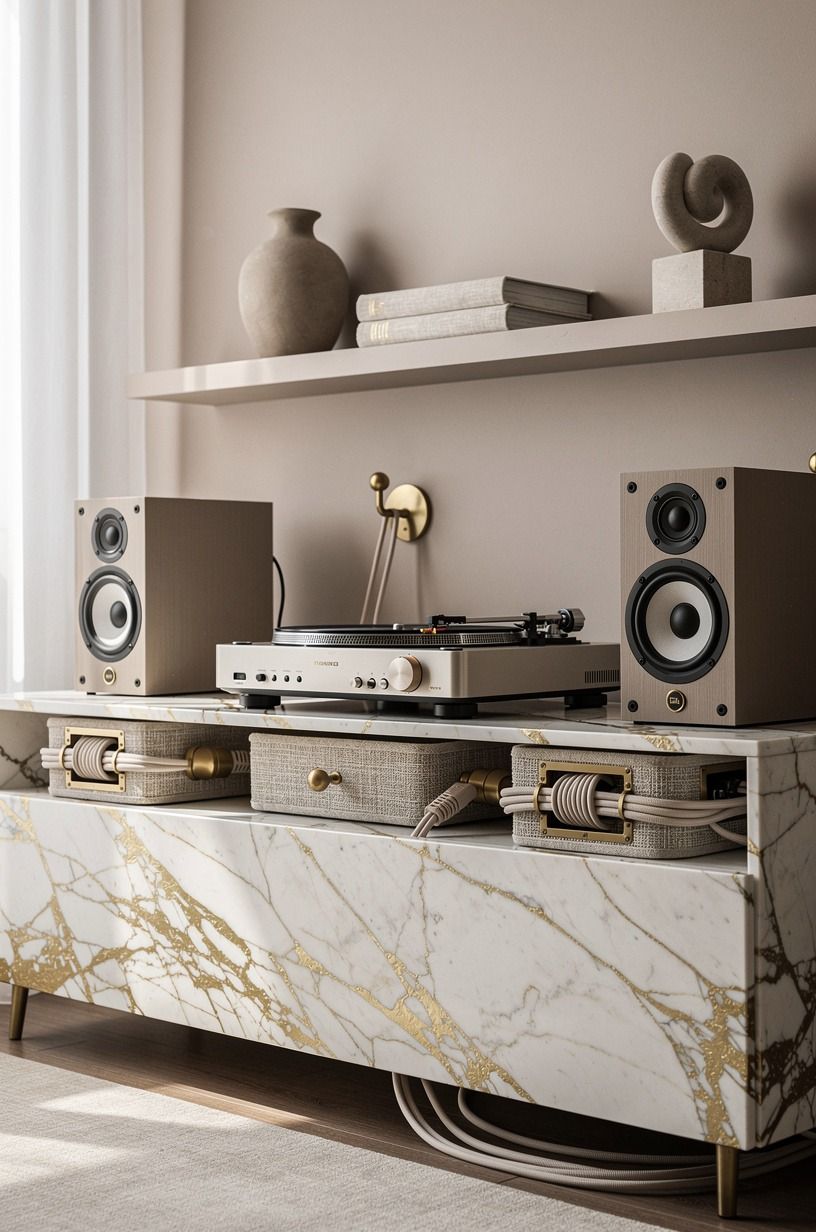
Visible cords don’t make you more serious about music. They make your room feel unfinished. Use a lidded basket, adhesive cable channels, and one labeled drawer for chargers, pedals, and spare strings.
A Target Threshold woven storage basket looks warmer than a plastic bin and can sit beneath a Calacatta marble-topped bench. You’ll still reach what you need, but guests won’t see your cable collection first.
Tiny labels help. “Power.” “Audio.” “Random adapters.” That last one is always full.
10Choose Benjamin Moore White Dove for the Bright Walls
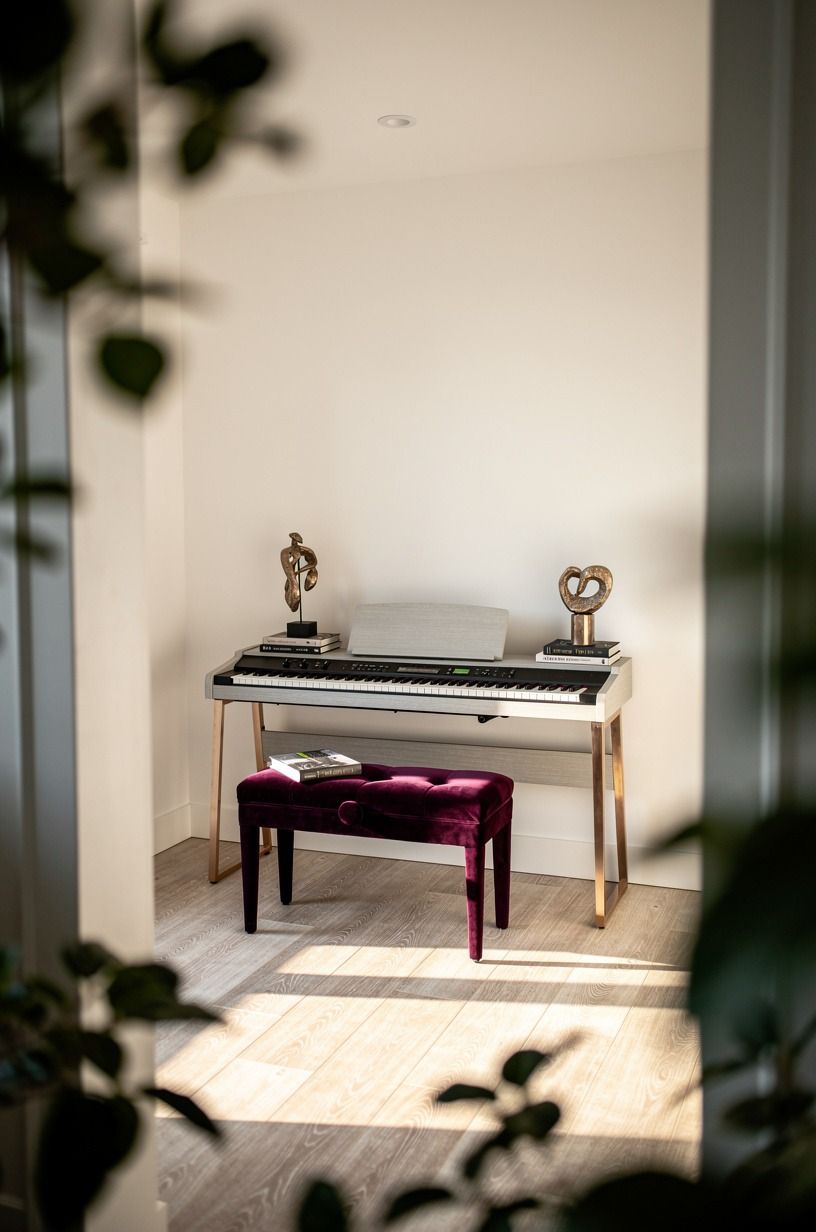
If your room has weak daylight, a soft grey wall can keep the space calm while letting plum, rose gold, and wood grain show up.
Pair it with a black music stand and a muted rose rug for a bold little contrast. Your instruments should be the color story, not compete against one.
And yes, paint matters more than another decorative pillow. You’ll see it from every seat.
11Stack Records at Eye Level Instead of Hiding Them
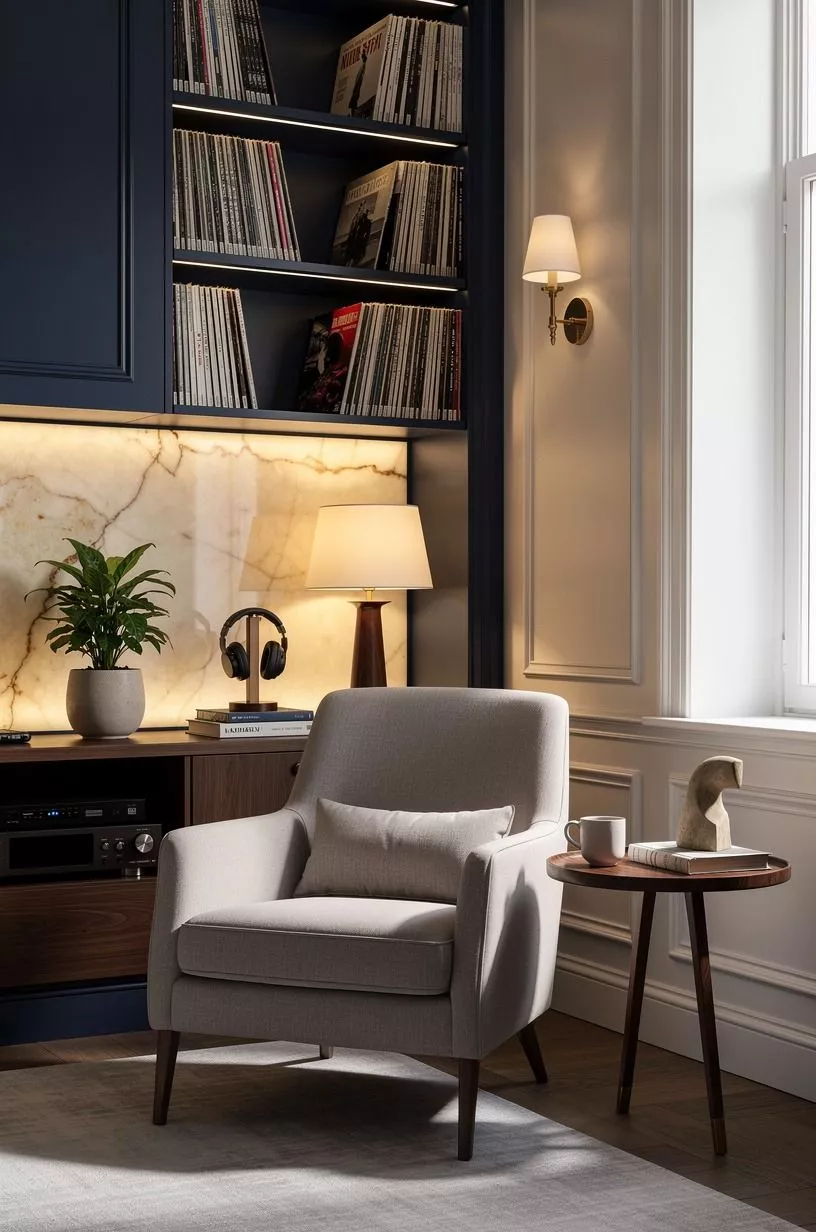
Your favorite records belong where you can flip through them. A shallow wall shelf above a desk turns album covers into rotating art, especially in a small home music studio with no room for a full media console.
Use IKEA MOSSLANDA picture ledges and keep the display to 10 or 12 covers. More than that reads cluttered, even if your taste is excellent.
I’d put the rest in closed storage. You want the room to feel lived-in, not like a record shop after a storm.
12Try the One-Soft-Wall Acoustic Layer
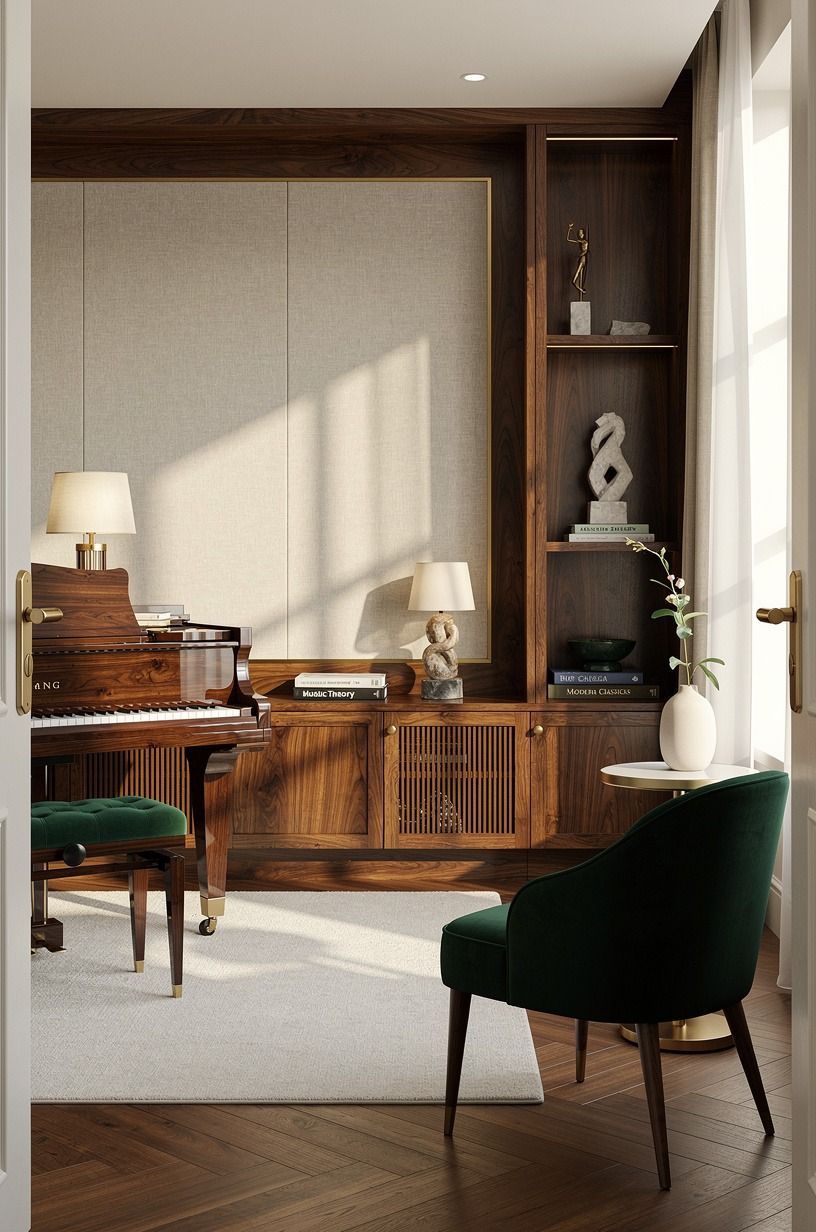
You don’t need foam squares all over every wall.
13Skip the Giant Speaker Cabinet
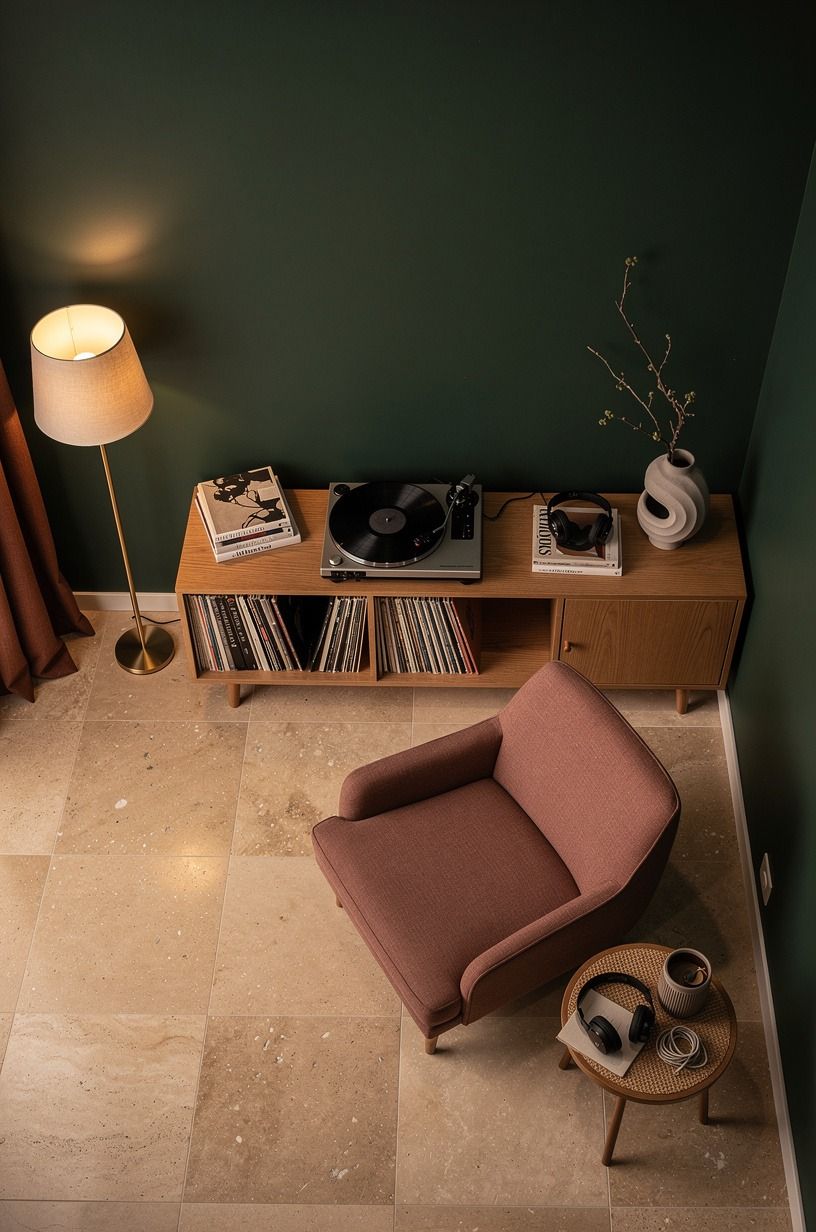
Big speakers can sound wonderful, but they’re not automatically right for a tiny room. Compact KEF Q150 bookshelf speakers on proper stands will usually look and behave better than a floor-standing tower parked beside your keyboard.
Give the speakers a little space from the wall, then angle them toward your chair. You’ll hear more detail, and your room won’t look like it’s hosting a concert every day.
For another lesson in choosing smaller-scale pieces, see why oversized furniture makes Nordic rooms feel cold. Scale is the whole game.
14Add a Rolling Cart for the Moving Parts
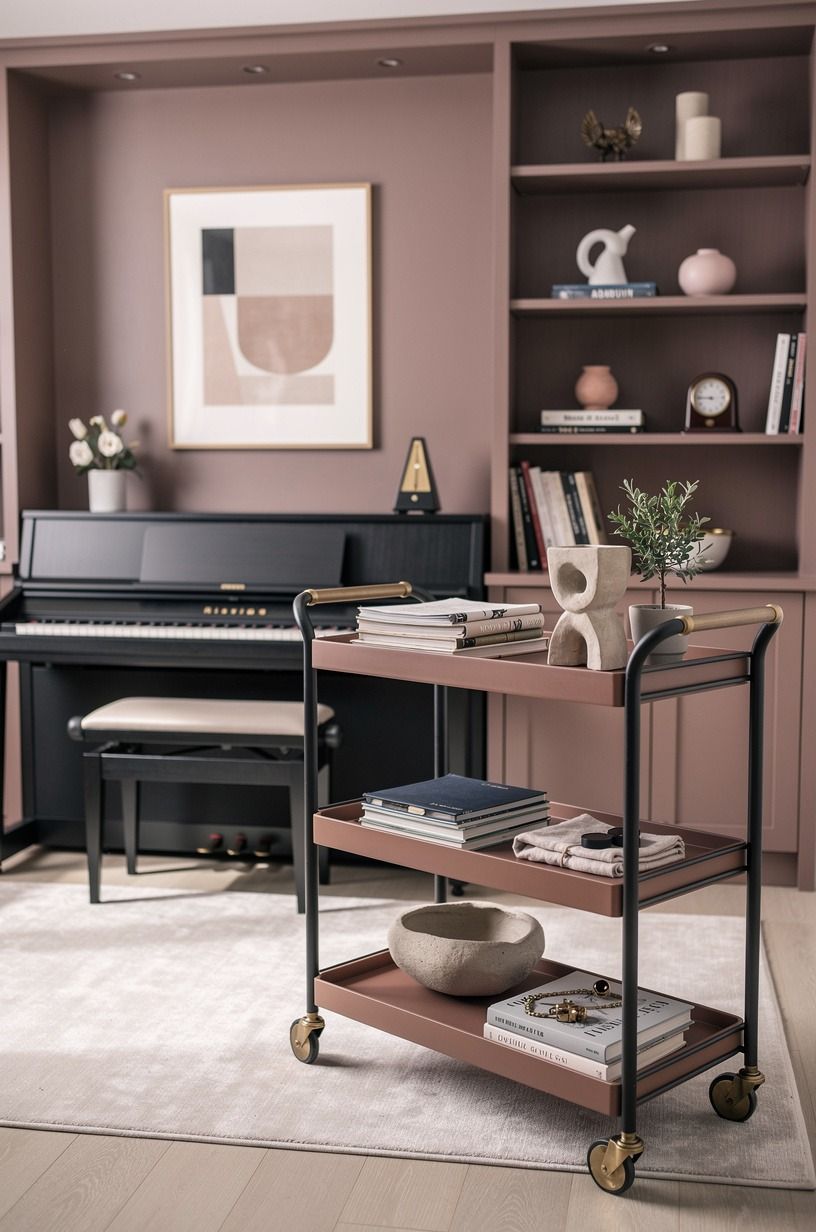
A rolling cart is for the stuff that refuses to stay put: pedals, cables, sheet music, a portable interface, and the mug you keep forgetting by the amp. You can wheel it close when you’re working and tuck it away later.
Try a IKEA RÅSKOG utility cart in charcoal beside unlacquered brass. It’s inexpensive, useful, and much less precious than a built-in cabinet.
But don’t fill every shelf. Leave one level open. Airy storage is still storage.
15Create a Songwriting Shelf Above the Desk
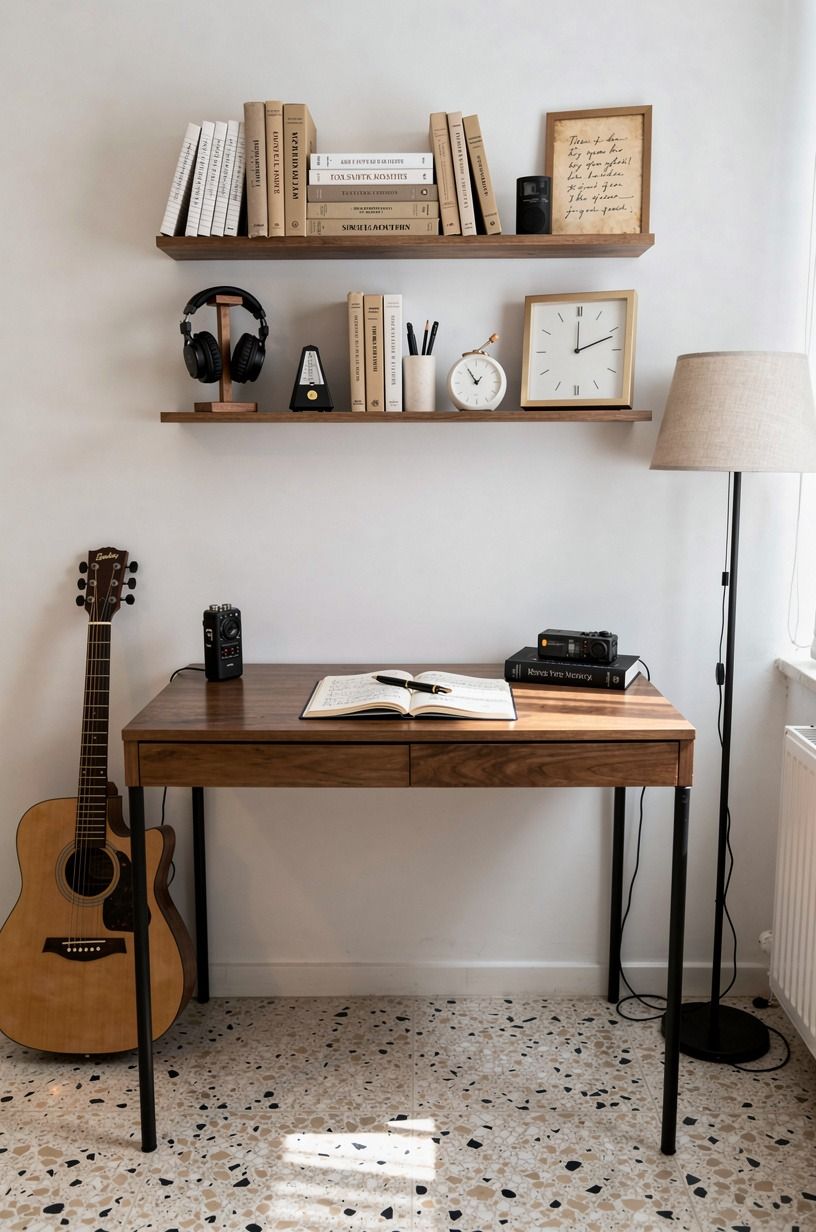
A songwriting shelf should hold only the objects that make you sit down.
16Use the Door Back for Hidden Gear
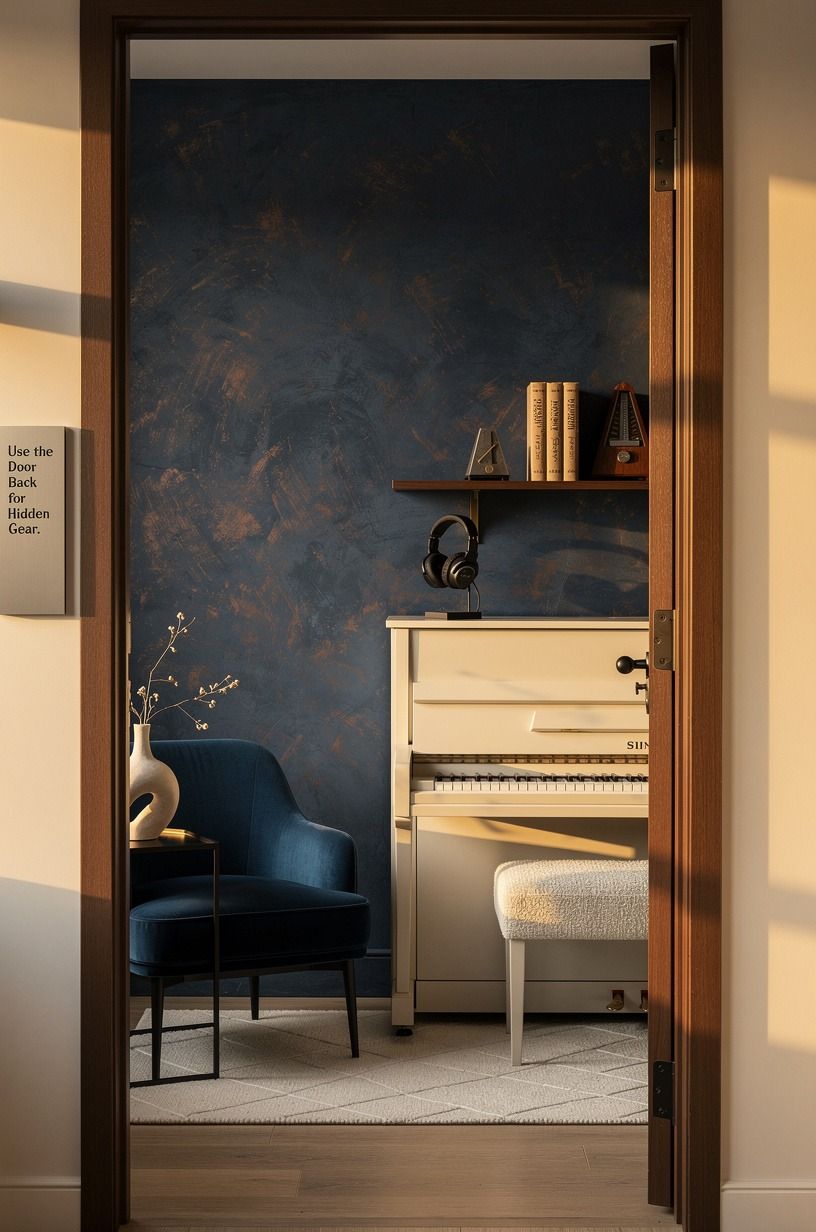
The back of a door is wasted square footage in most small music rooms. Add removable hooks for headphones, gig bags, or a slim garment-style organizer for cords and microphones.
A matte black over-door rack works better than drilling more holes if you rent. Against hand-applied Venetian plaster, it keeps the useful parts of the room from feeling fussy.
Want more stealthy storage ideas? This small hidden pantry storage article has the same useful principle: hide the boring bulk, keep the good stuff visible.
17Could a Moody Accent Wall Make It Feel Smaller?
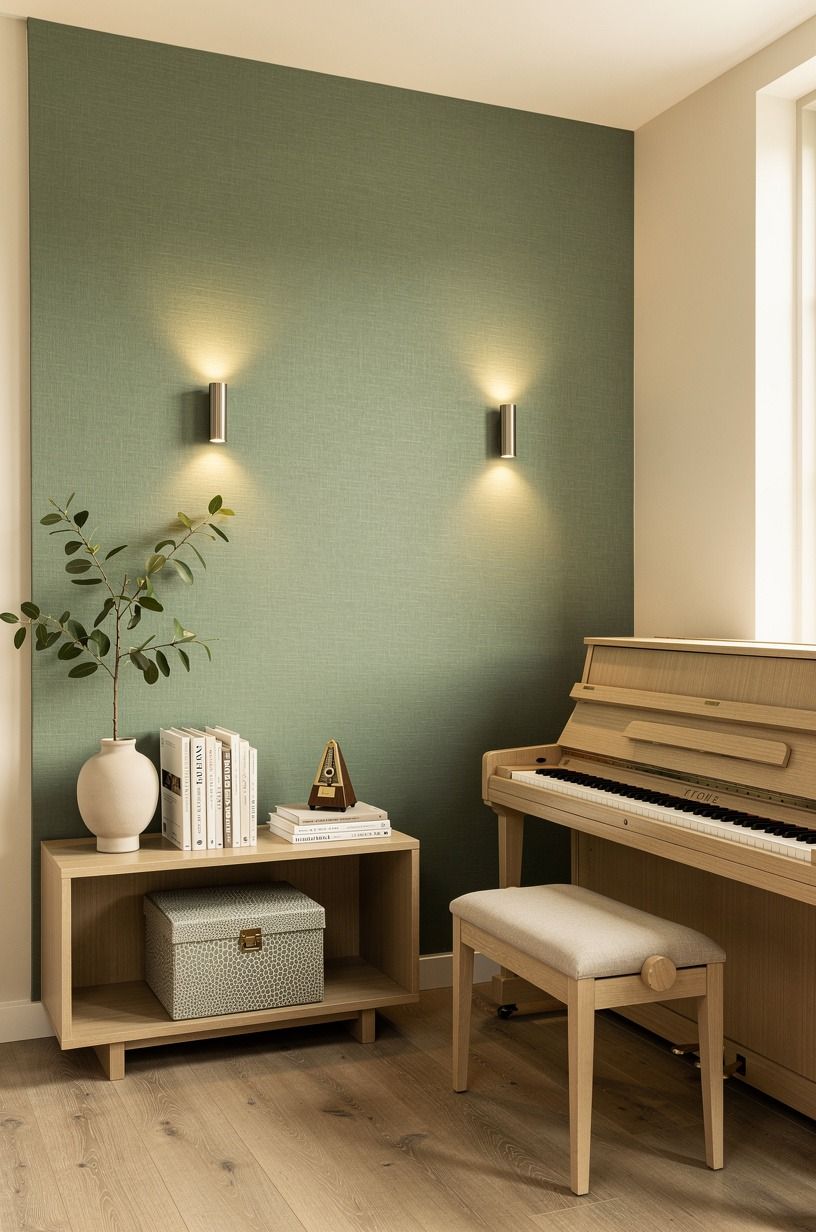
Not if you limit it to one wall and balance it with light textiles.
18Let One Personal Object Break the Rules
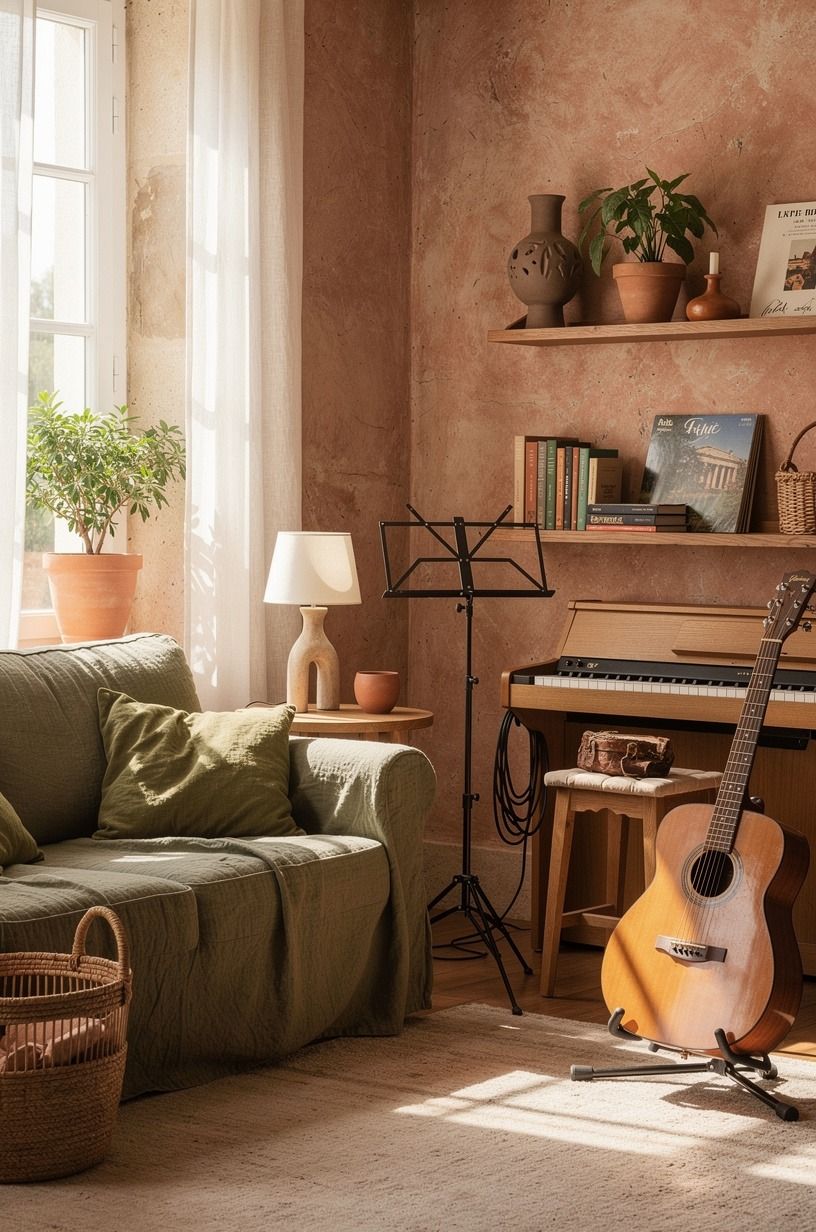
The best music rooms have one thing that isn’t optimized. Mine is an old concert poster with a crooked corner, and it does more for the room than a dozen matching frames.
Maybe yours is a battered Fender-style guitar case, a family piano book, or a bright red stool you found secondhand. Put it where you’ll see it while you play.
Small speakeasy room ideas are useful here because they understand atmosphere. Your room needs a little story, not just a shopping list.
What a Small Music Room Usually Costs
A typical U.S. budget depends on whether you’re styling around gear you already own or buying the room from scratch. I’d spend first on light, seating, and storage, then let decorative extras wait.
A $200 to $800 plan can feel warm if you use existing instruments as art, repaint one wall, and add textiles. The high-end route is tempting, but custom millwork won’t rescue a room with bad scale.
Why I Don’t Buy Everything at Once
I’ve made the fast version of this mistake. I bought a desk, a chair, a rug, shelves, and lamps in one weekend because the empty room made me impatient.
Everything was decent on its own. Together, it looked like I’d furnished an airport lounge for people who own guitars.
What changed was slowing down long enough to notice how I used the room. I didn’t need another stool. I needed a place to set a cup while listening.
I didn’t need more shelves. I needed one drawer for cables so they stopped crawling across the floor.
That’s a less glamorous answer, but it’s the honest one.
A music room has to carry two jobs at once. It has to support making noise, which means gear, wires, cases, stands, and occasional clutter.
And it has to make you want to return, even when you’re not feeling especially inspired. I think people overdo the “studio” look because it feels serious.
But seriousness isn’t the same as usefulness. A room with soft light, one good chair, and instruments you can grab in five seconds will get used far more than a dark cave full of expensive equipment.
So start by watching yourself for a week. Where do you drop your headphones?
Which instrument stays in its case? What corner do you avoid? Your answers are the design brief.
Not a mood board. Not a cart full of matching accessories. The room should support your habits, including the messy ones (especially those).
What People Always Want to Know
What is the best small music room idea for a tiny room?
A wall-mounted instrument display is the best first move because it frees floor space and makes your gear visible. Choose natural oak guitar hangers with padded cradles, then add one chair beneath them. Your room will feel more open immediately.
Where can I buy small music room pieces on a budget?
Start with IKEA, Target, and Wayfair, then check Facebook Marketplace for stools, shelves, and lamps. You’ll get the best value by buying storage new and character pieces secondhand. A scratched wood stool often looks better than a shiny new one.
How much does a small music room makeover cost?
A small music room makeover usually costs about $200 to $800 if you keep your existing instruments and focus on paint, storage, and lighting. Your free moves include rearranging, mounting guitars, and editing what’s already in the room.
Can I create a small music room on a budget?
Yes, and you don’t need a renovation. Use existing instruments as wall art, move a lamp from another room, and store cables in a basket. Add a painted accent wall only if your layout already works.
Is a small music room worth it in a small space?
Yes, because a smaller room makes your creative setup easier to reach and easier to maintain. Put your main instrument within one or two steps of your chair. You’re more likely to play when setup takes seconds.
Is a small music room a good idea for a rental?
Yes. Use removable hooks, tension-rod curtains, and a freestanding IKEA RÅSKOG cart instead of permanent built-ins. Your room can still feel personal, and you won’t spend move-out week repairing a dozen holes.
Where I’d Start First
If I had to pick one, I’d start with wall-mounted instruments. Cases on the floor make every other choice fight for space, while a guitar on the wall becomes art you can grab. Pin wall-mounted instruments for later and explore small detail room ideas for more compact-space thinking.