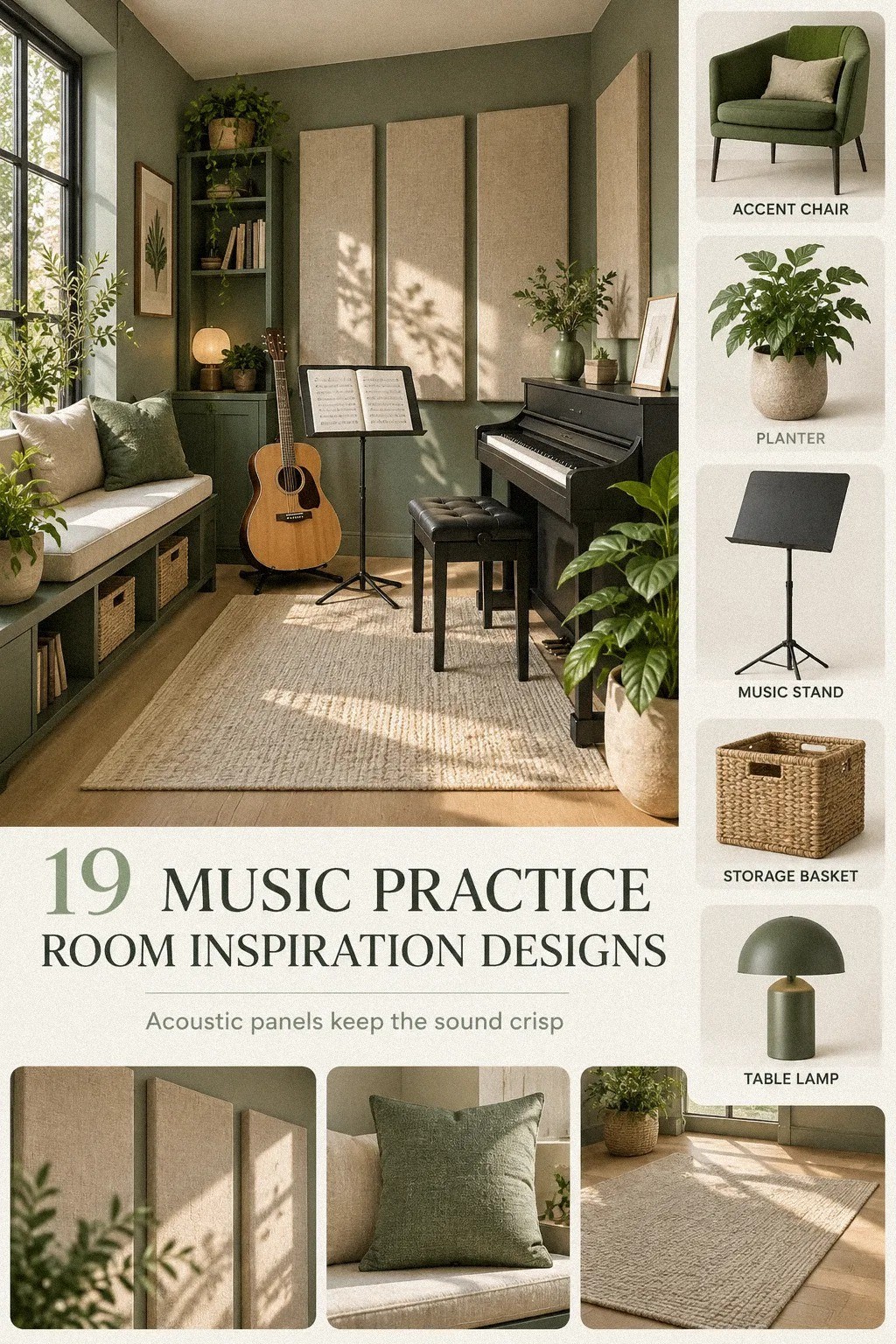
Music practice room ideas for daily inspiration work best when the instrument is easy to reach, the light feels warm, and your chair doesn’t become a storage shelf. I’ve learned that after building one room around looks instead of sound. The fix wasn’t expensive. It was smarter placement, softer materials, and a layout that welcomes you back.
- Anchor the Instrument Practice Room Around Your Main Instrument
- Float a Compact Keyboard for a Calming Practice Room Aesthetic
- Layer Three Light Sources for More Inviting Instrument Practice Rooms
- Frame Sheet Music With a Warm Guitar Practice Room Wall
- Build the Two-Wood Rule for Daily Music Practice Room Inspiration
- Swap a Bulky Desk for a Focused Practice Corner
- Hang Art at the Right Height for a Soothing Practice Room
- Layer a Rug Under the Playing Zone
- Create a Quiet Listening Nook Beside the Instrument
- Paint One Wall for Moody Music Practice Room Inspiration
- Mix Closed Storage With Open Instrument Practice Rooms
- Use the Three-Height Light Stack Beside a Keyboard
- Frame the Window With Floor-Length Curtains
- Compare the Real Cost Before You Build a Practice Room
- Paint the Ceiling for a Gentle Practice Room Aesthetic
- Swap Visual Clutter for a Focused Guitar Practice Room
- Build a Recording Wall With Soft Materials
- Try the Two-Seat Rule for a Peaceful Music Room
- Choose Warm Woods Over Glossy Furniture
1Anchor the Instrument Practice Room Around Your Main Instrument
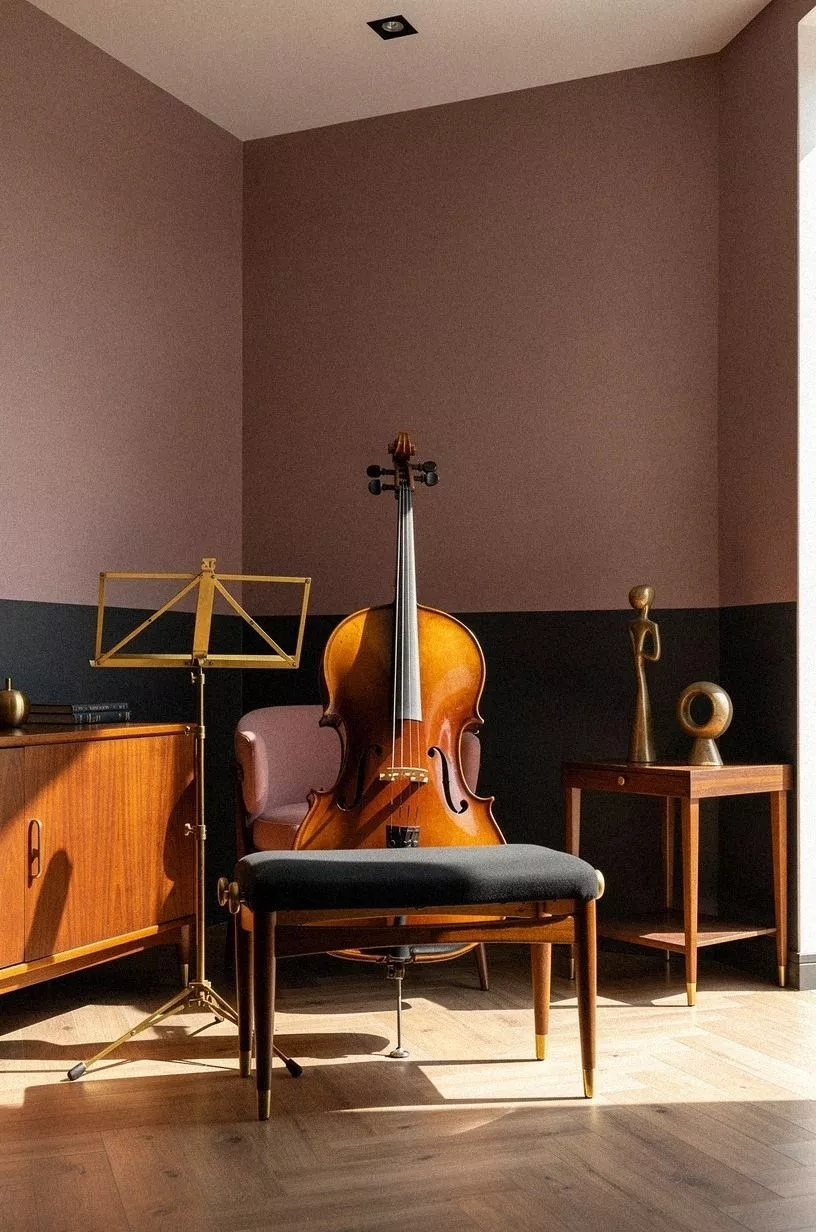
Start with the instrument you play most, not the furniture you want to photograph. Your upright piano should sit where you can reach it without moving a basket, ottoman, or music stand first. I prefer a clear path of 30 inches around the bench because you’ll practice longer when your body doesn’t feel boxed in.
A slim shelf with an unlacquered brass edge gives you a spot for sheet music and one small object. The finish will develop a gentle patina, so don’t crowd the wall.
Your eye needs a quiet landing place between practice sessions. A framed print with its center 57 to 60 inches from the floor keeps the arrangement comfortable.
And if your room is narrow, use a charcoal open unit beside the piano for books and headphones. You won’t need a separate cabinet, and the open cubes keep your next session visible. See these small music room ideas for a tiny space before you buy storage.
2Float a Compact Keyboard for a Calming Practice Room Aesthetic
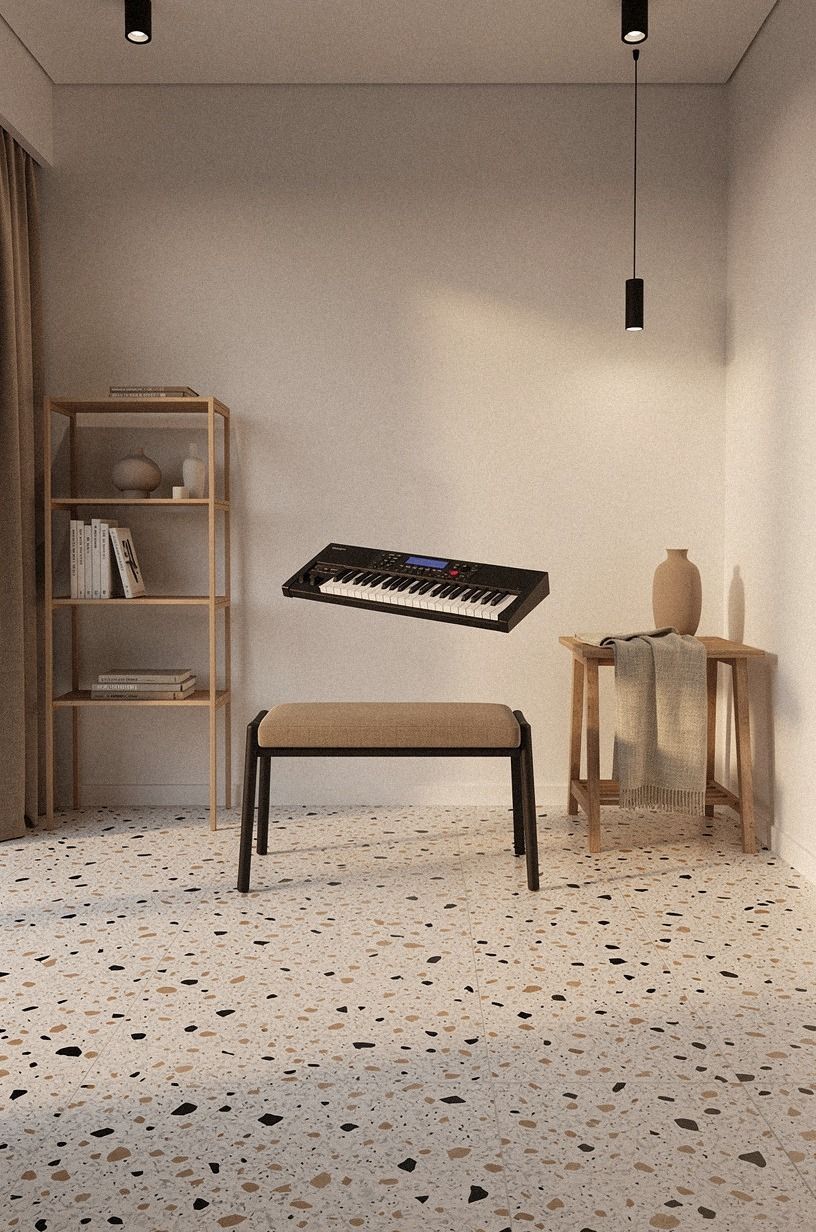
A wall-mounted keyboard clears the floor and makes a small room feel airy. Your 88-key digital keyboard can sit on a sturdy shelf at a comfortable playing height, with the bench tucked underneath when you’re done. I made the mistake of choosing a deep console first, and it swallowed the walking path.
Use Benjamin Moore White Dove OC-17 on the wall if you want the instrument to read as part of the room instead of a dark block. Pair it with a camel bench and black accents.
An oversized-chip terrazzo side table can add weight without taking over the floor. That little softness matters when you’re repeating a difficult passage for forty minutes.
But don’t float the keyboard on a flimsy shelf just to gain a few inches. Your hands need stability, and your ears will notice every vibration.
A compact black cabinet nearby can hold cables, pedals, and notebooks without making your practice corner look like a workstation. This music studio room design layout guide has useful placement ideas.
3Layer Three Light Sources for More Inviting Instrument Practice Rooms
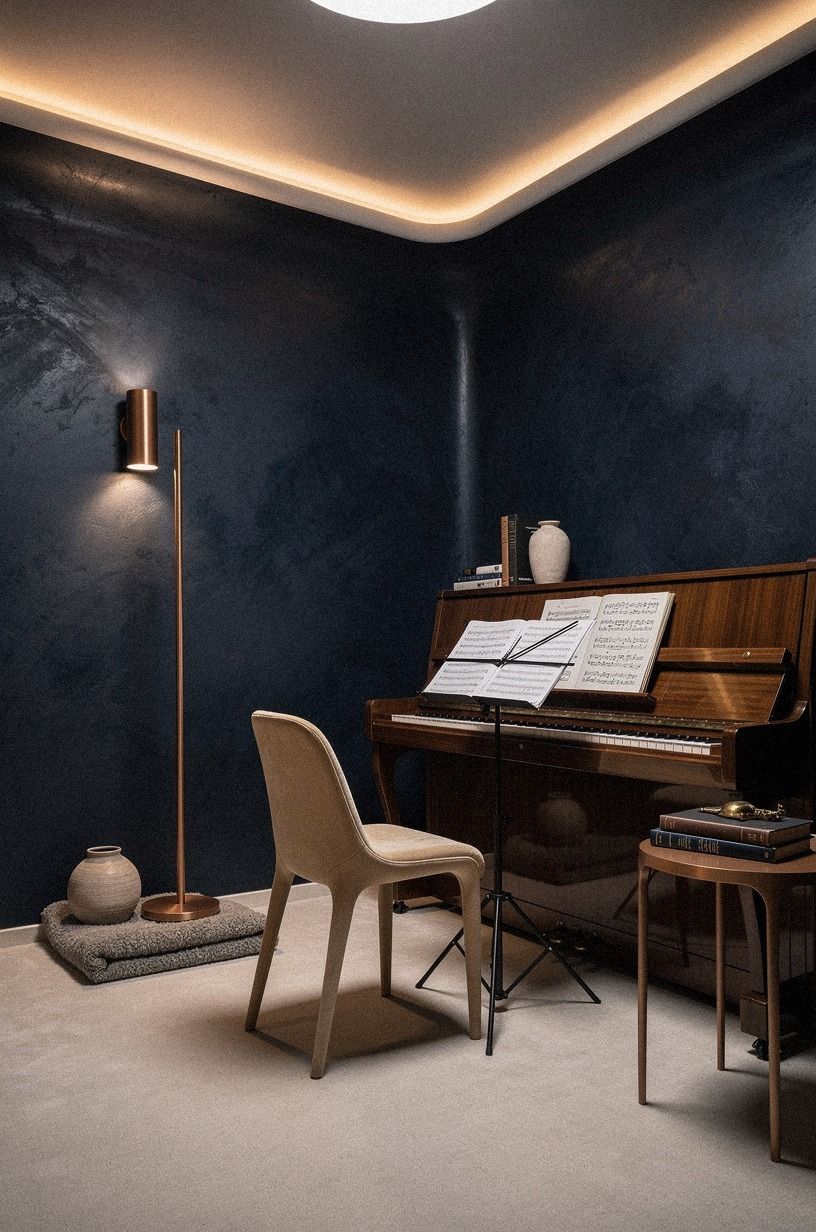
The Three-Height Light Stack uses overhead, task, and ambient lighting at three different levels. Your ceiling fixture handles general visibility, a desk lamp lights the music, and a low lamp softens the corners. Three sources per room is the standard I keep returning to because one bulb always leaves someone in shadow.
Choose a shaded copper floor lamp beside your chair and a small task light with a warm bulb near the stand. You don’t need a chandelier. You need light that won’t glare across black notes or make your room feel like a classroom.
And honestly, bright overhead light is the first thing I’d remove from a practice room. Farrow & Ball Hague Blue No.30 looks rich beside amber light, especially against hand-applied Venetian plaster.
Cool white bulbs make the finish look flat. If you’re building a whole creative corner, browse these music room ideas for a creative haven for more lighting combinations.
4Frame Sheet Music With a Warm Guitar Practice Room Wall
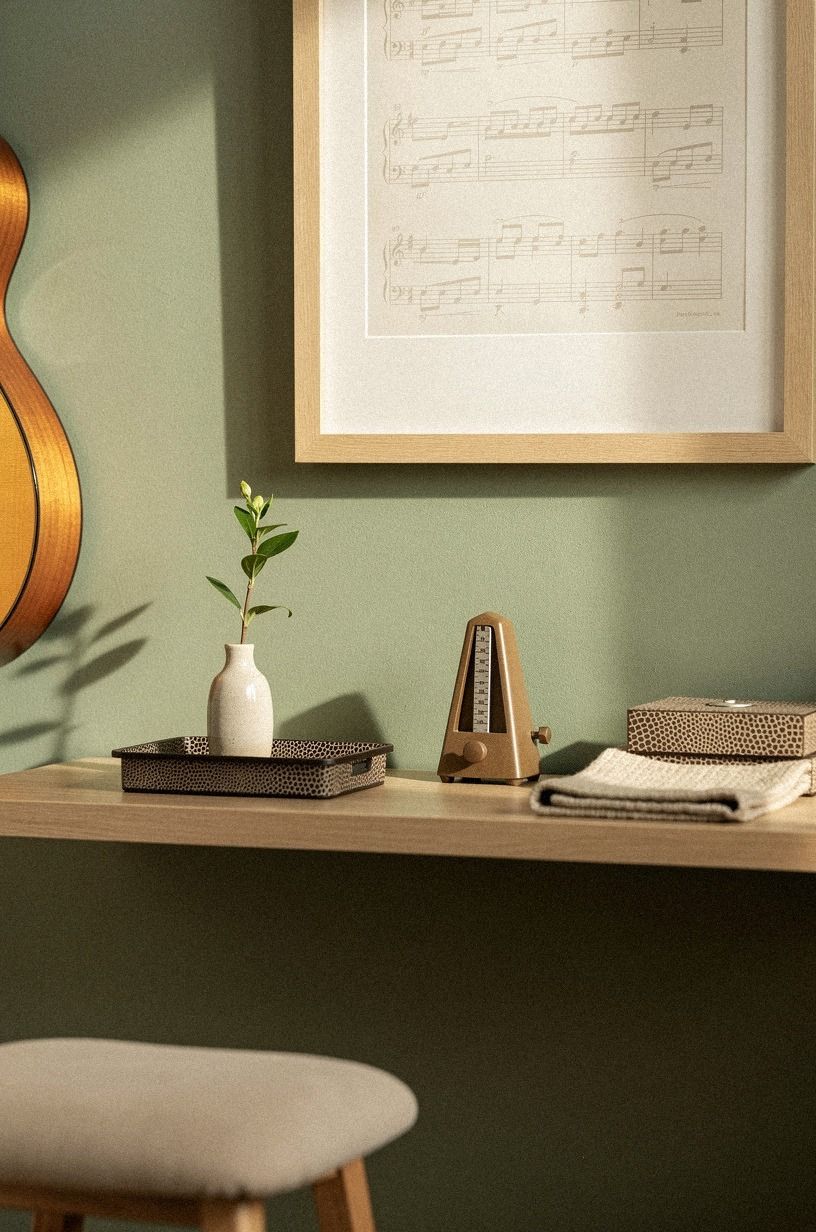
A guitar wall can feel organized without looking like a shop.
5Build the Two-Wood Rule for Daily Music Practice Room Inspiration
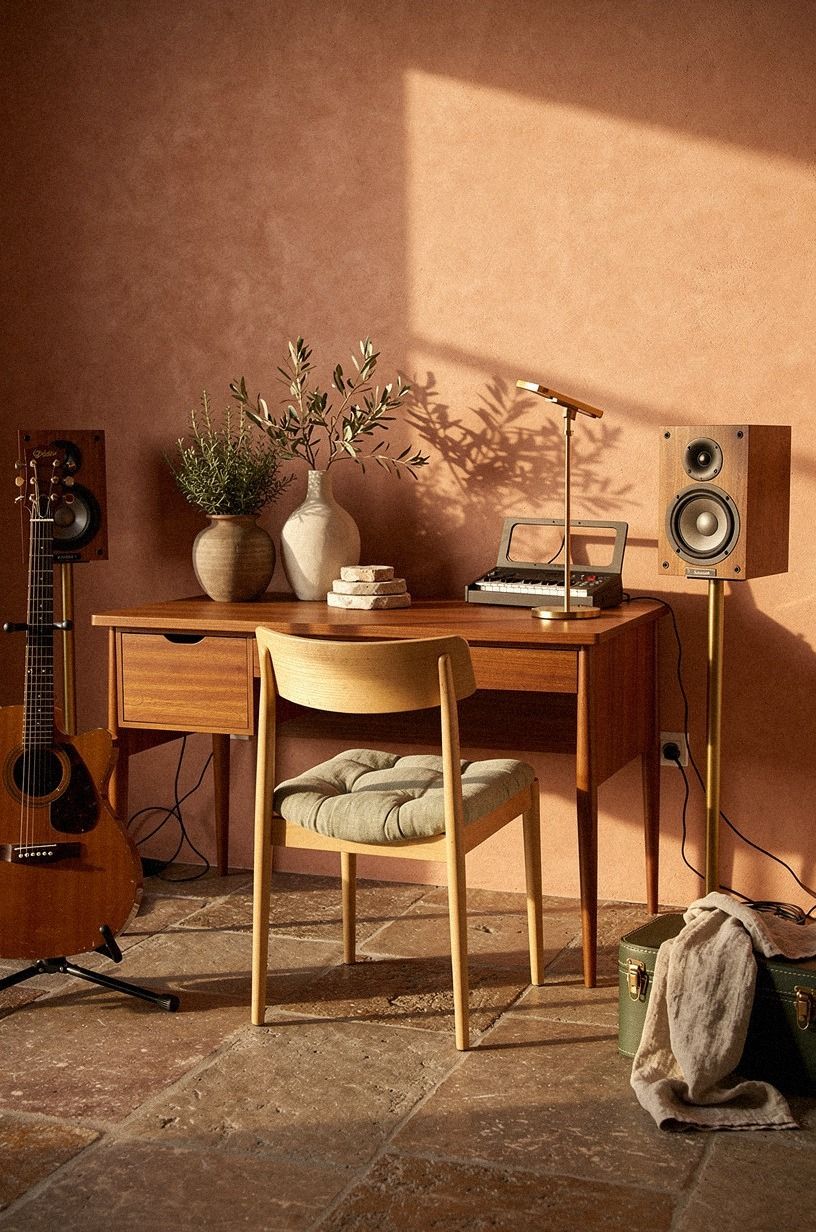
The Two-Wood Rule keeps a music room collected without making it matchy-matchy. Choose one natural wood for the main furniture and one darker wood for small accents, then let terracotta, stone, and olive carry the color. A stone floor can pair with walnut shelves, while the limited wood palette keeps the room grounded.
I like a natural wood bench with a walnut music stand because the grain changes as you move through the room. That detail gives your eye something to follow while you’re warming up. An olive cushion in washed Belgian linen adds softness without turning the bench into a lounge seat.
But don’t buy a whole matching suite. Your room needs a little friction.
A secondhand stool, an old frame, or a compact chair will give the space character. If you’re combining practice with reading or vinyl, these library music room ideas can help you balance both uses.
6Swap a Bulky Desk for a Focused Practice Corner
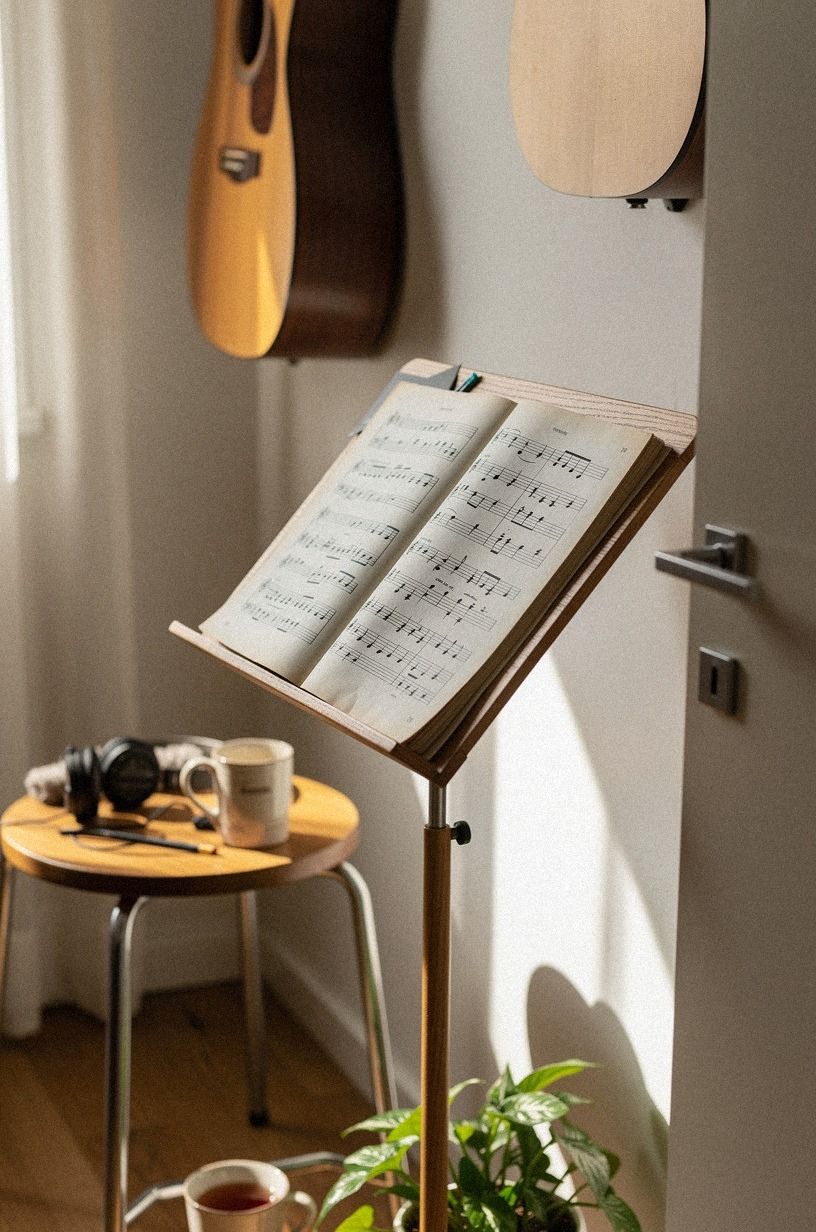
A practice room doesn’t need a large desk unless you compose, record, or study there every day. Replace it with a narrow clay-toned writing ledge and a comfortable chair. Your instrument remains the star, while the ledge holds a notebook, metronome, and one cup of tea.
Use closed drawers with aged brass pulls below the ledge if you need more capacity. The fronts hide cables and spare strings, and you’ll still have enough surface for a laptop. I prefer this arrangement to a full office desk because it keeps your body pointed toward the instrument.
Choose an organic bouclé chair if you want the corner to feel softer without adding another bulky piece. And if you’re sharing the room with a work area, make the two zones face different directions.
The practice chair should look toward the music, not toward your inbox. This office music room combination shows how to separate work and play without building a wall.
7Hang Art at the Right Height for a Soothing Practice Room
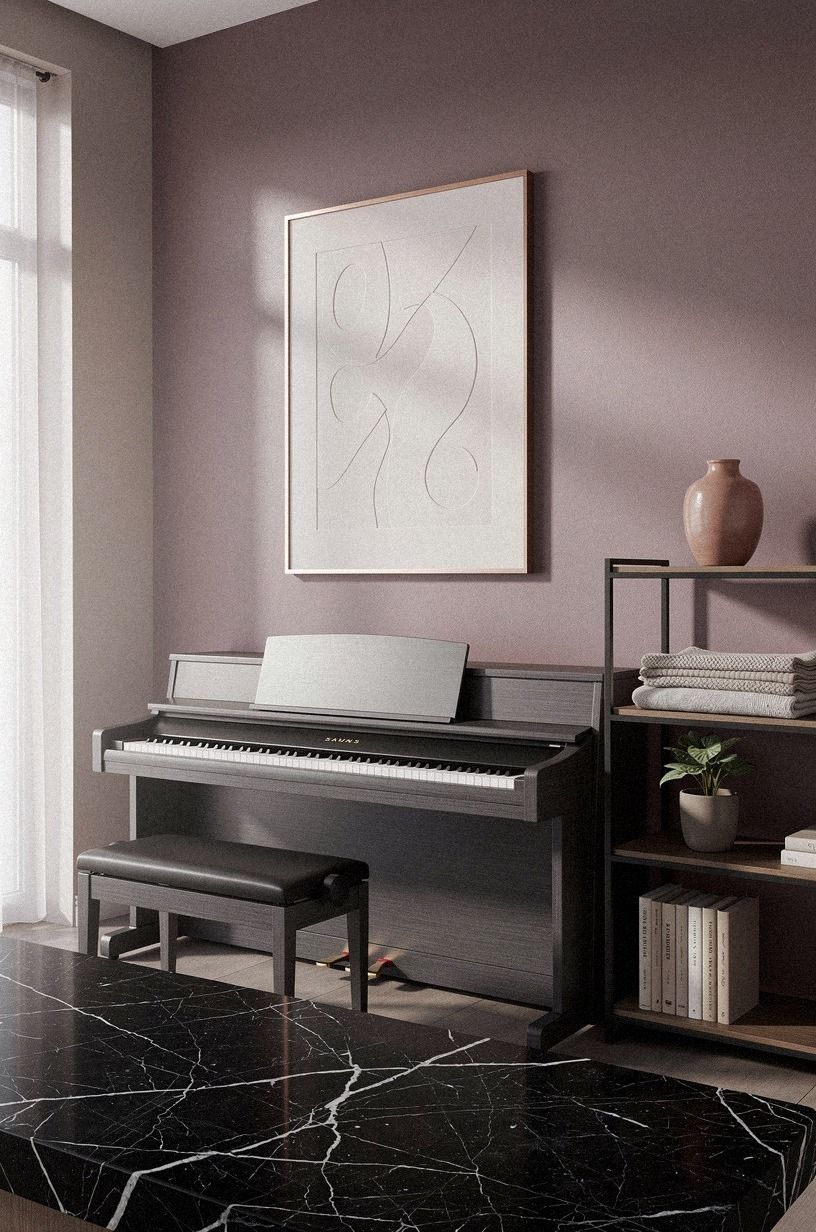
Art can make a practice room feel personal, but the height matters more than the frame. Hang the center of your main piece about 57 to 60 inches from the floor. Your hand-painted abstract print should sit where you can see it from the bench, not high above your head like a hotel lobby decoration.
Choose one image with a rhythm you can live with. I like loose charcoal lines, faded concert photography, or a small landscape in plum and grey tones. The art should support your concentration rather than demand a new opinion every time you look up.
For a rental, use removable strips rated for the frame’s weight and keep the arrangement compact. A slim rose-gold frame gives the wall structure without adding more color, while a small Nero Marquina marble ledge can anchor the arrangement. If you want a gallery wall, build it around the music stand first, then leave room for your shoulders and instrument case.
8Layer a Rug Under the Playing Zone
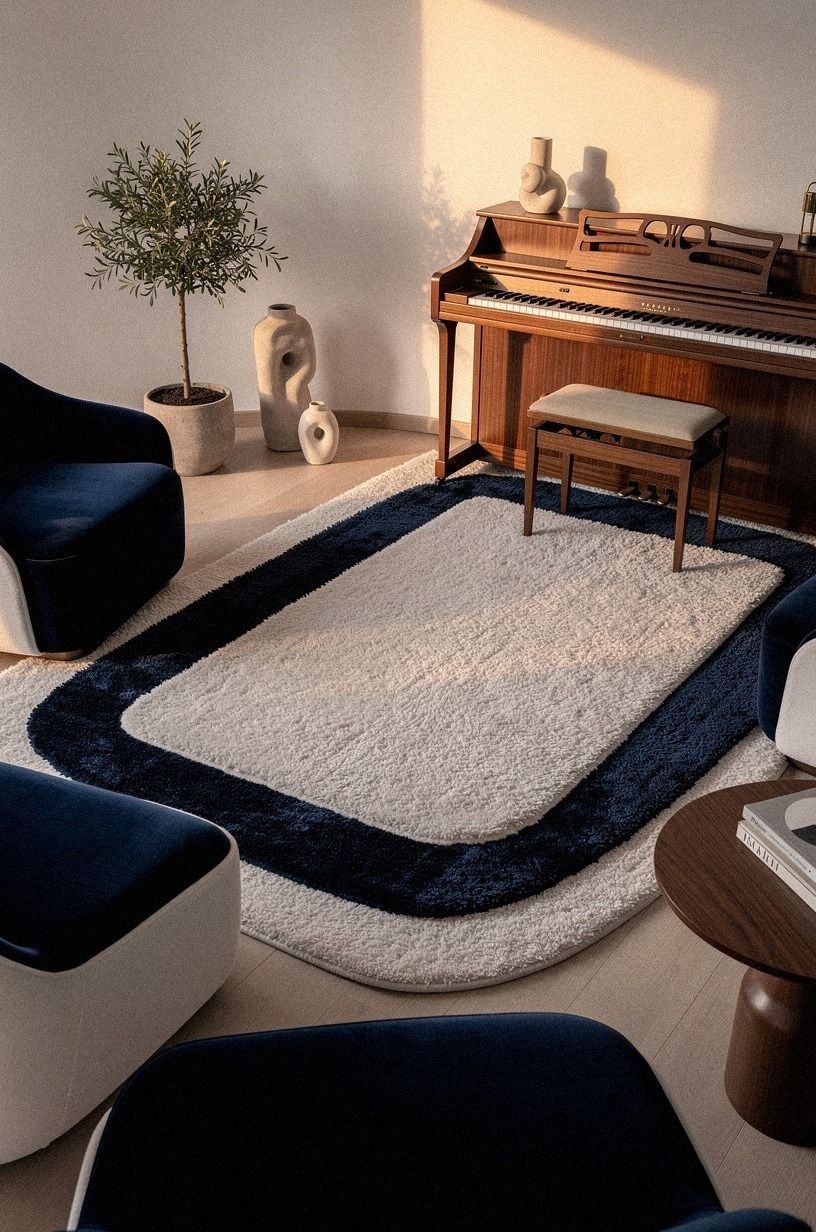
A rug makes a hard room feel less sharp underfoot and can reduce the slap of sound. Choose a deep-pile mohair velvet rug in navy or soft white, then let walnut furniture bring warmth to the playing zone.
9Create a Quiet Listening Nook Beside the Instrument
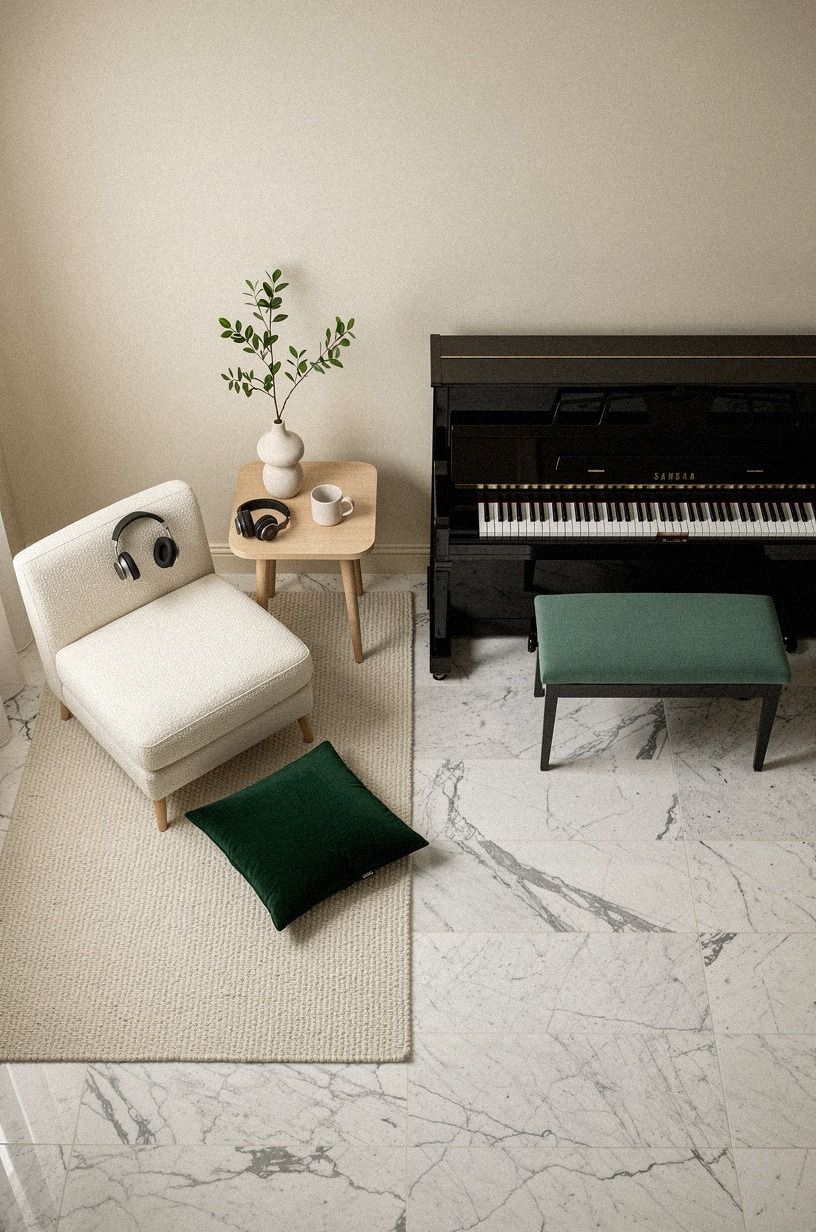
A listening nook gives your practice room another reason to welcome you in. Place one chair, a small table, and your record player or speakers near the instrument, but don’t let the nook block the playing path. Your Article Sven cream chair adds a refined texture and keeps the palette light.
Use a cream throw across the chair rather than a pile of decorative cushions. A little emerald and gold in the textile or lamp base can give the room more depth without making it loud. A low table holds headphones, a pencil, and the album you’re studying.
What good is a listening nook if you can’t sit there without moving three things first? Keep the surface nearly clear.
A single Carrara marble coaster and a small gold lamp are enough. Your room should support listening as carefully as it supports playing.
10Paint One Wall for Moody Music Practice Room Inspiration
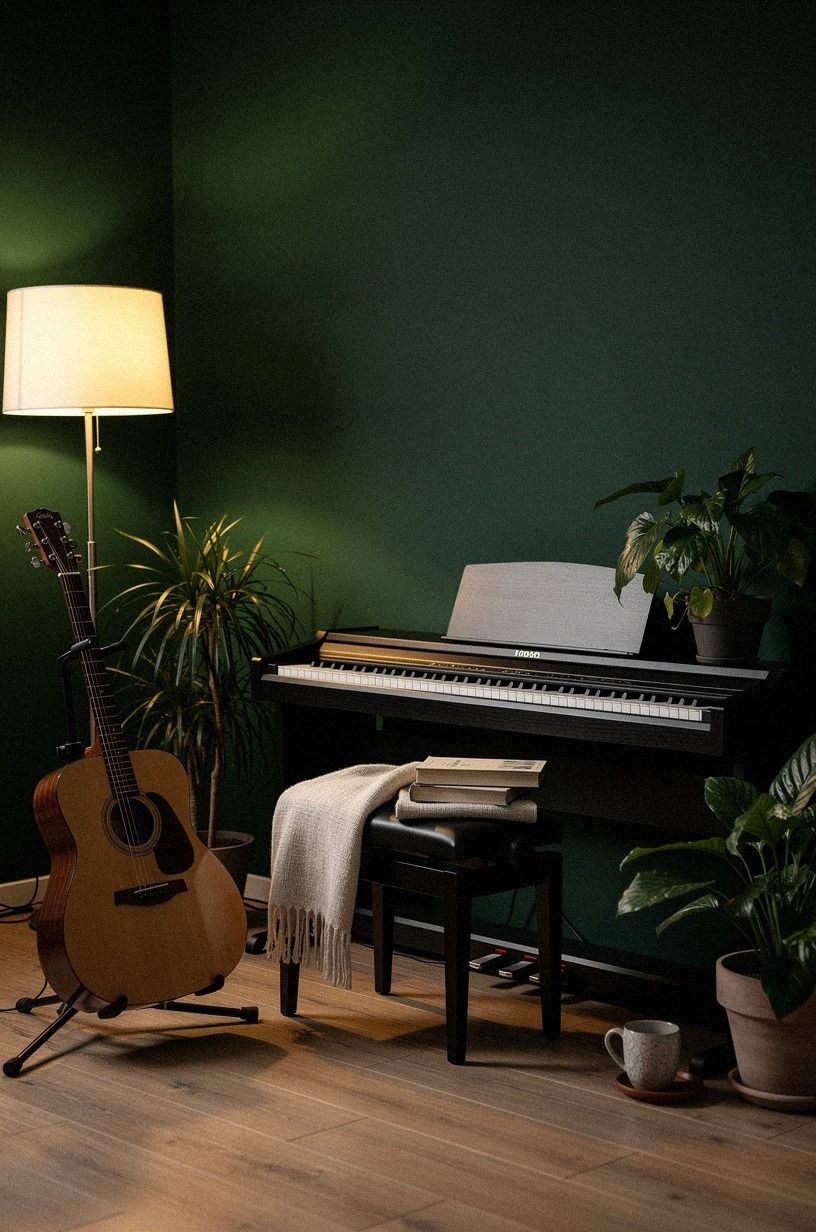
A forest green accent wall can give your instrument a strong visual anchor without adding more furniture. Pair it with rust textiles, natural oak, and a small detail in reclaimed weathered teak. The result feels moody, but still warm enough for daily practice.
11Mix Closed Storage With Open Instrument Practice Rooms
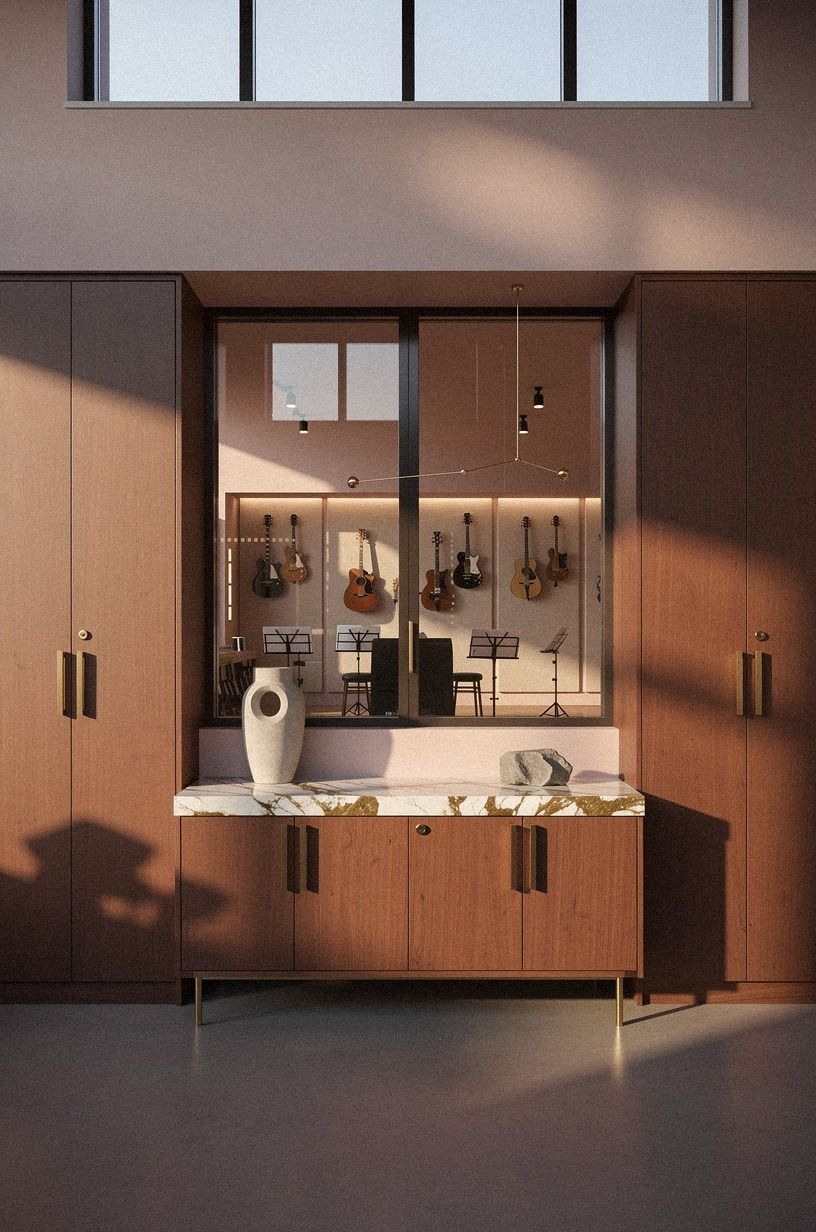
Open shelves make your music visible, while closed storage keeps the room from becoming a pile of accessories. Charcoal open shelving can display records in two cubes and hide cables in fabric bins in the others. That balance feels practical because it is practical.
Store the things you touch daily at waist height. Place spare strings, cleaning cloths, and sheet music where your hand naturally lands. A brass-handled cabinet with a Calacatta marble top can hide headphones and pedals while adding a polished detail to the dusty rose and charcoal palette.
And don’t organize every item by color if you need the room to work quickly. Group by use instead.
Your warm-up books belong together, and your recording gear belongs together. This music room storage and instrument organization guide offers more ways to keep the floor clear.
12Use the Three-Height Light Stack Beside a Keyboard
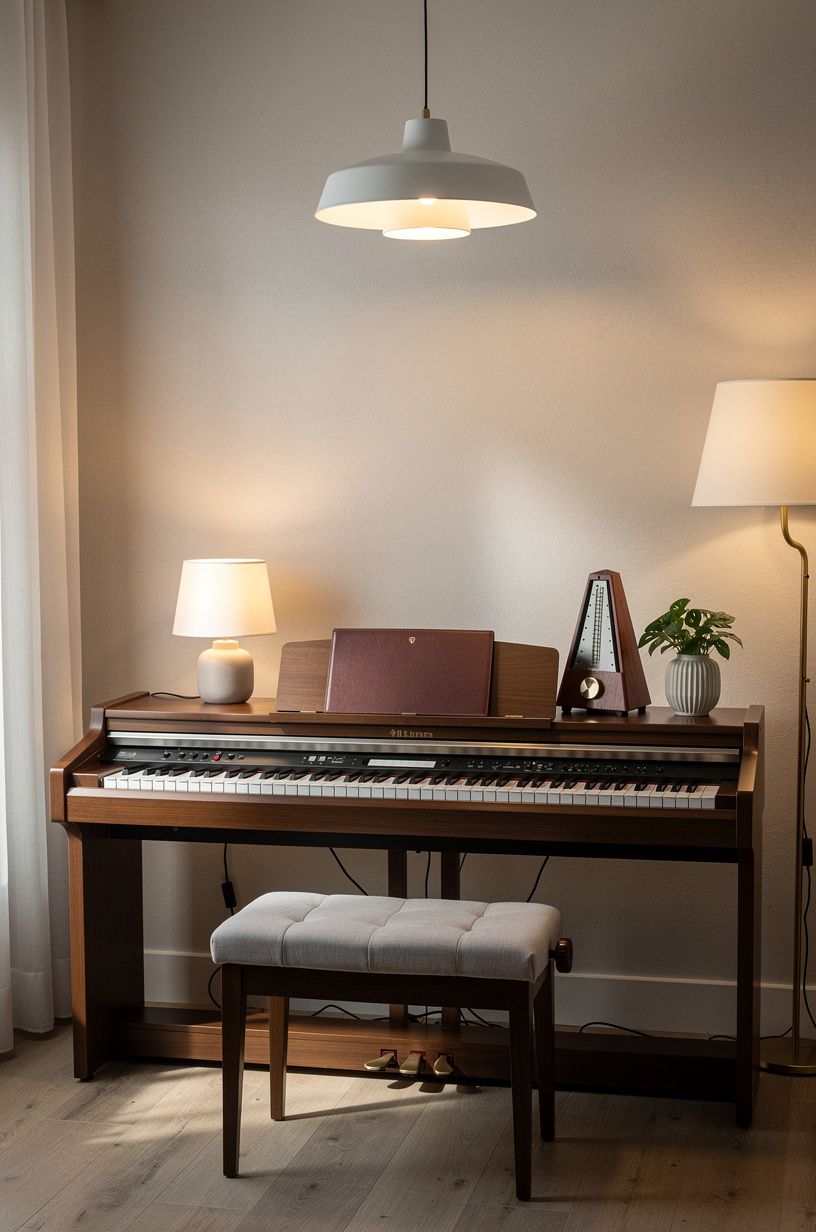
The Three-Height Light Stack works especially well beside a keyboard because your hands need focused light while the rest of the room stays calm. Put a shaded ceiling light overhead, a small lamp at music height, and a low table lamp near the floor. Your eyes won’t have to fight one harsh source.
Choose a warm white linen drum shade for the task lamp and place it far enough from the keys that your wrists stay free. A dimmer matters here. You’ll want full light while reading and a lower setting when you’re listening back to a recording.
A cerused white oak console can hold the low lamp and your speaker, but keep its depth modest. I wouldn’t put a deep cabinet behind the keyboard because it makes the whole setup feel heavier. Read this music studio layout guide before arranging recording equipment.
13Frame the Window With Floor-Length Curtains
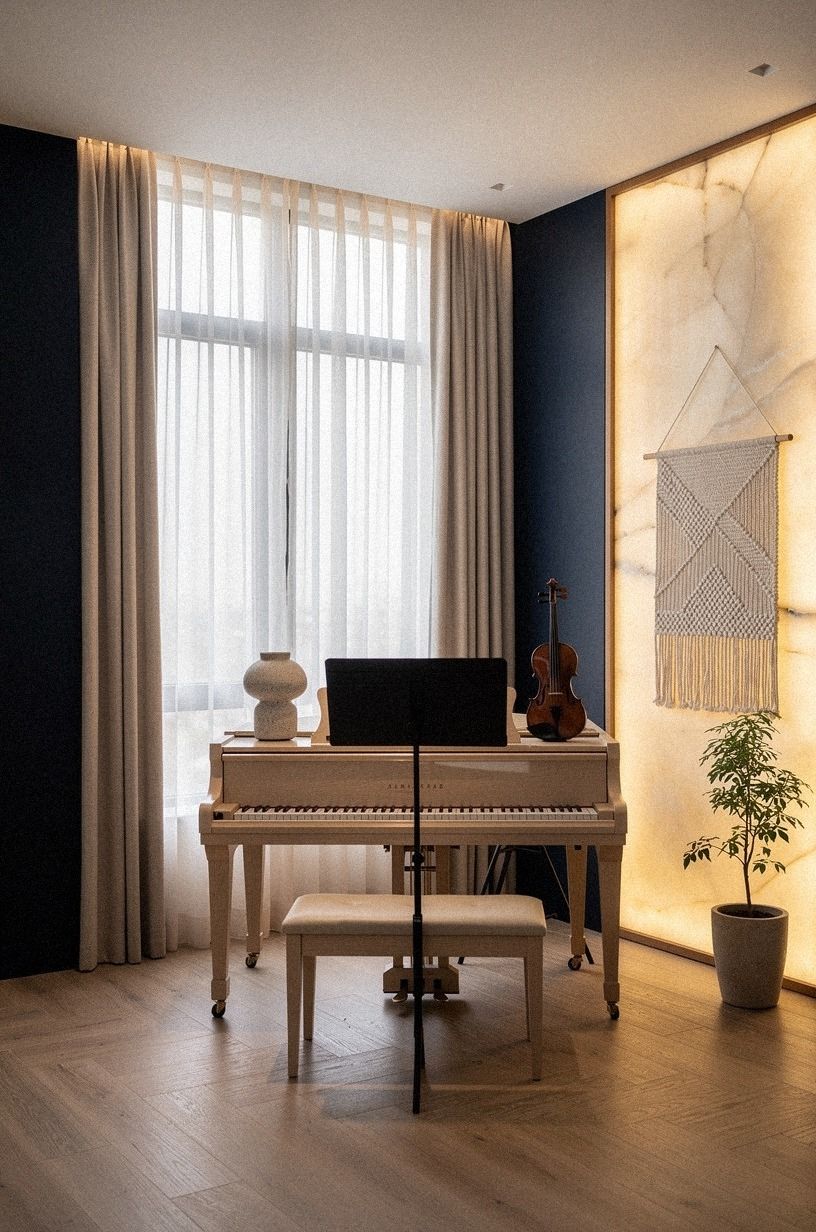
Curtains can change how a practice room sounds and how long you want to stay there. Choose midnight blue fabric with copper hardware and an ivory lining. A small lamp made from backlit translucent onyx can add a quiet glow near the window without taking up much floor space.
14Compare the Real Cost Before You Build a Practice Room
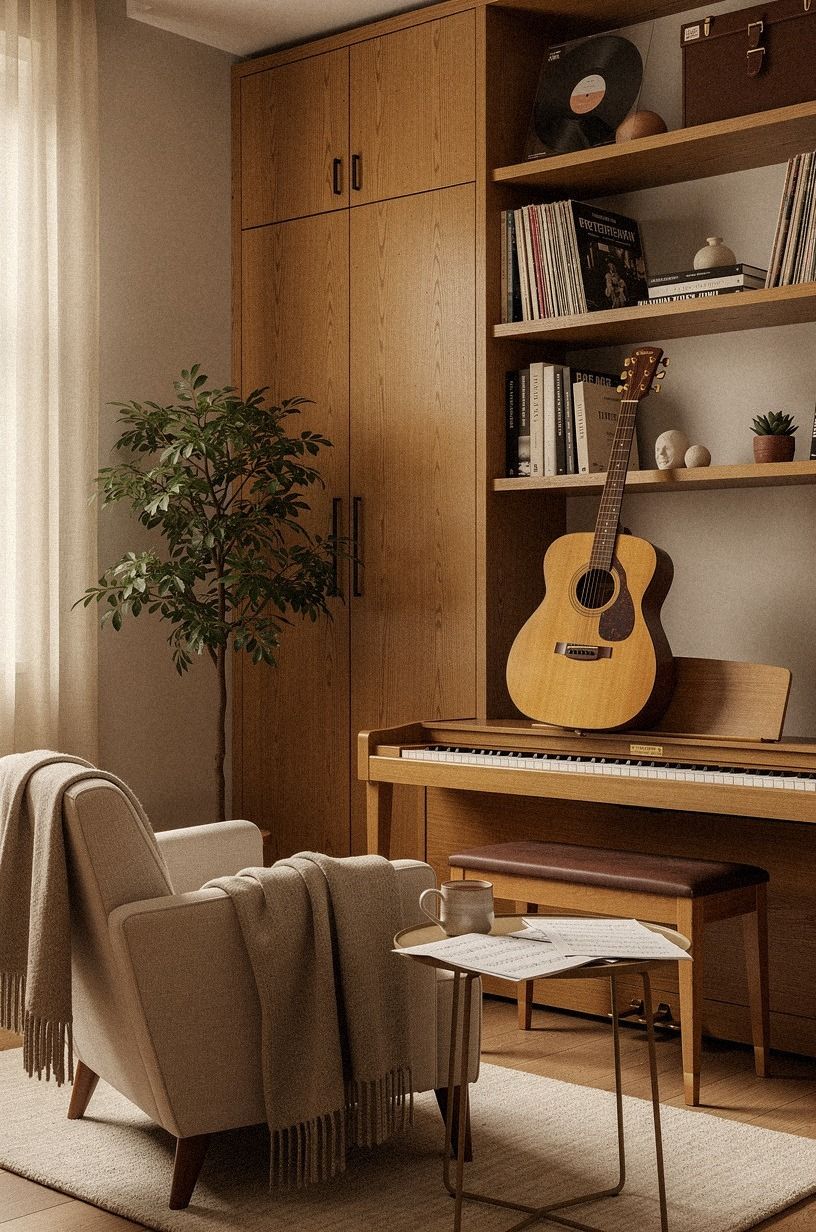
A practice room can be a small refresh or a full furnishing project. Your budget depends on whether you’re painting and rearranging or buying a rug, lighting, storage, and custom work. These typical US ranges are useful guardrails, not promises.
The budget tier can cover paint, art, and organization, while a statement light fixture may push the room toward the mid range. Your free changes matter too: moving the chair, clearing the floor, and placing the instrument where you can reach it.
I wouldn’t spend $8,000 on custom millwork before testing the layout for a month. Use secondhand natural-wood storage first, then invest where your daily friction remains. This music room storage guide can help you decide what deserves a cabinet.
15Paint the Ceiling for a Gentle Practice Room Aesthetic
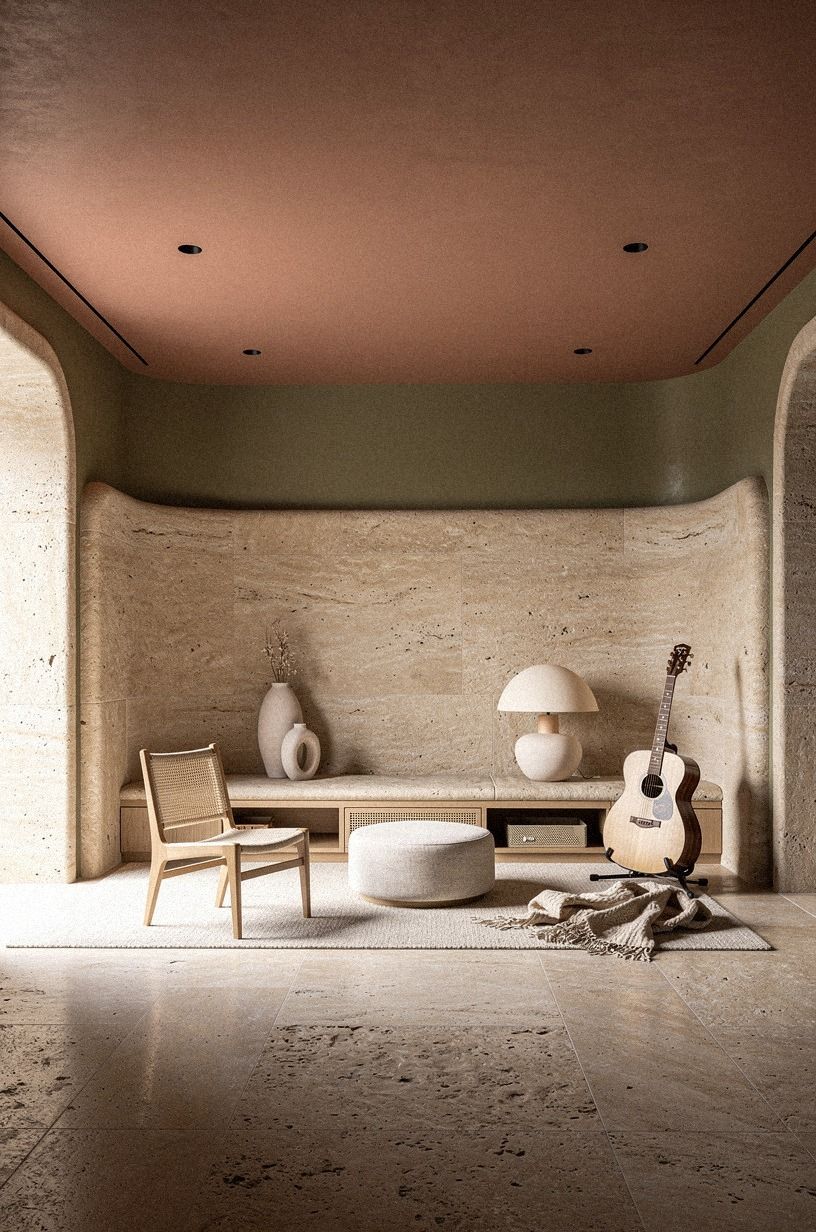
A soft ceiling color can make a music room feel intimate without closing it in. Choose a muted terracotta or a pale version of the wall color, then let warm lamp light bring out the stone and olive tones. Your room will feel calmer when the upper plane isn’t a stark white interruption.
I like this move in rooms with low ceilings because a slightly warm finish feels less clinical. Pair it with warm travertine on a side table and olive-toned textiles. The contrast is subtle, but you’ll notice it when evening light settles across the room.
And if you’re renting, skip paint overhead and bring the tone in through a woven shade or a large textile. An olive linen throw over the chair can create the same soft effect with no repair work later. Your practice room should feel personal, even when the lease isn’t.
16Swap Visual Clutter for a Focused Guitar Practice Room
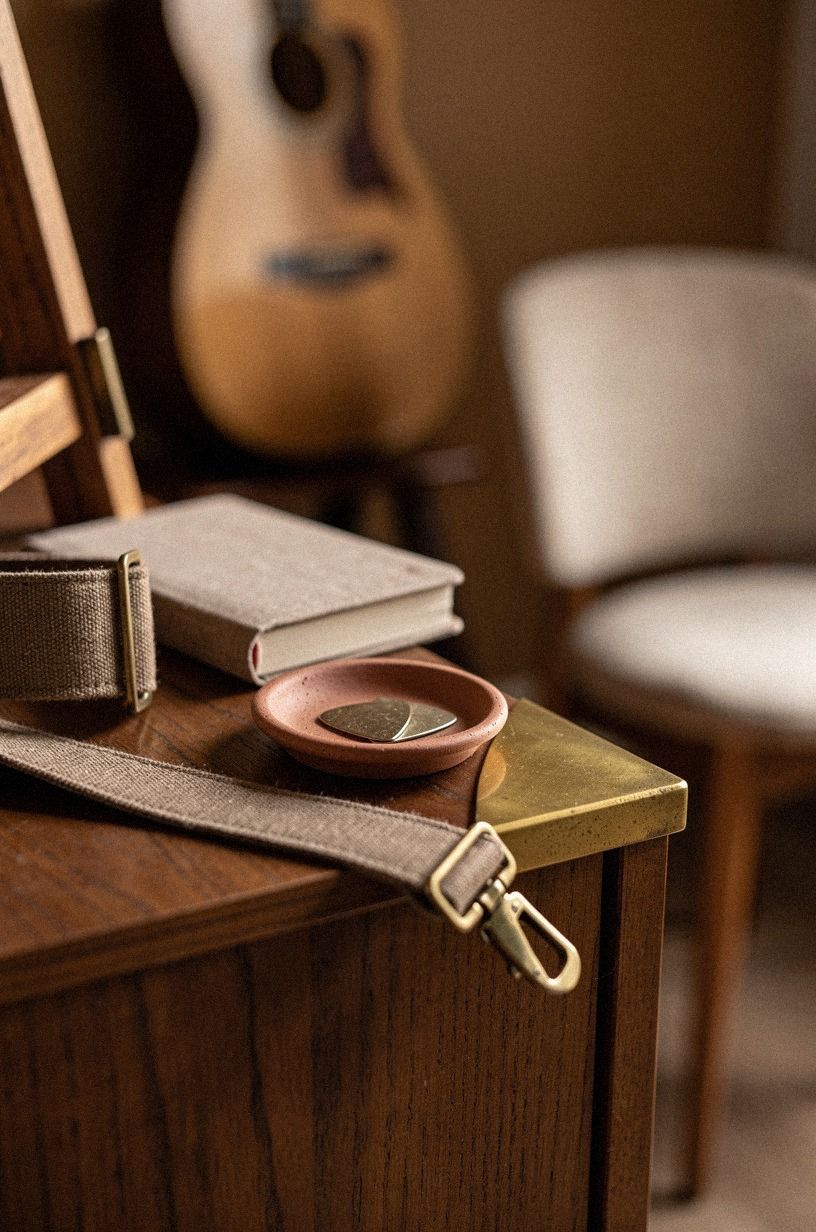
A guitar room becomes more inviting when every visible object earns its place. Clay walls, linen textiles, and aged brass details can make the space feel warm without adding clutter. An unlacquered brass hook near the instrument gives you one useful place for a strap or headphones.
17Build a Recording Wall With Soft Materials
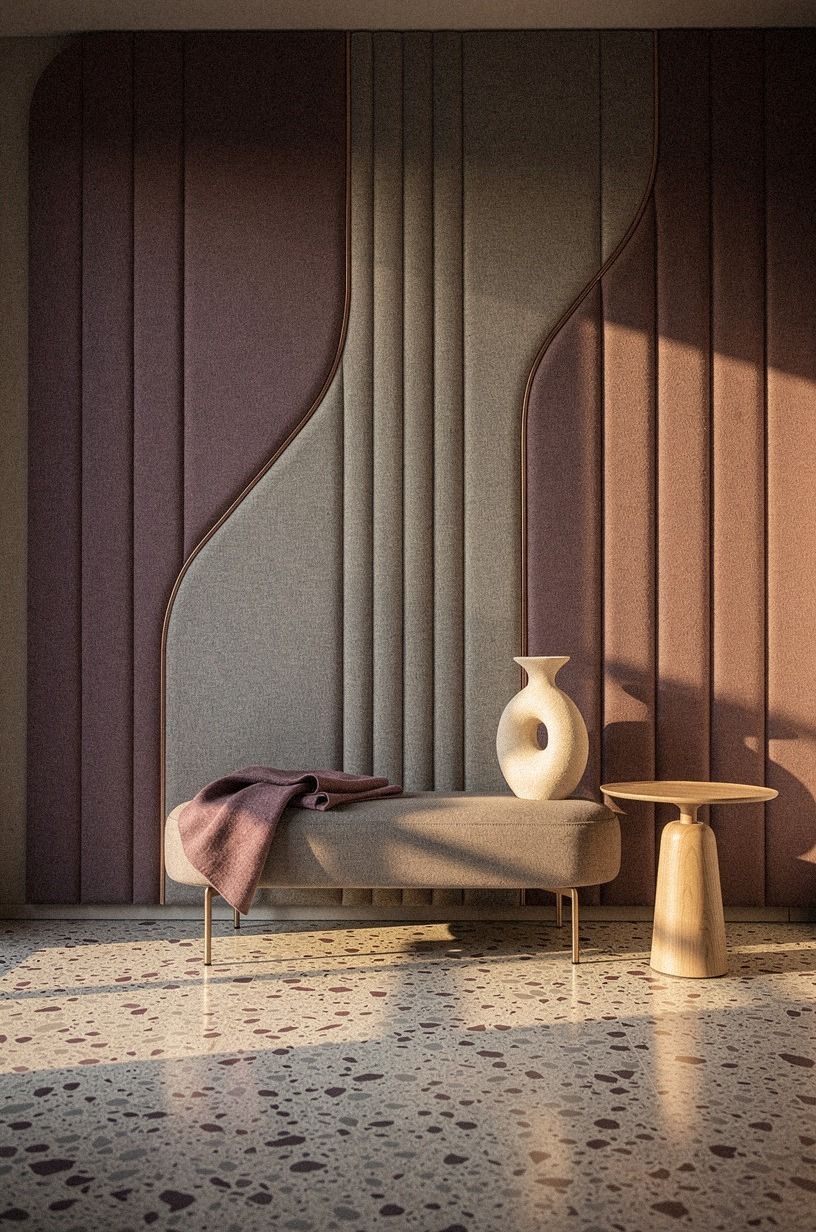
A recording wall can look polished without covering every surface in foam. Place your desk against one wall and add a rug, curtains, and upholstered seating to soften the room. A grey upholstered chair brings calm texture while giving you a comfortable place to listen back.
Use acoustic felt panels only where sound reflection bothers you, and choose a finish that relates to the room’s plum and rose-gold palette. An oversized-chip terrazzo shelf can hold notebooks and one pair of headphones without making the wall feel busy.
But don’t let recording equipment take over the room. Your desk should have space for the keyboard, interface, and notebook without becoming a cable nest. These office and music room combination ideas show how to give each activity a clear boundary.
18Try the Two-Seat Rule for a Peaceful Music Room
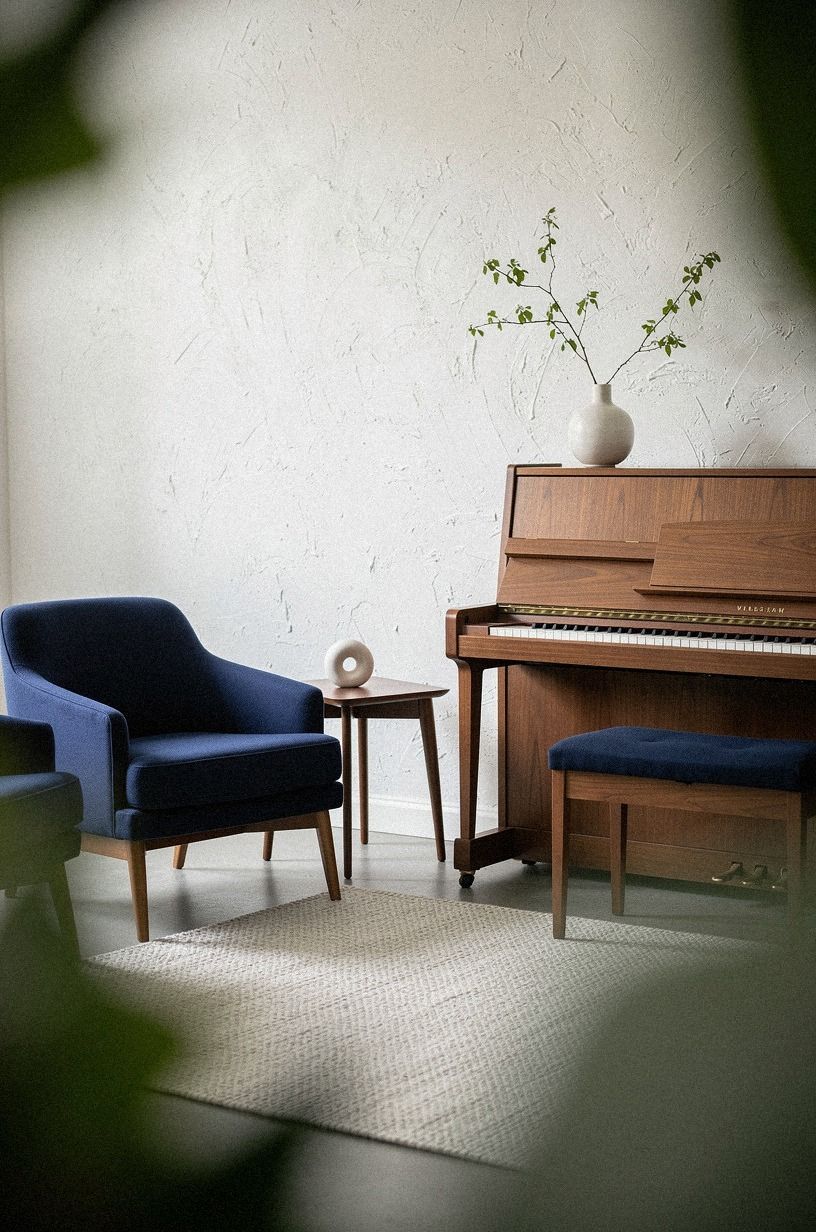
The Two-Seat Rule gives your practice room one place to play and one place to listen. Your main bench belongs at the instrument, while a compact navy or white chair sits nearby for reading, recording, or a friend. More than two seats often turns a focused room into a waiting area.
Choose a compact chair and set it beside a walnut low table. A wall finished in hand-applied Venetian plaster adds depth without requiring more furniture. Keep the chair angled toward the instrument so the room’s purpose stays obvious.
I wouldn’t add a sofa unless the room is genuinely large. It takes over quickly, and you’ll start treating the practice area as a lounge. For small rooms, this library music room inspiration offers useful ways to combine reading and playing without crowding the floor.
19Choose Warm Woods Over Glossy Furniture
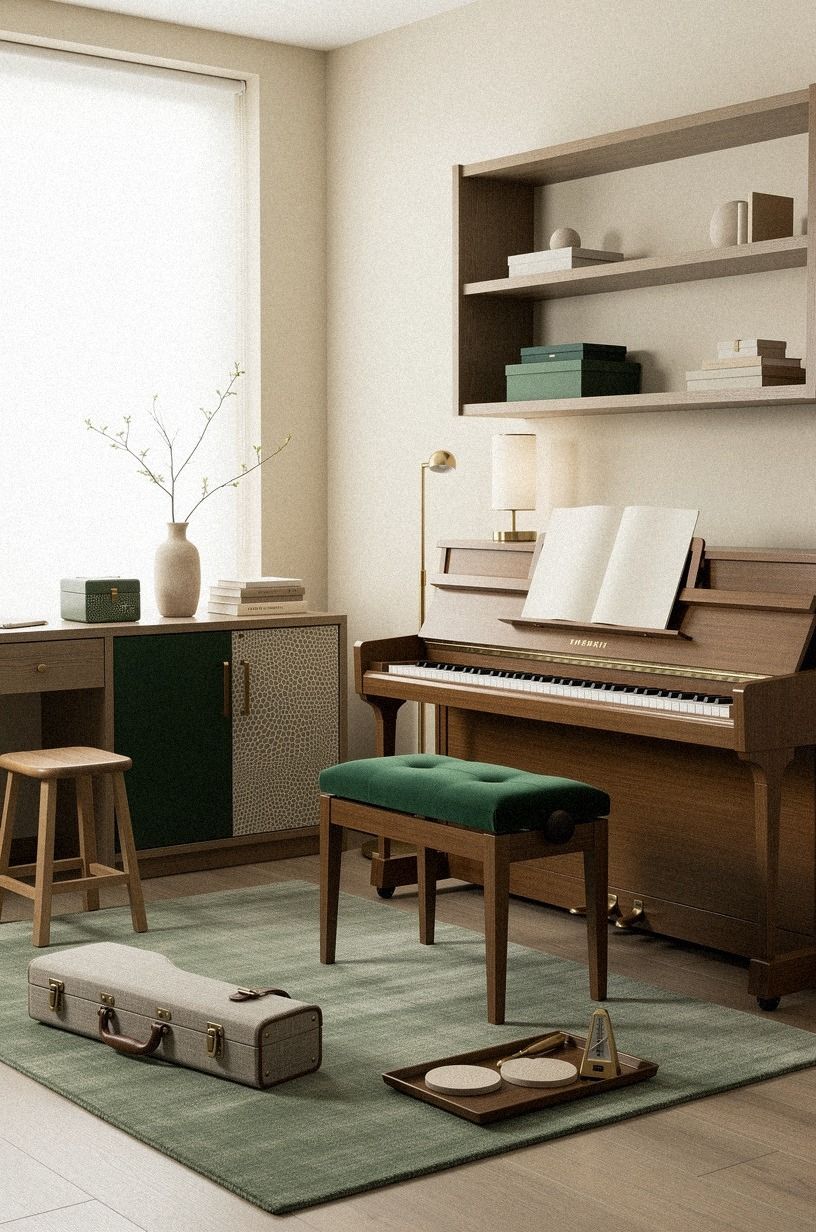
Warm wood usually makes a practice room feel more lived-in than glossy white furniture. Pair it with emerald and cream textiles, small gold details, and one shagreen accent for texture. The combination feels collected without turning the room into a formal showroom.
The Practice Room Rule I’d Keep
I’ve designed music rooms that looked finished on paper but felt awkward in real life. The instrument was technically accessible, yet the bench faced a wall, the lamp glare hit the page, and the cable ran across the only walking path.
I learned that a room can be stylish and still ask too much from you. Daily practice needs fewer small obstacles.
My favorite rooms don’t have the most expensive furniture. They have a clear first move.
You open the door, see the guitar or piano, sit down, and begin. That sequence matters more than a perfect color palette.
Farrow & Ball Hague Blue No.30 won’t make you practice if the bench is buried under folded laundry.
I also think a little imperfection helps. Keep one handwritten chart visible.
Let the wood show a mark. Choose a chair that feels good rather than one that reads like a showroom prop.
Your room should hold evidence of use, because use is the point. If you have to choose between another decorative object and better light, pick the light every time!
The practical test is simple: can you start playing in under two minutes? If not, move something.
Your best layout may be less symmetrical, less polished, and far more welcoming. That’s the version you’ll return to when the day has already taken most of your energy.
The Questions Worth Answering First
What is the best Music Practice Room Ideas for Daily Inspiration for a small music practice room daily?
The best option is a wall-mounted keyboard or compact guitar wall with charcoal storage nearby. You’ll keep the floor open, see your instrument immediately, and still have room for a chair. A clear path matters more than adding another furniture piece.
Where can I buy Music Practice Room Ideas for Daily Inspiration pieces on a budget?
IKEA, Wayfair, and Target are useful starting points, while Facebook Marketplace and thrift stores can provide better wood pieces for less. Look for solid wood consoles, linen curtains, and lamps with replaceable shades. This site uses display advertising and doesn’t receive affiliate commissions.
How much does a Music Practice Room Ideas for Daily Inspiration makeover cost?
A simple refresh typically fits the $200-$800 budget tier when you use paint, textiles, art, and organization you can install yourself. Larger furniture and lighting can move the project into the $1,500-$5,000 mid range. You can save money by rearranging first.
Can I create a Music Practice Room Ideas for Daily Inspiration on a budget?
Yes, and you can start with three free changes: move the instrument into your clearest path, remove visual clutter, and reposition your lamp. Add secondhand baskets, a painted accent wall, and a used rug as funds allow. Your first improvement should reduce friction.
Is a Music Practice Room Ideas for Daily Inspiration worth it in a small space?
Yes, because a small room can make your practice routine easier to see and reach. Use a narrow bench, wall storage, and one rug that overlaps the furniture. These small music room ideas can help you keep the setup open.
Is Music Practice Room Ideas for Daily Inspiration a good idea for a rental?
Yes. Use removable hooks, tension rods, freestanding shelves, and peel-and-stick surfaces where allowed.
A freestanding music stand, floor lamp, and lightweight curtain can change the room without permanent work. Keep your best upgrades portable so they can move with you.
Where I’d Start First
If I had to pick one, I’d start with the clear instrument path. You’ll practice more when the bench and music stand are ready before you are. Move the furniture tonight, then test it for a week.
Pin these music room layout ideas for your next upgrade.