The short answer: library music room ideas for book and vinyl lovers work best when every shelf, speaker, and chair earns its footprint. I once packed a room with records and bookcases, then wondered why it felt like storage. You need breathing room, warm materials, and a listening spot with purpose. That’s the difference.
- Layer the Two-Wood Rule for a Warmer Library and Music Room
- Build a Listening Triangle That Leaves Your Books Breathing
- Float the Turntable Console Instead of Crowding the Wall
- Layer the Two-Wood Rule for a Warmer Library and Music Room
- Build a Listening Triangle That Leaves Your Books Breathing
- Float the Turntable Console Instead of Crowding the Wall
- Store Records Behind Doors and Keep Books in Sight
- Paint the Shelves, Then Let the Covers Supply the Color
- Use the Three-Height Light Stack for an Ambient Room
- Frame the Shelves With One Large Artwork
- Anchor the Chair With a Wool Rug
- Mix Books and Records With the Quiet Spine Method
- Swap a Bulky Cabinet for a Low Record Credenza
- Hang Curtains High for a Softer Listening Corner
- Choose Warm Neutrals Over Stark White
- Place Instruments Against the Longest Wall
- Budget the Room With Realistic Tiers
- Add One Soft Seat for Long Listening Sessions
- Angle the Speakers and Hide the Cords
- Why Does This Layout Feel Warm Without Looking Crowded?
- Style the Shelf With Three Personal Layers
1Layer the Two-Wood Rule for a Warmer Library and Music Room
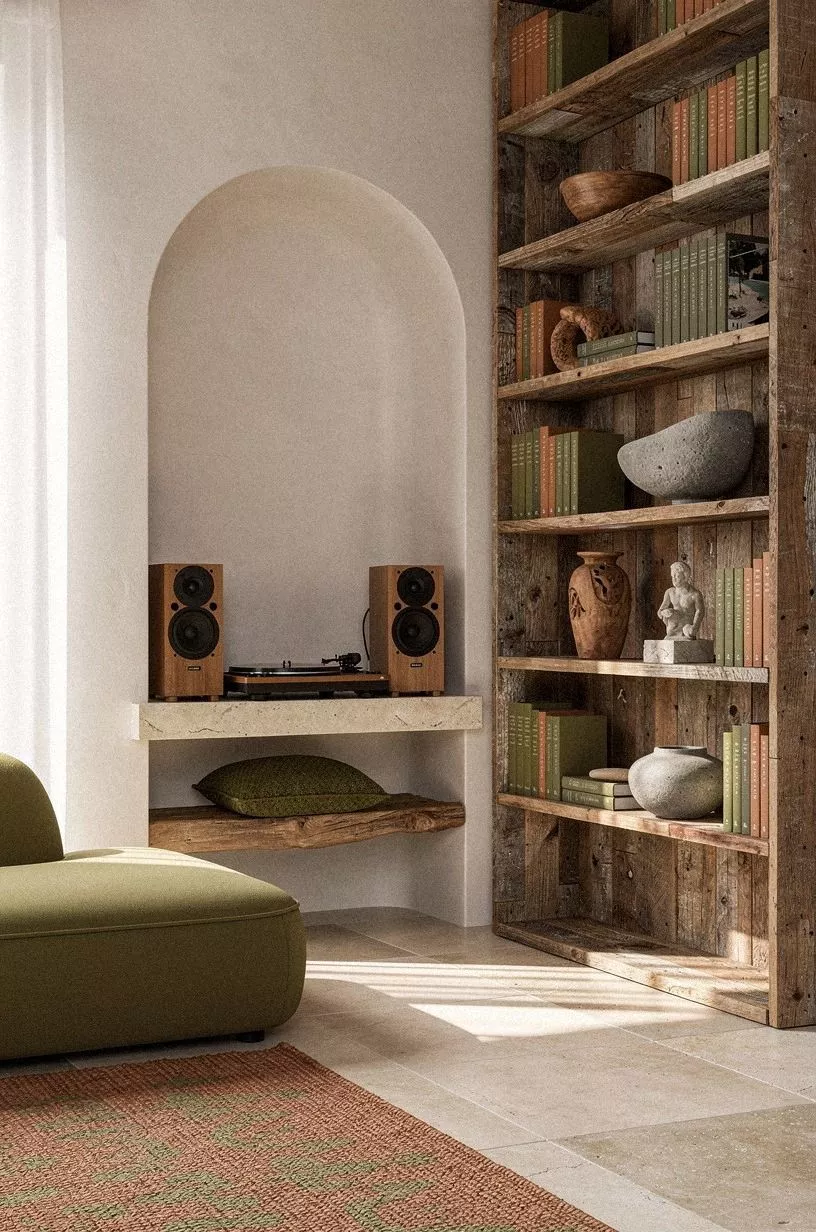
Choose two wood tones and let them repeat across the room. I like reclaimed weathered teak for open shelving and a deeper stained wood for a console because the contrast feels earthy without making the room busy. If you’re working with existing furniture, keep the lighter wood near eye level and the darker wood low, where it gives the room visual weight.
You don’t need matching bookcases. In fact, matching everything can make your library music room feel more like a showroom than a place where you’ll spend an evening.
Try a weathered-teak turntable console, a stone-upholstered stool, and one woven basket in between. And if your shelves are already dark, Farrow & Ball Setting Plaster No. 231 on the walls will bring in a soft terracotta note without making the arrangement feel heavy.
A restrained material palette can also improve the value of the room. You’ll spend less on decorative filler and more on pieces that feel durable, tactile, and genuinely useful. That’s a smarter investment than buying a complete matching set.
Typical cost by tier (US averages):
2Build a Listening Triangle That Leaves Your Books Breathing
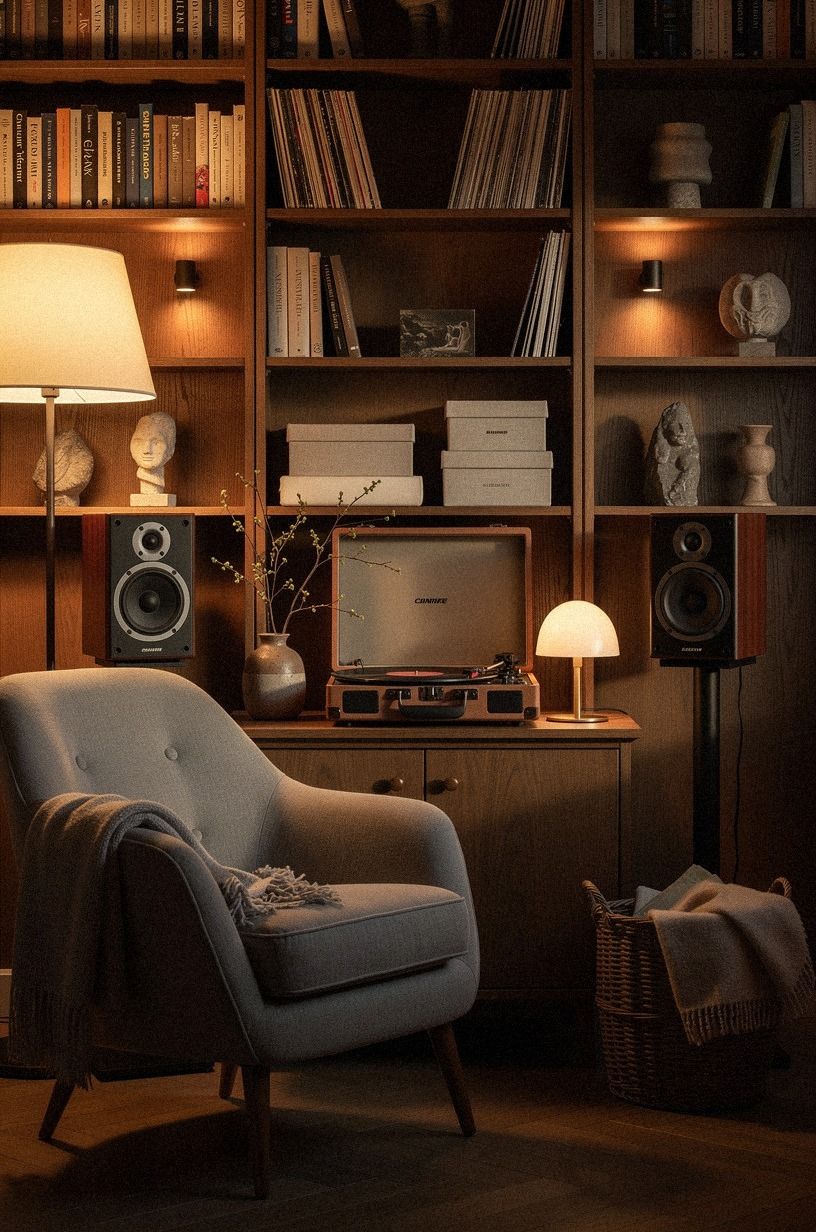
Place the chair, speakers, and turntable so they form a comfortable listening triangle instead of pushing every piece against the wall. Your seat shouldn’t be trapped between a bookcase and a cabinet, because you’ll stop using the room once moving through it feels awkward. A compact linen-upholstered chair beside a Calacatta marble table with aged brass detail can give you a real listening position without swallowing the floor.
Leave the center open enough for your eye to travel from the chair to the shelves. I’d skip oversized lounge seating here.
It’s inviting in a wide room, but it can block cabinet doors and make vinyl browsing clumsy. If you’re working with a narrow footprint, this guide to small music room ideas with big sound will help you protect the walking path.
When you compare seating, think about cost, comfort, and long-term value together. The cheapest chair isn’t a bargain if you replace it next year, while an affordable piece with generous depth can be worth the investment. For another compact arrangement, return to these small music room ideas with big sound and check the circulation examples before you buy.
3Float the Turntable Console Instead of Crowding the Wall
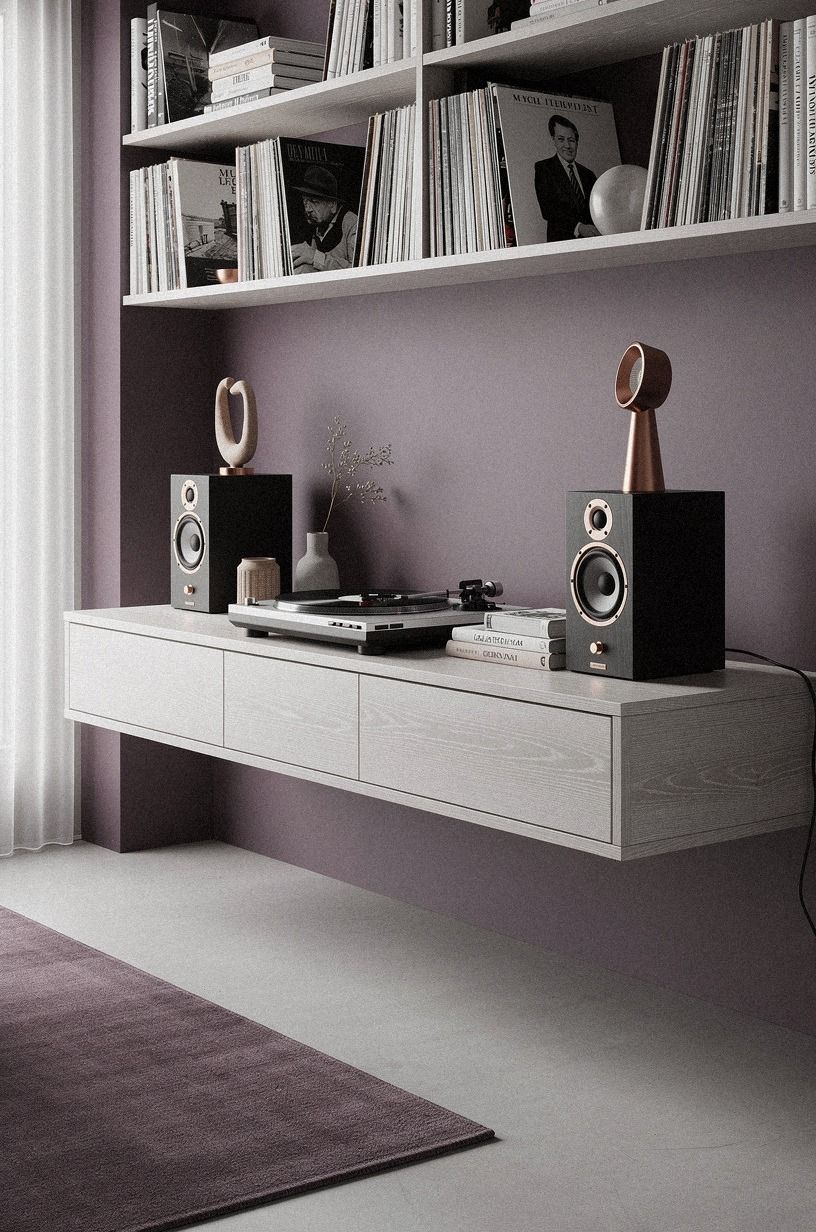
A floating console creates a little visual pause beneath your records, and that gap makes the room feel airy. Choose a cabinet with cerused white oak doors, then leave enough clearance for your hand to reach cords and records. You’ll want the turntable at a comfortable standing height, especially if you’re changing albums often.
I made the mistake of placing a console directly under a low shelf. Every record change became a small head bump, and I stopped reaching for the collection.
Give your setup a clear zone above it, then style that zone with one framed print, not six small objects. For another arrangement, browse these vinyl listening room ideas for audiophiles.
A floating cabinet can be a clever budget upgrade because it preserves floor area and makes a modest room feel more refined. Before you buy, measure the turntable, receiver, cable route, and record depth together.
That small planning step protects your price range and prevents an expensive cabinet from becoming unusable. You can also compare this setup with more vinyl listening room ideas for audiophiles before choosing hardware.
4Store Records Behind Doors and Keep Books in Sight
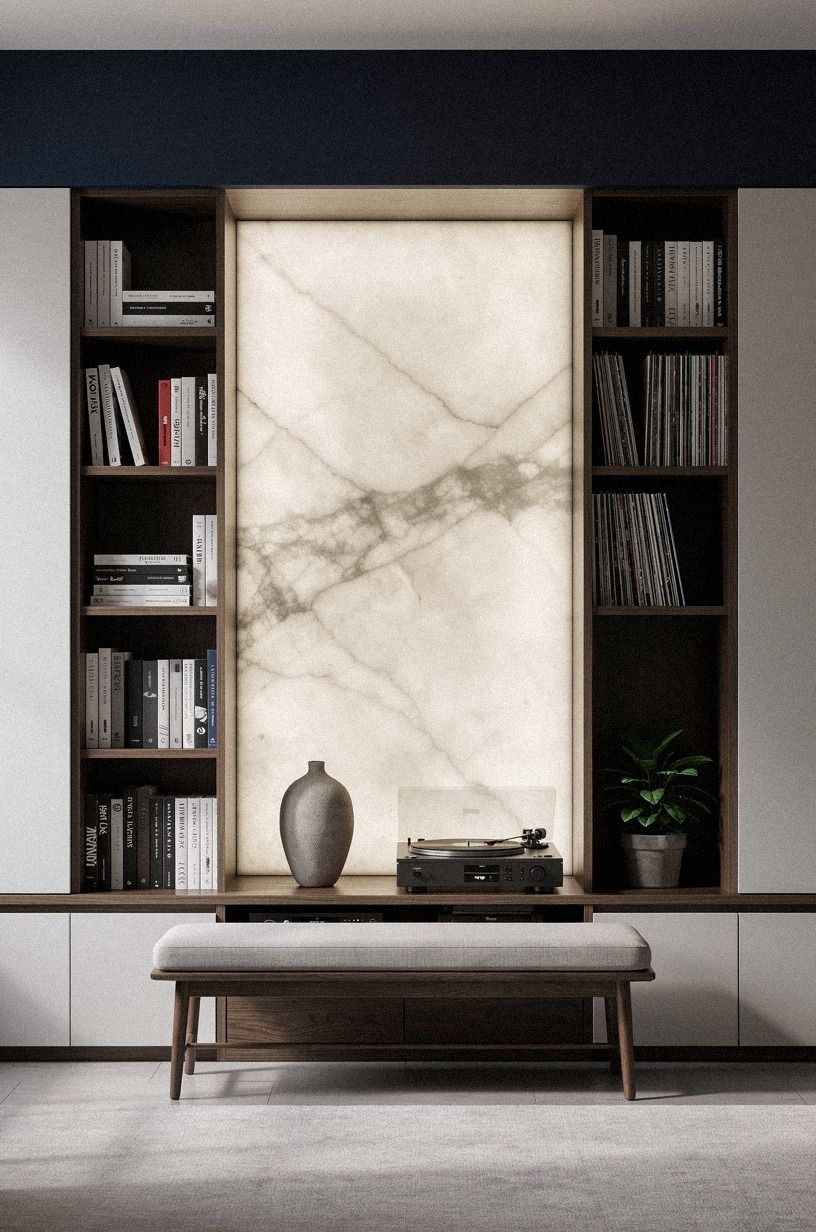
Books can be part of the room’s texture, while records usually need more controlled storage. A low walnut cabinet with a backlit translucent onyx inset keeps album sleeves away from dust and gives you a surface for a lamp or ceramic bowl. Your favorite books can stay visible above it, where their colors become part of the design.
Don’t line every wall with open shelving. It sounds romantic, but you’ll create a wall of competing spines and nowhere for your eye to rest.
Use closed storage for the practical collection and open shelves for the books you want to see first. If you’re organizing instruments too, these music room storage and organization ideas offer useful ways to divide categories without adding more furniture.
The best storage value comes from assigning each category a home before you shop. Books can rise, records can stay low, and accessories can disappear behind doors. These music room storage and organization ideas are especially useful when your collection is growing faster than your available wall space.
5Paint the Shelves, Then Let the Covers Supply the Color
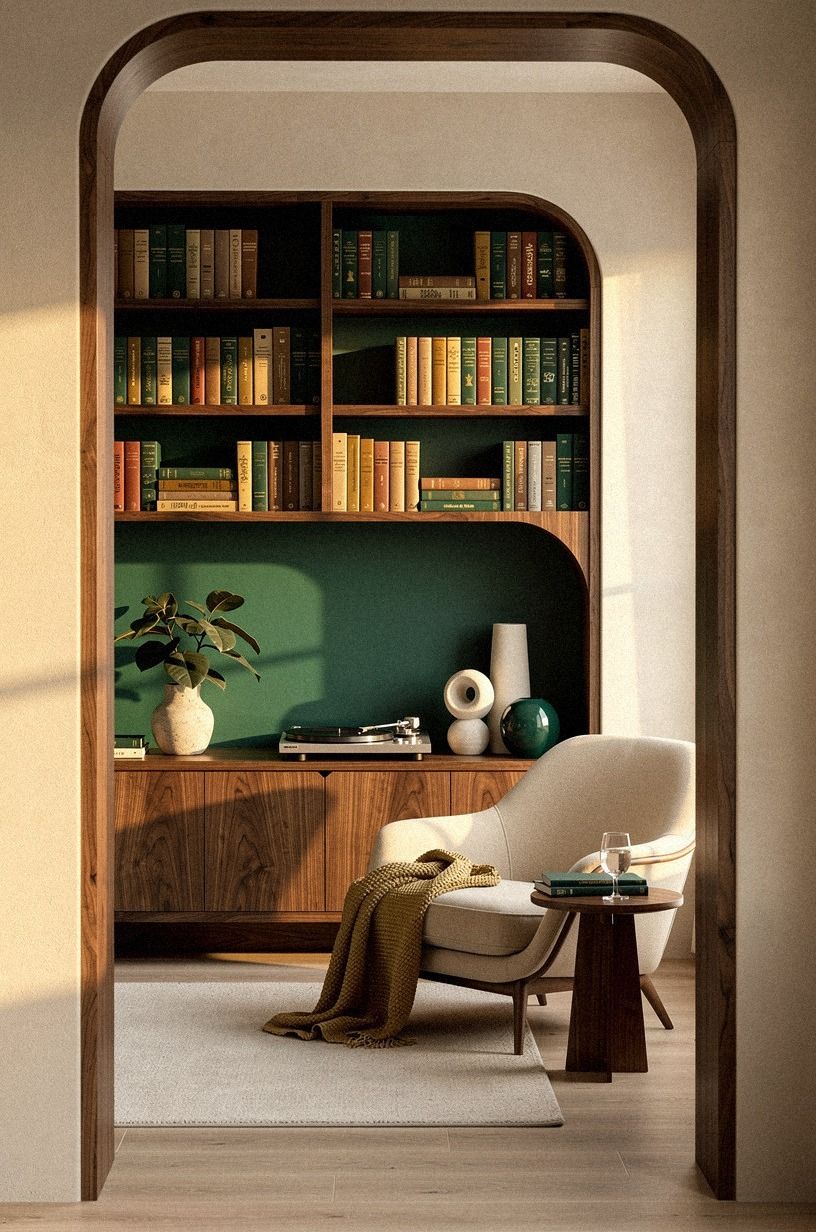
Deep emerald shelves framed with book-matched walnut can make a modest collection look intentional.
6Use the Three-Height Light Stack for an Ambient Room
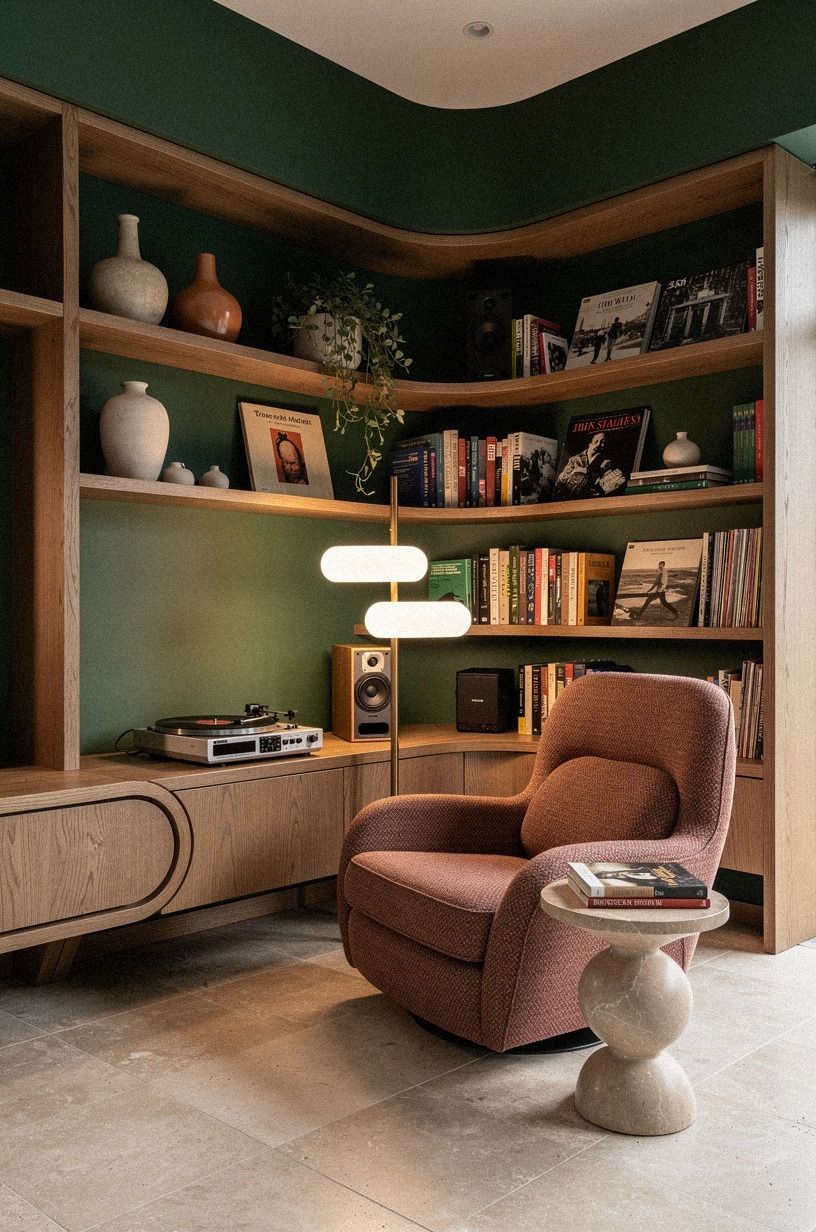
Your library music room needs three light sources: overhead, task, and ambient. That three-height stack keeps the room useful for reading while making it feel relaxed for music.
Try a ceiling fixture above, a shaded lamp on the console, and a low floor lamp near your chair. The layered glow matters more than one expensive fixture.
I’d skip a single harsh ceiling light. It flattens the shelves and turns your listening corner into a work zone.
A linen drum shade softens the overhead source, while a small reading lamp gives your book pages enough light. And if you’re styling a darker space, these music room ideas for a creative haven show how several modest lights can create a warm, inviting mood.
You don’t have to spend heavily on every fixture. A well-placed warm travertine floor lamp, a thrifted table lamp, and a dimmable bulb can deliver excellent value. The goal is a serene, atmospheric room where each pool of light has a job.
Explore more music room ideas for a creative haven if your current setup feels flat after sunset.
7Frame the Shelves With One Large Artwork
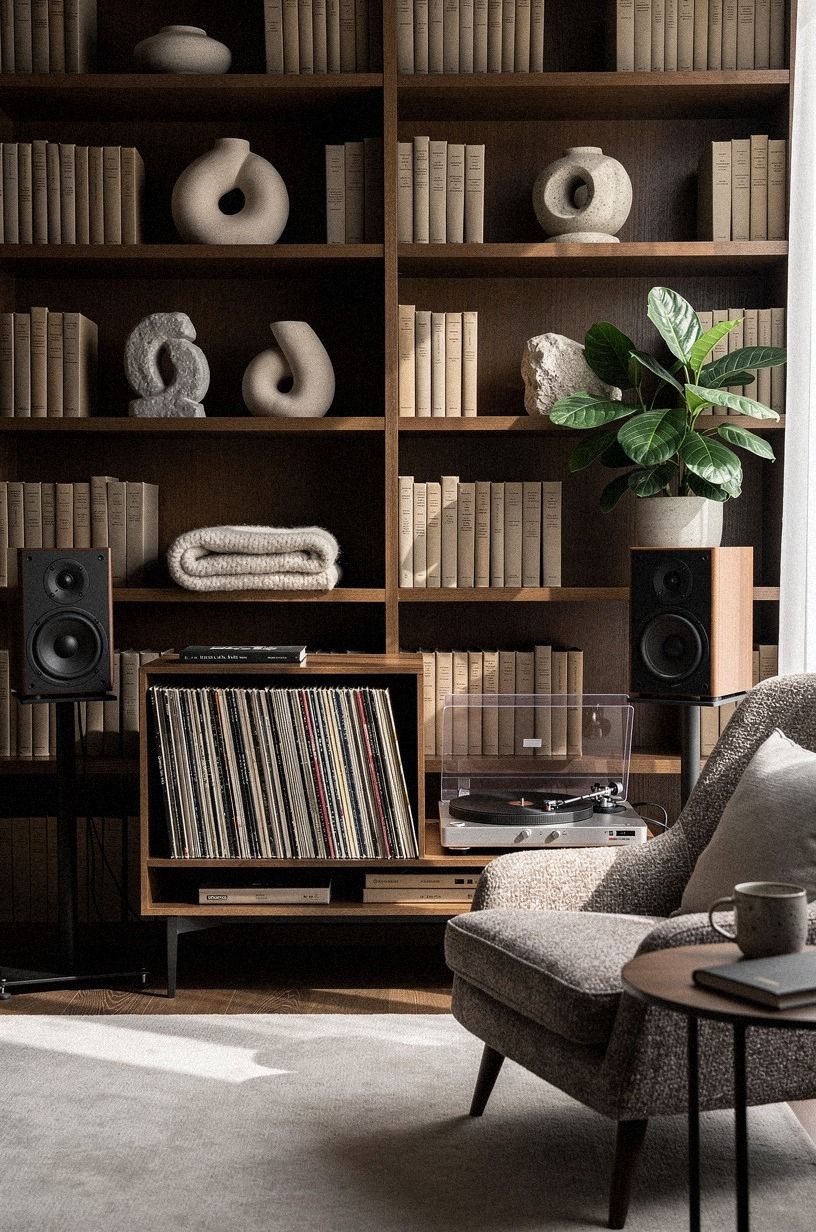
One large artwork with an unlacquered brass frame developing patina often gives a book wall more presence than a collection of tiny frames.
8Anchor the Chair With a Wool Rug
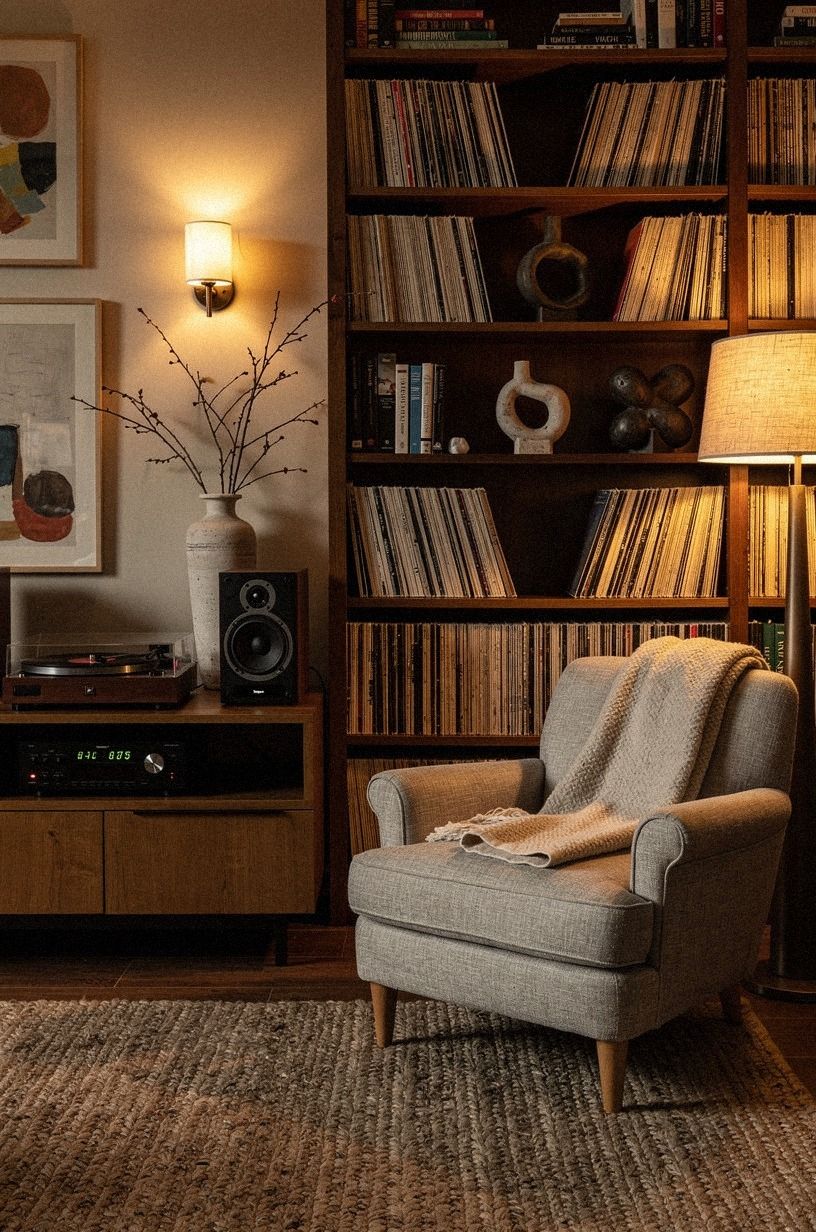
A rug should connect the listening chair, lamp, and nearby cabinet, not sit like a postage stamp beneath one table. Choose a rug large enough for the furniture to overlap it, because that overlap makes the whole corner feel settled. On an oversized-chip terrazzo floor, a rug in warm white and camel with restrained black accents can warm up the arrangement without competing with it.
Your rug doesn’t need to compete with the books. I’d avoid a high-contrast geometric pattern if your shelves already hold bright jackets and colorful covers. A quieter pattern gives your eye somewhere to rest while the record spins.
If you’re styling a small music lounge room, keep the front legs of the chair on the rug and leave a clean strip of floor around the perimeter.
A durable rug is worth considering as a long-term investment because it improves acoustics, comfort, and the room’s visual balance at once. If the price feels high, look for a vintage rug with a forgiving pattern or choose a smaller size that still catches the chair and lamp.
9Mix Books and Records With the Quiet Spine Method
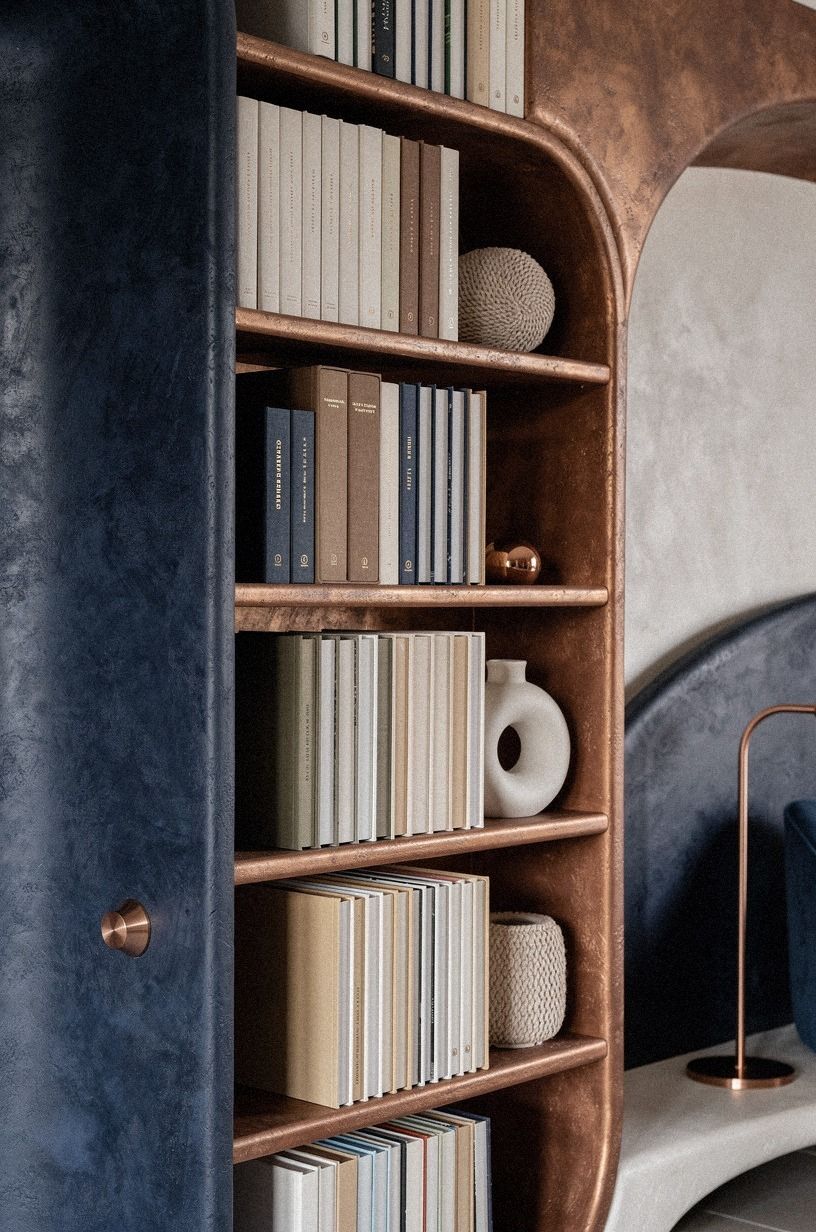
Arrange your shelves by rhythm instead of forcing every object into a strict category. Against hand-applied Venetian plaster in midnight blue, let copper and ivory details break up the stronger blocks of color.
10Swap a Bulky Cabinet for a Low Record Credenza
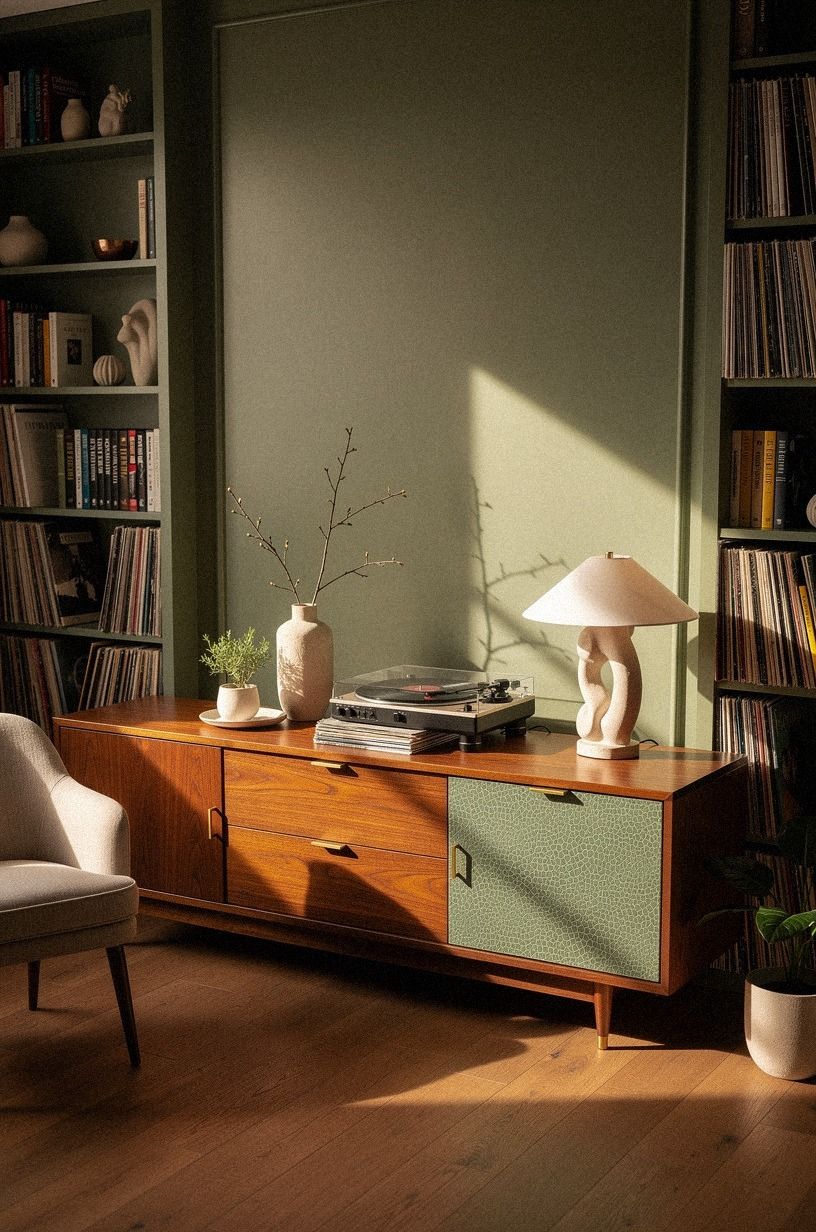
A low credenza gives you storage, surface area, and a visual line that helps the room feel wider. Look for shagreen accents if your other finishes need texture, and keep the main piece in a sage green, warm cream, or natural wood tone. The cabinet should support the record collection without becoming the first thing you notice when you walk in.
You don’t have to buy a dedicated media unit. A simple natural-wood arrangement can work when you add doors or fabric bins, although I’d avoid leaving every cube open.
Open cubes collect visual noise fast. Place the turntable on top, keep the records low, and give your books a taller home on the opposite wall so your room has balance.
Compare the cabinet’s price, capacity, and future flexibility before ordering. A versatile credenza can offer better value than a narrow media console that only fits one component. If you’re shopping on a strict budget, inspect secondhand listings first and reserve your money for sturdy construction and reliable doors.
11Hang Curtains High for a Softer Listening Corner
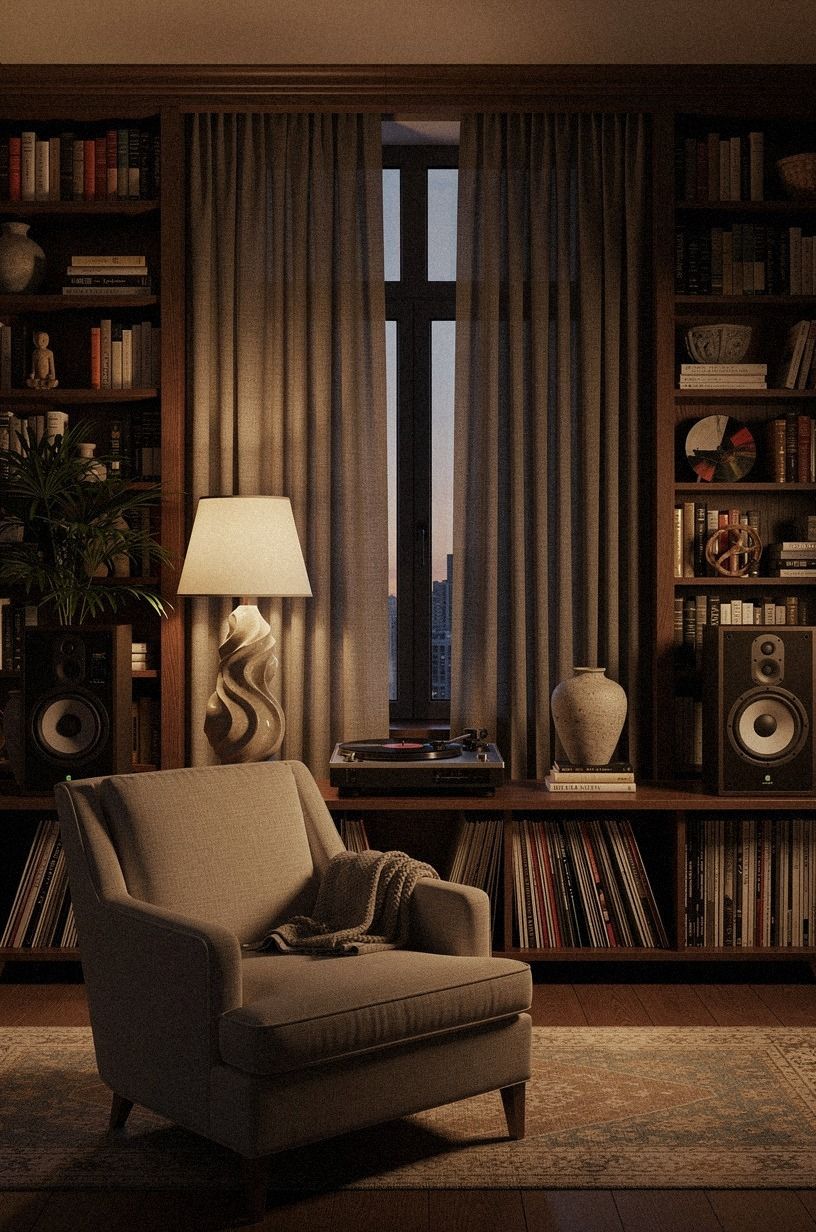
Curtains can make a library music room feel more intimate without taking up floor space. Mount the rod 4 to 6 inches above the window frame and let the panels reach the floor. Washed Belgian linen drapes soften hard acoustics, filter daylight, and give the walls a gentle vertical line.
You’ll want to avoid short curtains that stop beneath the sill. They make the room feel cut off, especially beside tall shelving. I’d choose terracotta, stone, or a soft olive rather than bright white.
And if you’re renting, a tension rod and removable hooks can create the same relaxed effect without drilling into the wall.
For a rental, this is one of the most affordable ways to add softness and acoustic comfort. Spend on full-length panels before decorative hardware, since the fabric does most of the visual work. The result can feel intimate, polished, and surprisingly luxurious without a renovation.
12Choose Warm Neutrals Over Stark White
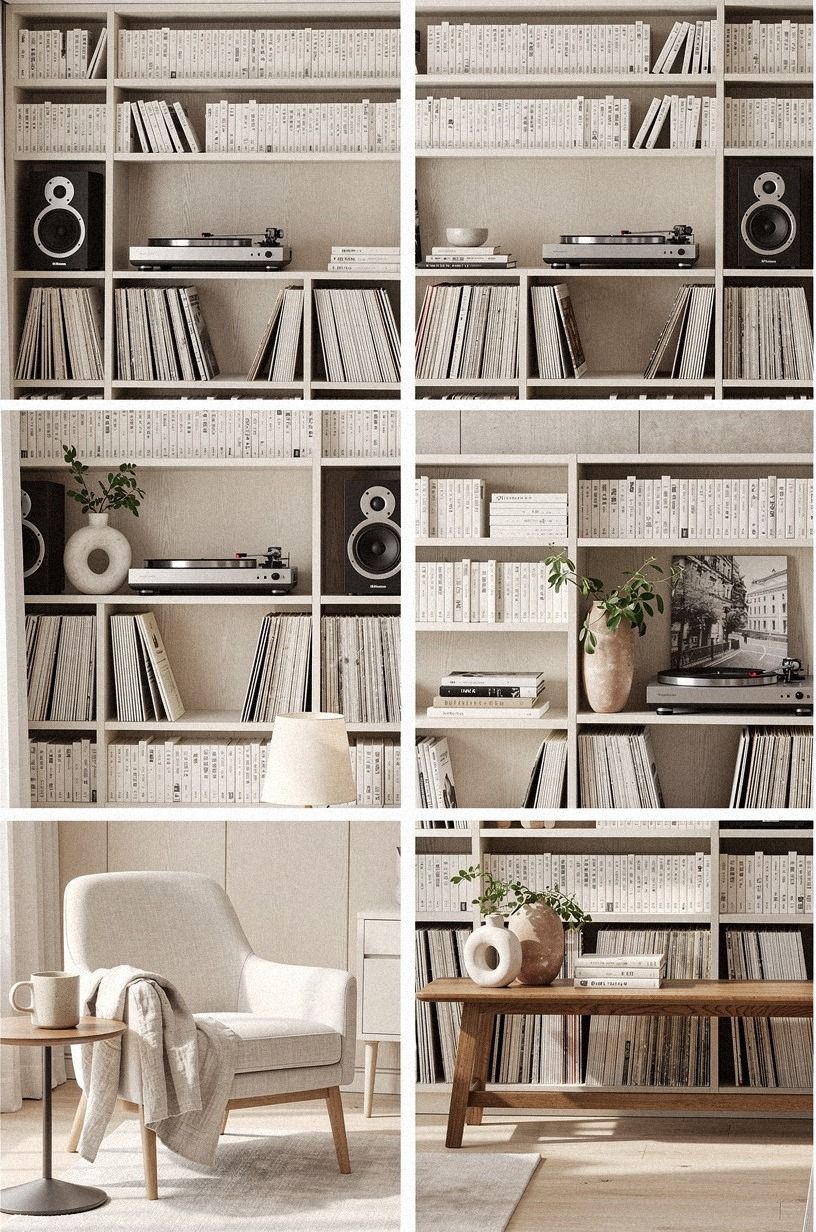
Warm neutrals let books, album covers, and wood furniture carry the personality. Benjamin Moore White Dove OC-17 is a reliable choice if you want a linen-like brightness, while Farrow & Ball Setting Plaster No. 231 brings a soft clay note to the walls. Test your paint beside the largest piece of furniture before committing.
Stark white can look crisp in the afternoon and chilly after sunset. That shift isn’t always charming.
If you’re styling a cozy music room with guitars and records, use a warmer wall color, an organic bouclé throw, and one darker object to ground the palette. But don’t pile on beige textiles until the room loses contrast.
Your eye needs a little tension.
Paint is often the best budget move when the furniture is sound. A rich, considered color can deliver more emotional impact than a costly accessory, especially when it picks up the tones in your record sleeves, oak shelving, and aged-brass accents.
13Place Instruments Against the Longest Wall
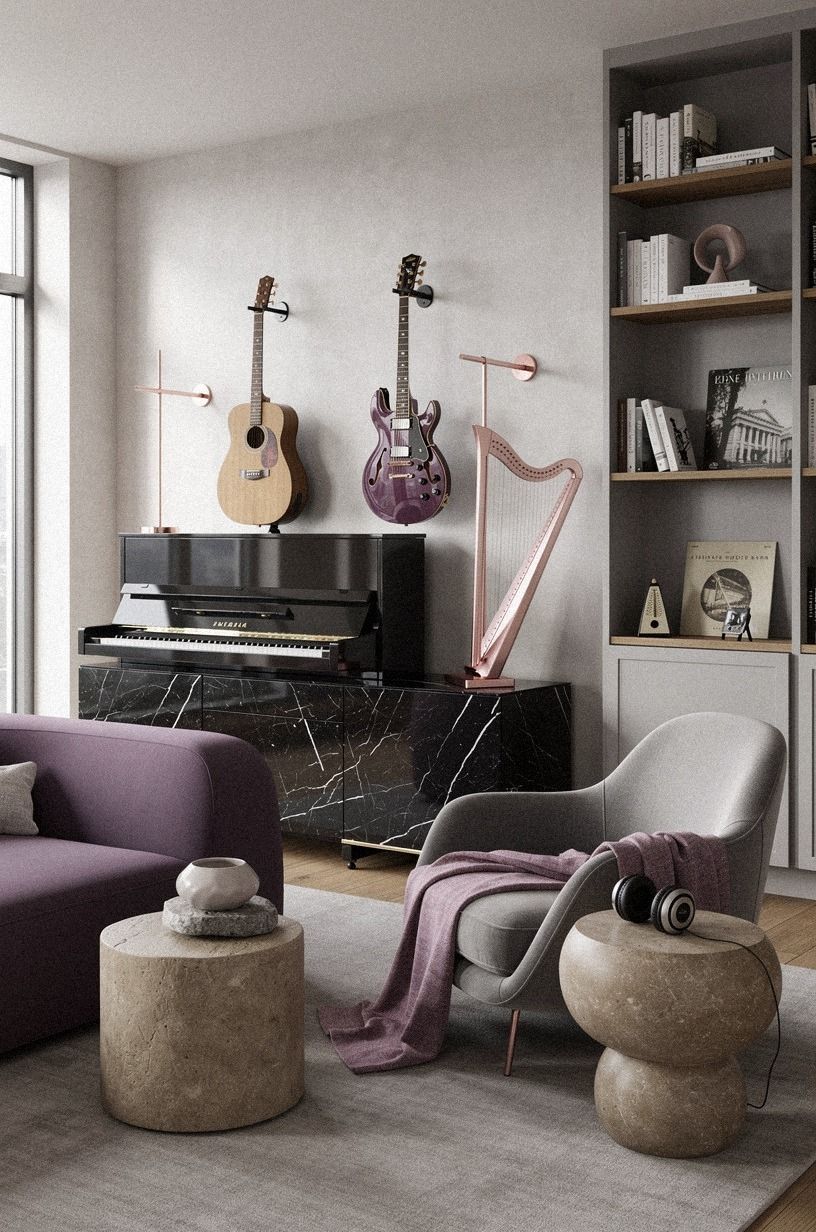
Guitars, a keyboard, or a cello can become part of the architecture when you give them a deliberate home. Use the longest uninterrupted wall for instrument storage, then keep the record console and reading chair on adjacent walls. A narrow Nero Marquina black marble shelf with white veining can ground the arrangement while still letting the room feel musical.
You’ll want the instruments close enough to reach, not tucked behind a chair where they become decoration. I’d skip a crowded instrument gallery. Two or three visible pieces feel personal; ten can make the room read like a shop.
If your collection keeps growing, use the storage principles in this music studio room design guide before buying another shelf.
That guide can also help you decide whether a new stand is actually necessary. Sometimes a wall-mounted guitar hanger, a narrow keyboard bench, or a dedicated cable box solves the problem for less money. Keep the setup practical, handsome, and easy to use.
14Budget the Room With Realistic Tiers
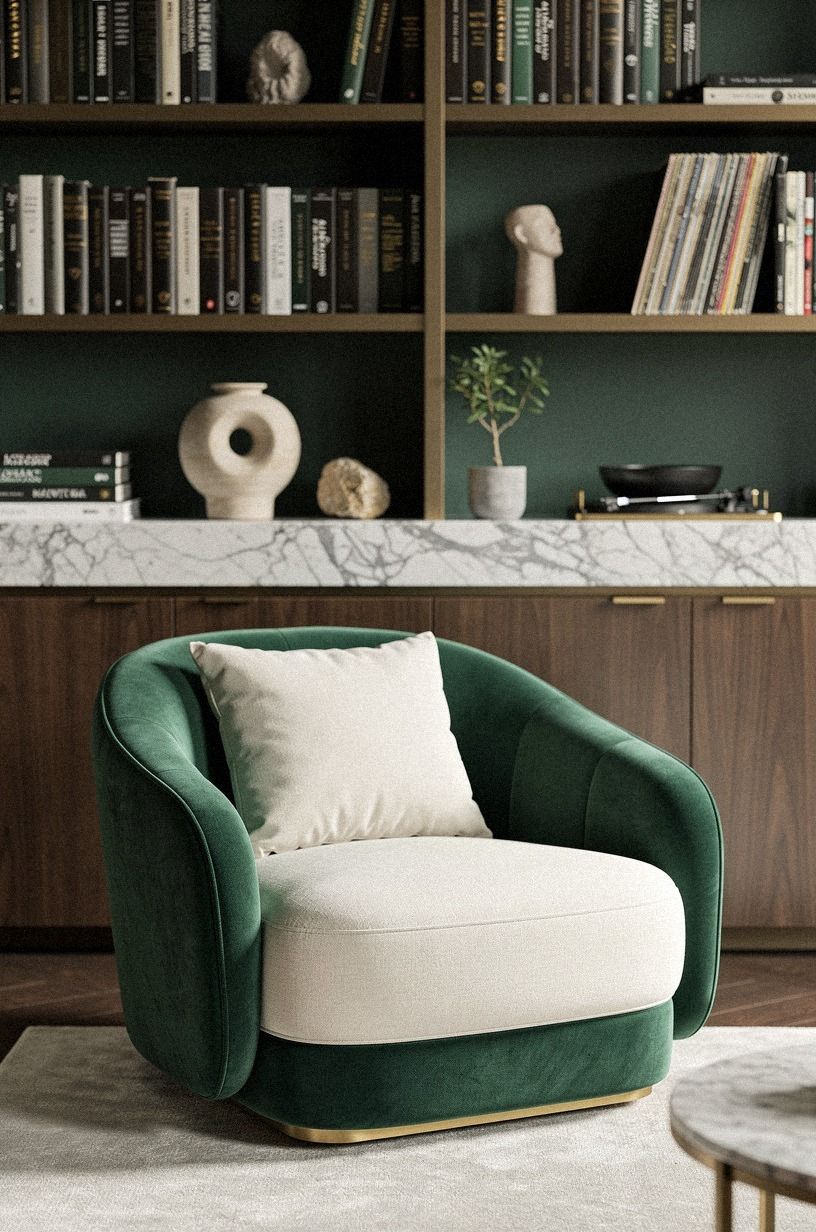
A library music room doesn’t need a full renovation to feel considered. Navy, white, walnut, and one deep-pile mohair velvet accent can establish a finished palette before you replace the major furniture.
15Add One Soft Seat for Long Listening Sessions
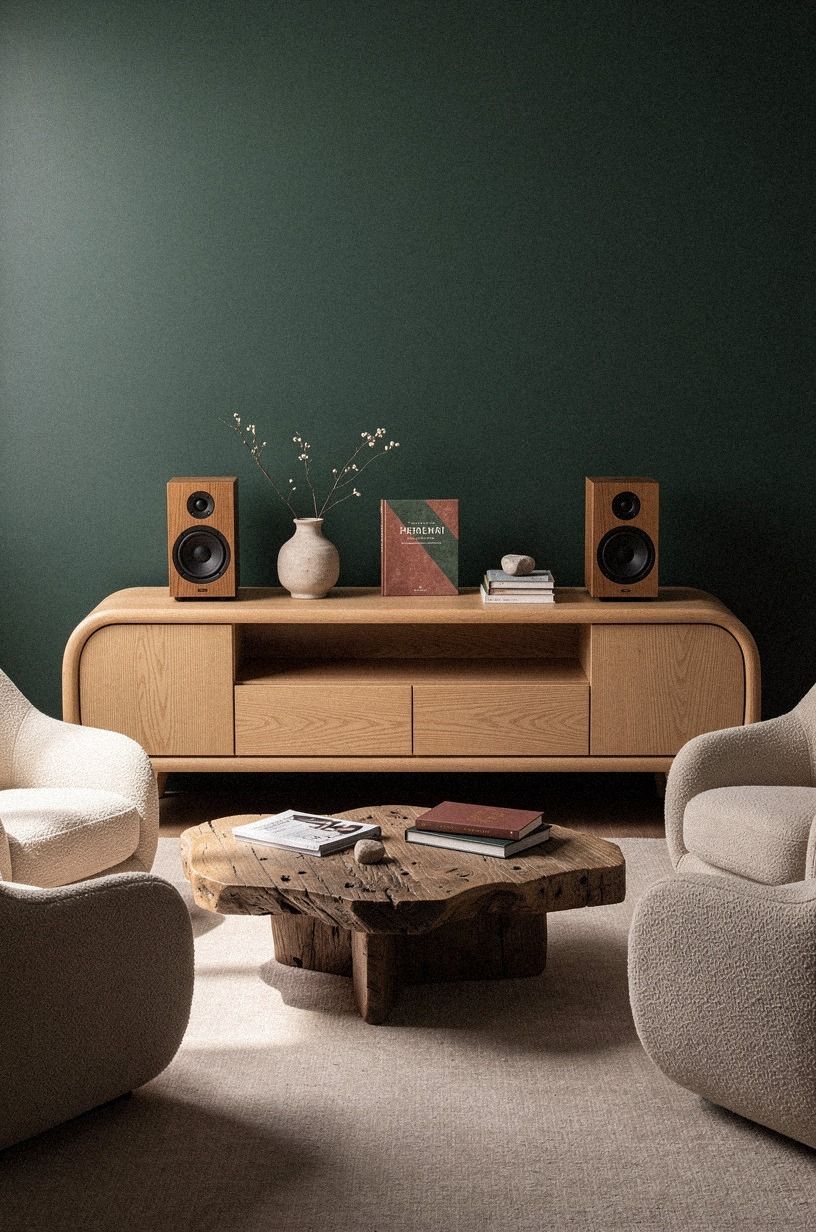
A listening room needs somewhere you’ll stay for an entire album, not just a chair chosen for appearance. Choose a seat with enough depth for your posture, then add a Carrara marble side table with subtle grey veining and one small cream accent for texture. Keep the fabric durable if you’ll read, drink tea, or bring a pet into the room.
You don’t need a matching loveseat. In a smaller room, one generous chair and a little side table feel more intimate and leave the shelves visible.
I’d choose an IKEA HEMNES armchair only if its scale fits your wall, because oversized furniture can make a compact library feel cramped. And if you’re unsure, tape the chair’s footprint on the floor before buying it.
A comfortable chair is one place where paying for quality can be genuinely worth it. Check the seat height, depth, fabric durability, and return policy before you buy. A modest chair with excellent support delivers better value than a beautiful seat you avoid after twenty minutes.
16Angle the Speakers and Hide the Cords
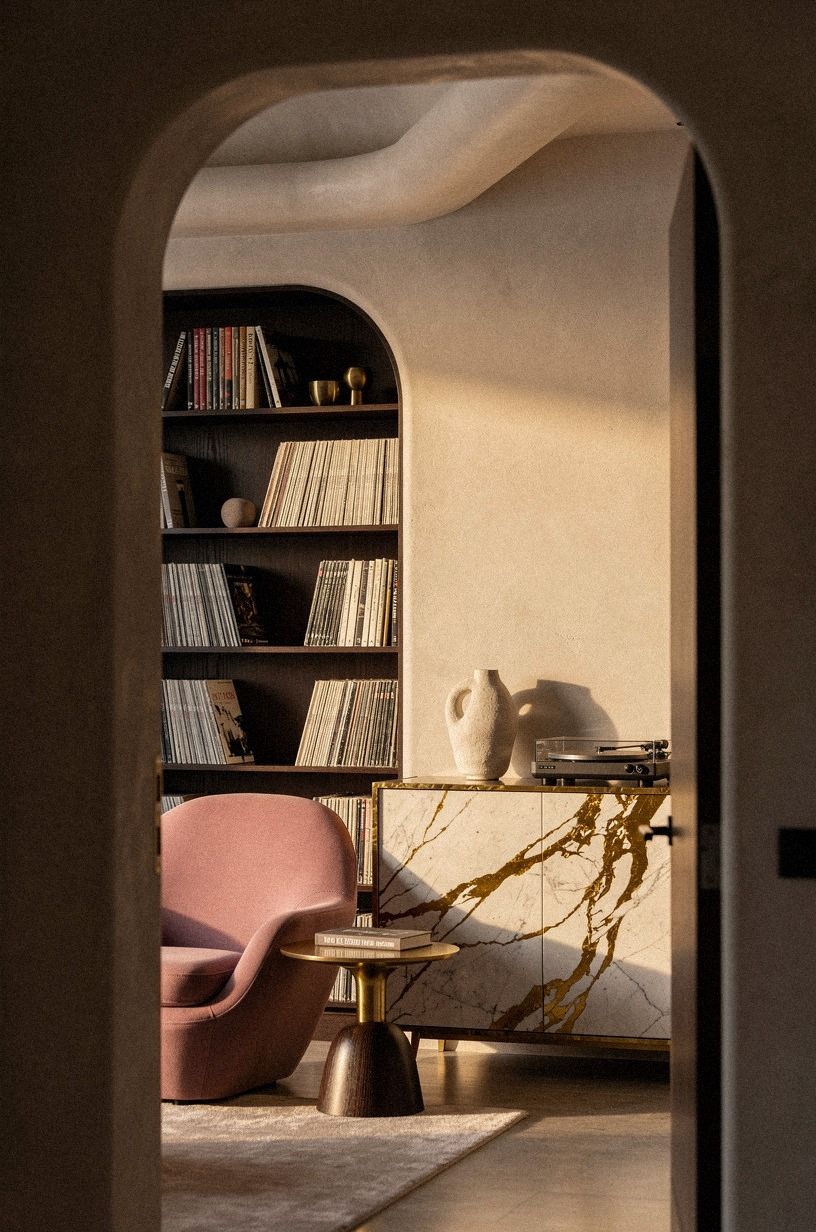
Small changes in speaker placement can make the room feel more finished. Angle each speaker toward your listening seat, then route cords along the back edge of the cabinet or inside a narrow raceway. Reclaimed weathered teak speaker stands can add warmth against a forest-green, rust, and natural-oak palette.
You’ll want to avoid letting cords cross the main walking path. That tiny detail will bother you every day.
I’d also skip placing speakers directly inside a tightly packed bookcase, because the setup can look crowded and the cabinet becomes difficult to use. Use a shallow tray for the remote, keep the turntable surface clear, and give your hands room to work.
You can often save money here with careful placement before buying acoustic panels or new equipment. Test the listening position, move the speakers a few inches at a time, and notice what changes. Small adjustments can produce a more polished, satisfying result.
17Why Does This Layout Feel Warm Without Looking Crowded?
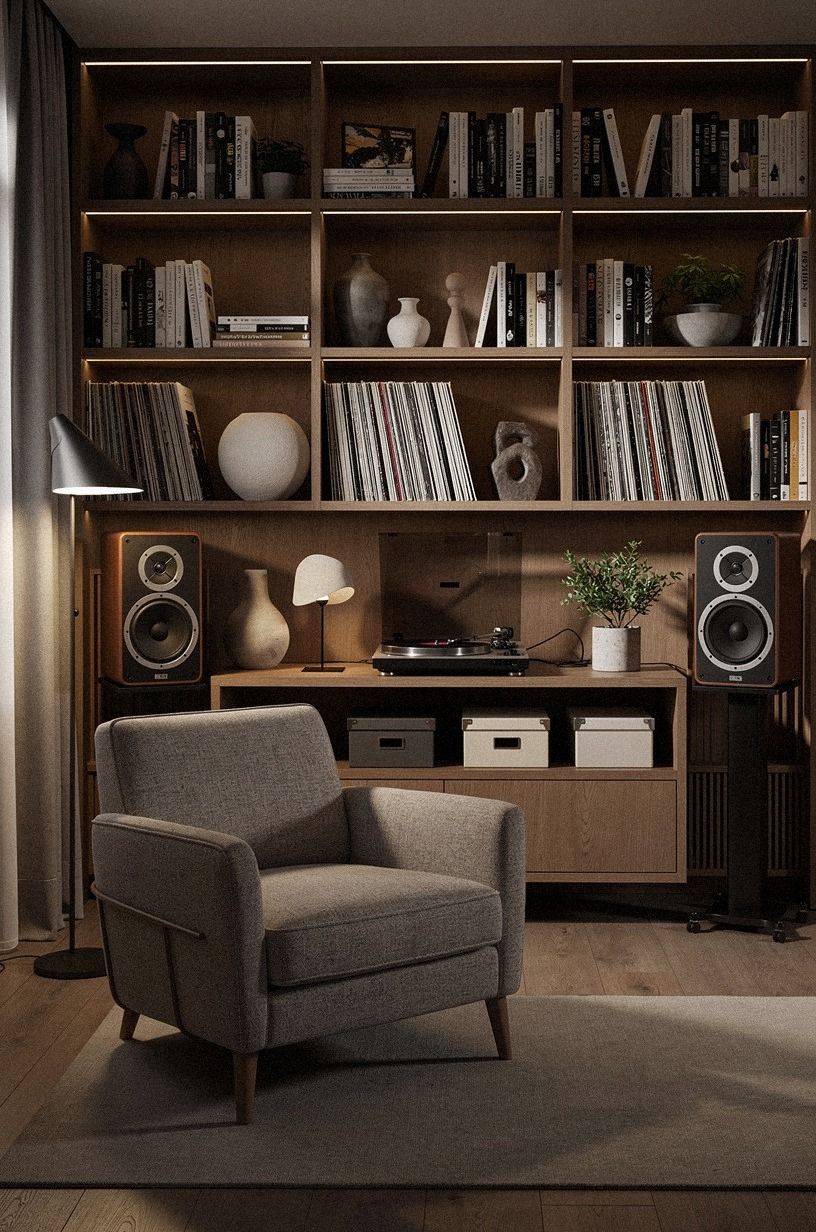
The room feels warm because the softness is distributed. You have fabric near the chair, wood across the shelves, a rug underfoot, and low light near the listening position.
No single object has to carry the whole mood. That balance is what makes an ambient room feel calm instead of decorated within an inch of its life.
Ask yourself what you’ll see from the chair. Will you face a blank wall, or will your eye land on books, a record sleeve, and a lamp with a warm shade?
I’d rather have fewer objects with stronger material contrast than a full shelf of filler. And if you’re still unsure, remove one item from every surface for a week.
The room will tell you what it missed.
That restraint is what makes the layout feel sophisticated and livable. You get a serene reading corner, a practical music station, and enough visual breathing room for the room to feel generous. The result is cozy without becoming fussy, and personal without becoming chaotic.
18Style the Shelf With Three Personal Layers
Finish the room with three layers of meaning: books you reread, records you play, and objects that remind you of a person or place. On cerused white oak, a vintage ceramic vase can sit beside a stack of music biographies, while one album cover leans forward to create a little visual movement. Your shelves should reveal how you live, not simply prove that you own things.
You’ll want to keep the arrangement flexible, because your favorite record may change next month. Leave a small open section for new finds and avoid filling every corner on day one.
I’d put the most-used books between waist and eye level, then move less-used volumes higher. It’s a practical choice, but it also makes the room feel lived-in and welcoming.
If you want more ideas for a creative, layered setup, revisit these music room ideas for a creative haven. The strongest shelves usually combine something useful, something beautiful, and something slightly unexpected. That final detail gives the room its memorable character.
The Case for a Room That Serves Both Books and Music
I’ve learned that the best library music rooms aren’t built around collecting more things. They’re built around choosing what deserves attention. I once styled a wall with too many framed sleeves because I wanted the room to announce its personality immediately.
It announced clutter instead. The fix wasn’t another cabinet or a larger rug.
I removed half the display and gave the remaining pieces space to speak.
Books and records need different kinds of visibility. Books can line a wall and still feel calm, especially when their heights and colors vary naturally.
Records are more demanding because their square covers create stronger blocks of color, and their storage needs to be practical. That’s why I prefer a low credenza for vinyl and taller shelving for books.
Your eye gets a horizontal pause below and a quieter vertical rhythm above.
I’m also firmly against making every material match. Walnut beside cerused oak feels more collected than a room filled with one furniture set.
Linen beside mohair gives you a change in texture when the palette stays simple. The little frictions matter.
They’re what keep the space from looking like a staged catalog page.
And the listening chair has to be real. If it’s too precious, too shallow, or placed where you can’t reach the records, you won’t use it.
I’d choose one comfortable chair over a decorative pair every time. Your room should support a Saturday afternoon with a novel, a side lamp, and an album you know by heart.
That’s the point, isn’t it?
A Few Things Worth Answering
What is the best Library Music Room Ideas for Book & Vinyl Lovers for a small library music room book?
A low IKEA KALLAX unit with doors and one linen-upholstered chair is a strong pairing for a small room. You’ll get useful storage without blocking the floor, and your favorite books can stay visible on a narrow wall shelf. It offers good value when every square foot matters.
Where can I buy Library Music Room Ideas for Book & Vinyl Lovers pieces on a budget?
Look at IKEA, Wayfair, and Target, then check Facebook Marketplace or local thrift stores for solid wood cabinets. You don’t need matching pieces. A secondhand credenza, fresh paint, and new cabinet pulls can carry the room while keeping the total cost manageable.
How much does a Library Music Room Ideas for Book & Vinyl Lovers makeover cost?
A small refresh can run about $100-$300 if you already own the chair and shelves. Paint, rearranged books, thrifted frames, and better lighting can create a warmer room before you buy major furniture. The best budget depends on whether you need storage, seating, or sound improvements first.
Can I create a Library Music Room Ideas for Book & Vinyl Lovers room on a budget?
Yes, and you can start with free changes: rearrange the shelves, move the chair toward the best light, and group records by use. Add a thrifted lamp or linen-look curtains when your budget allows. These small upgrades can be surprisingly effective.
Is Library Music Room Ideas for Book & Vinyl Lovers worth it in a small space?
Yes, because a smaller room can feel more intimate for reading and listening. Keep the center open, use low storage, and choose one comfortable chair instead of several pieces that make movement difficult. It’s worth it when the room supports habits you’ll actually enjoy.
Is Library Music Room Ideas for Book & Vinyl Lovers a good idea for a rental?
Yes. Use peel-and-stick wallpaper on a shelf backing, tension rods for curtains, removable hooks for art, and freestanding storage. These swaps give you warm visual texture without permanent changes or a major upfront investment.
Where I’d Start First
If I had to pick one, I’d start with the listening chair. You can’t enjoy books or records from a room that has nowhere comfortable to stay.
Choose the seat before the decor, then let every shelf and lamp support it. Pin this layout for later and build outward slowly.