
The short answer: a home studio that sounds right is layout first, gear second, and most of the fixes run $200 to $800, not thousands. I learned that the hard way. I spent two years blaming my monitors for a muddy, boxy sound that was really my room’s fault. My desk sat on the wrong wall, my chair parked dead center, and the only treatment I owned was a rug too small to do anything. These 18 music studio room design and layout ideas are the fixes that moved the needle, cheapest first.
- Put your desk on the short wall, not the long one
- Sit at the 38-percent mark (the rule nobody respects)
- Treat the first reflection points before you buy anything else
- Choose rockwool panels over foam squares
- Should your monitors ever sit on the desk?
- Build the Three-Height Light Stack
- Trap the corners where bass piles up
- Run a record wall with the KALLAX grid
- Paint the room a color that behaves at 2 a.m.
- Hang your guitars like the art they are
- Lay a rug big enough to matter
- Kill the cable underworld under your desk
- Give the window a double life
- Carve a vocal booth out of a closet
- Skip the racing-style chair, buy a real task chair
- Make the door stop leaking sound
- Follow the Two-Surface Rule for synths and controllers
- What a studio setup costs, tier by tier
1Put your desk on the short wall, not the long one
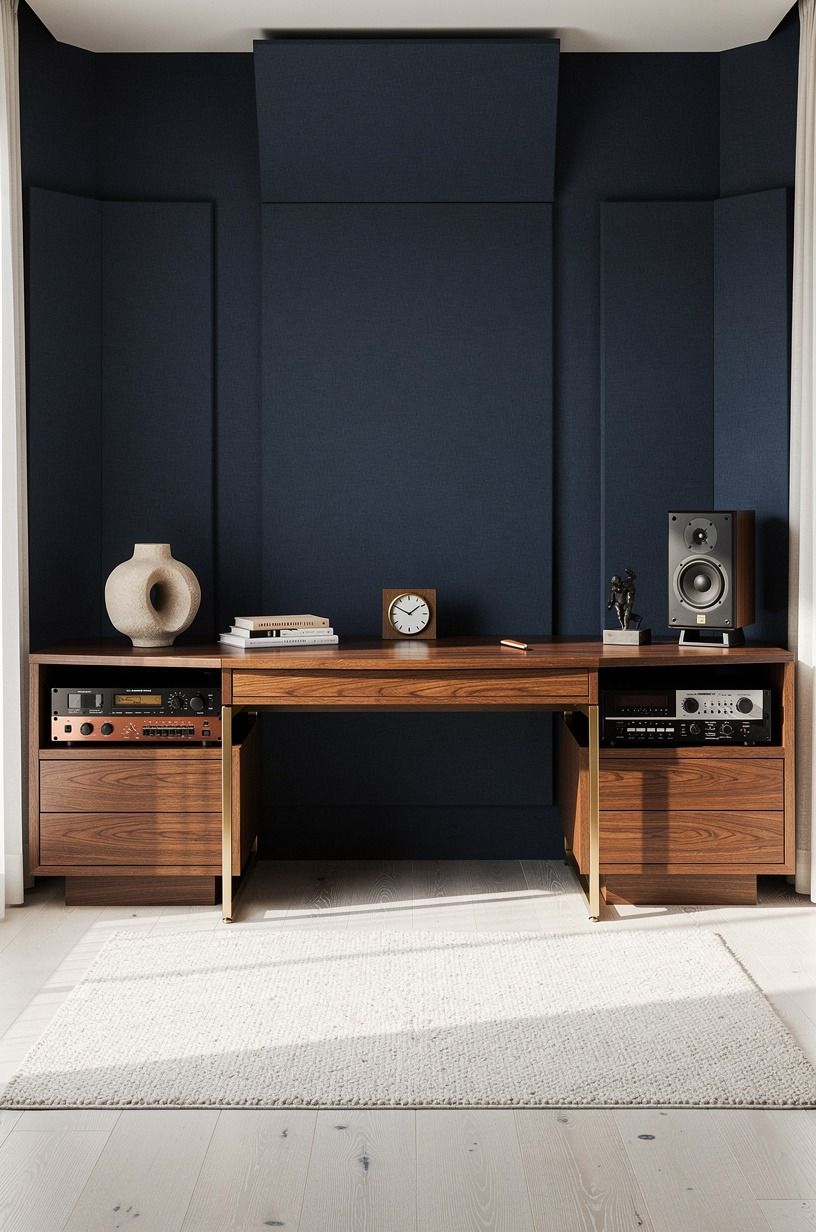
Your desk belongs centered on the short wall, firing sound down the long axis of the room. You’ll get symmetrical reflections from both side walls, and symmetry is what makes a stereo image sit still instead of smearing left. If your room layout is fighting you, our small living room furniture layout ideas apply here more than you’d think.
I’d skip the desk-shoved-in-a-corner move. It looks efficient, but a corner loads you with bass buildup on one ear and nothing on the other.
Give yourself at least a foot of air behind the desk for cable access, and don’t push the desk flush against the drywall. Small gap, big difference when you’re chasing a hum at midnight.
2Sit at the 38-percent mark (the rule nobody respects)
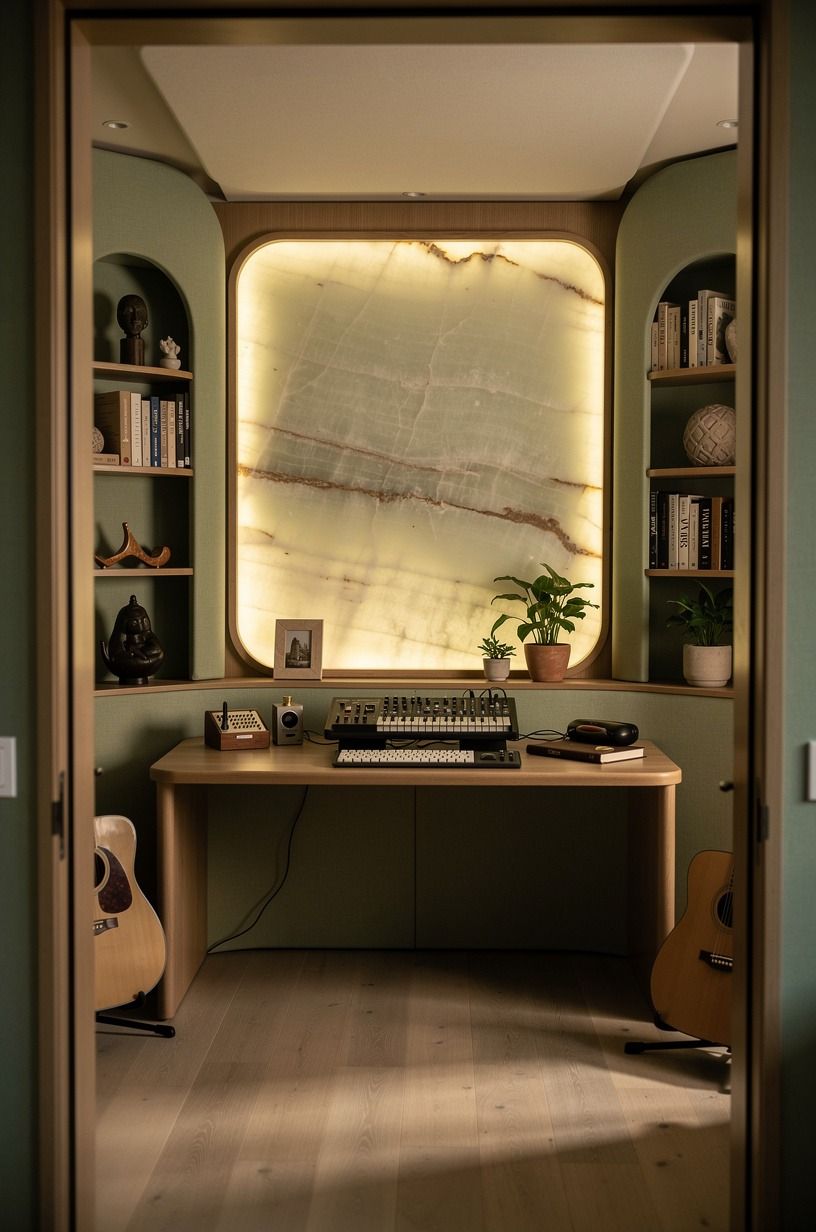
Here’s the part that changed everything for me: your ears should sit roughly 38 percent of the room’s length from the front wall. Dead center is the worst seat in the house because that’s where bass cancels itself out.
I mixed in the center for a year and wondered why my low end never translated. It wasn’t my ears.
It was the seat.
Mark the spot with tape, then build an equilateral triangle between your head and the two monitors. If your room shape is awkward, the same logic designers use for narrow living room layouts works here: position beats square footage every single time!
3Treat the first reflection points before you buy anything else
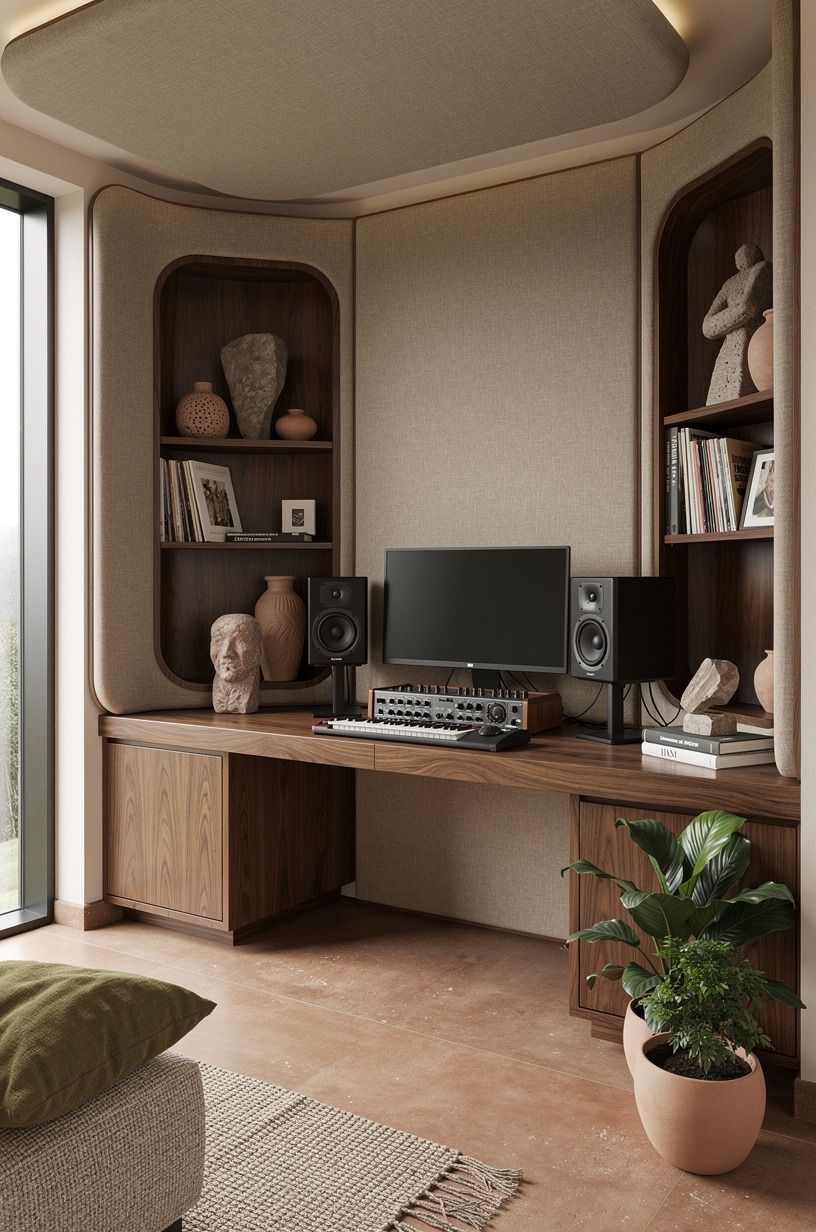
Grab a mirror and a patient friend. Slide the mirror along the side wall until you can see a monitor’s tweeter from your chair, and that’s your first reflection point.
There are four of them: left wall, right wall, ceiling, and the wall behind you. Panels at those four spots do more for clarity than any monitor upgrade under a grand.
You don’t need to cover the whole room. That’s the mistake everyone makes.
Four well-placed 2-inch panels turn a splashy, echoey box into a room you can trust, and you’ll hear the difference in the first ten seconds of playback. Start here, not with gear.
4Choose rockwool panels over foam squares
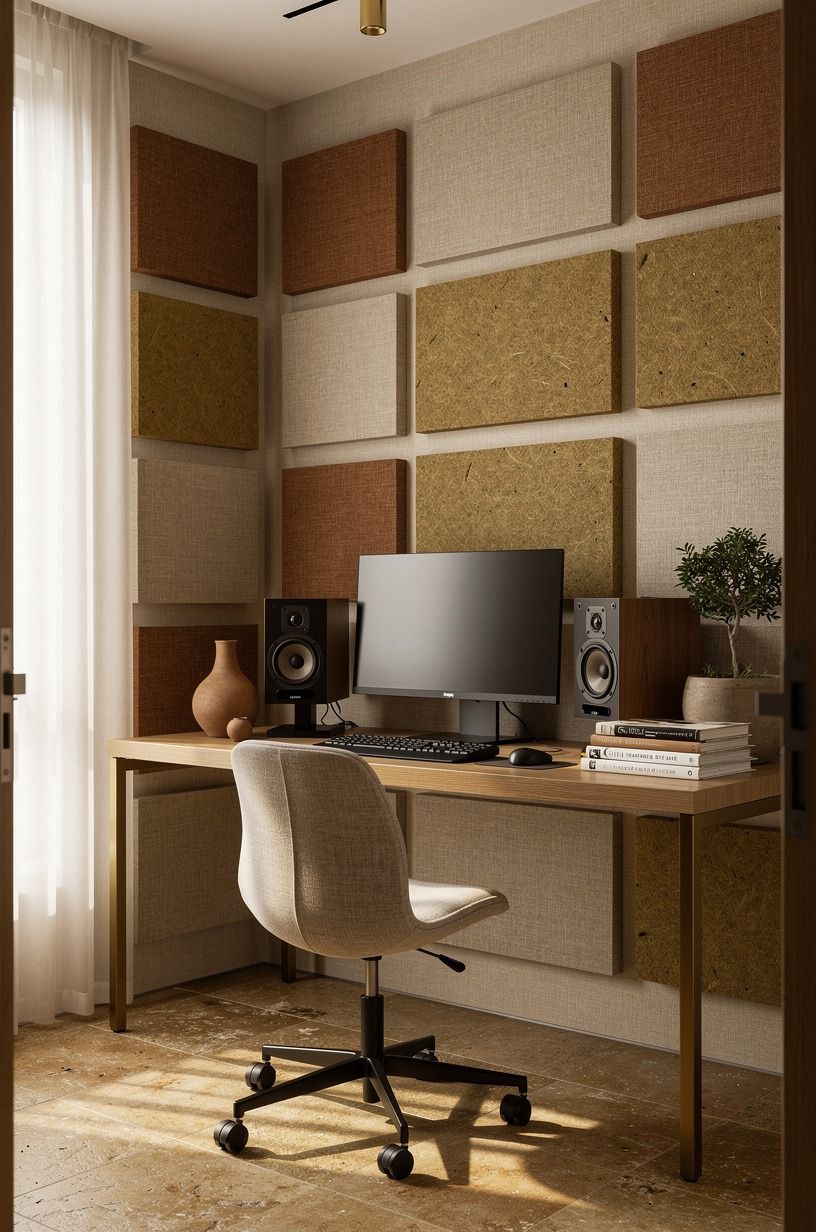
Real talk: those wedge foam squares do almost nothing below the upper mids, and bass is where your room problems live. What you want is Owens Corning 703 or generic rigid rockwool, 2 to 4 inches thick, wrapped in breathable linen. They look like framed art and they actually absorb the frequencies that mud up your mixes.
Foam isn’t useless, it’s just nearly useless for the money. I’d rather hang two rockwool panels than twenty foam tiles, and it’s not close. If you want the deep dive on treatment that works, our guide to home music studio rooms built for serious sound covers panel placement wall by wall.
5Should your monitors ever sit on the desk?
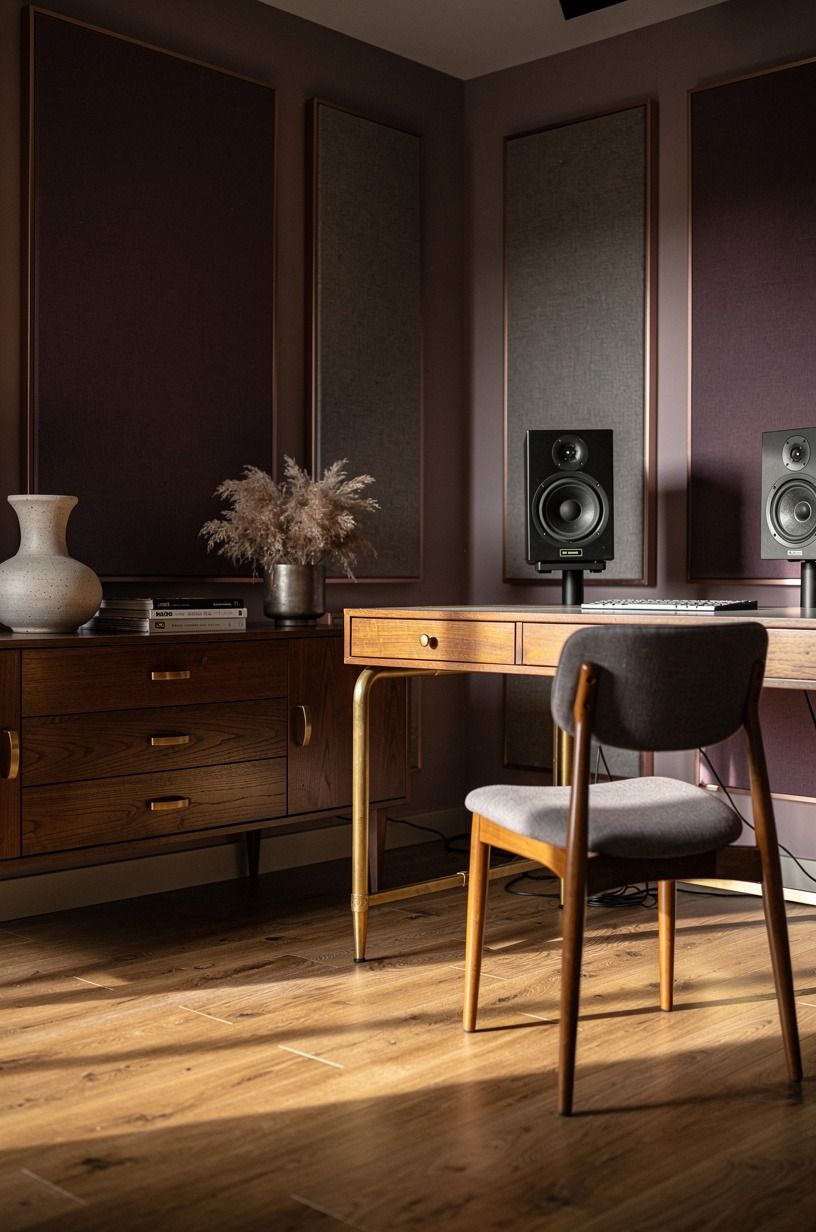
No. A monitor sitting on your desk couples with the surface, the desk becomes a speaker, and everything below 200 Hz turns to soup.
You’ve got two fixes, and both are cheap. Monitor isolation pads decouple the speaker from the desk for less than a nice dinner out, and dedicated stands get the tweeters to ear height, which is where they need to be anyway.
I went back and forth on stands versus pads for a month. Stands won, because they also freed up desk space for my audio interface and a second screen.
But if your desk is heavy and solid, pads get you 80 percent of the way there. Either beats the desk surface by a mile.
6Build the Three-Height Light Stack
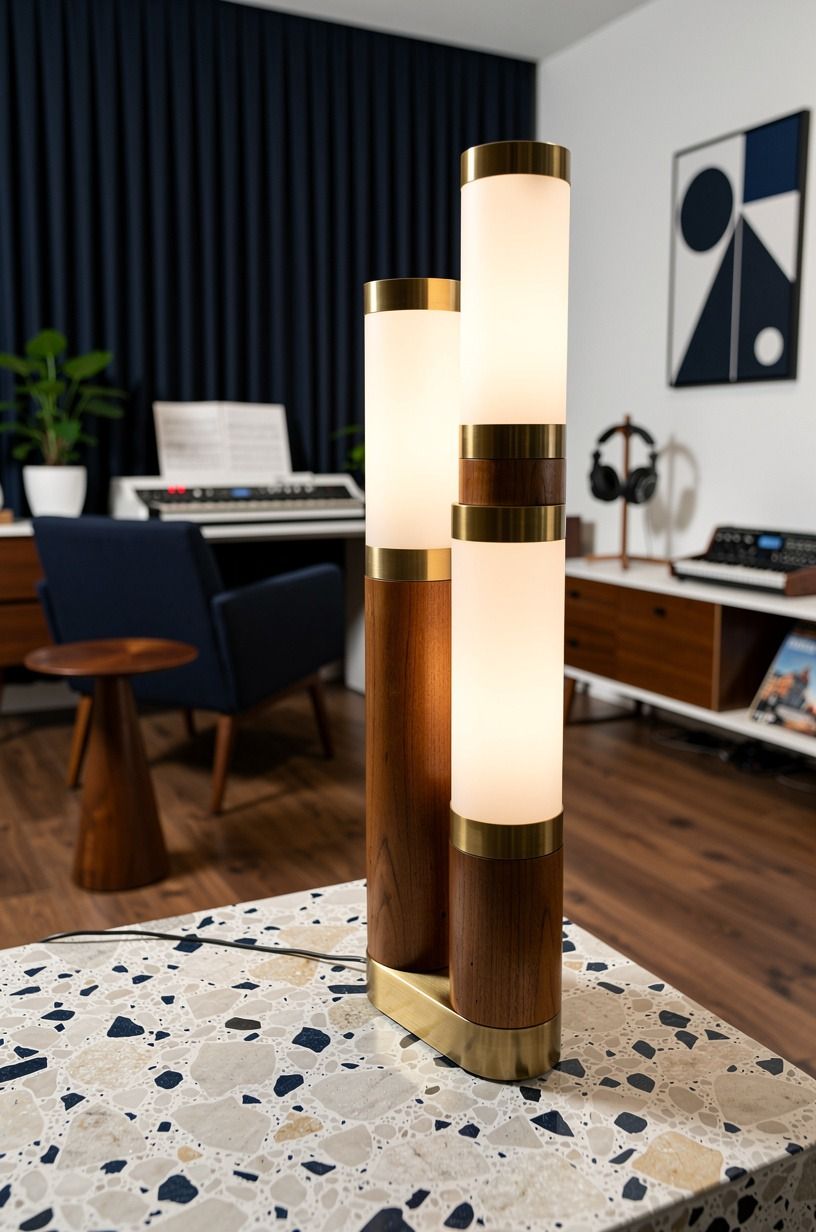
Every room I design gets three light sources: one overhead, one at task level, one low and ambient. A studio is no different, except your overhead should basically never be on while you work. Run a warm 2700K desk lamp for writing and editing, a soft bias light behind your monitors to kill eye strain, and a floor lamp in the corner for late sessions.
Blue-white light at 11 p.m. is how you end up wired at 2 a.m. with nothing finished. Warm pools of light keep you in the room longer, and the low glow bouncing off treated walls feels like a real studio, not a cubicle. The layered lighting in these hidden gaming room setups is exactly the vibe to borrow.
7Trap the corners where bass piles up
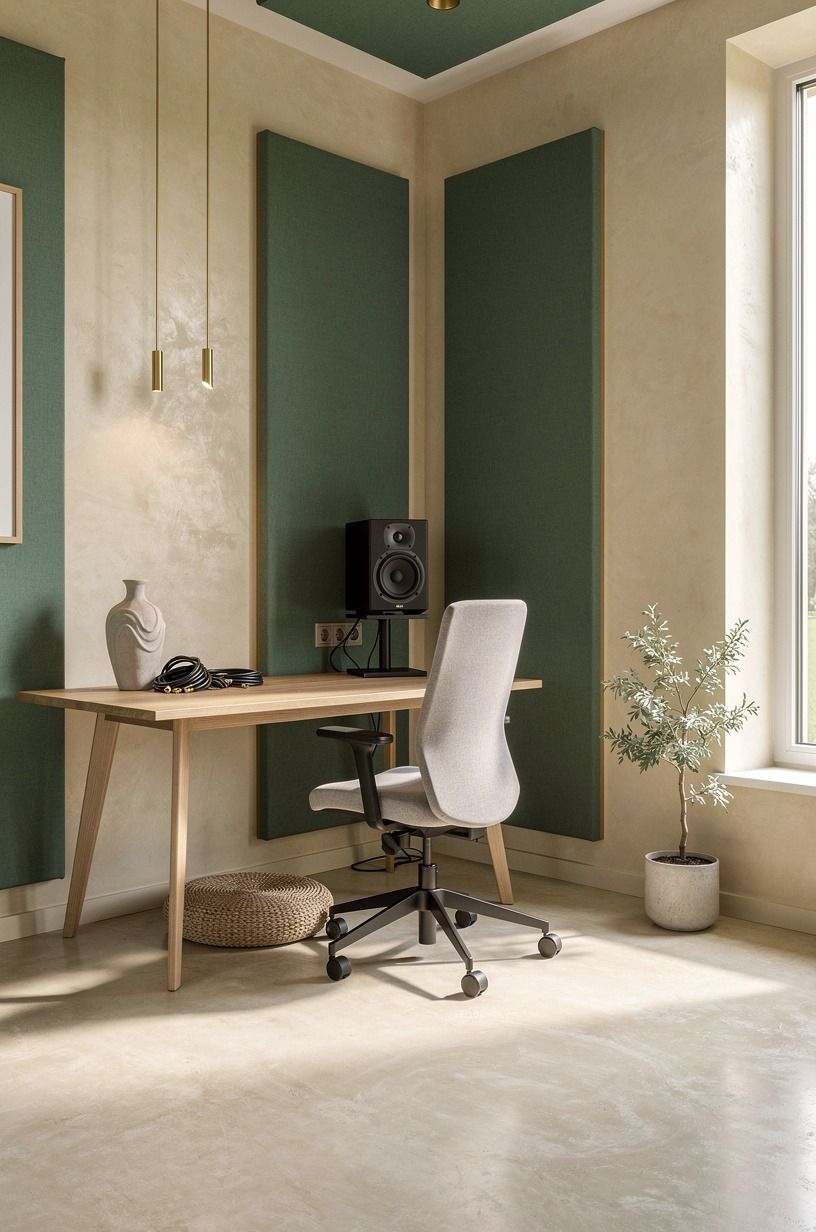
Bass doesn’t spread evenly through a room. It collects in corners like water in a gutter, which is why your low end sounds huge in one spot and gone two feet away. Floor-to-ceiling corner traps, even simple ones made from 4-inch rigid rockwool stacked in a fabric sleeve, pull that buildup down so your kick drum sounds the same everywhere.
If budget is tight, prioritize the two front corners behind your monitors. Those do the most damage.
I skipped corners for a year because they’re not photogenic, and honestly, that was pride talking. The room sounded 30 percent tighter the day I stuffed them.
Corners before walls, always.

8Run a record wall with the KALLAX grid
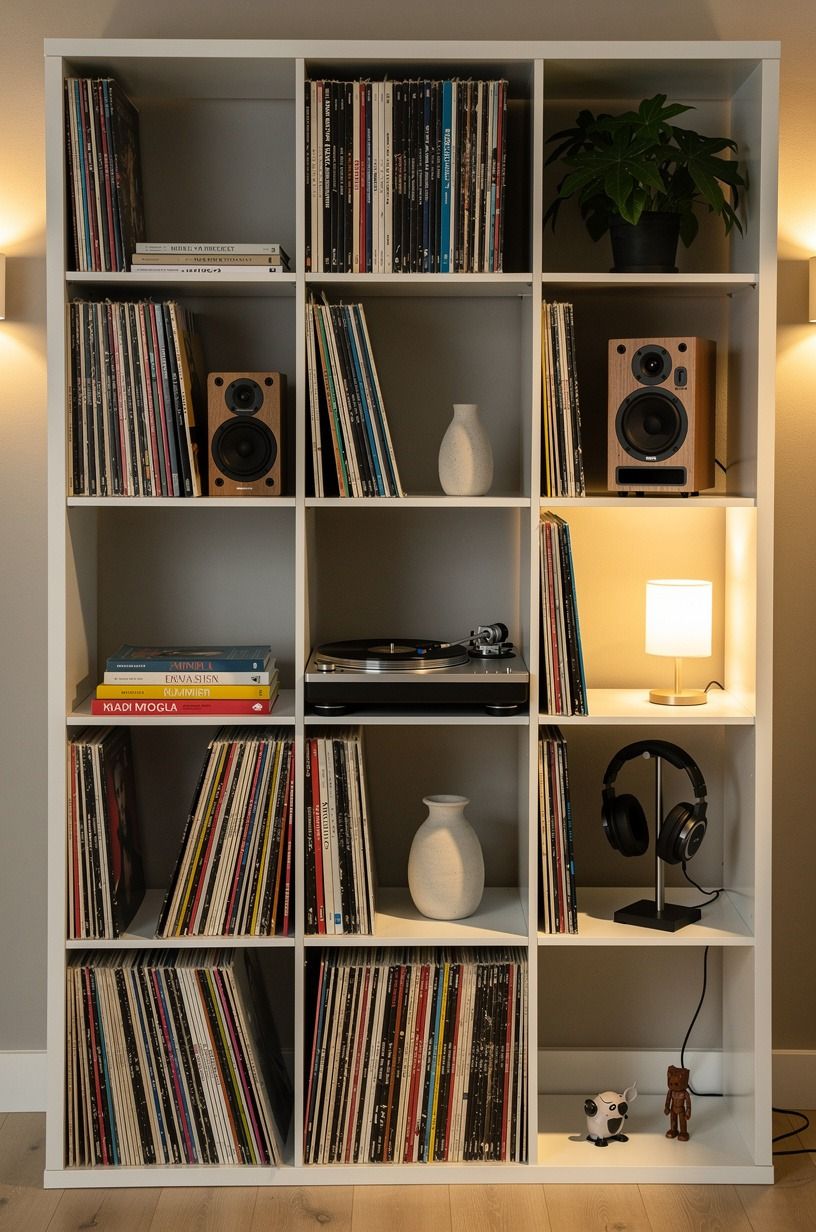
The IKEA KALLAX in white-stained oak effect is the unofficial furniture of every working studio I’ve ever set foot in, and it earned it. The 13-inch cubes fit vinyl perfectly, hold interface boxes and headphones, and the uneven surface of records and gear actually breaks up sound like a budget diffuser. Two birds.
Anchor it to the wall (non-negotiable if you’ve got kids or pets) and run it along your back wall where it doubles as rear treatment. The full breakdown of configurations is in our KALLAX setup that splits a studio into two rooms for under $200, and it works just as well against a wall as it does floating.
9Paint the room a color that behaves at 2 a.m.
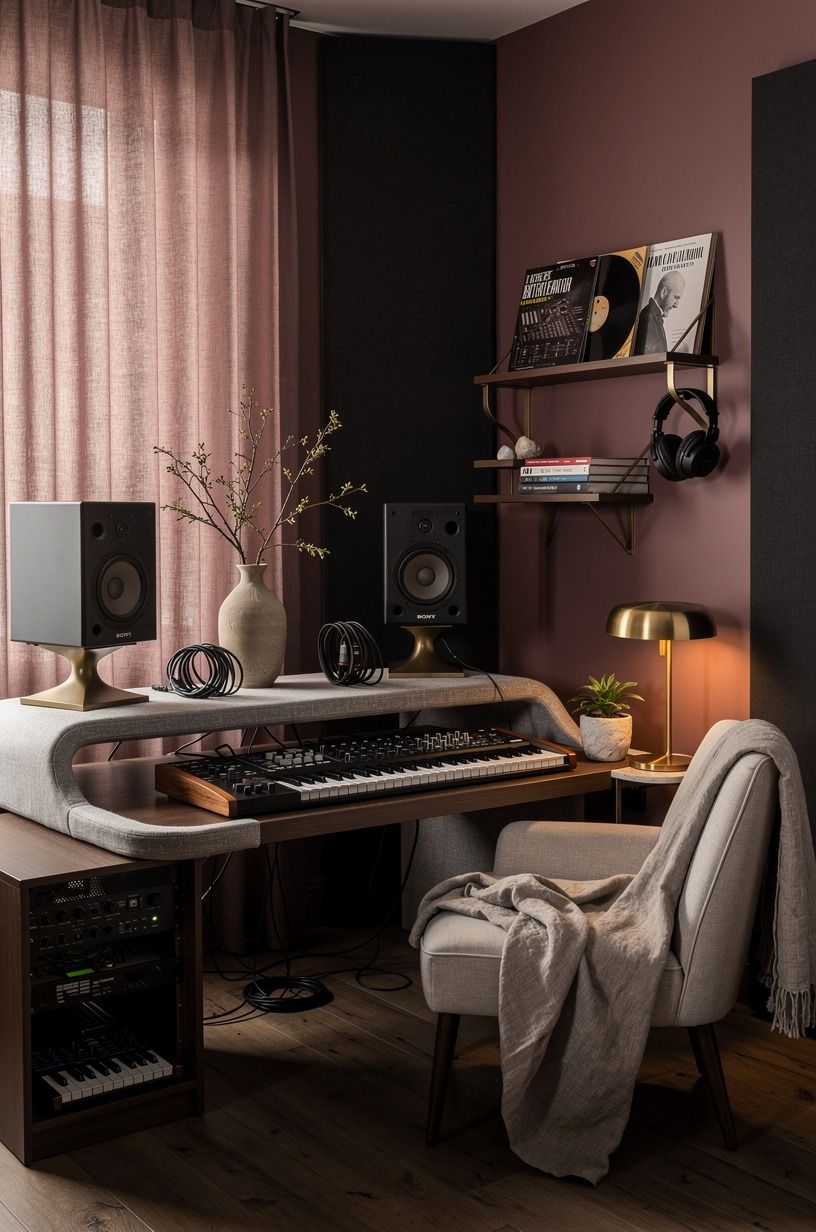
Studio walls take a beating of screen light and lamp glow, so your paint choice matters more here than in any other room.
10Hang your guitars like the art they are
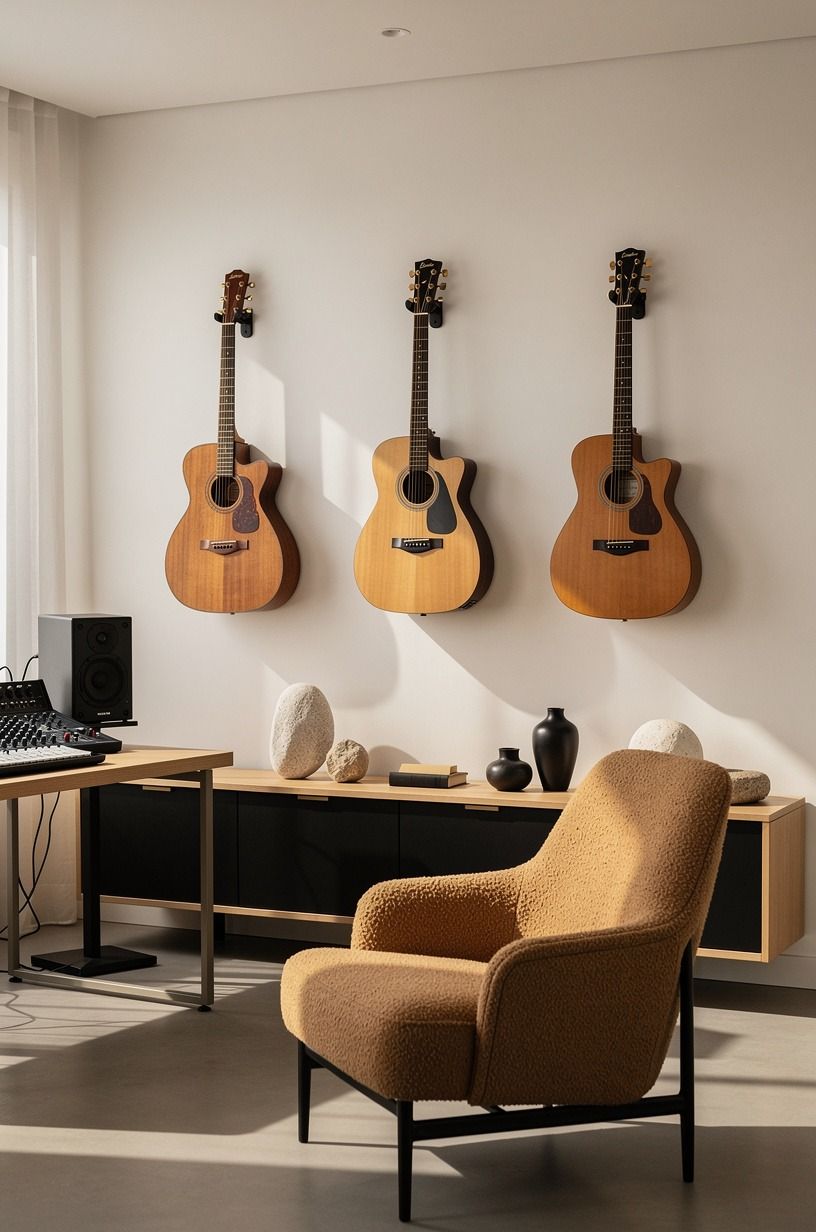
A guitar in a case under the bed is a guitar you don’t play. Wall hangers at eye level turn your instruments into the best decor a studio can have, and the research-backed gallery rule applies: hang with the center around 57 to 60 inches from the floor, same as framed art. A row of three guitars on a warm white wall (Benjamin Moore Swiss Coffee is my go-to) beats any poster you’ll ever buy.
Keep them off exterior walls in winter and away from radiators and direct sun, because wood moves with temperature swings. I’ve got a cheap acoustic and a mid-range electric hanging side by side, and guests always reach for the cheap one first. It’s the prettiest.
Fine by me!
11Lay a rug big enough to matter
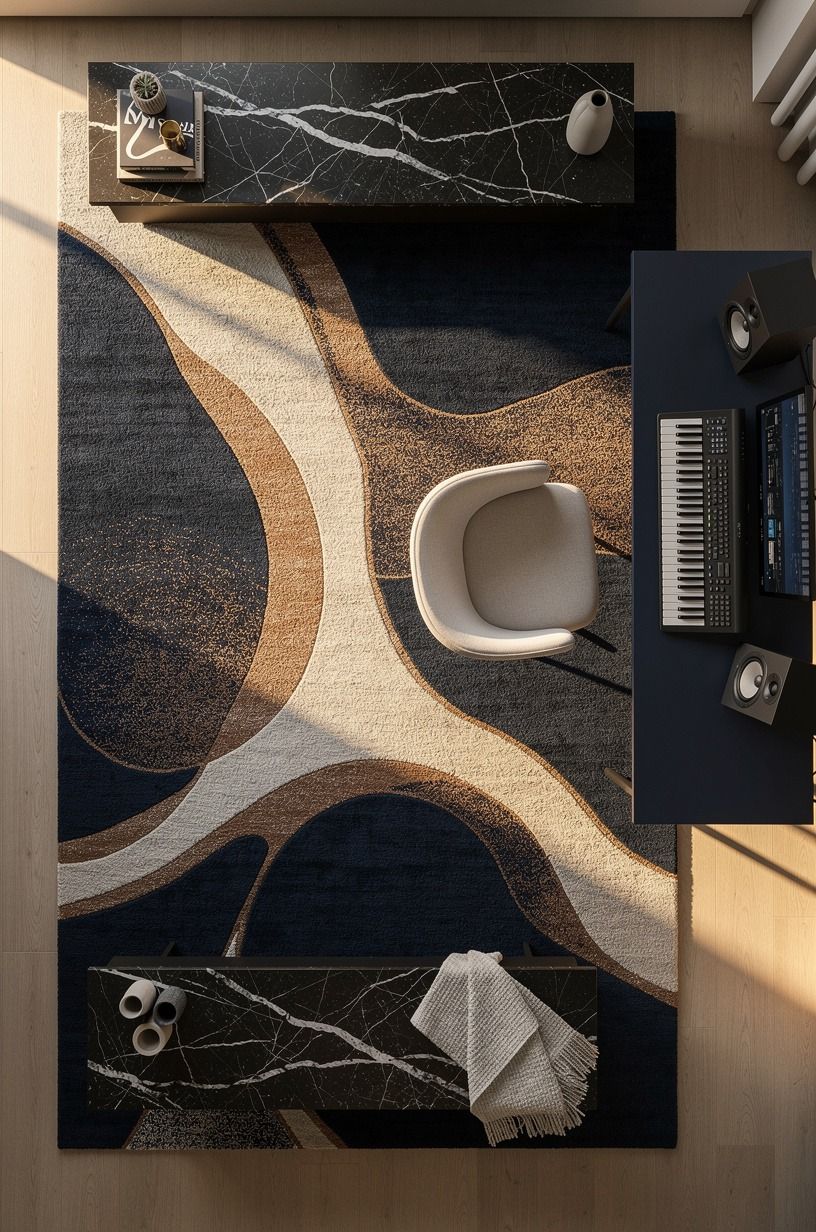
A hard floor between you and your monitors is a mirror for sound, and flutter echo off bare hardwood makes high frequencies sound harsh and fake. The fix is a rug large enough that your chair and the front legs of your desk sit on it, not a postage stamp floating in the middle. A thick wool rug typically runs $400 to $1,500, and it’s the one textile in the room that earns its keep acoustically.
Don’t buy the thin flat-weave because it’s cheaper. It does almost nothing. You want pile you can press a finger into, ideally over a felt pad.
Mine sits slightly off-center under the desk, which is wrong by every decorating rule and right for where my ears actually sit.
12Kill the cable underworld under your desk
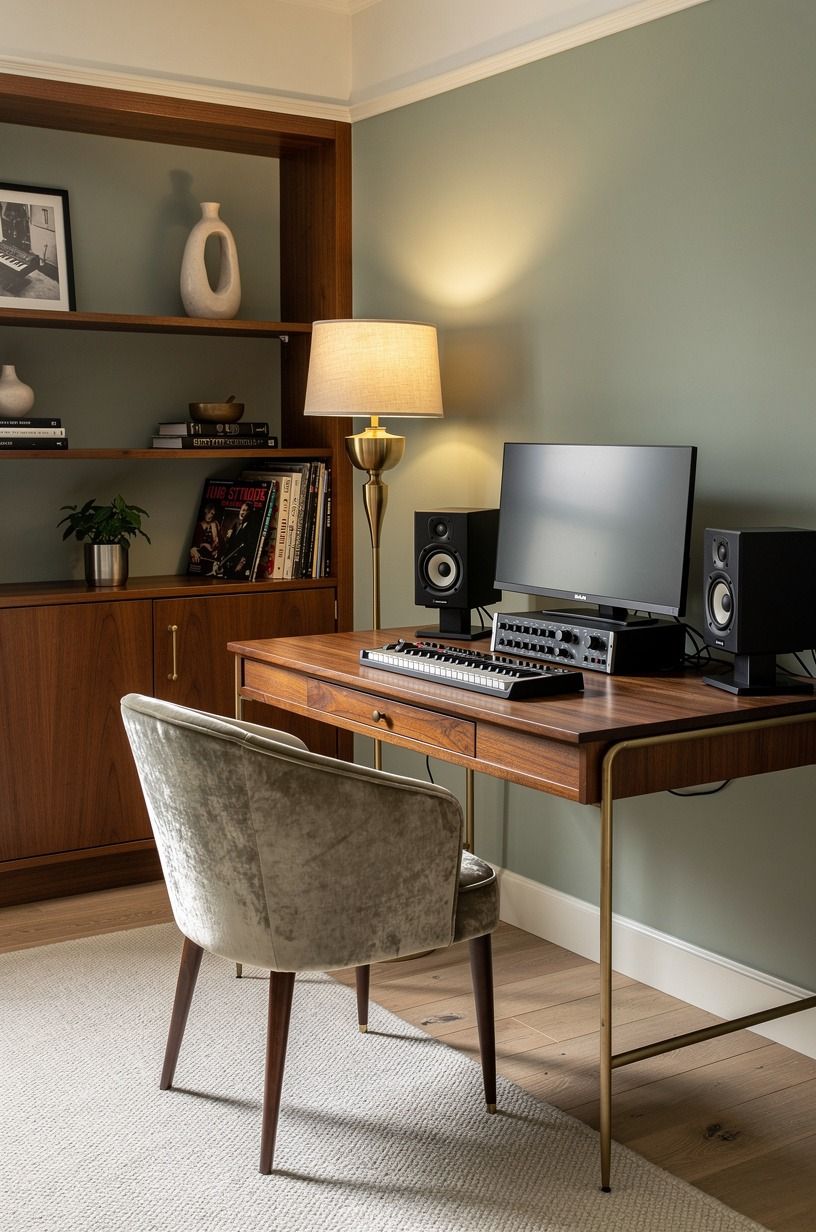
Every studio reaches a point where the floor behind the desk becomes a nest of power, USB, XLR, and headphone extensions, and you can’t tell which brick belongs to what. Fix it in one afternoon: velcro cable ties every eight inches, a stick-on raceway screwed under the desk’s back edge, and a label on both ends of anything that matters.
Why both ends? Because the day you need to trace a dead connection, you’ll be lying on the floor with a flashlight in your teeth, and a label at only one end is a coin flip.
Future you will be so grateful. This is the unglamorous stuff that makes a studio feel intentional instead of improvised, the same way the layout ideas in why your studio apartment has more room than you think come down to systems, not space.
13Give the window a double life
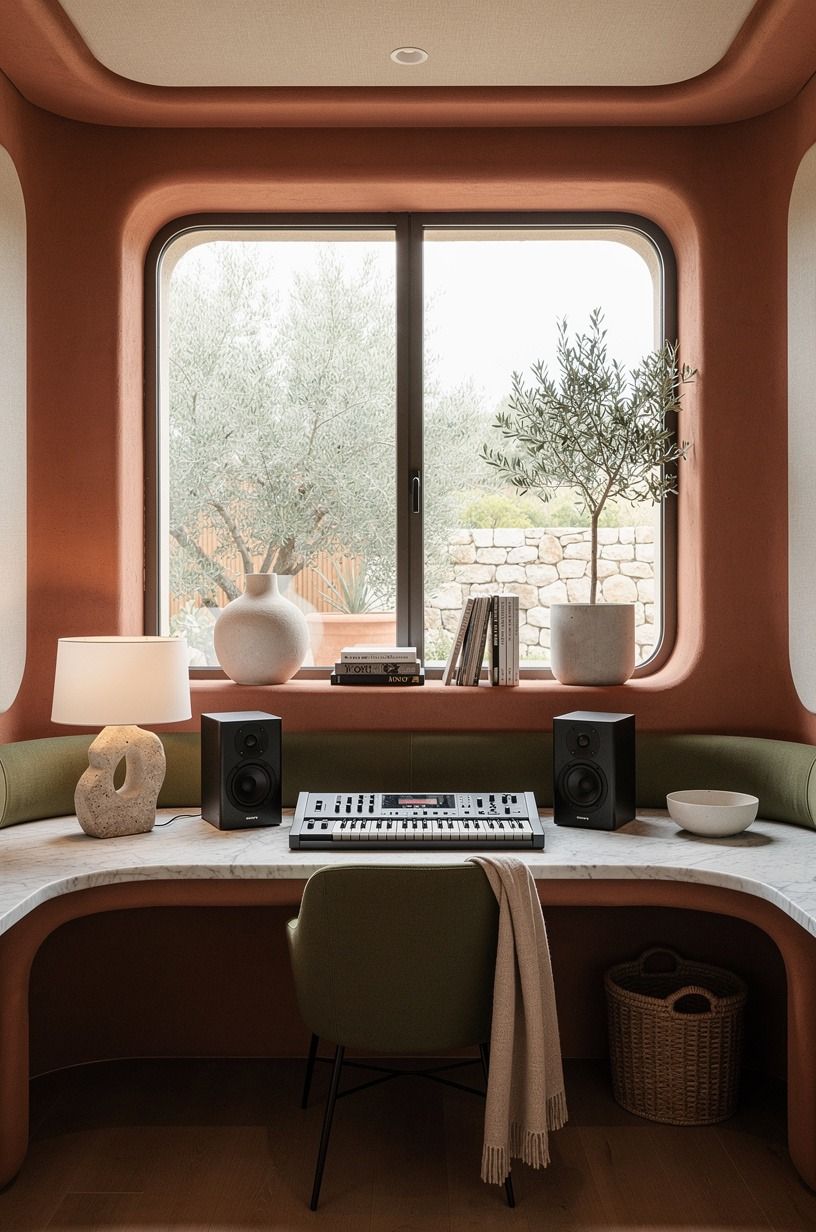
A window in a studio is glass: the most reflective surface you’ll ever record near.
14Carve a vocal booth out of a closet
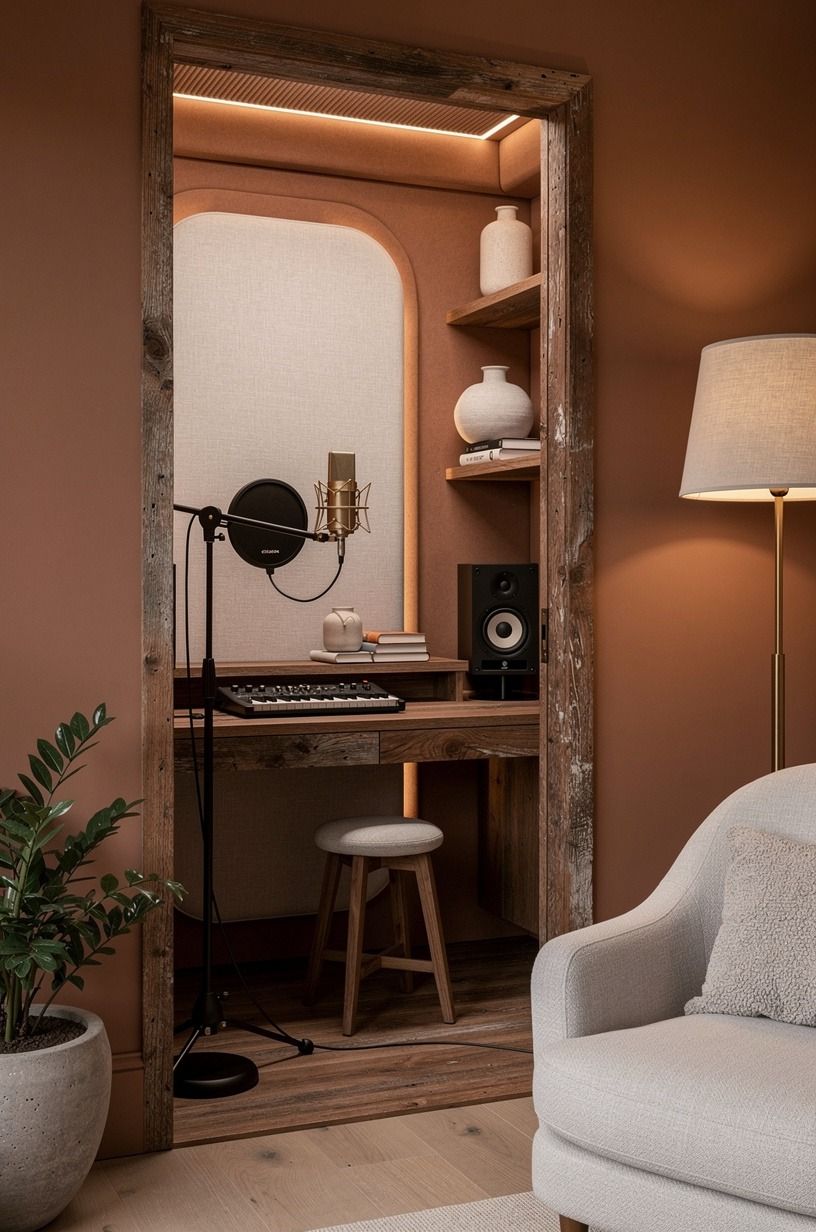
You don’t need to build a booth. A walk-in closet full of hanging clothes is already a dead, dry recording space, and the clothes are free absorption.
Add a couple of moving blankets on any bare wall, set up facing the garments, and you’ve got vocal takes that sound like you spent real money. A reflection filter behind the mic tightens it further for around the cost of a decent dinner.
The mistake is recording in the open room because it “feels more professional.” Open rooms sound like open rooms, boxy and splashy on vocals. Our roundup of music room ideas that turn any space into a creative haven has more ways to make odd corners earn their keep.
15Skip the racing-style chair, buy a real task chair
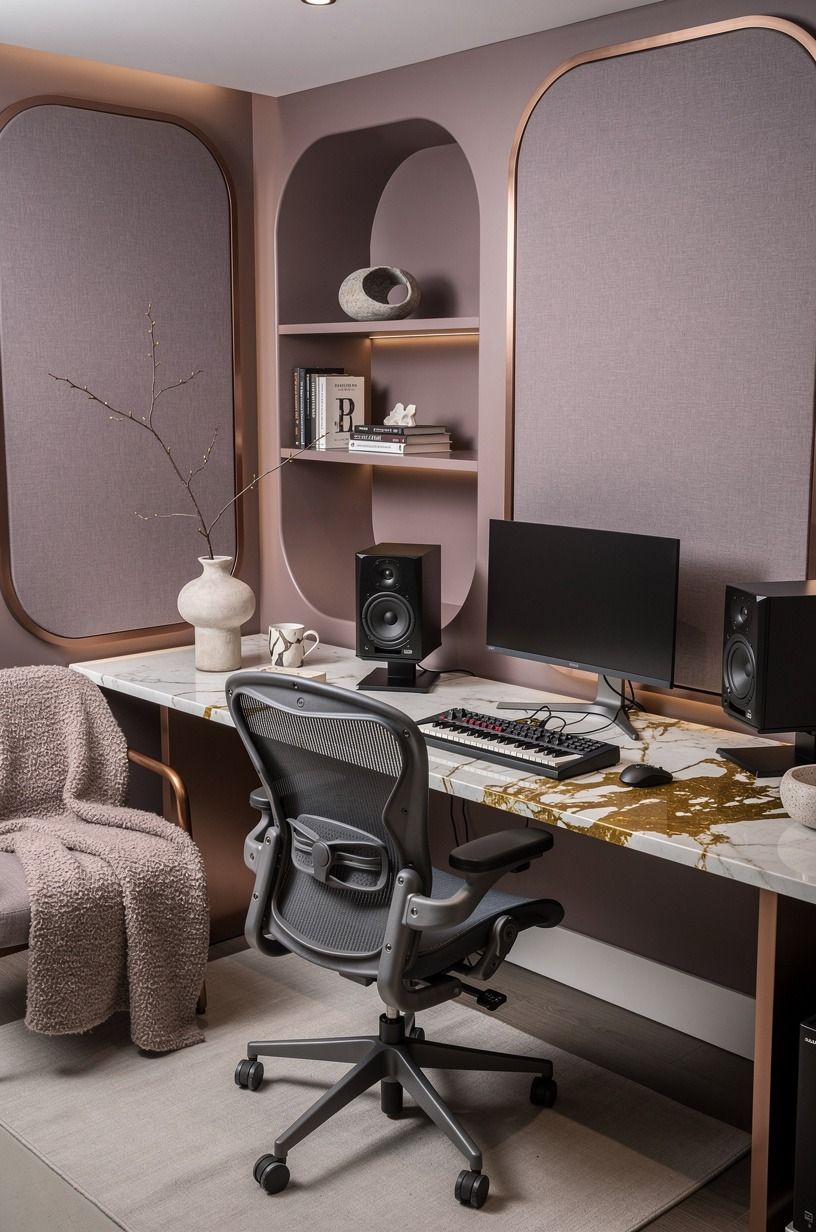
Gaming chairs look the part and sit like a vinyl bucket.
16Make the door stop leaking sound
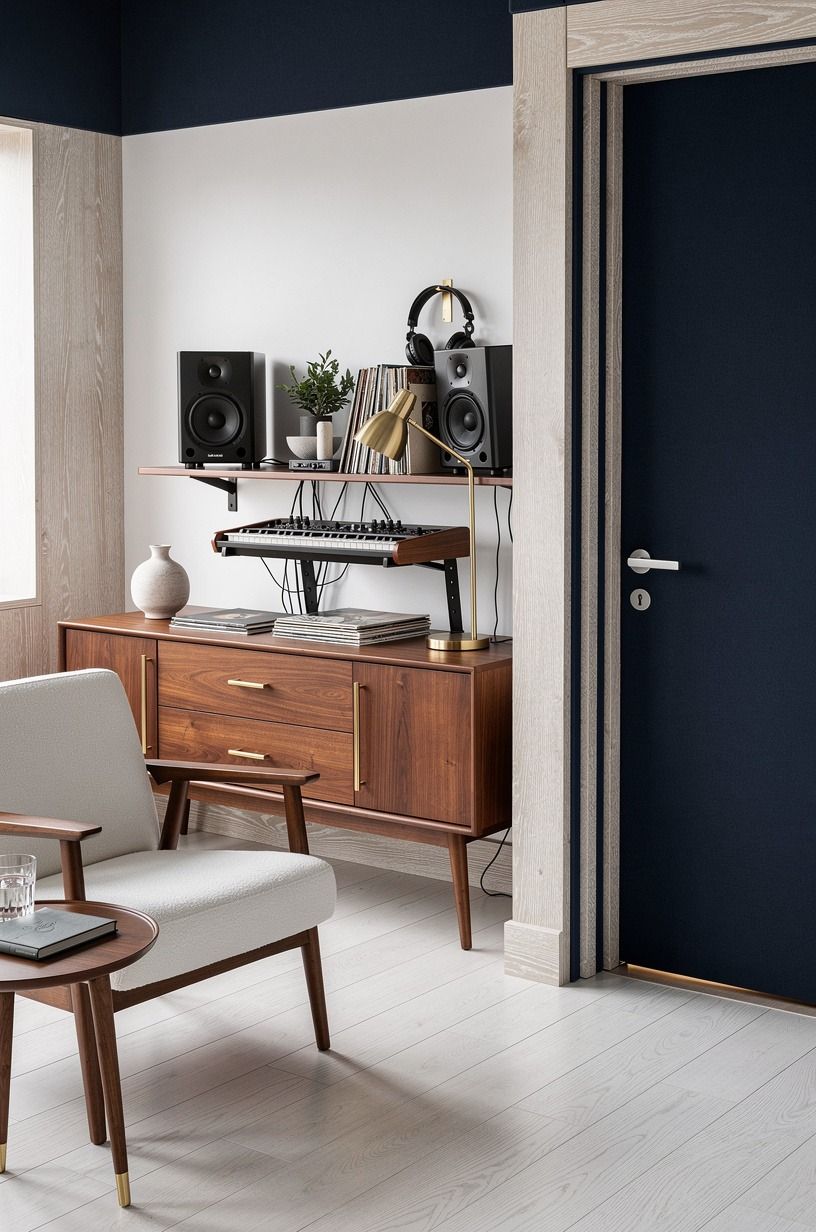
The door is the weakest link in any studio, and no amount of wall treatment fixes sound pouring through the gap underneath it. A stick-on door sweep plus adhesive weatherstripping around the frame seals the worst of it for pocket change, and a heavy curtain hung over the door on a second rod adds a soft layer that helps more than it should.
If you own the place and can swap the door, a solid-core door is the single biggest isolation upgrade available. Hollow doors are basically drums. Fair warning though: sealing the door also seals the room, so crack it between sessions or you’ll be mixing in your own stale air by hour three.
17Follow the Two-Surface Rule for synths and controllers
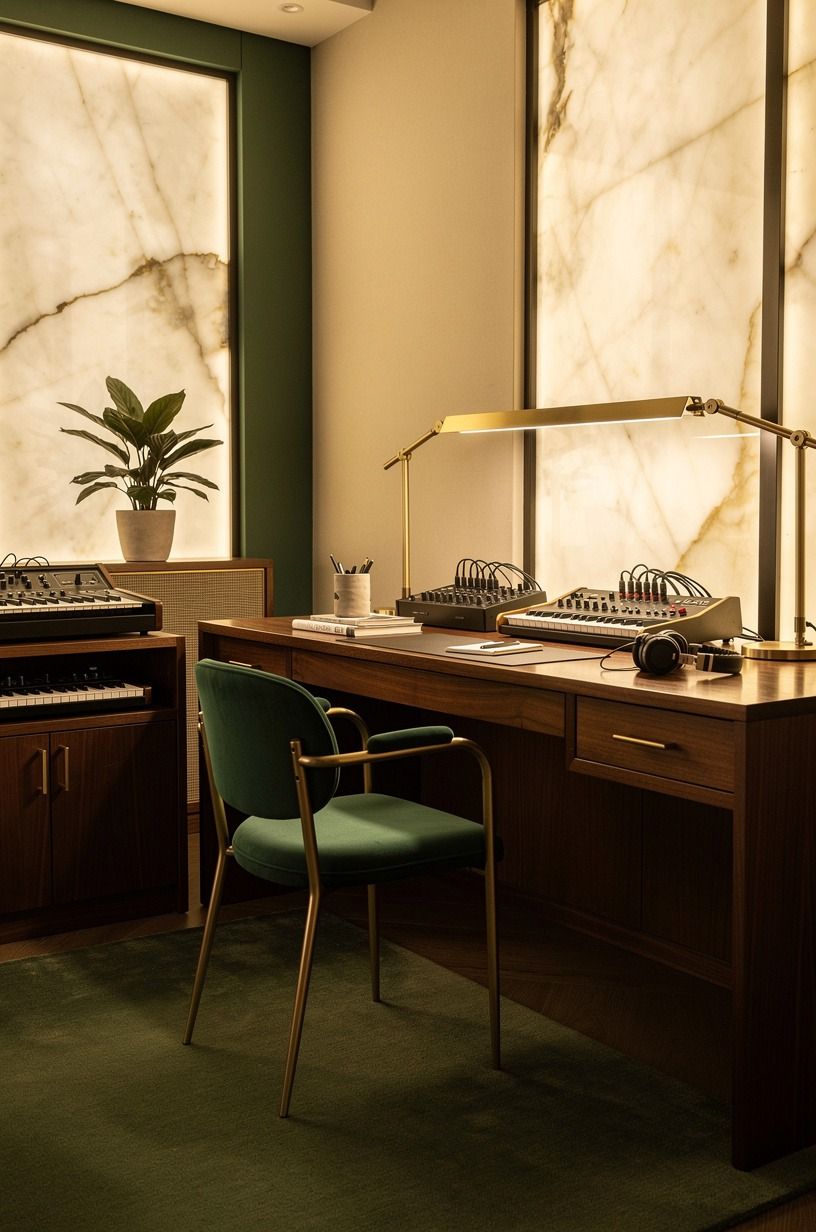
One surface for deciding, one surface for making.
18What a studio setup costs, tier by tier
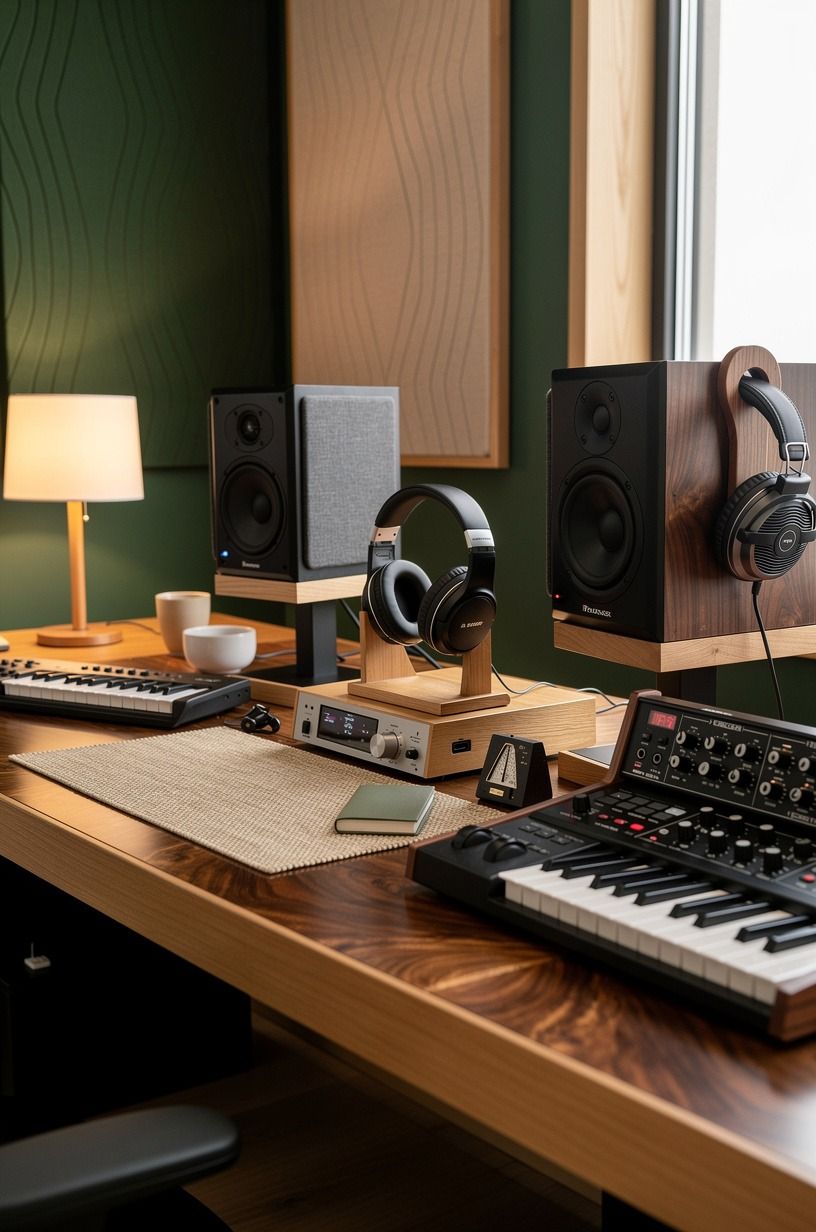
Here’s the honest money picture, because nobody talks about it plainly. Most of what makes a studio work is cheap, and the expensive stuff can wait.
And the line items you’ll actually shop for:
Spend at the budget tier first. Panels, rug, curtains, paint, cable control. That stack handles 90 percent of what makes a studio feel and sound right, and it leaves the door open for the mid tier later when you know what your room still needs.
The Mistakes I Paid For So You Don’t Have To
I want to be straight with you about the three errors that cost me the most, because I’ve made every mistake in this article personally.
Mistake one: I treated my room with foam. A hundred dollars of wedge tiles stuck to the walls with command strips, and the room sounded exactly the same, plus the tiles left greasy squares on the paint when I peeled them off.
Foam made me feel like I’d done something. That’s its only function.
The day I replaced it with four proper rockwool panels, I sat down, pressed play, and heard reverb tails on records I’d listened to for years that I had genuinely never noticed. That was a strange afternoon.
Thrilling, and a little embarrassing.
Mistake two: I bought monitors before I fixed my position. I upgraded from a budget pair to a respected mid-range set, convinced the new ones would reveal the detail I was missing.
They did reveal something: how bad my room was. Better speakers in a bad position just give you a clearer picture of the problem.
I should have moved the desk, found the 38-percent mark, and treated four reflection points first, all of which cost under $300 combined. The monitors could have waited a year.
Mistake three was the dumbest. I kept everything in cases and drawers because I wanted the room to look clean. Clean it was.
I also played maybe once a week, because every session started with ten minutes of unpacking. The studio that gets used is the one where your hands land on an instrument within five seconds of the urge hitting you. Now the guitars hang on the wall, the synth lives on its stand patched and ready, and the room looks like someone works in it, because someone does.
If there’s a philosophy under all of this, it’s that a studio isn’t a showroom for gear. It’s a machine for finishing things.
Every choice, where you sit, what the walls absorb, whether the guitar is reachable, either shortens or lengthens the distance between an idea and a finished track. Buy for the distance, not the look.
The Questions Worth Answering First
What is the best layout for a small music studio room?
Desk centered on the short wall, chair at the 38-percent mark, treatment at the four reflection points. That trio works in rooms as small as 8 by 10 feet. An IKEA KALLAX along the back wall adds storage and diffusion without eating floor space.
Where can I buy studio room pieces on a budget?
IKEA for storage and desks, Target and Wayfair for lamps and rugs, and Facebook Marketplace for used task chairs and solid furniture at half price. No affiliate links here, this site runs on display ads, so nothing we name earns us a commission. Thrift stores are gold for heavy curtains.
How much does a studio room makeover cost?
Most rooms land at about $200 to $800 for the treatment, paint, textiles, and lighting that make the real difference. Furniture upgrades push into the $1,500 to $5,000 range. Rearranging what you own, moving the desk, and finding your listening position are all free.
Can I set up a music studio room on a tight budget?
Yes, and the free stuff comes first. Move the desk to the short wall, shift your chair off dead center, and hang the blankets and rugs you already own. Then spend your first dollars on rockwool panels, the only purchase under $100 that changes what you hear.
Is a home studio setup worth it in a small space?
Absolutely, and small rooms are easier to treat, not harder. Fewer square feet means fewer panels and a shorter path to a controlled sound. Our studio apartment layout ideas show how much function fits in a tight footprint.
Is this kind of studio setup a good idea for a rental?
Yes, renters can do almost everything on this list. Freestanding panels leaning on walls, a heavy rug, tension-mounted curtains, and peel-and-stick weatherstripping on the door all reverse cleanly on move-out day. Skip the anchored shelving and paint only if your lease allows.
What color works best for a studio room in 2026?
Moody mid-tones win: Farrow & Ball Pigeon or a warm gray-green that stays calm under lamplight. Keep ceilings light with Benjamin Moore White Dove so the room doesn’t compress. Matte finish always, since sheen bounces both light and sound.
Where I’d Start Tonight
If I had to pick one, I’d start with your listening position. Move your chair to the 38-percent mark, because every fix after that builds on where your ears sit, and this one costs nothing. Pin this for later and check our music room ideas next.