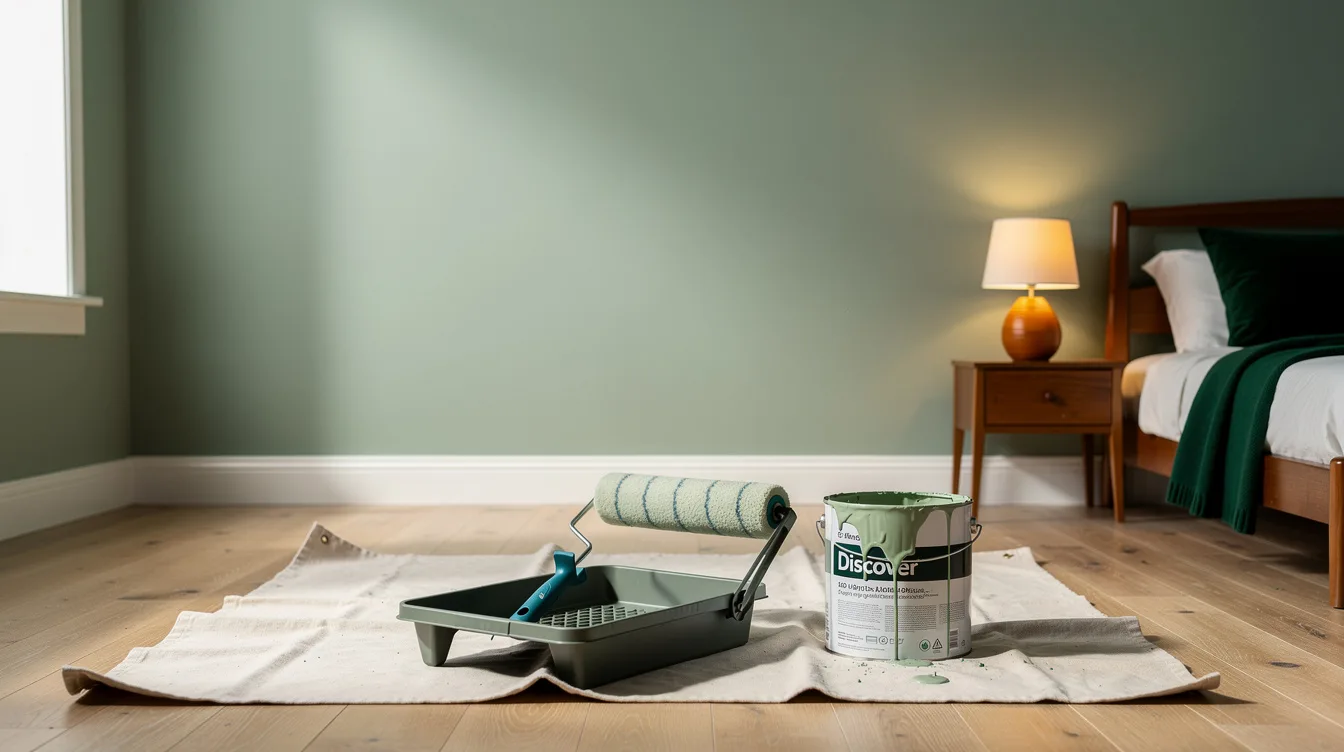
I have rolled walls in three rentals and paid for exactly two professional paint jobs, and the line between them is clearer than most people think. It is not about how handy you are. It is about square footage, ceiling height, and how much patching stands between you and bare drywall.
In 2026, pro interior painting is commonly quoted around $2 to $6 per square foot, so a typical 12×12 room often lands roughly between $400 and $1,200. Here is how I decide which side of that bill I want to be on.
DIY When the Room Is Small and the Walls Are Simple
My rule of thumb: if the room is under roughly 120 to 150 square feet of wall area, with standard 8-foot ceilings, minimal trim, and one or two colors, grab the roller. A typical 10×12 bedroom is the classic DIY weekend project.
One gallon usually covers about 350 to 400 square feet per coat on smooth walls, so two coats on that bedroom typically take around 2 gallons for the walls. At roughly $40 to $70 a gallon for quality paint, that is a very manageable Saturday.
One angled sash brush. A 9-inch roller frame. A roll of good tape.
That is honestly most of the job.
Do the Paint Math Before You Commit
Wall area is perimeter times ceiling height, minus doors and windows. A typical 12×14 room with 8-foot ceilings comes out around 416 square feet of wall before openings, which usually pushes you toward roughly 3 gallons for two coats.
Coverage drops fast on textured or porous surfaces, sometimes down to about 250 to 300 square feet per gallon. If your walls are orange peel or raw patched drywall, buy the extra gallon up front and save the mid-project run to Home Depot.
My strong opinion: never cheap out on paint to hit a budget. Benjamin Moore and Sherwin-Williams sit at the higher end, often roughly $50 to $80 a gallon, but the coverage and finish consistency are noticeably better than bargain cans. Behr at Home Depot is my solid middle-ground pick.
Hire a Pro for Exteriors and Anything Above Your Ladder
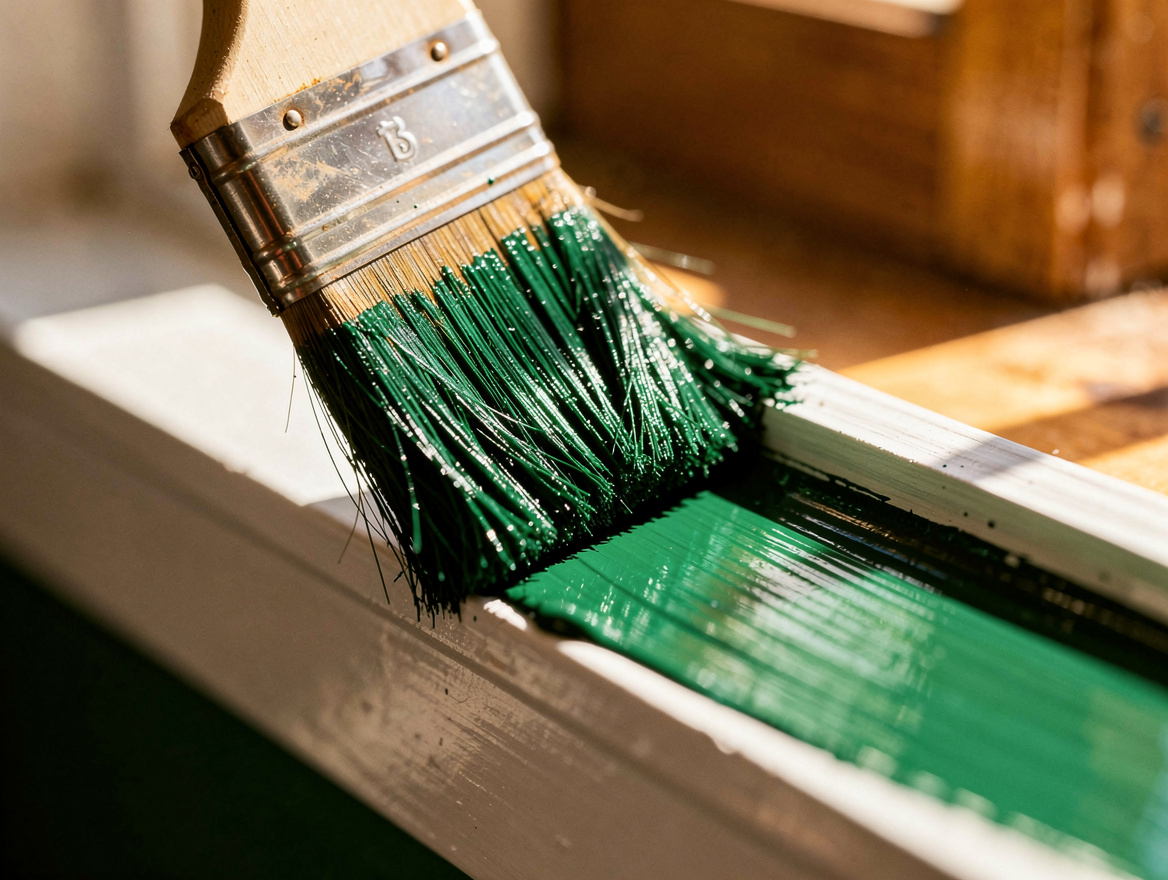
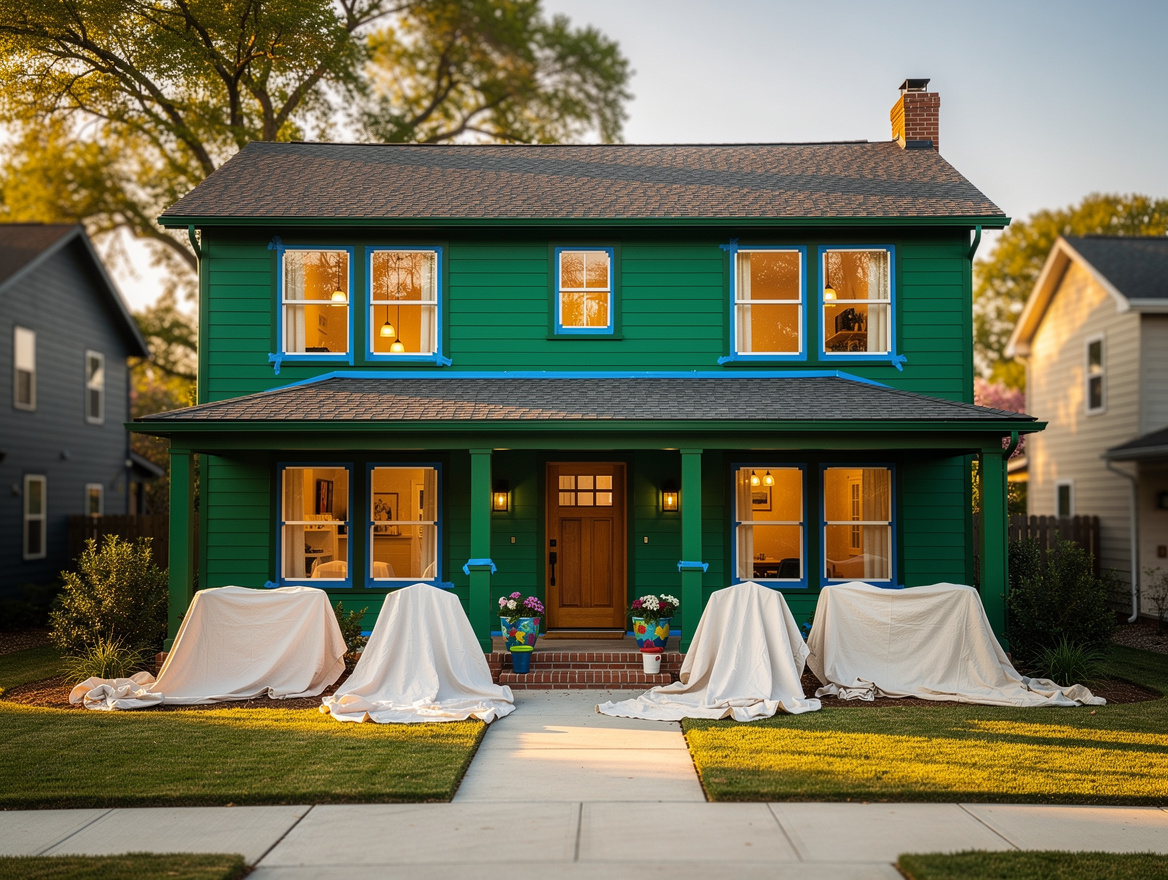
Exterior work is where DIY math falls apart. In 2026, pro exterior painting is commonly quoted around $3.50 to $7 per square foot installed, and often higher on complex homes, because access and prep dominate everything.
Scaffolding, pressure washing, scraping, priming bare wood, masking windows: that is 70% of the job before a single coat goes on. A two-story foyer or a stairwell with a 16-foot wall has the same problem indoors.
I tried a stairwell once with an extension pole and a step ladder perched on the landing. Never again. The lap marks were visible from the kitchen for two years.
Leave Cabinets and Detailed Trim to the Pros
Kitchen cabinets are the single worst DIY paint project I see people attempt. The quality gap between a brushed-on DIY finish and a pro’s sprayed finish is obvious from across the room.
Pros typically degrease, sand, prime with a bonding primer, and spray with an HVLP rig for a factory-smooth result. Recreating that with a foam roller and good intentions is a fantasy, and chipping cabinet paint within a year is the usual outcome.
Same logic applies to detailed trim, wainscoting, and dark-to-light color changes. If the room has peeling paint, moisture damage, or unknown older coatings, bad prep fails early and you pay twice.
Know What DIY Actually Costs Before You “Save” Money
DIY materials for a small room typically run about $80 to $250, and a medium room around $120 to $350. Compare that to roughly $400 to $1,200 for a pro-painted small room, and the labor savings are real.
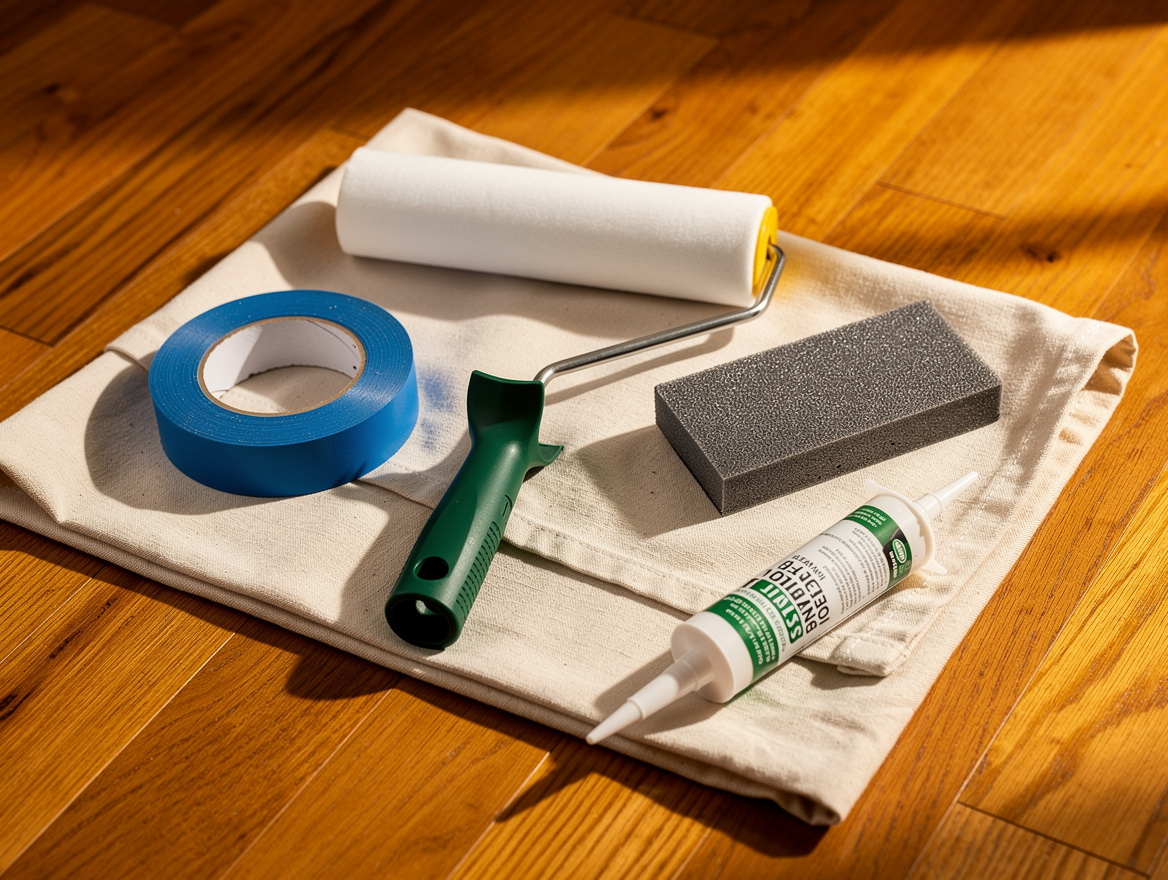
But the shopping list is longer than the paint. Primer, painter’s tape, canvas drop cloths, a roller frame, 3/8-inch or 1/2-inch nap covers, an angled brush, patch compound, caulk, sanding sponges, tray liners. First-timers without any tools can easily spend $100 on gear alone at Lowe’s.
If you already own the basics from a previous project, DIY is a clear win. If you are starting from zero for one tiny bathroom, the savings shrink fast, and redo risk on a visible finish is the hidden cost nobody budgets for.
Match the Decision to the Stakes of the Room
Here is the framework I actually use. Low stakes, low walls, good surfaces, simple geometry: DIY it and enjoy the savings. High stakes, high walls, damaged surfaces, or a finish everyone will see up close: get three quotes.
A guest bedroom nobody photographs? Roll it yourself in eggshell. The living room with 14-foot ceilings and skim-coat damage?
That is a pro job, and the roughly $2 to $6 per square foot buys you prep, straight cut lines, and cleanup you will never manage with a drop cloth and a podcast.
A whole interior repaint often runs commonly $2,000 to $10,000 or more depending on size and prep, versus maybe $300 to $1,200 in materials. That gap is big enough to split the difference: DIY the easy bedrooms, hire out the hard stuff.
Start with the smallest, least visible room you own and paint it yourself. By the second coat you will know, with total certainty, which rooms in your house are worth the $2 to $6 a square foot.
Mia Carter writes about small-space living and budget home makeovers. She has restyled three rentals and tests most ideas in her own 45 sqm flat.