Kitchen counter brunch setups can stay easy, warm, and affordable when food, seating, and serving heights work together. You’ll need only a few deliberate layers, a clear landing zone, and materials that can handle crumbs, coffee, and conversation. The best casual gatherings don’t require a full kitchen makeover.
A useful rule: choose one visual anchor, one serving zone, and one comfortable route through the room. That balance keeps your setup welcoming without making the kitchen feel staged. It’s a small shift, but it can change the entire mood!
Short version: anchor the food with texture, move drinks to one end, keep seating flexible, and leave one surface open for movement. You’ll get a polished result without turning brunch into a decorating project.
- Layer a Linen Runner Beneath the Brunch Spread
- Why Mismatched Stools Work Around the Counter
- Build a Tiered Stand with Pastries and Fruit
- Let Pendant Lights Define the Serving Zone
- The One-End Coffee Zone
- Display Fresh Herbs in Countertop Glass Jars
- Use Cake Stands to Create Serving Levels
- Can Woven Placemats Soften Colorful Breakfast Bowls?
- Build a Mimosa Bar Against the Backsplash
- Add Potted Citrus Branches for Height
- When Sculptural Stools Meet a Marble Counter
1Layer a Linen Runner Beneath the Brunch Spread
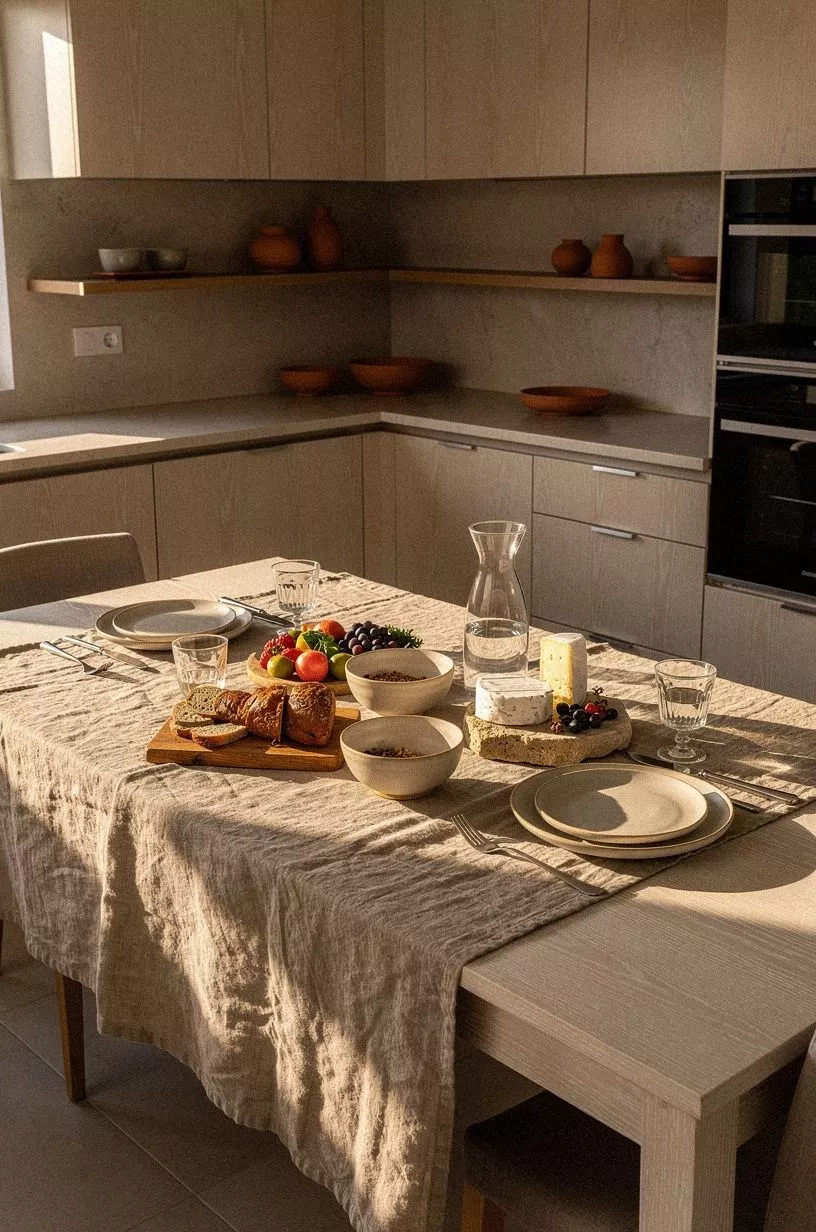
A linen runner gives your brunch counter a visual center without covering the surface completely. Choose washed linen in a soft oat tone, then let terracotta, stone, olive, and cerused white oak carry the warmth. When you’re serving pastries, fruit, and coffee in the same zone, the runner keeps each dish from looking scattered.
Leave visible counter space at both ends. You’ll want enough room for a carafe and serving utensil, while the center can hold a low platter of croissants.
Benjamin Moore White Dove on nearby cabinetry isn’t required, but it works beautifully with olive napkins and warm oak. Smooth polyester doesn’t create the same relaxed surface as 100% linen with a slightly rumpled edge.
For a small kitchen, keep the runner narrow and skip a second textile beneath it. You don’t need more pattern. A stoneware plate, an olive glass tumbler, and a ceramic butter dish can make the setup feel inviting without turning the counter into a display shelf.
For more compact serving ideas, browse these tiny-kitchen brunch ideas.
2Why Mismatched Stools Work Around the Counter
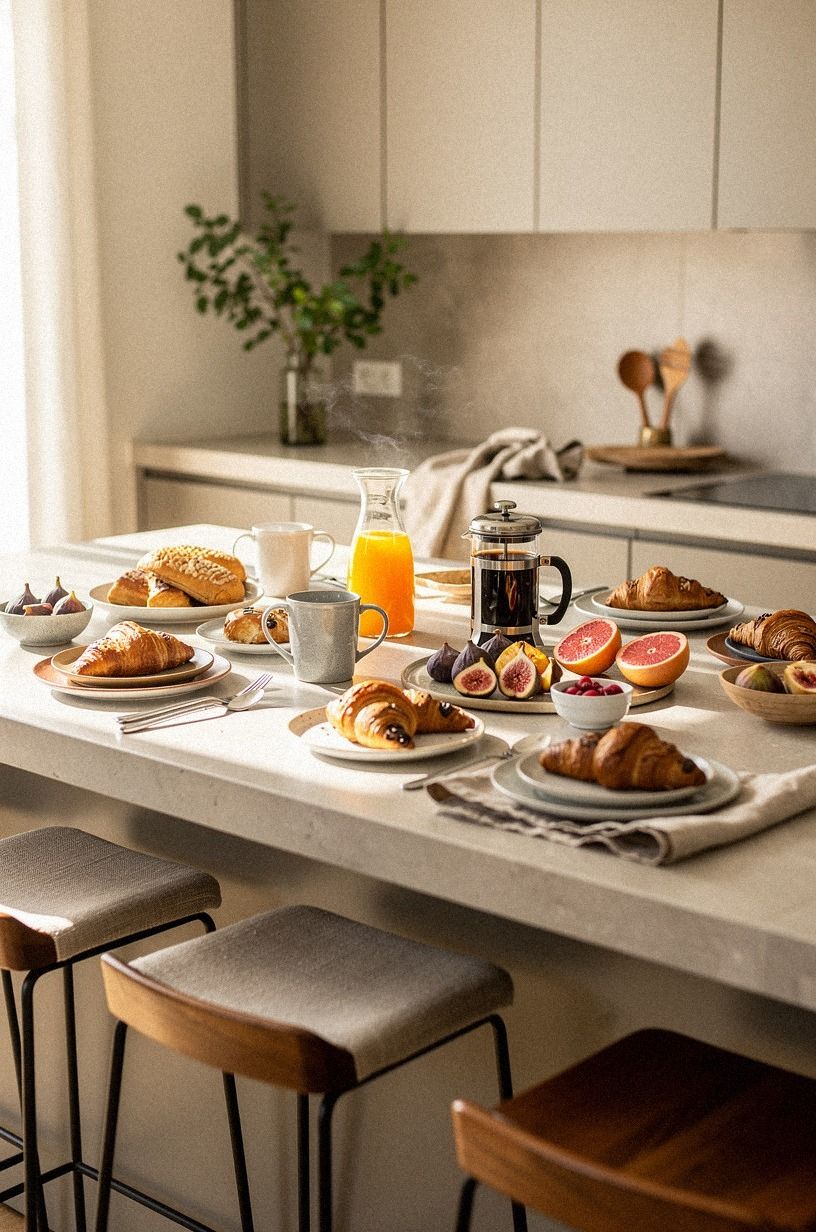
Mismatched stools make a kitchen counter feel ready for conversation instead of arranged for inspection. Pair one woven seat with a painted wood stool and a slim metal frame, keeping the clay, linen, and aged brass palette consistent. You’re creating variation through shape and texture, not random colors.
A counter with standard 36-inch height usually needs stools with a comfortable seat height matched to that surface. You’ll want enough clearance for knees, especially when guests are eating from bowls rather than balancing small plates.
Bentwood stools can soften the arrangement, while a powder-coated metal seat adds a sharper note. They’re different, but they shouldn’t look as though they came from unrelated rooms.
Place the stools at slight angles rather than lining them up perfectly. When you’re hosting a casual brunch, guests will shift around, lean into conversation, and set down coffee cups.
A rigid row won’t feel as welcoming. Too many stools can block the work zone, so keep one section open for serving.
A backlit translucent onyx counter can become a quiet focal point beneath the stools. Keep the surrounding seating simpler so the glowing stone supports the clay, linen, and aged brass palette without competing with it.
3Build a Tiered Stand with Pastries and Fruit
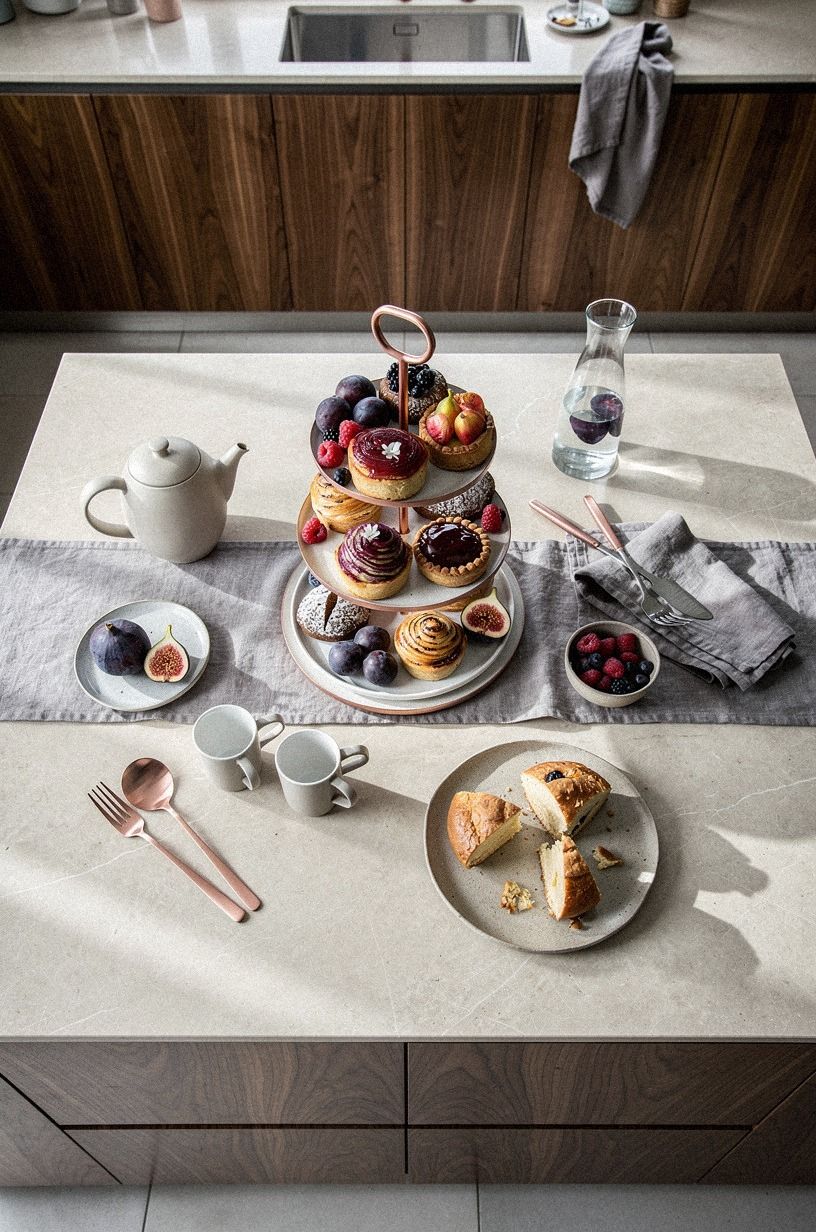
A tiered stand turns vertical space into part of the brunch layout. Use a dark walnut stand or a rose-gold metal frame against plum, grey, and soft blush accents. The arrangement should rise gently from the counter rather than becoming a tall centerpiece.
Start with larger pastries on the lower plate, then use grapes, berries, or sliced citrus on the next level. You’ll want the top tier to stay visually light, so a few mini muffins are better than a dense pile. Book-matched walnut brings enough grain to anchor the palette, while pale grey ceramics keep the display from feeling heavy.
When you’re using a metal stand, check that every plate sits level before guests arrive. A tilted tier can turn a relaxed setup into a cleanup project.
Don’t place anything that rolls easily on the upper level, and don’t hide napkins behind the stand. A lower bowl of mandarins can balance the height and add a bright, organic note.
For a fuller spread, place the tiered stand near the back of the counter and keep plates, forks, and napkins closer to the guest side. You’ll create a natural sequence from choosing food to sitting down.
4Let Pendant Lights Define the Serving Zone
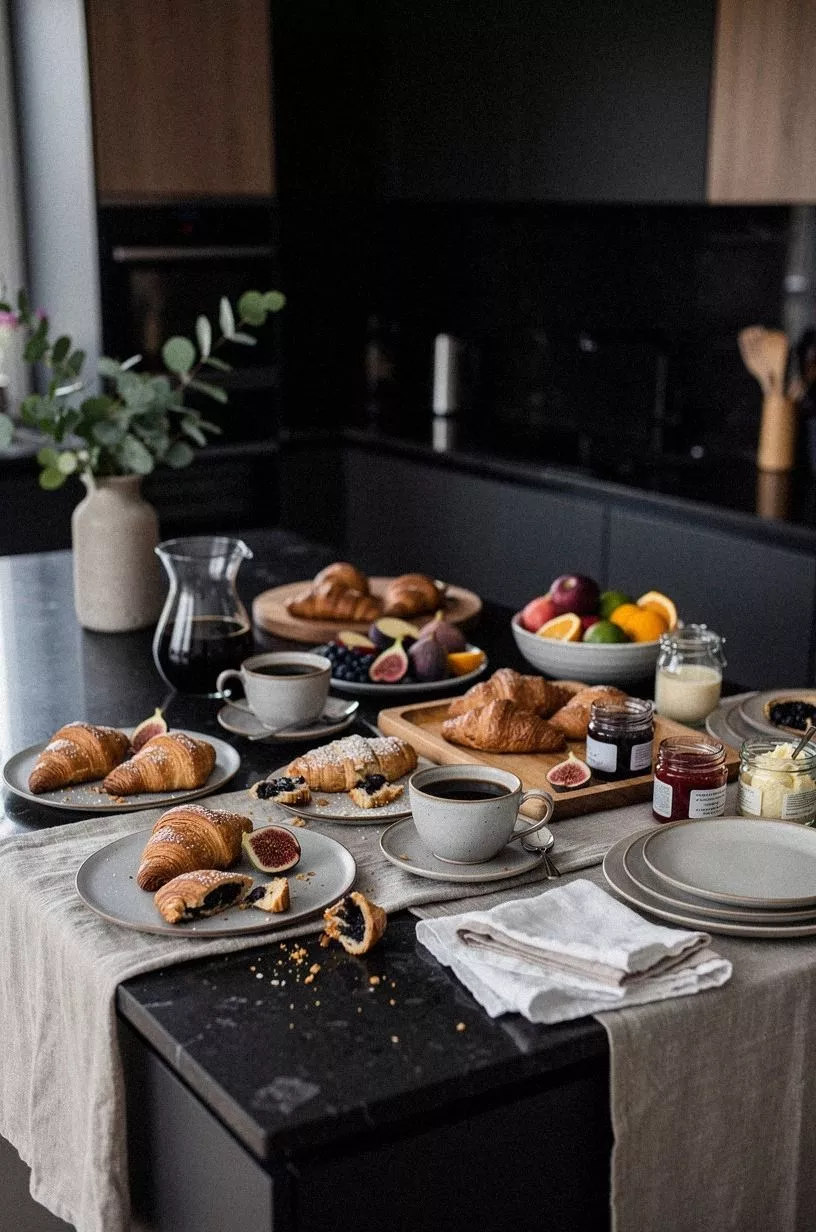
Low pendants give the counter a defined brunch zone, especially when the rest of the kitchen has recessed lighting. Choose warm glass, navy details, or walnut accents to match a navy, white, and warm travertine palette. A pendant overhead, a low serving bowl, and a small bud vase at counter level create a simple three-height composition.
Pendant placement needs practical clearance. You’ll want the lowest point high enough to preserve sightlines across the counter, while the light still lands on plates instead of shining into guests’ eyes.
Opal glass often feels calmer than a complicated cluster. In a rental, a plug-in pendant with a ceiling hook can create a similar effect without permanent wiring.
Keep the bulbs warm and dimmable when possible. Cool white light can make navy look harsh and turn travertine grey.
It isn’t the right mood for coffee, fruit, and slow conversation. Don’t let the fixture dominate the food, either.
A pendant should guide attention toward the serving area.
When you can’t change the fixture, use a small table lamp on a nearby cart or console. A warm pool of light still gives the brunch zone a more intimate, welcoming character.
5The One-End Coffee Zone
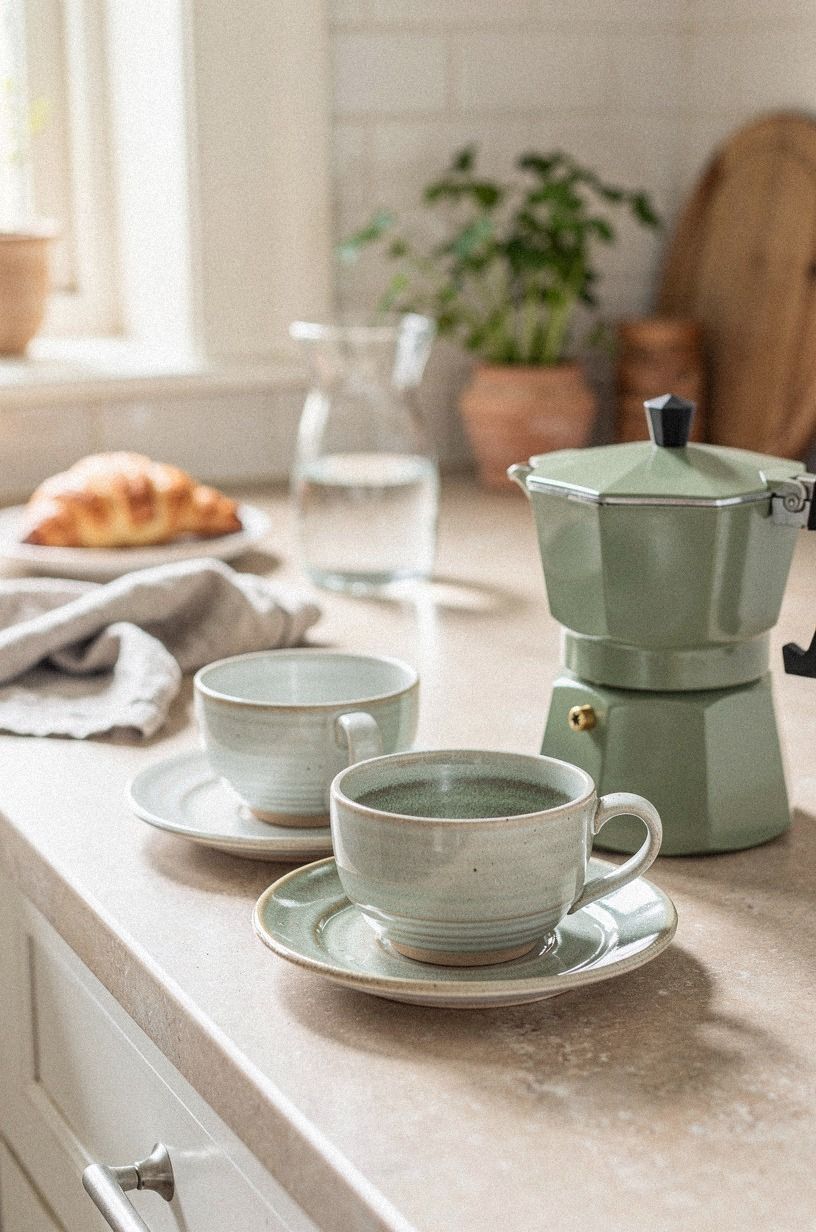
A coffee station works best when it occupies one end of the counter and leaves the center open for food. Use cream ceramics, emerald glass, and unlacquered brass developing a soft patina. The one-end coffee zone keeps traffic moving in one direction: guests can pour, sweeten, and step away without interrupting someone reaching for fruit.
Place cups closest to the edge, followed by the carafe, sugar bowl, and spoons. You’ll want the most frequently used items within easy reach, while extra napkins can sit behind the station. Farrow & Ball Studio Green No. 93 on a nearby wall or cabinet can make cream pottery look richer beside aged brass and warm wood.
A shallow tray gives the station a boundary and catches small spills. When you’re using a ceramic tray, choose one with a raised rim rather than a completely flat slab.
It’s easier to lift away after brunch, and it keeps the counter from looking permanently occupied. Don’t crowd the station with every available syrup or mug.
A small pitcher of milk, one sugar bowl, and two spoon options are usually enough. You can place extras beneath the counter or on a rolling cart. Guests will find what they need faster, and the coffee zone will look calmer.
6Display Fresh Herbs in Countertop Glass Jars
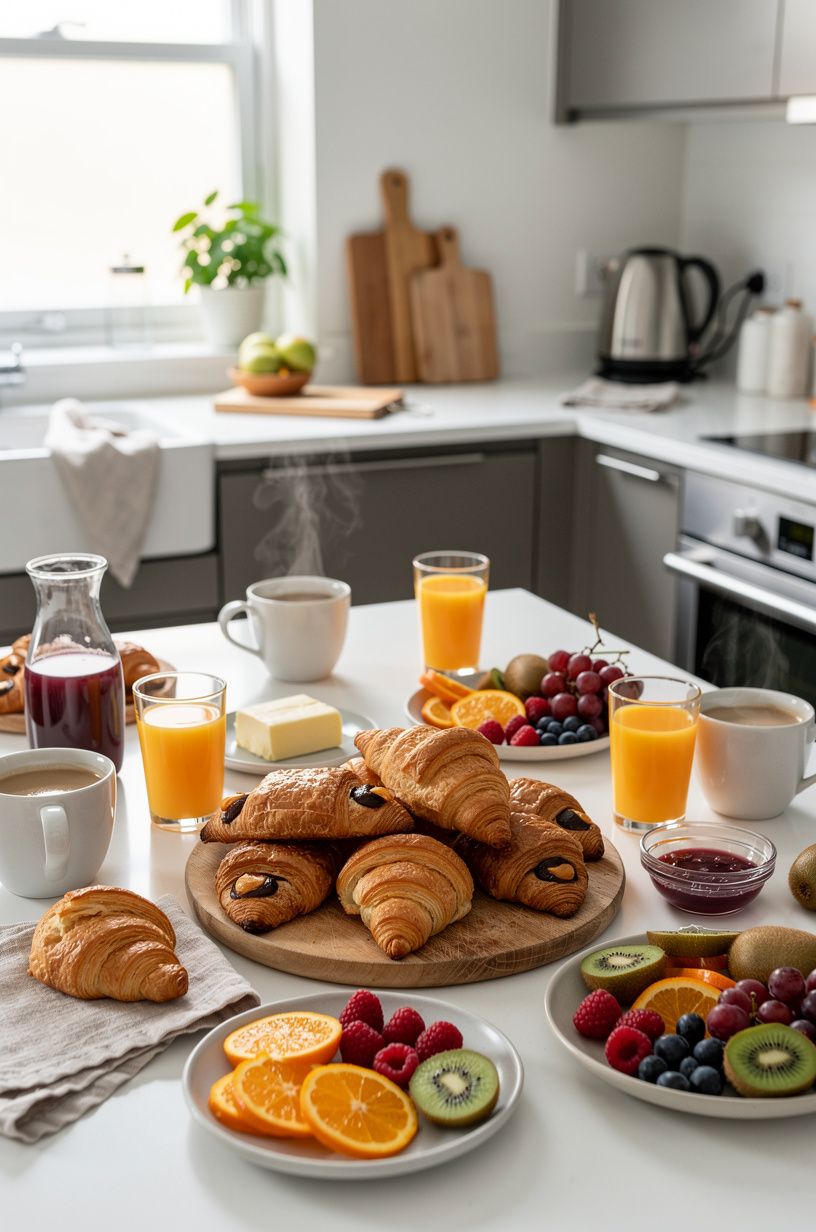
Fresh herbs bring a forest green, rust, and natural oak palette into the kitchen while adding a useful ingredient for eggs, toast, and fruit. Against an oversized-chip terrazzo surface, clear glass jars keep the arrangement practical and visually light.
7Use Cake Stands to Create Serving Levels
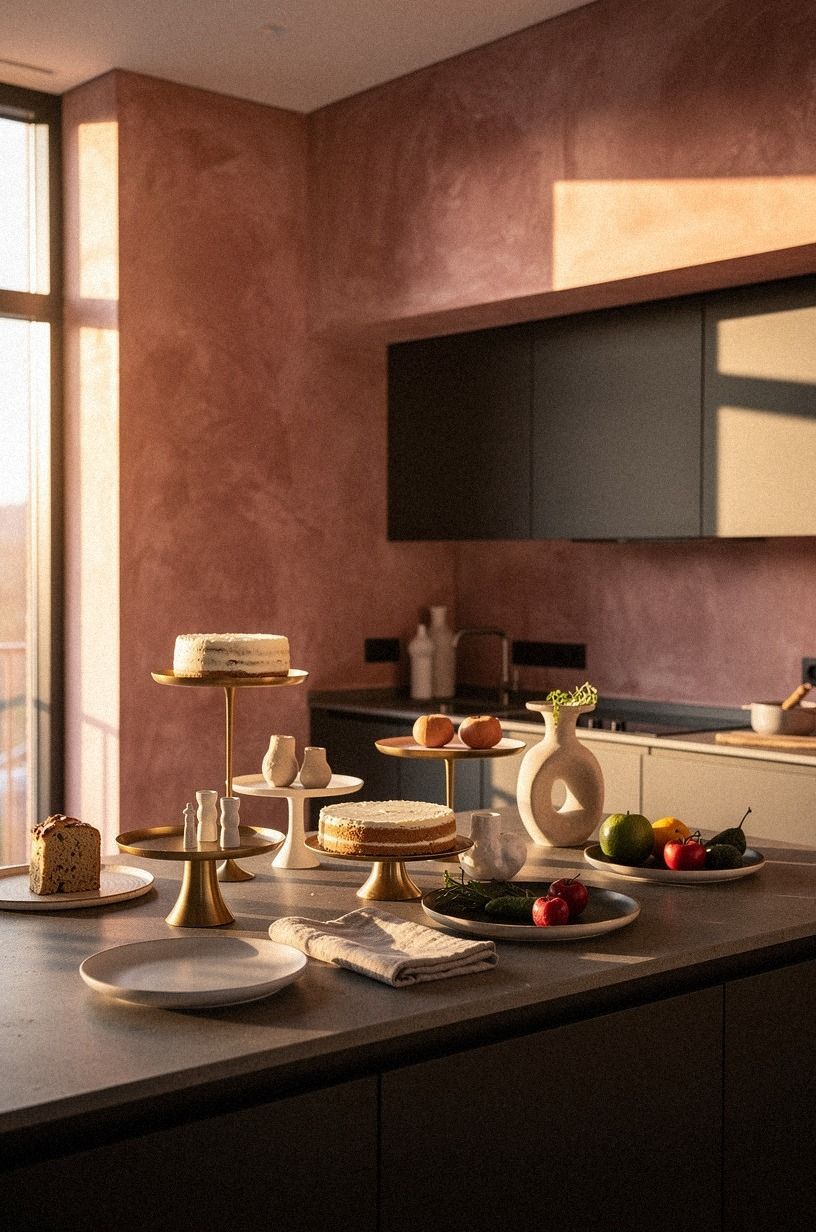
Cake stands create different serving levels when the counter needs more structure. Pair a dusty rose stand with charcoal plates, brass utensils, and a wall finished in hand-applied Venetian plaster. Low, medium, and high pieces help the eye move across the spread without stopping at one flat line.
Place the tallest stand toward the backsplash and the lowest plate nearest the guest side. You’re protecting sightlines while keeping food accessible.
Venetian plaster offers a softly reflective backdrop for vintage brass or a sculptural stand. When you’re serving quiche, use the lowest level for slices; when fruit is involved, place it in a bowl with a wide opening.
The surface should feel generous, but it shouldn’t become crowded. You’ll want at least one clear area for cutting or plating, especially when the kitchen counter is still being used during the gathering. A cake stand doesn’t need cake, either.
It can hold berries, napkins, or toast.
For a striking but practical arrangement, use one dramatic stand and two quieter plates. You’ll create contrast without making the counter feel like a showroom.
8Can Woven Placemats Soften Colorful Breakfast Bowls?
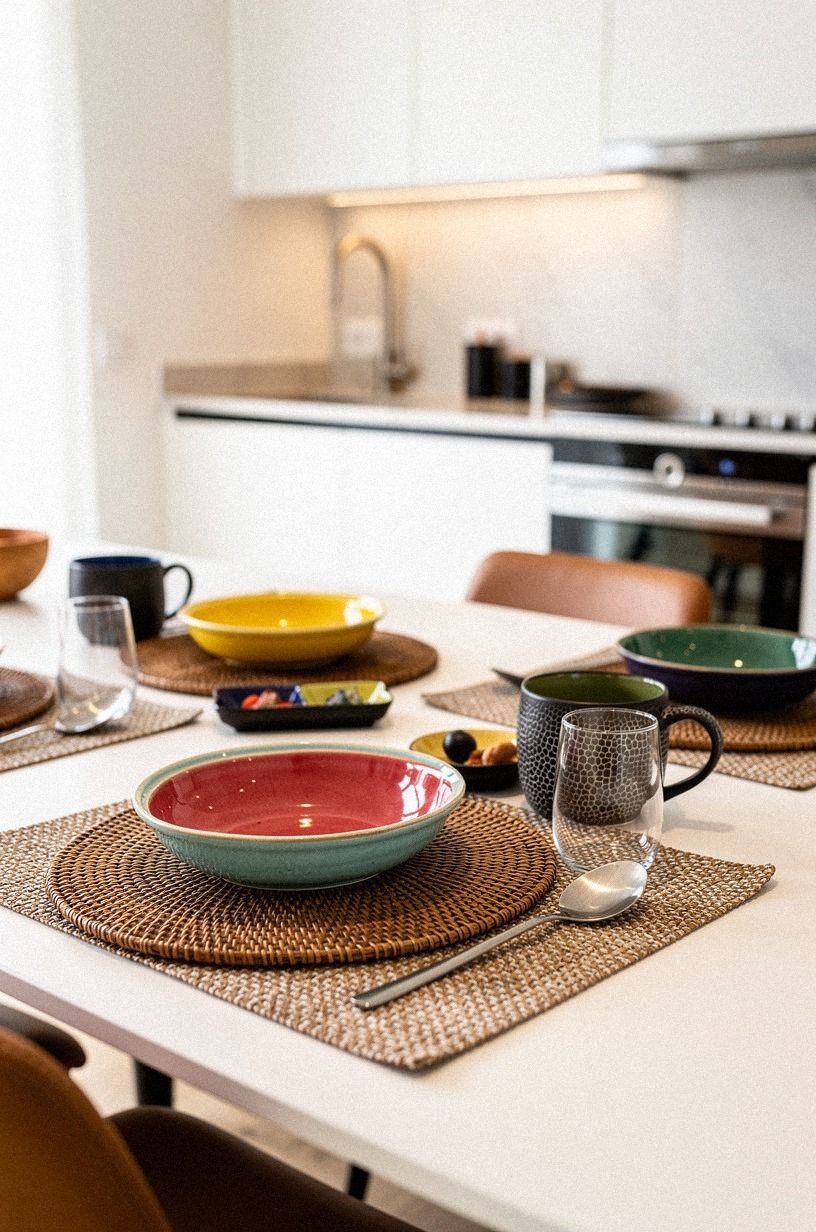
Woven placemats soften a counter that includes warm white cabinetry, camel textiles, and black accents. Small shagreen accents add tactile contrast without competing with colorful breakfast bowls.
9Build a Mimosa Bar Against the Backsplash
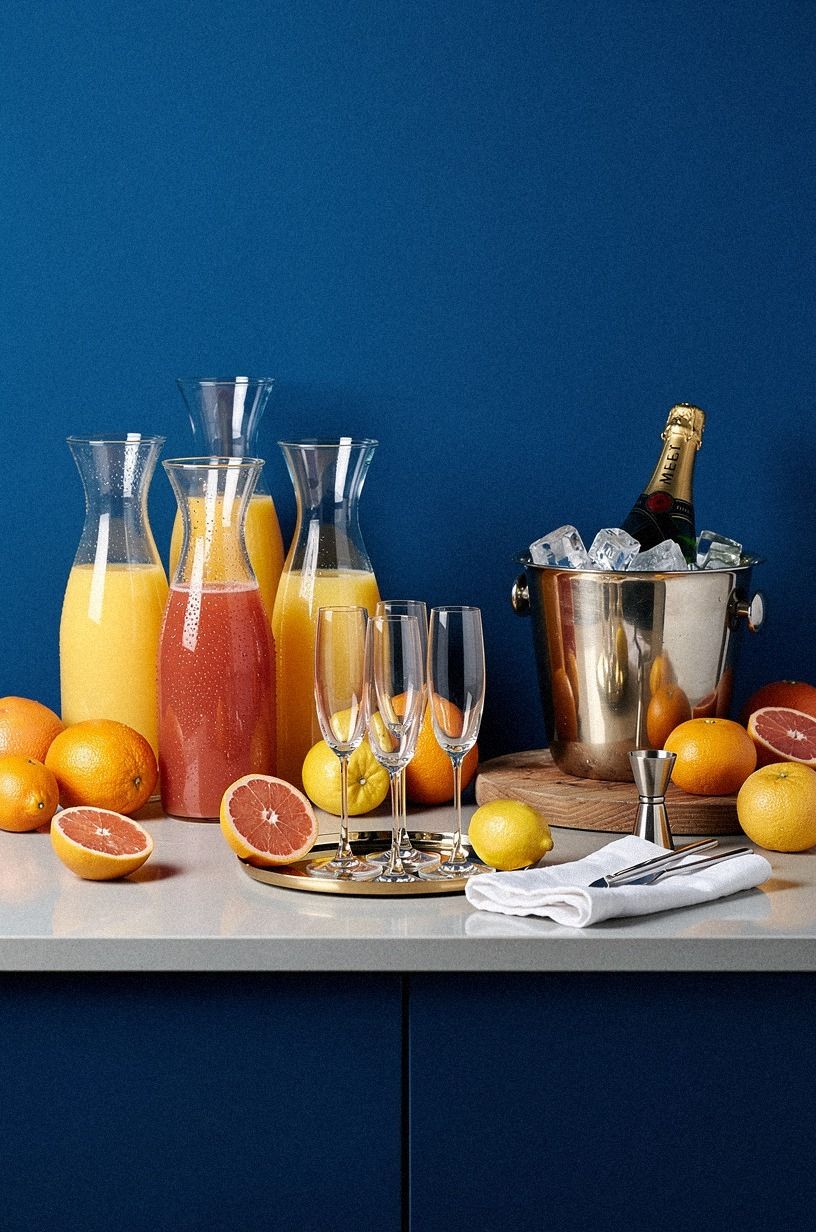
A mimosa bar can sit neatly against the backsplash when the serving area uses a narrow tray, chilled bottles, and small glasses. Use midnight blue, copper, ivory, and washed Belgian linen with a lived-in texture to create a palette that feels lively without becoming loud. This arrangement keeps the center of the counter open for plates and conversation.
Place glasses in a row, then add a small bowl of citrus slices and one carafe of juice. You’ll want the bottles at the back so guests can reach the glasses without knocking into them. Washed Belgian linen softens the arrangement, while copper utensils bring a warm flash beside ivory fabric.
When you’re serving several juices, label them with small cards rather than leaving cartons in view. A handwritten card can feel relaxed, but it should still be easy to read.
Don’t place the bar near a sharp corner or the busiest walkway. Guests won’t enjoy squeezing past one another for a refill!
A narrow tray also makes cleanup quicker and keeps condensation away from the counter surface. For more casual hosting ideas, save these casual brunch hosting ideas.
For a nonalcoholic version, use sparkling water, blood orange juice, grapefruit, and mint. The same arrangement still feels festive, colorful, and easy to navigate.
10Add Potted Citrus Branches for Height
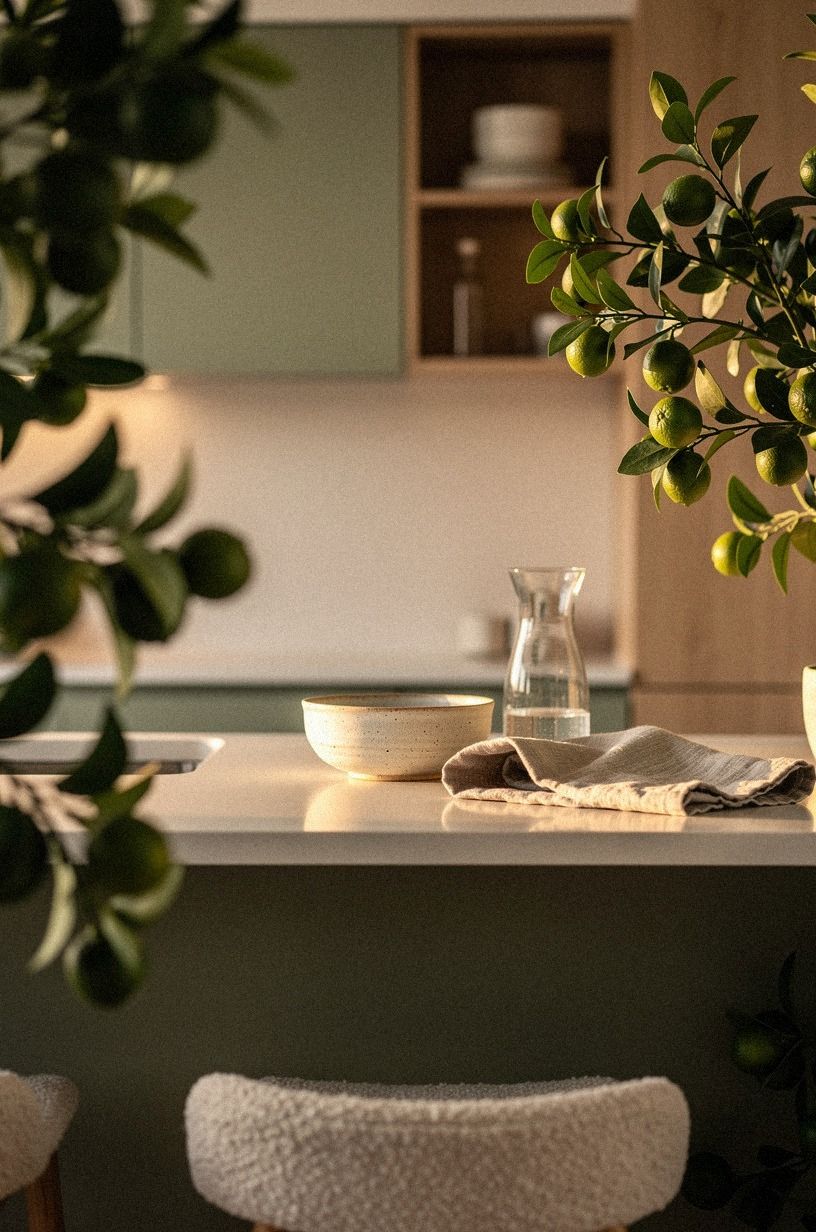
Potted citrus branches add height and a fresh scent without covering the food. Pair sage green, warm cream, and natural wood with organic bouclé for a softer, more layered counter arrangement.
11When Sculptural Stools Meet a Marble Counter
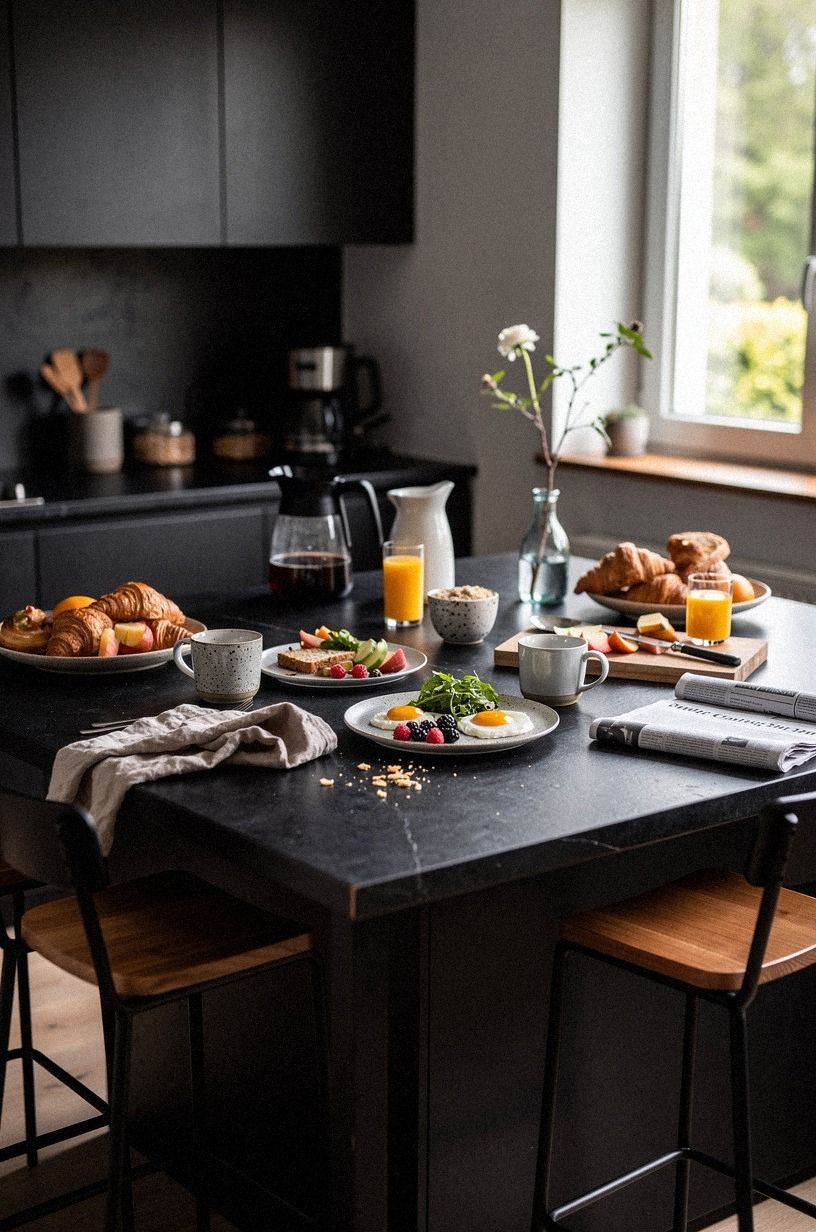
Sculptural stools give a marble counter a softer, more social edge. Choose rounded seats, curved backs, or woven details in a terracotta, stone, and olive palette. Nero Marquina black marble with white veins can provide contrast, but the stools should keep the room from feeling too formal.
You’ll want each stool to leave enough space for knees and movement around the island. When the island has 42 to 48 inches of clearance all around, guests can circulate without creating a bottleneck. Bouclé upholstery brings tactile softness, while aged wood can make the marble feel less precious.
Don’t mix three dramatic stool designs at once. Choose one strong shape and let the other seats stay quieter. A single olive cushion or terracotta napkin can connect the palette without adding more furniture.
When you’re working with a small kitchen, two stools may be enough. More seating isn’t always more welcoming when the walkway becomes cramped.
A marble counter already has visual presence. You can let the stools provide comfort, color, and movement without adding another elaborate centerpiece.
The Counter Triangle That Makes Brunch Feel Easy
The most reliable kitchen counter brunch setup follows a simple triangle: food, drinks, and seating should each have a clear zone. When those areas overlap, guests hesitate, traffic slows, and the counter starts looking messy before the first cup of coffee is finished. A good layout gives every action a place.
Start with the food zone near the widest section of counter. A linen runner, tiered stand, or cake stand can define that area without adding permanent furniture.
Put drinks at one end, preferably near the backsplash, so guests can refill without reaching across plates. Seating belongs along the open side, but stools shouldn’t block the route between the refrigerator, sink, and cooking surface.
The most useful design choice is restraint. You don’t need every serving piece in the cabinet, and you don’t need a centerpiece taller than guests’ sightlines. Farrow & Ball Hague Blue can add depth behind pale ceramics, while Benjamin Moore White Dove keeps the overall space from feeling dark.
A casual gathering should still look intentional from across the room. That doesn’t mean every bowl must match.
It means the colors repeat, the heights vary, and practical items are easy to find. A layout that looks good for two hours and becomes annoying afterward isn’t a worthwhile setup.
A Clear Landing Zone Keeps Traffic Moving
A clear landing zone is one of the highest-value changes for a small kitchen. Reserve one section for used cups, serving spoons, or plates waiting to be cleared. You’ll prevent those items from spreading across the food area as the gathering continues.
Keep the landing zone close to the sink when possible, but don’t place it directly beside the main coffee station. Guests need room to pour, turn, and step away. Warm oak boards, a shallow stone tray, or a heat-safe mat can define the area without making it look like a second centerpiece.
When the counter already feels crowded, remove one decorative object before adding another storage piece. You’ll gain more value from open surface space than from a container that creates another visual layer.
A folded towel can sit beneath the sink instead of on the counter. That small choice keeps the landing zone cleaner and gives used dishes a clear destination.
Budget Choices That Still Feel Considered
A budget brunch setup can look polished when the money goes toward texture, proportion, and useful pieces. Linen napkins, a strong serving board, or one attractive cake stand often deliver more value than a collection of small decorations.
For the best budget result, shop the kitchen first. You may already have jars, bowls, glasses, and boards that can work together after a careful edit. A secondhand stool can be worth the cost when its joints are stable and its height suits the counter.
A higher budget doesn’t automatically create a better gathering. The best value usually comes from pieces that can serve breakfast, dinner, and everyday kitchen routines.
You can also create a dramatic shift with paint samples, fresh branches, and better lighting. Sherwin-Williams Evergreen Fog SW 9130, Farrow & Ball Setting Plaster, and Benjamin Moore Chestertown Buff each offer a distinct direction without requiring a full remodel.
What Guests Notice First
Guests usually notice the route through the room before they notice individual accessories. When the coffee station blocks the food, or stools narrow the walkway, even beautiful details can feel inconvenient. Your first priority should be easy movement.
Next comes height. You’ll want enough variation to make the counter interesting, but not so much that guests must reach around a tall centerpiece. A low runner, medium cake stand, and taller branch arrangement can create a useful rhythm.
Finally, guests notice whether the setup feels generous. A well-spaced spread looks more abundant than a crowded one. Aged brass utensils, fresh citrus, and repeated olive tones can create warmth without pushing the budget too far.
A clear route makes the entire room feel calmer. You’ll notice the difference when guests can pour coffee, choose food, and sit down without asking where to stand.
The Rental-Friendly Version
A rental-friendly brunch setup can still feel distinctive. Use removable hooks, plug-in lighting, freestanding stools, peel-and-stick backsplash accents, and textiles that bring in color without permanent changes.
You’ll want to avoid leaning heavy shelves against a fragile backsplash or placing adhesive products near steam. A tray, a plant, and a few coordinated bowls can provide enough structure for one gathering. Sherwin-Williams Evergreen Fog SW 9130 can inspire the palette through napkins, glassware, or removable artwork.
When the counter lacks storage, use a narrow rolling cart for coffee supplies. It’s easier to move after guests leave, and it can provide better value than a permanent cabinet update. Keep the cart close enough to serve but far enough away to preserve the main circulation path.
A removable runner can also protect a rental counter from crumbs and condensation. You’ll gain color and softness without committing to a permanent surface change.
The Questions Worth Answering First
What is the best kitchen counter brunch setup for a small kitchen?
A runner, two stools, and a compact coffee station usually work well. A tiered stand keeps food vertical, while a small herb jar adds color without taking much space. You’ll preserve counter space, and guests won’t need to reach across the entire kitchen for coffee or pastries.
Where can you buy kitchen counter brunch pieces on a budget?
Target, Wayfair, thrift shops, and local resale listings can offer accessible stools, trays, bowls, and glassware. Check wobbling joints, chipped rims, and water damage before buying. The best value comes from pieces that can work for both casual hosting and daily kitchen use.
How much does a kitchen counter brunch makeover cost?
A temporary setup can cost about $25 to $300, depending on what you already own. Free changes include rearranging stools, washing serving pieces, and using garden herbs. A larger kitchen refresh has much wider typical US costs, from a few hundred dollars for cosmetic changes to tens of thousands for new cabinetry and counters.
Can a kitchen counter brunch setup work on a budget?
Yes, and the easiest savings come from using existing stools, jars, plates, and textiles. Add fresh herbs in reused glass containers, make one cake stand the focal point, and move the coffee station to one end. You don’t need a renovation to create a warm serving zone.
Is a kitchen counter brunch setup worth it in a small space?
Yes, because the counter can combine serving, seating, and conversation without requiring a separate dining table. You’ll want to preserve a 42- to 48-inch circulation path around an island when possible. Keep one end clear so guests can move through the kitchen comfortably.
Is a kitchen counter brunch setup a good idea for a rental?
Yes. Use removable hooks, a tension rod for linens, peel-and-stick backsplash accents, and freestanding stools.
You’re able to create color and texture without drilling into cabinetry. A compact tray and one potted branch can provide strong visual value without permanent changes.
Where to Start First
Start with the linen runner. It gives every plate a visual home, protects the counter from crumbs, and works with nearly any palette. Save these casual brunch hosting ideas for later, then build the coffee station around that one clear foundation.