Morning light can make a bedroom feel sharper than it looked the night before, especially when a bedside bulb adds another bright point. Lowe’s lists a typical lampshade at about $48, so the fix does not require replacing the whole lamp.
For bedroom lampshade colors that make morning light feel softer, begin with oatmeal, warm ivory, or pale natural linen. Muted sage is the stronger choice when you want color without turning the nightstand into an accent wall.
One detail matters before you shop: the shade changes the bulb’s glow, while curtains handle direct sun. Treat them as two parts of the same morning-light plan.
Start With Oatmeal Linen
Oatmeal linen is my first choice for a bedroom that feels gentler at sunrise. Its warm neutral tone absorbs some visual sharpness while the weave adds texture without turning the lamp into a loud focal point.
Pair it with cream bedding, pale oak, or a simple ceramic base. The result feels relaxed and intentional, even when the rest of the room stays mostly white.
Keep Ivory Warm, Not Stark
Warm ivory keeps a bedside lamp looking light without the cold glare of bright white. It works especially well beside oak furniture, brass details, or warm-white bedding.
Choose an eggshell or creamy finish when the room already has pale walls. A traditional linen empire shade from Just Shades starts at about $62, although the final price depends on the selected size.
Let Fabric Thickness Do the Work
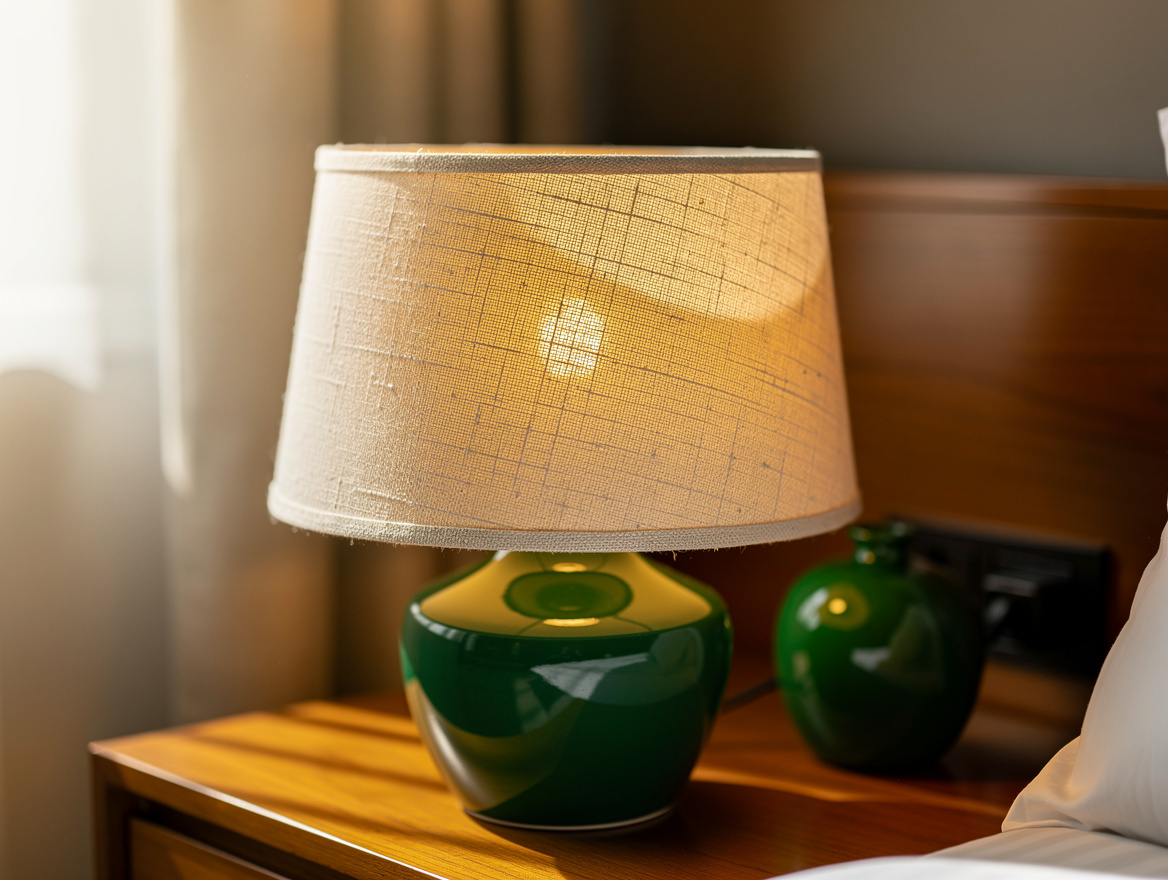
Pale natural linen softens the bulb through both its color and its surface. A denser weave creates a calmer glow than a thin, highly transparent fabric, so texture deserves as much attention as the shade color.
Hold the material near a lamp before buying if possible. You want light to pass through evenly, without sharp bright patches around the frame or a heavy gray cast across the nightstand.
Use Sage as a Quiet Accent
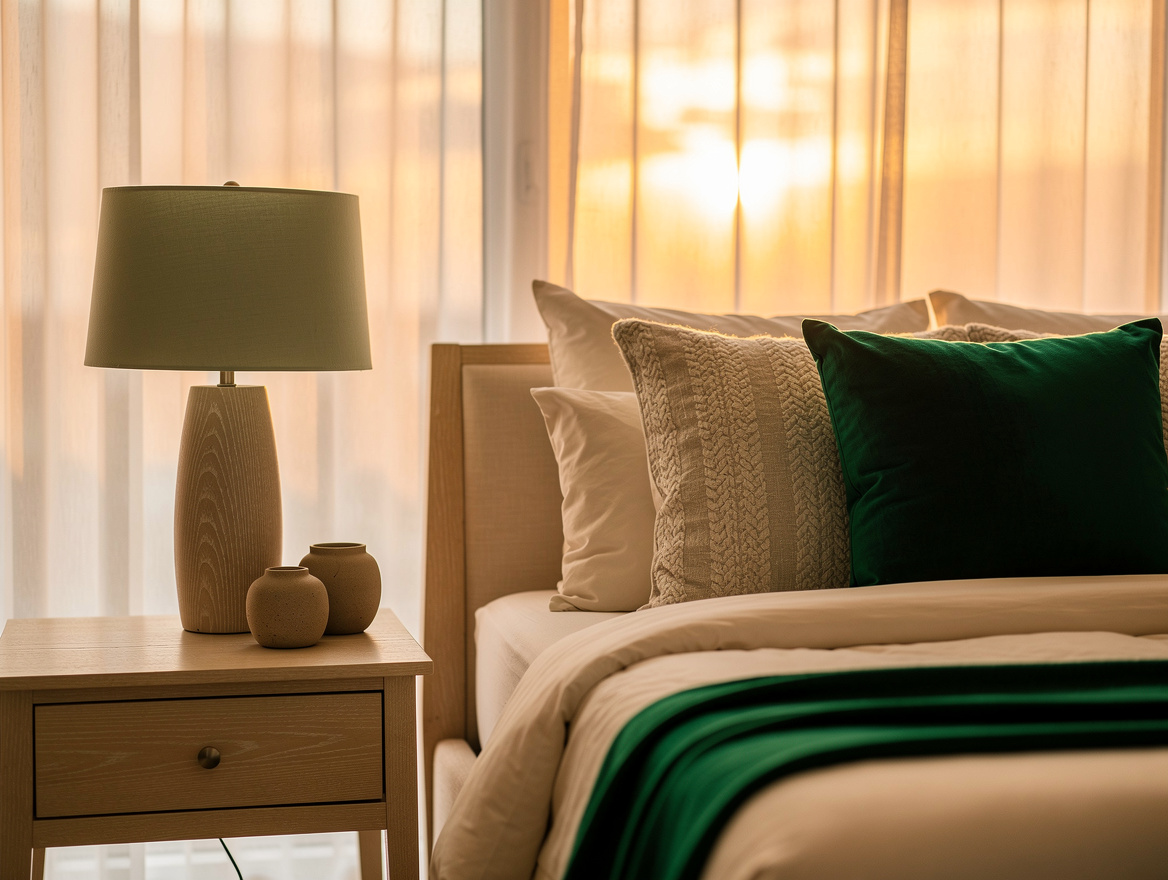
Muted sage cotton is the best alternative when beige feels too predictable. Keep the shade dusty and pale, then repeat the color once in a pillow, artwork, or small vase.
Strong emerald or blue-green shades make the lamp feel decorative before breakfast. Sage works because it adds color while staying close to the soft, low-contrast mood that morning light needs.
Separate Lamp Glow From Sunlight
A lampshade softens the bulb inside it, not direct sunlight coming through the window. That distinction matters when a bedroom feels harsh at dawn, because the window treatment controls the stronger source.
Sheer linen curtains or light-filtering panels can reduce the glare while keeping the room bright. Let the shade complement that atmosphere instead of expecting it to solve a sun problem.
Match Shade Scale to the Nightstand
Color cannot rescue a shade that overwhelms the bedside table. A compact setup may need a small white PET shade, while a broader nightstand can handle a wider drum silhouette without looking crowded.
For a useful budget benchmark, Lowe’s lists a typical lampshade at about $48, with prices ranging from roughly $6 to $144. Remember that these references apply to the shade alone, not the lamp base.
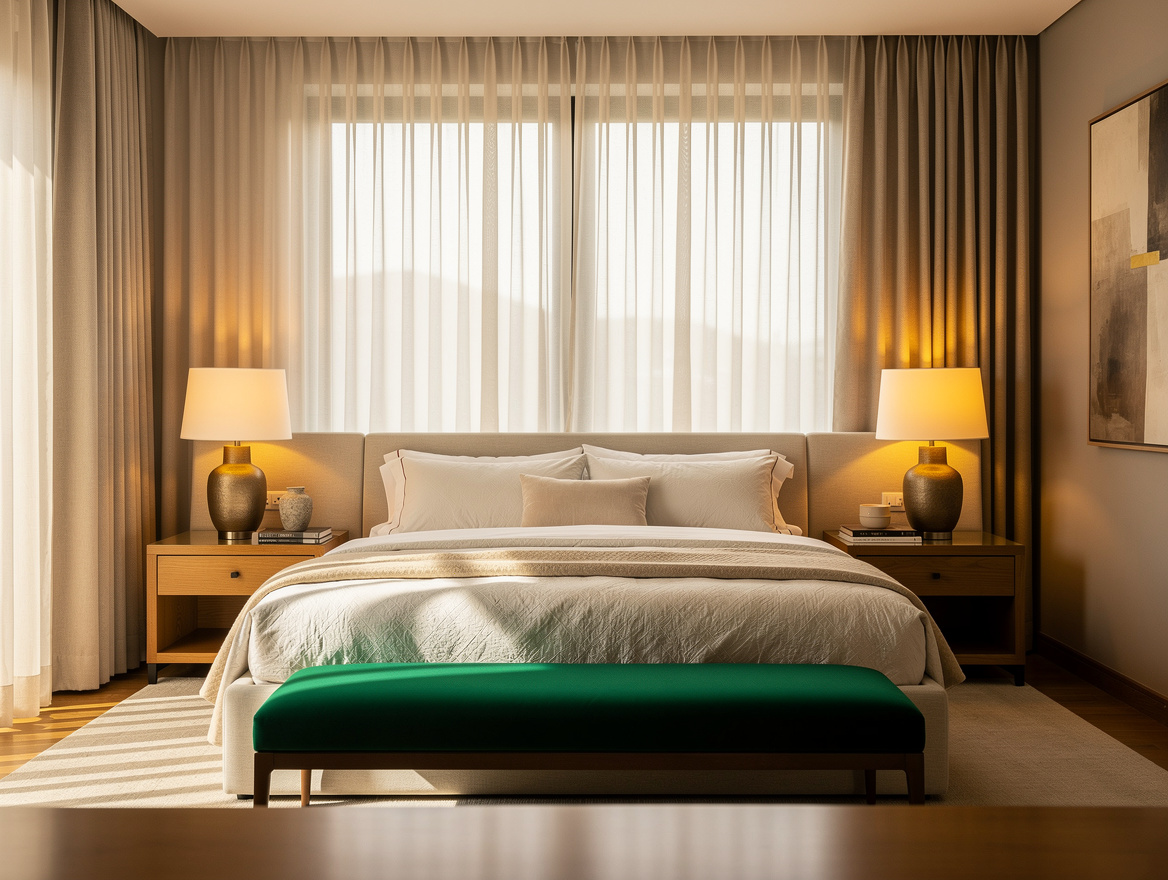
Begin with a fabric shade in oatmeal or warm ivory, then check its thickness beside the bulb before judging the color. If sunlight still feels hard across the bed, add a light-filtering curtain rather than choosing a darker shade.
That small order of operations keeps the room calm, protects the budget, and gives the lamp a softer job to do.
Mia Carter writes about small-space living and budget home makeovers. She has restyled three rentals and tests most ideas in her own 45 sqm flat.