A vintage blue bathroom feels charming when the blue gets one warm counterpoint, not a roomful of competing nostalgia. I learned that after pairing icy blue tile with bright chrome, which made the room feel like a clinic. Your fix is simple: keep the blue, soften the edges, and let a few honest materials do the work.
- Paint the vintage blue bathroom ceiling a softer companion
- Layer vintage bathroom decorating ideas with warm white
- Choose hand-glazed tile for blue antique bathroom depth
- Keep the original tub and sharpen its surroundings
- Swap bright chrome for unlacquered brass
- Build the Three-Height Light Stack
- Frame the mirror with vintage blue tub bathroom ideas
- Use the Two-Wood Rule for warmth
- Mix Turkish cotton with sage mohair velvet
- Hang a simple curtain instead of a fussy one
- Float a narrow shelf above the blue tile
- Paint the vanity in a richer blue
- Hang botanical art in a moisture-safe frame
- Choose blue over gray when the room needs life
- Add a removable pattern for rental-friendly charm
- Measure first with the Vintage Clearance Rule
- Style a tray instead of filling every surface
- Can vintage blue bathroom ideas look modern too?
- Edit the vintage blue bathroom around one focal point
1Paint the vintage blue bathroom ceiling a softer companion
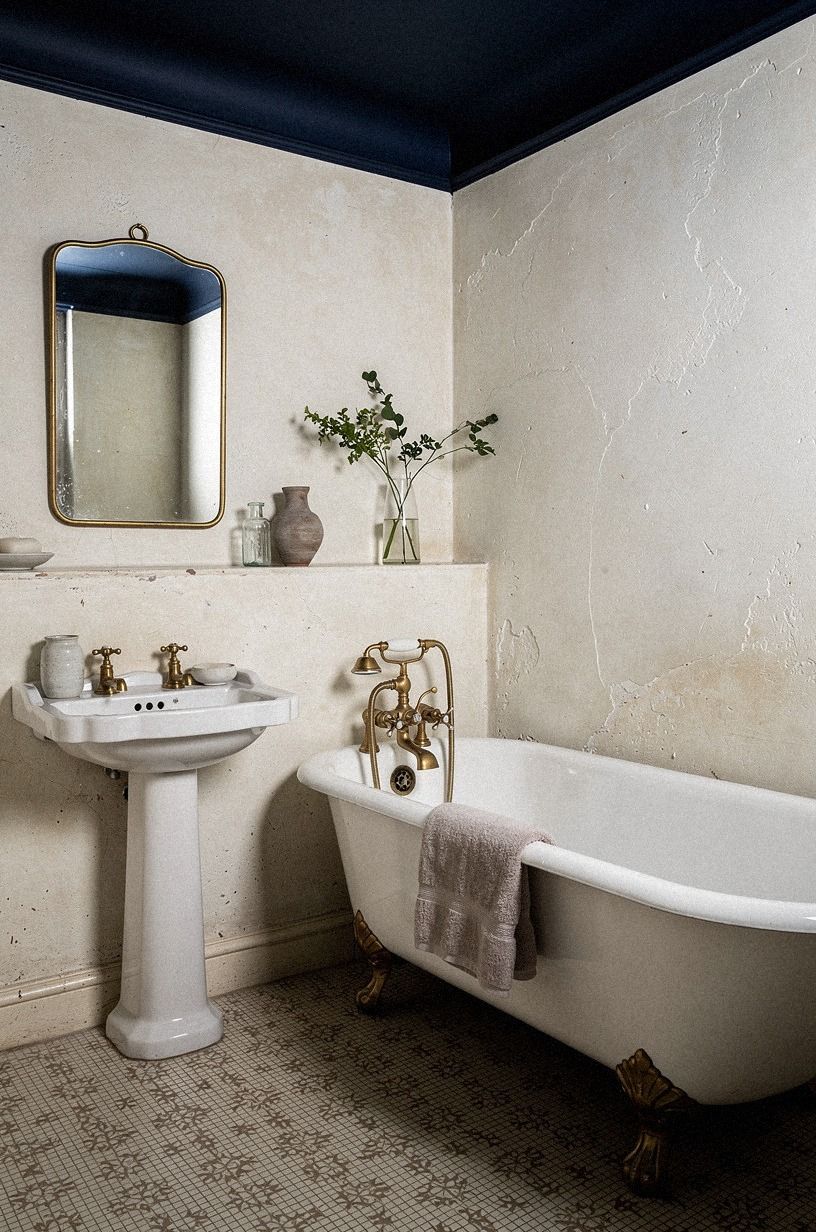
A blue bathroom can feel wonderfully intimate, but painting every surface the same saturated shade may make your ceiling drop visually. I prefer Benjamin Moore White Dove OC-17 above blue tile because its warm cream undertone keeps the room gentle beside sage green, natural wood, and shagreen accents. You’ll still see the vintage color, but your eye gets somewhere quiet to rest.
Use a washable matte finish on the ceiling and a satin finish near the sink. The difference is subtle in daylight, yet it keeps your bathroom from looking flat after sunset. If you’re working with limited natural light, Sherwin-Williams Sea Salt SW 6204 can soften the transition without turning green.
And if your ceiling already has old paint, don’t rush to cover every flaw. A little texture can make the room feel lived-in, especially when a shagreen tray and warm wood detail bring enough polish.
2Layer vintage bathroom decorating ideas with warm white
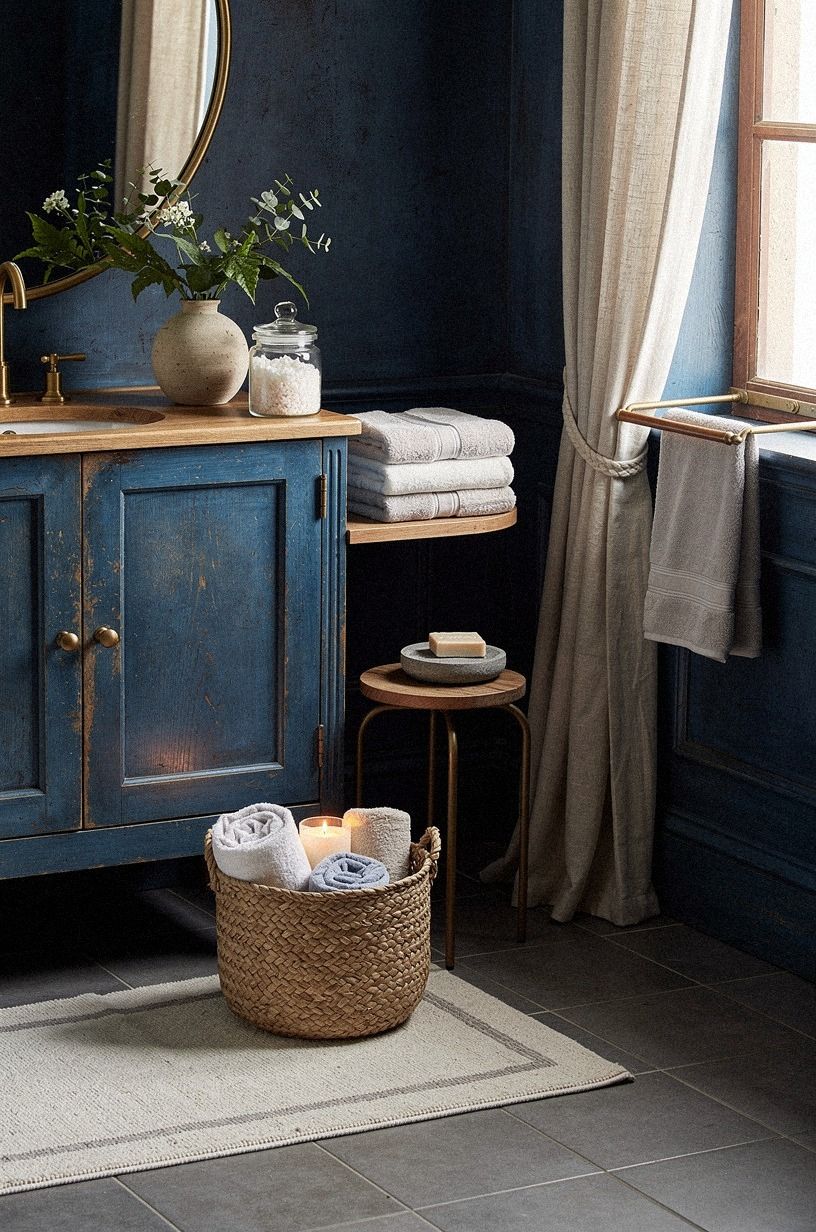
Blue and white work beautifully when the white has warmth. Add terracotta, olive, and washed Belgian linen so the room feels layered rather than stark.
3Choose hand-glazed tile for blue antique bathroom depth
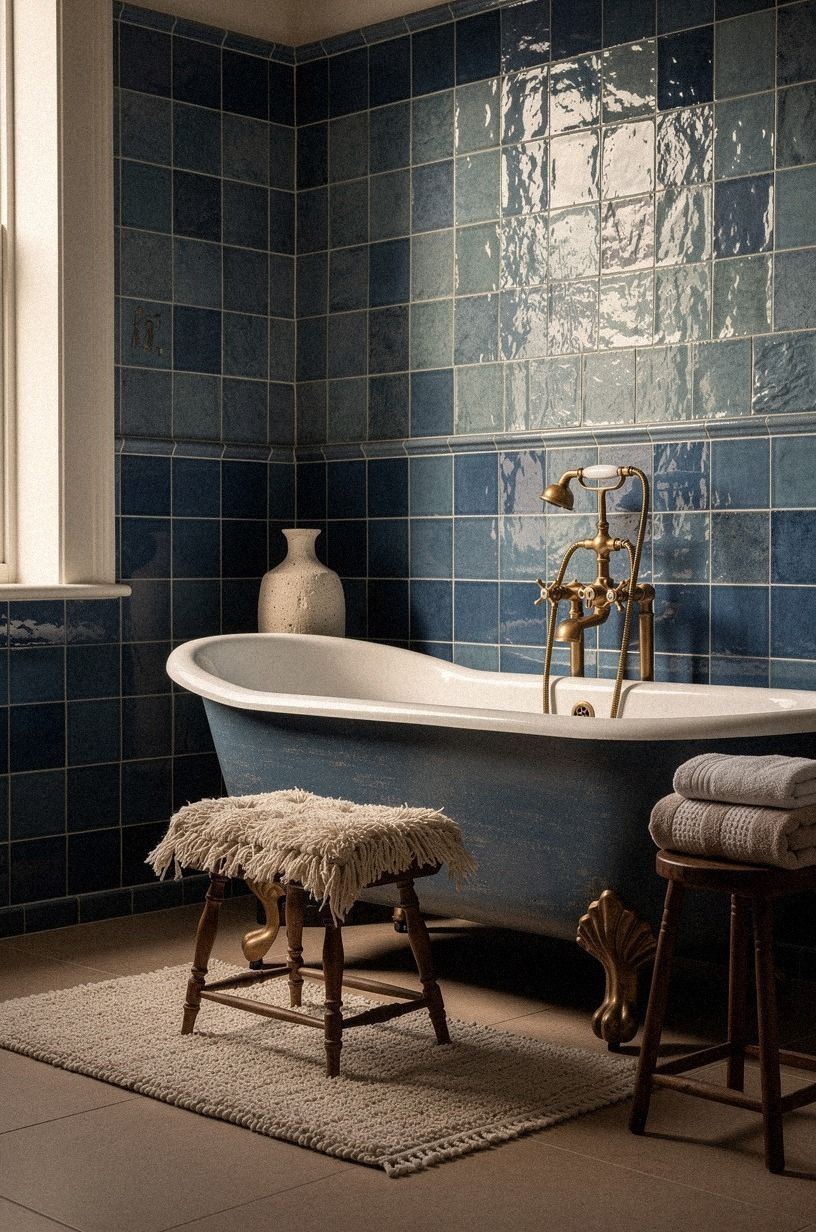
Uniform tile can make an older bathroom look newly manufactured. Hand-glazed tile gives you small shifts in color, so your wall catches muted blue, clay, and a little green as the light moves. I’d choose hand-glazed clay-toned zellige over a printed faux-vintage pattern because the uneven edges look convincing up close.
You don’t need to retile the whole room. A narrow backsplash behind the vanity or one shower wall can be enough, and you’ll save the original floor if it still has good bones. If you’re matching existing tile, bring home samples and look at them beside your grout, not against a white store wall.
A warm, irregular surface needs one calm neighbor. Your best choice is usually washed Belgian linen, an aged brass detail, or a small organic bouclé stool, not another pattern. For more direction, save these blue and white bathroom ideas that never look dated before you commit.
4Keep the original tub and sharpen its surroundings
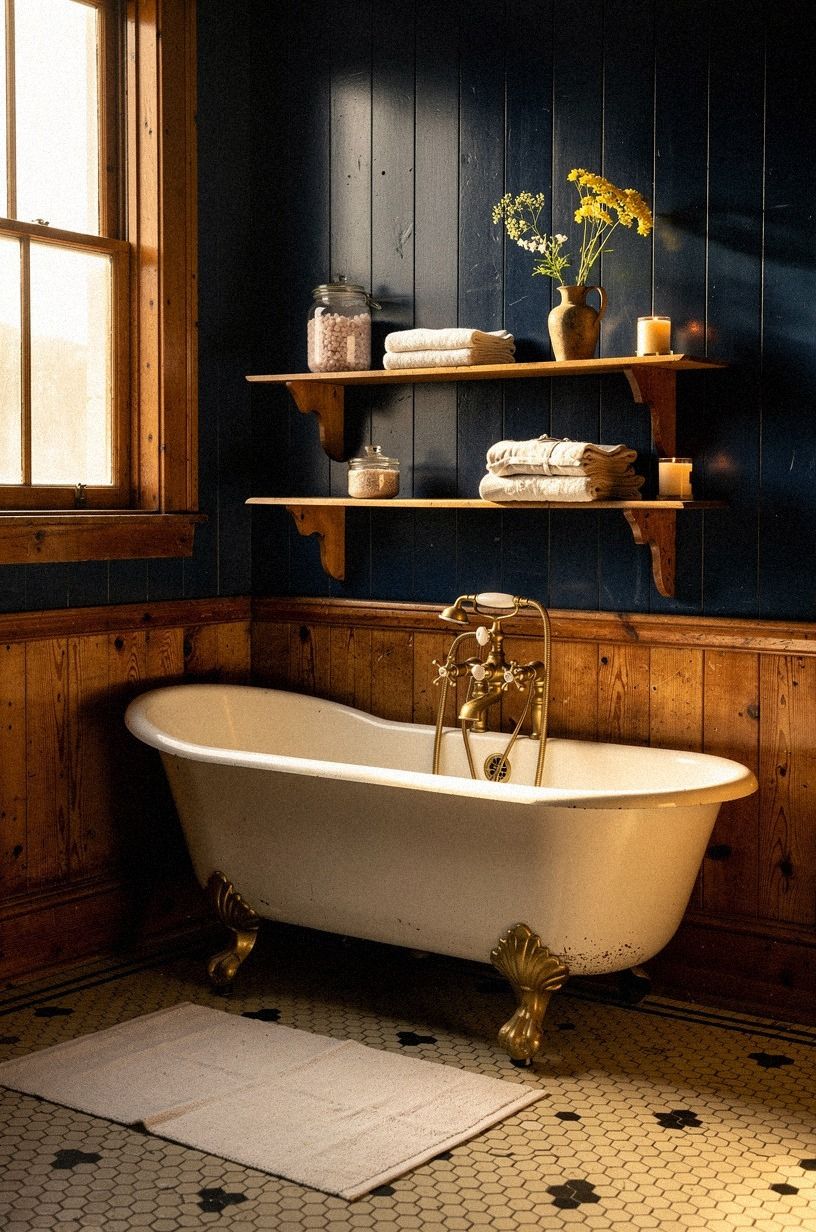
An old tub can be the most valuable thing in your vintage blue bathroom, even when the finish isn’t flawless.
5Swap bright chrome for unlacquered brass
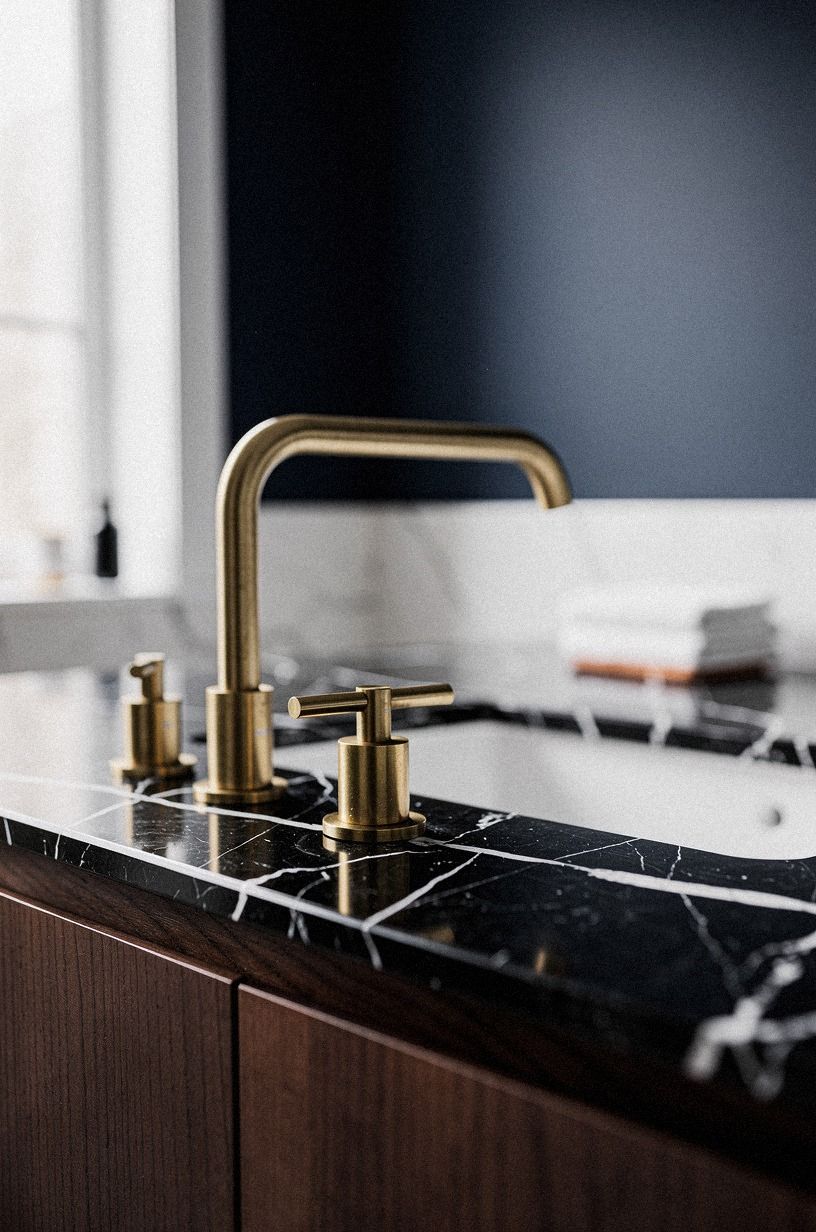
Chrome can look too sharp beside faded blue tile and Nero Marquina black marble. Unlacquered brass has a softer yellow tone, and it develops a muted patina that makes new hardware feel less separated from your old sink and tub. I’ve tried polished brass in this setting, and it was too shiny for the room.
Replace one group at a time, starting with the faucet or cabinet pulls. You don’t need every metal to match, but your sink hardware and mirror surround should speak the same visual language. If you’re renting, removable brass-toned knobs can give your vanity a warmer face without permanent changes.
Your water quality will affect how the finish changes, so expect variation. That’s part of the appeal. A little oxidation around the base can look quietly handsome, while a spotless gold finish may feel less connected to the rest of your bathroom.
6Build the Three-Height Light Stack
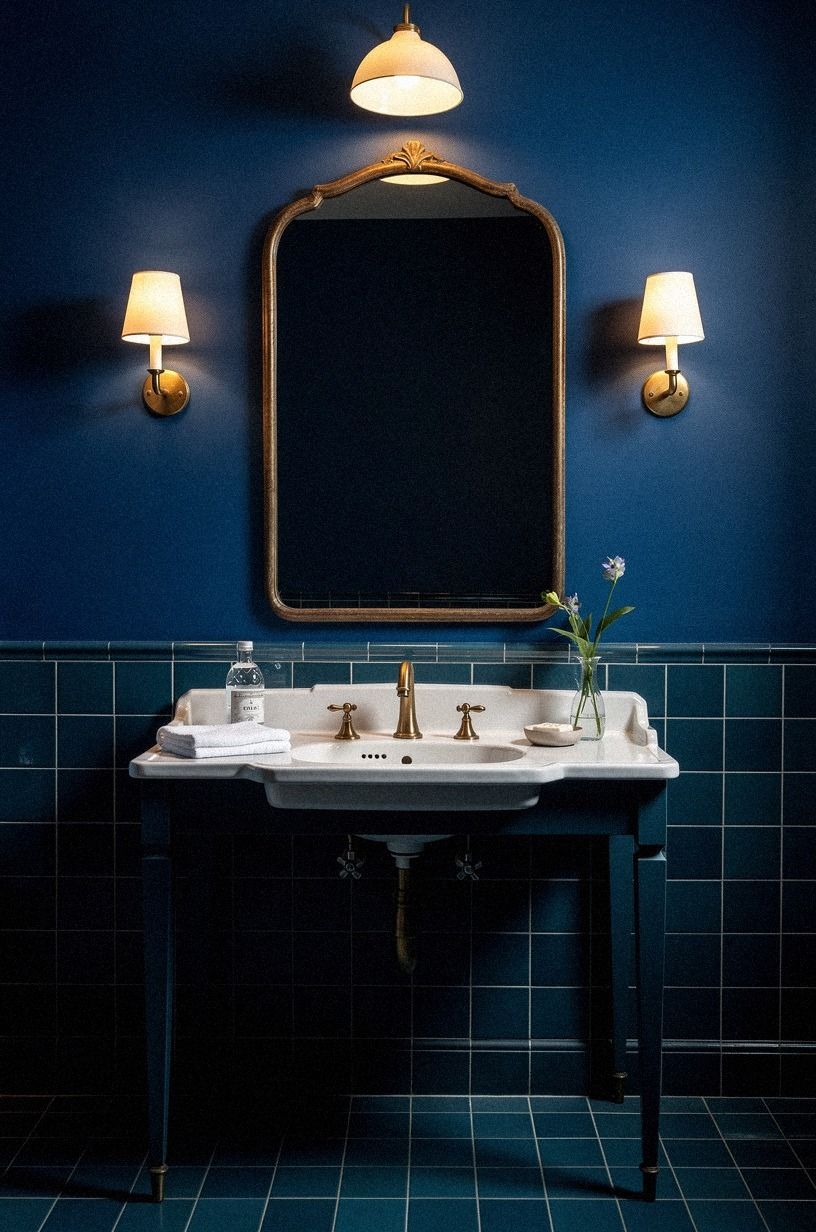
One ceiling fixture rarely makes a blue bathroom feel inviting. The Three-Height Light Stack uses overhead light, eye-level sconces, and a low glow near the floor or vanity. You’ll get better shadows, and your mirror will be more useful when you’re getting ready.
Start with sconces mounted beside the mirror, not above it alone. Add a dimmable ceiling fixture in aged gold, then use a small rechargeable lamp on a shelf if wiring isn’t possible. A deep-pile mohair velvet stool can add softness if it stays away from direct splashes.
I’d skip cool white bulbs because they drain the warmth from blue paint and make your skin look gray.
Your bathroom doesn’t need a dramatic chandelier. It needs light that changes with the hour. A soft pool around the vanity can make Farrow & Ball Studio Green No.93 feel rich at night instead of heavy, especially when cream details balance the emerald tone.
7Frame the mirror with vintage blue tub bathroom ideas
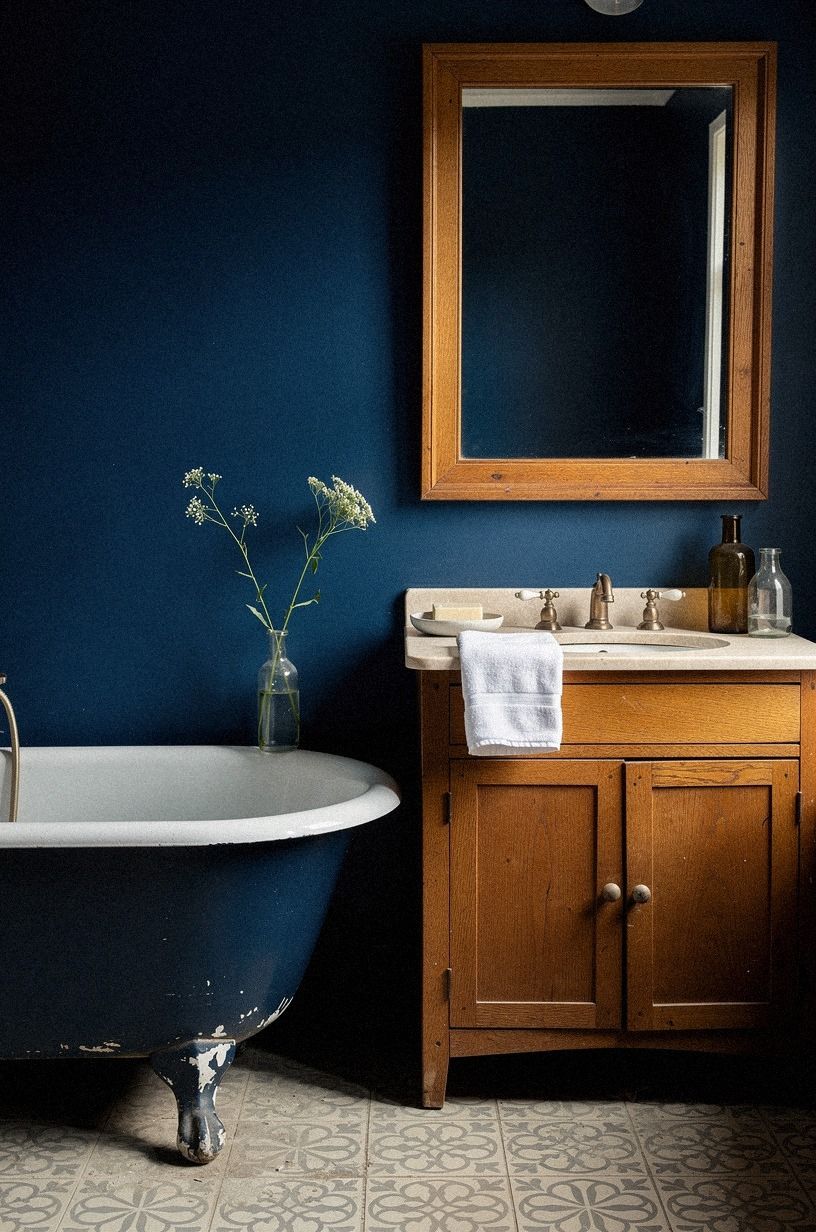
A frameless mirror can make an old bathroom feel unfinished, even when the shape is practical. Choose a narrow natural oak surround with a small Carrara marble shelf, or use an antique mirror with softened edges. You’ll create a visual bridge between the blue walls, forest green accents, and warmer details below.
If your vanity is small, a vertical mirror will give your wall more height. If you have a long double sink, one wide mirror can look calmer than two small decorative ones. I’d avoid a heavily carved surround when your floor already has a pattern, because your bathroom needs one clear focal point.
Your mirror should also leave enough room for useful lighting. Check the width before ordering and keep your sconces close to eye level. A pretty surround that blocks the light will frustrate you every morning, which is not a charming vintage detail.
8Use the Two-Wood Rule for warmth
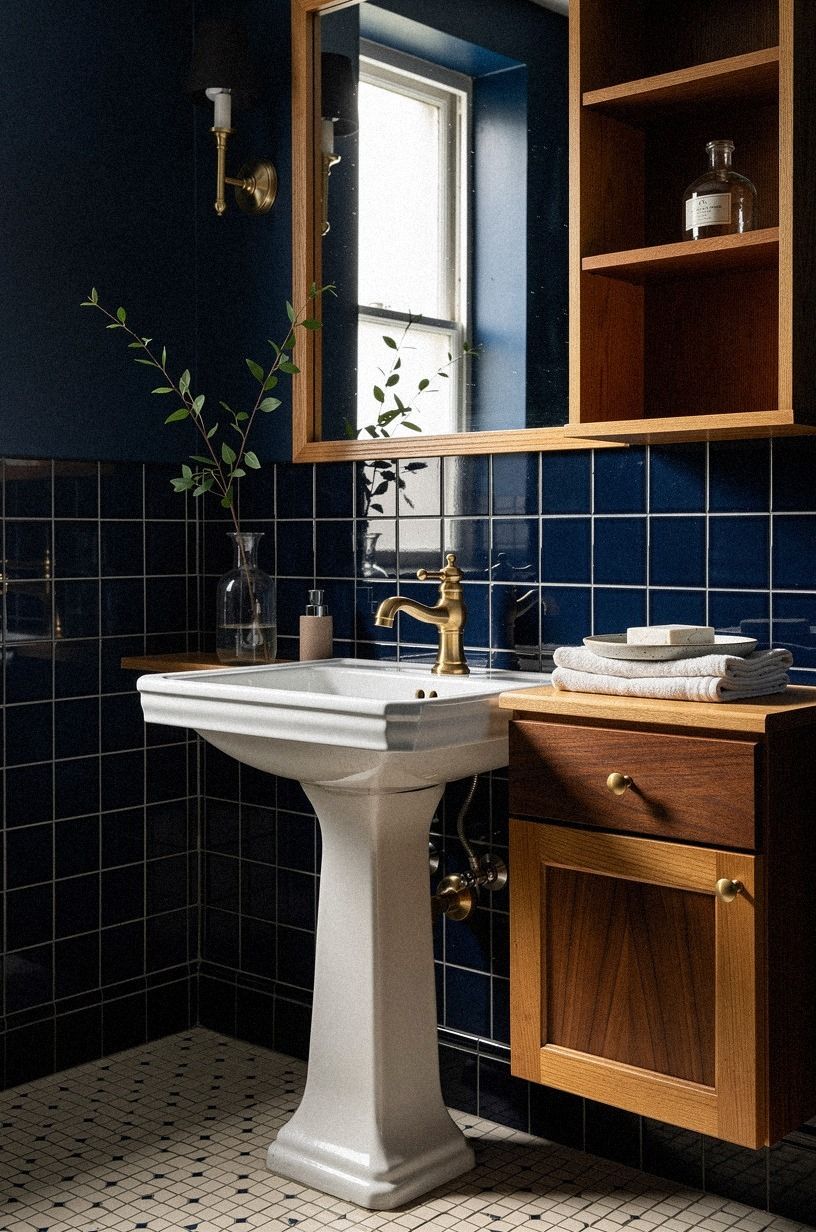
The Two-Wood Rule keeps a blue bathroom from feeling cold without turning it into a cabin. Choose reclaimed weathered teak as one anchor, then add a darker charcoal-stained wood for contrast. Brass hardware and dusty rose textiles can soften the combination.
Use the teak for a stool, vanity, or mirror surround. Reserve the darker tone for a tray, frame, or small shelf. I wouldn’t add three or four wood finishes, because the blue already provides visual color and your room can become fussy quickly.
And don’t hide every knot or variation. A slightly imperfect stool can make the bathroom feel more personal. If you’re unsure where to begin, look through these light blue bathroom ideas for a calm, bright room and note how the wood keeps pale blue from feeling sugary.
9Mix Turkish cotton with sage mohair velvet
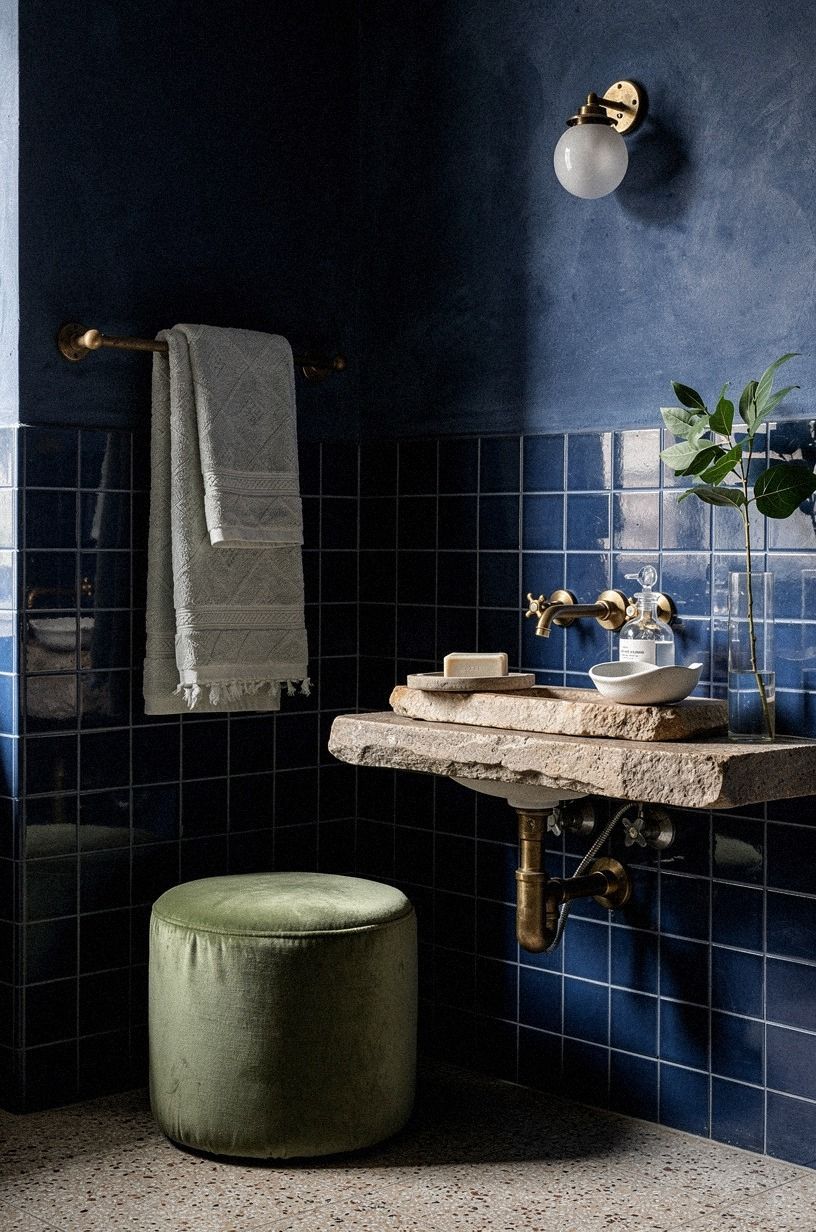
Textiles are where your bathroom can move from hard surfaces to something softer. Use 600gsm Turkish cotton towels for weight, then add a small bath mat in organic bouclé. I like the contrast between dense cotton and a nubby floor texture because it makes the room feel comfortable without looking plush.
Velvet belongs in small doses. A camel-toned bouclé stool cushion or window bench can work if the fabric stays away from direct splashes. You’ll get a warm note that connects to blue without creating a competing color story.
Your towels don’t need a decorative slogan or a matching set. Warm white, camel, and black accents are enough. I’d skip stark white if your tile is aged, since the contrast can make every old grout line look dirtier than it is.
10Hang a simple curtain instead of a fussy one
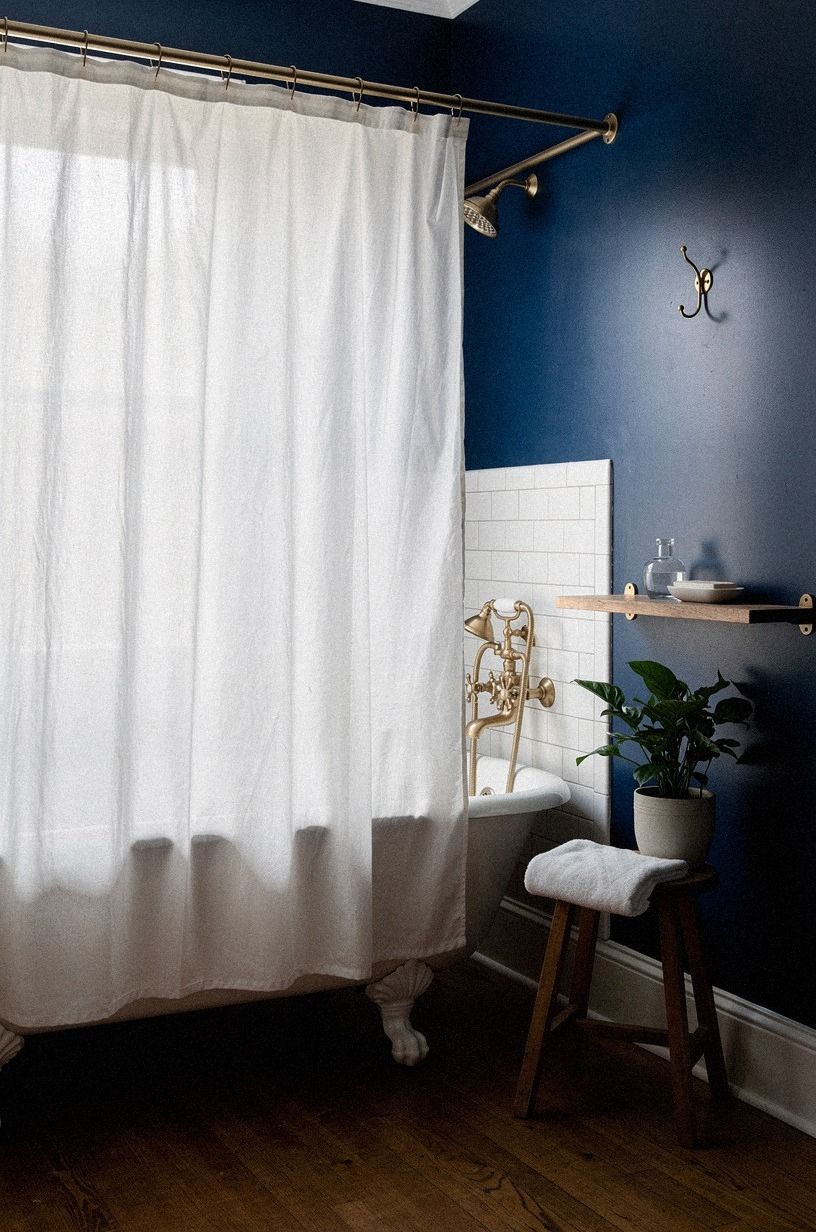
A shower curtain occupies a large visual area, so your choice can determine whether the room feels relaxed or costume-like. Choose Belgian flax linen in midnight blue with an ivory stripe, and let the tile provide the variation. You’ll get movement without adding another loud motif.
A tension rod is useful in a rental, while a slim copper rod looks more intentional in a permanent home. Keep the curtain high enough to lengthen the wall, but don’t let it puddle where your floor needs to dry. I’ve made that mistake, and the damp hem became the least charming part of the room.
Your curtain should open fully during the day. If the room is narrow, a split panel may help light reach the tub area. For another useful small-space reference, see these grown-up baby blue bathroom ideas before choosing a pale fabric.
11Float a narrow shelf above the blue tile
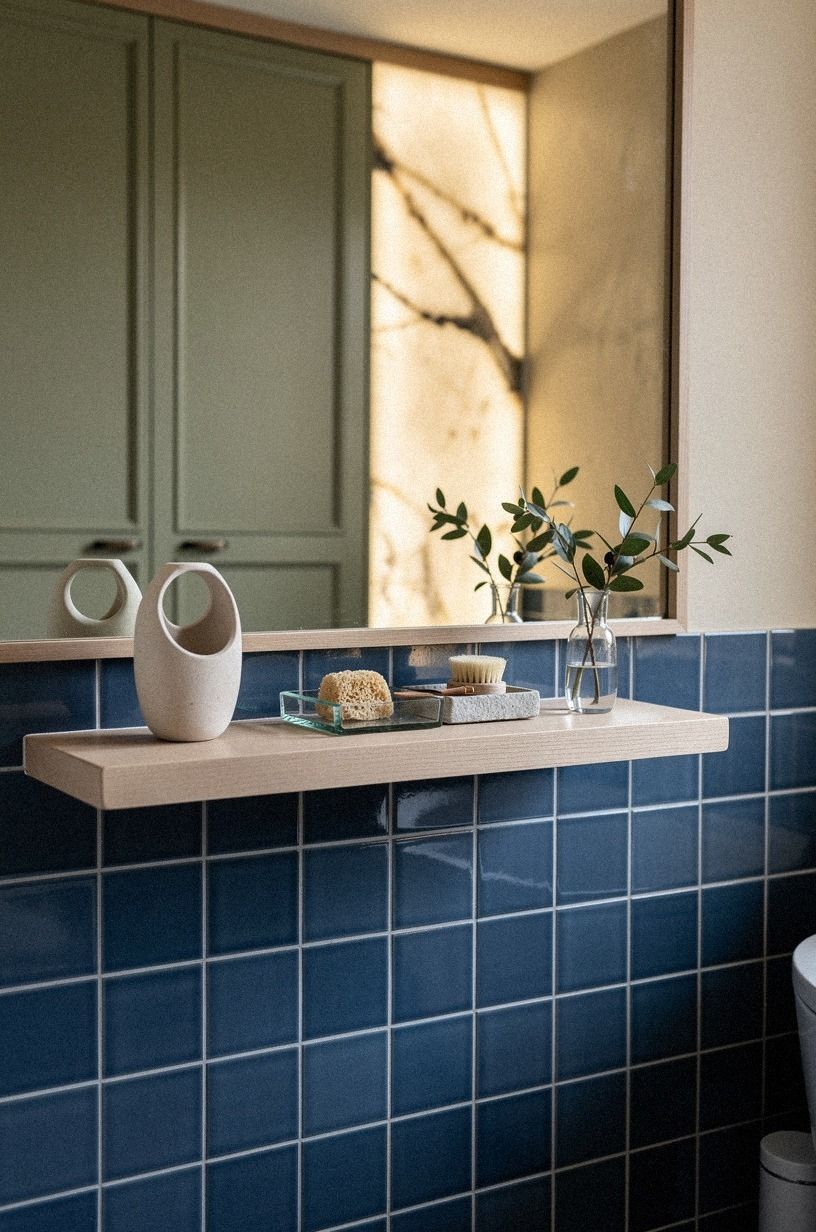
Open shelving can make a small bathroom feel lighter, but only when the shelf is narrow enough to stay useful. A backlit translucent onyx shelf with a natural-wood edge gives you room for soap, a small vase, and folded hand towels without crowding the wall.
Keep your most-used items below eye level. Your pretty bottle can sit on top, while cotton pads and spare soap belong in a lidded container. I’d avoid filling every inch, because the negative space is what makes the shelf feel calm rather than like a storage depot.
And check the wall before drilling. You’ll want anchors suited to the tile and the shelf weight, especially if your bathroom gets humid. A shelf that sags after a week will pull attention away from the blue and make your whole room feel less considered.
12Paint the vanity in a richer blue
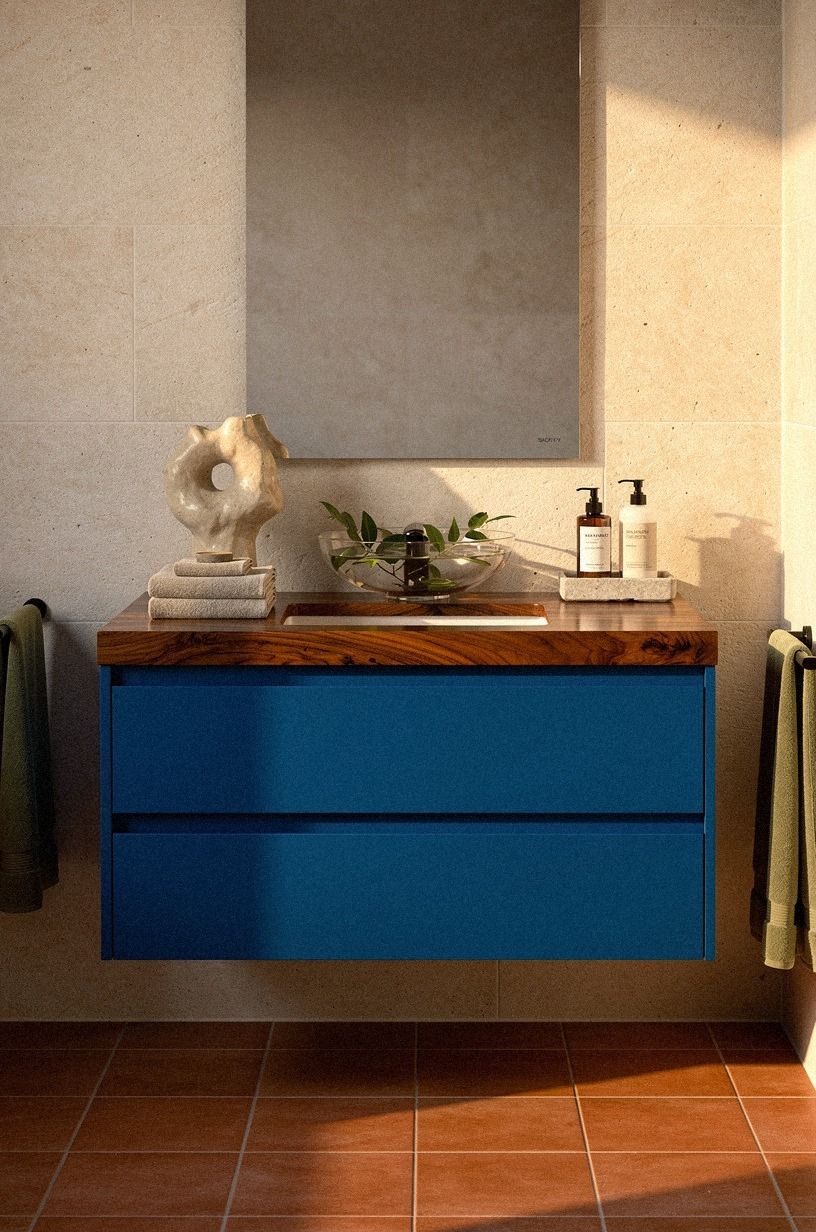
A painted vanity can make a dated bathroom feel deliberate, especially when the floor and tub already have vintage lines. Use a richer blue on the cabinet while bringing in book-matched walnut on an open shelf or side panel. Warm terracotta, stone, and olive accents will keep the room from becoming one-note.
If your cabinet is flat-pack, sand the glossy surface and use a bonding primer before paint. Your finish should be satin or semigloss near water, since matte paint will show fingerprints and splashes more quickly. I’d skip matching blue on the walls, cabinet, and accessories.
For a budget-conscious replacement, an IKEA HEMNES vanity can work when its hardware is changed and its base is painted well. Check that the height stays near the standard 32-36 in range so your sink remains comfortable for you.
13Hang botanical art in a moisture-safe frame
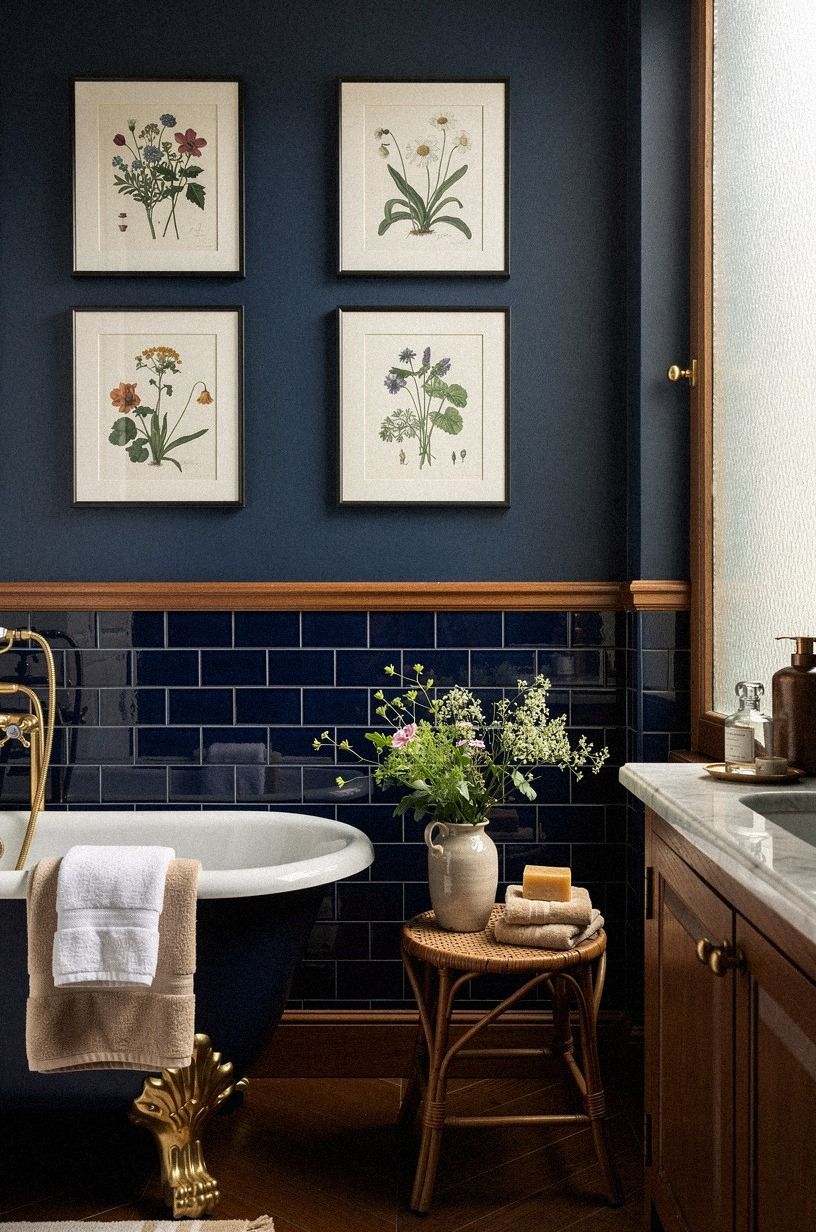
Art makes a bathroom feel like part of your home instead of a room you only pass through. Choose a pressed fern, a faded landscape, or a small print with blue-green leaves. A warm travertine surround or sealed wood surround will feel more natural than shiny plastic beside vintage tile.
You’ll want to protect paper from constant steam. Hang art away from the direct shower path, use a sealed surround, and keep a small gap between it and the wall if condensation is an issue. I’d rather see one excellent print than six tiny pieces fighting for attention.
Your subject can be slightly strange or sentimental. A botanical illustration with a dark stem, for example, keeps pale blue from feeling too sweet. That personal note is often what makes a vintage bathroom feel collected instead of copied from a catalog.
14Choose blue over gray when the room needs life
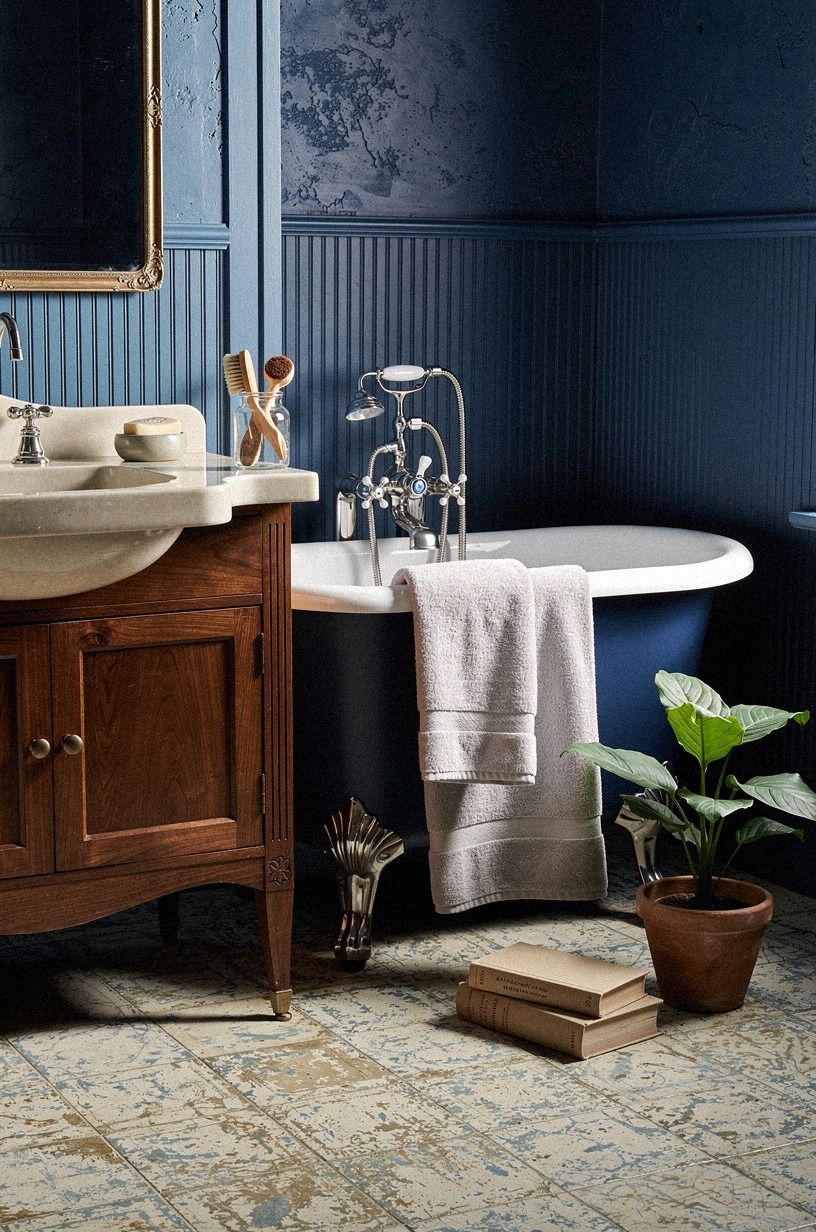
Gray is a common fix for dated tile, but it can drain the energy from a north-facing bathroom. Blue gives you more atmosphere, especially when you choose a shade with a green or violet undertone that can sit comfortably beside plum and soft gray. You’ll keep the room grounded while making the old fixtures feel intentional.
Try a sample of Sherwin-Williams Sea Salt SW 6204 beside your tile at morning, noon, and evening. I wouldn’t choose a gray-beige just because it feels safe. It may flatten the blue and leave your bathroom looking beige by late afternoon.
Your best shade depends on the light you have. If your room already receives strong sun, a deeper blue can feel restful.
If your window is small, use the darker tone below eye level and keep the upper wall lighter so your space doesn’t close in. Unlacquered brass or a muted rose-gold detail can add warmth without competing with the color.
15Add a removable pattern for rental-friendly charm
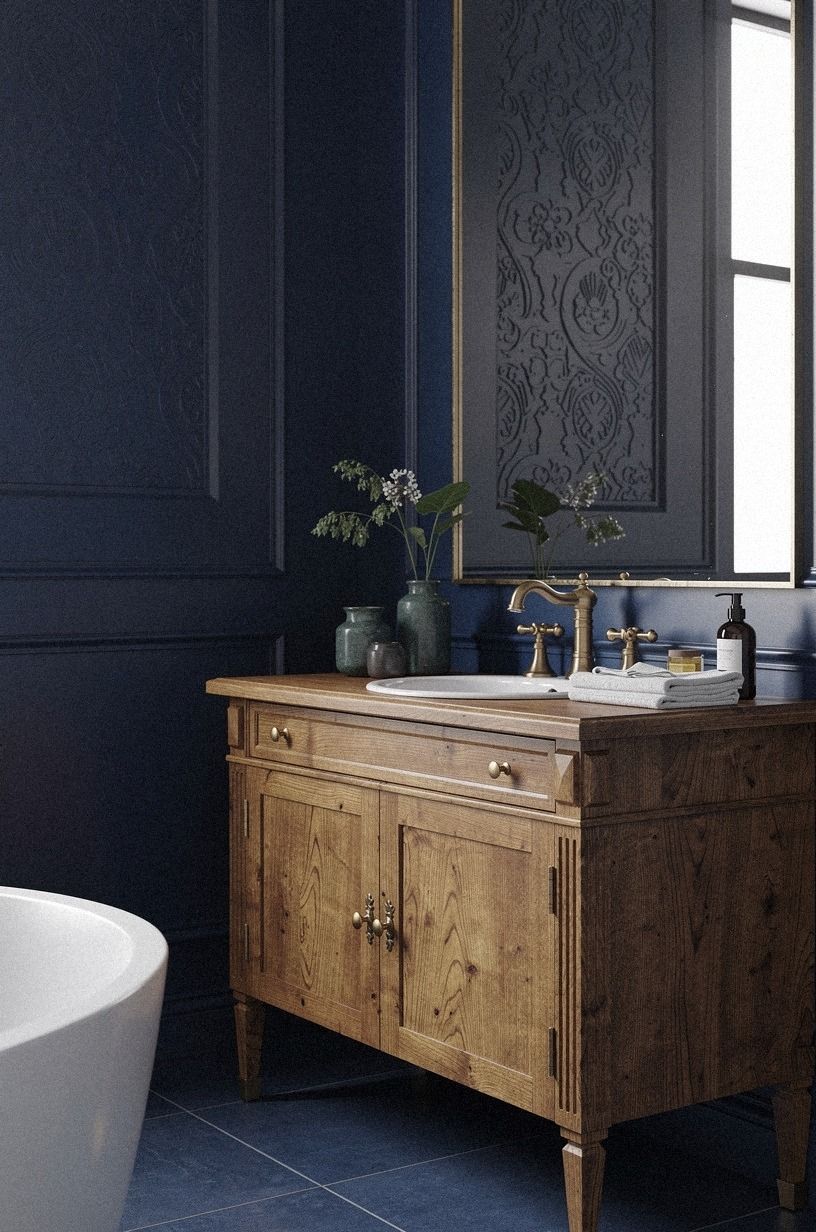
Renters can still make a blue bathroom feel personal. A removable peel-and-stick botanical paper behind the vanity or above the tile can introduce pattern without touching the main plumbing or paint. You’ll get the visual richness of wallpaper with a simpler exit plan.
Test a small piece first, because humidity and wall texture vary. Your landlord may also have rules about removal, so check before covering a large surface. I’d avoid placing removable paper inside the shower zone, where steam and water can weaken the adhesive.
A tension rod, removable hooks, and a small walnut stool can carry the rest of the look. An oversized-chip terrazzo tray can add another useful surface without permanent work.
You don’t need a full makeover to change the mood. A few reversible layers can make your bathroom feel warm while keeping your deposit safe.
16Measure first with the Vintage Clearance Rule
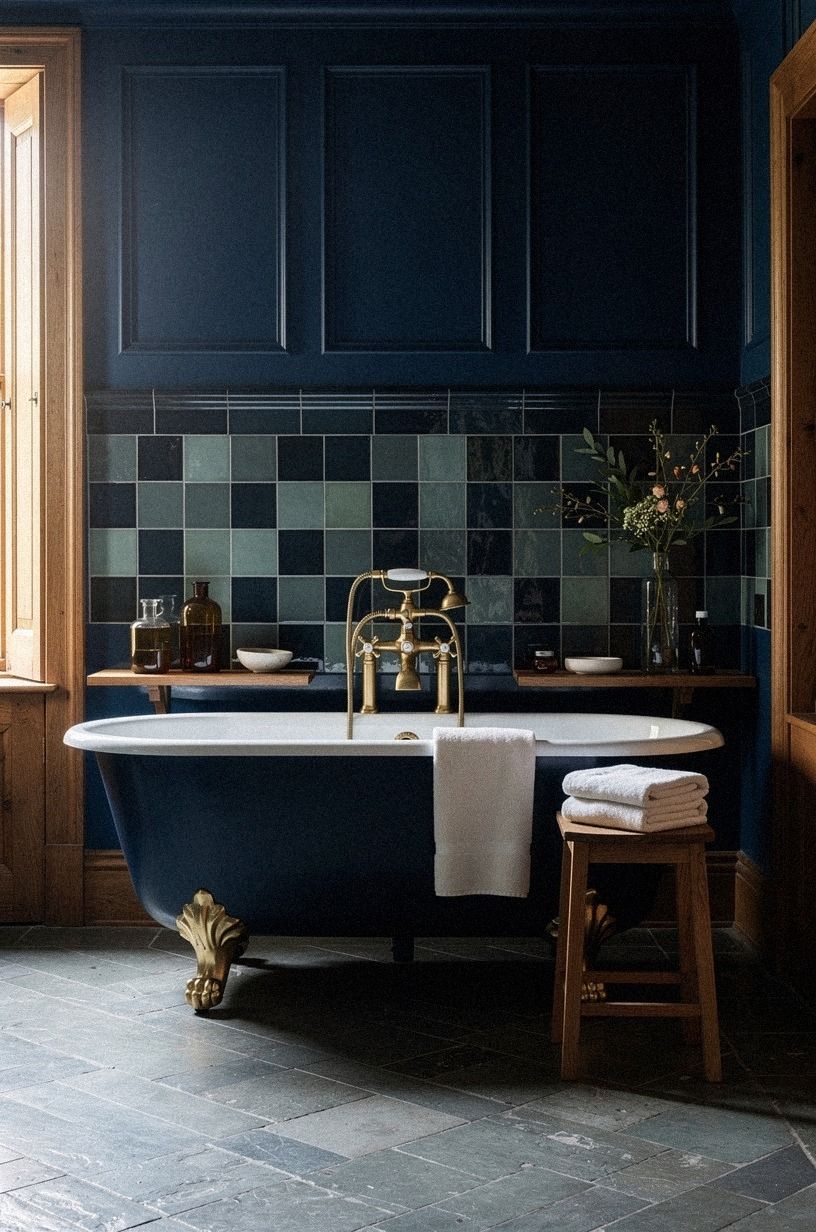
The Vintage Clearance Rule says charm never excuses a blocked doorway, cramped toilet, or vanity that makes washing your hands awkward. Keep at least 21 in of clearance in front of the toilet, and protect a comfortable shower zone of 36×36 in where possible. Your layout matters more than one decorative purchase.
Before you order anything, measure the door swing, plumbing locations, wall width, and tub edge. I’d write every measurement on painter’s tape and place it on the floor, so you can feel how much space your new vanity will occupy.
If you’re considering hand-applied Venetian plaster in an emerald, gold, and cream palette, confirm the wall area and moisture protection before hiring an installer. Renovation costs vary widely, so use these typical US ranges as a planning guide:
17Style a tray instead of filling every surface
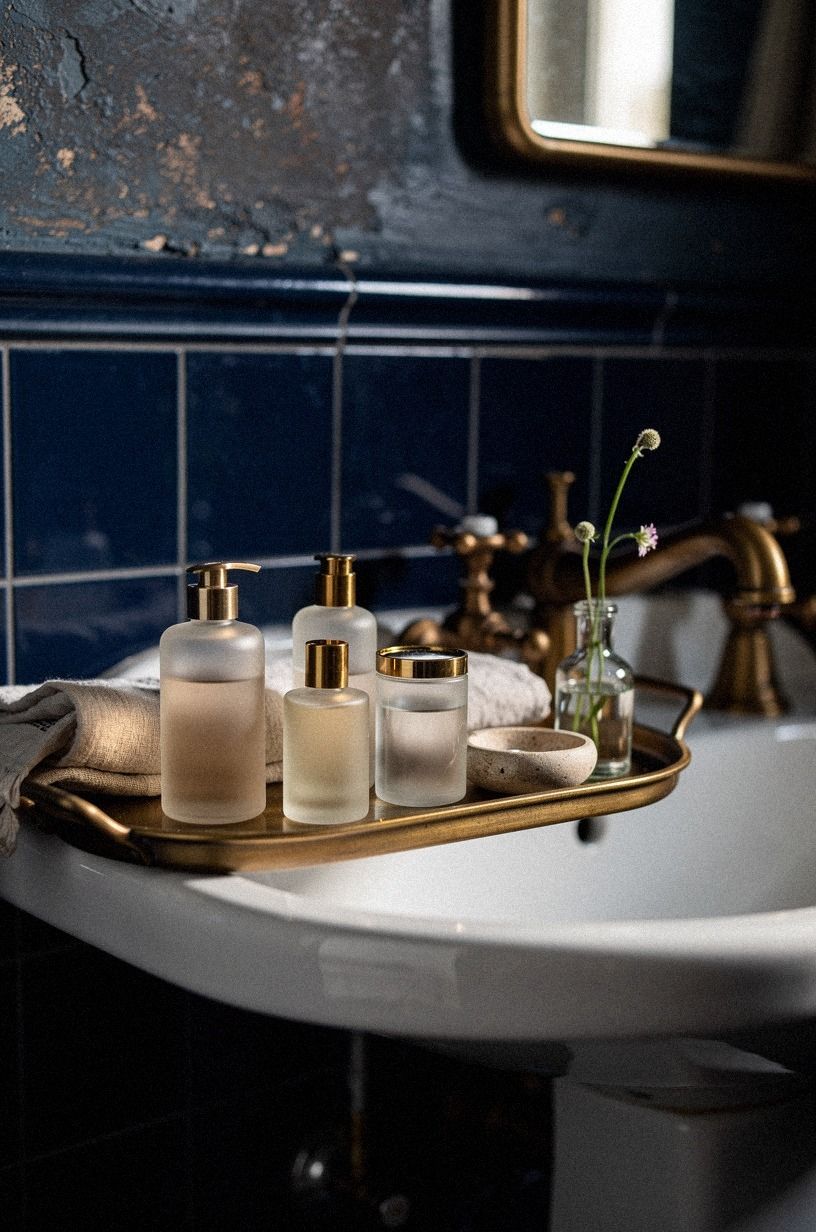
A tray gives your counter a boundary, which helps your bathroom feel tidy without hiding everything away. Choose a shagreen tray or a small piece of natural oak, then group hand soap, lotion, and one low vase. You’ll create order that still feels relaxed.
Your daily products can stay accessible, but decanting every bottle isn’t necessary. I’d keep the items you use twice a day on the tray and store backups elsewhere. That edit makes the blue tile more visible and keeps cleaning from becoming a ten-minute project.
For a small counter, use a tray no wider than the available sink area. If you want more help with this exact move, read how I made a bathroom counter feel calm with a tray. You’ll see why one contained group often works better than scattered decor.
18Can vintage blue bathroom ideas look modern too?
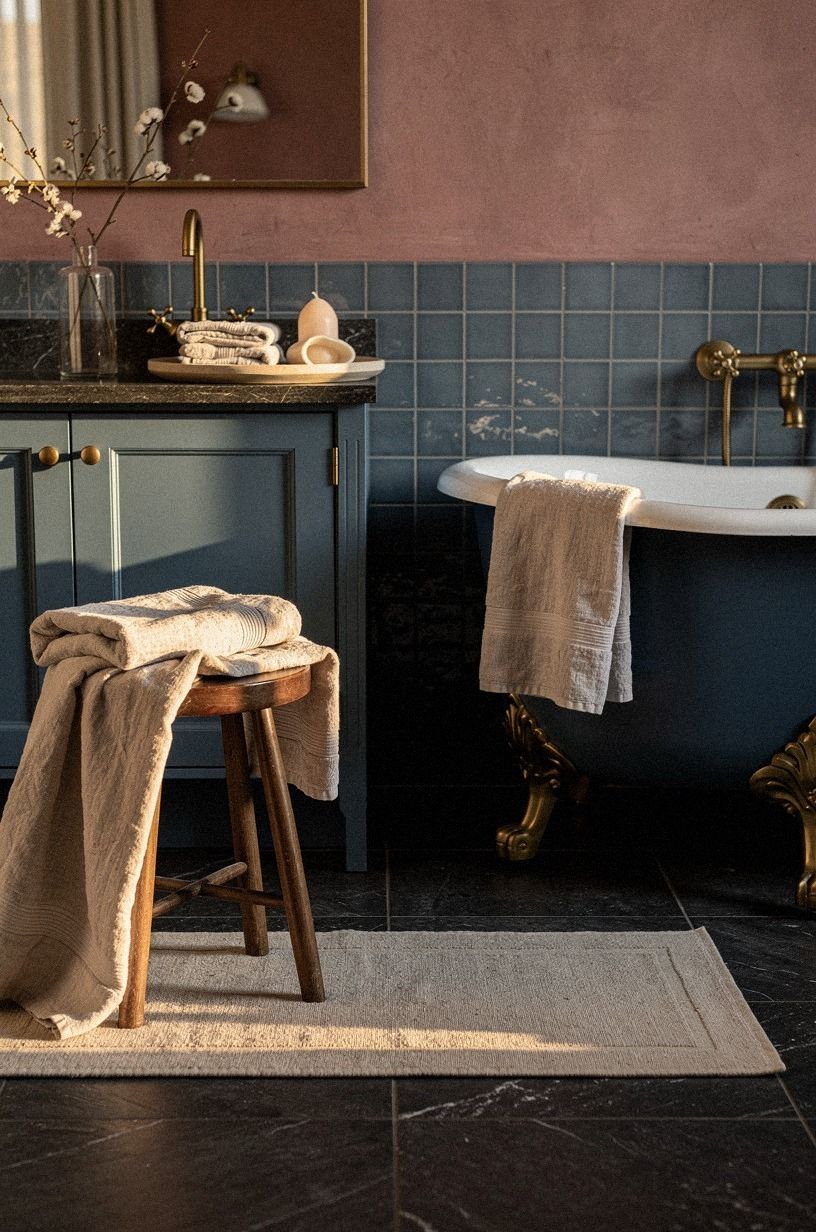
Yes, but your modern detail should be quiet. A slim brass mirror surround, a clean faucet, or a simple globe sconce can stop the room from feeling like a period set. I’d choose one crisp line rather than mixing black, brass, chrome, and ornate white metal.
Your blue tile can stay fully vintage while the storage becomes simpler. Use a plain cabinet front, one substantial pull, and a concealed wastebasket. You’ll preserve the room’s history without asking every object to perform nostalgia.
And don’t confuse modern with sterile. A dusty rose accent, charcoal detail, and washed Belgian linen towel will keep the cleaner shapes inviting. If you’re deciding between gray and blue, these blue and gray bathroom ideas for a serene look show how a restrained palette can still have depth.
19Edit the vintage blue bathroom around one focal point
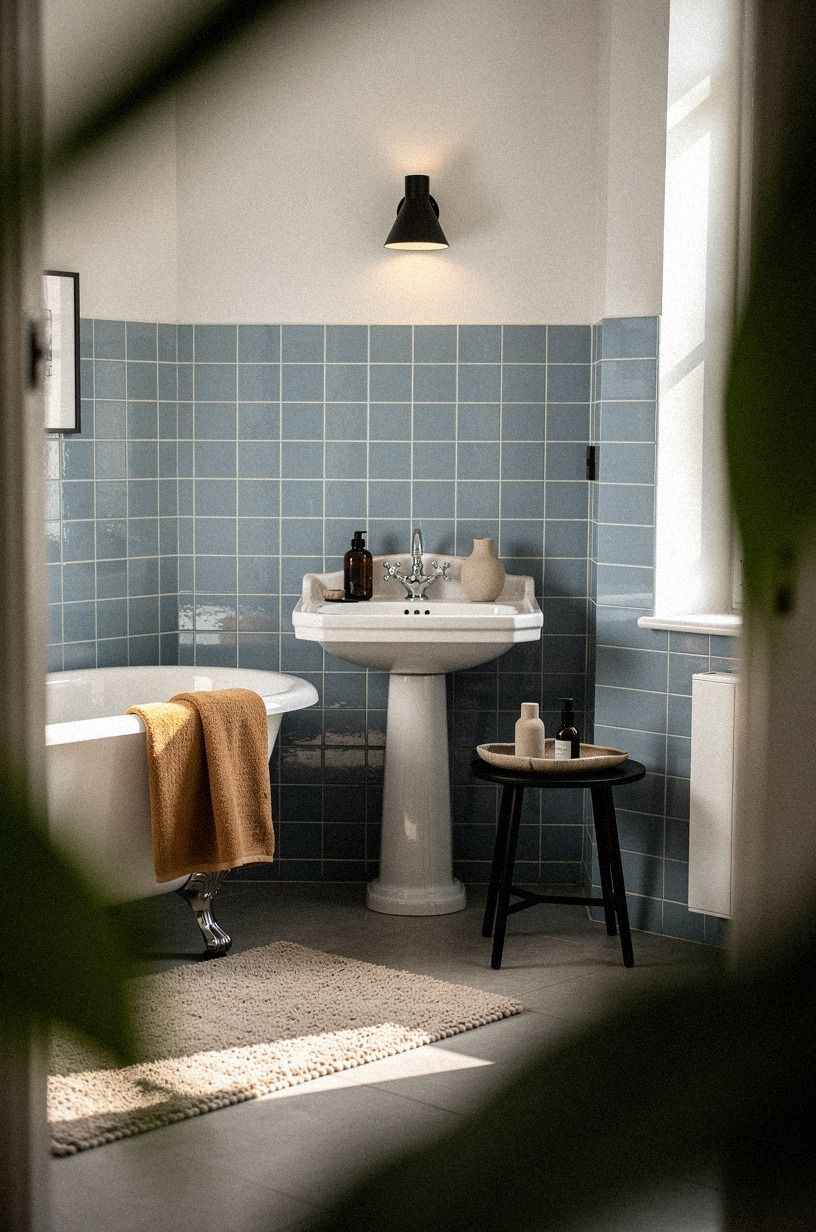
Every room needs one feature that gets the first look. Let warm white, camel, black accents, and one organic bouclé detail support it without competing for attention.
The Opinion I’d Stand Behind
I’ve seen vintage blue bathrooms go wrong in two opposite ways. Some owners erase every old detail with bright white paint and polished chrome, then wonder why the room feels anonymous.
Others preserve every floral border, ruffled curtain, and ornate accessory until the bathroom feels like a costume. I’d choose neither.
The room needs respect for its age and enough editing to let you live in it now.
The best starting point is the feature you can’t easily replace. Maybe it’s a deep blue tub with a generous rim, a small mosaic floor, or a wall of imperfect tile that catches afternoon light.
Keep that piece. Then remove the finishes that fight it, especially cold chrome and blue-white lighting. Your goal isn’t to make the bathroom look untouched.
It’s to make the original character feel intentional.
I made the mistake of treating an old bathroom like a blank box. I bought accessories before solving the light, and every new object looked slightly wrong by evening.
When I switched to warmer bulbs and added one wood element, the room settled down. That lesson still guides me: fix the atmosphere before buying decoration.
A vintage bathroom can be refined and relaxed at the same time. You’ll need a practical vanity, usable storage, and surfaces that can handle steam.
You’ll also need one or two imperfect things that keep the room from feeling manufactured. That balance is where the charm lives, and it’s worth protecting.
A Few Things Worth Answering
What is the best vintage blue bathroom choice for a small bathroom?
A lighter blue wall with Benjamin Moore White Dove trim is a reliable choice because it keeps your small room open. Add an IKEA HEMNES vanity, a vertical mirror, and one wood accent for calm storage. You’ll get warmth without filling your limited floor area.
Where can I buy vintage blue bathroom pieces on a budget?
Look at IKEA, Target, and Wayfair for simple vanities, mirrors, and lighting, then check Facebook Marketplace or local thrift stores for stools and surrounds. Your best finds may have scratches, but secondhand character often looks more convincing than new distressed finishes.
How much does a vintage blue bathroom makeover cost?
A cosmetic refresh typically falls within the $200-$1,200 budget tier for paint, a mirror, a faucet, and textiles. You can reuse your tub and vanity, shop secondhand, and change the lighting first. Larger tile or plumbing work moves the project into the higher ranges shown above.
Can I create a vintage blue bathroom on a budget?
Yes, and you can begin with paint, warmer bulbs, and a textile swap. Use Sherwin-Williams Sea Salt SW 6204, a Turkish cotton towel, and a thrifted wood stool. Your room can feel changed before you replace a single major fixture.
Is a vintage blue bathroom worth it in a small space?
Yes, because a small room lets one color make a strong impression without requiring much material. Keep your vanity near 32-36 in high, protect the 21 in toilet clearance, and use a mirror that reflects your best light. The result can feel intimate rather than cramped.
Is a vintage blue bathroom a good idea for a rental?
Yes. Use removable hooks, a tension rod, peel-and-stick paper outside the wet zone, and hardware you can reinstall later. Your safest changes are lighting, textiles, artwork, and freestanding storage, since they add personality without permanent plumbing or wall alterations.
Where I’d Start First
If I had to pick one, I’d start with the lighting. Cold overhead light makes blue tile look flat and every dated detail louder.
Add warmer bulbs and one eye-level sconce, then edit your accessories. Pin the lighting plan for later and let the room show you what it still needs.