
Music room storage and instrument organization ideas work best when you give every case, cable, and record a visible job. I learned that after storing my guitar stand behind a chair for months, then wondering why I never played. The fix wasn’t more furniture. It was a room where reaching for music took five seconds.
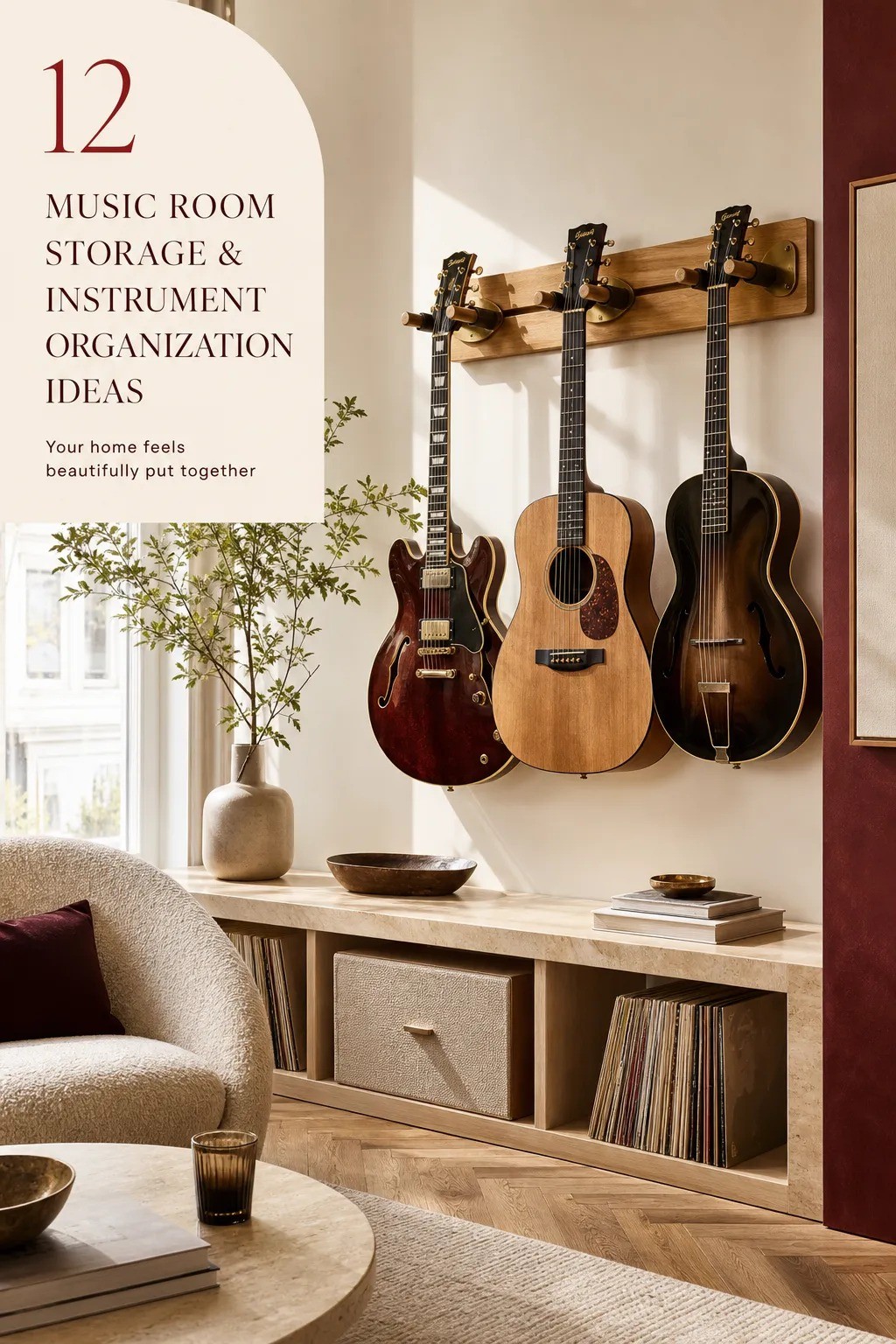
- Hang guitars with the Wall-Ready Rotation
- Build a Vinyl Library Instead of a Vinyl Pile
- Float a Practice Desk Over Closed Storage
- Use the Cable Corral Method for Pedals and Chargers
- Can Your Keyboard Bench Store More Than It Seats?
- Paint the Listening Corner Before Buying Another Shelf
- Layer Three Heights of Light Around the Amp
- Choose Dark Wood Record Shelves Over Open Metal Racks
- Frame Sheet Music at the 57-Inch Rule
- Swap a Giant Rug for a Furniture-Overlap Zone
- Hide Cases in the Under-Bench Backstage
- Budget the Room by What You’ll Touch Every Day
1Hang guitars with the Wall-Ready Rotation
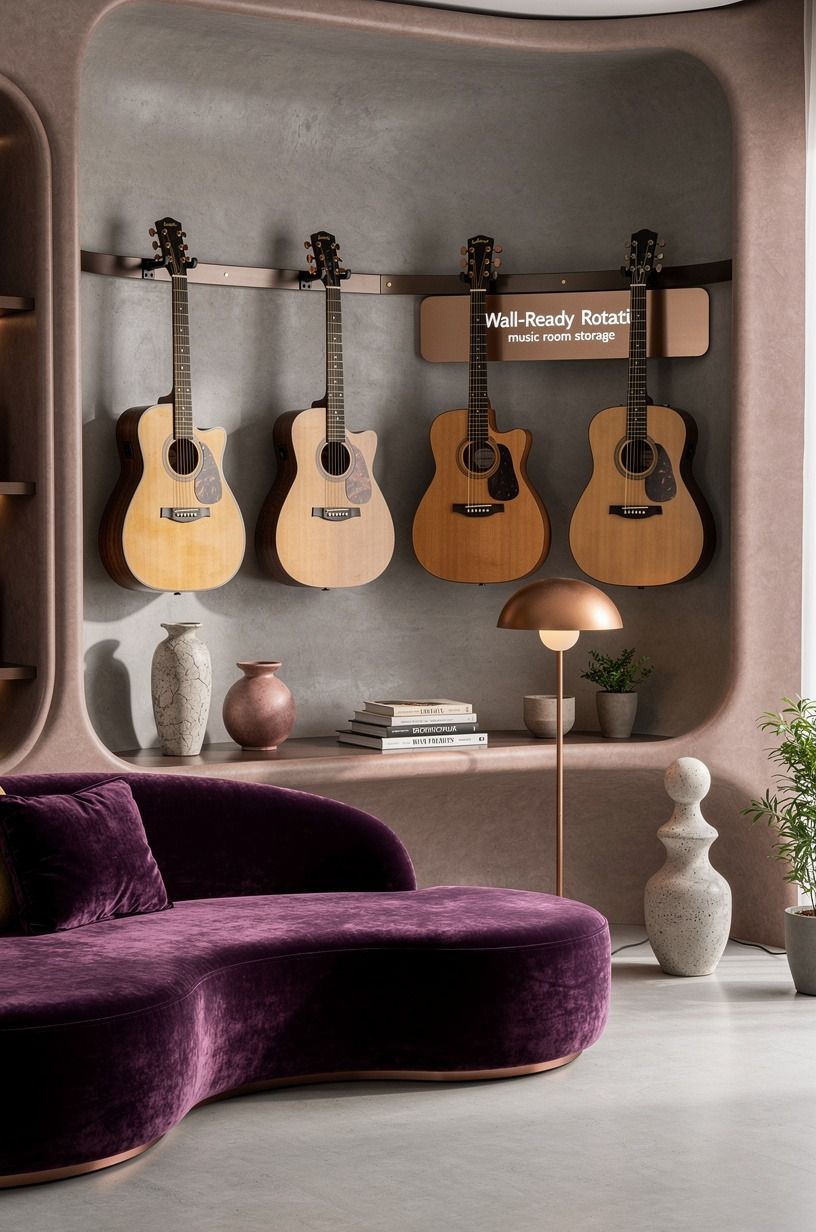
Put the instruments you play most on a wall, where you and your guests can see them. A row of solid wood guitar wall hangers against deep-pile plum mohair velvet, with grey and rose-gold accents, feels warm and deliberate, while three cases on the floor feel like a delayed errand.
Keep the lowest instrument clear of chair backs and door swings. You’ll want the hooks at a height you can reach without stretching, and your wall will read more like a small studio than a storage closet. I’d skip crowded pegboard here, because guitar bodies need breathing room.
For a fuller setup, borrow the zoning approach in these music studio room layout ideas. Your instruments become the art. That’s the point.
2Build a Vinyl Library Instead of a Vinyl Pile
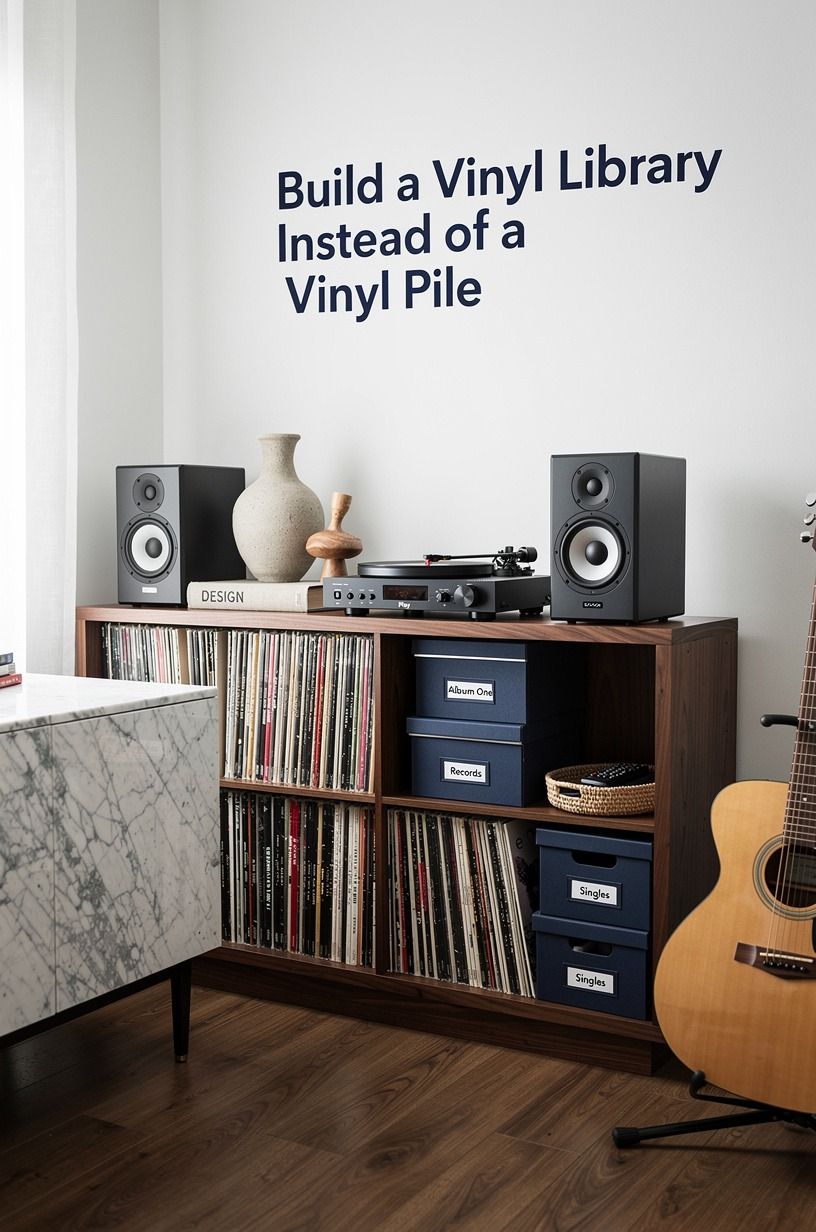
A record collection on shelves looks collected; a record collection on the floor looks temporary.
3Float a Practice Desk Over Closed Storage
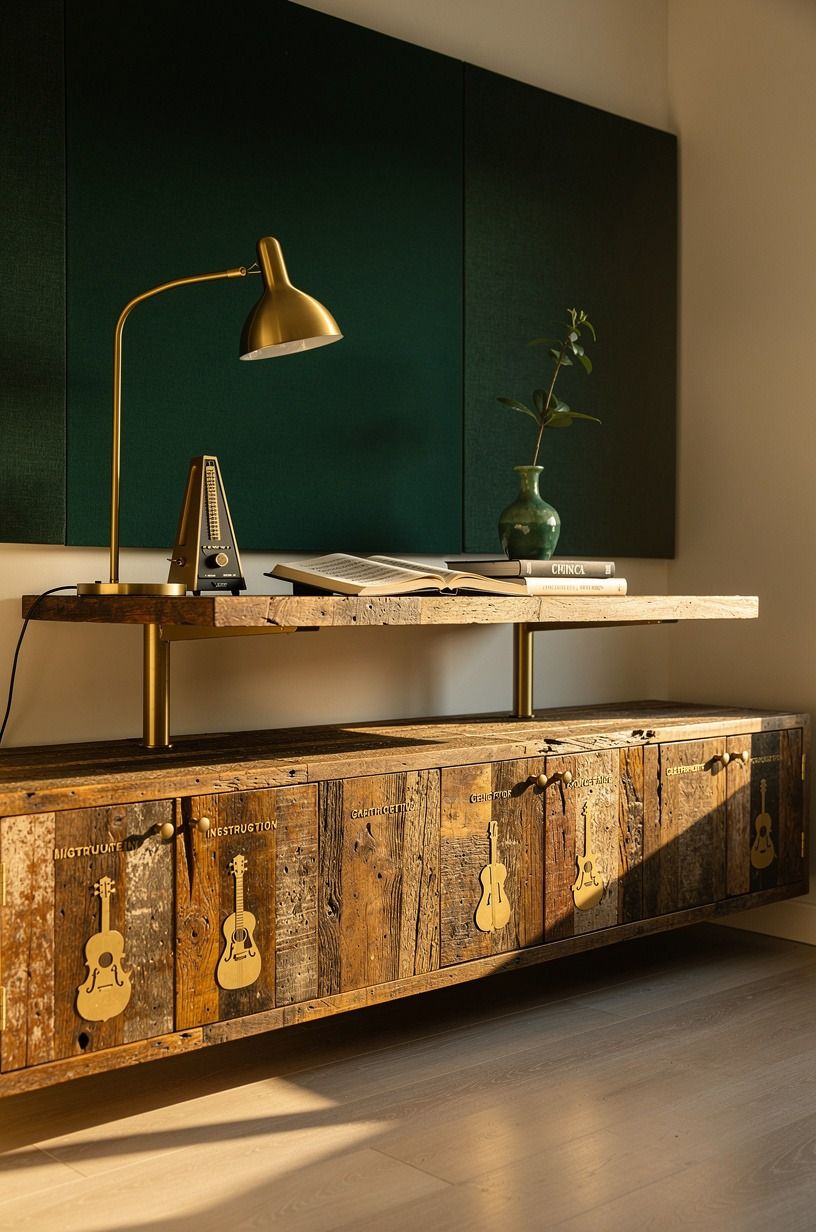
A floating desk keeps your knees, pedals, and cable basket from fighting for the same patch of floor. Mount a reclaimed, weathered teak desktop above two low cabinets, and your room suddenly has a proper place for notation, headphones, and the mug you keep forgetting upstairs.
I made mine too shallow once. It looked neat, but sheet music hung over the edge and made practice feel fussy. Give yourself enough depth for your keyboard, notebook, and forearms, then hide the loose stuff below.
A Target Threshold woven lidded basket works better than clear bins for spare strings and cleaning cloths. Clear bins advertise clutter. Woven storage lets your room stay inviting while you know exactly where everything went.
4Use the Cable Corral Method for Pedals and Chargers
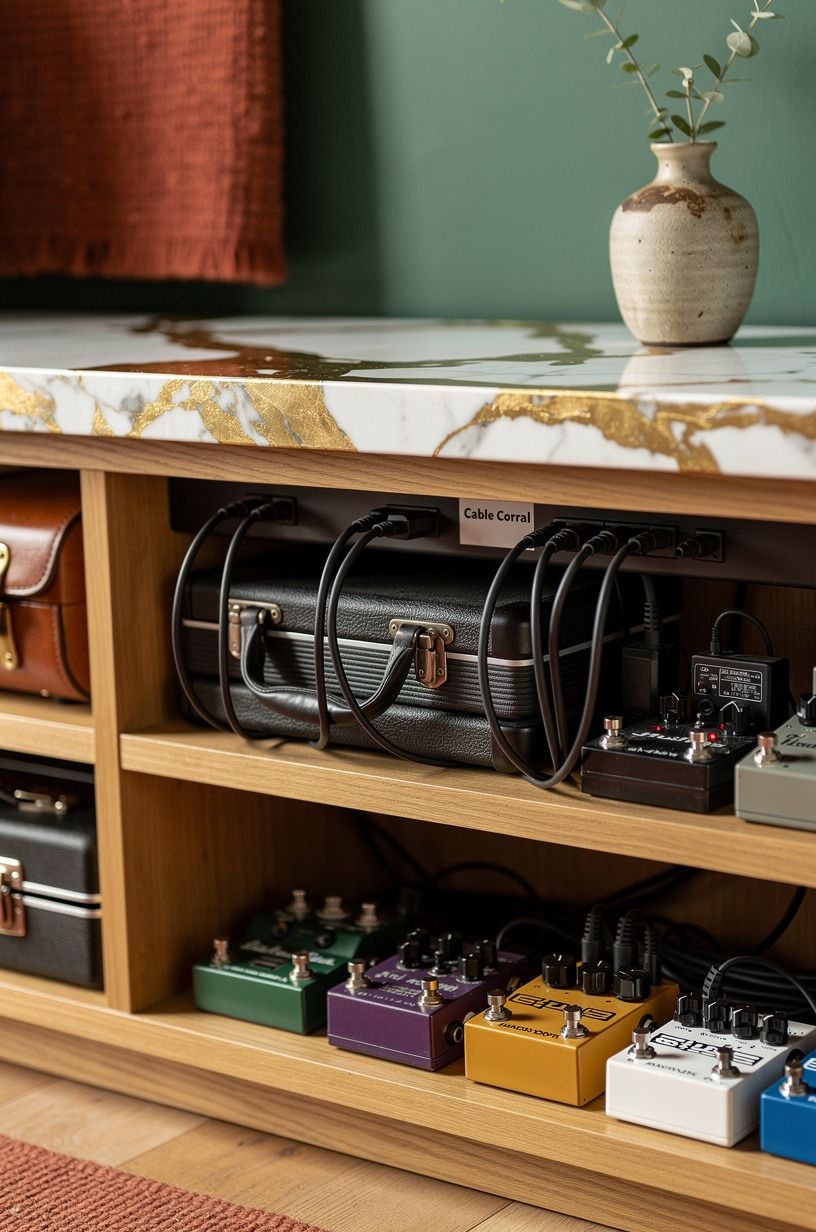
Cables aren’t ugly because they exist. They’re ugly when you can’t tell which one belongs to what. Put your pedals, power strips, and charging bricks in one shallow Calacatta marble tray under the desk, with each cable looped loosely beside its device.
Label the ends you unplug often. Your future self will thank you when a keyboard loses power ten minutes before someone comes over. But don’t zip-tie every wire into one stiff bundle, because you’ll hate undoing it when one charger dies.
One tray. One outlet strip. One basket for adapters.
That’s the Cable Corral Method, and it’s a calm little rule you can keep even in a rental. For more small-space breathing room, read these studio apartment storage ideas.
5Can Your Keyboard Bench Store More Than It Seats?
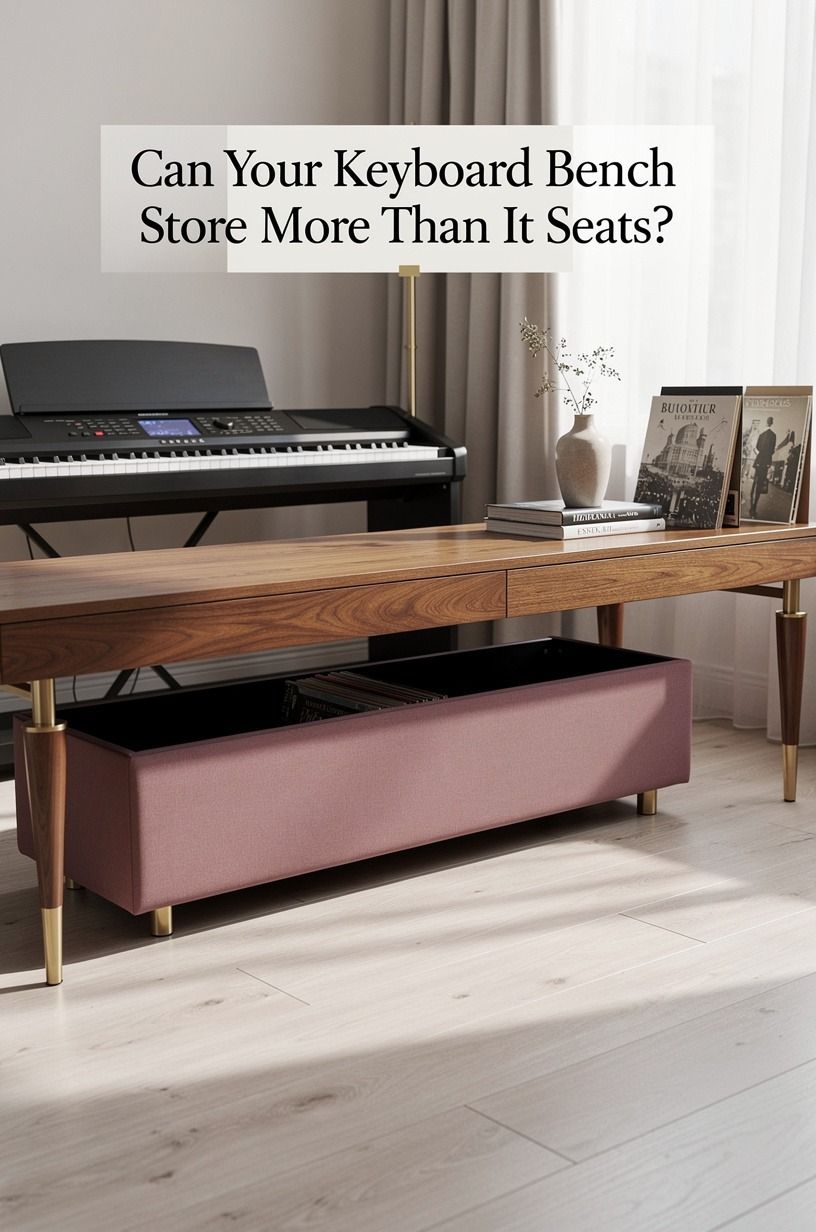
Yes, and it should. Choose a bench with a hinged top or tuck two Belgian flax linen storage ottomans beneath the keyboard, so you can put books, headphones, sustain pedals, and sheet music away in seconds.
Your bench needs to feel sturdy, not precious. I’d skip a tiny bouclé stool for daily practice because it slides, catches dust, and gives you nowhere to put the boring necessities. A Pottery Barn Livingston storage bench in cerused white oak has the right idea: solid form, soft top, useful interior.
Keep your most-used books on top of the stack inside, not at the bottom. Nobody practices when finding one scale book becomes a dig. Your room should invite a quick ten-minute session, even on a tired Tuesday.
6Paint the Listening Corner Before Buying Another Shelf
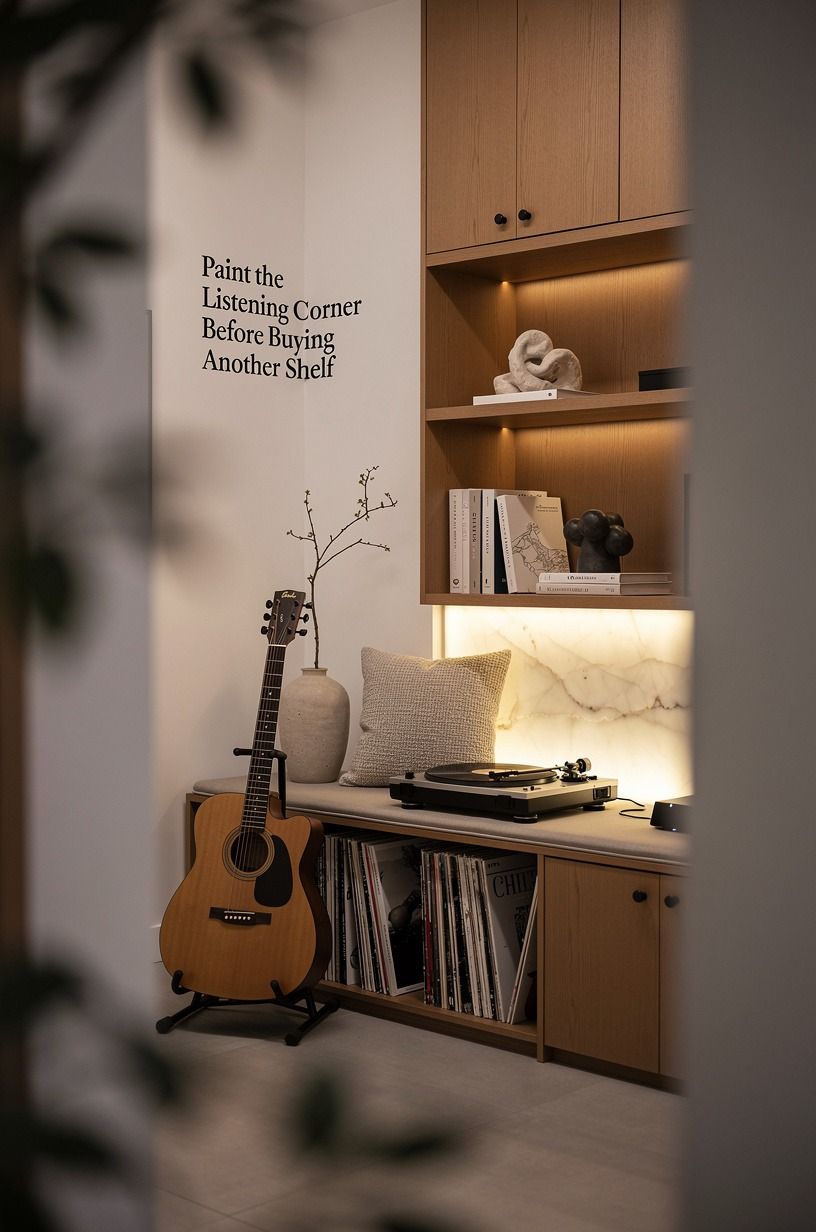
Paint can separate your listening corner from the rest of the room without adding a single bulky piece. Farrow & Ball Pigeon No. 25 gives vinyl, black speakers, and oak furniture a muted green-gray backdrop that feels gentle rather than sleepy.
If your room is dim, use Benjamin Moore White Dove OC-17 on the remaining walls and keep Pigeon behind the turntable. You’ll get contrast without turning every record sleeve into visual noise. A backlit translucent onyx accent adds a warm glow without making the shelves feel busy.
I’d pass on stark bright white beside black equipment. It makes every cord look louder. A soft, earthy wall lets your gear disappear a little, which is exactly what you want when the music starts.
7Layer Three Heights of Light Around the Amp
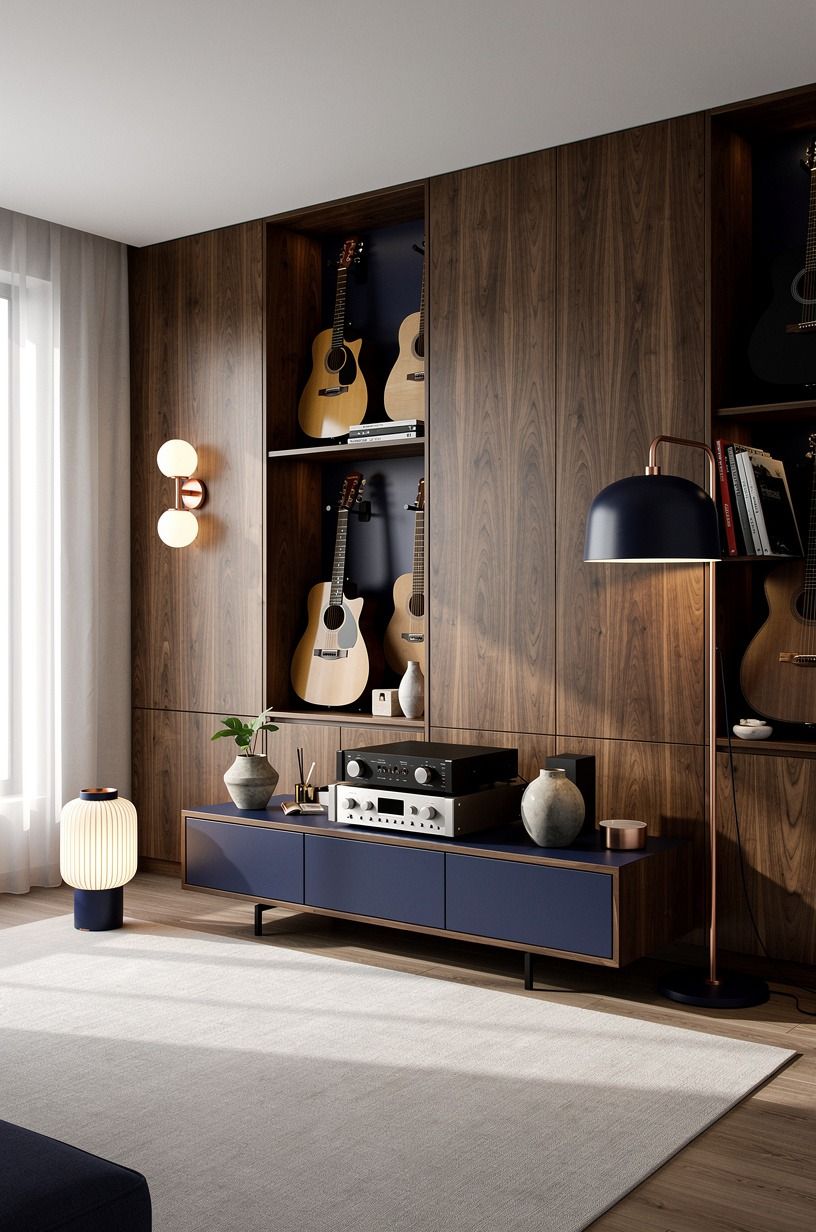
The Three-Height Light Stack is simple: overhead light, task light, ambient light. Use all 3 sources per room, because a ceiling fixture alone makes even a good music room feel like a spare office.
Start with a modest overhead fixture, then add a West Elm Sphere + Stem table lamp by the records and a low aged bronze picture light over art or shelves. Midnight blue, copper, ivory, and book-matched walnut make the room feel rich without making it heavy.
Warm pools of light matter after sunset. The lamp should throw amber across the rug’s edge, not bleach the whole room. And if you’re styling texture around it, these four texture layers for a tiny room make a useful companion read.
8Choose Dark Wood Record Shelves Over Open Metal Racks
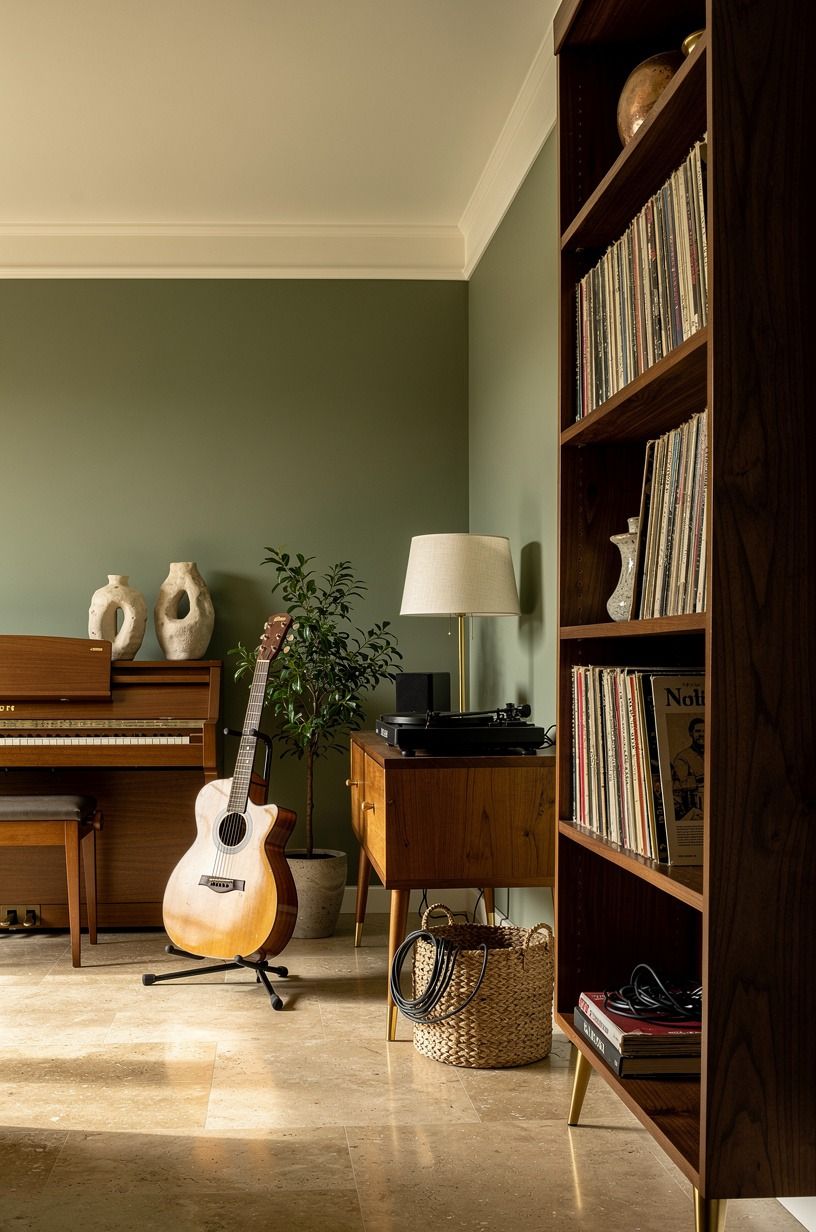
Open metal racks are fine in a garage studio. In a home music room, I think they lose. A dark walnut vinyl unit with solid sides holds visual weight, catches less dust in the corners, and makes your record collection feel like furniture.
Give records enough support so they stand upright, not packed tight. Your sleeves shouldn’t bow, and you shouldn’t have to use both hands to pull out one album. A narrow Article Lenia walnut bookcase can work if your collection is still growing.
Place the shelves where you can browse them from a chair. Sage green walls, warm cream upholstery, natural wood, and a warm travertine accent keep the arrangement settled. Your favorite covers become a colorful, personal grid, not a problem to hide.
9Frame Sheet Music at the 57-Inch Rule
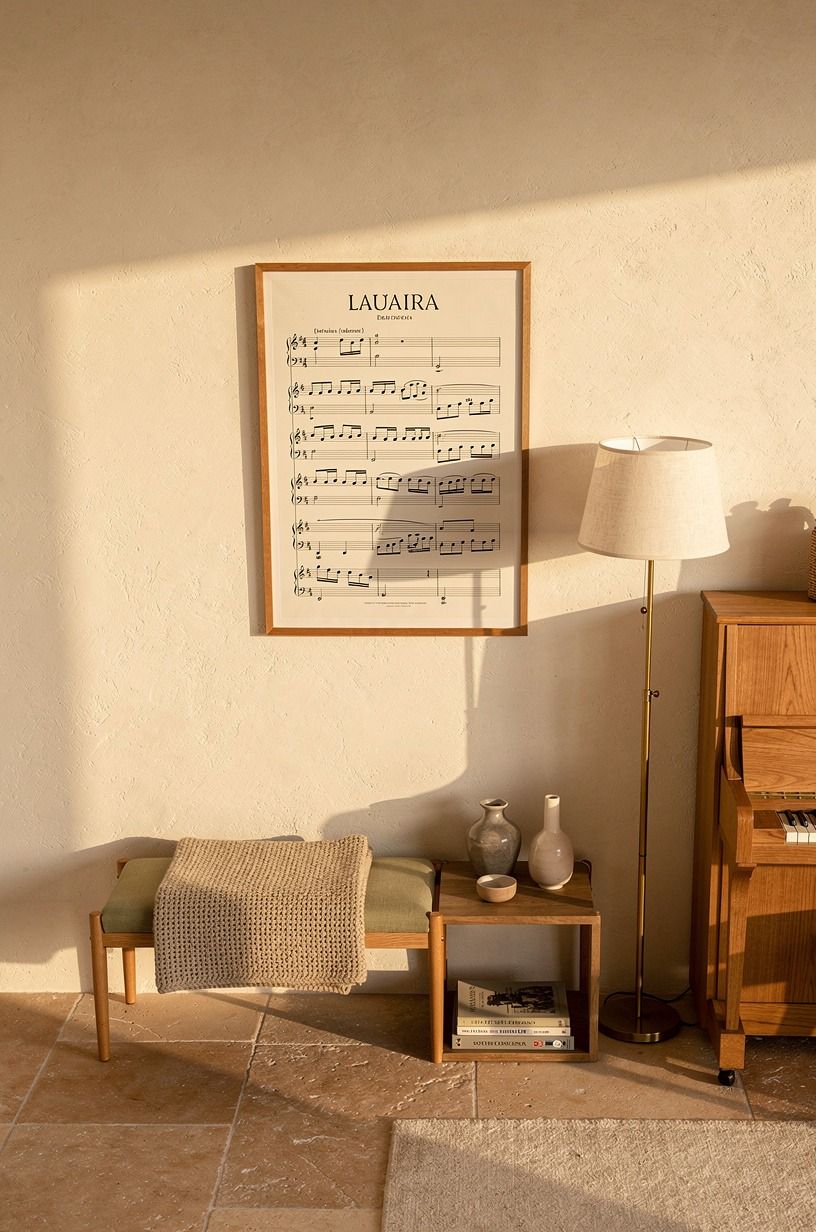
Sheet music can be art, especially if it has a story. Frame one handwritten page, an old concert program, or a score you return to, then hang its center about 57 to 60 in from the floor.
You’ll want the frame to sit near the instrument it belongs to, not scattered randomly across the room. An unlacquered brass gallery frame near the piano gives your eye somewhere to rest between all the practical objects. Short wall, big feeling.
But don’t frame every page. Too many black frames make the room feel like a school hallway. Choose one or two pieces, let them breathe, and use the rest of your music in a closed IKEA HEMNES cabinet.
10Swap a Giant Rug for a Furniture-Overlap Zone
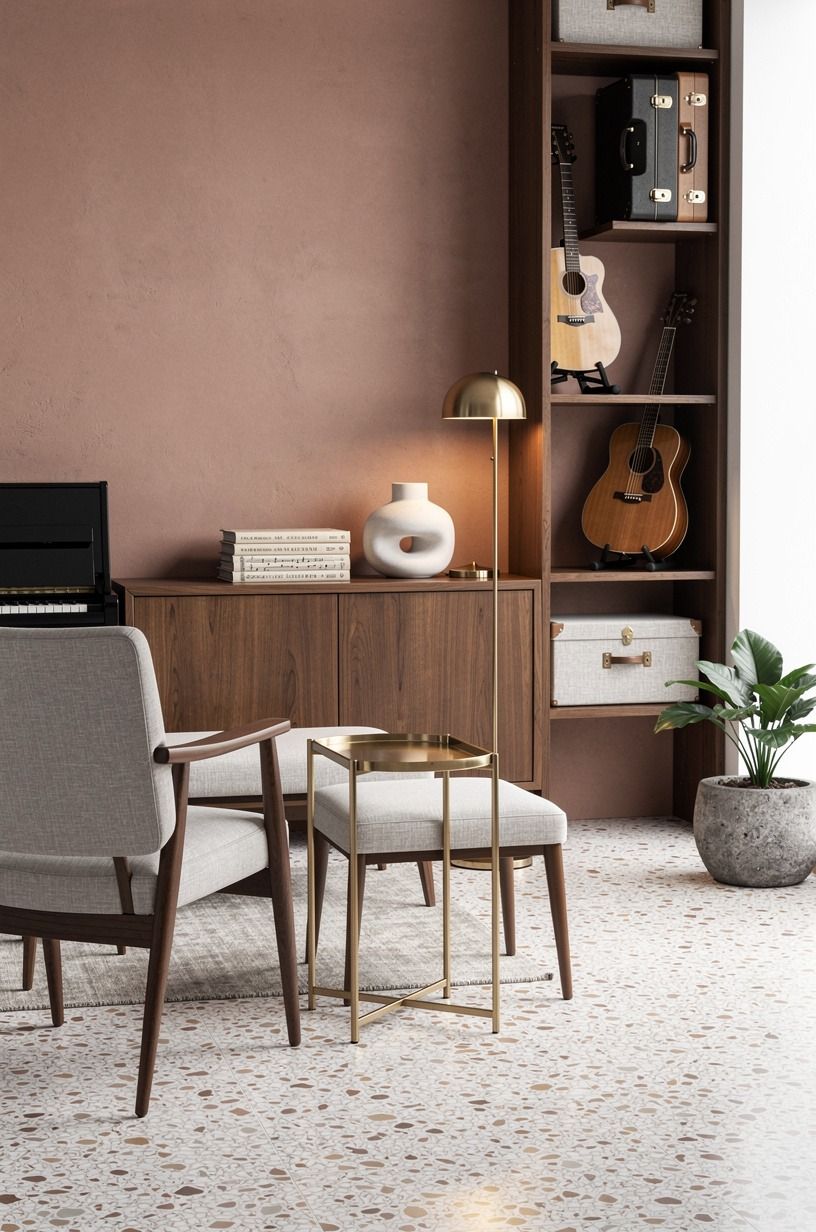
Your rug doesn’t need to reach every wall.
11Hide Cases in the Under-Bench Backstage
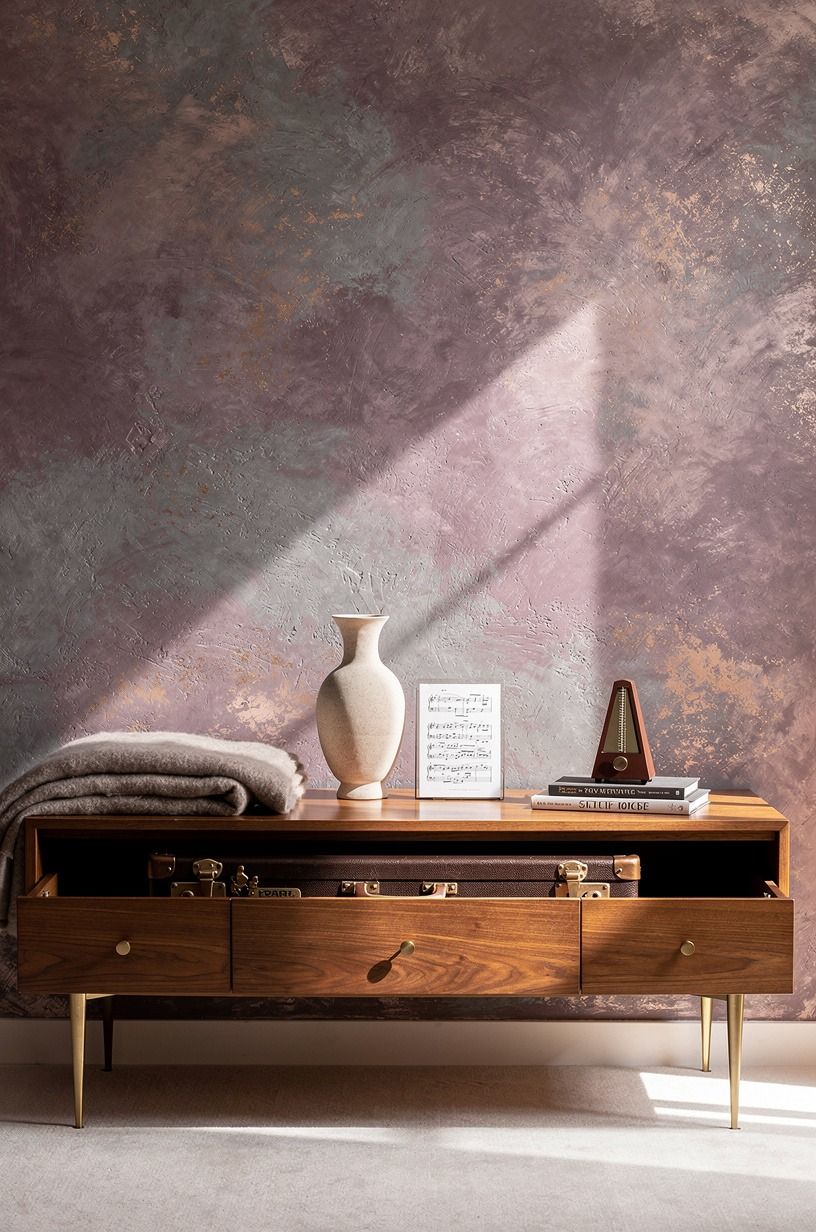
Instrument cases are necessary. They’re also the fastest way to make your room feel like a shipping department. Slide them beneath a bench, behind a low curtain, or into the dead space under a raised platform.
The best version uses a heavy Belgian flax curtain on a tension rod, with cases stored horizontally behind it. Hang the rod 4 to 6 in above the frame or built-in opening, then let the fabric reach the floor. Hand-applied Venetian plaster in plum, grey, and rose-gold tones keeps the storage zone feeling soft rather than utilitarian.
For tiny rooms, that unused space under furniture adds up fast. The before-and-after logic in this raised twin-bed storage project applies beautifully to your own bench or daybed.
12Budget the Room by What You’ll Touch Every Day
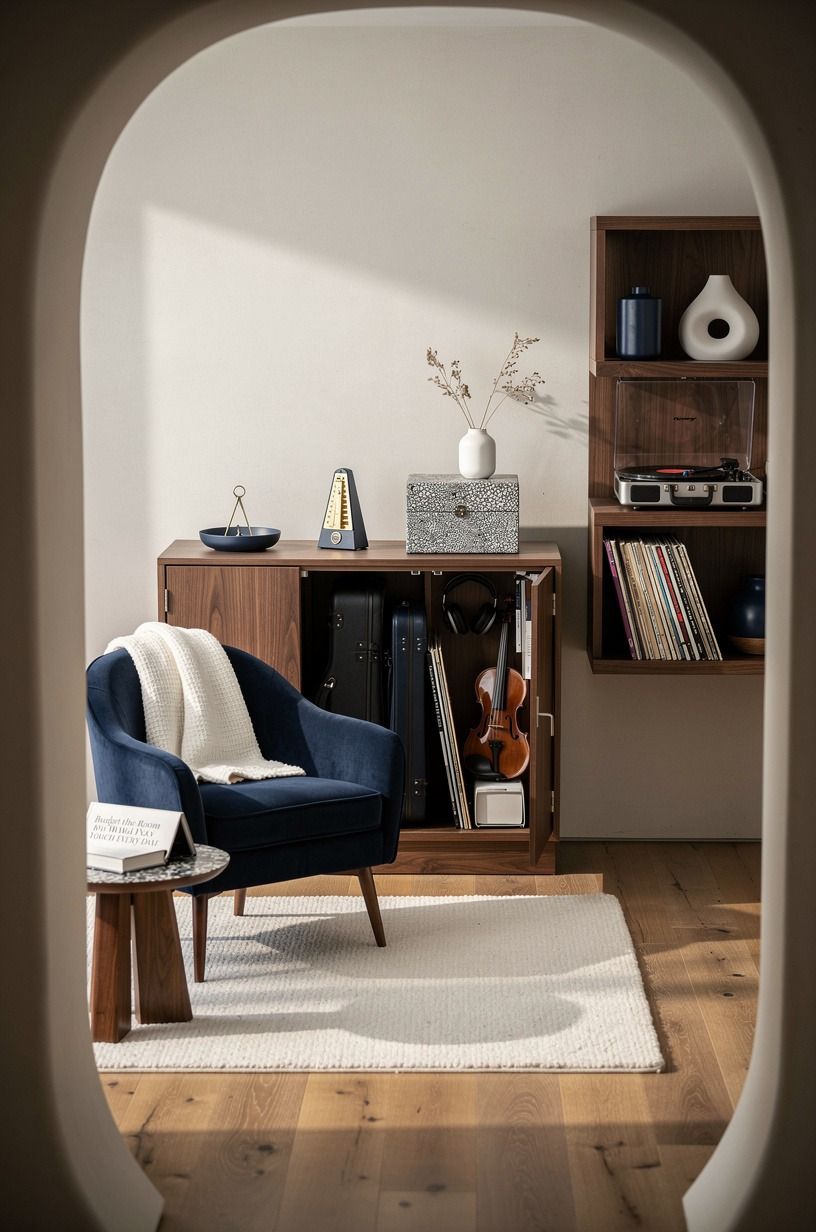
Start with the things your hands meet: storage, seating, light, and the wall behind the instrument. You don’t need custom millwork to make a music room feel settled, but you do need a plan for what stays visible.
At the budget level, paint, one basket system, shagreen accents, and a Sherwin-Williams Agreeable Gray SW 7029 wall can change the room more than a trendy chair. Mid-range money is where a good rug and lamp earn their keep. High-end custom shelves are lovely, but I’d only pay for them after you’ve lived with your setup.
Your most used instrument deserves the easiest home. Everything else can wait.
The Part I’d Never Organize Like a Store
I used to think an organized music room meant hiding everything. Cases in closets.
Records in boxes. Cables in drawers.
The room looked clean, sure, but it also stopped asking me to play. That’s the mistake: treating music gear like seasonal decorations instead of the reason the room exists.
Now I use a simple test. If I touch something every week, it stays visible or within one move of visible.
My guitar can hang on the wall. Records live on shelves.
Headphones sit in a basket by the chair. But extra stands, old cables, duplicate adapters, and the lonely tambourine nobody has played since 2019 can go behind a door.
You don’t need to display your entire inventory to prove you’re musical.
There’s a difference between a room that looks styled and a room that has rhythm. In the first one, every object is lined up for display.
In the second, you can see evidence of a person: a score folded open, a record jacket leaning near the turntable, the soft dent in a bench cushion. I want the second room every time.
And this is where people overspend. They buy a handsome cabinet before sorting the cables, the old lesson books, and the equipment they no longer use.
Start with the edit. Be a little ruthless. Keep what makes you want to sit down and play, then give it a home that doesn’t require a ceremony to access.
Your room doesn’t need to look sparse. It needs to feel ready. That’s a much better standard.
The Questions Worth Answering First
What is the best music room storage for a small room?
A wall-mounted guitar rack plus an IKEA KALLAX birch-effect unit is usually the best small-room combination. You’ll get vertical storage and easy access without filling your floor with cases.
– Wall-ready instruments – Vinyl cubbies – One low cable basket
Where can I buy music room organization pieces on a budget?
Start with IKEA, Target Threshold, and Wayfair for shelves, bins, and benches. You’ll find useful basics without a custom price, then check Facebook Marketplace for solid wood cabinets that only need paint.
– KALLAX cubes – Lidded woven baskets – Secondhand oak cabinets
For layout help before you buy, see these home music studio room ideas.
How much does a music room storage makeover cost?
A basic music room storage makeover typically costs about $200 to $800. You can spend less if you reuse furniture, sort what you own, and paint yourself, which gives your room the biggest visual shift for the money.
Can I create a music room organization system on a budget?
Yes, and you can begin without buying furniture. You’ll get a faster, calmer setup by grouping cables, hanging one instrument, and moving extra cases under a bench.
– Existing baskets – Removable wall hooks – Reused bookcase cubbies
Is music room storage worth it in a small space?
Yes, it’s worth it because a small room rewards clear zones. Your instrument, seat, and record storage can share one wall, giving you more usable floor space and a more inviting practice corner.
Is music room organization a good idea for a rental?
Yes, rentals can handle it with removable choices. Use no-damage flexibility through tension rods, peel-and-stick hooks, and freestanding shelving, then take your setup with you when your lease ends.
For gentle storage prep that protects fabrics and cases, read this pre-storage cleaning guide.
Where I’d Start First
If I had to pick one, I’d start with wall-mounted guitar storage. You can’t build a practice habit around an instrument trapped in a case. Pin wall-mounted guitar storage for later and browse music room ideas for a creative haven.