Vintage music room ideas for retro audio charm work best when equipment looks lived-in, not staged. A common mistake is matching every walnut tone and hiding every cable. Let one bold object lead, then build around its patina, texture, and scale. You’ll get warmth without a themed set.
- Mount a sunburst guitar above a velvet settee
- Style a walnut turntable console with brass legs
- Could a retro studio corner feel welcoming?
- Frame album covers in mismatched antique frames
- Pair chrome microphone stands with a patterned kilim
- Display vinyl records in built-in wooden cubbies
- Install globe sconces beside a vintage amplifier stack
- Arrange tambourines and cymbals as sculptural wall art
The strongest rooms feel tactile, relaxed, and slightly unexpected. You’re aiming for atmosphere, not museum precision. A few vintage materials, warm metals, and soft textiles can make even a compact listening corner feel memorable!
- Mount a sunburst guitar above a velvet settee
- Style a walnut turntable console with brass legs
- Could a retro studio corner feel welcoming?
- Frame album covers in mismatched antique frames
- Pair chrome microphone stands with a patterned kilim
- Display vinyl records in built-in wooden cubbies
- Install globe sconces beside a vintage amplifier stack
- Arrange tambourines and cymbals as sculptural wall art
- Anchor the room with a faded geometric rug
- Place a tufted bench beneath floating instrument shelves
- Paint the ceiling smoky blue around a pendant speaker
1Mount a sunburst guitar above a velvet settee
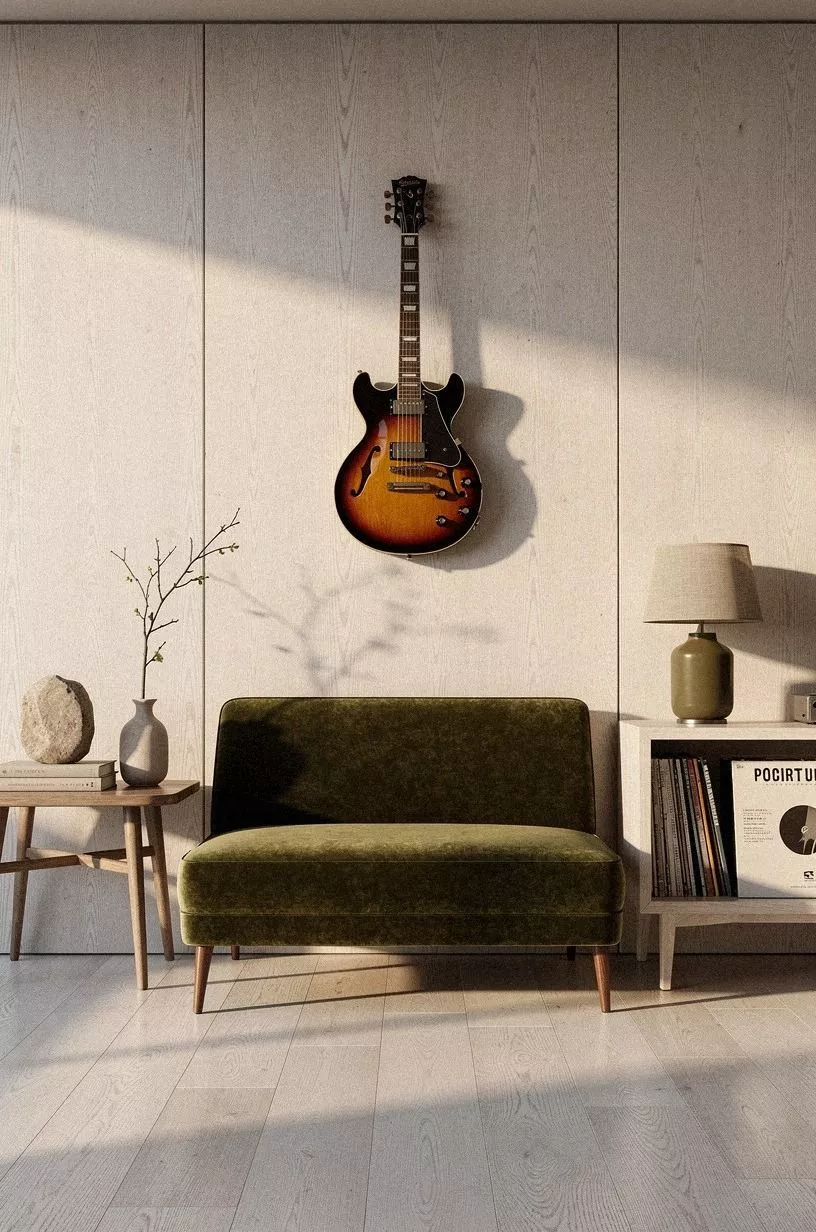
A sunburst guitar gives your room an instant focal point, especially above a low settee with a cerused white oak frame. Mount it at a comfortable viewing height, then let a terracotta, stone, and olive palette echo the instrument’s amber finish. You’ll get a confident statement without filling every wall.
If you’re styling a narrow wall, keep surrounding art quiet. A small framed lyric sheet, a ceramic bowl, and an aged wood side table can support the guitar without competing with it. The Sunburst Anchor Rule keeps one musical object visually dominant.
The settee should sit slightly forward, leaving breathing room around the instrument. Don’t push furniture directly against the wall. A little shadow behind the upholstery makes the display feel more layered and intentional.
Don’t use a glossy black frame here. It can feel too sharp beside soft upholstery and chalky stone tones.
A cerused white oak frame or a thin antique brass rail will feel gentler. For another warm reference, browse these vintage speakeasy decor references.
2Style a walnut turntable console with brass legs
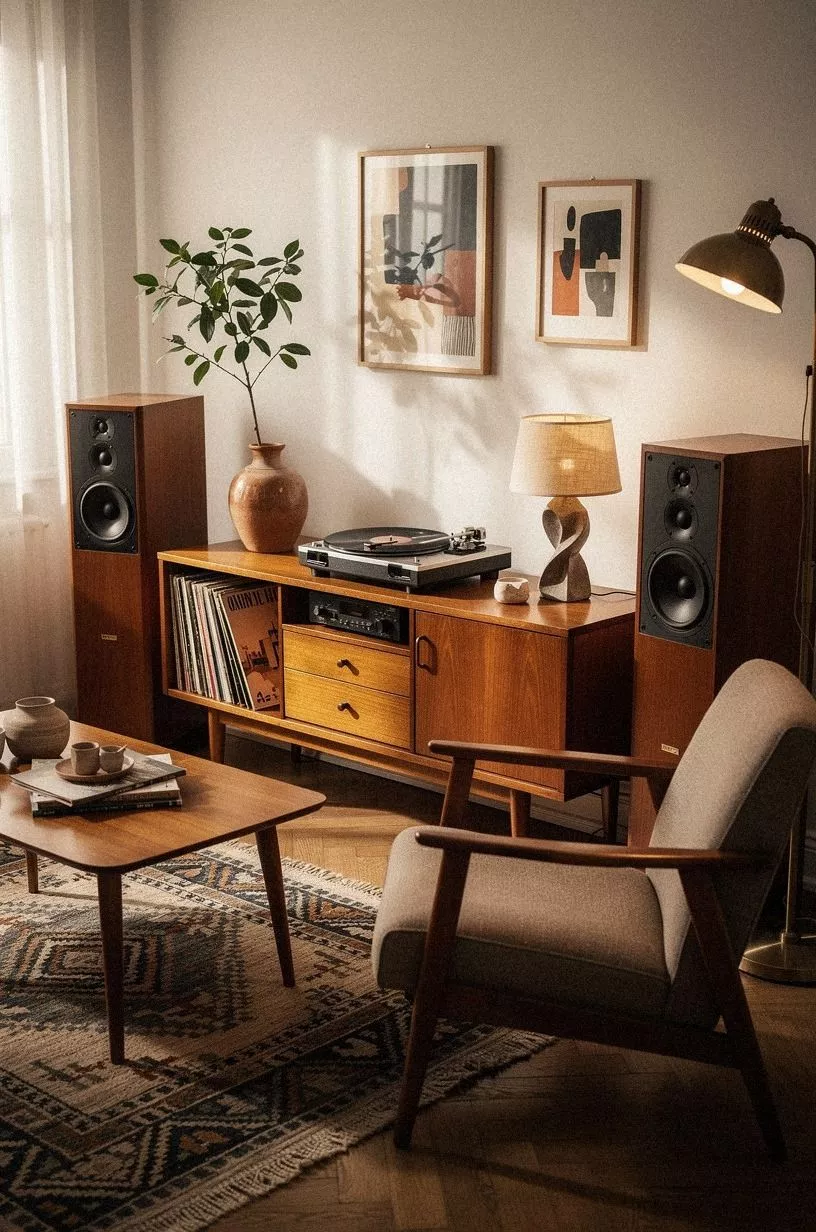
A walnut turntable console becomes the room’s practical center when its top stays edited. A backlit translucent onyx surface can bring quiet depth to a palette of clay, linen, and aged brass.
3Could a retro studio corner feel welcoming?
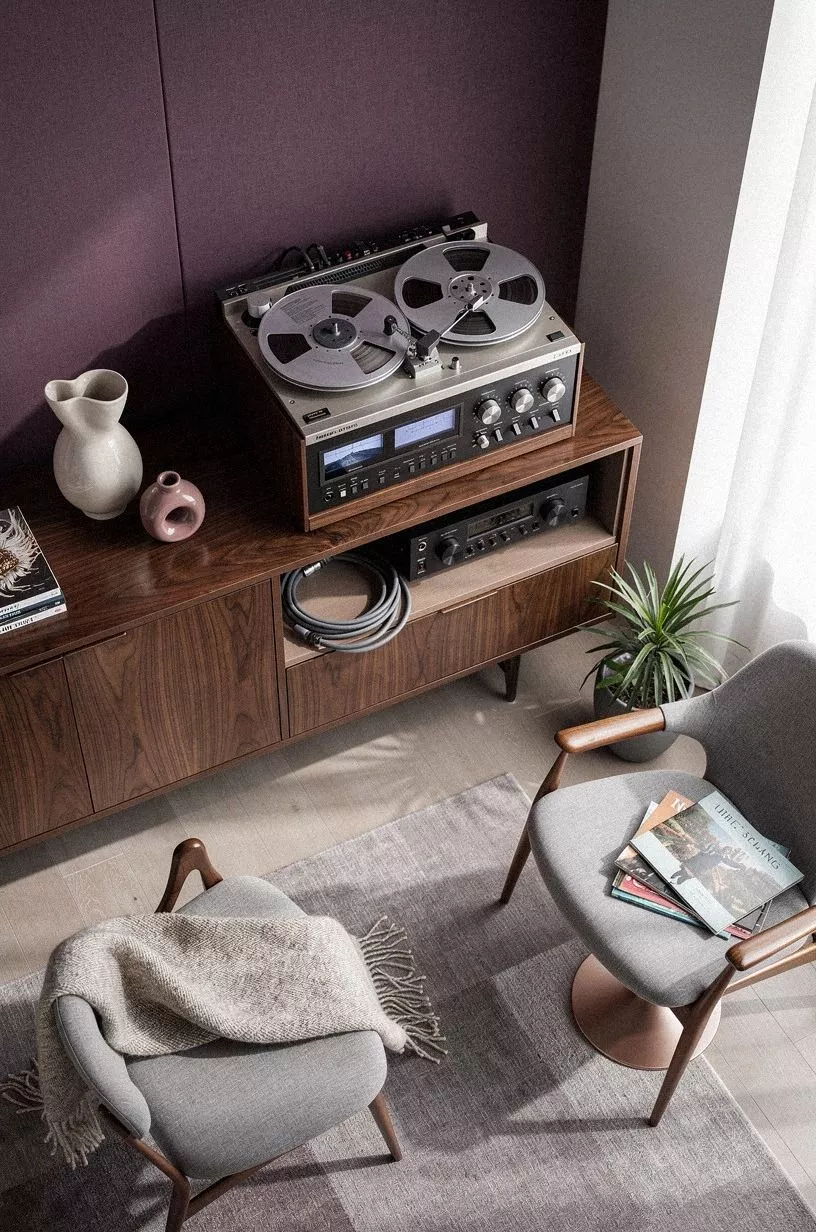
A reel-to-reel deck deserves a dedicated corner, not a random shelf between books and candles. Place it on a sturdy console in book-matched walnut, with room for the reels, cables, and a small stack of listening notes. Plum, grey, and rose gold create a moody but welcoming backdrop.
The Retro Studio Triangle connects the deck, seating, and task light. Your chair should face the equipment at a slight angle, while a rose-gold lamp throws enough light across the controls for evening use. You’ll appreciate the arrangement whenever a record or tape needs attention.
A Farrow & Ball Pigeon No.25 wall can soften grey without making the corner feel cold. Add one linen curtain or a wool cushion to prevent hard surfaces from dominating. The result feels atmospheric rather than technical.
Use one open shelf for records and one closed cabinet for spare cords. That division keeps the studio useful without showing every accessory.
If you’re renting, removable picture ledges can hold album sleeves. These retro bathroom color pairings offer another way to balance playful color with older materials.
4Frame album covers in mismatched antique frames
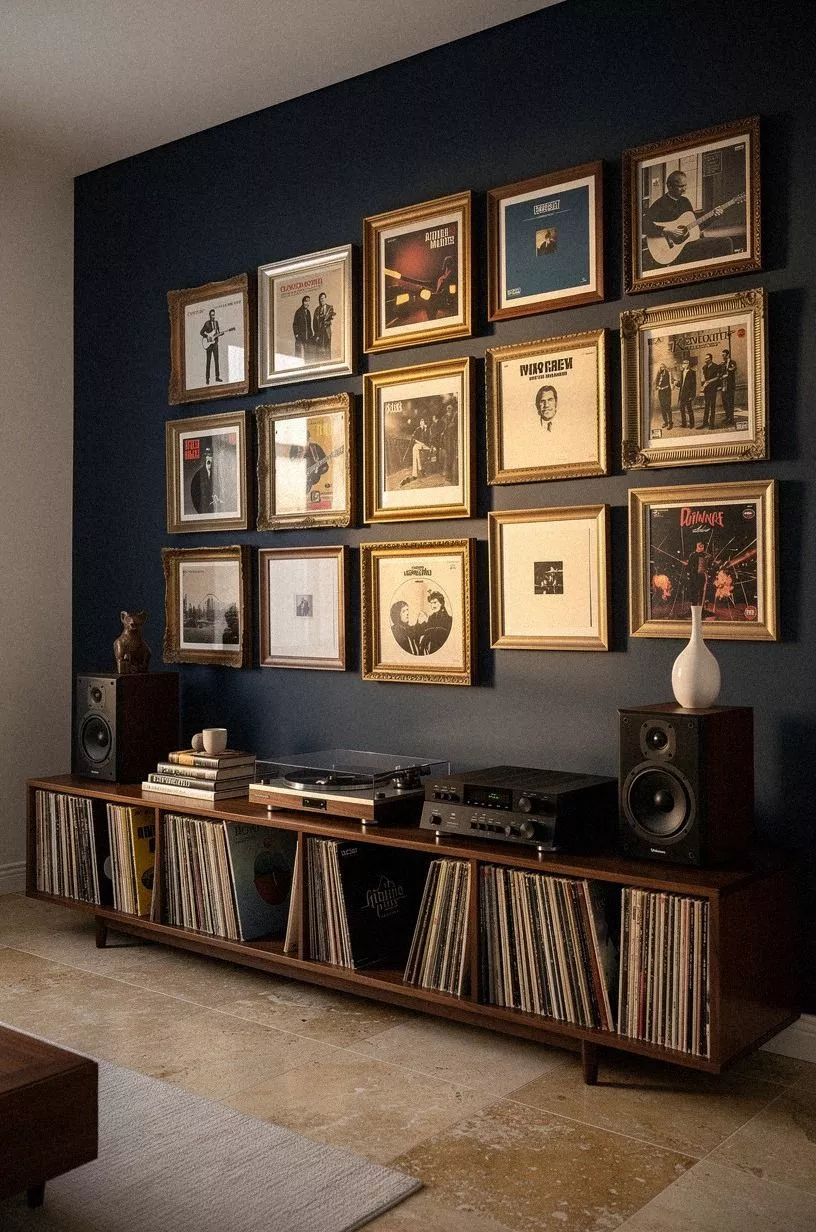
Mismatched frames make album covers feel like personal artifacts instead of mass-produced posters. Set them against navy, white, and walnut, then add a warm travertine ledge to give the arrangement a grounded finish.
5Pair chrome microphone stands with a patterned kilim
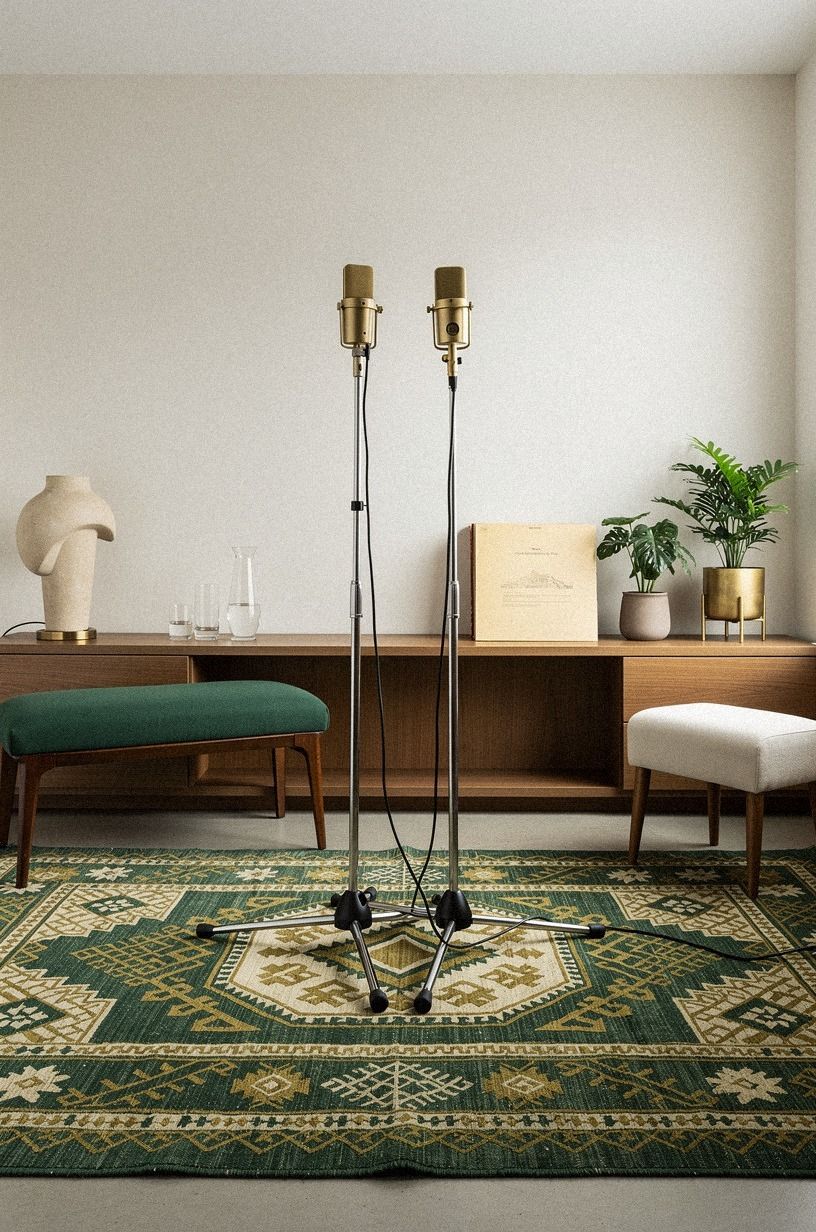
Microphone stands bring vertical shine into an emerald, gold, and cream room when finished in unlacquered brass that develops a soft patina. A patterned kilim keeps the setup from feeling like a showroom.
Place the stands where they add height without blocking a speaker, window, or walkway. Their slender profiles work well beside a low record cabinet. A vintage microphone can rest on a small stool or remain mounted for a more theatrical effect.
The kilim should carry enough color to connect the metal with the rest of the room. Choose a faded pattern with rust, saffron, or muted blue rather than a bright synthetic finish. You’ll get drama without visual clutter!
6Display vinyl records in built-in wooden cubbies
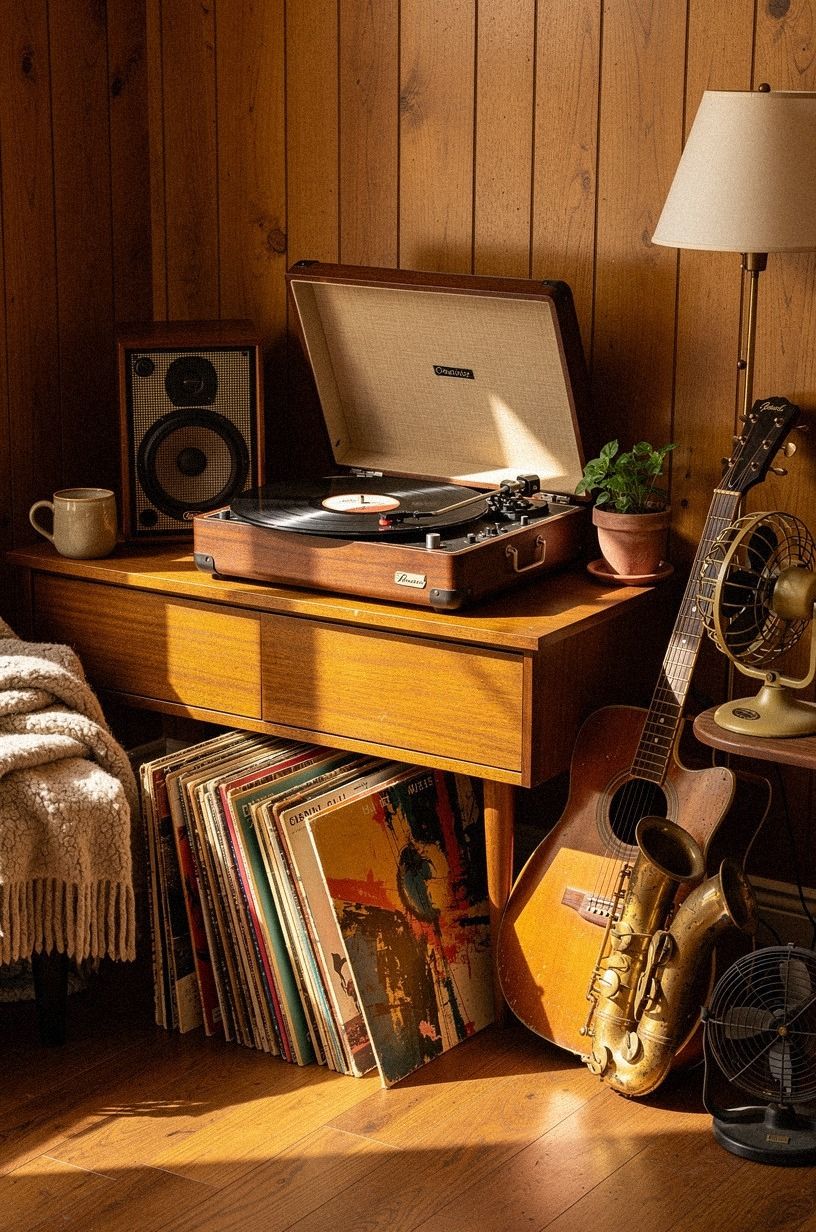
Built-in cubbies make vinyl storage feel architectural, particularly in a forest green, rust, and natural oak room. Add an oversized-chip terrazzo plinth or shelf detail for contrast.
Keep records upright, with enough space above each row so sleeves can be removed without scraping the shelf. You’ll protect both storage and circulation.
An IKEA KALLAX birch-effect unit offers a budget-friendly starting point, while custom oak cubbies create a more permanent look. Use a clear finish rather than a heavy orange stain, especially beside deep green paint.
The Record Library Grid keeps storage from reading as clutter. Alternate full rows of records with one open compartment for a ceramic object, framed ticket, or small plant. That rhythm feels orderly without becoming sterile.
Typical project costs vary by scope. The table below gives useful US reference ranges.
If you’re choosing paint, Sherwin-Williams Agreeable Gray SW 7029 keeps the room flexible, while a deeper green creates more drama. Keep lower shelves closed if visual calm matters. For another example of green beside natural materials, see these mid-century green tile storage palettes.
7Install globe sconces beside a vintage amplifier stack
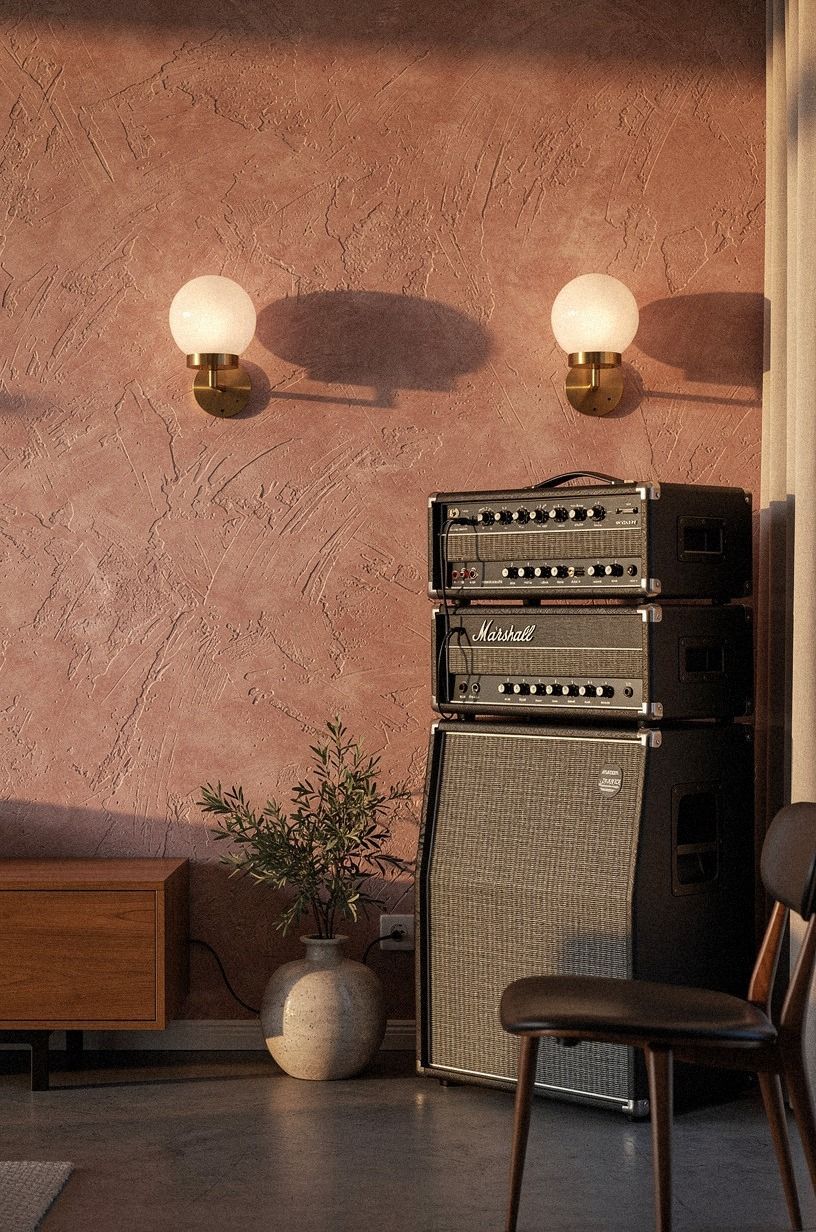
Globe sconces soften a vintage amplifier stack against a wall of hand-applied Venetian plaster, with a dusty rose, charcoal, and brass palette. Mount one on each side when the wall allows, or place one above the stack if the room is narrow.
Your goal is a warm halo around the equipment, not bright light aimed directly at the controls. Frosted globes create a calmer effect than clear glass. They also reduce visual competition between chrome, brass, and lacquer.
The Three-Height Light Stack uses overhead, task, and ambient sources. Keep the ceiling fixture at the top, amplifier controls at eye level, and sconce glow lower on the wall. Three sources create more depth than one powerful fixture.
A 600gsm Turkish cotton throw on a nearby chair adds softness without competing with the amplifier. If you’re building a full vintage mood, these vintage vanity lighting ideas can help with small-scale illumination.
Don’t mount sconces so low that shoulders brush them. You’ll want clear movement around seating and equipment. A warm dimmer also lets the room shift from practical listening to a more cinematic evening mood.
8Arrange tambourines and cymbals as sculptural wall art
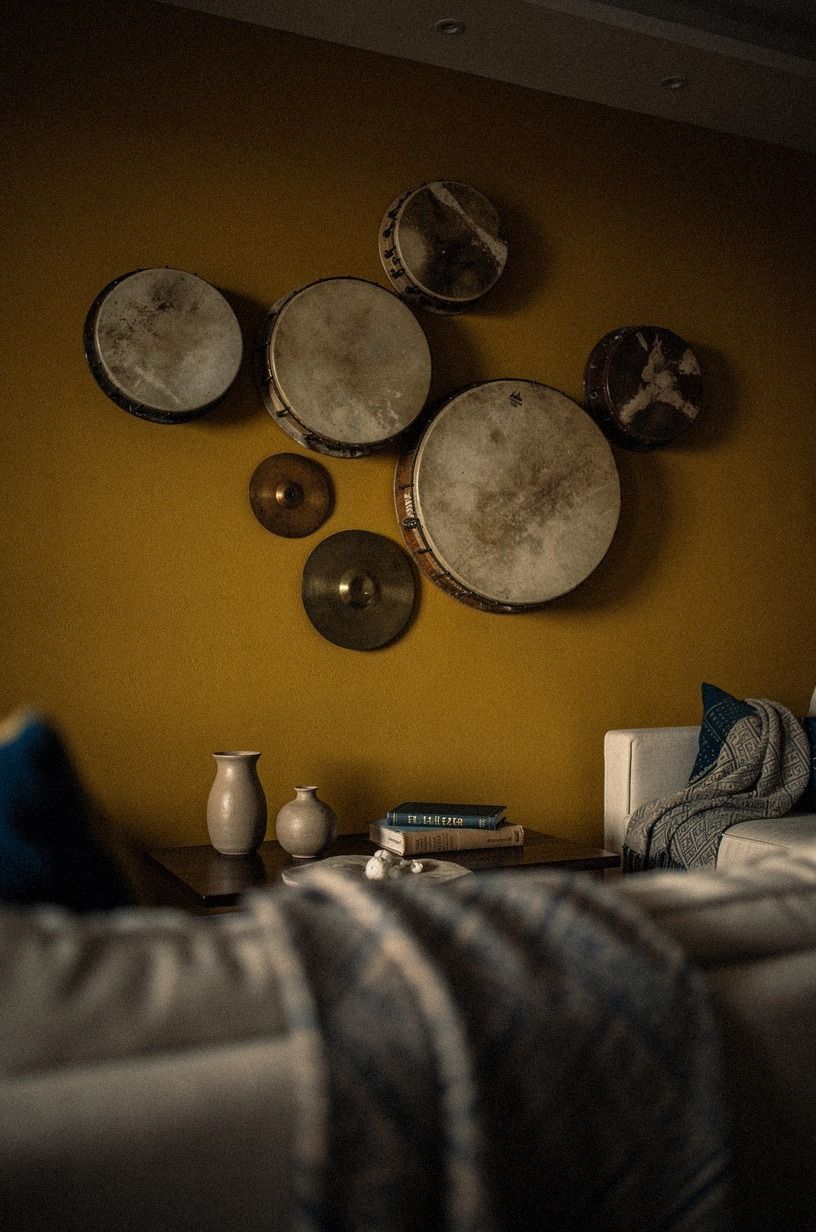
Tambourines and cymbals can form sculptural wall art when their shapes are spaced with intention. Add small shagreen accents nearby to bring tactile contrast to a warm white, camel, and black palette.
9Anchor the room with a faded geometric rug
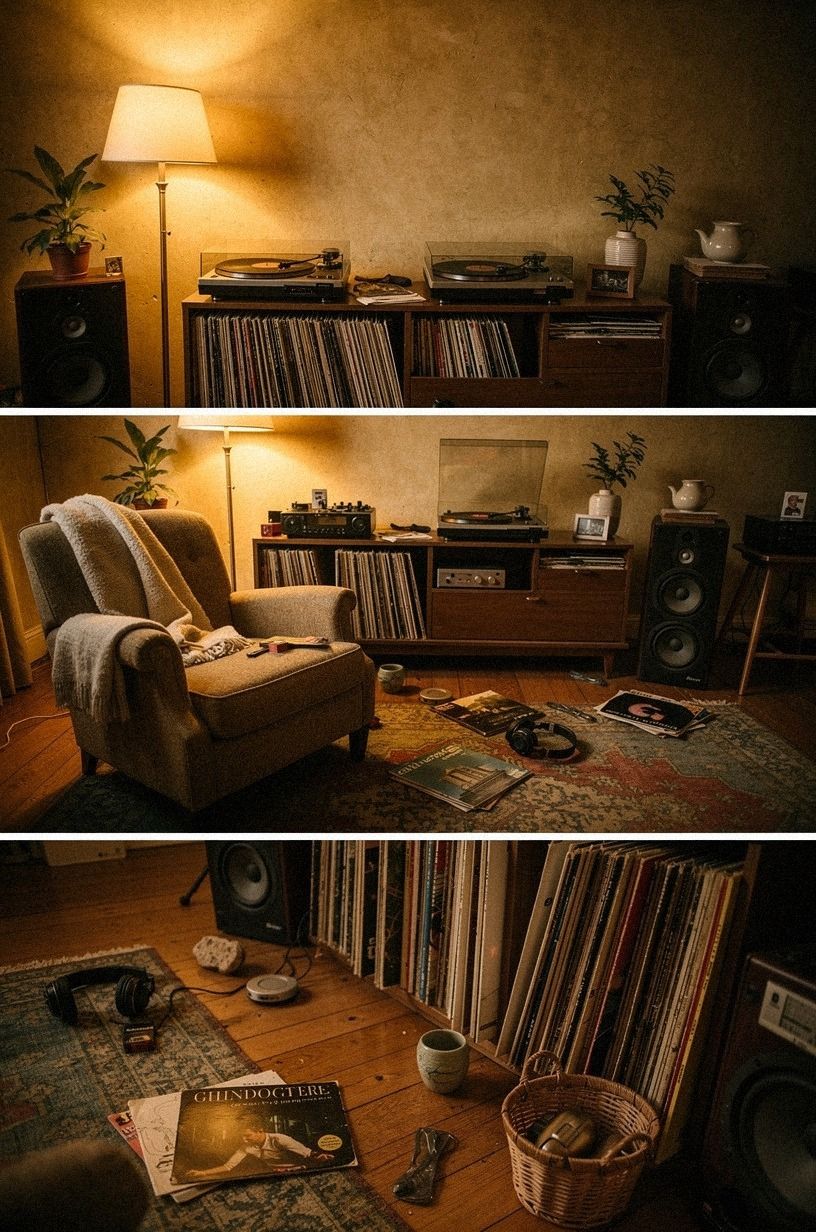
A faded geometric rug in washed Belgian linen gives a midnight blue, copper, and ivory room its visual base. Choose a pattern with softened edges and enough variation to disguise everyday wear.
Let the rug extend beneath at least the front legs of nearby seating. A tiny rug can make a generous room feel chopped into separate zones. In a small corner, place the rug beneath the chair, console, and lamp so the listening area reads as one composed setting.
Low-pile wool works well around record furniture because doors open more easily. You’ll also get a warm surface underfoot without adding excessive bulk. A muted border can connect the rug to brass hardware and dark audio equipment.
10Place a tufted bench beneath floating instrument shelves
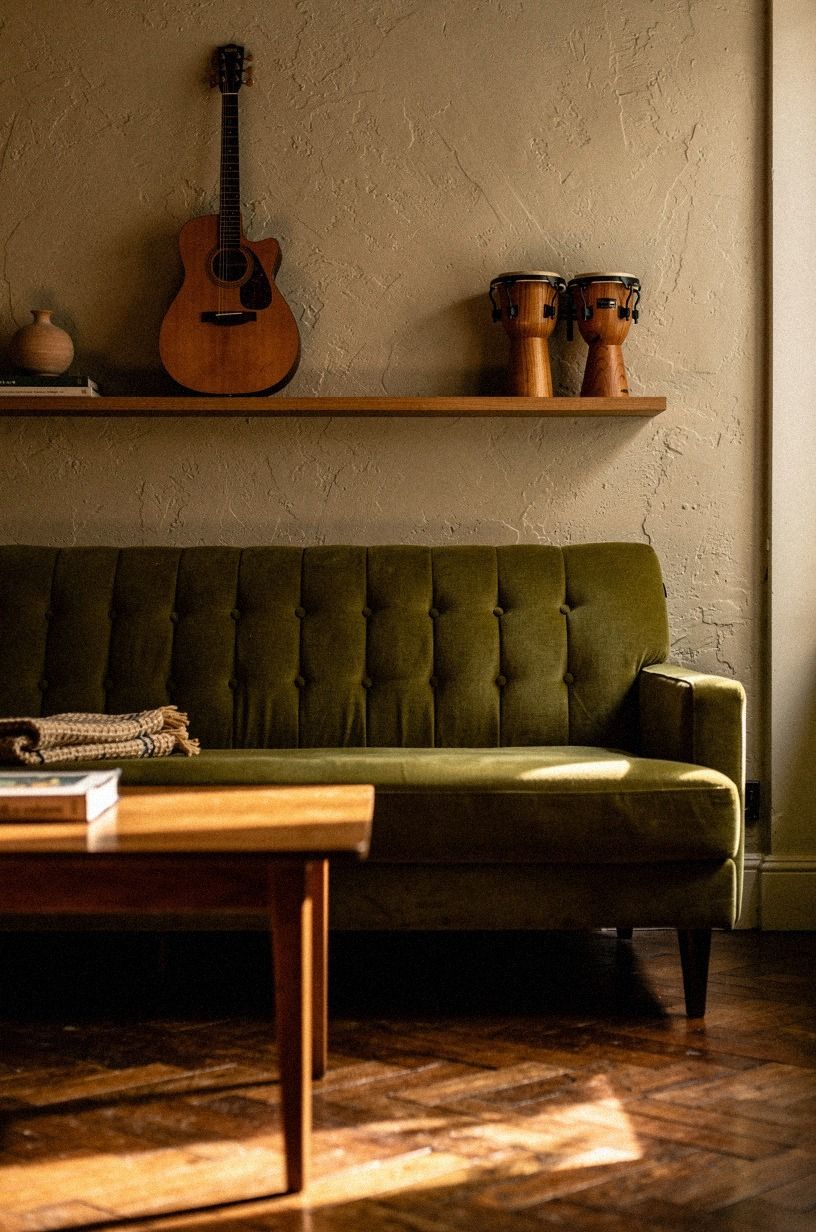
A tufted bench beneath floating shelves creates a compact listening station in a sage green, warm cream, and natural wood room. Choose an organic bouclé seat with firm support, then keep shelves shallow enough that your head won’t brush against them.
The Three-Shelf Rhythm gives each level a job. The top shelf can hold a framed score, the middle shelf can display a small brass instrument, and the lower shelf can carry records or a ceramic bowl. You’ll keep the composition useful when each shelf has a clear purpose.
Choose concealed brackets only when the wall can support the load. Heavy instruments need stronger hardware than decorative objects.
If you’re styling above a bench, leave enough clearance for comfortable sitting. Don’t place heavy cymbals directly overhead. A small olive plant can soften corners, but it shouldn’t hide the instruments.
This hidden passage storage detail can inspire more secretive, built-in character. You’ll find that shallow storage often feels more elegant than an oversized cabinet.
11Paint the ceiling smoky blue around a pendant speaker
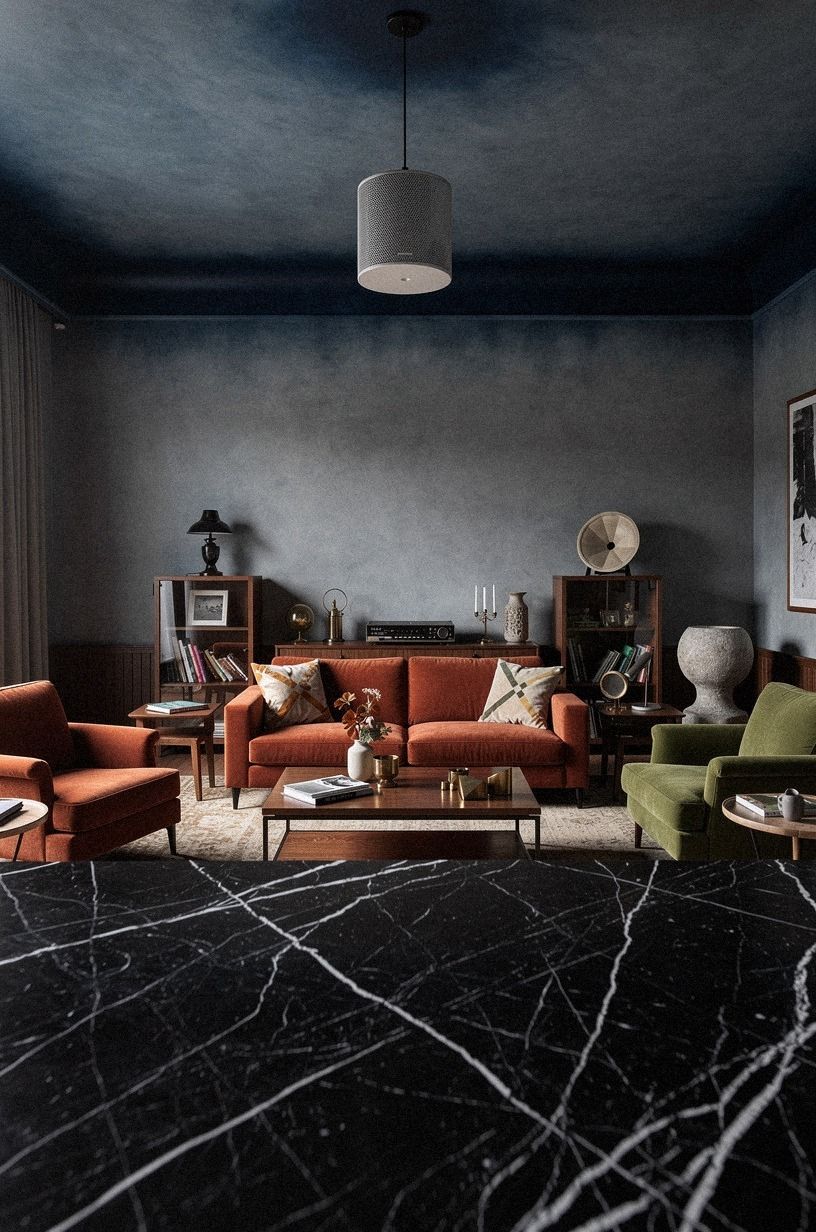
A smoky blue ceiling around a pendant speaker gives a terracotta, stone, and olive room a clear vertical finish. Add a Nero Marquina black marble surface with white veins below to give the arrangement a sharper, grounded contrast.
The Palette That Keeps Retro Rooms Fresh
Vintage rooms become more convincing when color relationships stay loose. Walnut, olive, terracotta, and cream create warmth, but they don’t need identical undertones. A faded textile can sit beside polished wood.
A cool metal can sit beside warm brass.
Start with one dominant neutral. Warm white, smoky grey, or soft stone can hold the larger surfaces.
Add one deep color for atmosphere, then use a brighter accent sparingly. You’ll avoid the flatness that comes from matching every object.
Paint samples deserve attention near audio equipment. Dark surfaces can make black speakers disappear, while pale walls can make chrome feel too bright. Test colors beside the actual console, rug, and upholstery before committing.
A strong palette feels emotional because it has tension. Dusty rose beside charcoal feels moody. Emerald beside cream feels lively.
Midnight blue beside copper feels cinematic. Each pairing gives the room a distinctive point of view!
For a darker, more layered direction, revisit these vintage speakeasy decor references. The same principles work with smaller rooms and lighter furniture.
Materials That Make Equipment Feel Collected
Texture keeps vintage equipment from looking like a showroom display. Add flax linen, wool, cerused oak, aged brass, and cork around hard electronic surfaces. These materials absorb visual sharpness and create a more welcoming atmosphere.
Avoid stacking too many shiny finishes together. Chrome, lacquer, glass, and polished metal can become busy when every surface reflects light. Balance them with matte ceramics, rough plaster, or a faded textile.
Scale matters as much as texture. A large amplifier needs a substantial console.
A delicate guitar may look best above a lighter bench. You’ll get a more graceful result when furniture weight matches equipment weight.
The best rooms include one imperfect element. A slightly worn frame, uneven textile, or scratched cabinet can add charm.
Don’t distress new furniture artificially. Natural variation feels more convincing.
These Parisian freestanding tub materials show how aged surfaces can feel elegant beside cleaner silhouettes. That contrast works beautifully around audio equipment.
Small-Space Listening Corners That Still Feel Generous
Small rooms need vertical thinking. Mount a guitar, use narrow shelves, and choose a console with closed storage below. This keeps floor space clear while giving the eye several levels to explore.
A wall-mounted turntable shelf can work when properly reinforced. Add a slim chair, a small lamp, and a compact rug. You don’t need a full suite of furniture to create a convincing listening corner.
If you’re working with a rental, prioritize movable pieces. Freestanding storage, removable ledges, tension rods, and lightweight frames can create a distinctive setup without permanent alterations.
Don’t crowd the corner with every musical object. One hero item and two supporting details will feel more generous than a dense collection. Your room needs visual breathing space.
For compact storage inspiration, browse these mid-century green tile storage palettes. Their mix of vertical organization and natural materials translates well to music corners.
What to Edit Before the Room Feels Finished
Remove anything that doesn’t serve sound, storage, comfort, or atmosphere. A decorative object that blocks controls is working against the room. A rug that catches cabinet doors needs a new position.
Cable visibility deserves a practical review. Keep essential connections accessible, then guide loose cords behind furniture or through low-profile channels. You’ll preserve function while reducing visual noise.
Lighting also needs editing. If one lamp creates glare on a turntable cover, move it. If the room feels flat after sunset, add a small ambient source rather than increasing one bulb’s brightness.
Finally, sit in the listening chair and check every reach. Can the record collection be accessed?
Can the controls be seen? Can guests move through the room?
A charming setup should feel effortless to use.
The Editorial Case for Collected Audio Rooms
Vintage audio rooms are having a quiet return because people are tired of spaces that look finished before they look lived in. A turntable, guitar, or reel-to-reel deck carries evidence of use.
It has controls, cables, scratches, and a reason to occupy the room. That physical presence gives decor a story without requiring a wall full of slogans.
The strongest setups don’t recreate a recording studio or a 1970s showroom. They borrow one or two signals, then let the rest of the room stay comfortable. A sunburst guitar can sit above a velvet settee.
A walnut console can share space with linen curtains and a faded rug. The contrast matters more than perfect period accuracy.
Paint also deserves a careful role. Farrow & Ball Pigeon No.25 can support plum, grey, and rose gold, while Benjamin Moore White Dove keeps darker equipment from overwhelming a small room. Neither color needs to cover every surface.
Your room will feel more collected when the palette has a quiet background and a few richer notes.
The practical test is simple: can you sit down, reach the controls, find the records, and move through the room without bumping an instrument? If the answer is yes, the design is working. A retro room that functions poorly will lose its charm quickly.
A room that works well will gather warmth with every listening session.
For more layered character, explore these vintage dressing room layering ideas. Soft fabrics, aged frames, and restrained color can make hard equipment feel approachable.
The Questions Worth Answering First
What works best for a small vintage music room?
A wall-mounted guitar above an IKEA KALLAX storage unit or a narrow bench with floating shelves can preserve floor space while adding visible musical character. Keep the palette limited to two woods and one strong accent color. You’ll create focus without making the room feel crowded.
Where can vintage music room pieces be found on a budget?
IKEA, Wayfair, and Target offer useful storage, lighting, and textiles at accessible prices. Facebook Marketplace and local thrift shops can supply older frames, records, and stands. This editorial site uses display advertising, so recommendations contain no commission links or affiliate sales.
How much does a vintage music room makeover cost?
A typical US makeover can range from $200-$800 for paint, textiles, art, and organization. Mid-range changes often reach $1,500-$5,000 when accent furniture, lighting, and a rug are included. Free improvements include rearranging records, framing one album cover, and changing the lighting layout.
Can a vintage music room work on a budget?
Yes. Three low-cost moves can create a strong result: rearrange existing records by color, frame one album cover, and use a warm lamp beside the listening chair. Your layout changes matter more than buying every retro object at once.
Don’t underestimate a carefully edited corner!
Is a vintage music room worthwhile in a small space?
Yes, because a small room gives audio equipment more visual focus. Choose one main object, such as a guitar or amplifier, then keep storage vertical. A rug that overlaps furniture and three light sources can make the room feel grounded and intimate.
Is a vintage music room suitable for a rental?
Yes. Use removable picture ledges, tension rods for linen curtains, and lightweight framed album covers. Peel-and-stick paint samples can help test color before a larger decision.
Your landlord-friendly setup should avoid heavy built-ins, while freestanding IKEA storage can move with you.
Where to Start First
Start with the sunburst guitar above the velvet settee. It gives the room an immediate focal point, while terracotta, olive, stone, and cerused oak can build around its colors without looking themed. Save larger purchases for later, then explore more vintage vanity lighting ideas.