
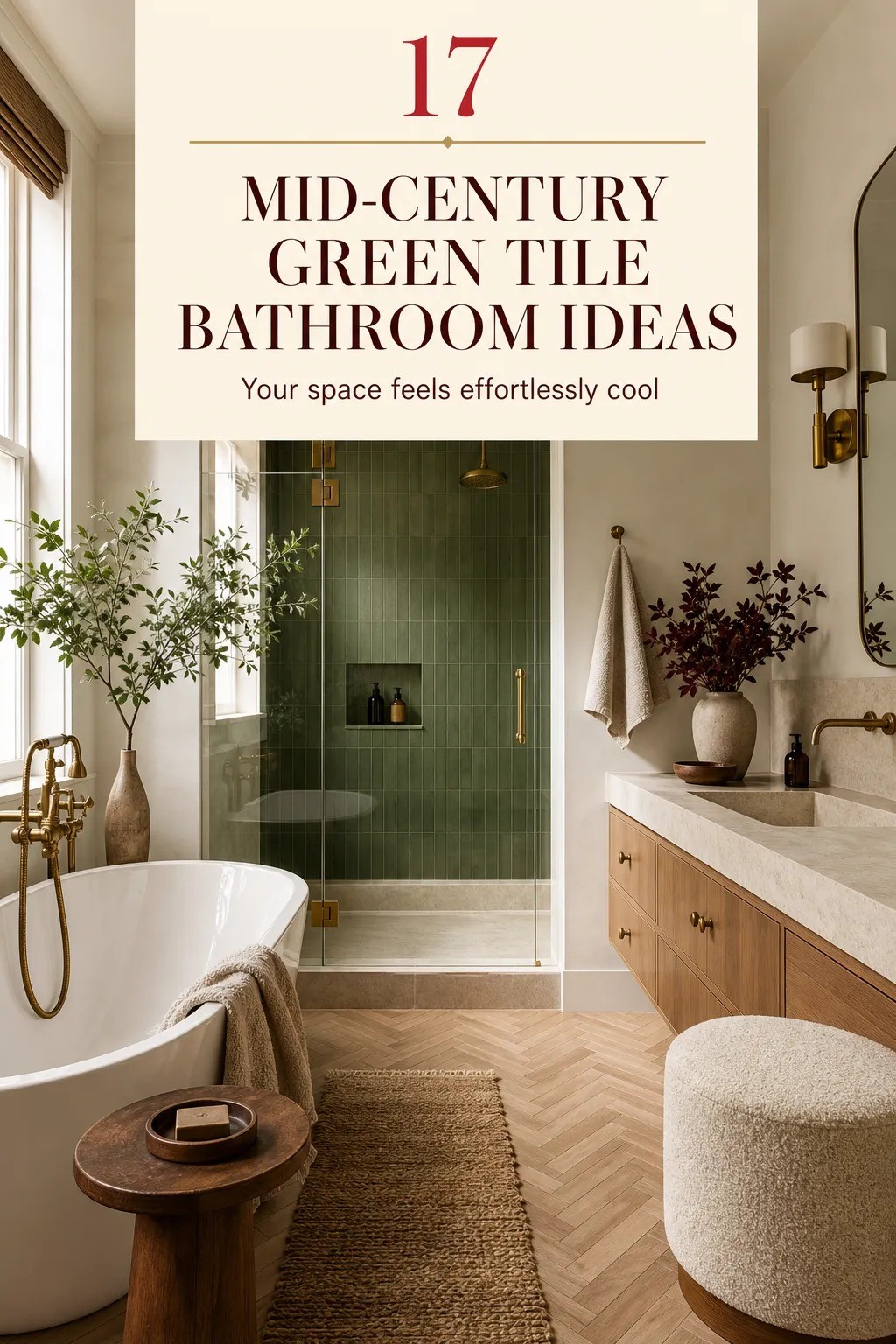
Mid-century green tile bathroom ideas work best when you treat green as the anchor, then warm it up with wood, brass, and soft light. I’ve watched bathrooms go cold from too much white grout and chrome. Start with one grounded green surface, and your room won’t feel like a retro set.
- Start with a green tile you can live with
- Map the Tile Field Rule before ordering
- Anchor the room with a walnut vanity
- Use white grout over gray grout
- Build the Two-Wood Rule around the tile
- Hang a medicine cabinet with rounded corners
- Layer the Three-Height Light Stack
- Paint the upper wall in a warm counterpoint
- Choose a faucet with some age to it
- Frame the shower with a calmer green
- Mix a small pink note into the palette
- Float an open shelf where you need a pause
- Prioritize the parts that earn their cost
- Can a small bathroom carry dark green tile?
- Add black only as a punctuation mark
- Make renter swaps that peel away cleanly
- Finish with textiles that quiet the hard surfaces
1Start with a green tile you can live with
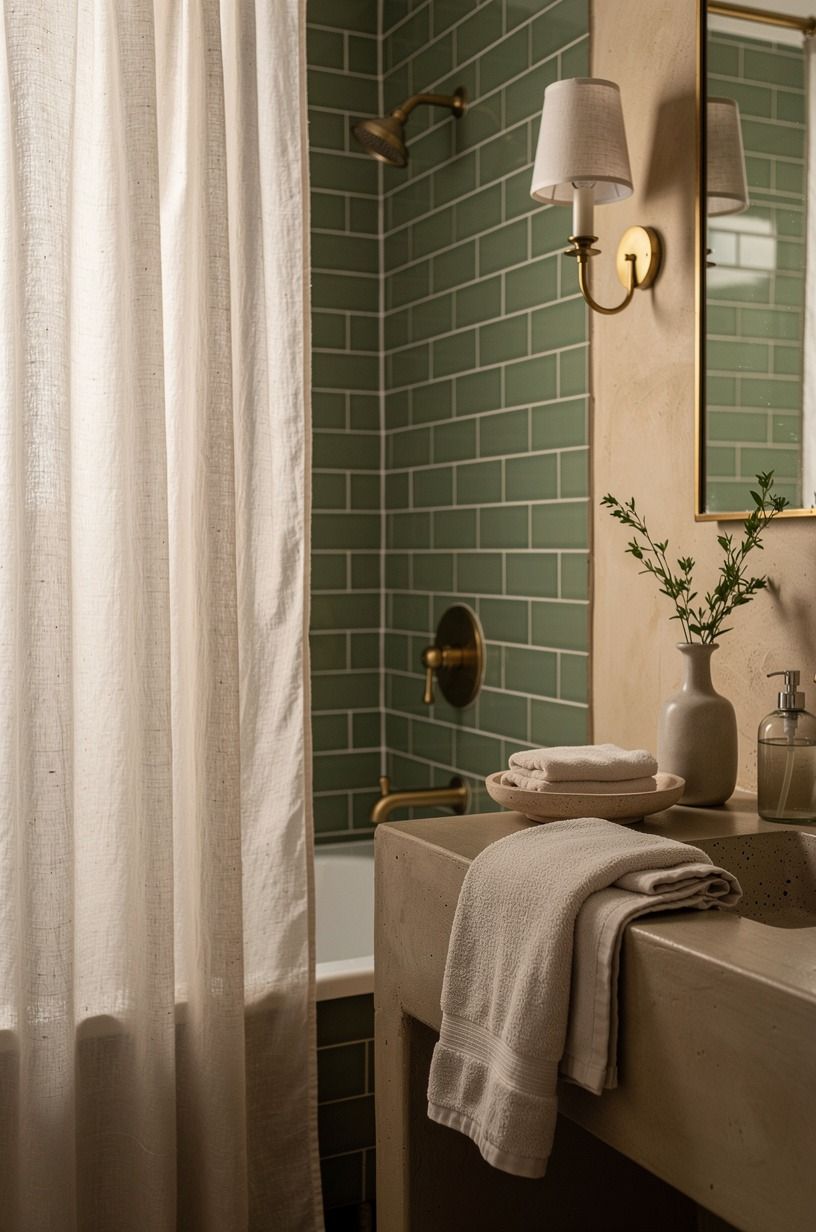
Choose a muted, earthy green before you buy anything else. Pair it with clay-toned accents, soft linen, and aged brass so the room feels lived-in rather than overly polished. You’ll want samples on the wall for a full day, because green that looks gentle at noon can turn swampy under a harsh bulb.
I’d skip glossy neon green for most homes. It photographs loudly, but your bathroom has to work at 7 a.m. too. For more layouts that keep the period feel, see these mid-century modern bathroom tile ideas.
2Map the Tile Field Rule before ordering
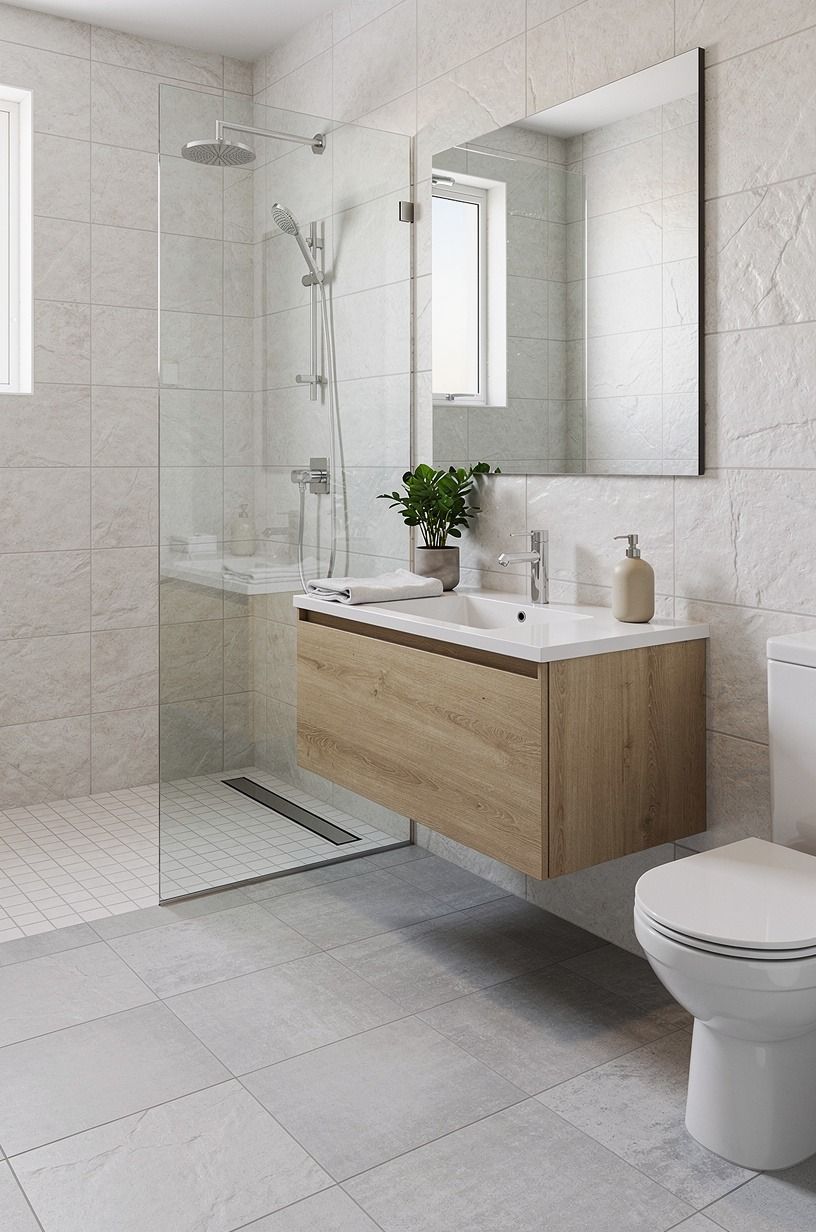
The Tile Field Rule is simple: put your strongest tile on one continuous plane, not scattered across every wall. In a small room, you might run a plum-toned tile behind the vanity and stop at the mirror line. That gives your eye one clear landing place.
You should measure the visible wall, then add for cuts only after you’ve drawn the fixtures in. A busy tile floor plus a busy shower can feel cramped fast. Keep one plane quiet with soft gray paint and an organic bouclé touch, and your tile gets to do its job.
3Anchor the room with a walnut vanity
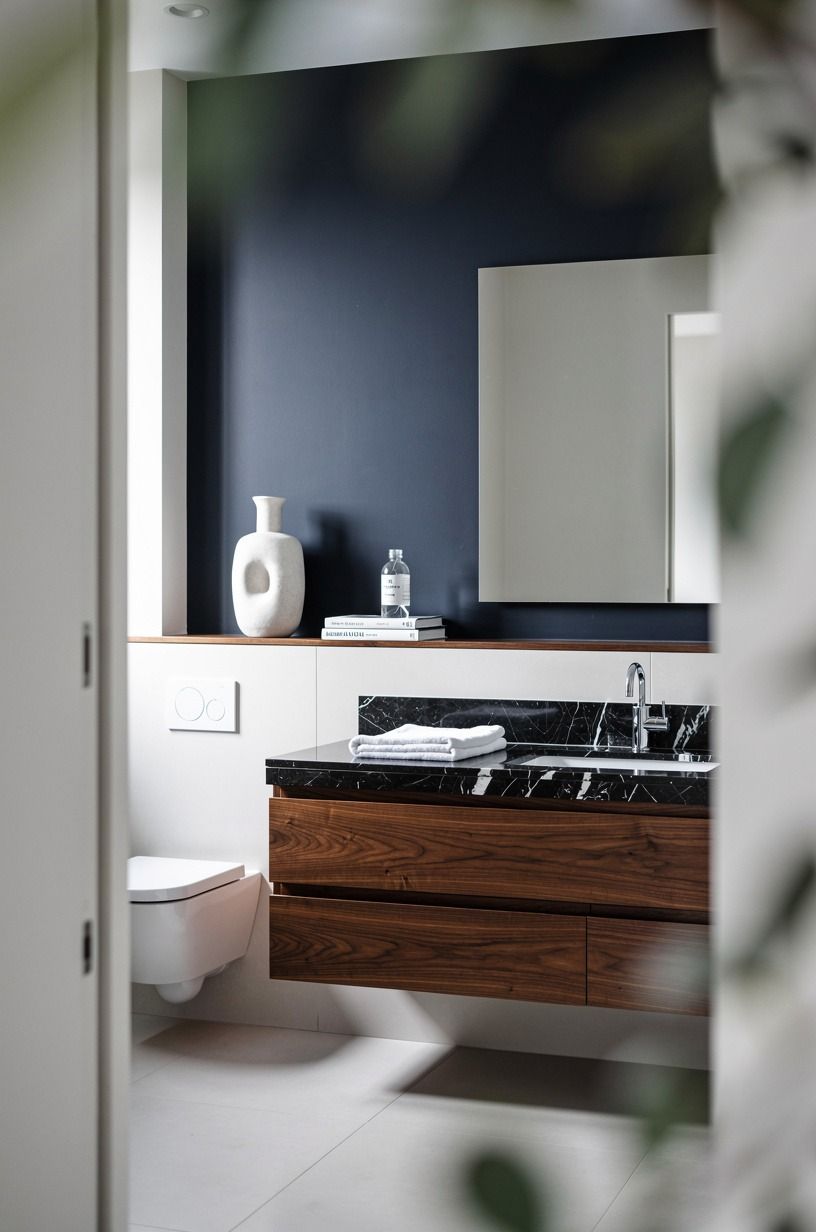
A mid-century tiled bathroom needs wood with some visual weight.
4Use white grout over gray grout
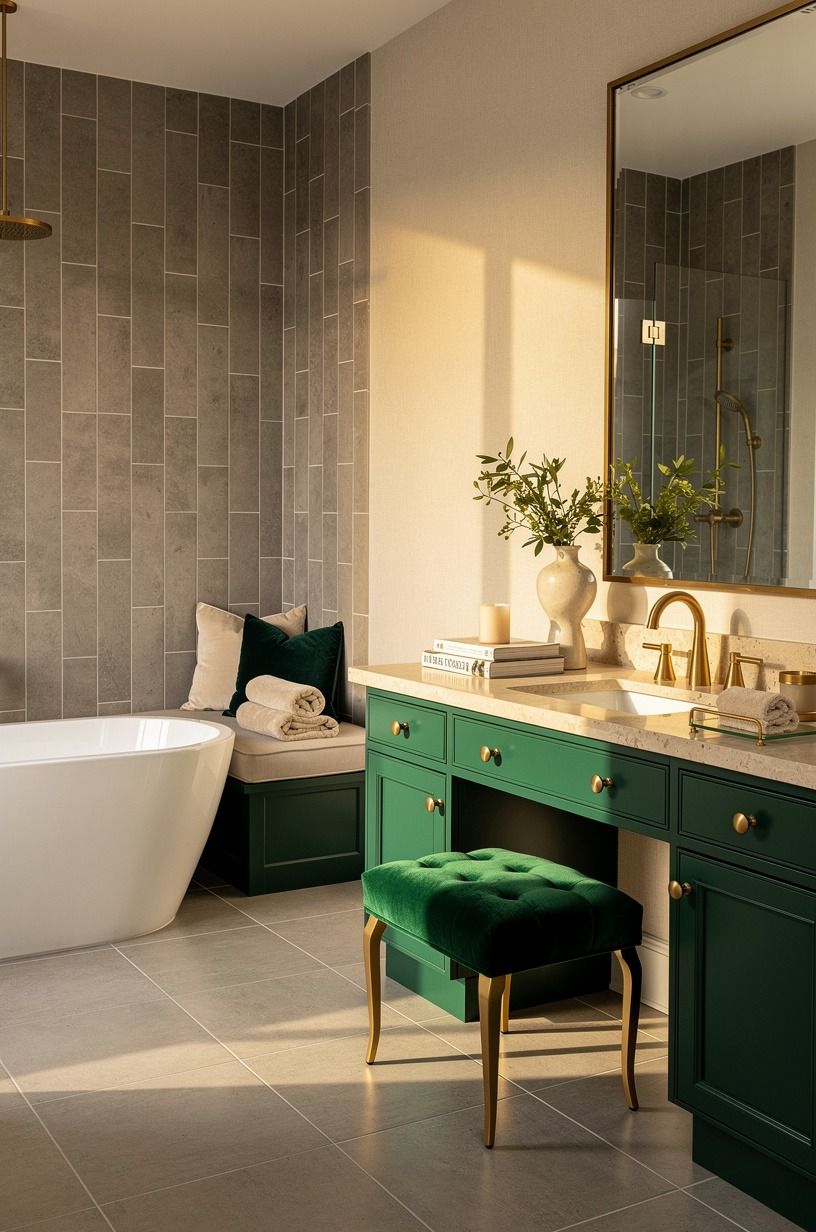
White grout is the better call with an olive or sea-glass tile. Gray grout can make the whole wall look dusty, and you’ll spend years wondering why your green never feels bright. Use a warm white, not a blue hospital white.
You don’t need a stark contrast everywhere. warm white grout around a deep green square tile creates a crisp, charming grid without turning the bathroom into a checkerboard.
And yes, seal it. I learned that after a shower wall collected a faint orange line near the soap dish.
5Build the Two-Wood Rule around the tile
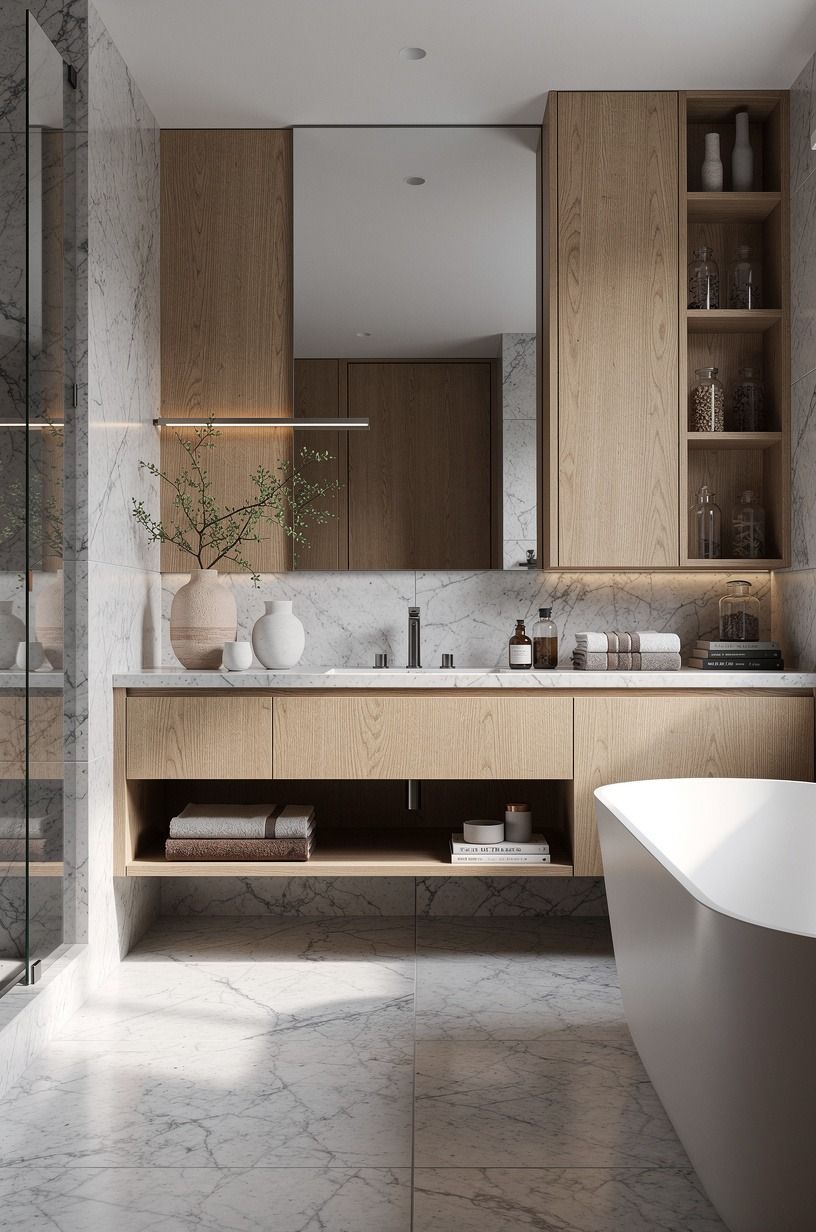
Use two wood notes at most: one for the vanity and one for a smaller accent.
6Hang a medicine cabinet with rounded corners
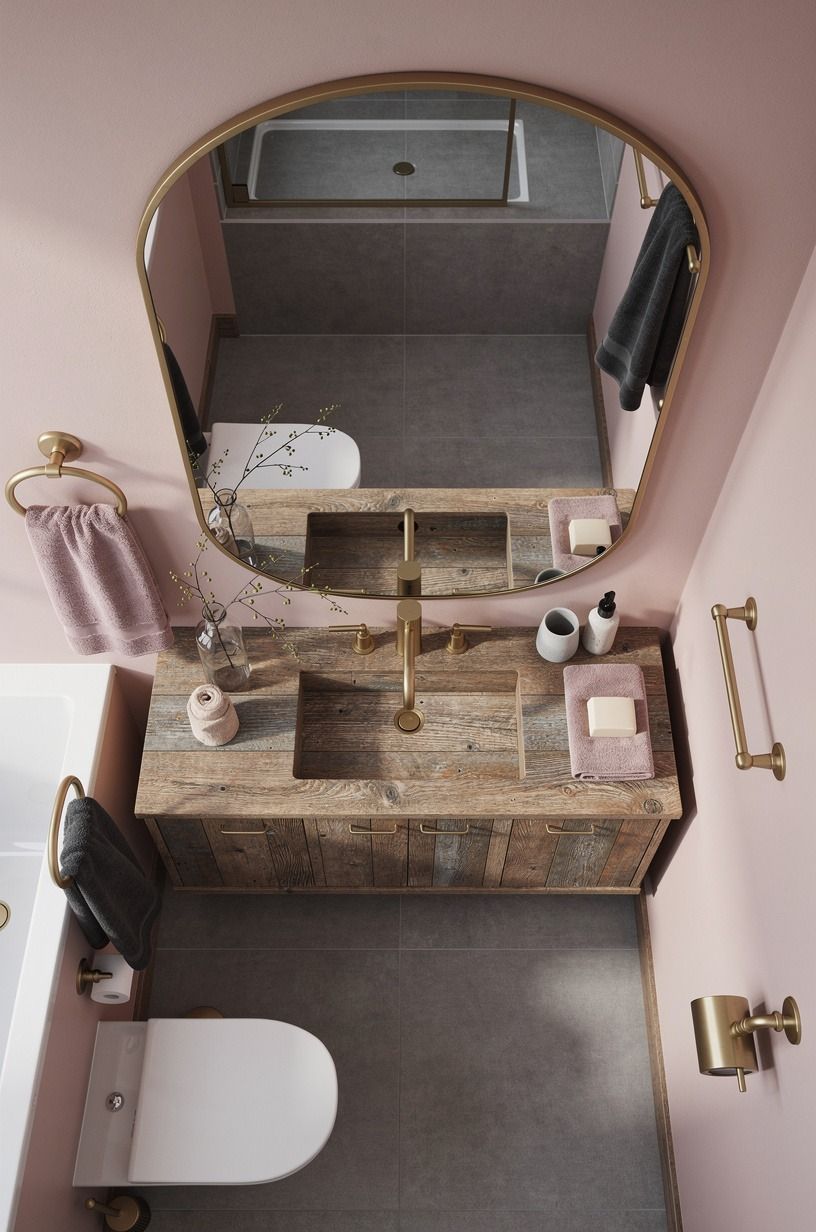
A rectangular mirror is fine, but a rounded medicine cabinet brings the gentle geometry that makes mid-century design feel human. Choose brushed brass hardware or a reclaimed teak-framed version, then mount it so your face lands near the center. Small adjustment, big difference!
If your vanity is narrow, storage behind the mirror saves the countertop from becoming a lineup of plastic bottles. You’ll get more ideas for tight layouts in these small mid-century modern bathroom ideas.
7Layer the Three-Height Light Stack
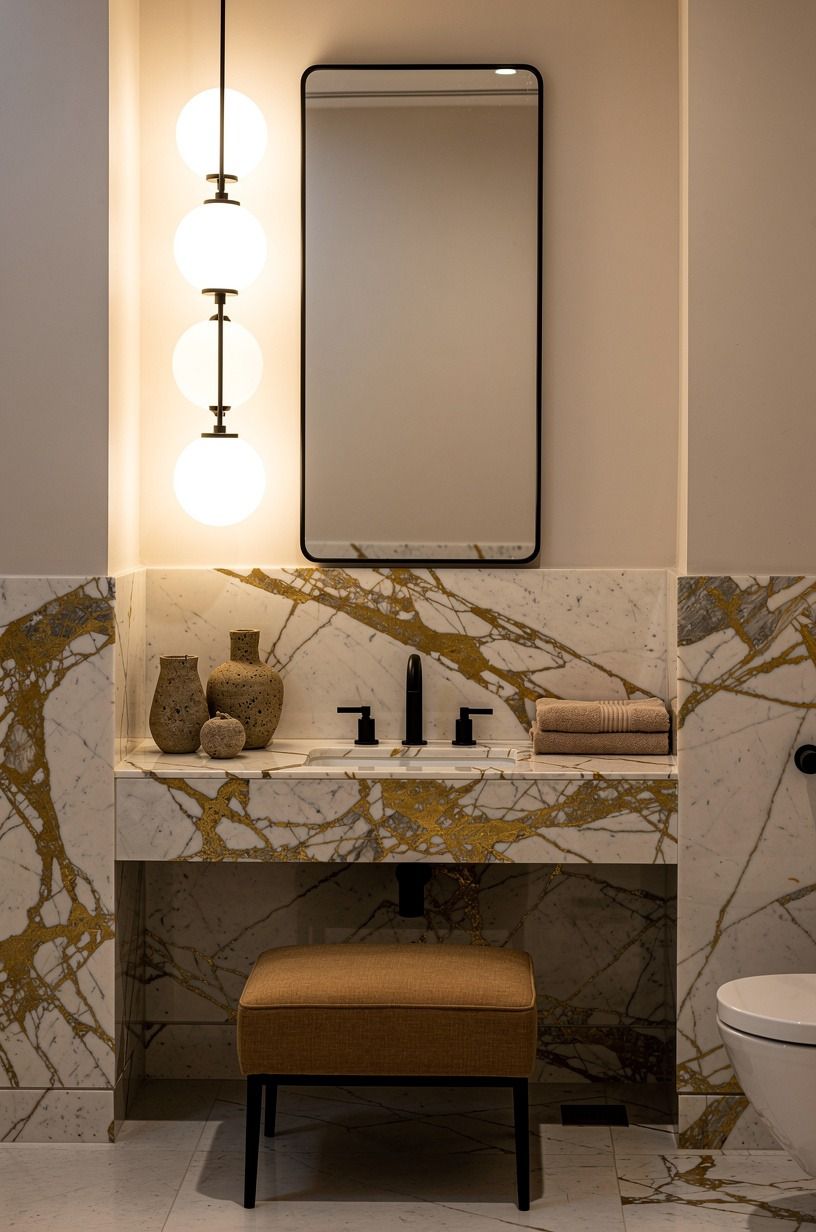
The Three-Height Light Stack means you light the mirror, the ceiling, and one lower visual moment.
8Paint the upper wall in a warm counterpoint
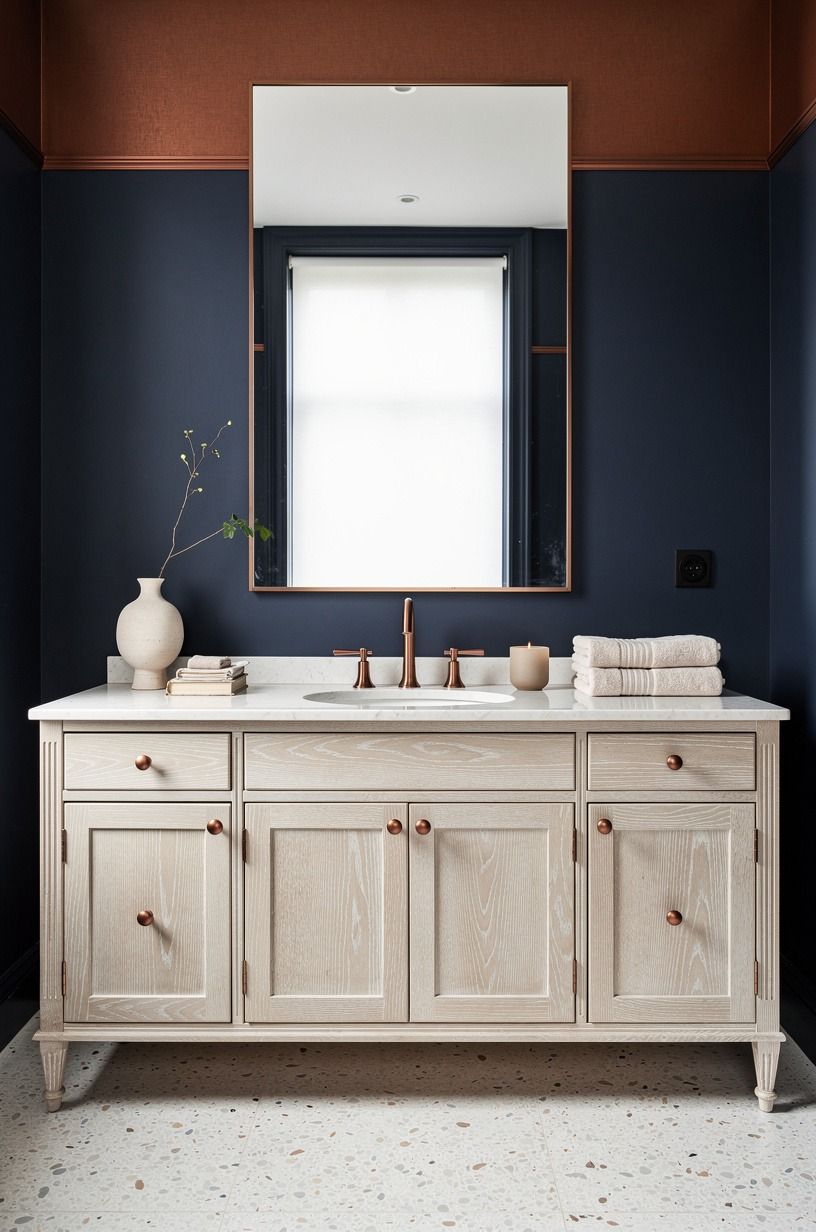
Your green bathroom with white tile needs a paint color that doesn’t compete. Benjamin Moore Chestertown Buff HC-9 is a warm, sun-baked neutral that makes deep green feel rich rather than chilly. Put it above the tile line, not on every wall if the room is very small.
For a cooler, more dramatic version, Farrow & Ball Hague Blue No.30 can work with ivory tile, copper details, and cerused white oak. I’d skip a cold blue-gray here. You’re trying to make the room feel collected, and blue-gray tends to make brass and wood look oddly separate.
9Choose a faucet with some age to it
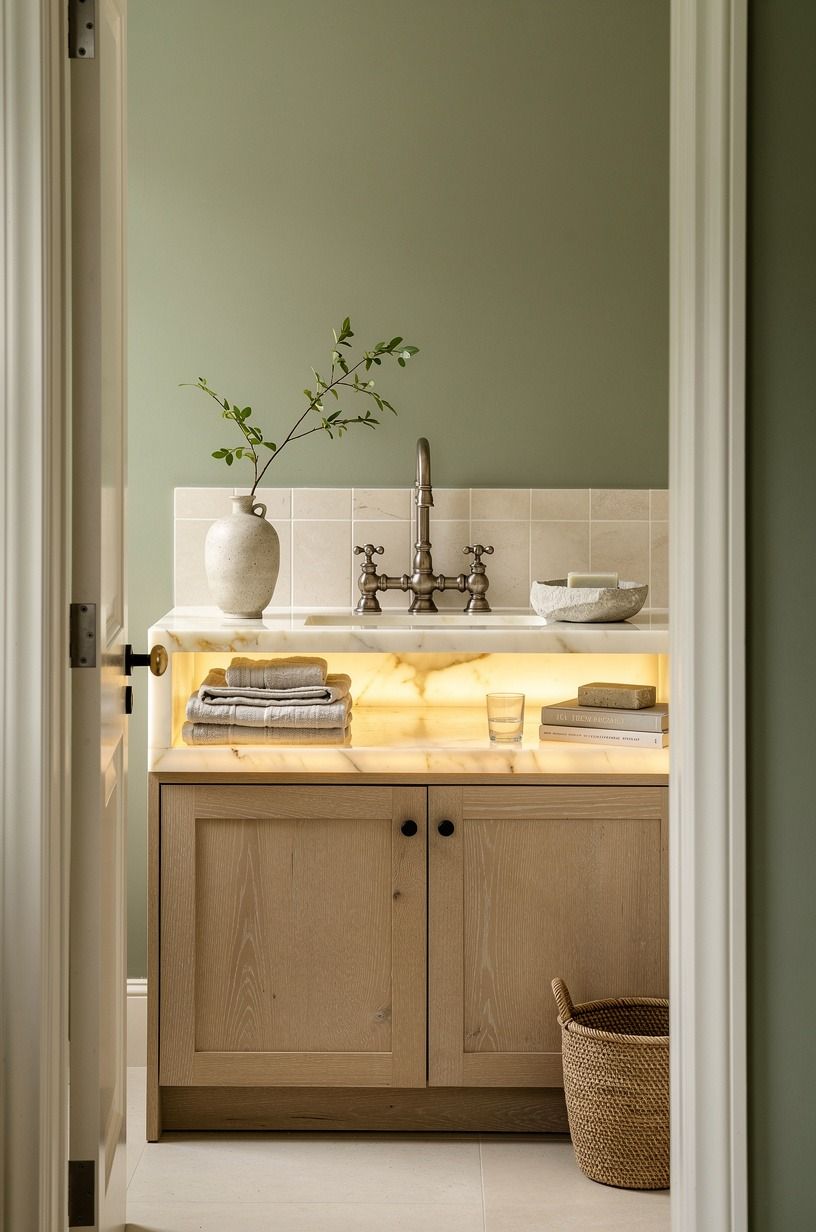
A faucet is small, but your hands see it every day.
10Frame the shower with a calmer green
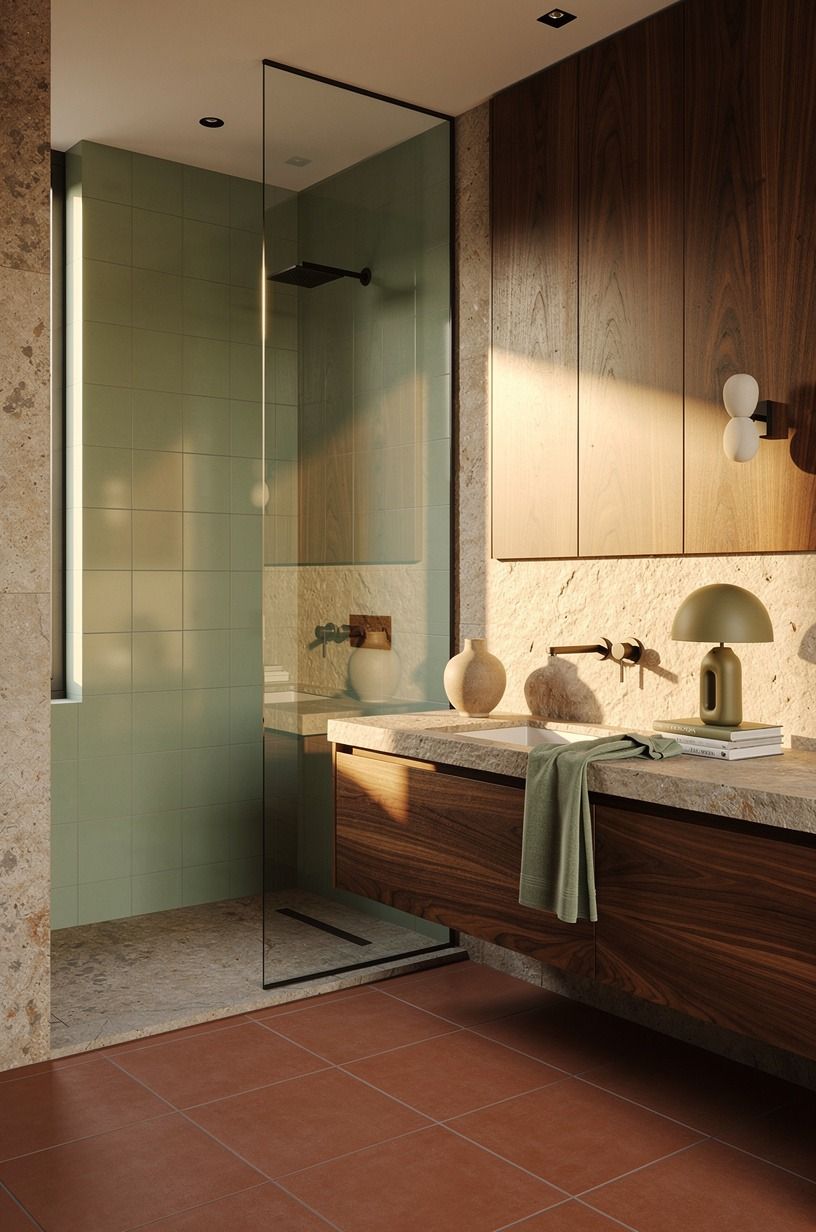
Use a deeper olive inside the shower and a lighter wall outside it, or reverse that arrangement if your shower is windowless. The contrast gives your mid century modern bathroom green tile some depth without requiring a second pattern. You don’t need five tile shapes to get character.
A comfortable shower should be at least 36×36 in. In that footprint, matte olive subway tile laid vertically can make the ceiling feel farther away. But don’t run dark tile to a low ceiling unless you want a moody cave, and most weekday mornings don’t.
11Mix a small pink note into the palette
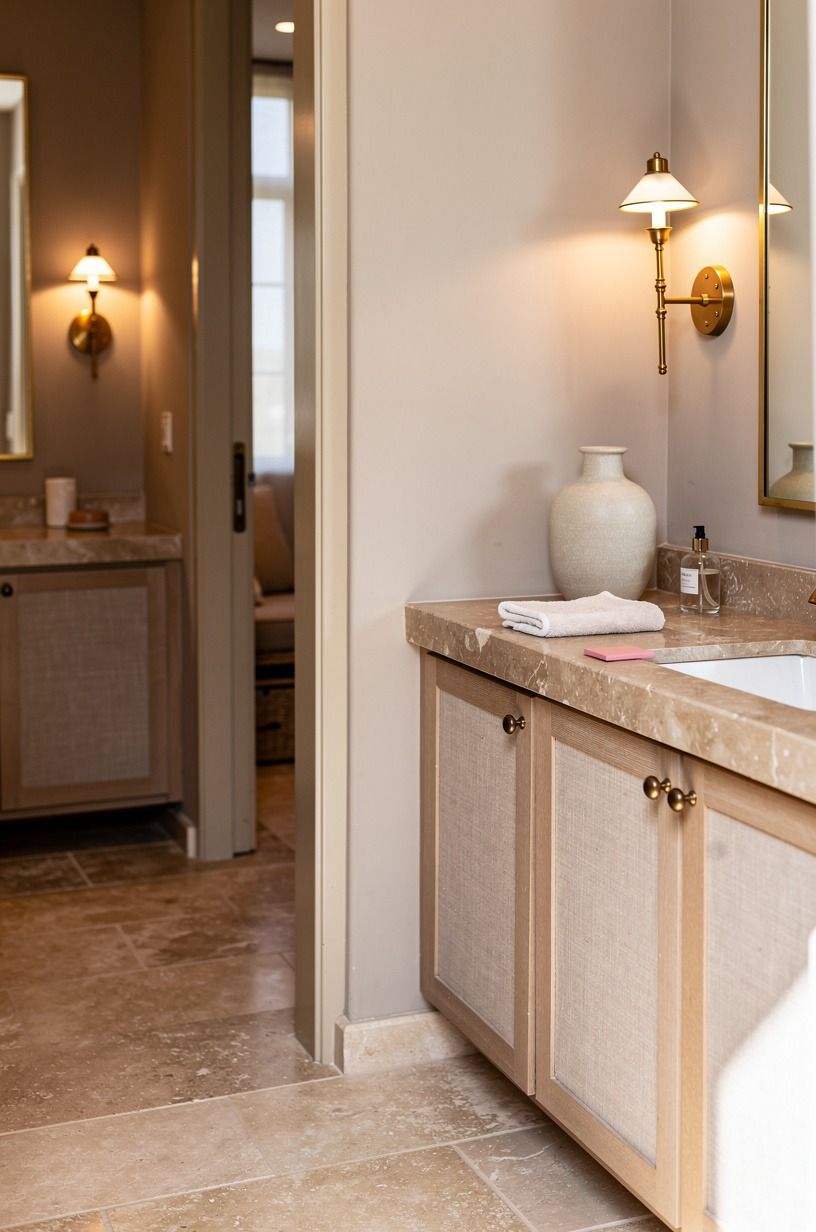
A dusty pink hand towel, framed print, or shower curtain trim can make green tile feel delightfully retro.
12Float an open shelf where you need a pause
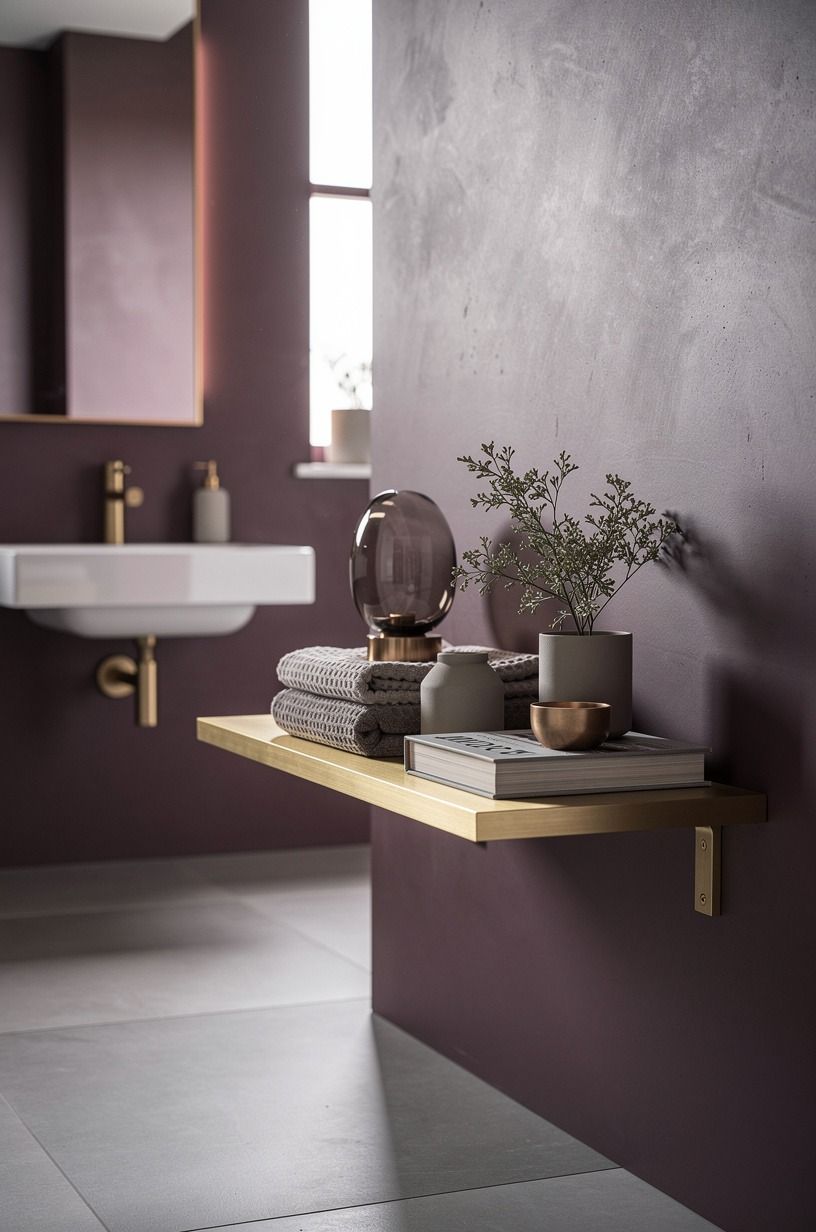
A single shelf gives you a place for a candle, folded washcloths, and one good object without crowding the vanity. Mount a shallow unlacquered brass shelf above the toilet or beside the mirror, keeping it slim enough that you won’t bump your shoulder.
You should style it with restraint. Turkish cotton hand towels.
An amber glass jar. One small trailing plant if your bathroom gets light. But don’t add three baskets and a stack of books, because humidity and dust will make the shelf feel fussy.
13Prioritize the parts that earn their cost
Spend where water touches, then save on the decorative layer. The following US ranges are useful starting points, not a promise of your local quote.
If you’re renovating around old plumbing, ask for that number early. Surprise plumbing bills aren’t charming.
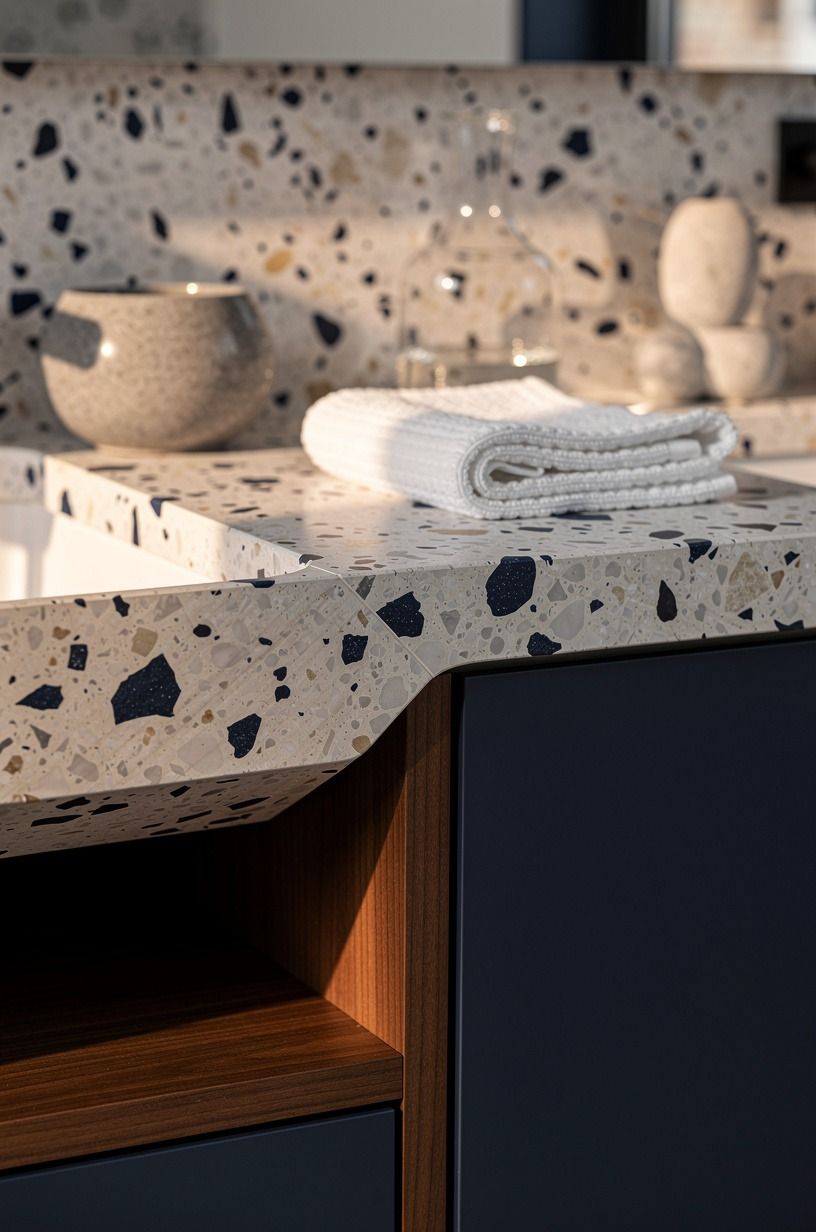
A terrazzo vanity top typically costs $50 to $100 per sq ft, while zellige can run $15 to $35 per sq ft. I’d choose straightforward subway tile before cutting the faucet budget. Your faucet gets touched hundreds of times; a complicated tile edge just gets stared at.
14Can a small bathroom carry dark green tile?
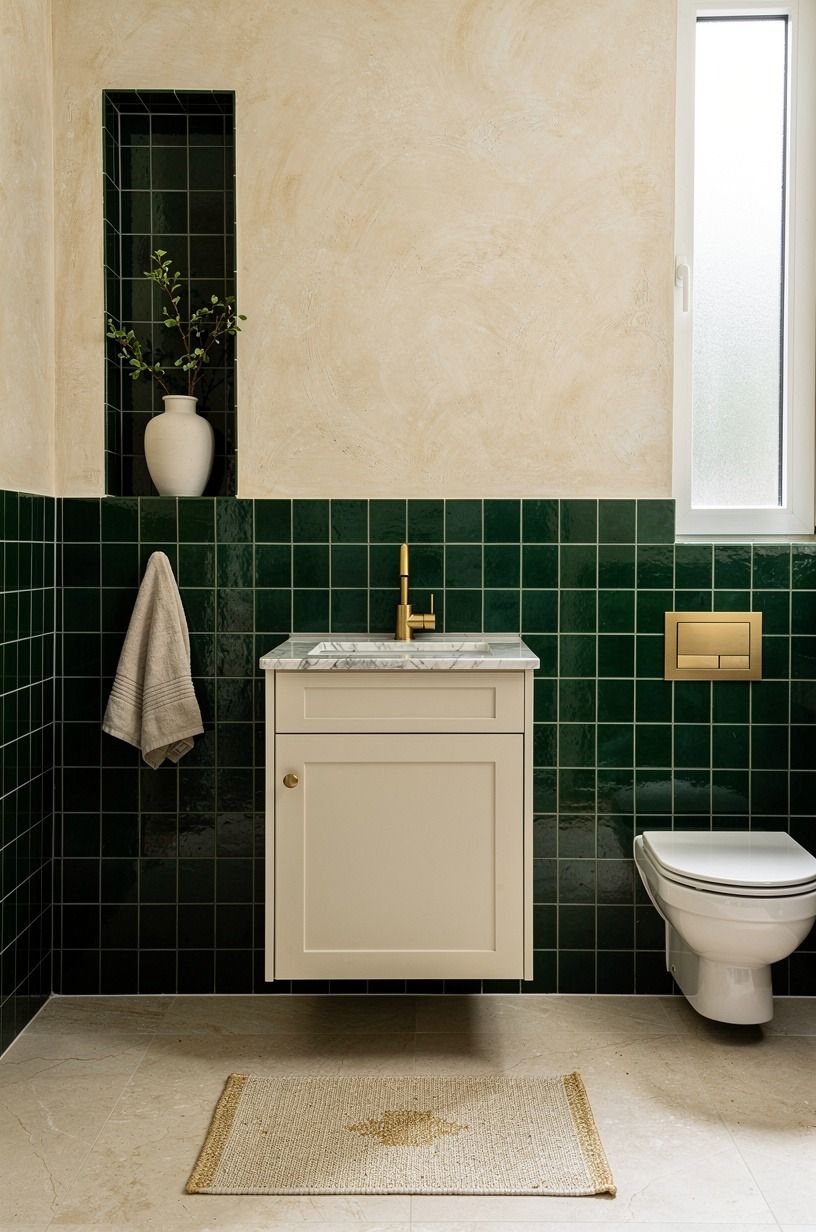
Yes, if you leave visual breathing room above it.
15Add black only as a punctuation mark
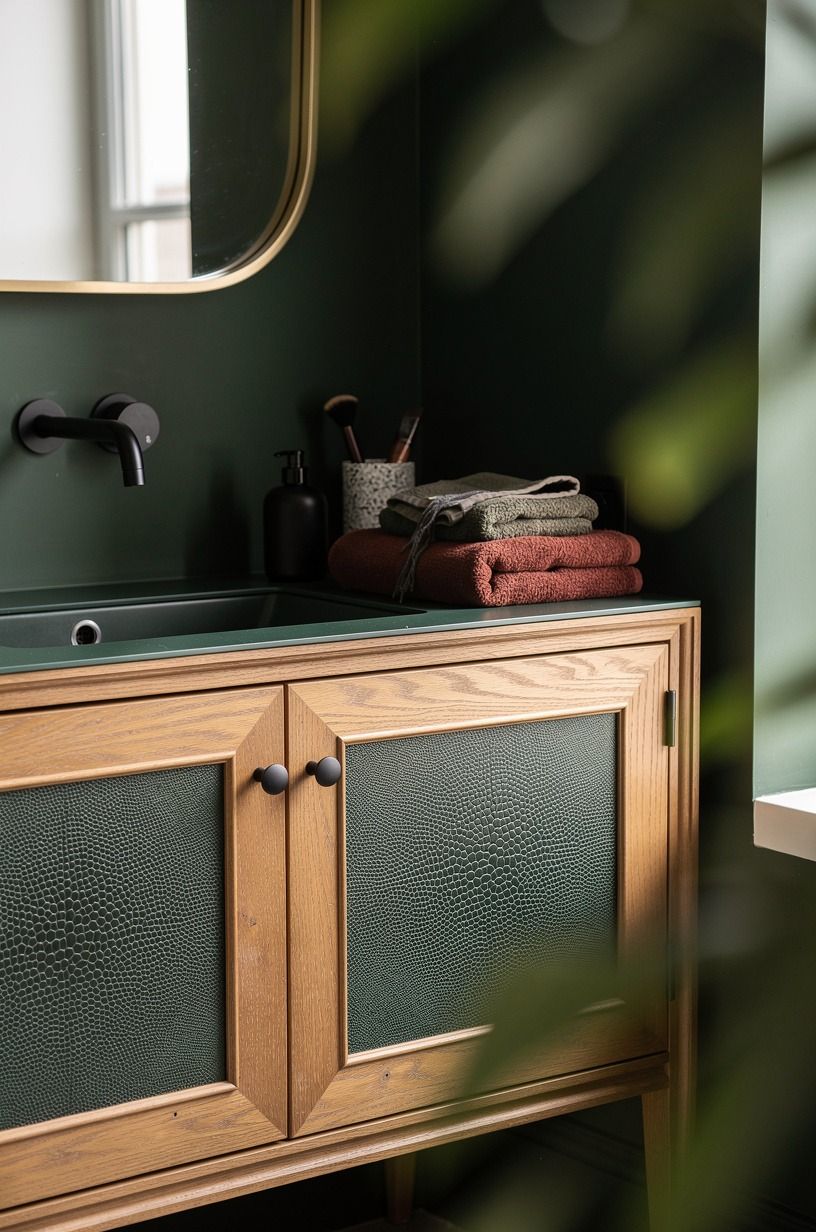
Black works best in tiny doses: a mirror edge, a sconce arm, a framed print. matte black metal gives the green tile a clean outline and keeps brass from looking overly sweet. Think eyeliner, not a full smoky eye.
You’ll get a more refined result if black appears two or three times, then stops. I’d skip black floor tile with dark green walls in a standard bathroom. It can look dramatic in a photo, but your room loses the gentle reflection that makes tile feel inviting.
16Make renter swaps that peel away cleanly
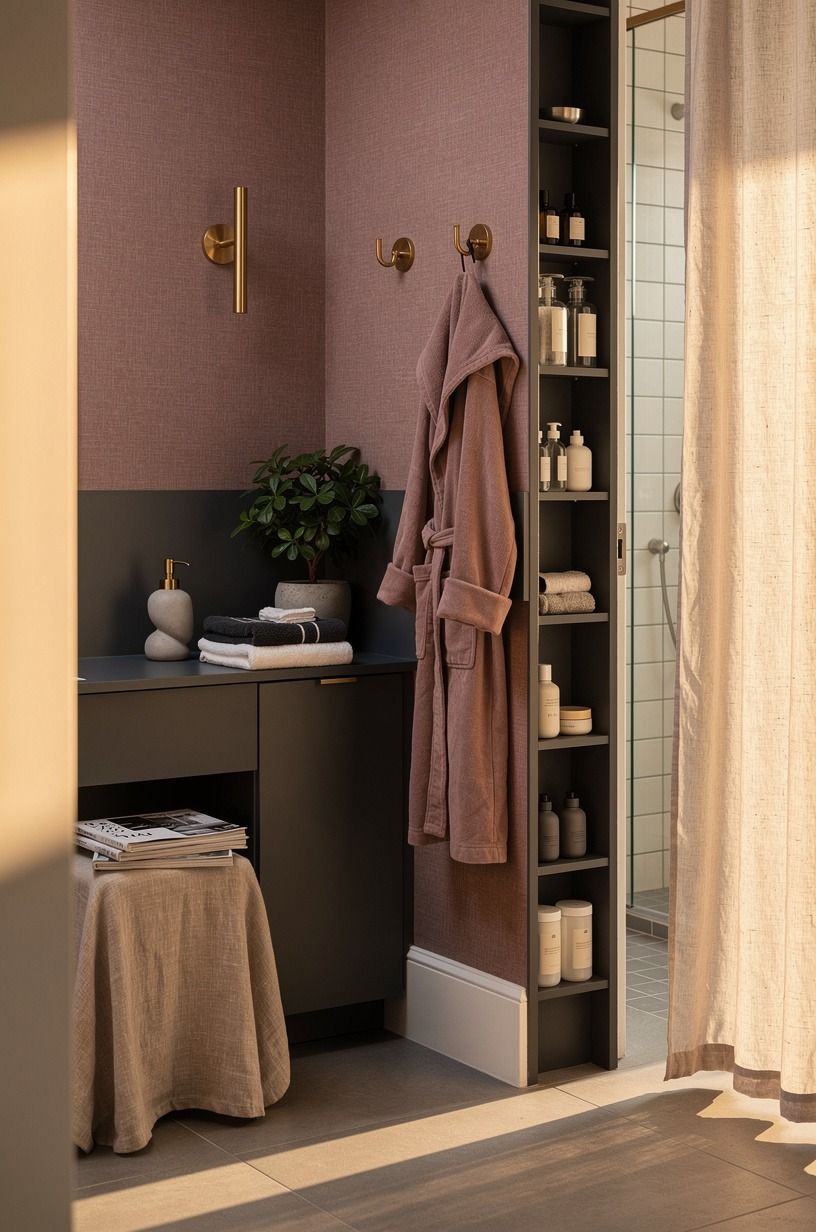
You can get the green-tile feeling without touching permanent surfaces.
17Finish with textiles that quiet the hard surfaces
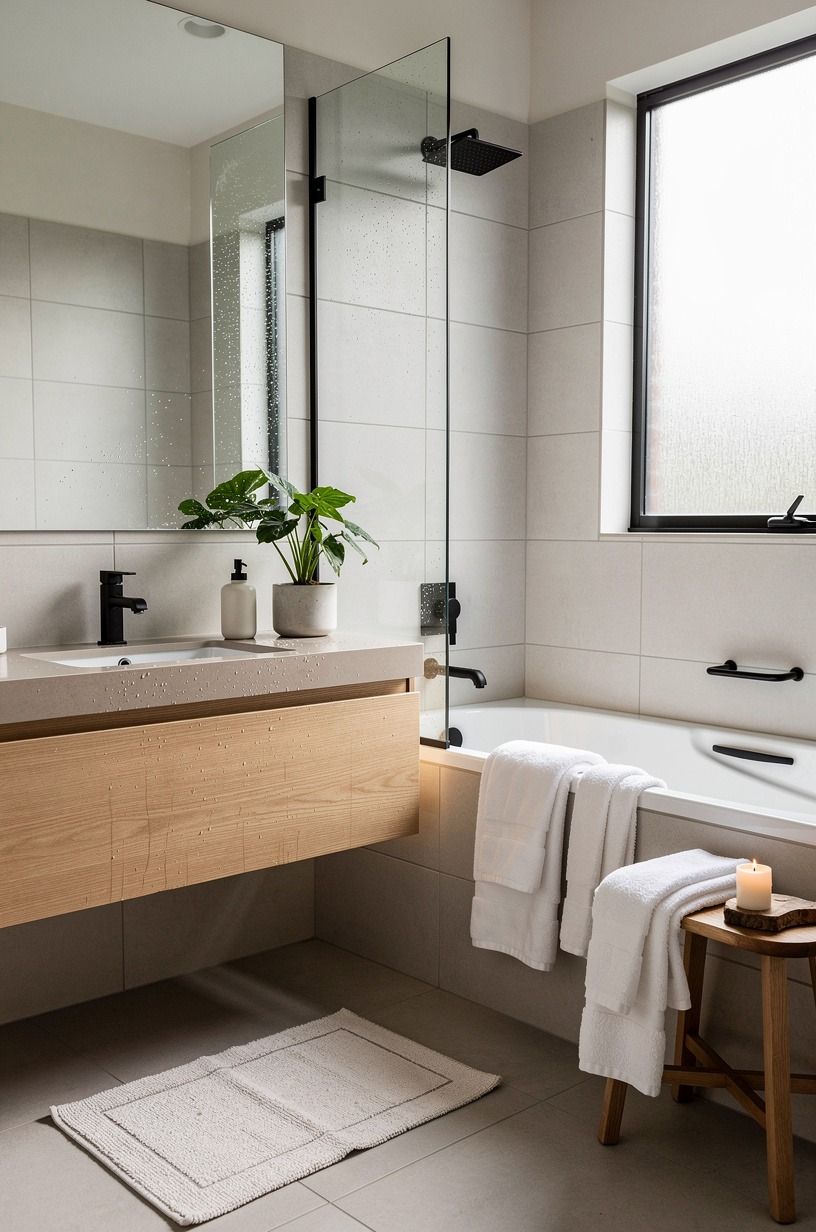
Green tile, porcelain, and glass all bounce sound. A thick bath mat and a real shower curtain take the edge off.
Choose cream, camel, or charcoal textiles with an organic bouclé texture, then let them sit slightly imperfectly. Too neatly arranged, and the room starts feeling staged.
You don’t need matching everything. A striped curtain with a solid mat is usually more relaxed than a packaged set. And if your bathroom is a guest space, these mid-century modern guest bathroom ideas can help you make it welcoming without filling every surface.
Why the green tile decision still holds up
I think green tile is back because people are tired of bathrooms that look like temporary rental listings, even when they own the house. For years, the default answer was white subway tile, gray vanity, black hardware.
It was safe, sure. It was also so controlled that many bathrooms lost any sense of place.
Green carries some risk, and that’s why it has staying power. It can recall a 1950s bungalow, a European pool changing room, or a garden after rain, depending on the shade you choose.
I’ve made the mistake of treating a colored tile as the whole design. It isn’t.
Green needs a supporting cast that understands warmth: walnut rather than cool gray oak, aged brass rather than mirror-bright chrome, creamy paint rather than crisp blue-white. Your bathroom doesn’t need to become historically exact.
In fact, a museum-perfect mid-century room can feel weirdly stiff. You’re building a place where you brush your teeth half awake, wash paint off your hands, and close the door for five quiet minutes.
The real decision is whether you want green to be a backdrop or an event. If you’re nervous, use it inside the shower or below a chair rail and let Farrow & Ball Hague Blue No.30 sit on an adjacent wall only if you have good natural light. If you want the tile to lead, keep everything else simpler.
That restraint is what lets a bold choice stay elegant. And honestly, it’s more forgiving than white.
A little water mark or imperfect grout line disappears into the variation rather than announcing itself every morning.
A Few Things Worth Answering
What is the best mid-century green tile bathroom look for a small bathroom?
A pale sage subway tile with a walnut vanity is the safest small-room combination. vertical green tile gives your walls height, while an IKEA HEMNES cabinet keeps storage useful. Keep the floor light, and your bathroom won’t feel boxed in.
Where can I buy mid-century green tile bathroom pieces on a budget?
Start with IKEA, Target Threshold, Wayfair, and local tile outlets. Facebook Marketplace is especially good for mirrors and vintage stools. You can also look for one brass sconce secondhand, then keep your new purchases limited to plumbing parts.
How much does a mid-century green tile bathroom makeover cost?
A cosmetic update is typically about $200 to $1,200, while a partial renovation often lands around $3,000 to $9,000. paint and textiles are the low-cost layer. You can repaint, change towels, and swap a mirror without opening a wall.
Can I create a mid-century green tile bathroom on a budget?
Yes, and you don’t need to retile the entire room. removable green decals, a thrifted wood stool, and a new shower curtain can shift the mood for far less than a renovation. Paint above the existing tile, then change the lighting temperature.
Is a mid-century green tile bathroom worth it in a small space?
Yes, it’s worth it because a small bathroom lets one strong material read as intentional. one tiled feature wall gives your room identity without swallowing it. Keep at least one surface pale, and use a wider mirror to return light.
Is a mid-century green tile bathroom a good idea for a rental?
Yes, if you stick to reversible pieces. peel-and-stick backsplash panels, a tension-mounted curtain, and removable hardware covers are renter-friendly choices. Avoid permanent adhesive on unknown finishes, and photograph the original condition before you begin.
Where I’d Start First
If I had to pick one step, I’d start with the green tile sample. You can’t rescue the wrong undertone with brass, paint, or towels. Pin your favorite shade for later, then compare it against your bathroom’s light before you buy a single box.