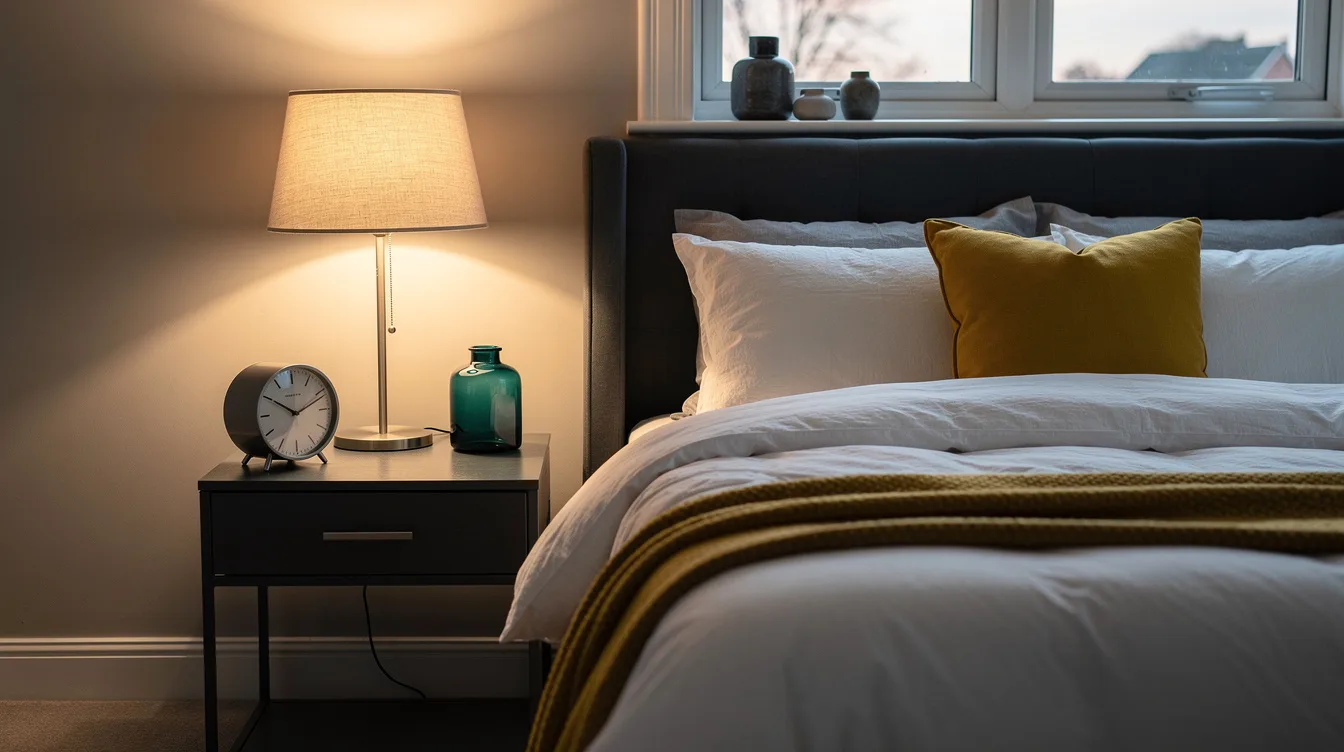
I wanted my bedroom to brighten before the alarm without turning 7:00 a.m. Into a blast of white light. The first surprise was how different a normal plug-in timer feels from a gradual wake routine.
A timer switches a lamp on abruptly, while a smart bulb or sunrise clock can build brightness over time. For a low-cost test, a shaded lamp, a roughly $7 timer, and a warm bulb can show whether the idea suits your sleep schedule.
Here is the setup I would use, from the basic lamp experiment to the softer upgrade.
Start With a Diffused Glow
I like the idea of waking before the alarm, but a lamp that snaps on at full brightness can feel more jarring than helpful. A shaded bedside fixture with a polypropylene shade softens the first impression, even when the timer itself cannot fade the light.
The roughly $17 IKEA LAMPAN and Defiant mechanical timer is the simplest test. Its lamp is about 11 inches high, with a shade around 7 inches across and a base near 5 inches, so it fits a small nightstand without crowding the alarm clock.
That setup provides scheduled on and off only. For genuinely gradual light, use a smart A19 bulb with a wake routine or a dedicated sunrise clock.
Test the Switch Before Setting It
Before buying a timer, I check whether the lamp restarts when power returns. Turn the lamp on, unplug it, and plug it back in; if it stays dark until you tap a touch control or press an electronic button, it will not work reliably with a basic timer.
A lamp with a physical switch is the safer choice for this arrangement. Leave that switch on, connect the lamp to the Defiant TM-022 mechanical timer, and plug the timer into the wall outlet.
Keep the fixture stable and away from bedding, curtains, and anything that can cover the shade. The timer should control the outlet while the lamp remains in its normal, ready-to-light position.
Build the Low-Cost Setup
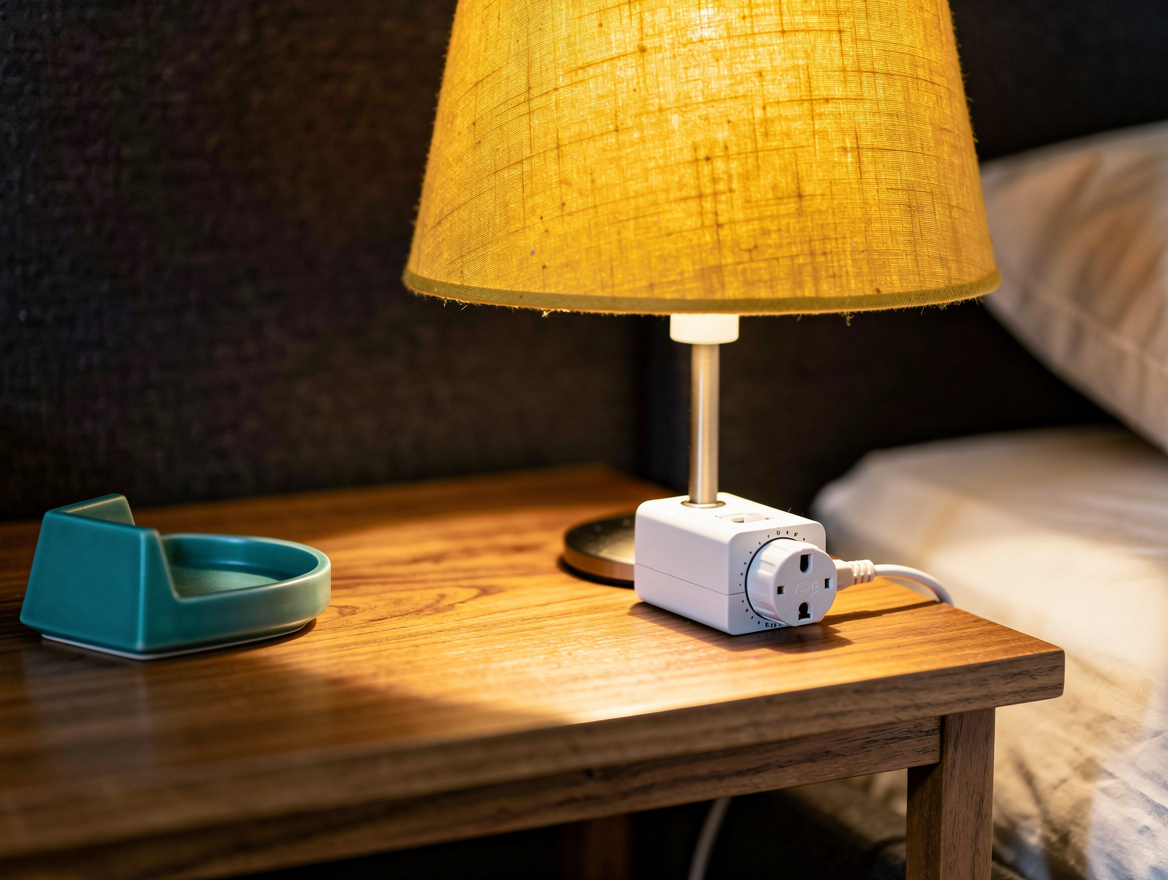
For a first experiment, the IKEA LAMPAN costs about $9.99 and the Defiant timer costs roughly $6.98 before the bulb. That makes the complete lamp-and-timer setup approximately $17, which is enough to learn whether pre-alarm light feels pleasant in your room.
Its 30-minute intervals are the main limitation. You can schedule a half-hour block, but you cannot ask the lamp to begin at 6:45 when the timer only offers half-hour steps.
Use a warm, modestly bright bulb rather than turning a powerful ceiling fixture into your morning signal. A soft pool of light near the bed is easier on the eyes than a bright source aimed across the room.
Hide the Bulb Inside Glass
When the exposed bulb looks too sharp, I prefer a globe-shaped fixture. The IKEA FADO uses a glass globe with a polypropylene base, measures about 9 inches high by 10 inches in diameter, and spreads light across the bedside surface.
Paired with the Defiant 49807DI timer, the lamp and timer cost approximately $42 before the bulb. The price is higher than the LAMPAN setup, but the globe hides the bulb and makes the sudden switch-on less visually aggressive.
Glass still does not create a fade. The light arrives all at once, so place the globe slightly to the side of your pillow and choose a lower brightness if the first morning test feels intrusive.
Program a Manageable Morning Window
For a 7:00 a.m. Alarm, I would begin with a 6:30 to 7:30 a.m. Window on a 30-minute timer.
Set the timer’s current time, choose timed operation instead of the permanent-on setting, and confirm that the lamp’s own switch remains on.
Test the complete sequence while you are awake. Check that the lamp switches on, that the glow feels comfortable from the pillow, and that it switches off after the scheduled window.
If the light feels too direct, lower the bulb brightness or move the fixture farther from your face before extending the start time. A gentler routine should make the room easier to enter, not force you awake before you are ready.
Upgrade to a Gradual Wake Routine
A basic timer is the right purchase when you want dependable on and off control, but it cannot imitate dawn. A compatible smart A19 bulb can gradually increase brightness through a wake routine, though one listed bulb costs about $31.86 and a required hub may add to the complete setup.
Check the bulb’s clearance inside the shade before ordering. The A19 format is common, yet the fixture still needs enough room around the bulb and must remain compatible with the selected smart system.
A separate sunrise clock is another route when you want gradual light without converting a decorative lamp. I would choose that option for a bedroom where the bedside fixture is touch-controlled, visually delicate, or already needed for reading.
Begin with the lamp you already own, confirm that its switch restarts automatically, and test a half-hour window before spending more. If the sudden light still feels harsh after you add diffusion and lower brightness, put the next dollars toward gradual dimming rather than a more complicated timer.
Mia Carter writes about small-space living and budget home makeovers. She has restyled three rentals and tests most ideas in her own 45 sqm flat.