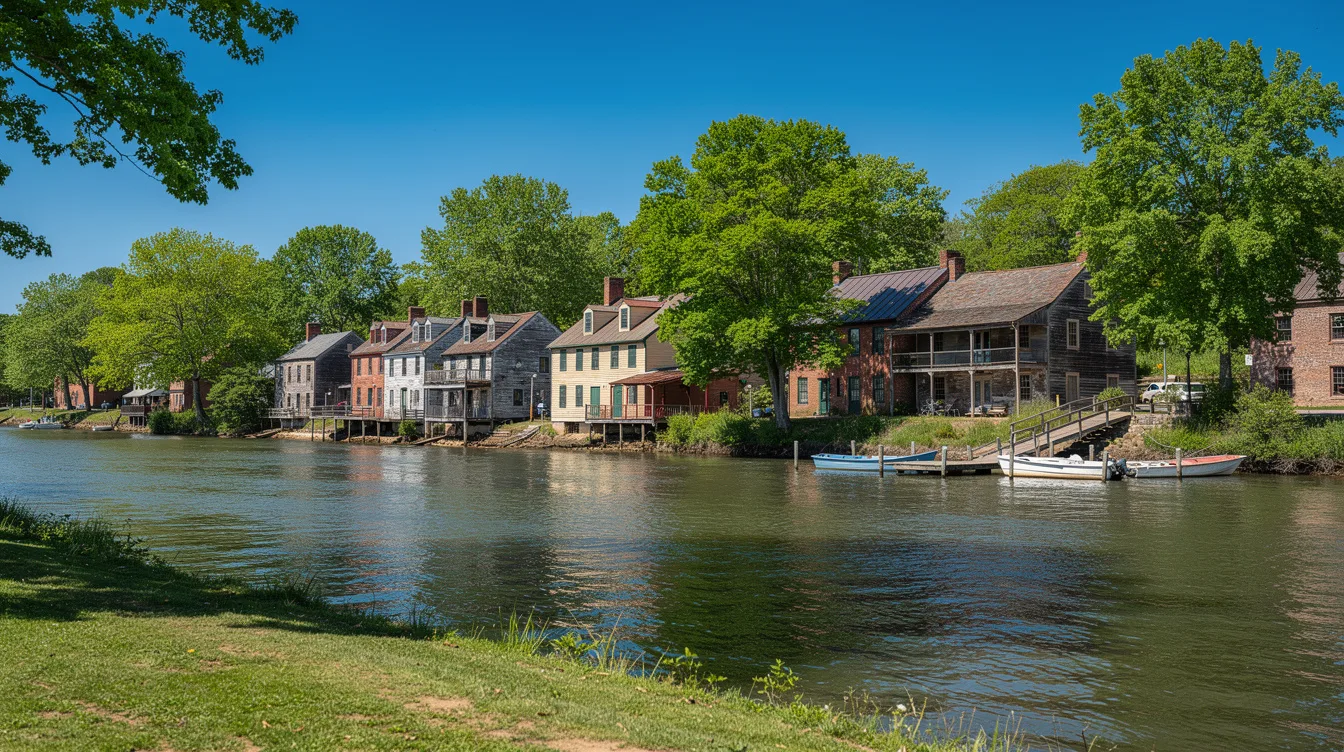
Occoquan sits about 20 miles south of Washington, DC, yet it feels far removed from the capital’s rush. This historic Virginia town sits along the Occoquan River, and its compact streets make a convincing case for leaving the interstate behind.
It’s just off I-95 in Prince William County, so you can reach it without turning a day trip into a logistical project. But Occoquan isn’t a destination for checking off attractions at speed. Come for a half-day or day trip, then let the river slow the pace.
A river town built for wandering
Downtown is small enough that you won’t need a plan. Mill Street and the nearby lanes hold boutiques, art studios, cafés, restaurants, and buildings. You can walk it easily, which is precisely why the town works when Washington feels too scheduled.
And the scale is the point. With just over 1,000 residents, Occoquan doesn’t try to mimic a bigger old town. Its streets feel intimate rather than grand, and the storefronts ask you to look closely instead of march onward.
More than 80 small and family-run businesses operate here, an unusually dense concentration for a town this size. That gives a visit some texture. You’ll find galleries beside places to eat, then another small shop around the next corner.
But don’t expect an all-day museum circuit or a giant dining district. Occoquan is compact, and that’s its limit as well as its appeal. If you want a place to linger over a coffee, browse art, and hear traffic fade behind the buildings, you’ll be happy.
River Mill Park is where the town exhales
River Mill Park gives the visit its best pause button. Walk the public waterfront, watch boats move along the Occoquan River, and take in the open water after the close-set streets downtown. The river makes the town feel less like an interstate exit.
And you should leave time to sit rather than simply pass through. The waterfront is suited to a short riverside stroll, especially after browsing Mill Street. Water catches the light, boats shift in and out of view, and your day suddenly has room in it.
The nearby Mill House Museum is a small local-history stop within the historic district. It’s worth considering if you want context for the town around you. But keep expectations sensible: this is a concise stop, not a large institution that will absorb an afternoon.
That modesty is part of Occoquan’s charm. It gives you enough to do without demanding endurance. You can spend the morning walking, stop by the water, and still have time for a relaxed meal before heading back toward Washington.
How to make the I-95 detour feel easy
From I-95, take Exit 160 toward Route 123/Ox Road, then follow Commerce and Washington Streets into town. The approach is practical, not dramatic. But once you arrive, the riverfront setting changes the tone quickly.
Free public street and lot parking is available. Much of the historic business area has 4- or 8-hour timed limits, so check your spot before settling into lunch or a gallery visit. That’s enough time for the town’s best kind of unhurried wandering.
And don’t overbuild the itinerary. Occoquan works best as a focused stop, not a place to force into a packed list of Northern Virginia errands. You can arrive, park, walk the old streets, and let the waterfront provide the change of scene.
The town is lively in its small-business way, but never urban in scale. If you need constant activity, you’ll run out of options. If you want a quiet river break near Washington, the limited footprint becomes the reason to go.
Save room for a waterfront table
Occoquan has independent dining in a compact setting, including waterfront options such as Madigan’s Waterfront. A meal here makes sense after a walk by River Mill Park, because the river is the town’s most persuasive companion.
But don’t treat the restaurant choice as the whole reason for the trip. The better rhythm is to eat after you’ve wandered. Browse first, pause at the water, then choose a table when the day has already loosened its grip.
You don’t come to Occoquan for excess. You come because the Occoquan River has a front-row seat, and because that riverfront is close enough to Washington to make an ordinary afternoon feel briefly separate.
By the time you turn back toward I-95, the old streets are behind you and the water is still moving past River Mill Park.