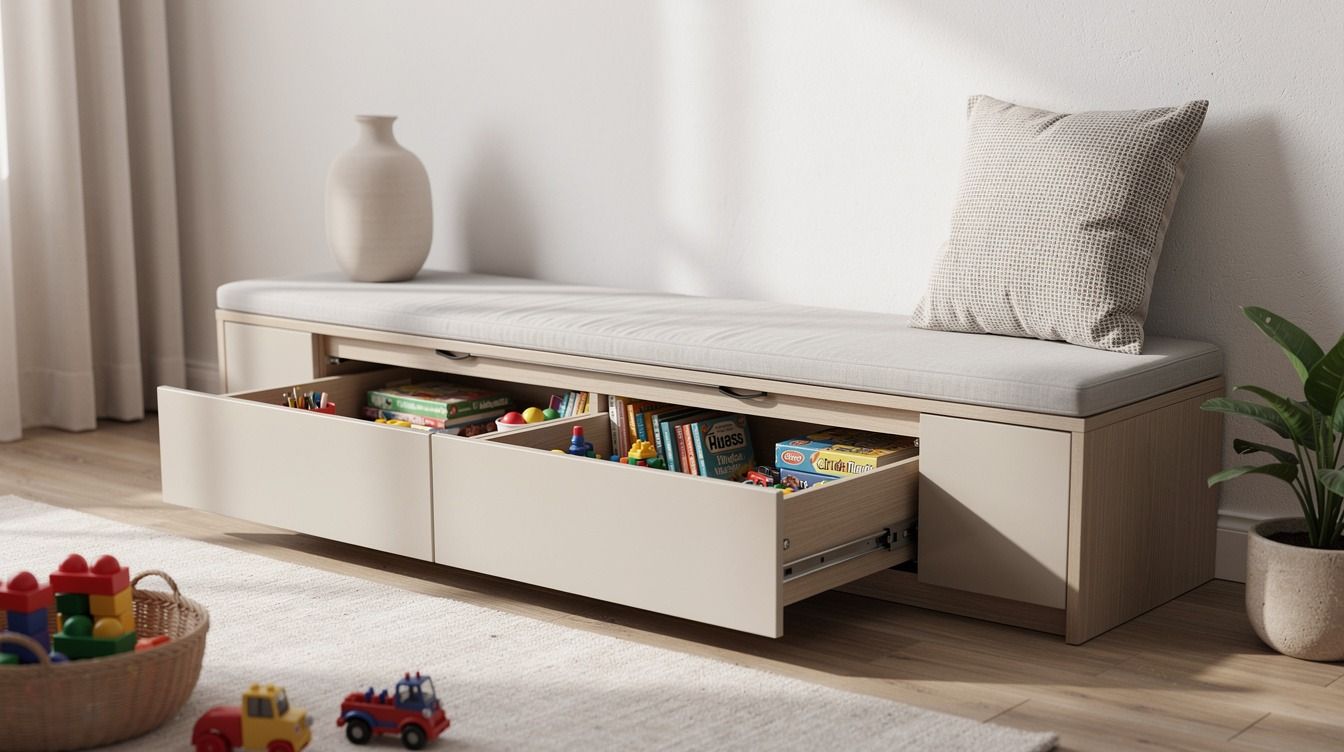
Hidden playroom storage works when every toy has a quick hiding place, not a prettier pile. I learned that after stepping on a magnetic tile at 6 a.m. for the third time. You don’t need a renovation. You need a room your kids can reset without calling you in.
Don’t overthink: Anchor Playroom Hidden Storage With One Closed Cabinet.
- Start With a Floor-Level Toy Edit
- Anchor Playroom Hidden Storage With One Closed Cabinet
- Build the Two-Zone Reset Rule
- Float a Hidden Toy Cabinet Above the Baseboard
- Layer Baskets Behind a Curtain Panel
- Will a Rolling Cart Keep Your Supplies From Spreading?
- Hang a Pocket Rail for Small Pieces
- Mix Open Shelves With a Single Hidden Door
- Frame Kids Hidden Book Storage Around a Reading Spot
- Use a Bench Lid Instead of Loose Seating
- Paint the Storage Wall Before You Add More Furniture
- Create the Three-Height Landing Strip
- Choose Bins by How Fast You Need to Reset
- Put Wallflower Storage Behind Art Panels
- Store Big Toys at the Room’s Edge
- Add a Rotation Shelf for the Toys You’re Tired Of Seeing
- Finish With a Five-Minute Closing Routine
1Start With a Floor-Level Toy Edit
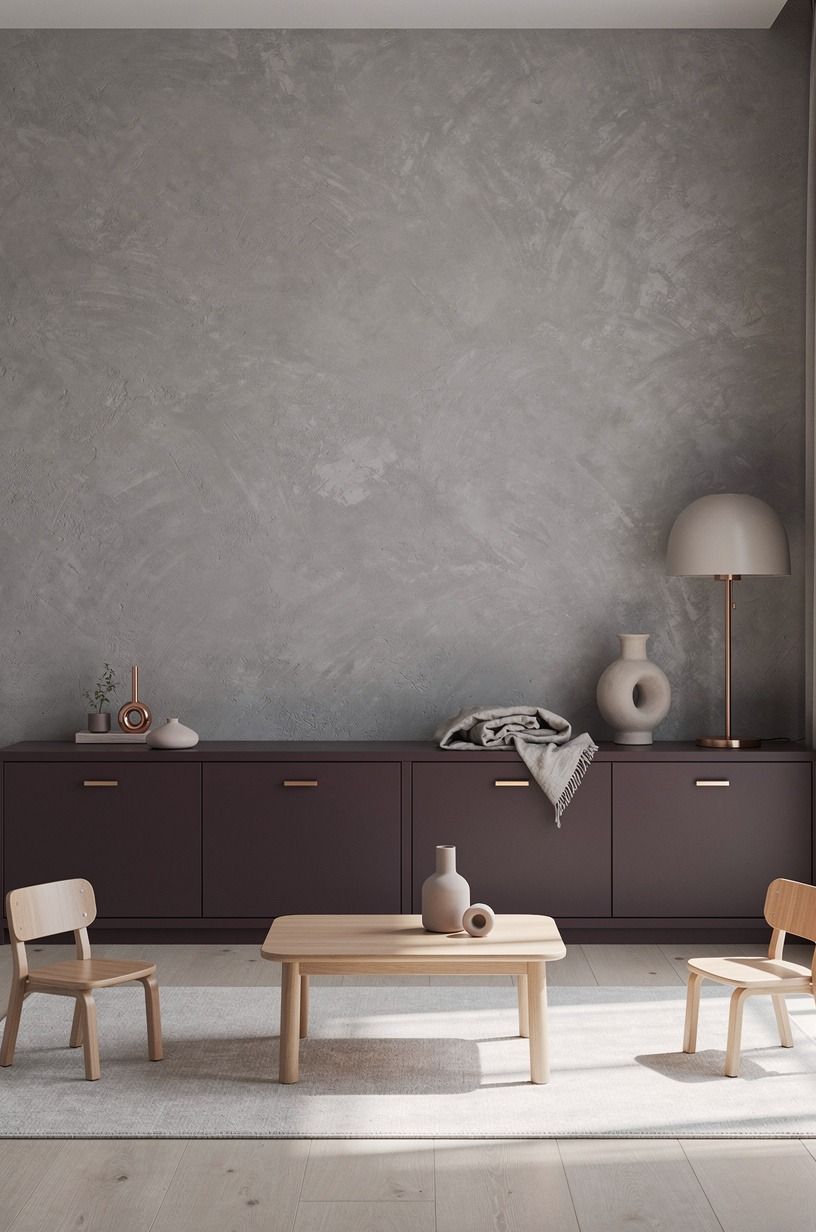
Pull every toy into one open area before you buy a single bin. You’ll see fast which things belong in daily reach, which ones rotate, and which pieces have quietly lost their job.
Keep the play rug clear enough for a plum, grey, and rose-gold palette to breathe. That open patch makes your room feel calmer.
Give your child one “out” basket and one “put away” basket. You’re not creating a museum. You’re making a routine they can finish before dinner.
I’d skip tiny matching containers here. They look tidy for an afternoon, then become a scavenger hunt for puzzle parts. For more room layouts that hide toys in plain sight, browse these living-room hidden playroom ideas.
2Anchor Playroom Hidden Storage With One Closed Cabinet
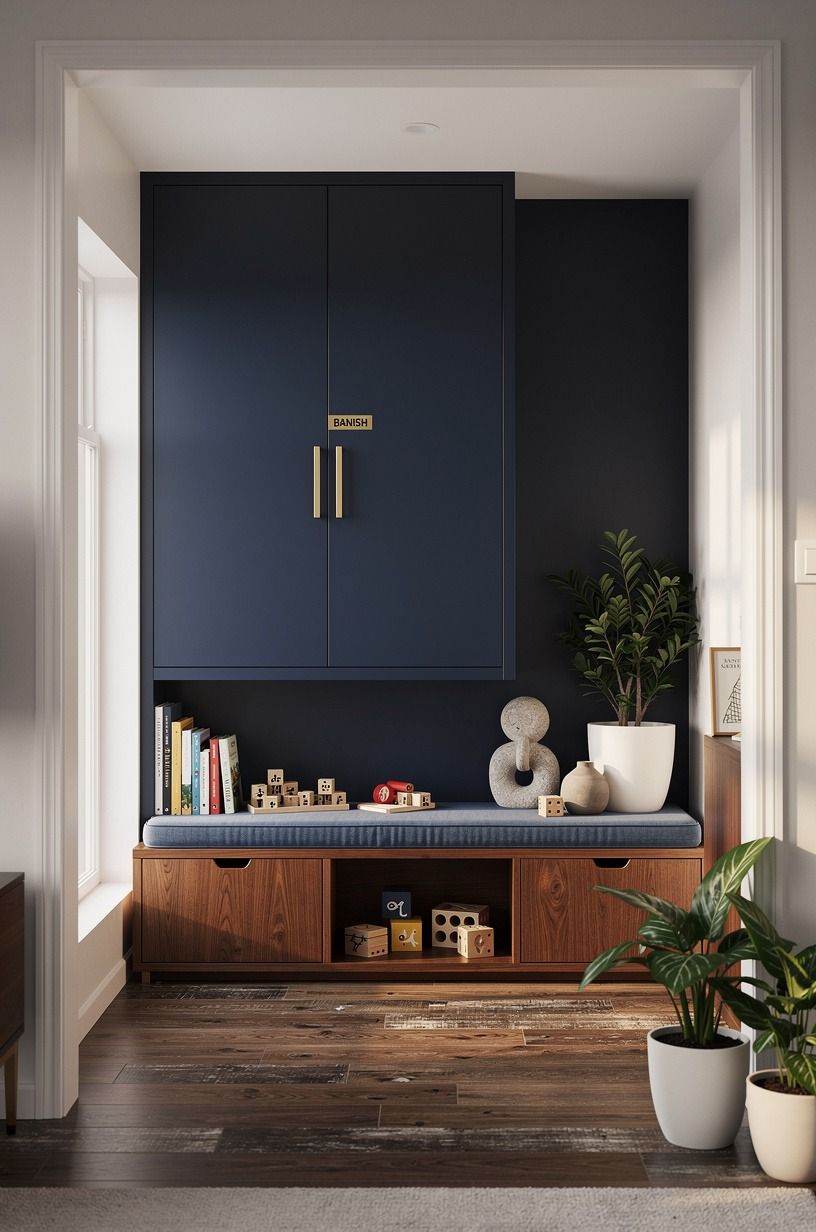
Choose one substantial cabinet before adding open shelves.
3Build the Two-Zone Reset Rule
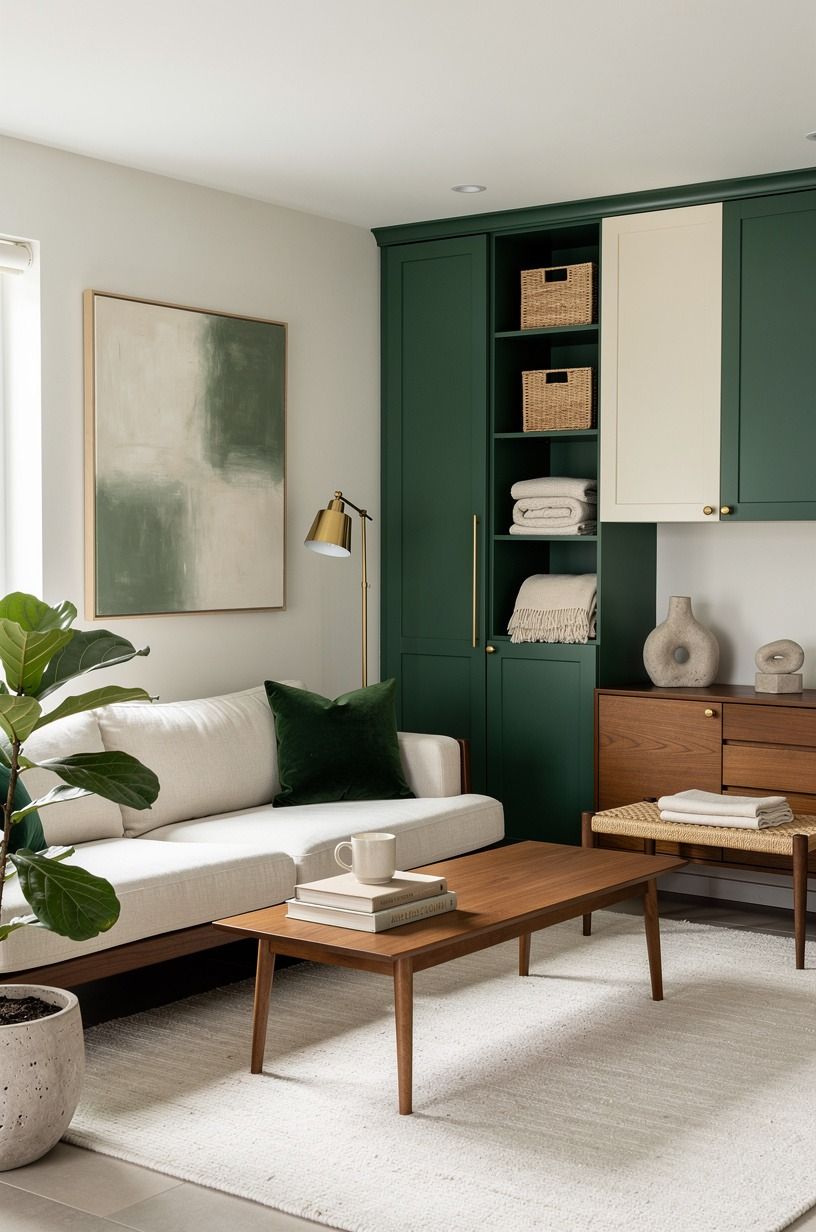
Make one zone for building and one for quiet play. Your child can dump blocks in the active zone, while books and drawing supplies stay in the calmer corner. This is my Two-Zone Reset Rule, and it stops one activity from taking over every square inch.
Use a Target Pillowfort cube organizer for blocks, then a lidded Belgian flax linen basket for costumes. You can label both with pictures if your child isn’t reading yet. The contrast matters: hard pieces in easy cubes, soft pieces in forgiving baskets.
I’ve tried all-open storage, and it doesn’t hold up in a busy house. Closed storage wins because you can reset the visual noise in thirty seconds.
4Float a Hidden Toy Cabinet Above the Baseboard
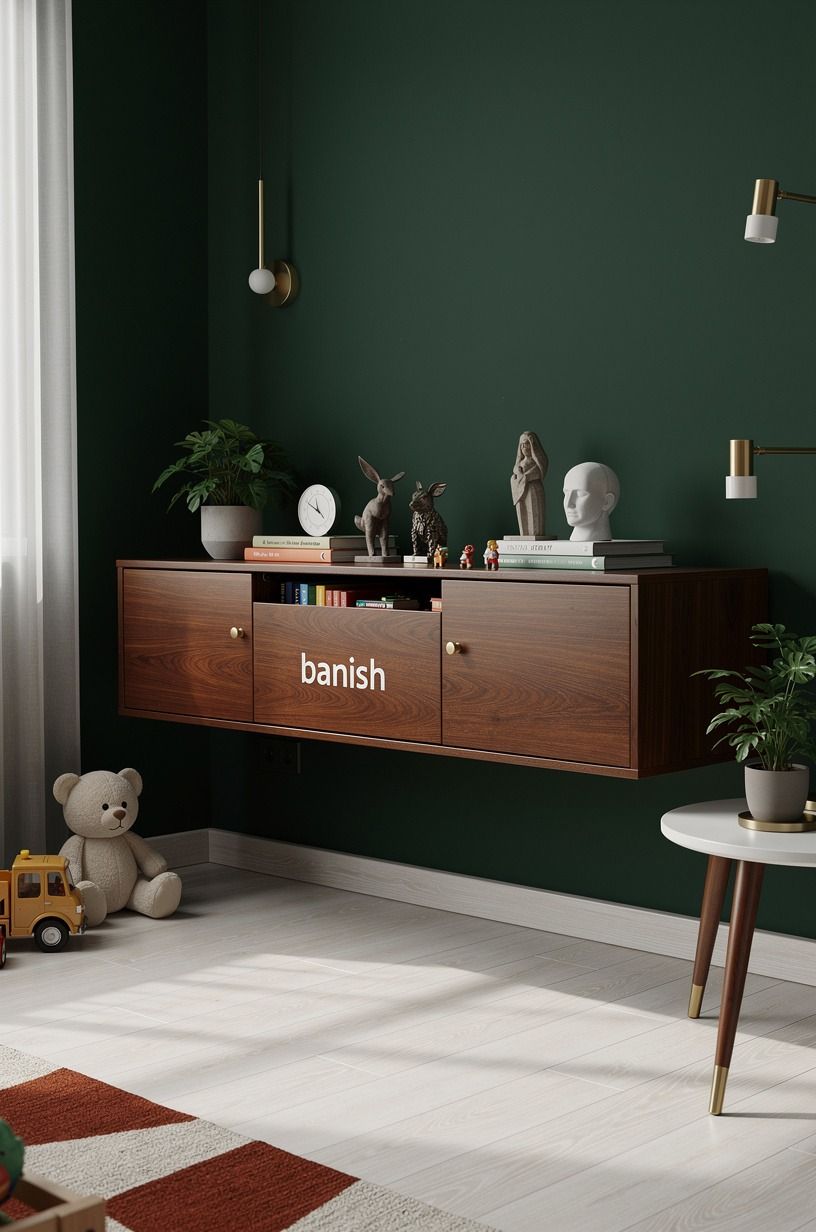
A wall-mounted cabinet keeps the floor visible, which makes a small playroom feel airy.
5Layer Baskets Behind a Curtain Panel
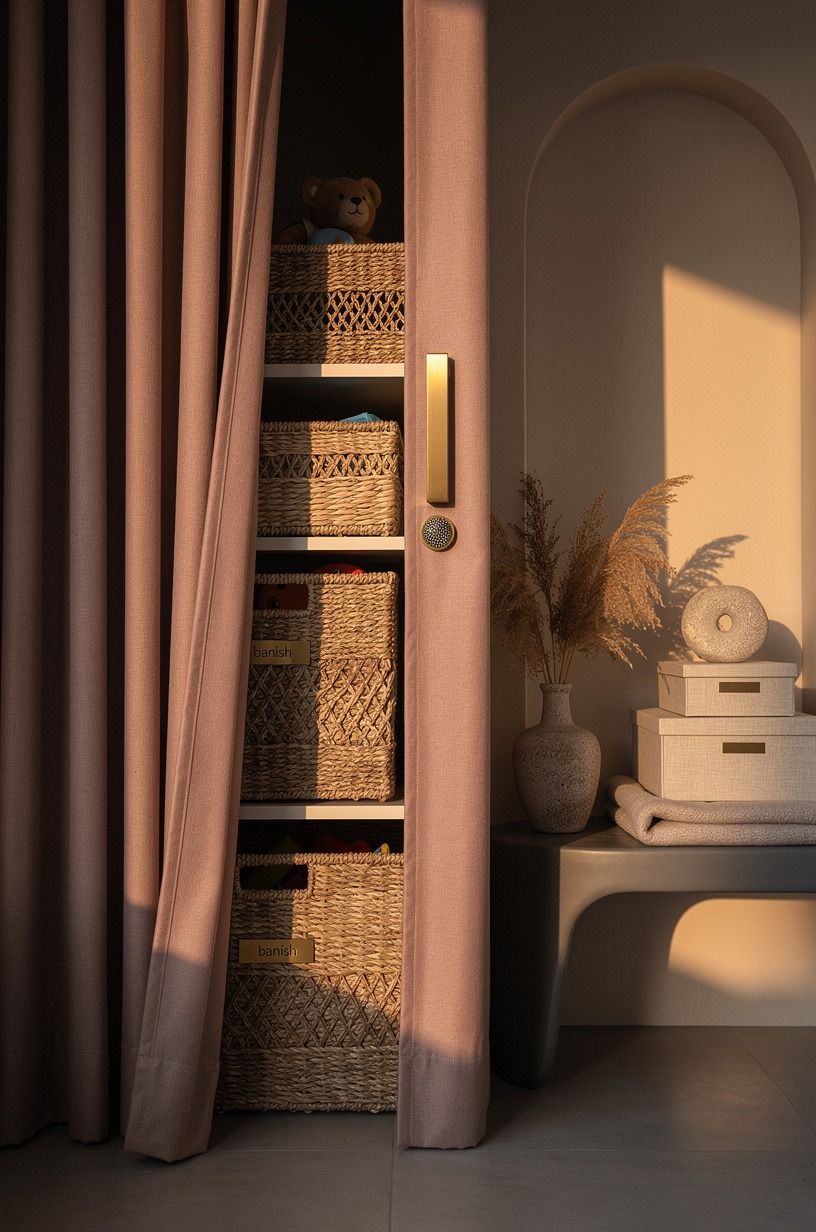
A curtain can hide the least charming storage in the room. Run a tension rod inside an alcove, beneath a console, or across the bottom shelves of a bookcase. You’ll still reach everything quickly, but guests won’t see the jumble.
Choose a dusty-rose curtain panel with a soft texture. It should skim the floor, not puddle there. Charcoal and brass accents keep the little nook warm and inviting, while a few shagreen details make it feel considered.
For a bigger hidden-zone idea, these bookcase hidden entrances show how storage can become part of the architecture. A curtain is the renter-friendly version.
6Will a Rolling Cart Keep Your Supplies From Spreading?
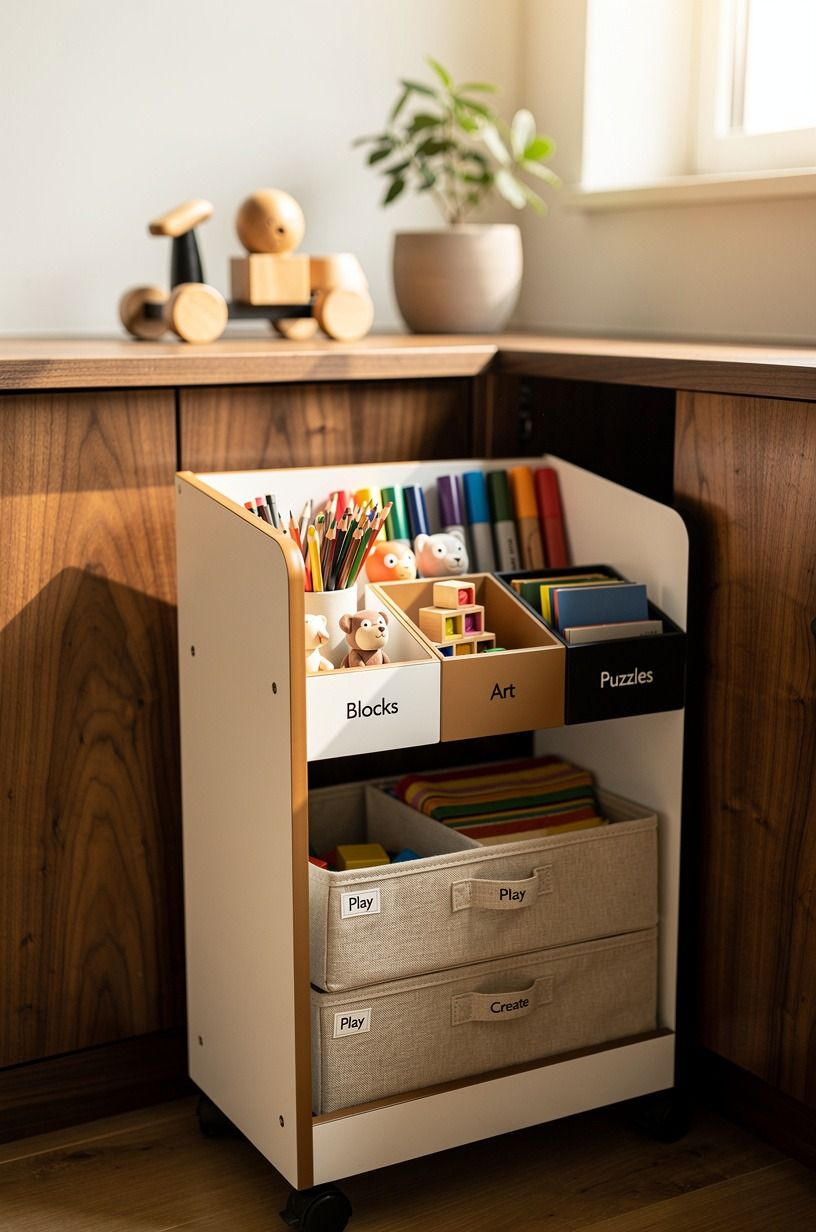
Yes, if you give it one job. A three-tier book-matched walnut rolling cart works best as a portable art station, not a catchall for every loose toy you own. You can roll it to the table, then park it inside a closet when the paint session is over.
Top shelf, crayons and paper. Middle shelf, washable paints and brushes.
Bottom shelf, an absorbent studio rag for the inevitable spill. Simple.
I’d avoid carts loaded with heavy blocks. They’re noisy, awkward for kids to steer, and they’ll dent a wall faster than you’d think.
7Hang a Pocket Rail for Small Pieces
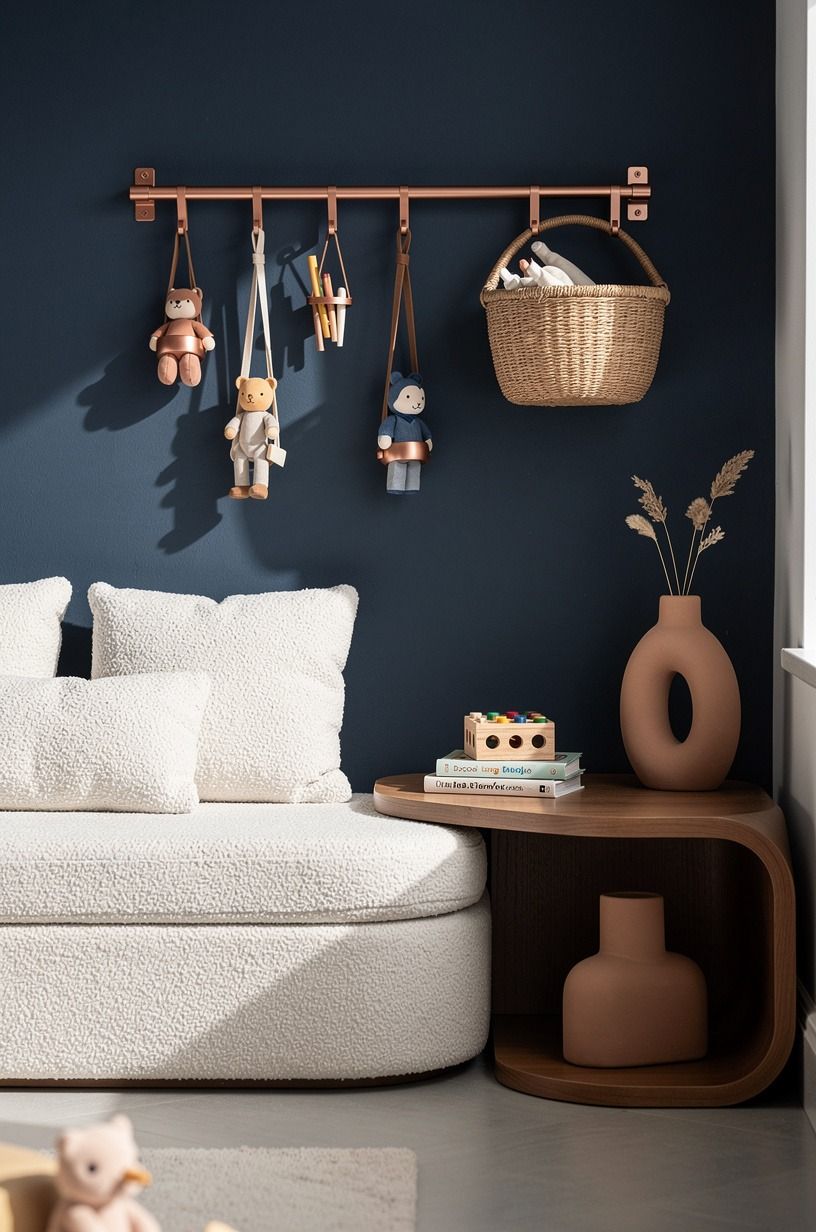
Wall pockets solve the small-item problem without asking you to sort fifty miniature things into separate boxes.
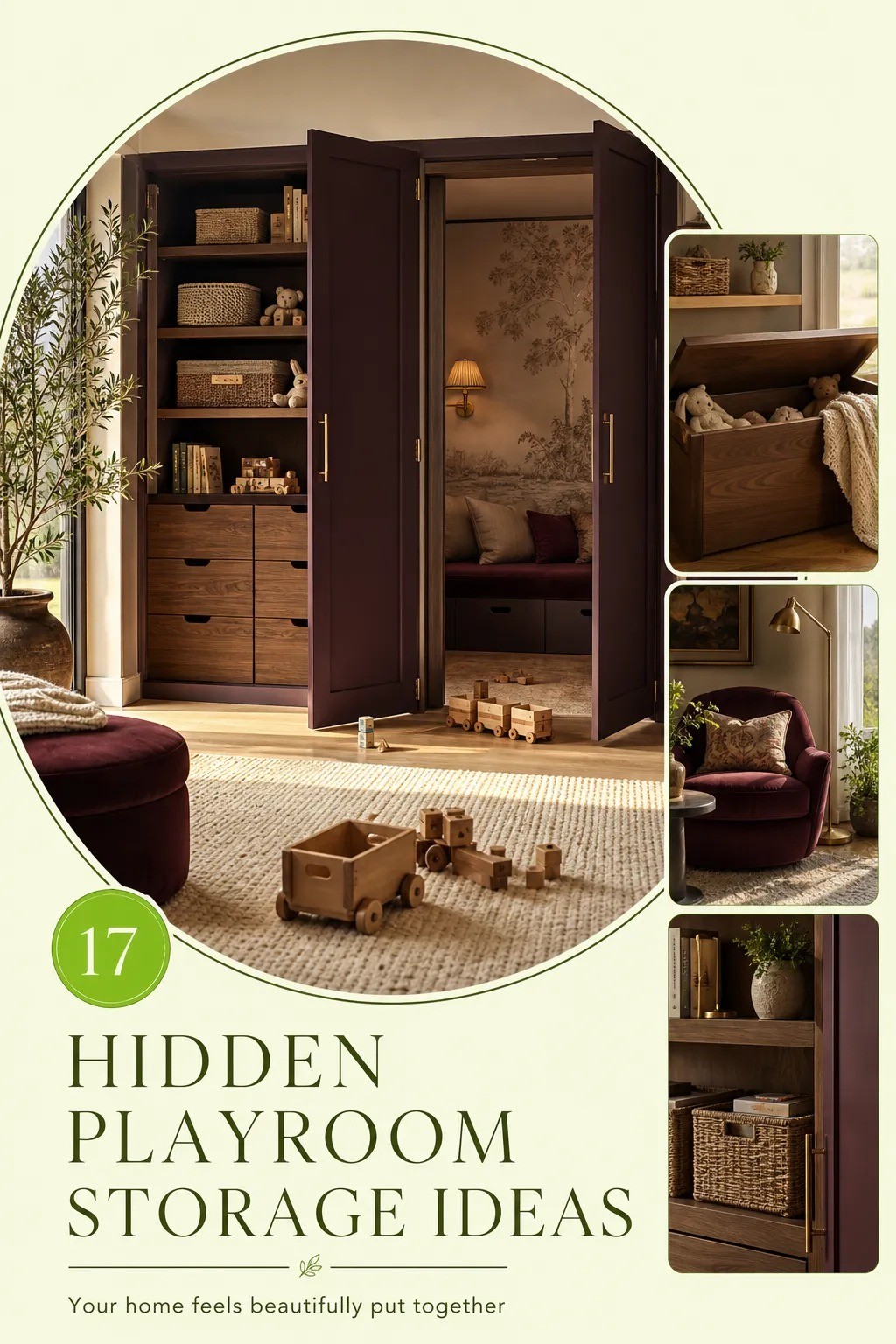
8Mix Open Shelves With a Single Hidden Door
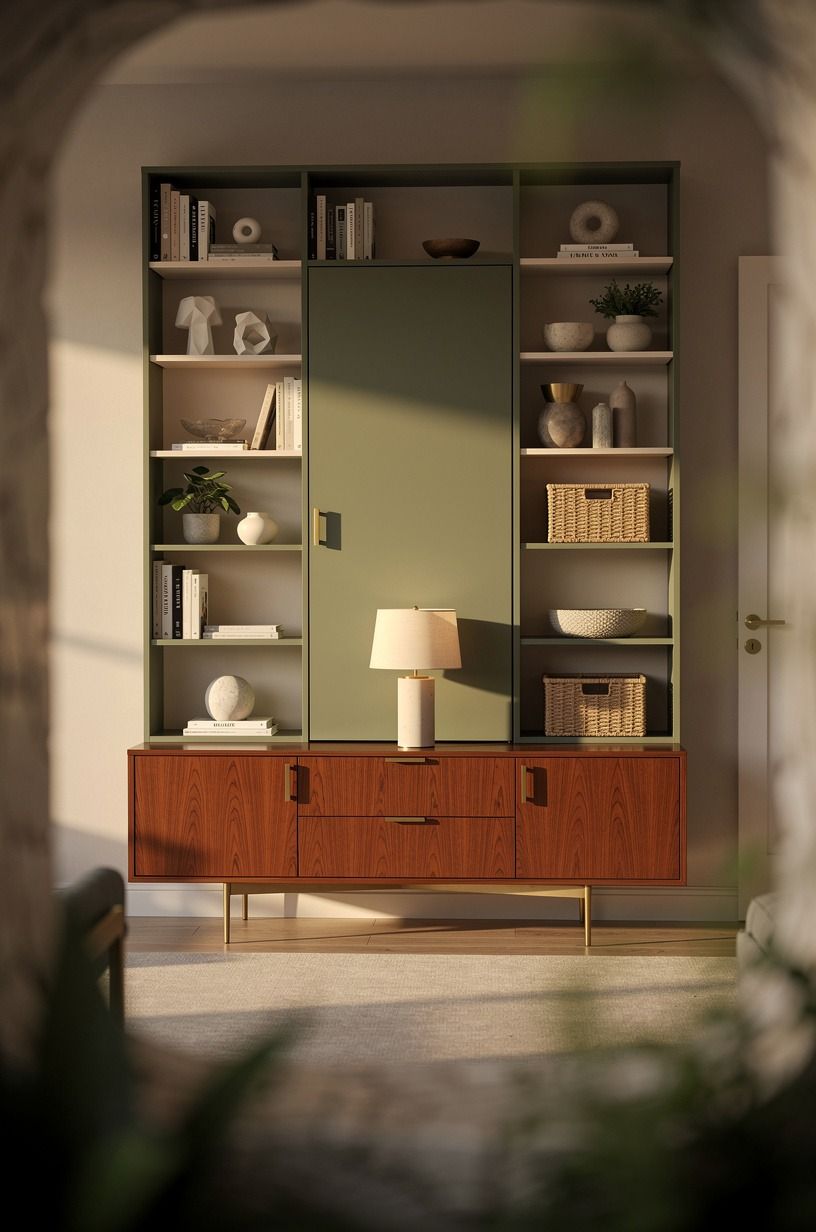
Open shelving should display the things your child loves looking at, not every object they own. Use two or three shelves for books, a wooden toy, and a framed drawing. Then hide the less graceful supplies behind one natural-wood cabinet door below.
This is the Visible Favorite Rule: if it earns a spot in view, it should either be useful every day or make you smile. You can rotate what’s on display without changing the furniture.
For cabinet inspiration beyond the playroom, save these hidden cabinet storage door ideas. Your eye needs a place to rest, especially in a room full of bright packaging.
9Frame Kids Hidden Book Storage Around a Reading Spot
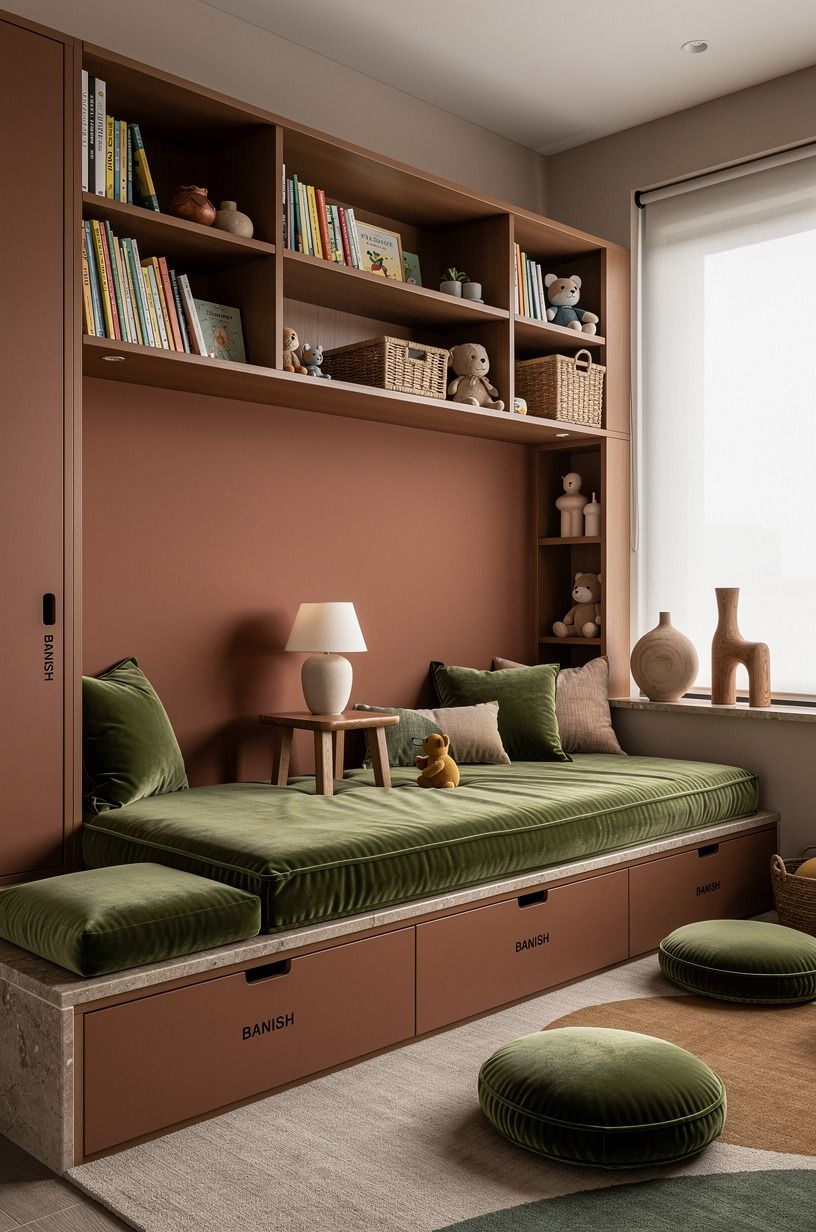
Put books near the place where your child will read them. A narrow IKEA FLISAT book display beside a floor cushion lets covers face forward, so kids can choose without pulling every title down. You’ll get more use from fewer visible books.
Keep overflow titles in a closed ottoman or cabinet, then rotate them every week or two. The room feels fresh, and your child notices books that were invisible on a crowded shelf. A deep-pile mohair velvet floor cushion makes the corner soft without looking overly precious.
I’d skip towering bookcases for toddlers. Low, front-facing storage is safer and gets used more.
10Use a Bench Lid Instead of Loose Seating
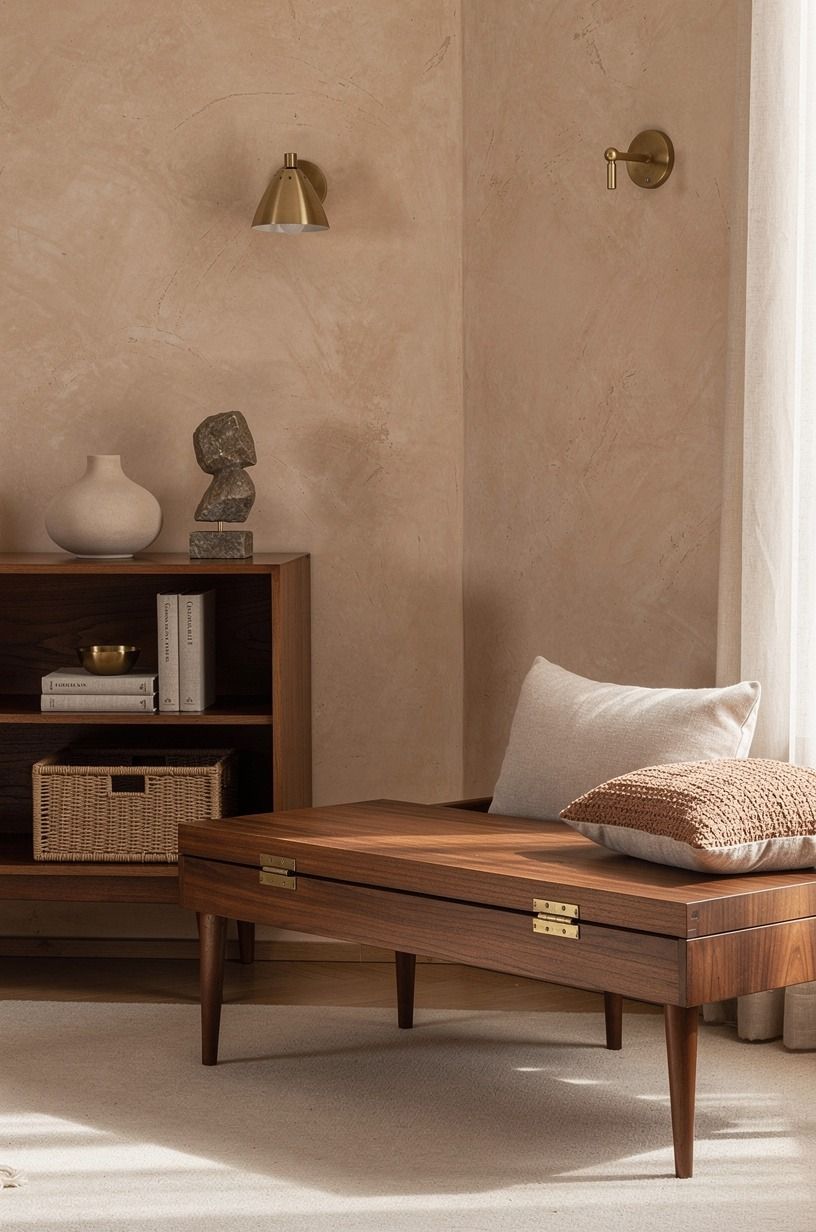
A storage bench earns its footprint twice. You can sit on it for story time, then toss in stuffed animals before someone rings the doorbell. A West Elm mid-century storage bench has the right grown-up shape for a shared family room, while a simple upholstered version feels more comforting.
Choose a lid with child-safe hinges. Your fingers will thank you. Put the bench under a window or along a wall, and top it with one washable cushion instead of a stack of pillows.
For compact-storage thinking in another hardworking room, see these small hidden pantry ideas. The same rule applies: closed storage should be easy to open with one hand.
11Paint the Storage Wall Before You Add More Furniture
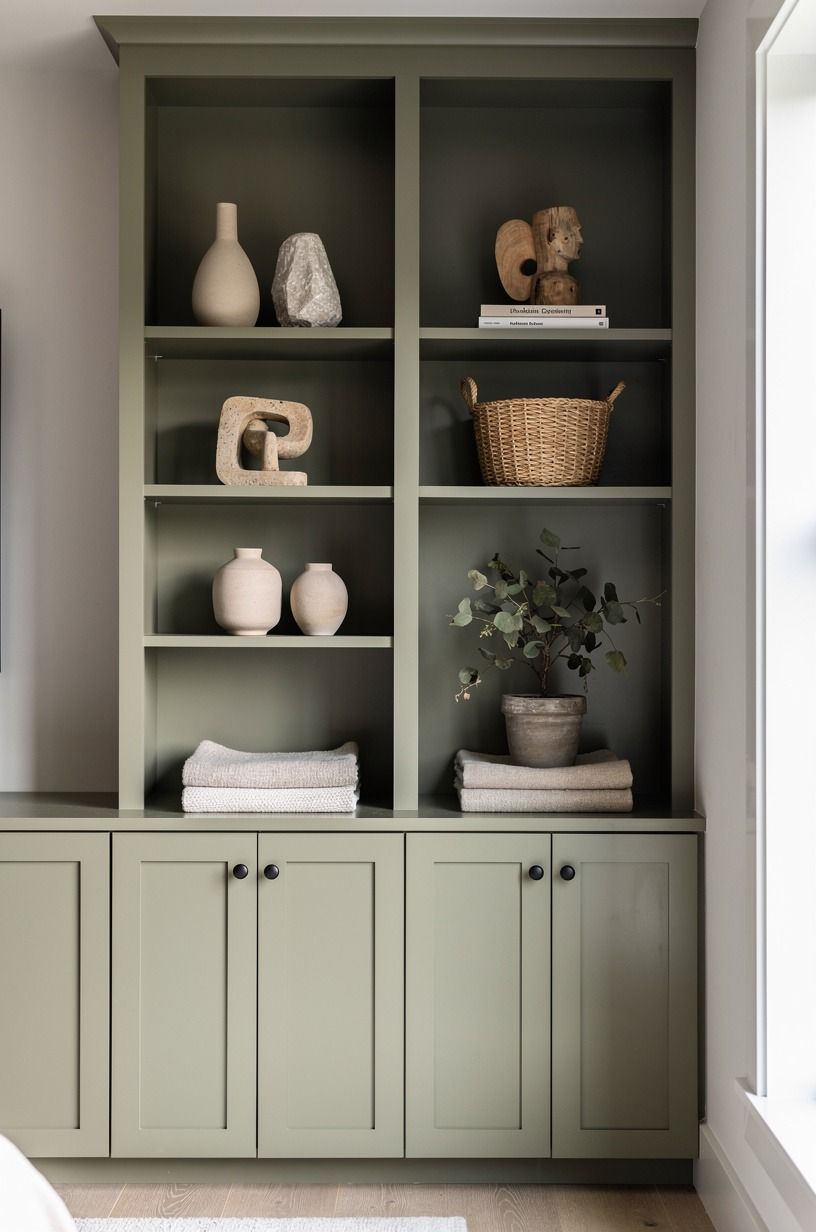
Paint can make a row of mismatched storage feel like one deliberate installation. Use Farrow & Ball Brinjal No. 222 across the wall behind your cabinets, shelves, and hooks. A reclaimed weathered teak cabinet or shelf detail keeps the plum, grey, and rose-gold scheme from feeling too polished.
Paint the cabinet doors the same color if they’re basic laminate and properly primed. The continuous field makes separate pieces look built in. It’s a modest change, but the effect is surprisingly refined.
But don’t choose the deepest plum for a cramped windowless room unless you want the storage wall to feel heavy by midafternoon. A softened grey-plum carries more softness.
12Create the Three-Height Landing Strip
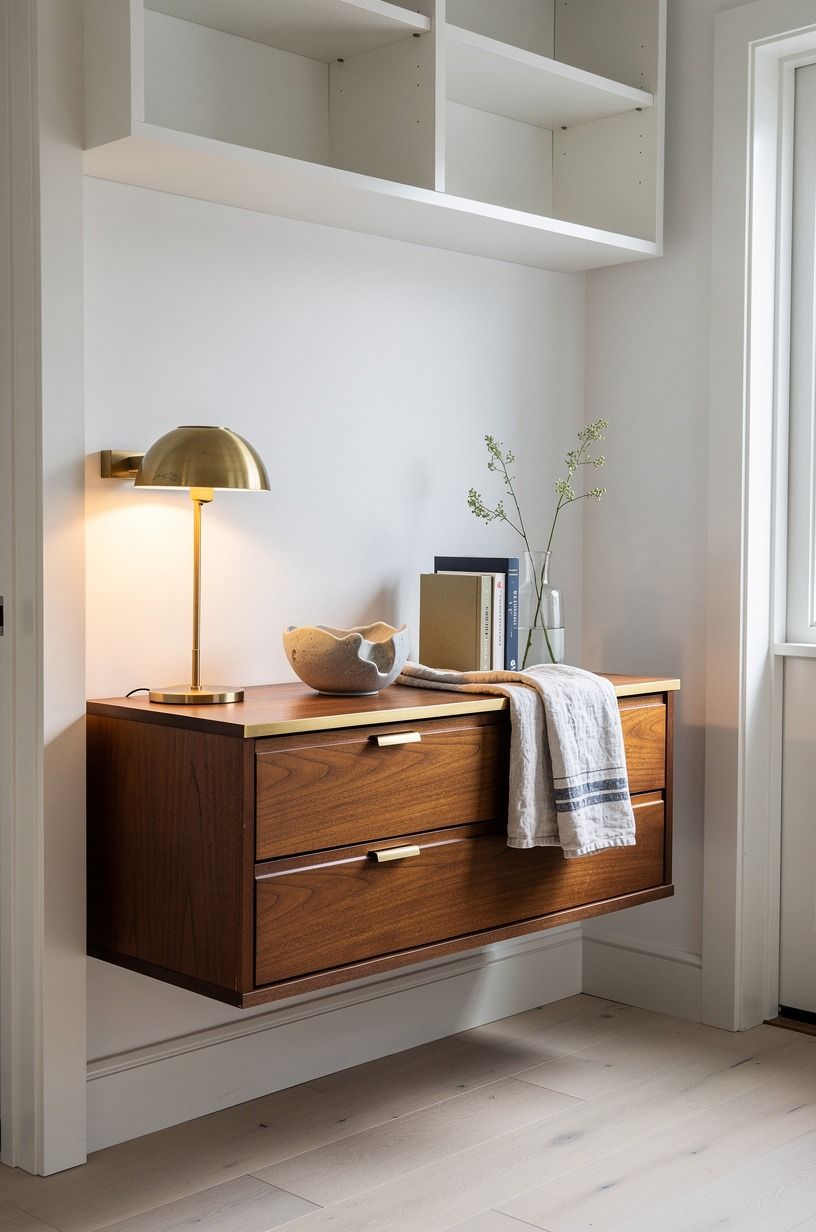
Give your child three places to drop things at three heights: hooks, a basket, and a cabinet. This Three-Height Landing Strip catches backpacks, dress-up clothes, and larger toys before they migrate into the hall. You can build it along one wall with almost no floor space.
High hooks hold adult-managed items. Mid-level hooks hold capes and headphones.
A low walnut storage frame catches shoes, bins, and the loose pieces your child carries in from another room. Add a washed Belgian linen basket for soft layers that need a quick landing spot.
Why fight the natural drop zone? Design for it. A warm wood rail and a few matte hooks feel more welcoming than a row of plastic tubs.
13Choose Bins by How Fast You Need to Reset
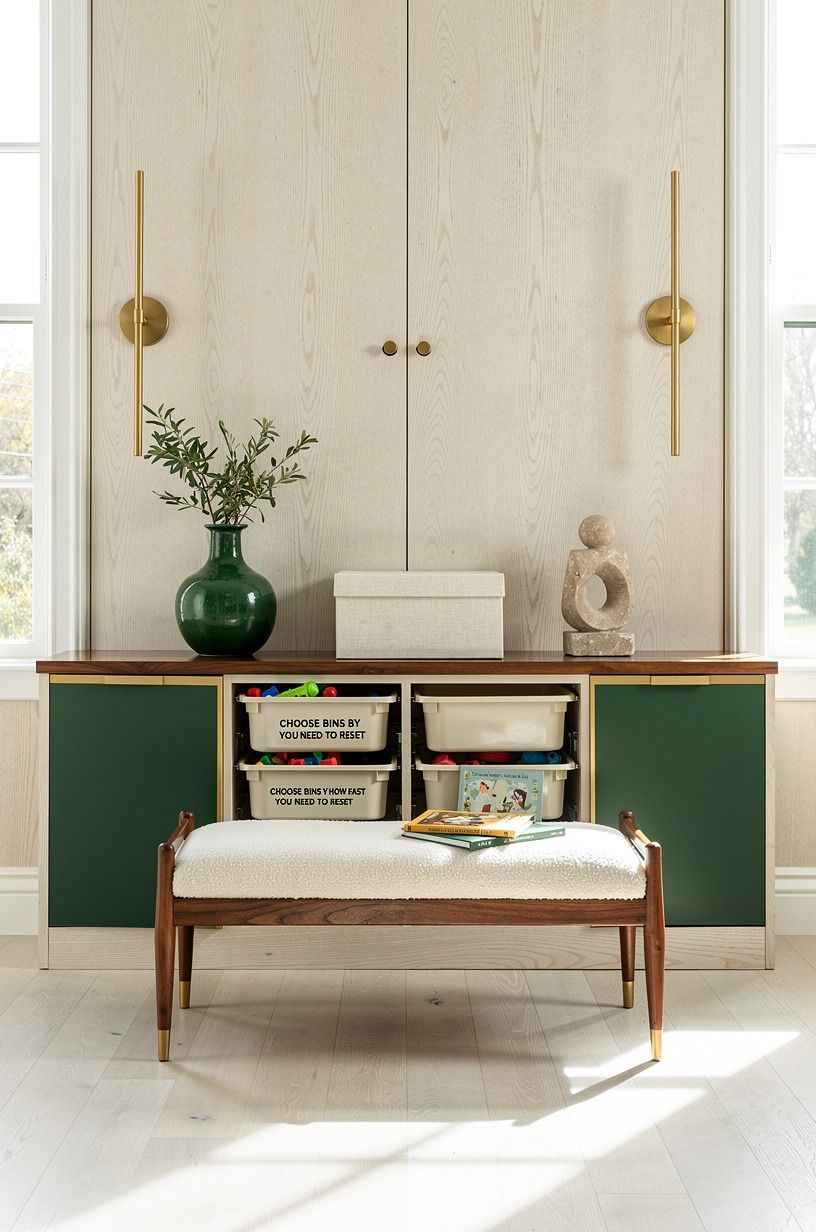
Fast-reset toys need open bins; messy categories need lids.
14Put Wallflower Storage Behind Art Panels
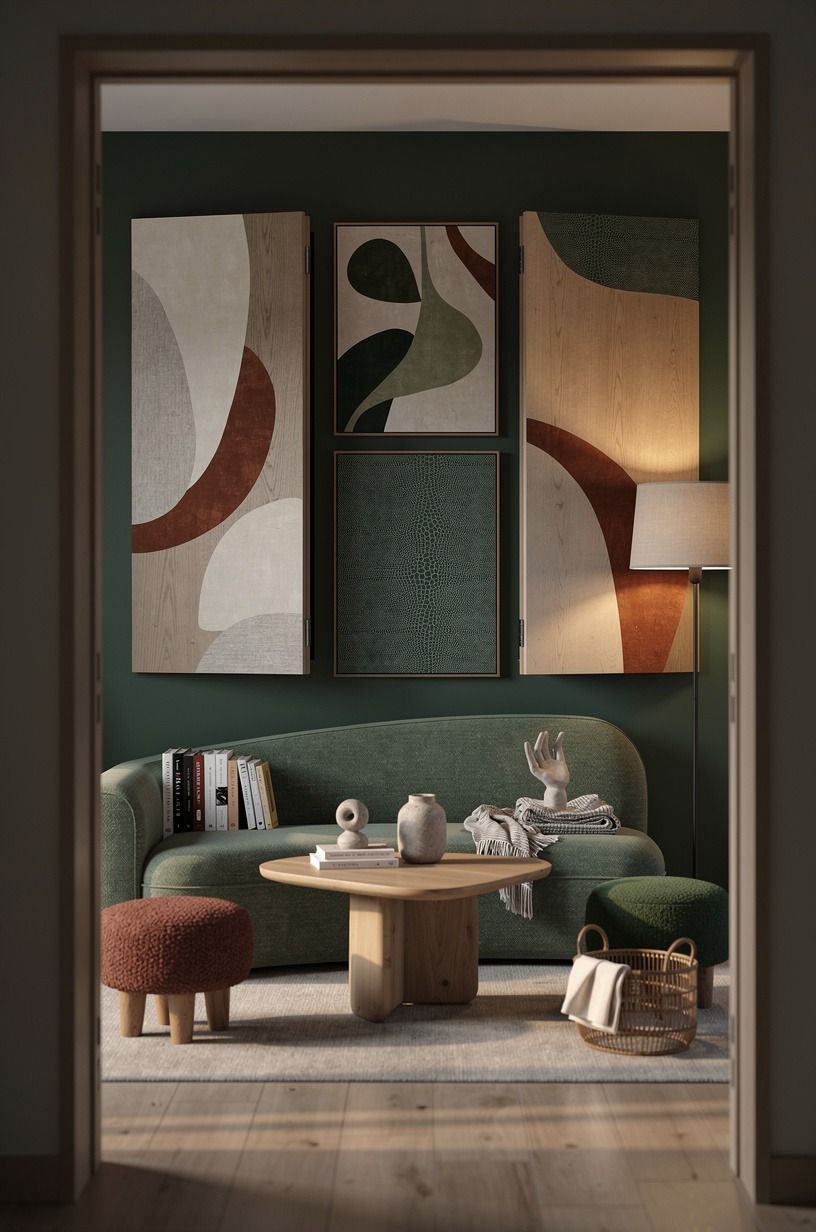
Turn a shallow recess, low cabinet, or awkward wall section into wallflower storage by covering it with oversized art. Hinged panels can hide shelves, while lightweight framed prints can disguise a simple cabinet door. You’ll keep the room playful without making storage the main event.
Use Article oak picture ledges around the panel so the wall looks layered even when closed. A framed child’s painting works better than generic nursery art because it belongs to your family. Charming, a little uneven, and real.
This idea pairs well with these hidden door shelves that double as storage. Keep hardware easy for adults, though, because hidden shouldn’t mean frustrating.
15Store Big Toys at the Room’s Edge
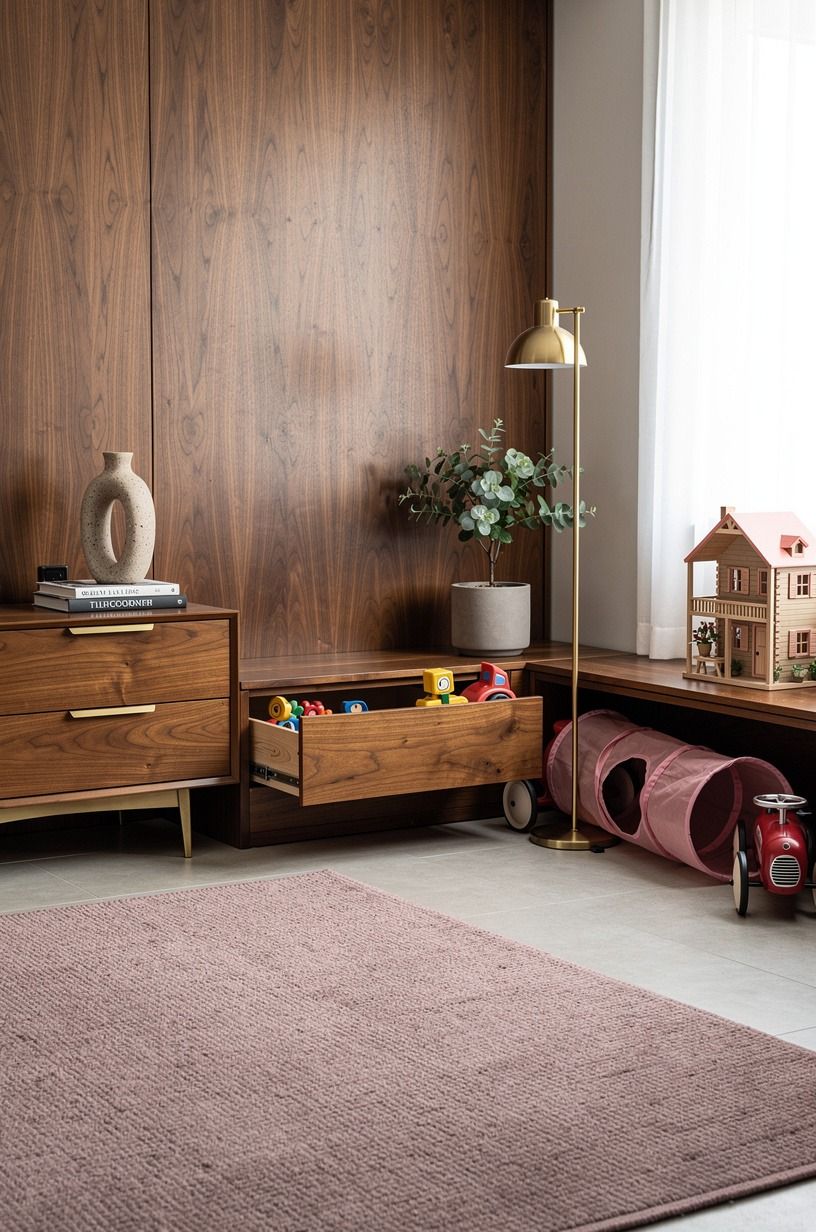
Large toys need boundaries. Park the dollhouse, ride-on toy, or train table along the perimeter, then give it a nearby closed cabinet for its loose accessories. You’ll stop the center of the room from becoming a permanent obstacle course.
A 38×75 in twin bed can also create useful edge storage in a bedroom-playroom combo. Slide shallow drawers beneath it for dress-up clothes or building sets. Keep the play area open in the middle, where movement belongs.
And don’t buy a giant toy chest for everything. It becomes a dark pit, and your child will dump the whole thing just to find one blue car.
16Add a Rotation Shelf for the Toys You’re Tired Of Seeing
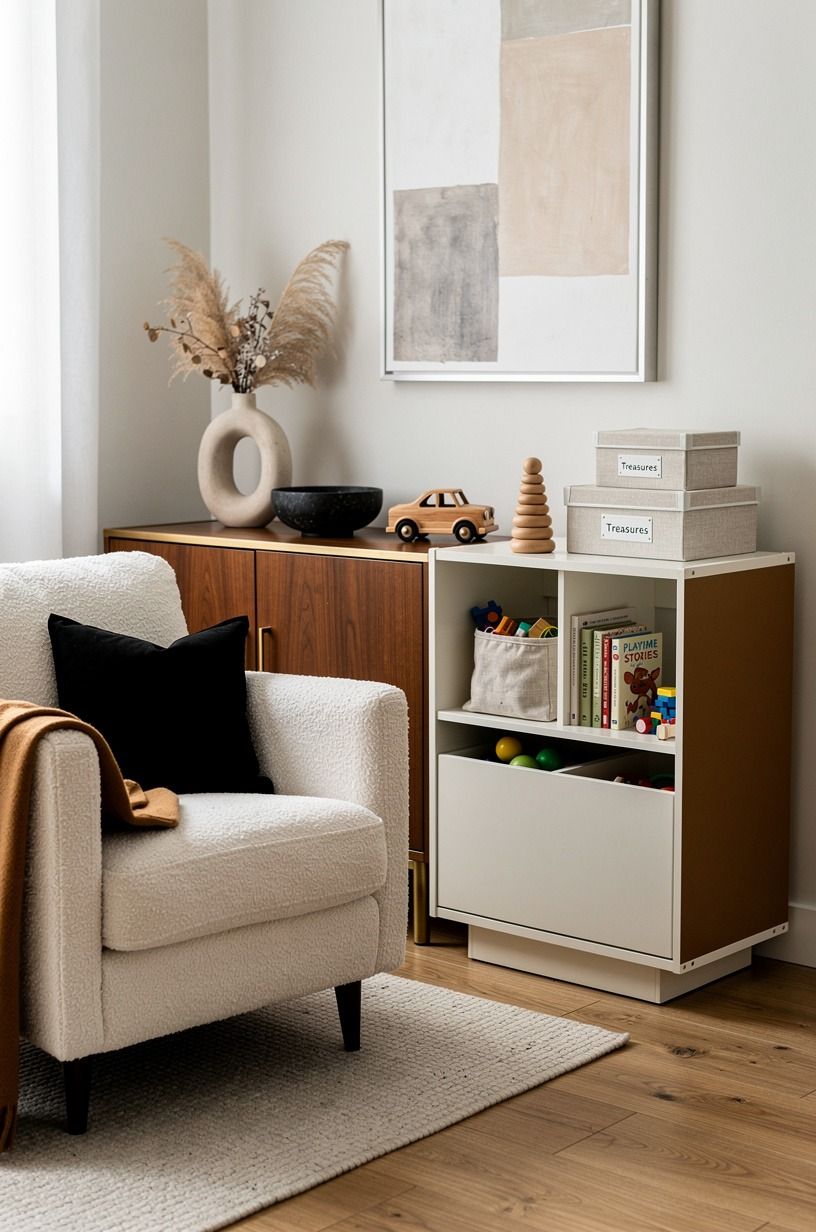
Toy rotation doesn’t mean you must organize like a preschool director. Pick one high shelf or closet bin and move half the toys out of sight for a while.
When you bring them back, your child gets that “new toy” feeling without another purchase. Worth it!
Use a labeled HEMNES white storage box or a plain lidded bin for the rotation group. Keep the categories broad: building, pretend, art, and games. You’ll remember where things go, even on a tired Thursday.
If your closet storage needs a cleaner reset first, this pre-storage cleaning guide is useful for fabric costumes and soft toys.
17Finish With a Five-Minute Closing Routine
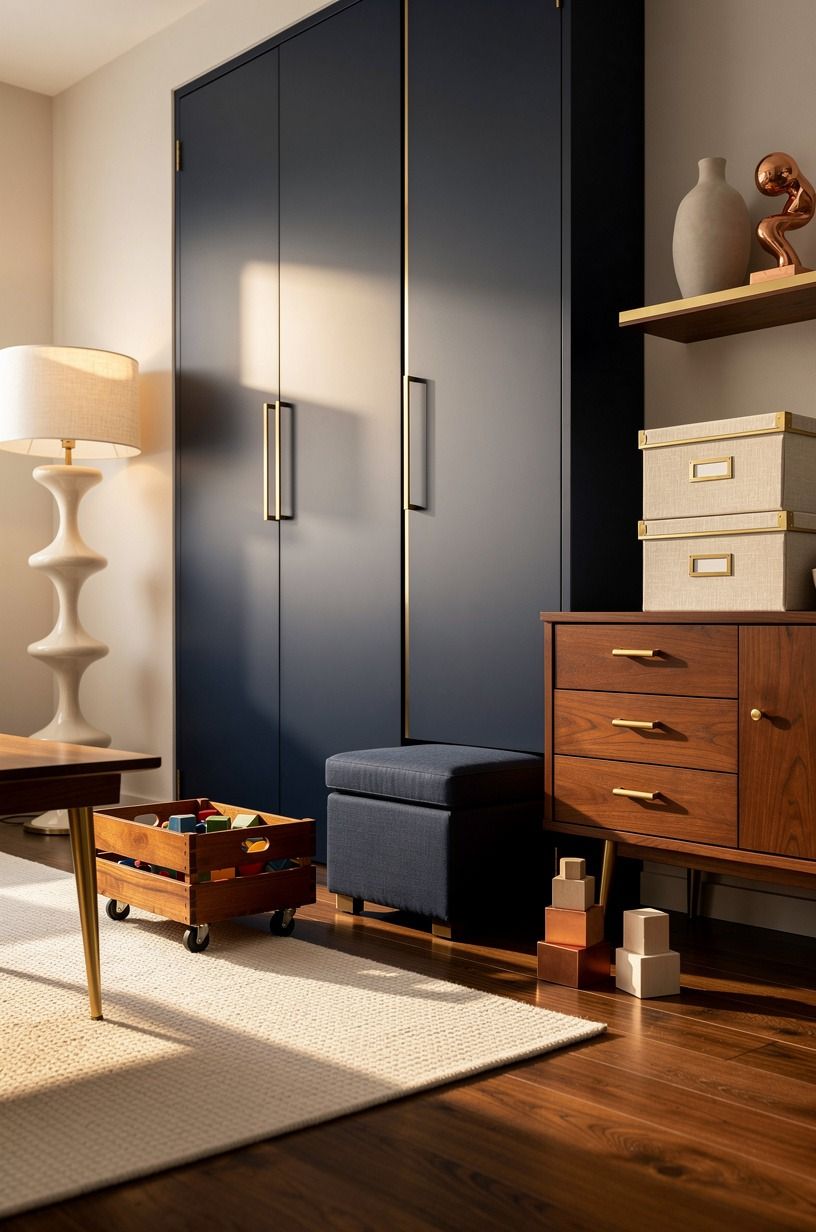
The last step is the one that keeps all the others alive. Set a timer, put on one song, and have everyone return items to their home before the room closes for the night. You’ll need storage that makes this possible, not storage that requires an adult to decode it.
Keep the final routine visible: books face forward, art cart parked, floor basket emptied into the cabinet. One unlacquered brass lamp on. One soft ivory rug exposed.
That’s enough.
But let the room look lived in. A perfectly empty playroom feels strange, and kids shouldn’t feel like they’re borrowing a showroom.
Three minutes of mess is normal. A five-minute reset is better!
What a Hidden Storage Plan Really Costs
You can build a useful hidden-storage system at several levels, and the smart choice depends on what you already own. Start with closed bins and a cabinet before spending on custom work. Your child won’t care whether the doors came from a carpenter or a flat-pack box.
I’d spend the budget tier on one closed storage piece, washable bins, and paint before adding decorative accessories. A $150 to $600 reset can look peaceful if the furniture has a clear job. Custom built-ins are lovely, but they’re not the first answer for most families.
Why I Don’t Chase the Perfect Playroom
I used to think a successful playroom had to look calm all day. That idea lasted until I had children actually playing in one. The polished photos made me buy baskets that were too delicate, bins that were too small, and a lovely little side table that became a launchpad for every toy in the house.
It looked refined for about twenty minutes.
What changed was realizing that a playroom isn’t a display space. It’s a working room, and your storage should admit that.
You need doors that close quickly, surfaces that wipe clean, and a few visible things that make the room feel like your child lives there. I want the crayons available.
I want the books low. I also want to sit down at night without seeing a thousand tiny colored parts blinking at me from every shelf.
That’s why I prefer a mix of open and closed storage. Open shelves invite a child in. Closed cabinets let you have your room back.
Both can be warm and inviting when you use natural wood, soft fabric, and colors that don’t shout over the toys. The balance is the point.
Honestly, I went back and forth on whether hidden storage makes children less independent. It doesn’t, if you keep their daily things within reach and reserve the tucked-away spots for overflow.
Your child learns where things live. You get a calmer room.
Everybody wins.
The Questions Worth Answering First
What is the best hidden playroom storage for a small room?
A low IKEA TROFAST pine frame plus one closed cabinet is the strongest small-room pairing. You get easy child access without covering every wall in shelves. Keep blocks in reachable bins and move backup toys above eye level.
Where can I buy hidden playroom storage pieces on a budget?
Start with IKEA KALLAX birch-effect, Target Brightroom bins, and Wayfair storage benches. You’ll find low-cost flexible pieces that can move with your family. Facebook Marketplace and thrift stores are especially good for solid wood cabinets.
How much does a hidden playroom storage makeover cost?
A basic reset usually costs about $150 to $600 when you reuse furniture, add bins, and paint one wall. The lowest-cost improvement is sorting what you own before buying storage. Custom built-ins can push the project much higher.
Can I create hidden playroom storage on a budget?
Yes, and you can start with curtains, labeled baskets, and a repurposed cabinet. You’ll get quick visual relief with a tension rod, fabric panel, and bins you already own. Keep only daily toys in the room.
Is hidden playroom storage worth it in a small space?
Yes, because small rooms benefit most from clear floor area and fewer visual distractions. A closed-storage wall keeps the center available for play. Put tall storage along one side, then keep the rug zone open.
Is hidden playroom storage a good idea for a rental?
Yes, especially with removable choices like tension rods, freestanding cabinets, and peel-and-stick labels. You’ll protect your walls while getting a calmer daily reset. Avoid permanent built-ins and use furniture that can leave with you.
For more playful ways to hide the whole zone, explore these hidden playroom ideas kids will be obsessed with.
Where I’d Start First
If I had to pick one step, I’d start with one closed cabinet. You can’t maintain a calm room when every noisy toy is permanently on display.
Hide the overflow first. Pin this plan for later, then give your floor back to the kids.