
Hidden playroom ideas work best when they answer one question fast: can you give kids a room they want to use without handing the whole house over to plastic clutter? Yes, and the typical spend runs from $150 to $600 if you keep the shell you have. I used to think hiding the toys meant buying prettier bins. It did not. The part that changed everything was giving the room a reveal.
Once you make the entrance feel intentional, kids treat the space differently and you get your living room back. That is the win. These are the ideas I’d steal first if you want a hidden kids playroom that feels warm, useful, and easy to live with.
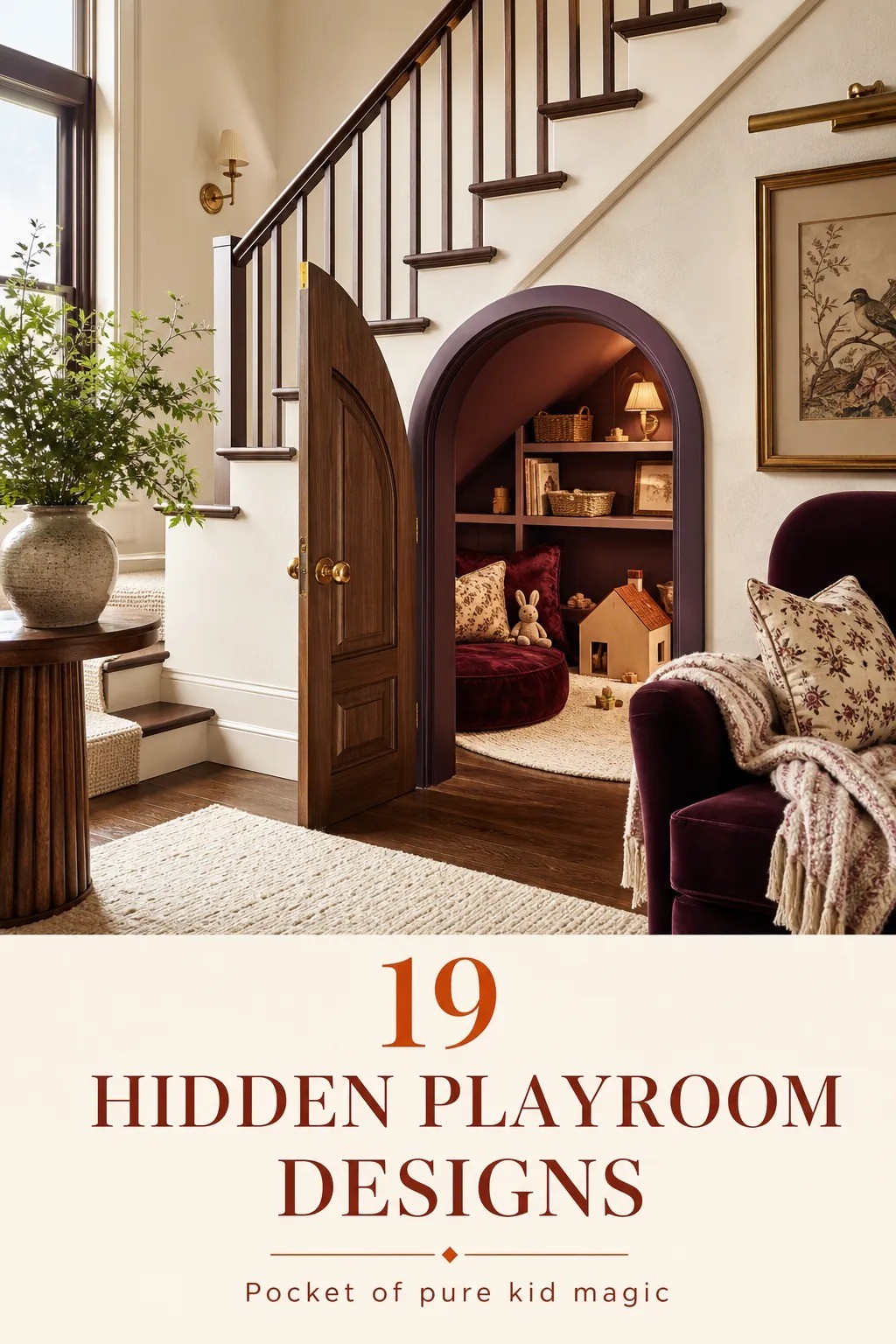
- Build a detail door under the stairs
- Tuck a play nook behind paneled walls
- Hide toy cubbies inside a faux closet
- Slide open a bookcase to reveal play space
- Paint a mural behind pocket doors
- Frame a crawlspace with velvet curtains
- Convert a landing cabinet into a hideout
- Camouflage storage benches along the wall
- Install a mini door beside built-ins
- Nest a reading cave under the window
- Disguise a craft table inside cabinetry
- Wrap the entrance in wallpapered millwork
- Use a loft ladder to reach play space
- Create a tented corner behind drapes
- Carve a hideaway into unused eaves
- Mask play shelves with woven panels
- Build a stage behind folding screens
- Turn a wardrobe into a tiny clubhouse
- Light the hidden room with sconces
1Build a detail door under the stairs
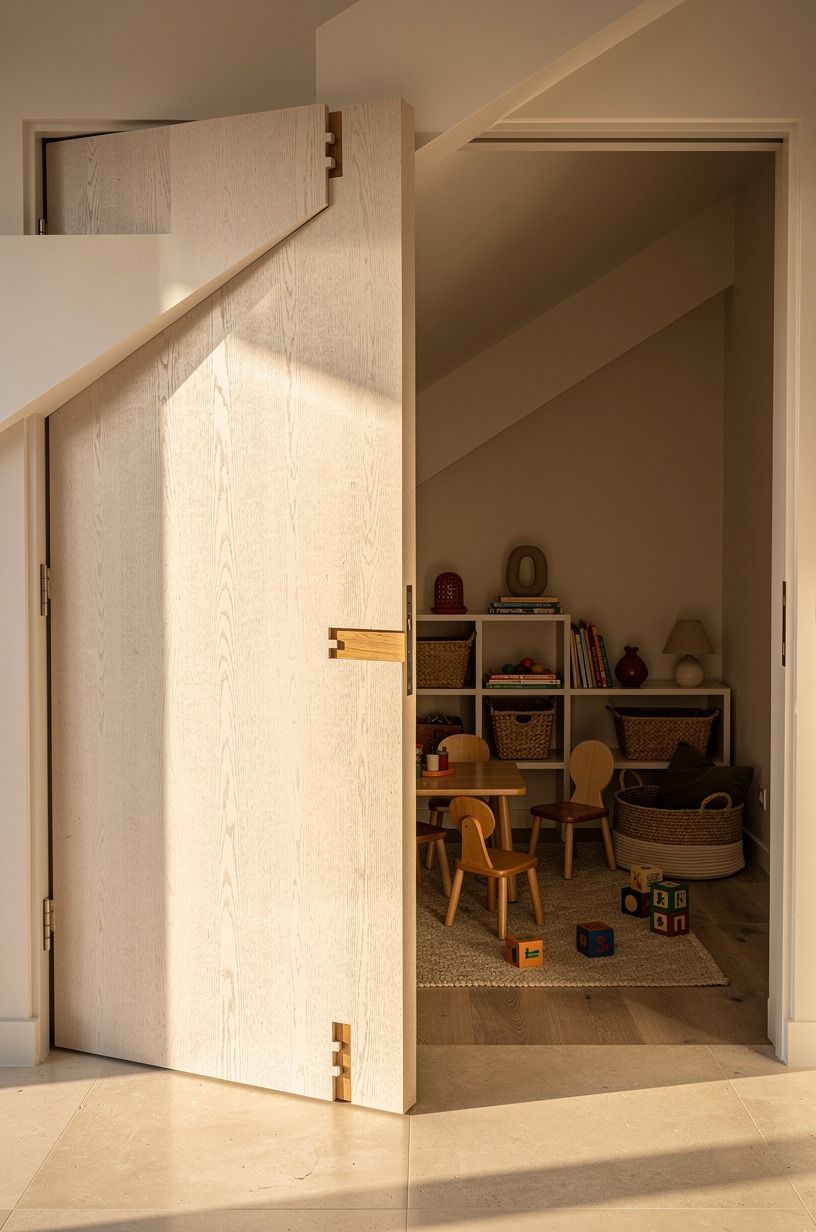
If you have dead space under the stairs, start there. A little diagonal room already feels tucked away, so you don’t need much architecture to make it land.
I like a painted door in Benjamin Moore Wickham Gray HC-171 because it blends into trim but still looks calm when the panel is open. Tiny chairs, low book ledges, and baskets that slide under the slope keep the room from feeling like a storage dump.
You want the reveal to feel balanced, not fussy. Center two baskets, keep the play table light, and leave one clean walking lane so your kid can get in without bumping everything. If you are planning more hidden corners, this tucked-away playroom roundup helps you compare what feels worth building.
I made the mistake of crowding the door swing once, and it jammed every other day. Kids notice that fast!
2Tuck a play nook behind paneled walls
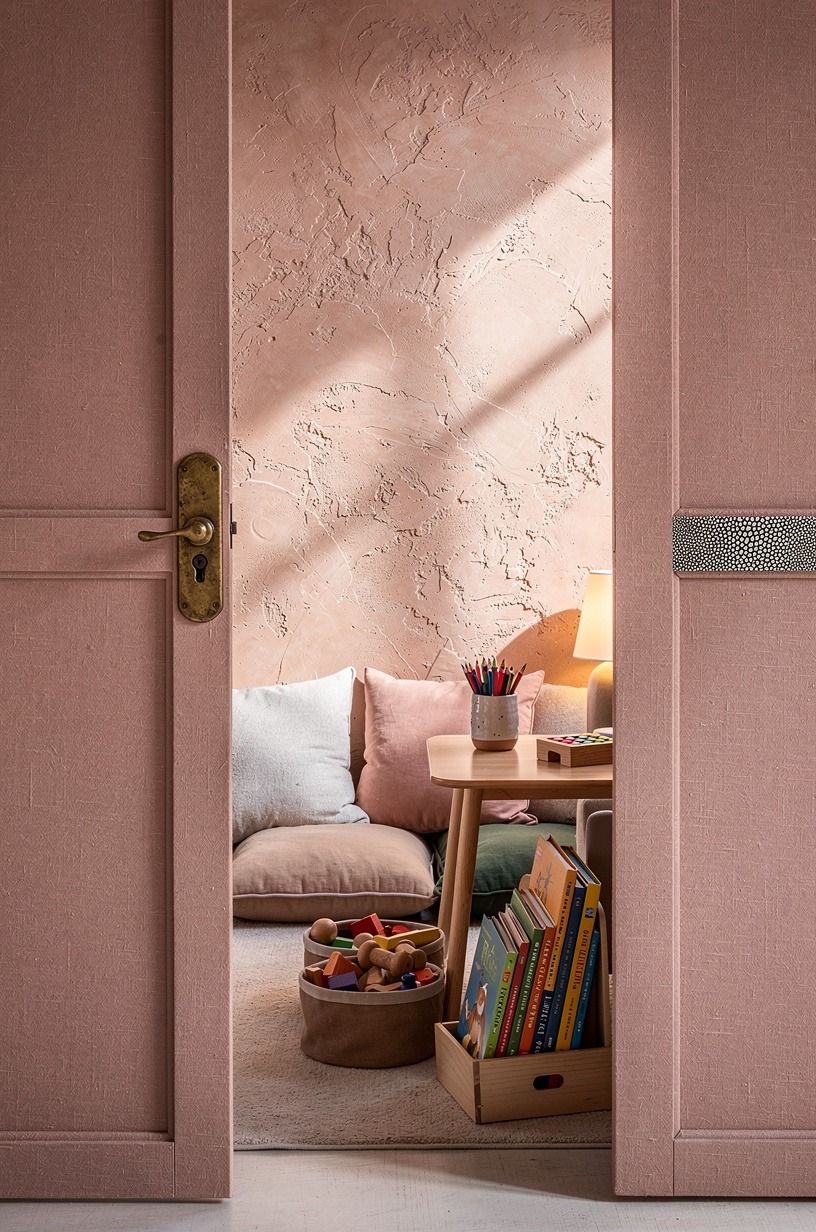
Paneled walls do the camouflage for you, especially when the seam lines line up and the handle stays quiet. I would not overdecorate this one.
Let the reveal be the moment, then soften the inside with floor cushions in oat boucle and a child-size table that doesn’t block the books. A hidden kids playroom feels calmer when the first thing your child sees is a seat, not a pile.
Keep the palette close to the wall color so the opening feels intentional. Sherwin-Williams Open Air SW 6491 on the outer panel and warm cream inside is a strong pair if your hall gets flat light. And if you’re trying to keep the floor open, use bins no taller than 12 inches so little hands can pull them out without toppling the stack.
You want easy access. You also want easy reset.
3Hide toy cubbies inside a faux closet
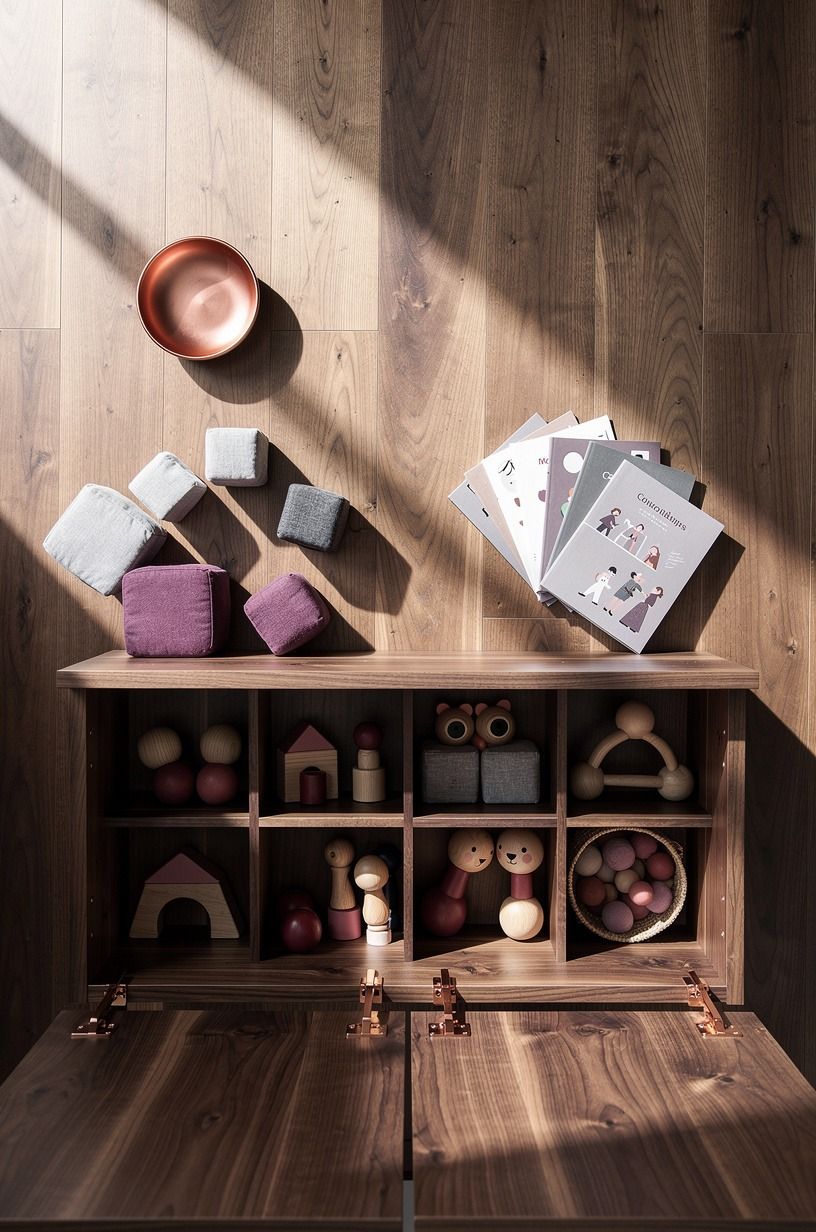
A faux closet is great when you need the room to read grown-up first and kid-friendly second. Behind walnut-look doors, shallow cubbies keep wooden toys, plush blocks, and picture books from spilling visually into the rest of the house. I like using IKEA KALLAX birch-effect inserts here because the proportions feel familiar and the price doesn’t get silly fast.
The smart move is sorting by use, not by toy category. Put books on the lower shelf, puzzle trays in the middle, and softer toys up top so your child can reach what they use every day.
Open shelves at child height should land around 36 to 48 inches, and that’s one number worth respecting. Need another hidden zone idea?
This playroom inspiration page shows why concealed storage keeps working.
4Slide open a bookcase to reveal play space
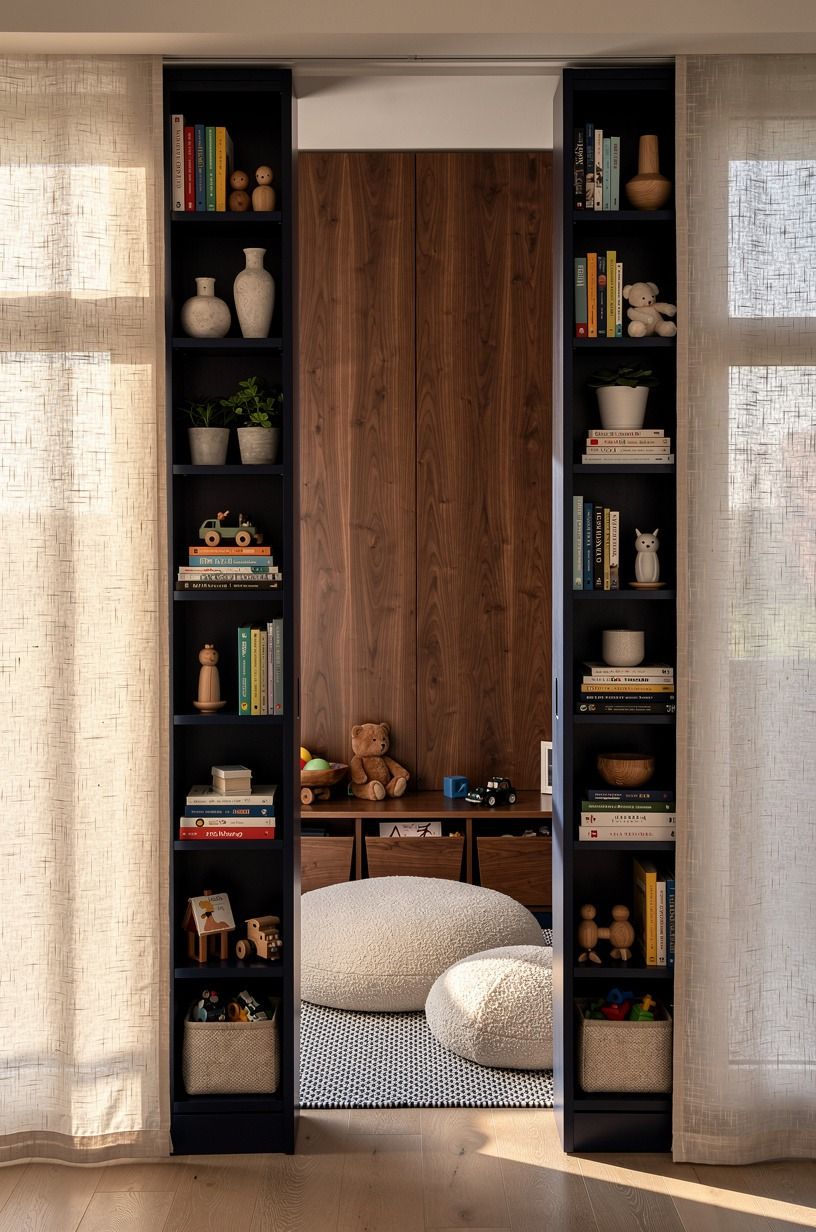
This is the dramatic one, and honestly, kids never get tired of it.
5Paint a mural behind pocket doors
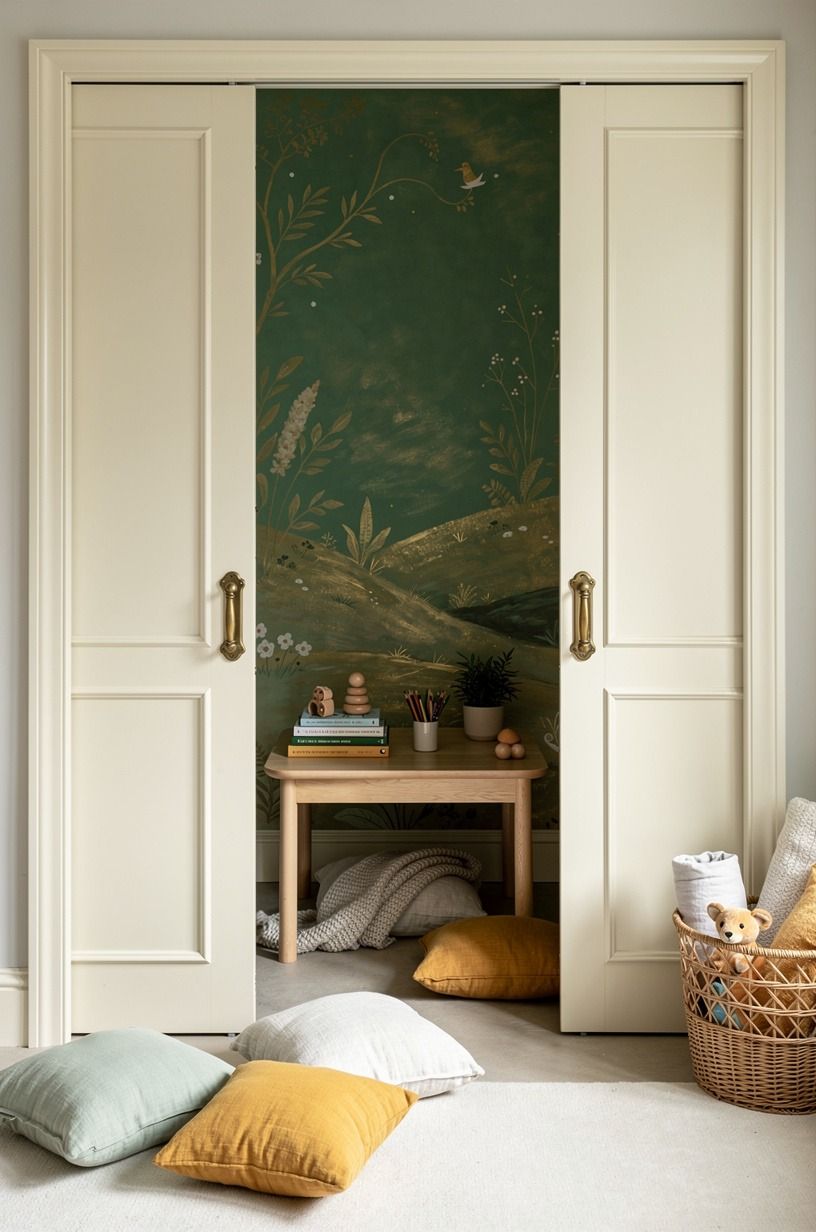
Pocket doors solve a lot when you do not have swing clearance, and they give you a big clean frame for color. Inside, a storybook mural in emerald and soft gold feels playful without tipping into theme-park territory. I think this works best when the doors stay simple in warm cream lacquer, then the color surprise happens only once you slide them back.
You do not need the mural to cover every wall. One hero wall is enough if the floor cushions and book stacks repeat the palette.
I learned this after overpainting a tiny room that felt busy before toys even arrived. For more hidden-room ideas that keep the entrance simple, I keep coming back to this small concealed play space guide.
A little restraint helps the fun read louder.
6Frame a crawlspace with velvet curtains
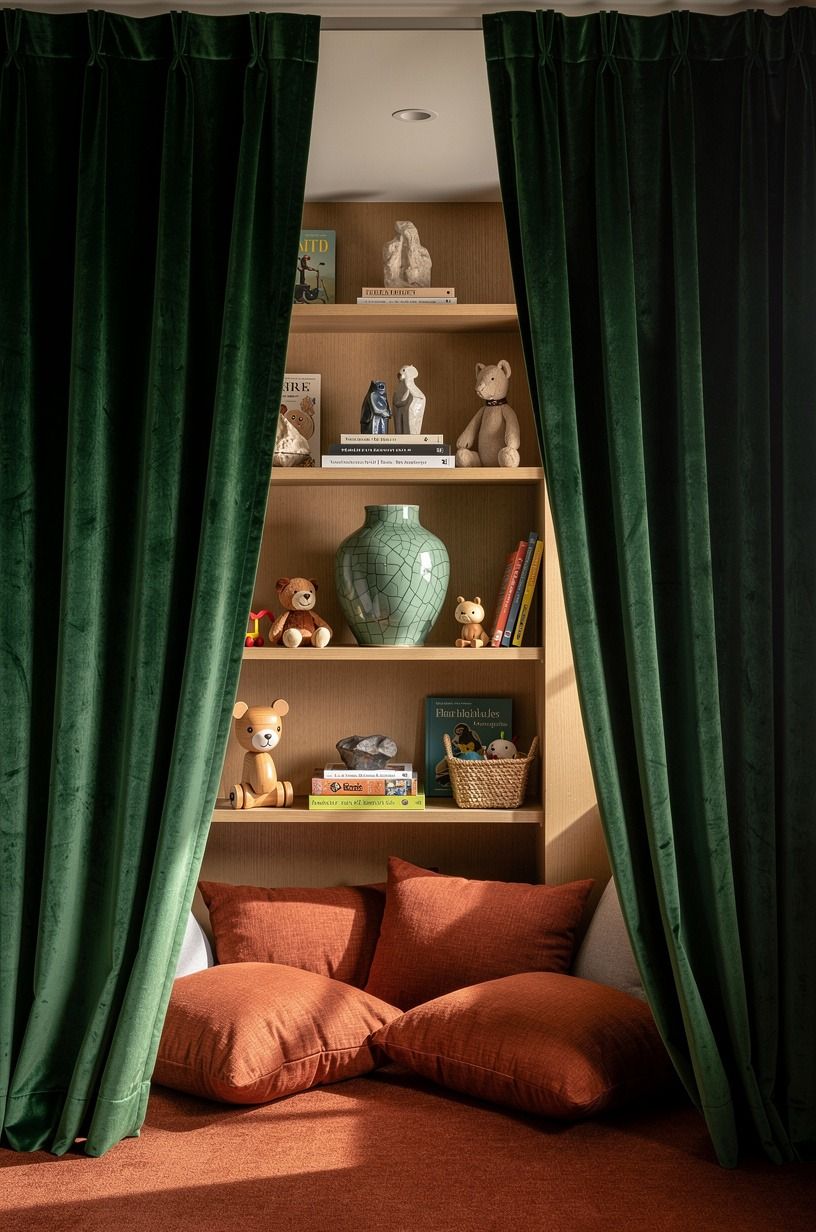
A crawlspace turns charming the minute you stop pretending it’s a normal room. Low ceilings want softness, not millwork. Forest green curtains in mohair velvet 18 oz weight make the opening feel lush and forgiving, and rust floor pillows warm up the hideout without stealing headroom.
If the inside is tiny, fabric is usually the better call than doors because it gives when knees and elbows hit it.
I would mount the rod high and wide, then let the curtains puddle just a bit so the room feels finished. Natural oak flooring keeps the corner from reading cave-like, especially if you add one picture ledge and a small reading lamp.
But keep the toy edit tight. Two baskets, one stack of books, one soft seat.
Anything more and your child won’t stay long because the space starts fighting them.
7Convert a landing cabinet into a hideout
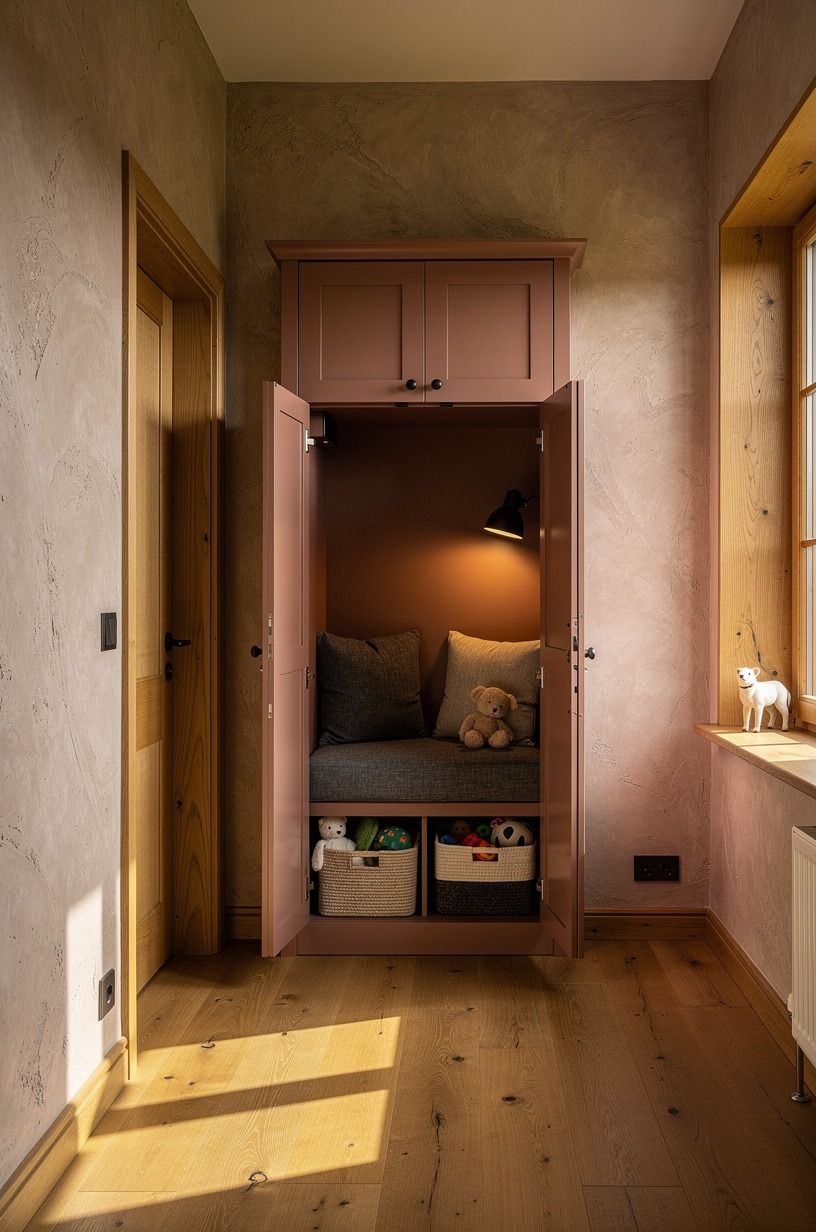
A landing cabinet can become the kind of cool playroom kids remember because it feels a little unexpected halfway up the stairs.
8Camouflage storage benches along the wall
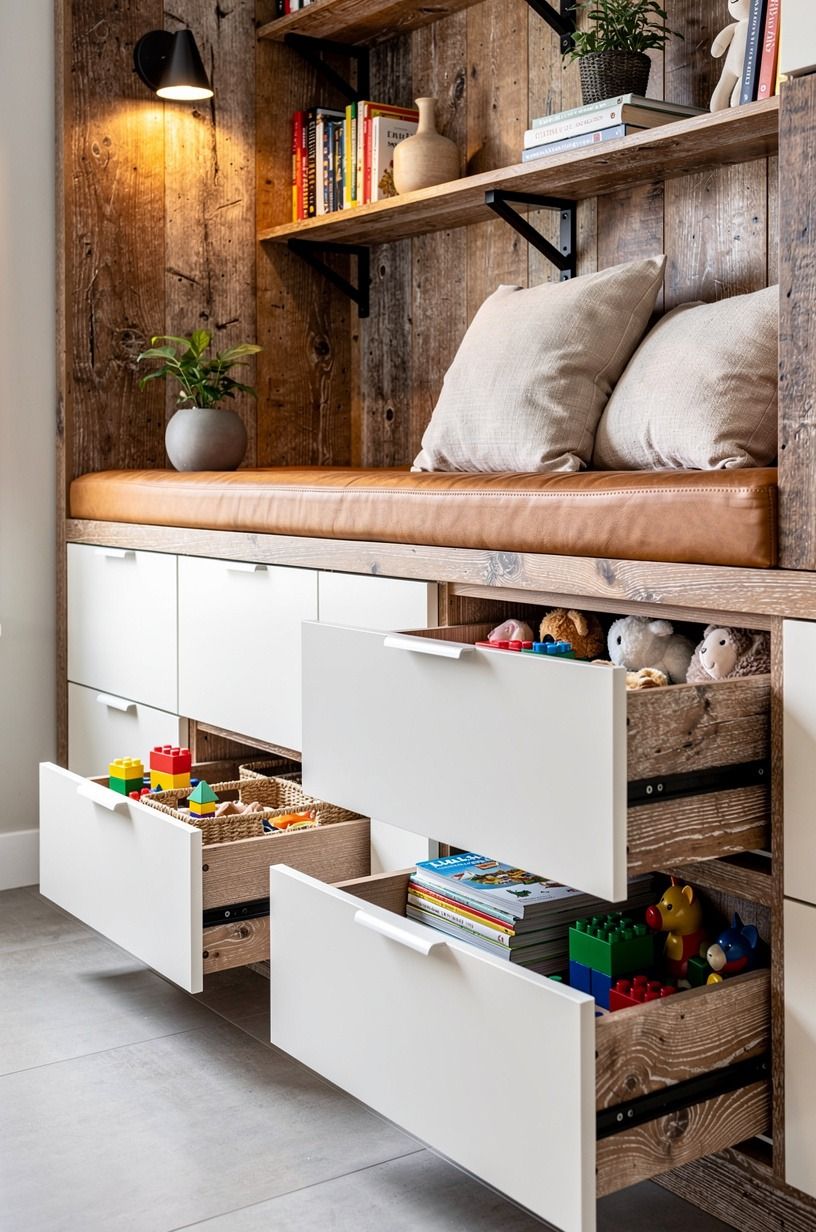
Wall benches are the quiet workhorse in a hidden playroom because they store the mess and give you a place to sit while your kid shows you every single drawing. Warm white fronts keep the line calm, camel cushions add comfort, and black pulls stop it from looking too sugary. This is also one of the easier ideas to phase in over a weekend.
I prefer bench fronts that open in sections instead of one long lid. Your back will thank you, and your kid can reach one toy drawer without detonating the whole run. A 5×7 ft rug helps define the zone in front of the benches, and that’s usually enough floor for blocks, stuffed animals, and a quick puzzle session.
For more concealed storage ideas, this hidden play corner guide is worth saving.
9Install a mini door beside built-ins
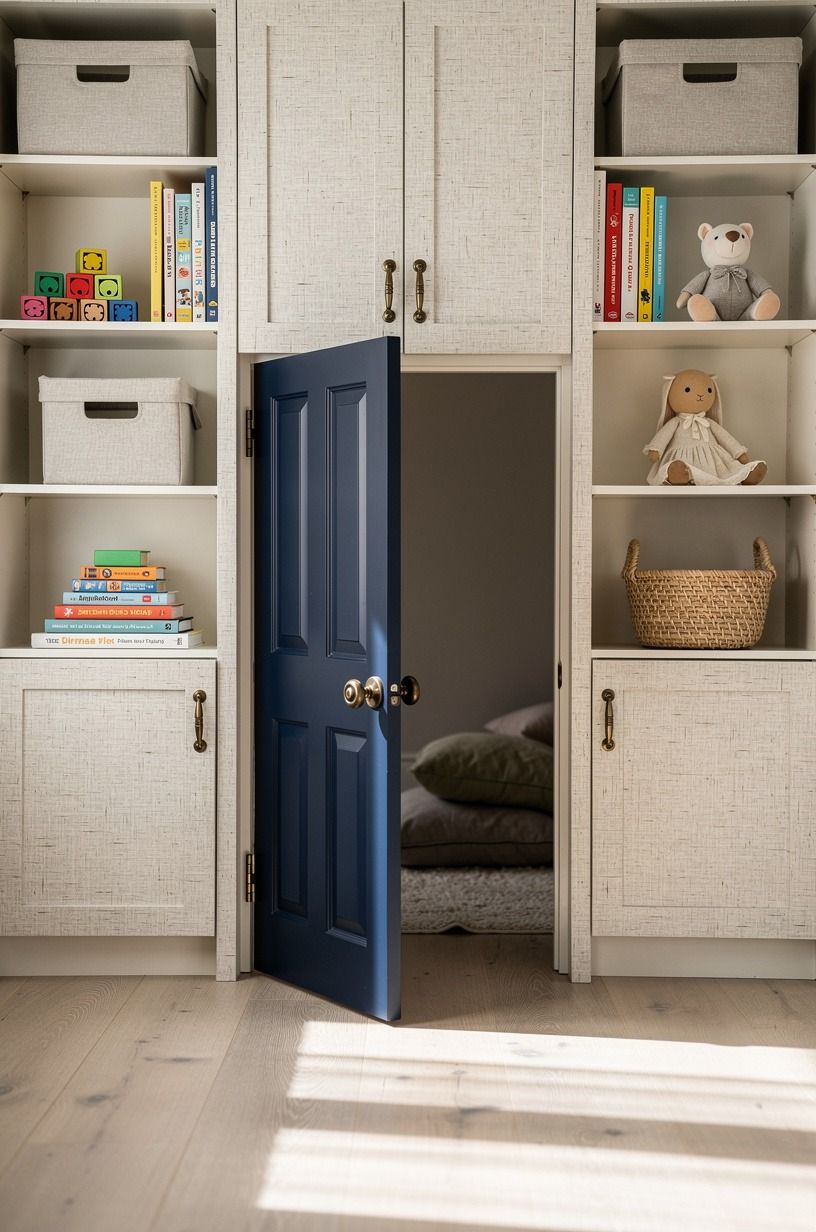
A child-size door beside tall built-ins does something adults secretly love too: it makes the whole room feel storied.
10Nest a reading cave under the window
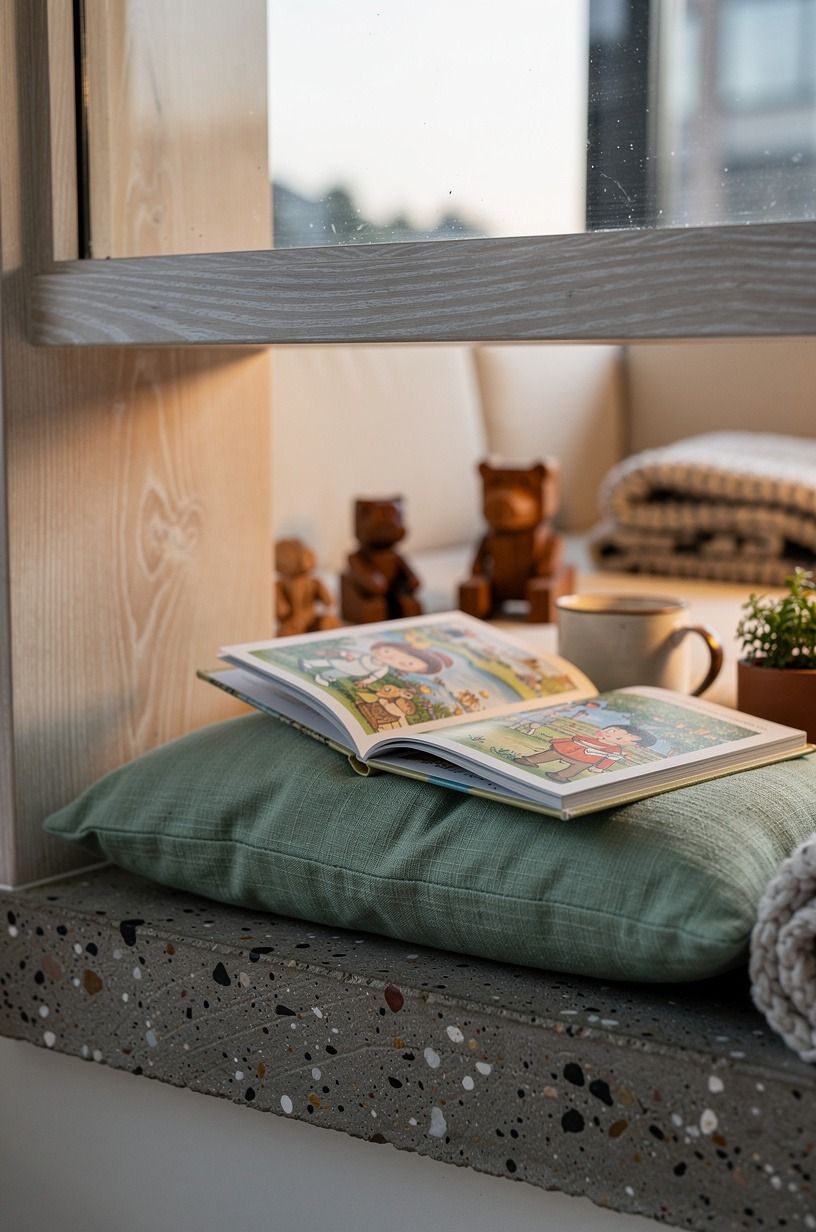
Under-window nooks work because the light is already right there. Add a sage cushion, trim the opening in cerused white oak, and suddenly the room has a place kids instinctively understand.
Reading happens faster when the seat feels low, soft, and claimed. I wouldn’t fill this spot with bins first.
Let it be for books and one or two tiny toys only.
The trim detail matters more than people think. Cerused white oak trim gives the edge a finished look without feeling heavy, and warm cream upholstery keeps the nook bright even on gray days.
If the cushion runs close to a twin bed, remember the mattress footprint is 38×75 in so you don’t crowd the whole wall. Want another tucked-away reading setup?
This hidden reading nook inspiration is full of useful layouts.
11Disguise a craft table inside cabinetry
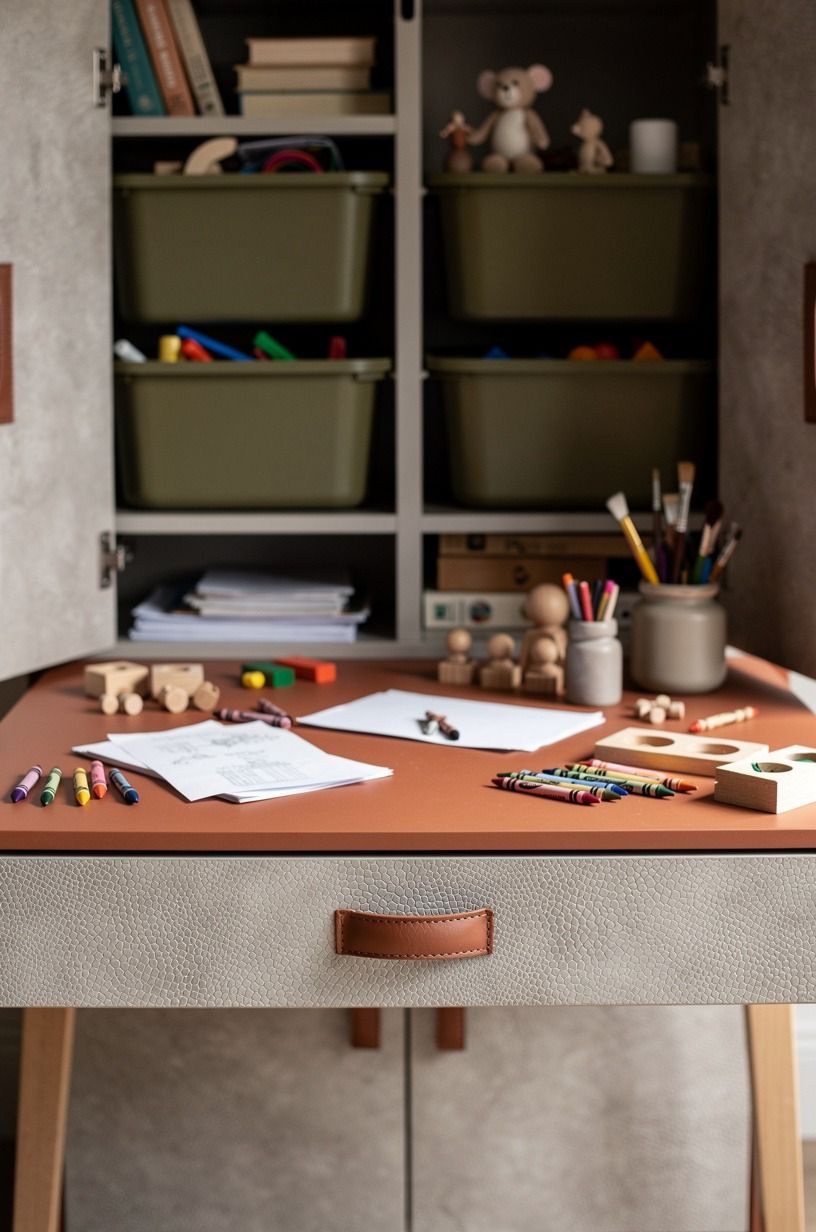
A craft table behind cabinet doors is one of the best ideas if you hate seeing markers from the sofa.
12Wrap the entrance in wallpapered millwork
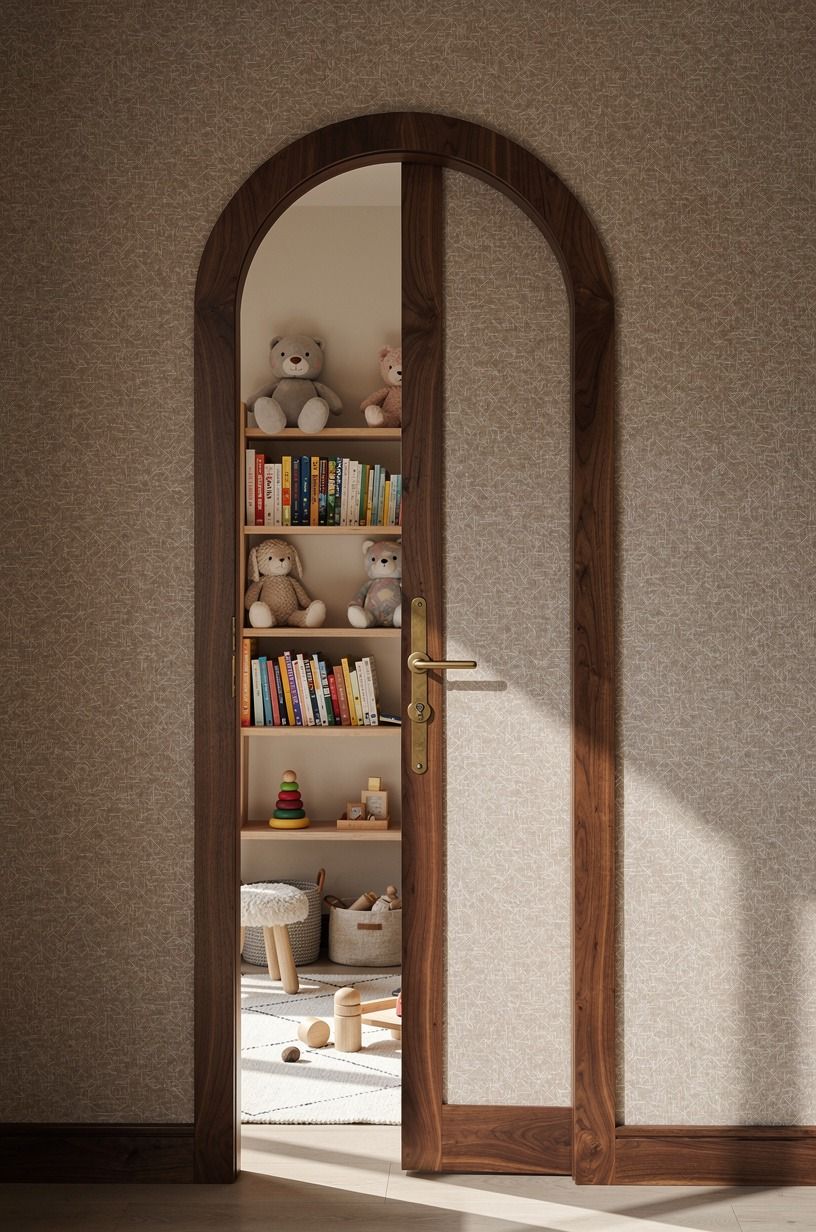
Wallpapered millwork gives the doorway a sense of ceremony before you even step inside. Clay and linen patterned panels, an arched opening, and aged brass details make a hidden kids playroom feel designed instead of improvised. I love this approach when the room itself is small because the frame does half the storytelling for you before a single toy comes into view.
Don’t choose a loud print and then compete with it inside. Let the inside stay softer with books, pale upholstery, and maybe one patterned cushion.
Aged brass cabinet latches give the millwork just enough polish without making it too grown-up. And if you’re nervous about wallpaper, start on removable panels set inside the trim profile.
That’s easier to change later, especially in a rental.
13Use a loft ladder to reach play space
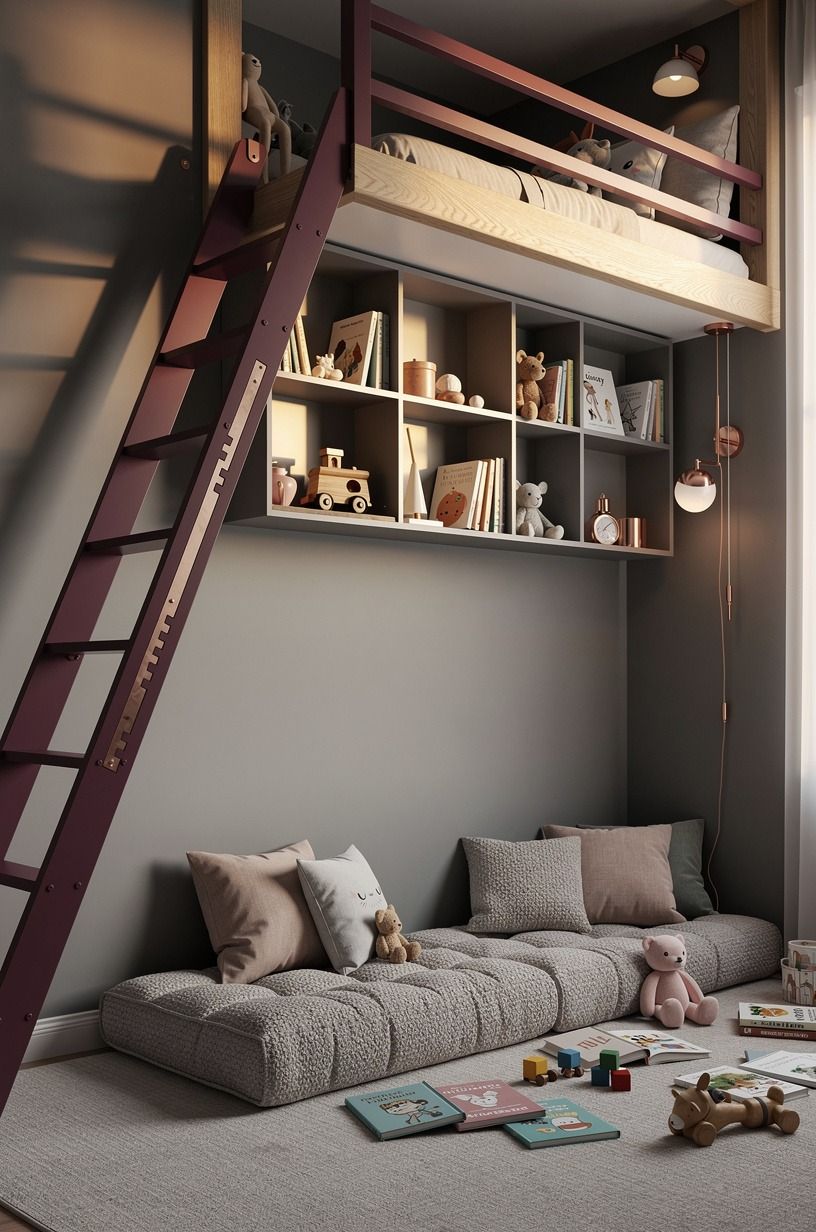
Loft access is fun, but only when the proportions feel safe and roomy enough to justify the climb.
14Create a tented corner behind drapes
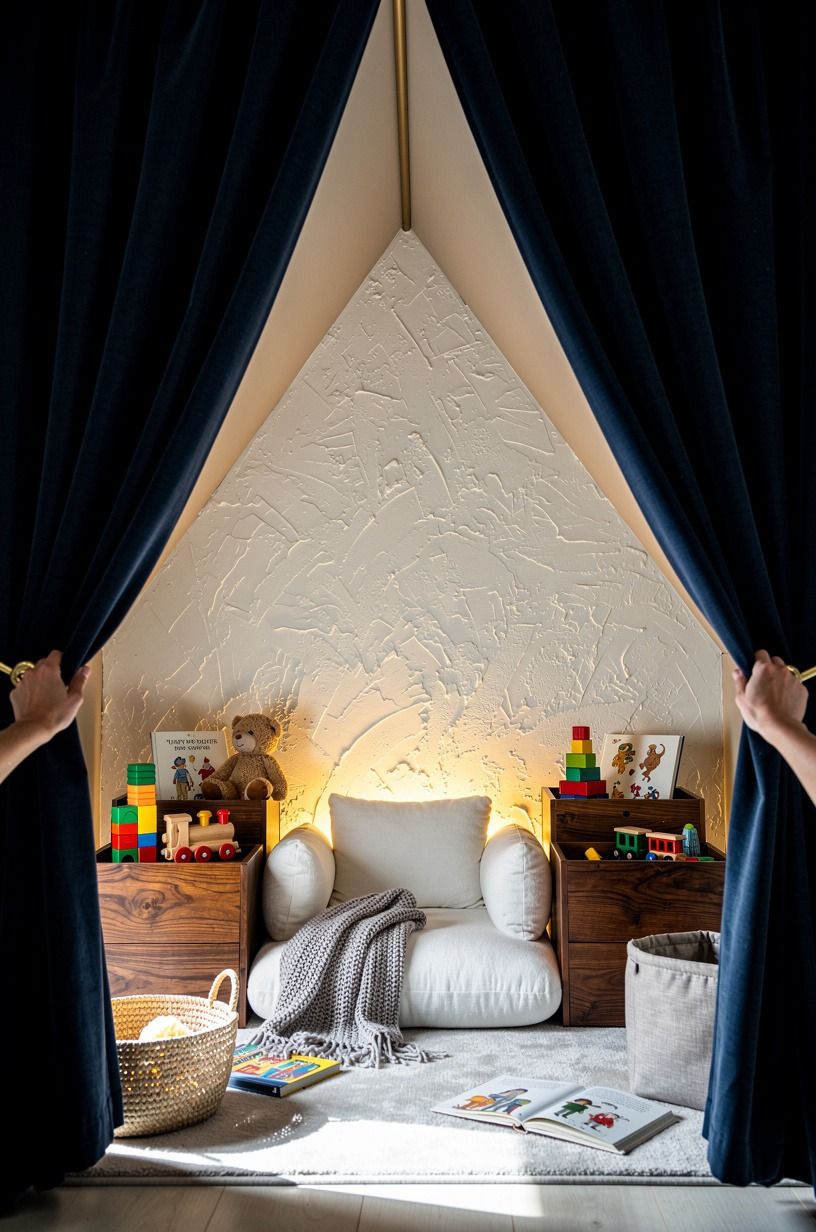
Sometimes the easiest hidden playroom isn’t built at all. It’s just claimed.
Navy curtains pulled around a corner, white floor cushions, walnut crates, and a soft center rug can turn one dead zone into a room kids read as theirs. This is one of my favorite renter moves because it changes the feeling more than the architecture.
I’d use a tension rod if you need a no-damage setup, then layer the inside so it looks finished from the first day. Navy cotton blackout panels help with cocooning, especially in a busy family room where the rest of the house stays visually active.
But don’t overfill the crates. One for books, one for magnetic tiles, one for stuffed animals.
That’s enough. The hidden feeling matters more than the inventory!
15Carve a hideaway into unused eaves
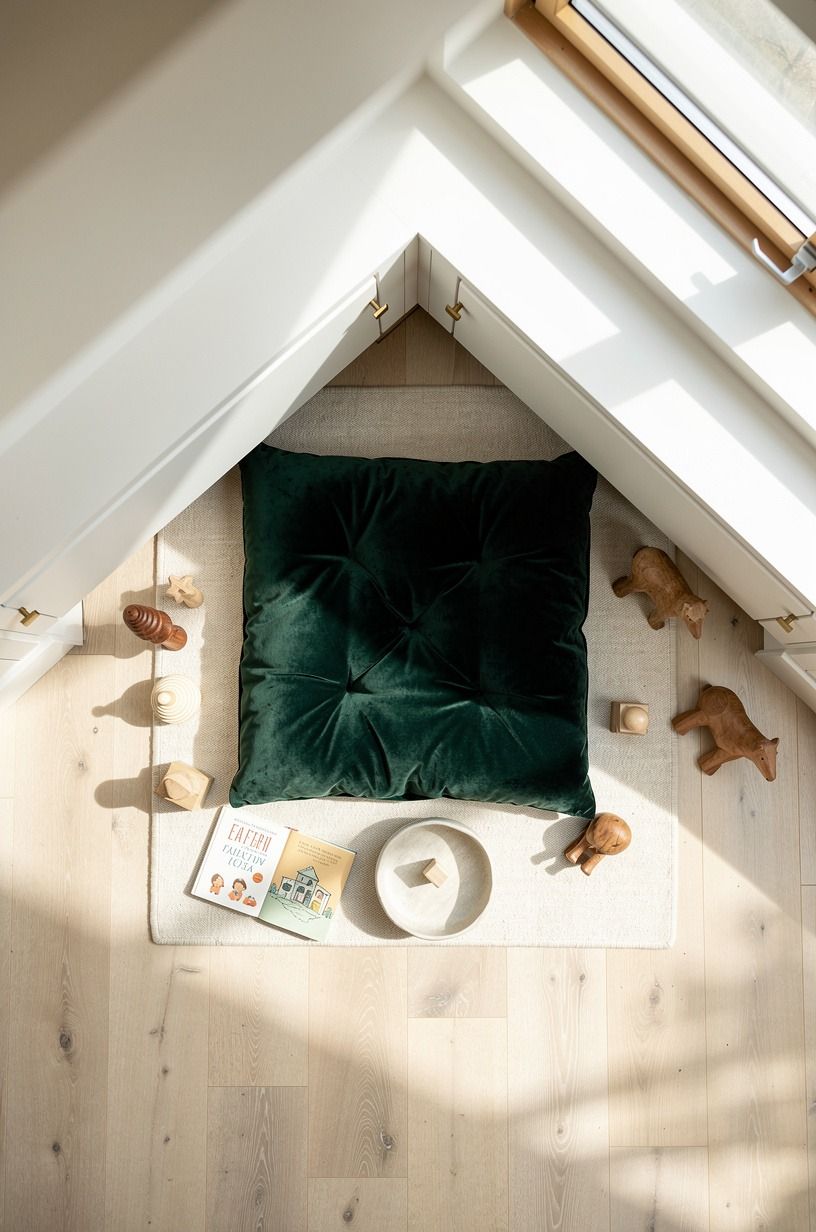
Unused eaves are awkward until you lean into their shape.
16Mask play shelves with woven panels
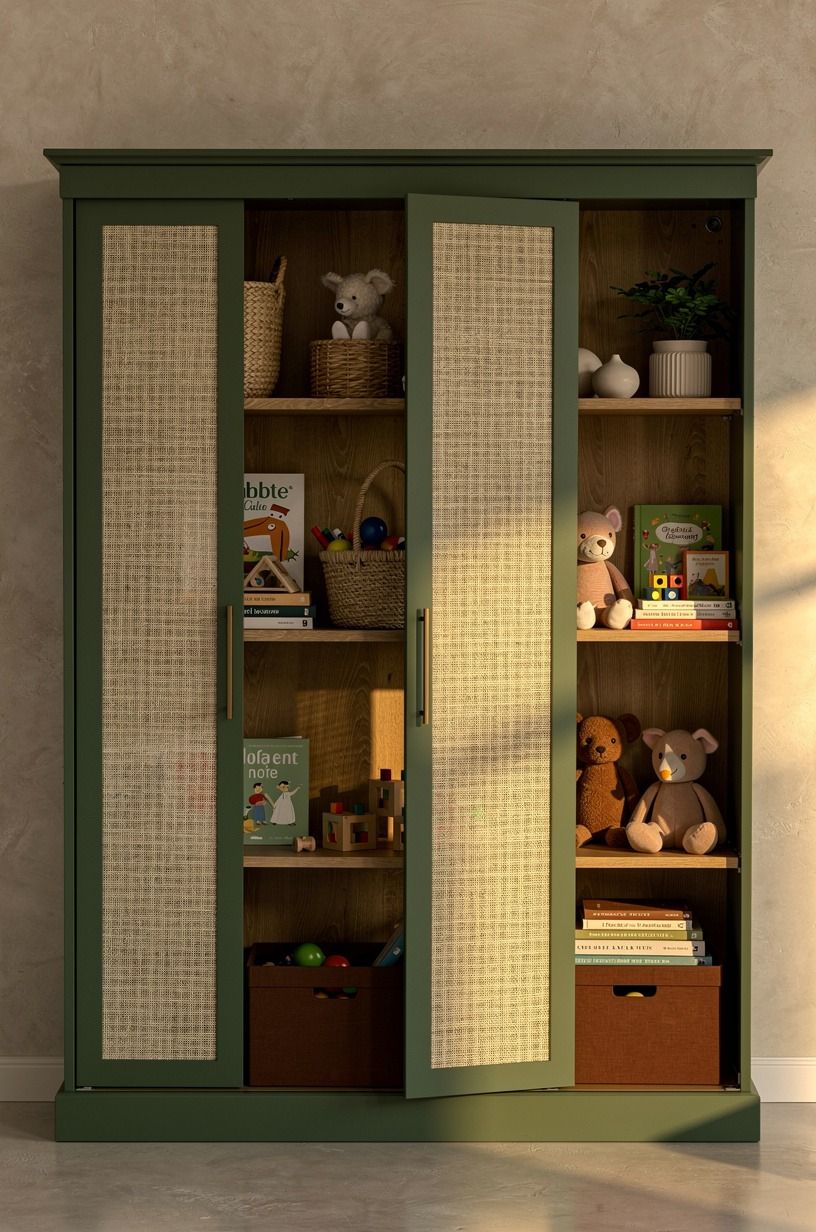
Woven panels are great when you want toys close by but not visually buzzing at you all day. Forest green cabinetry, natural oak shelves, and rust bins already feel warm, so the panel fronts just finish the job. I think this works better than solid doors when you need ventilation and easy reach, and it looks less stiff too.
Use the panels on the lower half and leave a few open shelves above for books your child grabs daily. That mix keeps the room from feeling flat. Natural cane webbing inserts are the detail I’d spend on because they soften the whole wall instantly.
And if you’re sizing shelves from scratch, stay in that 36 to 48 inch range for the most-used rows so your kid can participate in cleanup instead of waiting for you.
17Build a stage behind folding screens
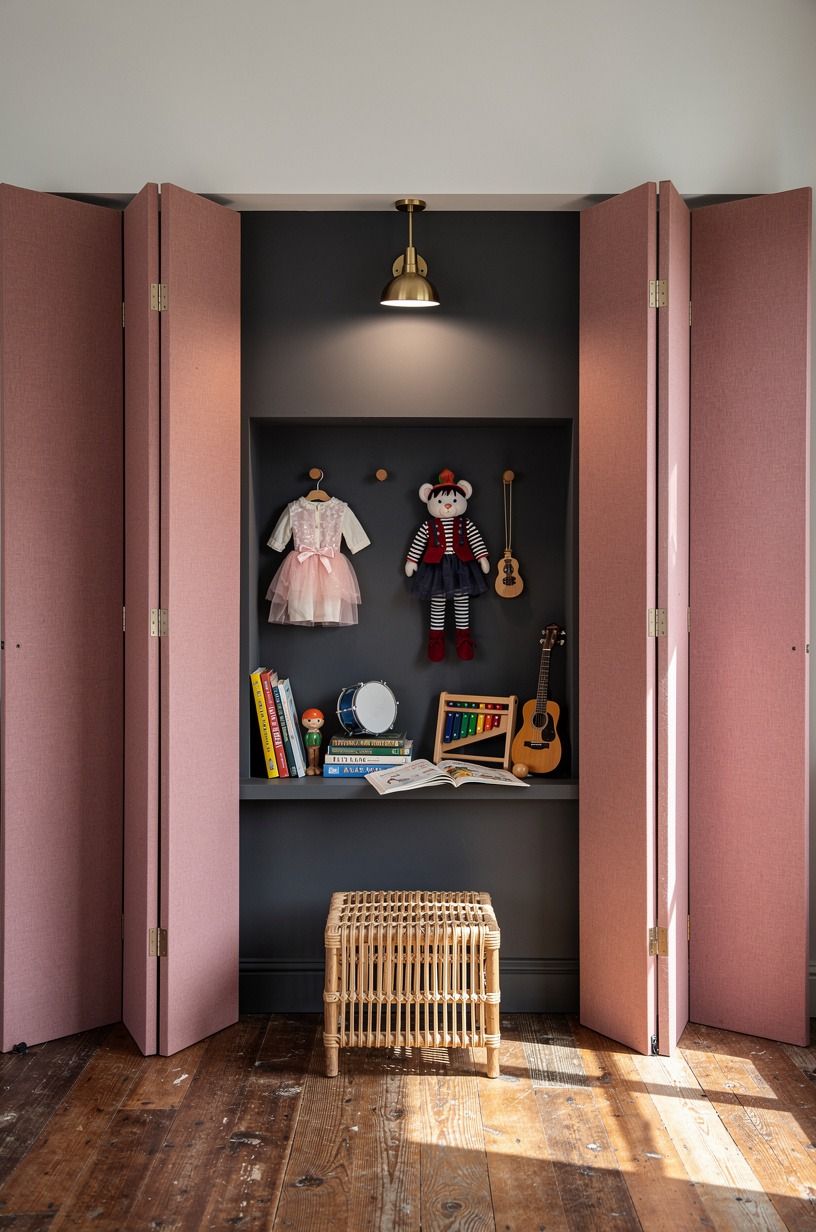
A little stage behind folding screens is perfect for the kid who loves putting on shows but doesn’t need a whole room dedicated to costumes. Dusty rose screens, a charcoal platform, and soft lighting make the scene feel special without turning it loud. I like this idea because the performance zone disappears as soon as you fold the panels back.
Keep the stage low and wide instead of tall and tiny. Even a platform just 6 to 8 inches high gives enough separation for play, and it’s much easier to step on safely.
Dusty rose linen screens look better over time than glossy painted dividers, and they don’t shout across the room. For more hidden-room layouts with a reveal, this concealed kids space article is one I keep sending friends.
18Turn a wardrobe into a tiny clubhouse
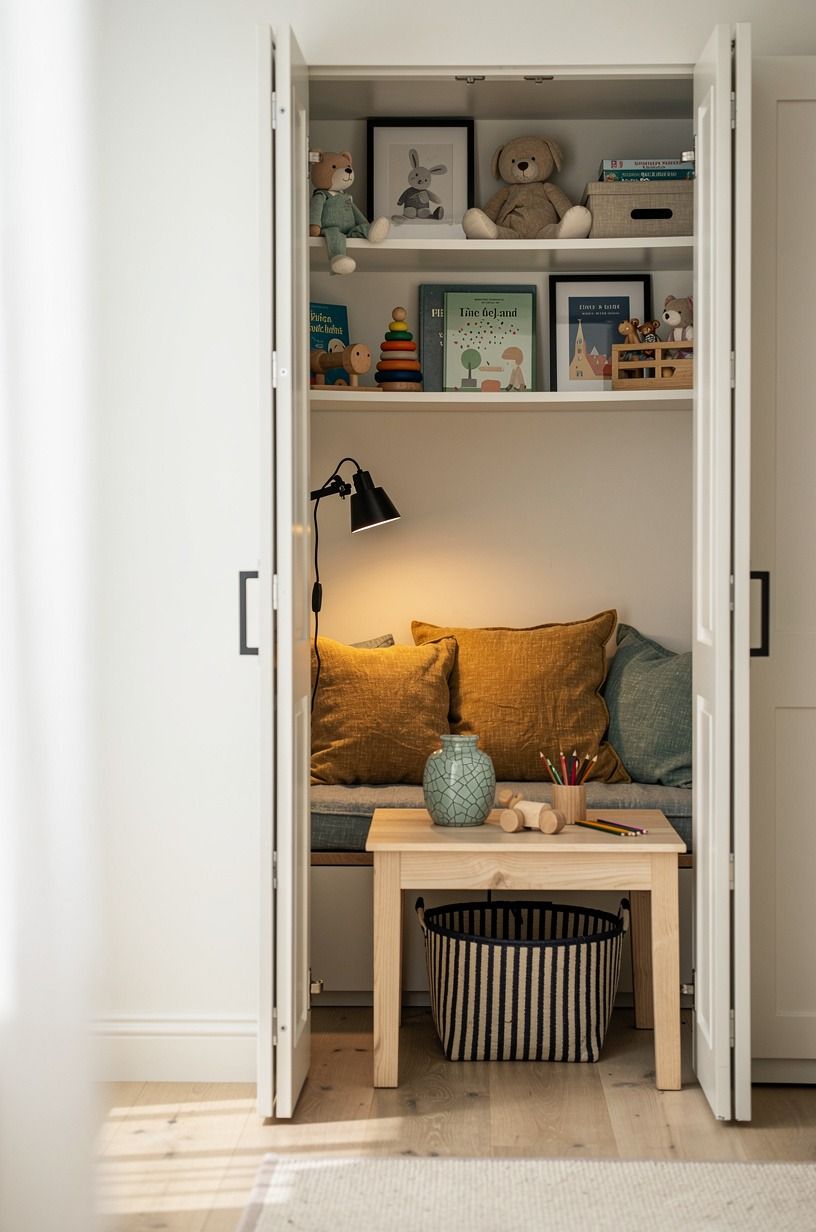
A wardrobe is basically a ready-made room if the doors open wide enough. Warm white doors, camel linen cushions, black accents, and a couple of shelves give you a clubhouse that still reads tidy when it’s shut. I wouldn’t bother with hanging rods unless you truly need costume storage.
Most kids use the floor and the shelves more than the hanger bar.
The move that helps most is treating the inside like a real room, not a spare cabinet. Add a battery sconce, one ledge for books, and a back panel color that softens the boxiness.
Camel linen seat pads make the whole thing feel more inviting than bright foam ever will. And if you’re choosing the size from scratch, go wider before you go taller.
Kids use usable width.
19Light the hidden room with sconces
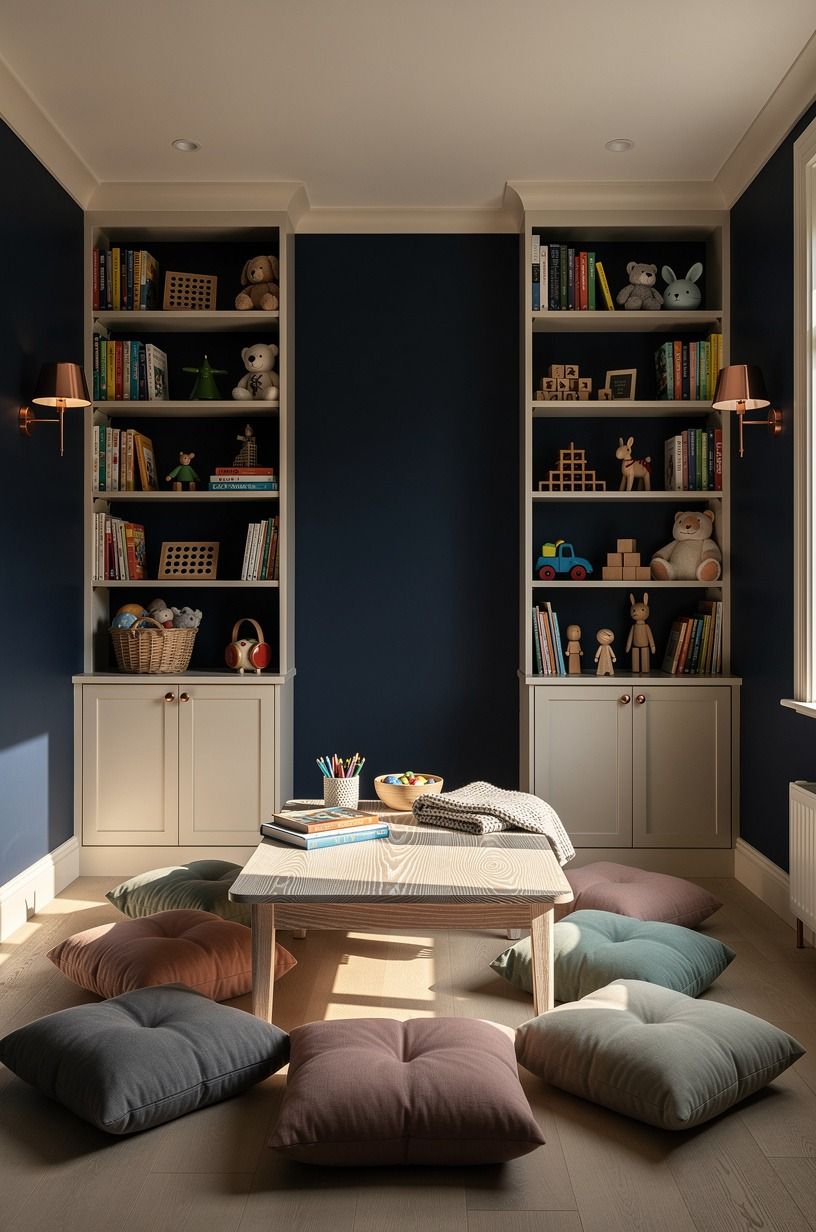
Lighting decides whether the room gets used after dinner, and sconces win because they free up the floor. In a midnight blue room with ivory built-ins, copper sconces bring just enough glow to make the shelves feel warm instead of flat. I like two matching fixtures placed symmetrically because they make even a compact room feel thought through.
Use warm bulbs and keep the switch simple so your child can help turn the room on. I’d rather have two small sconces than one bright overhead every single time.
Copper wall sconces paired with dimmable 2700K bulbs throw the kind of light that makes books, blocks, and cream upholstery all read softer. But skip anything icy or blue.
It kills the mood fast. Worth it!
What I Think Is Worth Paying For
If you want a hidden playroom that holds up, spend on the entrance and save on the replaceable stuff. Kids do not remember whether the bin cost $12 or $28, but they absolutely remember whether the room felt like a reveal, whether the curtain brushed their shoulder on the way in, and whether the light made the place feel special after dinner.
I learned this the hard way in our first family room corner. I bought the cute baskets first, then a few matching toy bins, then a rug I thought would pull it together.
It still looked like storage. The minute I added a framed entry and softened the inside with better light, the whole thing shifted.
Suddenly the room had a beginning, a middle, and a purpose. That’s what hidden spaces need.
Not more stuff, just more intention.
So where does the budget really go? Usually into the shell, not the toys.
A faux closet, paneled wall, pocket door, or built-in bench makes the room feel permanent, and permanence is what gives the playroom its charm. I’d gladly save on baskets and spend on one beautiful finish like unlacquered brass hardware or a painted door color with depth, because those are the details you keep seeing once the toys rotate out.
And here’s the part nobody respects enough: light. If your hidden room feels dim, cramped, or slightly cold, no amount of cute storage will rescue it. Warm sconces, a soft lamp, or daylight caught by pale trim can make a tiny corner feel twice as inviting.
Why do some playrooms get used nonstop while others become toy graveyards? Usually because one feels like a place to stay and the other feels like a place to stash.
If you’re staying budget-conscious, I’d start with paint, one soft floor layer, and concealed storage before I touched custom work. A 5×7 ft rug, a simple bin run, and a painted entry can do more than people expect. But if you own the house and know the room needs to earn its footprint, built-ins are the thing that adds value because they solve the clutter problem even after the play phase changes.
The Questions Worth Answering First
What is the best Hidden Playroom Ideas Kids Will Be Obsessed With for a small hidden playroom kids will?
The best small-space move is usually a reading cave or wardrobe clubhouse because both give you a real destination without needing much floor area. IKEA KALLAX birch-effect storage nearby helps too. If you want more layout ideas, this tucked-away playroom roundup is a solid place to compare shapes.
Where can I buy Hidden Playroom Ideas Kids Will Be Obsessed With pieces on a budget?
Start with Target Threshold for cushions, IKEA for bins and book ledges, and Wayfair for simple sconces or benches. Facebook Marketplace is still worth checking for wardrobes and shelving. I wouldn’t pay full price for every basket when secondhand wood pieces usually add more character anyway.
How much does a Hidden Playroom Ideas Kids Will Be Obsessed With makeover cost?
A simple refresh usually lands around $150 to $600, and that’s enough for paint, bins, soft seating, and a few visual upgrades. Mid-range projects with storage and lighting often run $1,000 to $3,500. The free move is always editing what stays out, because fewer toys make every room feel better.
Can I create a Hidden Playroom Ideas Kids Will Be Obsessed With on a budget?
Yes, and I’d begin with three cheap wins: paint the entry, use a tension rod with drapes, and regroup toys into lower bins. Navy cotton blackout panels can fake a room fast. You can also repaint an old bookcase instead of buying new, which saves more than people think.
Is a Hidden Playroom Ideas Kids Will Be Obsessed With worth it in a small space?
Yes, especially in a small space, because the hidden edge keeps your main room from feeling visually busy. Warm white bench fronts or a concealed cabinet run can hold a surprising amount. Keep the most-used items at child height and leave one open floor patch so the room still breathes.
Is Hidden Playroom Ideas Kids Will Be Obsessed With a good idea for a rental?
Yes, if you choose low-damage moves. Removable wallpaper panels, tension rods, battery sconces, and freestanding wardrobes all give you the tucked-away look without permanent changes. I also like peel-and-stick mural panels inside doors because you get the fun reveal and can pull it back later.
Where I’d Start First
If I had to pick one, I’d start with the under-stairs door. You don’t need a huge budget, but you do need a real reveal because baskets alone won’t change how the room feels. Pin the under-stairs idea for later and steal that move first.