Scandinavian mid-century bathroom ideas work best when warm wood, quiet color, and practical storage share the same small footprint. I once chose a pale vanity without checking the lighting, and the room looked gray by noon. You don’t need a full renovation, though. A few measured swaps can make your bathroom feel calm, useful, and lived-in.
- ✓ Layer pale oak into a soft modern bathroom
- ✓ Farrow & Ball Hague Blue brings depth
- ✓ Build the Two-Wood Rule
- Layer pale oak into a soft modern bathroom
- Farrow & Ball Hague Blue brings depth
- Build the Two-Wood Rule
- Swap a bulky vanity for floating storage
- Frame the mirror with a warm walnut surround
- What does a three-height light stack change?
- Choose hand-glazed tile with a quiet rhythm
- Matte Black and Warm Oak: Keep the Contrast Measured
- Use Benjamin Moore Chestertown Buff as the quiet backdrop
- Float a teak stool beside the tub
- Add a muted green tile stripe
- Choose cane-front storage over open shelving
- Soft Modern Lines or a Sculptural Basin?
- Install a quiet hardware grid
- Put comfort underfoot with woven texture
- Plan the room around a 36-inch shower
- Hang linen instead of a heavy shower curtain
- Price the calm before you renovate
- Finish with one collected focal point
1Layer pale oak into a soft modern bathroom
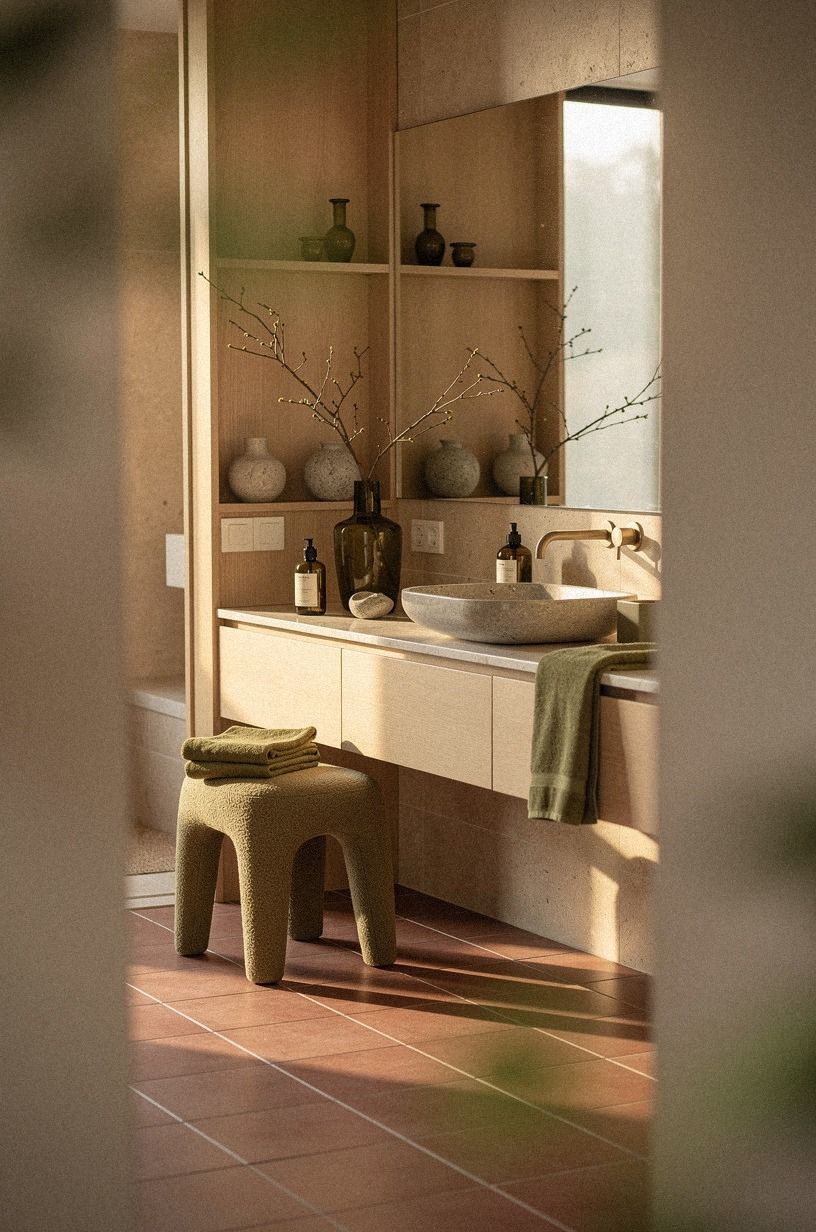
Start with one earthy color, then repeat it at eye level and near the floor. An olive-painted vanity gives your bathroom the grounded character Scandinavian rooms do so well, while a slim organic bouclé stool keeps the look useful instead of staged. You’ll want the texture to stay visible, so skip orange stain and glossy lacquer.
I’d pair it with a warm terracotta wall color if your room gets weak northern light. The color feels earthy beside stone and olive, but it won’t make your fixtures look yellow. Add a stone-colored bath mat, and you’ve got softness underfoot without a shaggy pile that traps moisture.
Keep your accent pieces separated by at least a little breathing room. A vanity, stool, and framed print can feel intentional; five matching accessories can feel like a catalog. For more small-room layouts, browse these small mid-century modern bathroom ideas, then compare the storage proportions with these compact mid-century bathroom layouts.
2Farrow & Ball Hague Blue brings depth
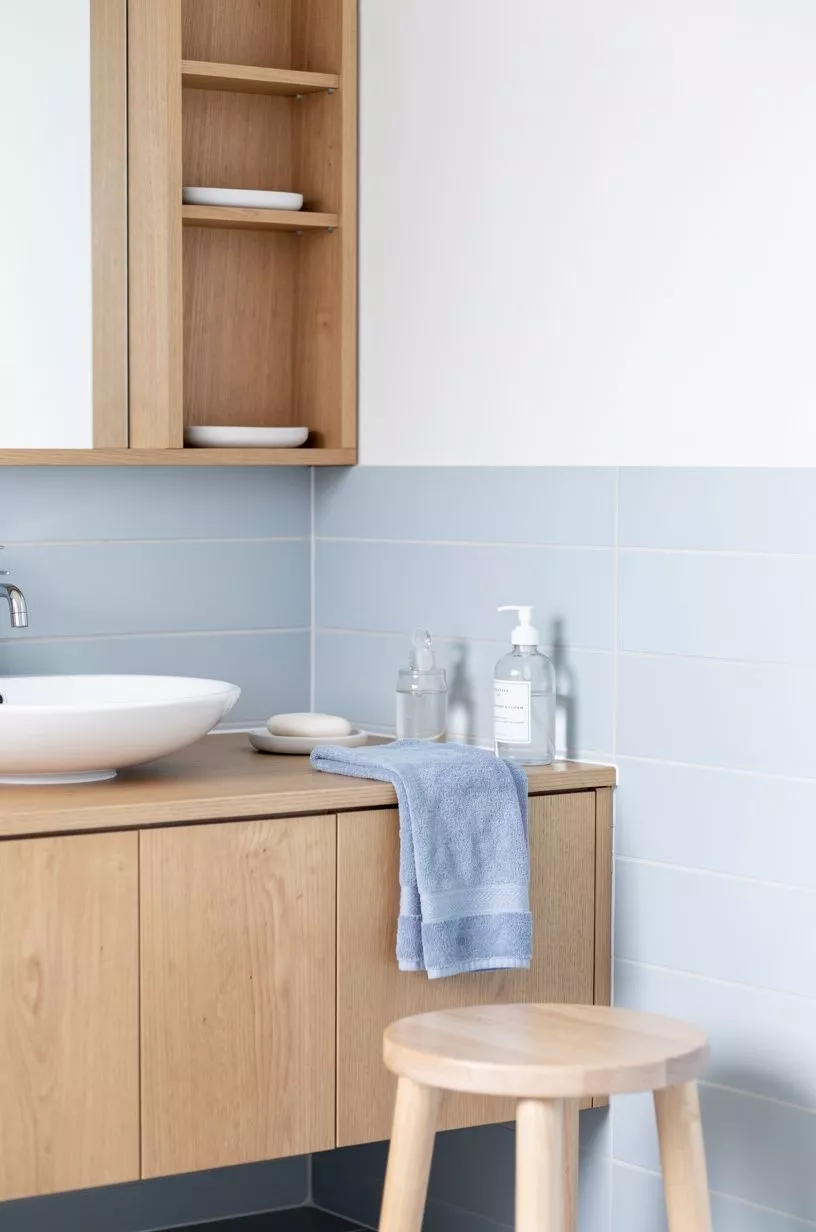
The color looks especially good beside aged brass, linen, and Nero Marquina black marble with white veins.
3Build the Two-Wood Rule
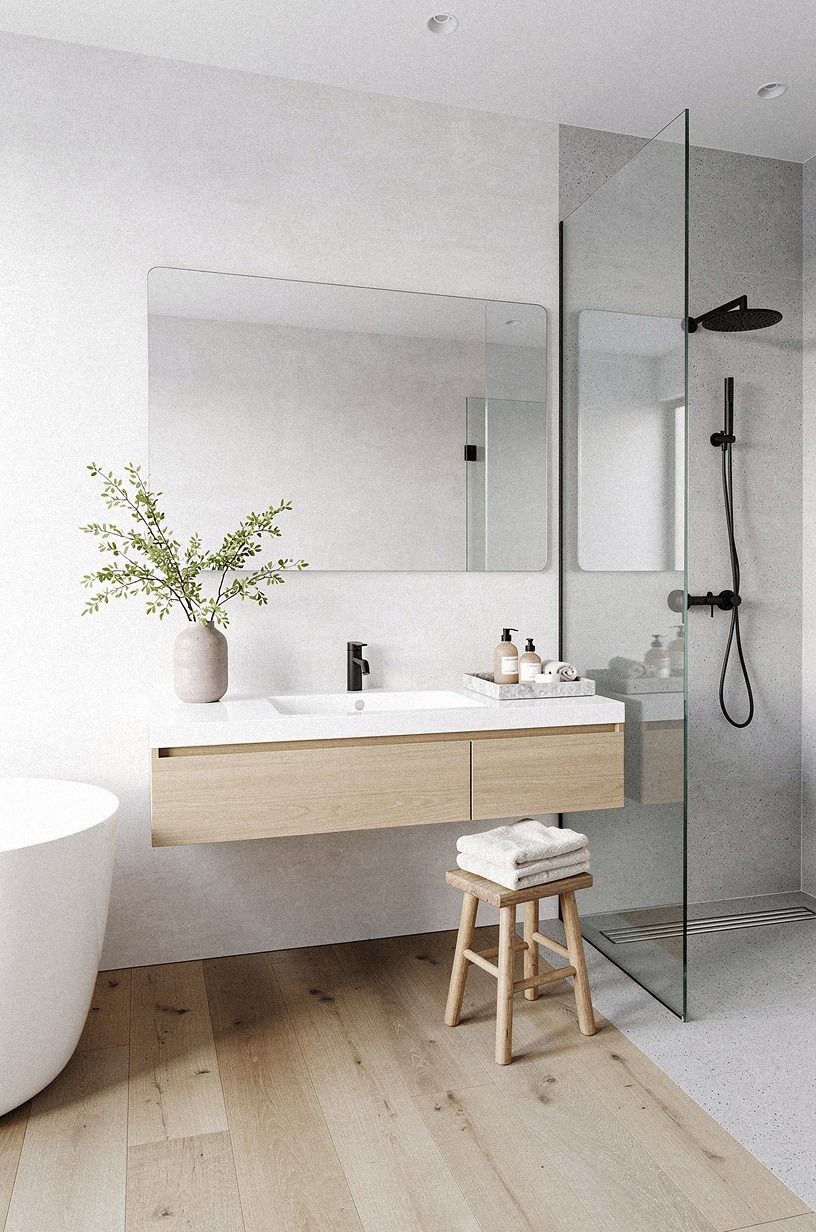
The Two-Wood Rule keeps your mid-century bathroom from becoming a showroom of unrelated browns. Choose one primary color, such as plum, and one supporting neutral, such as soft gray. Your vanity can carry the darker tone while a stool upholstered in deep-pile mohair velvet brings in the softer one.
I learned this after mixing plum, gray, and rose gold without giving the palette anywhere to rest. The samples looked friendly on the floor, but the finished room had no visual quiet. You’ll get a cleaner result if the darker tone stays on one large piece and the lighter shade appears in small, repeatable moments.
Pair the colors with a material that isn’t trying to imitate either one. Deep-pile mohair velvet on a dry-zone stool adds texture without another strong color. If you’re considering a more organic direction, this guide to organic mid-century modern bathroom ideas has useful combinations for stone, wood, and linen.
You can also use these natural-material bathroom ideas to keep the palette from becoming too polished.
4Swap a bulky vanity for floating storage
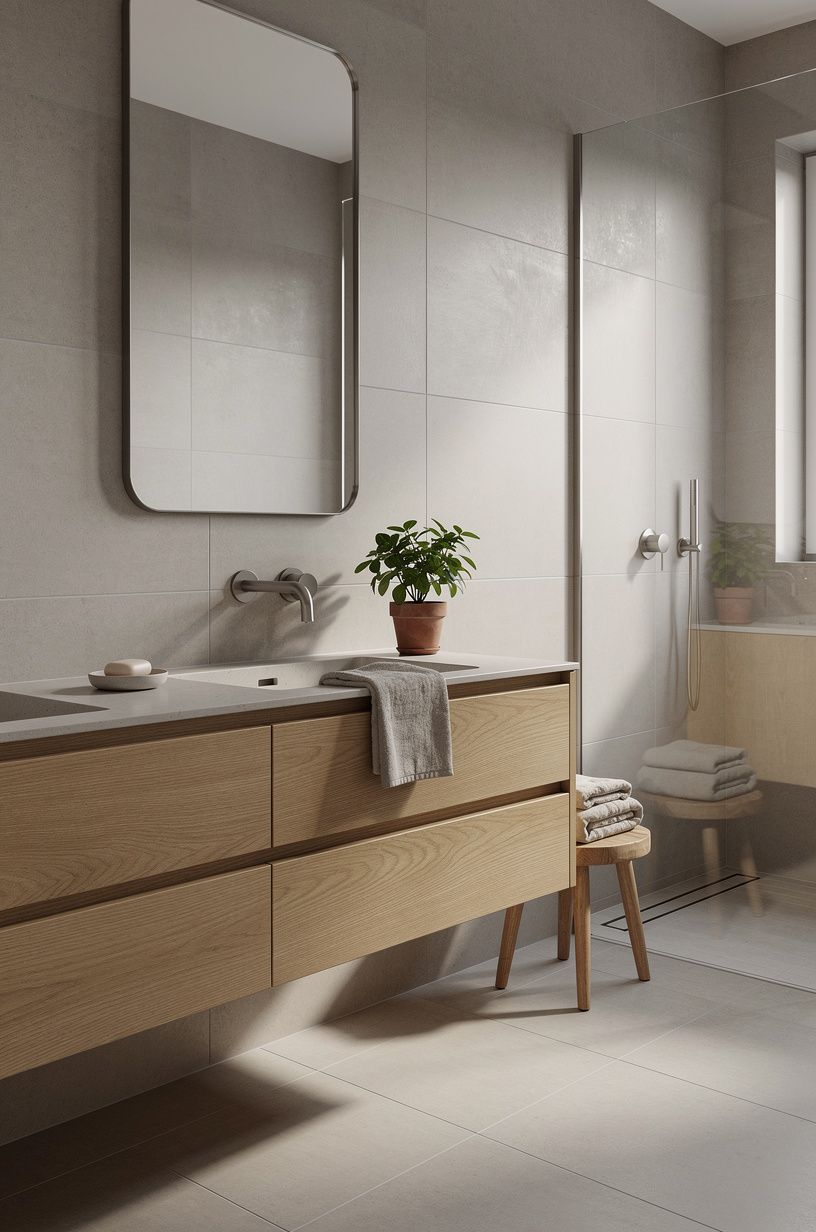
A wall-mounted vanity makes the floorline visible, which can help your bathroom feel wider and easier to clean. An IKEA GODMORGON vanity in a walnut-effect finish gives you drawers without the heavy furniture profile of a freestanding cabinet. You’ll want the mounting height to feel comfortable, not just visually balanced.
Standard vanity height usually lands between 32 and 36 inches, or 81 to 91 centimeters. If you’re tall, your body will notice a low sink every morning. I’d mock up the height with painter’s tape before drilling, because a beautiful floating cabinet won’t fix a sore back.
Keep one open section for a rolled towel or a small basket, but don’t fill every inch. The exposed wall underneath is part of the design. And if you’re renting, a freestanding walnut cabinet can give you a similar airy effect without changing the plumbing or wall structure.
5Frame the mirror with a warm walnut surround
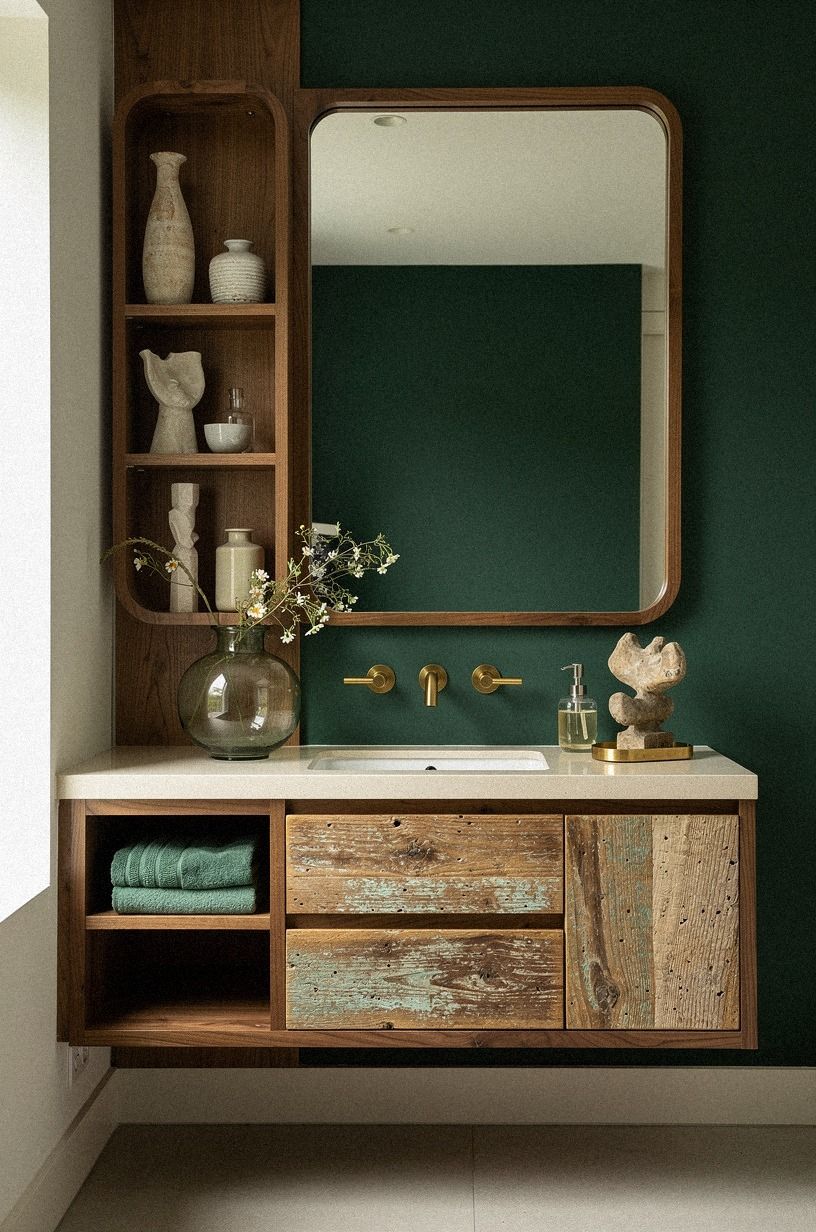
A framed mirror gives a basic bathroom more architectural weight without demanding a full tile project. Choose a reclaimed weathered teak mirror frame with softened corners, then set it above a simple white basin. That shape echoes mid-century furniture, while the weathered grain gives your eye somewhere to pause.
You’ll want the mirror wide enough to relate to the vanity, but not so wide that it crowds the sconces. A centered frame usually feels calmer than an oversized round mirror squeezed between two walls.
I’d skip ornate beveling here. The clean edge is what keeps the room Scandinavian instead of traditionally decorative.
Use a linen Roman shade or a small woven basket to repeat the warmth nearby. One wood frame alone can look accidental. Two related textures create a visual conversation, and your bathroom starts to feel gathered rather than decorated in one afternoon.
6What does a three-height light stack change?
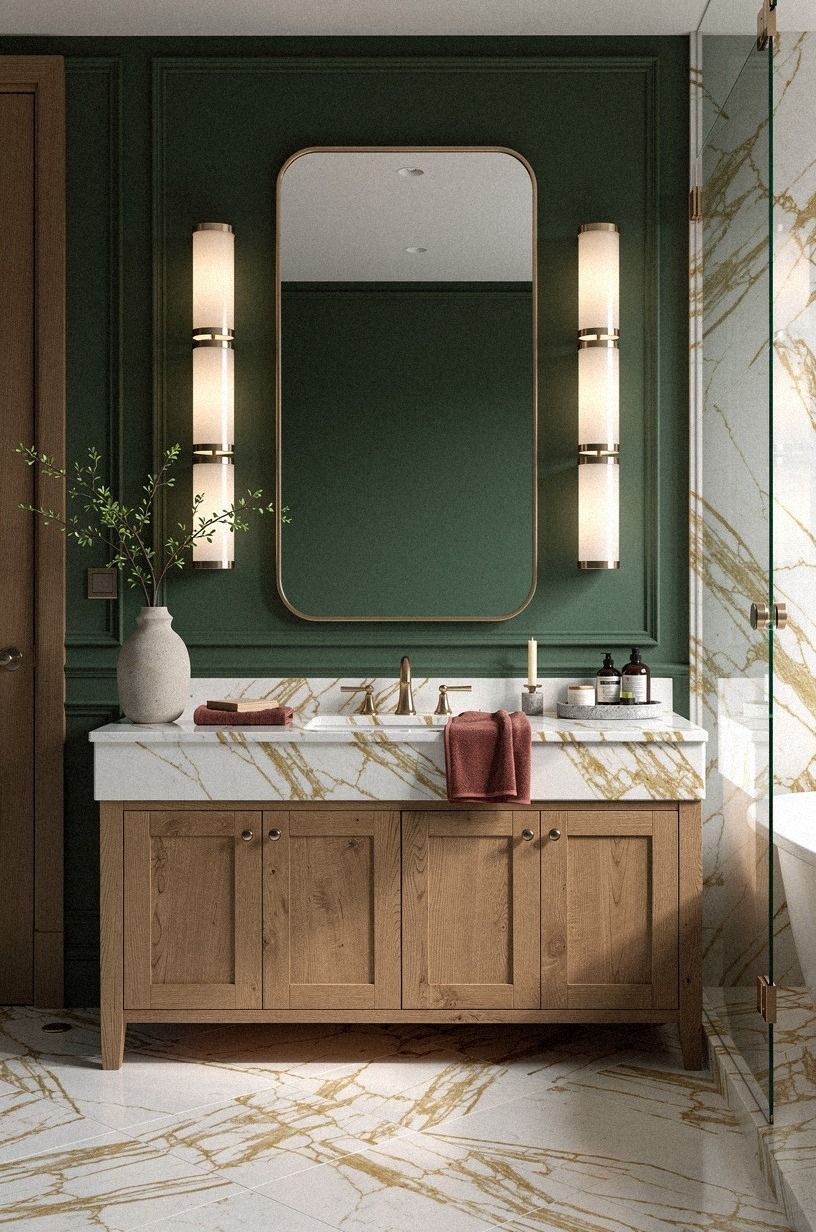
The Three-Height Light Stack uses a ceiling fixture, mirror-level light, and low ambient glow so your bathroom doesn’t feel flat at night.
7Choose hand-glazed tile with a quiet rhythm
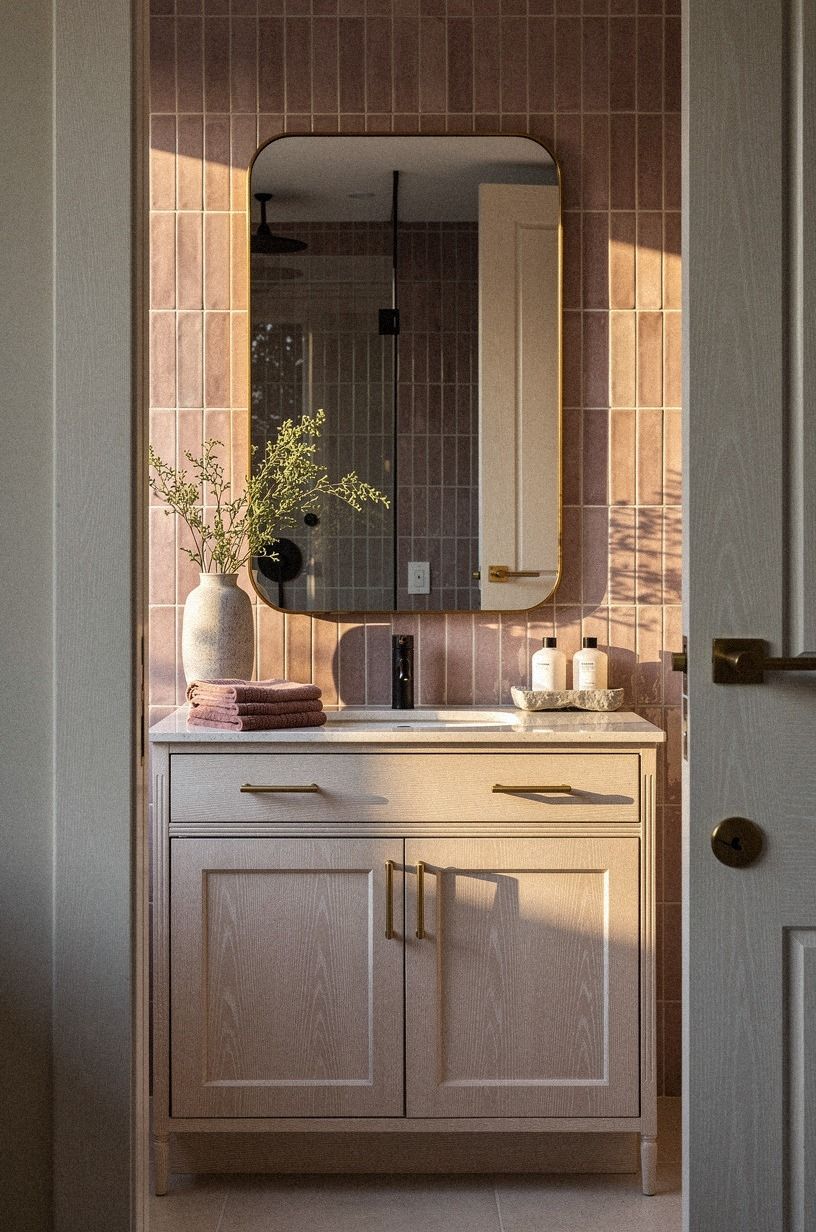
Hand-glazed tile brings gentle variation to a bathroom, but you’ll need to control the surrounding surfaces. A dusty rose backsplash with cerused white oak nearby can show tiny shifts from blush to muted rose, giving your wall the handmade quality Scandinavian spaces often need.
I’d use it behind the sink and keep the shower tile calmer if your bathroom is small. Too many irregular surfaces compete for attention, and your eye won’t know where to settle. Subway tile at $2 to $10 per square foot can be the more sensible choice for a larger wall, especially if you want your budget to cover better lighting.
Choose low-contrast grout that sits close to the tile color. Strong contrast makes every joint louder. If you want a little more personality, use a narrow band of charcoal near the mirror, then repeat that charcoal in a towel or print so the accent feels connected to your daily routine.
8Matte Black and Warm Oak: Keep the Contrast Measured
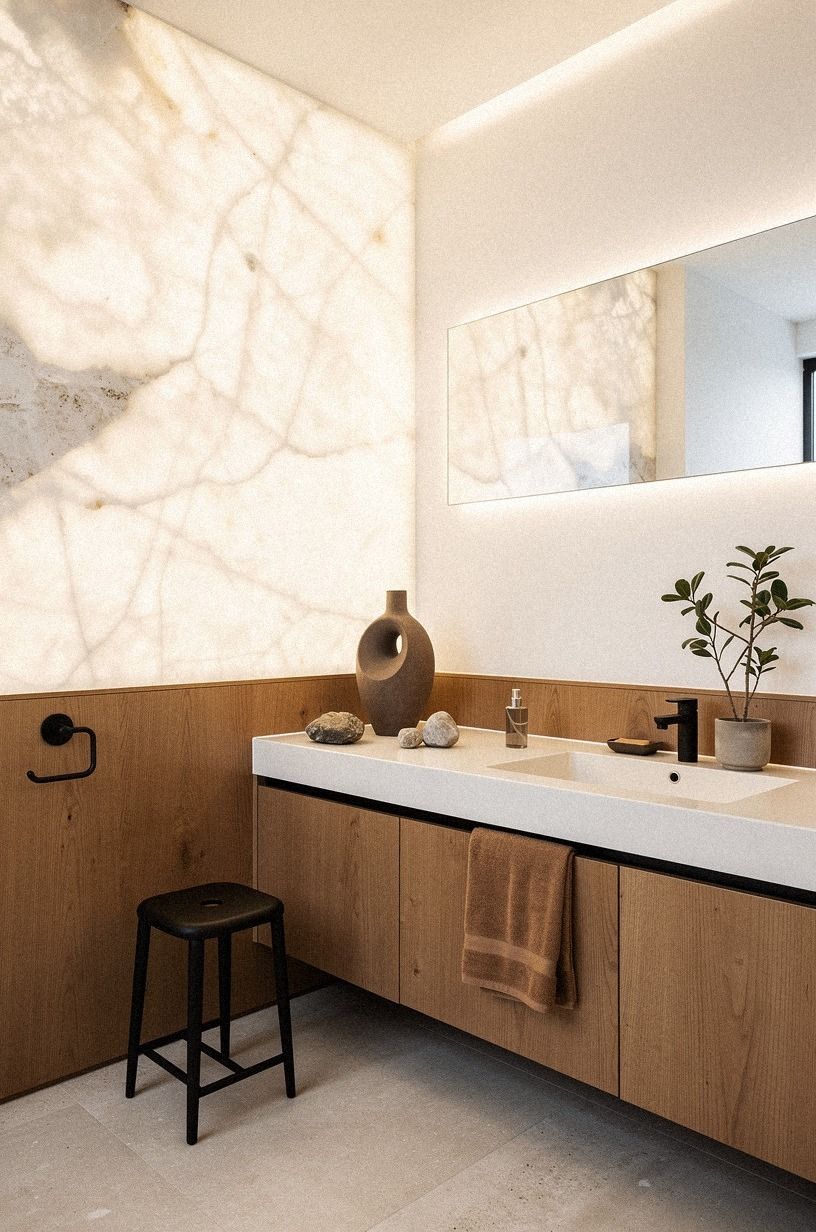
Matte black hardware can sharpen warm white surfaces and camel-toned wood, but it needs a measured counterweight. Try a matte black faucet with a camel-toned vanity, a warm-white basin, and a backlit translucent onyx counter. You’ll get contrast without the chilly feeling polished chrome can create.
But don’t scatter black everywhere. A faucet, mirror edge, and one light fixture are enough for most bathrooms. I’d skip black shower tile unless the room has generous natural light, because it can absorb the glow you’re trying to build.
A black-framed medicine cabinet can be useful if you need hidden storage, while open shelves should stay lighter. Your room will feel more relaxed when visual weight sits low and practical items stay behind doors. That balance matters even more in a compact rental bathroom.
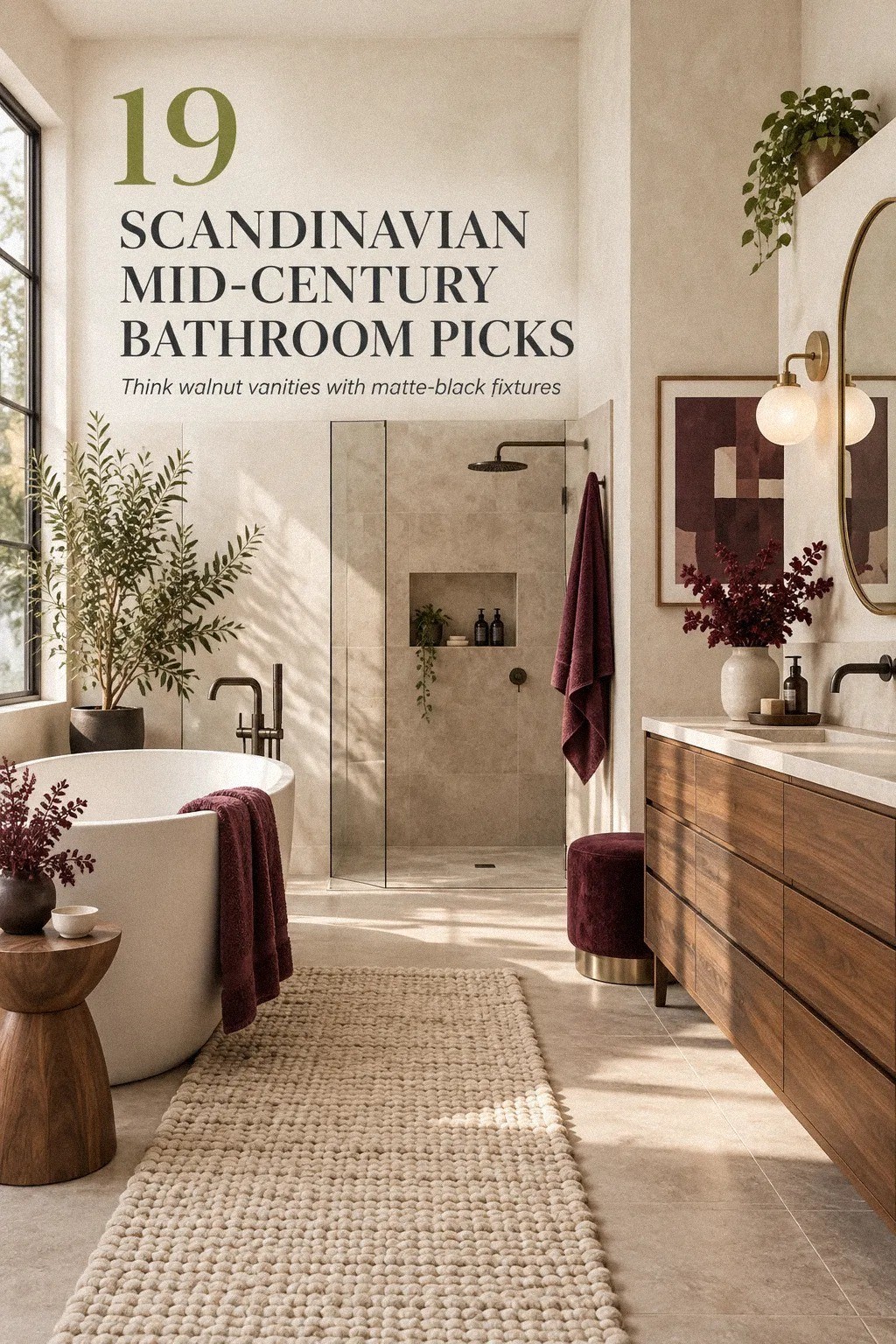
9Use Benjamin Moore Chestertown Buff as the quiet backdrop
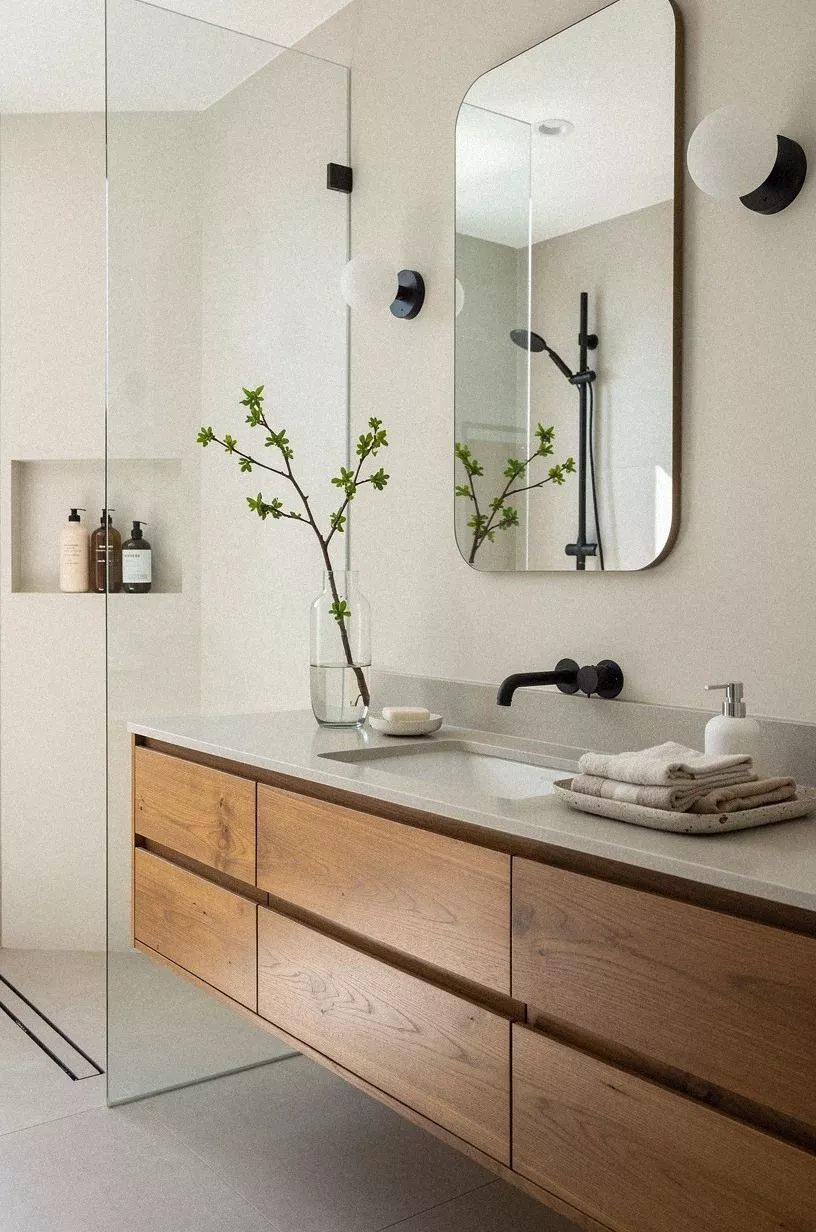
A midnight blue wall gives a bathroom depth beside ivory porcelain, copper accents, and book-matched walnut. I’d use it with warm white surfaces, a walnut vanity, and a cotton shower curtain that softens the stronger color.
You’ll want to compare the paint with your actual tile and towels. A blue that looks rich on a card can read gray beside cool grout. I once painted a whole wall before checking the bulb temperature, and the room looked flat after dark.
Test first, then live with the sample overnight.
Keep the rest of the palette restrained. A copper towel or ivory print is enough; you don’t need six accent colors to make the room feel personal.
If pink is your preference, this guide to mid-century pink bathroom ideas shows how to keep a rosy palette grounded. These soft-color mid-century bathroom ideas are useful when you want warmth without sweetness.
10Float a teak stool beside the tub
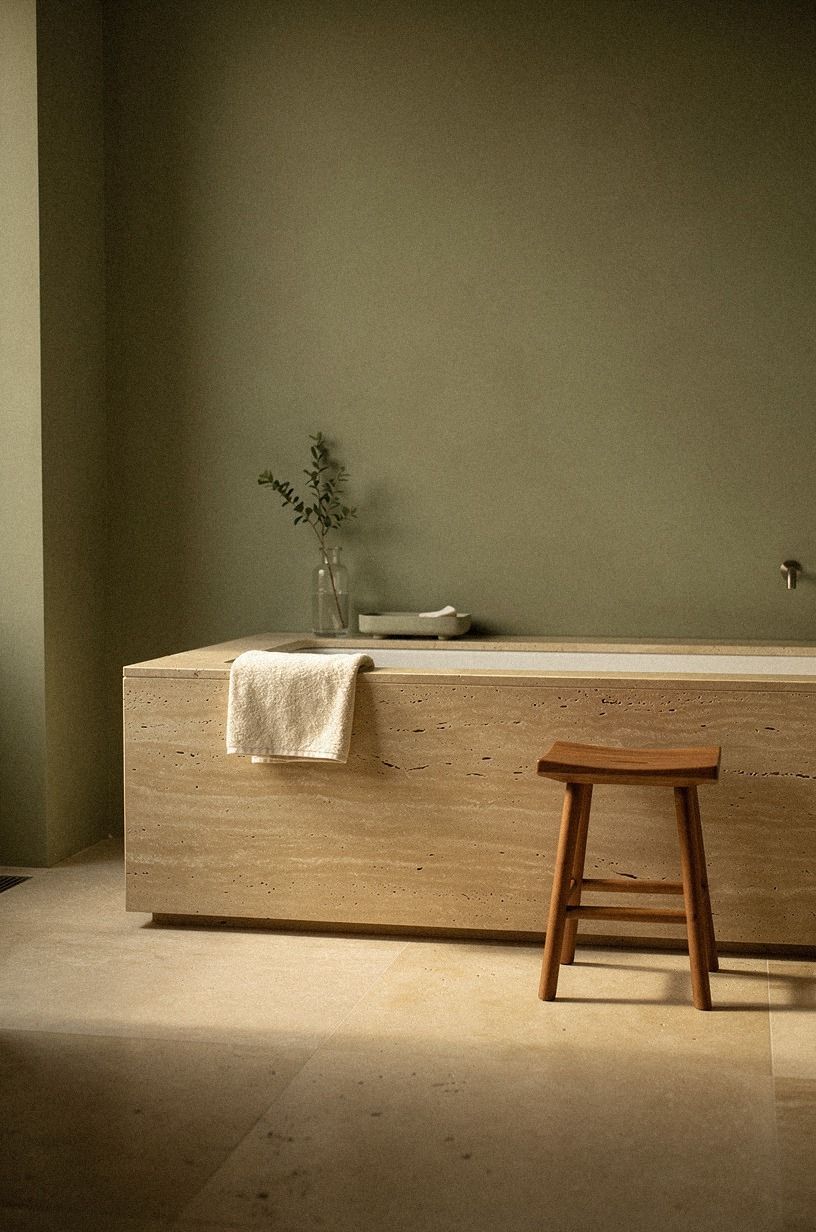
A small stool adds function, warmth, and a spot for your towel without committing to built-in furniture. Choose a natural wood shower stool with slatted construction so air can move around it. The wood will feel comfortable beside a warm cream tub and won’t make the room look overly polished.
A standard tub is 60 by 30 inches, or 152 by 76 centimeters, so measure the clear floor before you buy anything. You’ll want enough room to walk around the stool without brushing it every time you reach for the faucet. I’d rather have one useful stool than a larger bench that makes the room feel tight.
Keep the styling plain. One folded towel, a small handmade ceramic cup, and perhaps a bar of soap are plenty. And if your tub already feels crowded, use a narrow warm travertine ledge across the back wall instead of forcing another object onto the floor.
11Add a muted green tile stripe
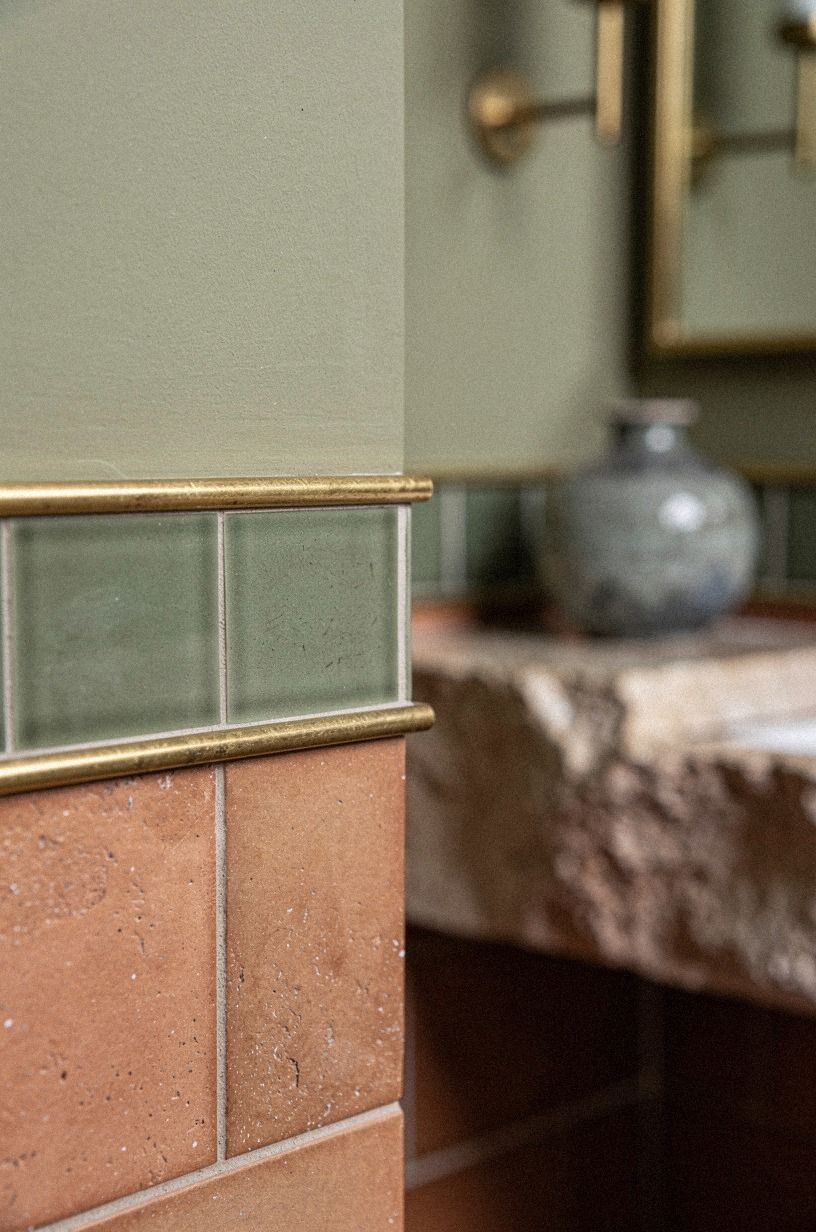
A narrow tile stripe can give your bathroom a mid-century note without covering every wall. Try terracotta ceramic tile behind the sink, set between stone-colored field tile. The color works with olive accents, unlacquered brass, and warm gray stone, so your palette can evolve without starting over.
You’ll want the stripe to align with a useful height, such as the top of the vanity or the centerline of the mirror. Random placement can look like a leftover sample. I’d keep the line simple and let the glaze carry the interest.
An olive wall color is another way to bring in a quiet green without tile. Paint it on the vanity wall, then use an olive towel or small print to bridge the surfaces.
Why should every accent carry a loud pattern when a measured color change can do the work? For another restrained palette, see these green mid-century bathroom combinations and organic green tile ideas.
12Choose cane-front storage over open shelving
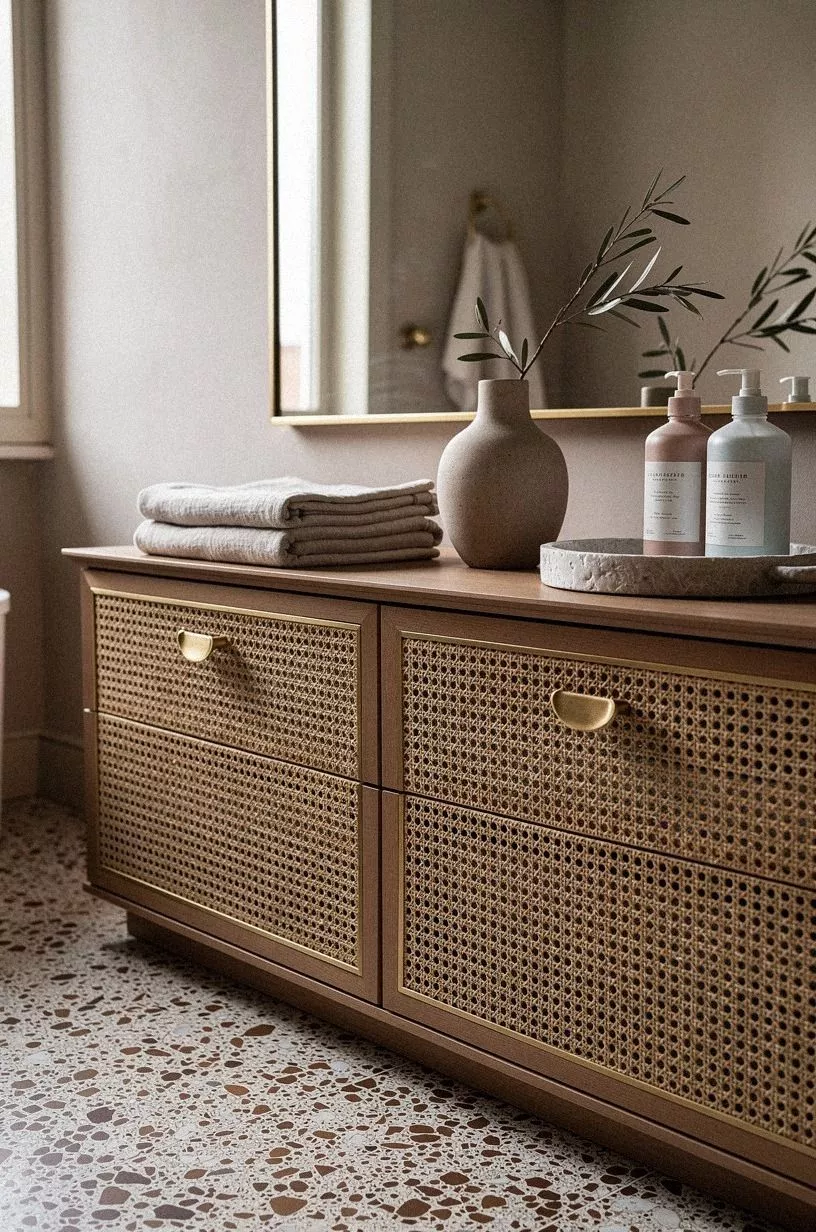
A clay-toned cabinet with an oversized-chip terrazzo top brings texture while hiding the bottles, cleaning supplies, and spare paper your bathroom needs. It can hold folded towels without making your room feel visually packed.
Open shelves are charming in a finished bathroom, but you’ll have to keep them edited every day. I’d choose closed storage if your mornings are rushed. One basket for hair tools and one drawer for small items will save more calm than another decorative tray.
Look for an IKEA HEMNES cabinet or a second-hand linen-toned piece with solid hinges. You can replace dated knobs with aged brass pulls, but check that the doors close cleanly before you bring it home. The best furniture choice is the one your future self won’t have to manage constantly.
13Soft Modern Lines or a Sculptural Basin?
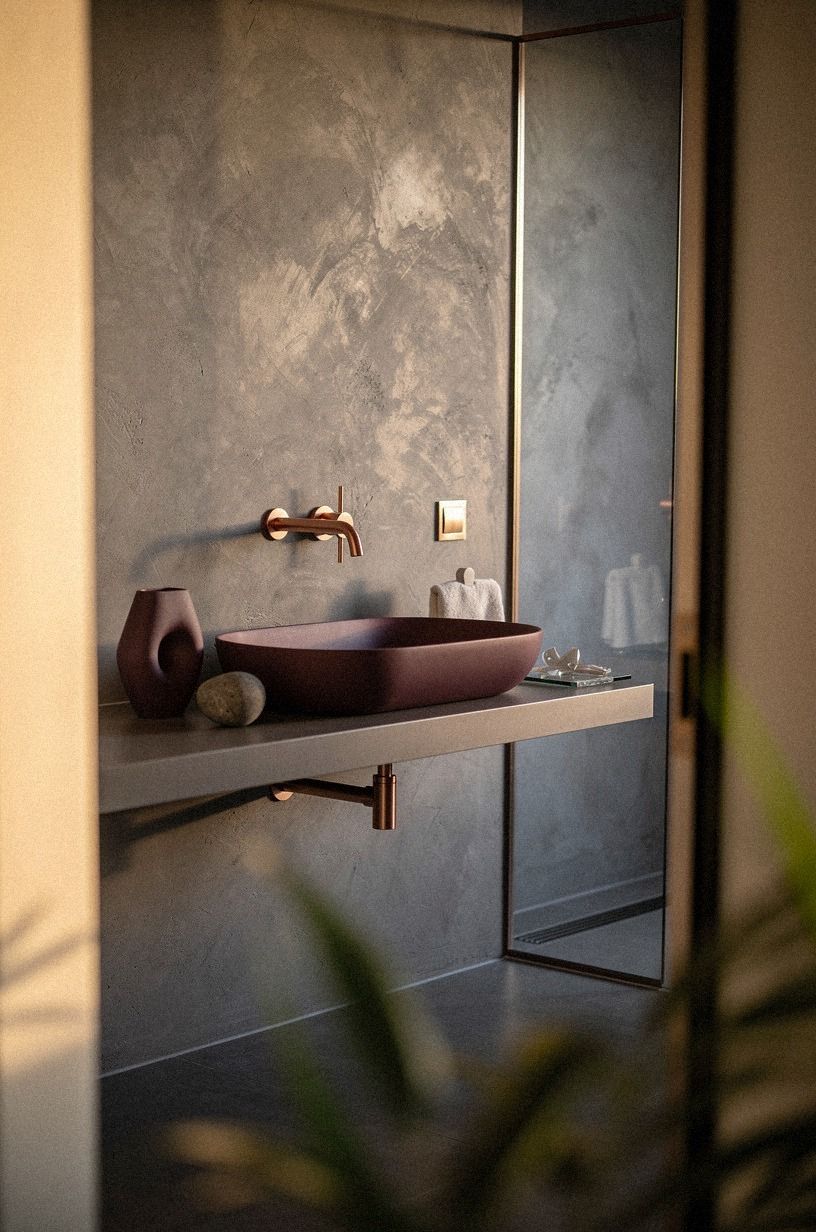
A sculptural basin can make a plain vanity feel considered, especially when the surrounding lines stay quiet.
14Install a quiet hardware grid
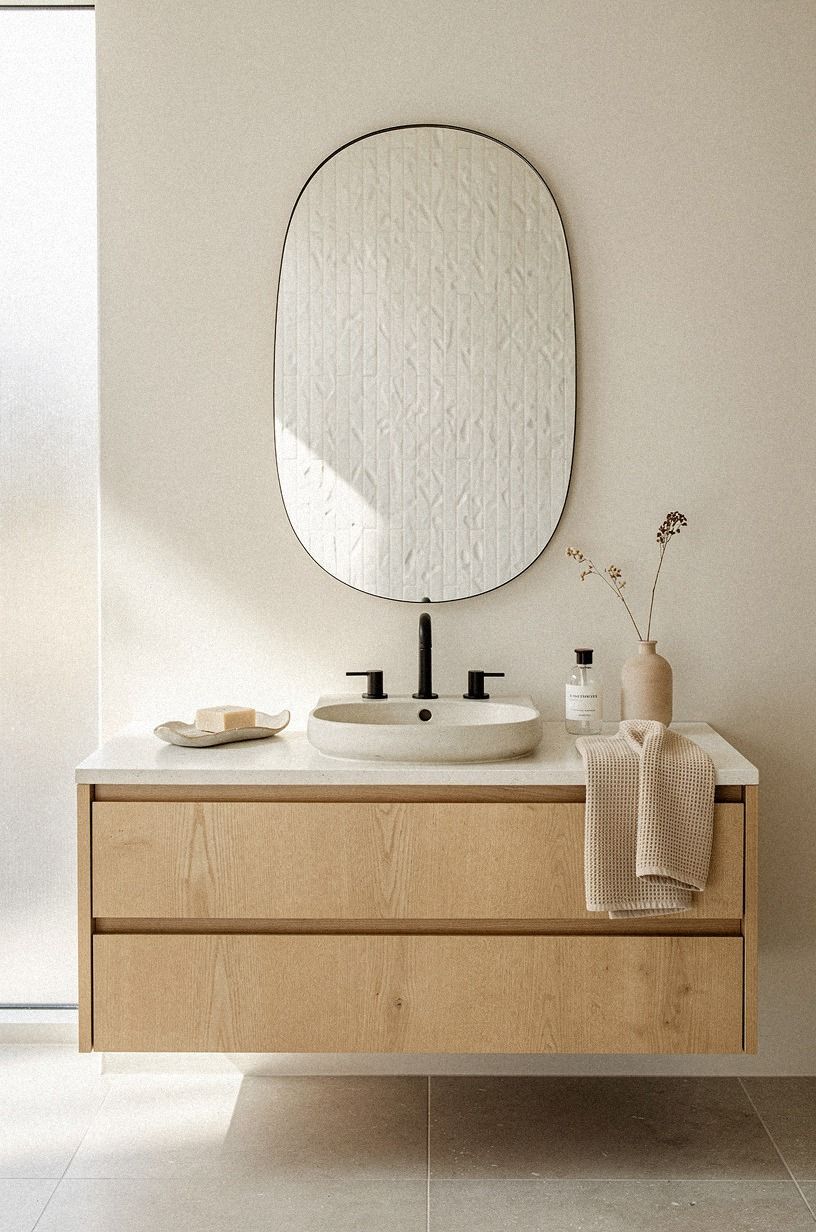
The Quiet Hardware Grid means every visible handle, hook, and towel bar follows one simple alignment. Use shagreen-accented hardware on a walnut vanity, then line the towel hook with the mirror edge rather than placing it wherever the stud happens to be.
You’ll notice crooked spacing every day, especially in a small room where each object has a strong outline. Measure from the same reference point and use painter’s tape before drilling. I’d rather wait ten minutes with a level than live with a hook that looks one inch too high.
Choose a restrained finish instead of a bright polish. Shagreen accents add tactile interest without needing another decorative object, while walnut keeps the hardware from feeling stark. If you prefer less texture, simple white hardware can preserve the same quiet grid.
15Put comfort underfoot with woven texture
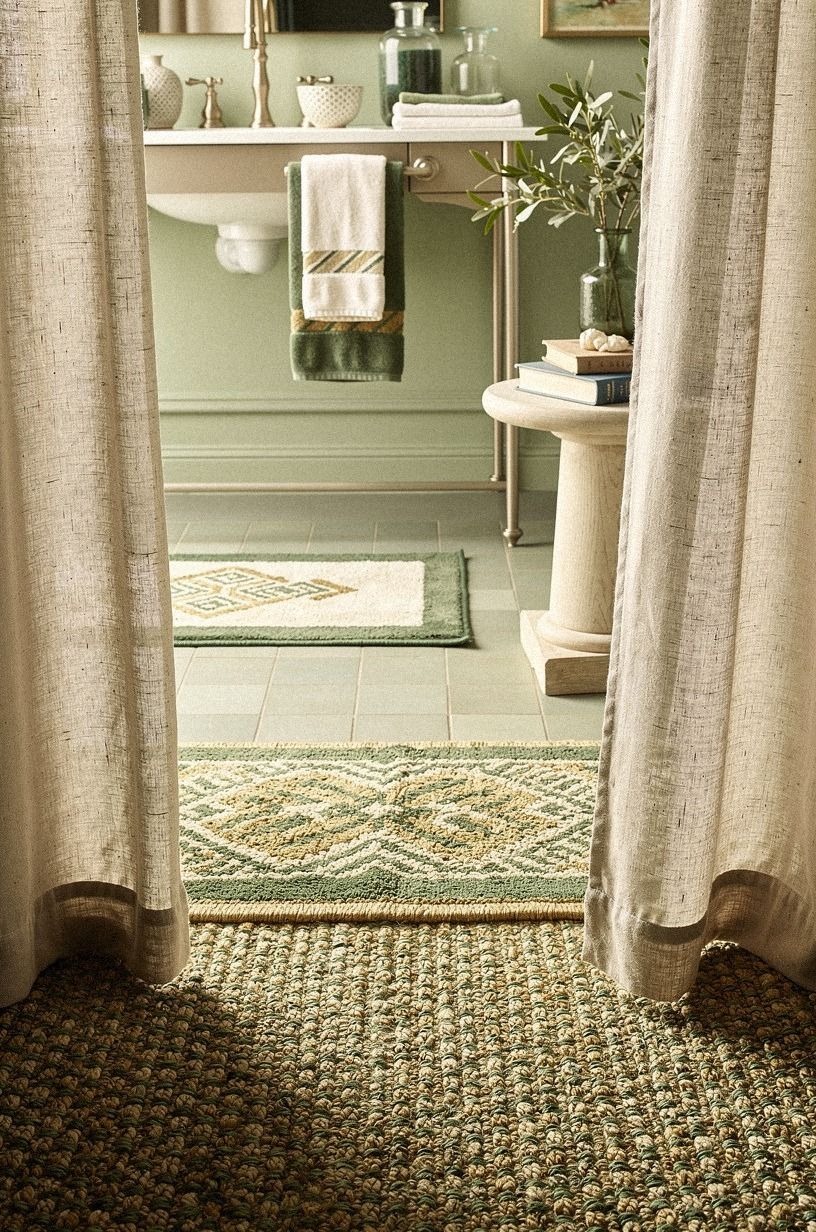
A bathroom can look clean and still feel hard if every surface is glazed, painted, or metallic. Add a washed Belgian linen bath mat or a flatwoven cotton runner where you step out of the shower. The texture softens the room without introducing a bulky pile.
You’ll want a washable piece that dries quickly, especially in a bathroom without strong ventilation. I’d skip thick memory foam if the room stays damp. It can feel pleasant on day one and hold moisture longer than you expect.
Use a soft cream rather than bright white. Warm ivory and oatmeal will connect the floor to your emerald accents and brushed-gold details. And if you’re styling a green or gold room, keep the mat plain so the color remains the main event.
16Plan the room around a 36-inch shower
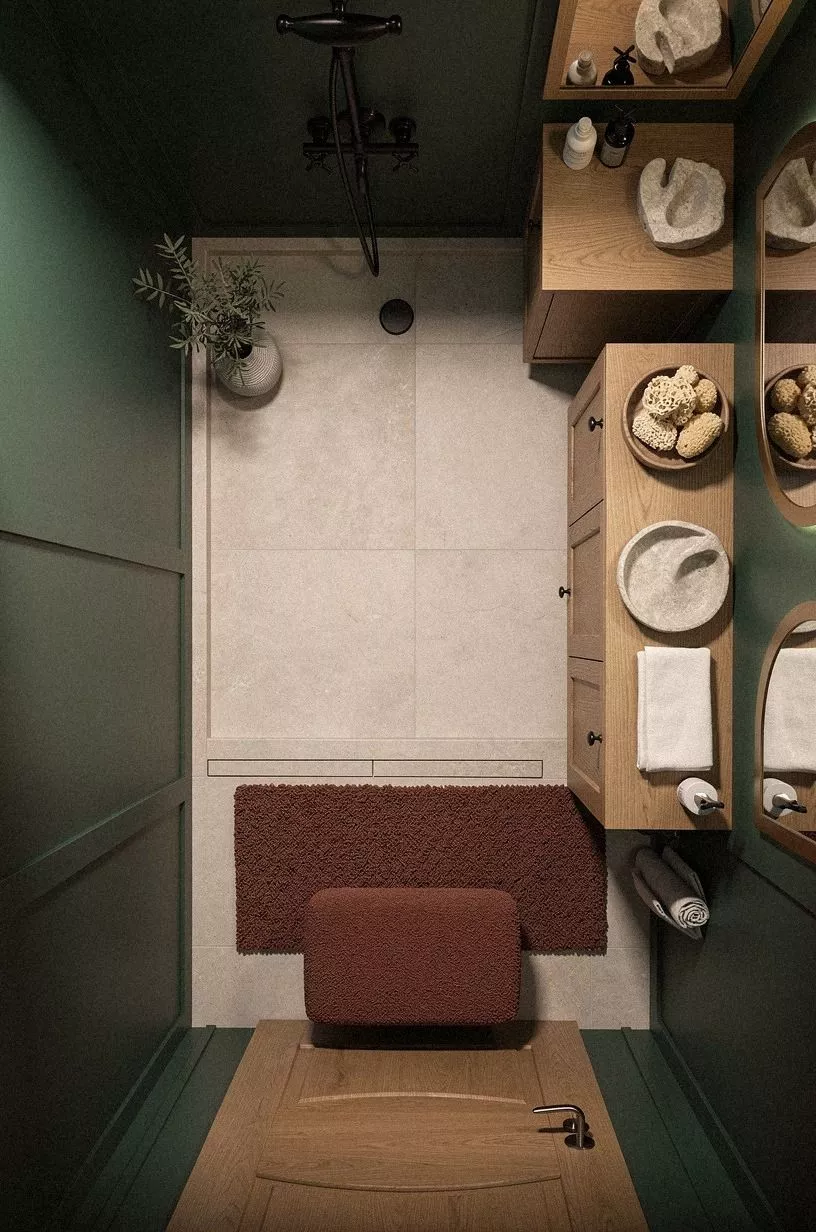
A comfortable shower generally needs at least 36 by 36 inches, or 91 by 91 centimeters, of clear space. That measurement should guide your layout before you choose tile, because a fashionable finish won’t compensate for shoulders hitting the wall every morning.
Choose a forest-green shower floor with smaller mosaic tile for grip, then bring organic bouclé into a dry-zone stool or bench. You’ll want the pattern to feel quiet underfoot. I’d avoid a highly polished surface in a wet zone, even if the sample looks luxurious.
Keep the fixtures on one wall when possible. A recessed niche can hold shampoo without adding a shelf to your sightline, and a clear glass panel keeps the room open.
If you’re planning a larger renovation, these mid-century modern bathroom floor tile ideas can help you compare scale and texture. You can also review these mid-century tile layouts before choosing a mosaic.
17Hang linen instead of a heavy shower curtain
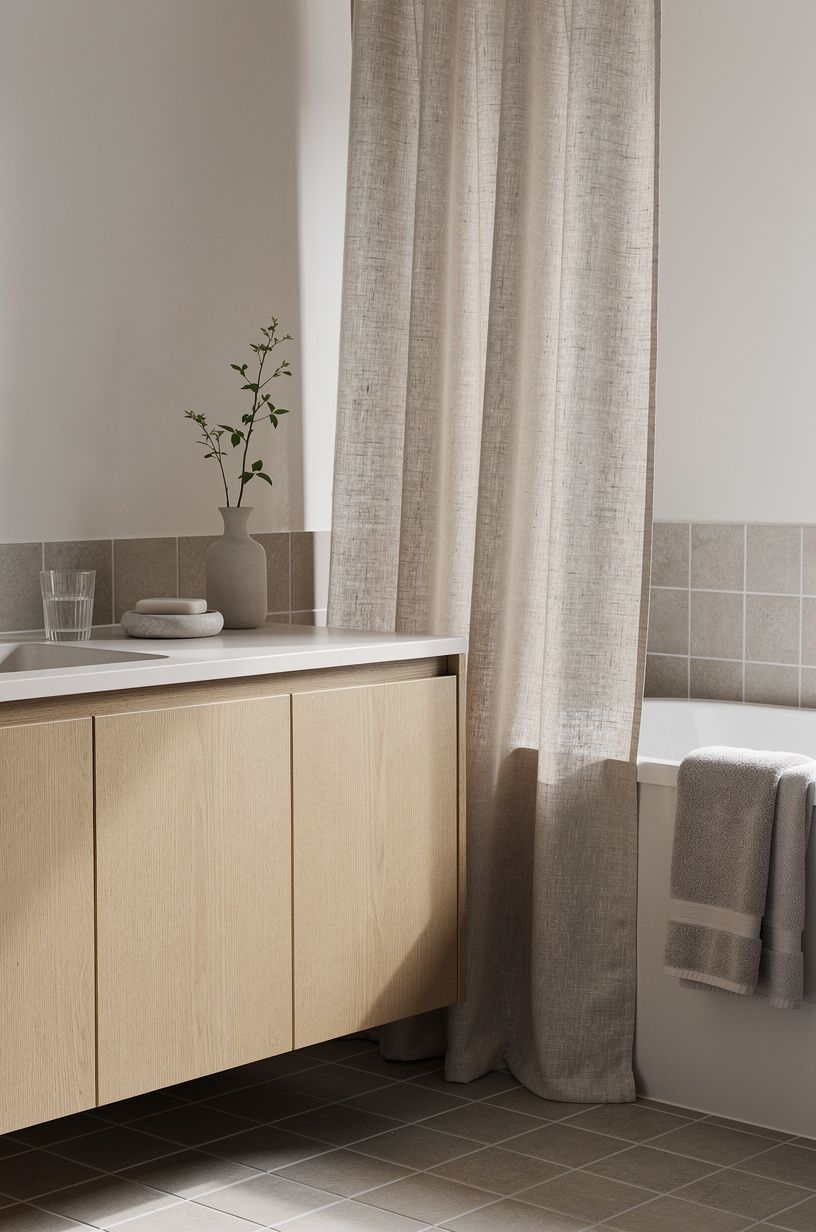
A linen shower curtain makes a bathroom feel softer and more residential, especially when the vanity and tile are simple. Choose a washed linen curtain in dusty rose, then hang it close to the ceiling so the fabric falls in a long, clean line. Nero Marquina black marble with white veins can add structure around the tub or shower.
You’ll want a proper liner behind it and enough width for generous folds. A flat, narrow curtain looks skimpy, while too much fabric can crowd a small tub. I’d skip shiny polyester here.
It catches light in a way that fights the calm, matte surfaces around it.
Use a curved rod only if it gives you meaningful elbow room. Otherwise, a straight rod in aged brass will keep the geometry crisp. A tension rod is a useful rental solution, and you won’t need to damage the wall to make the swap.
18Price the calm before you renovate
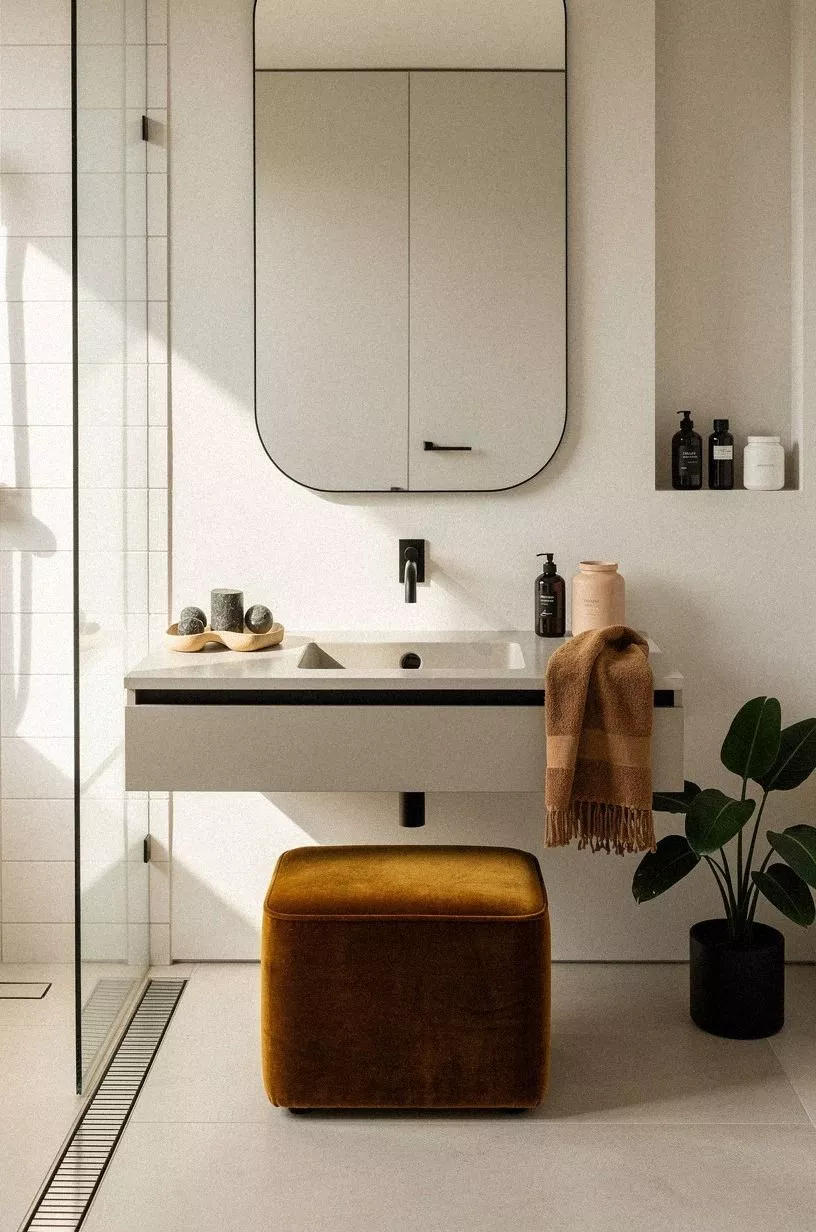
A bathroom refresh can stay manageable if you decide which surface deserves the money. Paint, a mirror, a faucet, and textiles can change the mood without moving plumbing. A full shower redo is a different project, and you’ll want your budget to acknowledge that before demolition starts.
I’d put your first dollars toward lighting and the vanity if the room feels cold. You can live with dated floor tile longer than you can live with poor task light. And if your budget is closer to $200, paint the walls, replace the mirror, and add one warm textile before touching the plumbing.
19Finish with one collected focal point
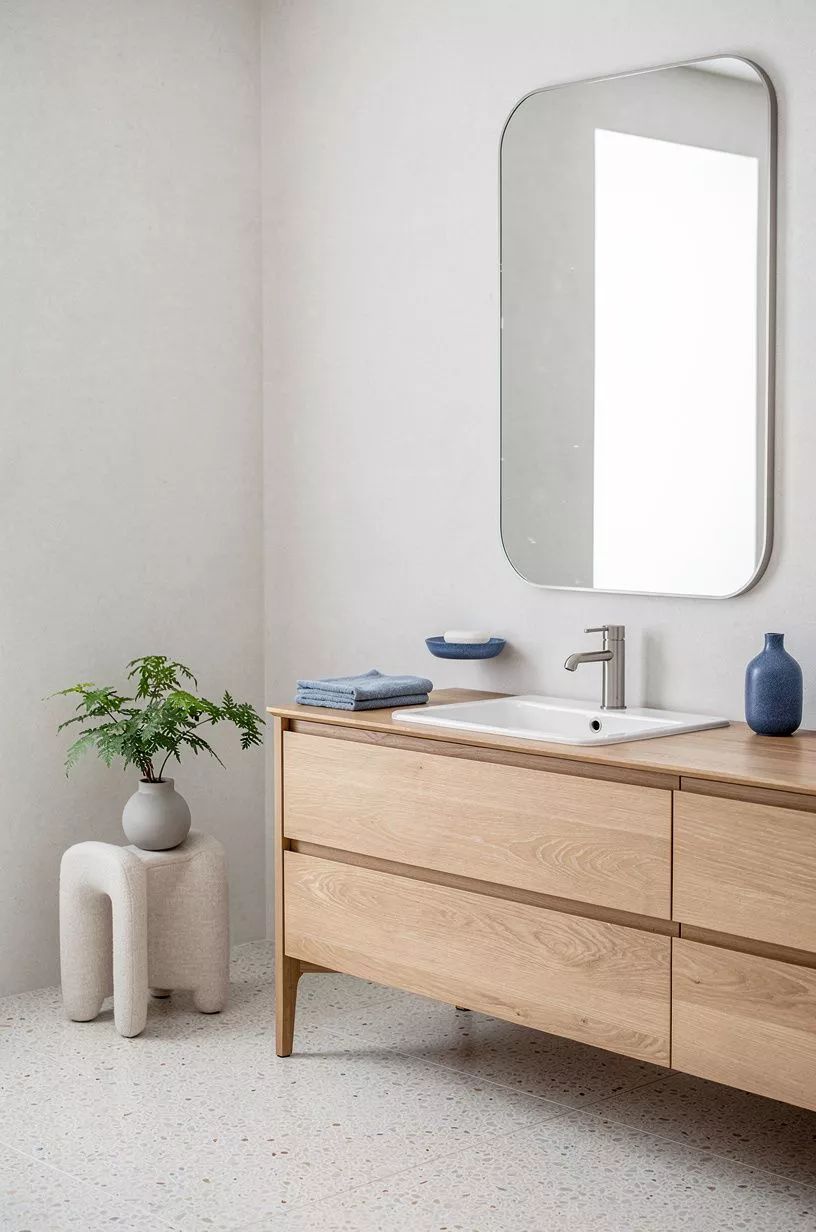
Every calm bathroom needs one detail that feels personal rather than purchased as part of a set. Try a Carrara marble tray, a copper-framed abstract print, or a handmade ceramic vessel beside the sink. Your eye needs a focal point, but it doesn’t need a wall full of objects.
You’ll want to protect artwork from direct steam and splashes, so place it outside the shower zone. I’d skip mass-produced signs with bathroom phrases. They flatten the room’s personality and compete with the material details you’ve chosen carefully.
A single inherited bowl can do more than three matching accessories. Fill it with rolled washcloths or leave it empty if the shape is good enough. This is where your bathroom starts to feel lived-in, and that small imperfection is worth keeping!
Why This Style Still Feels Fresh
I think Scandinavian mid-century design lasts because it understands the difference between simplicity and emptiness. The best rooms aren’t bare.
They’re edited. A walnut vanity, a warm bulb, a towel with real weight, and one useful stool can create more comfort than a crowded shelf of decorative objects.
I’ve made the mistake of treating a small bathroom like a showroom. Everything matched, nothing felt like mine, and the polished surfaces bounced light around without giving it anywhere to settle.
The fix wasn’t another accessory. It was removing two things, warming the bulb, and adding a wood grain I could feel under my hand.
Your choices should also respect the room’s physical limits. A 36-inch shower needs to remain comfortable, and a 21-inch toilet clearance in front is the minimum you’ll want to preserve. Style can’t rescue a layout that makes you squeeze sideways.
Start with movement, then choose the finishes that support it.
I’m especially drawn to the tension between pale Scandinavian restraint and mid-century warmth. Farrow & Ball Hague Blue can hold drama, while oak and linen keep it from becoming severe. Benjamin Moore Chestertown Buff can feel gentle, while matte black hardware gives it a little edge.
You don’t need to choose between calm and character.
And you don’t need to renovate everything at once. Paint first, live with it, then decide whether the mirror, faucet, or vanity is the true weak link. That slower rhythm usually produces a better room because you’re responding to how you use it, not copying a finished room.
The Questions I Get Asked Most
What is the best Scandinavian Mid-Century Bathroom Ideas for Clean, Cozy Calm for a small bathroom?
A floating oak-effect vanity and a walnut-framed mirror are strong choices because they keep the floor visible and add warmth without bulk. You’ll get more calm from one useful IKEA GODMORGON cabinet than from several open shelves competing for your attention.
Where can I buy Scandinavian Mid-Century Bathroom Ideas for Clean, Cozy Calm pieces on a budget?
Look at IKEA, Target, Wayfair, Facebook Marketplace, and local thrift shops for wood furniture, mirrors, and textiles. You don’t need affiliate products to build the look. Search for solid teak, cane doors, and simple ceramic pieces, then inspect hinges and moisture damage before buying.
How much does a Scandinavian Mid-Century Bathroom Ideas for Clean, Cozy Calm makeover cost?
A small refresh typically falls within the $200-$1,200 budget tier for paint, a mirror, faucet, and textiles. Your free changes include editing clutter, rearranging storage, and changing bulb warmth. A new vanity or partial tile project moves the room into the $3,000-$9,000 mid-range tier.
Can I create a Scandinavian Mid-Century Bathroom Ideas for Clean, Cozy Calm on a budget?
Yes, and you can start with paint, a second-hand wood stool, and a washable cotton mat. Try Sherwin-Williams Sea Salt on one wall, replace mismatched bulbs, and group your daily items inside one basket. Those small moves can shift the room before you buy tile.
Is a Scandinavian Mid-Century Bathroom Ideas for Clean, Cozy Calm worth it in a small space?
Yes, because a small room benefits from restrained materials and visible floor space. Choose a floating vanity, a clear shower panel, and one wood tone. Keep at least 21 inches of clearance in front of the toilet so the layout stays comfortable as well as refined.
Is Scandinavian Mid-Century Bathroom Ideas for Clean, Cozy Calm a good idea for a rental?
Yes. Use peel-and-stick tile behind the sink, a tension shower rod, removable hooks, and a freestanding cane cabinet.
You’ll want to avoid adhesive near damp grout unless the product is rated for bathrooms. For more renter-friendly layouts, see these mid-century modern apartment bathroom ideas, plus these small rental bathroom ideas.
Where I’d Start First
If I had to pick one, I’d start with the floating oak vanity. It exposes floor space, adds warmth, and fixes storage in one move.
Pin this idea for later, then compare your wall color and lighting beside it before buying anything else. These small mid-century bathroom ideas can help you check the proportions, while these apartment-friendly bathroom ideas are useful if you cannot alter the walls.
That order keeps every later choice calmer.