
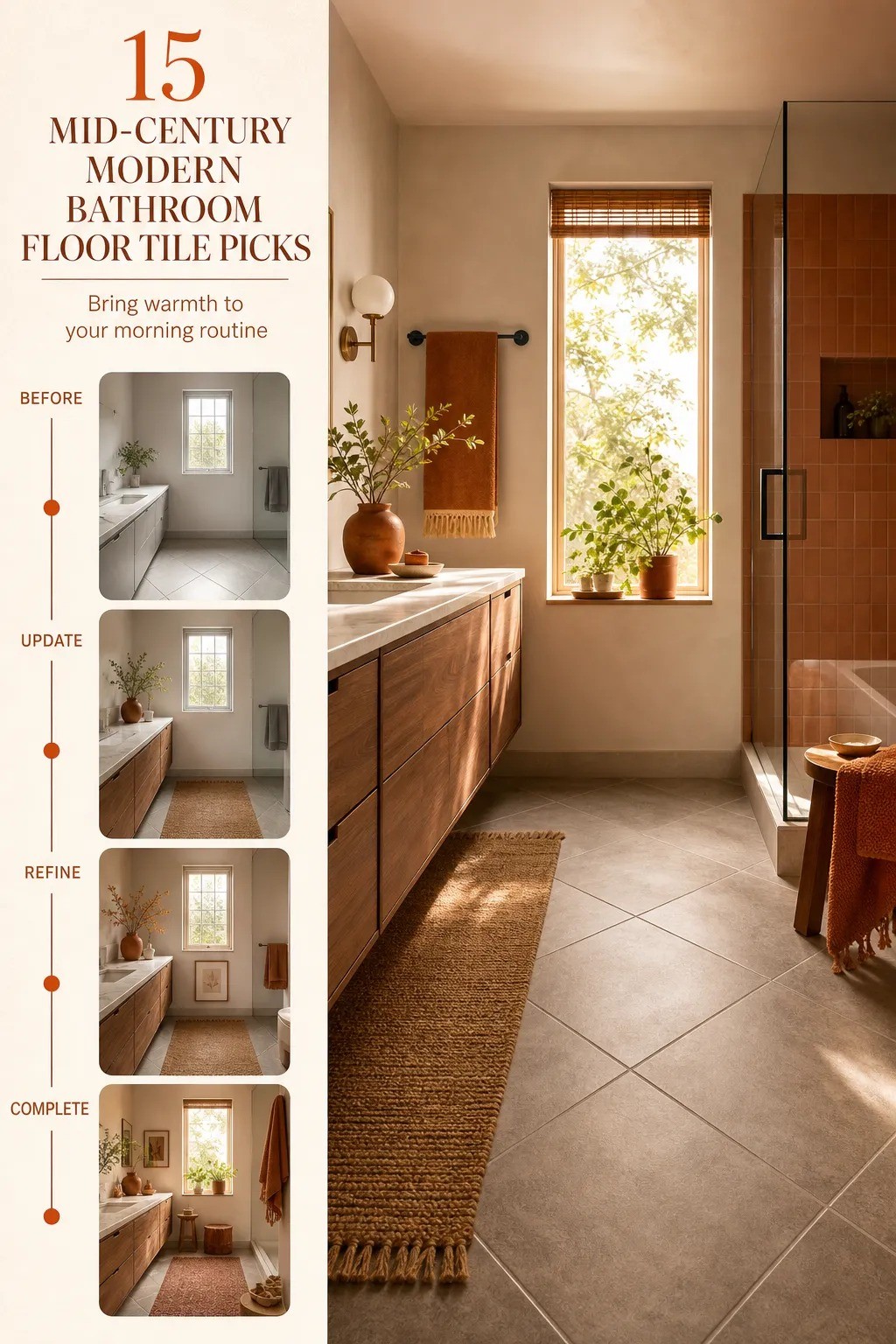
Mid-century modern bathroom floor tile ideas work best when you choose a clear pattern, warm undertone, and scale that lets a small room breathe. I once chose tiny high-contrast mosaic for a narrow bath, and it made the floor feel like graph paper. Bigger thinking fixes that.
- Lay large-format warm gray tiles on a diagonal
- Use the Walnut Frame Rule around a simple field tile
- Float terrazzo chips across a pale ground
- Can checkerboard tile stay mid-century without looking like a diner?
- Run tiles that look like wood toward the longest wall
- Anchor a bathroom with brown floor using clay-toned grout
- Build the Three-Shape Mosaic with penny, square, and rectangle tiles
- Skip glossy subway tile and choose a matte stacked grid
- Mix olive and bone in a quiet pinwheel pattern
- Frame the vanity zone with a single dark tile rug
- Let a soft green hexagon carry the whole room
- Paint the walls deep, then lighten the floor
- Choose zellige only where your feet won’t demand perfection
- Try the Long-Line Layout beside a 36-inch shower
- Go removable in a rental, but keep the palette serious
1Lay large-format warm gray tiles on a diagonal
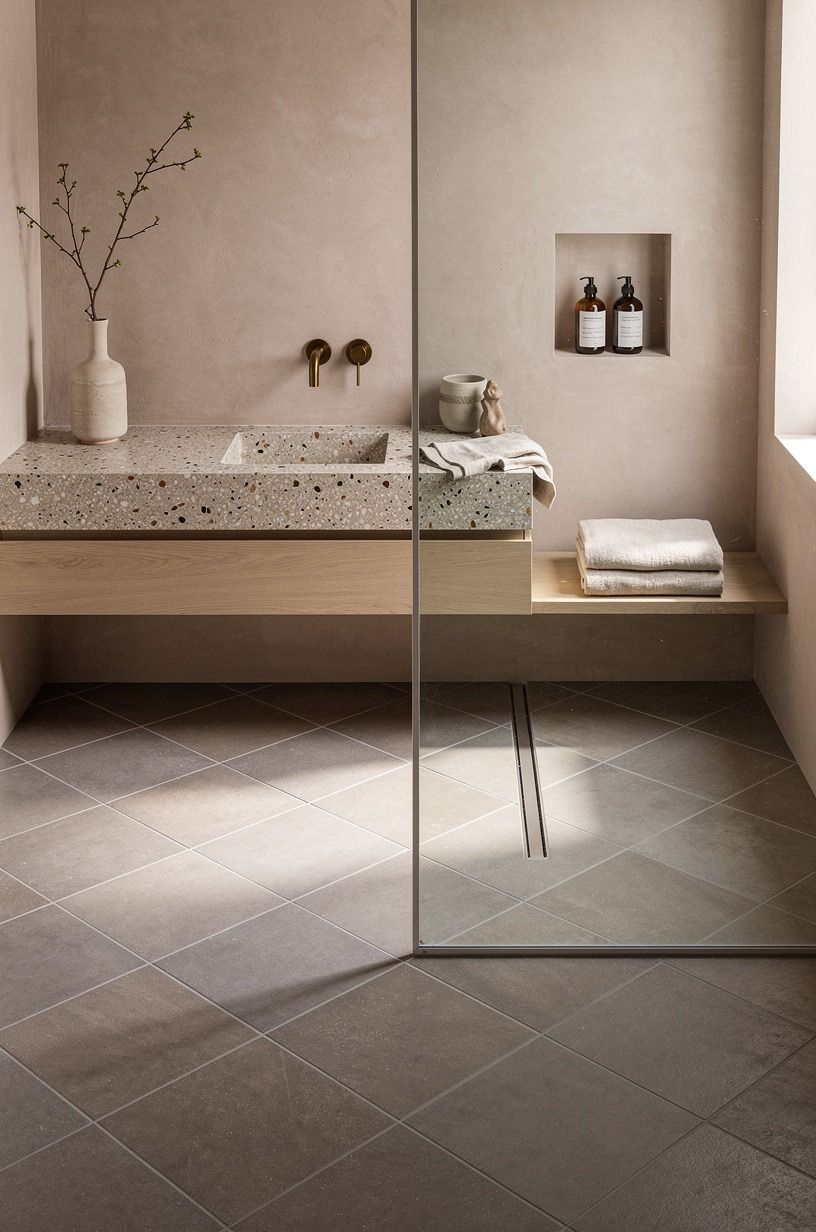
A diagonal layout gives your eye a longer route across the room, which is why it makes a compact bathroom feel more airy. Choose oversized-chip terrazzo in clay, linen, and aged-brass tones rather than cold cement gray, especially if your vanity is white.
I’d skip bright white grout here. It grids up the floor and makes every cut tile shout. A quiet warm-gray grout lets your terrazzo read as one broad, modern field, while your wood vanity and brass hardware get to do the talking.
2Use the Walnut Frame Rule around a simple field tile
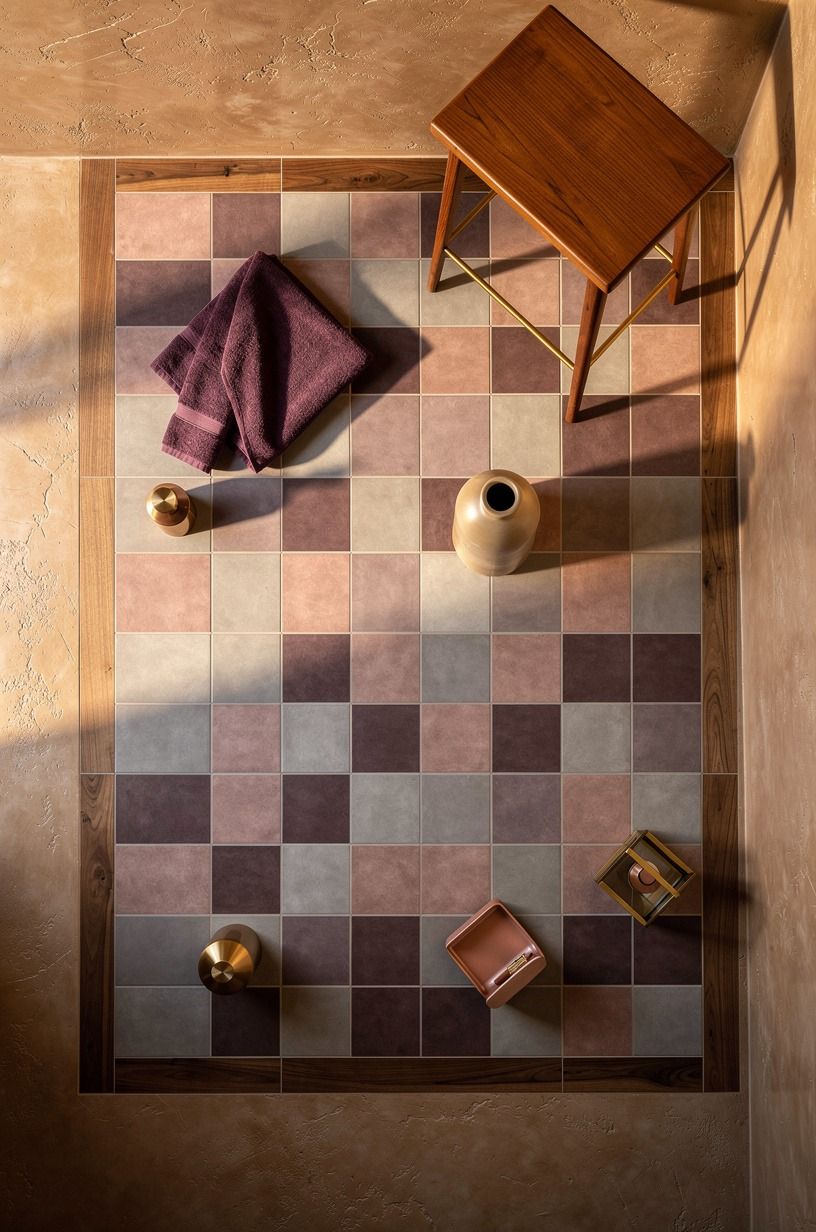
The Walnut Frame Rule is simple: let your floor stay restrained, then bring the mid-century character in through a warm wood border, vanity, or bath mat. You don’t need a novelty pattern under every surface.
Pair a soft plum-and-gray Venetian plaster finish with an IKEA TONSTAD oak-effect vanity and a walnut-framed medicine cabinet. You’ll get that gentle, collected look without making your small room feel busy. For more ways to balance retro wood and clean surfaces, see these mid-century bathroom tile directions.
3Float terrazzo chips across a pale ground
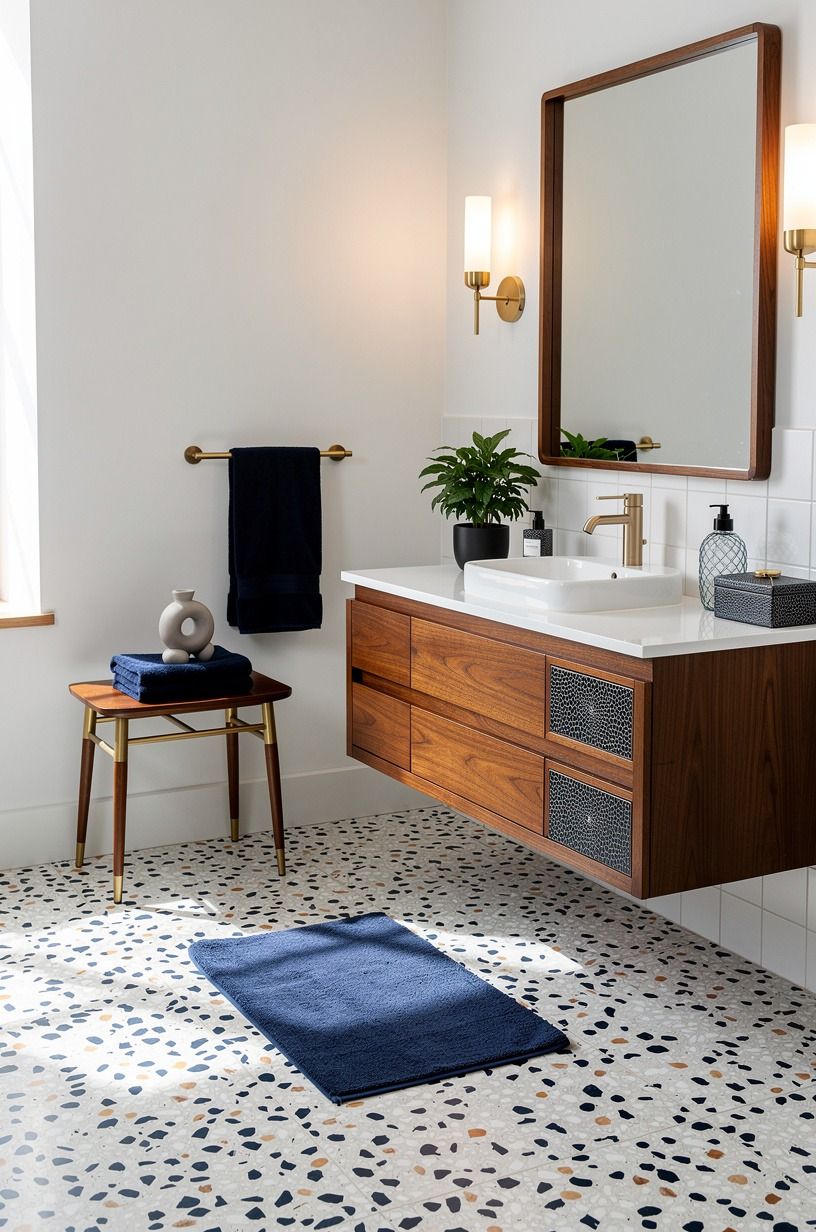
Terrazzo earns its place because the flecks add movement without creating hard lines. In a navy, white, and walnut bathroom, keep the surrounding surfaces quiet and use shagreen accents sparingly so the mix still feels tailored.
4Can checkerboard tile stay mid-century without looking like a diner?
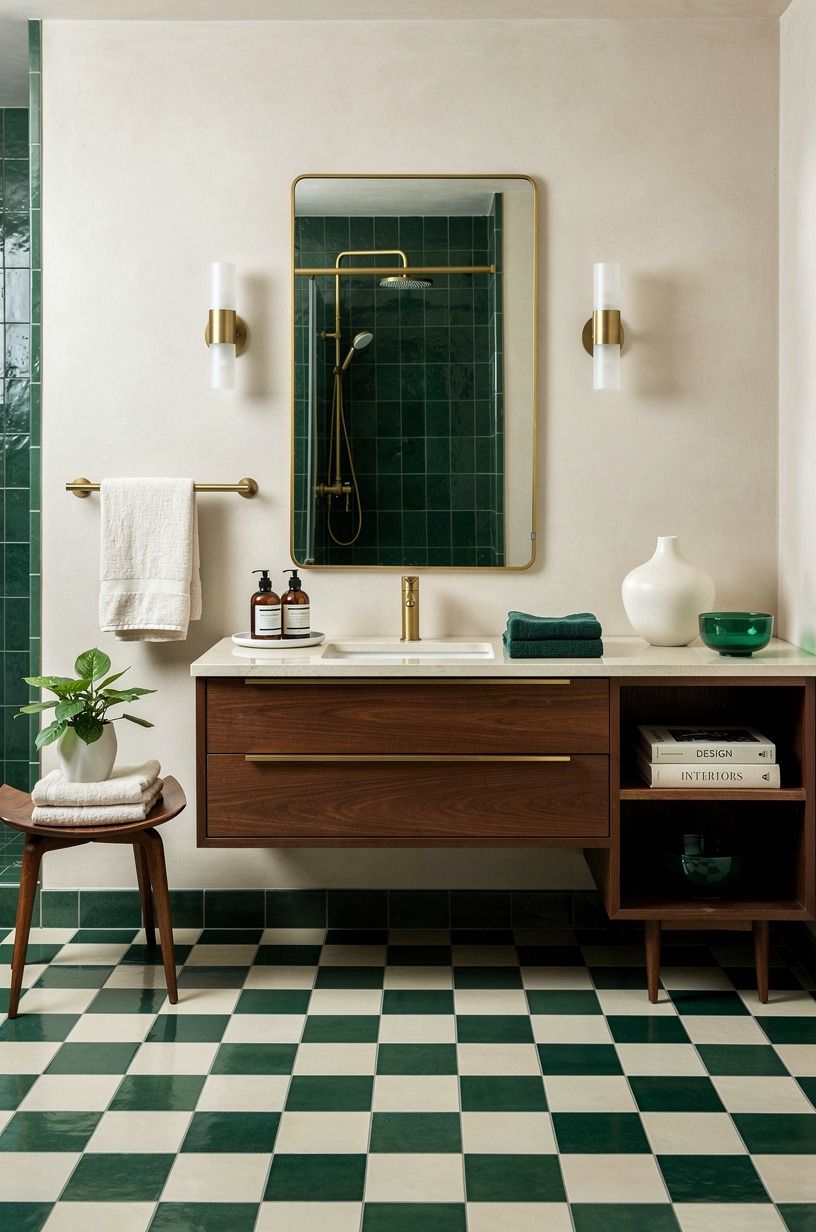
Yes, if you soften the contrast and keep the squares generous. Emerald, gold, and cream feel refined; stark black and white can turn theatrical before you’ve even hung a towel.
Use 8-inch unglazed porcelain squares with a warm brown grout, then add a brushed brass faucet, washed Belgian linen, and an oval mirror. Your bathroom with brown floor will feel grounded, not themed.
But don’t repeat the checkerboard in the shower. One patterned plane is enough!
5Run tiles that look like wood toward the longest wall
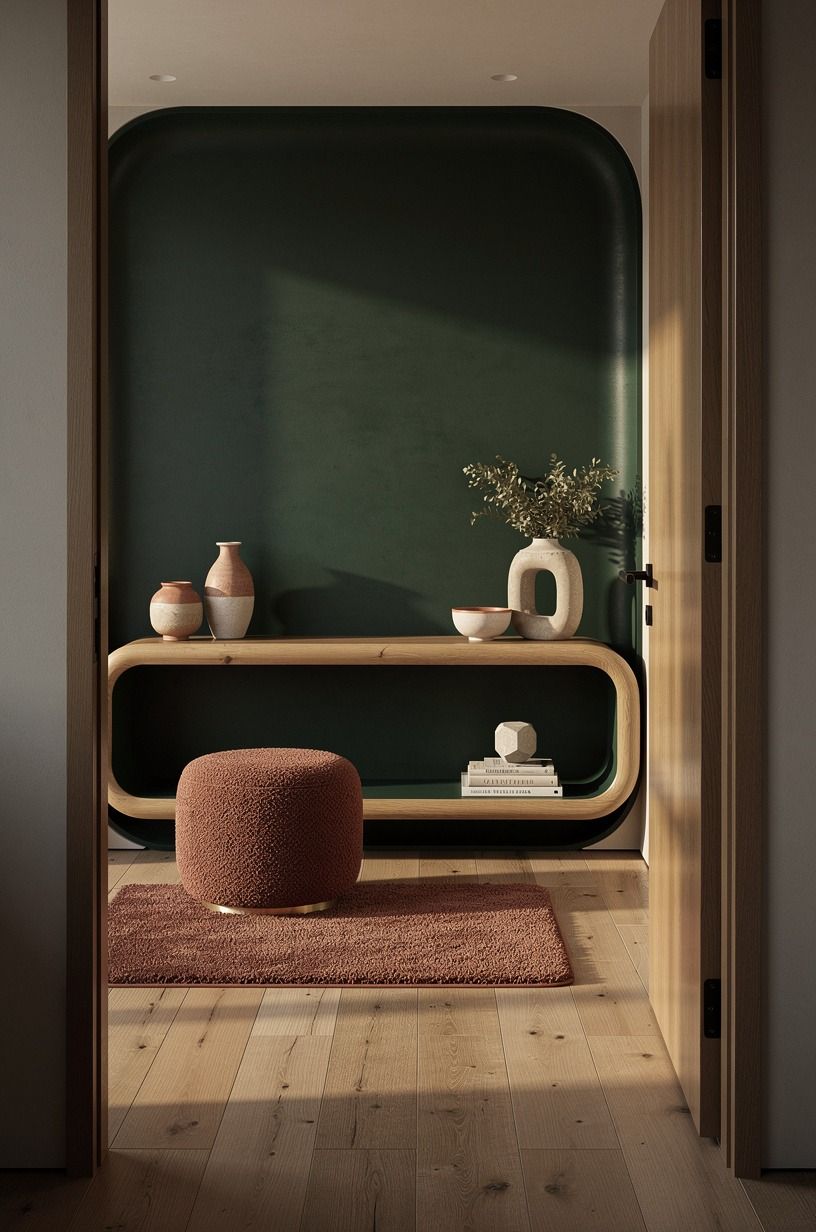
Wood-look planks can stretch a narrow bath when you run them with the room’s longest dimension. The effect is subtle, which is precisely why it works.
Choose planks in forest green, rust, and natural-oak tones with a low-sheen finish and an organic bouclé bath mat. You’re after the calm, linear feel of old cabinetry, not a fake farmhouse floor. Keep the vanity height within the standard 32 to 36 inches so the room still feels proportionate above that long floor line.
6Anchor a bathroom with brown floor using clay-toned grout
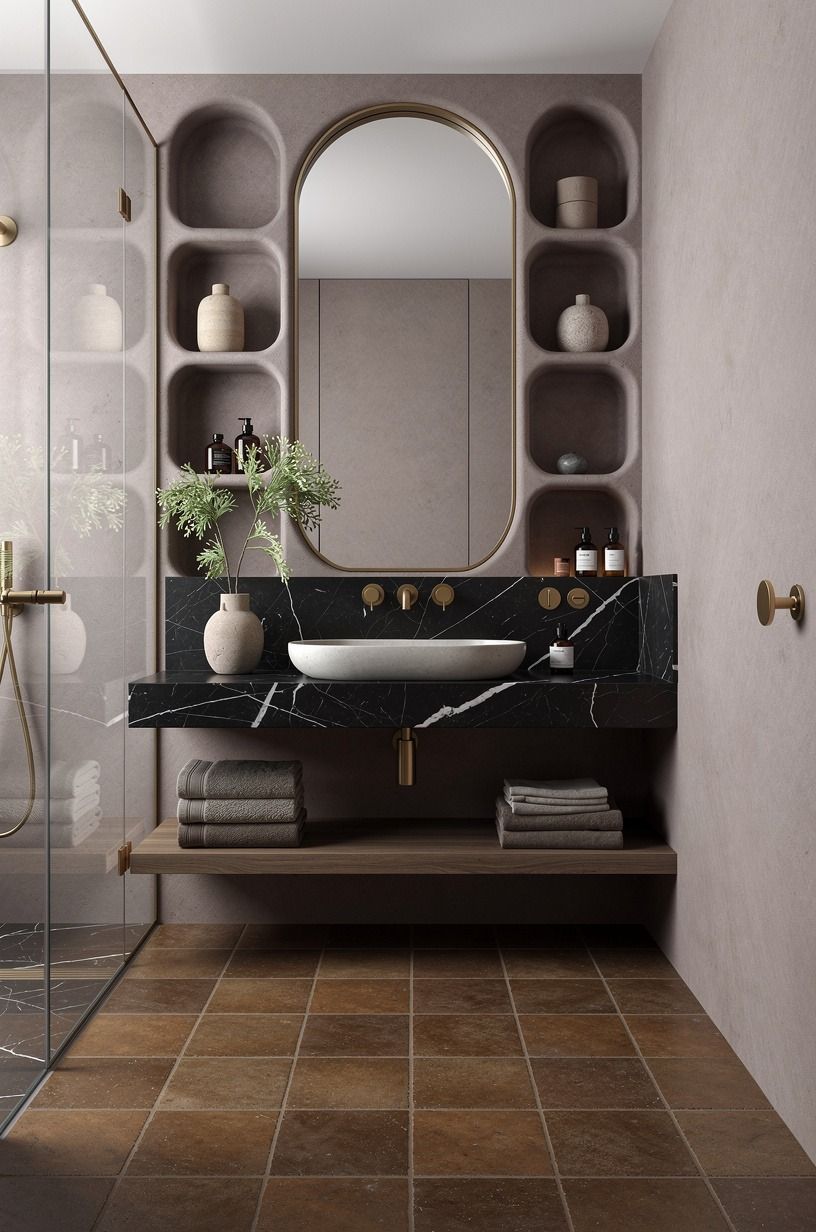
Brown floor tile doesn’t have to be dark. The best versions land somewhere between tobacco, cinnamon, and sun-baked clay, with enough variation that water spots don’t become your weekend project.
I’d pair dusty rose, charcoal, and brass with Nero Marquina black marble with white veins rather than real unsealed terracotta in a full family bath. Add Farrow & Ball Hague Blue No. 30 above a chair rail, and your floor will look bold against walls that stay moody through evening light.
7Build the Three-Shape Mosaic with penny, square, and rectangle tiles
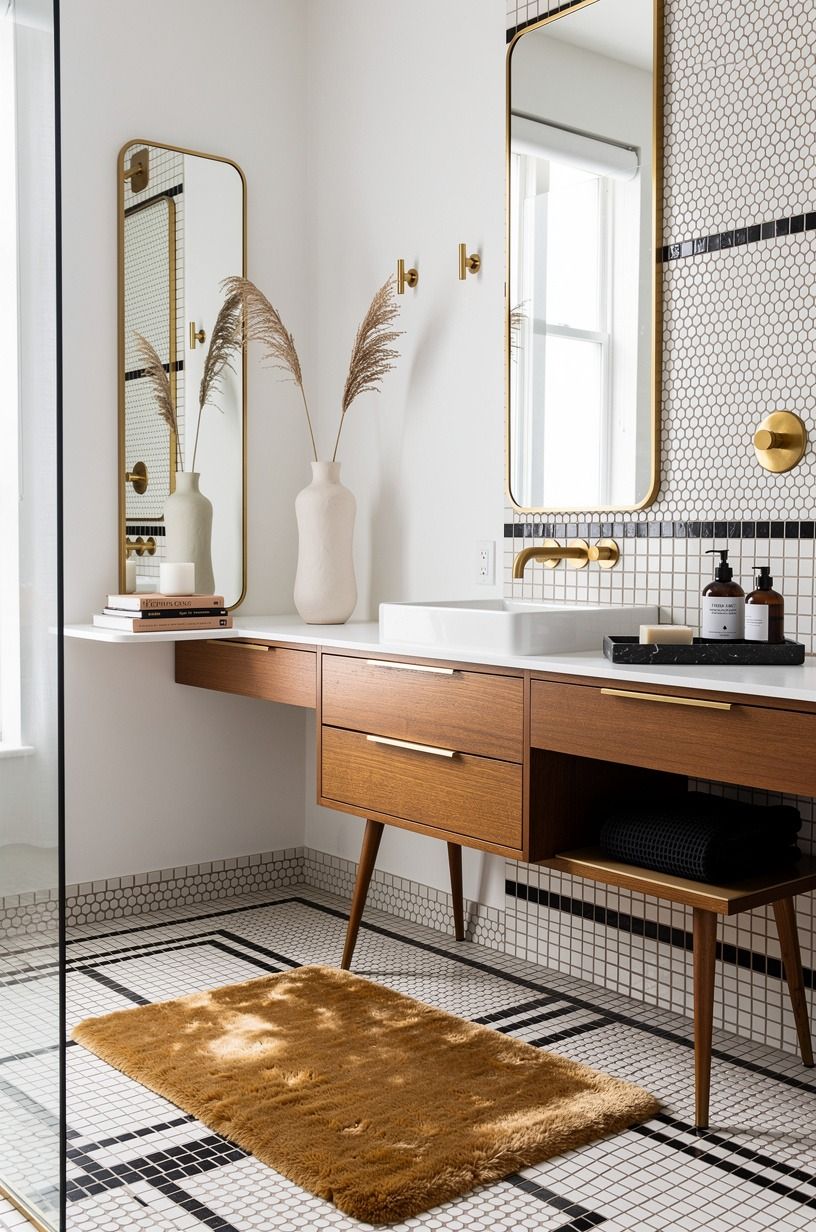
The Three-Shape Mosaic works when you limit yourself to one finish and one color family. Penny rounds near the vanity, square field tile through the center, and a slim rectangle at the threshold can make a little washroom tile plan feel intentional.
Your restraint matters more than your tile count. Use warm white, camel, and black accents with deep-pile mohair velvet, and reserve aged bronze Schluter edging for where the shapes meet.
And leave the rest alone. If you’re styling a half bath, these bold mid-century powder room ideas show how much personality one small room can hold.
8Skip glossy subway tile and choose a matte stacked grid
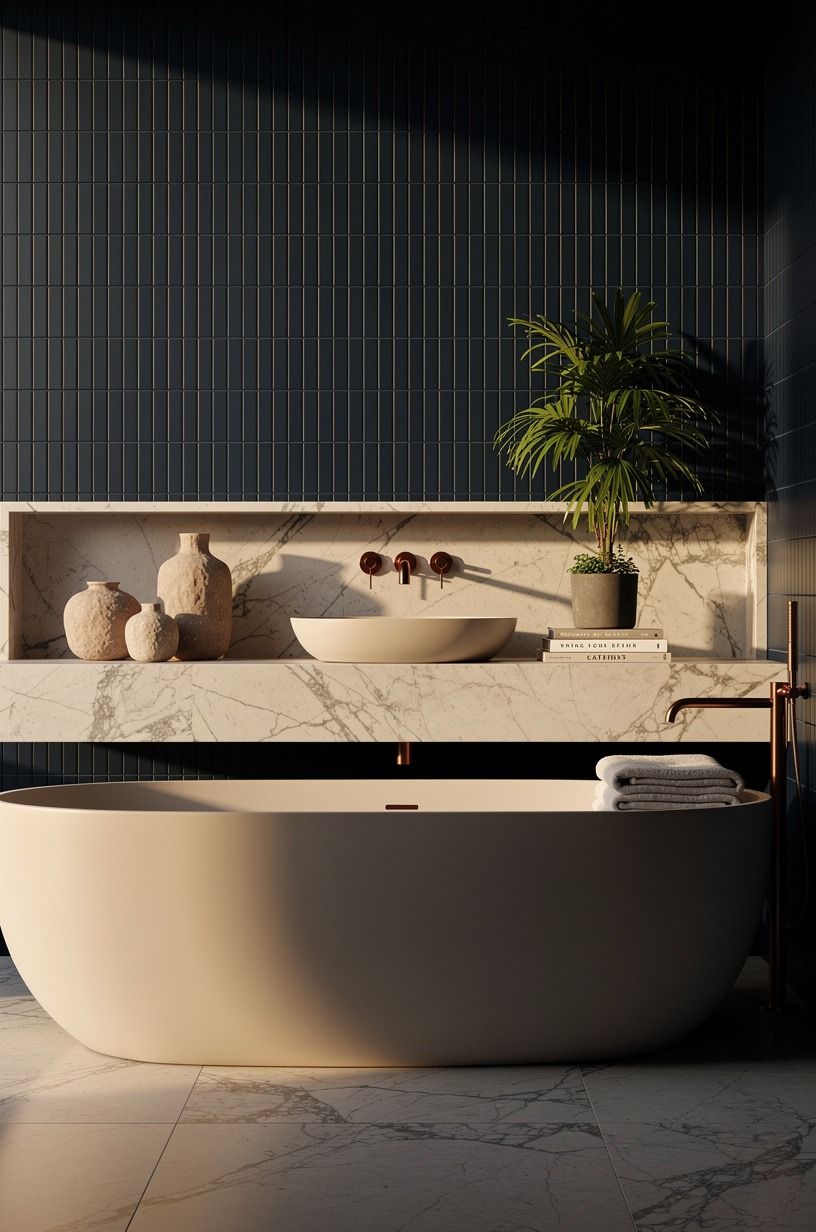
Glossy subway tile belongs on the wall if you love it. For the floor, Carrara marble with subtle gray veining gives midnight blue, copper, and ivory a calmer, more enduring base.
9Mix olive and bone in a quiet pinwheel pattern
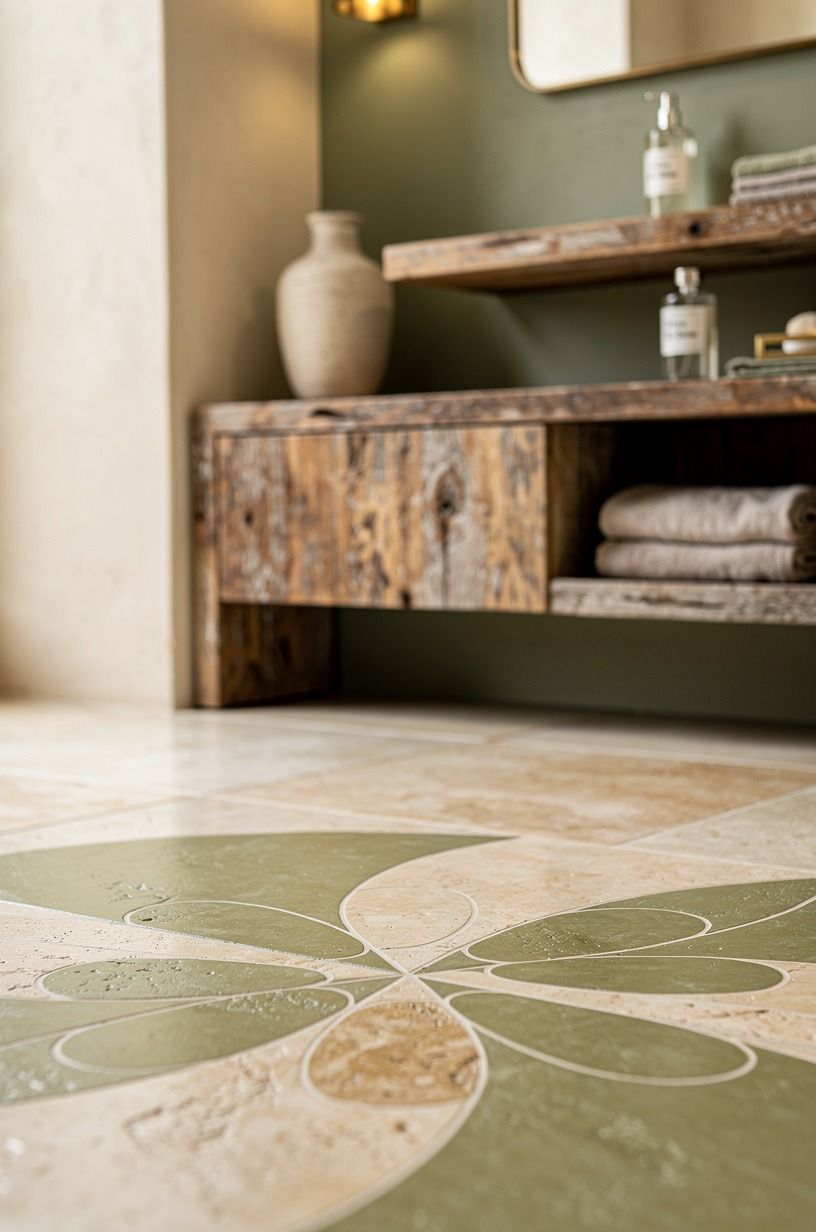
A pinwheel pattern gives you a retro reference without the visual noise of a loud encaustic print. Keep the palette to sage green and warm cream, then let your fixtures carry the shine.
Use Sherwin-Williams Sea Salt SW 6204 on the walls with a reclaimed weathered teak stool and small olive details. It’s calming in morning light, particularly if your room has a window facing east.
Your towels can stay plain. Thick Turkish cotton in cream, one teak stool, and nothing fussy.
10Frame the vanity zone with a single dark tile rug
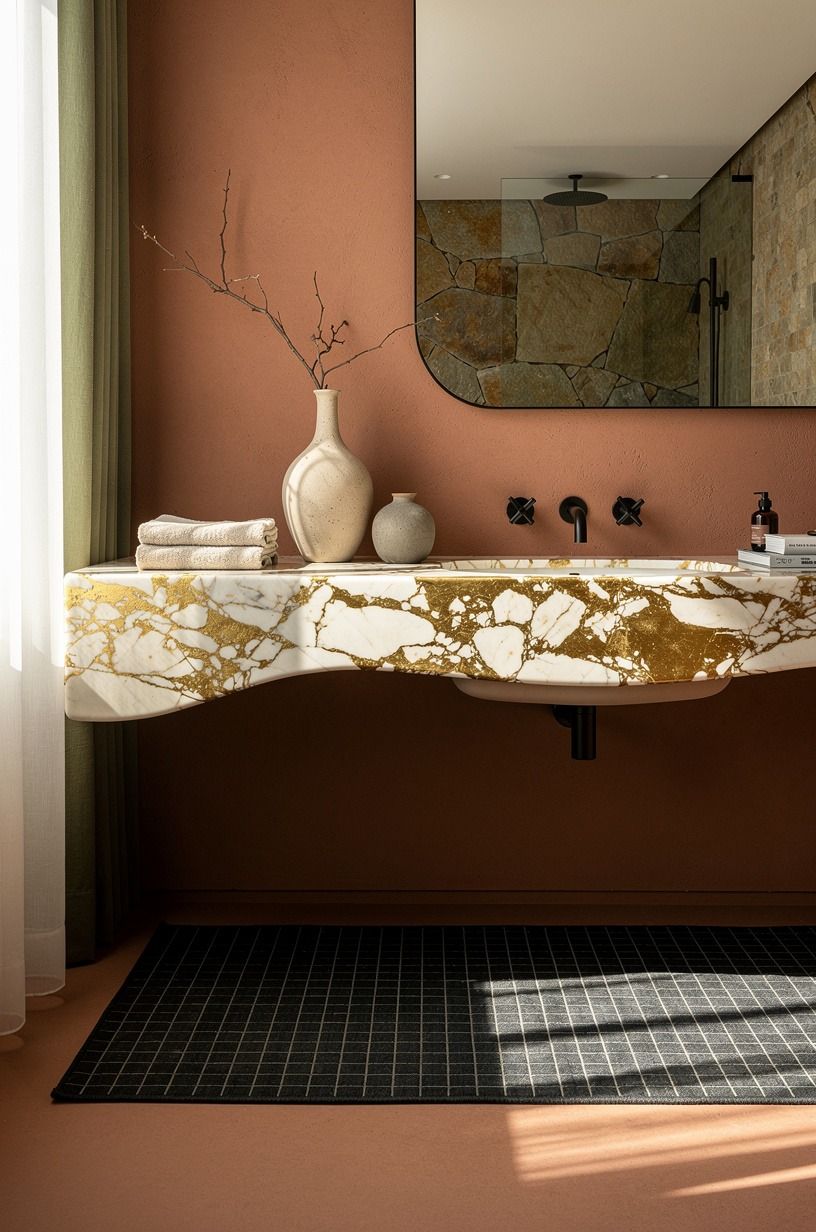
A tile rug is a borderless inset of darker tile under the vanity, and it’s one of the few decorative moves I think is worth doing in a small bath. It gives the room a center without adding another object to clean around.
Set terracotta, stone, and olive around a Calacatta marble with gold veining vanity zone, then keep the rest of the floor a pale stone-look porcelain. You’ll want the inset to stop before the toilet clearance, leaving the required 21 inches in front feeling open. For compact layouts that don’t feel cramped, browse these small mid-century bathroom ideas.
11Let a soft green hexagon carry the whole room
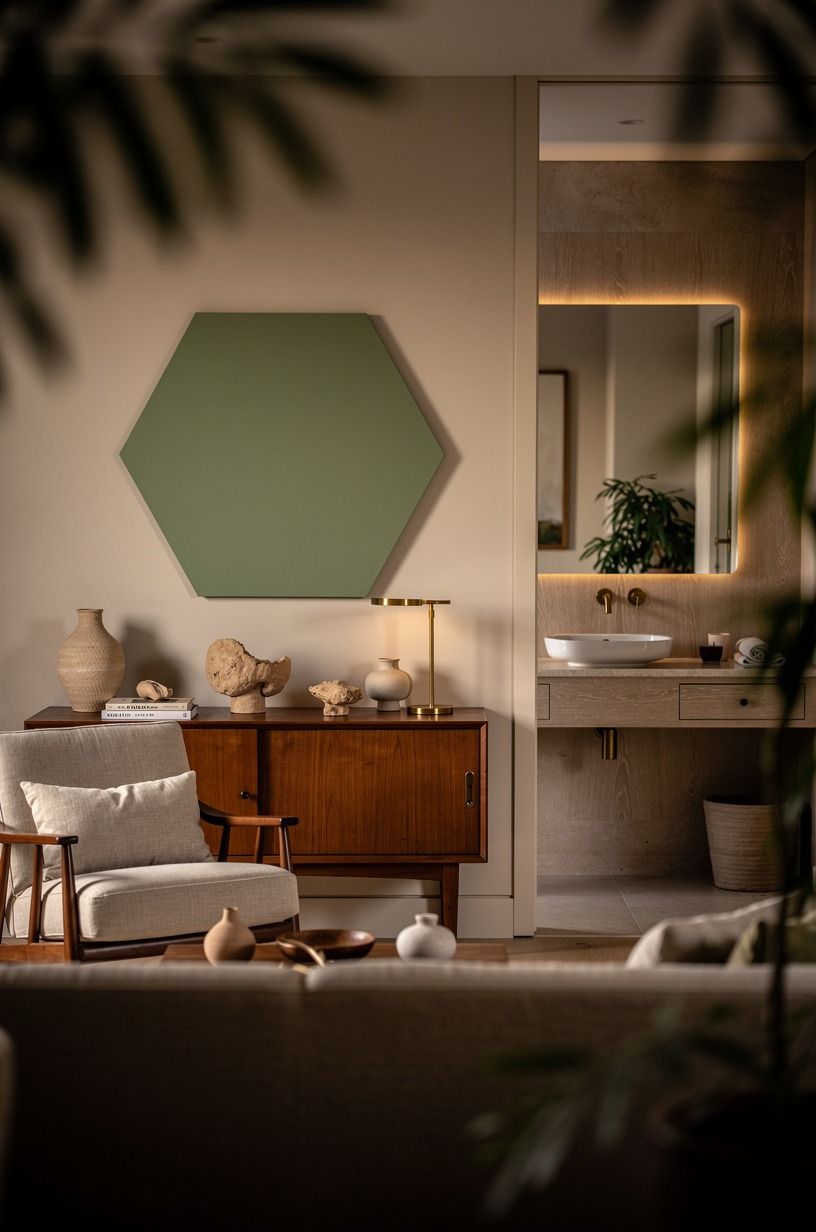
Hexagon tile can go wrong when it’s too small, too shiny, or too sweet. Clay, linen, and aged brass keep it mature, especially beside a cerused white-oak vanity.
12Paint the walls deep, then lighten the floor
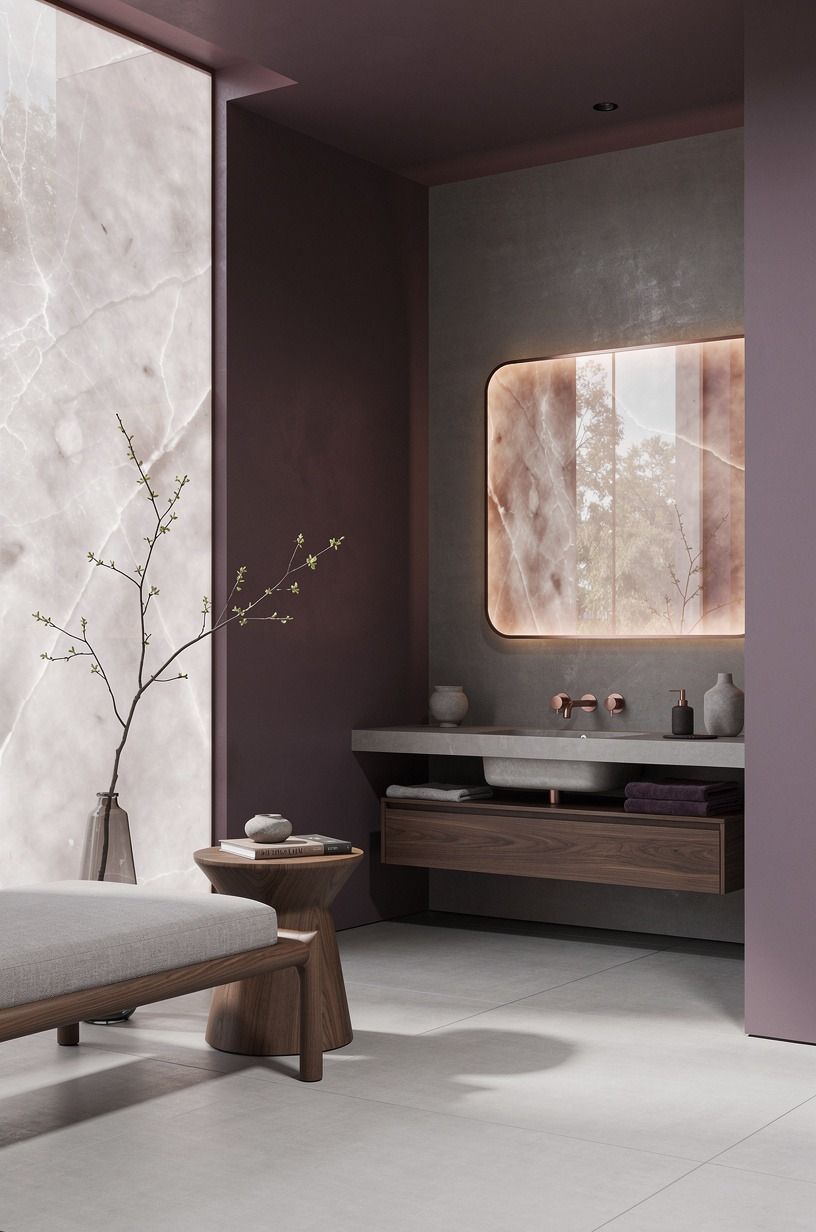
Dark walls over pale floors create height. It’s an old visual move, but it still works because your eye travels upward instead of stopping at a busy floor.
Try a plum-and-gray scheme with a backlit translucent onyx floor detail and unlacquered brass developing soft patina at the faucet. You’ll get a dramatic room that doesn’t read small.
But use warm bulbs. Cool LEDs against deep paint make even a lovely tile choice feel like a dentist’s office.
13Choose zellige only where your feet won’t demand perfection
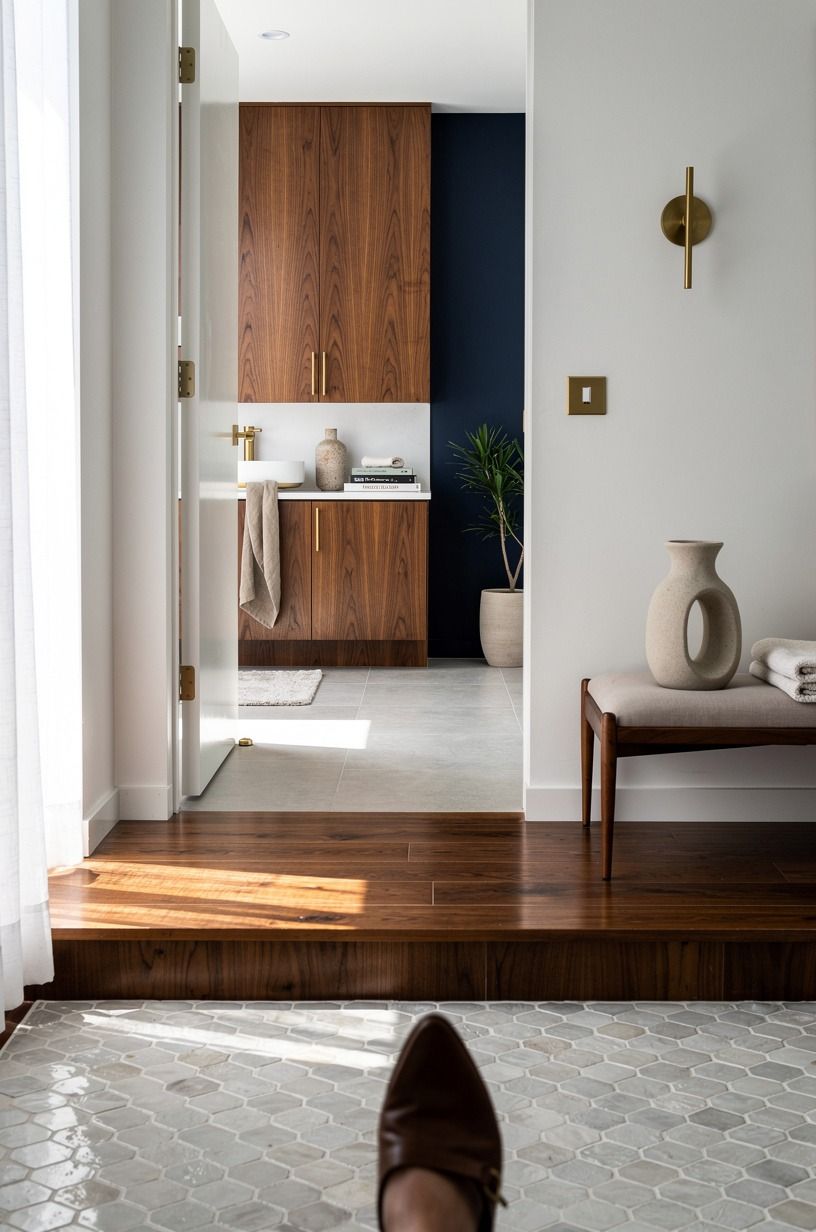
I love zellige for its uneven glaze and soft ripples, but I wouldn’t use it across a main bathroom floor. In a navy, white, and walnut room, book-matched walnut offers the warmth that handmade tile usually supplies without asking your feet to tolerate an uneven daily surface.
14Try the Long-Line Layout beside a 36-inch shower
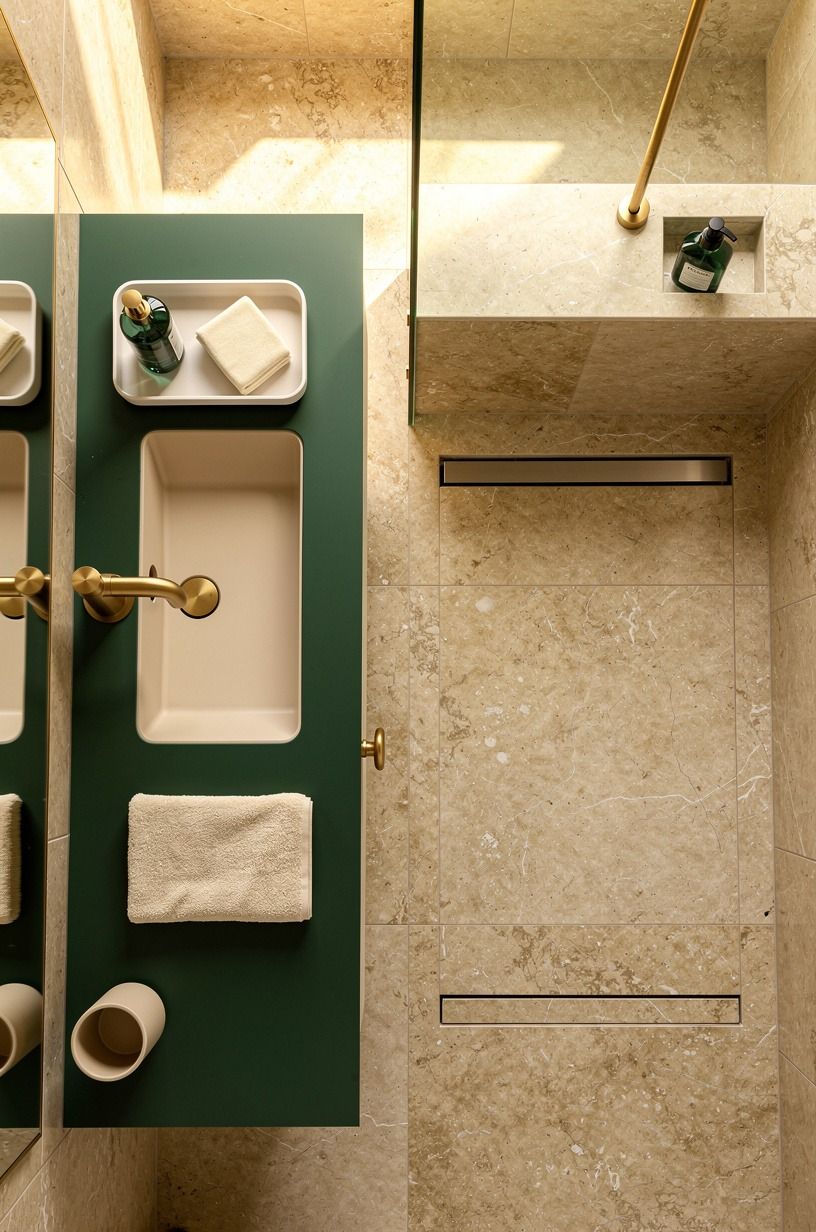
The Long-Line Layout uses thin rectangular tile in the same direction as your shower entry. It’s especially helpful when your shower is the room’s largest block, which happens more than people admit.
A comfortable shower needs at least 36 by 36 inches, so don’t fight that footprint with a tiny, complicated floor pattern. Lay warm travertine lengthwise from the door toward the shower, then repeat emerald, gold, and cream in the room’s smaller details. You’ll create a soft runway effect, and your bath will feel more spacious the second you step in.
15Go removable in a rental, but keep the palette serious
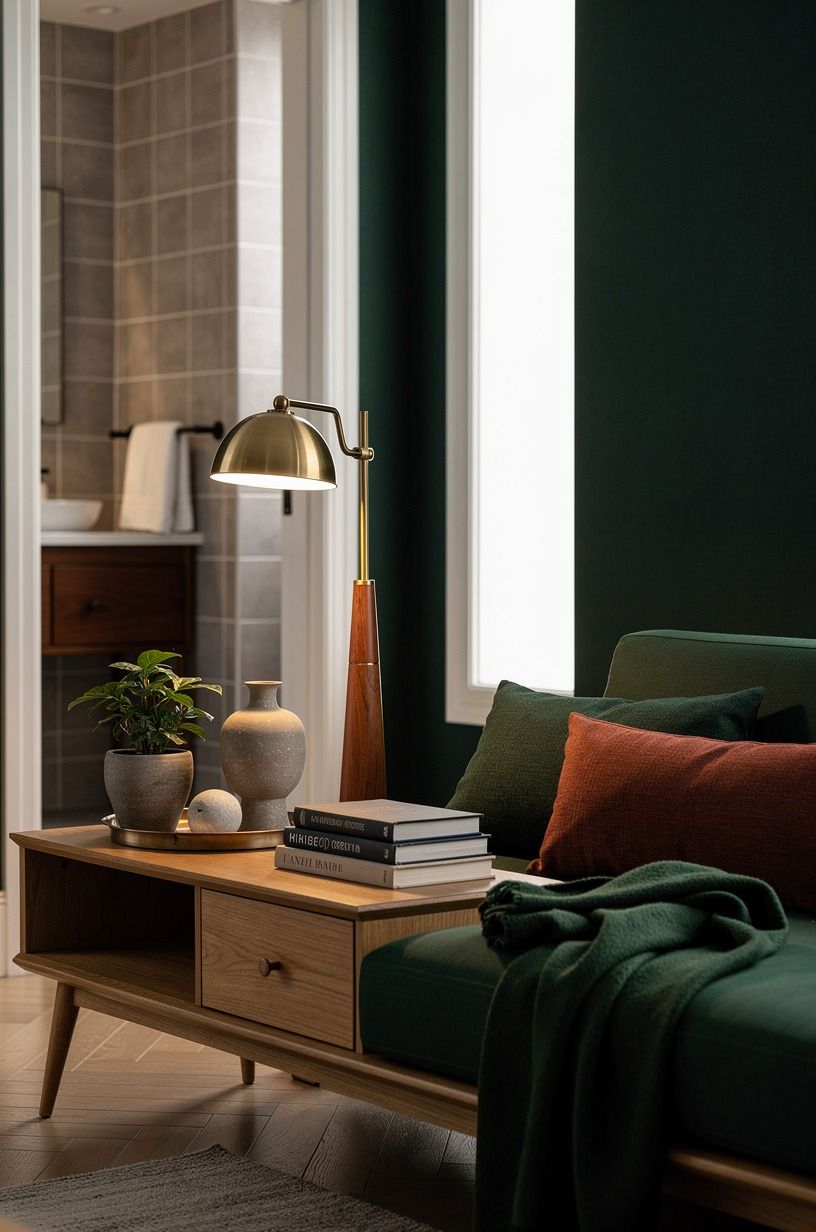
Rental tile doesn’t need to look temporary. Peel-and-stick floor overlays in forest green, rust, or natural oak can give you mid-century mood without risking your deposit.
Choose a Target Threshold teak bath mat, removable vinyl decals, and a tension-rod linen curtain before you buy a full box of anything. Unlacquered brass can add warmth as it develops patina, and you can hunt Facebook Marketplace for a vintage mirror while leaving the landlord’s original floor untouched. For more no-damage choices, read these mid-century bathroom ideas for apartments.
What a mid-century bathroom floor update typically costs
The smartest spending depends on whether your tile is the problem or just the backdrop. If the existing floor is sound, paint, lighting, and a better mirror often make a bigger difference than you’d expect.
If you’re spending at the budget level, I’d put money into a brushed brass faucet and wall color before replacing acceptable floor tile. A faucet typically costs $120 to $450, while a marble top can run $50 to $100 per square foot. The floor matters, but your eye meets the vanity first.
My honest rule for making retro tile feel current
I’ve gone back and forth on how much “mid-century” a bathroom needs before it starts looking like a themed restaurant. The answer, for me, is less than most people think.
You don’t need sunburst mirrors, atomic wallpaper, sputnik sconces, walnut, teal, orange, and a starburst floor all at once. That’s not a room.
That’s a costume.
What makes the era feel good is the confidence of the materials. A warm wood grain.
A tile shape with a little geometry. Brass that isn’t trying to stay brand-new.
You should be able to walk in with a wet towel, half awake, and still feel like the room has some composure. That’s the test.
I made a bathroom years ago with a very expensive patterned floor and cheap white everything above it. The tile was objectively interesting, but the room never settled.
Every other item had to compete with it. Later, I used plain cream porcelain, a walnut vanity, and one deep blue wall.
Far less effort. More atmosphere. Friends noticed that bathroom for weeks, and nobody once asked about the tile brand.
So I’d start with what your room needs emotionally. If it needs warmth, choose brown, bone, clay, or olive before you choose pattern.
If it needs light, go pale underfoot and let your wall color supply the depth. And if you’re worried that plain tile will be boring, remember this: a bathroom has reflections, water, metal, fabric, skin tone, and changing daylight.
It’s never truly plain.
What People Always Want to Know
What is the best mid-century modern bathroom floor tile idea for a small bathroom?
Large matte porcelain in a warm neutral is the best starting point because it creates an airy continuous floor. Choose a simple 12-inch or larger format, then add character through an IKEA TONSTAD vanity or walnut mirror rather than a busy pattern.
Where can I buy mid-century modern bathroom floor tile pieces on a budget?
Start with IKEA, Target, and Wayfair for affordable mirrors, textiles, and storage. You’ll find more personality secondhand.
– Target Threshold bath textiles – Wayfair vanity lighting – Facebook Marketplace teak mirrors and stools
How much does a mid-century modern bathroom floor tile makeover cost?
A cosmetic update usually costs about $200 to $1,200 when your existing plumbing and floor stay put. Paint, a mirror, faucet, and textiles do the most work. Regrouting is often cheaper than replacing tile, and you can do the styling yourself.
Can I create a mid-century modern bathroom floor tile look on a budget?
Yes, and you don’t need a demolition budget to make it feel intentional. Focus on warm color repetition across three small choices.
– Removable floor decals in muted olive – A secondhand walnut mirror – Cream Turkish cotton towels
Is a mid-century modern bathroom floor tile update worth it in a small space?
Yes, it’s worth it because a smaller floor needs less material and gives you a faster visual payoff. Keep your layout open around the vanity, choose one clear tile direction, and let your floor pattern make the room feel wider instead of crowded.
Is mid-century modern bathroom floor tile a good idea for a rental?
Yes, if you use reversible layers and protect the original surface. You can get a renter-friendly retro look with peel-and-stick overlays, a tension rod, and removable wall color. Avoid permanent grout changes unless your lease says you can.
Where I’d Start First
If I had to pick one, I’d start with large matte warm-gray porcelain tile. Tiny patterns make a small bathroom feel like a spreadsheet, while one broad floor gives your vanity, mirror, and brass room to breathe. Pin this idea for later and explore retro-luxe master bathroom inspiration.