
Dark & moody mid-century modern bathroom ideas work best when you control contrast, reflection, and warm wood instead of simply painting every surface black. I learned that after one room swallowed its own window light. Start with the room’s bones, then layer in amber light, tactile materials, and one confident color. You’ll get a luxe bathroom without a full gut renovation.
- Start by Measuring the Bathroom’s Natural Light
- Anchor the Room with The One-Wood Rule
- Paint the Walls in a Deep Blue with Warm Undertones
- Choose Hague Blue over Flat Black
- Build The Three-Height Light Stack
- Hang the Mirror to Catch the Best Glow
- Set the Vanity at the Right Height
- Make the Cost Decision Before You Choose Tile
- Lay Out The Two-Wood Rule Before You Install Shelves
- Mix Aged Brass with Dark Tile
- Tile the Wet Zone with The Quiet Grid
- Frame the Vanity with The Soft-Edge Balance
- Place a Warm Accent over a Cool Background
- Keep Practical Clearances Comfortable
- Add Art that Can Handle Humidity
- Finish with a Lived-In Styling Layer
1Start by Measuring the Bathroom’s Natural Light
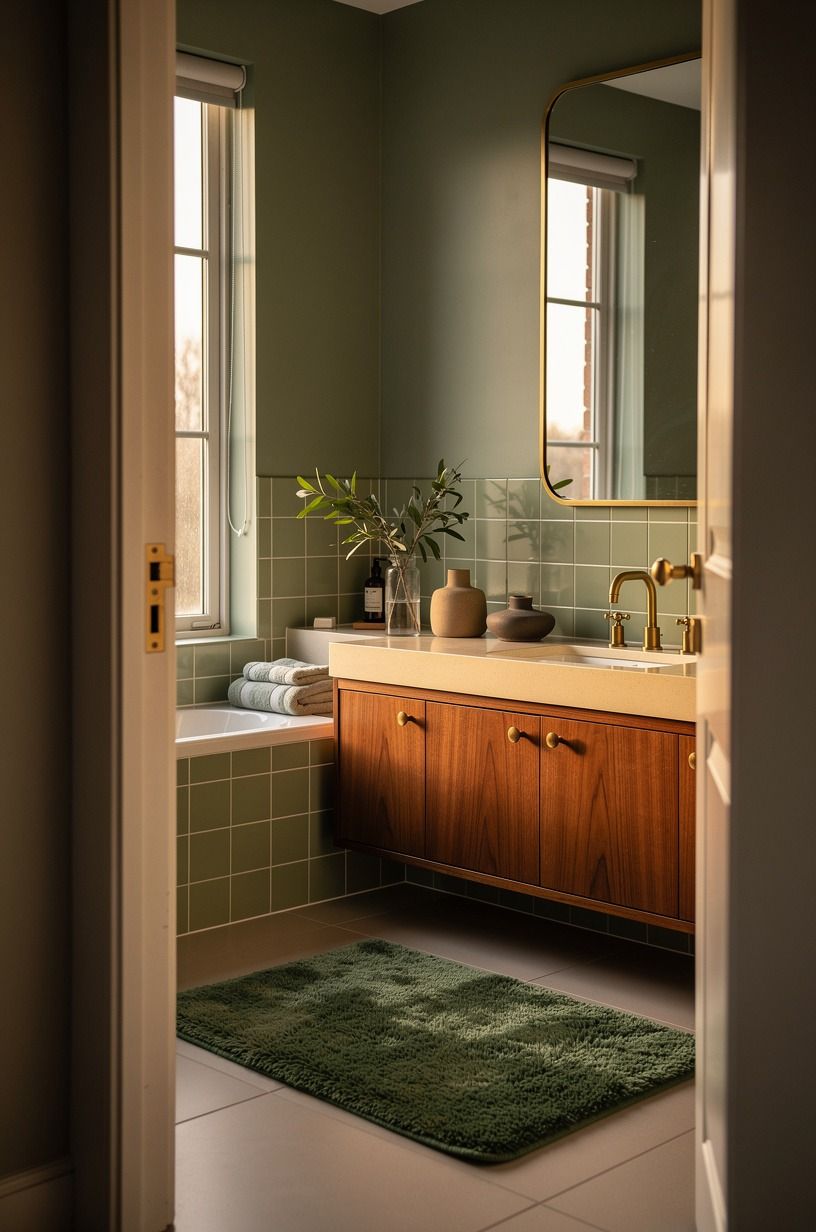
Before you choose paint, watch your bathroom from morning through late afternoon. Note where the light lands, where the mirror throws glare, and which corner stays gray. A north-facing room may welcome a sage green wall color, while a room with one small window needs warm cream surfaces and natural wood to keep the room feeling open.
Take notes at 8 a.m., noon, and 4 p.m. You don’t need a complicated lighting plan, but you do need evidence. If your room feels cramped, compare it with these small mid-century modern bathroom ideas before you commit to a deep green color.
And don’t judge the room under a single ceiling bulb. That flat white glare can make warm paint look dirty and cool paint look harsh.
Your goal is moody, not gloomy. A little restraint here saves you from repainting later!
2Anchor the Room with The One-Wood Rule
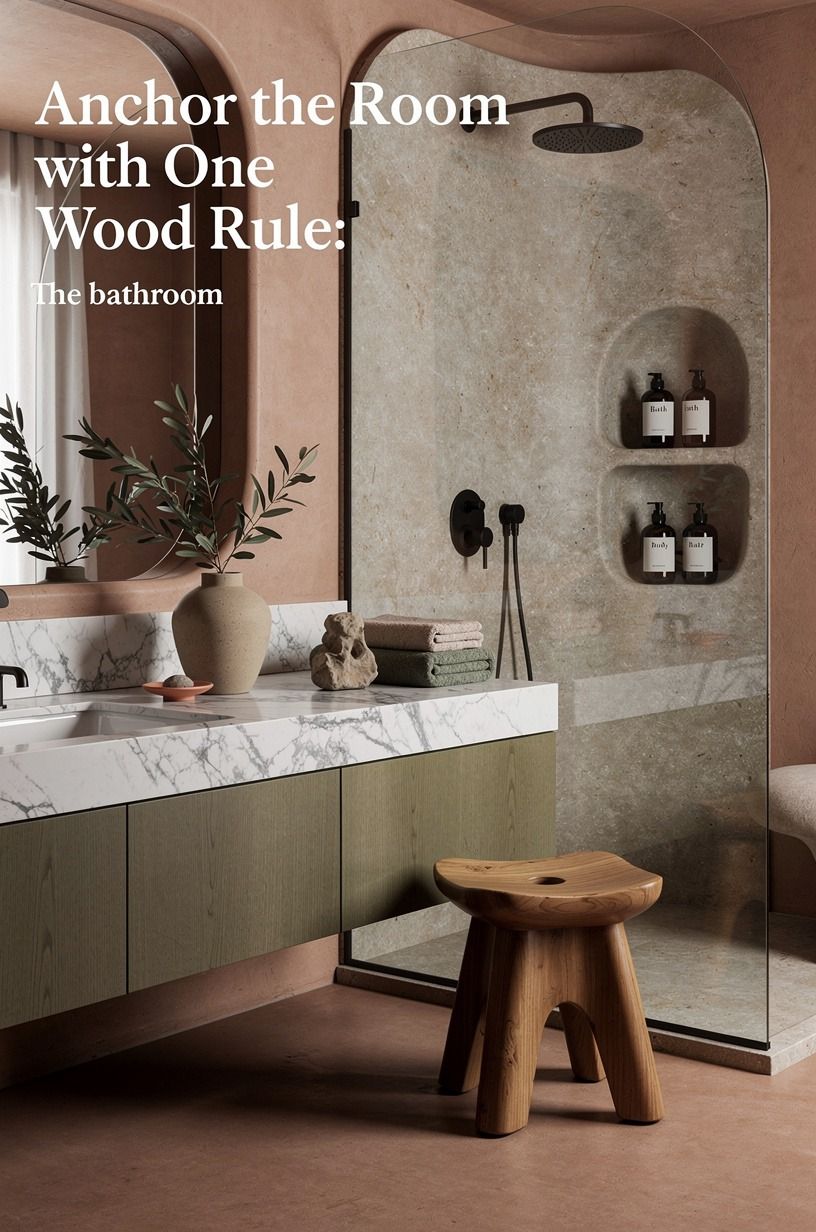
Choose one dominant wood tone for the vanity, frame, or shelving, then let smaller pieces repeat it. I prefer natural oak with a Carrara marble top and subtle gray veining because it gives a dark bathroom a warm, collected feeling without turning the room rustic. You’ll want the stone to read clearly against terracotta and olive accents.
Skip mixing orange oak, pale pine, and reddish teak in the same small room. That combination gets noisy fast.
A 3/4-inch solid white oak shelf can work if you stain it closer to the vanity, but don’t let every object compete. For more retro proportions, browse these mid-century modern master bathroom ideas.
The rule is simple: one main wood, one supporting tone, and quiet backgrounds. If you’re renting, use a wood-look vanity and a removable frame instead of permanent cabinetry. It won’t have the same depth, but your eye will still read the room as intentional.
3Paint the Walls in a Deep Blue with Warm Undertones
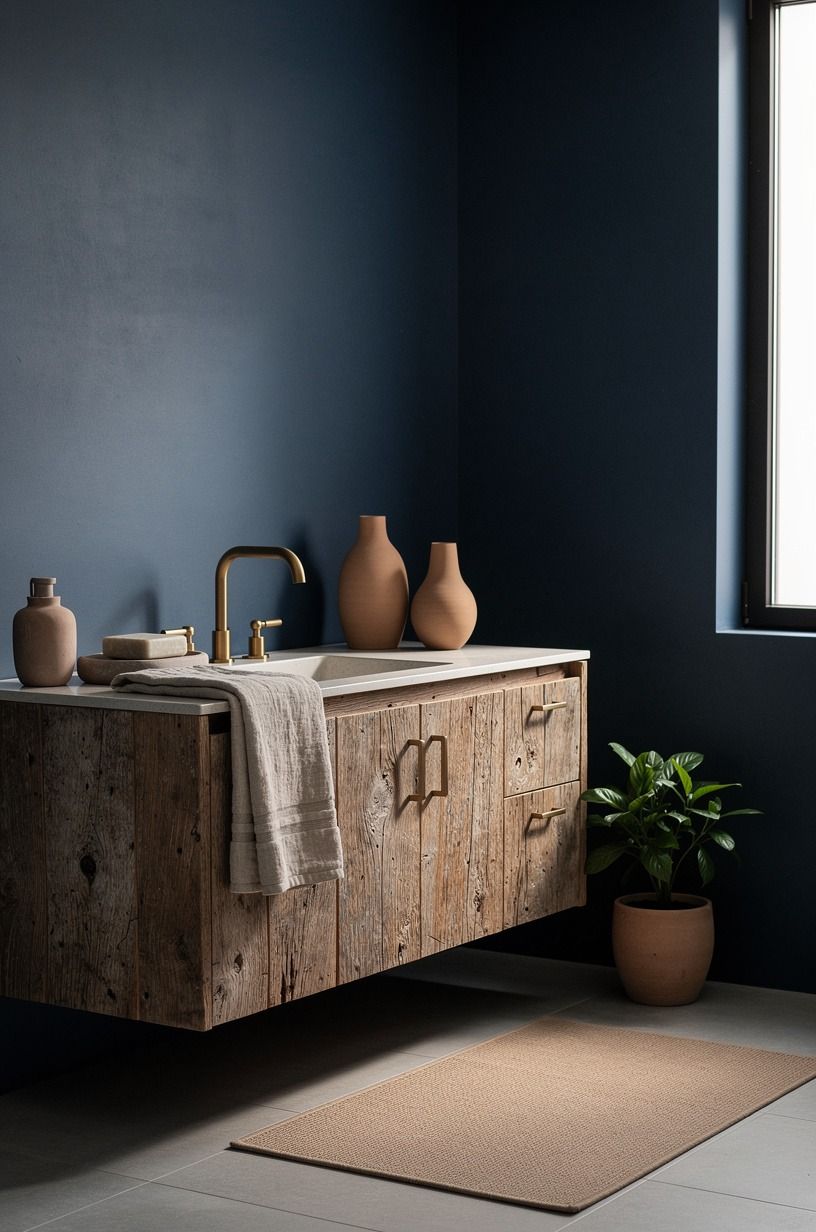
Paint the walls in a color that gets richer at night, not one that turns purple under a cool bulb. A clay-toned wall color has enough depth for a dramatic bathroom while still looking soft beside linen, aged brass, and reclaimed weathered teak.
Test a large board beside your mirror, shower curtain, and flooring. Don’t trust a tiny paper chip. I’ve watched a sample look serene at noon and almost black after sunset, so you’ll want to see it through a full day before brushing the wall.
For a lighter contrast, place Benjamin Moore Chestertown Buff HC-9 on the ceiling or trim. It adds a gentle, linen-like note without flattening the palette. And if your room is narrow, carry the wall color across the door so the architecture disappears instead of chopping your sightline.
4Choose Hague Blue over Flat Black
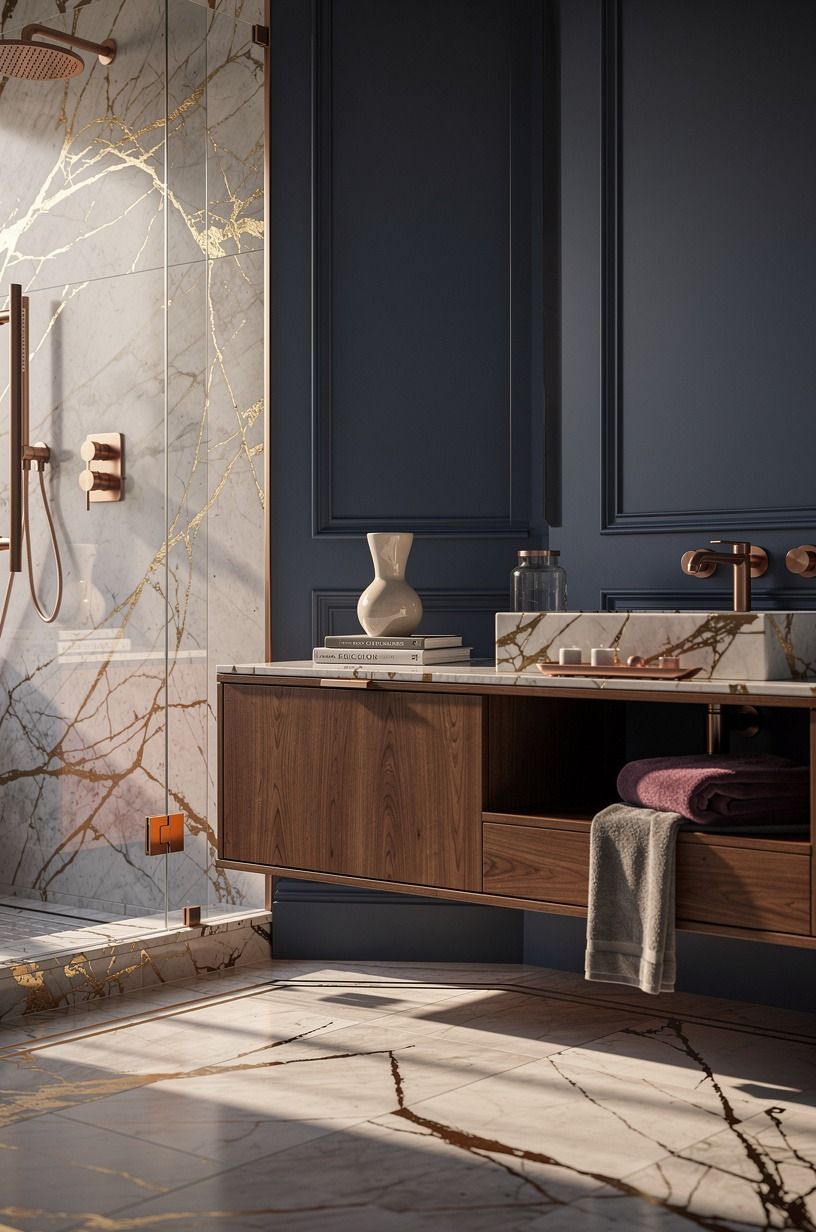
Choose a deep plum over flat black when your bathroom has limited daylight or glossy white fixtures. Black can look bold, but it often makes every hard edge feel louder. Plum gives you the same moody character while working beautifully with gray surfaces and rose-gold accents.
Why fight a small room when you can let the walls feel enveloping and still keep the sink area readable? Pair the paint with a Calacatta marble surface with fine gold veining and a mirror with a thin rose-gold frame. Your eye gets a soft landing instead of a wall of darkness.
If you’re set on black, reserve it for the vanity, door, or lower half of the wall. I wouldn’t paint a windowless bathroom ceiling black unless the room has layered lighting. It can feel intimate in person, but heavy in person.
See these bathrooms with dark tile for better contrast ideas.
5Build The Three-Height Light Stack
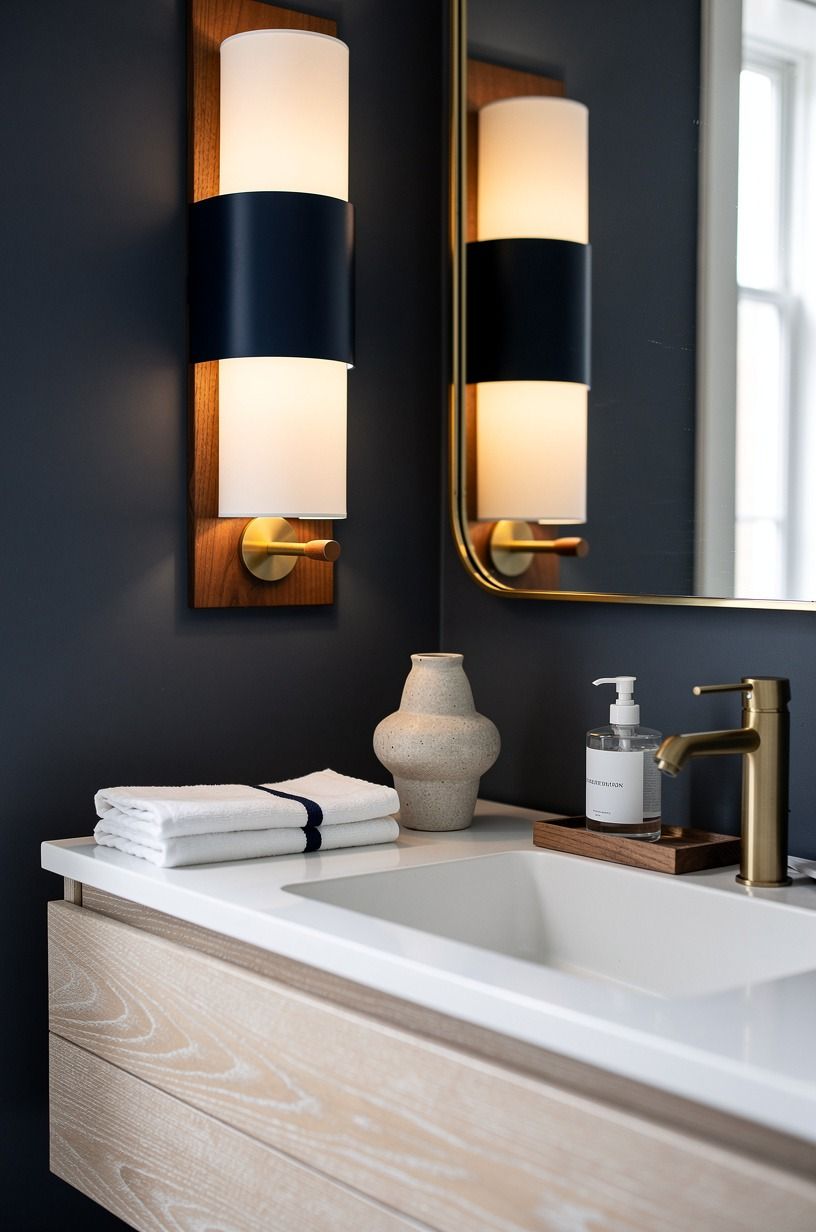
Build three light levels: ceiling light for cleaning, mirror light for grooming, and low ambient light for evening.
6Hang the Mirror to Catch the Best Glow
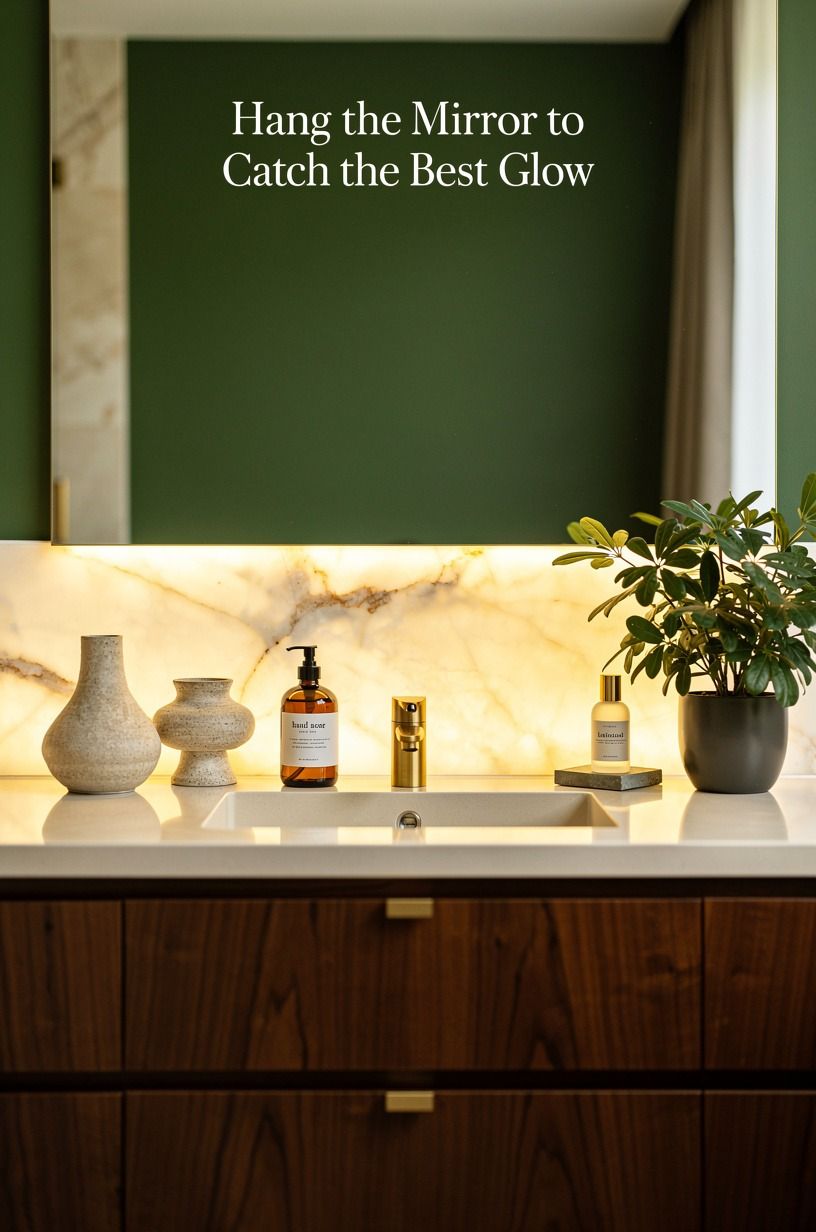
Hang the mirror where it catches the side light, not directly opposite the brightest window. A backlit translucent onyx surround brings a soft glow to an emerald, gold, and cream palette while taking the edge off a rectangular vanity.
Leave enough breathing room around the mirror so it doesn’t collide with the faucet or wall cabinet. If you have a 36-inch vanity, a mirror slightly narrower than the cabinet usually feels balanced. Your face should be lit from both sides, not shadowed by a fixture above your head.
Skip an oversized frameless mirror if your goal is a warmer, more collected bathroom. It can make the room look larger, but it also erases personality. I’ve found that a modestly scaled mirror with warm backlighting gives you more visual texture and works especially well beside mid-century modern bathroom floor tile ideas.
7Set the Vanity at the Right Height
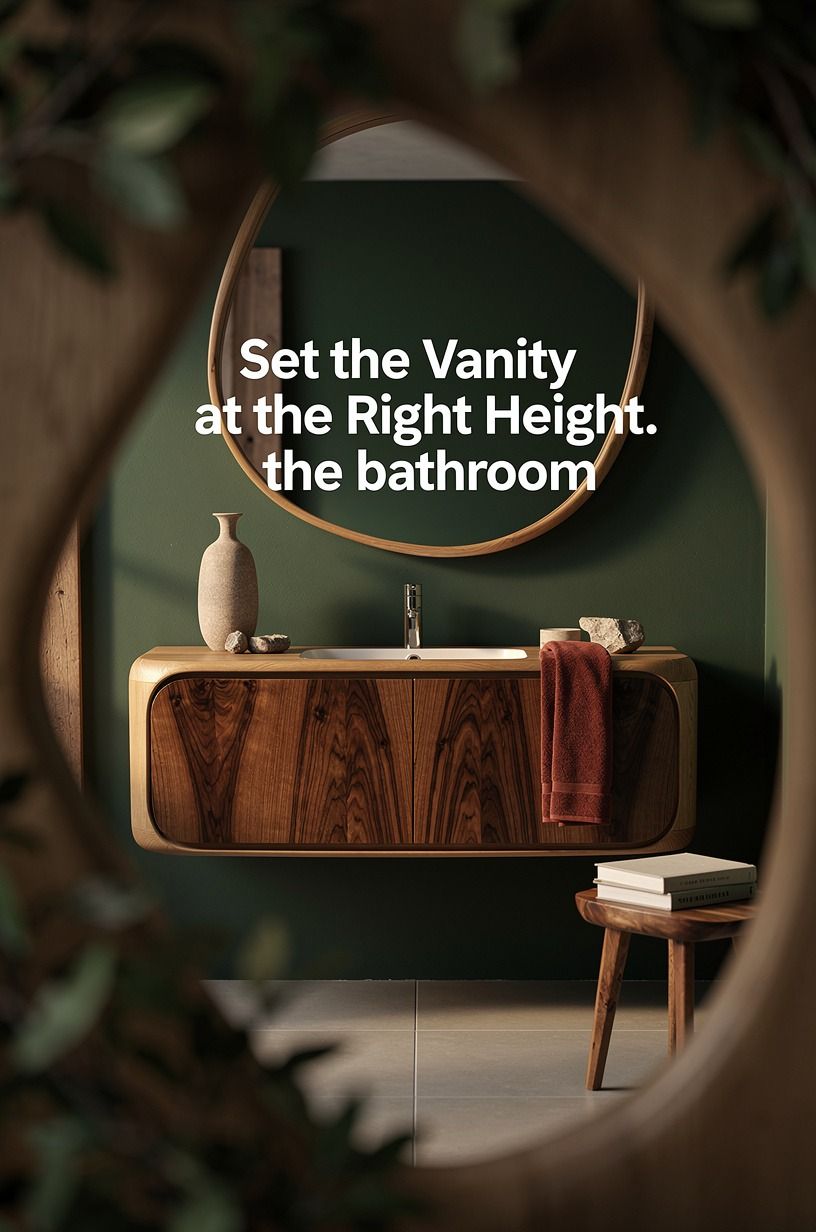
Set the vanity between 32 and 36 inches high, depending on who uses the bathroom and how tall the sink sits.
8Make the Cost Decision Before You Choose Tile
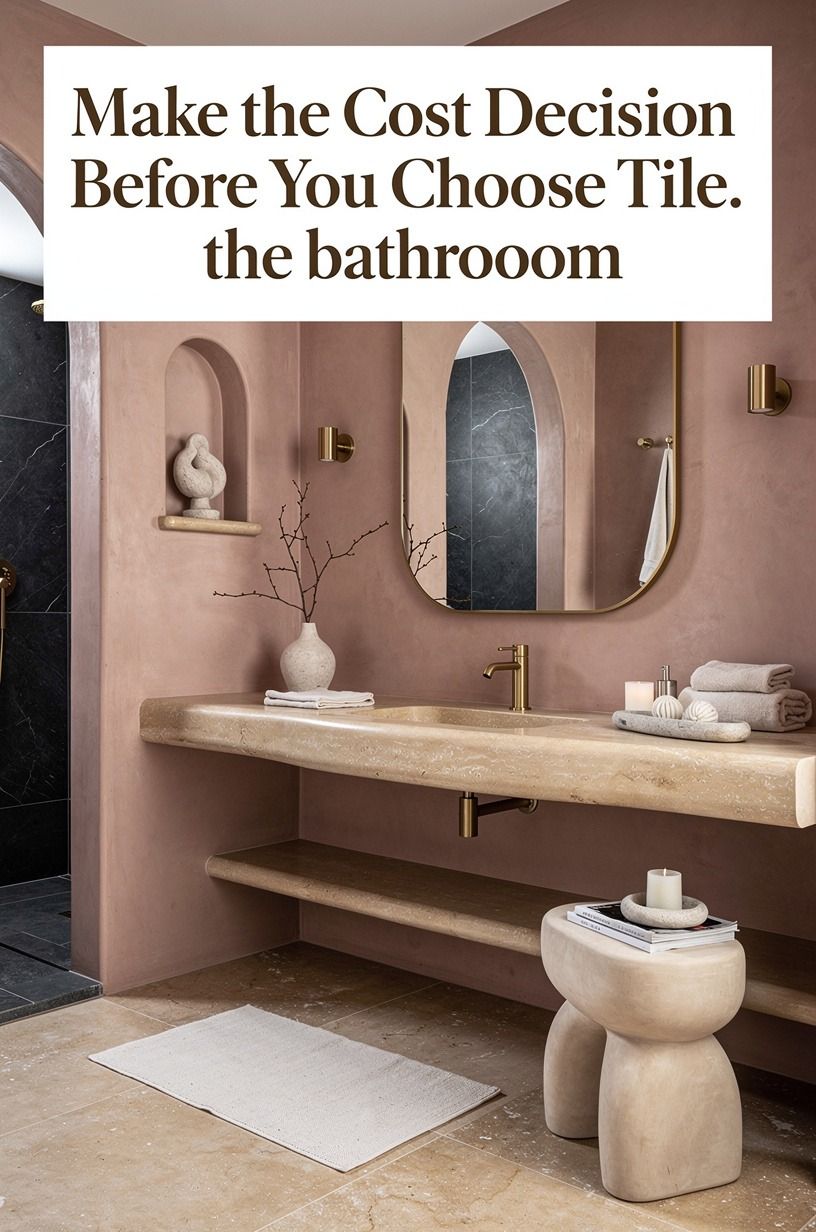
Make the renovation decision before you order samples. A cosmetic update may stay within the first tier, while moving plumbing or retile work can push the room into a completely different budget. These are typical US ranges, so use them as planning markers rather than promises.
If you’re working with $200 to $1,200, keep the plumbing, vanity footprint, and shower location. Spend on the surfaces you touch and see every day. A mid-range project can feel more dramatic, but your room doesn’t need a full demolition to become warm, moody, and inviting.
9Lay Out The Two-Wood Rule Before You Install Shelves
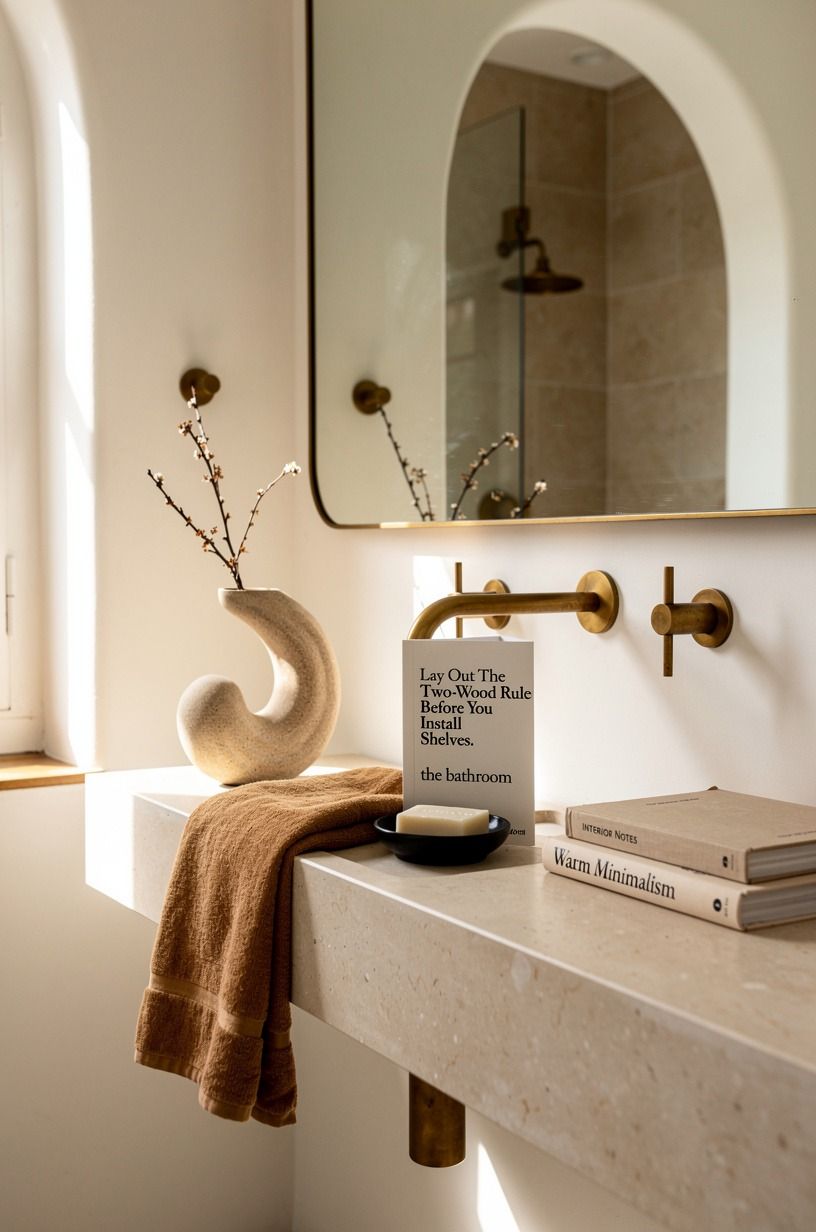
Lay out every shelf, stool, and frame on the floor before you put holes in the wall. Unlacquered brass can support a walnut vanity beautifully, especially against warm white walls, camel textiles, and black accents.
Use one shelf above the toilet or beside the mirror, not a full grid of floating boards. Your eye needs a little empty wall to appreciate the grain. A small ceramic vessel, folded Turkish cotton, and one amber bottle are enough for a lived-in arrangement.
But don’t use open shelving to hide a storage problem. It collects dust and exposes every bright package you own.
I prefer one closed cabinet with a single shelf for display. If you need more layout help, these mid-century modern bathroom ideas for apartments show how to work around limited walls.
10Mix Aged Brass with Dark Tile
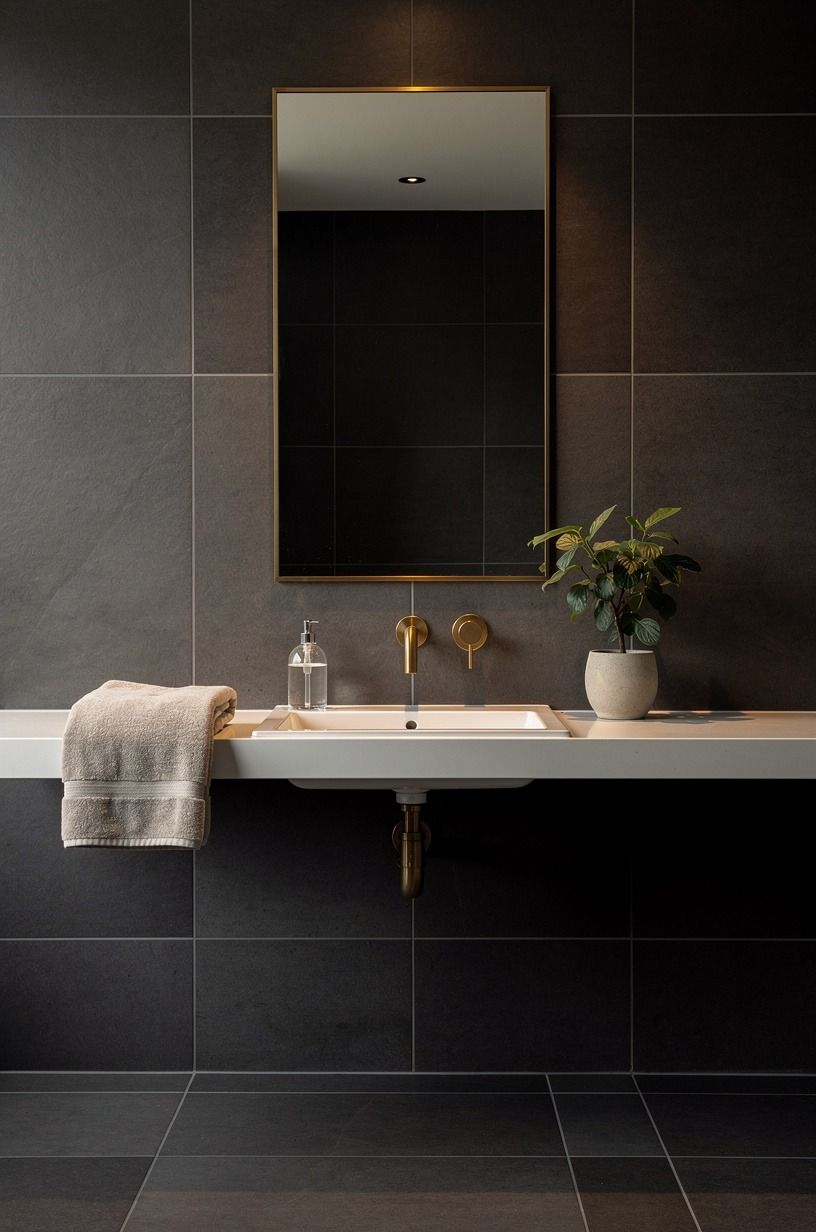
Mix oversized-chip terrazzo with copper if you want the bathroom to feel warm rather than stark. The midnight-blue, copper, and ivory combination gives the surface more character than a flat dark tile.
Choose one metal family for the faucet, mirror edge, and cabinet pulls. They don’t need to come from the same collection, but they should share a similar softness. A brushed copper faucet typically falls around $120 to $450, depending on the style and quality.
I wouldn’t pair bright yellow brass with a glossy black vanity. That combination can look theatrical instead of settled.
Use aged bronze if your fixtures already lean darker. And keep the towel hardware simple, because your hand notices cheap movement every time you reach for it.
11Tile the Wet Zone with The Quiet Grid
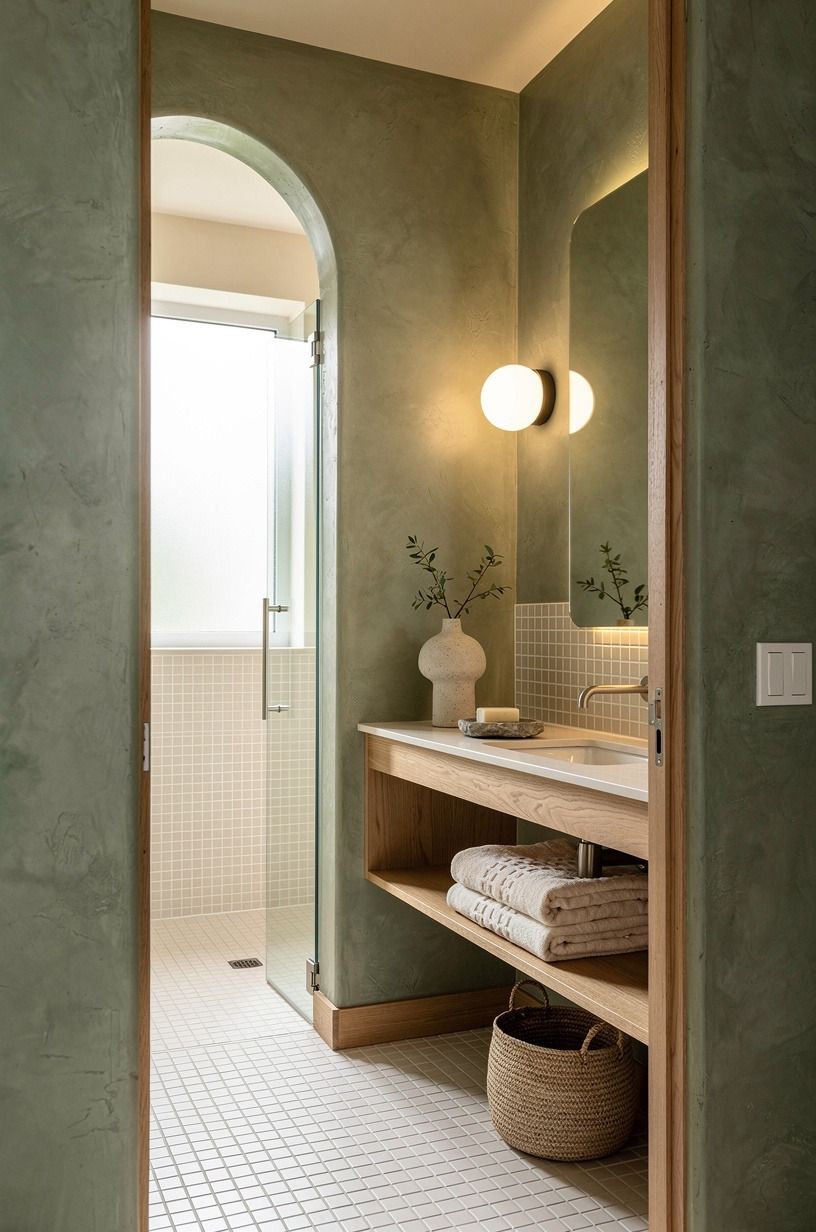
Tile only the wet zone when your budget or patience is limited. Hand-applied Venetian plaster in sage green creates gentle variation around a shower or tub, while warm cream surfaces and natural wood keep the rest of the room calmer. Its subtle movement makes the surface feel tactile and organic.
A standard tub is 60 by 30 inches, and a comfortable shower needs at least 36 by 36 inches. Work from those fixed dimensions before choosing a pattern. Your tile should support the layout, not force a cramped door swing.
For a lower-cost option, subway tile usually runs $2 to $10 per square foot, while Venetian plaster often varies by installer and finish. I wouldn’t cover every wall in an expensive handmade surface. Use it where water and eye contact meet, then let paint do the quiet work.
12Frame the Vanity with The Soft-Edge Balance
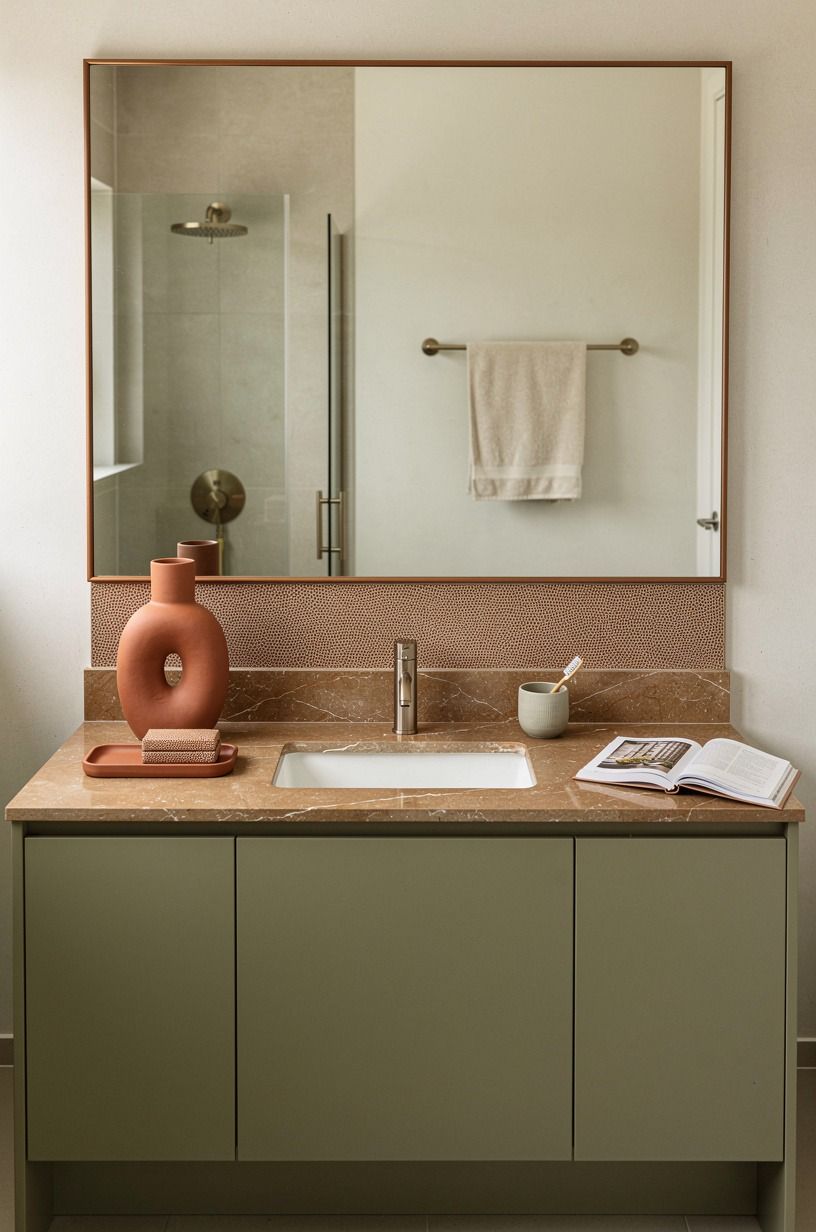
Frame the vanity with rounded forms so the room doesn’t become a collection of hard rectangles.
13Place a Warm Accent over a Cool Background
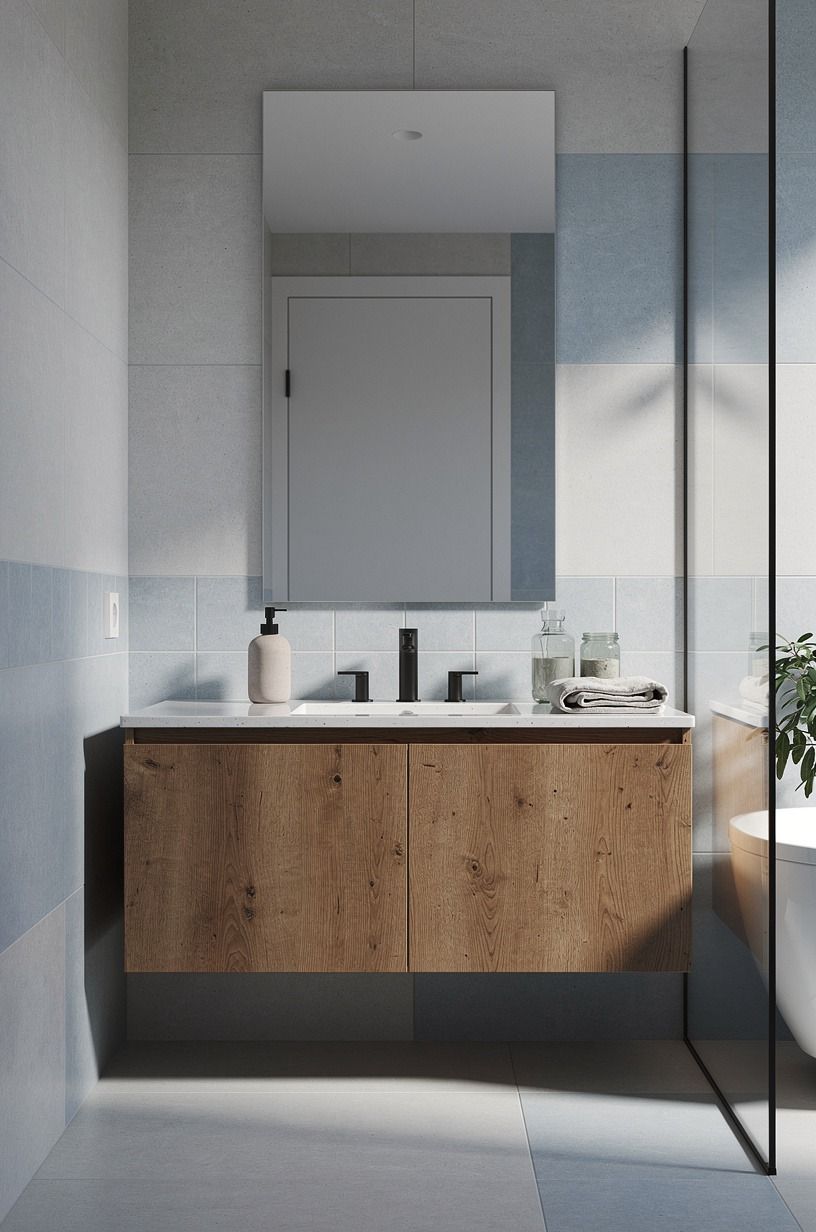
Place one warm accent against a cooler background to keep the palette from becoming flat. A clay-colored wall or trim can work with washed Belgian linen when you want a gentle tonal shift beside a darker background.
Use warm clay, tobacco, or muted ochre in small amounts. A terracotta vessel, amber glass, or rust-colored hand towel can wake up the room without turning it colorful. You’ll want the accent to appear at least twice, but not on every surface.
A piece of washed Belgian linen can do the same work in a softer, more tactile way. It gives your eye one relaxed moment and leaves the rest of the room calm. I prefer a small textile panel or linen hand towel over a whole wall of decoration.
14Keep Practical Clearances Comfortable
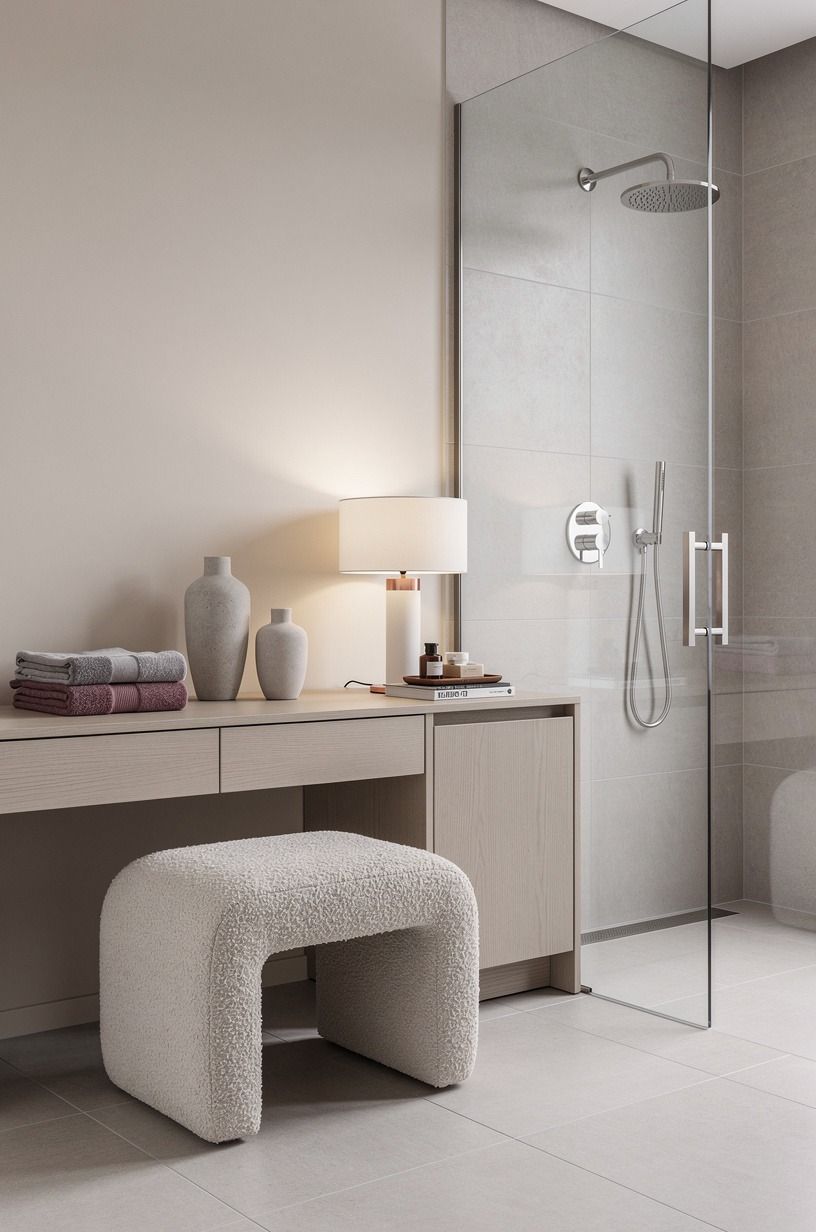
Keep the practical clearances generous even when your style is dramatic.
15Add Art that Can Handle Humidity
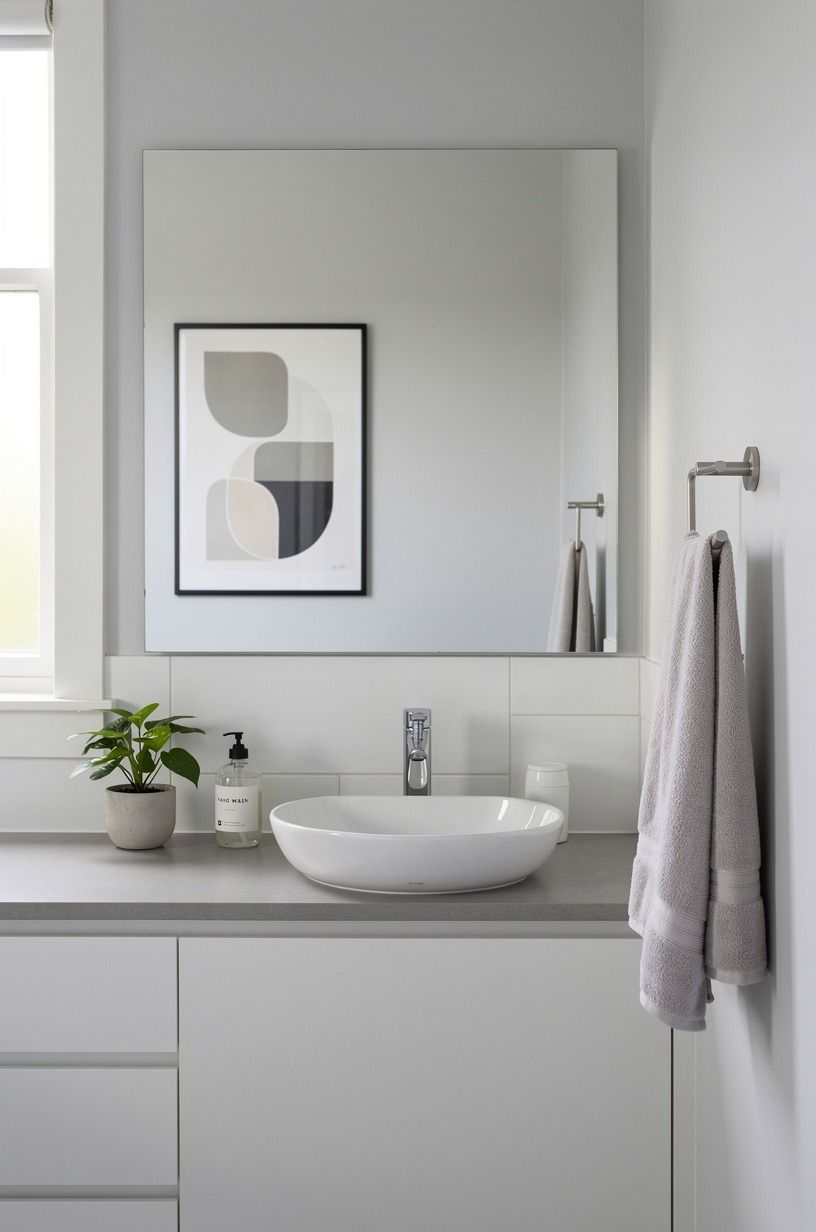
Add art that can handle humidity, heat, and the occasional splash. A sealed Nero Marquina black marble panel with white veining brings personality into a bathroom without fighting the tile. Museum glass can reduce reflection, but a simple acrylic frame may be safer near a wet zone.
Choose one strong image rather than a crowded gallery wall. A navy, white, and walnut arrangement will echo the palette without copying it. Your art should feel collected, not purchased as a matching bathroom set.
If you’re styling a rental, use removable picture strips on a dry wall and keep the frame light. I wouldn’t hang an unsealed textile beside the shower.
Moisture can warp it quickly, and no dramatic composition is worth watching the corners curl. For more visual references, visit these dark mid-century modern bedroom ideas.
16Finish with a Lived-In Styling Layer
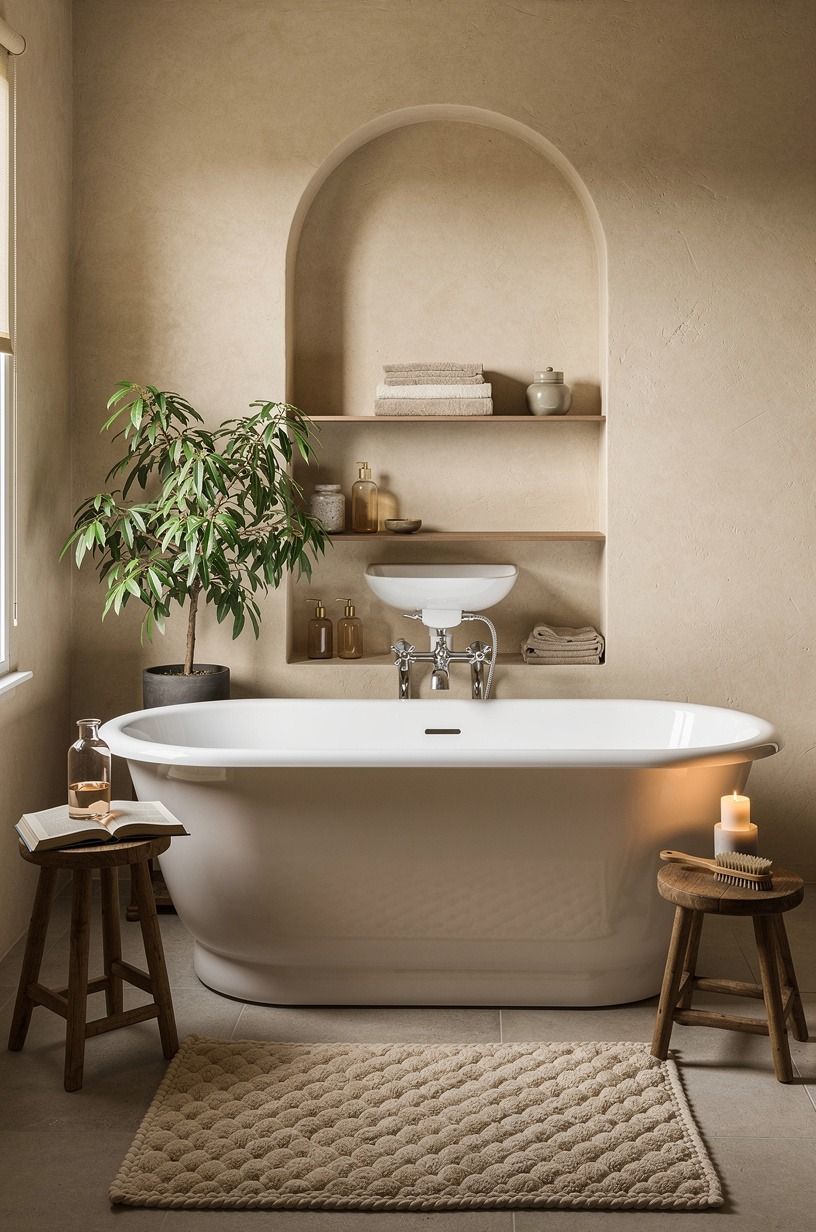
Finish with a small styling layer that makes the room feel used, not staged. Deep-pile mohair velvet, a smoked-gold tumbler, and one low ceramic bowl can soften a dramatic bathroom while bringing emerald, gold, and cream into the room.
Keep only what you touch often within reach. A soap dispenser, hand towel, and brush are enough beside the sink.
Everything else belongs in a drawer. You’ll get the warm, inviting feeling from texture and repetition, not from more objects.
And leave one surface almost empty. That pause gives your darker materials room to breathe. If you want another complete source of inspiration, look through these 13 mid-century modern bathroom ideas.
The best final layer is the one that makes your morning routine feel quieter.
The Design Rule I’d Keep
I used to think a dark bathroom needed more decoration to balance the walls. It doesn’t.
The room needs better relationships: a warm wood grain beside a cool tile, a soft bulb beside a hard mirror, and one reflective surface that catches the light without shouting for attention. When those relationships work, even a modest bathroom can feel luxurious.
The hardest choice is usually the paint. Farrow & Ball Hague Blue No.30 can feel enveloping and rich, but it isn’t forgiving of careless lighting.
Benjamin Moore Chestertown Buff HC-9 is gentler and more flexible, while Sherwin-Williams Sea Salt SW 6204 gives you a quieter green-gray direction. I’ve gone back and forth between all three, and I wouldn’t choose until I had tested them beside the actual tile.
I also think homeowners overspend on tile and underspend on light. A beautiful surface still looks dull beneath one ceiling fixture.
Put the money into a good mirror light, a faucet you enjoy touching, and a vanity with storage that fits your routine. Then use tile where water requires it and paint everywhere else.
The point of this style isn’t to make your bathroom look like a hotel showroom. It should feel intimate, comfortable, and a little unexpected when you walk in at night.
Keep the palette restrained, let the wood show its grain, and allow one imperfect object to stay. That’s where the room starts feeling like yours.
The Questions I Get Asked Most
What is the best Dark & Moody Mid-Century Modern Bathroom Ideas for a small bathroom?
Use deep blue walls, a rounded mirror, and a floating walnut-look vanity. Reflective light keeps the room open while dark color adds depth. IKEA HEMNES can provide a flexible starting point, especially when you replace the hardware and pair it with warm sconces.
Where can I buy Dark & Moody Mid-Century Modern Bathroom Ideas pieces on a budget?
Check IKEA, Wayfair, and Target for vanities, mirrors, and textiles, then look at Facebook Marketplace or thrift shops for wood stools and frames. Second-hand wood often has better grain than new budget furniture, and you’ll avoid making every piece match.
How much does a Dark & Moody Mid-Century Modern Bathroom Ideas makeover cost?
A cosmetic makeover typically falls within $200 to $1,200 for paint, a mirror, faucet, and textiles. You can spend nothing on rearranging storage and testing your layout. Tile, plumbing, and a new vanity move the project into higher cost tiers.
Can I create a Dark & Moody Mid-Century Modern Bathroom Ideas on a budget?
Yes, and you can start with paint, better bulbs, and new cabinet pulls. Layered lighting may change the room more than expensive tile. Reuse your mirror, stain an existing shelf, and shop your home for amber glass, framed art, and warm towels.
Is a Dark & Moody Mid-Century Modern Bathroom Ideas worth it in a small space?
Yes, because a small room can handle a stronger color story without requiring much material. One continuous wall color makes the boundaries less obvious. Keep the vanity shallow, protect the clearances, and use a large mirror where the layout allows it.
Is Dark & Moody Mid-Century Modern Bathroom Ideas a good idea for a rental?
Yes. Use removable wallpaper or peel-and-stick tile outside the wet zone, a tension rod for textiles, and plug-in sconces where safe. No-damage changes can still add warmth, especially when you combine a framed mirror, temporary hardware, and portable storage.
Where I’d Start First
If I had to pick one step, I’d start with the lighting. A dark wall can feel rich under layered amber light but dull beneath one ceiling bulb.
Swap the bulbs, add side sconces, and watch the tile change. Pin this guide for later, then test your room after sunset.