Mid-century modern bathroom lighting ideas can make a small room feel warm with the right bulb, shade, and placement. I once chose a cool white globe because it looked crisp in the store, and my bathroom felt like a clinic by nightfall. The fix was simpler than rewiring. Your light needs layers, not more brightness.
- Layer the Light Around Your Vanity
- Swap Cool Bulbs for Soft White Globes
- Frame the Mirror With Brass Sconces
- Why Does a Pendant Work in a Bathroom?
- Anchor the Room With a Walnut Light Bar
- Float a Globe Above the Tub
- Build the Three-Height Light Stack
- Paint the Ceiling a Warm Companion Color
- Hang Sconces Over the Side Walls
- Choose Opal Glass Over Clear Glass
- Mix Finishes With the Two-Wood Rule
- Should You Use a Dark Fixture in a Small Bath?
- Repeat the Reflection Ladder
- Install Toe-Kick Lighting Below the Vanity
- Pair a Ribbed Shade With Warm Tile
- Compare the Real Bathroom Lighting Budget
- Use a Mirror With a Narrow Metal Frame
- Steal the Hotel Glow With Layered Dimmers
- Style the Light Around Your Daily Routine
1Layer the Light Around Your Vanity
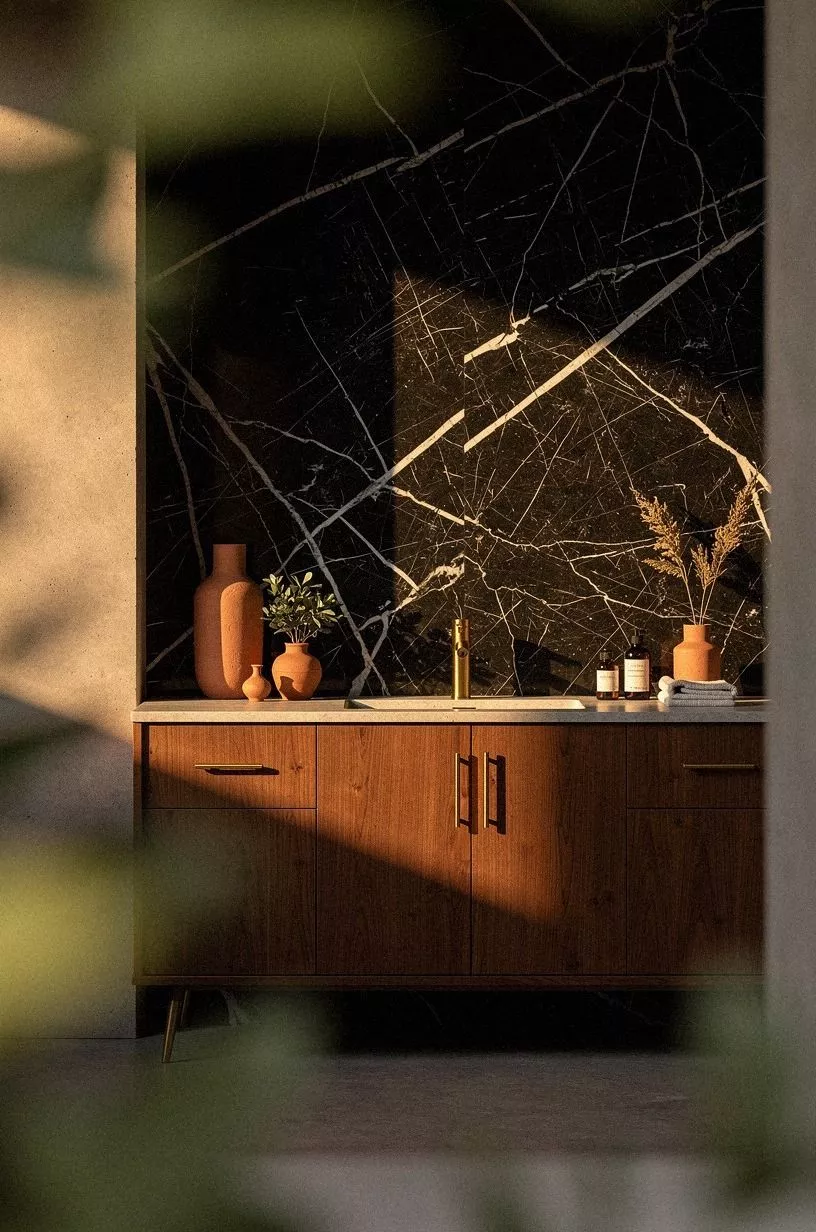
Start with three sources: overhead light, face-level light, and a low glow near the floor. Your vanity will feel more inviting because your face won’t sit in the shadow cast by a ceiling fixture. Choose 2700K to 3000K bulbs, then check the color beside your Nero Marquina black marble vanity before you buy several.
I prefer opal glass sconces on both sides of the mirror. The light spreads across your cheeks instead of throwing a hard stripe under your eyes.
You don’t need a huge fixture. A pair of 5-inch shades can work beside a narrow vanity, especially if your counter sits at the standard 32 to 36 inches.
For a related layout, browse these warm natural mid-century bathroom ideas. You’ll notice the rooms that feel calm rarely rely on one bright ceiling source. And that matters more than choosing a famous fixture.
2Swap Cool Bulbs for Soft White Globes
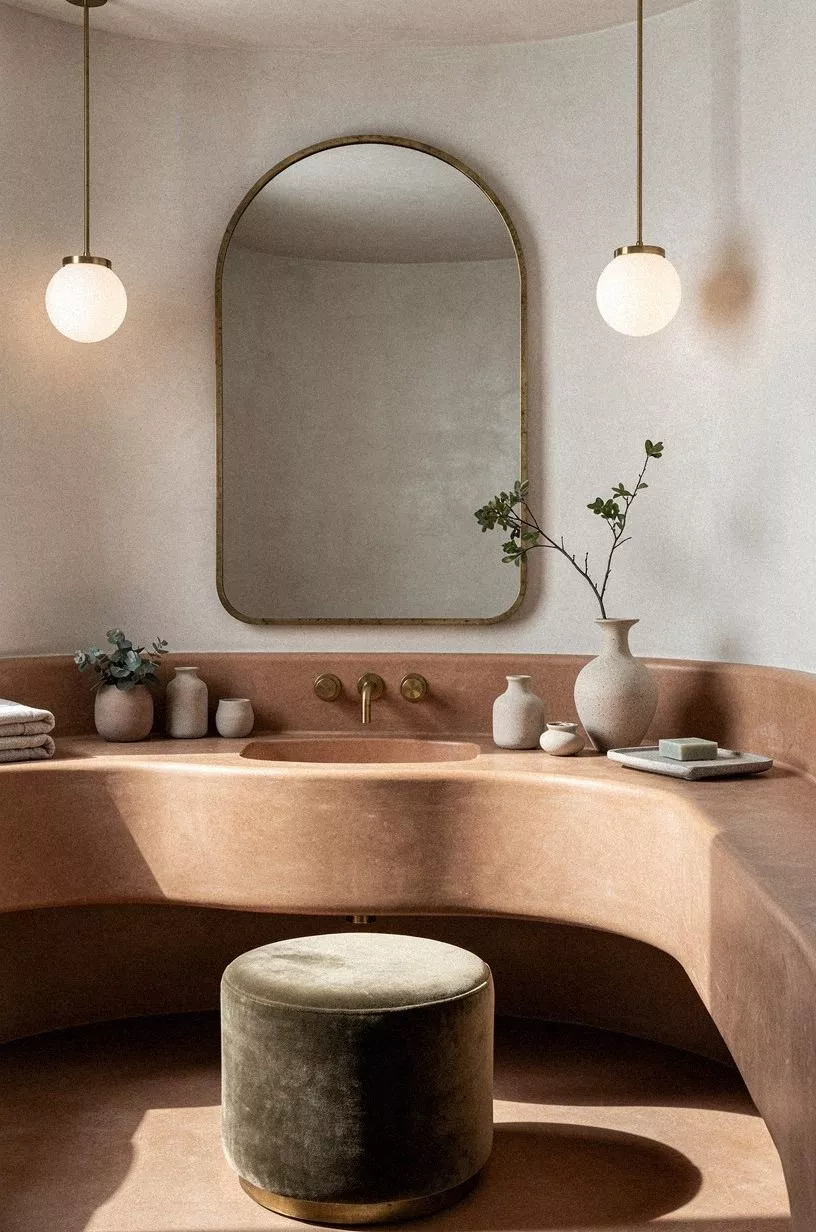
The fastest bath lighting idea is a bulb swap. Pick soft white bulbs around 2700K for a gentle, amber-leaning glow, then use the same temperature everywhere your eye can see at once. Mixed color temperatures make your bathroom look accidental, even when every fixture is expensive.
A round globe bulb works especially well with an aged brass socket or a linen-shaded fixture. Frosted glass hides the harsh filament and keeps your morning light comfortable. I tried clear bulbs above a white sink once, and every splash looked sharper than it needed to.
If you’re renting, keep the existing fixture and change only the bulbs. That’s a small purchase with a noticeable result.
But don’t go too yellow if you apply makeup at the vanity. Your skin should look natural, not candlelit.
3Frame the Mirror With Brass Sconces
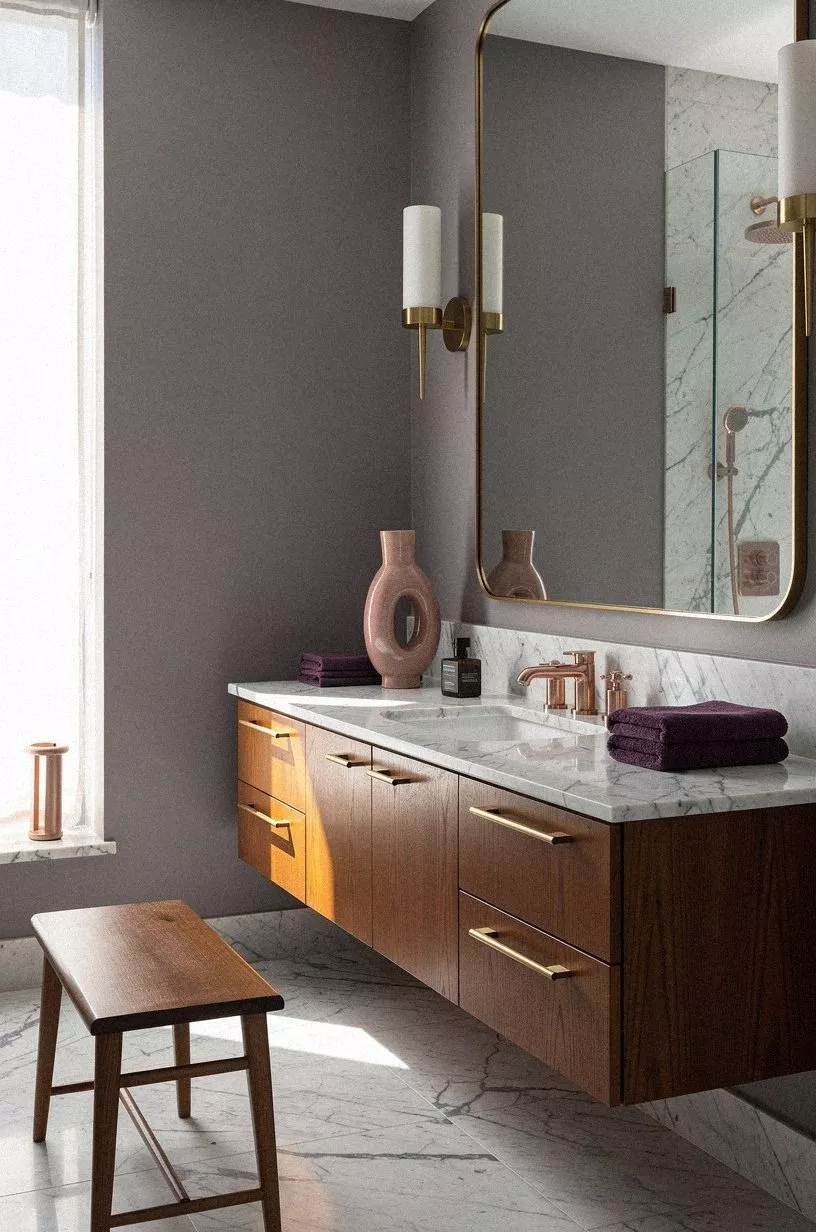
Place sconces at eye level, with the center of each shade roughly near your face when you’re standing at the sink.
4Why Does a Pendant Work in a Bathroom?
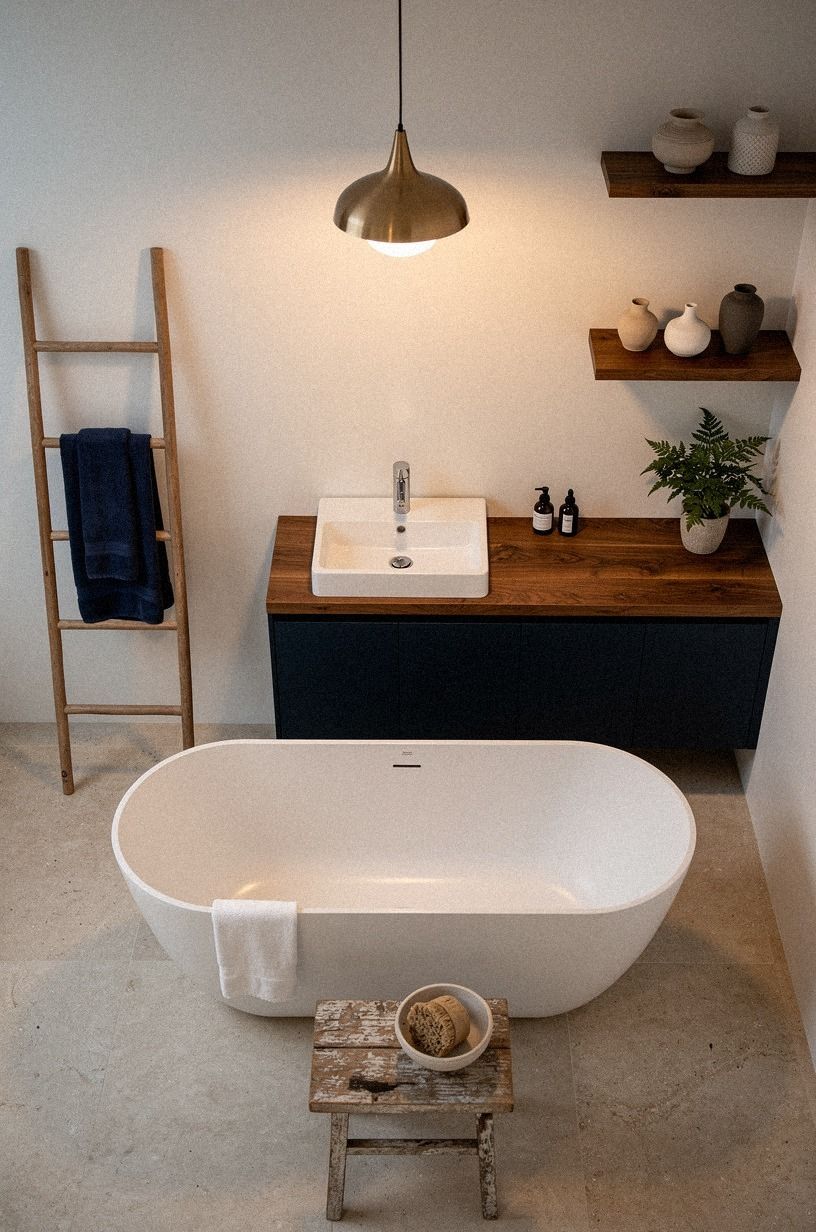
A pendant works when you hang it outside the splash zone and give it a proper damp-rated fixture. Your ceiling height matters more than the pendant’s shape. In a bathroom with an 8-foot ceiling, keep the lowest point high enough that you won’t bump it while reaching for a towel.
Choose a compact reclaimed teak pendant with a simple stem. It gives your room a soft pool of light and echoes the rounded forms common in mid-century design.
I’d skip an oversized woven pendant here. It collects humidity and can make a small bathroom feel visually crowded.
Could a pendant replace every other light? Usually, no. You’ll still want face-level lighting for your mirror, especially if you shave, style your hair, or apply makeup there.
Use the pendant as the room’s warm punctuation, not the only source.
5Anchor the Room With a Walnut Light Bar
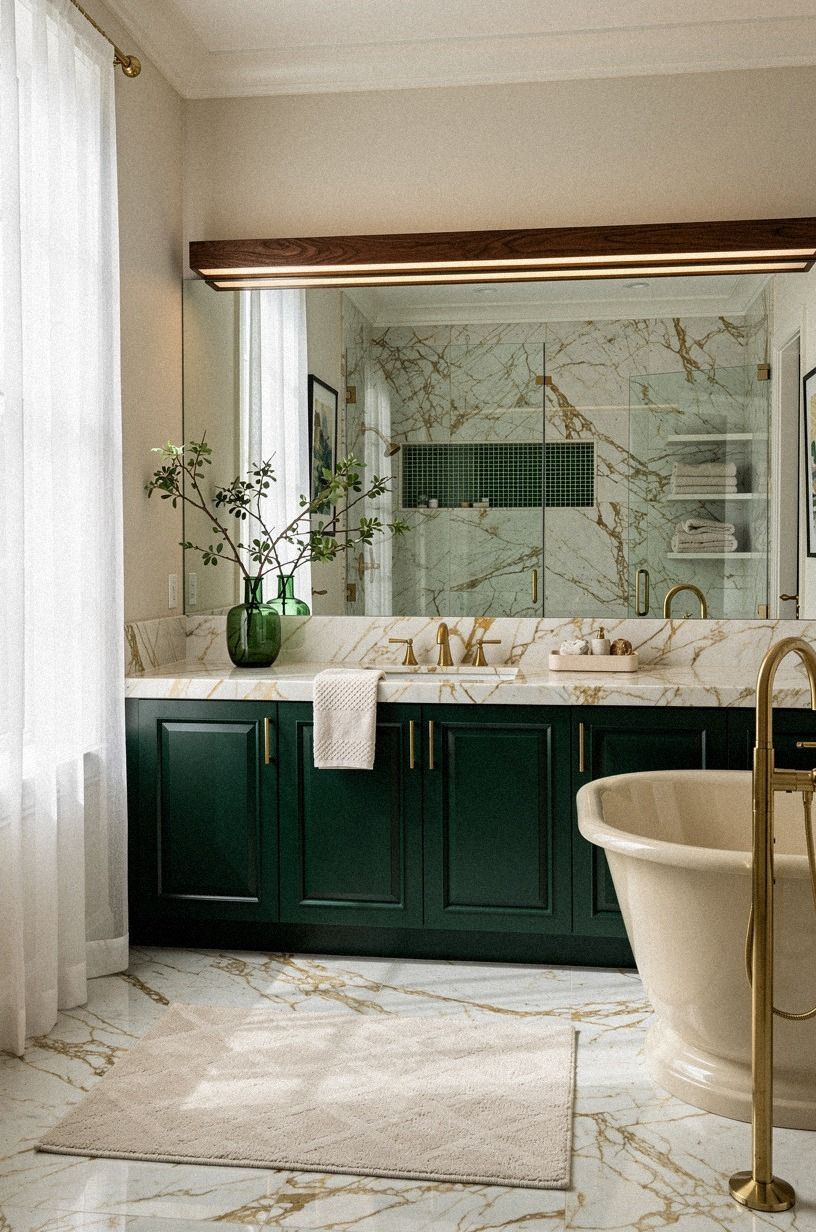
A horizontal light bar can make a narrow vanity feel longer, especially when your mirror is wider than it is tall. Look for a fixture with a Calacatta marble backplate with gold veining, then keep the rest of your hardware restrained. Your bathroom doesn’t need five different finishes to feel considered.
Mount the bar above the mirror, but leave enough space for the light to spread without shining directly into your eyes. A frosted linear shade is gentler than exposed bulbs. If your wall is already busy with tile, a slim profile will keep the composition airy.
For a stronger wood connection, pair the fixture with a walnut vanity and a small framed print. You’ll get a serene, organic effect without turning the room into a retro set. This small mid-century bathroom guide has useful ideas for keeping compact rooms open.
6Float a Globe Above the Tub
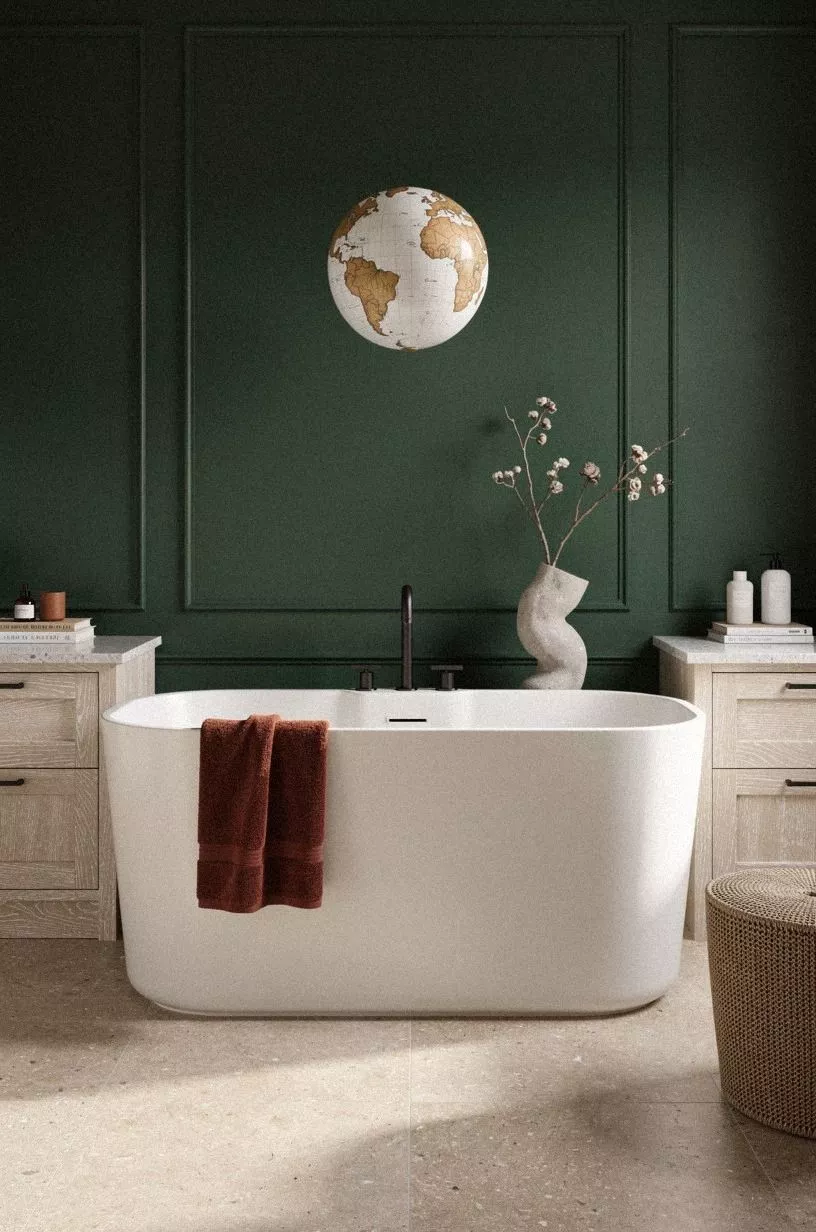
A single globe above the tub can give your bathroom a dreamy evening glow, but the fixture must be rated for the location and installed at a safe distance from water. Your electrician can confirm the local clearance requirements before anything gets mounted.
Use a ribbed glass globe with a cerused white oak canopy if you want texture without visual weight. It softens the bulb and catches a little light along its ridges.
I’d avoid a bare clear globe over a white tub. The glare bounces across the surface and feels more commercial than relaxing.
Keep the rest of the tub zone simple. A folded Turkish cotton towel, a wood bath tray, and one dimmable source are enough.
You don’t need a chandelier to make the space feel special. Sometimes the quieter fixture gives you the more comfortable room.
7Build the Three-Height Light Stack
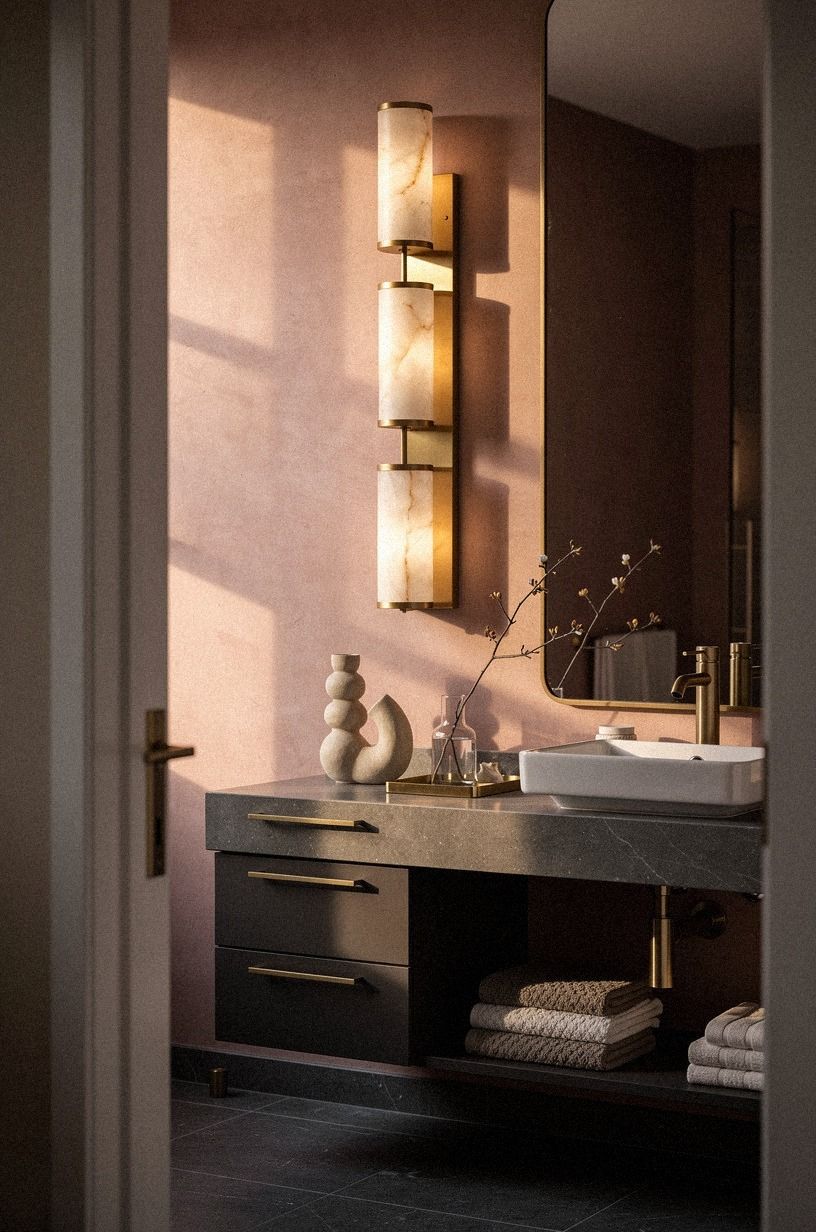
The Three-Height Light Stack uses light at ceiling height, eye height, and floor height. Your overhead fixture handles general visibility, sconces handle grooming, and a low lamp or toe-kick glow makes the bathroom feel gentle after dark.
For the lowest layer, choose a warm LED strip with a concealed profile beneath a floating vanity, then let it catch on a backlit translucent onyx panel. Set it on a motion sensor if you don’t want to reach for a switch during the night. The light should skim the floor, not beam into your eyes.
A dim setting will keep the effect calming.
I used this arrangement in a narrow guest bath, and the low glow became the part everyone noticed first. And you can borrow the idea without renovating. A plug-in night-light, shaded table lamp outside the wet zone, or under-vanity puck can create the same visual pause.
8Paint the Ceiling a Warm Companion Color
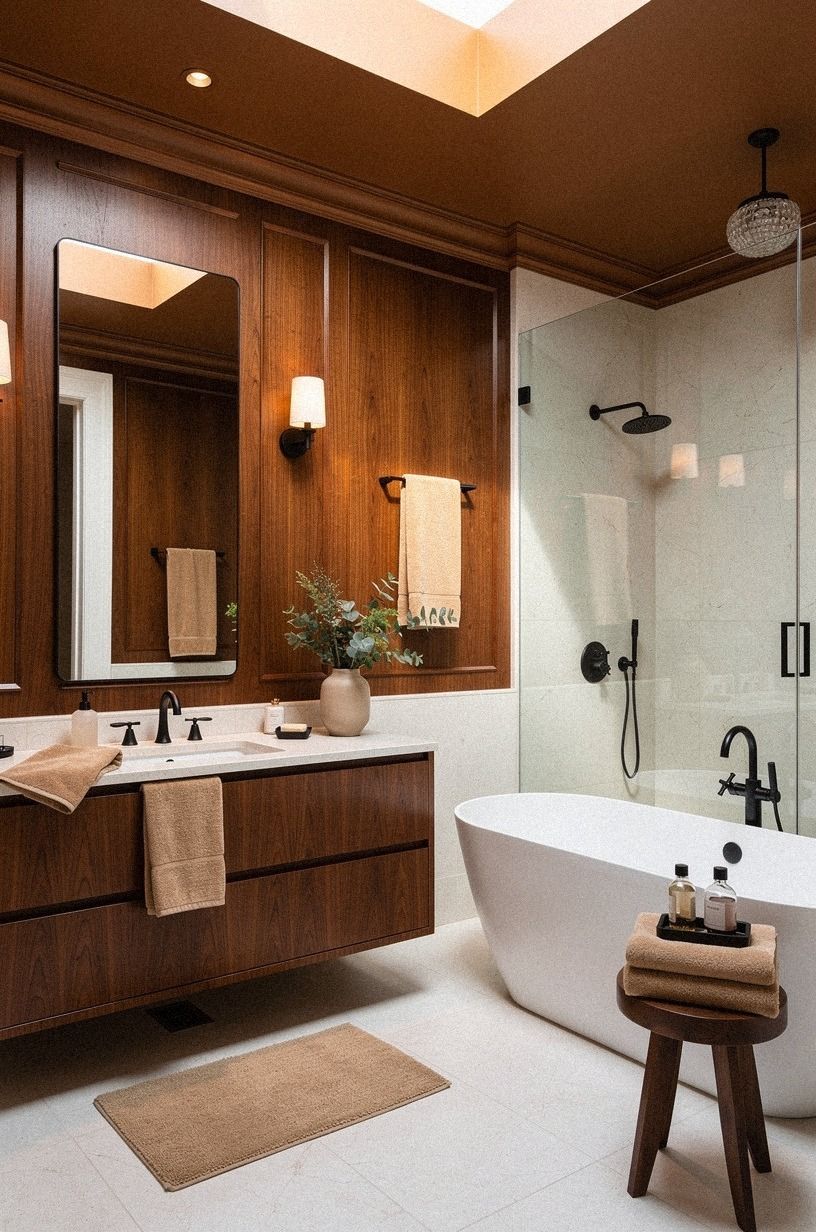
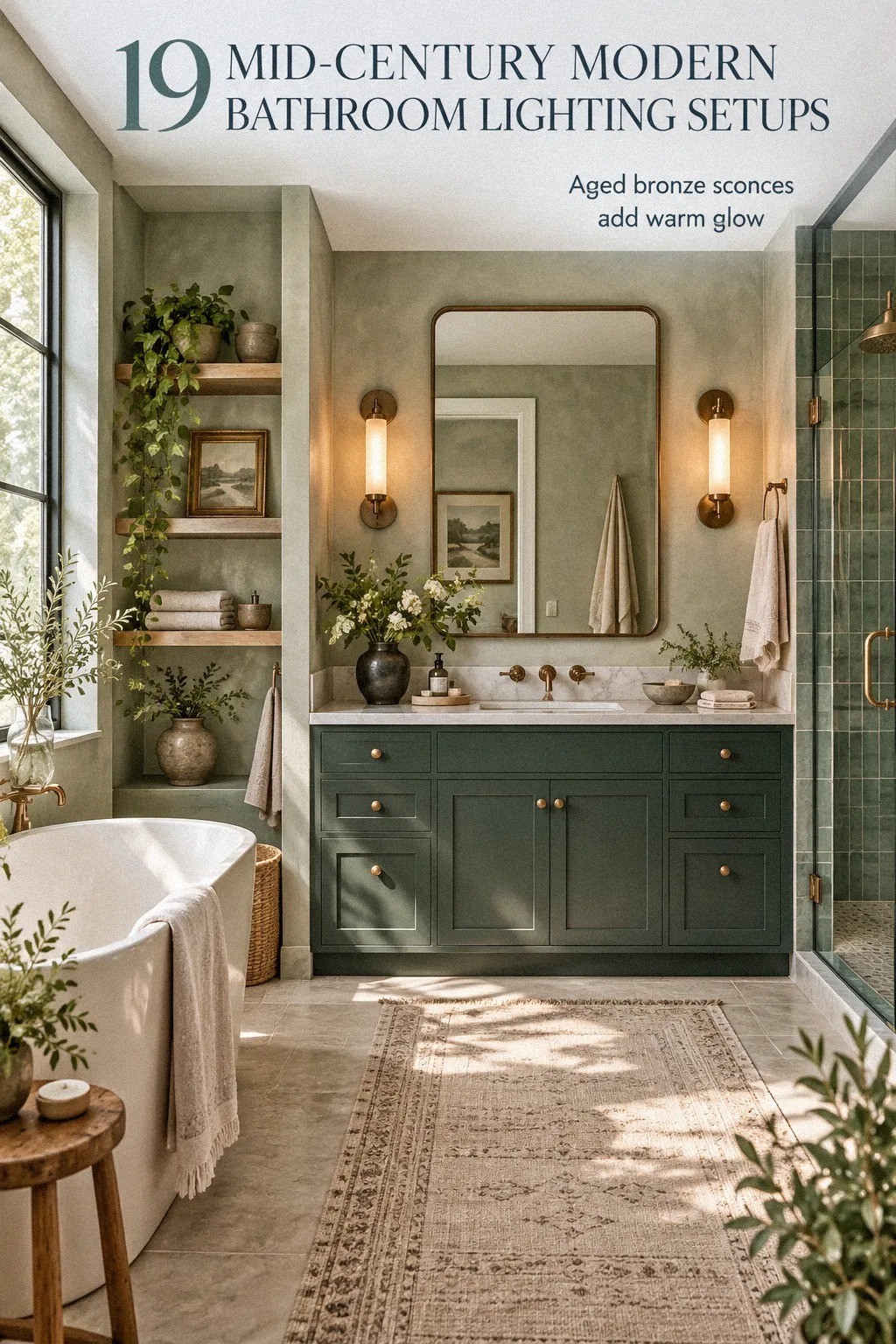
A ceiling light looks friendlier when the ceiling has a warm relationship with the walls. Try Benjamin Moore Chestertown Buff HC-9 in a bathroom with walnut or cream tile. The yellow undertone catches soft bulbs nicely without making the room feel sugary.
For a darker scheme, Farrow & Ball Off-Black No.57 can make a brass fixture look richer. Your ceiling doesn’t have to match the walls exactly, but it should share an undertone.
I’d avoid a stark blue-white ceiling with warm bulbs. The contrast can make your light look muddy.
Test a sample beside the mirror and under the fixture you’ll use at night. Paint changes quickly after sunset.
But don’t let a small bathroom push you toward plain white automatically. A warm ceiling can make the room feel intimate and surprisingly elegant.
9Hang Sconces Over the Side Walls
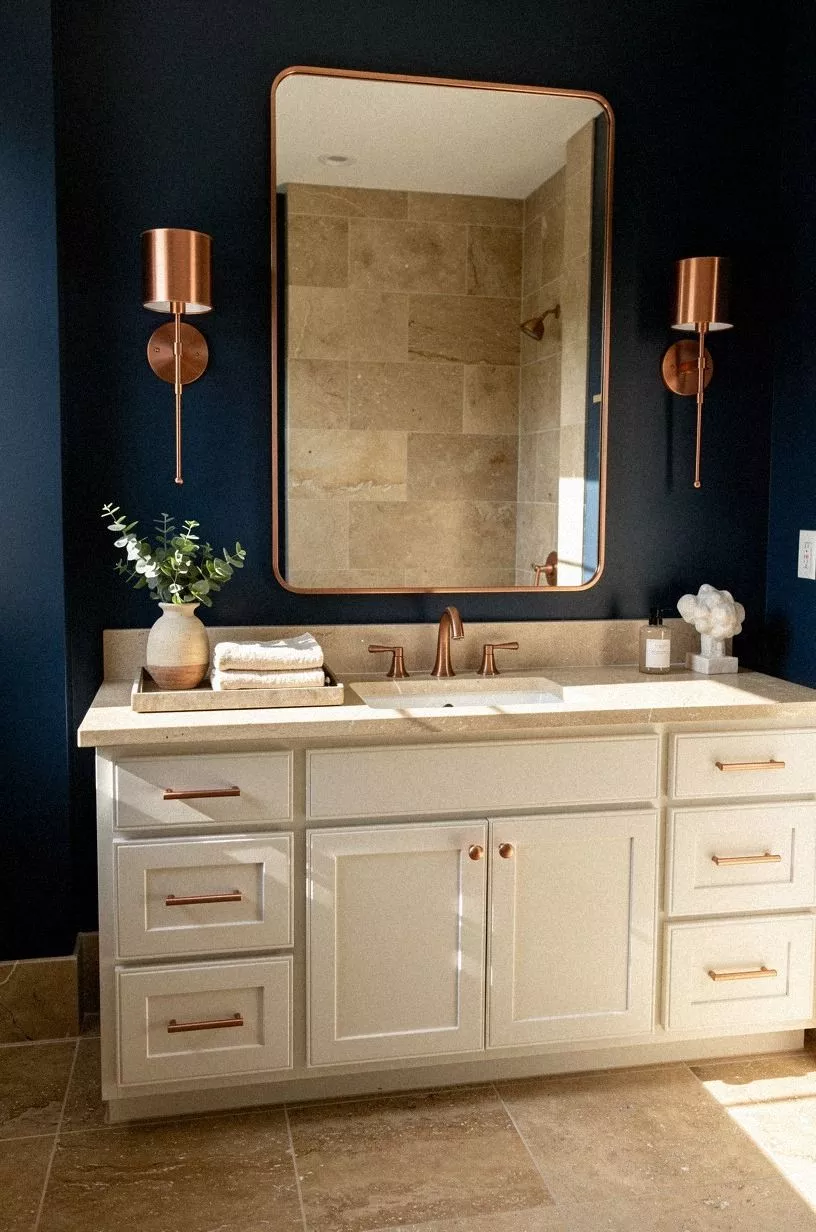
When your mirror is too narrow for two side sconces, hang a pair on the adjacent walls. This bath lighting idea works well in a corner vanity or a small powder room where every inch matters. Your reflection gets side illumination, and the walls gain a soft halo.
Choose copper cylinder sconces with a matte finish if your tile already has shine. The contrast keeps the room from feeling glossy everywhere. Hang each fixture at a comfortable face height, then check the door swing and medicine cabinet before drilling.
I’d skip placing both sconces high above the mirror just because the wall is available. That position can create shadows under your chin. Instead, let the fixture relate to your face and your vanity height.
For a compact guest room, these mid-century guest bathroom ideas show how small details can carry the whole room.
10Choose Opal Glass Over Clear Glass
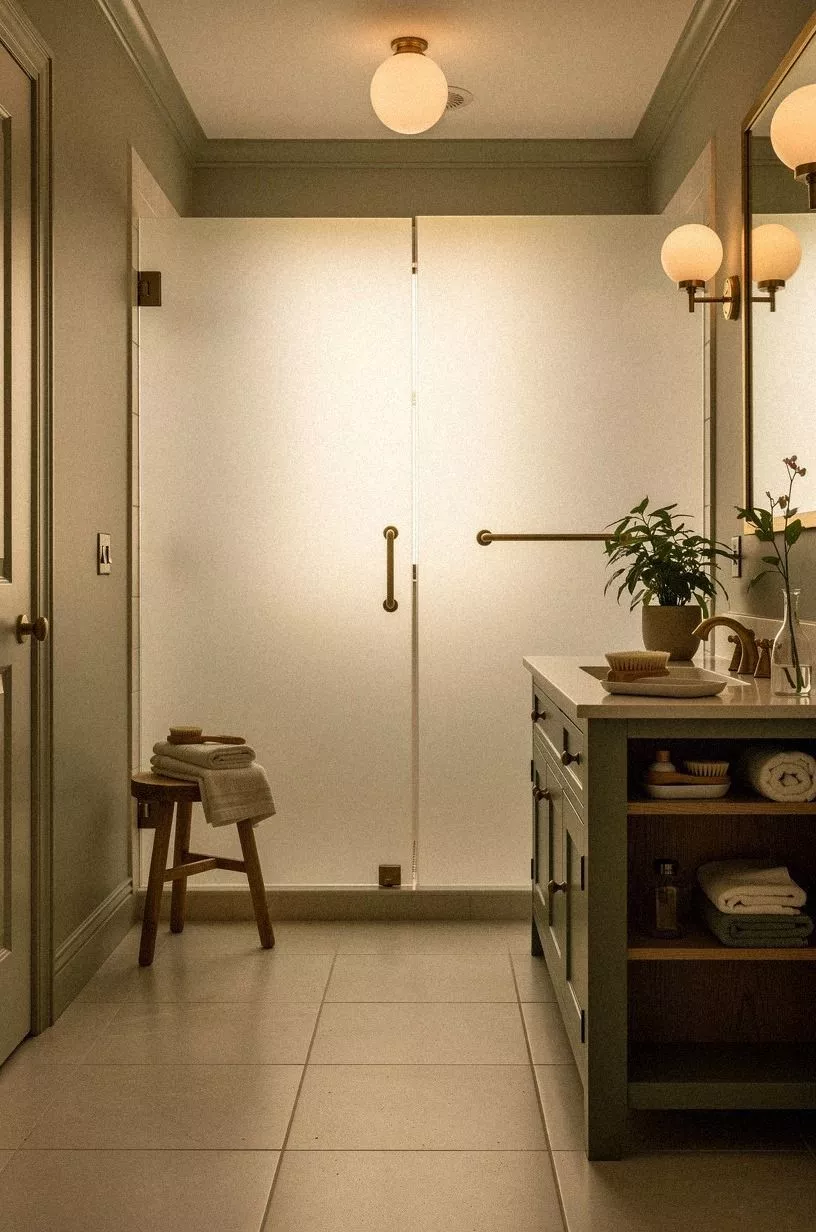
Opal glass is my first choice when your bathroom needs a warm glow without glare. Its milky surface diffuses the bulb, so your eyes don’t catch a sharp hotspot every time you look toward the mirror. The effect feels soft, bright, and quietly sophisticated.
Try a hand-blown opal shade with a simple unlacquered brass fitting. The glass gives you the period reference, while the metal lets you steer the style.
Brass feels warmer. A natural wood accent feels earthy and a little more grounded.
Clear glass can work if you use a low-lumen bulb and a decorative filament. Still, I’d reserve it for a larger room where the fixture sits farther from your sightline. Your bathroom should support your morning routine, not make you squint before coffee.
11Mix Finishes With the Two-Wood Rule
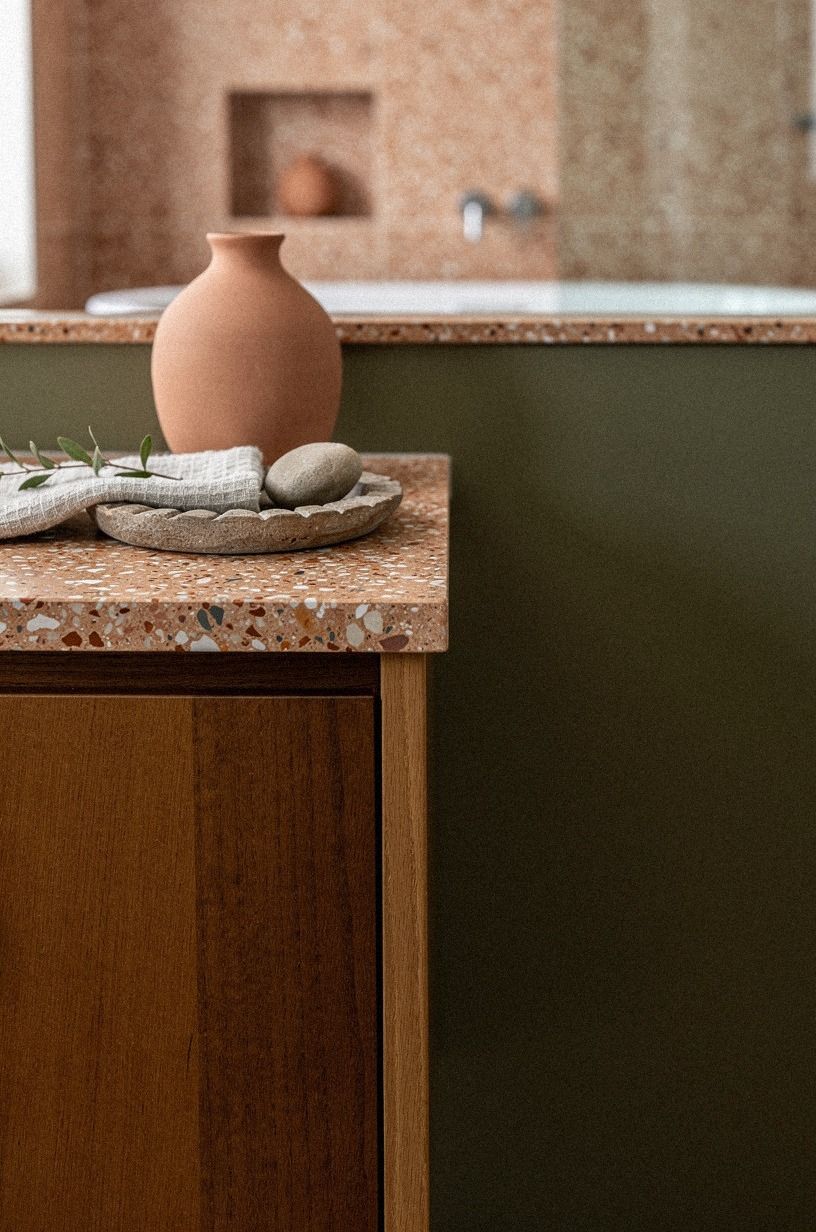
The Two-Wood Rule keeps a warm bathroom from becoming visually scattered, especially beside oversized-chip terrazzo.
12Should You Use a Dark Fixture in a Small Bath?
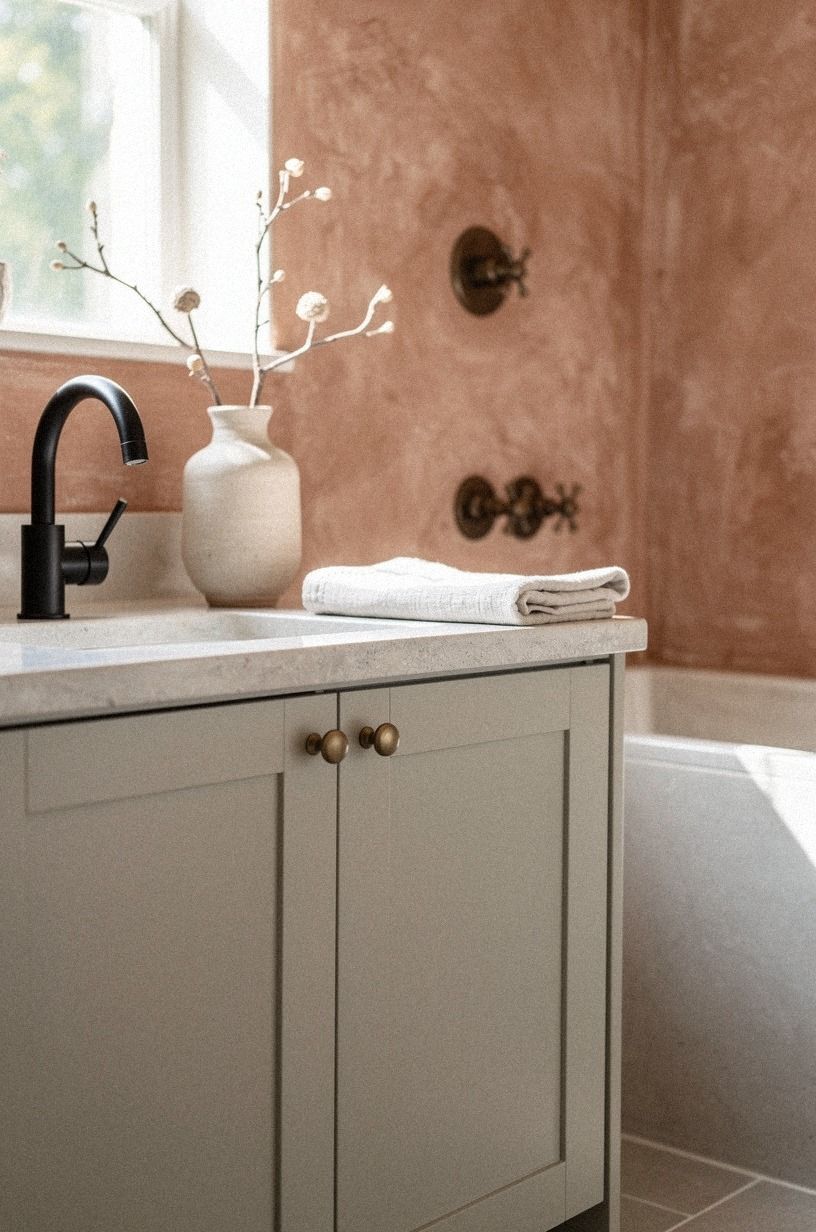
Yes, if you balance it with enough reflective surface and warm light. A black fixture can sharpen a small bathroom, while an aged brass sconce gives the mirror a clear visual edge. Your walls don’t need to be white, but the room does need somewhere for light to bounce.
Pair dark metal with pale tile, a warm mirror frame, or a light ceiling. I’d choose a narrow arm and a small shade instead of a bulky lantern. A heavy fixture can make the vanity wall feel compressed, especially when your mirror is less than 30 inches wide.
The winning move is contrast with restraint. One dark fixture looks intentional.
Five dark accessories can feel forced. If you want more room-specific ideas, see these mid-century bathroom tile ideas and notice how the hardware is allowed to breathe.
13Repeat the Reflection Ladder
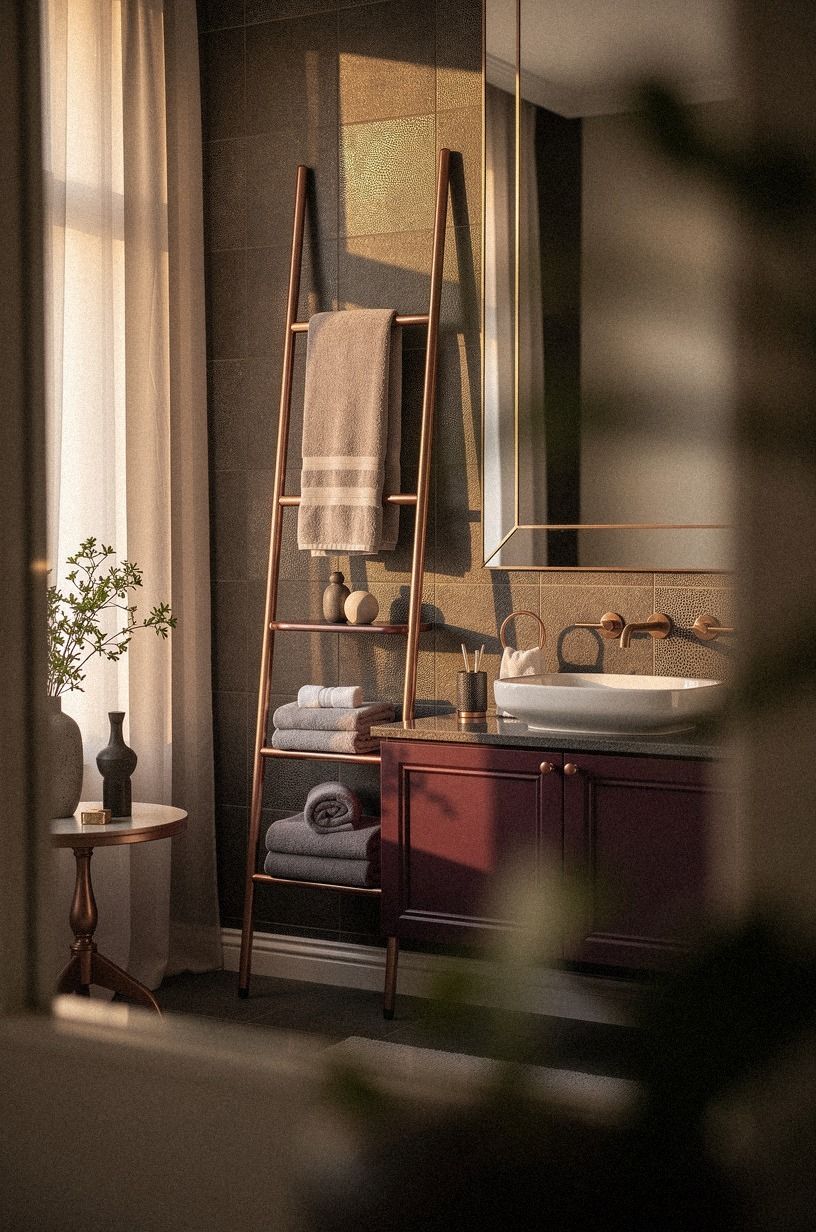
The Reflection Ladder uses three surfaces that catch light at different levels: mirror, metal, and tile. Your mirror throws the main glow back into the room, the fixture metal gives a small glint, and the tile carries a softer reflection across the wall.
Try plum-toned shagreen accents near a rose-gold sconce if you want color with movement. Its pebbled surface creates tiny changes in brightness, so the wall won’t look flat after sunset.
I’d skip highly polished tile around every fixture. It can bounce glare directly into your eyes.
You can use the same idea on a budget with a framed mirror, a brushed fixture, and satin-finish subway tile. That’s enough visual variation. Your light will look richer because it has surfaces to touch, not because you bought a more complicated fixture.
14Install Toe-Kick Lighting Below the Vanity
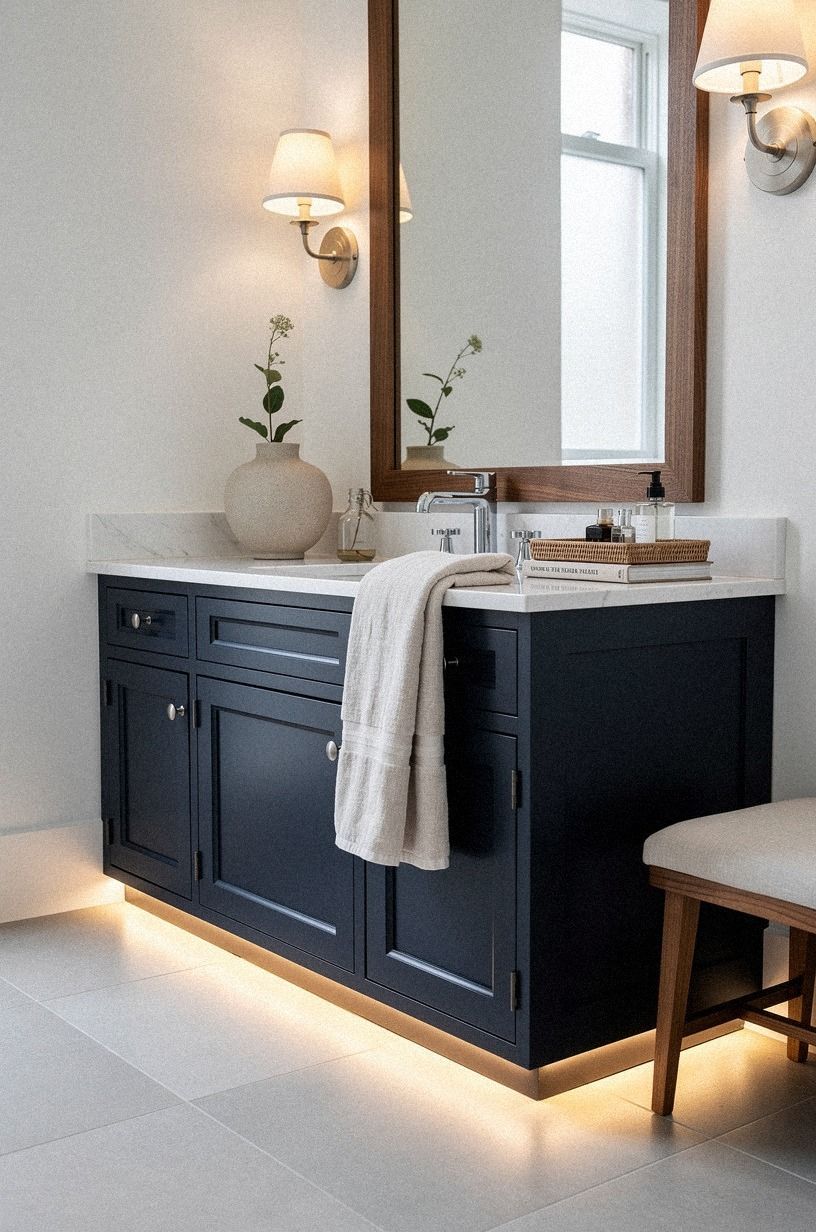
Toe-kick lighting gives your bathroom a low, gentle line that helps with nighttime visits. Install a dimmable LED tape beneath a floating vanity, hiding the strip behind the front edge so you see the glow rather than the diodes.
Keep the light warm and low. Your goal is visibility, not a second overhead source. A sensor can turn it on when you enter, which is useful when your hands are full or your eyes are still adjusting to darkness.
Check the vanity depth and floor finish before installing. Light-colored tile will reflect more strongly than dark stone.
I’d avoid cool blue LEDs here. They make the bathroom feel sterile and can compete with every warmer source above them.
15Pair a Ribbed Shade With Warm Tile
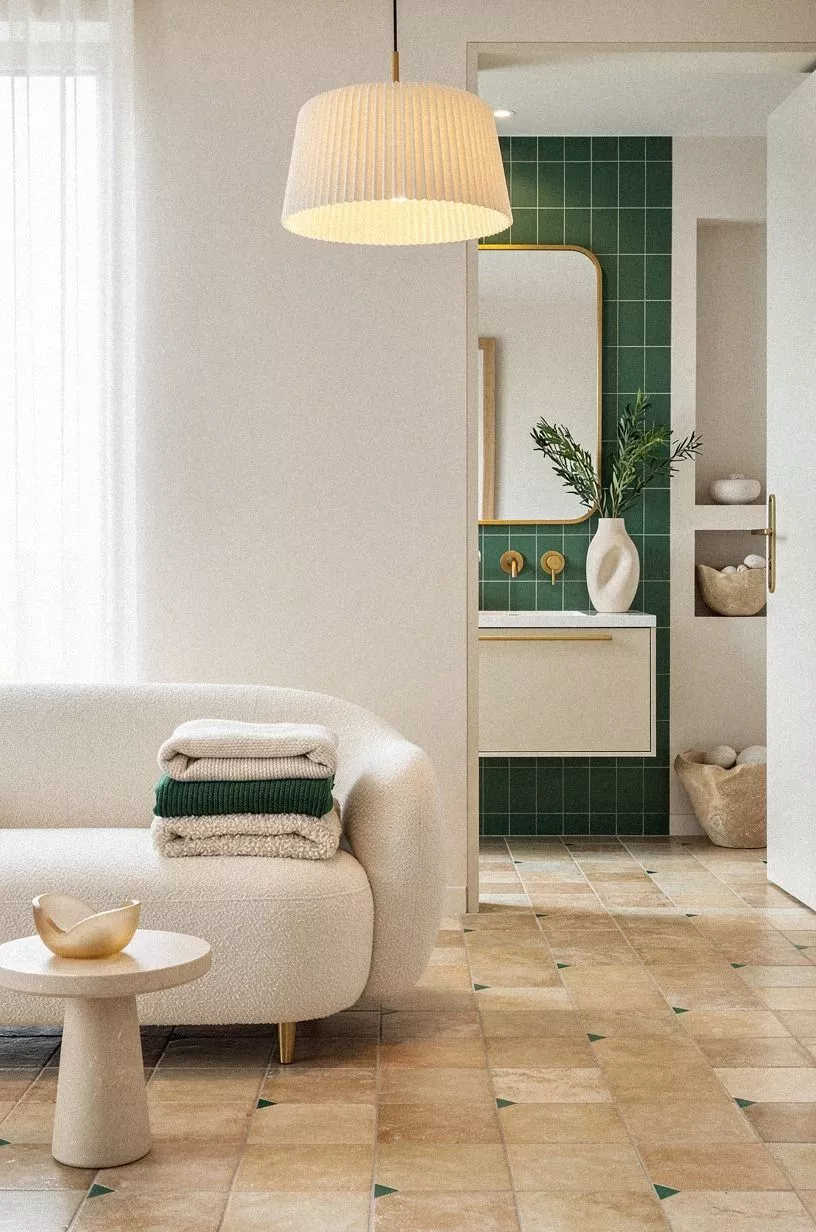
Ribbed glass and warm tile make a lovely partnership, especially beside an organic bouclé stool.
16Compare the Real Bathroom Lighting Budget
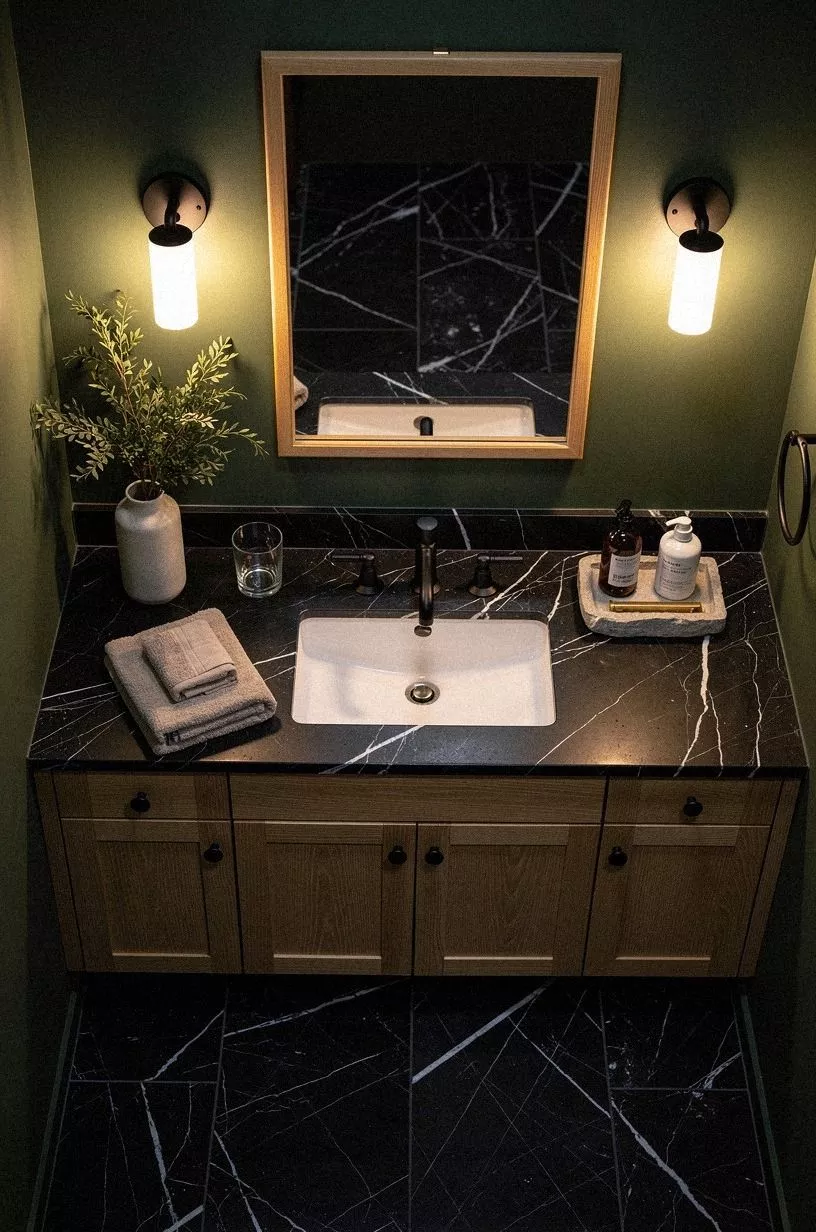
Your fixture budget depends on whether you’re changing one light or rebuilding the room around it. A bulb swap and new shade can stay modest, while new tile, plumbing, and a vanity move the project into a different category.
For a smaller refresh, spend first on the fixture position and bulb quality. Your room will benefit more from useful light than from a costly finish hidden behind a shade. This mid-century floor tile guide can help you decide where a larger budget will have the most visual effect.
17Use a Mirror With a Narrow Metal Frame
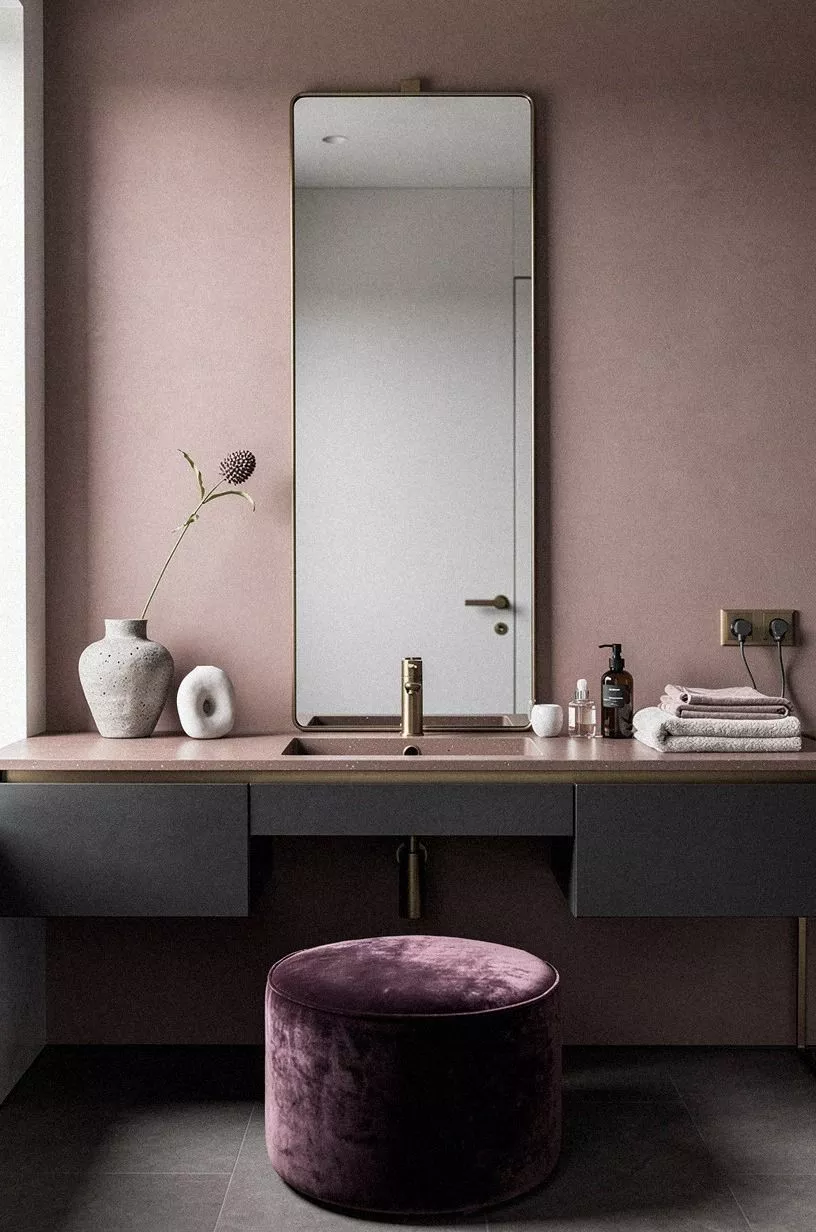
A thin mirror frame can connect your fixture to the rest of the bathroom without adding much visual weight. Choose antique brass trim if your sconces are warm metal, or a dark bronze edge if your lighting has a graphic profile.
Your mirror should fit the vanity before you worry about style. Leave enough wall space for side lighting when possible, and check that the door or cabinet won’t collide with the frame. A mirror that is too wide can swallow the sconces you planned to install.
I’d choose a simple rounded rectangle over an ornate shape. It gives your bathroom a gentle mid-century curve while keeping the lighting readable. And if you’re working with a rental, a lightweight framed mirror can create a major shift without touching the wiring.
18Steal the Hotel Glow With Layered Dimmers
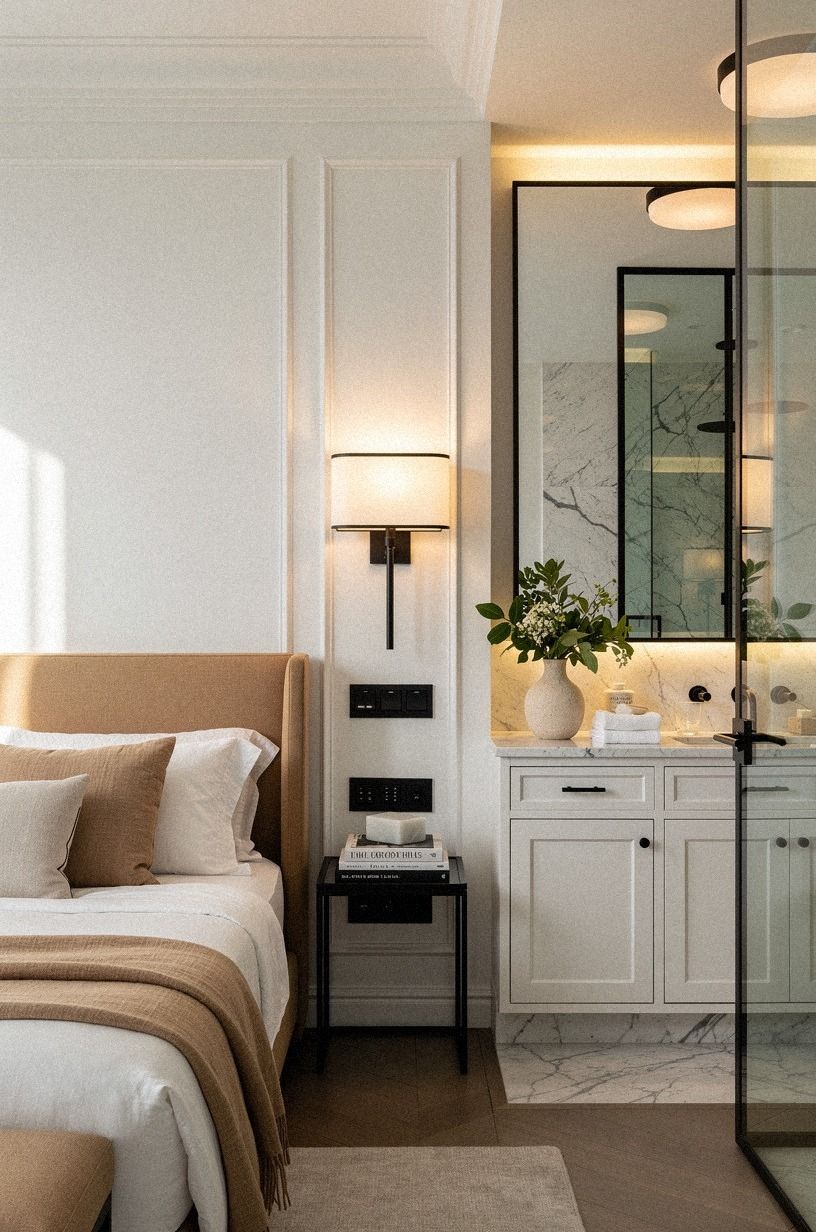
A hotel-like bathroom feels calm because each light can work independently. Use one dimmer for the vanity, one for the ceiling, and a sensor or low switch for the floor glow. Your room can then move from bright morning utility to soft evening light.
Choose 600-lumen warm bulbs only when that output suits the fixture and room size. The number on the package matters more than the bulb’s shape. A small bathroom may need less brightness than you expect, especially with pale walls and a large mirror.
Don’t wire every source to one switch if you can avoid it. One control often leaves you choosing between too bright and too dark. For a larger primary bath, these retro-luxe master bathroom ideas show how layered finishes can support layered lighting.
19Style the Light Around Your Daily Routine
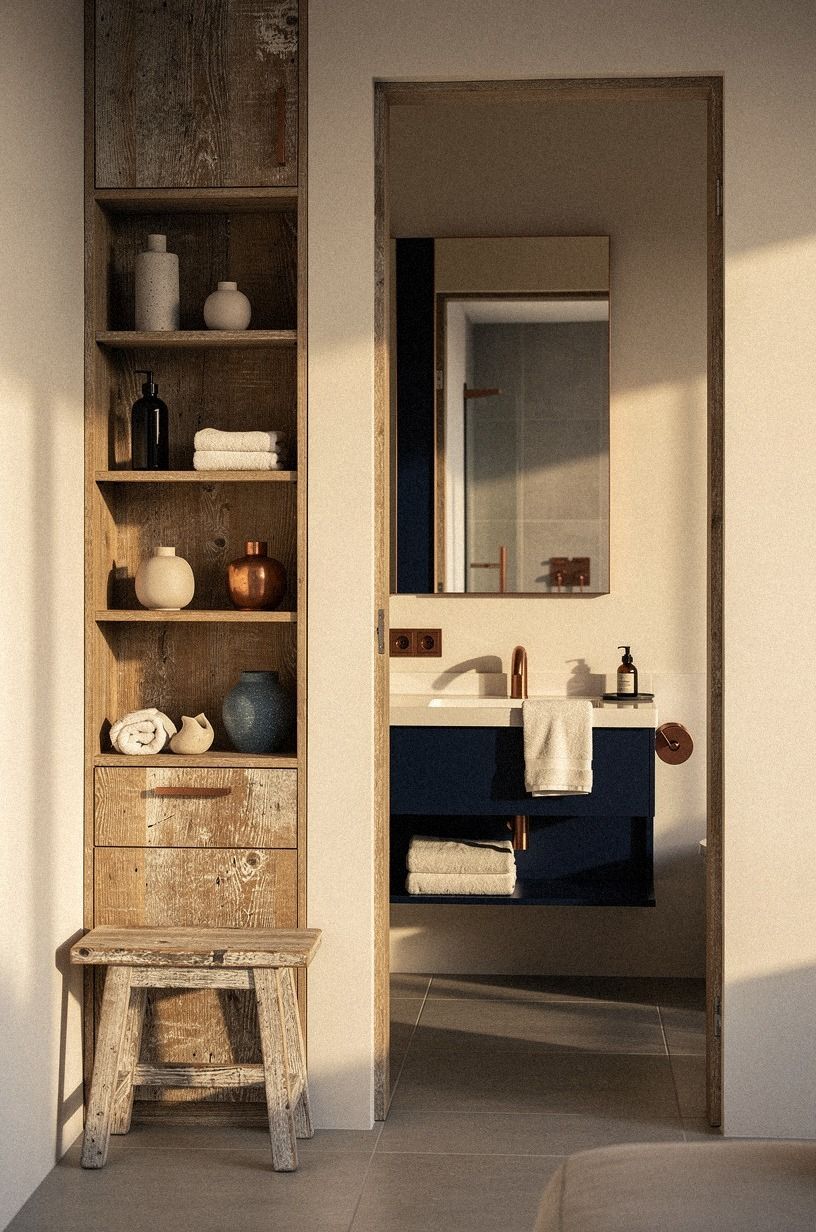
The best modern bathroom light fixtures match the way you use the room. Your vanity needs honest face light, your shower needs safe general visibility, and your nighttime path needs a low glow that won’t wake you fully.
Add reclaimed weathered teak only outside the wet zone, perhaps on a small stool or bench, then repeat the color in a print or towel. The material gives your room a warm, inviting note beside hard tile and metal.
I’d skip styling every surface. Open counter space makes the light feel cleaner.
Walk through your routine before choosing the final fixture. Where do you stand, reach, shave, apply makeup, or search for a towel?
That answer will tell you more than a showroom display. A warm bathroom should work for you at 7 a.m. and still feel peaceful at 11 p.m.!
The Design Choice I’d Defend
I’ve changed my mind about bathroom lighting more than once. I used to think the fixture carried the style, but the bulb temperature and placement usually matter more. A beautiful globe mounted too high still leaves your face in shadow, while a plain sconce at the right height can make a tired vanity feel welcoming.
I also learned not to choose finishes in isolation. Brass can look soft beside walnut and sharp beside icy gray tile.
Opal glass can look refined with a matte wall and overly sweet with glossy white subway tile. Your samples need to sit together under the light you’ll live with, not under the bright store ceiling.
My biggest mistake was treating the ceiling fixture as the main event. It wasn’t.
The low glow under the vanity became the reason the room felt comfortable after dark, and the side sconces made the mirror practical. If you’re deciding where to spend first, put the money into placement, dimming, and a bulb that renders your skin naturally.
Then let the decorative finish follow.
The Questions I Get Asked Most
What is the best Mid-Century Modern Bathroom Lighting Ideas for a Warm Glow for a small bathroom?
A pair of compact opal sconces beside the mirror is the best starting point. Even face-level light keeps your reflection usable without crowding the wall. IKEA and Article both offer simple mid-century shapes, but measure your vanity and mirror first.
Where can I buy Mid-Century Modern Bathroom Lighting Ideas for a Warm Glow pieces on a budget?
Look at IKEA, Wayfair, and Target for affordable fixtures, then check Facebook Marketplace and local thrift stores for vintage shades. No affiliate purchase is required, and this display-supported site doesn’t earn commissions from those suggestions.
How much does a Mid-Century Modern Bathroom Lighting Ideas for a Warm Glow makeover cost?
A small refresh usually falls around $100 to $300 for bulbs, a shade, paint, or a simple fixture. Your existing vanity and wiring can stay, which keeps labor low. Larger tile or plumbing changes move into the budget tiers shown above.
Can I create a Mid-Century Modern Bathroom Lighting Ideas for a Warm Glow on a budget?
Yes, and you can begin without rewiring. Swap cool bulbs for 2700K soft white, add a framed mirror, and use a plug-in low light outside the wet zone. Paint and bulb changes can make the room warmer before you buy a new fixture.
Is a Mid-Century Modern Bathroom Lighting Ideas for a Warm Glow worth it in a small space?
Yes. A small room benefits from layered light because each source has a clear job. Side sconces and a dimmer can make the vanity feel wider, while a low glow keeps the floor visible without flooding the whole room.
Is a Mid-Century Modern Bathroom Lighting Ideas for a Warm Glow a good idea for a rental?
Yes. Choose removable mirror hooks, plug-in sconces, peel-and-stick wallpaper outside wet areas, and a tension rod for textiles. No-damage changes can add warmth while leaving the original wiring and fixture intact when you move.
Where I’d Start First
If I had to pick one, I’d start with the side sconces. They put light on your face instead of the ceiling, and that one correction makes every finish look more intentional. Pin the idea for later and compare your mirror width before you shop.