
Master bath freestanding tub ideas for a true retreat don’t require a demolition crew: the typical cosmetic refresh costs $200 to $1,200. I once tried to make a tub corner feel special with one sad candle and a beige bath mat. It looked like a waiting room. The fix was layers, not renovation.
- Anchor the tub with a quiet tile backdrop
- Float a tub table within arm’s reach
- Use The Three-Height Light Stack
- Paint the wall behind your master bath tub
- Choose linen over a matching bath set
- Frame the view with a shower curtain (even without a shower)
- Try The Two-Wood Rule beside the tub
- Keep a 60×30-inch tub visually light
- Go dark over all-white when the room has good light
- Build a towel ladder instead of adding a cabinet
- Why not use a rug that feels like furniture?
- Add brass only where your hands land
- Make a retreat budget before you buy the first basket
1Anchor the tub with a quiet tile backdrop
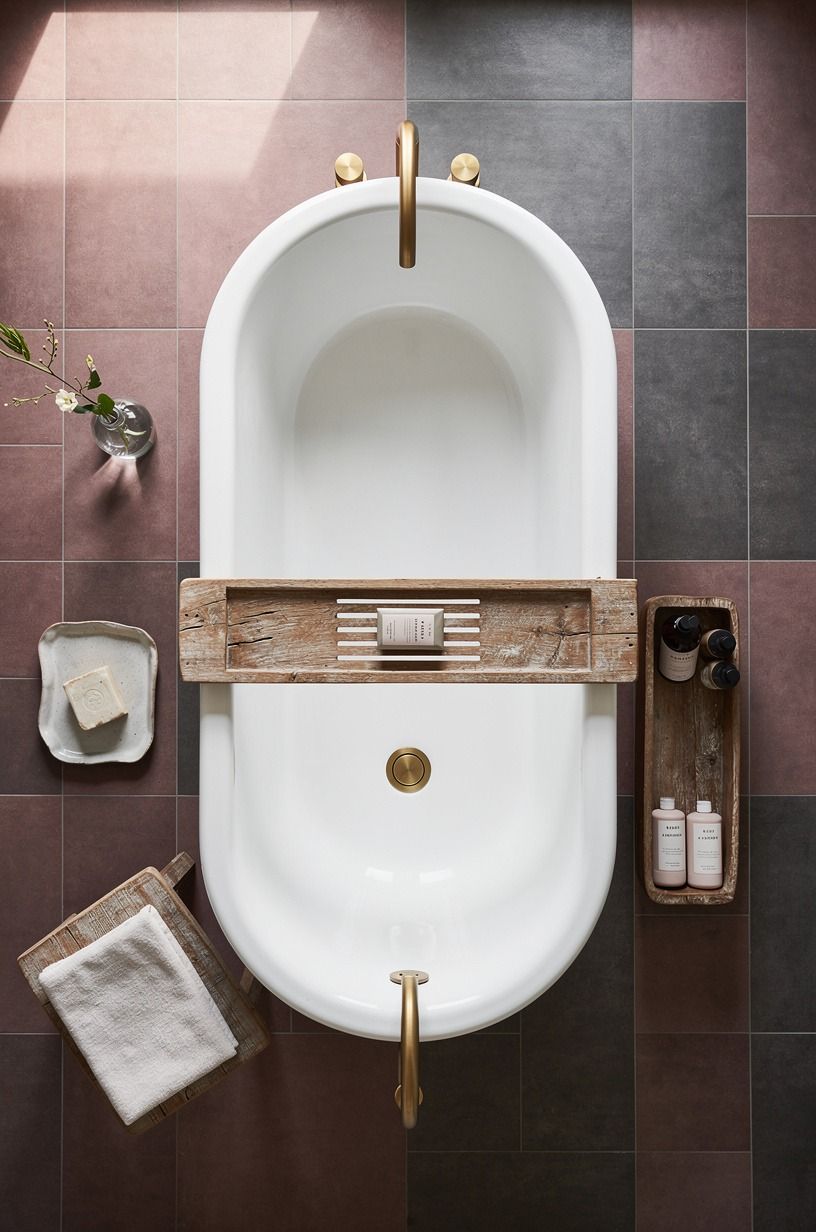
Give your master bath freestanding tub one wall that feels intentional. A panel of reclaimed, weathered teak in dusty rose, charcoal, and brass tones brings warmth behind the tub without making the room feel busy.
Keep the backdrop area tight if you’re avoiding a full redo: one vertical panel, not every surface. I’d skip loud geometric cement tile here, because your tub should feel calm rather than like it’s competing with the floor. For more placement ideas, see tile behind a freestanding tub.
Typical cost by tier (US averages):
2Float a tub table within arm’s reach
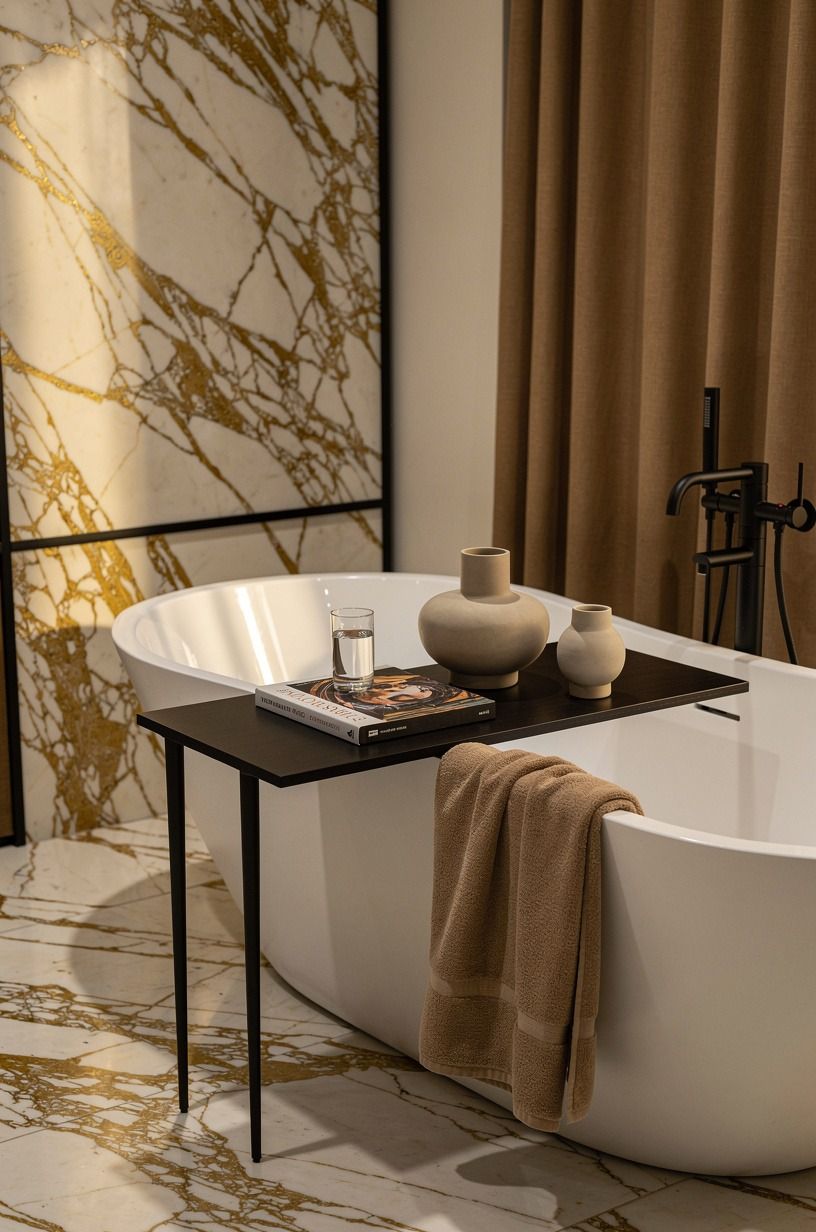
A freestanding bathtub master bath needs somewhere for the book, the water glass, and the phone you swear you won’t check. Use a slim Calacatta marble table with warm gold veining, placed where you can reach it without twisting.
You don’t need a matching set. A worn vintage wooden stool, a folded Turkish towel, and one small glass vessel feel more lived-in than a showroom tray. And yes, your bath ritual gets better when you aren’t balancing everything on the floor!
3Use The Three-Height Light Stack
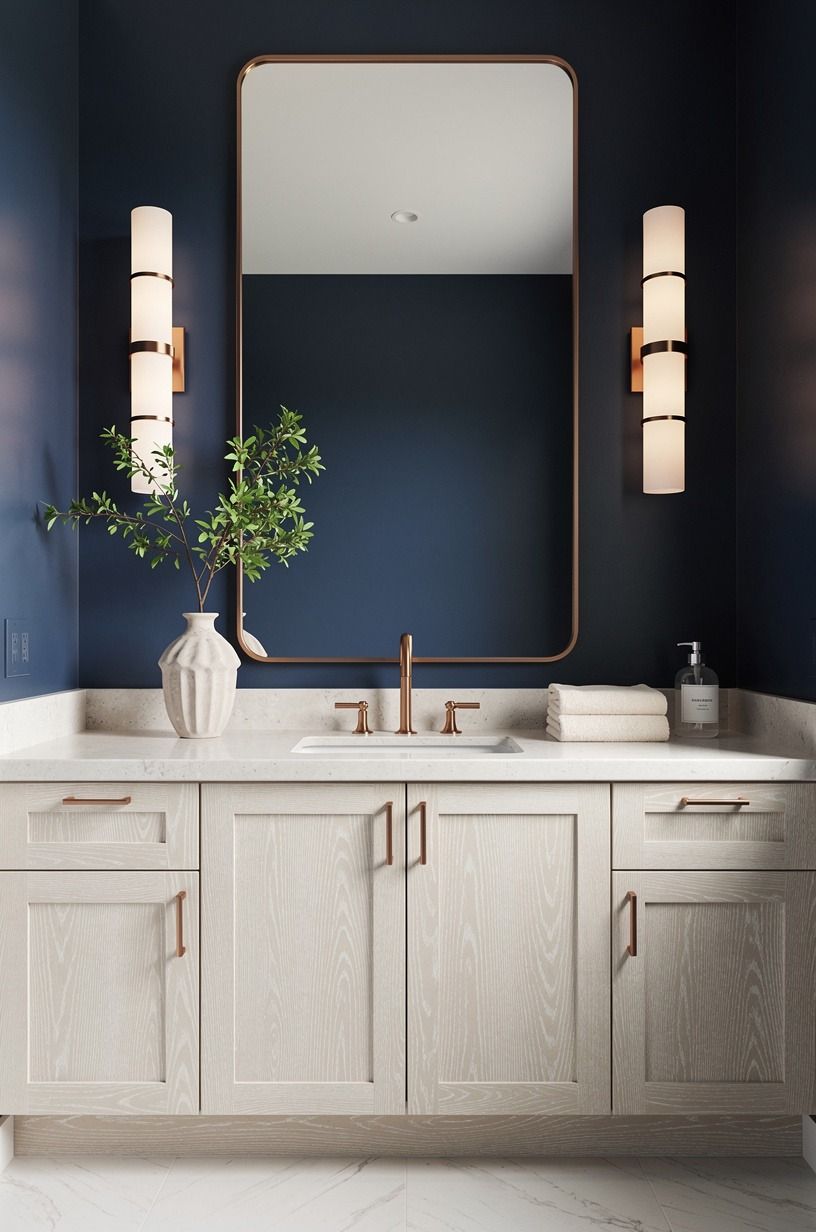
Layer light at three heights: ceiling, wall, and tub level. Your overhead fixture handles cleanup, copper sconces soften faces, and a low lamp or candle makes the water look warmer at night.
I’ve learned that one ceiling light can make even expensive tile look flat. Put dimmable bulbs in the sconces, then let your low light stop at the rug’s edge.
The result is gentle, not gloomy. You’ll find more small-room lighting direction in these spa-like master bath ideas.
4Paint the wall behind your master bath tub
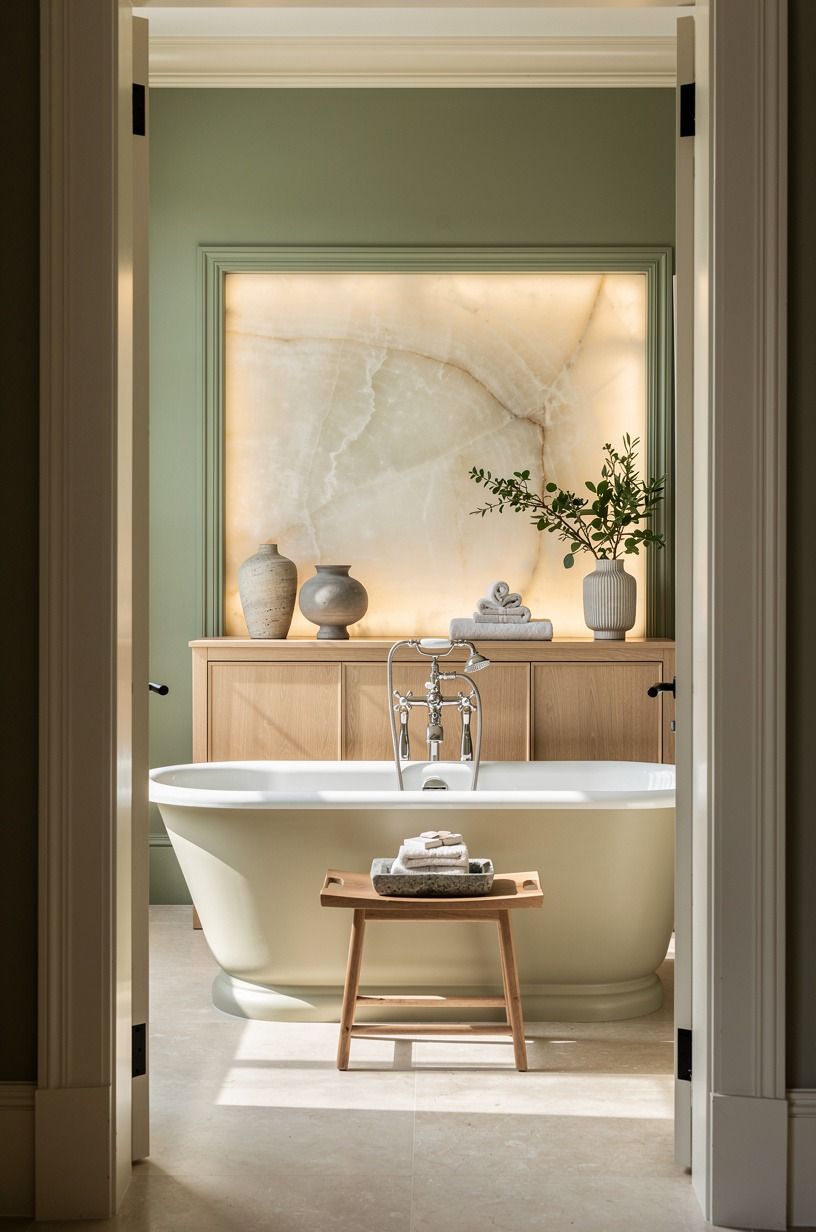
A paint color is the fastest way to make a bathroom with free standing tub master bath feel owned rather than borrowed.
5Choose linen over a matching bath set
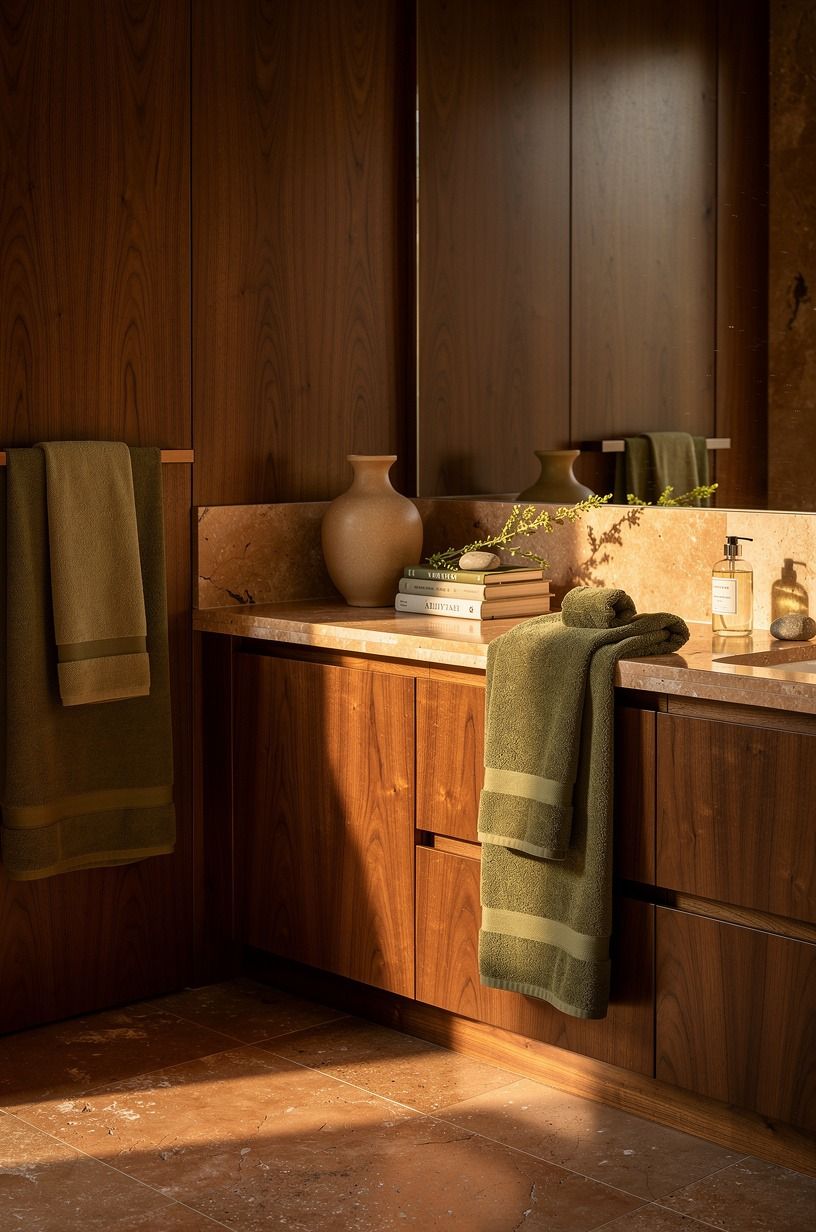
Skip the coordinated towel set. It’s tidy, sure, but it can make your retreat feel like a hotel supply closet. Instead, bring in Belgian flax linen in terracotta, stone, or olive, plus one 600gsm Turkish cotton towel for the towel you’ll reach for daily.
Your eye needs a little unevenness. A soft linen curtain, rumpled towel stack, and a matte ceramic soap dish make the corner feel relaxed without looking careless.
The linen will wrinkle. Good. That’s part of why it works.
6Frame the view with a shower curtain (even without a shower)
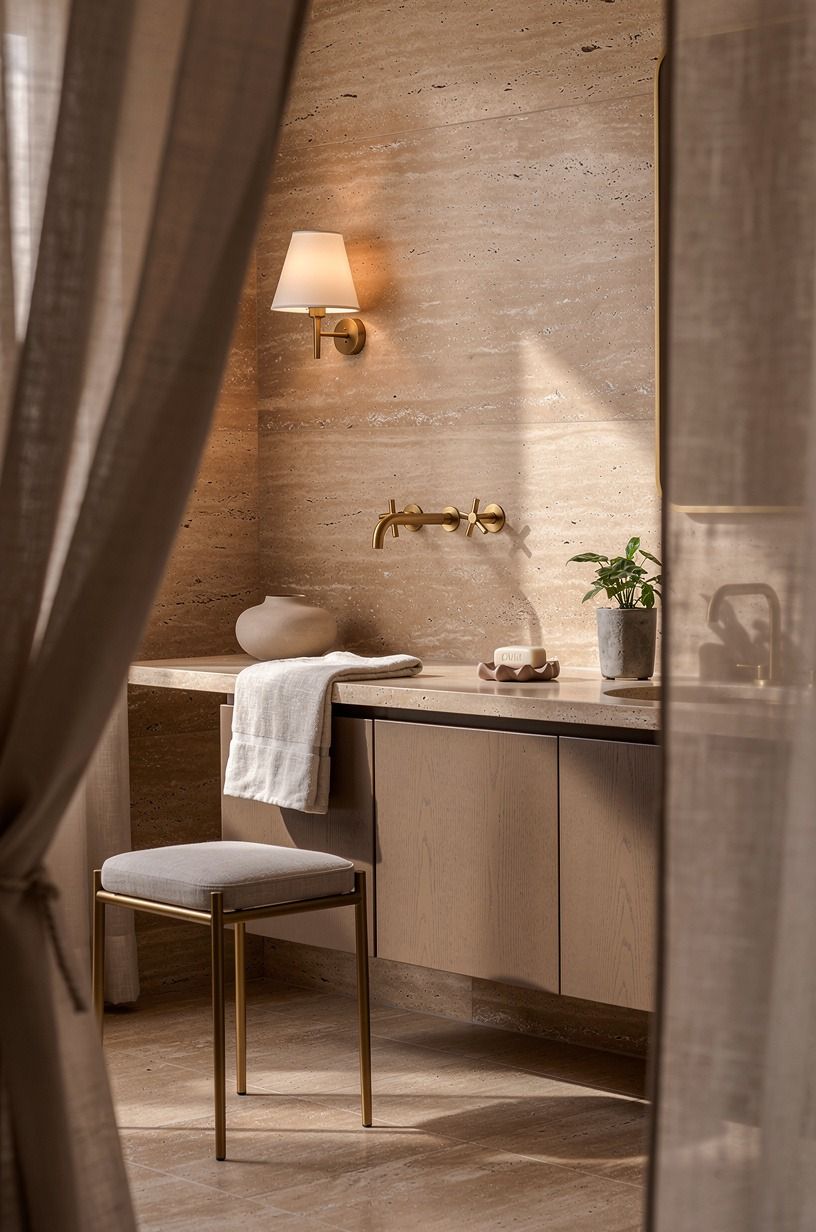
Can a curtain make a tub corner feel more expensive? Absolutely, if you hang it high. Mount a rod near the ceiling and use a full, washable linen curtain that brushes the floor.
You’re creating vertical softness, not hiding plumbing. I’d avoid thin polyester panels because they rustle and shine under bathroom lights in the worst way. A clay-toned curtain beside Benjamin Moore Chestertown Buff HC-9 walls gives the room an earthy, peaceful wash.
7Try The Two-Wood Rule beside the tub
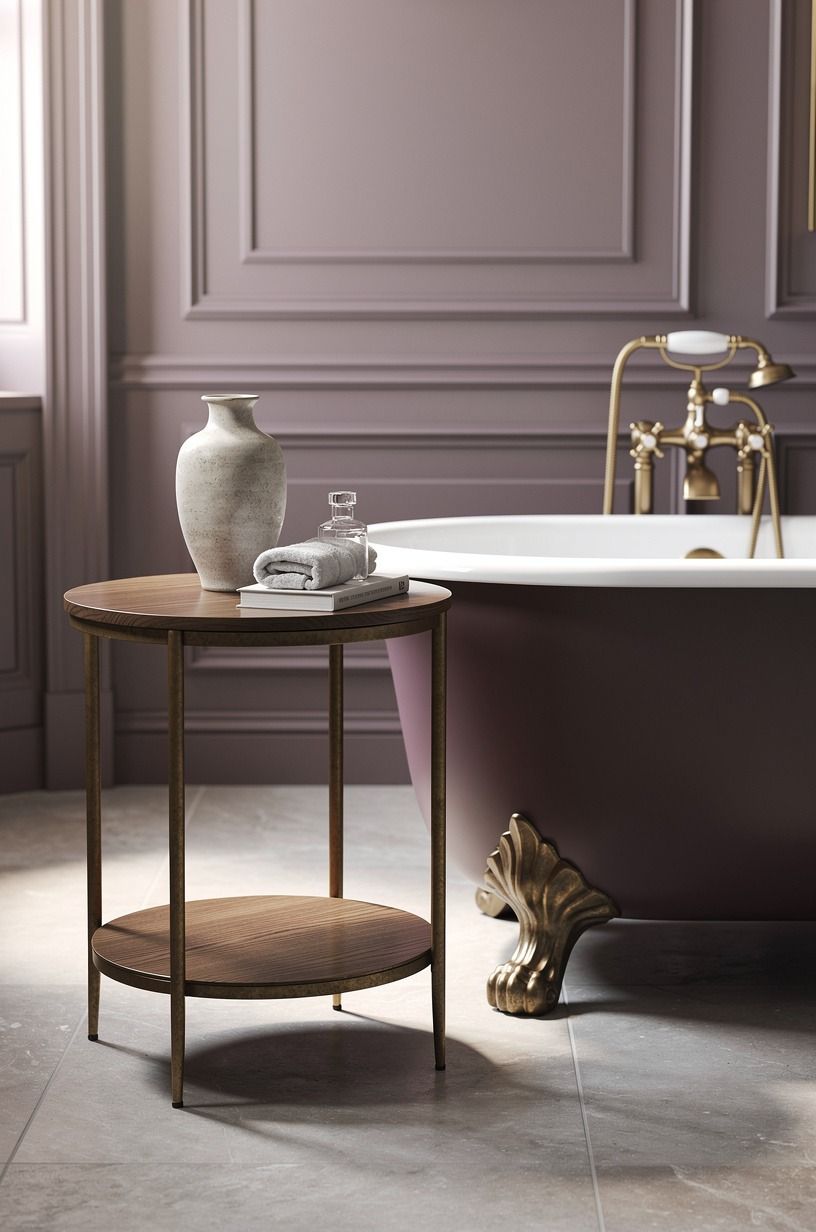
Use only two wood notes in the room: one warm and one dark. For example, a warm wood tray near the tub and a deeper walnut-framed mirror across from it. More than two species starts to look accidental.
This rule saved me after I brought home a third wood stool that looked right in the store and wrong everywhere else. Your tub zone needs contrast, but it also needs restraint. If you’re working with a compact layout, this guide to fitting a freestanding tub will help you plan it.
8Keep a 60×30-inch tub visually light
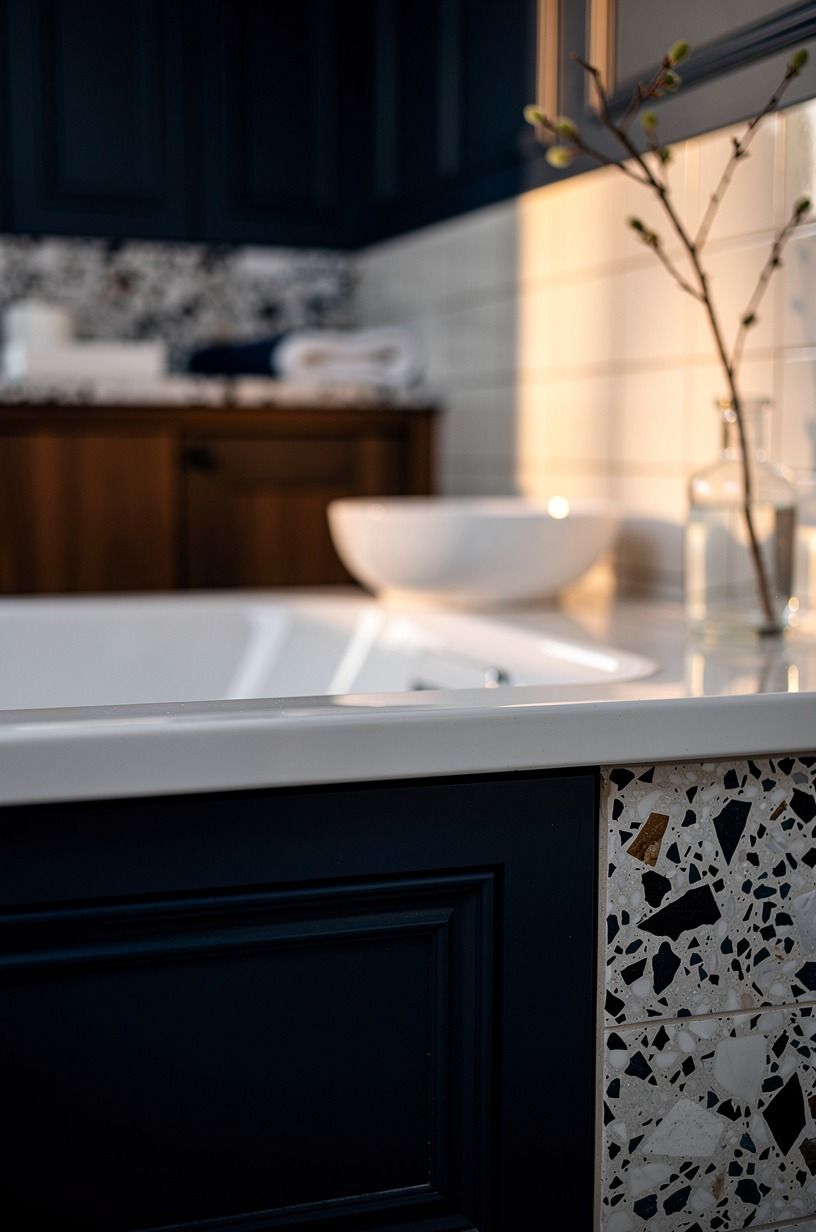
A standard tub measures 60×30 inches, so your master bath freestanding tub doesn’t need extra bulk around it.
9Go dark over all-white when the room has good light
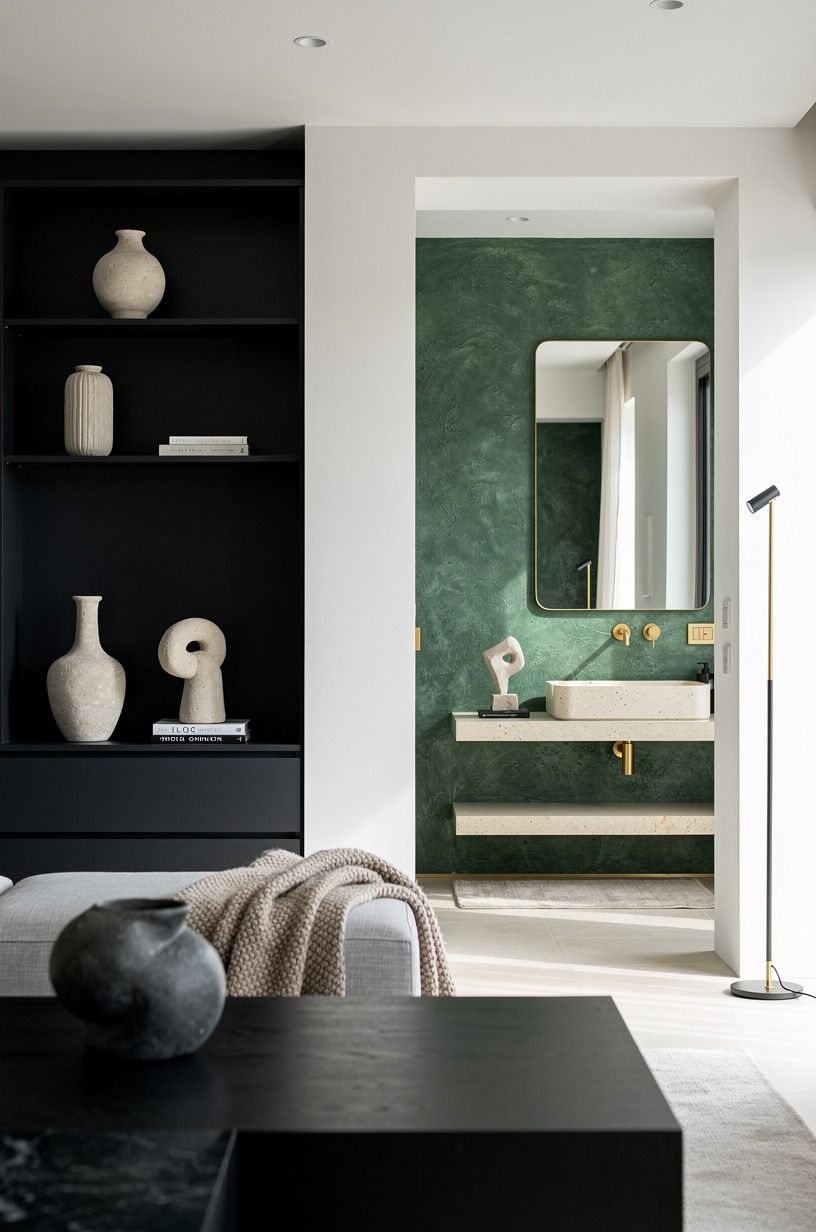
All-white bathrooms photograph well, but they can feel chilly at 7 a.m. An emerald wall behind the tub, balanced with gold and cream, gives pale stone and white towels a dramatic place to land.
But don’t paint every wall dark in a narrow bathroom. Let one side hold the depth, then use warm off-white around the vanity.
Your freestanding bathtub master bath should feel intimate, not cave-like. See moody master bath ideas with dark romance for the balance.
10Build a towel ladder instead of adding a cabinet
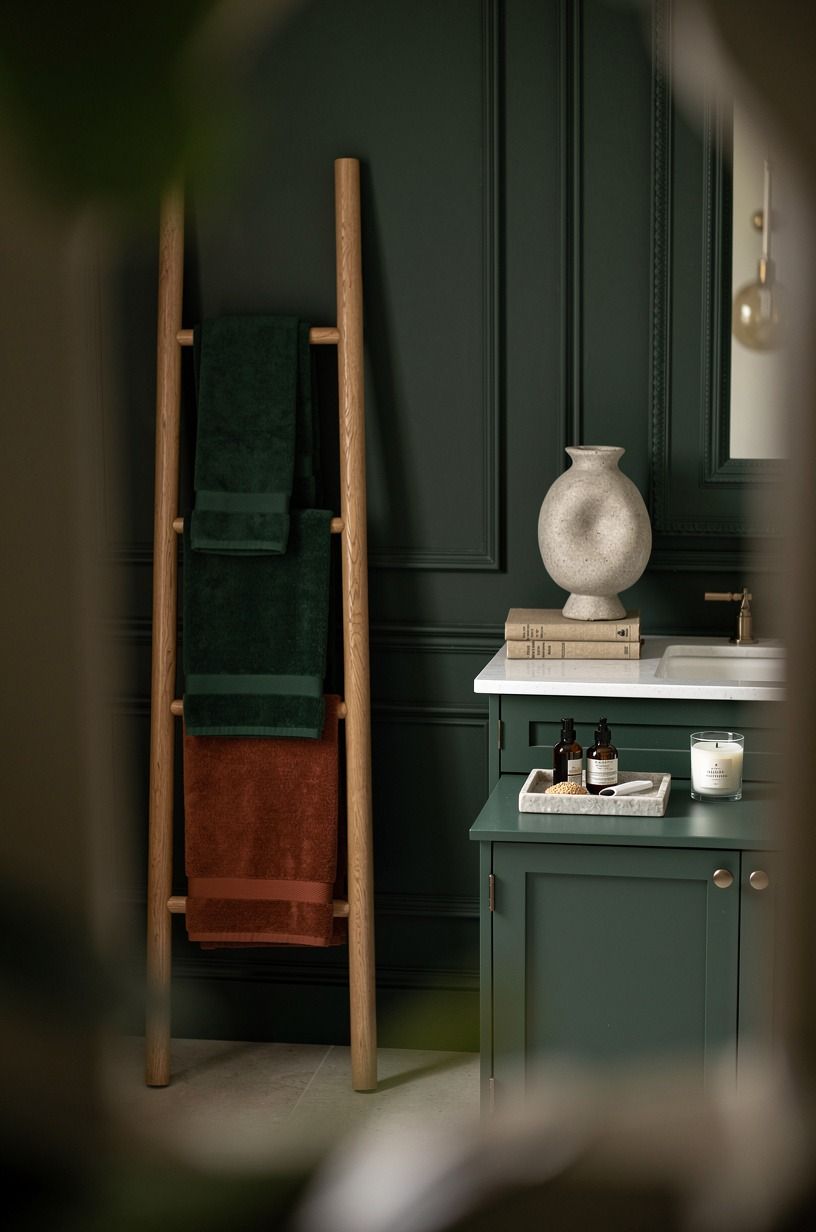
A slim natural oak towel ladder gives you storage without closing off the tub corner. Lean it against a dry wall, then hang only two towels and one robe. Anything more gets busy fast.
This is a budget-friendly move because you can use what you already own: a ladder, a hook, a basket. Keep damp textiles away from the tub’s splash zone, though. Your retreat can be relaxed, but mildew isn’t charming.
11Why not use a rug that feels like furniture?
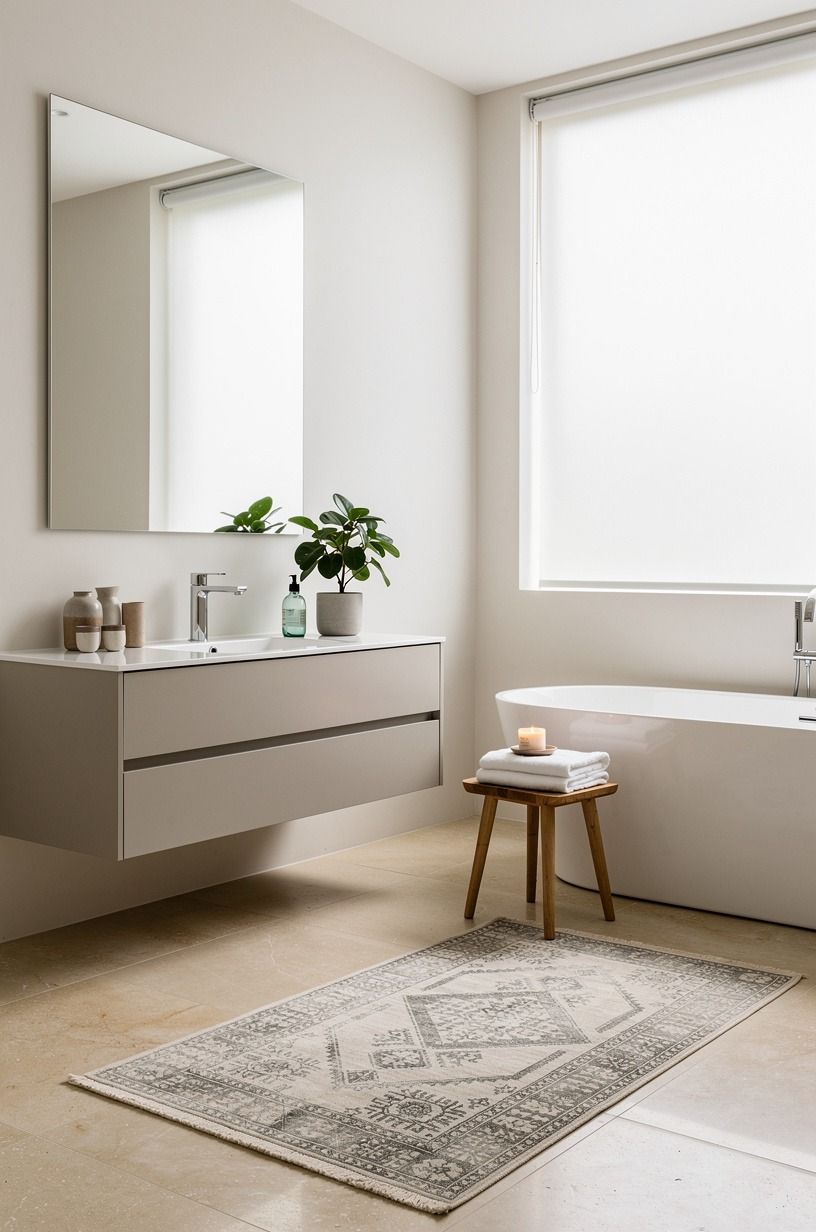
Use a substantial washed Belgian linen rug in dusty rose, charcoal, and brass-toned accents, not a thin bath mat.
12Add brass only where your hands land
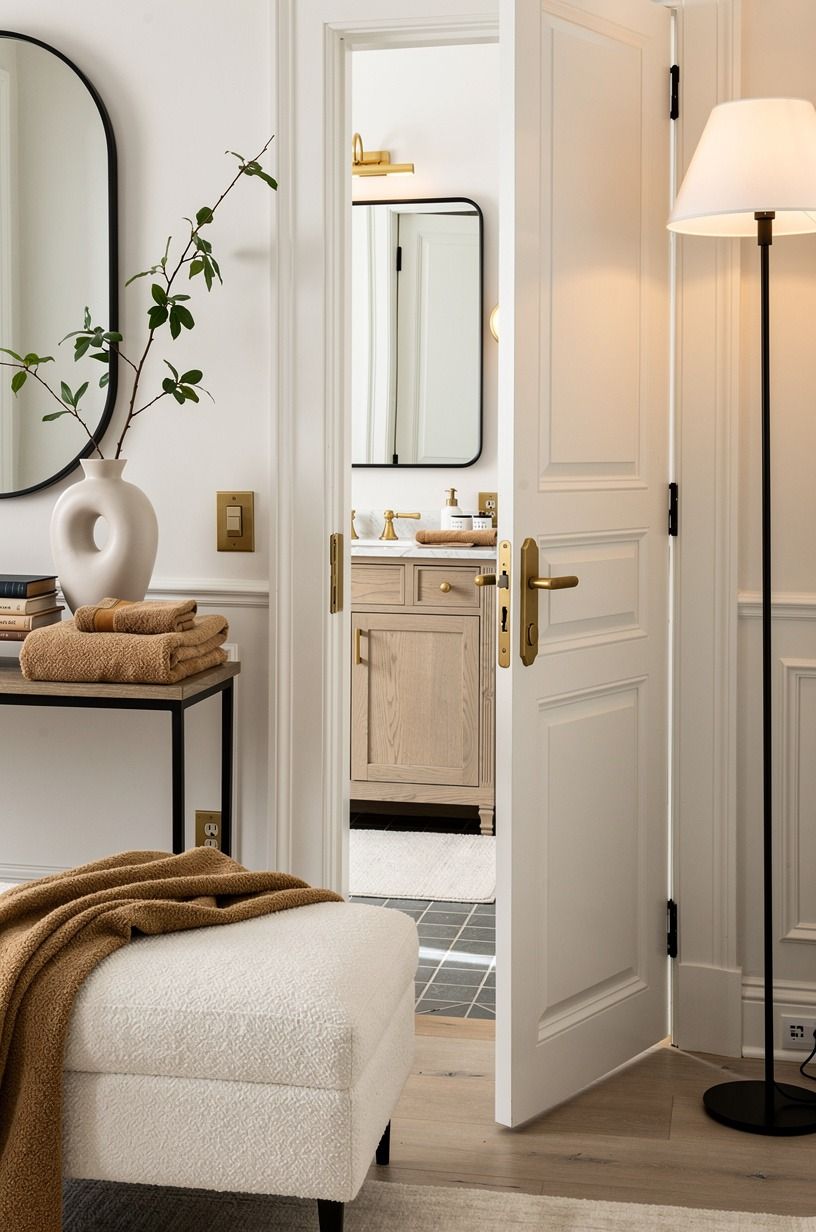
Use brass for the faucet, drawer pull, or towel hook. Don’t scatter it across every accessory. The metal looks refined when it appears in touchpoints, then disappears.
I’d skip bright polished gold because it can turn yellow beside warm bulbs. Brushed or unlacquered brass has shadows in it, and those shadows make the room feel more settled. For a warmer whole-room direction, browse modern farmhouse master bath ideas.
13Make a retreat budget before you buy the first basket
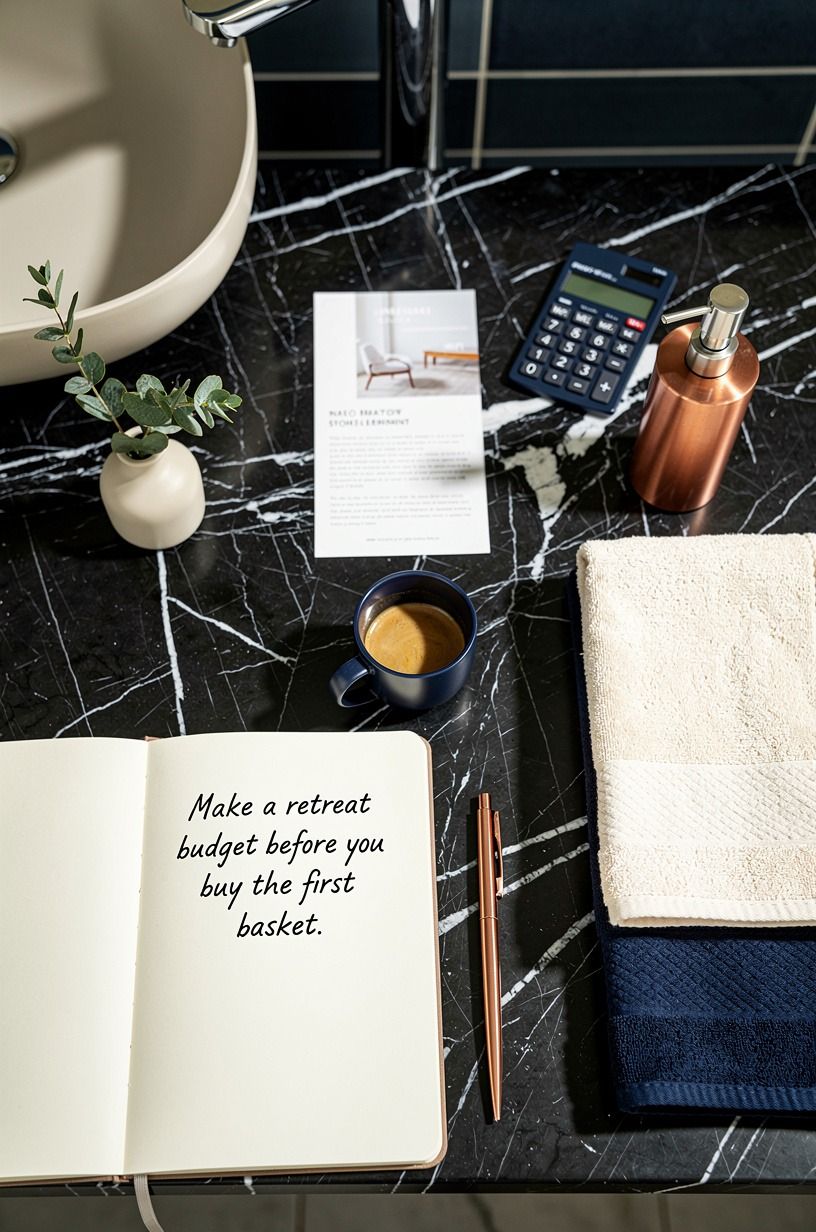
Start with the parts your eyes meet first: paint, mirror, faucet, and textiles.
The part I got wrong about a “retreat” bathroom
I used to think a retreat bathroom meant buying the obvious things: a giant tray, an expensive candle, a sculptural vase that couldn’t get wet. I treated the tub like a photo prop. The room looked composed for about ten minutes, then I needed a place for towels, a glass of water, and the hair clip I always seem to lose.
What changed my mind was staying in a small hotel bathroom where almost nothing matched. The tile was worn. The mirror had a faint black edge around it.
But the lighting was low, the towels were thick, and the tub had one reachable ledge with a book already sitting there. It felt luxurious because every choice admitted that a real person would use it.
That’s the decision frame I use now. Spend on touch, temperature, and the view from the water.
If your faucet feels cheap in your hand, replace it. If your mirror throws harsh light at your face, fix that before buying another basket.
If your floor is cold, add a washable runner. You don’t need to pretend you live in a marble villa to make your bath feel comforting.
And honestly, I went back and forth on freestanding tubs in small bathrooms. They can be impractical if you crowd them with furniture. Yet they also force you to edit.
A tub with clear space around it has a quiet confidence. You can’t fake that with more decor.
My strongest opinion: leave one surface empty. Not sterile, just unclaimed. Your retreat needs a place for the things you’ll carry in later, and it needs one spot where your eye can rest.
What People Always Want to Know
What is the best master bath freestanding tub idea for a small bathroom?
A simple oval tub with visible floor beneath it is the best small-bath choice because it keeps the room visually open. A 60×30-inch tub is a practical starting point, paired with a narrow stool rather than a cabinet. You can also borrow layout ideas from small freestanding tub plans.
Where can I buy master bath freestanding tub pieces on a budget?
Look at IKEA, Target Threshold, and Wayfair for stools, mirrors, towels, and removable lighting. Facebook Marketplace is especially good for solid-wood stools and vintage frames. Your best secondhand find is usually a small table, not a giant cabinet.
How much does a master bath freestanding tub makeover cost?
A cosmetic makeover usually costs about $200 to $1,200 if your tub and plumbing stay put. Paint, textiles, a mirror, and a faucet give you the largest visible shift. Cleaning grout, editing clutter, and moving furniture cost nothing.
Can I create a master bath freestanding tub retreat on a budget?
Yes, and you should start with the free moves first. Clear floor space, folded towels, and better bulb temperature change the feeling before you buy anything. Then add paint, one washable runner, and a secondhand stool if your budget allows.
Is a master bath freestanding tub worth it in a small space?
Yes, if you protect walking clearance and don’t crowd it with storage. Open floor around the tub makes a smaller room feel calmer, not smaller. A shower still needs a 36×36-inch minimum comfortable footprint, so plan both zones honestly.
Is a master bath freestanding tub a good idea for a rental?
Yes, if you focus on removable layers. Peel-and-stick wall treatment, tension rods, and washable textiles give renters warmth without permanent changes. Skip adhesive-heavy hooks on delicate tile, and store anything original before you make swaps.
Where I’d Start First
If I had to pick one, I’d start with the wall behind the tub. You can’t layer warmth onto cold beige paint, because every towel and brass detail will fight it. Pin the wall color idea for later and explore freestanding tub-and-shower combos.