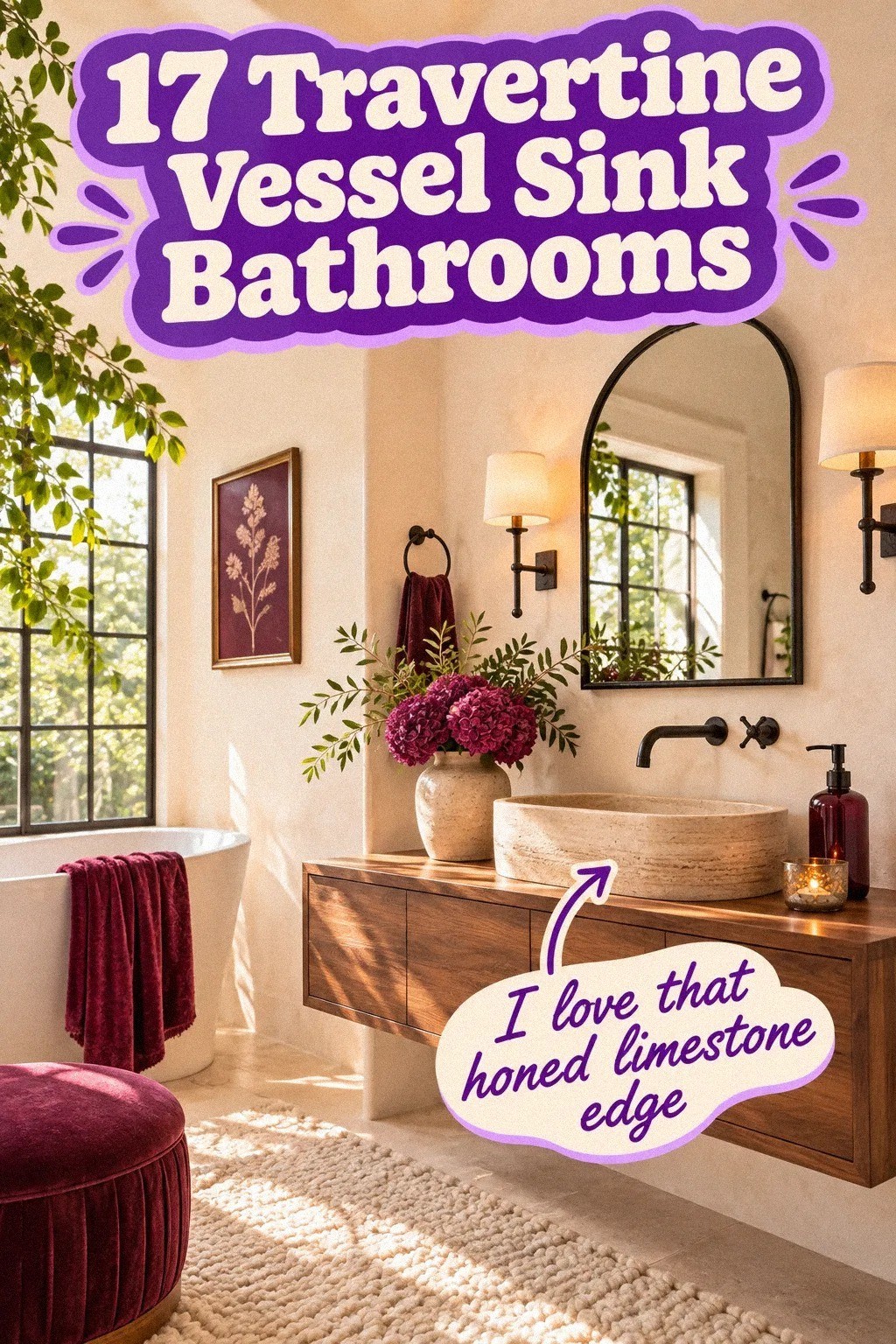
Travertine sink and vessel basin bathroom ideas can warm a room with $200 to $1,200 in cosmetic changes, depending on the scope. The stone works best with tactile wood, aged metal, and soft paint rather than a showroom-white palette. Start with the basin, then let every finish support its natural pits and sandy color.
- Anchor a floating vanity with a honed travertine basin
- Pair a fluted oak cabinet with carved travertine
- Mount a vessel basin on a thick stone slab
- Why Do Arched Plaster Niches Soften a Basin Wall?
- Repeat travertine tones across backsplash and floor
- Contrast rough travertine with polished chrome fixtures
- Carve a shallow ledge behind the vessel basin
- Layer linen textures around a sculptural stone sink
- The Twin-Vessel Balance
- Illuminate the basin with concealed wall grazing
- Choose a waterfall edge for the stone countertop
- Soften the vanity with rounded travertine corners
- Ground a minimalist sink with dark microcement walls
- One Oversized Branch, Carefully Placed
- Inset the travertine sink into a walnut vanity
- Echo the basin shape in a frameless mirror
- Highlight natural pits with warm directional lighting
1Anchor a floating vanity with a honed travertine basin
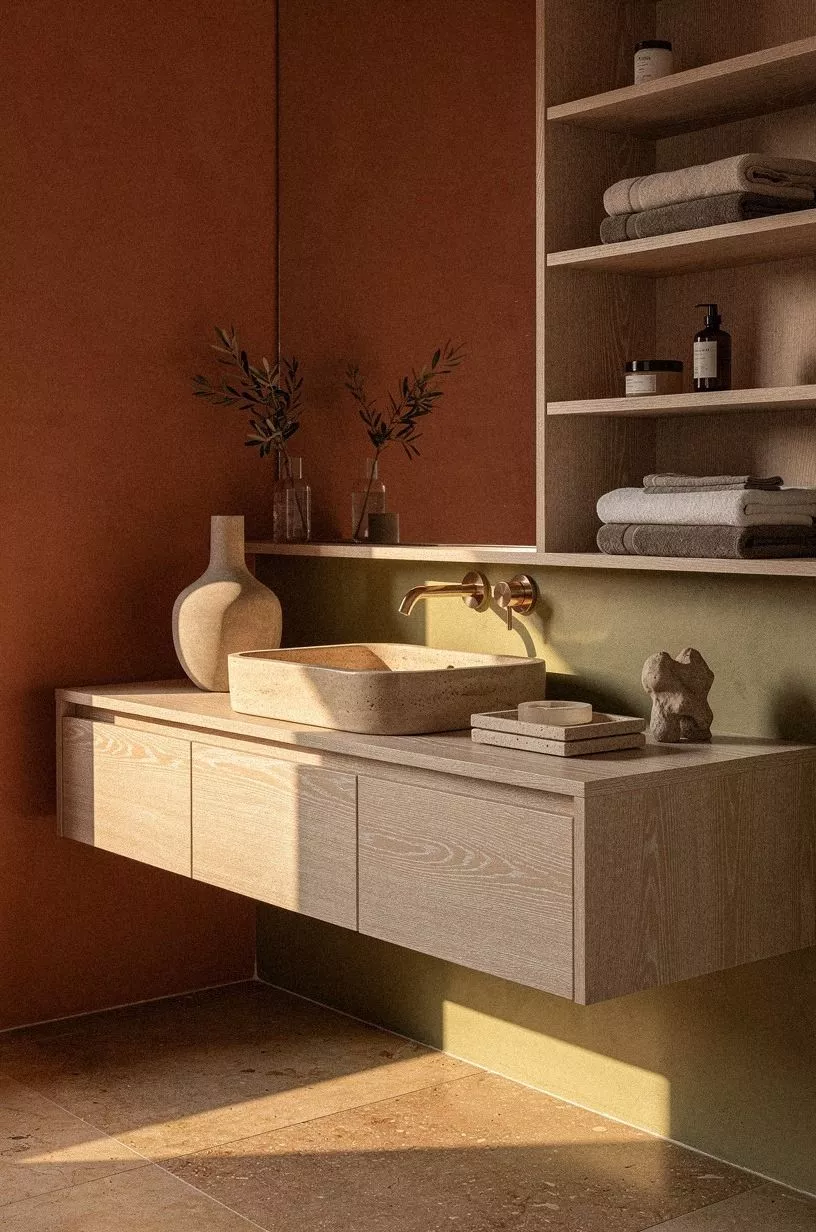
A floating vanity leaves more floor visible, so the bathroom feels airy even when the stone basin has real visual weight. Choose a honed travertine vessel with quiet beige movement.
Pair it with cerused white oak in a terracotta, stone, and olive palette. You’ll want the basin centered rather than pushed toward one side, especially if the room is narrow.
Keep the cabinet between 32 and 36 inches high, the typical vanity range. Check faucet reach before drilling. A wall-mounted IKEA GODMORGON cabinet can provide the structure, while a custom stone top gives the room a tailored finish.
Don’t crowd the counter with jars. One olive branch, a folded towel, and a low ceramic cup are enough!
A floating design can make cleaning easier, too. If you’re planning a wider renovation, these white cream travertine bathroom ideas for bright airy calm show how pale stone can keep a grounded palette from feeling heavy.
2Pair a fluted oak cabinet with carved travertine
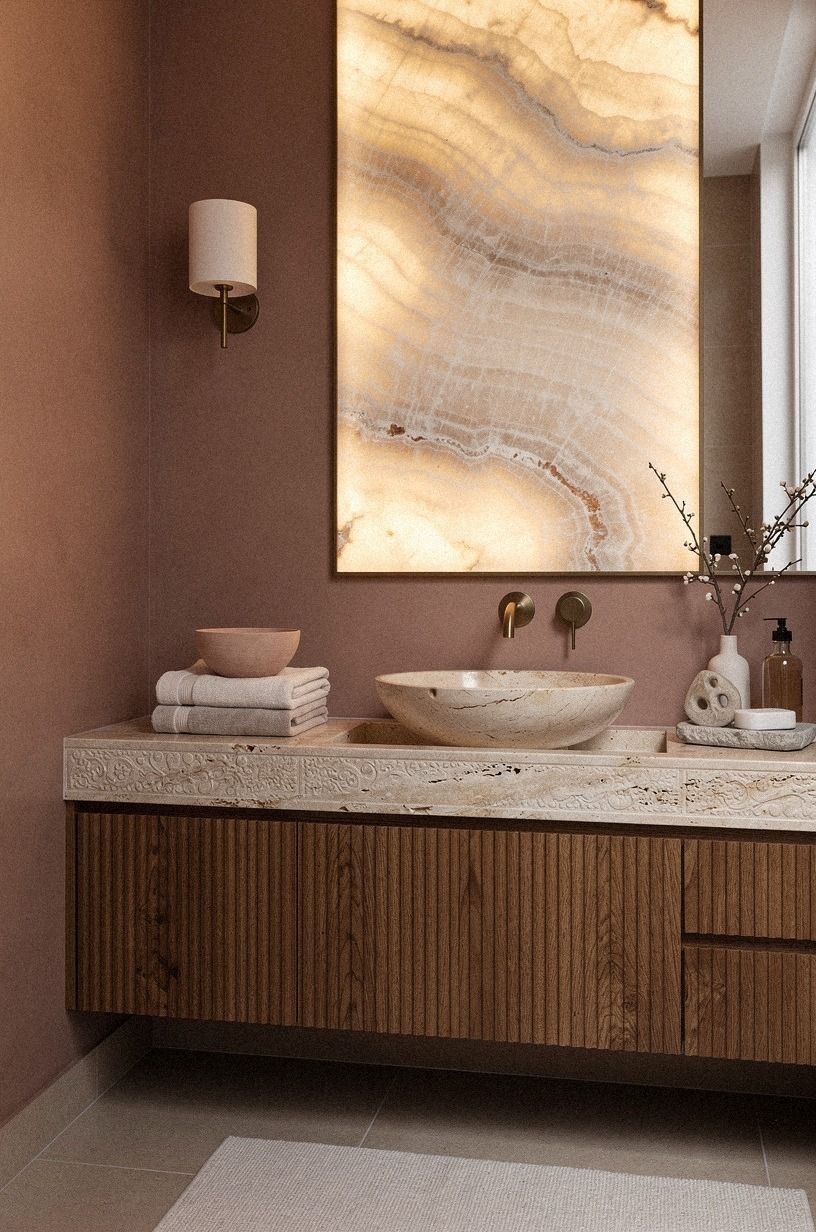
A fluted cabinet gives a stone vanity bathroom more rhythm without adding a loud pattern. Select vertical oak grooves with a warm clay stain.
Place a carved travertine basin above the surface. The combination suits a clay, linen, and aged brass palette, while a slim panel of backlit translucent onyx can bring a soft glow behind the mirror.
You don’t need deep fluting across every drawer. A 24-inch or 30-inch vanity front is enough to create texture.
The rest can stay visually quiet. Article Seno or an IKEA wood-effect cabinet can offer a lower-cost starting point, although the exact finish matters more than the label.
Skip orange oak. It fights the sandy undertone of travertine. You’ll get a calmer result with muted wood and a slightly chalky stain.
The Fluted Grain Rule is simple: repeat one vertical line at least twice, then stop. Use it in the cabinet and towel ladder, not across the walls. For a sharper linear reference, browse these vein cut travertine bathroom ideas for sleek linear style.
3Mount a vessel basin on a thick stone slab
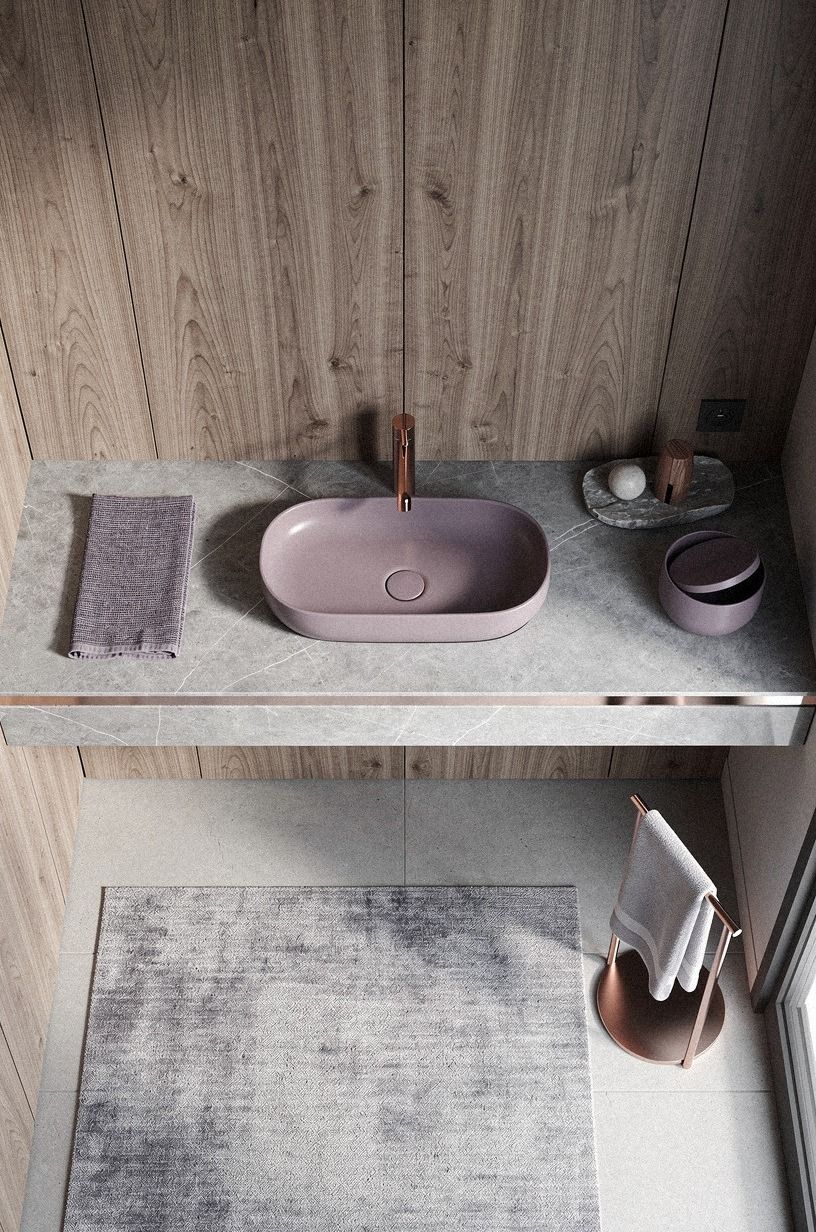
A thick slab makes a small vessel basin feel architectural, particularly when the counter has a 2-inch or 3-inch edge. Use warm travertine with a softened profile.
Place it against book-matched walnut. The plum, gray, and rose gold palette keeps the room dramatic without turning the basin into a cold sculpture.
You’ll need strong brackets or a properly supported vanity frame because stone carries more weight than a thin laminate top. Ask the fabricator to ease the corners slightly. Sharp corners look severe beside a rounded vessel, and they’re unpleasant in a tight passage.
A West Elm Mid-Century vanity can help establish the walnut tone if custom cabinetry isn’t practical. Keep the hardware restrained so the stone remains the focal point.
Don’t choose a glossy basin for this arrangement. Polished surfaces reflect every ceiling light and make the stone look busy.
Honed travertine has a quieter finish, and it’s easier to style with linen. For a related material mix, see these travertine wood bathroom ideas for natural warmth.
4Why Do Arched Plaster Niches Soften a Basin Wall?
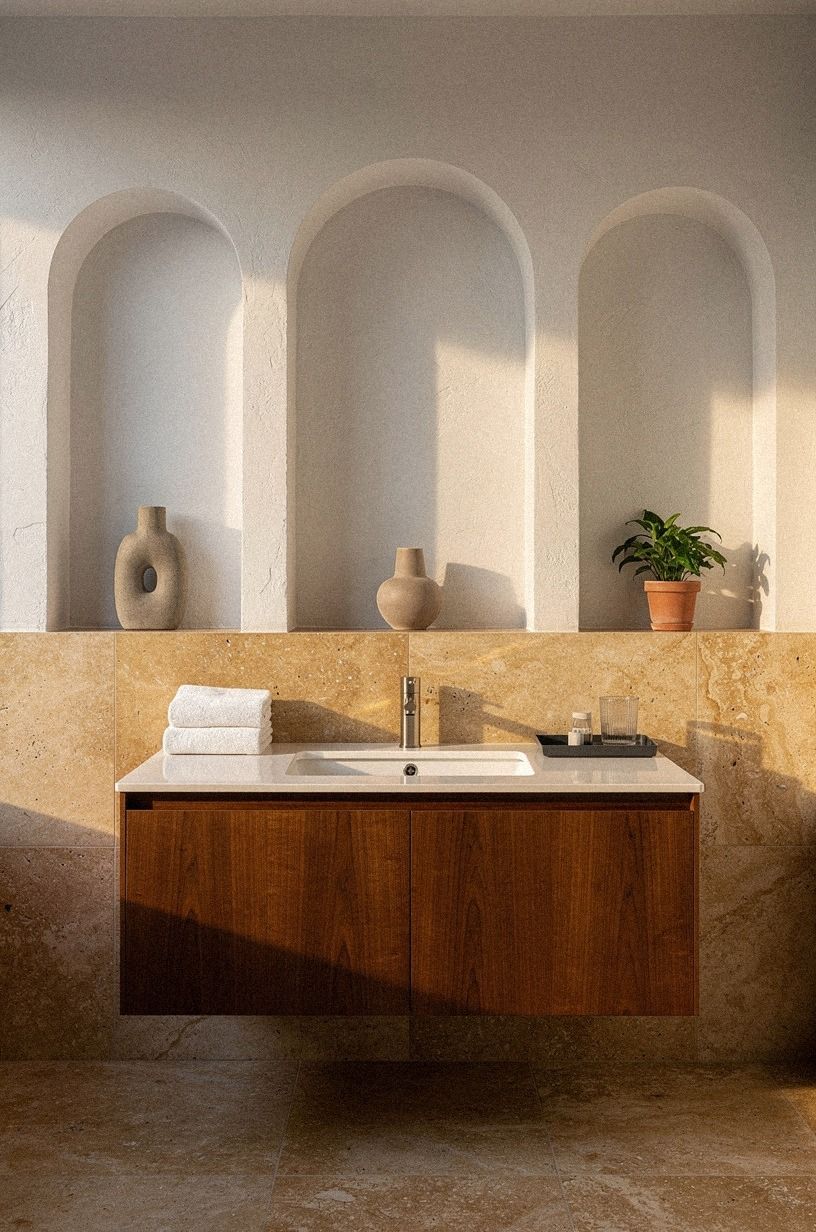
Arched niches make a bathroom with stone sink feel softer and more collected.
5Repeat travertine tones across backsplash and floor
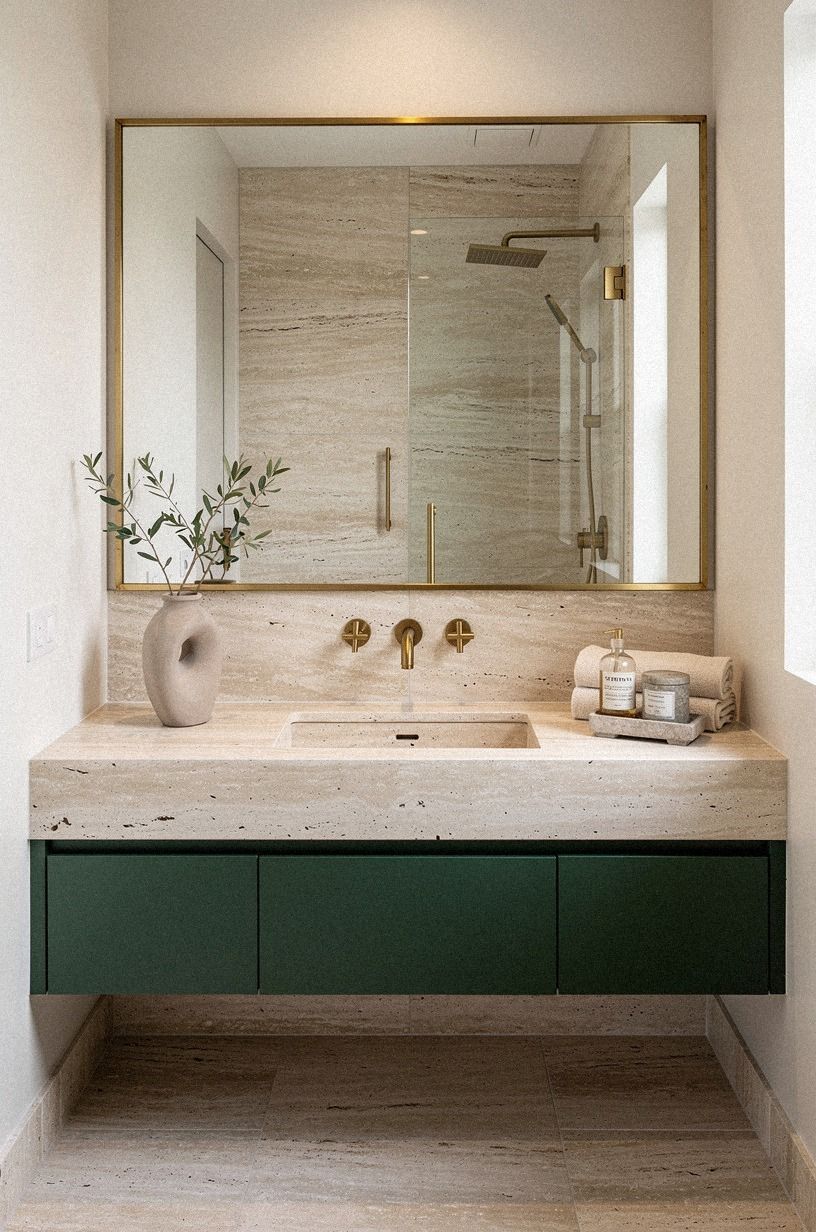
Repeating the basin color across the backsplash and floor creates a harmonious stone vanity bathroom, but the surfaces shouldn’t be identical. Choose a creamy travertine backsplash with small natural pits. Then use a slightly darker floor tile with a matte finish.
An emerald, gold, and cream palette keeps the room warm. Unlacquered brass developing soft patina adds depth without making the finish feel too polished.
You’ll want the floor grout to be close to the tile color. High-contrast grout outlines every irregular edge and can make the space feel chopped up. A 12-by-24-inch format can feel calmer on a larger floor, while smaller tiles give a compact bathroom more grip.
Skip a glossy mosaic underfoot. It catches light in too many directions and competes with the basin.
A quiet matte finish lets the stone do the work. If marble enters the plan, keep it to a narrow shelf or faucet ledge, as shown in these travertine marble bathroom ideas for layered luxury.
6Contrast rough travertine with polished chrome fixtures
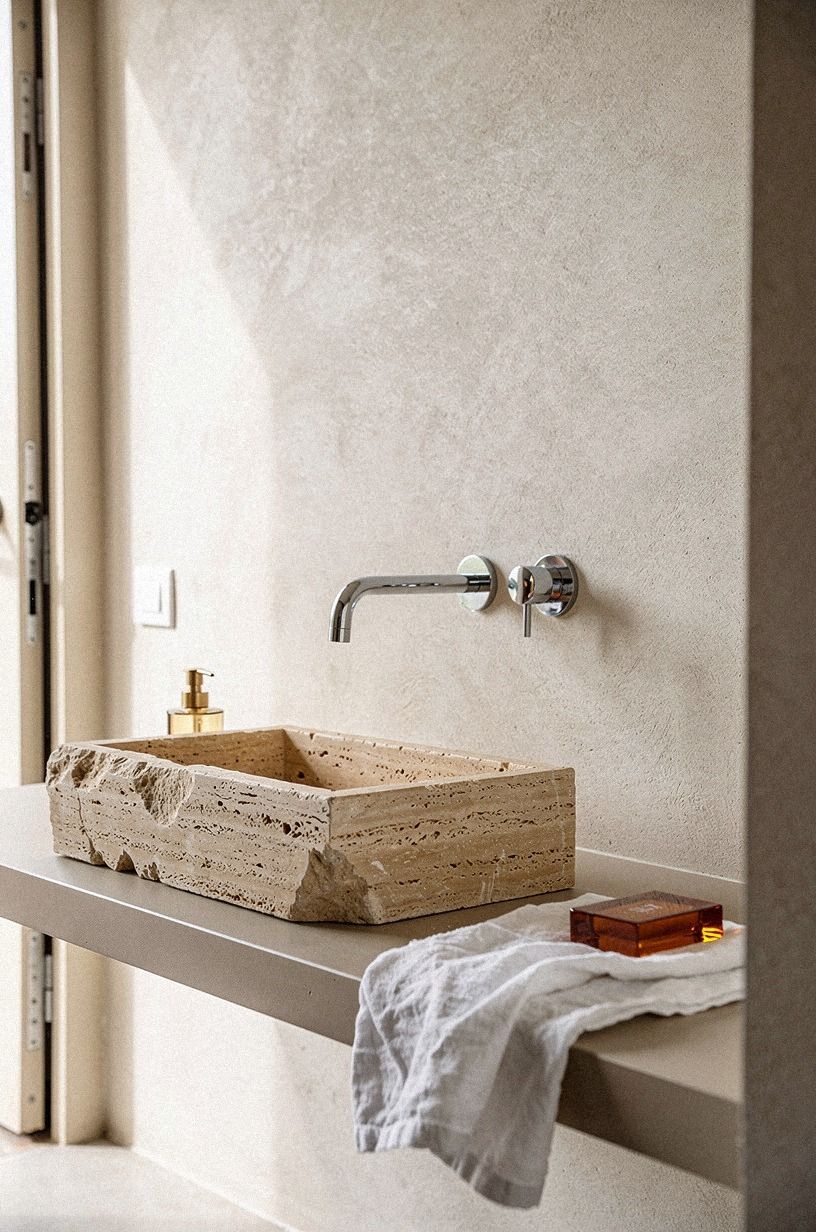
Rough travertine can look earthy and rustic, while polished chrome adds a crisp reflective note. Use a basin with visible pits beside natural oak. Then bring in a chrome faucet, chrome mirror frame, and slim chrome towel rail.
Forest green walls, rust textiles, and pale timber make the contrast feel intentional. Farrow & Ball Studio Green can create a deep backdrop when the bathroom receives strong daylight.
The Rough-and-Reflective Rule works because each finish has a distinct job. The stone absorbs light, while chrome sends it back across the room. You’re better off choosing one polished metal rather than mixing chrome, brass, and copper in a small space.
A Kohler Purist faucet can keep the silhouette clean without competing with the basin. Don’t polish every surface. A glossy cabinet, glossy tile, and glossy fixture will make the room feel slippery and overly bright!
Keep the oak matte and the floor softly textured. For more earthy color combinations, explore these travertine green bathroom ideas for an earthy spa vibe.
7Carve a shallow ledge behind the vessel basin
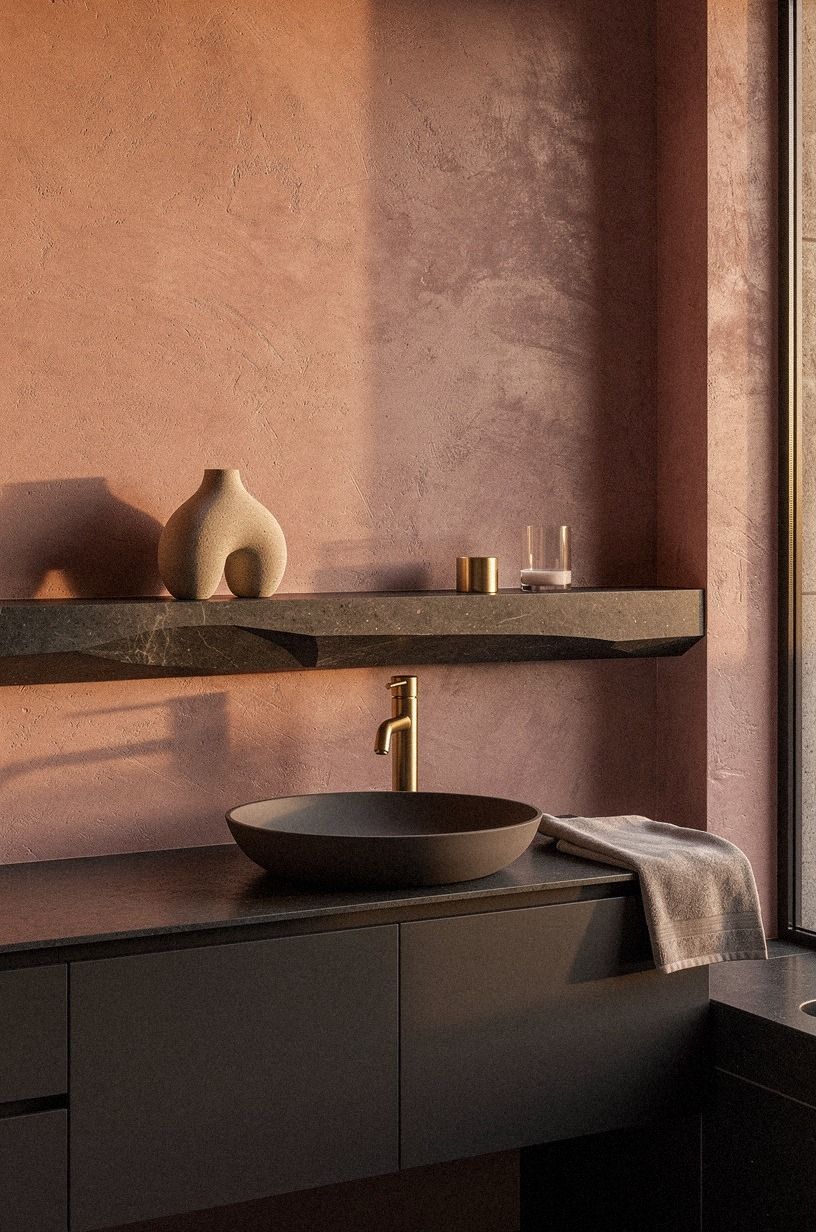
A shallow ledge gives a vessel basin a practical landing zone without adding a bulky cabinet.
8Layer linen textures around a sculptural stone sink
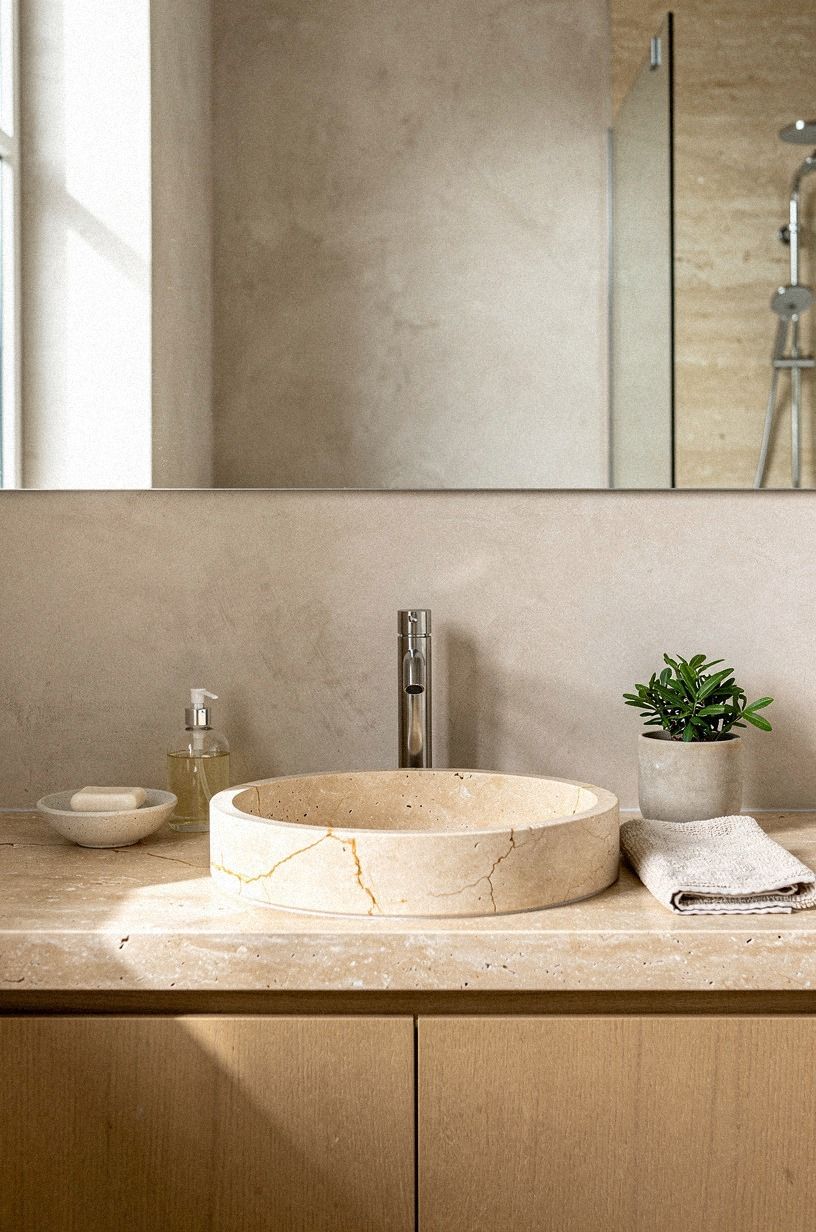
A sculptural sink needs soft surroundings so it doesn’t feel like a museum object. Choose a rounded travertine basin with a slightly irregular rim. Then layer warm white towels, camel linen, and black accents around it.
Shagreen drawer pulls or a small textured tray can echo the surface without copying its exact shape. Use Belgian flax linen for a relaxed hand towel and 600gsm Turkish cotton for the larger bath towel.
The different weights create depth when they’re folded together. You don’t need a dozen accessories. A low black stool, a woven hamper, and one amber glass bottle can make the room feel inviting.
Why let the stone carry every visual decision? Linen softens its edges, while black gives the eye a stopping point.
Skip high-pile fabric near the sink because it catches splashes and becomes difficult to keep fresh. For darker contrast, see these travertine black bathroom ideas for bold modern contrast.
9The Twin-Vessel Balance
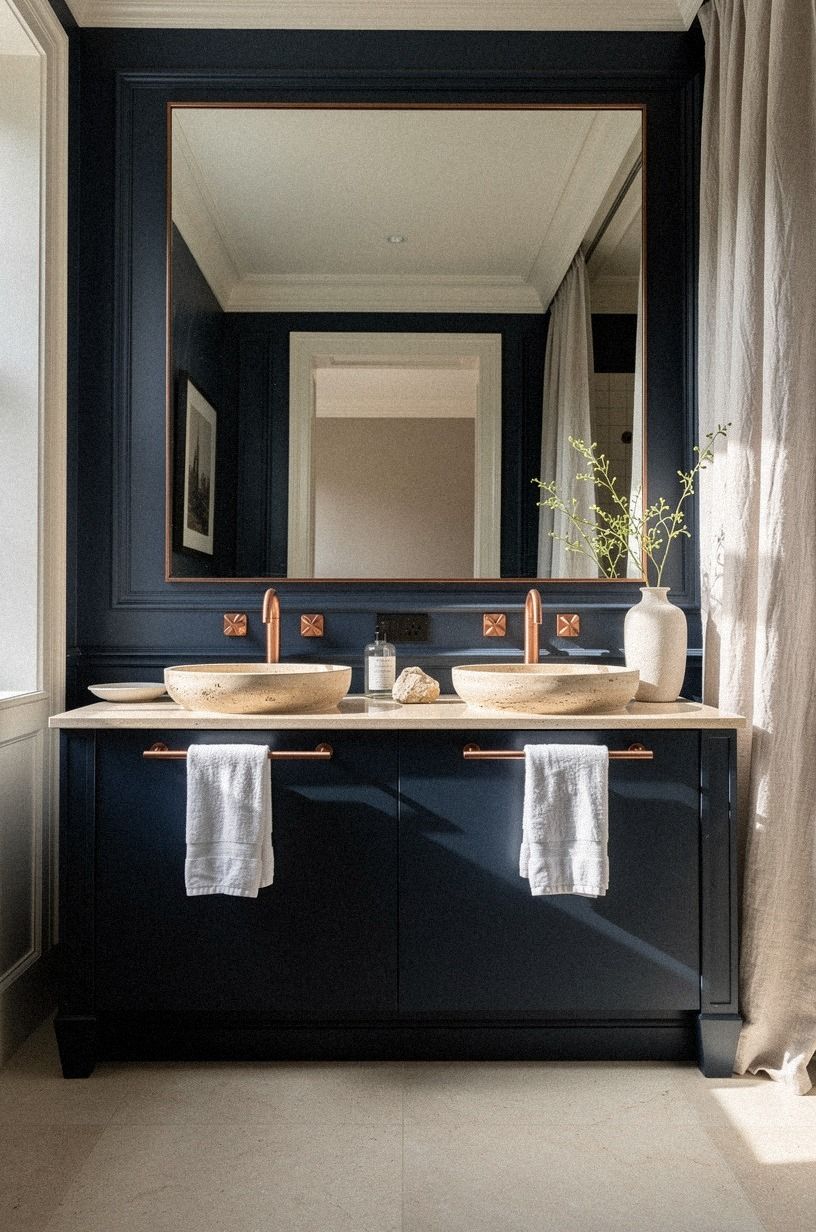
Twin vessels can make a shared bathroom feel balanced without requiring matching cabinets.
10Illuminate the basin with concealed wall grazing
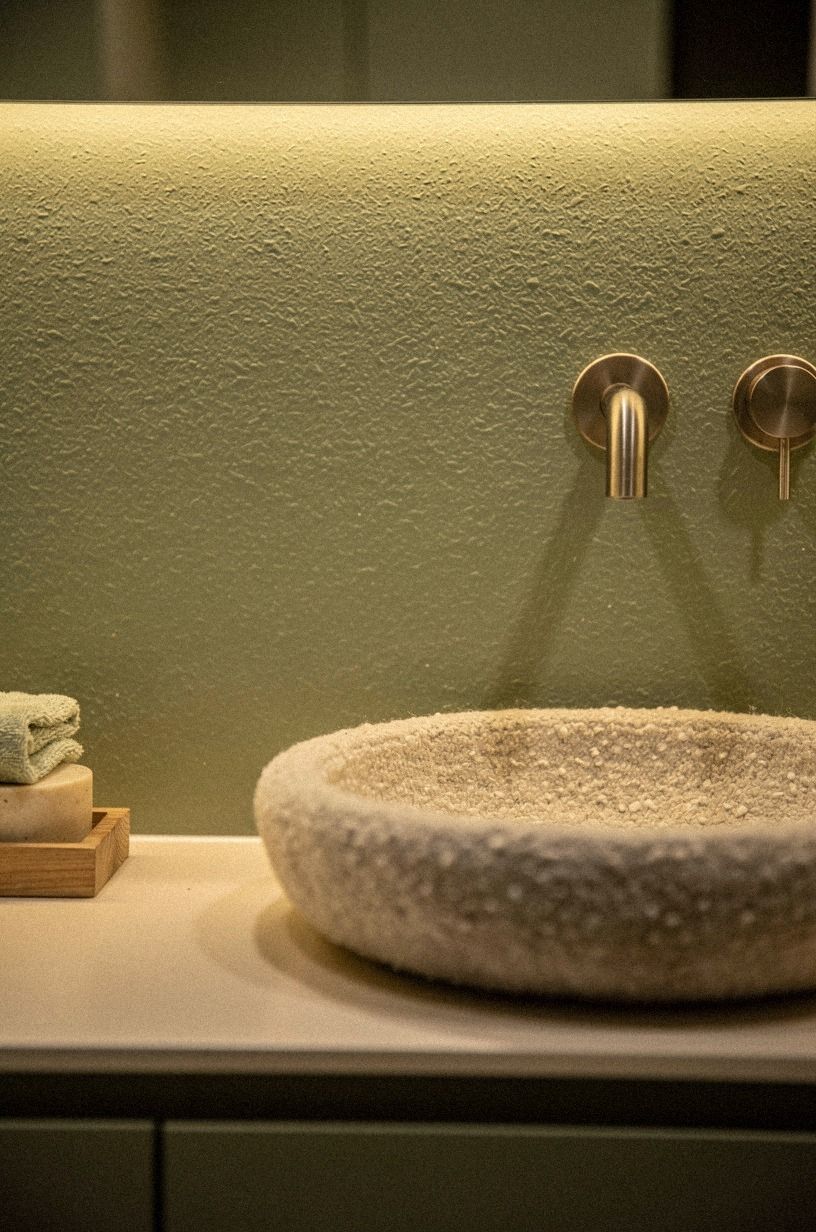
Concealed wall grazing reveals the pits and edges of travertine without flooding the entire room with harsh light. Install a warm LED strip above or beside the basin. Aim it across a textured wall in sage green, warm cream, or natural wood.
Organic bouclé and soft plaster can absorb excess brightness. Choose lighting with a color temperature near 2700K to 3000K. Test the placement before closing the wall.
A light source that sits too far forward creates glare on the mirror. One that sits too close can exaggerate every mark. You’ll want the stone to show a quiet shadow line, not a dramatic spotlight.
Keep the main ceiling fixture dimmable. The Three-Height Light Stack uses ceiling light for function, mirror light for the face, and concealed grazing for atmosphere. Schoolhouse Luna sconces can handle the middle layer when recessed wiring isn’t available.
For a pale, luminous direction, return to these white cream travertine bathroom ideas for bright airy calm. Warm lighting will make the sandy undertone feel richer!
11Choose a waterfall edge for the stone countertop
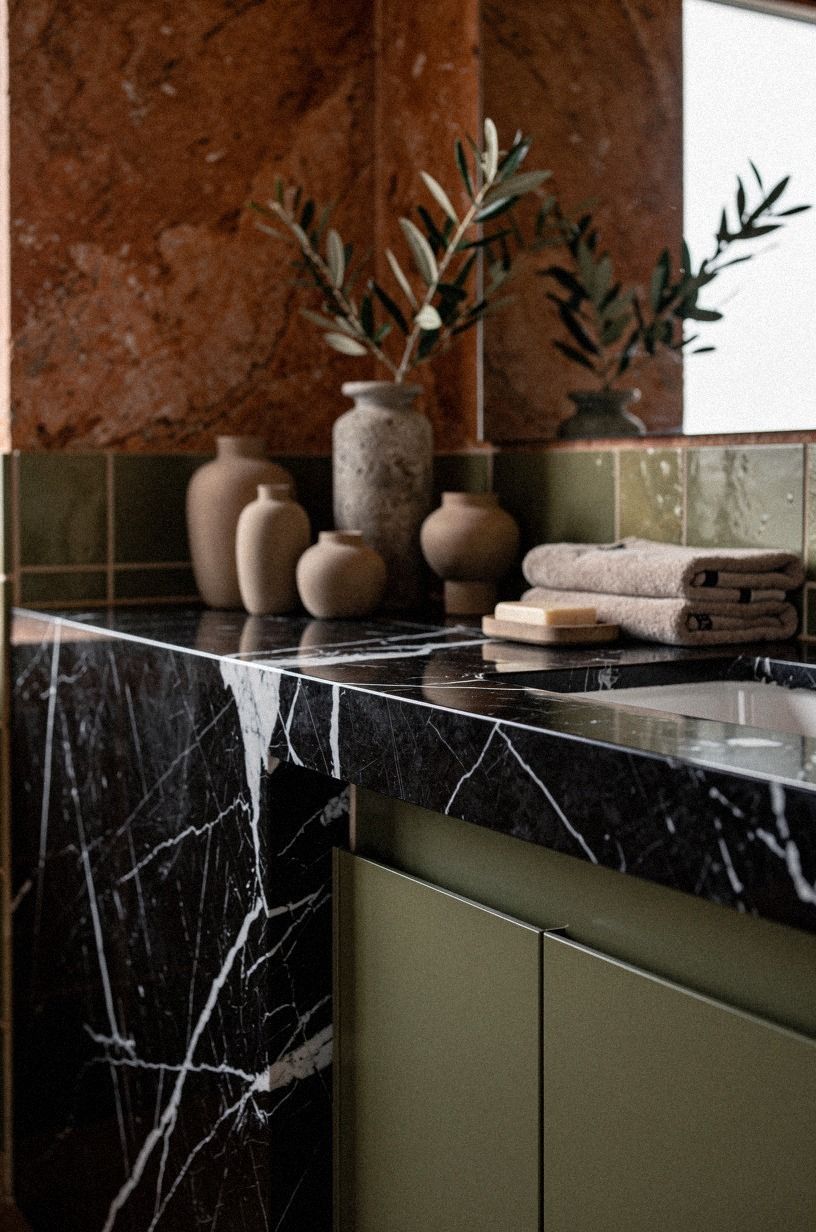
A waterfall edge lets travertine continue down the side of the vanity, making a stone sink vanity feel more substantial. Use Nero Marquina black marble as a narrow accent against travertine. Repeat the dark note in a mirror frame or floor grout.
Terracotta, stone, and olive create a grounded palette with a clear focal point. The side panel works best when the vanity remains visible from the doorway.
This detail costs more because the slab needs careful book-matching and fabrication. Typical bathroom project ranges can vary widely by scope:
A waterfall edge is worth considering when the vanity side remains visible from the doorway. If the cabinet sits tight against a wall, the extra stone may not earn its cost.
You’ll want to spend on the top surface first. Then decide whether the side panel adds enough presence. For another layered stone direction, compare these travertine marble bathroom ideas for layered luxury.
12Soften the vanity with rounded travertine corners
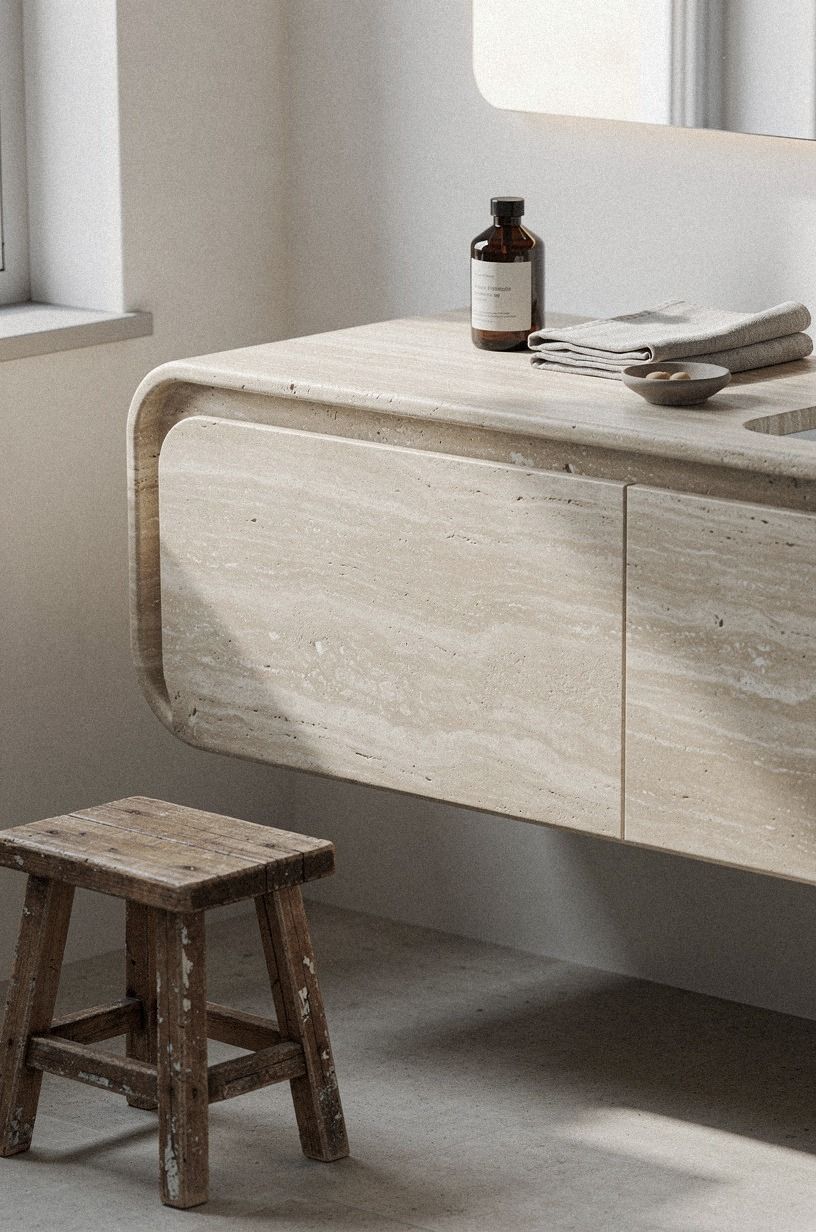
Rounded corners make a compact bathroom feel calmer because there are fewer hard stops at shoulder height. Choose a vanity with softened travertine edges, clay walls, linen curtains, and aged brass.
Deep-pile mohair velvet can appear on a small stool, where it adds texture without sitting near direct water. Keep the stool clear of the main walkway.
A rounded basin should have a faucet with a similarly gentle profile. Kohler Veil fixtures or a simple arched spout can support the shape, while square industrial hardware would create unnecessary tension.
You’ll want the mirror to follow the curve loosely, not match it like a template. The Soft Radius Rule says one dominant curve needs one supporting curve and several straight lines.
Use a rounded mirror, straight cabinet drawers, and rectangular floor tile. Too many circles make the room feel themed. If green is part of the plan, these travertine green bathroom ideas for an earthy spa vibe show how natural color can stay controlled.
13Ground a minimalist sink with dark microcement walls
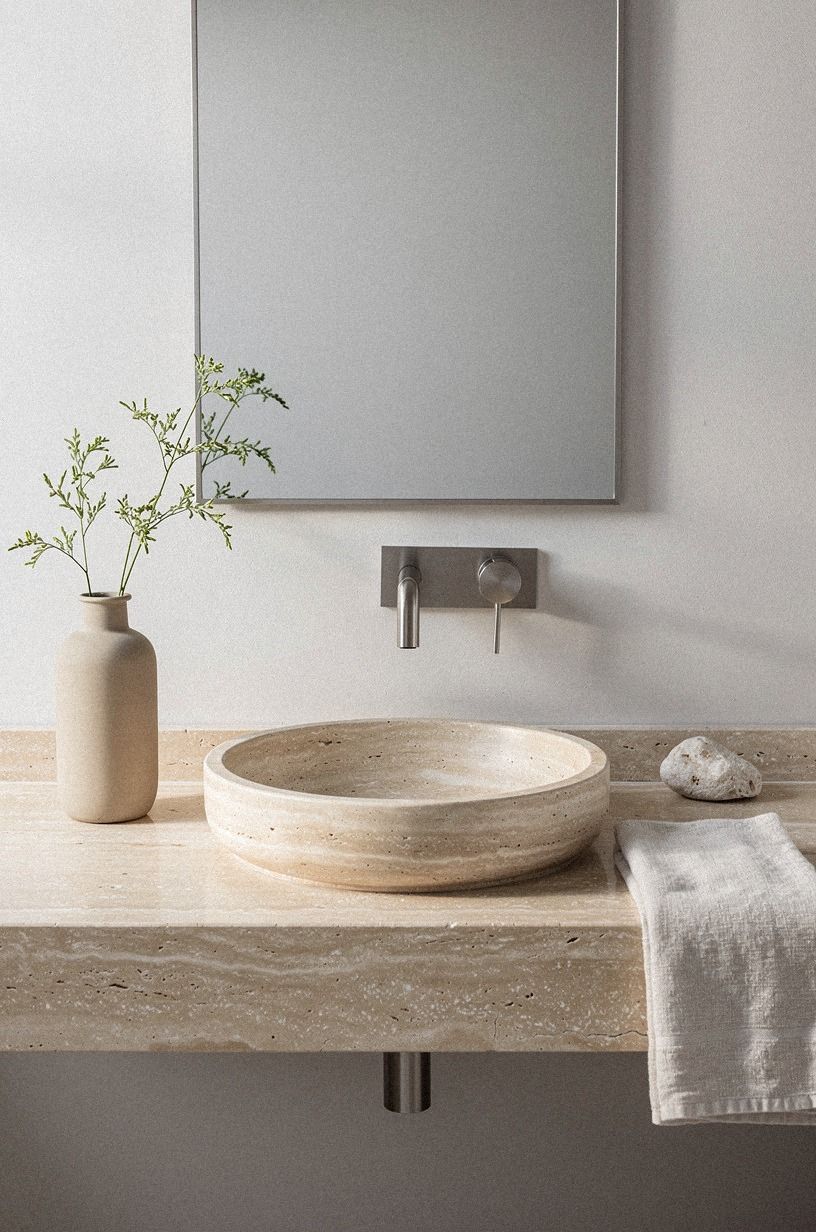
Dark microcement makes a minimalist stone sink design feel deliberate rather than empty. Use plum or charcoal walls behind a pale travertine basin. Add rose gold hardware and a Carrara marble shelf with subtle gray veining.
The contrast gives the room a moody, intimate quality while keeping the sink visible. A narrow shelf is enough. Too much marble will compete with the basin.
Microcement needs a properly prepared, sealed surface, especially in a humid bathroom. You’ll want a sample board beside the travertine before committing. The wall can shift from gray to violet under warm bulbs.
A small IKEA ENHET cabinet can keep the lower half practical without competing with the dramatic wall. Don’t pair dark microcement with a tiny unlit mirror. Add side sconces or concealed mirror lighting, then keep the countertop accessories pale.
For a stronger horizontal counterpoint, see these blue and black bathroom palette pairings.
14One Oversized Branch, Carefully Placed
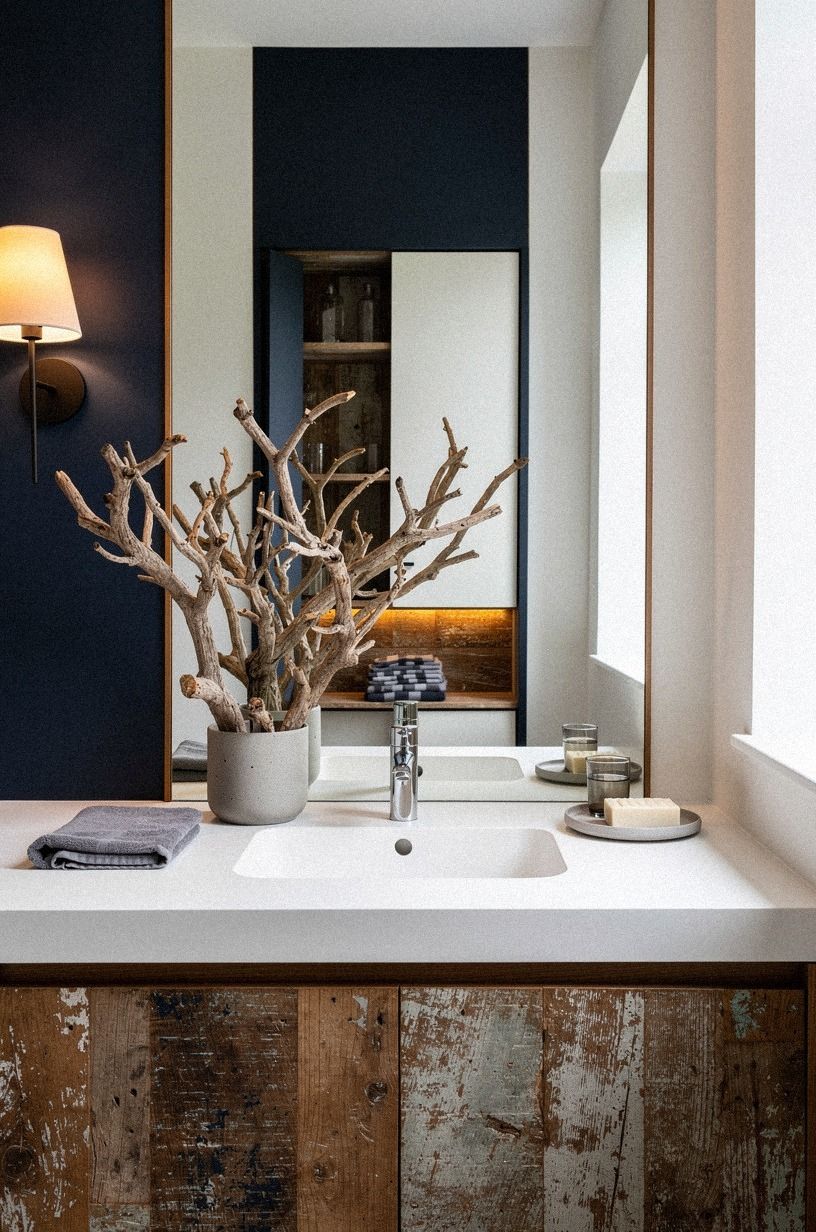
One oversized branch gives a vessel basin height without filling the counter with small decorations.
15Inset the travertine sink into a walnut vanity
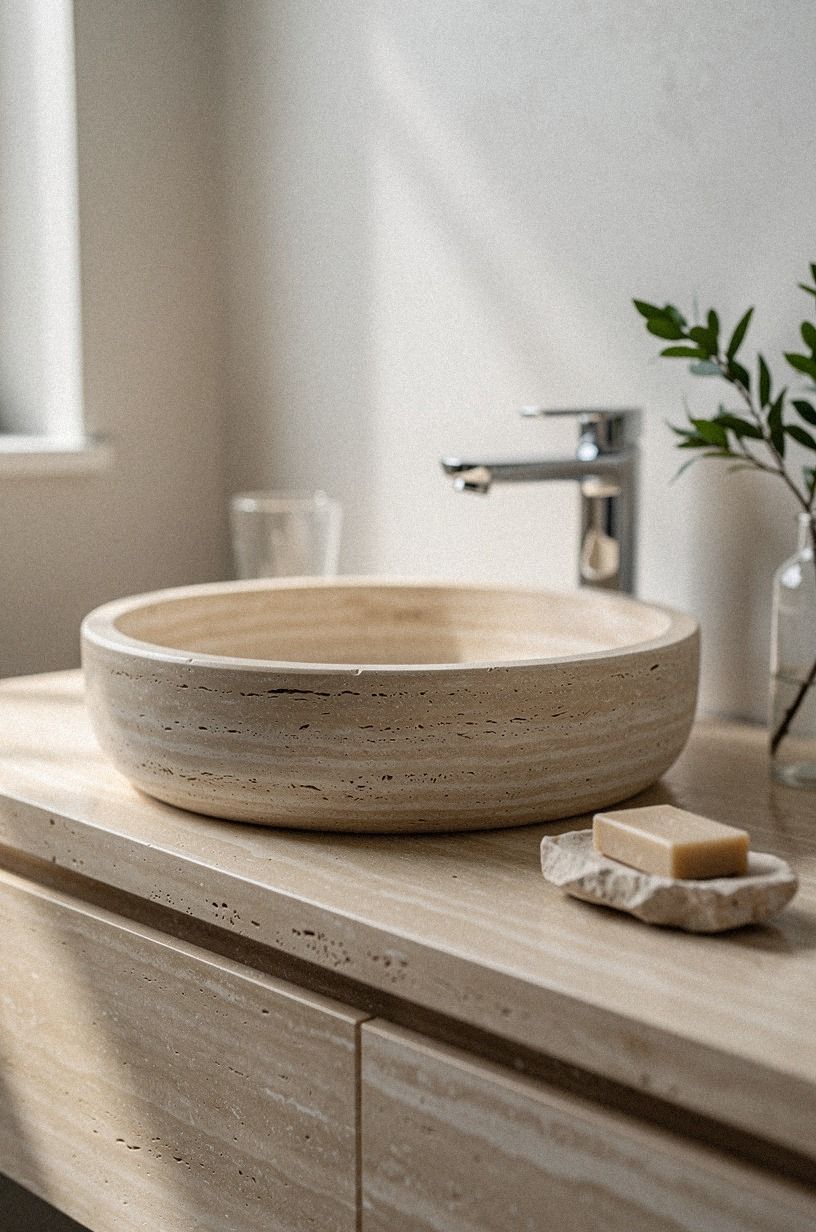
An inset travertine sink gives a walnut vanity a quieter, more integrated profile than a raised vessel. Use Calacatta marble with gold veining for a narrow backsplash or side shelf. Repeat the gold in a slim faucet.
Emerald, cream, and aged brass can make the whole room feel elegant without relying on excessive decoration. The stone should remain matte or lightly honed so the walnut retains visual warmth.
This layout suits a bathroom where counter space matters. The basin doesn’t interrupt the working surface as much, so toiletries can stay contained in drawers. You’ll want a sealed stone surface and a slightly eased edge because water will travel across the top more often.
A West Elm Anton solid walnut vanity can anchor the scheme, although a local cabinetmaker may match the grain more closely. Skip a pale laminate cabinet beneath rich walnut tones. It makes the upper stone look disconnected.
For a more layered surface direction, compare these travertine marble bathroom ideas for layered luxury.
16Echo the basin shape in a frameless mirror
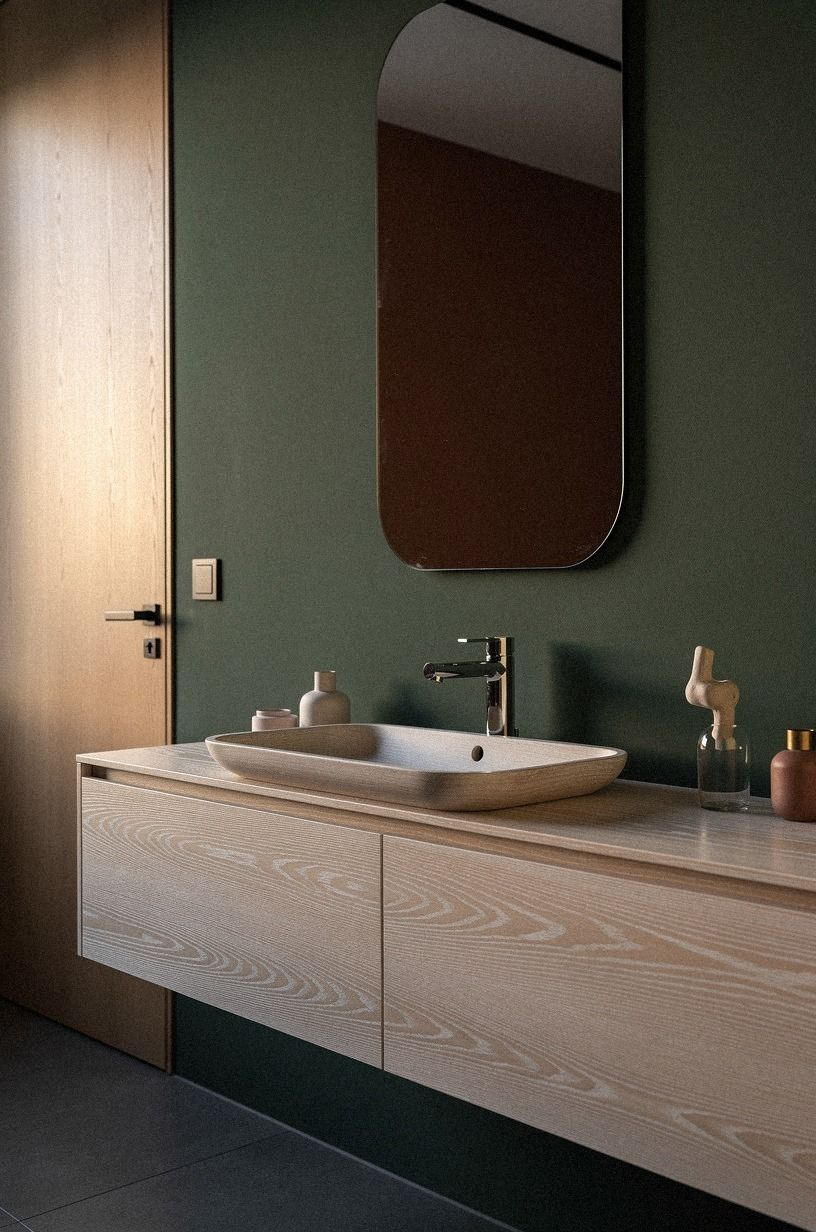
A frameless mirror can echo a rounded travertine basin without adding another strong material. Choose an oval or softly arched shape above a cerused white oak vanity. Then introduce forest green, rust, and natural oak.
The result feels welcoming because the reflection has no hard metallic border competing with the stone. Leave enough wall around the mirror for the shape to read clearly.
If the mirror nearly touches the ceiling or backsplash, its curve loses impact. You’ll want sconces positioned at face height, with the light source diffused so the glass doesn’t become a bright rectangle.
The Echo Curve Principle works best when the two shapes are related but not identical. A perfectly matching oval can feel manufactured, while a slightly taller mirror creates a more relaxed relationship.
These travertine tile bathroom ideas layouts that wow can help coordinate the surrounding wall without adding another competing curve.
17Highlight natural pits with warm directional lighting
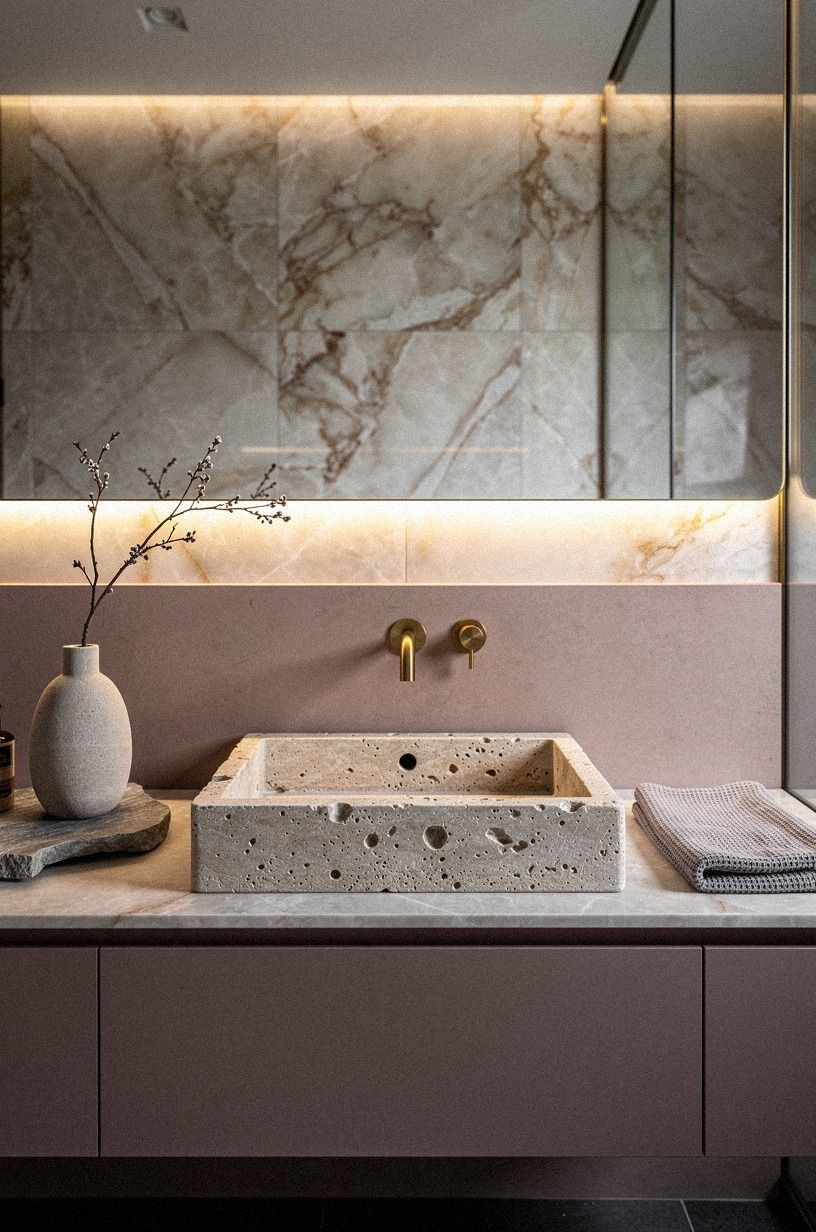
Directional lighting can reveal the small pits and tonal changes that make travertine feel earthy. Aim a warm beam across the basin rather than straight down. Pair backlit translucent onyx with dusty rose, charcoal, and aged brass.
The surface will show a slow pattern of shadow as the light moves through the room. Use one focused source near the basin and softer ambient light elsewhere.
You’ll want the stone to remain readable from the doorway, but the lighting shouldn’t feel like an exhibition display. A dimmable Visual Comfort Bryant sconce can provide a warm side glow while keeping the mirror useful.
Don’t fill every pit with dark grout or color-matched filler. Natural variation is the point, and excessive correction makes the basin look manufactured. Seal the stone according to the fabricator’s instructions, then let the surface age gently.
For stronger dark contrast, these travertine black bathroom ideas for bold modern contrast offer practical palette pairings. These blue and black bathroom palette pairings add another route toward a deeper scheme.
Why Does Travertine Still Work in a Bathroom?
Travertine works because it brings variation that manufactured white surfaces often lack. Each basin carries small pits, cloudy bands, and warm mineral color, so the bathroom feels calmer without becoming flat. That quality matters in a room filled with hard surfaces.
A stone basin can soften the visual effect of tile, glass, and polished metal through uneven texture. The surface adds character without requiring a complicated pattern.
The strongest schemes don’t treat travertine as a complete style. The stone needs a counterpoint. Cerused oak adds grain, linen adds softness, and aged brass adds a low metallic glow.
Dark paint can sharpen the contrast, while creamy plaster can keep the room light. The best choice depends on the amount of daylight and the size of the vanity wall.
A common mistake is matching every surface too closely. Travertine backsplash, travertine floor, travertine walls, and a travertine basin can blur into one beige block.
Vary the scale and finish instead. Use honed stone at the basin, a matte tile underfoot, and a painted wall with a different undertone. That small shift gives your eye somewhere to rest.
The practical test is simple: stand at the doorway and check whether the basin is visible before the accessories. If the answer is no, remove objects until the stone leads.
Why let soap bottles become the focal point? A quiet counter, one tactile towel, and good lighting will keep the material readable for years.
What People Always Want to Know
What Travertine Sink & Vessel Basin Bathroom Idea works best for a small bathroom?
A floating vanity with one honed vessel usually works best because it exposes more floor and keeps the basin visually clear. IKEA GODMORGON or a slim Article Seno cabinet can provide practical storage. Choose pale travertine, an oval mirror, and one wall color so the room doesn’t feel crowded.
Where can you buy Travertine Sink & Vessel Basin Bathroom pieces on a budget?
IKEA, Wayfair, and Target offer affordable vanity bases, mirrors, towels, and lighting. For genuine stone, check local fabricators, Facebook Marketplace, and thrift shops with reclaimed materials. Compare dimensions, finishes, and return policies before ordering.
How much does a Travertine Sink & Vessel Basin Bathroom makeover cost?
A cosmetic update can run about $200 to $1,200 for paint, a mirror, faucet, and textiles. A mid-range project with a new vanity, partial tile, and lighting often reaches $3,000 to $9,000. Free changes include decluttering, rearranging towels, and styling existing ceramics.
Can you create a Travertine Sink & Vessel Basin Bathroom look on a budget?
Yes, and the lowest-cost changes can still look intentional. Paint one wall, use a second-hand wood stool, replace harsh bulbs with warm dimmable lighting, and style the basin with one branch.
A quality towel and a small stone soap dish can add more texture than a crowded accessory collection. Choose one strong material change rather than several unrelated purchases.
Is a Travertine Sink & Vessel Basin Bathroom look worth it in a small space?
Yes, because a small room gives the basin a clear visual role. Choose a floating cabinet, a light stone finish, and a mirror that reaches close to the vanity width.
Keep the toilet clearance at least 21 inches in front. Don’t sacrifice movement for a larger countertop.
Is Travertine Sink & Vessel Basin Bathroom styling suitable for a rental?
Yes, if the stone appears through removable pieces rather than permanent construction. Try a freestanding wood vanity, peel-and-stick wall panels away from wet zones, a tension rod for linen, and removable sconces.
You’ll want landlord approval for plumbing changes, even when the finish itself can be removed. Keep every alteration reversible and document the original condition.
Where to Start First
Start with one honed travertine basin. Its pits and warm undertones will tell you whether the room needs walnut, olive, navy, or cream.
Choose the stone before buying accessories because the wrong beige will fight every towel and wall color. Save this page for later, then build the vanity around that single decision.