I chose travertine and green because the pairing makes a bathroom feel earthy and spa-like without requiring a full renovation. I had one weekend, a tired vanity, and no desire to move plumbing. The old room felt cold under every light. After one muddy afternoon with paint, stone samples, and a stubborn mirror, it finally felt like somewhere I could breathe!
Here’s what it looked like before
The bathroom had the full starter-home package: pale beige walls, a shiny chrome faucet, a narrow oak vanity, and glossy floor tile that reflected every overhead bulb. The mirror reached from the backsplash to the medicine cabinet, so your eye had nowhere soft to land. I kept a basket of towels beside the toilet because the vanity had almost no storage.
I didn’t remove the tile or change the plumbing. That choice mattered. You can get an earthy bathroom without turning your home into a construction site, and you don’t need a dramatic demolition story to make the room feel different.
The proportions were the real problem. The room was only comfortable once I worked with its existing footprint, including the minimum 21 inches of toilet clearance in front.
The first sample I tested was too yellow. It made the old oak look orange and gave the room a dated hotel feeling.
I went back to a softer green, kept the stone quiet, and let the light do more of the work. You can see a similar balance in these green Mediterranean bathroom ideas.
- Paint the walls with Sherwin-Williams Sea Salt
- Travertine Sets the Stone Temperature Rule
- Two Greens, One Ladder
- Choose a Floating Vanity, Not a Bulky Cabinet
- The Quiet Travertine Edge
- Brass Against Chrome: Make the Swap
- Build the Three-Height Light Stack
- Belgian Flax Linen Where You Can Feel It
- Matte Stone, Glossy Green Tile
- Anchor the Floor with a Warm Stone Bathroom Runner
- A Shelf for the Spa Powder Room
- Open Storage Beats Another Closed Tower
- Keep the Shower Footprint and Soften the Edges
- Ask What Your Bathroom Needs to Feel Relaxing
1Paint the walls with Sherwin-Williams Sea Salt
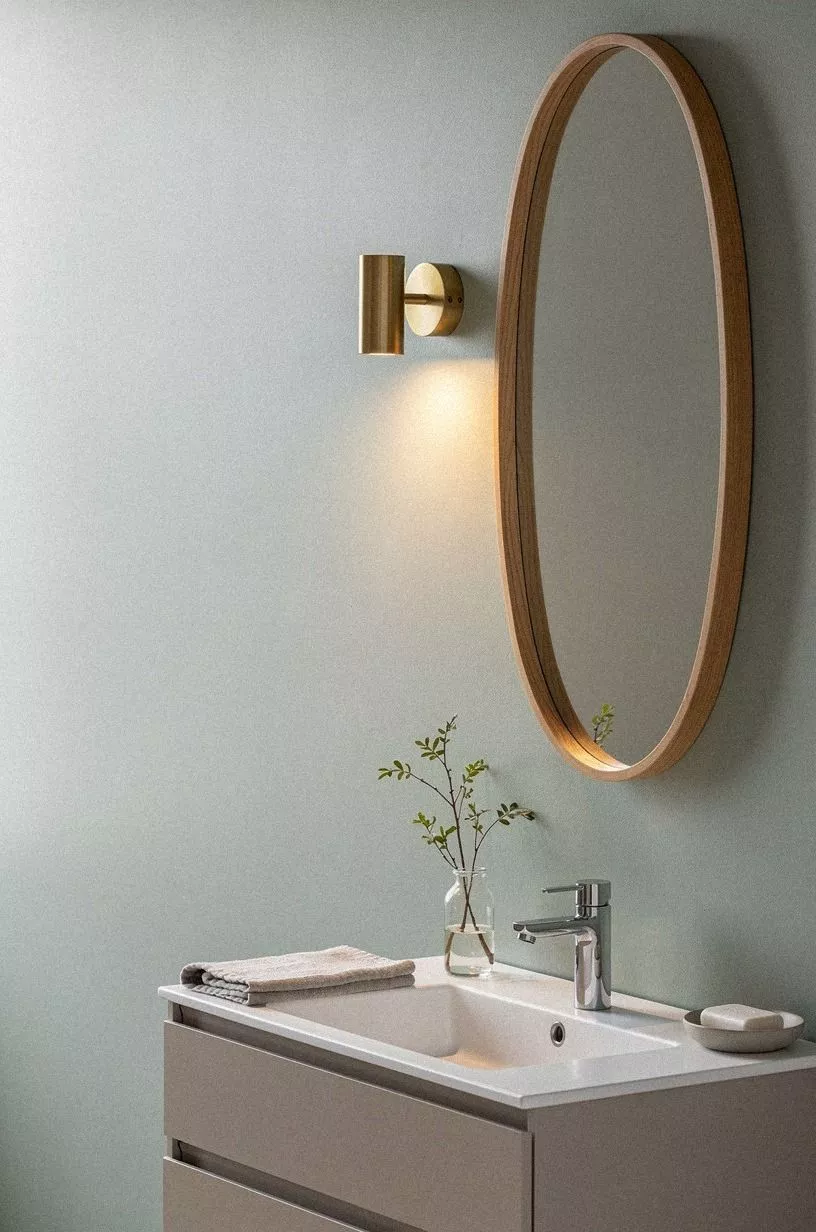
I started with Sherwin-Williams Sea Salt SW 6204 because it has enough green to feel intentional without turning the small room dark. You’ll want to test it beside your actual tile, not on a white screen or a tiny store card.
Around it, I kept the stronger palette to navy, warm white, and walnut, with Nero Marquina black marble adding dark veining. That balance kept the walls from looking flat.
I skipped the deeper green on every wall. Farrow & Ball Hague Blue No.30 is gorgeous in the right room, but it would have swallowed the only window here and made the stone look dusty.
If you’re working with a windowless bathroom, use the dark shade on one vanity wall instead of forcing it across the ceiling line. Your eye needs one place to rest!
I used a washable bathroom paint and kept the trim warm white. The edge between green wall and cream trim made the room feel calmer than a stark white border would have.
And yes, I painted behind the towel hooks, even though nobody sees that patch. You’ll notice the difference whenever you move something later.
2Travertine Sets the Stone Temperature Rule
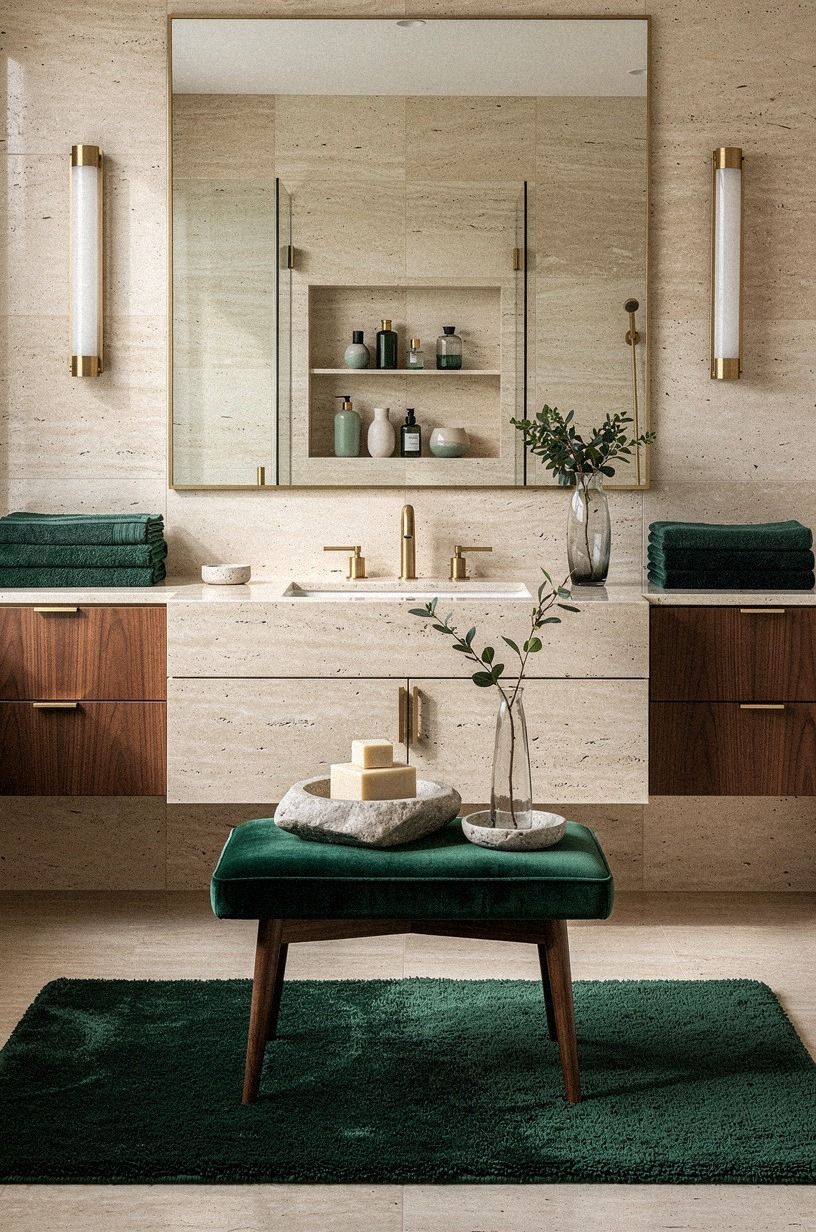
A deep-pile mohair velvet accent became my anchor because its rich texture made the green feel less decorative. I kept the surrounding palette emerald, gold, and cream, so the room felt warm without becoming overly sweet.
3Two Greens, One Ladder
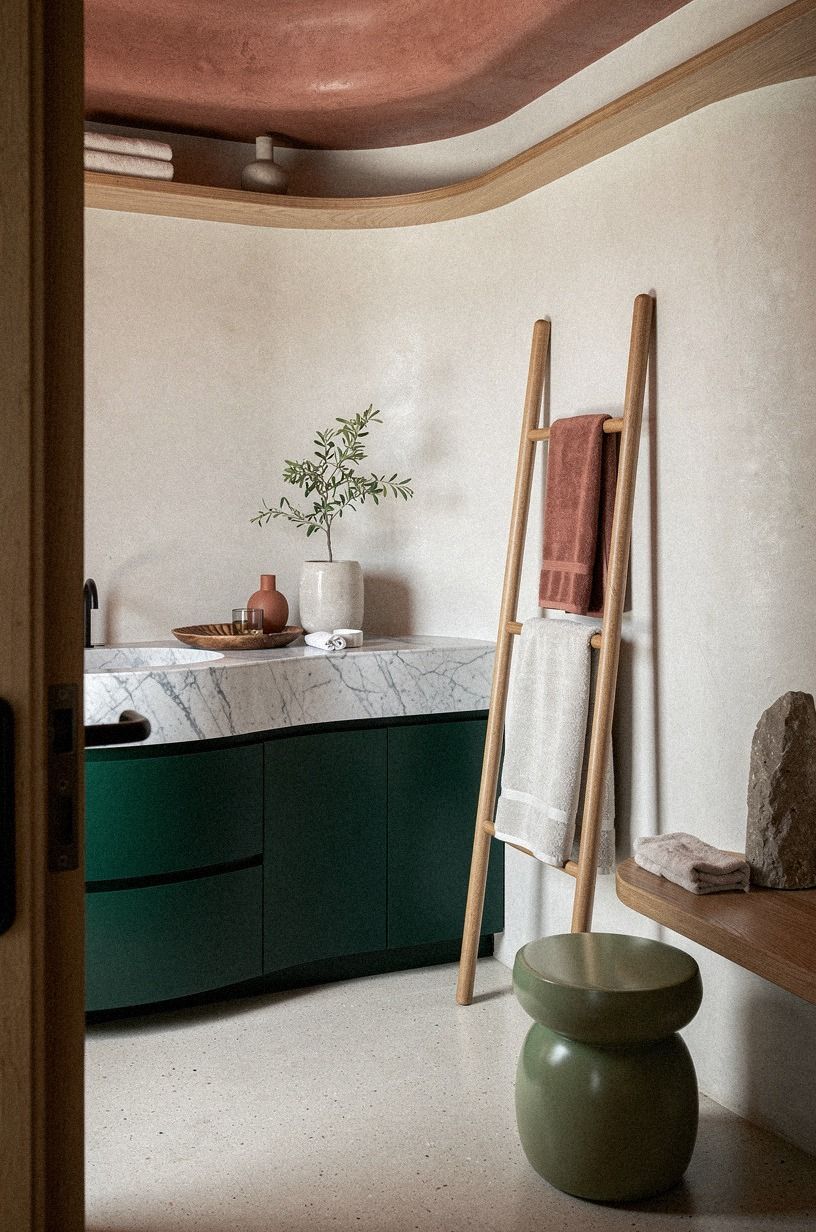
I used two greens, not five. The wall stayed pale and misty, while the towels and small cabinet brought in a deeper forest-green tone.
This is my Two-Green Ladder: one green carries the background, and the other gives your eye a lower, heavier note. You’ll get more depth without making every surface compete.
The deeper shade came through forest-green cotton towels and a small natural-oak stool. I didn’t match them exactly to the wall.
Exact matching can make a bathroom feel packaged, while two related greens feel collected. If you’re styling a rental, use removable art or textiles for this step and leave the paint alone.
But I avoided bright emerald. It looked lively in the store and harsh beside the natural oak at home.
A muted forest green gave me the earthy quality I wanted, especially beside rust-colored accents. Your bathroom doesn’t need more color everywhere.
It needs a clear order, with the softest color highest and the richest tone near the floor. These green Mediterranean bathroom ideas follow the same restrained approach.
4Choose a Floating Vanity, Not a Bulky Cabinet
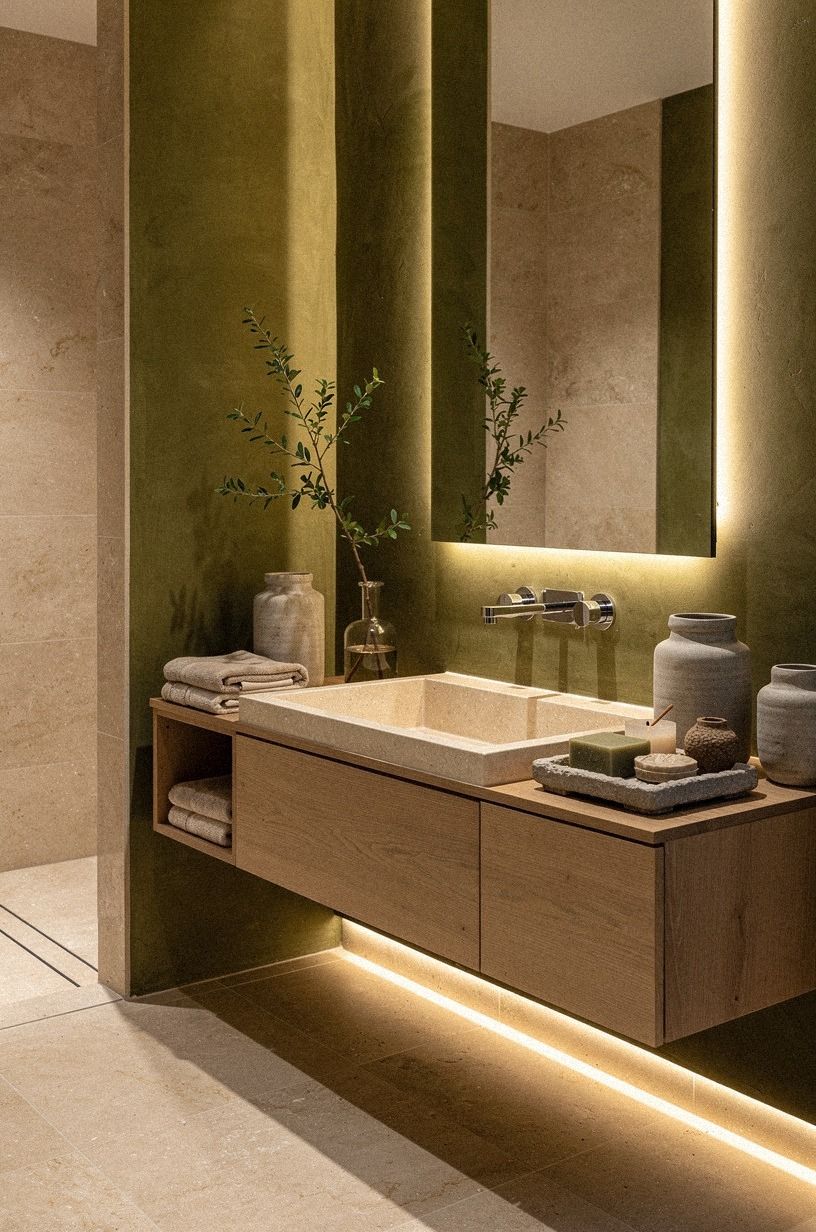
The original cabinet stopped the floor visually, so I replaced it with a compact IKEA HAVBÄCK wall-mounted vanity in a reclaimed weathered teak finish. The floating base revealed more tile and made the room feel less crowded. You’ll want to check the wall structure first, because a floating cabinet needs secure blocking and doesn’t forgive casual mounting.
I kept the vanity height within the standard 32 to 36 inches. That range gave me a comfortable sink without forcing the mirror too high.
If you’re tall, measure your elbow position before ordering anything. Your back will remember a poor decision every morning, long after you’ve forgotten how good the product listing looked.
The cabinet itself was practical, but the open space underneath was the emotional turning point. I could see the shadow line beneath it, and the whole bathroom suddenly felt lighter.
A furniture-style vanity would have offered more visual weight, but it would have repeated the old problem. You can find another warm direction in these travertine and wood bathroom ideas.
5The Quiet Travertine Edge
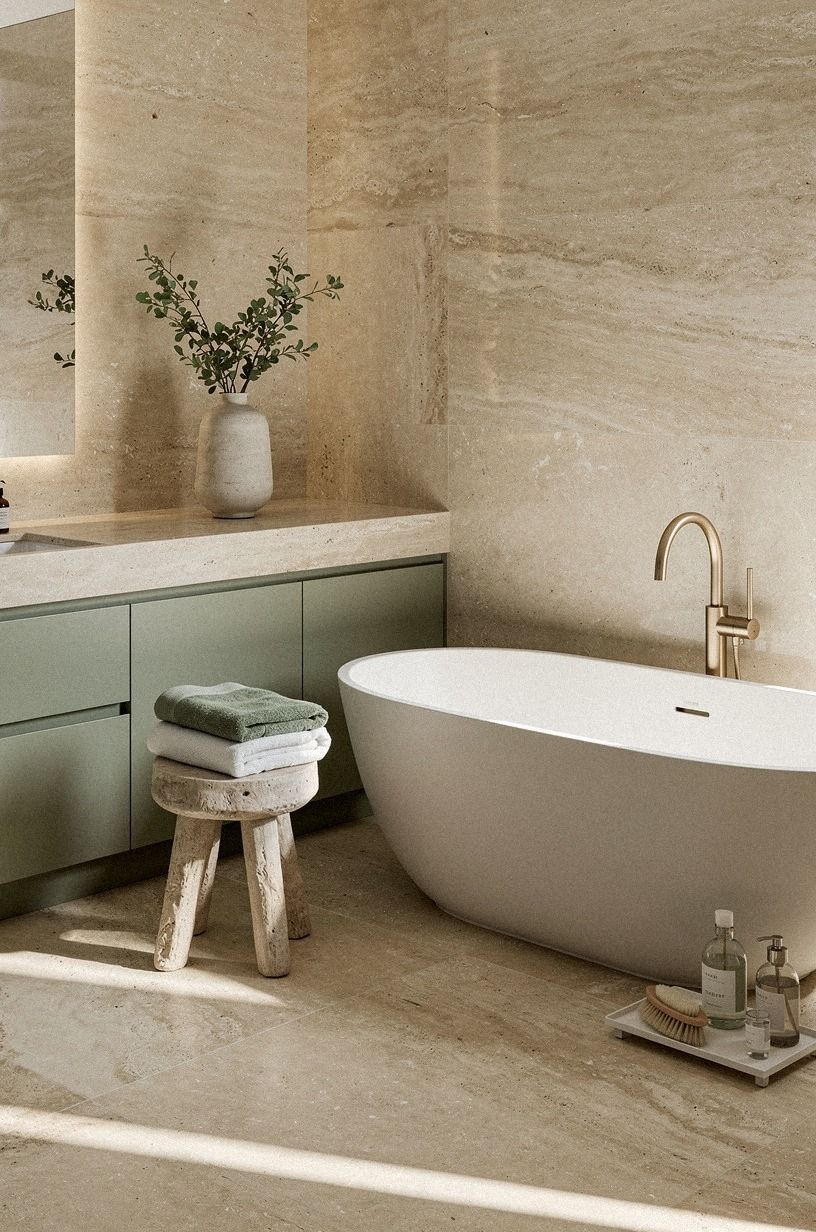
The mirror was too wide and too shiny, so I kept the glass but added a narrow Calacatta marble frame with gold veining around it.
6Brass Against Chrome: Make the Swap
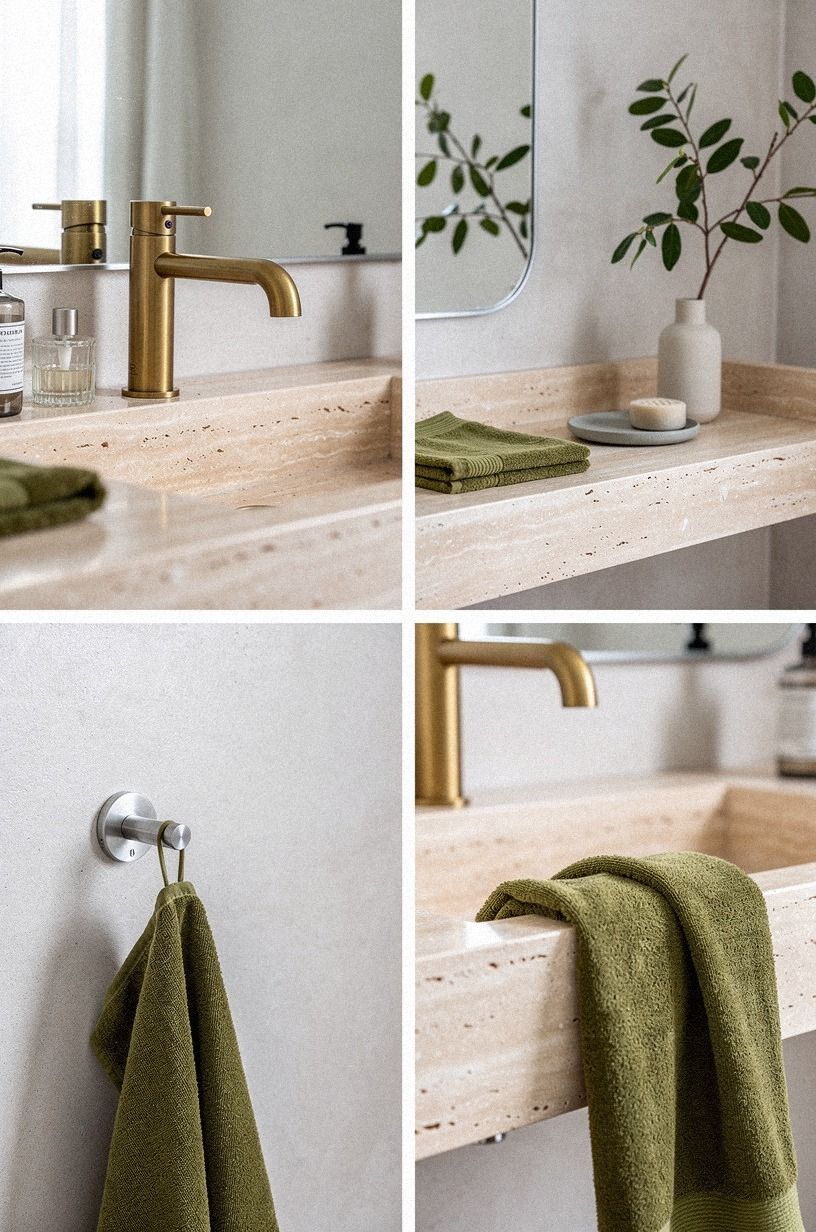
I changed the faucet, cabinet pulls, and towel ring to copper with a soft patina. The finish looked almost too bright on the first day, but it mellowed beside the dark blue and ivory palette.
I also kept the cabinet in cerused white oak. You’ll want to order one sample before replacing every fixture, because copper finish names are wildly inconsistent across brands.
I chose a simple Kohler Purist faucet instead of a curved vintage shape. The cleaner profile gave the stone room to show itself, and it didn’t make the vanity feel themed. Your faucet is one of the first things you touch, so its weight and handle movement matter as much as the finish.
And I didn’t replace the shower frame. That would have pushed the project into a larger renovation, and the mixed metal didn’t bother me once the chrome was no longer the brightest thing in the room.
If you’re uncertain, change the pieces closest to your face first. The room will feel warmer before your budget gets nervous!
7Build the Three-Height Light Stack
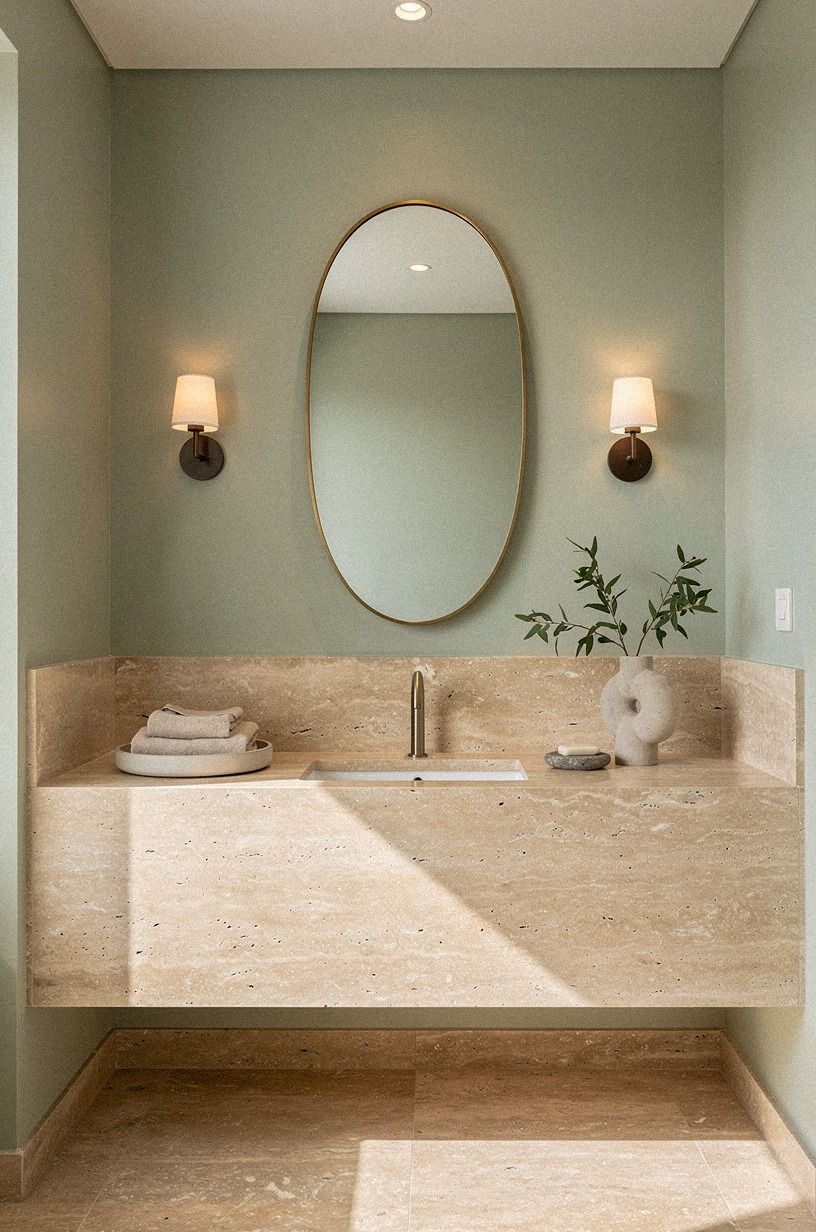
The bathroom had one ceiling fixture, which flattened every surface and made the green look dull.
I kept the overhead light for general brightness, then added a wall-level glow near the mirror and a lower pool of light beside the vanity. The three heights gave the backlit translucent onyx more dimension and made the room feel softer at night.
You don’t need three expensive fixtures. A dimmable ceiling light, a warm sconce, and one small plug-in lamp can create the same rhythm.
I chose bulbs around 2700K and avoided cool daylight bulbs. The warmer color made the green feel more botanical and kept the brass from looking yellow.
If your bathroom has no window, test the bulbs after dark before committing to a whole set. This green Mediterranean bathroom guide has a similarly warm relationship between color and light.
8Belgian Flax Linen Where You Can Feel It
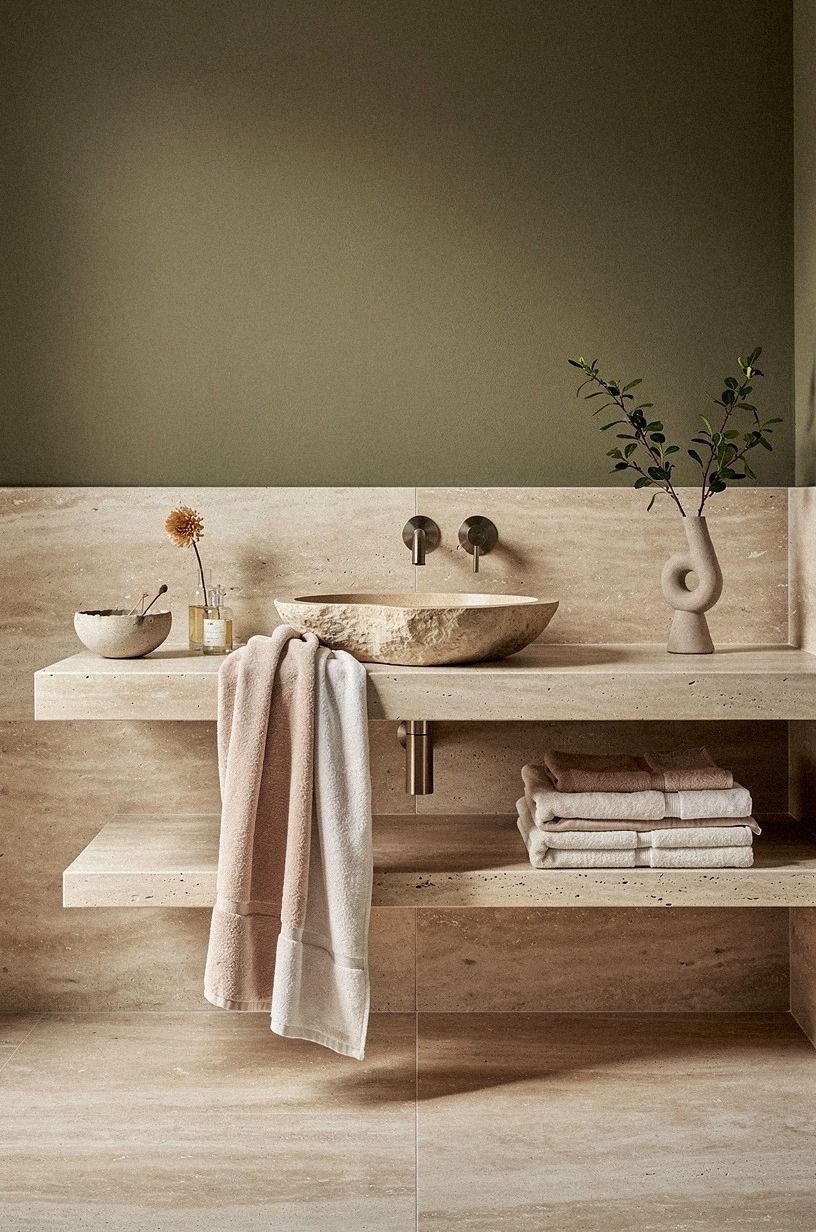
I replaced thin white towels with Belgian flax linen hand towels and heavier Turkish cotton bath sheets. The textures mattered more than the colors.
Linen gave the room a dry, crinkled surface beside the stone, while the cotton made the space feel comfortable instead of staged. You’ll notice that contrast every time you reach for a towel.
I used a narrow book-matched walnut peg rail rather than a wide towel bar. It took less wall space and let the fabric hang with a little movement. If you’re styling a small bathroom, your towels can become part of the vertical design instead of disappearing behind a door.
The first set I bought was too pale and blended into the trim. I exchanged it for a terracotta shade that echoed the warmer tones in the room.
That choice wasn’t dramatic, but the room felt more lived-in immediately. For a softer, brighter reference, see these white and cream travertine bathroom ideas.
9Matte Stone, Glossy Green Tile
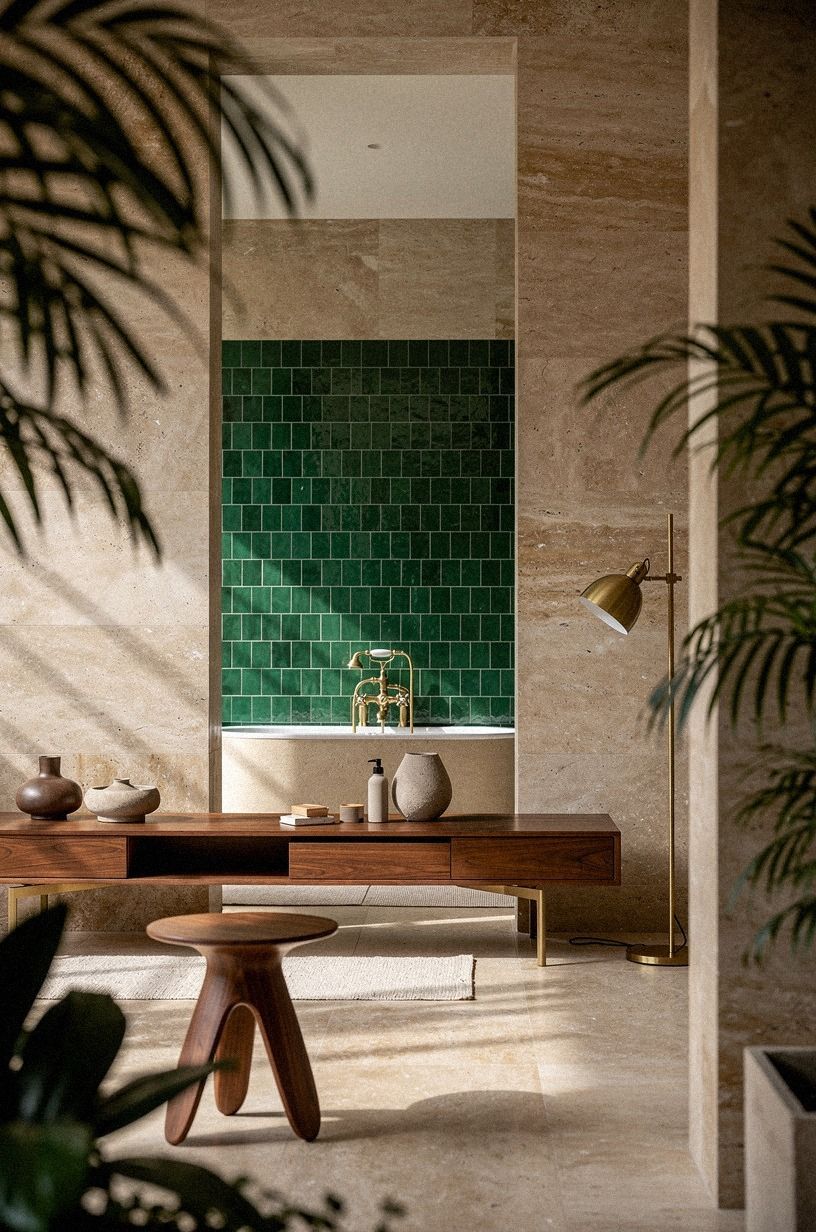
I used a small field of hand-glazed clay-toned tile behind the sink, where the uneven edges could catch light.
The contrast was deliberate. Warm travertine absorbed light, while the glossy tile returned little flashes of it around the basin.
I kept the tile area narrow so it felt like a detail rather than a second visual theme. If you want the same effect with less installation, a few handmade-look tiles behind the mirror can carry the idea.
Compare that balance with this brown Noce travertine bathroom approach.
10Anchor the Floor with a Warm Stone Bathroom Runner
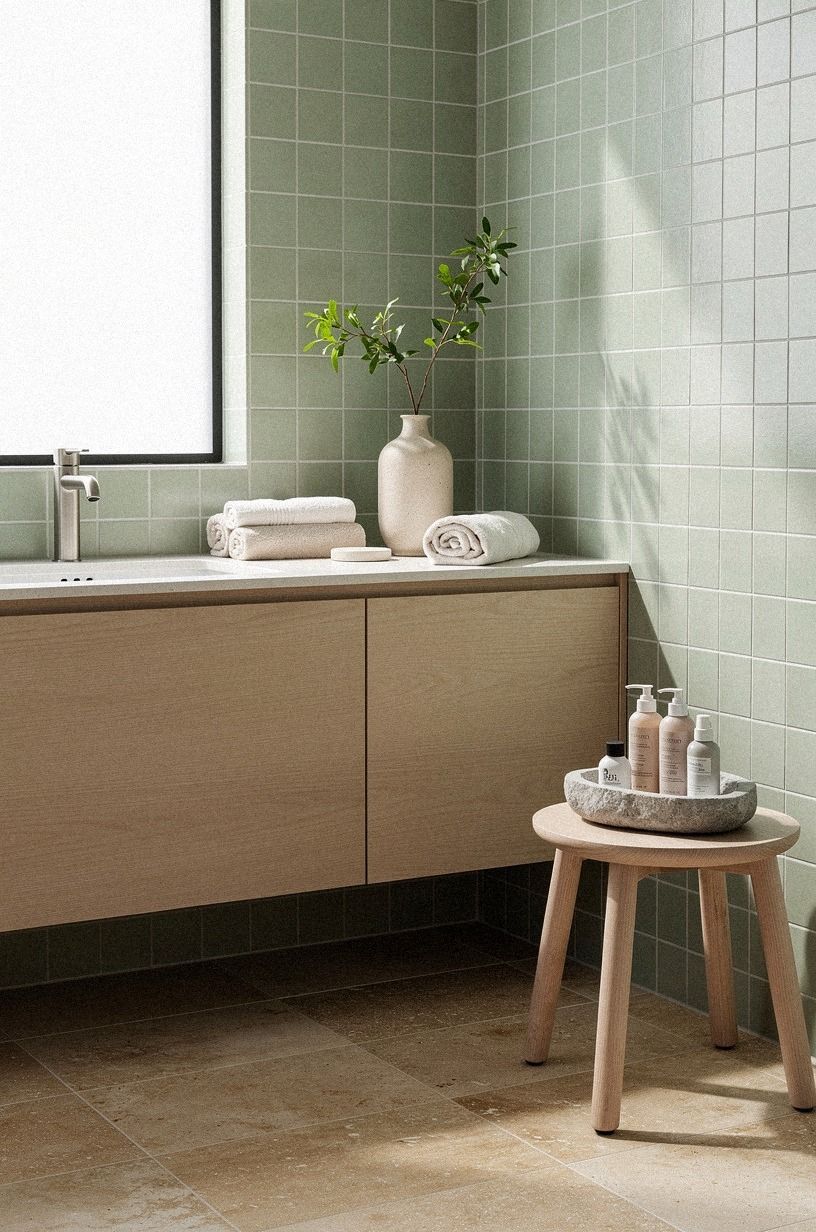
The existing floor stayed, but I added a flat-weave plum runner outside the vanity.
11A Shelf for the Spa Powder Room
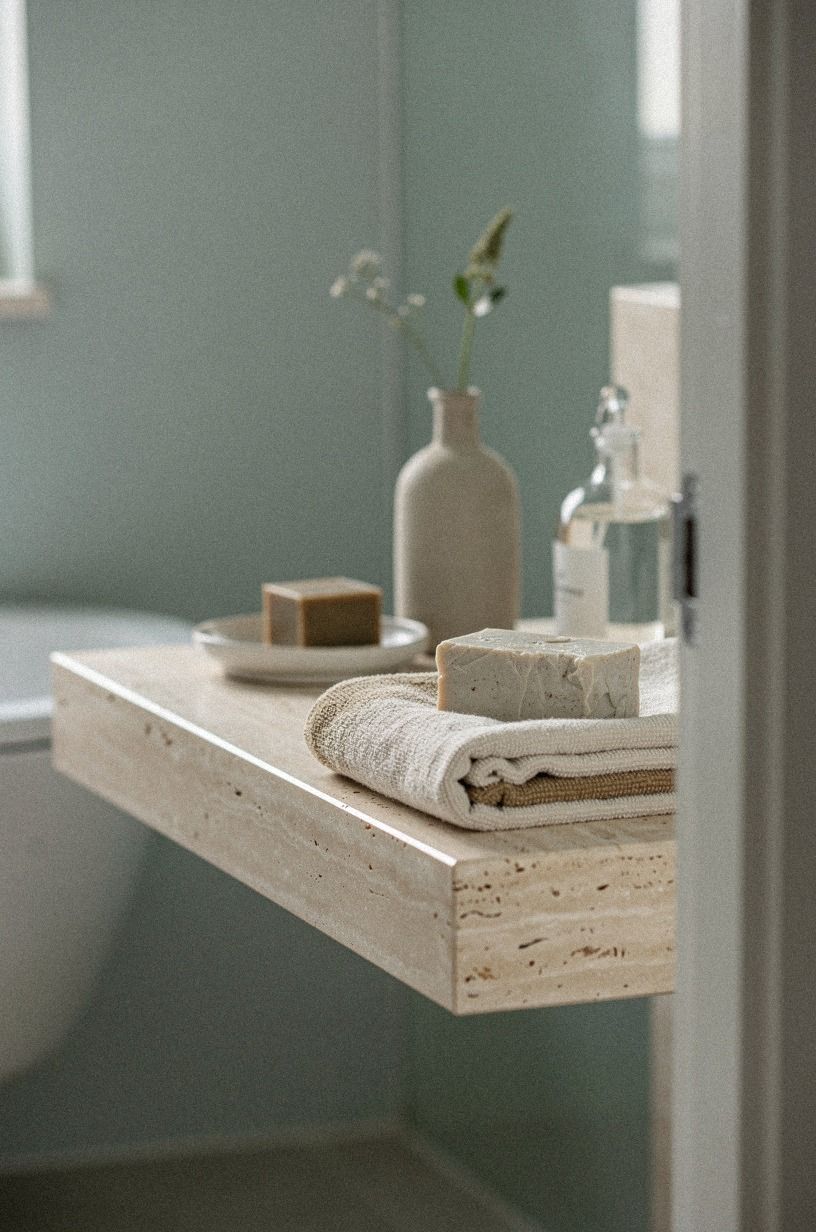
The empty wall beside the vanity needed storage, but a tall cabinet would have narrowed the walkway.
I installed one floating walnut shelf and kept its depth modest enough to preserve the walkway. A small oversized-chip terrazzo dish, folded hand towels, and one amber bottle were plenty.
The shelf gave the room a place for useful objects without making storage the first thing you saw. For a more Mediterranean direction, see these Italian Mediterranean travertine bathroom ideas.
12Open Storage Beats Another Closed Tower
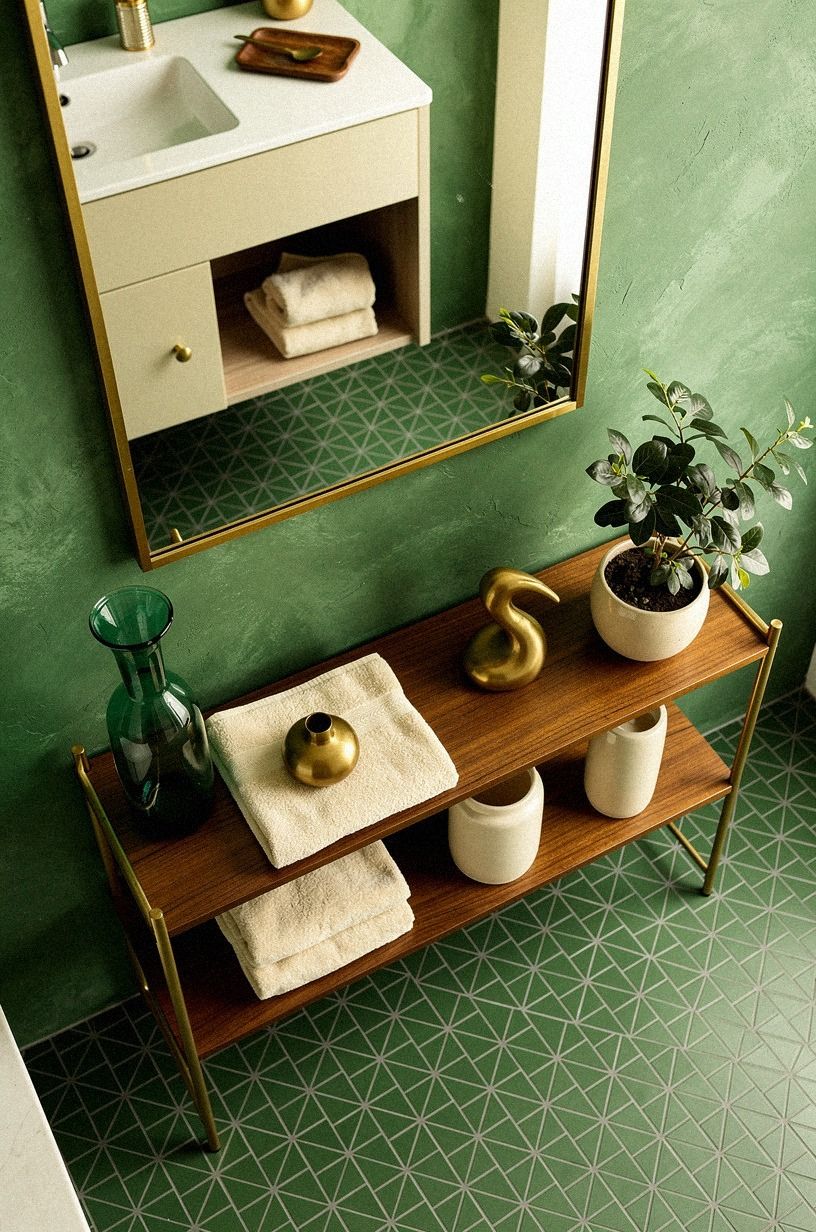
I wanted more storage, but I didn’t want another tall box. I added a narrow basket unit under the shelf for extra towels and kept daily products in the vanity drawer.
The hand-applied Venetian plaster behind it brought in texture without making the room feel rustic or heavy. You’ll want to measure the door swing twice before buying any freestanding piece.
The closed tower would have held more, but it would have crowded the toilet wall and blocked the light path. My bathroom needed less furniture, not more. If you’re storing cleaning supplies, use one concealed bin and keep the open shelf for things you touch every day.
I also moved the backup products out of sight. That sounds obvious, yet visible packaging was one of the reasons the old bathroom felt unfinished.
Your room can have practical storage and still feel calm. The move is giving every category one home, not adding containers until the shelf disappears.
A similar principle works in these dark green wood bathroom ideas.
13Keep the Shower Footprint and Soften the Edges
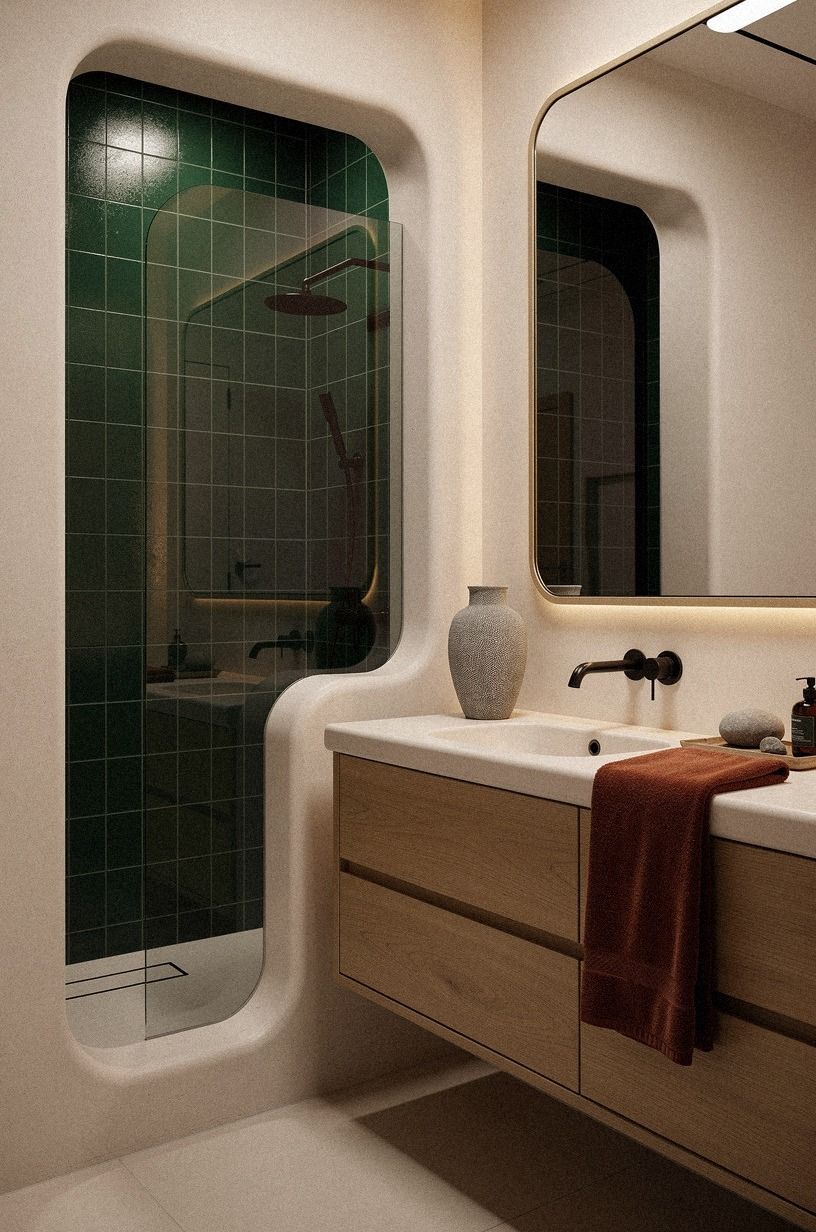
The shower stayed at the standard 36 by 36 inches minimum, but I changed the visual edges around it.
I replaced a harsh white shower curtain with a rust-toned flax curtain and added a small shagreen accent near the opening. The space felt warmer immediately, and I didn’t lose any floor space. If you’re working with a glass enclosure, a small shagreen accessory or warm linen bath mat can create the same softness without changing the footprint.
This travertine and marble bathroom look takes a more polished approach to those layered edges.
14Ask What Your Bathroom Needs to Feel Relaxing
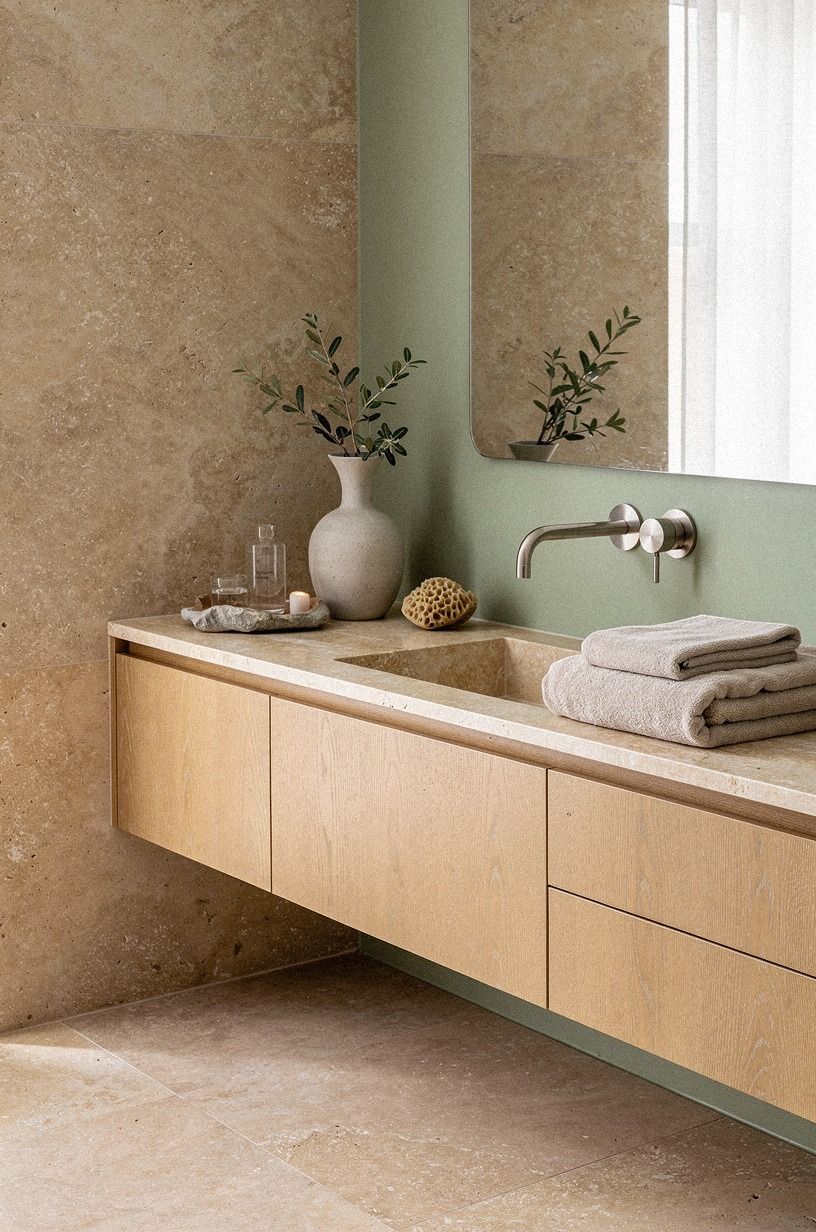
The final decision was subtraction. I removed two framed prints, one oversized plant, and a tray that held nothing useful. The bathroom immediately felt quieter.
You may think an earthy spa bathroom needs more baskets and greenery, but mine improved when I left space around the stone and let the green carry the mood.
I kept one folded piece of washed Belgian linen in a dusty-rose basket near the window and chose one piece of art with soft charcoal lines. A small brass hook was enough hardware. If you’re styling your own room, stand in the doorway and name the first three things you see.
If one of them is clutter, remove it before buying anything else.
What makes a bathroom relaxing, really? For me, it’s the absence of decisions.
Towels have one place, the light is soft, and the materials don’t fight each other. You can make the room feel luxurious with fewer objects if each one earns its space. That restraint was the most useful change I made!
How much it cost
I kept the project in the cosmetic-refresh lane, even though the final look feels more substantial. The cost depended on whether you already owned the mirror, vanity, and light fixture. Paint, textiles, and styling can stay in the lower range, while a new vanity or partial tile installation pushes the project higher.
For the materials that changed the room most, these typical US ranges helped me decide where to spend and where to stop:
I spent first on the wall color, faucet, and lighting because those changes affected the room every day. I saved on the shelf, runner, and accessories by shopping IKEA, Target, Wayfair, and second-hand listings.
You don’t need to reach the mid-range tier to make a bathroom feel warm. You need to avoid spending money on a material that makes your existing room harder to live with.
Why this earthy bathroom works for me
I used to think a spa bathroom needed white walls, smooth marble, and almost no personal evidence. That idea looked peaceful, but it felt sterile in my house.
I wanted the room to feel calming without pretending nobody used it. Travertine gave me the uneven surface, and green gave me the visual quiet I couldn’t get from beige.
The important decision was letting the materials stay imperfect. The stone has pits.
The linen wrinkles. The brass will change.
I’m comfortable with that because a room made from perfect surfaces can make you feel like you’re visiting instead of living there. You’ll get more warmth from one honest texture than from ten decorative objects.
I also learned that color should follow light, not the other way around. My first dark green sample was dramatic, but it made the room feel smaller at night.
Benjamin Moore Chestertown Buff HC-9 would have warmed the walls, yet it didn’t give me enough contrast with the stone. Sea Salt landed between those choices and let the travertine stay visible.
The result isn’t a luxury hotel bathroom, and that’s exactly why I like it. It’s a practical room with a soft edge.
You can wash your face, find a towel, and leave the products where you’ll use them. The earthy mood comes from restraint, not from pretending the room has no ordinary life.
A Few Things Worth Answering
What is the best Travertine & Green Bathroom Ideas for an Earthy Spa Vibe for a small bathroom?
A floating IKEA vanity, pale green paint, and one warm stone detail work best in a small bathroom. The open floor keeps the room airy, while matte travertine adds texture without visual clutter. You can borrow more layout ideas from these dark green wood bathroom ideas.
Where can I buy Travertine & Green Bathroom Ideas for an Earthy Spa Vibe pieces on a budget?
Look at IKEA, Wayfair, and Target for vanities, towels, mirrors, and lighting. Facebook Marketplace and local thrift shops can also turn up solid wood stools or framed mirrors. Your best budget find may need paint, new hardware, or a careful clean before it fits the room.
These travertine and wood bathroom ideas can also help you judge which wood pieces are worth keeping.
How much does a Travertine & Green Bathroom Ideas for an Earthy Spa Vibe makeover cost?
A cosmetic refresh typically falls within the $200-$1,200 budget tier for paint, a mirror, faucet, and textiles. You can keep costs lower by reusing your vanity and shopping your home first.
Tile, lighting, and plumbing move the project into higher ranges quickly. For a brighter alternative, compare these white and cream travertine bathroom ideas.
Can I create a Travertine & Green Bathroom Ideas for an Earthy Spa Vibe on a budget?
Yes, and you can start with paint, warmer towels, and a second-hand mirror. Keep the existing vanity, switch only the visible hardware, and use a small stone tray instead of new tile. Your biggest free upgrade is removing packaging and clearing crowded surfaces.
These green Mediterranean bathroom ideas offer another low-demolition direction.
Is Travertine & Green Bathroom Ideas for an Earthy Spa Vibe worth it in a small space?
Yes, because a small bathroom lets you repeat two or three materials without needing a large budget. Keep the green lighter on the walls, choose a floating vanity, and protect the 21-inch toilet clearance.
The smaller footprint makes every texture easier to notice. You can also borrow the layered palette from these Italian Mediterranean travertine bathroom ideas.
Is Travertine & Green Bathroom Ideas for an Earthy Spa Vibe a good idea for a rental?
Yes, especially with removable choices. Use peel-and-stick backsplash tile, a tension rod, framed art, warm towels, and a freestanding shelf. You can create a travertine and marble bathroom look through color and texture without drilling into tile or changing plumbing.
Where I’d Start First
If I had to pick one, I’d start with Sherwin-Williams Sea Salt. It softens beige tile without hiding the room’s natural light, and every warmer texture looks better beside it. Pin this travertine bathroom guide for later, then test the color at night.