Travertine and wood bathrooms can stay warm and practical with a few hundred dollars or a full remodel. I learned that after sealing pale stone too late and watching one splash mark linger for days. The fix wasn’t more decor. It was choosing textured finishes, proper ventilation, and wood that can handle moisture. You’ll want these ideas before you buy a vanity.
- Layer the Two-Wood Rule for a Softer Travertine and Wood Bathroom
- Why a Floating Walnut Vanity Changes the Room
- Frame the Mirror With the Three-Height Light Stack
- Honed Travertine Meets Ribbed Wood Paneling
- Benjamin Moore Chestertown Buff and the Ceiling
- How Much Clearance Does a Dry-Zone Wood Shelf Need?
- Swap Glossy Tile for a Quiet Stone Grid
- Farrow & Ball Hague Blue Against Pale Travertine
- Anchor the Room With a Low-Pattern Runner
- What Does a Travertine Bathroom Really Cost?
- Paint Small Walls With the North-Light Test
- Repeat One Warm Metal
1Layer the Two-Wood Rule for a Softer Travertine and Wood Bathroom
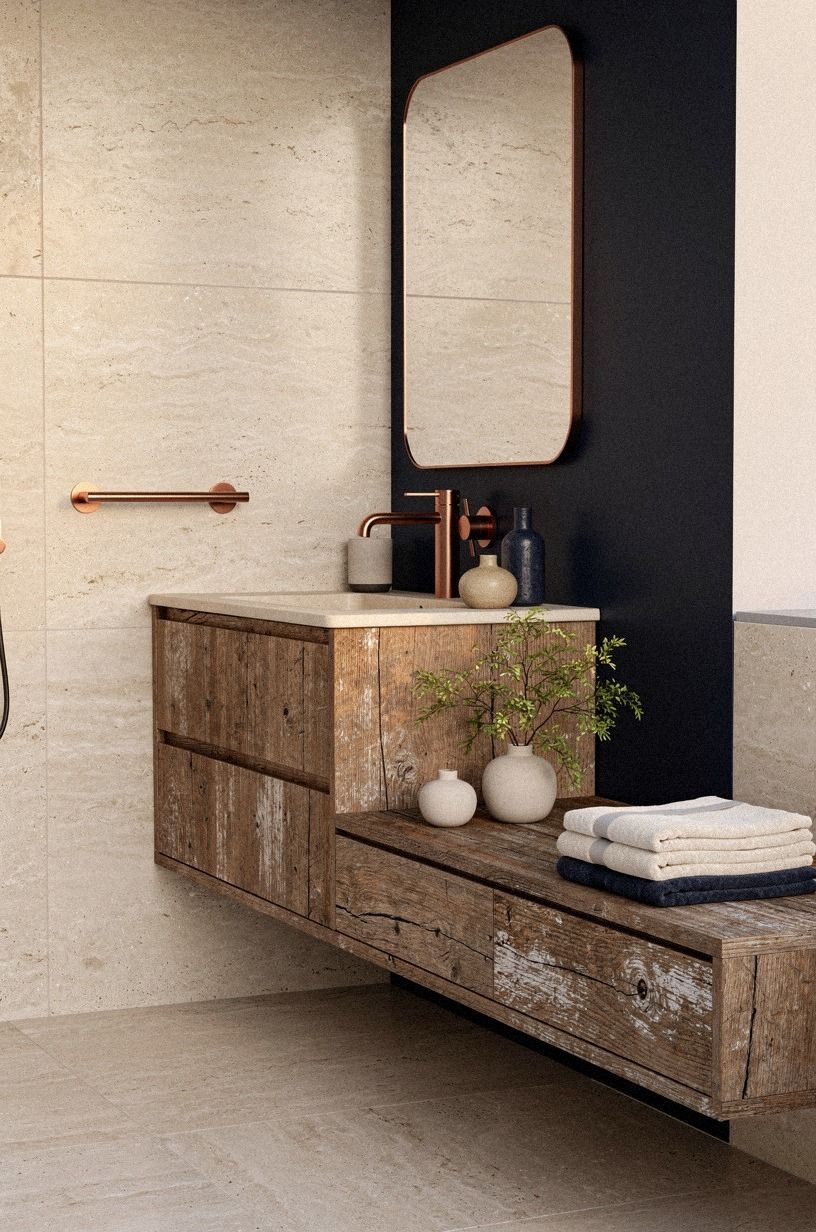
The Two-Wood Rule keeps your bathroom earthy without making it look like a showroom. Start with reclaimed weathered teak, then let warm ivory stone bridge it to a deeper accent. A midnight blue bathroom vanity adds depth, while copper hardware brings enough warmth to stop the room from feeling washed out.
I’ve tried matching every wood tone, and it usually looks flatter than you expect.
Keep the teak near the brightest wall or window, and use the darker cabinet below eye level. You’ll get gentle contrast without turning the room moody.
A 32 to 36 inch vanity height works for most bathrooms, so your deeper cabinet won’t dominate the sightline. For more color direction, compare this organic modern travertine bathroom palette before you choose stain.
Your materials don’t need identical undertones. They need a shared temperature.
If your travertine is warm ivory, choose teak with weathered brown rather than a gray stain. If the stone reads taupe, copper hardware can keep the room from feeling flat.
I’d bring home three samples, place them beside your towels, and look at them in both daylight and artificial light. That small test can save you from an expensive mismatch!
Typical cost by tier (US averages):
A small room usually benefits from fewer wood tones. You can still create richness with grain, shadow, and hardware instead of adding another species.
2Why a Floating Walnut Vanity Changes the Room
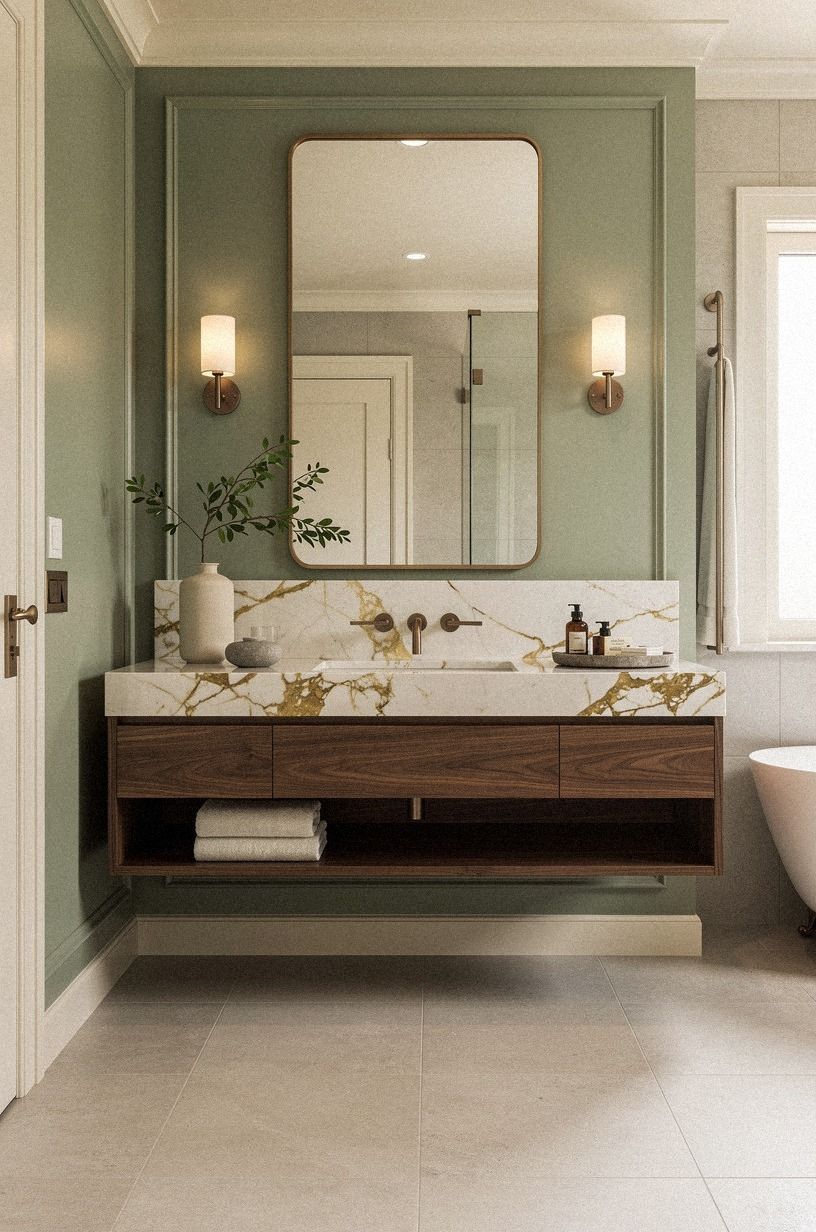
A floating vanity makes a small wood and stone bathroom feel calmer because the floor runs uninterrupted beneath it. Pair warm natural wood with Calacatta marble with gold veining for a lighter surface that still feels substantial.
3Frame the Mirror With the Three-Height Light Stack
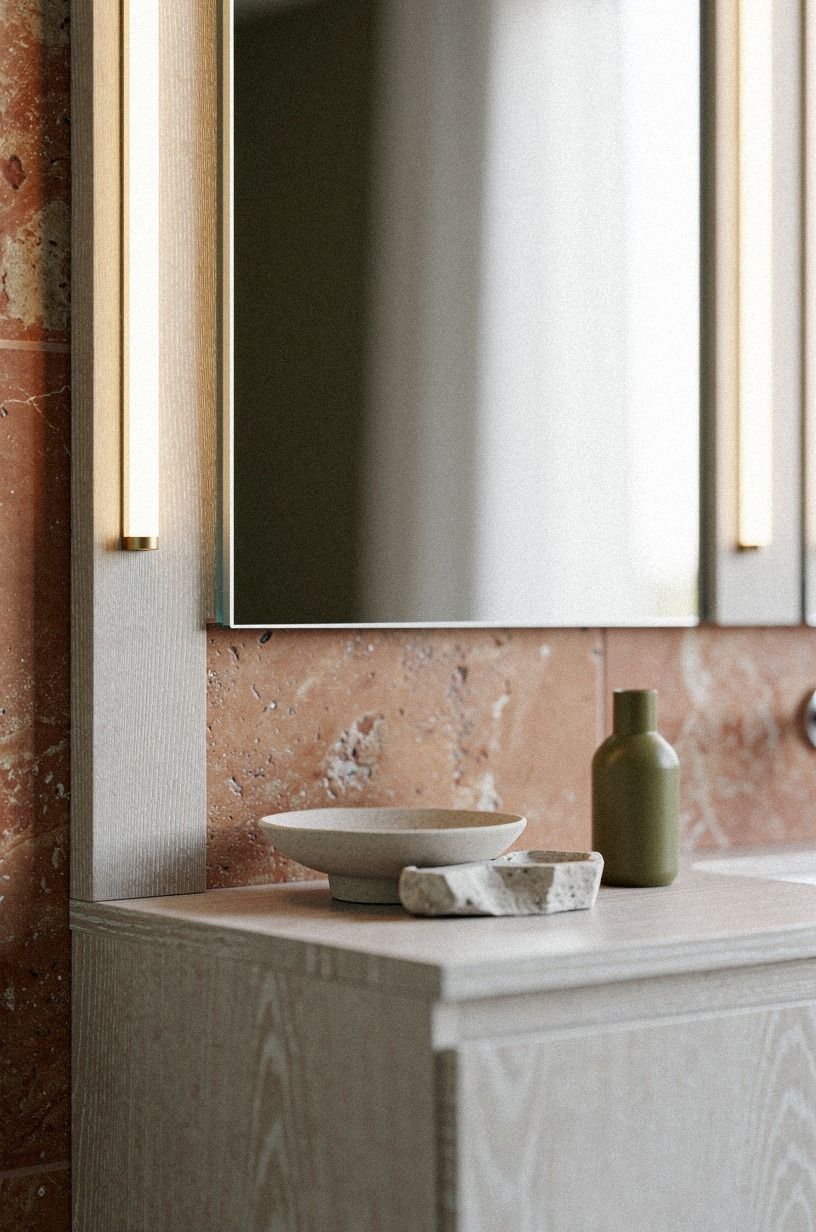
The Three-Height Light Stack gives a travertine and wood bathroom more dimension than one ceiling fixture ever will. Use a backlit mirror at eye level, slim sconces against a cerused white oak surround, and a low lamp-like glow under the floating vanity. The third layer can be subtle, such as an LED strip with a 2700K to 3000K color temperature behind the toe kick.
You’re aiming for light that lands on your face, your stone, and your floor. A single overhead bulb makes every surface look harder, while side lighting brings out the warmth of terracotta, stone, and olive accents.
And yes, a small bathroom deserves this much attention! If you’re comparing finishes, this white and cream travertine bathroom guide has a brighter direction.
Keep your mirror wider than the sink when you can, but don’t crowd the wall. If the vanity is 30 inches wide, a 24 to 28 inch mirror may leave enough room for sconces.
Your fixtures should sit close enough to illuminate your face without creating side shadows. I’d also choose a dimmer rated for the fixture and the bathroom circuit.
Morning light and evening light rarely need the same intensity.
A simple ceiling fixture can soften the room, while a discreet quiet exhaust fan keeps humidity under control. Light and ventilation work together here. If the fan runs loudly, you may stop using it, so choose a model you’ll actually switch on after every shower.
4Honed Travertine Meets Ribbed Wood Paneling
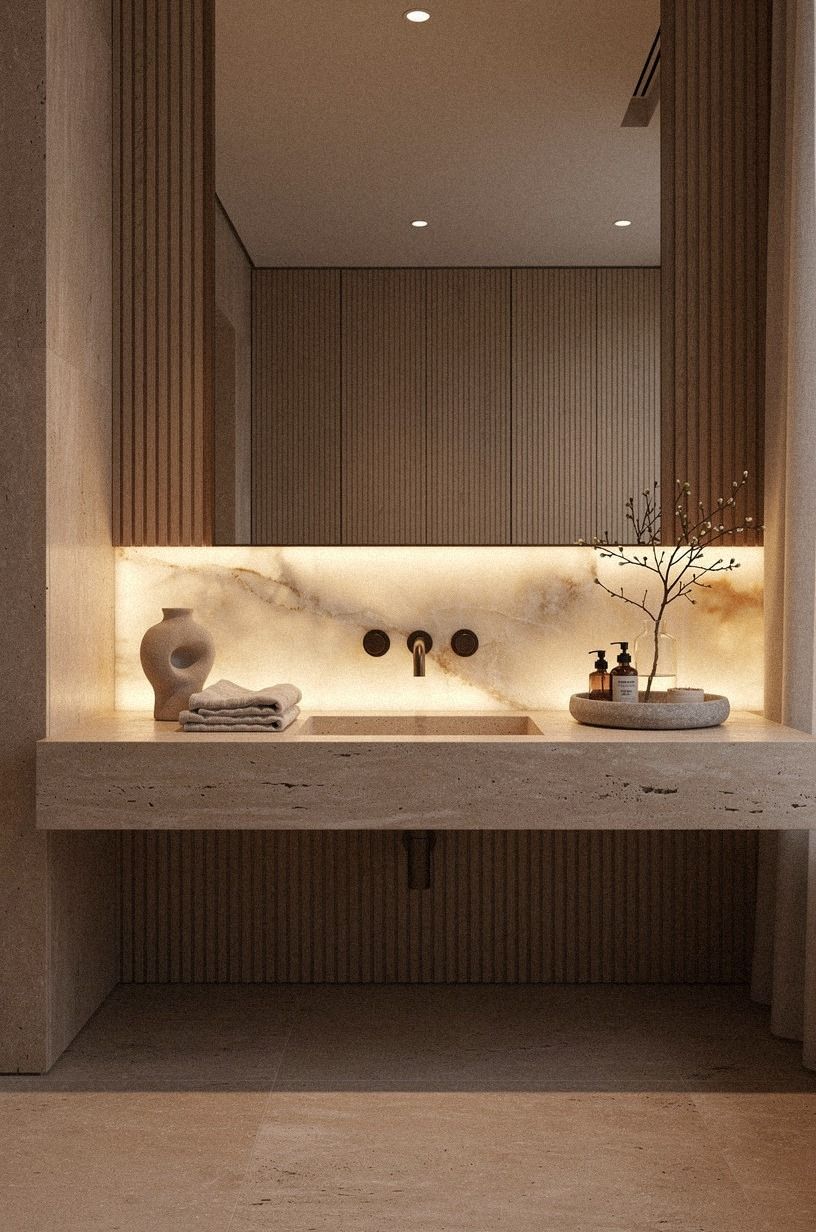
Honed travertine and ribbed wood make a peaceful pairing because their textures work at different scales. Use backlit translucent onyx on the vanity wall, then echo its rhythm with ribbed wood on one dry wall.
The glowing stone adds depth, while the wood catches shadows in narrow stripes. That’s more interesting than another glossy accent tile.
Your wall paneling needs a moisture-safe finish and a clear boundary from the shower spray. Don’t install raw wood beside the tub and assume a fan will save it. I once watched an unfinished oak edge darken near a splash zone, and it wasn’t charming.
Use sealed wood outside the direct wet area, add an aged-brass edge where appropriate, and check your ventilation before buying.
You can also use ribbed wood on a vanity front, a shallow niche surround, or a removable cabinet insert. That gives you the rhythm without covering an entire wall.
If your bathroom is rental-friendly, consider a freestanding slatted screen or a narrow wood console instead of fixed paneling. You’ll find a useful wet-zone comparison in these teak shower shelf ideas.
A linen-upholstered stool can work near the tub, but check the floor contact points and let it dry between uses. Wood needs air around it. Your bathroom will stay healthier when water can evaporate rather than sit beneath every object.
5Benjamin Moore Chestertown Buff and the Ceiling
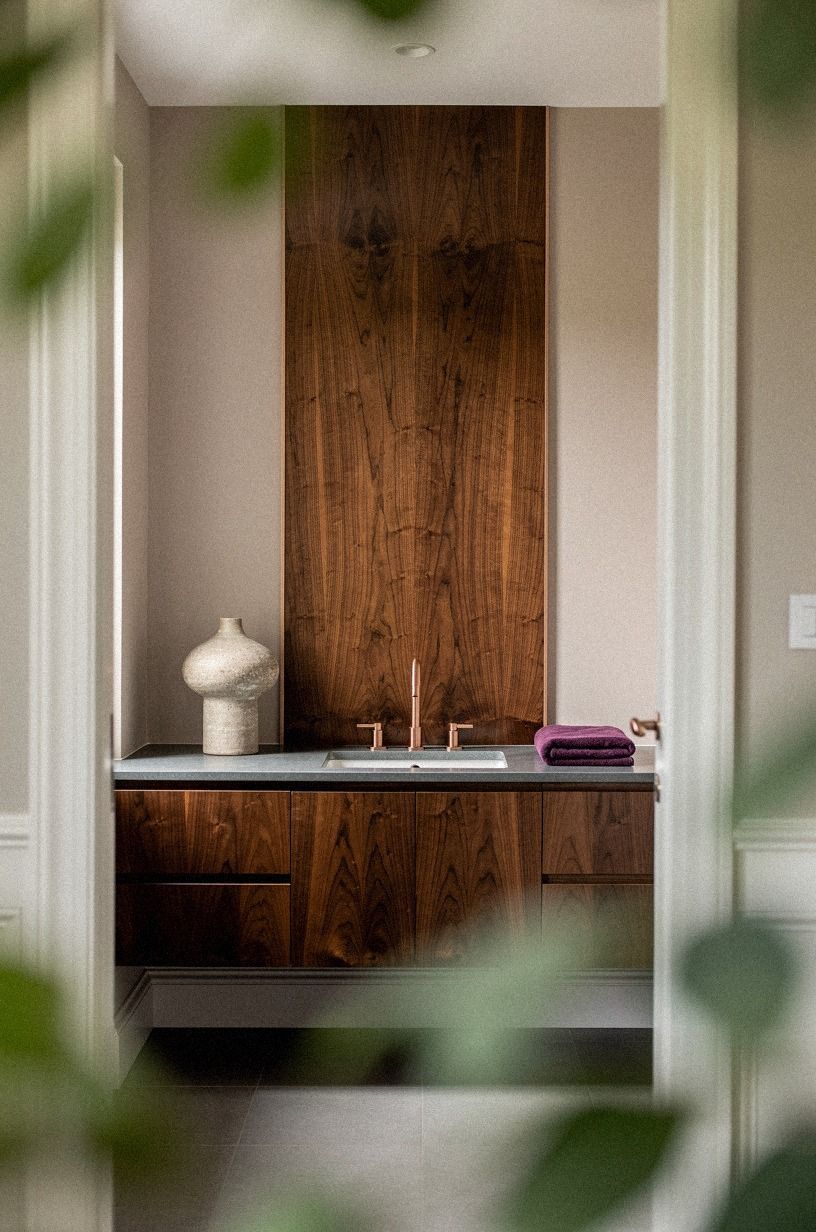
The Soft Contrast Effect is simple: let plum meet soft grey, then repeat rose gold in the hardware and book-matched walnut in the vanity or shelving. A plum ceiling or accent wall gives the room depth, while grey stone keeps the palette from becoming too sweet. Book-matched walnut adds movement without requiring several wood species.
You’re not painting every surface the same color. A deeper ceiling can make a tall bathroom feel more intimate, while a pale ceiling keeps a narrow room bright. I’ve used dark paint overhead in a small powder room, and the result felt more inviting than cramped because the lighting was layered.
Start with a large sample board, not the ceiling itself!
But don’t choose a saturated color before testing it beside your actual stone. Your sample may shift dramatically under morning light.
I’d paint two coats on a large piece of poster board, move it around the room, and watch it for a full day. Your walls, floor, and mirror will reflect the color differently.
If your bathroom has low ceilings, use a slight tonal shift instead of a dramatic contrast. A ceiling one shade deeper than the wall can still create warmth without visually lowering the room. For a rental, a painted ceiling may be the one change that makes the whole space feel intentional.
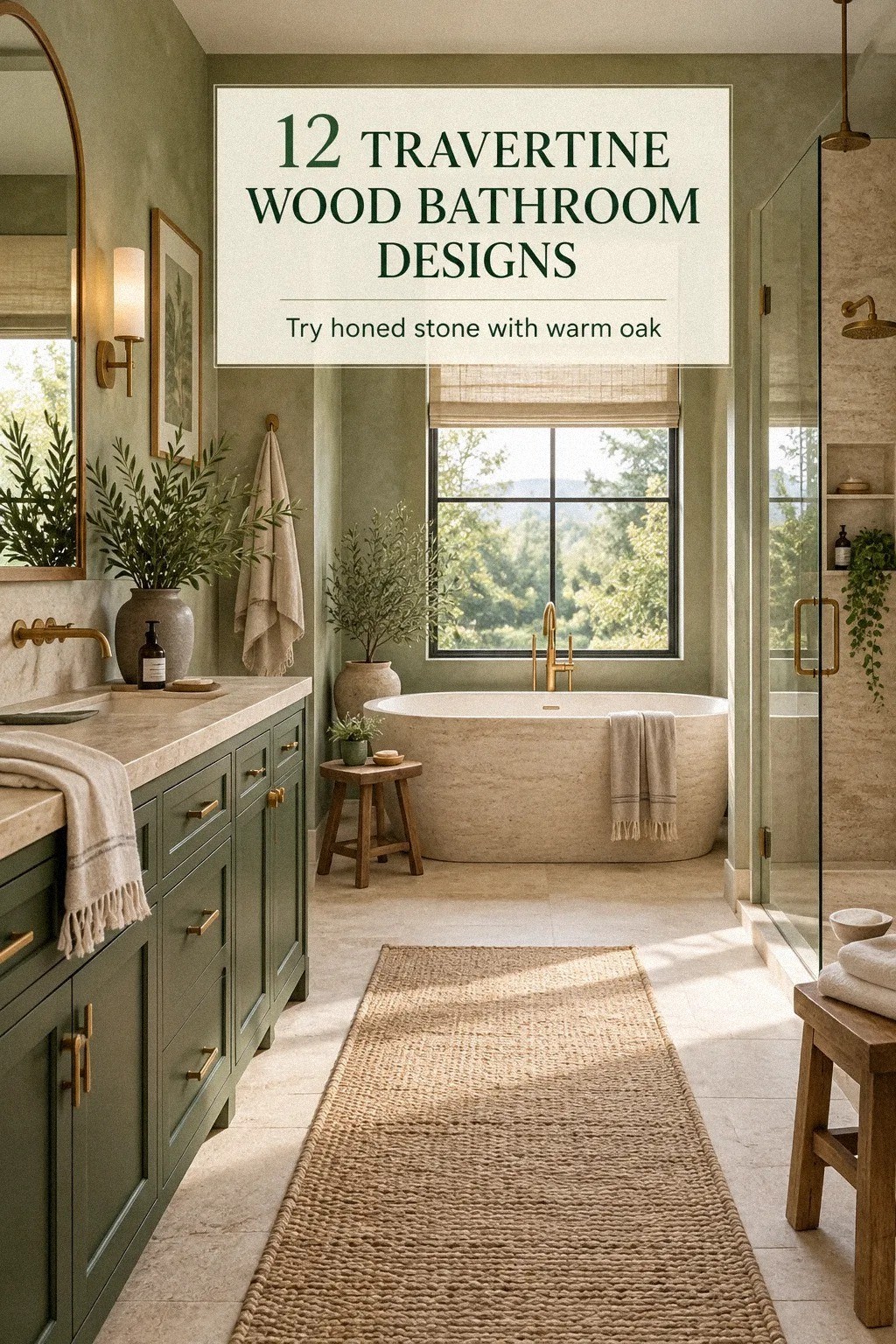
6How Much Clearance Does a Dry-Zone Wood Shelf Need?
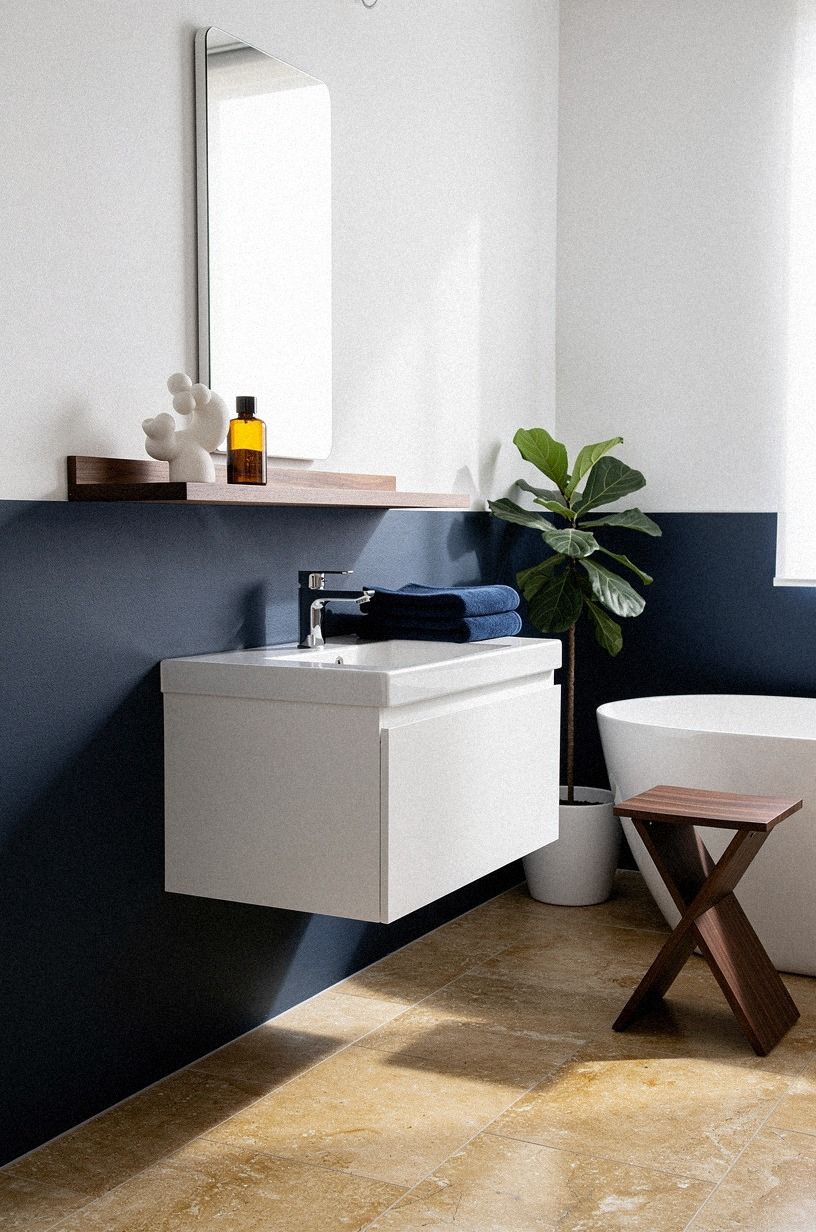
A solid walnut shelf gives your bathroom wood and warm travertine character without committing to a wooden wall or vanity.
7Swap Glossy Tile for a Quiet Stone Grid
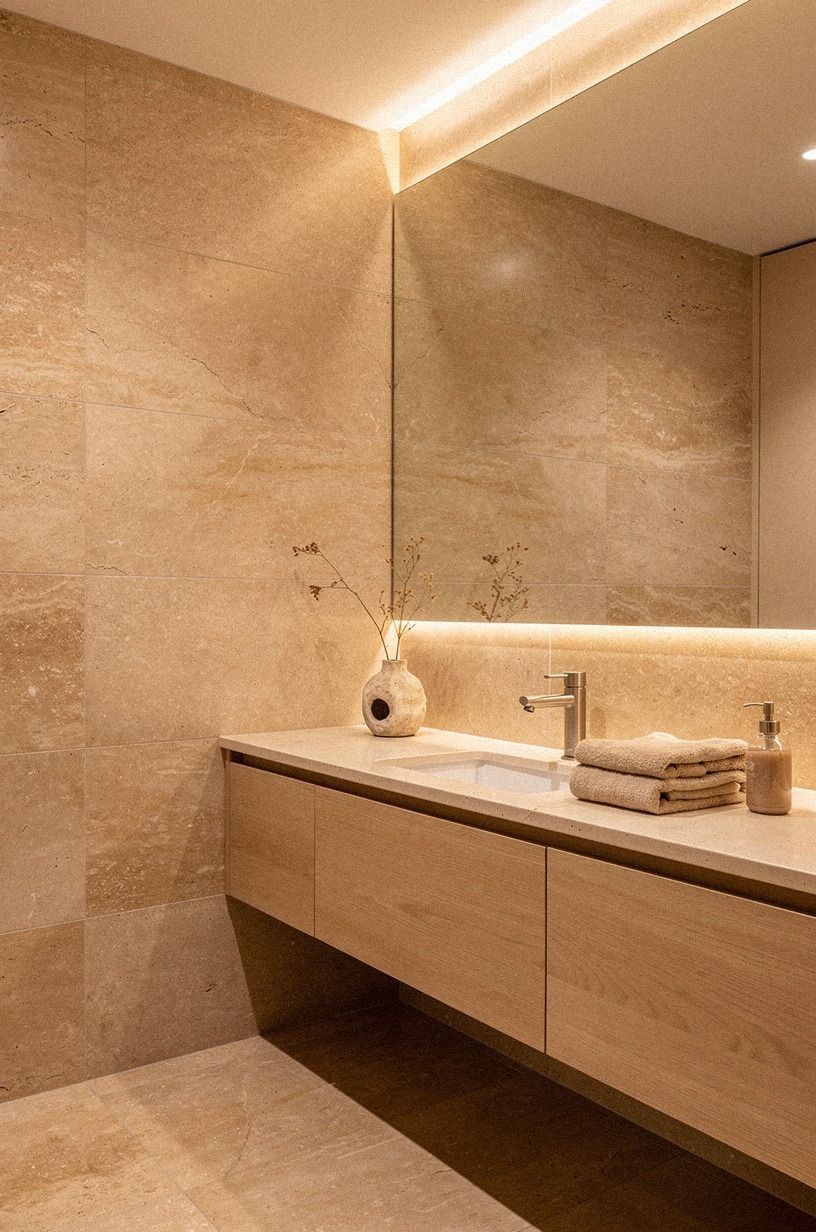
A quiet stone grid uses small, regular cream stone tiles with a matte finish, then lets emerald accents and natural wood carry the visual warmth. Choose cream travertine, a narrow grout line, and a simple running bond on the backsplash. Add unlacquered brass where you want a golden detail that will develop patina.
The result feels organic and refined because the stone’s variation does the work instead of a loud pattern.
Your grout color matters more than most people expect. A sand-colored grout will soften the joints, while bright white can make the stone look disconnected from the room.
I’d avoid highly polished travertine on the floor because water spots and foot marks show quickly. It isn’t hard to clean, but you’ll notice every mark.
For shower floors, prioritize traction, proper slope, and a sealer approved for natural stone. Your installer should confirm that the substrate and shower waterproofing system are appropriate before tile goes down. A beautiful surface won’t compensate for a wet-area failure.
If you prefer a cooler palette, look at these silver travertine bathroom ideas and borrow the grid rather than copying every finish. You can also compare the stone movement with this second travertine tile direction. I’d order samples before committing because photos rarely show the full variation.
A 1/16 to 1/8 inch grout joint can look crisp, but your tile may require a wider spacing. Follow the manufacturer’s guidance. The calmest bathroom is the one that stays intact after years of cleaning.
8Farrow & Ball Hague Blue Against Pale Travertine
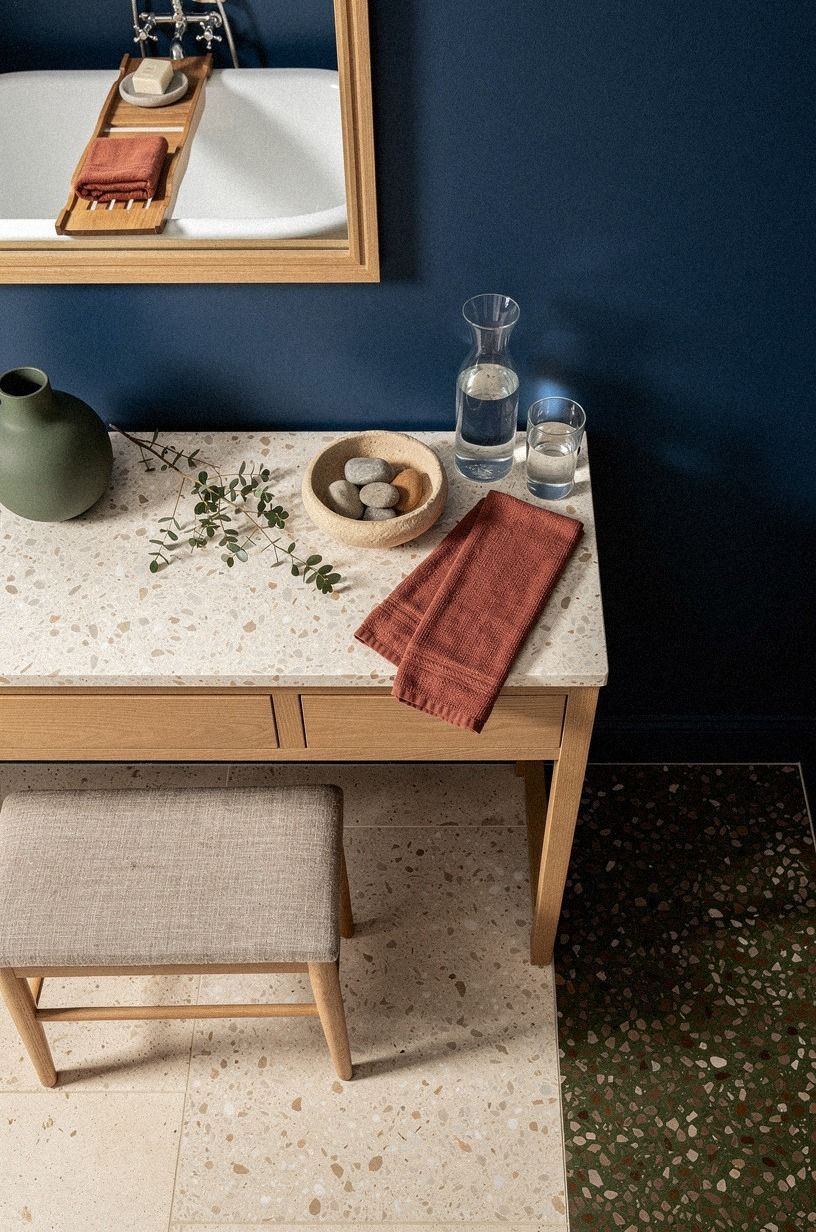
Forest green paint gives oversized-chip terrazzo a dramatic counterpoint, especially beside natural oak with simple pulls. Farrow & Ball Hague Blue No.30 is a deep blue-green alternative, while a true forest green feels earthier with rust accents. Your terrazzo will look more grounded beside the saturated color, and the oak will keep the palette from becoming cold.
You’re choosing contrast here, so keep the rest of the room disciplined. One natural oak stool, one linen shower curtain, and a brushed metal faucet will be enough.
And don’t pair forest green with five different wood stains. That combination gets busy fast.
I prefer a single medium wood, such as IKEA TONSTAD oak-effect, because the grain reads clearly without competing with the terrazzo.
For another earthy color study, see these dark green wood bathroom ideas. Then compare the same cabinet color against an oversized-chip terrazzo sample before you buy paint. You’ll notice that green can turn blue, gray, or olive depending on your bulbs and surrounding materials.
Your hardware can either quiet the cabinet or emphasize it. Aged bronze pulls make the room feel collected, while brushed nickel pulls introduce a cooler, cleaner note.
I’d repeat the chosen finish at least twice so the cabinet doesn’t look isolated. Paint a test patch beside the vanity, not on a remote wall. The surrounding materials matter.
9Anchor the Room With a Low-Pattern Runner
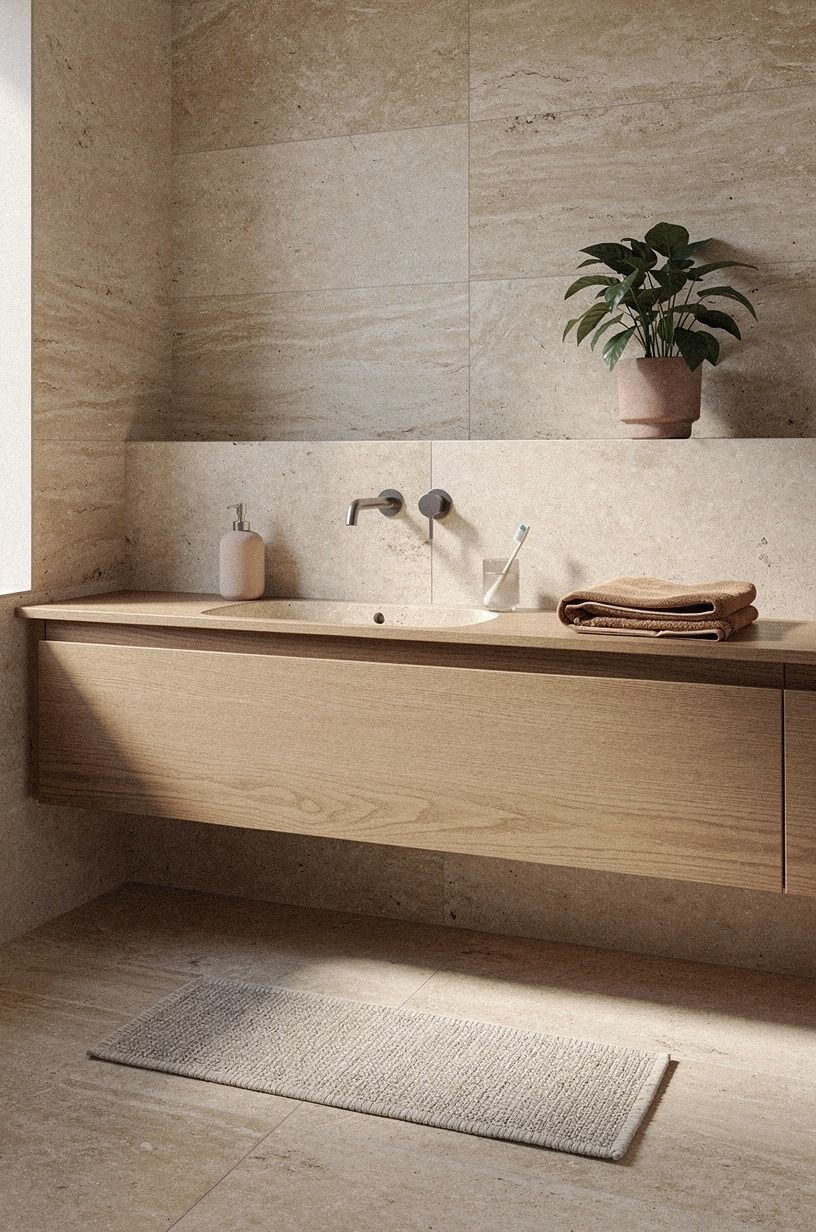
A runner can make a hard floor feel warmer underfoot, but the wrong pattern will fight the room. Choose a flatwoven wool runner with dusty rose, charcoal, and muted brass tones.
Its low pile dries more easily than plush cotton, and its irregular weave echoes the softness of hand-applied Venetian plaster. The bathroom will feel lived-in without looking cluttered.
Your runner should leave visible flooring around the vanity and toilet, not cover the entire floor. A narrow 2 by 6 foot runner often works in a single-vanity layout, but measure before you shop. Don’t use a rug with a rubber backing that traps moisture against natural stone.
I’ve seen that create a musty edge in less than a season.
If you want a more saturated floor story, compare these red travertine bathroom ideas before selecting your textile colors. A dusty rose thread may look beautiful with charcoal and brass, but it can make warm stone appear more orange. Place the runner sample beside your vanity door and towel before deciding.
Use a thin non-slip pad designed for stone floors, and make sure the edges lie flat. You want warmth underfoot, not a trip hazard. Washable cotton can work in a low-splash powder room, but wool or tightly woven performance fabric is often more forgiving in a full bathroom.
10What Does a Travertine Bathroom Really Cost?
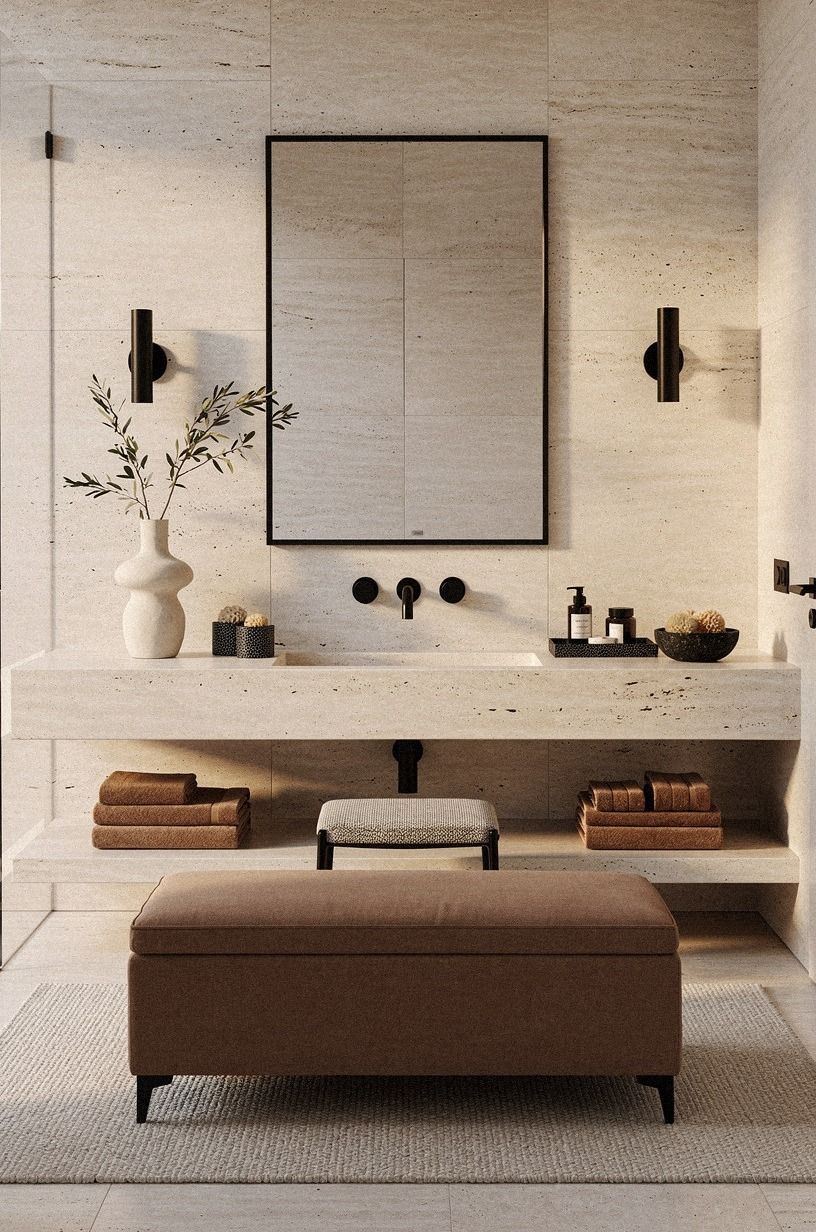
A warm white travertine and wood bathroom doesn’t require a full gut renovation. Camel textiles, black accents, and small shagreen details can change the mood without changing the plumbing.
11Paint Small Walls With the North-Light Test
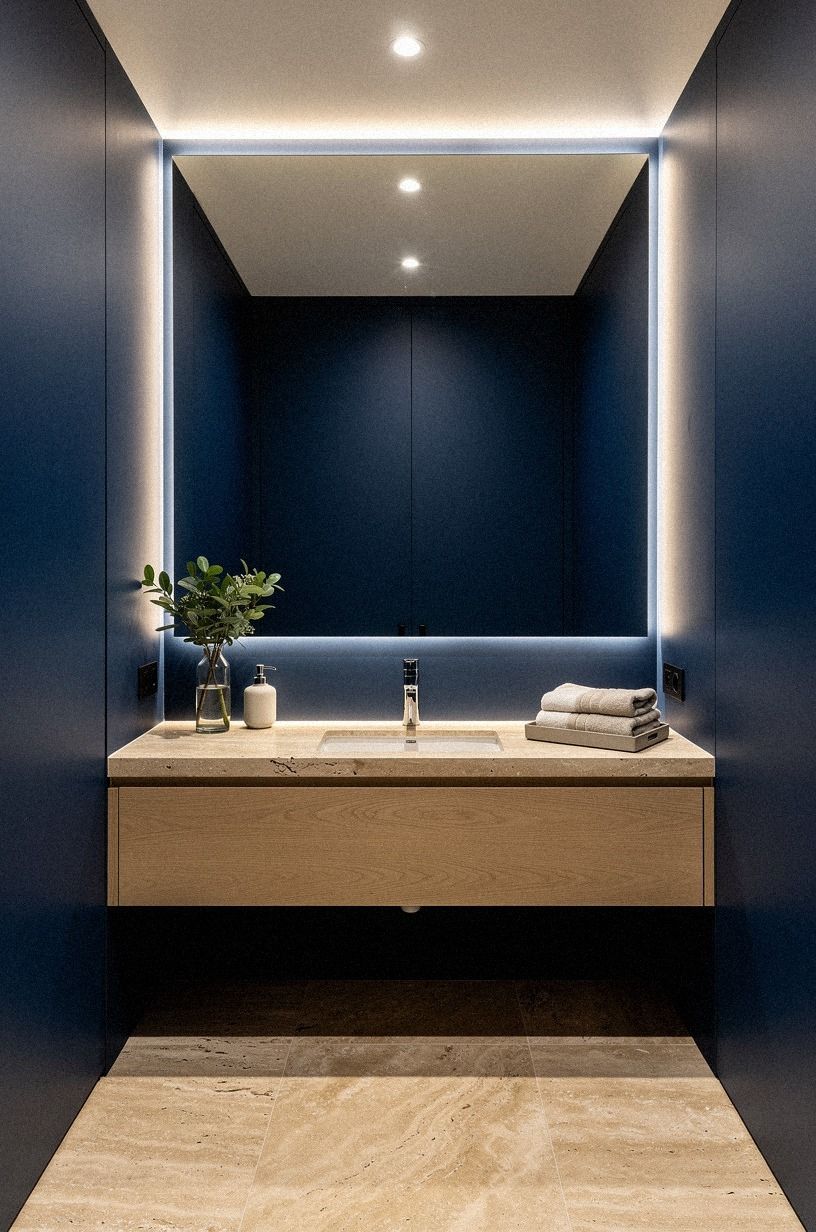
The North-Light Test prevents your travertine and wood bathroom from turning gray or muddy. Paint a large sample of midnight blue beside ivory stone, then test it in the morning, afternoon, and evening.
If your room receives cool light, a warm ivory can make the palette feel more welcoming. If it receives strong sun, copper accents may become more intense.
You’re testing the whole combination, not a paint chip in isolation. Place your wood sample, copper finish, washed Belgian linen, and stone beside the paint before you decide.
But don’t cover every wall with a dark color simply because the mood board looks sophisticated. A small room can handle bold paint, yet your lighting still needs a clear path to the mirror.
For more pale-stone references, compare this bright travertine bathroom direction and note how much open wall it leaves. You can also revisit the white and cream travertine palette if your room needs more reflected light.
Your finish matters as much as the hue. A washable eggshell bathroom paint is usually easier to live with than a flat finish on walls that receive splashes.
Keep the ceiling finish appropriate for humidity, and follow the paint manufacturer’s preparation guidance. Clean, dry walls will make your color test more trustworthy.
12Repeat One Warm Metal
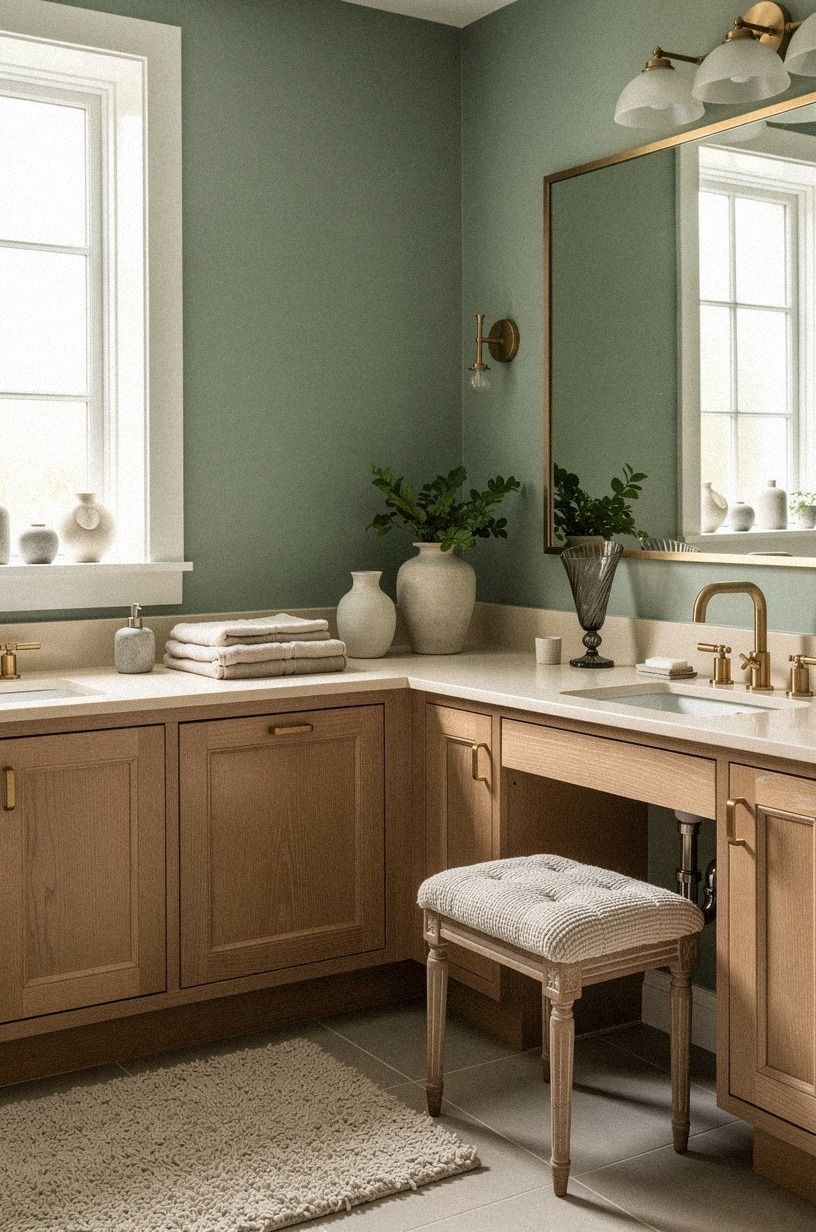
The Warm Metal Echo repeats one metal finish across the faucet, mirror frame, hooks, and light fixture. Aged bronze looks grounded with sage green, warm cream, and natural wood, while unlacquered brass brings a brighter, more elegant note.
Add an organic bouclé stool or bench for softness. Your goal isn’t a matching showroom set. It’s a gentle echo that helps separate materials feel related.
You’re allowed to mix metals, but give one finish the majority. I prefer aged bronze with natural wood because fingerprints disappear more easily than they do on polished brass. Keep your towel hooks near the shower exit, your paper holder within easy reach, and your slim mirror frame narrow enough to preserve the room’s texture.
A little practical planning keeps the room peaceful. If you choose brushed nickel, repeat it on the faucet and sconce arms, then let the wood provide the warmth.
If you choose brass, expect natural aging on unlacquered pieces and decide whether you like that change. Your maintenance expectations should guide the finish as much as the sample.
If you like a cooler edge, this silver travertine and modern metal palette shows how to shift the mood without losing warmth. For a softer Japandi direction, compare this warm minimalist travertine guide before choosing your hardware.
Why I’d Choose Texture Before More Decor
I’ve made the common mistake of treating a bathroom as a collection of pretty surfaces. I bought the small tray, the sculptural vase, and the extra towel before fixing the lighting.
The room still felt flat because the travertine was glossy, the wood was too orange, and every light came from one hard fixture. No accessory could repair that imbalance.
When I plan a room now, I start with the materials your hand will notice first. Honed stone feels cooler and quieter than polished stone.
A sealed oak edge feels substantial when you reach for a towel. A linen curtain moves slightly when the fan runs.
Those details give a bathroom its character, and they don’t need to shout.
The best pairing also includes a little disagreement. Pale travertine beside walnut is more interesting than pale travertine beside three matching oak pieces.
A dark green vanity can feel peaceful when the floor stays quiet. A small brass detail can warm the room, but too much brass makes the design feel costume-like.
That’s why I’d spend on the vanity proportions, the shower waterproofing, and the light quality before buying decorative objects.
You can create this look in a rental, too. A removable mirror, tension-mounted shelf, peel-and-stick floor tile outside wet areas, and a wood stool will give you the material story without permanent work. And if your budget is limited, start with one surface and one practical improvement.
Your bathroom doesn’t need a complete renovation to feel calm. It needs a clear decision.
The Questions I Get Asked Most
What is the best travertine and wood bathroom approach for a small bathroom?
A floating IKEA KALLAX birch-effect cabinet with pale travertine-look tile is a strong small-room choice because the open floor makes the room feel lighter. Add one walnut stool and a narrow mirror for warm visual contrast, then keep your grout and textiles quiet. I’d prioritize storage, ventilation, and clear movement before adding accessories.
Where can I buy travertine and wood bathroom pieces on a budget?
Look at IKEA, Wayfair, and Target for vanities, mirrors, towels, and wood accessories. Facebook Marketplace and local thrift stores can also turn up solid stools or framed mirrors. You’ll save more by buying one good wood accent than several thin decorative pieces.
See these budget-friendly teak shelf ideas for a practical starting point.
How much does a travertine and wood bathroom makeover cost?
A cosmetic update usually costs about $200 to $1,200, depending on paint, the mirror, faucet, and textiles. Your existing vanity and lighting may be free to keep.
A mid-range remodel can reach $3,000 to $9,000, while extensive tile and plumbing work may cost $12,000 to $30,000 or more. I’d request itemized estimates before committing.
Can I create a travertine and wood bathroom on a budget?
Yes, and you can begin with free styling changes, a secondhand wood stool, and warm paint. Add a sealed shelf or new faucet next.
You don’t need new tile to create contrast. Reuse your existing mirror, move clutter into closed storage, and choose one earthy textile. Your first improvement should solve a daily annoyance, not simply fill an empty corner.
Is a travertine and wood bathroom worth it in a small space?
Yes, because a small room needs fewer materials to make a clear impression. Use pale travertine, a floating vanity, and one medium wood tone so your floor stays visible.
Keep at least 21 inches of toilet clearance in front, and don’t sacrifice movement for a larger cabinet. I’d rather see a smaller vanity with comfortable circulation than a cramped room with extra storage.
Is a travertine and wood bathroom a good idea for a rental?
Yes. Use a removable mirror, a tension rod, a freestanding wood stool, and peel-and-stick tile only in dry areas.
You can also add a renter-safe hook rail and woven storage baskets. Your landlord may not allow adhesive near wet zones, so check the surface before installing anything.
A warm towel, better bulb, and tidy shelf can change the atmosphere immediately!
Where I’d Start First
If I had to pick one, I’d start with the floating walnut vanity. It gives you storage, warmth, and visible floor in one move, while pale travertine keeps the room from feeling heavy. Pin the floating vanity idea for later and compare it with this organic travertine bathroom guide before you shop.
Then I’d choose the lighting, test the paint, and decide whether the room needs a runner or a shelf. Your bathroom will feel more considered when every addition supports the stone, wood, and daily routine. Start with the decision you’ll notice every morning, and let the rest follow.