
Green Mediterranean bathroom ideas work best when you pair one grounded color with handmade tile, warm metal, and honest texture. I once painted a bathroom green without testing the north-facing light, and it turned gray by noon. Don’t repeat that mistake. These 15 ideas will help you build a warm, earthy escape with choices that feel lived-in.
- Layer green ceramic tile with sun-washed plaster
- Would an Olive Halo ceiling suit your bathroom?
- Honed Travertine at the Vanity
- Green Tile Versus Aged Brass: Let Both Warm the Room
- Build the Three-Height Light Stack
- Choose a Zellige Wall with Imperfect Rhythm
- Swap a Bulky Cabinet for a Floating Oak Vanity
- Pair Green Tile with a Terracotta Floor
- Sea Salt Trim for a Softer Edge
- Hang a Linen Curtain for the Soft Alcove Rule
- The Two-Wood Rule, Explained
- Could a Green Tile Border Set the Horizon?
- Hang a Round Mirror Over Dark Green Tile
- Olive, Cream, and Clay: A Quiet Textile Mix
- Frame the Escape with Plants and Carved Stone
1Layer green ceramic tile with sun-washed plaster
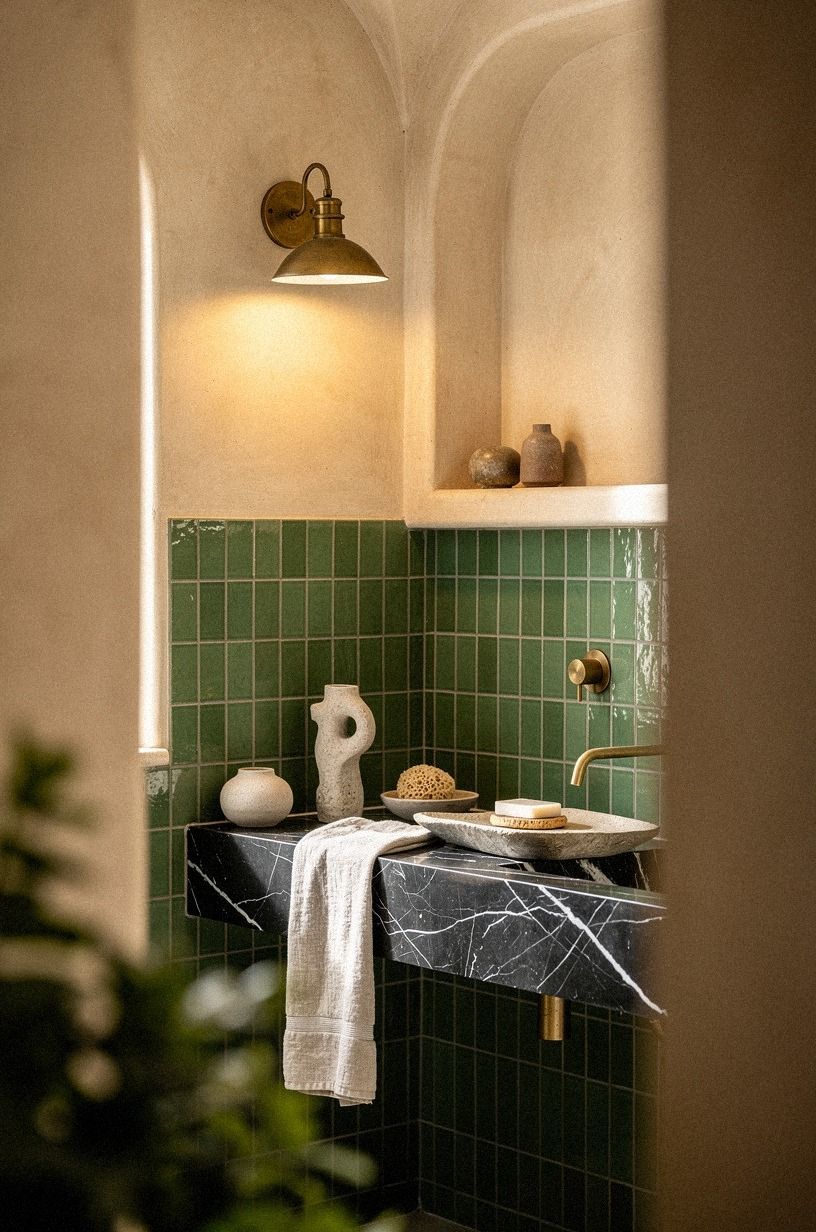
Start with Nero Marquina black marble on the wet wall, then let the remaining walls stay soft and imperfect. A slab with white veining looks more inviting beside Benjamin Moore Chestertown Buff HC-9 than it does beside bright white.
Add aged brass where you need a little warmth. You’ll get small shifts in contrast as the light moves, and that variation keeps the room from feeling flat.
Keep the marble height deliberate. A 48-inch black marble backsplash behind the vanity can feel more relaxed than a full-height wall, especially if your bathroom is narrow. I’d skip glossy white tile here because its regular surface feels too sharp against the dark stone and clay-toned palette.
For more earthy color direction, browse these dark sage and olive bathroom ideas. Your eye will notice the soft wall above the marble first.
If you’re comparing stone samples, ask whether the veining shifts across slabs. That small detail matters when you’re deciding whether the material is worth the investment. A slightly varied surface often gives you more value than a perfectly uniform finish.
2Would an Olive Halo ceiling suit your bathroom?
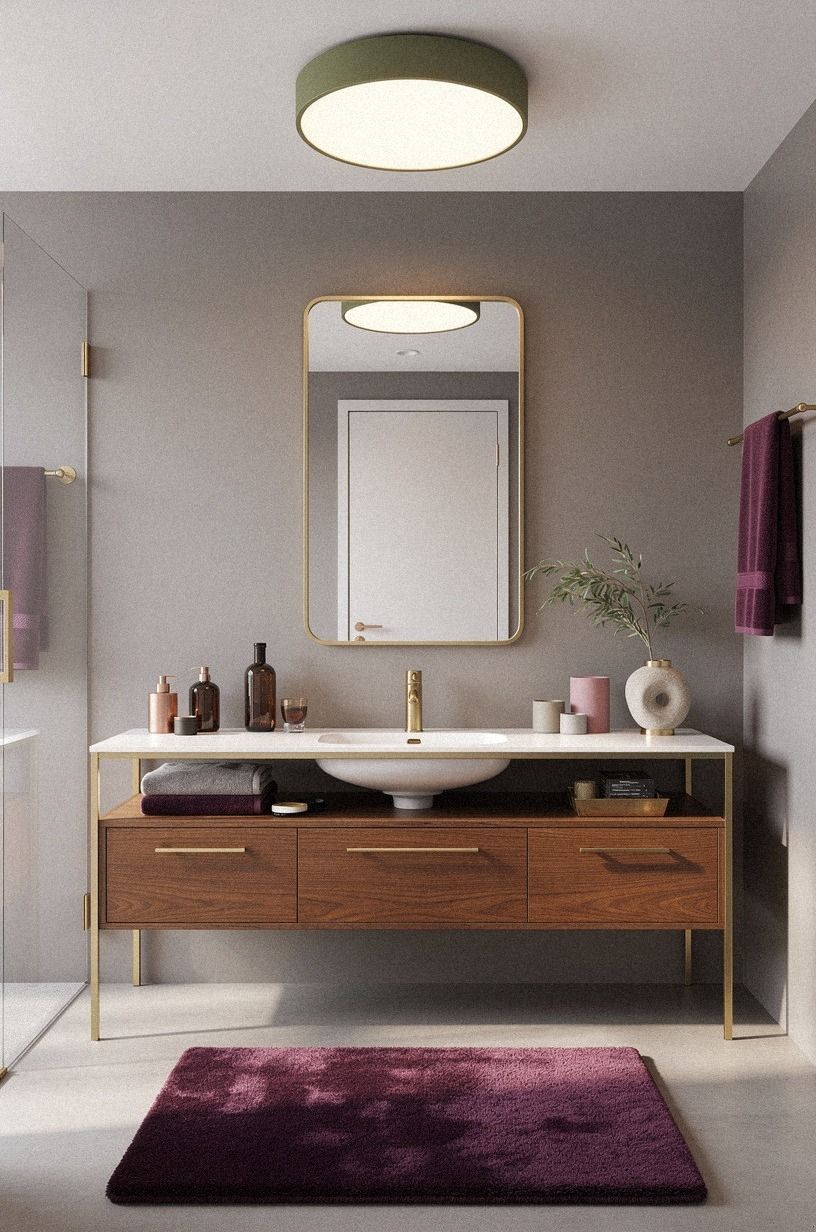
Paint your ceiling the same plum as the upper wall, but choose a shade with enough gray to stay calm. Farrow & Ball Pelt No.254 can work in a plum bathroom when you want more depth, while a soft gray gives you a gentler room. The ceiling color should feel like shade under a pergola, not a sealed box.
You’ll want a matte finish above the shower and a washable eggshell on the walls, based on your ventilation and moisture levels. I made the mistake of using flat paint in a steamy bathroom once, and the finish looked tired around the exhaust fan within months.
And yes, a colored ceiling can make a small bathroom feel intimate rather than cramped! Pair it with a simple rose-gold mirror frame, and your room will hold its warmth from floor to ceiling.
Before you buy paint, test the sample at dawn, midday, and after the lights come on. A low-cost tester can save you from an expensive repaint.
3Honed Travertine at the Vanity
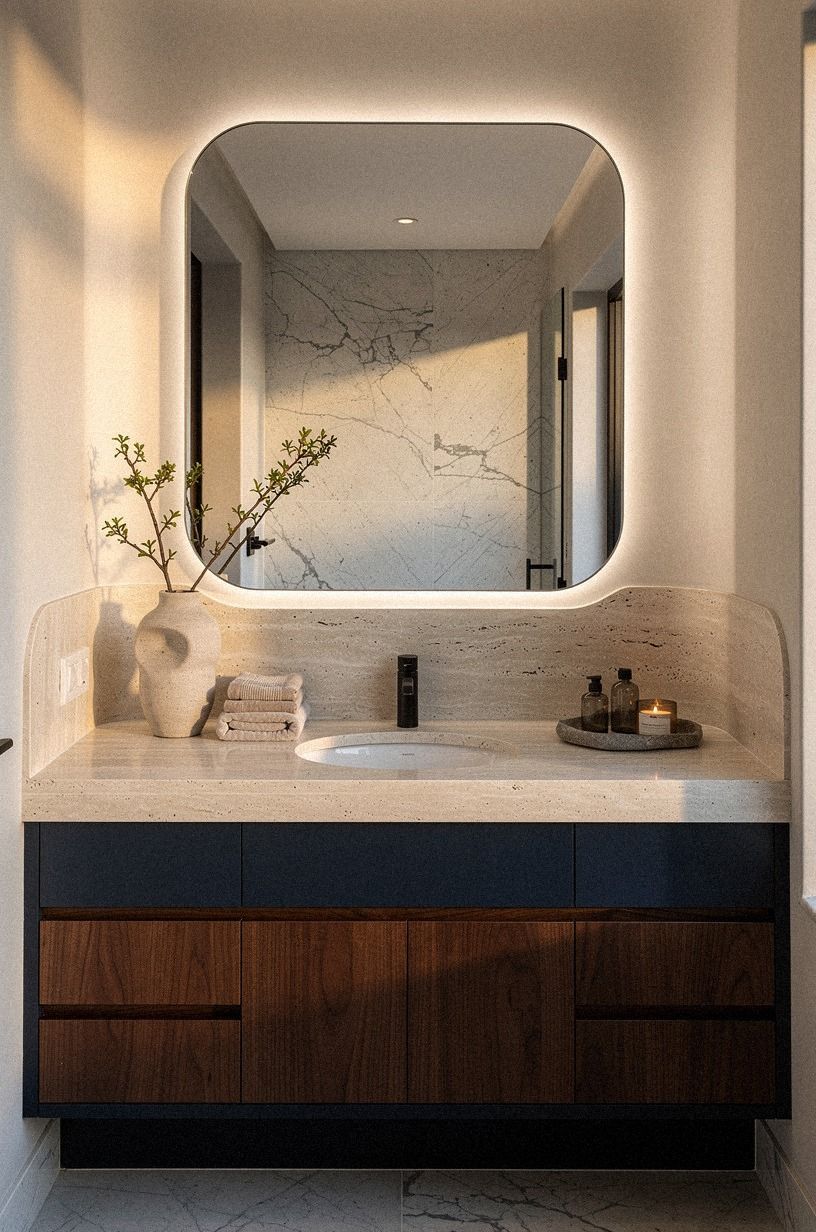
Use honed Carrara marble around the vanity if you want your green bathroom to feel connected to old stone buildings. Its subtle gray veining catches dust and light in a way polished stone doesn’t, so you’ll see a gentle surface instead of a hard reflection. A pale Carrara marble backsplash beside deep navy paint gives your eye somewhere quiet to rest.
Choose a slab with soft gray movement rather than dramatic contrast. I’d skip heavily patterned stone here because it pulls the room toward hotel lobby territory.
A 32 to 36 inch vanity height gives you the standard working range, and a walnut vanity adds a grounded note without looking shiny. If your walls are already dark, keep your countertop pale.
Your hands, towels, and basin will stand out more clearly against it.
Carrara marble usually costs more than basic ceramic, but the material can deliver stronger visual value when the rest of the room stays restrained. If you’re working with a tight budget, use it only on the backsplash or vanity top.
4Green Tile Versus Aged Brass: Let Both Warm the Room
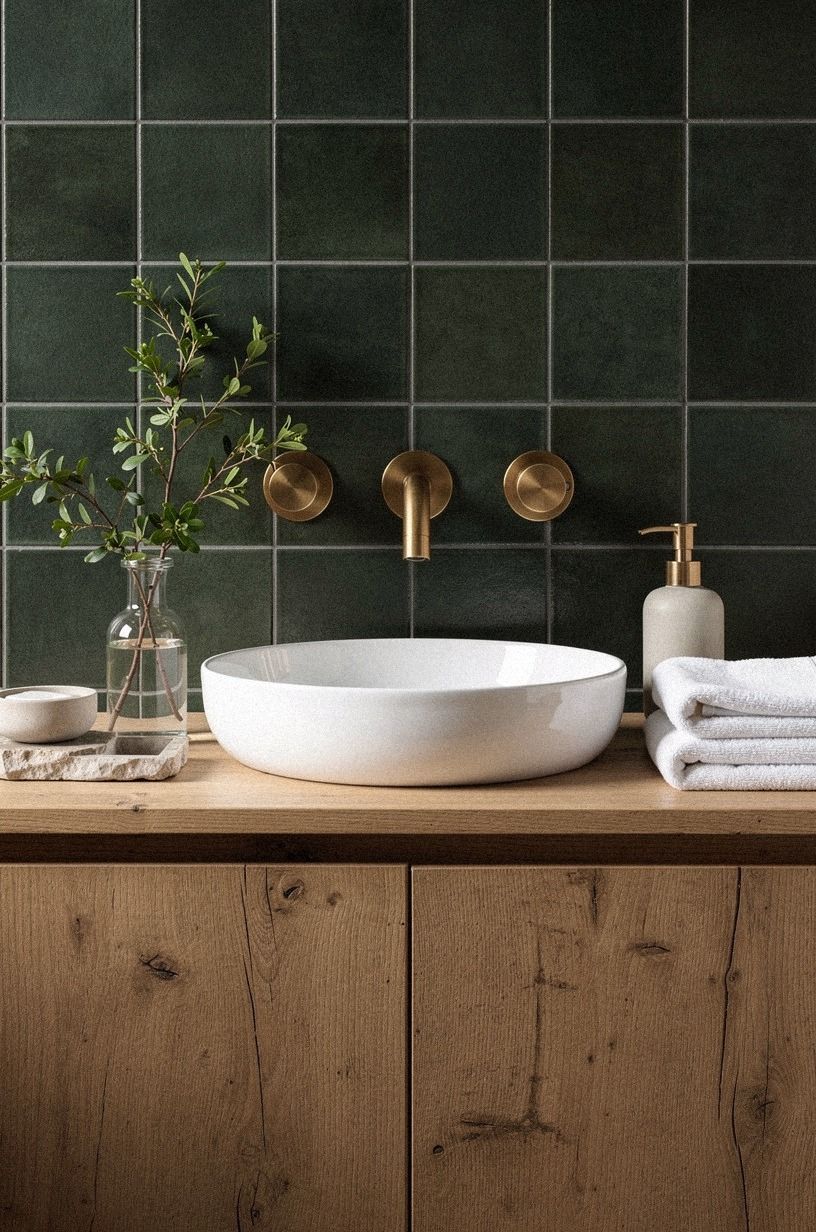
Mix two warm finishes, not five. Emerald green tile and unlacquered brass already have enough conversation between them, especially once the brass starts developing a soft patina. Add a brass faucet, a small mirror frame, and one reclaimed weathered teak shelf.
You’ll get a collected feeling without making every object compete for attention.
I’d avoid polished chrome in this scheme. It bounces a blue-white glare across the room, and that fights the earthy palette you’re building.
A 36-inch vanity can carry two small sconces if your electrical layout allows it, while a 24-inch version may need one centered light. Your best finish is the one that looks a little better after a year of fingerprints.
See how dark green wood bathroom ideas use warmth without making the room heavy. That same balance can help you decide where to spend and where to simplify.
5Build the Three-Height Light Stack
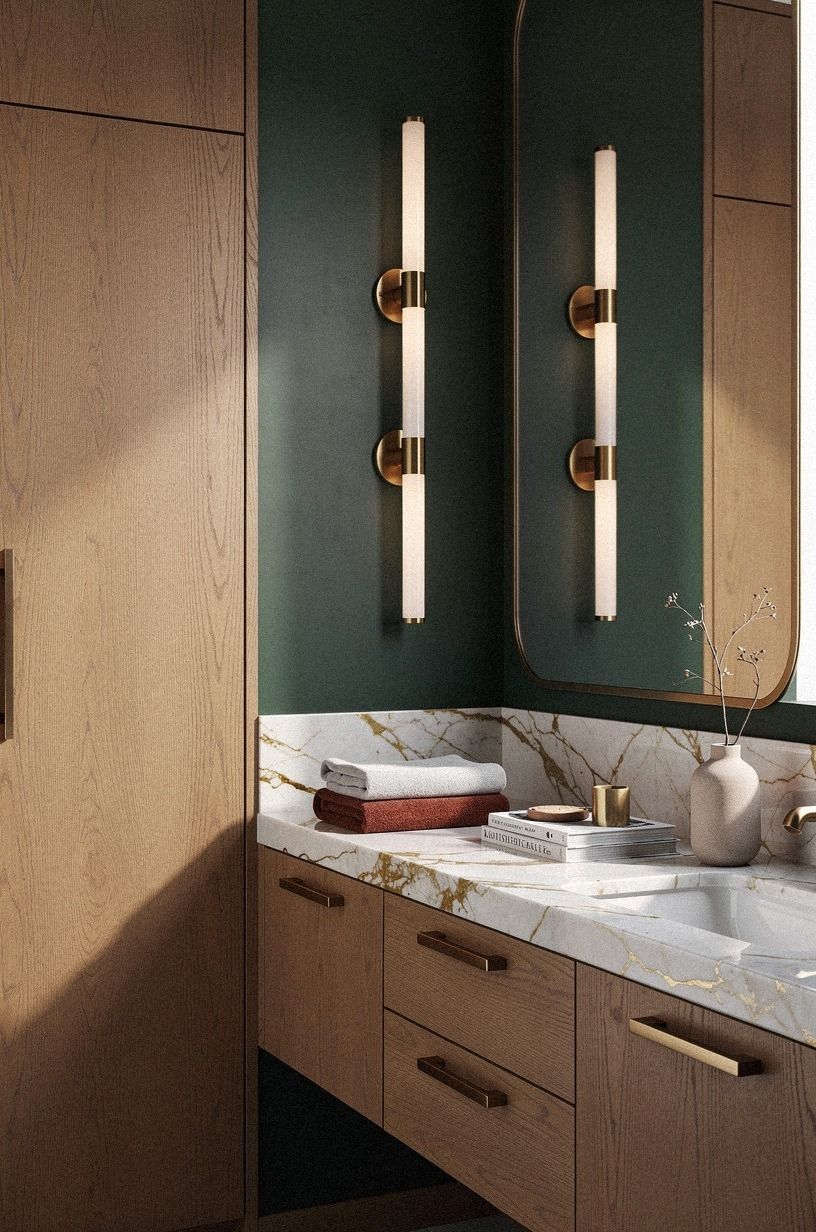
Create three layers of light: ceiling fixture, mirror light, and low ambient light. That’s the Three-Height Light Stack, and it keeps your forest green, rust, and natural oak bathroom from looking muddy after sunset. Use one ceiling fixture for general visibility, two wall sconces near the mirror, and a small shaded lamp outside the splash zone if your layout has room.
Your mirror lights should sit close to face height, not high above your head. Warm bulbs will protect the green from turning icy, while a dimmer lets you lower the room’s energy at night.
I’d skip one central overhead fixture because it throws shadows under your eyes and makes handmade tile look dull. It’s a small change with a big payoff!
And if you’re renting, battery sconces can give you the side glow without opening the wall. You’ll notice the difference the first evening.
6Choose a Zellige Wall with Imperfect Rhythm
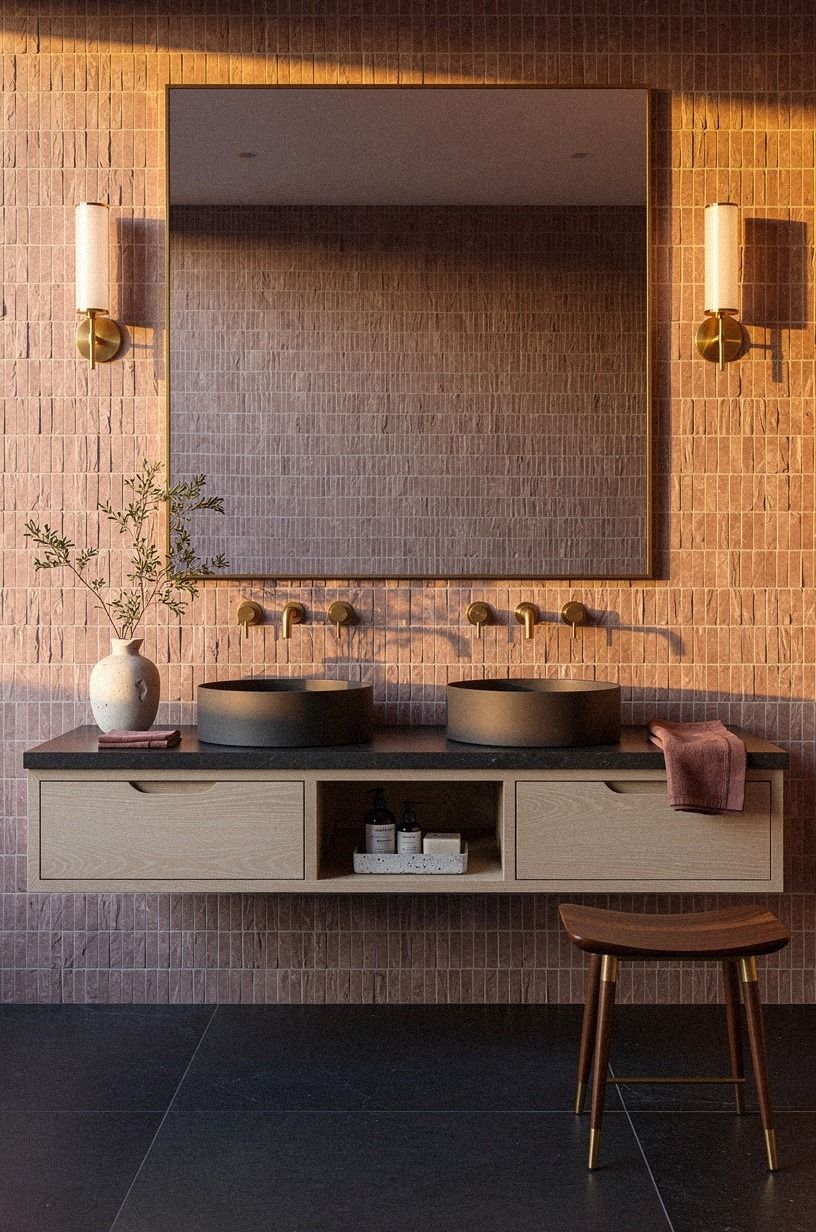
Choose hand-glazed zellige tile when you want your bathroom walls to carry the mood without extra decoration. Each tile catches light differently, so the surface shifts from dusty rose to charcoal to muted brass as you move around the room. That flicker is why I’d choose zellige over perfectly printed ceramic for a Mediterranean bathroom.
Keep the grout close to the tile color so the wall reads as one textured field. A narrow shower still needs practical planning: a comfortable shower is 36 by 36 inches minimum, so don’t let a decorative niche steal the turning space. You’ll want a reliable waterproofing system beneath the tile, even if the finish looks old-world.
Read this Mediterranean zellige tile guide before you commit to the material. It’s especially useful when you’re comparing the price of handmade tile with standard ceramic.
7Swap a Bulky Cabinet for a Floating Oak Vanity
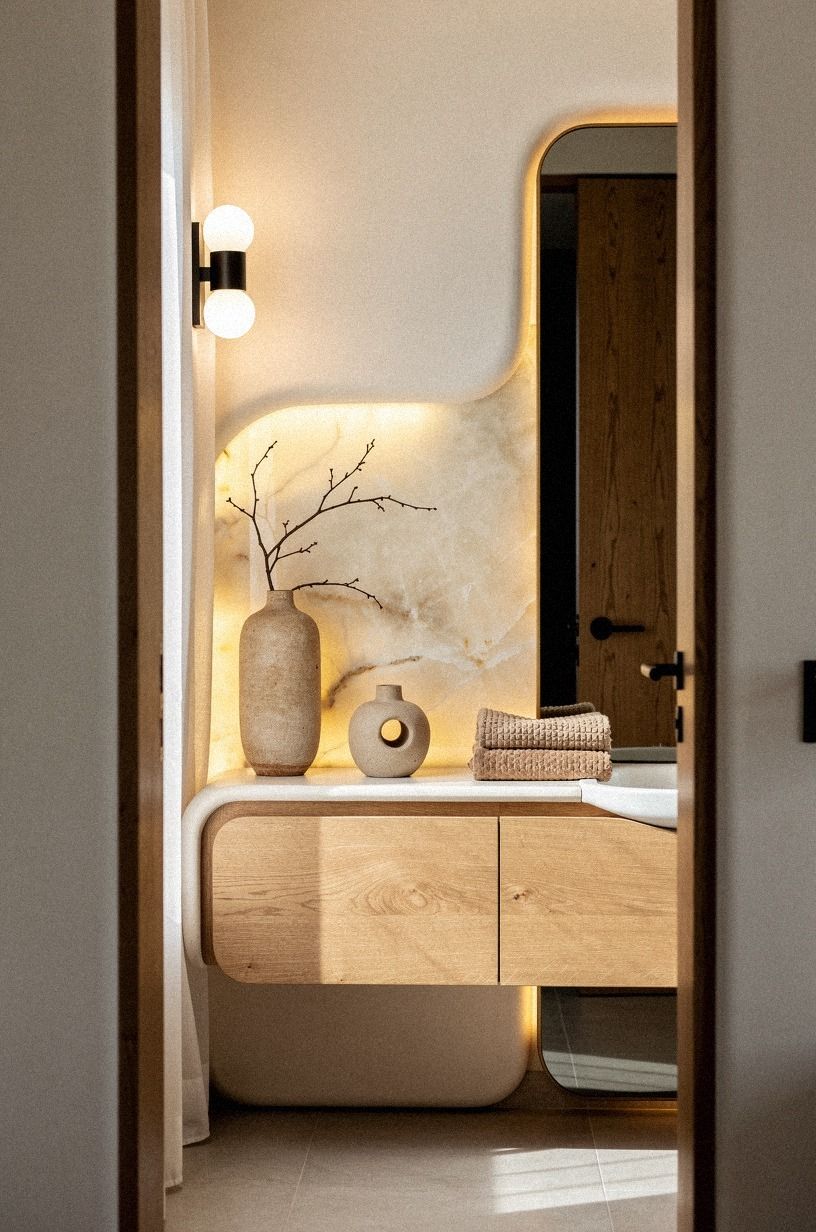
Float a vanity in warm white with a backlit translucent onyx top to expose more floor and make your bathroom feel lighter. The open strip beneath the cabinet lets tile continue visually, which matters in a compact room. Your eye reads the floor as one uninterrupted plane instead of stopping at a dark furniture block.
Choose a simple slab door or shallow drawers, depending on what you need to store. I’d skip open shelving for daily toiletries because the visual mess arrives faster than you’d think. A wall-mounted vanity also makes cleaning easier, but you’ll need solid blocking behind the wall before installation.
A simple ready-made vanity can inspire the proportion, while a custom onyx top gives you the exact width your room needs. Compare the long-term value of a ready-made vanity with the cost of custom work before you buy.
For more ideas on pairing cabinetry with green tile, revisit these dark green wood bathroom ideas. The result is airy, practical, and still earthy.
8Pair Green Tile with a Terracotta Floor
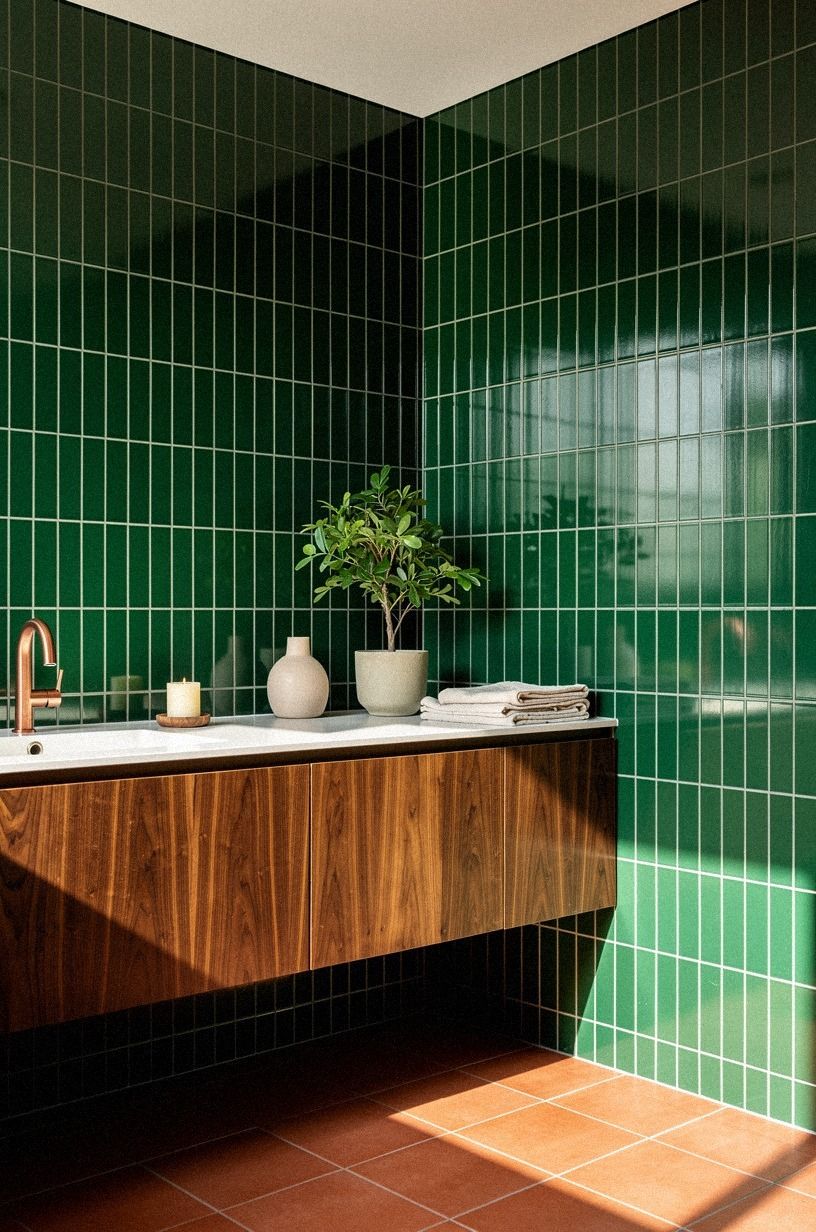
Pair midnight-blue wall tile with book-matched walnut underfoot if you want a dramatic Mediterranean base. Look for a walnut surface with a restrained grain rather than orange ceramic that looks freshly printed. The floor will bring a deep, grounded note to your midnight-blue tile bathroom, especially beside ivory textiles.
Your floor needs a finish that can handle water and daily cleaning. Ask for the recommended sealer and plan to refresh it according to the manufacturer’s guidance.
I’d avoid tiny mosaics across the entire room because the grout lines can become visually noisy and harder to maintain. A 60 by 30 inch standard tub leaves enough floor area for a restrained pattern if your layout includes one.
Add Turkish cotton towels in ivory, and the blue will feel softer immediately. A small copper accent can bring warmth without competing with the walnut.
If you’re weighing the price of book-matched wood, compare the material cost with the labor involved. Installation can change the total more than the surface itself.
9Sea Salt Trim for a Softer Edge
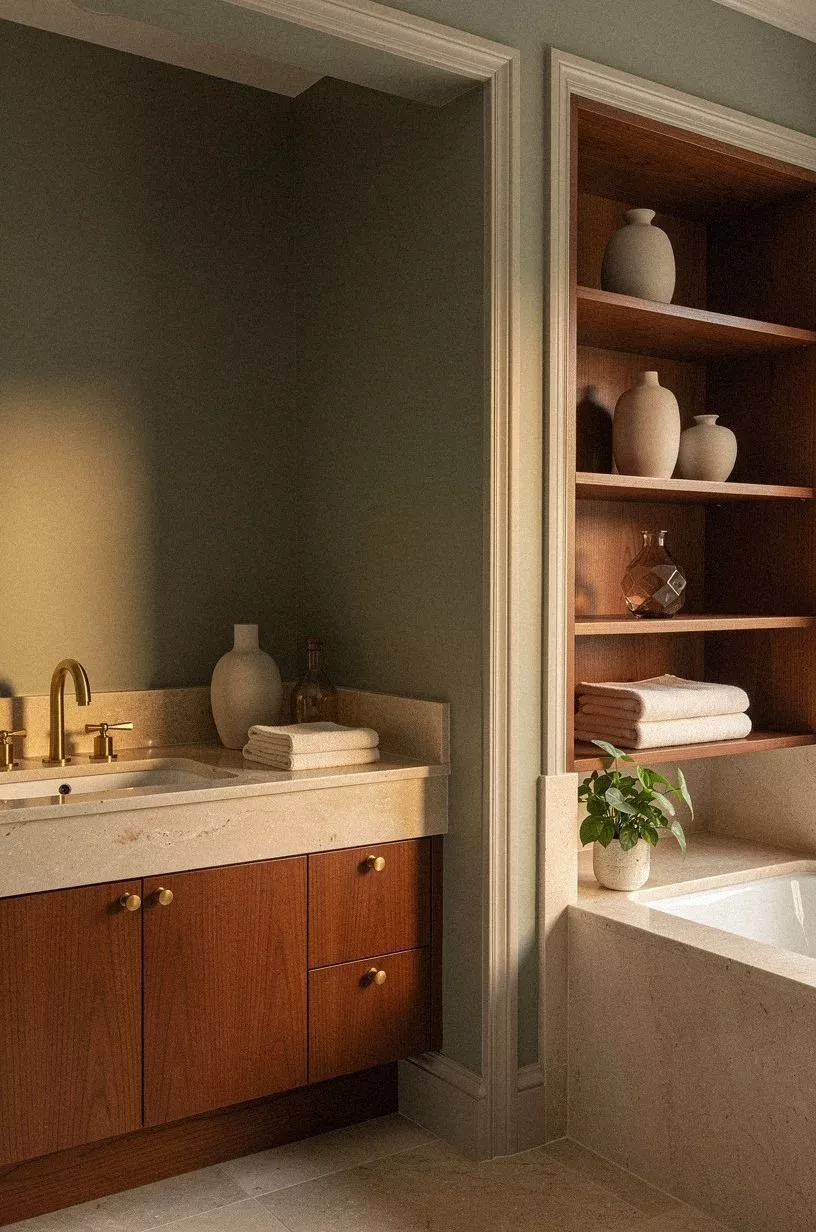
Paint trim and doors in Sherwin-Williams Sea Salt SW 6204 when you want a quiet blue-green edge around deeper walls.
10Hang a Linen Curtain for the Soft Alcove Rule
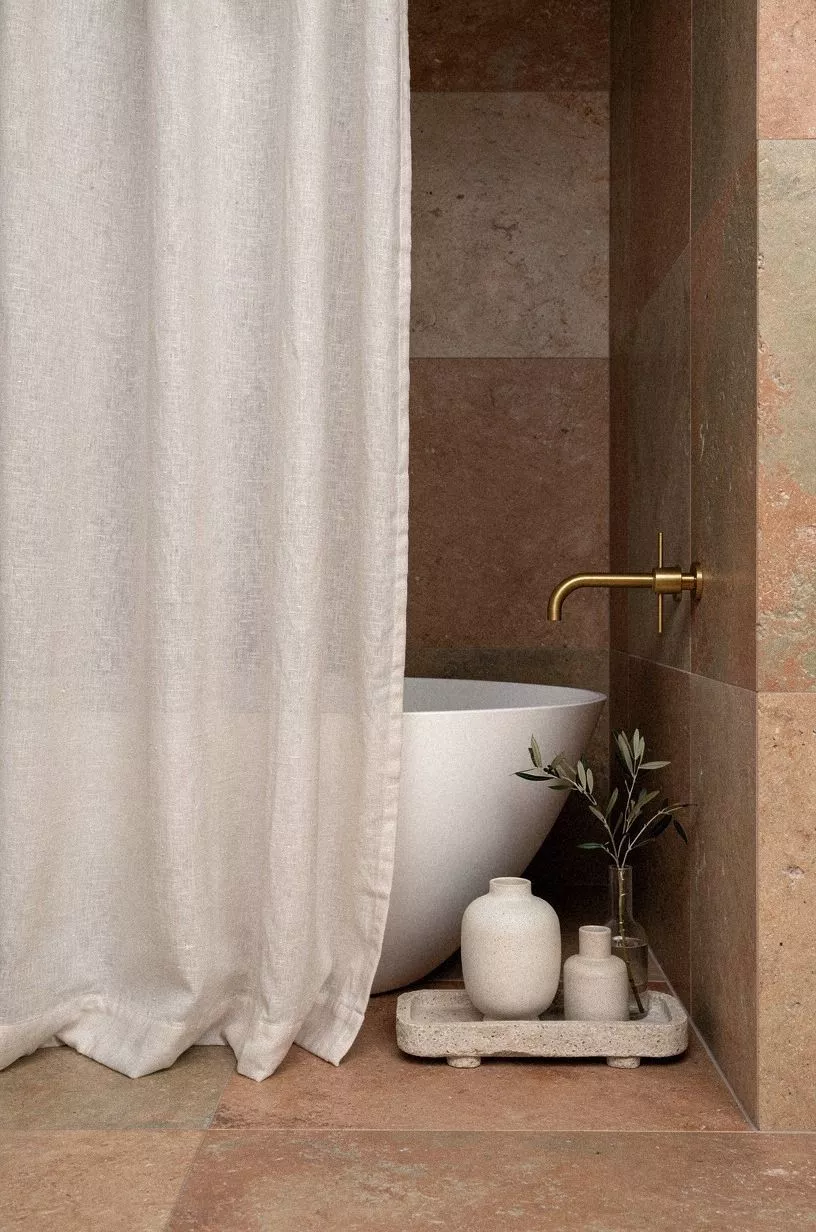
Hang a curtain in Belgian flax linen if your tub or shower sits beside a window. The fabric filters the light and gives the room a soft, private edge without adding another hard surface. Choose oatmeal, muted clay, or faded sage so the curtain supports your green bathroom tile instead of competing with it.
A standard tub is 60 by 30 inches, so check your rod width before ordering fabric. Your curtain should clear the floor and dry properly between uses. I’d skip heavy velvet near water because it holds moisture and makes the room feel stuffy.
A tension rod can work in a rental, while a fixed unlacquered brass rod develops a warmer patina in a renovated room.
For another coastal direction, compare the palette in these sea-blue Mediterranean bathroom ideas. Linen is often worth it because it softens the room without adding much visual weight.
11The Two-Wood Rule, Explained
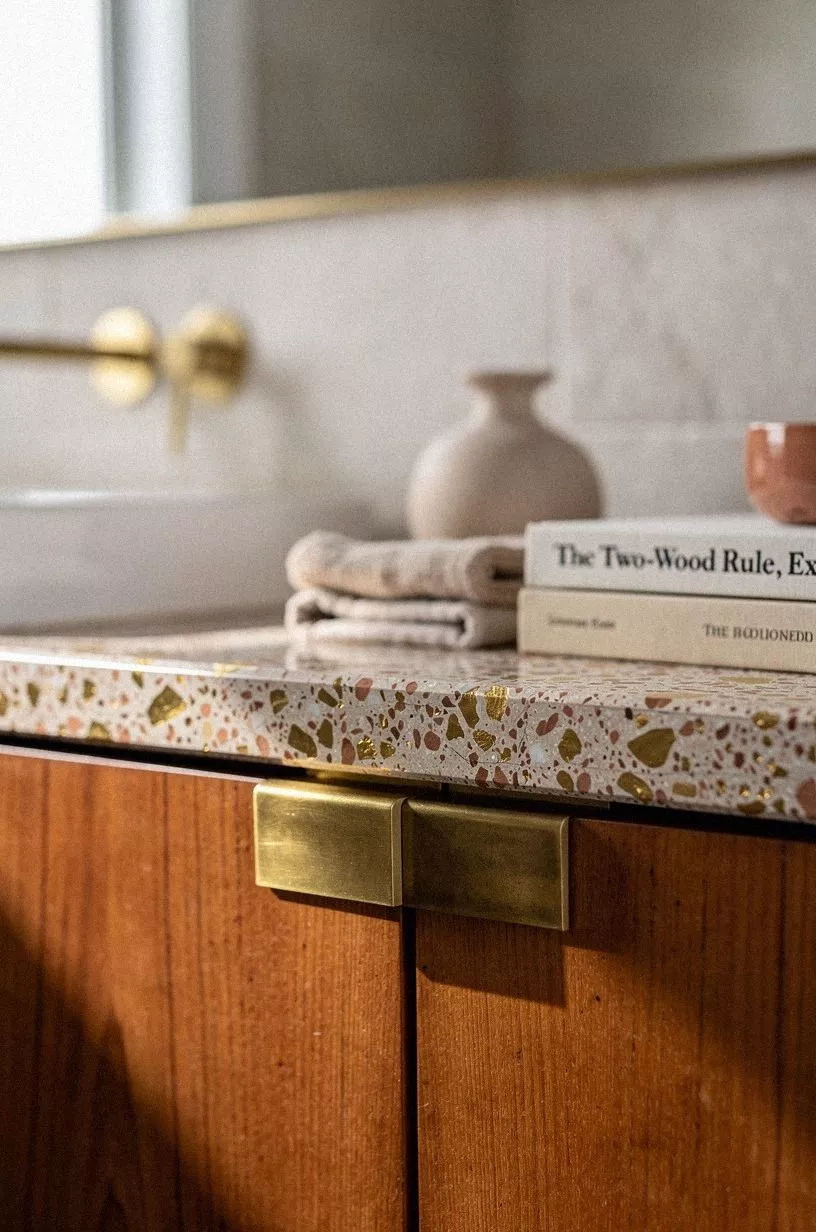
Use two grounded materials only: oversized-chip terrazzo and aged brass, softened with linen. That’s the Two-Wood Rule, and it keeps your green tile bathroom from looking like a showroom of unrelated samples. A clay-toned terrazzo vanity beside aged brass can work, but don’t add a third competing finish unless you have a strong reason.
Your terrazzo should show its aggregate, not a thick glossy coating. Water will reach the vanity, so choose a sealed finish and keep standing moisture off the top. I’d skip faux-rustic knots and distressed edges because they can make the room feel themed rather than lived-in.
A small stool gives you a place for folded towels or a book, and your room will feel more useful without another cabinet. Ask for a clear quote on sealing and installation before you commit to custom terrazzo work. The restraint is what makes the earthy palette feel sophisticated.
12Could a Green Tile Border Set the Horizon?
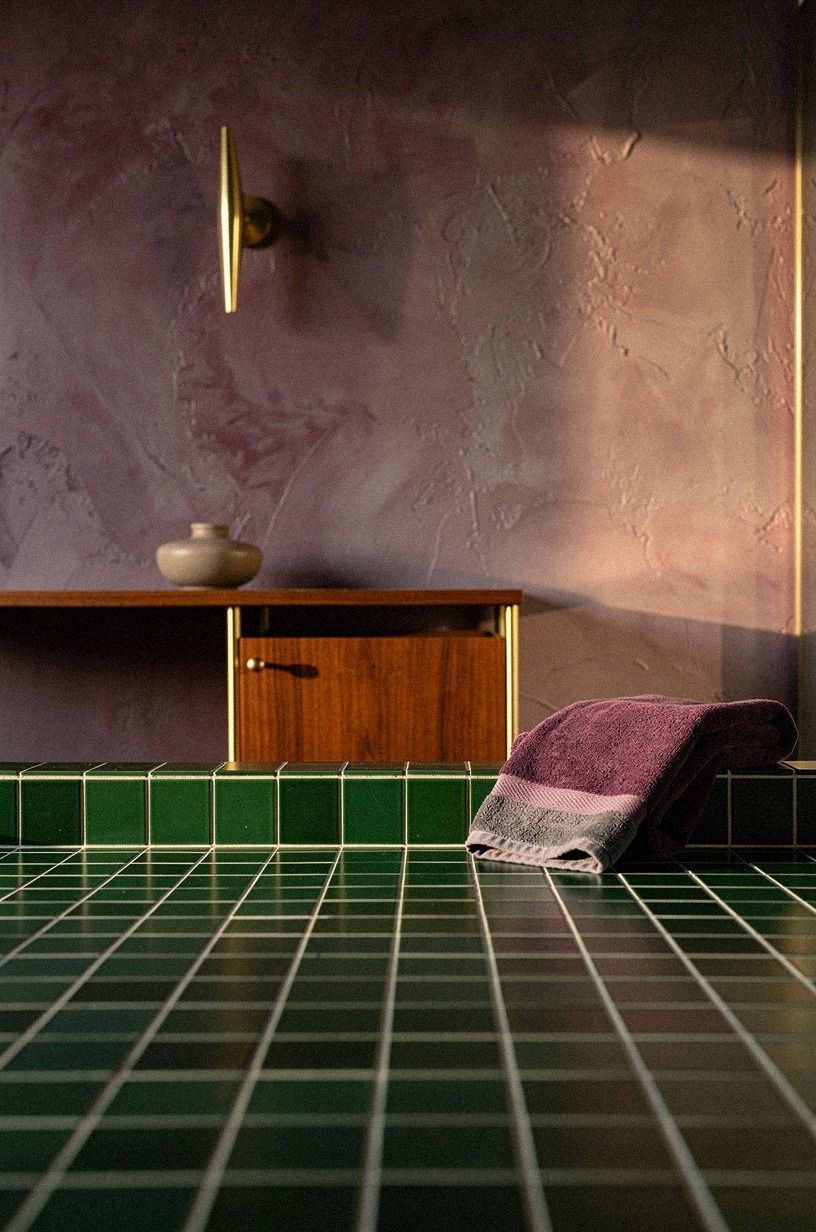
Create a horizontal plum-toned border around the room over hand-applied Venetian plaster, at the height that makes sense for your fixtures.
13Hang a Round Mirror Over Dark Green Tile
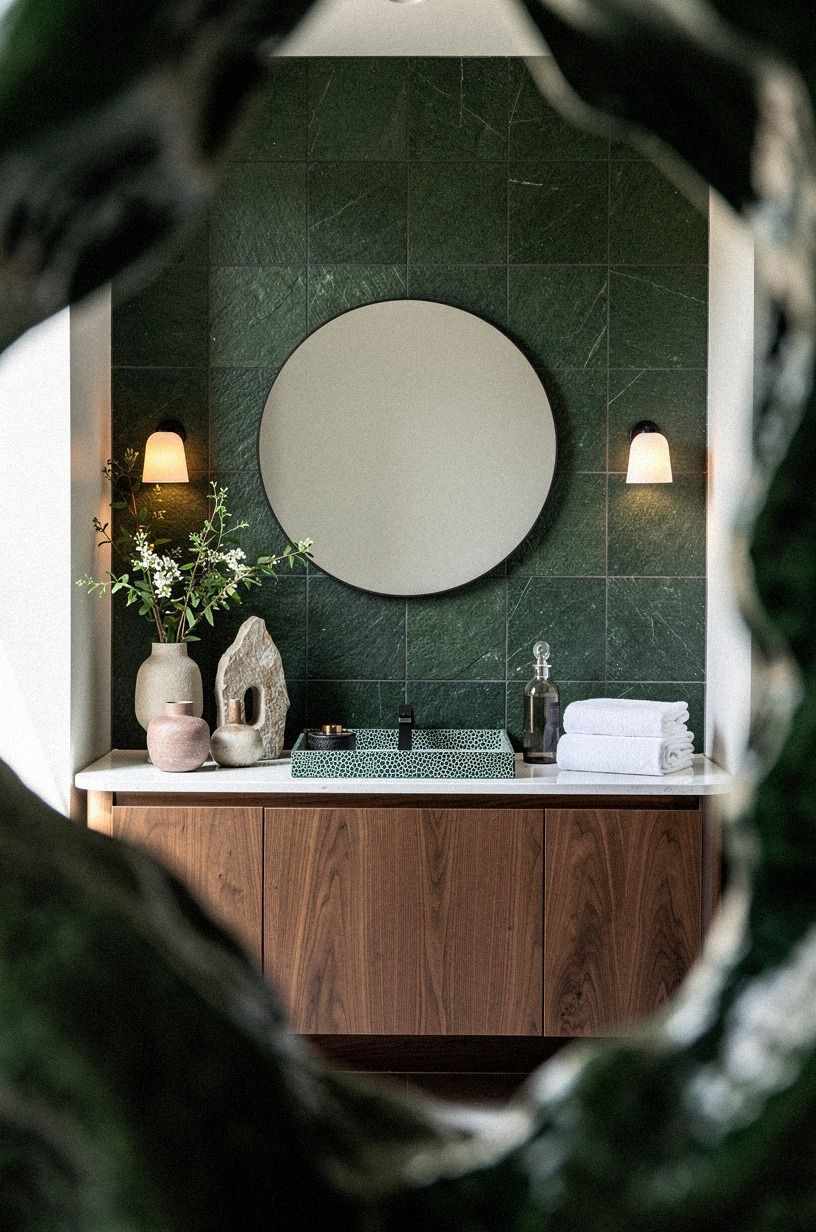
Hang a round mirror above the vanity to soften the geometry of rectangular tile. A 30 to 36 inch mirror can balance a medium vanity, while a smaller frame may suit a narrow powder room. Choose a slim walnut frame with subtle shagreen accents so it feels connected to the room’s warm materials.
Your mirror should leave enough space for sconces or a clear overhead light, so mark the wall with painter’s tape before drilling. I’d skip a frameless rectangle if every other line in your bathroom is already square. The contrast will make the navy tile feel more intentional.
A round mirror also reflects the uneven surface in small flashes, especially at night. For a darker, more dramatic direction, look through these moody deep green bathroom ideas before choosing your wall shade.
14Olive, Cream, and Clay: A Quiet Textile Mix
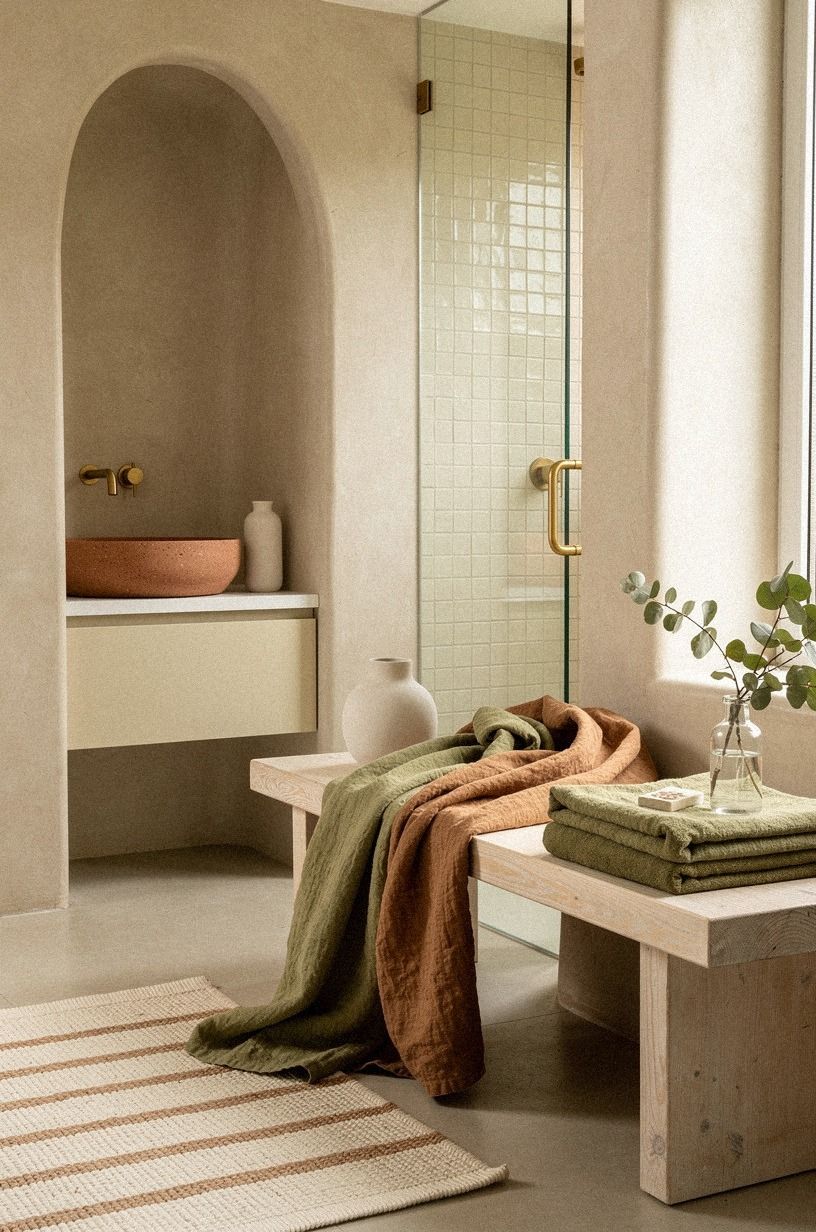
Layer three textile colors: emerald, cream, and gold, using washed Belgian linen to keep the mix quiet.
15Frame the Escape with Plants and Carved Stone
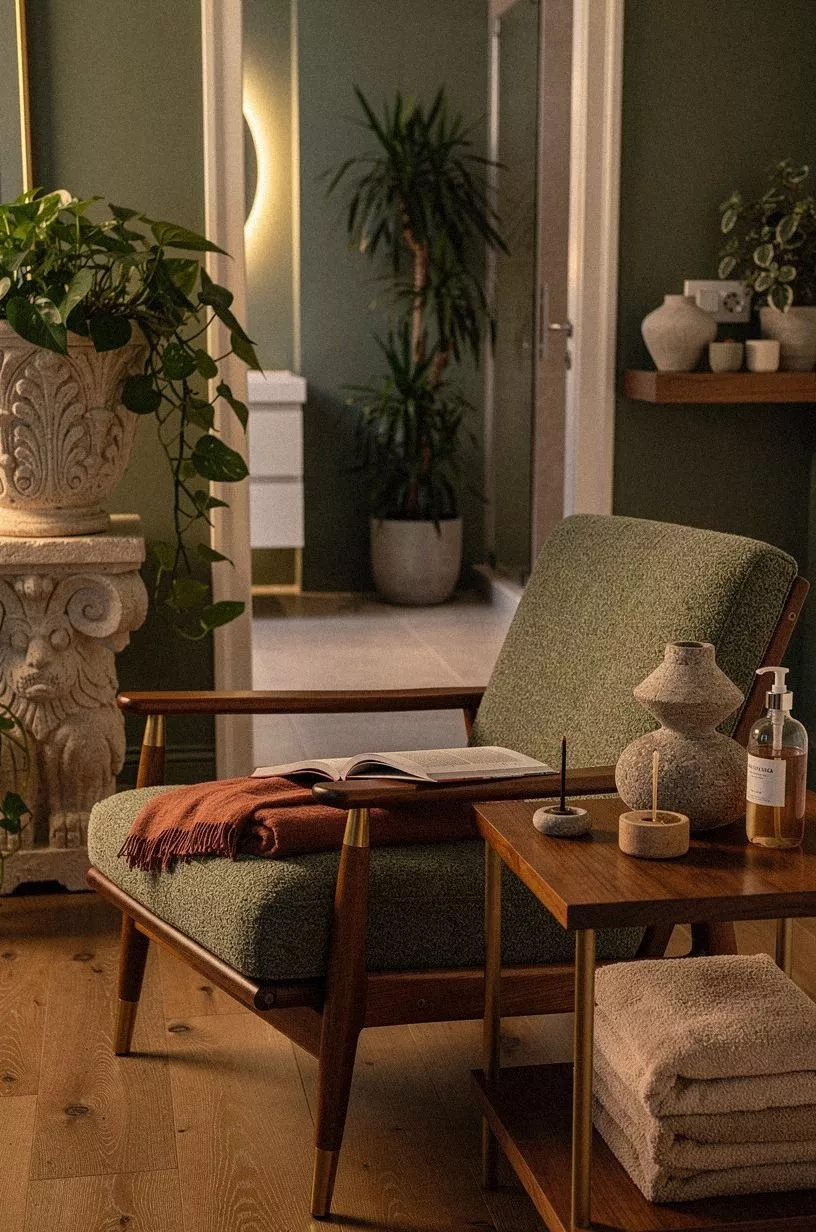
Finish the room with plants that can handle your actual light, not the light you wish you had. A trailing pothos, a small fern, or an olive branch in a natural oak vessel can bring an organic note beside green tile. Choose a planter in natural oak or matte clay, then let one organic bouclé accent soften the arrangement.
Your bathroom still needs open working space around the sink and toilet, so keep the display edited. A toilet needs at least 21 inches of clearance in front, and that space matters more than a decorative basket. I’d skip delicate plants on a busy vanity because water spots and toothpaste will win.
Place one plant near the window, one low vessel on a shelf, and stop there. If you want more color contrast, study this black and green bathroom pairing for a sharper finish. You can also use these moody deep green bathroom ideas when deciding how much darkness the room can hold.
What the honest budget looks like
A green Mediterranean bathroom can be a paint-and-textile project, or it can become a full wet-room renovation before you’ve finished your coffee. I’ve gone back and forth on where the money matters most, and my answer is tile installation and waterproofing.
A cheaper faucet won’t ruin the room. A rushed shower wall might.
Use the table as a typical US planning range, not a quote. Your labor, location, room size, and plumbing changes will move the number.
Zellige has a wonderful irregular surface, but the material and installation can cost more than standard ceramic. If you’re working with $500, paint, a mirror, textiles, and a carefully chosen faucet can still create a warm shift.
That’s enough to begin without pretending a full renovation is free.
Before you buy anything, separate cosmetic upgrades from work that needs a licensed professional. That distinction protects your budget and makes the final value easier to judge. This Mediterranean zellige tile guide can help when you’re comparing tile prices.
For material planning, keep these typical ranges nearby:
Why this green bathroom still feels current
Green bathrooms are having a moment because they sit between color and nature without forcing you into a theme. I don’t think the appeal is only about trend cycles. Green can hold warm wood, handmade tile, brass, stone, and linen in one conversation, which gives you more room to change accessories later.
The Mediterranean reference works best when it stays material-led. You’ll get more staying power from a real textured wall, a practical vanity, and a color tested in your own light than from copying a dramatic photo. Farrow & Ball Pelt No.254, Benjamin Moore Chestertown Buff HC-9, and Sherwin-Williams Sea Salt SW 6204 can all support the direction, but they won’t behave the same way in your room.
Test first. Then commit. If you’re still comparing palettes, these sea-blue Mediterranean bathroom ideas show how a related color family can shift the atmosphere without changing the entire design language.
What People Always Want to Know
What is the best green Mediterranean bathroom idea for a small bathroom?
A floating warm-white vanity with a round mirror is the strongest small-room choice because it opens the floor and softens hard tile. A simple ready-made vanity can guide the proportions, while a pale surface keeps the room airy.
You’ll gain storage without making your bathroom feel crowded. These dark sage and olive bathroom ideas can help you compare lighter options.
Where can I buy green Mediterranean bathroom pieces on a budget?
Look at IKEA, Wayfair, and Target for mirrors, towels, lighting, and simple vanities. You can also find useful pieces through Facebook Marketplace or a local thrift shop.
Your best second-hand finds will be solid wood stools, brass frames, and ceramic vessels without damaged glazing. Compare the price of each piece with its condition and expected lifespan.
How much does a green Mediterranean bathroom makeover cost?
A small cosmetic update typically runs about $200 to $1,200 in the supplied US range. Paint, a mirror, faucet, and textiles can be free or low-cost if you reuse what you own. A tiled renovation rises to $3,000 to $9,000 or more.
The final cost depends heavily on waterproofing, labor, plumbing, and the size of the tile area.
Can I create a green Mediterranean bathroom on a budget?
Yes, and you can begin with paint, a second-hand mirror, and warm towels. Test Sherwin-Williams Sea Salt or a muted olive on two walls first.
Regrout only where needed, change the light temperature, and use one clay-colored accessory instead of replacing every finish. You can also study these dark green wood bathroom ideas for lower-cost ways to add warmth.
Is a green Mediterranean bathroom worth it in a small space?
Yes, because a small room gives you less surface area to change, so a strong material choice has more impact. Use one tile field, one round mirror, and a wall-mounted vanity.
You’ll want clear floor space, especially around the toilet and shower entry. If you’re uncertain, start with paint and textiles before committing to a full tile installation.
Is a green Mediterranean bathroom a good idea for a rental?
Yes. Use removable hooks, a tension rod, peel-and-stick tile on a protected backsplash, and textiles to bring in the palette.
You won’t get the full waterproofed tile effect, but your bathroom can still feel warm, earthy, and personal without permanent wall changes. A fabric update can deliver noticeable value without risking your deposit.
Where I’d Start First
If I had to pick one, I’d start with the green ceramic tile behind the vanity. It gives you texture, color, and a focal point without requiring a full renovation.
Pin these ideas for later, then test the tile beside your real morning light before you buy a box. For a darker starting point, compare the mood in these moody deep green bathroom ideas.